



Generative AI for Biophilic Design in Historic Urban Alleys: Balancing Place Identity and Biophilic Strategies in Urban Regeneration



Abstract
1. Introduction
1.1. Motivation and Purpose
1.2. Research Aim and Questions
- (1)
- How can the cognitive, emotional, and physical components of place identity in Daegu’s historic alleys be represented through visual imagery?
- (2)
- What biophilic design strategies are most appropriate for historic cultural landscapes in Daegu, and how do these strategies contribute to both the preservation of identity and the realization of restorative experiences?
- (3)
- To what extent can generative AI serve as an effective tool for designing biophilic alley landscapes grounded in place identity, and what are its limitations?
2. Theoretical Background
2.1. Place Identity of Cultural Landscape and Urban Alley
- Cognitive elements: Spatial perception, sense of orientation, and interpretation of symbolic meanings.
- Emotional elements: Attachment, familiarity, belonging, and psychological mechanisms tied to identity formation.
- Physical elements: Landscape structures, architectural styles, materials, spatial organization, and visual markers.
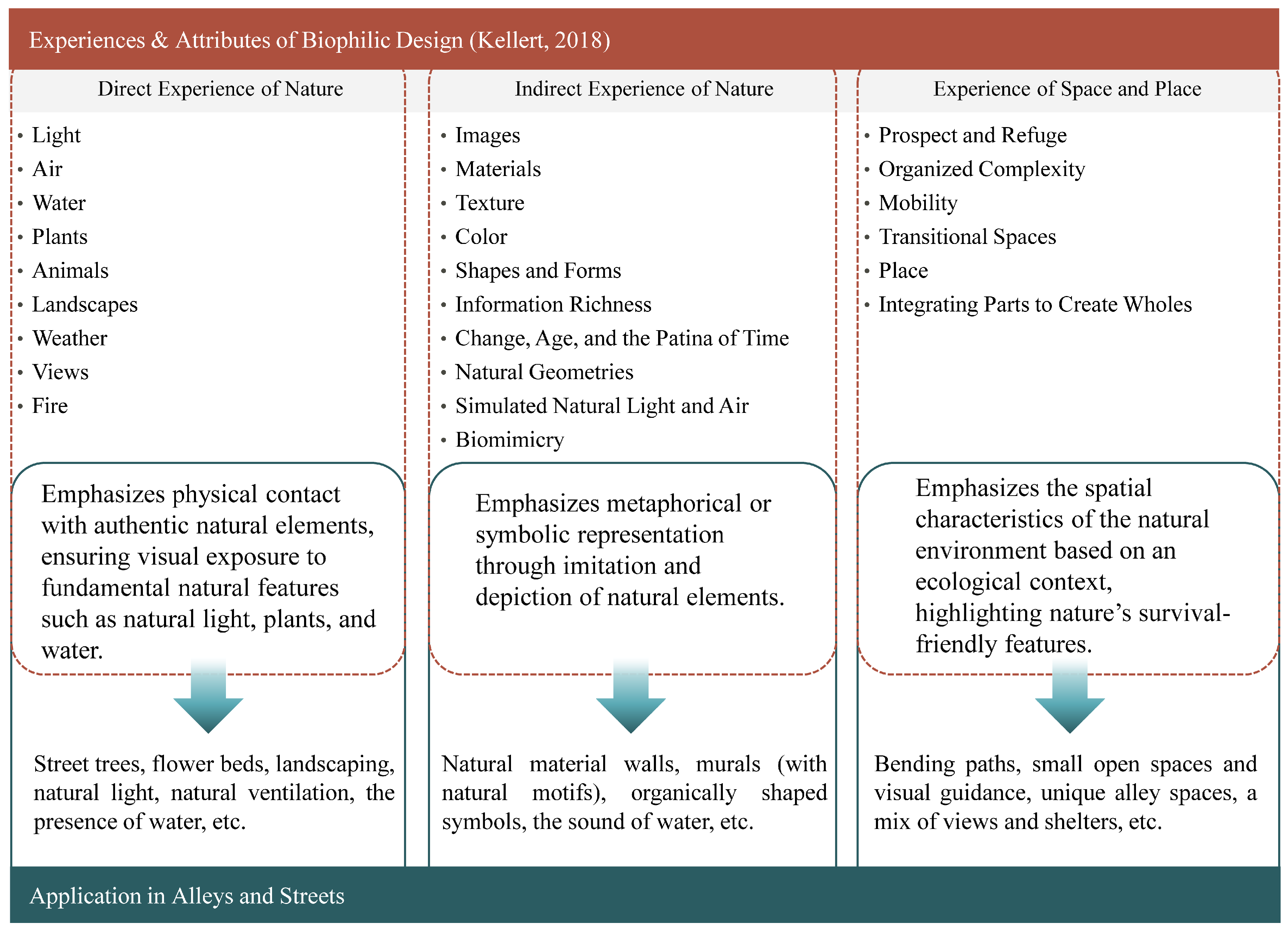
2.2. Biophilic Design Theory and Urban Landscape Application
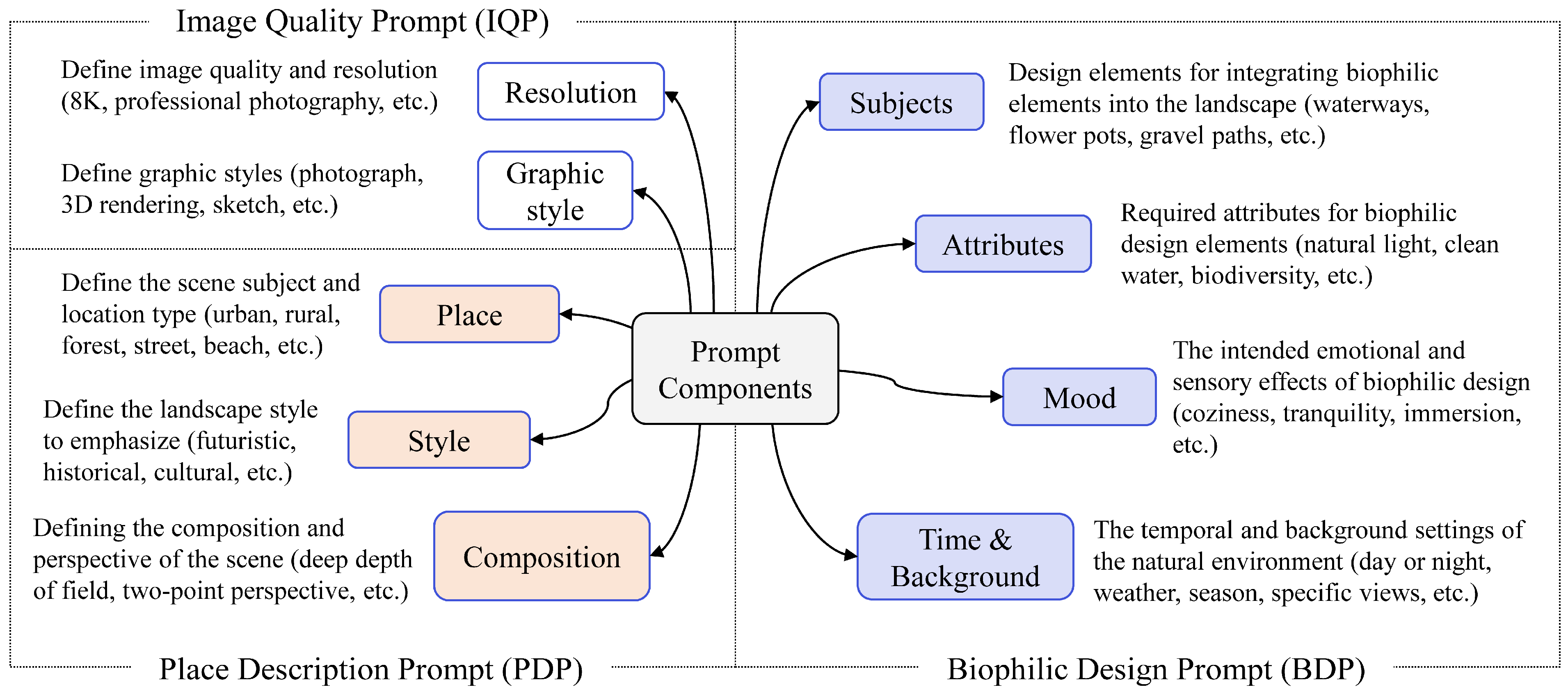
2.3. LoRA Model and Prompt Framework for Landscape Visualization
2.4. Research Gap and Theoretical Linkage
3. Methodology
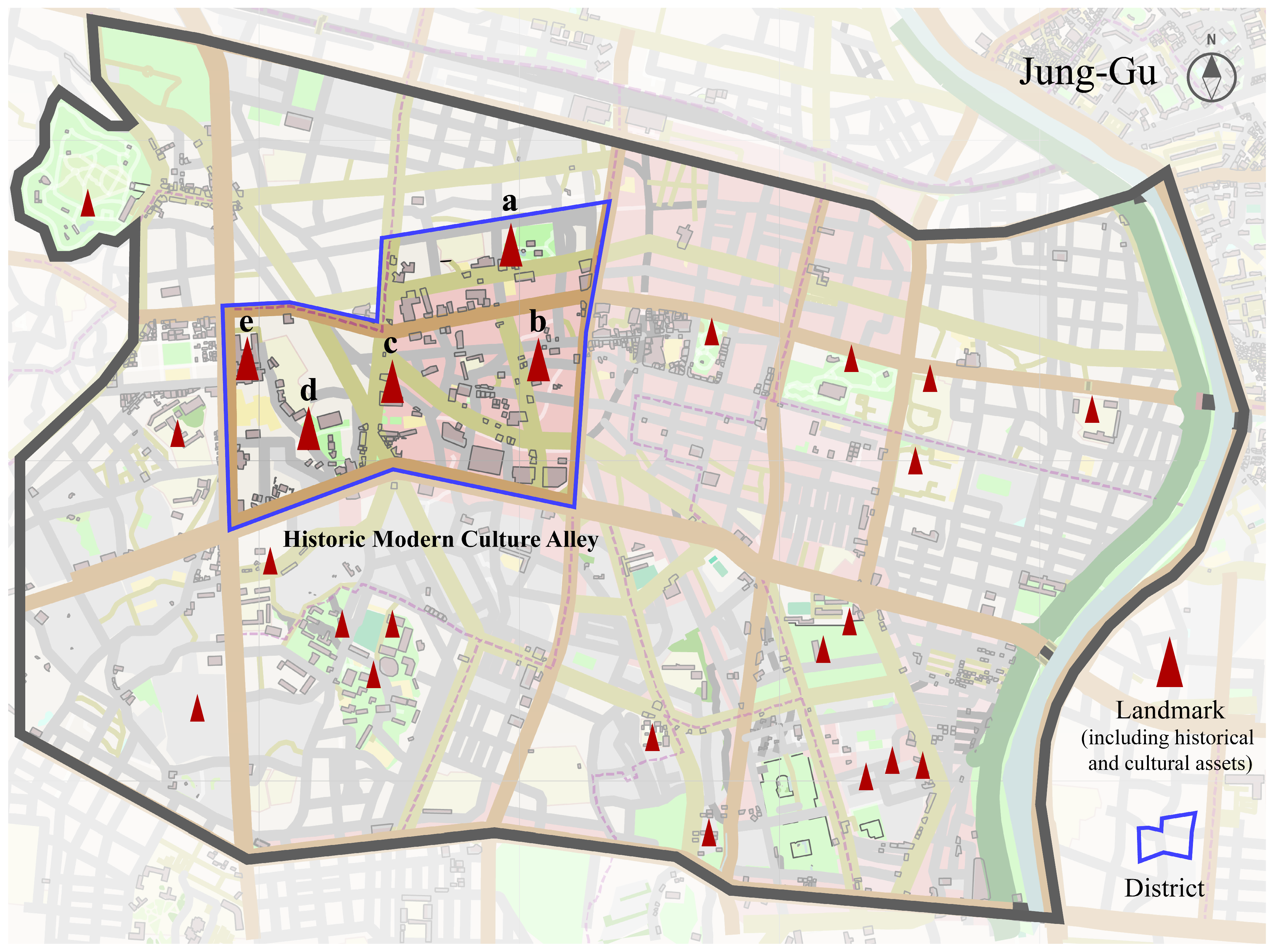
3.1. Classification of Target and Alley Types
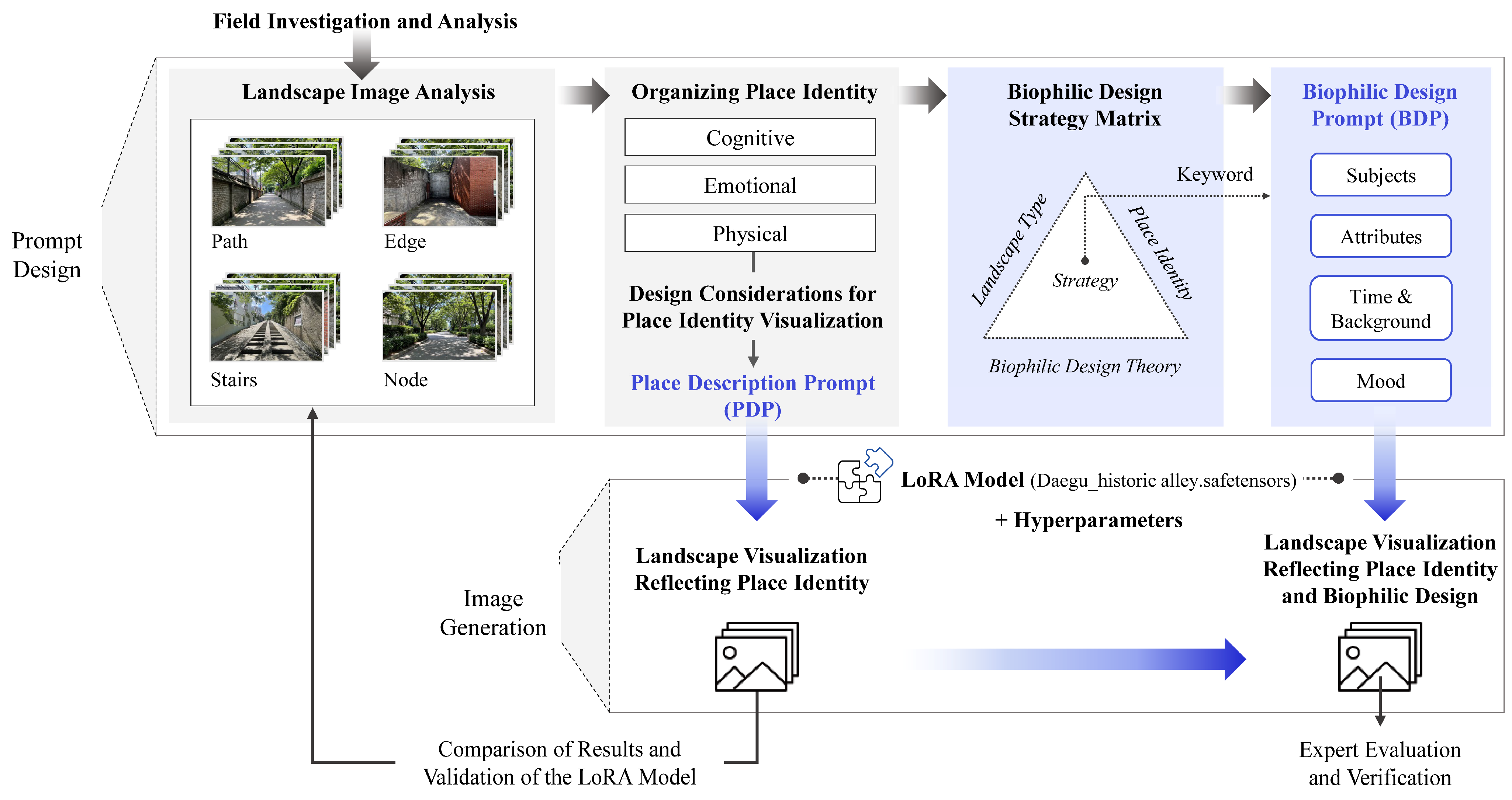
- Path: The primary circulation axis and cognitive flow of the alley, shaped by its alignment, rhythm, scale, and walking experience. Features such as straightness or curvature, width, and boundary composition directly influence pedestrian perception and movement.
- Stairs: A vertical connector linking horizontal paths, introducing rhythm through gradients and level changes. In historic alleys, stairs often combine with topographic or defensive elements, reinforcing uniqueness while ensuring continuity between upper and lower spaces.
- Edge: Boundaries or transitional zones, typically formed by high walls, enclosed spaces, or dead ends. In historic alleys, materiality, height differences, and wall textures accentuate the perception of enclosure and openness, directly shaping pedestrian experience.
- Node: Points where paths intersect or visual attention converges, often associated with public spaces or clusters of urban functions. Nodes serve as focal areas for gathering and interaction, enhancing both orientation and place identity.
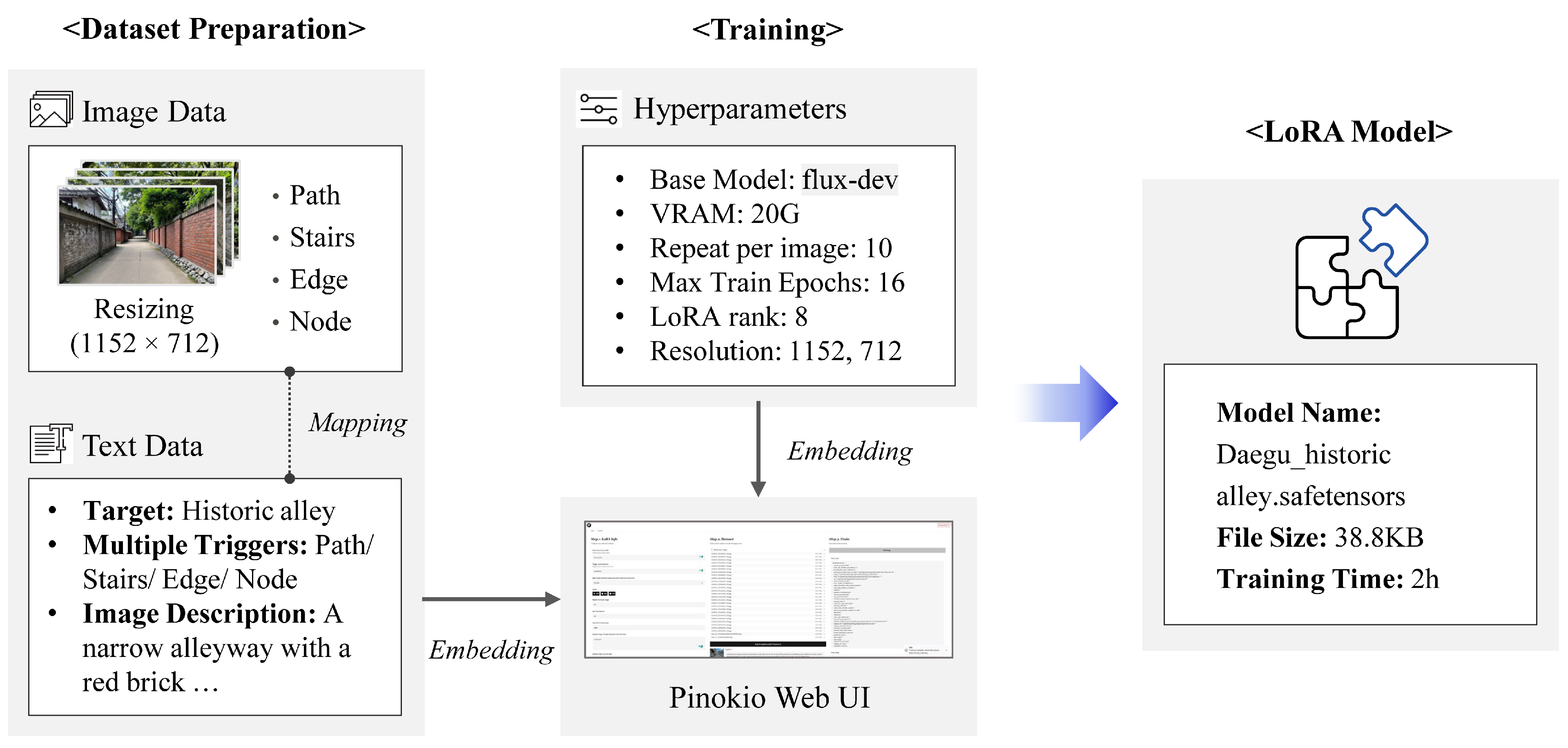
3.2. Dataset Construction and LoRA Training
- Inclusion of key landmarks and visual cues of the study site;
- Clear representation of the spatial configuration and characteristics of each alley type;
- Variation in viewpoints, orientations, and distances within each type.
3.3. Prompt Design and AI Image Generation
3.4. Evaluation and Analysis
3.4.1. Image Similarity Evaluation Index
3.4.2. Expert Evaluation
4. Place-Identity-Based Biophilic Design Prompt
4.1. Place Identity Characteristics of Historic Alley Typologies
4.2. Biophilic Design Strategy Matrix
4.3. Prompt Mapping for Biophilic Design Application
5. AI-Generated Alley Images Results and Evaluation
5.1. Training Stability and Visual Comparison of LoRA-Generated Images
5.2. Quantitative Evaluation of Image Fidelity and Structural Similarity
5.3. Generative Results Integrating Place Identity and Biophilic Design
5.4. Expert Evaluation of Place-Identity-Based Biophilic Design
6. Discussion
6.1. Reproducing Place Identity Through LoRA Training
6.2. Integrating Biophilic Strategies Through Structured BDP
6.3. Evaluating Reliability and Applicability of AI-Generated Images
- (1)
- Expand multi-city and multicultural datasets to mitigate contextual bias.
- (2)
- Present multiple alternative scenarios in parallel to avoid overreliance on single outcomes.
- (3)
- Incorporate expert and citizen feedback loops to critically validate AI-generated results.
- (4)
- Ensure transparency in data sources and prompt design, enhancing trust and accountability in interpretation.
7. Conclusions
7.1. Contributions and Novelty
7.2. Practical Implications for Urban Planning and Design
7.3. Limitations and Future Research Directions
Author Contributions
Funding
Data Availability Statement
Conflicts of Interest
Appendix A

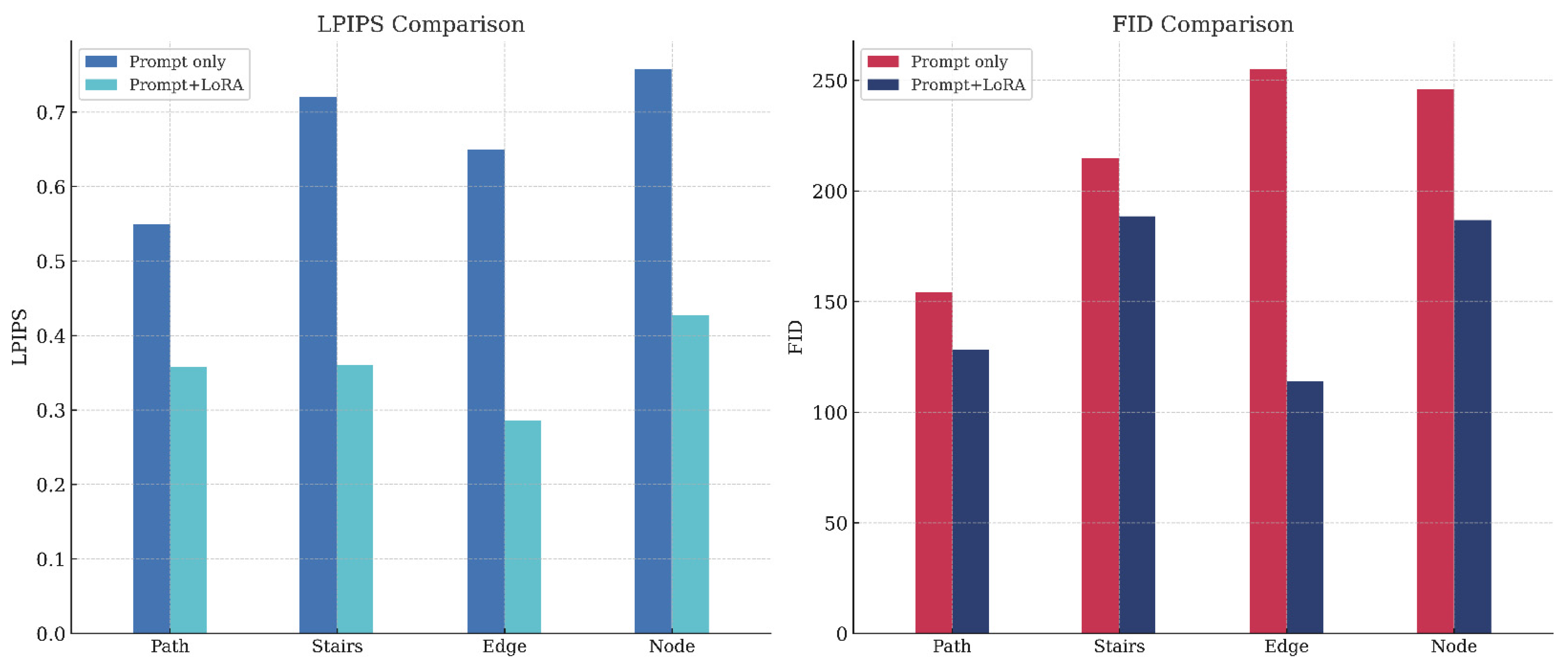
| Alley Type | Condition | LPIPS | FID | Cohen’s d (LPIPS) | Cohen’s d (FID) |
|---|---|---|---|---|---|
| Path | Prompt-only | 0.55 ± 0.15 | 154.17 ± 8.5 | 1.3 | 3.1 |
| Prompt+LoRA | 0.36 ± 0.14 | 128.12 ± 7.4 | |||
| Stairs | Prompt-only | 0.72 ± 0.16 | 214.72 ± 9.6 | 2.3 | 3.1 |
| Prompt+LoRA | 0.36 ± 0.15 | 188.62 ± 8.9 | |||
| Edge | Prompt-only | 0.65 ± 0.05 | 255.01 ± 10.2 | 3.4 | 12.6 |
| Prompt+LoRA | 0.29 ± 0.14 | 114.02 ± 8.1 | |||
| Node | Prompt-only | 0.76 ± 0.16 | 245.84 ± 9.8 | 2.2 | 5.9 |
| Prompt+LoRA | 0.43 ± 0.14 | 186.89 ± 8.5 | |||
| Average | Prompt-only | 0.67 ± 0.06 | 217.94 ± 9.5 | 2.3 (avg.) | 6.2 (avg.) |
| Prompt+LoRA | 0.36 ± 0.04 | 154.91 ± 8.2 |
References
- Antrop, M. Why landscapes of the past are important for the future. Landsc. Urban Plan. 2005, 70, 21–34. [Google Scholar] [CrossRef]
- Lowenthal, D. The Past is a Foreign Country–Revisited; Cambridge University Press: Cambridge, UK, 2015. [Google Scholar]
- Yu, H. A Study on Urban Regeneration and Creating Place Assets in Daegu Modern Alleyway. Ph.D. Thesis, Kyungpook National University, Daegu, Republic of Korea, 2019. [Google Scholar]
- Daegu Metropolitan City Jung-Gu: Historical and Cultural Street Tours. Available online: https://www.jung.daegu.kr/new/english/pages/tour/page.html?mc=5038 (accessed on 25 June 2025).
- Ujang, N.; Zakariya, K. The notion of place, place meaning and identity in urban regeneration. Procedia-Soc. Behav. Sci. 2015, 170, 709–717. [Google Scholar] [CrossRef]
- Ernawati, J. Dimensions underlying place identity for sustainable urban development. MATTER Int. J. Sci. Technol. 2018, 3, 271–285. [Google Scholar] [CrossRef]
- Kellert, S.; Heerwagen, J.; Mador, P. Biophilic Design: The Theory, Science, and Practice of Bringing Buildings to Life; John Wiley & Sons: Hoboken, NJ, USA, 2008. [Google Scholar]
- Kellert, S.R. Nature by Design: The Practice of Biophilic Design; Yale University Press: New Haven, CT, USA; London, UK, 2018. [Google Scholar]
- Beatley, T. Handbook of Biophilic City Planning & Design; Island Press: Washington, DC, USA, 2017. [Google Scholar]
- Li, Y.; Li, W.; Liu, Y. Remedies from nature: Exploring the moderating mechanisms of natural landscape features on emotions and perceived restoration in urban parks. Front. Psychol. 2025, 15, 1502240. [Google Scholar] [CrossRef]
- Hartig, T.; Mitchell, R.; De Vries, S.; Frumkin, H. Nature and health. Annu. Rev. Public Health 2014, 35, 207–228. [Google Scholar] [CrossRef]
- Relph, E. Place and Placelessness; Pion: London, UK, 1976; Volume 67. [Google Scholar]
- Lewicka, M. Place attachment: How far have we come in the last 40 years? J. Environ. Psychol. 2011, 31, 207–230. [Google Scholar] [CrossRef]
- Scannell, L.; Gifford, R. Defining place attachment: A tripartite organizing framework. J. Environ. Psychol. 2010, 30, 1–10. [Google Scholar] [CrossRef]
- Browning, W.D.; Ryan, C.O.; Clancy, J.O. 14 Patterns of Biophilic Design: Improving Health & Well-Being in the Built Environment; Terrapin Bright Green, LLC: New York, NY, USA, 2014. [Google Scholar]
- Benedict, M.A.; McMahon, E.T. Green Infrastructure: Linking Landscapes and Communities; Island press: Washington, DC, USA, 2012. [Google Scholar]
- Lee, E.J.; Park, S.J. A Structured Prompt Framework for AI-Generated Biophilic Architectural Spaces. J. Build. Eng. 2025, 111, 113326. [Google Scholar] [CrossRef]
- Hu, E.J.; Shen, Y.; Wallis, P.; Allen-Zhu, Z.; Li, Y.; Wang, S.; Wang, L.; Chen, W. Lora: Low-rank adaptation of large language models. ICLR 2022, 1, 3. [Google Scholar] [CrossRef]
- Campo-Ruiz, I. Artificial intelligence may affect diversity: Architecture and cultural context reflected through ChatGPT, Midjourney, and Google Maps. Humanit. Soc. Sci. Commun. 2025, 12, 24. [Google Scholar] [CrossRef]
- Jang, K.M.; Chen, J.; Kang, Y.; Kim, J.; Lee, J.; Duarte, F.; Ratti, C. Place identity: A generative AI’s perspective. Humanit. Soc. Sci. Commun. 2024, 11, 1156. [Google Scholar] [CrossRef]
- Proshansky, H.M.; Fabian, A.K.; Kaminoff, R. Place-identity: Physical world socialization of the self. J. Environ. Psychol. 1983, 3, 57–83. [Google Scholar] [CrossRef]
- Raagmaa, G. Regional identity in regional development and Planning1. Eur. Plan. Stud. 2002, 10, 55–76. [Google Scholar] [CrossRef]
- Paasi, A. Region and place: Regional identity in question. Prog. Hum. Geogr. 2003, 27, 475–485. [Google Scholar] [CrossRef]
- Groote, P.; Haartsen, T. The Communication of Heritage: Creating Place Identities. The Routledge Research Companion to Heritage and Identity; Routledge: London, UK, 2016; pp. 181–194. [Google Scholar]
- Lynch, K. The Image of the City; MIT press: Cambridge, MA, USA, 1964. [Google Scholar]
- Xue, F.; Gou, Z.; Lau, S.S.-Y.; Lau, S.-K.; Chung, K.-H.; Zhang, J. From biophilic design to biophilic urbanism: Stakeholders’ perspectives. J. Clean. Prod. 2019, 211, 1444–1452. [Google Scholar] [CrossRef]
- Rombach, R.; Blattmann, A.; Lorenz, D.; Esser, P.; Ommer, B. High-resolution image synthesis with latent diffusion models. In Proceedings of the IEEE/CVF Conference on Computer Vision and Pattern Recognition, New Orleans, LA, USA, 18–24 June 2022; pp. 10684–10695. [Google Scholar] [CrossRef]
- Dai, M.; Feng, Y.; Wang, R.; Jung, J. Enhancing the digital inheritance and development of Chinese intangible cultural heritage paper-cutting through stable diffusion LoRA models. Appl. Sci. 2024, 14, 11032. [Google Scholar] [CrossRef]
- Batifol, S.; Blattmann, A.; Boesel, F.; Consul, S.; Diagne, C.; Dockhorn, T.; English, J.; English, Z.; Esser, P.; Kulal, S. FLUX. 1 Kontext: Flow Matching for In-Context Image Generation and Editing in Latent Space. arXiv 2025, arXiv:2506.15742. [Google Scholar]
- Zhang, R.; Isola, P.; Efros, A.A.; Shechtman, E.; Wang, O. The unreasonable effectiveness of deep features as a perceptual metric. In Proceedings of the IEEE Conference on Computer Vision and Pattern Recognition, Salt Lake City, UT, USA, 18–22 June 2018; pp. 586–595. [Google Scholar]
- Obukhov, A.; Krasnyanskiy, M. Quality assessment method for GAN based on modified metrics inception score and Fréchet inception distance. In Proceedings of the Computational Methods in Systems and Software, Konstanz, Germany, 23–25 September 2020; Springer: Berlin/Heidelberg, Germany, 2020; pp. 102–114. [Google Scholar]
- Beatley, T. Biophilic Cities: Integrating Nature into Urban Design and Planning; Island Press: Washington, DC, USA, 2010. [Google Scholar]
- Lee, E.-J.; Park, S.-J. Biophilic Experience-Based Residential Hybrid Framework. Int. J. Environ. Res. Public Health 2022, 19, 8512. [Google Scholar] [CrossRef]
- Reeve, A.; Desha, C.; Hargroves, K.; Newman, P. Informing healthy building design with biophilic urbanism design principles: A review and synthesis of current knowledge and research. In Proceedings of the 10th International Conference on Healthy Buildings, Brisbane, Australia, 8–12 July 2012. [Google Scholar]
- Lee, E.J.; Park, S.J. Toward the Biophilic Residential Regeneration for the Green New Deal. Int. J. Environ. Res. Public Health 2021, 18, 2523. [Google Scholar] [CrossRef]
- Newman, P.; Beatley, T.; Boyer, H. Resilient Cities: Responding to Peak Oil and Climate Change; Island Press: Washington, DC, USA, 2009. [Google Scholar]
- Ryan, C.O.; Browning, W.D.; Clancy, J.O.; Andrews, S.L.; Kallianpurkar, N.B. Biophilic design patterns: Emerging nature-based parameters for health and well-being in the built environment. ArchNet-IJAR Int. J. Archit. Res. 2014, 8, 62. [Google Scholar] [CrossRef]
- Thomson, G.; Newman, P. Green infrastructure and biophilic urbanism as tools for integrating resource efficient and ecological cities. Urban Plan. 2021, 6, 75–88. [Google Scholar] [CrossRef]
- Africa, J.; Heerwagen, J.; Loftness, V.; Ryan Balagtas, C. Biophilic design and climate change: Performance parameters for health. Front. Built Environ. 2019, 5, 28. [Google Scholar] [CrossRef]
- Kaplan, R.; Kaplan, S. The Experience of Nature: A Psychological Perspective; Cambridge University Press: Cambridge, NY, USA, 1989. [Google Scholar]
- Cronbach, L.J. Coefficient alpha and the internal structure of tests. Psychometrika 1951, 16, 297–334. [Google Scholar] [CrossRef]
- Koo, T.K.; Li, M.Y. A guideline of selecting and reporting intraclass correlation coefficients for reliability research. J. Chiropr. Med. 2016, 15, 155–163. [Google Scholar] [CrossRef]
- Tennessen, C.M.; Cimprich, B. Views to nature: Effects on attention. J. Environ. Psychol. 1995, 15, 77–85. [Google Scholar] [CrossRef]
- Jiang, B.; Chang, C.-Y.; Sullivan, W.C. A dose of nature: Tree cover, stress reduction, and gender differences. Landsc. Urban Plan. 2014, 132, 26–36. [Google Scholar] [CrossRef]
- Browning, M.H.; Saeidi-Rizi, F.; McAnirlin, O.; Yoon, H.; Pei, Y. The role of methodological choices in the effects of experimental exposure to simulated natural landscapes on human health and cognitive performance: A systematic review. Environ. Behav. 2021, 53, 687–731. [Google Scholar] [CrossRef]
- White, M.; Smith, A.; Humphryes, K.; Pahl, S.; Snelling, D.; Depledge, M. Blue space: The importance of water for preference, affect, and restorativeness ratings of natural and built scenes. J. Environ. Psychol. 2010, 30, 482–493. [Google Scholar] [CrossRef]
- Joye, Y.; Van den Berg, A. Is love for green in our genes? A critical analysis of evolutionary assumptions in restorative environments research. Urban For. Urban Green. 2011, 10, 261–268. [Google Scholar] [CrossRef]
| Item | Explanation | Value |
|---|---|---|
| Base model | The pre-trained generative model that serves as the foundation for LoRA fine-tuning; in this study, Flux1-dev, a text-to-image diffusion model optimized for contextual fidelity and efficient image synthesis, was used. | Flux1-dev |
| Sampling method | The algorithm used to control the diffusion trajectory during image generation; determines how the model iteratively refines noise into a coherent image. | Euler |
| Sampling steps | The number of iterative denoising steps performed in the diffusion process; a higher value generally yields more detailed and stable images. | 25 |
| Distilled CFG Scale | A distilled classifier-free guidance parameter that adjusts the balance between visual creativity and prompt adherence, maintaining realism while avoiding overfitting to textual prompts. | 3.5 |
| CFG scale | The base guidance intensity applied during image generation to regulate how strictly the model follows the input prompt. | 1.5 |
| Resolution | The output image size (in pixels), defining the width and height of generated images. | 1152 × 712 |
| LoRA weight | The blending coefficient determines how much the LoRA fine-tuned parameters influence the base model during inference. | 0.7 |
| Number of images | Total number of images generated per alley type during inference. | 100 per type |
| Evaluation Domain | Evaluation Items | N | Materials Provided | |
|---|---|---|---|---|
| Place identity | Cognitive identity | Clarity of orientation, landmarks, and boundaries from a cognitive perspective | 4 | Paired comparison images (GT vs. AI) + explanation of place identity dimensions by alley type |
| Emotional identity | Provision of stability, sense of openness, and fascination from an emotional perspective | 4 | ||
| Physical identity | Degree to which materials, scale, and historicity are represented from a physical perspective | 4 | ||
| Biophilic design | Design integrity | Reflection of biophilic attributes such as vegetation, water, light, and seasonality | 4 | Sequential images (before–after–variation) + explanation of strategies and expected effects |
| Design effectiveness | Quality and effectiveness of biophilic experiences | 4 | ||
| Suitability of AI-based simulation | Applicability | Practical applicability of AI-generated results for design | 1 | Full image set + explanation of applicability |
| General feedback | Open comments | Suggestions for improvement, strengths, and limitations (free response) | 1 | - |
| Type | Images | Spatial Characteristics | Place Identity Dimensions | Design Considerations for Visualization | ||
|---|---|---|---|---|---|---|
| Cognitive | Emotional | Physical | ||||
| Path | 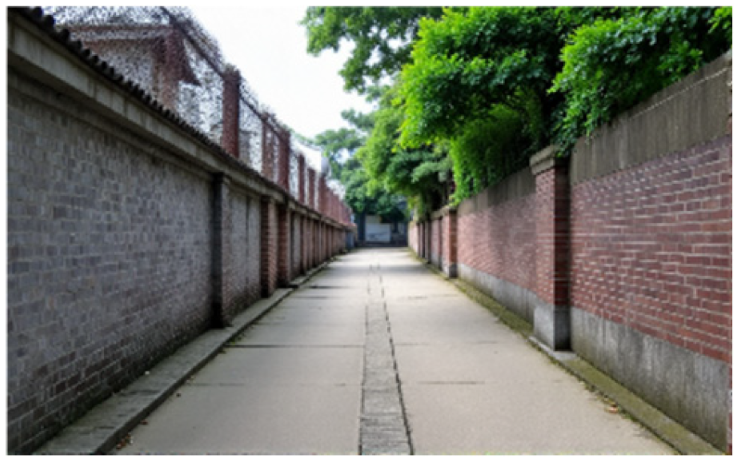 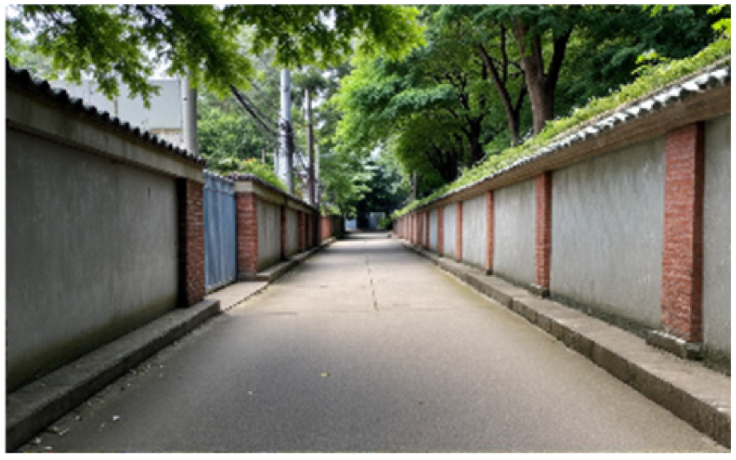 | Linear pedestrian axis with flanking walls, street tree canopy, and traditional architectural forms | Recognition of directionality through linear axis; continuity of walls and architecture | Calmness and security through steady walking rhythm | Stone/brick walls; consistent pedestrian width; traditional materials | Emphasize continuity of stone walls and pedestrian axis; reflect canopy effects; harmonize with historic architectural elements |
| Stairs | 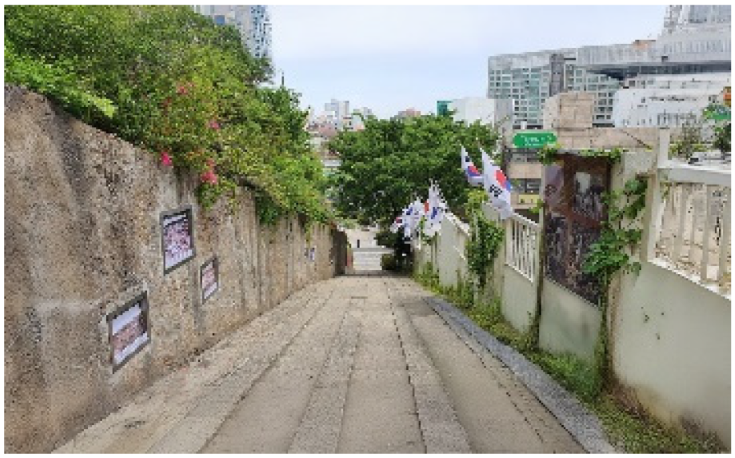 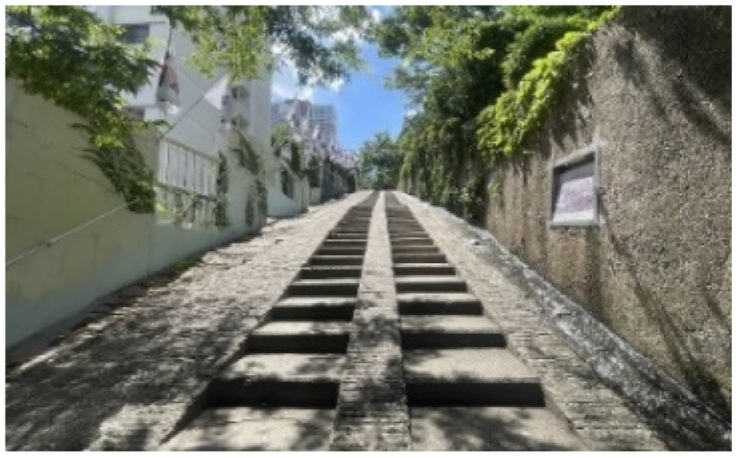 | Combination of slopes and stairs; elevation change for visual and bodily experience; independence movement memorial stairs | Anticipation through stair rhythm and directional cues | Tension and accomplishment through ascent/descent; link to historical memory | Rough stone; shadow patterns; vertical elevation of steps | Highlight rhythmic stair patterns and elevation; reflect boundary walls; capture slope and shifting viewpoints |
| Edge | 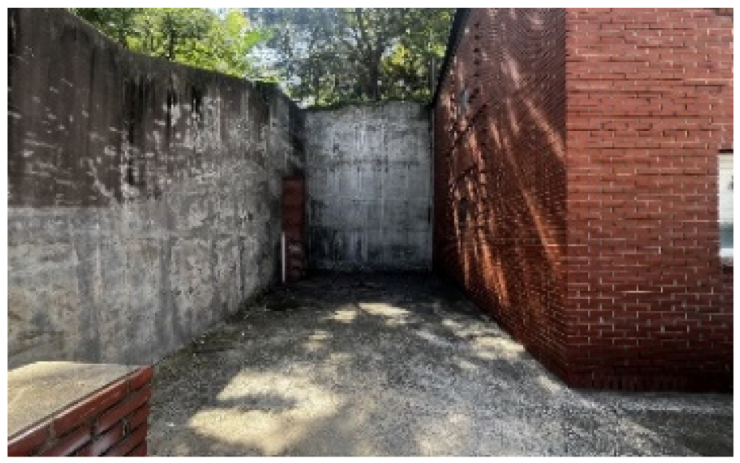 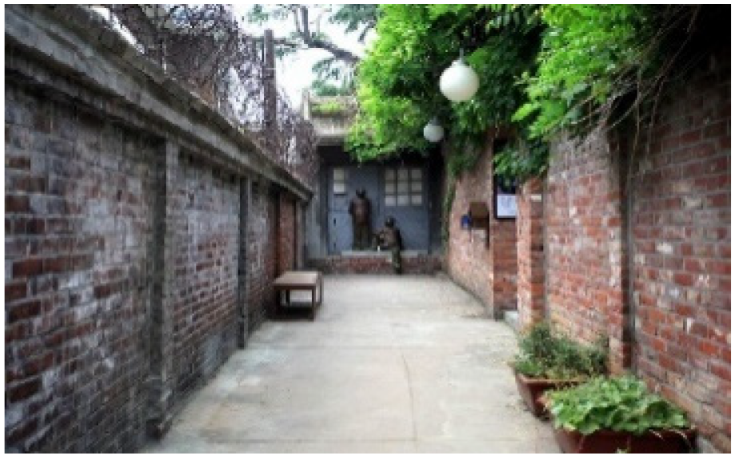 | Dead-end alley; historical information guide and exhibition space | Perception of boundaries; thresholds defining spatial separation | Salience and distinctiveness evoked by contrast; memorable perception of spatial transition | Tall walls, light–shadow contrasts; textured surfaces | Smoothly connect spatial thresholds; integrate wall textures; utilize light–shadow contrast |
| Node | 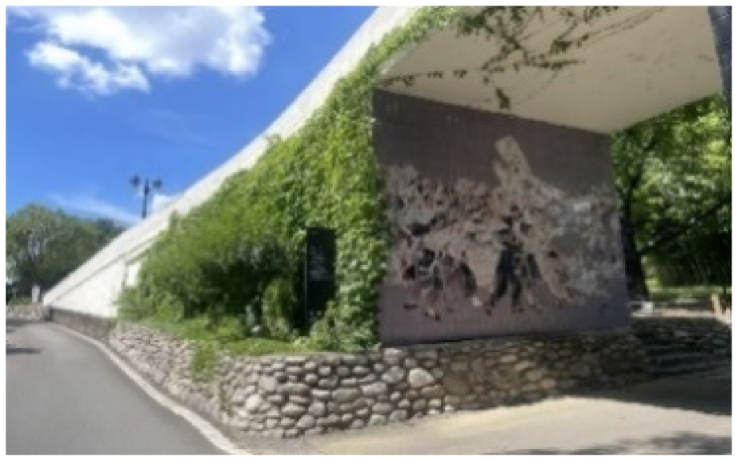 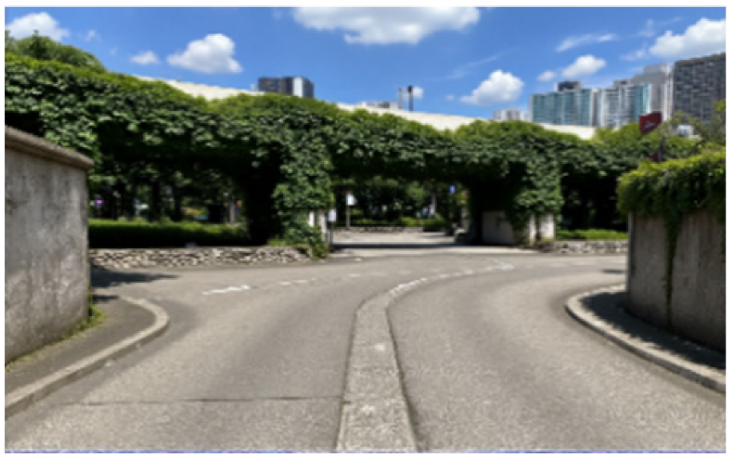 | Intersection/corner as central gathering space; symbolic elements | Orientation and spatial recognition through landmarks | Hospitality and sense of belonging; social interaction and communal memory | Central trees or sculptures; open spatial arrangement | Emphasize openness for gathering; integrate symbolic elements; represent diverse spatial patterns |
| Type | Cognitive | Emotional | Physical | Expected Effect |
|---|---|---|---|---|
| Path | Attributes: Weather, plants, and mobility Strategy: Maintain tree canopies and boundary walls; strengthen orientation through seasonal vegetation changes [7,15] | Attributes: Light, plants, and view Strategy: Provide tree canopies and flowering plants along walls; create rhythmic patterns of light and shadow for sensory continuity [7,11,15] | Attributes: Texture, materials, shapes and forms, and integrating parts to create wholes Strategy: Diversify wall textures; apply street tree canopy with groundcover plants, permeable paving, and lawns [16,32,33] | Strengthen orientation and place attachment; enhance restorative walking environment through seasonal and material variation; improve stability and protection [7,11,15] |
| Stairs | Attributes: Prospect, view, and mobility Strategy: Install mid-level observation points to enhance spatial perception; emphasize the height and rhythm of stone/brick walls aligned with stair steps [8,15] | Attributes: Prospect & refuge, landscapes, and organized complexity Strategy: Provide refuge and sequential views along stair ascent; integrate planting and water wall for layered spatial experiences [8,34] | Attributes: Materials, texture, water, and plants Strategy: Strengthen material texture, apply retaining walls, terraced steps, aquatic planting, and native vegetation adapted to slope conditions [26,35] | Enhance immersion and rhythm of vertical circulation; enhance accomplishment and discovery; improve resilience through integration of diverse materials and ecological elements [15,26,36] |
| Edge | Attributes: Texture, transitional spaces, and plants Strategy: Emphasize wall texture variation; integrate vines and transitional vegetation [9,15] | Attributes: Light, change & age, the patina of time, and images Strategy: Use contrasts of light and shadow; install green walls and climbing plants; emphasize central historic symbols and aged materials [8,15] | Attributes: Plants, animals, natural geometries, shapes and forms, and place Strategy: Provide habitats and linkages for small species while maintaining physical boundaries; integrate wall/floor and biophilic shapes and patterns [35,37] | Highlight perceptual distinctiveness of spatial transitions; create soft boundary shifts between enclosed and open areas; strengthen ecological diversity and continuity [9,38,39] |
| Node | Attributes: Place, images, plants, shapes and forms, and mobility Strategy: Place symbolic natural landmarks (e.g., tree, structure) at intersections; design circulation routes with ecological orientation and organic form [7,24] | Attributes: Prospect & refuge, water, animals, and landscapes Strategy: Provision of small-scale, visually open rest areas, and incorporation of water features (e.g., streams, ponds) to enhance emotional stability and comfort [13,15] | Attributes: Plants, water, and integrating parts to create wholes Strategy: Establishment of green networks on tunnel tops and surrounding areas, and installation of eco-friendly public infrastructure such as rain gardens and shaded resting spaces [33,35] | Enhance place attachment and community interaction; promote wayfinding and orientation through ecological diversity and iconic spatial cues [8,13,35] |
| Type | Trigger | BDP | |||
|---|---|---|---|---|---|
| Subject | Attributes | Time & Background | Mood | ||
| Path | Historic alley in Daegu, a straight path | Tree canopy, textured stone and brick wall, continuity of fence height, tiled roof, seasonal planting, vine, and groundcover (green pavements) | Rhythmic paving, dynamic light patterns, natural texture variety, seasonal vegetation, tree shadows, and natural color | Season (e.g., spring, autumn), afternoon, dappled light through canopy, and historic alley context | Calm, contemplative, and sense of protection |
| Stairs | Historic alley in Daegu, stone-textured stairs | Vertical greenery, stone texture, middle landing with a small terrace, vertical cascading water fountain (water wall, stream), and waterway (drain) with aquatic plants | Step rhythm, natural (aged, mossy) texture, prospect and refuge, natural water features, and retaining wall planting | Season (e.g., spring, autumn), afternoon, hillside, city view beyond side wall, historic setting, and shade trees | Challenging, immersive, sense of achievement, peaceful, and awe |
| Edge | Historic alley in Daegu, courtyard with edge | High gray stone/red brick texture, vertical planting (garden), birds and insects, vine-covered upper boundary, and biophilic (organic, natural geometry, wavy) patterned wall (paving) | Weathered texture, softens the edge, textural richness, filtered light, creating a patina of time, light and shadow, and natural motifs (leaf patterns, fractal textural) | Season (e.g., spring, autumn), afternoon, semi-open views, transitional space between courtyard and alley (open plaza), and sky background | Blurred boundary, quiet immersion, softened tension, anticipation, extraordinary, and threshold experience |
| Node | Historic alley in Daegu, intersection points in the node | Central landmark (tunnel, tree, plaza), waterways (pond), curved paths, tree canopy with seating (bench, shelter), rain garden, small garden, and permeable pavements | Visible routes, soft paving, filtered shadows, clean (clear) water features, gentle (natural) water flow, native plants, and biophilic materials (shapes) | Season (e.g., spring, autumn), afternoon, urban greenery context, radiating paths, and central plaza | Sociable, communal, sense of place attachment, hospitality, openness, comfort, and community connection |
| Type | PDP/IQP | Prompt-Only | Prompt+LoRA |
|---|---|---|---|
| Path | PDP: Historic alley in Daegu, straight path with stone and red brick walls, traditional tiled roof, spatial continuity, boundary clarity, eye-level view, and deep perspective IQP: Full shot, high quality, 8K, and professional photography | 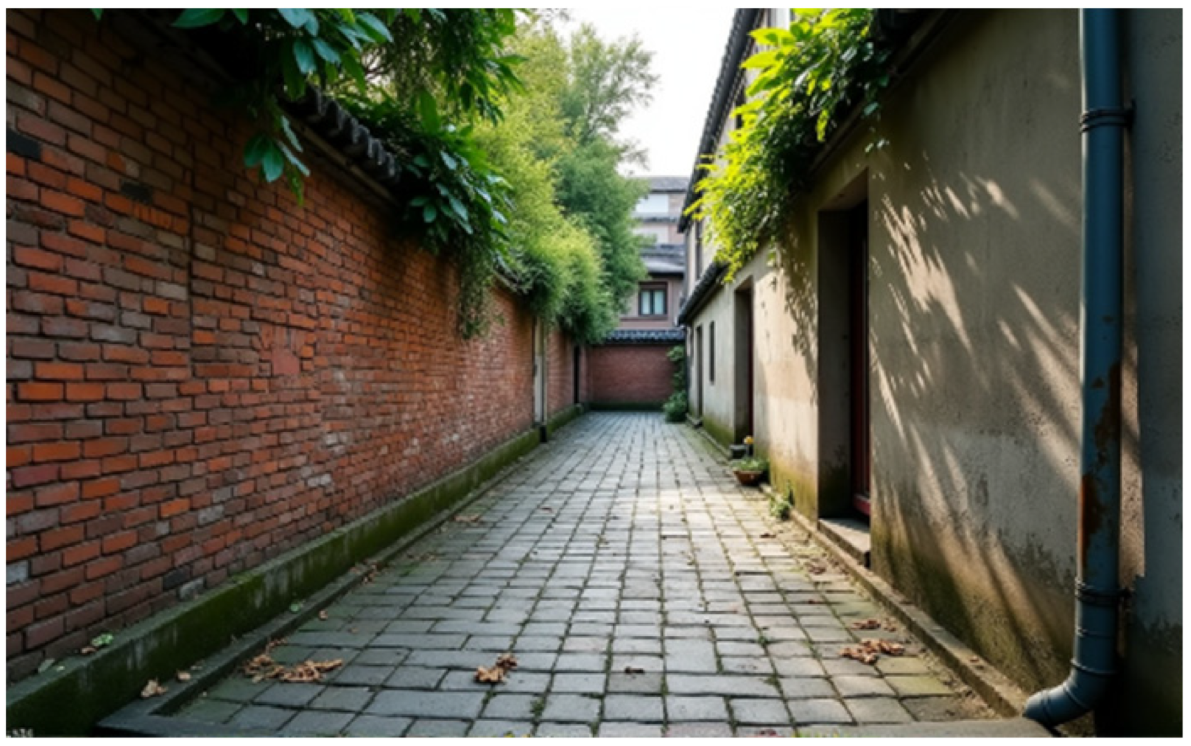 | 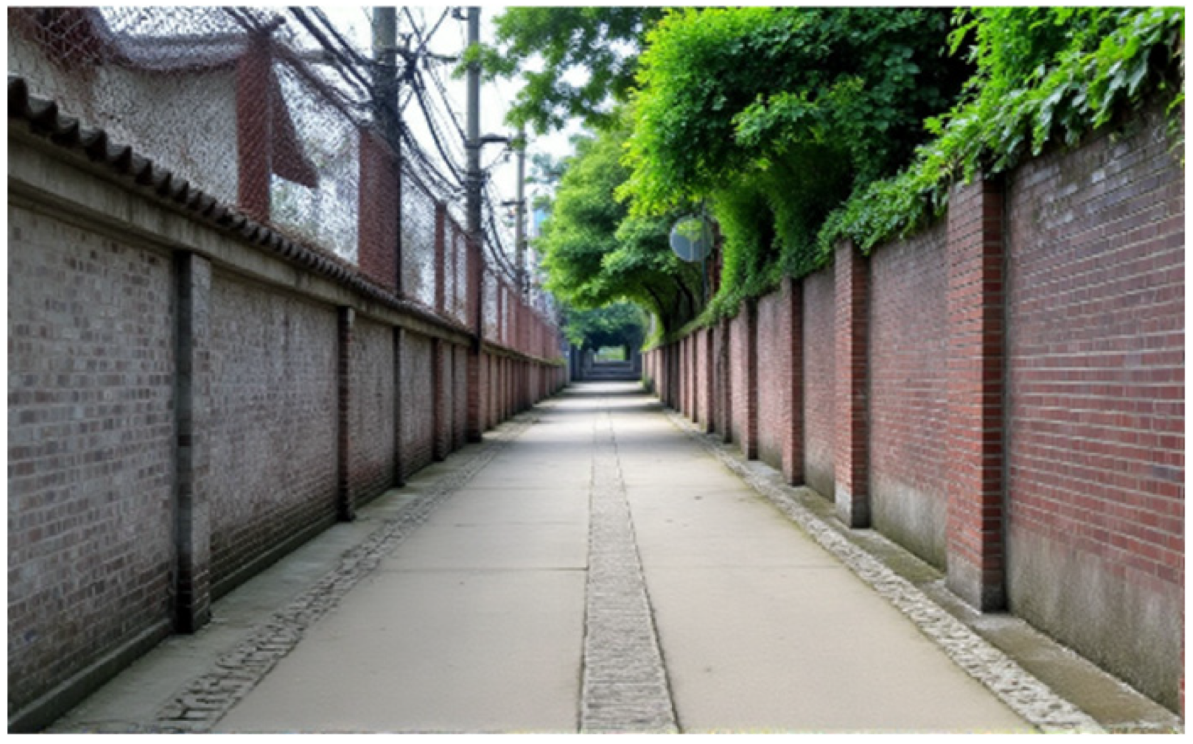 |
| Stairs | PDP: Stairs of historic alley in Daegu, downward perspective view, stone wall with memorial plaques, other side wall topped with fencing and Korean flags, trees, mossy retaining wall, and deep perspective IQP: Full shot, high quality, 8K, and professional photography | 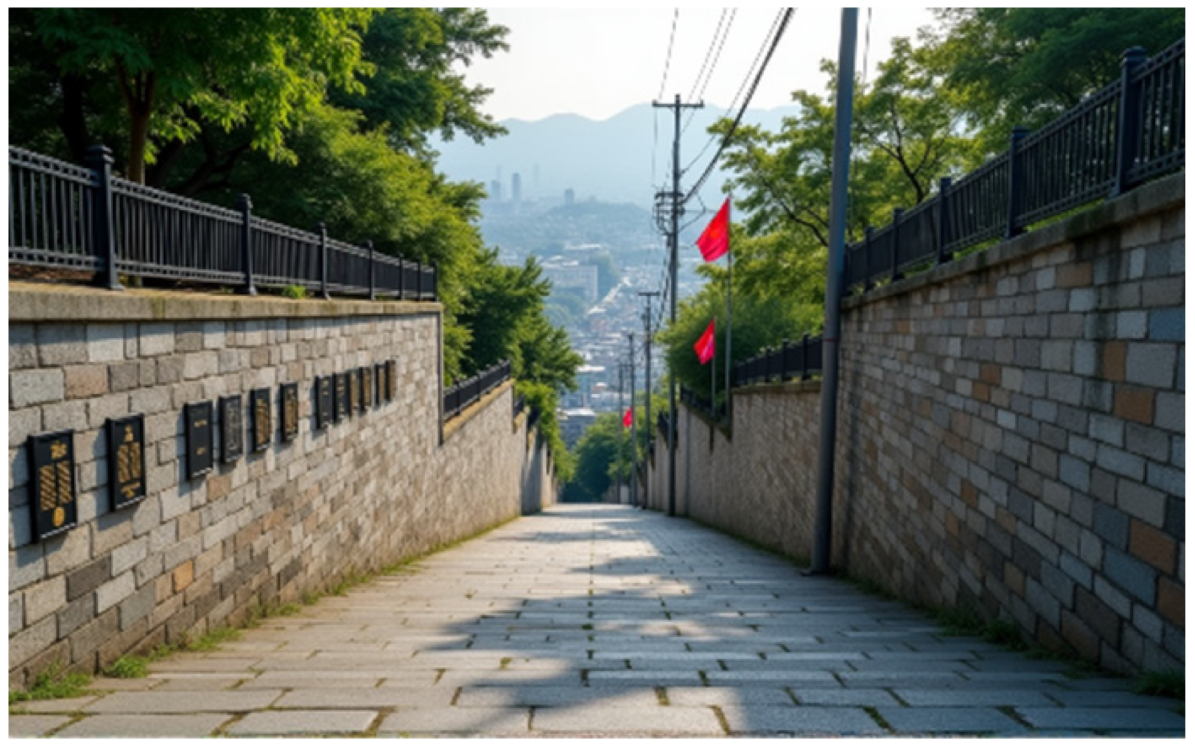 | 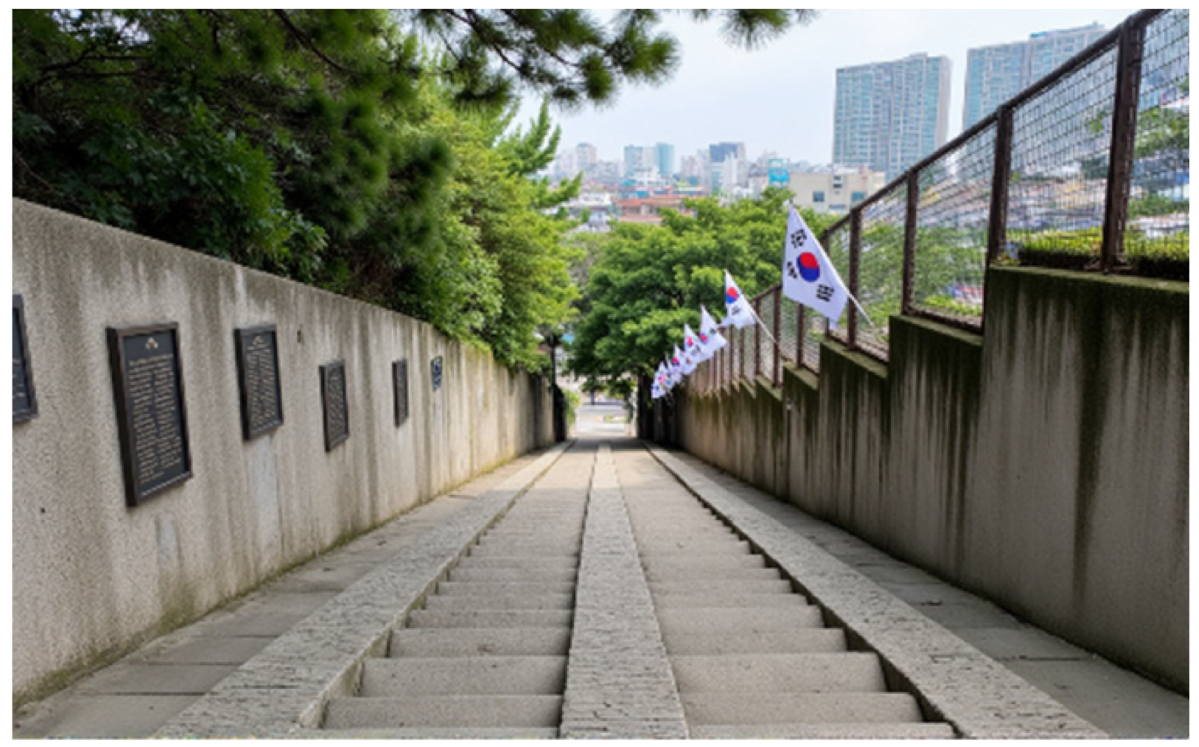 |
| Edge | PDP: Edge of historic alley in Daegu, courtyard with brick and concrete wall, side bench, bushes and barbed wire on the walls, old texture, Korean historic sculpture in the center, spatial transition, enclosed to open, eye-level view, and mdi perspective IQP: Full shot, high quality, 8K, and professional photography | 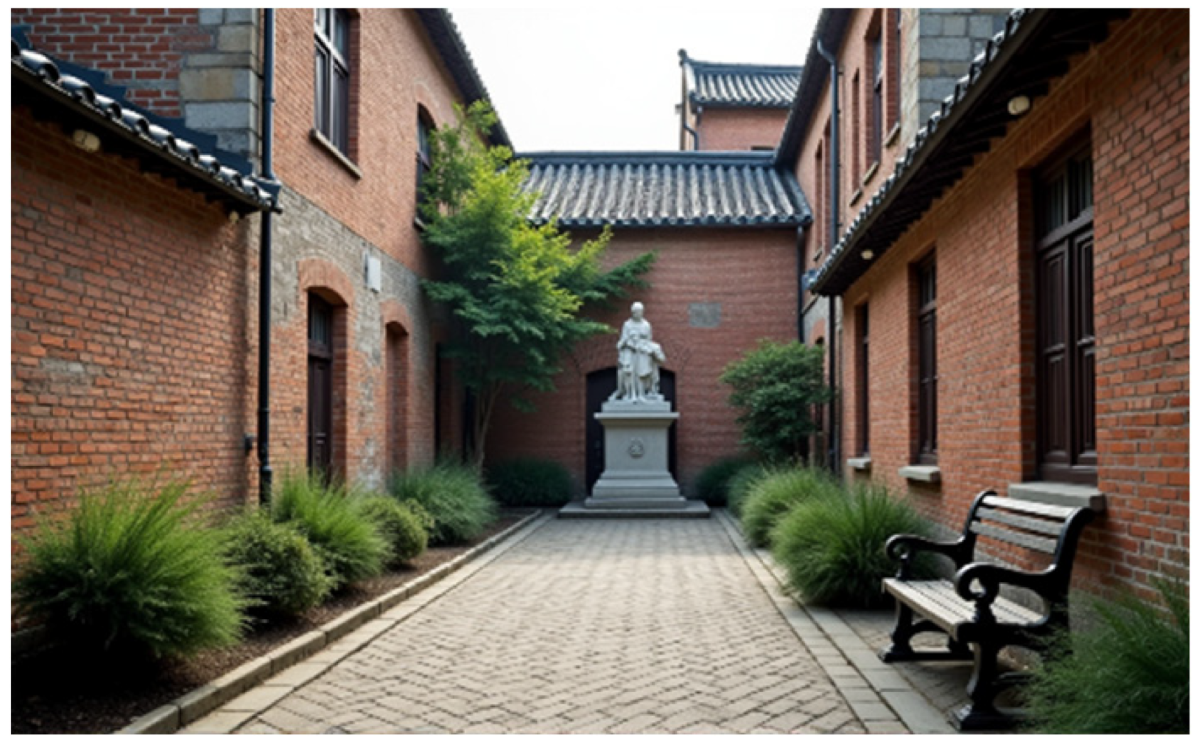 | 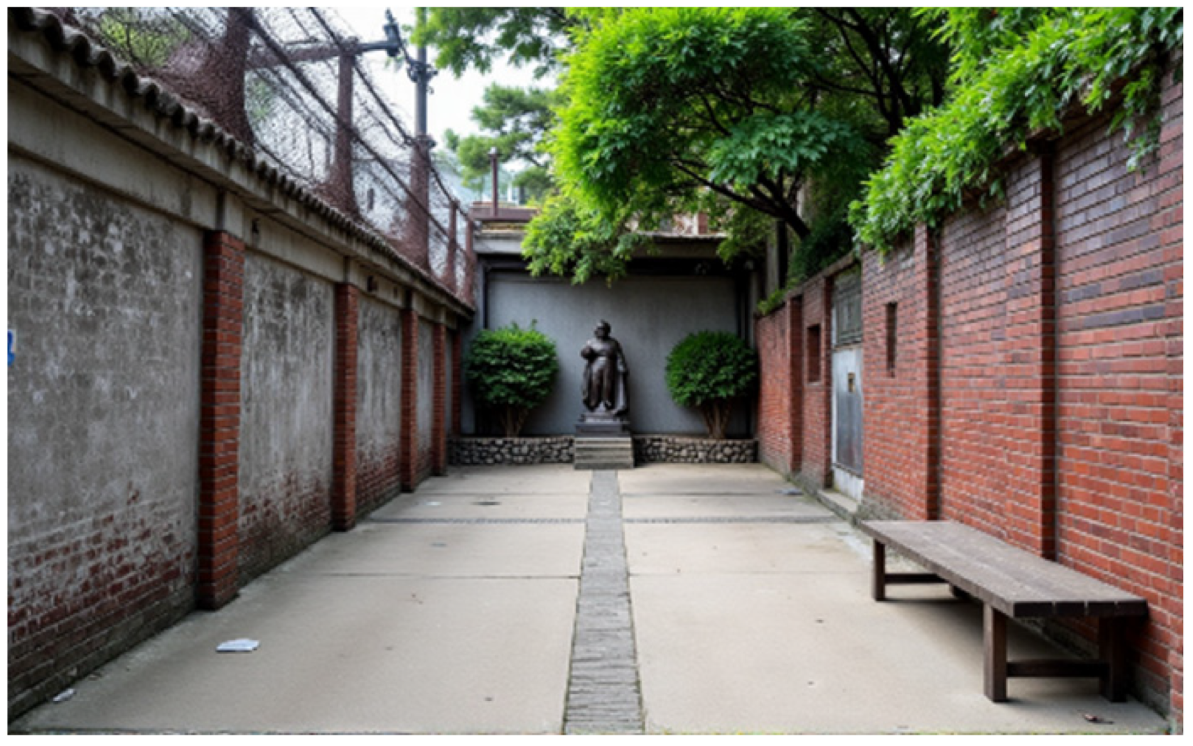 |
| Node | PDP: Historic alley with node in Daegu, intersection points, multiple curved paths converge, ivy-covered stone tunnel with mural depicting resistance, trees, open space, and wide-angle view IQP: Full shot, high quality, 8K, and professional photography | 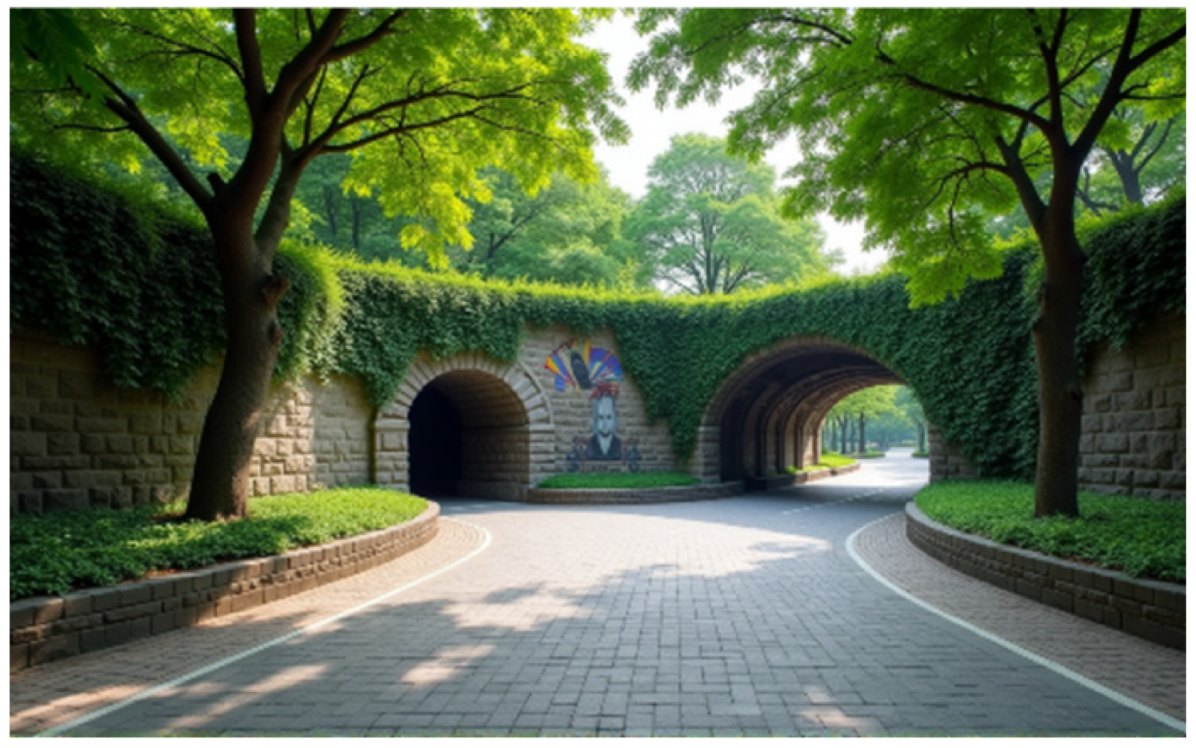 | 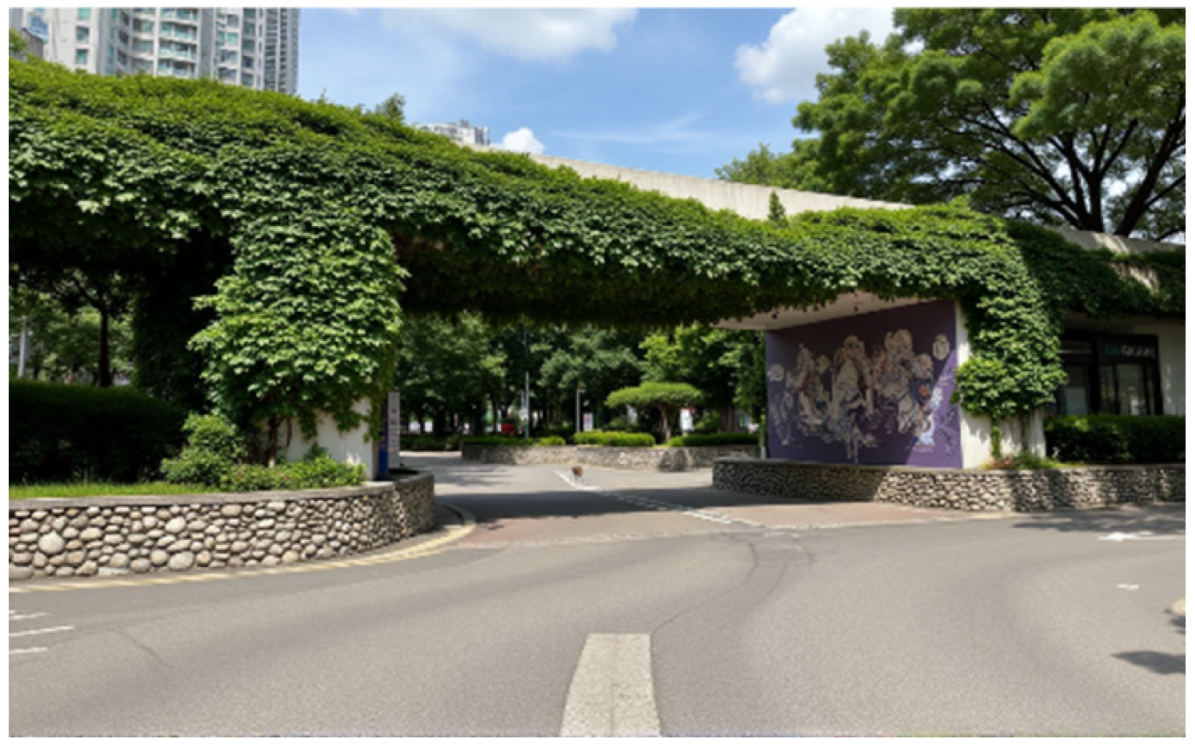 |
| Type | BDP | Generated Images | |
|---|---|---|---|
| Path | <lora:daegu-historic-alley:0.7>, path PDP, textured stone and brick wall with vine, natural texture variety, continuity of fence height, tiled roof, tree canopy with seasonal vegetation, dappled light through canopy, spring (autumn) afternoon, calm, and IQP | 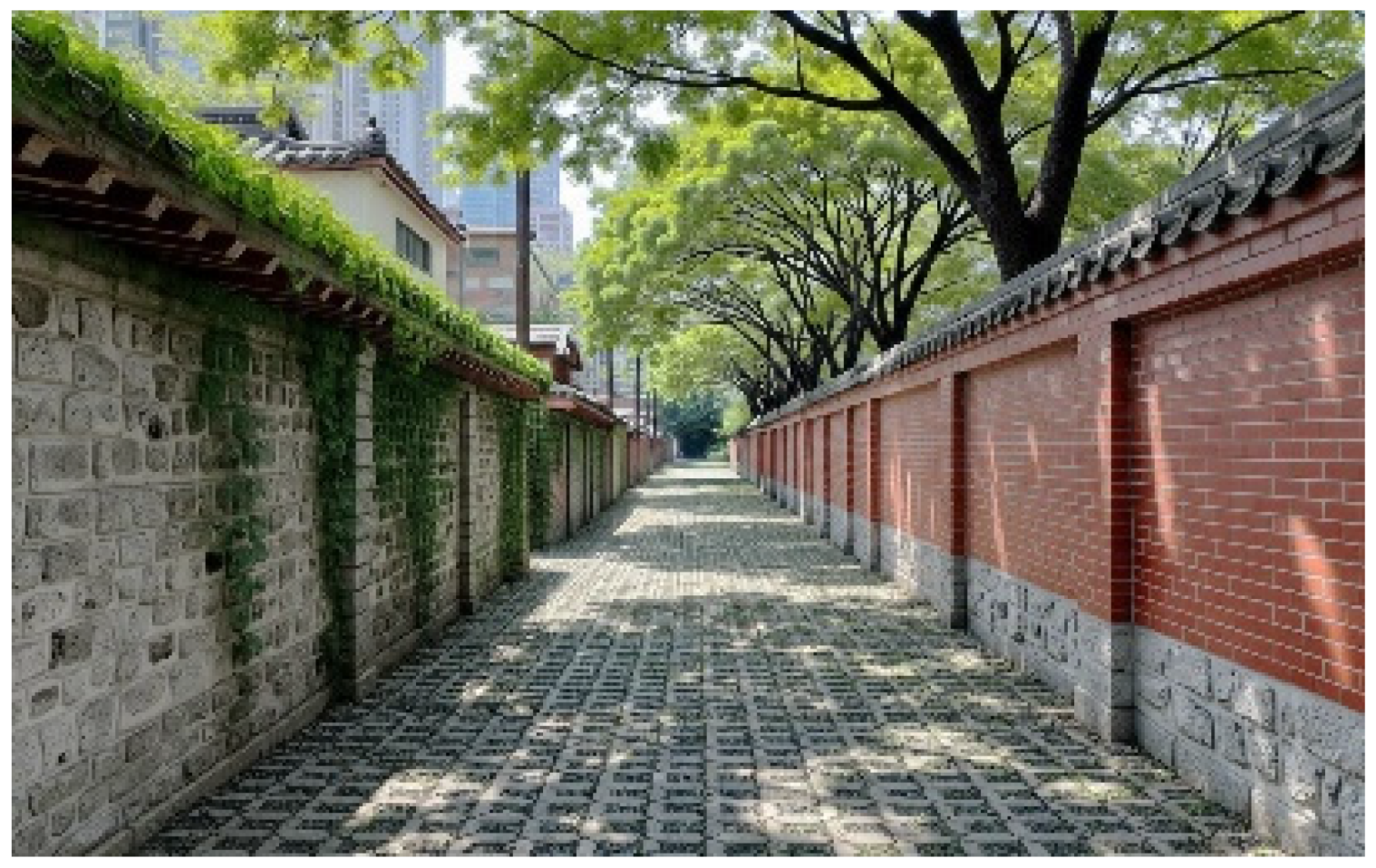 | 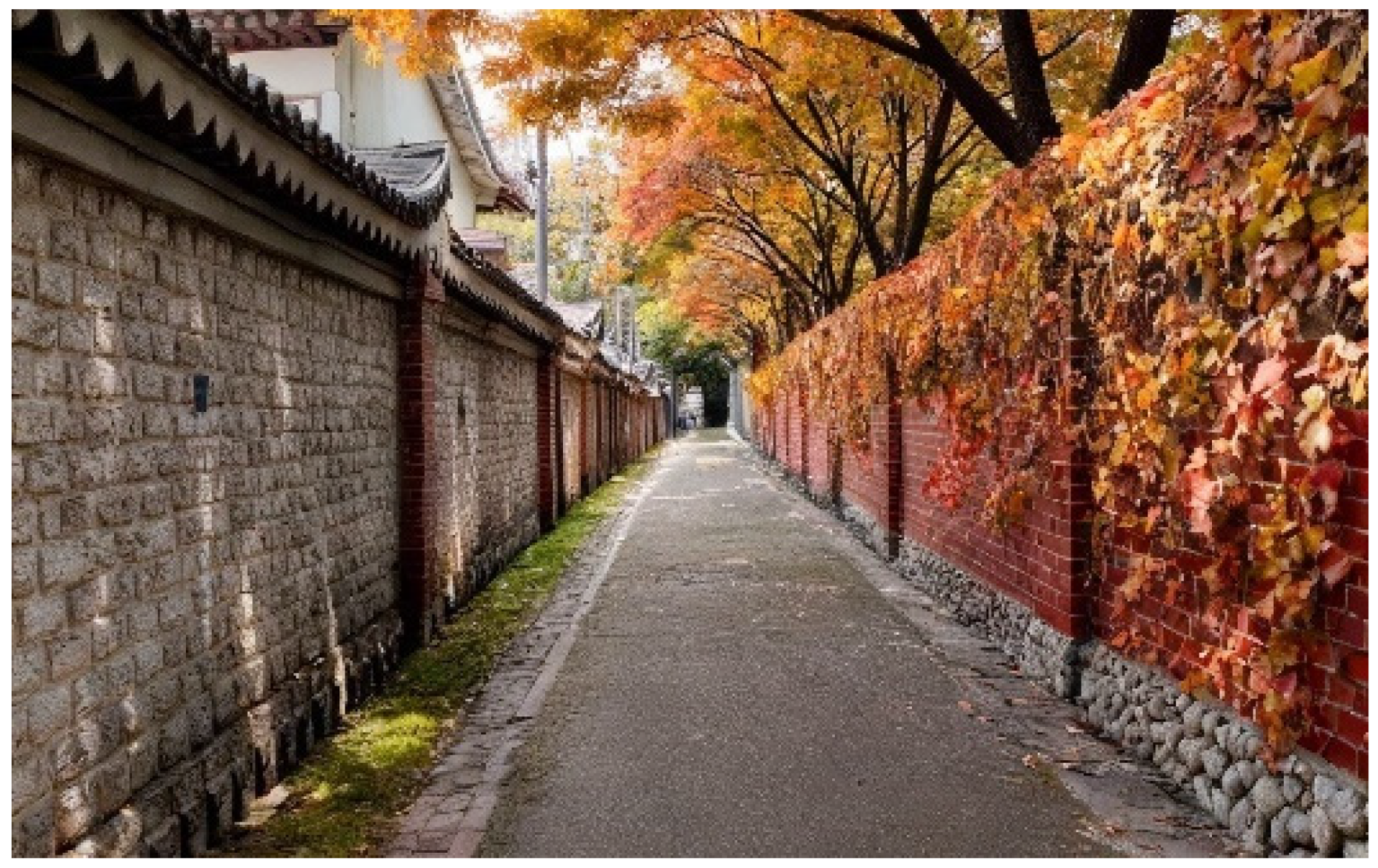 |
| Stairs | <lora:daegu-historic-alley:0.7>, stairs PDP, vine fencing, middle landing with a small terrace, prospect and refuge, vertical cascading waterwall with natural stone texture, waterway with aquatic plants, afternoon, shade trees, city view beyond side wall, immersive, challenging, and IQP | 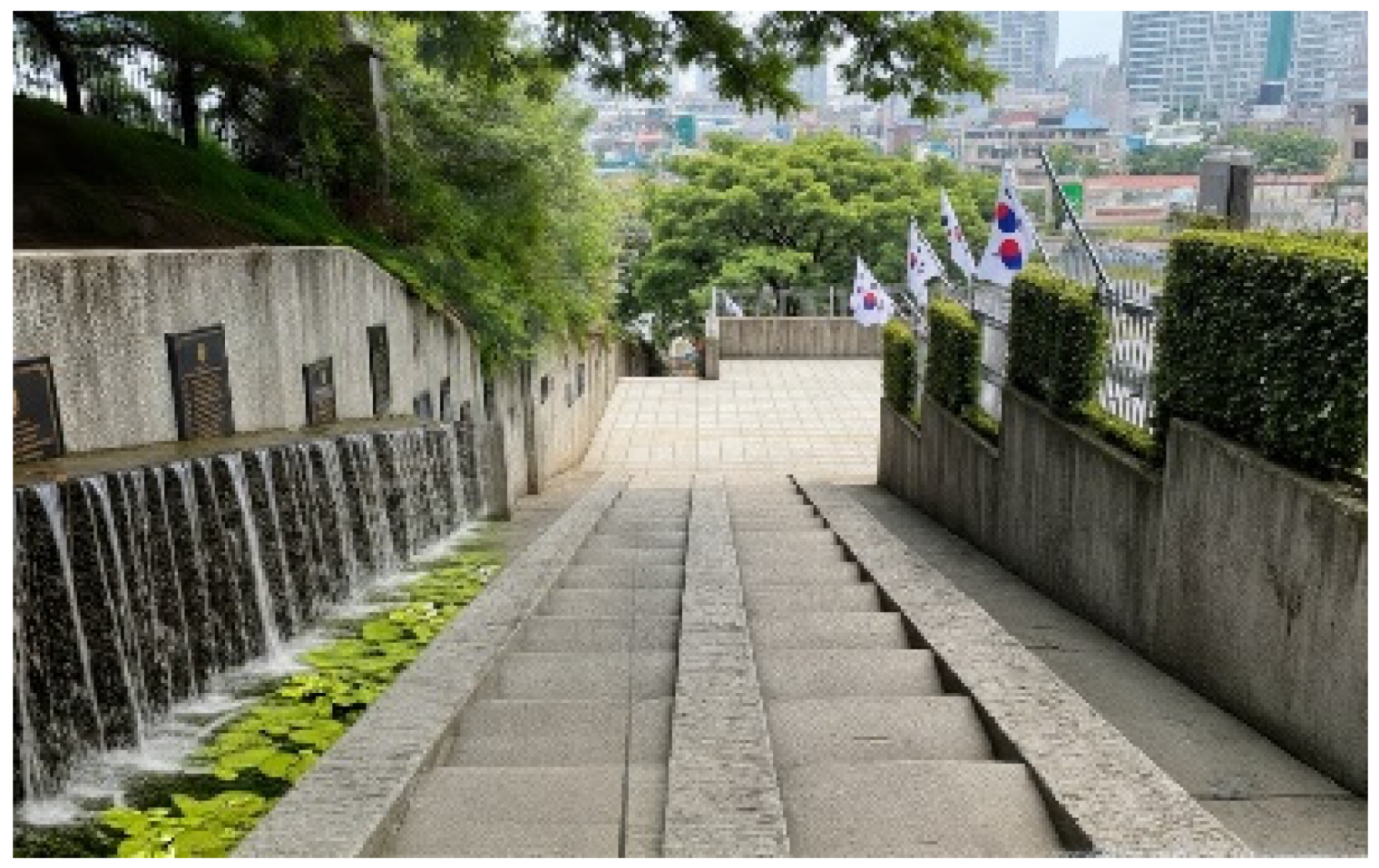 | 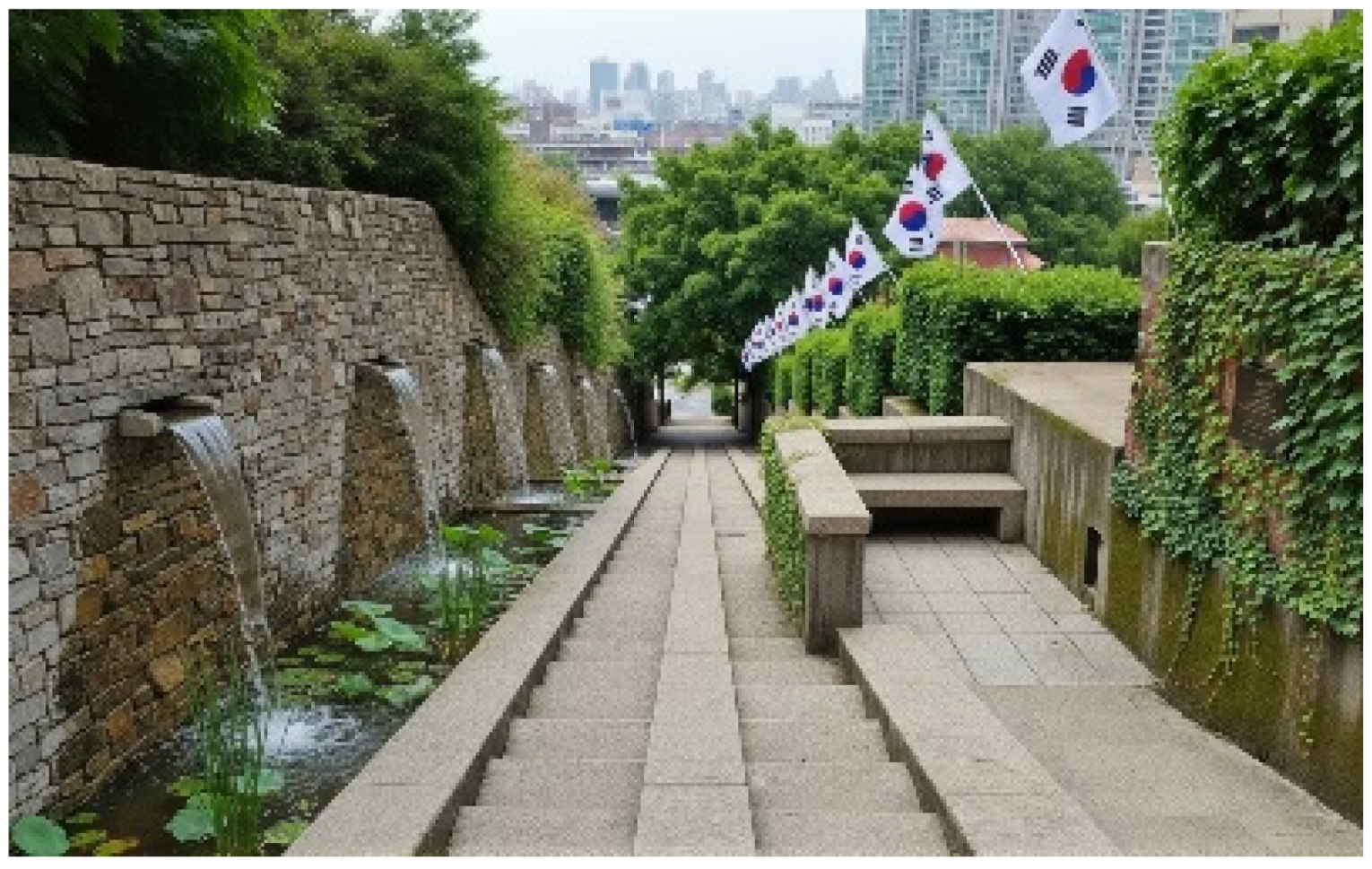 |
| Edge | <lora:daegu-historic-alley:0.7>, edge PDP, high gray/red brick walls, weathered texture, vertical planting softens the edge, vine-covered upper boundary, biophilic patterned wall and paving, afternoon, semi-open views, softened tension, anticipation, and IQP | 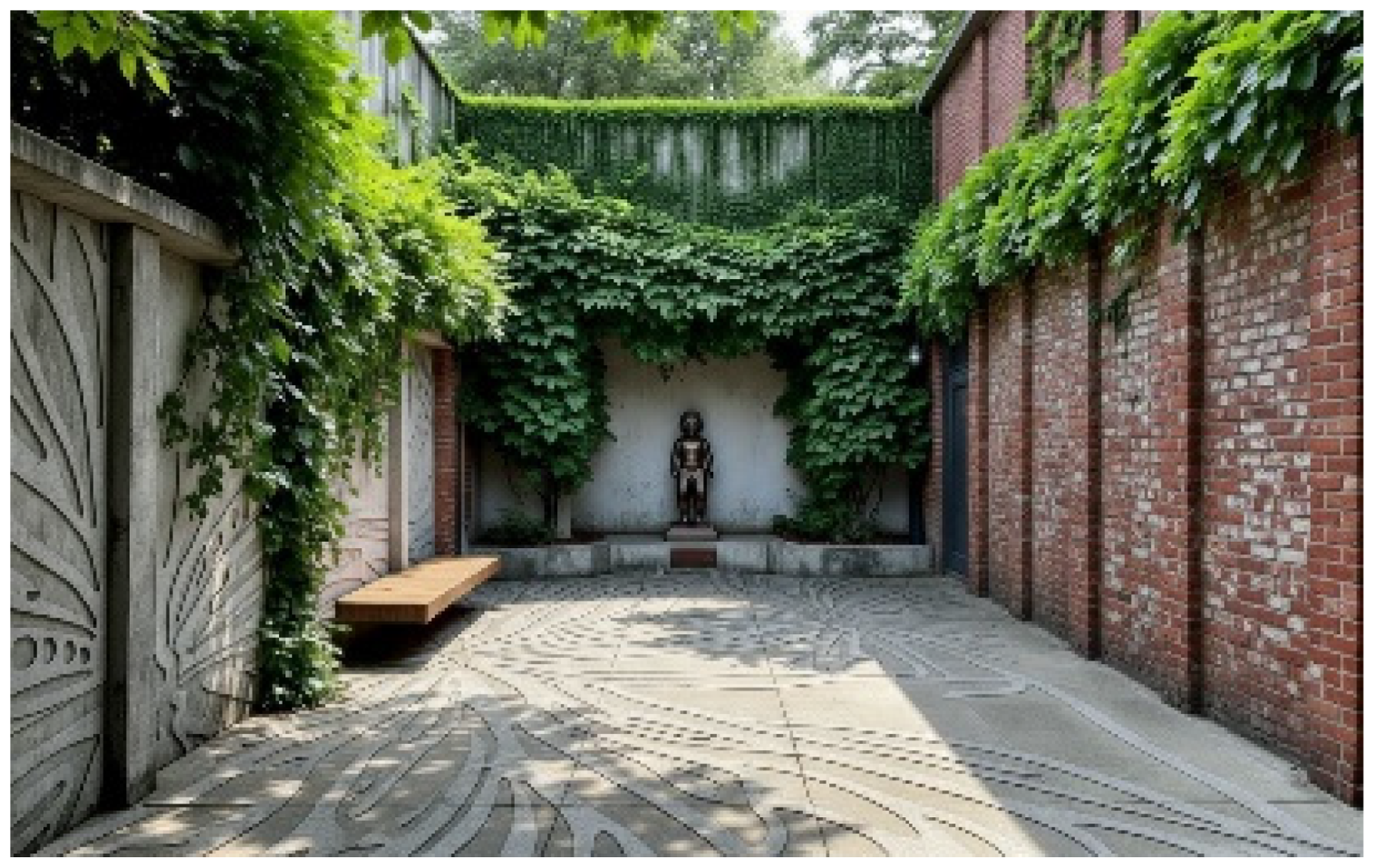 | 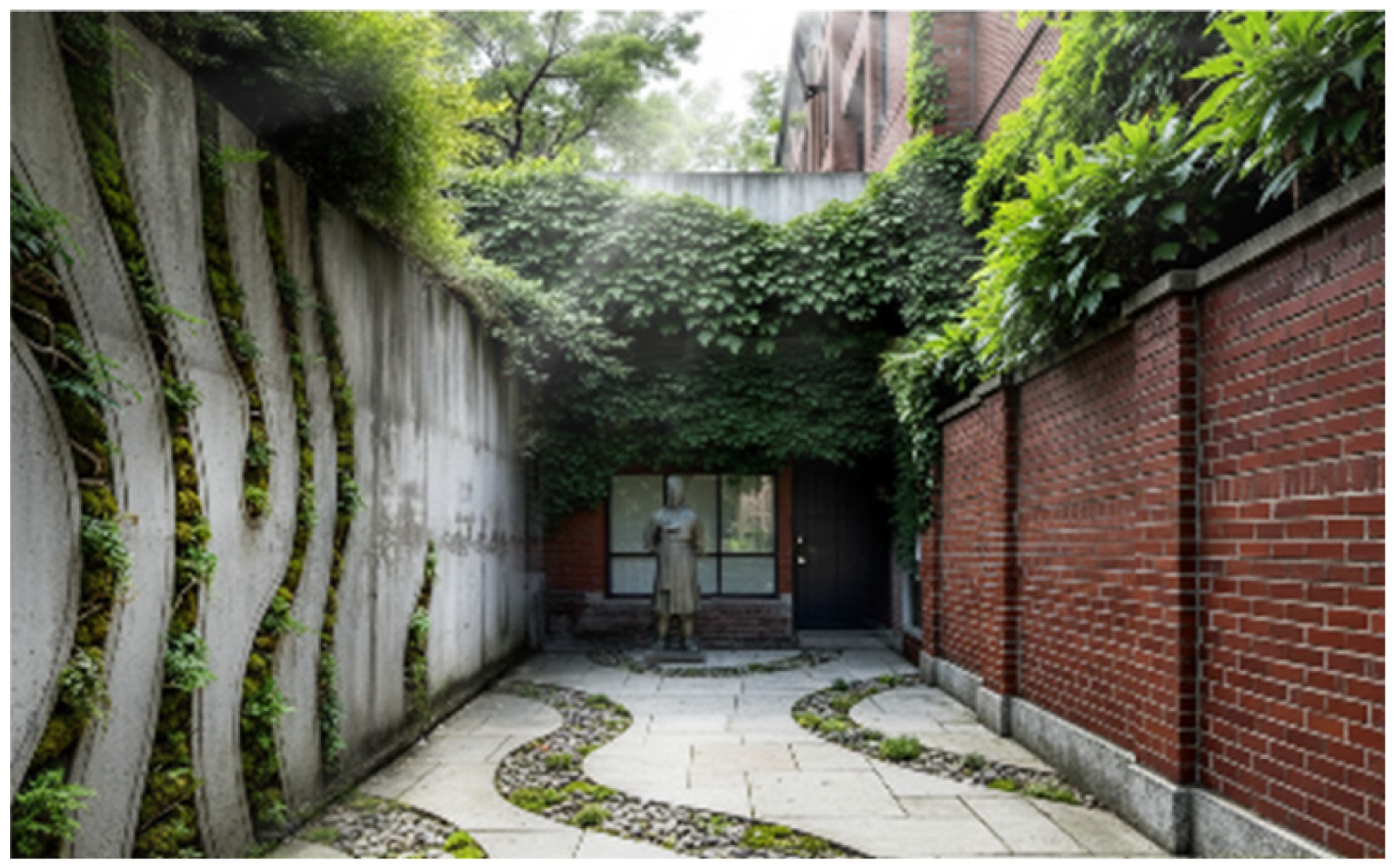 |
| Node | <lora:daegu-historic-alley:0.7>, node PDP, tree canopy with seating, waterways and rain garden, clear and gentle water, biophilic shapes, permeable pavements, summer afternoon, urban greenery context, communal, hospitality, IQP | 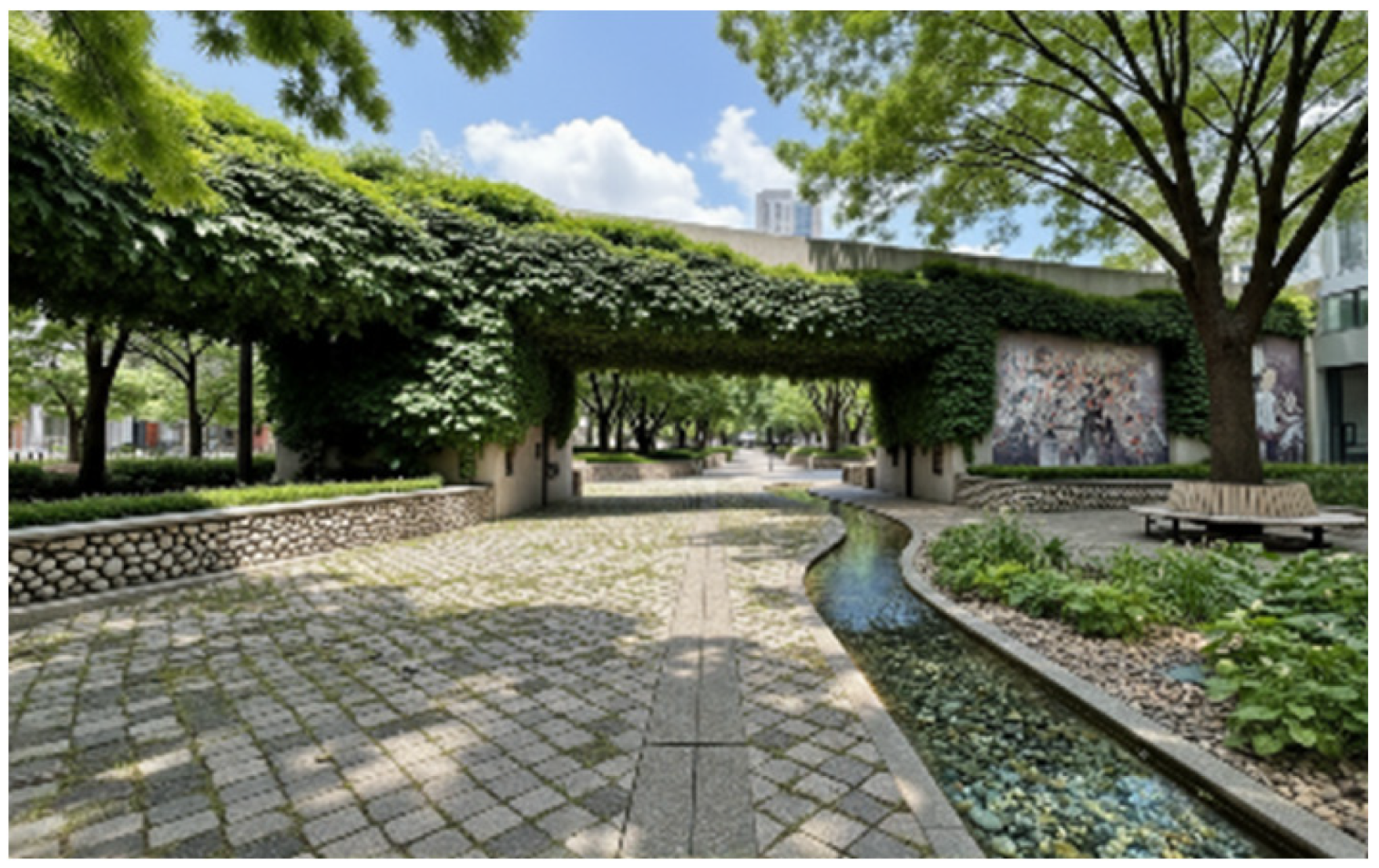 | 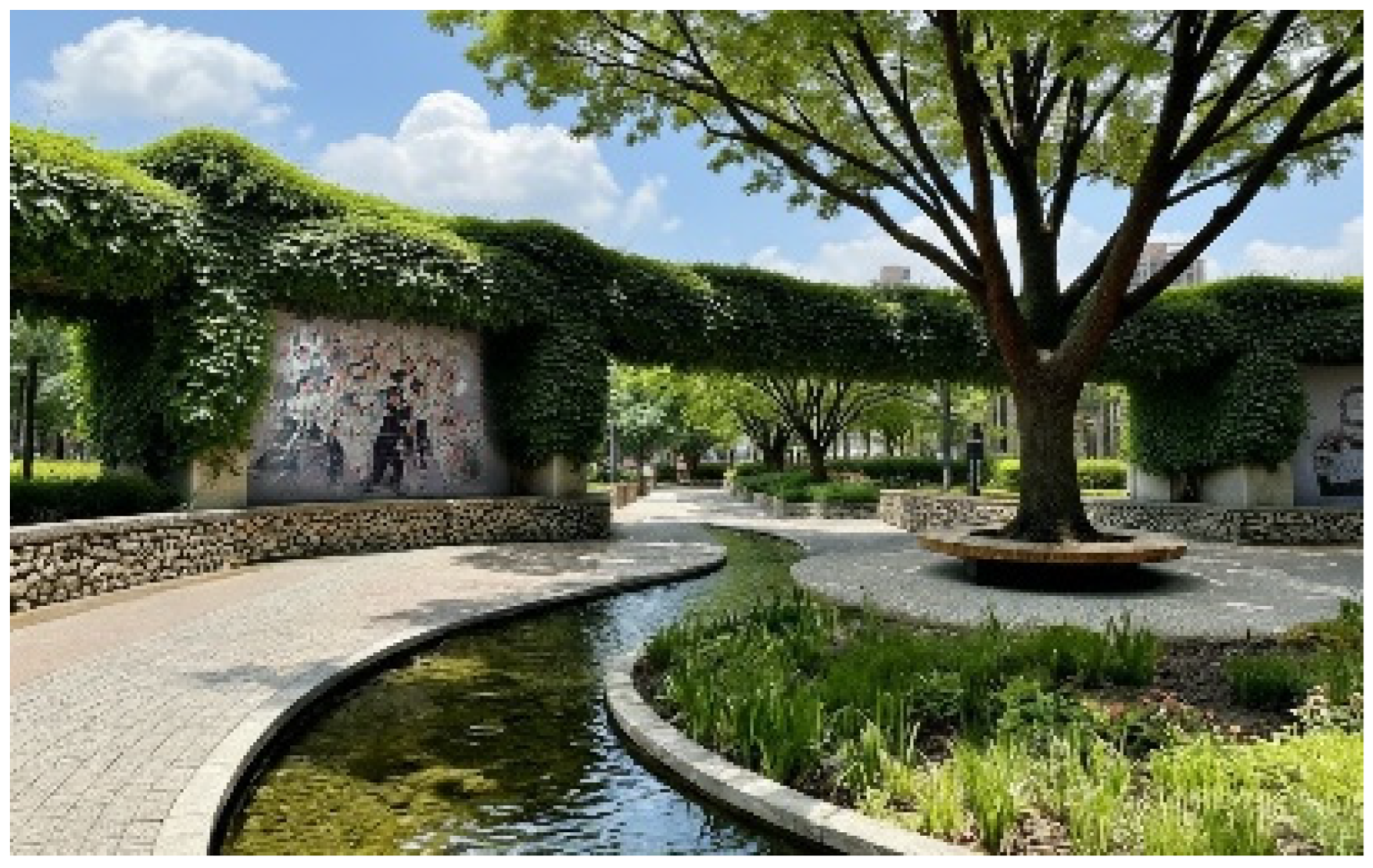 |
| Evaluation Items | Path | Stairs | Edge | Node | Average |
|---|---|---|---|---|---|
| Cognitive place identity | 4.12 ± 0.99 | 4.00 ± 0.53 | 3.75 ± 0.89 | 4.12 ± 0.99 | 4.06 ± 0.93 |
| Emotional place identity | 4.38 ± 0.92 | 3.98 ± 0.64 | 3.58 ± 0.74 | 4.05 ± 0.89 | 3.98 ± 0.86 |
| Physical place identity | 3.88 ± 0.46 | 4.12 ± 0.83 | 4.00 ± 1.07 | 4.38 ± 0.74 | 4.10 ± 0.80 |
| Biophilic design fidelity | 4.12 ± 0.99 | 3.75 ± 0.99 | 4.25 ± 0.89 | 3.98 ± 0.99 | 4.06 ± 0.84 |
| Biophilic design effectiveness | 4.38 ± 0.74 | 4.25 ± 0.46 | 4.00 ± 0.93 | 4.25 ± 1.04 | 4.22 ± 0.79 |
| AI applicability | 4.06 ± 0.76 | 4.06 ± 0.76 | |||
Disclaimer/Publisher’s Note: The statements, opinions and data contained in all publications are solely those of the individual author(s) and contributor(s) and not of MDPI and/or the editor(s). MDPI and/or the editor(s) disclaim responsibility for any injury to people or property resulting from any ideas, methods, instructions or products referred to in the content. |
© 2025 by the authors. Licensee MDPI, Basel, Switzerland. This article is an open access article distributed under the terms and conditions of the Creative Commons Attribution (CC BY) license (https://creativecommons.org/licenses/by/4.0/).
Share and Cite
Lee, E.-J.; Park, S.-J. Generative AI for Biophilic Design in Historic Urban Alleys: Balancing Place Identity and Biophilic Strategies in Urban Regeneration. Land 2025, 14, 2085. https://doi.org/10.3390/land14102085
Lee E-J, Park S-J. Generative AI for Biophilic Design in Historic Urban Alleys: Balancing Place Identity and Biophilic Strategies in Urban Regeneration. Land. 2025; 14(10):2085. https://doi.org/10.3390/land14102085
Chicago/Turabian StyleLee, Eun-Ji, and Sung-Jun Park. 2025. "Generative AI for Biophilic Design in Historic Urban Alleys: Balancing Place Identity and Biophilic Strategies in Urban Regeneration" Land 14, no. 10: 2085. https://doi.org/10.3390/land14102085
APA StyleLee, E.-J., & Park, S.-J. (2025). Generative AI for Biophilic Design in Historic Urban Alleys: Balancing Place Identity and Biophilic Strategies in Urban Regeneration. Land, 14(10), 2085. https://doi.org/10.3390/land14102085