
Article

Co-Designing Accessible Urban Public Spaces Through Geodesign: A Case Study of Alicante, Spain

by
Mariana Huskinson
1,
Álvaro Bernabeu-Bautista
1,*,
Michele Campagna
2 and
Leticia Serrano-Estrada
1
1
Urban Design and Regional Planning Unit, Building Sciences and Urbanism Department, University of Alicante, 03690 Alicante, Spain
2
Department of Civil and Environmental Engineering and Architecture (DICAAR), University of Cagliari, 09124 Cagliari, Italy
*
Author to whom correspondence should be addressed.
Land 2025, 14(10), 2072; https://doi.org/10.3390/land14102072
Submission received: 12 August 2025 / Revised: 18 September 2025 / Accepted: 10 October 2025 / Published: 16 October 2025

Abstract

Ensuring accessibility in urban public spaces is a key challenge for contemporary cities, particularly in the context of ageing populations, socio-spatial inequalities, and the global call for inclusive urban development. Despite its importance, accessibility is often treated as a cross-cutting issue rather than as a central objective in planning practice. This study examines how accessibility can be addressed in participatory urban public space design through a geodesign workshop conducted with architecture students from the University of Alicante. Focusing on the area along Line 2 of the TRAM light-rail network in Alicante, Spain, the workshop applied the geodesign framework in four iterative phases: system analysis, stakeholder role-play, design negotiation, and consensus building. The workshop participants represented six stakeholder groups with varying objectives and priorities, proposing micro-interventions in vulnerable urban areas aimed at improving walkability, surface conditions, and access to services. The role-play phase highlighted contrasting views on accessibility, particularly emphasised by groups representing older adults and people with disabilities. Negotiation revealed both alliances and tensions, while the final consensus reflected a moderate but meaningful inclusion of wide accessibility concerns. The resulting proposals showed spatial awareness of socio-territorial inequalities. The findings suggest that geodesign fosters critical thinking, collaboration, and empathy in future urban professionals; however, challenges persist regarding inclusivity, contextual adaptation, and integration into practice. Future work should explore long-term impacts and co-creation of accessibility standards.

1. Introduction

As cities face increasing population pressures and rising urban densities, the need for inclusive and sustainable development becomes ever more urgent. Accessibility lies at the core of urban planning, serving as a foundational principle for creating equitable, resilient, and environmentally responsible urban environments [1]. In this sense, sustainable accessibility is not only a matter of mobility, but a multidimensional concept that requires cross-sectoral coordination, compact urban form, promotion of active mobility and the integration of essential services within close proximity [2]. Accessibility is also directly linked to global agendas such as the 2030 Agenda for Sustainable Development, particularly to SDG 5 (Gender equality), SDG 10 (Reduced inequalities), and SDG 11 (Sustainable cities and communities), all of which emphasize inclusive, safe, affordable, and sustainable urban planning for all. In this context, addressing accessibility barriers in urban public spaces—particularly for people with disabilities, older adults, and other mobility-impaired populations—can have far-reaching impacts, promoting not only greater inclusion but also environmental and economic sustainability [3]. Thus, when accessibility is well integrated into urban systems, it enhances mobility, reduces car dependency, and supports social equity and climate goals.
Spain provides a particularly relevant context within the European Mediterranean Arc in this regard, not only due to its high life expectancy but also because of its projected long-term population growth. For instance, national projections by the Spanish National Statistics Institute (INE) forecast a population of nearly 50 million by 2050, while the Independent Authority for Fiscal Responsibility (AIReF) estimates that this number could rise to 55 million [4]. Such expected demographic expansion, combined with a rapidly ageing population, reinforces the urgency of advancing accessibility planning strategies that address spatial equity and service provision in urban public spaces. Moreover, given the complexity of these interrelated dynamics, planning tools capable of addressing multiple systems simultaneously are increasingly necessary [5,6]. From this perspective, participatory planning processes have proven to be successful when implemented in complex dynamic environments [7].
Within this scope, public participation has become a key instrument in aligning urban development with the needs of diverse communities and stakeholders over the past decade [8]. It also plays a crucial role in actively engaging citizens in the shaping and design of urban spaces [9]. In this context, digital participatory processes have gained particular relevance as they enable users to engage in urban decision-making through accessible platforms and web-based environments [10]. In addition, from the perspective of urban public space design, collaborative decision-making is essential for ensuring project success and fostering a sense of community ownership [11]. Building on this, digital participatory methods—especially those applied through academic and professional workshops [12]—can play a critical role in fostering a systems-oriented understanding of accessibility challenges and potential solutions [13].
As a matter of fact, in recent years, various tools and methodologies have been developed to implement interactive virtual workshops that support citizen engagement in the design and regeneration of urban public spaces [14]. Among these approaches, geodesign has emerged as a participatory framework that facilitates the collaborative co-creation of spatially explicit design scenarios by bringing together multiple stakeholders on a common platform. This approach ensures that future interventions are aligned with local needs and policy agendas [15]. By leveraging digital technologies, geodesign enables the active participation of local actors in urban planning processes, with the aim of fostering community involvement and improving the quality of decision-making outcomes [16]. Consequently, geodesign has attracted significant interest from academia, industry, and public administrations alike [17,18]. For the purpose of this research, geodesign, understood as a collaborative and iterative full digitally supported planning methodology that integrates spatial analysis, stakeholder engagement, and scenario development, offers a promising approach to address accessibility in urban environments.
From an educational perspective, geodesign also offers a powerful framework for involving architecture students—particularly during their training in urban and territorial planning—in real-world challenges related to urban design and regeneration [19]. This approach fosters collaboration, participatory thinking, and negotiation skills [20], which are essential competencies for future architects and planners. One of the most common pedagogical strategies for applying this method is the organisation of targeted workshops [21]. These workshops enable students to address real-life urban challenges and collaboratively propose design solutions [22], while also learning to approach negotiation as a process that prioritises collective interests over individual ones. This contributes significantly to the development of consensual and strategic decision-making processes [23].
Against this backdrop, this paper presents the results of a geodesign workshop conducted at the University of Alicante with students of the Master’s in Architecture programme. The planning and design exercise focused on the area surrounding Line 2 of light-rail infrastructure (TRAM) in Alicante, a corridor that illustrates both the opportunities and constraints of accessibility planning in contemporary mediterranean Spanish urban contexts. The objective was to demonstrate how the geodesign framework, when applied through participatory formats, can serve as a valuable tool to analyse accessibility issues and propose integrated spatial strategies for public spaces during the early phases of urban planning.
The manuscript is organised as follows. Section 2 discusses a brief overview of the geodesign approach as methodological background, specifically addressing accessibility as a system. Section 3 includes the aims and scope of the research. Section 4 introduces the case study, while Section 5 outlines the geodesign process, detailing both the preparatory phase and the activities carried out during the workshop. Section 6 presents an analysis of the results, with a primary focus on accessibility and its role within the broader planning framework. Section 7 offers a discussion of the findings and Section 8 concludes with reflections on the geodesign process and its outcomes.

2. Geodesign in Spatial and Accessibility Planning

Geodesign emerged at the intersection of landscape architecture, planning, and geographic information science [24], offering a methodology that integrates design thinking with spatial analysis [25,26]. This method is defined as a collaborative, iterative process that links geography, planning, and stakeholder engagement to produce informed spatial decisions [27].
Specifically, the methodological structure of geodesign is most clearly articulated in the Steinitz’ framework, which comprises six iterative models: representation, process, evaluation, change, impact, and decision [28]. Crucially, the evaluation model acts as the pivot point, aligning technical analyses with stakeholder priorities and anchoring design alternatives in community-defined needs [26]. Hence, this framework is particularly relevant in accessibility planning as it explicitly links spatial decision-making with social equity and governance. As shown in Table 1, a detailed breakdown of these models demonstrates their adaptability to urban accessibility issues, showing how geodesign can uncover and respond to spatial barriers in urban public spaces. Notably, while the early models—representation, process— are often expert-led, the evaluative and decision-making models can be increasingly participatory, allowing for a more democratic planning process.
In this context, the GeodesignHub is the most often used platform to support the participation in these processes. GeodesignHub is a dedicated web-based user-friendly Planning Support System (PSS) developed to operationalise the Steinitz model [29] through structured collaboration, scenario planning, and real-time negotiation. The platform allows multidisciplinary teams with different objectives to co-design interventions, supporting both live and online workshop-based collaboration [16].
Several empirical studies have highlighted the versatility of geodesign in addressing planning challenges. In Cagliari (Italy), for instance, Campagna et al. [26] demonstrated how geodesign supported the integration of green infrastructure into transport and energy networks, enhancing ecological connectivity. Similarly, the Tohono O’odham Nation applied geodesign to co-create flood mitigation strategies in Arizona (United States), prioritising local knowledge and equitable outcomes [30], while in Belo Horizonte (Brazil), geodesign facilitated a consensus-building process around heritage preservation and future urban development [31]
Specifically, within accessibility planning, the participatory workshops held in Ibirama La Klano [32] further illustrate how accessibility can be conceptualised as a dynamic system of spatial relationships, adopting geodesign not only as a planning tool, but also as a pedagogical device, helping stakeholders visualise access points, identify gaps, and propose integrated mobility solutions. Likewise, Jano Reiss and Tchetchik [22] implemented this methodology to address the accessibility and the promotion of walkable urban environments in hilly contexts. Despite its promise, geodesign’s application to accessibility planning in urban public spaces remains nascent, with few studies explicitly addressing how it can systematically embed accessibility metrics (e.g., proximity to services, universal design principles) into collaborative processes [18]. Although participatory digital methods show potential for informing the design of accessible public spaces, the extent to which they deliver long-term improvements in equity or stakeholder satisfaction remains unclear. Similarly, the integration of qualitative stakeholder inputs with quantitative accessibility metrics remains underexplored, limiting geodesign’s ability to balance technical and participatory demands [33]. Furthermore, geodesign’s potential to advance social equity—by prioritising interventions that reduce spatial inequalities and address the needs of vulnerable populations—has been explored in vulnerability mapping approaches such as those proposed by Cocco, Fonseca, and Campagna [34]. These gaps highlight the need for research that investigates how geodesign can be tailored to prioritise accessibility within collaborative urban planning processes, ensuring equitable and inclusive outcomes.
Still, while geodesign has been underutilised in accessibility planning, its systemic orientation and participatory ethos make it well suited to the task. Accessibility benefits from geodesign’s ability to model spatial inequalities and test design interventions in situ [35]. Studies by Brown & Kyttä [36] and Gu et al. [37] support this potential, demonstrating how digital participation and spatial modelling can reveal hidden barriers and propose targeted improvements. By embedding accessibility within the geodesign framework, planners can generate spatial strategies for public spaces that respond not only to infrastructural deficits but also to socio-cultural and governance dynamics. Thus, its capacity to integrate technical modelling with stakeholder deliberation makes it especially relevant for planning interventions that aim to be both equitable and spatially effective. Collectively, the literature demonstrates that geodesign offers a robust, participatory framework with a great potential for addressing urban accessibility in urban public spaces.

3. Aims and Scope

This study aims to delve into how the geodesign framework can enhance the integration of accessibility in the design of urban public spaces through community participation. In the context of this research, the term “urban public space” refers to open and publicly accessible areas of the city that enable social interaction, mobility, and everyday use. This includes both green spaces, such as parks and recreational areas, and hardscapes such as streets, plazas, and transit-related environments. By adopting this comprehensive definition, we acknowledge the diversity of public spaces in which accessibility plays a critical role. The scope of the research is threefold: (i) implementing the geodesign methodology within a graduate architecture program to simulate a participatory planning experience; (ii) exploring how different stakeholder groups—such as older adults, individuals with disabilities, women, youth, politicians, and athletes—represented by students through role-play, would prioritize and negotiate accessibility in public space design; and (iii) evaluating the effectiveness of geodesign as a methodological tool for urban planners and as a teaching resource to promote equity and inclusion among upcoming professionals. Specifically, the following research questions are posed:
  • [RQ1] How can we conceptualise accessibility as a standalone system within the geodesign framework?
  • [RQ2] How do different groups of stakeholders rank the importance of accessibility during a co-design process?
  • [RQ3] To what extent does the geodesign process foster socio-spatial awareness and a sensitivity to equity and inclusion among architecture students?

4. Geographic Context of the Study: Alicante

Alicante, located on Spain’s Mediterranean coast, provides a particularly relevant context for studying accessibility planning. As a medium-sized city with a complex urban structure, a strong tourism economy, and an established public transport network, Alicante reflects both the opportunities and constraints of sustainable accessibility planning in southern European urban areas. In 2024, its population reached approximately 379,135 according to the National Institute of Statistics [38] and is a key city within one of Europe’s most popular tourist regions, as reported by Eurostat [39]
Beyond its demographic significance, Alicante is home to a considerable number of individuals with disabilities or dependency-related needs. INE data indicates that in 2008, the city had the highest proportion of such residents in the Valencian Community, ranking second by 2020. This underscores the need for a thorough assessment of the city’s urban infrastructure and its ability to accommodate vulnerable groups. Additionally, the province of Alicante has been assigned an Accessibility Grade B in the report “Diagnosis of the access conditions of all municipalities in the Valencian Community” [40], suggesting that while accessibility standards are generally adequate, there remains scope for enhancement.
Particularly, Alicante’s public transport network consists of 36 bus routes, six light rail (TRAM) lines, and three commuter rail services. However, disparities in pedestrian mobility and public transport usage have been identified, influenced by differences in travel needs. According to the municipal Sustainable Urban Mobility Plan, peripheral neighbourhoods with greater socio-economic vulnerability experience a higher proportion of compulsory travel, rely more on urban bus services, and record some of the highest TRAM ridership levels within the city. In these areas, more than 10,000 trips are made daily, a significantly higher figure than in more central neighbourhoods [41]. Research conducted in other cities of the region highlights that while central urban areas tend to benefit from good public transport access, peri-urban and peripheral zones often experience significant gaps in accessibility [42,43]. This spatial imbalance underscores the need for targeted strategies to ensure that transport systems like Alicante’s tram line are equitably serving all urban residents.
This study focuses on Line 2 of the TRAM system, which plays a vital role in linking the city centre with peripheral areas, including the town of San Vicente del Raspeig [44]. Spanning roughly 9 km, this line traverses’ neighbourhoods with diverse socioeconomic characteristics, providing essential transport access to communities facing varying degrees of vulnerability and distinct social and economic conditions. For this research, we will specifically cover public spaces located in the surrounding areas of 11 stops along Line 2, corresponding to those located within the municipal boundaries of Alicante (Figure 1).

Delimitation of the Case Study Area

The case study area was defined using an 800-metre walking distance catchment area from each station to assess accessibility within a reasonable walking range. This threshold —equivalent to an estimated 10-min walk for an average healthy adult— is widely recognised in the literature as a key determinant of walkable access to public transport and local services [45,46]. The 800-metre catchment area is particularly relevant for evaluating broader walkability patterns, as it encompasses a diverse range of urban functions and amenities that influence public transport usage. This approach allows for an analysis of whether station areas are effectively designed to support accessibility, particularly for individuals who rely on walking and public transport as their primary mode of mobility.

5. Methodology: The Geodesign Approach

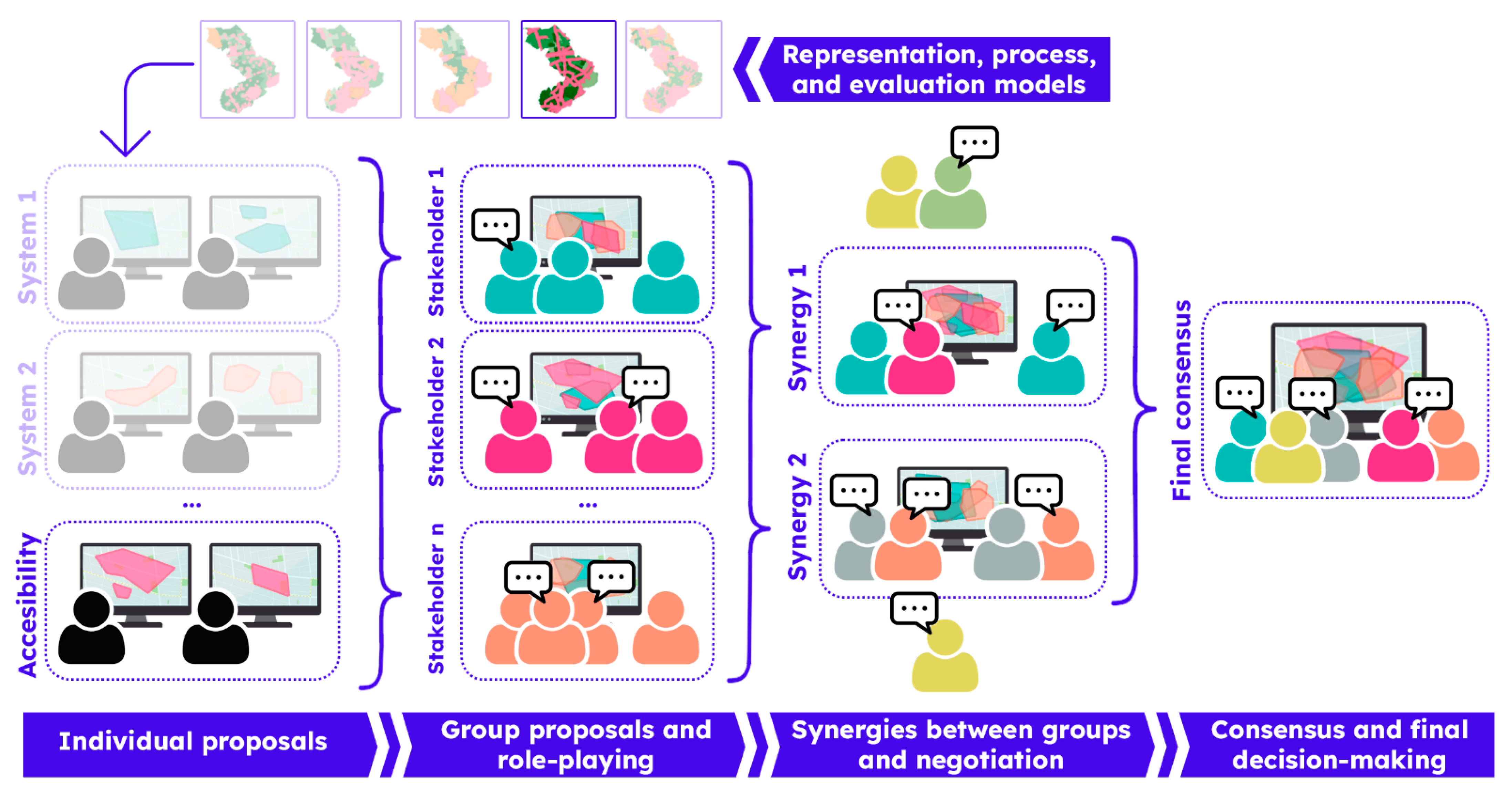
The geodesign approach was developed in a series of key stages including workshop design and preparation of materials (behind the scenes) and workshop implementation and development. All the steps are summarised both in Figure 2 and Table 2, with the latter also indicating the section of the manuscript where the procedure is further described.

5.1. Behind the Scenes

5.1.1. Development of Representation, Process, and Evaluation Models: Conceptualising and Modelling the Accessibility System

In order to address [RQ1], the process of defining the accessibility system for this study involved the development of an evaluation model through the combination of conceptual reasoning and spatial modelling, aimed at assessing both physical and perceived accessibility conditions across the study area. This step in the geodesign methodology is fundamental to ensure that the evaluation model could identify where interventions were necessary, where they were feasible, and where they might be inappropriate or redundant.
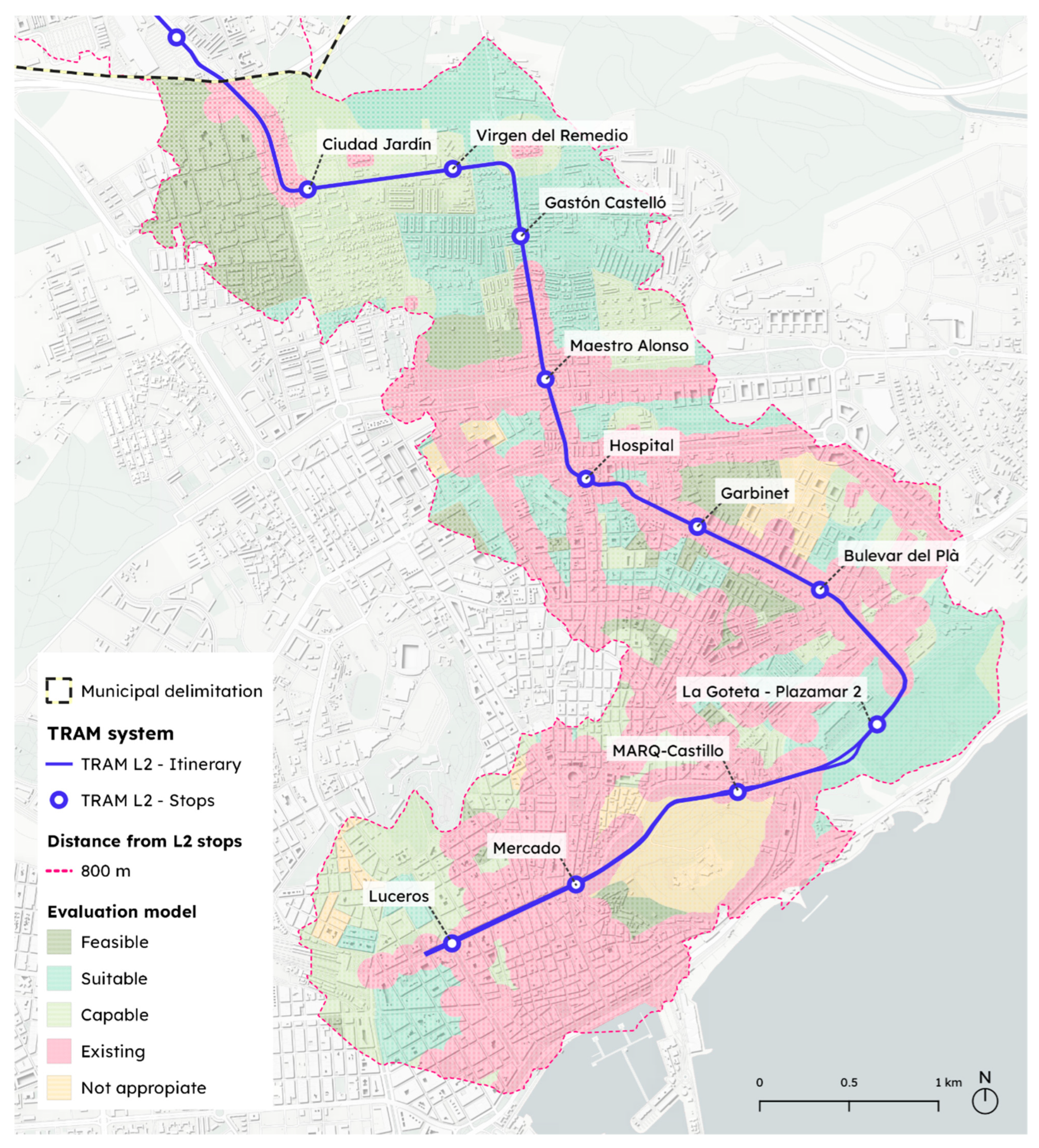
Based on the above, the evaluation system was structured according to the geodesign classification model developed by Steinitz [28], which categorises spatial areas into five classes: (i) existing, (ii) not appropriate, (iii) capable, (iv) suitable, and (v) feasible. This classification guided the interpretation of accessibility levels throughout the city: (i) the existing class included areas already functioning with adequate accessibility features and high public use, such as main avenues, public squares, and special care centres; (ii) the not appropriate class referred to areas where topographical or demographic conditions made intervention unfeasible, for example, steep slopes, elevated terrain, or zones with a negligible population of elderly residents; (iii) the capable category applied to areas where accessibility improvements could be technically supported by infrastructure or market mechanisms, though they lacked immediate demographic demand; (iv) the suitable category represented areas with a significant presence of elderly people and some infrastructural support, indicating readiness for potential interventions, albeit without strong market pressure; and finally, (v) the feasible category combined both demographic need and favourable conditions for change, such as high concentrations of elderly residents in proximity to existing facilities, thus marking these zones as priority areas for action. This process was applied to ten systems (green infrastructure, accessibility, urban vitality, walkability, transport, sport, children, women, care, and vulnerability), although for the scope of this study we will only focus on the accessibility system.
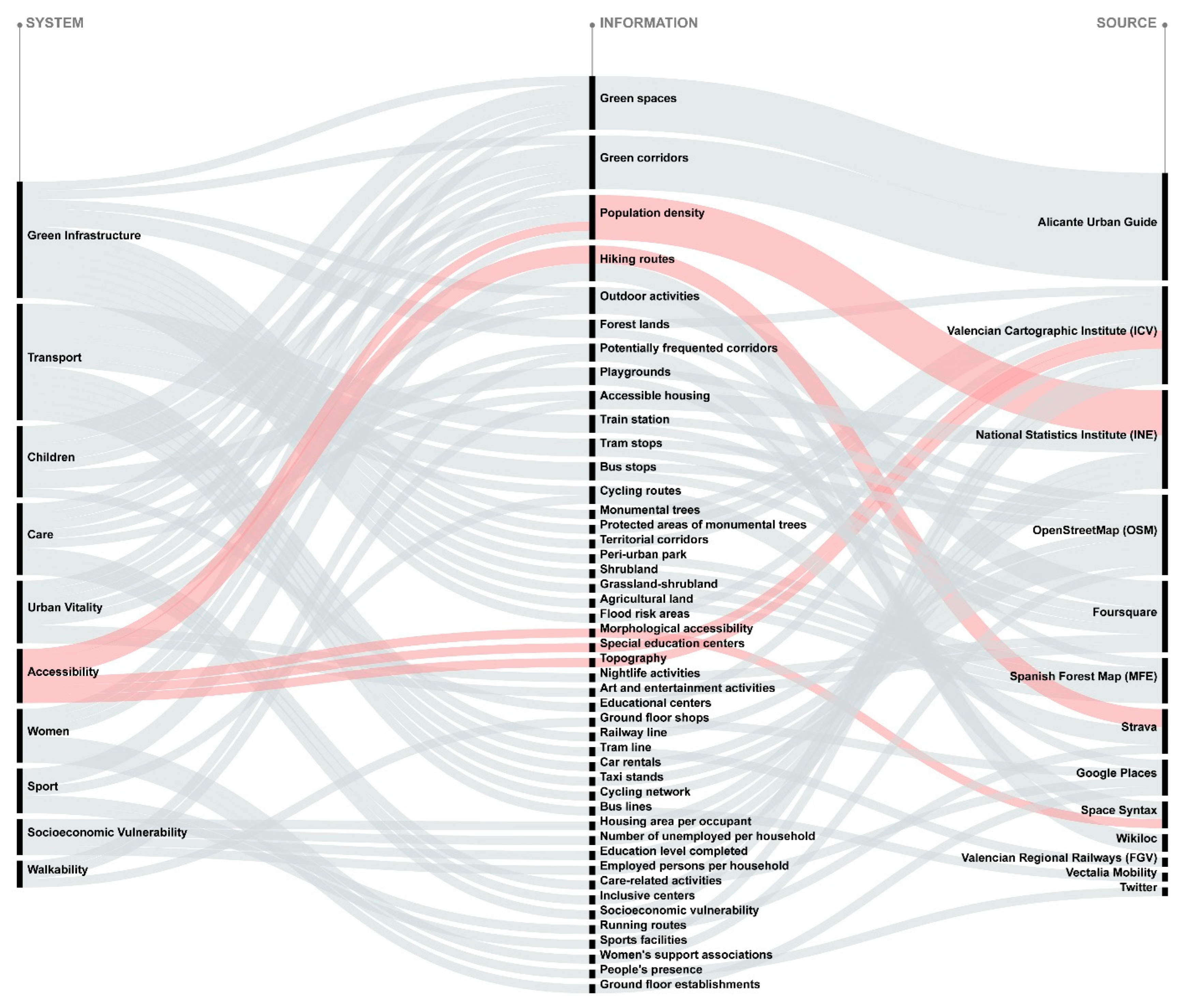
In order to operationalise this framework, the accessibility model incorporated a series of spatial datasets and criteria as highlighted in Figure 3, that were later visualised using GIS software, in our case QGIS 3.34. Demographic information was obtained from the Spanish National Institute of Statistics [38], particularly the number of elderly people per census section, disaggregated into three age groups: 65 to 75, 76 to 85, and 86 to 100 years. This division aims to capture the diversity within this population. While age alone doesn’t dictate accessibility needs, previous studies have indicated that, as people age, they often experience more functional decline and mobility challenges. This classification was intended to help participants recognise the differences between more active retirees and those who may be more dependent, rather than viewing all elderly individuals as a single, uniform group. These data were essential for identifying vulnerable populations who would benefit most from improved accessibility. Institutional layers were also included, notably the locations of special care educational centres provided by the Generalitat Valenciana, which acted as anchors for accessible infrastructure. Topographical constraints were mapped using cartographic data from the Valencian Cartographic Institute to locate areas where slope or elevation limited the potential for adaptation [47]. Additionally, usage patterns were derived from mobility applications such as Strava [48] and Wikiloc [49], which capture traces of actual pedestrian and cyclist movement. These data were used to identify preferred routes and urban corridors with non-motorised activity. To evaluate the pedestrian connectivity of the city, urban morphology data and street network characteristics were used to assess how easily different areas could be navigated on foot.
All data sources were processed using GIS-based spatial operators, including buffer analyses, intersection queries or Space Syntax analysis [50,51]. We opted for the Space Syntax approach because it provides a clear representation of the street network’s layout, emphasizing how connectivity and visibility patterns influence pedestrian movement. This method is particularly well-suited for analysing accessibility in urban public spaces like streets, plazas, and areas surrounding transit stations, which are crucial to the focus of this research. Each spatial criterion was first articulated in natural language and then translated into geoprocessing functions, creating a consistent and interpretable workflow. To enhance transparency, a modelling table (included as Supplementary Material) documented these criteria, outlining the data sources, spatial operators, and classification rationale. This step is essential to ensure that the evaluation process is well understood by participants and that results are interpretable within the context of accessibility analysis. The resulting evaluation map (Figure 4) was constructed through iterative modelling, ensuring that each classification class was appropriately applied according to the presence or absence of specific conditions. This map provides a foundation for identifying where inclusive public space design interventions should be prioritised while serving as a tool for engaging stakeholders in accessibility-focused urban planning and guiding subsequent geodesign decisions.
Once the evaluation maps were developed, the next step before the workshop was to integrate them into GeodesignHub, specifically designed to implement the second phase of Steinitz’s framework, enabling an iterative process for modelling change, assessing impacts, and making informed decisions between the participants [26,52,53,54,55].

5.2. Participatory Engagement Phase: The Workshop

The geodesign workshop took place as part of a course for students enrolled in the Master’s in Architecture programme at the University of Alicante, Spain. A total of 49 students participated in the workshop. Two six-hour sessions were dedicated entirely to the collaborative development of design alternatives for the case study. Before the workshop, students were briefed on the case study and were asked to visit the site. Additionally, tables containing information on each system were provided to give students prior knowledge of the case study. Students were introduced to the geodesign process through a brief seminar, during which the following steps were outlined.

5.2.1. Diagram Creation Phase: Individual Proposals

Once students had set up user profiles in GeodesignHub, the first phase of the workshop was introduced. Students were organised into ten expert teams, each assigned to a specific system (out of the 10 analysed). Within their expert teams, students individually mapped different proposals related to their assigned system. The proposals were delimited geospatially through the GeodesignHub platform also taking into account the evaluation maps previously elaborated. Each delimited proposal constituted a diagram, distinguishing between project diagrams, representing exact locations of physical interventions, and policy diagrams, representing more general and less spatially localized actions. Each time a proposal was delimited, a title, a brief description and a budget estimate for the action were assigned.

5.2.2. Role-Playing Phase: Group Proposals

In the second phase of the workshop, students were organised into six distinct stakeholder profiles—such as politicians, children and teenagers, women, people with disabilities, elderly individuals, and athletes—each forming a single design team. The stakeholder proposal was based on different patterns of spatial use and accessibility needs that these groups experience in urban public spaces. Initially, each team developed a preliminary proposal by selecting for inclusion relevant diagrams from the previous phase, drawing from all systems, and aligning their choices with the interests and needs of the stakeholder group they represented. These initial proposals (Version 01) were then presented to the other design teams. Following the presentations, each team was given additional time to revise their proposal, allowing them to add or remove diagrams in response to feedback or further reflection, thus refining their final design strategy (Version 02).

5.2.3. Synthesising Proposals Through Synergy-Based Negotiation

In the fourth phase, following the development of the second version of their proposals, a budget constraint of €120 million was introduced to frame the upcoming negotiations and decision-making. Each design team then engaged in an exercise to identify synergies between their project and those of other teams. Based on their revised proposals, teams completed a synergy matrix—also described as sociogram—in which they evaluated the degree of alignment with each of the remaining design teams. The coding system used was: ‘++’ for strong alignment, ‘+’ for moderate alignment, ‘−’ for limited alignment, and ‘−−’ for very limited alignment.
Based on these assessments, teams with the highest levels of synergy were paired, reducing the number of groups from six to three. Each newly formed group was then tasked with co-developing a new proposal through negotiated interests that continued to reflect the stakeholder profiles originally assigned to them. These negotiated proposals were presented and discussed among the three team coalitions. In the final round, the two teams with the greatest convergence of priorities were invited to merge. They were required to develop a new proposal that not only integrated the various stakeholder perspectives but also respected the established budget constraint. The third team, which was not part of the final merge, was invited to observe the process and contribute to the discussion only in the event that the two leading teams were not able to reach a consensus. In such a scenario, the remaining team would join the coalition to support and reinforce the decision but would not take a leading role or independently influence the outcome.

5.2.4. Consensus and Final Decision-Making

Once the two leading team coalitions had reached an agreement on their joint proposal, they were required to present it to all workshop participants. This marked the beginning of the final phase of the exercise, during which all individuals from the original design teams reconvened in a plenary session. The purpose of this final stage was to collectively evaluate the proposed strategy and reach a consensus on the allocation of the €120 million budget. Participants deliberated on the prioritisation of actions, negotiating how resources should be distributed across the various initiatives and systems, ensuring that the final investment plan reflected the diverse needs and perspectives of all stakeholder profiles represented throughout the workshop.

6. Results: Overview of Accessibility-Related Proposals

6.1. Diagram Production and System Overview

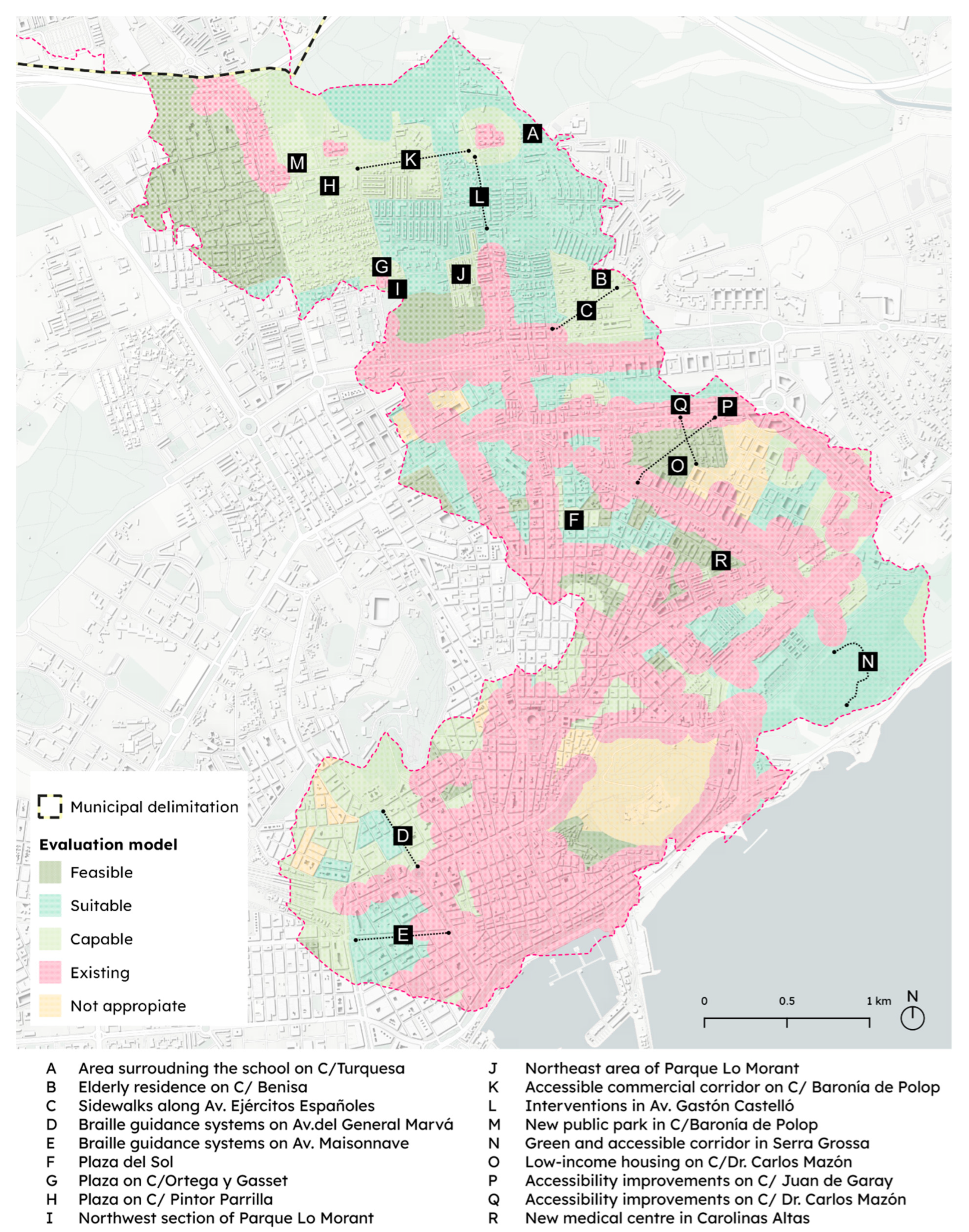
Of the 197 diagrams produced, 18 (9%) belonged to the accessibility system, with no policy proposals included. The student proposals focused on improving accessibility across Alicante through targeted interventions in pedestrian infrastructure, public spaces, and key facilities, particularly in socioeconomically vulnerable areas (located at the north of the case study area). Specifically, actions were proposed to create inclusive urban spaces that facilitate universal access. The proposals were aimed at eliminating physical barriers and improving pedestrian mobility by means of ramps, adequate pavements and safe pedestrian crossings. Improvements in public transport and the adaptation of parks and cultural spaces to enhance mobility near essential services for all users were also proposed (Figure 5). A brief summary of the proposals can also be found in Supplementary Material.
In particular, accessibility improvements were suggested for the school on Calle Turquesa [A], the elderly residence on Calle Benisa [B], and sidewalks along Avenida Ejércitos Españoles [C]. Additionally, braille guidance systems were proposed for Avenida del General Marvá [D] and Avenida Maisonnave [E] to aid visually impaired individuals. Public spaces were another major focus, particularly in areas where uneven terrain and poor surface materials hinder movement. Plaza del Sol [F], which currently has significant elevation differences accessible only by stairs, was proposed for redesign to ensure equal access. Similar adjustments were suggested for plazas on Calle Ortega y Gasset [G] and Calle Pintor Parrilla [H], where soil surfaces and elevation changes limit accessibility for wheelchair users and the elderly. In the northwest section of Parque Lo Morant [I], where irregular sidewalks and green spaces create accessibility challenges, students recommended reorganising pathways. Nearby, another built area [J] around the park’s northeast area was proposed for adaptation due to featuring an irregular arrangement of pavements and green spaces, resulting in setbacks and reductions in pavement width, which hinder accessibility along the street.
Larger-scale projects included an accessible commercial corridor along Calle Baronía de Polop [K] and Avenida Gastón Castelló [L], encouraging pedestrian activity and local commerce. A new public park was also proposed in Baronía de Polop [M], transforming a transitional avenue into a more inclusive urban space. In natural areas, a green and accessible corridor in Serra Grossa [N] was suggested to improve mobility for all users. Finally, new low-income housing on Calle Dr. Carlos Mazón [O] was proposed, ensuring proximity to public transport, plazas, and shops. Accessibility enhancements were also recommended for Calle Juan de Garay [P] and Calle Dr. Carlos Mazón [Q], which surround the new-income housing location. To improve healthcare access, a new medical centre in Carolinas Altas [R] was suggested.

6.2. Stakeholder Role-Playing Outcomes

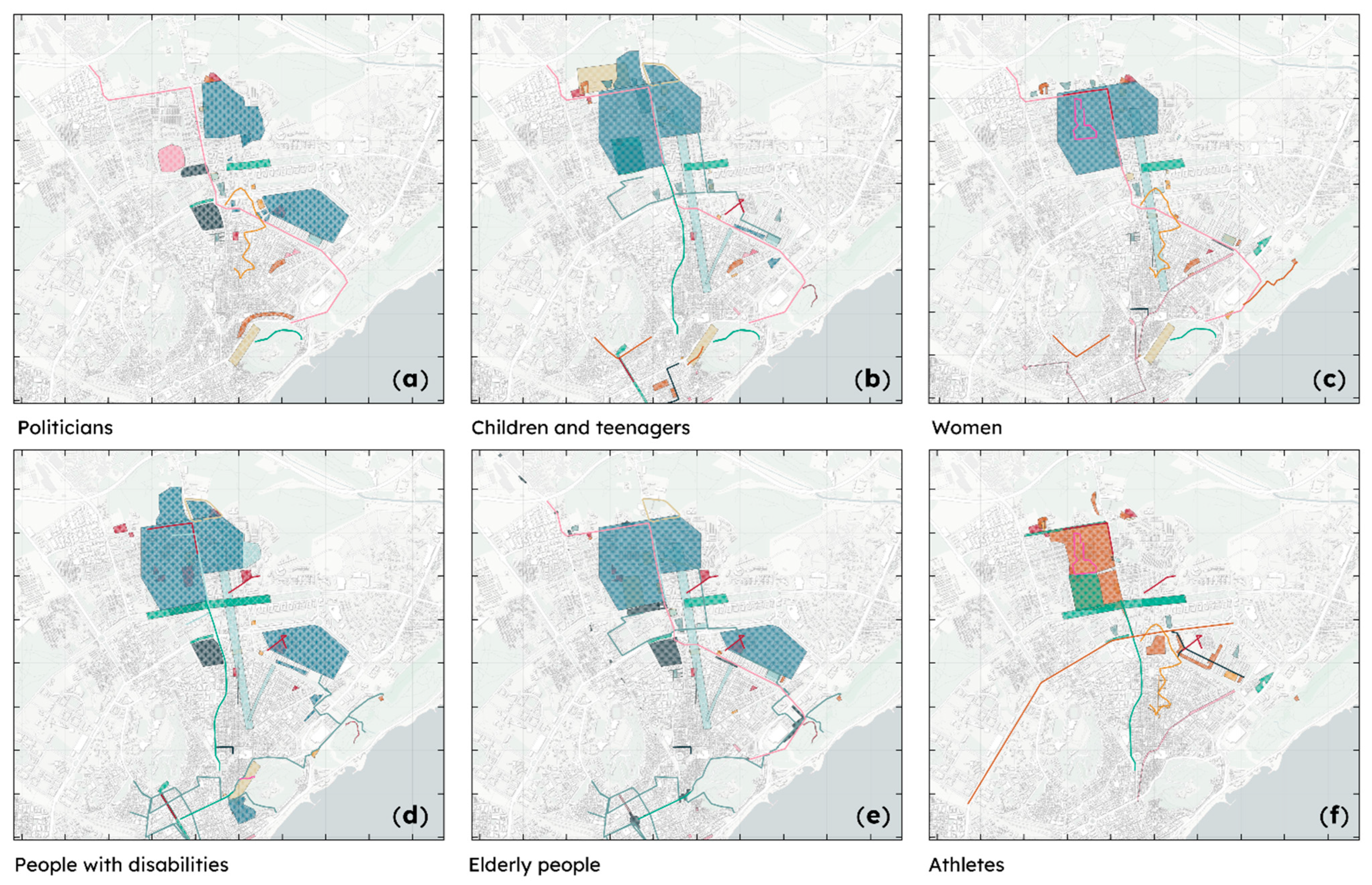
In the second phase of the workshop, student design teams—each representing a different stakeholder profile—developed spatial strategies tailored to the specific needs of their group. This phase allowed students to engage with the urban systems and diagrams defined earlier, create their proposal, and refine their selection after peer feedback (Table 3 and Figure 6). Accessibility emerged as a key concern in most of the design strategies, though it was addressed with varying degrees of intensity across stakeholder groups.
The politicians’ group evaluated urban projects using a prioritisation matrix, considering public image, citizen needs, resource efficiency, outcomes, and timelines. Their focus was on large, visible urban improvements with significant public impact, such as enhancing pedestrian mobility, transport routes, and accessible public spaces around schools. Accessibility projects were selected based on their political feasibility and social benefit, with an emphasis on high-visibility interventions. In Version 01, they selected 4 accessibility diagrams out of 43 total (from all systems), focusing on large-scale urban projects such as improving accessibility around the school (Project A), implementing braille guidance (Project E), addressing uneven terrain in public spaces (Project F), and ensuring accessible low-income housing (Project O). In Version 02, they selected 3 accessibility diagrams out of 32 diagrams (9%), maintaining a focus on urban infrastructure and housing, with limited emphasis on accessibility compared to other teams.
The children and teenagers group initially focused on safe outdoor activities. This group expanded into a broader urban intervention strategy, including more green areas and sports facilities. Accessibility remained a core priority, particularly in ensuring safe and inclusive spaces for young people. They recognised the importance of both physical accessibility and care in creating an urban environment suited for children and teenagers. In Version 01, they chose 9 out of 59 diagrams (15%) related to accessibility, selecting projects to improve accessibility for children around schools (Project D), public spaces (Projects H and I), residential areas (Project Q and P), green spaces (Project M), natural areas (Project N), and implement braille guidance (Project E). In Version 02, they selected 9 out of 66 diagrams (14%) related to accessibility, continuing their focus on making public spaces and recreational areas more accessible for younger users.
The women’s group prioritised safety and accessibility, choosing projects that improved public space visibility, eliminated isolated areas, and supported work–life balance. Their proposals targeted increased foot traffic and well-lit spaces, promoting community safety and social interaction. In Version 01, they selected 1 out of 31 diagrams (3%) related to accessibility (Project L). In Version 02, they selected 3 out of 60 diagrams (5%), including projects to improve public spaces for women by creating accessible commercial corridors with access to essential services (Project L), healthcare (Project R) and education institutions (Project A), reflecting an increasing focus on accessibility in women-centric spaces. In this second version, they expanded their scope with gender-sensitive infrastructure, including nurseries and leisure facilities, creating safe urban corridors that enhanced both physical and perceived accessibility for women and vulnerable groups.
The people with disabilities group showed a strong focus on accessibility, addressing mobility and autonomy across all urban systems. Their proposals centred on transport accessibility, pedestrianisation, inclusive parks, and barrier-free green spaces. They advocated for universally designed environments that supported independence for people with disabilities, ensuring safety, accessibility, and integration throughout the city. In Version 01, they selected 18 out of 66 diagrams (27%) related to accessibility, e.g., all accessibility diagrams, covering projects to improve access to essential services, sidewalks, public spaces, and housing. In Version 02, they selected 18 out of 69 diagrams (26%), maintaining all accessibility projects selected initially.
The elderly people’s group also emphasised accessibility. Their selections included improved green spaces with shade and seating, accessible transport stops, and intergenerational areas that fostered community connections. They also prioritised spaces for social interaction and well-being, understanding accessibility as both physical infrastructure and social participation to support independent ageing. In Version 01, they selected 9 out of 61 diagrams (15%), focusing on improving mobility and safety for seniors. Projects included accessibility improvements around the elderly residence (Project B), sidewalk conditions (Project C), and accessible public spaces (Project F and Project P). In Version 02, they selected 11 out of 82 diagrams (13%), maintaining their focus on public spaces, transportation, and healthcare for seniors.
The athletes’ group concentrated on improving mobility and connectivity, initially proposing an expanded bike lane network. In their revised version, they integrated green, accessibility, and transport systems, ensuring the new cycling corridors also supported access to recreational areas and public transport. They highlighted inclusive sports access, promoting physical activity opportunities for all age groups and abilities. In Version 02, they selected 9 out of 51 diagrams (18%), focusing on projects to improve access to sports facilities, recreational areas, and public spaces for physical activities.
It is noteworthy that, across both versions, the most selected accessibility projects, in all design teams, focused on urban mobility, public spaces, and housing. Projects such as A (accessibility improvements around schools), B (accessibility improvements around elderly residences), C (accessibility improvements on sidewalks), E (implementation of braille guidance systems), and F (access to public spaces) were common choices, reflecting a shared interest in enhancing the city’s accessibility for a diverse range of users, especially people with disabilities, elderly individuals, and children. These projects aimed to foster inclusivity and improve the quality of life for all citizens.

6.3. Synthesis and Negotiation Phases

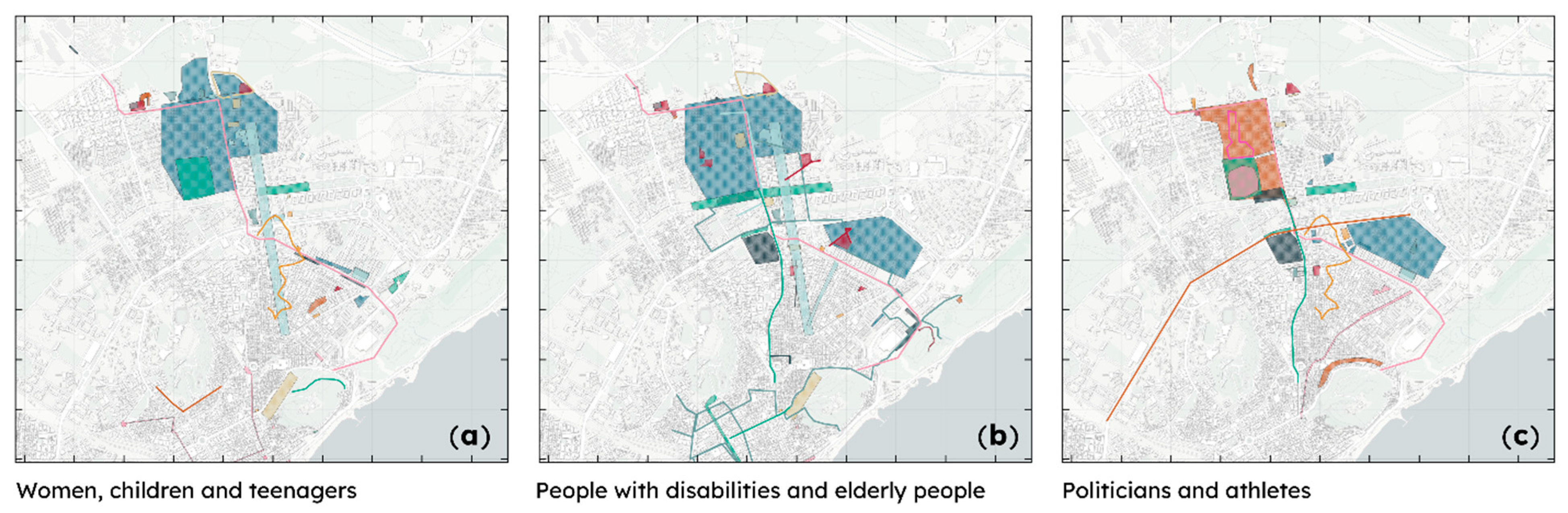
In the fourth phase, after incorporating the €120 million budget constraint, each design team engaged in an exercise to identify synergies with other teams. This resulted in a sociogram where teams evaluated the degree of alignment based on their revised proposals. The outcomes of the first synergy evaluations are compiled in Table 4 and led to the following groupings: women with children and teenagers; people with disabilities and elderly people; and politicians and athletes.
Subsequently, each newly formed coalition was then tasked with negotiating shared interests and developing a single, integrated proposal that continued to reflect the stakeholder profiles originally assigned to them (Table 5). Following the negotiations between the three consolidated coalitions, each team selected a set of diagrams that reflected their shared priorities and integrated their respective perspectives (Figure 7).
For the women, children, and teenagers’ group, a total of 53 diagrams were selected, with 3 of them focusing on accessibility, representing 6% of their selection. The people with disabilities and elderly people group selected 62 diagrams in total, with 15 of them being accessibility-focused, making up 24% of their selection. Lastly, the politicians and athletes group selected 33 diagrams, with 3 of them focusing on accessibility, representing 9% of their selection. These selections highlight the prioritisation of accessibility while addressing the specific needs of each stakeholder group. The chosen diagrams are aligned with the broader goals of improving urban spaces in ways that cater to both accessibility and the particular concerns of the different groups involved.
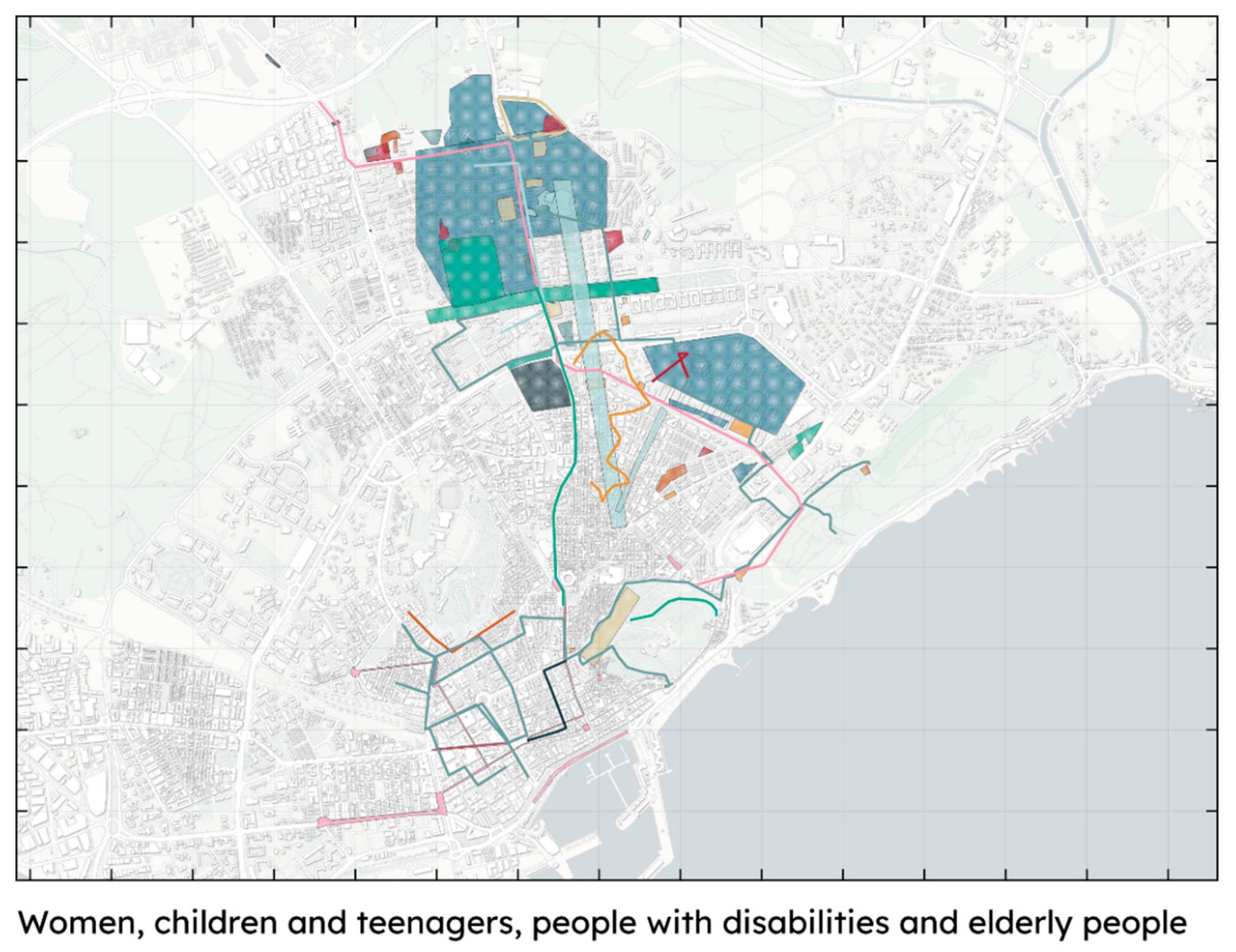
Eventually, considering the negotiated design agreements and following the same process as in the first synergy exercise, a second round of negotiations was conducted. The outcomes of this second exercise resulted in the grouping of the women, children, and teenagers’ group with the people with disabilities and the elderly people group. The third team, which was not part of the final merger, was invited to observe the process and contribute to the discussion only if the two leading teams didn’t reach a consensus. In such a case, the remaining team would join the coalition to support and reinforce the decision but would not take a leading role or independently influence the outcome. The results of the second synergy exercise were as follows: 90 diagrams were selected (Figure 8), with 10 from the accessibility system (11%). The selected projects are A, B, E, G, H, I, M, P, Q, and R.

6.4. Consensus and Final Decision-Making

In the final phase of the workshop, all members of the original design teams reconvened for a plenary session. Participants engaged in discussions about prioritising actions, negotiating the allocation of resources across various initiatives and systems, ensuring that the final investment plan reflected the diverse needs and perspectives of all stakeholder profiles represented throughout the workshop. However, no final agreement was reached between coalition 2, comprising the politicians and athletes’ groups. While the politicians and athletes agreed on the proposal, they revisited the individual budgets of all the selected diagrams/projects. Upon review, they found that some of the proposed amounts were inaccurate and deemed the need for another session to resolve these discrepancies. Agreements were reached on the design among most of the stakeholder profiles, generating a debate about which interventions could be more aligned with the general interest of citizens and contribute to the regeneration of urban environments, especially in socio-economically disadvantaged neighbourhoods. Ultimately, the final proposal addressed the need to create more accessible, safe and cohesive cities, with well-connected and multifunctional public spaces, where interventions that favour sustainable mobility, social encounter, care, and inclusion of all groups are prioritised, paying special attention to vulnerable contexts.

7. Discussion

This study explored the integration of accessibility concerns into participatory urban public space design through a geodesign workshop conducted at the University of Alicante with students from the master’s degree in architecture. While geodesign has been increasingly applied to collaborative planning, accessibility has rarely been treated as an autonomous design system. Thus, this workshop enhances previous geodesign applications in three significant ways. First, it approaches accessibility as a separate system, ensuring that inclusion is a priority throughout the design process. Second, it introduced a pedagogical innovation by combining geodesign with stakeholder role-play in an educational setting, which helps students practice negotiation and build critical awareness. Finally, it delivers context-specific insights by concentrating on a medium-sized Mediterranean city, enriching a body of literature that typically emphasizes larger urban areas.

7.1. Accessibility as an Integrative or Isolated Design Objective

Addressing [RQ2], the lower proportion of proposals related to accessibility in the initial phase of the workshop reflects a broader tendency in urban practice to subordinate accessibility to other design systems such as mobility [56]. Despite this, the student proposals demonstrated significant spatial sensitivity, targeting vulnerable urban areas in Alicante—particularly in the socioeconomically disadvantaged areas located in the periphery—through micro-interventions aimed at enhancing pedestrian continuity, surface quality, and proximity to essential services (schools, elderly centres, and healthcare). Many of the accessibility diagrams overlapped thematically with other systems (e.g. transport or care), underscoring the transversal character of accessibility in urban design.
Moreover, the prevalence of physical accessibility (e.g. sidewalk redesigns, braille systems, gradient corrections) within the diagram phase, over cognitive or sensory dimensions, points to a dominant understanding of accessibility as barrier-removal for mobility-impaired users. This approach aligns with universal design principles and is a key element of spatial inclusion [57]. However, such a narrow interpretation can unintentionally neglect broader dimensions of inclusive urbanism, which, as previous research highlighted, are multidimensional and encompass not only spatial but also social, environmental, economic, and political aspects [58,59].
Following [RQ2], findings also demonstrate a differentiated prioritisation of accessibility across stakeholder groups, highlighting both the inclusive potential and the sociopolitical contingencies of co-design methodologies. While all groups addressed accessibility to some degree, the intensity, scope, and spatial focus of their interventions varied, reflecting the social positioning and lived experiences embedded in each profile.
Consequently, stakeholder-specific patterns were notable. The group representing people with disabilities selected all accessibility diagrams in both workshop rounds, clearly demonstrating their consistent focus on inclusive urbanism. Elderly participants also prioritised accessibility, particularly around healthcare, shaded green spaces, and social interaction points. In contrast, the group representing women initially selected very few accessibility diagrams, but increased their selection in the second version, reflecting a growing awareness of accessibility as part of gender-sensitive urbanism. Politicians and athletes favoured large-scale and visible infrastructure projects, where accessibility was secondary to transport connectivity or political feasibility. These findings align with studies showing that institutional actors often de-prioritise inclusive design unless linked to broader political or economic goals [60]. The group representing children and teenagers showed a nuanced understanding of accessibility by integrating it into play, safety, and proximity to schools. Their approach suggests that accessibility can function as a framework for intergenerational inclusion when reframed beyond disability-specific needs [61].
Moreover, the negotiation phase revealed emerging coalitions and tensions in multifactor design settings. Accessibility featured most prominently in groups representing people with disabilities and elderly people, indicating strong cross-generational solidarity around inclusive environments. In contrast, women, children and teenager groups’ diagrams rarely focused on accessibility, highlighting a possible underrepresentation of disability-sensitive planning in feminist and youth discourses.
In the final consensus phase, a modest but significant presence of accessibility in the final collective vision was identified, reflecting shared values around universal design.

7.2. Spatial Distribution and Socio-Territorial Sensitivity

The spatial patterns of selected projects indicate an awareness of socio-territorial disparities. Many proposals targeted northern districts of Alicante—areas characterised by socioeconomic vulnerability and infrastructural neglect. Following [RQ3], this is significant as it reveals that participants, particularly younger and marginalised groups, were sensitive to spatial injustice and aimed to use accessibility interventions as a tool for urban equity. Projects such as the new housing development, accessibility upgrades in elderly care, and green corridors demonstrate the interdependence between physical access, social services, and spatial redistribution.
Nonetheless, this socio-spatial sensitivity was uneven. The politicians and athletes’ groups, despite proposing projects with high urban visibility, focused less on marginalised areas. This aligns with literature suggesting that political and elite interests often privilege central or commercially valuable zones in participatory design processes [62]; while geodesign methodologies offer participatory breadth, they do not automatically redress power imbalances unless coupled with explicit equity frameworks.

7.3. Pedagogical and Methodological Contributions

From a methodological perspective, this study demonstrates the potential of diagram-based geodesign and role-play to cultivate critical spatial thinking, collaborative decision-making, and empathetic stakeholder engagement among future architects and urban planners. The iterative design process encouraged students to revisit their assumptions, evaluate spatial priorities through multiple lenses, and confront the complex trade-offs inherent in urban transformation. By simulating real-world actor roles—ranging from disability advocates to politicians—students gained a situated understanding of how values, constraints, and power dynamics shape spatial outcomes. This aligns with contemporary pedagogical calls for integrating performative, system-based, and participatory logics into planning education [28,63].
Thus, the structured use of diagrams proved particularly effective in translating abstract values into spatial proposals. It enabled students to visualise interdependencies, negotiate competing needs, and build collective visions across diverse groups. Such representational tools not only made complex urban systems more intelligible but also empowered students to engage with design as a social and political act, and it did it in a very short time. Importantly, geodesign offered a more inclusive participatory framework than traditional consultation or survey methods, by foregrounding co-creation, dialogue, and spatial storytelling. This approach thus prepared students for future professional contexts where equitable urbanism and community voice must be actively cultivated rather than assumed.

7.4. Limitations and Future Research Directions

Despite its strengths, geodesign faces challenges in usability and integration into local planning workflows. Moreover, the method’s reliance on digital infrastructure raises concerns about technological access, particularly in low-income or rural settings, where digital literacy and internet connectivity may be limited.
Nevertheless, geodesign’s participatory nature positions it as a promising framework for addressing inclusivity challenges in accessibility planning. Traditional participatory methods, while rich in community insight, often lack spatial precision, whereas digital tools like GIS offer scalability but may exclude non-technical stakeholders. Geodesign bridges this gap by combining Public Participatory GIS (PPGIS) spatial capabilities with facilitated workshops, ensuring diverse voices shape accessibility interventions. However, inclusivity remains a challenge. For instance, Steiniger, Poorazizi, and Hunter [64] note that participatory GIS workshops often struggle to engage marginalised groups, such as those with disabilities or non-native speakers, due to complex interfaces or language barriers. Addressing these issues requires user-centred design and targeted outreach, such as multilingual workshops or simplified PSS interfaces [65].
After the experience, some pedagogical limitations also emerged, offering valuable insights for curriculum refinement. First, while role-play broadened students’ perspectives, it cannot fully substitute for lived experience. However, this experiential gap became an opportunity for reflexivity: many students reported a heightened awareness of urban exclusion and a newfound appreciation for accessibility as a design principle, not a technical afterthought. Second, although some groups struggled to reach consensus in the final negotiation phase, this friction reflected the real challenges of democratic planning and highlighted the importance of tools—such as feasibility modelling and participatory budgeting—that can scaffold dialogue in complex settings.
Lastly, the specificity of the Alicante context limits generalisability, yet it provided a rich, tangible environment in which students could engage with site-specific histories, tensions, and aspirations. Rather than viewing this as a constraint, it underscored the value of locally grounded pedagogies that link theory, method, and practice. Ultimately, this workshop contributed to the formation of a critical, ethically aware design ethos among students—one that recognises the transformative role of participatory planning in making urban futures more just, inclusive, and democratically governed.
Future research should focus on three key areas. First, examining the longitudinal impact of accessibility-centred design proposals through post-implementation analysis could validate participatory design claims. Second, integrating intersectional frameworks more explicitly into stakeholder profiles—e.g., disabled women, migrant elderly—may reveal more complex spatial needs and trade-offs. Finally, exploring how geodesign tools can be adapted to co-produce accessibility standards with affected communities (not only students or experts) could increase the legitimacy and transformative potential of such interventions.

8. Conclusions

This study illustrates the potential of geodesign as a participatory and pedagogical tool for integrating accessibility into the early stages of urban public space planning. Through a structured workshop with architecture students, the research demonstrated how accessibility can be conceptualised not only as a standalone system but also a cross-cutting concern within collaborative spatial design.
While accessibility was not the most prominent system in the initial phase—reflecting common tendencies to subordinate it to mobility or infrastructure—it gained visibility through the stakeholder role-play and negotiation phases. Students representing people with disabilities and the elderly consistently prioritised accessibility, emphasising inclusive environments around key facilities such as schools, residences, parks, and healthcare centres. These proposals were especially concentrated in socioeconomically vulnerable districts, revealing participants’ growing spatial awareness of urban inequality.
The study also highlighted how perceived stakeholder roles influenced the prioritisation of accessibility. While some groups, like politicians and athletes, tended to favour high-impact or visible infrastructure projects, others brought attention to smaller-scale interventions that directly supported everyday mobility and care. Despite some asymmetries, the final design proposals included a meaningful number of accessibility-oriented actions, underscoring the value of cross-group negotiation and consensus building.
From a methodological standpoint, the workshop confirmed the capacity of the geodesign framework—particularly its diagram-based approach and stakeholder simulations—to foster systems thinking, negotiation skills, and spatial empathy among students. Nevertheless, limitations remain, particularly in ensuring full inclusivity, capturing lived experiences, and adapting tools to diverse user groups.

Supplementary Materials

The following supporting information can be downloaded at: https://www.mdpi.com/article/10.3390/land14102072/s1, Table S1. Modeling table of the accessibility evaluation model; Table S2. Overall project proposals.

Author Contributions

Conceptualization, M.H., Á.B.-B., M.C. and L.S.-E.; methodology, M.H., Á.B.-B., M.C. and L.S.-E.; software, M.C.; validation, M.H.; formal analysis, M.H., Á.B.-B., M.C. and L.S.-E.; resources, M.C.; data curation, M.H. and Á.B.-B.; writing—original draft preparation, M.H. and Á.B.-B.; writing—review and editing, M.C. and L.S.-E.; visualization, M.H. and Á.B.-B.; supervision, M.C.; project administration, L.S.-E.; funding acquisition, M.H. and L.S.-E. All authors have read and agreed to the published version of the manuscript.

Funding

This research was funded by MICIU/AEI/10.13039/501100011033/ FEDER, UE (PID2024-157422OA-I00) and the University of Alicante (UAFPU2021-52).

Data Availability Statement

The data presented in this study are available upon request from the corresponding author due to privacy reasons.

Acknowledgments

The authors would like to thank the students of the Master’s Degree in Architecture program at the University of Alicante—academic year 2024/2025—as well as the collaborating team for their support, participation, and comments.

Conflicts of Interest

The authors declare no conflicts of interest. The funders had no role in the design of the study; in the collection, analyses, or interpretation of data; in the writing of the manuscript; or in the decision to publish the results.

Abbreviations

The following abbreviations are used in this manuscript:
SDGSustainable Development Goal
PSSPlanning Support System
GISGeographic Information System
PPGISPublic Participatory Geographic Information System
INEInstituto Nacional de Estadística (Spanish National Statisctics Institute)
GVAGeneralitat Valenciana (Regional Valencian Community Government)
ICVInstituto Cartográfico Valenciano (Valencian Cartographic Institute)

References

  1. Lee, S.; Koschinsky, J.; Talen, E. Planning tools for walkable neighborhoods: Zoning, land use, and urban form. J. Archit. Plann Res. 2018, 35, 69–88. [Google Scholar]
  2. Alnaim, M.M.; Mesloub, A.; Alalouch, C.; Noaime, E. Reclaiming the Urban Streets: Evaluating Accessibility and Walkability in the City of Hail’s Streetscapes. Sustainability 2025, 17, 3000. [Google Scholar] [CrossRef]
  3. United Nations Sustainable Development Goals. Available online: https://www.un.org/sustainabledevelopment/ (accessed on 22 May 2025).
  4. Ministerio para la Transición Ecológica y el Reto Demográfico. Proyecciones Demográficas: INE y AIReF. Gobierno de España; MITECO: Madrid, Spain, 2025. [Google Scholar]
  5. Sengupta, U.; Rauws, W.S.; de Roo, G. Planning and Complexity: Engaging with Temporal Dynamics, Uncertainty and Complex Adaptive Systems. Environ. Plann B Plann Des. 2016, 43, 970–974. [Google Scholar] [CrossRef]
  6. Abujder Ochoa, W.A.; Iarozinski Neto, A.; Vitorio Junior, P.C.; Calabokis, O.P.; Ballesteros-Ballesteros, V. The Theory of Complexity and Sustainable Urban Development: A Systematic Literature Review. Sustainability 2025, 17, 3. [Google Scholar] [CrossRef]
  7. Van Cauwenbergh, N.; Ciuró, A.B.; Ahlers, R. Participatory Processes and Support Tools for Planning in Complex Dynamic Environments: A Case Study on Web-GIS Based Participatory Water Resources Planning in Almeria, Spain. Ecol. Soc. 2018, 23, 2. [Google Scholar] [CrossRef]
  8. Abas, A.; Arifin, K.; Ali, M.A.M.; Khairil, M. A Systematic Literature Review on Public Participation in Decision-Making for Local Authority Planning: A Decade of Progress and Challenges. Environ. Dev. 2023, 46, 100853. [Google Scholar] [CrossRef]
  9. Doğu, T.; Mengi, O.; Köse, S. Where Do Temporary Urban Design Interventions Fall on the Spectrum of Public Participation? An Analysis of Global Trends. Cities 2024, 152, 105164. [Google Scholar] [CrossRef]
  10. Ataman, C.; Tuncer, B. Urban Interventions and Participation Tools in Urban Design Processes: A Systematic Review and Thematic Analysis (1995–2021). Sustain. Cities Soc. 2022, 76, 103462. [Google Scholar] [CrossRef]
  11. Park, E.J.; Kang, E.; Shin, Y. Urban Regeneration and Community Participation: A Critical Review of Project-Based Research. Open House Int. 2025. [Google Scholar] [CrossRef]
  12. Barbi, V.; Ginocchini, G.; Sponza, C. Co-Designing the Accessibility: From Participatory Mapping to New Inclusive Itineraries Through the Cultural Heritage of Bologna. Eur. J. Creat. Pract. Cities Landsc. 2020, 3, 127–146. [Google Scholar] [CrossRef]
  13. Stephens, L.; Smith, H.; Epstein, I.; Baljko, M.; Mcintosh, I.; Dadashi, N.; Prakash, D.N. Accessibility and Participatory Design: Time, Power, and Facilitation. CoDesign 2023, 19, 287–303. [Google Scholar] [CrossRef]
  14. De Siqueira, G.; Malaj, S.; Hamdani, M. Digitalization, Participation and Interaction: Towards More Inclusive Tools in Urban Design—A Literature Review. Sustainability 2022, 14, 4514. [Google Scholar] [CrossRef]
  15. Campagna, M. Geodesign in the Planning Practice: Lessons Learnt from Experience in Italy. J. Digit. Landsc. Archit. 2022, 7, 496–503. [Google Scholar] [CrossRef]
  16. Somma, M.; Campagna, M.; Canfield, T.; Cerreta, M.; Poli, G.; Steinitz, C. Collaborative and Sustainable Strategies Through Geodesign: The Case Study of Bacoli. In Proceedings of the International Conference on Computational Science and Its Applications, Málaga, Spain, 4–7 July 2022; Lecture Notes in Computer Science. Springer: Berlin/Heidelberg, Germany, 2022; Volume 13379, pp. 210–224. [Google Scholar]
  17. Patata, S.; Lisboa de Paula, P.; Mourão Moura, A.C. The Application of Geodesign in a Brazilian Illegal Settlement. Participatory Planning in Dandara Occupation Case Study. In Environmental and Territorial Modelling for Planning and Design; Leone, A., Gargiulo, C., Eds.; FedOAPress: Naples, Italy, 2018; pp. 673–685. ISBN 978-88-6887-048-5. [Google Scholar]
  18. Pettit, C.J.; Hawken, S.; Ticzon, C.; Leao, S.Z.; Afrooz, A.E.; Lieske, S.N.; Canfield, T.; Ballal, H.; Steinitz, C. Breaking down the Silos through Geodesign—Envisioning Sydney’s Urban Future. Environ. Plan. B Urban. Anal. City Sci. 2019, 46, 1387–1404. [Google Scholar] [CrossRef]
  19. Rosa, A.A.; Mourão Moura, A.C.; Fernandes Araújo, B.M. Geodesign Teaching Experience and Alternative Urban Parameters: Using Completeness Indicators on GISColab Platform. Lect. Notes Comput. Sci. 2022, 13379 LNCS, 194–209. [Google Scholar] [CrossRef]
  20. Rosa, A.A.; Mourão Moura, A.C. Geoprocessing, Geodesign and Urban Parameters: Geoinformation and Co-Creation of Ideas in Urban Planning Teaching. Lect. Notes Civ. Eng. 2024, 467 LNCE, 102–113. [Google Scholar] [CrossRef]
  21. Albert, C.; von Haaren, C.; Vargas-Moreno, J.C.; Steinitz, C. Teaching Scenario-Based Planning for Sustainable Landscape Development: An Evaluation of Learning Effects in the Cagliari Studio Workshop. Sustainability 2015, 7, 6872–6892. [Google Scholar] [CrossRef]
  22. Jano Reiss, M.; Tchetchik, A. Facilitating Walkability in Hilly Terrain: Using the Geodesign Platform to Integrate Topographical Considerations into the Planning Process. Urban Book Ser. 2024, F2839, 109–130. [Google Scholar] [CrossRef]
  23. Scorza, F. Training Decision-Makers: GEODESIGN Workshop Paving the Way for New Urban Agenda. Lect. Notes Comput. Sci. 2020, 12252, 310–316. [Google Scholar] [CrossRef]
  24. Goodchild, M.F. Towards Geodesign: Repurposing Cartography and GIS? Cartogr. Perspect. 2010, 66, 7–22. [Google Scholar] [CrossRef]
  25. Gu, Y.; Deal, B.; Larsen, L. Geodesign Processes and Ecological Systems Thinking in a Coupled Human-Environment Context: An Integrated Framework for Landscape Architecture. Sustainability 2018, 10, 3306. [Google Scholar] [CrossRef]
  26. Campagna, M.; Di Cesare, E.A.; Cocco, C. Integrating Green-Infrastructures Design in Strategic Spatial Planning with Geodesign. Sustainability 2020, 12, 1820. [Google Scholar] [CrossRef]
  27. Miller, W.R. Introducing Geodesign: The Concept; ESRI: Redlands, CA, USA, 2010. [Google Scholar]
  28. Steinitz, C. A Framework for Geodesign: Changing Geography by Design; Esri Press: Redlands, CA, USA, 2012. [Google Scholar]
  29. Ballal, H. Collaborative Planning with Digital Design Synthesis. Ph.D. Thesis, UCL (University College London), London, UK, 2015. [Google Scholar]
  30. Davis, J.; Albert, J.; Vavages, A.; Pijawka, D.; Wentz, E.; Hale, M. Resilience-Based Adaptation in Data Scarce Areas: Flood Risk Assessment Using Geodesign in the Tohono O’odham Nation. J. Plan. Educ. Res. 2025, 45, 159–180. [Google Scholar] [CrossRef]
  31. Campagna, M.; Mourão Moura, A.C.; Borges, J.; Cocco, C. Future Scenarios for the Pampulha Region: A Geodesign Workshop. J. Digit. Landsc. Archit. 2016, 292–301. [Google Scholar] [CrossRef]
  32. Moura, A.C.M.; de Oliveira, F.H.; Furlanetti, T.; Panceli, R.; de Oliveira, E.F.P.; Steinitz, C. Geodesign as Co-Creation of Ideas to Face Challenges in Indigenous Land in the South of Brazil: Case Study Ibirama La Klano. In Proceedings of the International Conference on Computational Science and Its Applications, Online, 1–4 July 2020; Springer: Cham, Switzerland, 2020; pp. 279–295. [Google Scholar]
  33. Nyerges, T.; Gallo, J.A.; Prager, S.D.; Reynolds, K.M.; Murphy, P.J.; Li, W. Synthesizing Vulnerability, Risk, Resilience, and Sustainability into VRRSability for Improving Geoinformation Decision Support Evaluations. ISPRS Int. J. Geoinf. 2021, 10, 179. [Google Scholar] [CrossRef]
  34. Cocco, C.; Magalhães Fonseca, B.; Campagna, M. Applying Geodesign in Urban Planning: Case Study of Pampulha, Belo Horizonte, Brazil. In Proceedings of the 27th International Cartographic Conference, Rio de Janeiro, Brazil, 23–28 August 2015; UFU: Rio de Janeiro, Brazil; pp. 929–940. [Google Scholar]
  35. Huskinson, M.; Serrano-Estrada, L.; Martí, P. Perceived Accessibility Matters: Unveiling Key Urban Parameters through Traditional and Technology-Driven Participation Methods. Environ. Sustain. Indic. 2024, 24, 100523. [Google Scholar] [CrossRef]
  36. Brown, G.; Kyttä, M. Key Issues and Research Priorities for Public Participation GIS (PPGIS): A Synthesis Based on Empirical Research. Appl. Geogr. 2014, 46, 122–136. [Google Scholar] [CrossRef]
  37. Gu, Y.; Deal, B.; Orland, B.; Campagna, M. Evaluating Practical Implementation of Geodesign and Its Impacts on Resilience. J. Digit. Landsc. Archit. 2020, 5, 467–475. [Google Scholar]
  38. INE Demographic Information: Number of Eldery People per Census Section by Age. Available online: https://www.ine.es/ (accessed on 10 April 2025).
  39. Eurostat Eurostat. Available online: https://ec.europa.eu/eurostat/databrowser/view/DEMO_PJANIND__custom_964289/bookmark/table?lang=en&bookmarkId=599174db-325f-429b-87ba-6af6b18e9ca9 (accessed on 12 July 2023).
  40. ICV Visor Cartogràfic de La Generalitat Valenciana: Grau d’accessibilitat Del Municipi. Available online: https://visor.gva.es/visor/ (accessed on 11 August 2025).
  41. Alicante City Council Statistics Department Population Census Data of Alacant/Alicante—Diputación de Alicante. Available online: http://documentacion.diputacionalicante.es/4hogares.asp?codigo=03014 (accessed on 3 April 2023).
  42. Bosch-Checa, C.; Lorenzo-Sáez, E.; Haza, M.J.P.d.L.; Lerma-Arce, V.; Coll-Aliaga, E. Evaluation of the Accessibility to Urban Mobility Services with High Spatial Resolution—Case Study: Valencia (Spain). Appl. Sci. 2025, 15, 1382. [Google Scholar] [CrossRef]
  43. Bosch Checa, C. Análisis de Equidad Ambiental Entre Los Diferentes Barrios de La Ciudad de Valencia Mediante Datos de Dosimetría Pasiva y Otros Indicadores de Vulnerabilidad; The Universitat Politècnica de València: Valencia, Spain, 2022. [Google Scholar]
  44. UITP The European Outlook: On Track with Light Rail and Tram Systems; UITP: Brussels, Belgium, 2020.
  45. Chava, J.; Newman, P.; Tiwari, R. Gentrification of Station Areas and Its Impact on Transit Ridership. Case Stud. Transp. Policy 2018, 6, 1–10. [Google Scholar] [CrossRef]
  46. Handy, S.; Cao, X.; Mokhtarian, P.L. Self-Selection in the Relationship between the Built Environment and Walking: Empirical Evidence from Northern California. J. Am. Plan. Assoc. 2006, 72, 55–74. [Google Scholar] [CrossRef]
  47. ICV Visor Cartogràfic de La Generalitat Valenciana: Special Care Educational Centres. Available online: https://visor.gva.es/visor/ (accessed on 10 April 2025).
  48. Strava Pedestrian and Cyclist Activity Data. Available online: https://www.strava.com/ (accessed on 10 April 2025).
  49. Wikiloc Pedestrian and Cyclist Recreational Routes Data. Available online: https://www.wikiloc.com/ (accessed on 10 April 2025).
  50. van Nes, A.; Yamu, C. Introduction to Space Syntax in Urban Studies; Springer International Publishing: Cham, Switzerland, 2021; ISBN 978-3-030-59139-7. [Google Scholar]
  51. Hillier, B. Space Is the Machine a Configurational Theory of Architecture; Space Syntax: London, UK, 2007. [Google Scholar]
  52. Campagna, M.; Steinitz, C.; Di Cesare, E.A.; Cocco, C.; Ballal, H.; Canfield, T. Collaboration in Planning: The Geodesign Approach. Rozw. Reg. I Polityka Reg. 2016, 35, 55–72. [Google Scholar] [CrossRef]
  53. Ernst, F.B.; Erdoğan, S.; Yılmaz, M.; Ulukavak, M.; Şenol, H.İ.; Memduhoğlu, A. A new master plan for harran university based on geodesign. Int. Arch. Photogramm. Remote Sens. Spat. Inf. Sci. 2017, XLII-4/W6, 43–45. [Google Scholar] [CrossRef]
  54. Nyerges, T.; Ballal, H.; Steinitz, C.; Canfield, T.; Roderick, M.; Ritzman, J.; Thanatemaneerat, W. Geodesign Dynamics for Sustainable Urban Watershed Development. Sustain. Cities Soc. 2016, 25, 13–24. [Google Scholar] [CrossRef]
  55. Rivero, R.; Smith, A.; Orland, B.; Calabria, J.; Ballal, H.; Steinitz, C.; Perkl, R.; Mcclenning, L.; Key, H. Multiscale and Multijurisdictional Geodesign: The Coastal Region of Georgia, USA. Landscapes 2017, 19, 42–49. [Google Scholar]
  56. Litman, T. Evaluating Accessibility for Transport Planning; Victoria Transport Policy Institute: Victoria, BC, Canada, 2025. [Google Scholar]
  57. Liang, D.; De Jong, M.; Schraven, D.; Wang, L. Mapping Key Features and Dimensions of the Inclusive City: A Systematic Bibliometric Analysis and Literature Study. Int. J. Sustain. Dev. World Ecol. 2022, 29, 60–79. [Google Scholar] [CrossRef]
  58. Imrie, R. Universalism, Universal Design and Equitable Access to the Built Environment. Disabil. Rehabil. 2012, 34, 873–882. [Google Scholar] [CrossRef]
  59. Hansern, N.; Philo, C. The normality of doing things differently: Bodies, spaces and disability geography. Tijdschr. Voor Econ. En Soc. Geogr. 2007, 98, 493–506. [Google Scholar] [CrossRef]
  60. Cannon, C.E.B.; Chu, E.K.; Natekal, A.; Waaland, G. Institutional Designs for Procedural Justice and Inclusion in Urban Climate Change Adaptation. J. Plan. Educ. Res. 2024. [Google Scholar] [CrossRef]
  61. Norouzi, N.; Chen, J.-C.; Jarrott, S.; Satari, A. Designing Intergenerational Spaces: What to Learn From Children. HERD Health Environ. Res. Des. J. 2023, 16, 174–188. [Google Scholar] [CrossRef] [PubMed]
  62. Fainstein, S.S. The Just City; Cornell University Press: Ithaca, Greece, 2010. [Google Scholar]
  63. Frediani, A.A.; Boano, C. Processes for Just Products: The Capability Space of Participatory Design. In The Capability Approach, Technology and Design; Springer: Dordrecht, The Netherlands, 2012; pp. 203–222. [Google Scholar]
  64. Steiniger, S.; Poorazizi, M.E.; Hunter, A.J.S. Planning with Citizens: Implementation of an e-Planning Platform and Analysis of Research Needs. Urban. Plan. 2016, 1, 46–64. [Google Scholar] [CrossRef]
  65. Geertman, S.; Stillwell, J. Planning Support Science: Developments and Challenges. Environ. Plan. B Urban. Anal. City Sci. 2020, 47, 1326–1342. [Google Scholar] [CrossRef]
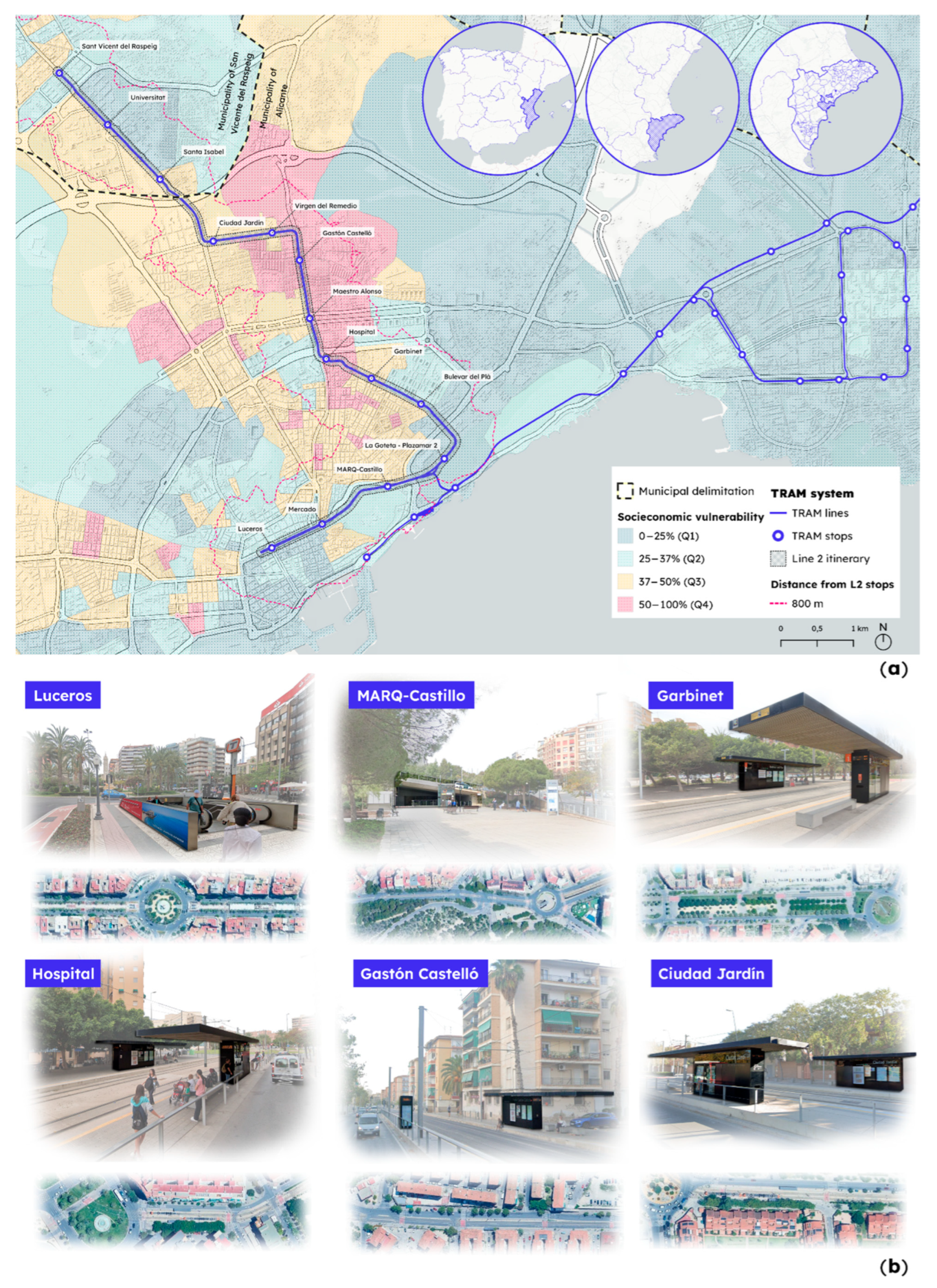
Figure 1. (a) Geographic context of study; (b) urban environment next to L2 TRAM stops.
Land 14 02072 g001
Figure 2. Overall workshop development.
Land 14 02072 g002
Figure 3. List of information incorporated for the elaboration of the evaluation maps of each system, highlighting the information related to the accessibility system.
Land 14 02072 g003
Figure 4. Accessibility evaluation map classified according to the standard 5-class colour code.
Land 14 02072 g004
Figure 5. Location of urban spaces identified in the students’ proposals.
Land 14 02072 g005
Figure 6. Results of the design proposals of (a) politicians; (b) children and teenagers; (c) women; (d) people with disabilities; (e) elderly people; (f) athletes. Dark red represents the selected diagrams related to accessibility.
Land 14 02072 g006
Figure 7. Results of the first round of negotiations by coalitions of (a) women children and teenagers; (b) people with disabilities and elderly people; (c) politicians and athletes. Dark red represents the selected diagrams related to accessibility.
Land 14 02072 g007
Figure 8. Results of the final negotiated design. Dark red represents the selected diagrams related to accessibility.
Land 14 02072 g008
Table 1. Adaptation of the Steinitz geodesign framework to urban accessibility planning. Each model is interpreted in relation to its role in identifying, evaluating, and addressing spatial barriers to equitable access.
ModelDescriptionRelevance to Accessibility
Representation
  • Maps the spatial and historical development of the study area (land use, transport networks, demographics).
  • Identifies physical and socio-spatial barriers limiting access to services and infrastructure.
Process
  • Simulates future urban development under a baseline “do-nothing” scenario using modelling and forecasting.
  • Illustrates how accessibility conditions may persist or deteriorate without targeted interventions.
Evaluation
  • Compares simulation outputs with stakeholder priorities to assess the effectiveness of potential interventions (experts, policymakers, citizens).
  • Ensures that design alternatives align with inclusive mobility goals and equitable service distribution.
Change
  • Generates design alternatives informed by evaluation findings.
  • Proposes targeted actions to enhance connectivity and remove accessibility bottlenecks.
Impact
  • Measures anticipated social, spatial, and environmental outcomes of proposed interventions.
  • Evaluates whether interventions improve overall accessibility and distribute benefits equitably.
Decision
  • Structures the final decision-making process, considering power dynamics, timelines and roles.
  • Institutionalises accessibility standards and ensures outcomes are aligned with stakeholder needs and legal frameworks.
Table 2. Overall geodesign approach. Key stages in the development of the workshop.
StepDescriptionSection
[A] Behind the scenesOrganisation tasks and preparation of materials before the workshopSection 5.1.
[A1]Development of representation, process, and evaluation models. Conceptualising and modelling the accessibility system
  • Collect and analyse GIS data.
  • Build evaluation models for the accessibility system
  • Configure GeodesignHub platform with study area, layers and system.
Section 5.1.1.
[B] Participatory engagement phase: the workshopWorkshop development with the participants that include both individual and collaborative tasksSection 5.2.
[B1]Diagram creation phase: Individual proposals
  • Students generate diagrams for their proposals
  • Focus on accessibility as a stand-alone system
  • Upload diagrams to GeodesignHub
Section 5.2.1.
[B2]Role-playing phase: Group proposals
  • Students assigned to stakeholder groups (e.g., elderly, women, politicians)
  • Select diagrams aligned with group priorities
Section 5.2.2.
[B3]Integration and synthesis of design alternatives: Synergies between groups
  • Stakeholder groups form coalitions
  • Negotiate proposals under budget constraints
Section 5.2.3.
[B4]Consensus and final decision-making
  • Final round of joint decision-making
  • Agree on integrated set of proposals
  • Consolidate strategy with emphasis on accessibility outcomes
Section 5.2.4.
Table 3. Diagrams selected by design teams in the second version.
Version 02
RoleDiagrams selected
TotalAccessibility diagrams selected
NumberNumberPercentageProject
Politicians3239%A F O
Children and teenagers66914%D E H I Q L M N P
Women6035%A L R
People with disabilities691826%A B C D E F G H I J K L M N O P Q R
Elderly people821113%B C D F G H I K L N R
Athletes51918%A C H I K L M P Q
Table 4. Sociogram with synergies identified after the design team’s proposals discussions.
Disabled PeoplePoliticiansElderlyWomenAthletesChildren
Disabled people +++++++
Politicians − −− −− −
Elderly++++ ++++
Women++++ ++++
Athletes− −+− − +
Children+++++++
Table 5. Negotiated design: agreements.
Negotiated Design: Agreements
RoleDiagrams selected
TotalAccessibility diagrams selected
NumberNumberPercentageProject
Women, children and teenagers5336%A M R
People with disabilities and elderly people621524%A B C D E F G H I M N O P Q R
Politicians and athletes 3339%A H F
Disclaimer/Publisher’s Note: The statements, opinions and data contained in all publications are solely those of the individual author(s) and contributor(s) and not of MDPI and/or the editor(s). MDPI and/or the editor(s) disclaim responsibility for any injury to people or property resulting from any ideas, methods, instructions or products referred to in the content.