Article

The Importance of Scale and the MAUP for Robust Ecosystem Service Evaluations and Landscape Decisions


1
School of Geography, University of Leeds, Leeds LS2 9JT, UK
2
Sustainable Agriculture Sciences, Rothamsted Research, North Wyke, Okehampton EX20 2SB, UK
*
Author to whom correspondence should be addressed.
Land 2022, 11(3), 399; https://doi.org/10.3390/land11030399
Submission received: 4 February 2022 / Revised: 1 March 2022 / Accepted: 3 March 2022 / Published: 9 March 2022
(This article belongs to the Special Issue Land Use Optimisation)

Abstract

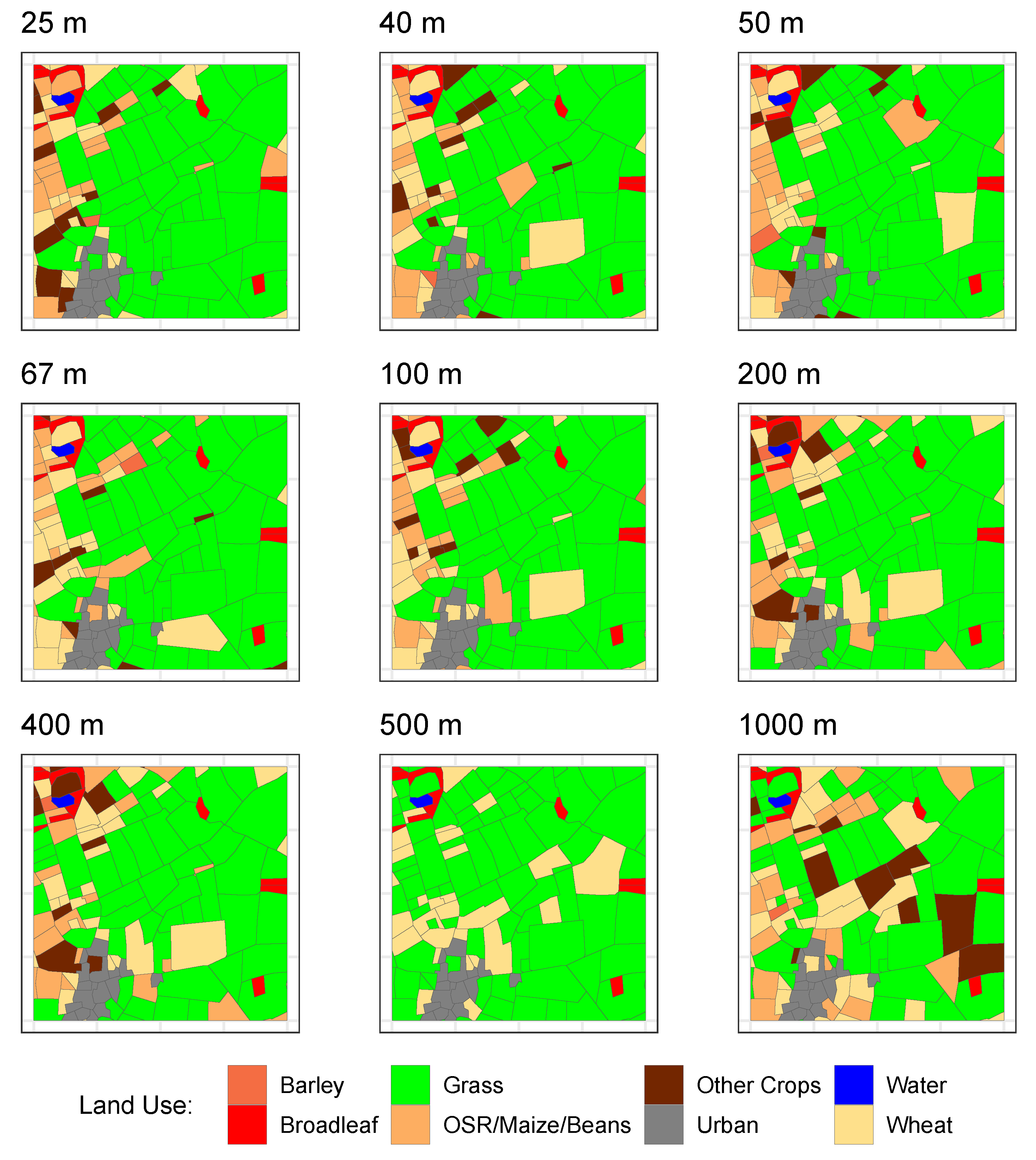
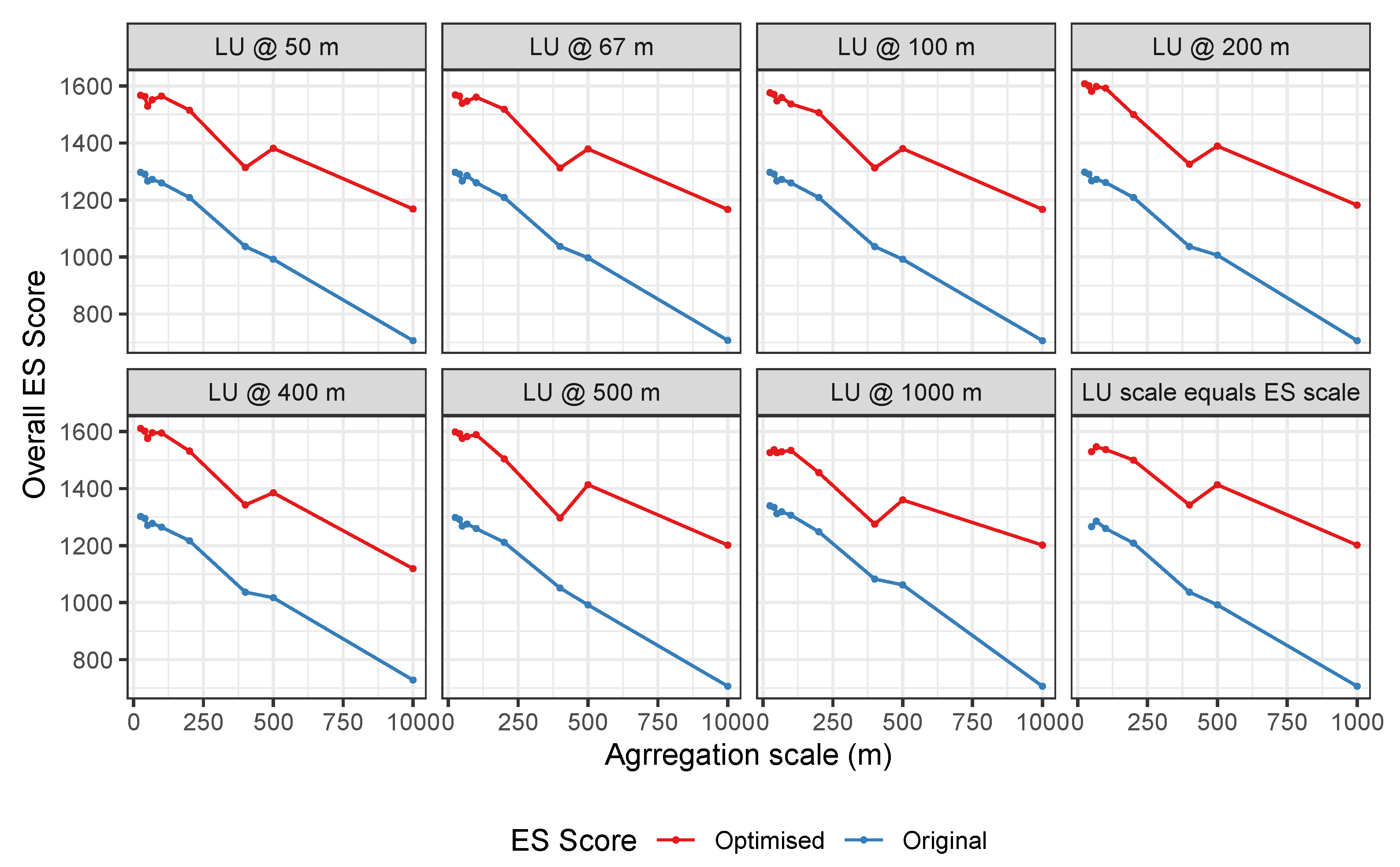
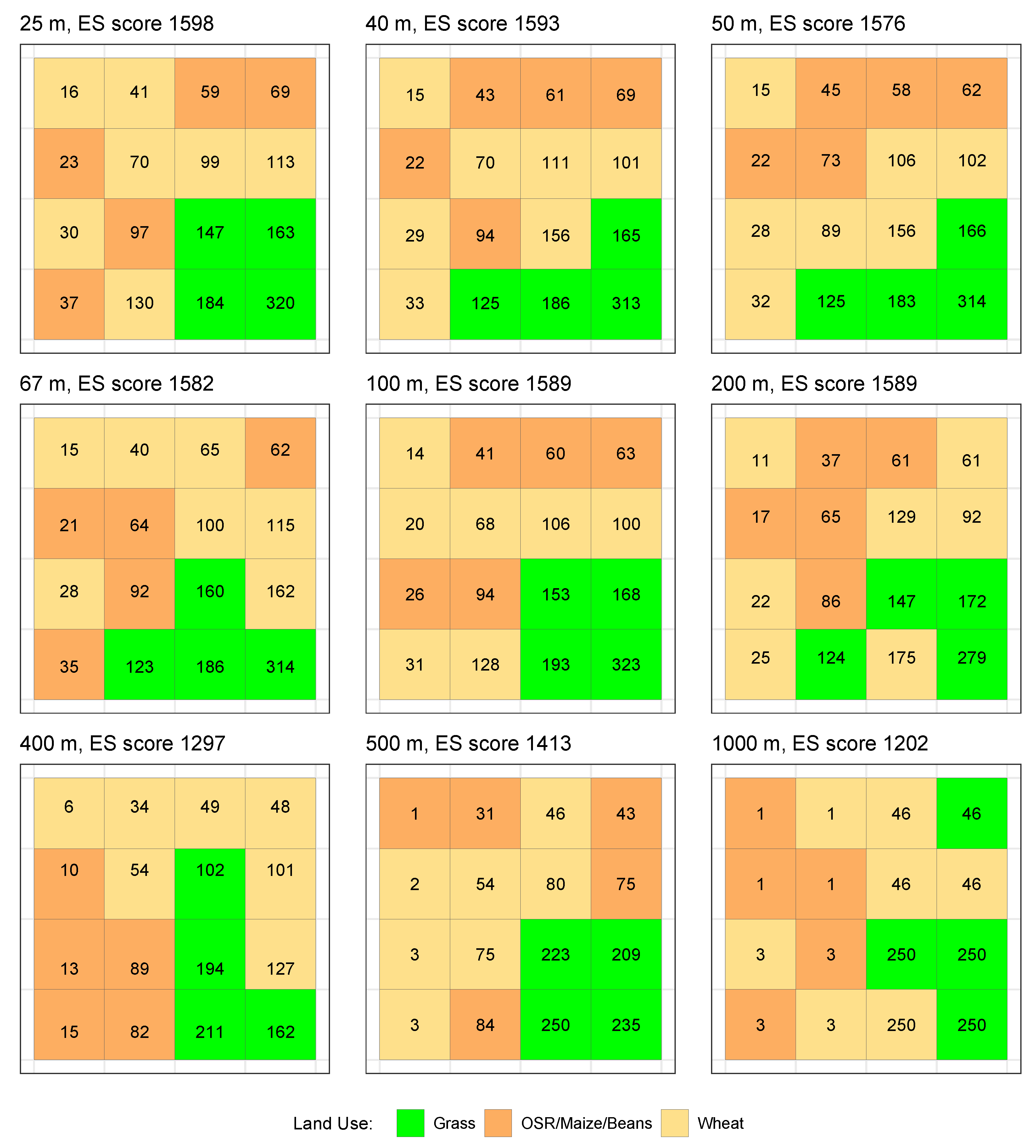
Spatial data are used in many scientific domains including analyses of Ecosystem Services (ES) and Natural Capital (NC), with results used to inform planning and policy. However, the data spatial scale (or support) has a fundamental impact on analysis outputs and, thus, process understanding and inference. The Modifiable Areal Unit Problem (MAUP) describes the effects of scale on analyses of spatial data and outputs, but it has been ignored in much environmental research, including evaluations of land use with respect to ES and NC. This paper illustrates the MAUP through an ES optimisation problem. The results show that MAUP effects are unpredictable and nonlinear, with discontinuities specific to the spatial properties of the case study. Four key recommendations are as follows: (1) The MAUP should always be tested for in ES evaluations. This is commonly performed in socio-economic analyses. (2) Spatial aggregation scales should be matched to process granularity by identifying the aggregation scale at which processes are considered to be stable (stationary) with respect to variances, covariances, and other moments. (3) Aggregation scales should be evaluated along with the scale of decision making (e.g., agricultural field, farm holding, and catchment). (4) Researchers in ES and related disciplines should up-skill themselves in spatial analysis and core paradigms related to scale to overcome the scale blindness commonly found in much research.
Keywords: spatial support; land use; genetic algorithm spatial support; land use; genetic algorithm