Article

Coupling Characteristics of Ecological Cost, Ecological Value, and Network Ecological Efficiency Across Production–Living–Ecological Space Land-Use Transition Pathways in a Peri-Urban Transition Zone: A Case Study of Wenjiang District, Chengdu, China

1
Sichuan Provincial Land Consolidation Center, Chengdu 611130, China
2
Key Laboratory of Farmland Quality and Monitoring for Land Consolidation, Ministry of Natural Resources, Chengdu 611130, China
3
Sichuan Institute of Nuclear Geology Survey, Chengdu 611130, China
4
College of Resources, Sichuan Agricultural University, Chengdu 611130, China
5
Key Laboratory of Investigation, Monitoring, Protection and Utilization of Cropland Resources, Ministry of Natural Resources, Chengdu 611130, China
*
Author to whom correspondence should be addressed.
These authors contributed equally to this work.
Land 2026, 15(9), 1744; https://doi.org/10.3390/land15091744 (registering DOI)
Submission received: 26 July 2026 / Revised: 9 September 2026 / Accepted: 15 September 2026 / Published: 18 September 2026

Abstract

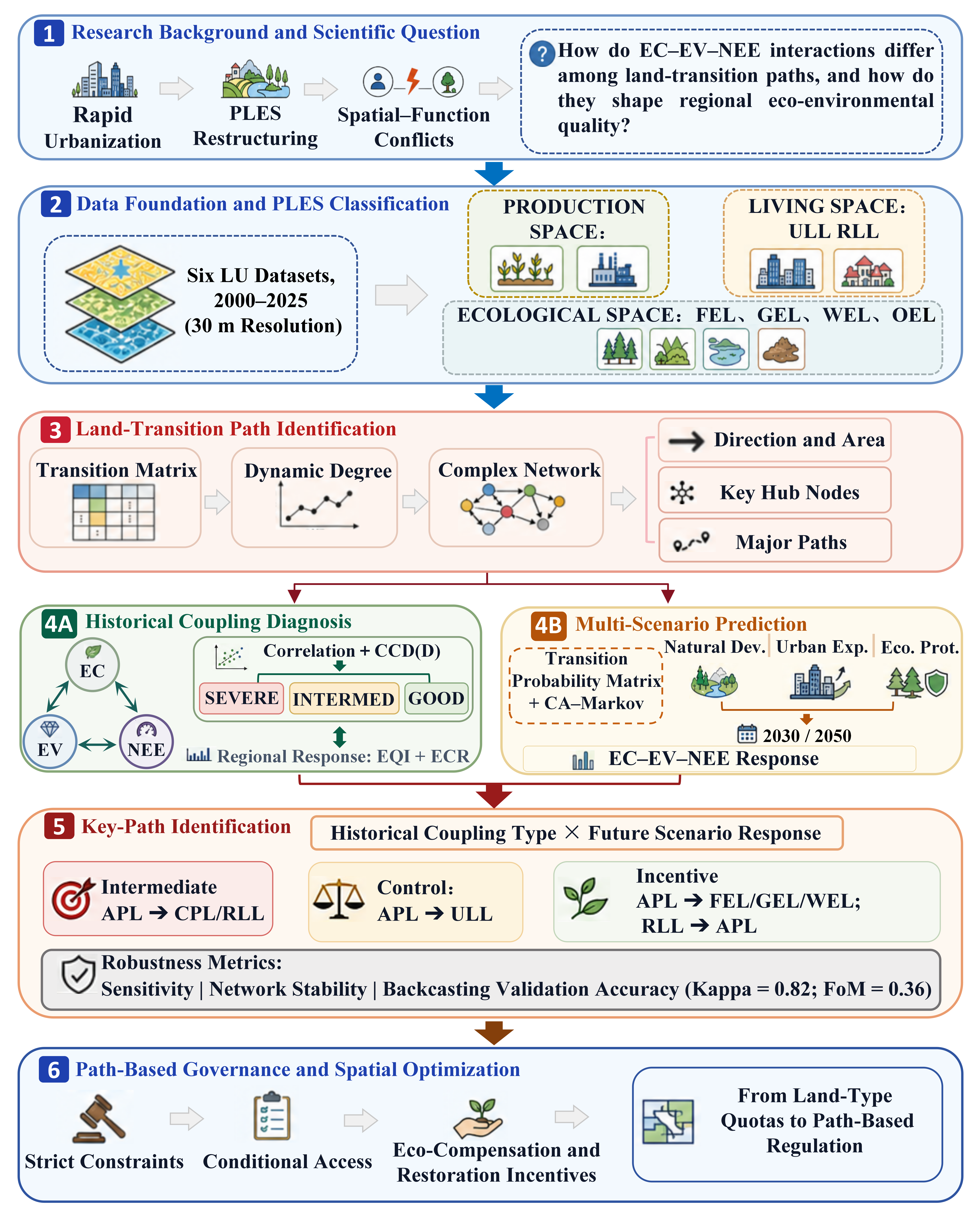
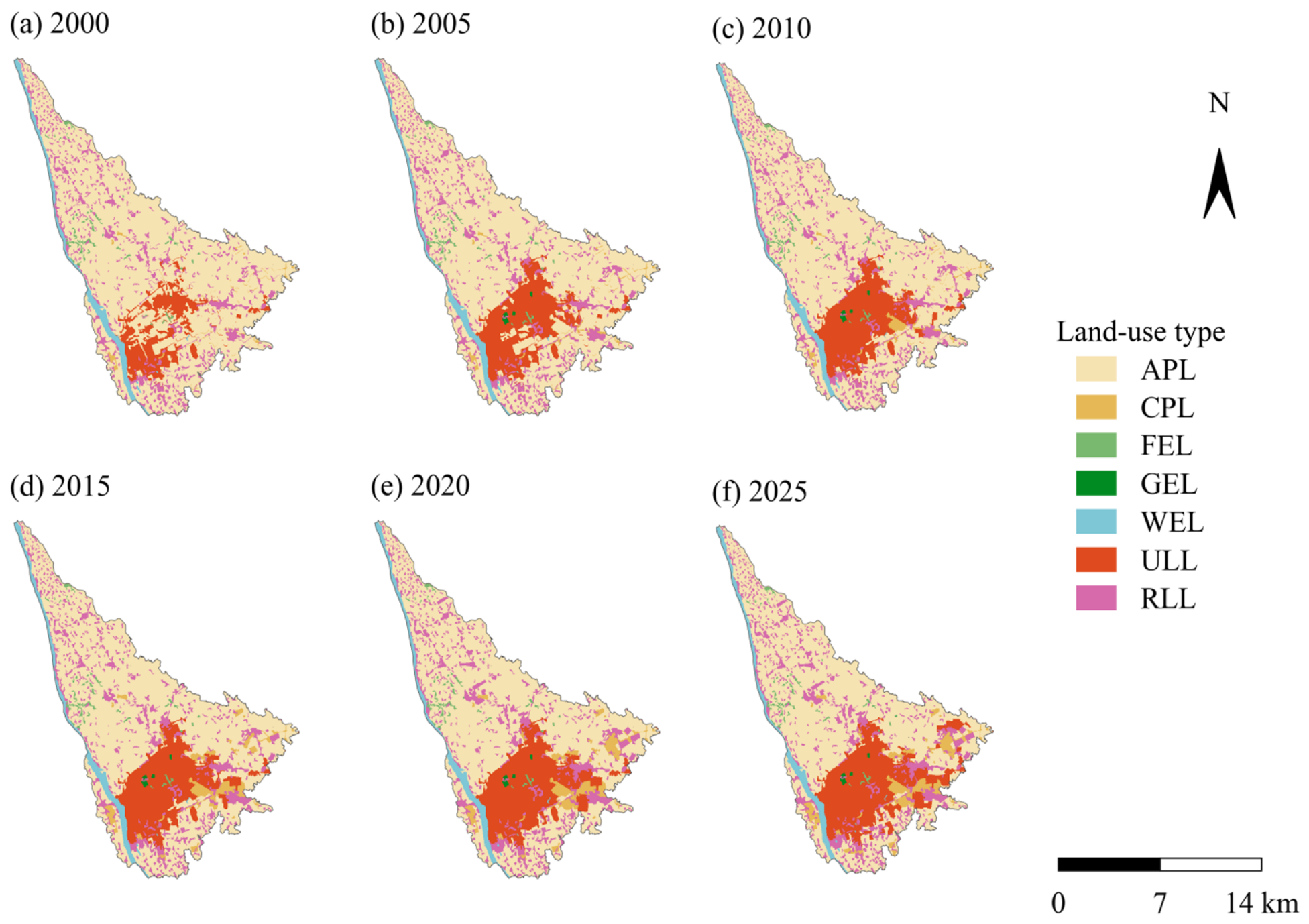
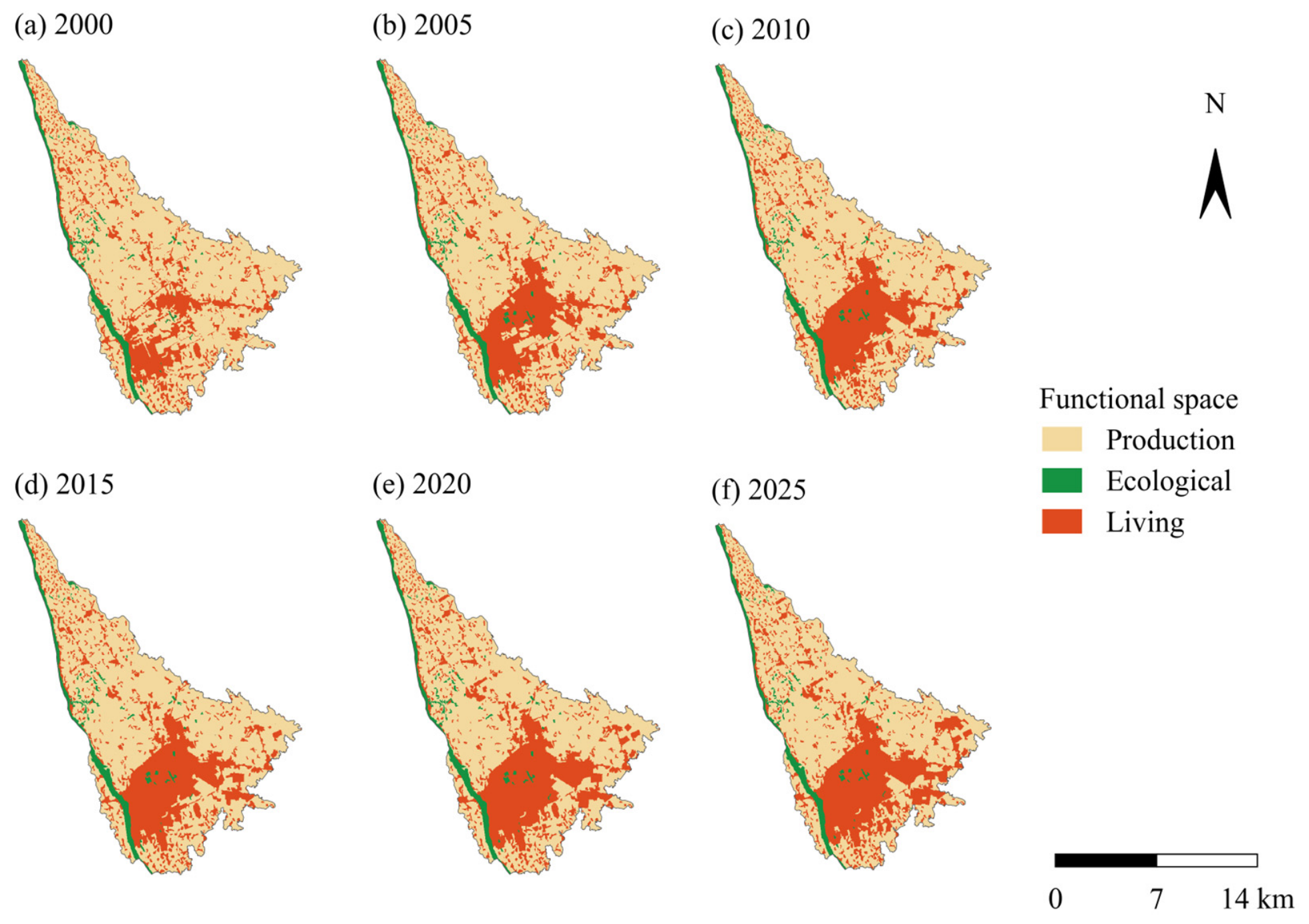
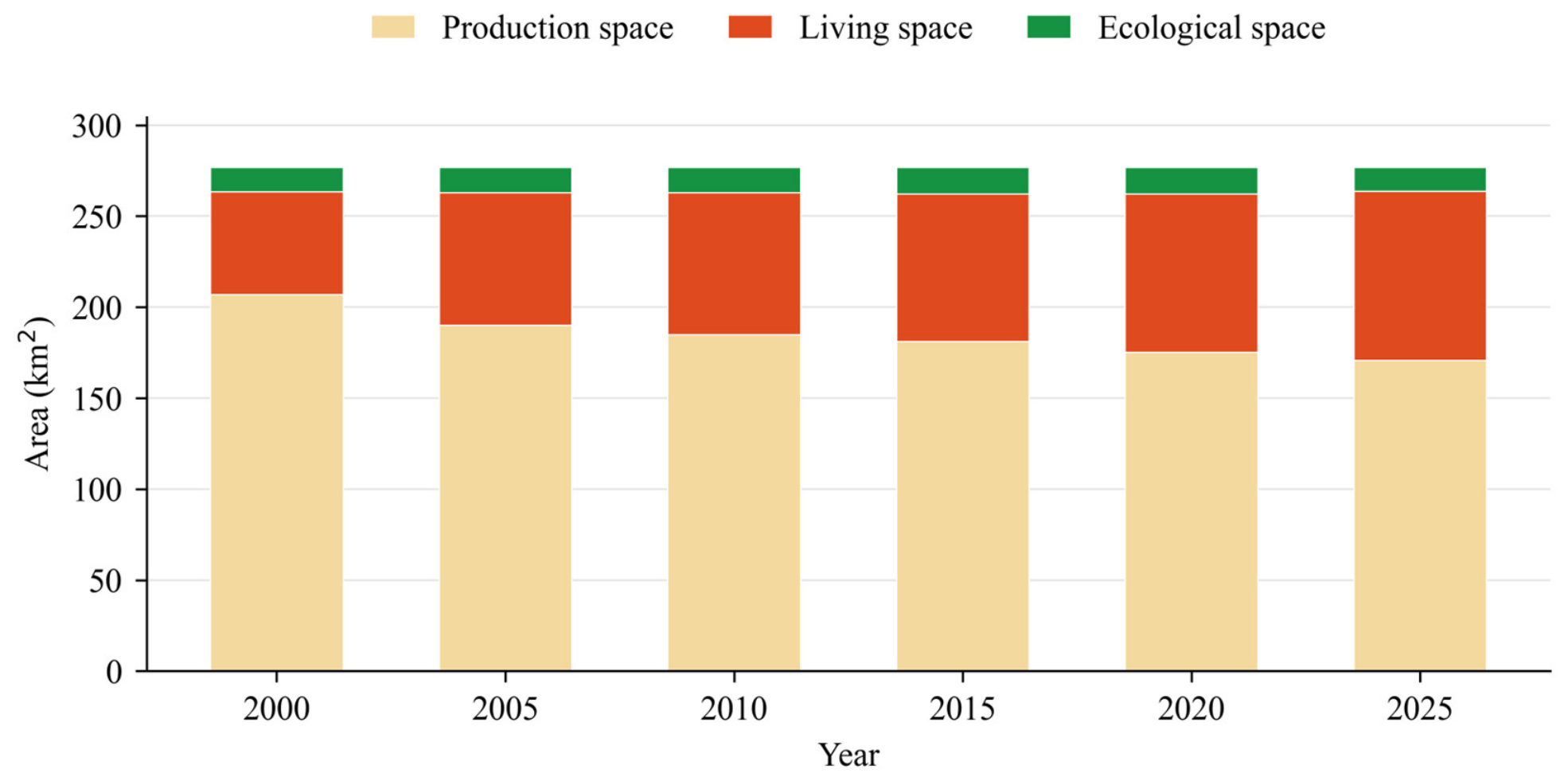
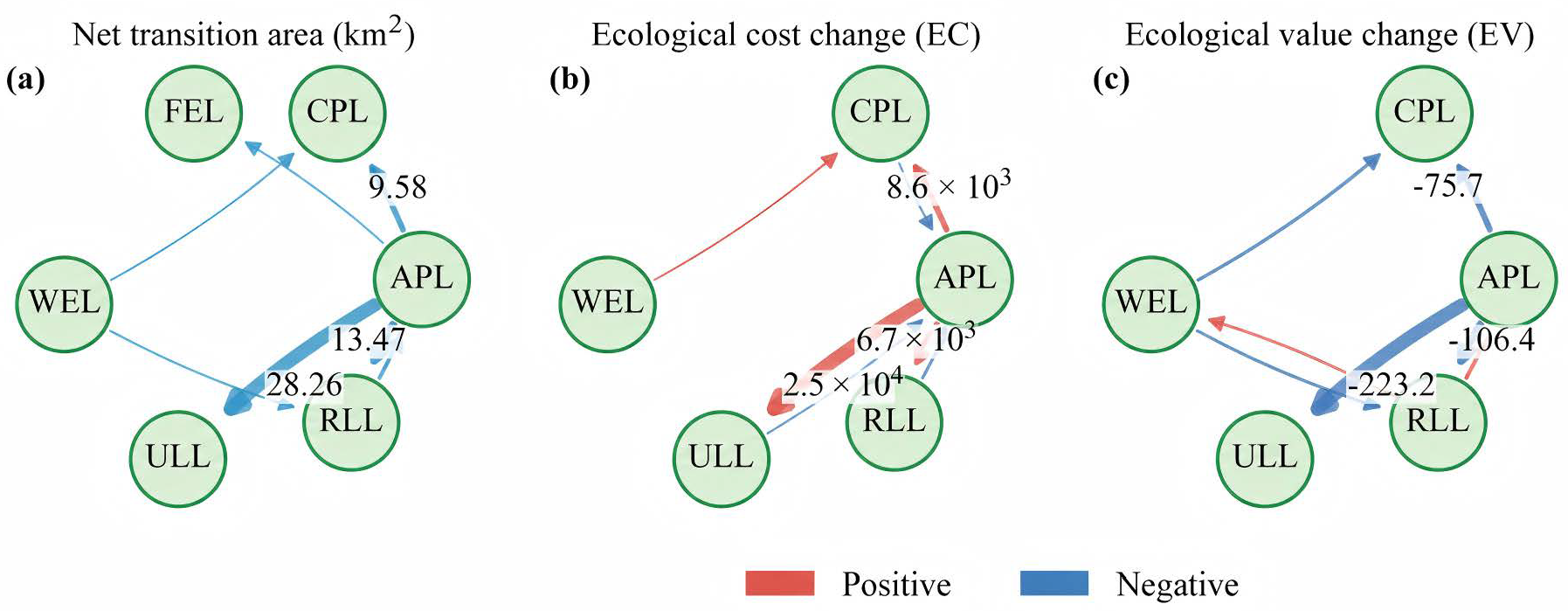
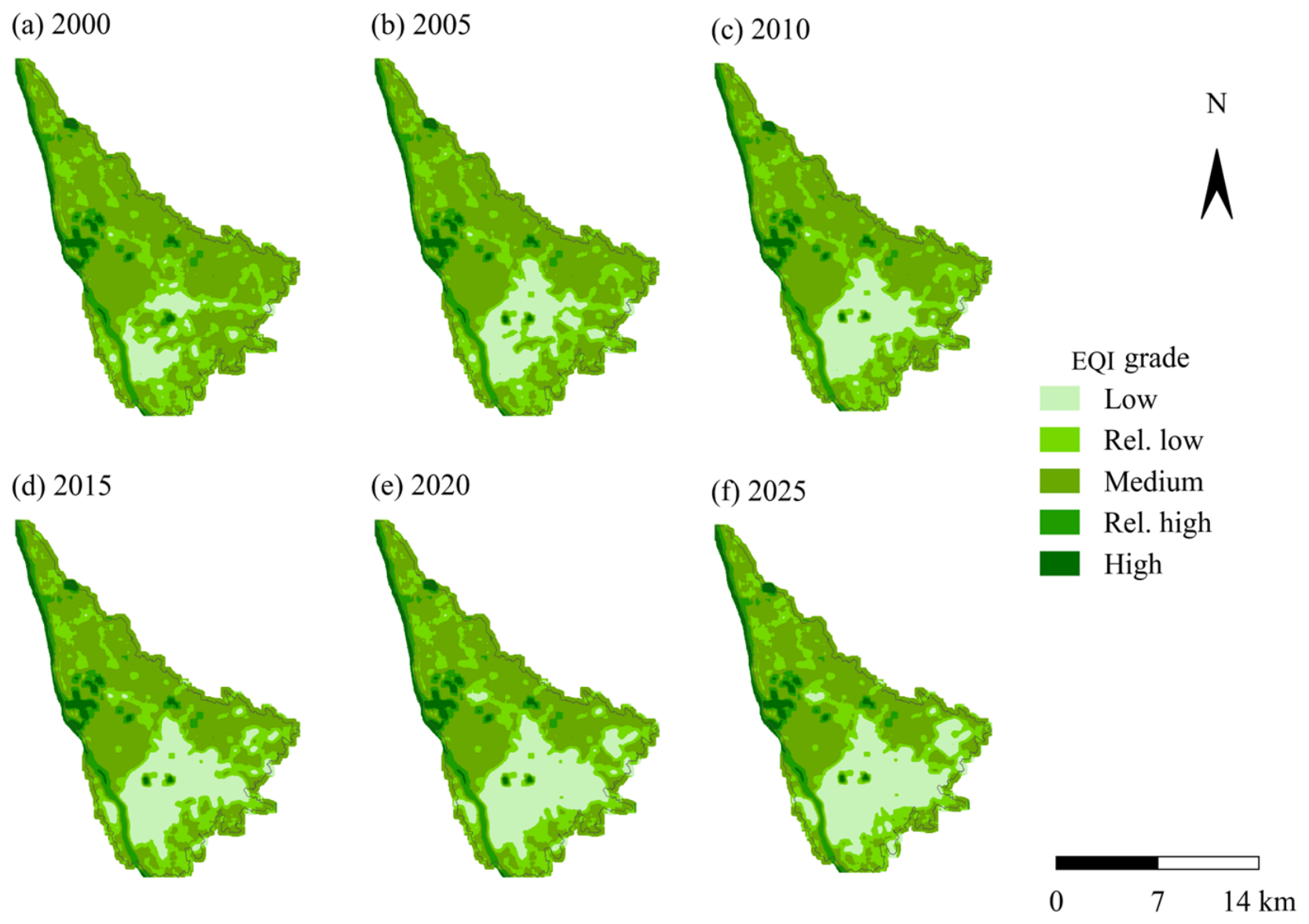
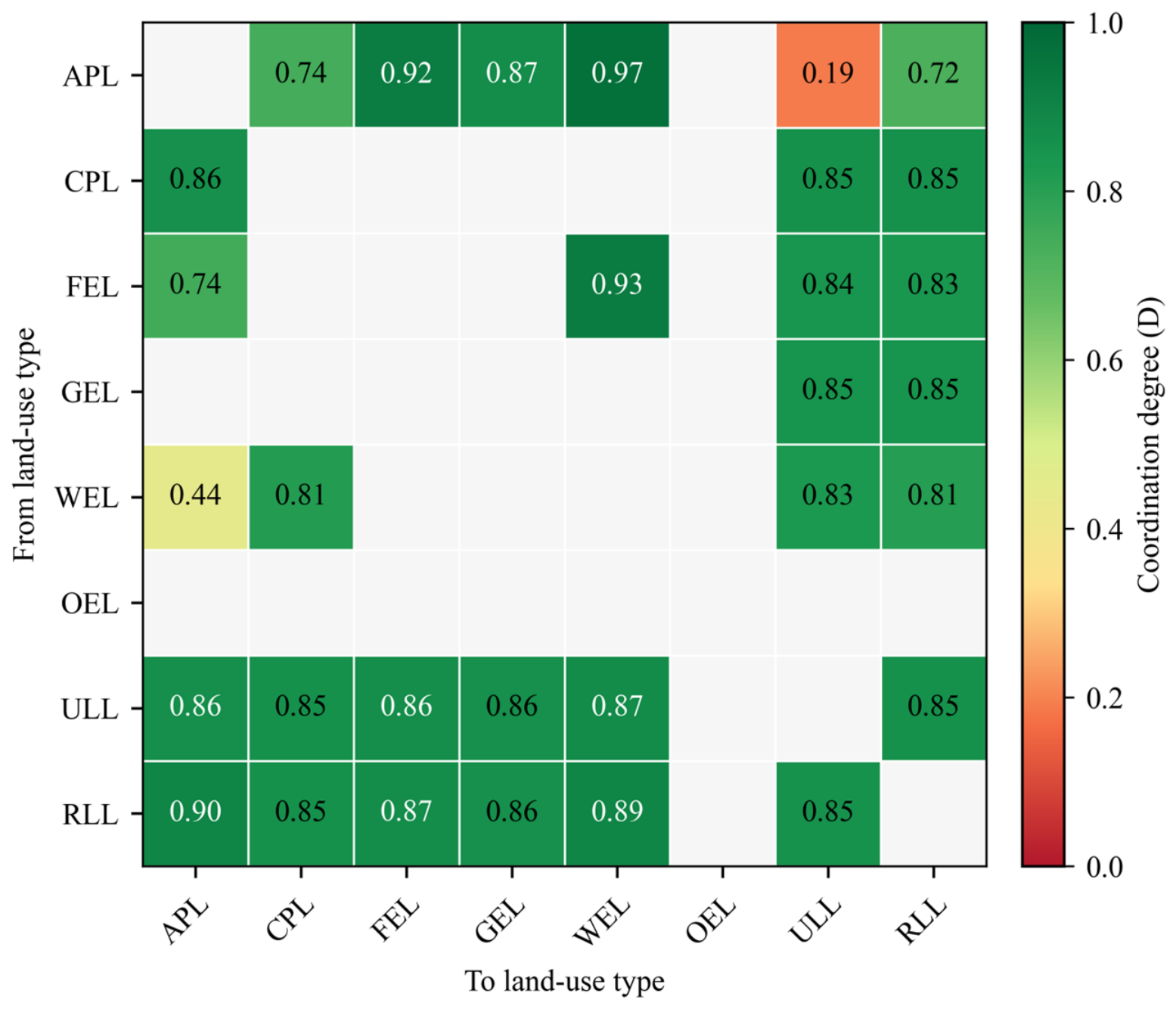
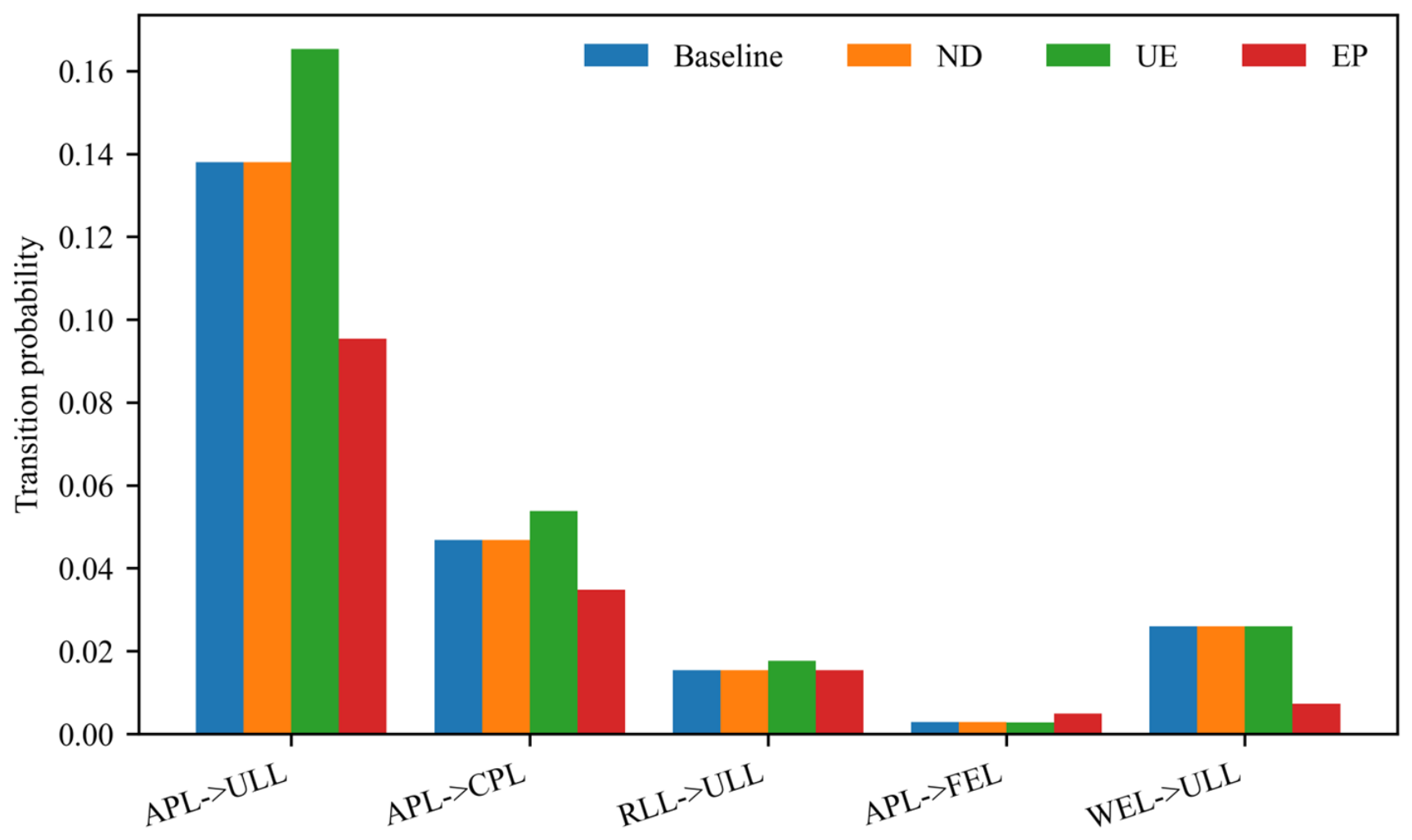
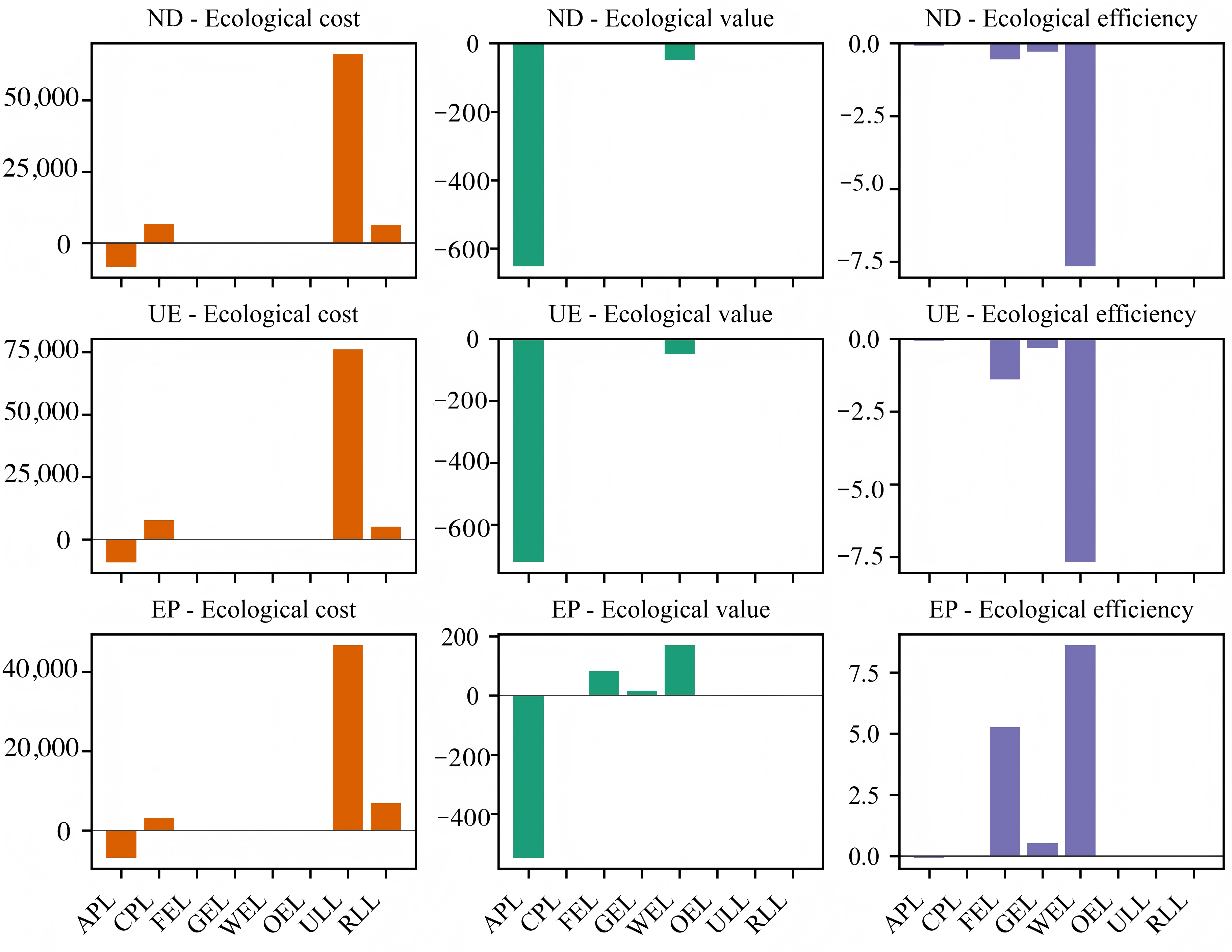
Peri-urban transition zones experience intense conflicts among production, living, and ecological functions, yet the ecological effects of specific land-use transition pathways remain insufficiently quantified. Most studies of production–living–ecological space (PLES) use land-use transition matrices to quantify aggregate transitions among land-use classes, which limits the identification of coupling relationships and differences among specific pathways across ecological cost (EC), ecological value (EV), and network ecological efficiency (NEE). Using Wenjiang District, Chengdu, as a case study, this study integrates complex network analysis, a coupling coordination model, and CA–Markov scenario simulation to develop a pathway coupling framework. The framework quantifies the coupling of EC, EV, and NEE among eight PLES functional land-use classes from 2000 to 2025, and compares their potential ecological effects under three scenarios from 2030 to 2050. The conversion of agricultural production land to urban living land (APL→ULL) was the dominant pathway, with a net transition area of 28.26 km2. The eco-environmental quality index declined from 0.228 to 0.200, a cumulative decrease of 12.3%, and the ecological contribution rate remained negative in every period. Coupling coordination varied markedly among pathways. APL→ULL showed severe imbalance (D = 0.191), APL→CPL showed moderate relative coordination (D = 0.741), and APL→FEL and related restoration pathways showed good relative coordination (D = 0.870 to 0.968). Here, D represents the relative coordination of direction-aligned and normalized indicators within the pathway sample rather than absolute ecological performance. Backcasting yielded a Kappa coefficient of 0.82. The future scenarios indicated that ecological protection could slow but not fully reverse the projected degradation trend. Based on ecological effects, relative coordination, and scenario responses, the major pathways were classified as priority-control, priority-incentive, or conditional-management pathways. By using individual land-use transition pathways as a common unit of analysis, the framework links network structure identification, joint assessment of EC, EV, and NEE, comparison of scenario responses, and management classification. It thereby extends PLES eco-environmental assessment from aggregate area change or single indicators to pathway-level diagnosis and decision support.
Keywords: peri-urban transition zone; production-living-ecological space; land-use transition pathway; eco-environmental quality; coupling coordination degree; CA–Markov peri-urban transition zone; production-living-ecological space; land-use transition pathway; eco-environmental quality; coupling coordination degree; CA–Markov