Article

Producers’ Perceptions of Climate Change Impacts on Inland Aquaculture in the Western Mediterranean Region of Türkiye

by
Mustafa İlker Sürer
1,
Ahmet Tolunay
2,*,
Turkay Turkoglu
3,
Çağdan Uyar
4,*,
Dalia Perkumienė
5,
Marius Aleinikovas
6 and
Mindaugas Škėma
6
1
Fisheries Engineering, Faculty of Fisheries, Isparta University of Applied Sciences, Çünür, Isparta 32260, Türkiye
2
Rural Development and Social Forestry Application and Research Center, Isparta University of Applied Sciences, Isparta 32260, Türkiye
3
Program of Forestry and Forest Products, Köyceğiz Vocational School, Muğla Sıtkı Koçman University, Mugla 48800, Türkiye
4
Department of Forestry, Vocational School of Forestry, İstanbul University-Cerrahpaşa, Istanbul 34473, Türkiye
5
Faculty of Alytus, Kauno Kolegija Higher Education Institution, Pramones pr. 20, 50468 Kaunas, Lithuania
6
Institute of Forestry, Lithuanian Research Centre for Agriculture and Forestry, 58344 Akademija, Lithuania
*
Authors to whom correspondence should be addressed.
Land 2026, 15(9), 1549; https://doi.org/10.3390/land15091549
Submission received: 24 July 2026 / Revised: 19 August 2026 / Accepted: 21 August 2026 / Published: 24 August 2026
(This article belongs to the Special Issue The Forest City Blueprint: Weaving Economic and Ecological Resilience)

Abstract

This study aims to investigate the perspectives of aquaculture producers in the Western Mediterranean Region (operating in Antalya, Burdur, and Isparta provinces) on climate change, examine the impacts of climate change on regional aquaculture, and develop solution proposals. Within the scope of this objective, the socioeconomic and demographic characteristics of the aquaculture producers in the Western Mediterranean Region, along with their knowledge levels regarding climate change, were obtained through a questionnaire technique. The results indicate that producers, who are predominantly engaged in rainbow trout aquaculture, are under severe economic pressure due to high-exchange-rate-driven input costs and the abolition of government subsidies. While all participants (100%) perceived that climate change has decreased production tonnage, the most prominent impact of the climate crisis is perceived as drought and the decline of water resources, with a response rate of 37.2%. Multivariable analysis further showed that aquaculture experience and satisfaction with aquaculture income were significantly associated with producers’ future outlook, highlighting the importance of socioeconomic factors in shaping perceived sectoral vulnerability. Due to both rising costs and environmental risks, 50% of the producers view the future of the sector pessimistically and do not recommend this profession to future generations. Consequently, these results emphasize the critical need for integrated land and water resource management policies, alongside targeted climate adaptation strategies, to ensure the long-term socio-ecological sustainability of forest inland aquaculture in the region.

1. Introduction

Human activities and industrialization have altered natural atmospheric dynamics through greenhouse gas emissions, driving global warming and multi-scale environmental shifts [1]. Climate change now poses far-reaching threats to global resource security, international relations, ecosystems, water availability, and human health, necessitating coordinated global and local measures [2]. International efforts initiated at the 1972 Stockholm Conference and formal framework conventions such as the UNFCCC, Kyoto Protocol, and Paris Agreement established global climate mitigation targets [2,3]. Concurrently, accelerating population growth and resource demand have compounded environmental risks, leading to deforestation, severe soil erosion, and declining agricultural yields [4]. In the Mediterranean basin, climate change is actively intensifying water scarcity, rising temperatures, and hydrological variability, creating severe pressures in western Mediterranean inland systems where freshwater availability is already inherently constrained [5,6,7]. Inland aquaculture is particularly vulnerable to these shifts because farms are tied to fixed water bodies and cannot easily relocate, while warming directly alters fish growth rates, dissolved oxygen levels, disease risks, and overall production feasibility [8,9,10].
Addressing the twin challenges of water scarcity and ecosystem degradation requires moving beyond piecemeal fisheries regulations toward strategic land-use planning. In this context, Córdoba Hernández and Camerin (2024) [11] demonstrate that integrating ecosystem assessments into spatial land-use planning tools provides an indispensable methodological framework for supporting informed decision-making, protecting strategic natural resources, and formulating cohesive climate adaptation and mitigation policies. Because inland fish farms are spatially and functionally embedded within forested catchments, protecting water availability and aquatic health cannot be achieved through sectoral fisheries management alone. Applying ecosystem assessments within regional spatial planning tools, as advocated by Córdoba Hernández and Camerin (2024) [11], enables planners to evaluate land-water interactions, safeguard ecological water flows, mitigate land-use conflicts (e.g., tourism, forestry, energy, and intensive agriculture), and enhance the socio-ecological sustainability of inland aquatic ecosystems.
Public awareness of these mounting environmental pressures varies significantly, highlighting the importance of targeted communication and local-level engagement [12]. In Türkiye, climate change impacts are increasingly felt across daily life, reinforcing the need for proactive local interventions and integrated forestry and environmental management policies [13,14]. However, local institutions often face legal, capacity, and administrative constraints that hinder effective climate adaptation on the ground [15].
Despite growing academic focus on climate change in natural resource systems, existing research exhibits clear thematic and contextual limitations. On one hand, national literature in Türkiye heavily emphasizes macro-level agricultural analyses or general public awareness [12]. On the other hand, broader Mediterranean aquaculture research has predominantly focused on marine systems or farm-scale biophysical modeling rather than producer perceptions, local adaptation constraints, and region-specific knowledge gaps in the inland context [16,17,18]. Consequently, there is still limited knowledge about how aquaculture producers in the Western Mediterranean inland context perceive climate-related pressures, especially water scarcity and management constraints. This gap is critical because producer perceptions directly shape adaptation priorities, management choices, and risk responses, yet existing studies have not sufficiently characterized these views in this region.
A critical empirical gap thus remains regarding how micro-scale inland aquaculture enterprises, particularly rainbow trout producers operating within forested sub-basins, perceive, experience, and adapt to compounding climate pressures. Inland fish farming relies strictly on stable forest-hydrology systems; thus, producers sit at the primary intersection of environmental stress (e.g., severe localized drought, reduced stream flows) and escalating economic bottlenecks (e.g., foreign exchange-driven feed costs and revoked government subsidies).
The present study addresses these gaps by documenting aquaculture producers’ perceptions, identifying the main climate-related concerns and management challenges they report, and providing direct empirical evidence from active facility operators in Antalya, Burdur, and Isparta. By capturing these frontline perspectives on how climate change is perceived, which impacts are most salient, and which management responses are considered relevant in a western Mediterranean inland context, this work advances the international literature by:
  • Linking micro-level producer observations directly to severe hydrological shifts and forest-water dependency within catchments.
  • Assessing the socio-economic resilience of inland fish farms facing dual environmental and financial pressures.
  • Providing empirical stakeholder insights to guide integrated land, water, and climate adaptation policies in Mediterranean micro-regions.
Specifically, this study aims to examine:
  • The impacts of climate change on aquaculture operations in the Western Mediterranean Region;
  • The climate-driven pressures on forest hydrology and inland water resources;
  • The future socio-economic challenges confronting inland aquaculture enterprises;
  • The operational bottlenecks faced by producers due to declining inland water tables;
  • The specific climate-related concerns, salient environmental impacts, and practical management constraints reported directly by regional producers.

2. Materials and Methods

2.1. Study Area

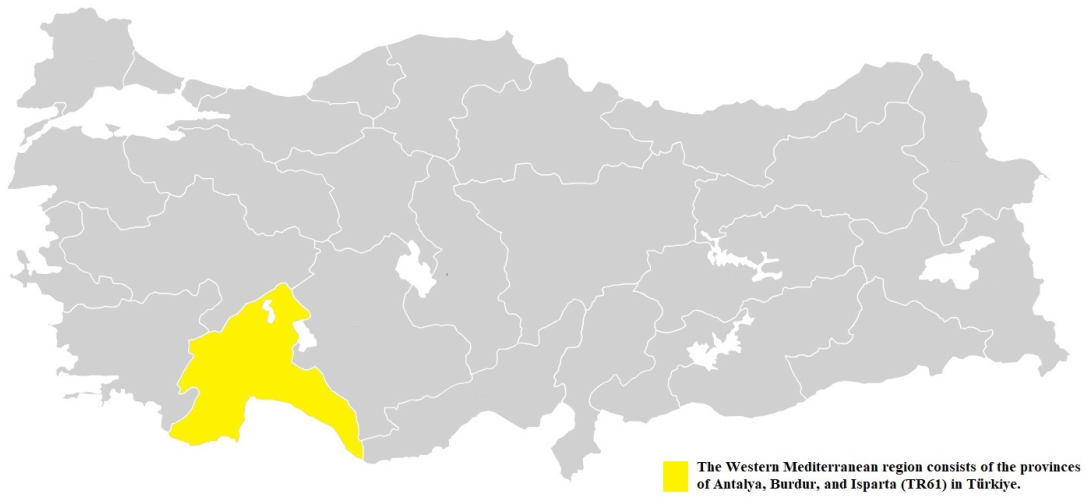
The Western Mediterranean Region encompasses the provinces of Antalya, Burdur, and Isparta. According to the 2023 census, 2,696,249 people live in Antalya, 277,452 in Burdur, and 449,777 in Isparta [19]. Climatically, the region is characterized by very hot and dry summers, and mild and rainy winters. The location of the Western Mediterranean Region, which constitutes the study area, is presented in Figure 1 [20].
The provinces of Antalya, Isparta, and Burdur make significant contributions to the fisheries sector in terms of aquaculture. Aquaculture enterprises operate as small and medium-sized enterprises (SMEs). According to data obtained from the Presidents of the Inland Aquaculture Producers Associations of the provinces, 77 out of 84 fish farms in Antalya are active, and the aquaculture producers association has 64 registered members [21]. Because the province of Antalya is a major tourist destination, marine tuna farms have been relocated to neighboring provinces due to tourism activities. In Burdur, 33 out of 55 fish farms are active, and the aquaculture producers’ association has 44 registered members [22]. In Isparta, 77 out of 84 fish farms are active, and the aquaculture producers’ association has 45 registered members [23]. However, it should be noted that a single individual may own multiple fish farms.

2.2. Material

The primary material of the study consists of data obtained from a questionnaire administered by aquaculture producers in the provinces of Antalya, Burdur, and Isparta. In addition, relevant literature, reports, and statistics obtained from institutions and organizations, and expert opinions on the subject were utilized as materials in the study. The target population of the study comprises members affiliated with the Inland Aquaculture Producers Associations in Antalya, Burdur, and Isparta within the Western Mediterranean Region.
This research was approved by the Scientific Research and Publication Ethics Committee of Applied Sciences University of Isparta via Decision No. 01 dated 30 June 2021, in response to application No. E.22038 dated 18 June 2021.
The questionnaire items were developed based on expert input and relevant literature [24,25]. Prior to full implementation, the questionnaires underwent a preliminary evaluation, and pilot studies were conducted using face-to-face questionnaire administration.
The primary material of this study consists of empirical data collected through a structured questionnaire administered directly to inland aquaculture producers in the provinces of Antalya, Burdur, and Isparta within the Western Mediterranean Region of Türkiye. According to official membership records of the regional Inland Aquaculture Producers’ Associations, 142 registered individuals were identified as aquaculture producers in the study area. At the outset of the study, a full census approach targeting all 142 producers was planned. However, a complete census could not be achieved due to several field-level operational constraints: certain facilities had permanently shut down operations due to localized water depletion; several facility owners were unavailable on site during multiple visits; some operators running combined restaurant–aquaculture facilities had ceased active fish cultivation and were procuring market-sized fish externally; a small subset of producers declined to participate; and several remote farm locations presented severe vehicle accessibility difficulties.
The field survey was conducted between August 2022 and April 2023. To ensure data validity and analytical reliability, all returned questionnaire forms underwent a preliminary screening. A total of 126 completed forms were initially gathered; during the screening process, 24 questionnaires were excluded due to incomplete responses or evident misunderstandings. Consequently, 102 fully valid questionnaires were retained for data analysis, corresponding to 71.8% of the target producer population across the three provinces (Antalya: n = 45; Burdur: n = 23; Isparta: n = 34). The provincial breakdown, target sample distribution, and response rates are summarized in Table 1.
To ensure content validity, structural rigor, and field feasibility, the survey instrument was developed through a multi-stage process grounded in relevant literature and institutional research frameworks. Content validity of the item pool was established through a panel evaluation by academic experts in forestry engineering, environmental economics, and aquaculture. Following expert review, a pilot test was conducted with 10 active aquaculture producers (excluded from the final analytical dataset of 102) to evaluate item clarity, readability, and operational applicability. Minor text modifications were incorporated based on pilot feedback prior to full deployment. The questionnaire is provided as Supplementary Material File S1.
The finalized questionnaire comprises 50 items structured into two primary sections:
  • Section I (Questions 1–23): Evaluates socio-demographic traits (age, gender, educational status, household size, and monthly household income) and operational/economic characteristics (years of experience, reason for starting, distance to settlements, road conditions, licensing, cooperative membership duration, employee numbers, payment methods, social security, secondary employment, expense structures, cultivated species, marketing channels, income satisfaction, and sectoral outlook).
  • Section II (Questions 24–50): Addresses climate change and its sectoral impacts. Questions 24–32 assess knowledge levels, historical micro-climatic observations, anticipated future weather conditions, vulnerable sectors and resources, relevant governance institutions, information sources, concern levels, and mitigation measures.
The final part (Questions 33–50) consists of 18 Likert-type statements formatted on a 5-point scale (1 = Strongly Agree, 2 = Agree, 3 = Undecided, 4 = Disagree, 5 = Strongly Disagree). Attitude scaling through Likert structures allows for the determination of mean respondent attitudes based on composite statement values [26,27]. A 5-point scale was specifically selected as it represents the format most familiar to respondents, offering a balanced structure of two positive, two negative, and one neutral response option [27]. These statements measure producers’ agreement regarding climate impacts on aquaculture operations, water availability, fish growth, meat quality, disease proliferation, forest-water dynamics, public/institutional capacity, and socio-economic sustainability (Table 1).
The provincial breakdown, target sample distribution, and response rates of the administered questionnaire are summarized in Table 1.

2.3. Statistical Analyses

Within the scope of the research objectives, the socio-economic and demographic characteristics of individuals engaged in inland aquaculture in the Western Mediterranean Region, together with their perceptions and level of knowledge regarding climate change and its potential effects on aquaculture, were assessed using questionnaire data. The questionnaire data were coded and initially analyzed using SPSS (Statistical Package for the Social Sciences) version 20.0. Descriptive statistics were used to summarize the socio-demographic and enterprise characteristics of the respondents and their perceptions of climate change. Categorical variables were presented as frequencies and percentages. The questionnaire included 18 Likert-type statements (Questions 33–50) concerning climate change, water resources, institutional capacity, and the perceived effects of climate change on aquaculture. Responses to these statements were coded on a five-point scale as 1 = Completely agree, 2 = Agree, 3 = Undecided, 4 = Disagree, and 5 = Completely disagree. Accordingly, lower scores indicated stronger agreement with the corresponding statement. The internal consistency of the 18 Likert-type items was assessed using Cronbach’s alpha coefficient [28]. The obtained Cronbach’s alpha value of 0.622 indicates a moderate level of internal consistency based on the adopted reliability criteria [29,30].
The distributional characteristics of the questionnaire data were examined using the Kolmogorov–Smirnov and Shapiro–Wilk tests, together with consideration of the ordinal nature of the Likert-type responses [31,32]. The null hypothesis (H0) assumed that the data followed a normal distribution, whereas the alternative hypothesis (H1) indicated departure from normality. As the significance values obtained from the normality tests were below 0.05 and the principal response variables were ordinal, non-parametric statistical methods were used for group comparisons. The Kruskal–Wallis H test, a non-parametric alternative to one-way analysis of variance, was used to determine whether responses to the Likert-type statements differed among independent groups [33]. Differences were examined according to province, age group, education level, aquaculture experience, secondary employment status, satisfaction with income derived from aquaculture, and perceptions regarding the future of the aquaculture sector. A total of 126 comparisons were evaluated across the 18 Likert-type items and seven grouping variables. To control the false discovery rate arising from multiple comparisons, the Benjamini–Hochberg false discovery rate (FDR) correction was applied. For statistically significant Kruskal–Wallis tests, pairwise Mann–Whitney U tests with Bonferroni adjustment were subsequently conducted to identify the groups responsible for the observed differences. Statistical significance was set at p < 0.05. To complement the group comparisons and identify factors independently associated with producers’ expectations regarding the future of the aquaculture sector, a multivariable ordinal logistic regression analysis was also performed. The response to the question “How do you see the aquaculture sector in the future?” was used as the dependent variable and ordered from very good to very bad. Responses classified as “other” (n = 8) could not be meaningfully positioned within this ordinal structure and were therefore excluded from the regression analysis, resulting in an analytical sample of 94 respondents.
To extend the descriptive and group-based analyses, a multivariable ordinal logistic regression model was used to identify factors associated with producers’ expectations regarding the future of the aquaculture sector. Future sector outlook was used as the dependent variable, with responses ordered from “very good” to “very bad.” Eight “other” responses were excluded because they could not be assigned a meaningful ordinal position, resulting in 94 observations for the regression analysis. Age group, education level, aquaculture experience, satisfaction with aquaculture income, and a composite climate-impact perception score derived from selected Likert-type items addressing the perceived effects of climate change on water resources and aquaculture production were included as explanatory variables. Results were expressed as regression coefficients (β), standard errors (SE), odds ratios (OR), 95% confidence intervals (CI), and p-values. As a sensitivity analysis, future outlook was dichotomized into negative (“bad” and “very bad”; n = 51) and non-negative (“very good,” “good,” and “moderate”; n = 43) categories, and a binary logistic regression model was estimated using the same explanatory variables. Model performance was evaluated using the likelihood-ratio test, McFadden’s pseudo-R2, and the area under the receiver operating characteristic curve (AUC) to assess the robustness of the findings obtained from the ordinal regression model.

3. Results

3.1. Sociological and Demographic Characteristics of Aquaculture Producers

Of the aquaculture enterprises operating in the provinces of Antalya, Burdur, and Isparta, 44% operate in Antalya, 22% in Burdur, and 34% in Isparta. Inland aquaculture enterprises in Antalya are predominantly located in the districts of Manavgat (9.8%), Korkuteli (9.8%), Alanya (7.8%), and Gündoğmuş (3.9%). These are followed by Elmalı, Finike, Kepez, Kumluca, Serik (2% each), and Kaş (1%). In Burdur, inland aquaculture operations are in Bucak (7.8%), the Central district (3.9%), Ağlasun, and Gölhisar (2.9% each), while other active districts include Kemer and Tefenni (2% each), and Çavdır (1%). In Isparta, inland aquaculture enterprises are distributed across Sütçüler (16.7%), Eğirdir (6.8%), Aksu (5.8%), the Central district (2.9%), and Şarkikaraağaç (1%). The sociological and demographic characteristics of the aquaculture producers are presented in Table 2.
The findings showed that 98% of the aquaculture producers were male and 2% were female. Participants were aged 19–61+, with 1% aged 19–30, 10.8% aged 31–40, 33.3% aged 41–50, 31.4% aged 51–60, and 23.5% aged 61 or older. The sample was predominantly male and middle-aged or older, while educational attainment was concentrated at primary and secondary levels. Göncüoğlu [34] similarly reported that the upper-middle and middle age groups accounted for 22.9% and 40.6%, respectively. Regarding education, 41.2% were primary school graduates, 39.2% had secondary education, and 19.6% held an associate or bachelor’s degree, indicating a relatively low education level consistent with previous studies [35,36].

3.2. Findings Regarding Aquaculture Producers’ Relationship with Their Profession

The findings regarding the occupational characteristics of the aquaculture producers participating in the study are given in Table 3.
As seen in Table 3, when the reasons for aquaculture producers entering the profession were examined, 42 respondents (41.2%) stated “I decided on my own,” 59 respondents (57.8%) cited “Family profession,” and 1 respondent (1.0%) indicated “Friend recommendation.” Examining the years of experience of the aquaculture producers reveals that 2.0% had 0–5 years, 9.0% had 6–10 years, 12.7% had 11–15 years, 20.6% had 16–20 years, 5.9% had 21–25 years, and 50.0% had more than 25 years of experience. Regarding location and road access, 95.1% of aquaculture enterprises were within 40 km of the nearest settlement, while 5% were located farther away. Additionally, 78.4% had paved (asphalt) road access.
The results regarding the relationship between the participating aquaculture producers and cooperative membership, as well as income, are presented in Table 4.
As shown in Table 4, it was determined that 98% of the aquaculture enterprises are members of a cooperative or producer association, and 54.9% are satisfied with their income level derived from aquaculture.
The results regarding the relationship between the participating aquaculture producers and their enterprises are presented in Table 5.
As shown in Table 5, 83.3% of aquaculture enterprises employed 1–5 workers, while 16.7% employed 6 or more. All enterprises were licensed, 98% of employees had social security coverage, and feed and medication were the highest expenditure items for 76.5% of enterprises. Rising foreign exchange rates and supply disruptions increased feed and medication costs, consistent with previous findings [36,37].
The production characteristics of the aquaculture producers are presented in Table 6. Rainbow trout (Oncorhynchus mykiss) was the predominant species (96.1%), followed by common carp (Cyprinus carpio) (3.9%), consistent with previous studies [36,38].
Notably, 50% (44.1% + 5.9%) of producers had a negative perception of the sector’s future, citing declining water resources, HEPP construction, climate change, and rising production costs. Regarding marketing, 65.7% of production was sold at retail, 26.5% to wholesalers, and 5.9% to restaurants and facilities.

3.3. Climate Change and Its Impact on Aquaculture

The findings regarding the knowledge levels and information sources of aquaculture producers in response to the question “In your opinion, what is climate change?” are presented in Table 7.
As shown in Table 7, aquaculture producers in the Western Mediterranean Region expressed the concept of climate change as “Drought/Water scarcity/Decrease in water levels” at 37.2%, “Seasonal change/Absence of four distinct seasons” at 27.5%, and “Global warming” at 22.5%.
Table 8 presents the observations of aquaculture producers regarding how the impacts of climate change in their local areas have evolved when comparing past periods to the present based on their own observations.
As shown in Table 8, based on the observations of aquaculture producers in the Western Mediterranean Region comparing past periods to the present, 64.7% indicated that winter temperatures have increased, 69.6% reported an increase in summer temperatures, and 58.8% stated that the amount of snowfall has decreased. Regarding rainfall volume, 75.5% reported a decrease, while 13.7% stated that it has decreased significantly.
The findings regarding predictions of potential local impacts of climate change over the coming years are presented in Table 9.
As shown in Table 10, producers predominantly expected an increase in winter (81.4%) and summer temperatures (70.5%), prolonged hot days (85.3%), and dry days per year (80.4%). These perceptions indicate strong expectations of increasing heat and drought conditions associated with future climate change.
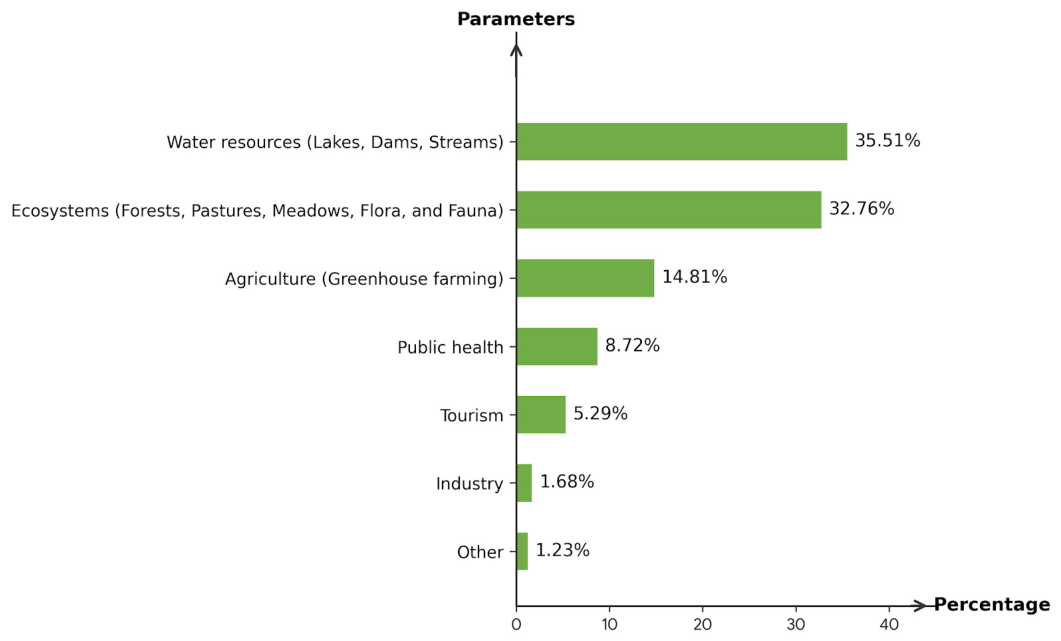
The findings regarding the top three areas perceived to be most affected by climate change in the local region in the near future are presented in Figure 2.
As illustrated in Figure 2, water resources and ecosystems were perceived as the two most vulnerable areas to climate change, followed by agriculture, public health, and tourism. This pattern indicates that producers primarily associate climate change impacts with environmental and water-related systems.
The findings regarding the institutions and organizations deemed relevant in combating climate change are presented in Table 10.
As shown in Table 10, the participating aquaculture producers identified the Ministry of Environment, Urbanization and Climate Change as the most important institution in combating climate change, at a rate of 36.2%. This was followed by the Ministry of Agriculture and Forestry at 26.5%, and Academia (universities and research centers) at 18.6%.
The findings regarding the responses given to the questionnaire item “How Can the Impacts of Climate Change Be Reduced?” are presented in Table 11.
Regarding the question of how to reduce the impacts of climate change in their region, 45.1% of the aquaculture producers in the Western Mediterranean Region stated afforestation/tree planting, 36.2% indicated water conservation, 15.7% specified using recycled products, and 2.0% stated protecting nature.
In another study conducted by Withana (2014) [39], the impacts of climate change on forests in Nepal were examined. This research was carried out using a questionnaire method with a total of 881 participants (430 females, 451 males) who were members of forestry associations. The results of the study indicated that participants foresaw major forest fires occurring most frequently and existing water resources decreasing due to climate change. It was emphasized that this situation poses a serious threat, particularly for forest villagers. Furthermore, particular attention was drawn to the importance of afforestation and forest regeneration activities in the adaptation process to climate change.
The findings regarding the sources of information about climate change are presented in Table 12.
As shown in Table 12, according to the findings regarding the sources of information on climate change among aquaculture producers in the Western Mediterranean Region, 52.9% stated that they obtained information from television programs, and 23.5% from internet news and websites. Television and internet-based news were the dominant sources of climate-change information, together accounting for 76.4% of responses. The distribution of the participants’ responses is presented in Table 13.
As shown in Table 13, respondents expressed strong consensus regarding the impacts of climate change on aquaculture. Respondents agreed at the highest rate (100%) with the statement that climate change has reduced fish tonnage produced, indicating a perceived impact rather than a measured change. Nearly all respondents also perceived climate change as affecting aquaculture (99.0%) and posing future socio-economic challenges (99.0%). Similarly, strong agreement was observed regarding declining water resources (98.0%), impacts on water quality (97.0%), and the effects of human activities and forest fires on water resources and ecosystems (97.0%).
Producers also strongly supported the need for regional climate measures (95.0%) and afforestation (96.0%), while 97.0% considered adequate climate-change information from producer associations or cooperatives necessary. Overall, these findings reveal a highly consistent perception of climate change as a major threat to water resources, production, environmental conditions, and the socio-economic sustainability of aquaculture. These findings are consistent with the documented risks of production losses, disease, parasites, harmful algal blooms, and animal-health impacts associated with climate change [40,41].

3.4. Differences in Climate-Change Perceptions Among Producer Groups

Kruskal–Wallis tests were performed for the 18 Likert-type items according to seven socio-demographic and enterprise-related grouping variables. After adjustment for multiple comparisons using the Benjamini–Hochberg FDR procedure, six of the 126 comparisons remained statistically significant. Five significant differences were associated with province. Responses differed significantly among provinces for perceptions concerning institutional preparedness for climate-related natural events (Q34), adequacy of climate-related activities undertaken by public institutions (Q35), expected reductions in water resources (Q37), the need for increased afforestation (Q38), and future socio-economic problems for aquaculture producers (Q44). A significant age-group difference was also identified for Q42, which addressed the perceived effect of climate change on aquaculture (Table 14).
The relatively small number of significant differences after correction suggests that producers shared broadly similar perceptions regarding many of the effects of climate change. However, perceptions concerning institutional capacity, adaptation measures, water-resource vulnerability, and socio-economic consequences showed some geographical heterogeneity.

3.5. Factors Associated with Producers’ Future Outlook

An ordinal logistic regression model was used to investigate factors independently associated with producers’ expectations regarding the future of aquaculture. Eight respondents who selected “other” were excluded from the ordinal outcome, resulting in 94 observations. Aquaculture experience and satisfaction with aquaculture income were independently associated with future outlook. Increasing aquaculture experience was associated with significantly greater odds of reporting a more negative future outlook (OR = 1.47, 95% CI: 1.05–2.06, p = 0.026). In contrast, producers who were satisfied with the income obtained from aquaculture had substantially lower odds of reporting a more negative future outlook (OR = 0.19, 95% CI: 0.08–0.46, p < 0.001).
Age, education level, and the composite climate-impact perception score were not independently associated with future outlook after adjustment for the other variables (Table 15).

3.6. Sensitivity Analysis

To evaluate the robustness of the ordinal regression results, future outlook was additionally classified into negative (“bad” and “very bad”; n = 51) and non-negative (“very good,” “good,” and “moderate”; n = 43) categories. The binary logistic regression model was statistically significant (likelihood-ratio test, p < 0.001) and showed satisfactory discriminatory performance (McFadden’s pseudo-R2 = 0.263; AUC = 0.836). Consistent with the ordinal model, aquaculture experience significantly increased the odds of reporting a negative future outlook (OR = 1.91, 95% CI: 1.21–3.02, p = 0.005), whereas satisfaction with aquaculture income substantially decreased these odds (OR = 0.13, 95% CI: 0.04–0.39, p < 0.001) (Table 16).
The consistency between the ordinal and binary logistic regression models strengthens the evidence that aquaculture experience and economic satisfaction are important factors associated with producers’ expectations regarding the future of the sector.

4. Discussion

The results of this study indicate that inland rainbow trout (Oncorhynchus mykiss) aquaculture in the Western Mediterranean Region of Türkiye is increasingly situated at the intersection of climate-related stress, hydrological constraints, environmental pressures, and socio-economic vulnerability. Although inland aquaculture has historically contributed to rural employment, local economic activity, and animal protein supply in Antalya, Burdur, and Isparta, the responses of producers suggest that the conditions supporting the continuity of this production system are becoming increasingly uncertain. Most notably, all surveyed producers (100%) reported a reduction in fish production tonnage attributable to climate-related changes, while 37.2% identified localized drought and depletion of water resources as the most prominent manifestation of climate change. These perceptions are consistent with the broader Mediterranean literature, which documents increasing warming and drying trends, greater precipitation variability, and declining water availability under climate change [5,6,7]. Recent assessments further indicate that water scarcity in Mediterranean regions is not only a consequence of changing climatic conditions but is also amplified by increasing competition among agricultural, ecological, domestic, energy, and other water uses [5,6,7]. Thus, the strong emphasis placed by producers on water scarcity should be interpreted not simply as a perception of declining rainfall, but as an indication of a broader deterioration in the reliability and accessibility of the freshwater resources on which inland aquaculture depends.
The biological implications of these changes are particularly important for flow-through and freshwater-dependent trout production. Reduced water availability and elevated water temperature can jointly constrain production by decreasing dissolved oxygen availability, increasing physiological and metabolic stress, altering growth performance, and narrowing the environmental conditions within which cultured fish can be maintained efficiently [8]. More broadly, environmental conditions such as temperature, dissolved oxygen, water quality, stocking density, and other physicochemical parameters are closely linked to fish growth and production performance [10]. Thermal stress may also increase susceptibility to disease and facilitate pathogen- and parasite-related problems, thereby creating additional biosecurity risks for aquaculture enterprises [9]. Consequently, the production losses reported by respondents should not be understood solely in terms of reduced water quantity. Rather, declining water availability and increasing thermal stress may interact with water quality and biological constraints, thereby reducing the overall environmental suitability of production sites.
An important contribution of the present study is that these impacts are identified directly from the perspective of producers operating at the farm level. Although macro-scale biophysical models provide valuable information on the potential future impacts of climate change on aquaculture [42], their ability to represent conditions at individual production sites is inherently limited. Falconer et al. (2020) [18], for example, demonstrated that coarse-scale climate projections may fail to capture the environmental variability experienced at aquaculture sites and emphasized the importance of calibrating climate projections using local observations. Unlike marine aquaculture systems that often possess dynamic spatial flexibility, inland trout farms are hydro-geographically anchored to specific river catchments; hence, local hydrological declines register as immediate existential threats rather than manageable operational fluctuations. The present results provide complementary ground-level evidence to this modeling perspective. The fact that producers in the Western Mediterranean consistently identify water scarcity and production decline as immediate operational concerns suggests that local hydrological conditions may mediate the expression of broader regional climate trends. In this sense, producer observations should not be regarded merely as subjective perceptions; rather, when interpreted alongside hydro-climatic evidence, they can provide an important source of site-specific information for identifying emerging vulnerabilities and informing locally calibrated adaptation strategies.
It is possible to encounter quite a large number of studies regarding the common socio-demographic characteristics of aquaculture producers. Some of these are as follows: in the research conducted by Doğan and Gönülal (2011) [43], the fisheries and socio-economic structure of fishers in Gökçeada (Aegean Sea) were examined. Karademir and Emin Arat (2014) [35] conducted the study titled “Problems encountered in aquaculture cooperatives and solution proposals: The case of Istanbul province”. The socio-economic structure of fishers affiliated with aquaculture cooperatives in Keban Dam Lake (Elazığ/Türkiye) was studied by Dartay and Canpolat (2017) [44]. The main problems and solution proposals faced by aquaculture cooperative enterprises in Muğla province were studied by Çımat and Duran (2018) [45]. Şen Şensoy (2020) [36] conducted research on “Organizational Tendencies of Fishers: The Case of Antalya Province”. In Yayar et al. (2014) [46], comprehensive research was carried out with a Likert-type questionnaire applied to 1454 people in order to measure awareness of the economic, social, and environmental impacts of global warming in Türkiye. According to the research results, it was determined that as individuals’ education level increased, their awareness of the impacts of global warming increased. Albayrak and Atasayan (2015) [47] conducted a questionnaire study to analyze climate change awareness at the local level in Gebze (Kocaeli). In the study, the effects of socio-economic differences on individuals’ and communities’ awareness of climate change were examined.
At the same time, the results caution against attributing all observed production and economic difficulties exclusively to climate change. The strong pessimism expressed by producers appears to emerge from the interaction of environmental and socio-economic pressures rather than from a single causal factor. The economic vulnerability reported by respondents is particularly relevant in this regard. Aquaculture profitability is influenced not only by environmental conditions but also by feed prices, seed costs, disease-related losses, market conditions, energy requirements, and other operational inputs [37,48]. Recent evidence from freshwater aquaculture demonstrates that production costs and profitability can be highly sensitive to feed, fry, and other input prices, while disease and natural disasters may further increase losses [9,40]. Similarly, small-scale aquaculture systems can face persistent constraints arising from high input costs, limited economies of scale, and weak market access [48,49]. Therefore, the economic pressure observed among producers in the Western Mediterranean should be interpreted as a compound vulnerability in which climate stress interacts with market and production-cost pressures. This distinction is important because it implies that climate adaptation policies alone may be insufficient to restore sectoral viability.
A critical nuance emerging from these empirical findings is the complex overlap between direct climatic impacts and broader structural or macro-economic pressures facing the sector. While producers heavily attribute declining production and operational constraints to climate-related hydrological changes, such as severe localized drought and reduced water availability, these perceptions are inevitably mediated by non-climatic vulnerabilities. Structural bottlenecks, including foreign-exchange-dependent increases in feed and pharmaceutical costs and the reported withdrawal of public subsidies for juvenile fish, exert additional pressure on small- and medium-sized enterprises. Consequently, what producers perceive as climate vulnerability may represent a compounded stress in which biophysical risks interact with and amplify pre-existing economic fragility. Disentangling the individual contribution of climatic forcing from structural economic limitations remains difficult because reduced financial margins may constrain the capacity of farms to absorb and adapt to environmental shocks. Distinguishing between these interacting factors is therefore essential for interpreting the observed vulnerability and for designing effective adaptation policies, as technical climate adaptation measures may have limited effectiveness when producers simultaneously face substantial economic and institutional constraints.
The responses concerning future prospects reinforce this interpretation. Approximately half of the facility operators expressed deep pessimism about the future of the sector and were reluctant to envisage the continuation of aquaculture as an occupation for future generations. Such responses may reflect not only concern about climatic uncertainty but also a perceived deterioration in the overall economic and institutional conditions required to remain in production. The reported increase in input costs, including feed and pharmaceutical expenses associated with foreign-exchange fluctuations, together with the reported withdrawal of government fry subsidies, may reduce producers’ capacity to absorb environmental shocks. In this context, climate vulnerability and economic vulnerability become mutually reinforcing: declining production reduces revenues, while increasing input costs reduce the financial resources available for adaptation investments. The result is a narrowing of the capacity of individual farms to respond proactively to environmental change.
The role of water governance is equally important. An additional explanation for the strong perception of water-related climate risk may be the increasing competition for freshwater resources. In the study region, hydropower development and HEPP-related water abstraction may alter the timing, quantity, or accessibility of water available to downstream users and may therefore intensify existing hydrological pressures. Accordingly, the influence of HEPPs should not automatically be interpreted as a direct climatic effect. Rather, hydropower infrastructure may act as a mediating or amplifying factor through which periods of water scarcity are translated into greater competition and reduced operational security for aquaculture enterprises. This interpretation is consistent with the broader literature emphasizing the importance of cross-sectoral water governance and the interactions among aquaculture, energy, agriculture, ecosystems, and other water-dependent activities [49]. Partelow et al. (2023) [49], in particular, argue that sustainable aquaculture governance requires moving beyond fragmented sectoral interventions and explicitly addressing cross-sectoral linkages and land–water–sea connectivity. The present results provide a concrete regional example of why such integration is necessary in inland aquaculture systems.
Water quality represents another potentially important, but not necessarily climate-exclusive, pathway of vulnerability. Producers may experience water-quality deterioration alongside declining water quantity, and these processes can reinforce perceptions of declining environmental suitability. Aquaculture wastewater, nutrient enrichment, and eutrophication are recognized environmental management concerns that can generate ecological and economic externalities when water flows and assimilative capacities are exceeded [7,50,51,52]. Although the present survey cannot establish a causal relationship between water-quality deterioration and the observed production losses, these factors should be considered as plausible co-drivers of vulnerability. This is particularly relevant because reduced water flows can decrease dilution capacity, potentially increasing the relative importance of nutrient loading and other water-quality pressures. Therefore, future studies should distinguish more explicitly between the effects of water quantity, temperature, water quality, and anthropogenic water abstraction rather than treating all environmental deterioration as a single climate-change effect.
These results can be further interpreted through the conceptual framework of social–ecological systems (SESs), resilience, and adaptive capacity. Folke (2006) [53] conceptualized resilience as the capacity of linked social and ecological systems to absorb disturbance, adapt to changing conditions, and reorganize while retaining essential functions. From this perspective, inland aquaculture in the Western Mediterranean can be understood as a coupled social–ecological system in which hydrological availability, environmental conditions, farm-level socio-economic dynamics, input dependencies, and institutional arrangements are closely interconnected. Stable water availability, suitable temperature regimes, and adequate water quality constitute the ecological foundations of production, while access to finance, affordable inputs, public support, infrastructure, knowledge, markets, and effective governance shape the capacity of producers to respond to disturbance.
Against this conceptual background, the simultaneous occurrence of perceived water depletion (37.2%), reported reductions in production tonnage (100%), increasing input costs, reduced public support, and widespread pessimism regarding the future of the sector (50%) may be interpreted as evidence of increasing pressure on the resilience and adaptive capacity of the regional aquaculture system. Rather than representing isolated operational constraints, these interacting stressors may progressively reduce the buffering capacity of small- and medium-sized enterprises, limiting their ability to absorb hydro-climatic disturbances, adjust production practices, and reorganize in response to changing environmental and socio-economic conditions.
From an adaptive governance perspective, vulnerability also reflects the capacity of institutions to respond collectively to these interconnected pressures. Water availability is shaped not only by climatic variability but also by competing demands and infrastructure-related interventions, while economic constraints may further restrict producers’ capacity to implement adaptation measures. Addressing such systemic vulnerability therefore requires governance arrangements that extend beyond the individual farm level and facilitate coordination among aquaculture, water management, agriculture, forestry, energy, and environmental institutions. Such adaptive governance should support basin-scale water allocation, mediate competing demands, and integrate ecological integrity with economic viability while allowing management strategies to evolve as hydrological and socio-economic conditions change. In this context, resilience should be understood not solely as a property of individual farms but as an emergent property of the wider social-ecological system, depending on the capacity of producers and institutions to learn, coordinate, adapt, and reorganize while maintaining essential production and ecological functions under changing conditions.
This SES perspective also helps explain why apparently manageable environmental changes can become difficult to address at the farm level. When environmental pressures occur in isolation, producers may be able to respond through operational adjustments. However, when reduced water availability coincides with elevated temperature, disease risk, higher production costs, institutional uncertainty, and competition for freshwater resources, the range of feasible adaptation options becomes increasingly constrained. In such circumstances, resilience depends not only on the technical capacity of individual farms but also on the capacity of institutions to coordinate water allocation, environmental protection, economic support, and knowledge generation. The present findings therefore support a shift from a farm-by-farm interpretation of climate vulnerability toward a broader assessment of regional adaptive capacity.
Such an approach is also consistent with recent aquaculture governance research emphasizing that sustainability transformation requires coordinated action across multiple governance arenas rather than isolated technical interventions [49]. In the Western Mediterranean Region, this implies stronger coordination among the Ministry of Agriculture and Forestry, the State Hydraulic Works (DSİ), forestry authorities, local administrations, energy-sector institutions, and aquaculture producers. Basin-scale water planning should explicitly consider the ecological and production requirements of inland aquaculture, particularly during drought periods, while also maintaining environmental flow requirements and protecting the ecological functioning of source catchments. The objective should not be to prioritize aquaculture over other water users, but to develop transparent and adaptive allocation mechanisms capable of balancing competing social, economic, and ecological demands.
The results also indicate that adaptation should not be restricted to conventional climate-risk management. Technological and management innovations may expand the range of options available to producers, particularly where freshwater availability is becoming increasingly uncertain. Recirculating aquaculture systems (RASs), for example, have been identified as a potential climate-adaptation strategy because they can substantially reduce water requirements and provide greater control over production conditions [54]. Low-energy RAS configurations may further improve water-quality management while reducing the energy burden associated with intensive water recirculation [55]. Similarly, integrated multi-trophic aquaculture (IMTA) has been proposed as an approach for improving resource use, production performance, and environmental management by integrating complementary trophic components [56]. However, these technologies should not be presented as universally applicable solutions. Their feasibility will depend on farm size, capital availability, technical expertise, energy prices, infrastructure, species requirements, and local environmental conditions. For small and medium-sized producers facing financial constraints, adaptation support may therefore need to combine technological assistance with financial incentives, technical extension, training, and risk-sharing mechanisms.
The broader sustainability perspective is particularly important here. Garlock et al. (2024) [48] emphasize that aquaculture sustainability cannot be reduced to environmental performance alone but must also incorporate economic and social dimensions. This perspective closely reflects the empirical pattern observed in the present study. A production system may become more water-efficient, for example, while remaining economically unsustainable if the investment required is beyond producers’ financial capacity. Conversely, an economically profitable production model may generate unacceptable environmental pressures if water quality, ecosystem integrity, or resource competition are neglected. Sustainable adaptation therefore requires simultaneous consideration of environmental performance, economic viability, and social resilience.
Taken together, the results suggest that the vulnerability of inland aquaculture in the Western Mediterranean Region is best understood as a cumulative and interacting process rather than as a simple linear response to climate change. Climate-driven warming and hydrological variability provide important background pressure, but their consequences are mediated by local water availability, water governance, HEPP-related pressures, water quality, disease risk, input prices, public support mechanisms, and farm-level adaptive capacity. This interpretation also provides an important qualification to the questionnaire results: producer perceptions should not be interpreted as direct measurements of climate change itself. Rather, they represent integrated perceptions of how multiple environmental, economic, and institutional changes are affecting the feasibility of aquaculture production. This distinction strengthens the interpretation of the results because it recognizes that the lived experience of climate vulnerability is produced through interactions between climatic and non-climatic stressors.
The practical implication is that adaptation policies should move from isolated technical responses toward integrated, place-based strategies. First, “basin-scale and cross-sectoral water governance” should be strengthened to improve coordination among water, agriculture, forestry, energy, and aquaculture institutions and to ensure that drought-period allocation mechanisms account for ecological and production requirements [6,7,49]. Second, ecosystem-based spatial planning should incorporate ecosystem assessments into regional land-use decisions, particularly in forested catchments and water-sensitive areas, to protect ecological functions and reduce conflicts among competing land and water uses [11]. Third, “farm-level adaptive capacity and biosecurity” should be strengthened through site-specific climate-risk assessments, local environmental monitoring, pathogen surveillance, producer training, and technical support [18]. Fourth, “economic adaptation mechanisms” should be considered, including targeted incentives for water-efficient technologies, RAS, low-energy aeration and recirculation systems, and other measures that can reduce exposure to water scarcity while remaining economically feasible for producers [54,55,56]. Finally, adaptation policies should explicitly integrate environmental, economic, and social sustainability indicators rather than evaluating climate resilience solely through production or water-use metrics [48].
Overall, the present study contributes to the climate-adaptation and aquaculture literature by linking farm-level producer perceptions with the broader dynamics of water scarcity, environmental change, economic vulnerability, governance, and social-ecological resilience. The high proportion of producers reporting climate-related production reductions and the strong emphasis on localized drought and water depletion provide an important early-warning signal of emerging vulnerability in a freshwater-dependent aquaculture system. At the same time, the results demonstrate that the observed vulnerability cannot be attributed to climate change alone. Instead, climate pressures appear to interact with water competition, infrastructure development, water-quality concerns, input-price volatility, institutional support, and limited adaptive capacity. Recognizing these interactions is essential for designing effective adaptation policies. For the Western Mediterranean Region, and potentially for other semi-arid Mediterranean aquaculture systems, long-term sectoral resilience will depend less on any single technological intervention than on the ability to align water governance, ecosystem protection, economic support, technological innovation, and producer-level adaptive capacity within an integrated social-ecological framework.

5. Conclusions

Based on the empirical evidence obtained from the questionnaire, the conclusions are organized into three distinct levels as Scientific contributions, Implications for management and policy, and Limitations and future research.

5.1. Scientific Contributions

This study examined the knowledge and perceptions of aquaculture producers regarding climate change in the Western Mediterranean Region of Türkiye, focusing on Antalya, Burdur, and Isparta. The findings indicate that producers perceive climate change and associate environmental changes as important challenges to the continuity and economic viability of inland aquaculture. The most prominent concern was water scarcity: 37.2% of respondents identified drought, water scarcity, or declining water levels as the most important manifestation of climate change affecting their production activities. In addition, all surveyed producers (100%) reported that climate-related changes had reduced fish production tonnage. These findings provide farm-level evidence of how climate-related concerns are experienced by producers in a freshwater-dependent aquaculture region.
The results also demonstrate that climate-related concerns cannot be considered independently from broader economic and operational pressures. Producers identified feed and pharmaceutical costs as major constraints, with respondents attributing part of this burden to foreign-currency-dependent input purchases and associated increases in production costs. The withdrawal of government support for juvenile fish was also reported as an additional cost pressure. Thus, the perceived vulnerability of the sector appears to reflect an interaction between environmental constraints and socio-economic conditions rather than climate change alone. The finding that 50% of respondents assessed the future of the sector as bad or very bad further indicates a substantial level of concern regarding the long-term viability of aquaculture as an occupation.
The findings also highlight the importance of local water-resource conditions in shaping producers’ perceptions of climate vulnerability. The prominence of drought, declining water levels, and concerns associated with HEPP development suggests that climate-related water stress is experienced within a broader context of competition and constraints surrounding freshwater resources. However, because the present study is based on producer perceptions, these results should be interpreted as evidence of perceived vulnerability rather than as direct measurements of changes in water availability, production, temperature, dissolved oxygen, or water quality.
An additional contribution to the study is therefore its provision of locally grounded evidence from producers operating within a freshwater-dependent aquaculture system. The results illustrate how climate vulnerability is perceived at the farm level and how environmental pressures become intertwined with production costs, institutional support, and expectations about the future of the sector. In this respect, producer perceptions can complement regional climate and aquaculture assessments by identifying the practical constraints that are experienced directly at production sites. The findings consequently contribute to the broader understanding of climate adaptation in aquaculture by demonstrating that adaptation capacity depends not only on environmental exposure but also on the economic and institutional conditions within which producers operate.
The multivariable analysis adds an important socio-economic dimension to the interpretation of perceived climate vulnerability. Aquaculture experience was independently associated with a more negative outlook regarding the future of the sector. Producers with longer experience may have a broader temporal reference against which current environmental, production, and economic conditions can be evaluated. Consequently, experienced producers may be more sensitive to cumulative changes in water availability, production conditions, input requirements, and sectoral constraints. Nevertheless, given the cross-sectional nature of the study, this association should not be interpreted causally; greater experience does not necessarily cause a more pessimistic outlook. Income satisfaction showed an even stronger relationship with future expectations. Producers who were satisfied with the income generated from aquaculture had substantially lower odds of expressing a negative future outlook. This finding indicates that perceived sectoral vulnerability cannot be explained solely by climate-related pressures. Rather, environmental stress appears to interact with profitability, production costs, market conditions, and other structural constraints in shaping producers’ expectations regarding the sustainability of inland aquaculture. Interestingly, the composite climate-impact perception score was not independently associated with future outlook in the adjusted regression model. This result should not be interpreted as evidence that climate change is unimportant to producers. On the contrary, descriptive results showed extremely high agreement regarding climate-related impacts on water resources and aquaculture. The lack of an independent regression effect may therefore reflect limited between-producer variation in climate-impact perceptions. When almost all respondents perceive climate change as an important threat, this variable provides relatively little discriminatory power for explaining differences in future expectations. The robustness analysis further supported these findings. When future outlook was simplified into negative and non-negative categories, aquaculture experience remained positively associated with a negative outlook, whereas income satisfaction remained strongly protective. These findings highlight the need to interpret vulnerability as the outcome of interacting environmental and socio-economic pressures rather than as a consequence of climate change alone.

5.2. Implications for Management and Policy

The findings suggest that management responses should primarily address the issues directly identified by producers, particularly water scarcity, declining water levels, increasing production costs, and uncertainty regarding the future of the sector. Water-resource management should therefore be an important component of regional aquaculture adaptation planning. Measures related to water allocation, water-use efficiency, monitoring of freshwater availability, and coordination among relevant water-dependent sectors could help ensure that the resource requirements of inland aquaculture are considered within broader regional water-management processes.
The results also indicate that climate adaptation should not be limited to environmental measures. Because producers identified increasing feed, pharmaceutical, juvenile fish, and other operational costs as important constraints, economic and institutional support mechanisms should be considered alongside environmental adaptation measures. Such support should be designed according to the actual conditions and capacities of regional producers rather than assuming that all farms have equal financial or technical capacity to implement adaptation measures.
The reported influence of HEPP development and declining water levels further indicates the need for coordinated water-resource governance. The objective should not be to prioritize aquaculture over other water users, but to ensure that decisions concerning freshwater allocation and infrastructure development consider the cumulative requirements of aquaculture, agriculture, energy production, ecosystems, and other water-dependent activities. Drought periods may require adaptive and transparent allocation mechanisms based on reliable monitoring of water availability and competing demands.
At the farm level, adaptation measures may also include improved monitoring of environmental conditions, water-use efficiency, appropriate production management, and technologies capable of reducing dependence on continuously available freshwater where technically and economically feasible. However, the suitability and economic feasibility of such measures should be evaluated under local production conditions before they are recommended as general solutions. The findings of this study therefore support a combination of basin-scale water governance, farm-level adaptation, and appropriately targeted economic and technical support rather than isolated interventions.
Beyond the descriptive findings, multivariable analyses demonstrated that producers’ expectations regarding the future of inland aquaculture were associated with socio-economic conditions. Greater aquaculture experience was associated with a more negative future outlook, whereas satisfaction with income from aquaculture was strongly associated with a less negative outlook. These results indicate that the vulnerability perceived by producers reflects the interaction of climate-related pressures with economic and structural conditions. Therefore, strategies aimed at strengthening the resilience of inland aquaculture should combine climate adaptation and integrated water-resource management with measures that enhance the economic viability and adaptive capacity of producers.

5.3. Limitations and Future Research

Several limitations should be considered when interpreting the findings. First, the study is based primarily on questionnaire responses and therefore captures producers’ knowledge, experiences, and perceptions rather than direct measurements of climate or environmental change. Although the high proportion of respondents reporting production reductions and water-related problems provides an important indication of perceived vulnerability, the study cannot independently establish the extent to which these outcomes were caused by climate change.
Second, the study did not directly measure key biophysical variables such as long-term water temperature, streamflow, water availability, dissolved oxygen, water quality, disease incidence, or actual changes in farm-level production attributable to climatic factors. Consequently, the relationships suggested by respondents between climate change, water scarcity, production losses, and disease risk should be regarded as perceived relationships rather than experimentally or instrumentally verified causal relationships.
Furthermore, a key analytical limitation of this study stems from the potential conflation within producer perceptions between direct climate-induced impacts and broader structural or macro-economic constraints. Because the empirical data relies on self-reported survey assessments, the reported production losses and pessimistic sectoral outlooks reflect an integrated perception of cumulative operational stress rather than isolated biophysical measurements. Consequently, this study cannot empirically quantify or isolate the relative contribution of climate change from non-climatic drivers, including foreign-exchange-dependent input costs, dependence on imported feed and pharmaceutical inputs, and the reported withdrawal of public subsidies. Future research should employ longitudinal farm-level monitoring and multivariable analyses that integrate objective hydrometeorological parameters with detailed farm-level economic and production data. Such an approach would help disentangle the relative and interacting contributions of climatic and structural economic factors to aquaculture vulnerability.
Third, the study focuses on aquaculture producers in Antalya, Burdur, and Isparta. The regional focus provides valuable site-specific information, but it also limits the extent to which the findings can be generalized to other regions of Türkiye or to different aquaculture production systems. Differences in species, production technologies, hydrological conditions, market structures, and institutional arrangements may result in different patterns of climate vulnerability and adaptive capacity elsewhere.
Future research should therefore combine producer perception data with objective environmental and production indicators. Long-term monitoring of water temperature, water availability, flow regimes, dissolved oxygen, water quality, disease occurrence, and farm-level production would allow perceived climate impacts to be compared with observed biophysical changes. Such studies could also investigate how water abstraction, HEPP-related infrastructure, agricultural and other competing water uses, and climate variability interact at the catchment scale.
Comparative research covering other regions of Türkiye and other freshwater aquaculture systems would further clarify whether the patterns identified in the Western Mediterranean are region-specific or represent broader characteristics of climate vulnerability in inland aquaculture. Longitudinal studies would be particularly valuable for determining how producer perceptions, production performance, economic conditions, and adaptation responses change over time.
Overall, the study demonstrates that climate-related vulnerability in Western Mediterranean inland aquaculture is perceived primarily through water scarcity, production constraints, increasing costs, and uncertainty regarding the future of the sector. The findings do not establish climate change as the sole cause of these pressures; rather, they indicate that climatic concerns are experienced together with economic, institutional, and water-resource constraints. Effective adaptation will therefore require approaches that connect farm-level observations with objective environmental monitoring and broader water-resource governance. Such an integrated approach can provide a stronger evidence base for developing locally appropriate and scientifically supported adaptation strategies for inland aquaculture.


Supplementary Materials

The following supporting information can be downloaded at: https://www.mdpi.com/article/10.3390/land15091549/s1, File S1: Inland Aquaculture Climate Perception Survey.

Author Contributions

Conceptualization, A.T. and M.İ.S.; methodology, A.T. and M.İ.S.; software, A.T. and T.T.; validation, A.T., M.İ.S., T.T., Ç.U. and D.P.; formal analysis, A.T. and T.T.; investigation, A.T. and M.İ.S.; resources, A.T., M.İ.S. and M.A.; data curation, A.T., M.İ.S., T.T. and Ç.U.; writing—original draft preparation, A.T., M.İ.S., T.T., Ç.U. and D.P.; writing—review and editing, T.T. Ç.U., D.P. and M.Š.; visualization, A.T., M.İ.S., T.T., Ç.U. and M.A.; supervision, A.T. and T.T.; project administration, A.T., Ç.U., T.T. and D.P.; funding acquisition, Ç.U., D.P., M.A. and M.Š. All authors have read and agreed to the published version of the manuscript.

Funding

This research received no external funding for publication. Our appreciation goes to “YÖK 100/2000 scholarship in priority areas” for providing scholarship support during the dissertation.

Data Availability Statement

The original contributions presented in this study are included in the article and Supplementary Material. Further inquiries can be directed to the corresponding authors.

Acknowledgments

This article is expanded and developed from the doctoral thesis of Mustafa İlker Sürer, titled “Determination of the effects of climate change on aquaculture and fisheries in the Western Mediterranean Region”, supervised by Ahmet Tolunay at Applied Sciences University of Isparta, 2024. The original thesis content was restructured, updated, and further elaborated with contributions from all co-authors.

Conflicts of Interest

The authors declare no conflicts of interest.

Abbreviations

The following abbreviations are used in this manuscript:
HEPPHydroelectric Power Plant
SMEsSmall and Medium-sized Enterprises
SPSSStatistical Package for Social Sciences
UNUnited Nations
UNEPUnited Nations Environment Program
UNFCCCThe United Nations Framework Convention on Climate Change
SESSocial–ecological system
RASRecirculating aquaculture systems
IMTAIntegrated multi-trophic aquaculture

References

  1. Türkeş, M. Climate Changes: From the Cambrian to the Pleistocene, and from the Late Holocene to the 21th Century. Aegean Geogr. J. 2013, 22, 1–25. [Google Scholar]
  2. Can, C. Global Climate Change and International Endeavors. Master’s Thesis, Institute of Social Sciences, Süleyman Demirel University, Isparta, Türkiye, 2019. [Google Scholar]
  3. Gök, H. Environmental Impacts of Climate Change and the Role of Local Governments in Climate Change Policies. Master’s Thesis, Institute of Social Sciences, Zonguldak Bülent Ecevit University, Isparta, Türkiye, 2023. [Google Scholar]
  4. Özmış, M.; Tolunay, A. Determining the Economic Value of Erosion Control Services and Willingness to Payment Trends of Society at Burdur Region. Süleyman Demirel Univ. J. Nat. Appl. Sci. 2017, 21/1, 99–112. [Google Scholar] [CrossRef] [Scilit]
  5. Noto, L.V.; Cipolla, G.; Pumo, D.; Francipane, A. Climate Change in the Mediterranean Basin (Part II): A Review of Challenges and Uncertainties in Climate Change Modeling and Impact Analyses. Water Resour. Manag. 2023, 37, 2307–2323. [Google Scholar] [CrossRef] [Scilit] [PubMed]
  6. Claro, A.M.; Fonseca, A.; Fraga, H.; Santos, J.A. Future Agricultural Water Availability in Mediterranean Countries under Climate Change: A Systematic Review. Water 2024, 16, 2484. [Google Scholar] [CrossRef] [Scilit]
  7. Rocha, J.; Carvalho-Santos, C.; Diogo, P.; Beça, P.; Keizer, J.J.; Nunes, J.P. Impacts of Climate Change on Reservoir Water Availability, Quality and Irrigation Needs in a Water Scarce Mediterranean Region (Southern Portugal). Sci. Total Environ. 2020, 736, 139477. [Google Scholar] [CrossRef] [Scilit] [PubMed]
  8. Panicz, R.; Całka, B.; Cubillo, A.; Ferreira, J.G.; Guilder, J.; Kay, S.; Kennerley, A.; Lopes, A.; Lencart E Silva, J.; Taylor, N.; et al. Impact of Climate-Driven Temperature Increase on Inland Aquaculture: Application to Land-Based Production of Common Carp (Cyprinus carpio L.). Transbound. Emerg. Dis. 2022, 69, e2341–e2350. [Google Scholar] [CrossRef] [Scilit] [PubMed]
  9. Cascarano, M.C.; Stavrakidis-Zachou, O.; Mladineo, I.; Thompson, K.D.; Papandroulakis, N.; Katharios, P. Mediterranean Aquaculture in a Changing Climate: Temperature Effects on Pathogens and Diseases of Three Farmed Fish Species. Pathogens 2021, 10, 1205. [Google Scholar] [CrossRef] [Scilit] [PubMed]
  10. Cubillo, A.M.; Ferreira, J.G.; Lencart-Silva, J.; Taylor, N.G.H.; Kennerley, A.; Guilder, J.; Kay, S.; Kamermans, P. Direct Effects of Climate Change on Productivity of European Aquaculture. Aquac. Int. 2021, 29, 1561–1590. [Google Scholar] [CrossRef] [Scilit]
  11. Córdoba Hernández, R.; Camerin, F. The Application of Ecosystem Assessments in Land Use Planning: A Case Study for Supporting Decisions Toward Ecosystem Protection. Futures 2024, 161, 103399. [Google Scholar] [CrossRef] [Scilit]
  12. Korkmaz, M. Public Awareness and Perceptions of Climate Change: Differences in Concern about Climate Change in the West Mediterranean Region of Turkey. Appl. Ecol. Environ. Res. 2018, 16, 4039–4050. [Google Scholar] [CrossRef] [Scilit]
  13. Eryılmaz, A.Y.; Tolunay, A. Ormancılık Politikası; Fakülte Kitabevi Yayınları: Isparta, Türkiye, 2015. [Google Scholar]
  14. Tolunay, A.; Başsüllü, Ç. Willingness to Pay for Carbon Sequestration and Co-benefits of Forests in Turkey. Sustainability 2015, 7, 3311–3337. [Google Scholar] [CrossRef] [Scilit]
  15. Tolunay, A.; Dilek, S.; Akyol, A. Reflections of the New Metropolitan Law no. 6360 on the forest villages and villagers of Aydın province. J. Vocat. Soc. Sci. Turk. 2025, 7, 51–66. [Google Scholar] [CrossRef] [Scilit]
  16. Abd El-Hack, M.E.; El-Saadony, M.T.; Nader, M.M.; Salem, H.M.; El-Tahan, A.M.; Soliman, S.M.; Khafaga, A.F. Effect of Environmental Factors on Growth Performance of Nile Tilapia (Oreochromis niloticus). Int. J. Biometeorol. 2022, 66, 2183–2194. [Google Scholar] [CrossRef] [Scilit] [PubMed]
  17. Peng, B.; Shen, X.; Jiang, Q. Profit or Loss? Delving into the Cost-Benefit Dynamics of Characteristic Freshwater Fish Aquaculture in China. Aquac. Fish. 2026, 11, 209–219. [Google Scholar] [CrossRef] [Scilit]
  18. Falconer, L.; Hjøllo, S.S.; Telfer, T.C.; McAdam, B.J.; Hermansen, Ø.; Ytteborg, E. The Importance of Calibrating Climate Change Projections to Local Conditions at Aquaculture Sites. Aquaculture 2020, 514, 734487. [Google Scholar] [CrossRef] [Scilit]
  19. TUIK (Türkiye Statistical Institute). TURKSTAT. Available online: https://data.tuik.gov.tr/Bulten/Index?p=Adrese-Dayali-Nufus-Kayit-Sistemi-Sonuclari-2023-49684 (accessed on 25 May 2026).
  20. BAKA. Western Mediterranean Development Agency Caravan Tourism Planning Study. 2021. Available online: https://baka.gov.tr/assets/upload/dosyalar/karavan-turizmi-planlama-calismasi.pdf (accessed on 29 May 2026).
  21. Ministry Data. Antalya Fisheries and Aquaculture. Available online: https://antalya.tarimorman.gov.tr (accessed on 12 May 2026).
  22. Ministry Data. Burdur Fisheries and Aquaculture. Available online: https://burdur.tarimorman.gov.tr (accessed on 12 May 2026).
  23. Ministry Data. Isparta Fisheries and Aquaculture. Available online: https://isparta.tarimorman.gov.tr (accessed on 12 May 2026).
  24. Başsüllü, C.; Tolunay, A. General Characteristics of Traditional Homegarden Involving Animal Practices in Rural Areas of Isparta Region of Turkey. J. Anim. Vet. Adv. 2010, 9, 455–465. [Google Scholar] [CrossRef] [Scilit]
  25. Tolunay, A.; Akyol, A. Identification of Appropriate Biodiversity Indicators for Ecologically Sustainable Forest Management at National Level. Sains Malays. 2015, 44, 159–166. [Google Scholar] [CrossRef] [Scilit]
  26. Likert, R. The Method of Constructing an Attitude Scale. In Readings in Attitude Theory and Measurement; Fishbein, M., Ed.; John Wiley & Sons: New York, NY, USA, 1967; pp. 90–95. [Google Scholar]
  27. Turan, İ.; Şimşek, Ü.; Aslan, H. The Use and Analysis of Likert Scales and Likert-Type Items in Educational Research. Sak. Univ. J. Educ. Fac. 2015, 30, 186–203. Available online: https://izlik.org/JA82DY55LA (accessed on 12 August 2026).
  28. Özdamar, K. Statistical Data Analysis Using Software Packages, 9th ed.; Nisan Publisher: Ankara, Türkiye, 2013; Volume 1. [Google Scholar]
  29. Akgül, A.; Çevik, O. Statistical Analysis Techniques: Business Management Applications in SPSS, 2nd ed.; Emek Publisher: Ankara, Türkiye, 2005. [Google Scholar]
  30. Uzunsakal, E.; Yıldız, D. Comparison of Reliability Tests in Field Research and an Application on Agricultural Data. Appl. Soc. Sci. J. 2018, 2, 14–28. [Google Scholar]
  31. McKillup, S. Statistics Explained: An Introductory Guide for Life Scientists, 2nd ed.; Cambridge University Press: Cambridge, UK, 2012. [Google Scholar]
  32. Shapiro, S.S.; Wilk, M.B. An Analysis of Variance Test for Normality (complete samples). Biometrika 1965, 52, 591–611. [Google Scholar] [CrossRef] [Scilit]
  33. Orhunbilge, N. Multivariate Statistical Methods; İstanbul University Publishing: İstanbul, Türkiye, 2010. [Google Scholar]
  34. Göncüoğlu, H. Socio-demographical aspects, organizational inclinations and problems of fisherwomen Southern Aegean region of Turkey. Master’s Thesis, Graduate School of Natural and Applied Sciences, Ege University, İzmir, Türkiye, 2008. [Google Scholar]
  35. Karademir, M.; Arat, M.E. The Problems Faced in Fishery Cooperatives and Solution Suggestions: The Case of İstanbul. Oneri 2014, 11, 133–156. [Google Scholar] [CrossRef] [Scilit]
  36. Şen Şensoy, E.B. Fisherman’s Tendency Towards the Organization: Case of Antalya province. Ph.D. Thesis, Graduate School of Natural and Applied Sciences, Akdeniz University, Antalya, Türkiye, 2020. [Google Scholar]
  37. Erman, E.; Küçük, F. Structural Analysis of Trout Farms in Korkuteli (Antalya) Province. Acta Aquat. Turc. 2016, 12, 58–74. [Google Scholar] [CrossRef] [Scilit]
  38. Gümüş, E.; Şahin, N.M.; İkiz, R.; Yılmaz, S. Examination of Socio-Economic Structures of Employees In Rainbow Trout (Oncorhynchus mykiss) Enterprises in Antalya Province, Turkey. Ege J. Fish. Aquat. Sci. 2013, 30, 161–166. [Google Scholar] [CrossRef] [Scilit]
  39. Withana, N.R.P.; Auch, E. Perceptions of Climate Change Risk to Forest Ecosystems: A Case Study of Patale Community Forestry User Group, Nepal. Int. J. Environ. Chem. Ecol. Geol. Geophys. Eng. 2014, 8, 599–606. [Google Scholar] [CrossRef]
  40. Barange, M.; Bahri, T.; Beveridge, M.C.M.; Cochrane, K.L.; Funge-Smith, S.; Poulain, F. (Eds.) Impacts of Climate Change on Fisheries and Aquaculture: Synthesis of Current Knowledge, Adaptation and Mitigation Options; Fisheries and Aquaculture Technical Paper No. 627; FAO: Rome, Italy, 2018; 628p. [Google Scholar]
  41. Tirado, M.C.; Clarke, R.; Jaykus, L.A.; McQuatters-Gollop, A.; Frank, J.M. Climate Change and Food Safety: A Review. Food Res. Int. 2010, 43, 1745–1765. [Google Scholar] [CrossRef] [Scilit]
  42. Stavrakidis-Zachou, O.; Lika, K.; Anastasiadis, P.; Papandroulakis, N. Projecting climate change impacts on Mediterranean finfish production: A case study in Greece. Clim. Change 2021, 165, 67. [Google Scholar] [CrossRef] [Scilit]
  43. Doğan, K.; Gönülal, O. Fisheries of Gökçeada Island (Aegean Sea) and Socio-economic Structure of Fishermen. Black Sea J. Sci. 2011, 2, 57–69. [Google Scholar]
  44. Dartay, M.; Canpolat, İ. The Socio-economic Structure of Partner Fishermen to Fisheries Cooperatives in Keban Dam Lake (Elazig/Turkey). Ege J. Fish. Aquat. Sci. 2017, 34, 41–46. [Google Scholar] [CrossRef] [Scilit]
  45. Çımat, A.; Duran, T. Economic Problems Faced by the Fisheries Cooperatives of Mugla Province and Solution Proposals. Electron. J. Soc. Sci. 2018, 17, 433–453. [Google Scholar] [CrossRef] [Scilit]
  46. Yayar, R.; Kaplan, Ç.; Şimşek, Ü. Awareness on Economic, Social, and Environmental Effects of the Global Warming: Experimental Findings from Turkey. Bus. Econ. Res. J. 2014, 5, 81–95. [Google Scholar]
  47. Albayrak, A.N.; Atasayan, Ö. The Analysis of Climate Change Awareness at Local Level/Gebze case. In Proceedings of the 2nd International Sustainable Buildings Symposium, Ankara, Türkiye, 28–30 May 2015; pp. 685–693. [Google Scholar]
  48. Garlock, T.M.; Asche, F.; Anderson, J.L.; Eggert, H.; Anderson, T.M.; Che, B.; Chávez, C.A.; Chu, J.; Chukwuone, N.; Dey, M.M.; et al. Environmental, Economic, and Social Sustainability in Aquaculture: The Aquaculture Performance Indicators. Nat. Commun. 2024, 15, 5274. [Google Scholar] [CrossRef] [Scilit] [PubMed]
  49. Partelow, S.; Asif, F.; Béné, C.; Bush, S.; Manlosa, A.O.; Nagel, B.; Schlüter, A.; Chadag, V.M.; Choudhury, A.; Cole, S.M.; et al. Aquaculture governance: Five Engagement Arenas for Sustainability Transformation. Curr. Opin. Environ. Sustain. 2023, 65, 101379. [Google Scholar] [CrossRef] [Scilit]
  50. An, W.H.; Lee, J.S. Clear Waters Come at A Cost: Environmental Costs as Externalities of Aquaculture Wastewater. Aquac. Int. 2025, 33, 630. [Google Scholar] [CrossRef] [Scilit]
  51. Touni, O.; Sajjadi, N.; Moosakhani, F.; Mahmoudkhani, R. Assessing The Impact and Spatial Pattern of Diffusion of Nutrient From Cage Culture by Using Cormix Modeling in the Coastal Ecosystem of the Caspian Sea. Iran. J. Sci. 2024, 48, 1443–1452. [Google Scholar] [CrossRef] [Scilit]
  52. Ojewole, A.E.; Ndimele, P.E.; Oladele, A.H.; Saba, A.O.; Oladipupo, I.O.; Ojewole, C.O.; Ositimehin, K.M.; Oluwasanmi, A.S.; Kalejaye, O.S. Aquaculture Wastewater Management in Nigeria’s Fisheries Industry for Sustainable Aquaculture Practices. Sci. Afr. 2024, 25, e02283. [Google Scholar] [CrossRef] [Scilit]
  53. Folke, C. Resilience: The Emergence of A Perspective for Social–Ecological Systems Analyses. Glob. Environ. Change 2006, 16, 253–267. [Google Scholar] [CrossRef] [Scilit]
  54. Ahmed, N.; Turchini, G.M. Recirculating Aquaculture Systems (RAS): Environmental Solution and Climate Change Adaptation. J. Clean. Prod. 2021, 297, 126604. [Google Scholar] [CrossRef] [Scilit]
  55. Chen, Y.-R.; Hou, W.-S.; Chen, Y.-H.; Chou, C.-Y. Study on Low-energy Recirculating Aquaculture System (RAS) Improve Culture Water Quality in the Growth and Survival rate of Macrobrachium rosenbergii. Taiwan Water Conserv. 2022, 70, 1–10. [Google Scholar] [CrossRef]
  56. Ghosh, A.K.; Hasanuzzaman, A.F.M.; Islam, S.S.; Sarower, M.G.; Mistry, S.K.; Arafat, S.T.; Huq, K.A. Integrated Multi-trophic Aquaculture (IMTA): Enhancing Growth, Production, Immunological Responses, and Environmental Management in Aquaculture. Aquac. Int. 2025, 33, 336. [Google Scholar] [CrossRef] [Scilit]
Figure 1. Spatial representation of the study area [20].
Land 15 01549 g001
Figure 2. Major areas to be affected by climate change.
Land 15 01549 g002
Table 1. Number of questionnaires conducted among aquaculture producers.
Provinces StudiedNumber of Aquaculture ProducersMinimum Required Number of QuestionnairesNumber of Questionnaires ConductedPercentage of Questionnaires Conducted (%)
Antalya64434570.3
Burdur33232369.7
Isparta45303475.5
Total1429610271.8
Table 2. Demographic characteristics of aquaculture producers.
GenderNumberPercentage
            Male10098.0
            Female22.0
Total102100
AgeNumberPercentage
            0–18--
            19–3011.0
            31–401110.8
            41–503433.3
            51–603231.4
            61>2423.5
Total102100
Educational attainmentNumberPercentage
            Primary school4241.2
            Middle school2625.5
            High school1413.7
            Associate/Bachelor’s degree2019.6
            Master’s/Doctorate (Ph.D.)--
Total102100
Marital statusNumberPercentage
            Married9997.1
            Single32.9
            Widowed/Divorced--
Total102100
Number of people living in the householdNumberPercentage
            287.8
            31514.7
            43837.3
            52120.6
            61413.7
            7>65.9
Total102100
Household incomeNumberPercentage
            0–200022.0
            2001–3000--
            3001–400022.0
            4001–500065.9
            5001–60002221.6
            6001 and above7068.6
Total102100
Table 3. Aquaculture producers’ relationship with their profession.
Reason for Starting the JobPersonPercentage (%)
            Self-decided4241.2
            Family profession5957.8
            Friend recommendation11.0
            Secondary job--
            Hobby--
            Other--
Total102100
Experience (years)
            0–522.0
            6–1099.0
            11–151312.7
            16–202120.6
            21–2565.9
            25 and above5150.0
Total102100
The distance from the city center (km)
            0–205856.9
            21–403938.2
            41–6022.0
            61–8022.0
            81–10011.0
            101 and above--
Road access condition of the facility
            Paved (Asphalt)8078.4
            Unpaved (Gravel/Stabilized)1312.7
            Forest road98.8
Total102100
Table 4. Relationship of aquaculture producers with cooperative membership and income.
Cooperative or Producer Association Membership StatusPersonPercentage (%)
            Yes10098.0
            No22.0
Total102100
Duration of membership
            Not a member22.0
            0–5 years43.9
            6–10 years1110.8
            11–15 years1312.7
            15 years and above7270.6
Total102100
Secondary employment status
            Yes3130.4
            No7169.6
Total102100
Satisfaction status with generated income
            Yes5654.9
            No4645.1
Total102100
Table 5. Employment characteristics of aquaculture enterprises.
Number of Employees in the EnterprisePersonPercentage (%)
            1–58583.3
            6–101110.8
            11–15--
            15 people and above65.9
Total102100
Method of payment to employees
            Weekly76.9
            Monthly9492.2
            Bonus/Commission--
            Percentage share11.0
Total102100
Social security status of employees
            Yes10098.0
            No22.0
Total102100
Licensing status of the enterprise
            Yes102100
            No--
Total102100
Expense itemsPersonPercentage (%)
            Personnel and labor expenses2221.6
            Feed/Medicine, etc.7876.5
            Maintenance and Repair22.0
            Broodstock and juvenile fish--
            Electricity/Water/Fuel--
            Other--
Total102100
Table 6. Production characteristics of aquaculture producers.
Cultivated Aquaculture SpeciesPersonPercentage (%)
            Rainbow trout9896.1
            Common carp43.9
            Mirror carp--
            Aquarium fish--
            Other--
Total102100
Future of the sector
            Very good22.0
            Good2827.5
            Very bad65.9
            Bad4544.1
            Moderate1312.7
            Other87.8
Total102100
Marketing channels of cultivated aquaculture products
            Retail6765.7
            Wholesaler2726.5
            Restaurants and facilities65.9
            Fish market--
            Hotels--
            Other22.0
Total102100
Table 7. Findings regarding the climate change perception of aquaculture producers.
Climate ChangePersonPercentage (%)
            Seasonal change/Absence of four seasons2827.5
            Drought/Water scarcity/Decrease in water levels3837.2
            Adverse weather conditions32.9
            Global warming2322.5
            Absence of winter season22.0
            Depletion of water resources76.9
            Decrease in precipitation11.0
            Increase in temperature--
            Loss of forest cover--
            Other--
            No opinion--
Total102100
Table 8. Past and present status of climate change impacts.
Statements (%)Much Increased (%)Increased (%)Unchanged (%)Decreased (%)Much Decreased (%)No Opinion (%)Total (%)
            Winter Temperature15.764.7-15.73.9-100
            Summer Temperature25.569.62.92.0--100
            Amount of Snowfall-3.93.958.833.4-100
            Amount of Rainfall -8.82.075.513.7-100
            Frequency of Strong Winds and Storms5.926.552.95.91.07.8100
Table 9. Perspectives on potential future impacts of climate change.
Statements (%)Will Increase Significantly (%)Will Increase (%)Will Remain Unchanged (%)Will Decrease (%)Will Decrease Significantly (%)No Opinion (%)Total (%)
            Summer Temperatures26.570.52.0--1.0100
            Winter Temperatures1.081.42.912.71.01.0100
            Snowfall-2.03.958.834.31.0100
            Number of Prolonged Hot Days8.885.3-1.0-4.9100
            Number of Dry Days per Year2.980.42.012.71.01.0100
            Total Annual Intense Rainfall-43.12.053.9-1.0100
            Frequency of Stormy and Severe Rain Events per Year1.070.618.62.0-7.8100
Table 10. Institutions and organizations deemed relevant in combating climate change.
Institutions and OrganizationsPersonPercentage (%)
            Provincial Governorate1716.7
            Provincial Municipality--
            Academia (Universities and Research Centers)1918.6
            Ministry of Agriculture and Forestry2726.5
            Ministry of Environment, Urbanization and Climate Change3736.2
            Regional Directorate of Forestry22.0
            General Directorate of State Hydraulic Works (DSİ)--
            Disaster and Emergency Management Authority (AFAD)--
            Business Sector--
            Professional Chambers and Associations--
            Other--
Total102100
Table 11. Implications aimed at reducing the impact of climate change.
How to Reduce the Impacts?PersonPercentage (%)
            Afforestation/Tree planting4645.1
            Using recycled products1615.7
            Water conservation/Saving water3736.2
            Keeping the environment clean--
            Protecting nature22.0
            Other11.0
Total102100
Table 12. Sources of information about climate change.
Information SourcesPersonPercentage (%)
            Television programs5452.9
            Newspaper news/Magazines1211.8
            Universities and scientists76.9
            Family members11.0
            Close social circle (friends, neighbors, etc.)43.9
            Internet news and websites2423.5
            Radio news--
            Advertisements--
            Other--
Total102100
Table 13. Distribution of participants’ responses to statements regarding climate change and aquaculture.
StatementsStrongly Agree (1) %)Agree (2) (%)Undecided/No Opinion (3) (%)Disagree (4) (%)Strongly Disagree (5) (%)(1 + 2) (%)(4 + 5) (%)
Climate change has an impact on aquatic products.2.991.21.03.91.094.14.9
National institutions and organizations possess adequate equipment and capacity to intervene in probable natural events caused by climate change.2.912.77.861.914.715.676.6
Studies and initiatives conducted by public institutions/organizations regarding climate change are sufficient. 3.970.63.919.62.074.521.6
Measures need to be taken against the impacts of climate change in your region.15.779.32.02.01.095.03.0
Scientists predict that climate change will lead to a decrease in water resources.28.469.62.0--98.0-
To combat climate change, more afforestation/tree planting needs to be carried out in your region.17.678.42.0-2.096.0-
Climate change can lengthen the forest fire season by causing it to start earlier and increase the number of fires; thus, it can negatively affect the surrounding ecosystem and water resources within forests.7.887.32.9-2.095.12.0
Human activities such as the use of fossil fuels, deforestation, unplanned urbanization, industrialization, etc., cause climate change, and this effect has negative repercussions on water resources.17.679.42.0-1.097.0-
Climate change can start the forest fire season earlier and cause an increase in the number of fires.19.677.42.0-1.097.0-
Climate change has an impact on aquaculture.43.155.9--1.099.0-
Aquaculture producers’ associations or the cooperative you are affiliated with should provide you with sufficient information regarding climate change.10.886.22.0-1.097.0-
Aquaculture producers may face major socio-economic challenges due to climate change in the future.43.155.9--1.099.0-
Climate change causes an increase in diseases among farmed fish and other species.20.669.68.8-1.090.2-
The effect of climate change on water temperature has a negative impact on fish growth. Increased temperatures can also bring about effects such as faster growth rates and longer maturation periods.12.765.719.62.0-78.42.0
Climate change has a negative impact on fish meat quality.6.988.23.91.0-95.11.0
Climate change has also negatively affected water quality. Changes in water temperature are simultaneously factors influencing oxygen levels, toxic algal blooms, pests, and diseases.16.680.42.0-1.097.0-
Reductions in produced fish tonnage have been observed due to climate change.10.889.2---100-
Since ponds used in aquaculture are generally turbid and shallow, solar radiation can become a significant factor affecting temperature, which in turn influences water parameters and temperature.12.785.31.01.0-98.01.0
Table 14. Significant Kruskal–Wallis results after FDR correction.
Grouping VariableQuestionHdfRaw pFDR-Adjusted p
ProvinceQ3426.2622<0.001<0.001
ProvinceQ3525.8702<0.001<0.001
ProvinceQ3713.9452<0.0010.030
ProvinceQ3819.7242<0.0010.002
ProvinceQ4412.16220.0020.048
Age groupQ4214.54630.0020.048
Table 15. Ordinal logistic regression of factors associated with producers’ future outlook *.
PredictorβSEOR95% CIp
Age group−0.1120.2790.890.52–1.540.689
Education level0.2850.2321.330.84–2.100.219
Aquaculture experience0.3850.1731.471.05–2.060.026
Satisfaction with aquaculture income−1.6710.4520.190.08–0.46<0.001
Climate-impact perception score−1.1830.8430.310.06–1.600.160
* Dependent variable: future outlook for the aquaculture sector, ordered from very good to very bad. OR = odds ratio; CI = confidence interval; SE = standard error. “Other” responses were excluded (n = 94).
Table 16. Binary logistic regression sensitivity analysis.
PredictorβSEOR95% CIp
Age group−0.4440.3610.640.32–1.300.219
Education level0.4690.2901.600.90–2.820.107
Aquaculture experience0.6490.2331.911.21–3.020.005
Satisfaction with aquaculture income−2.0530.5650.130.04–0.39<0.001
Climate-impact perception score−0.9101.1680.400.04–3.970.436
Disclaimer/Publisher’s Note: The statements, opinions and data contained in all publications are solely those of the individual author(s) and contributor(s) and not of MDPI and/or the editor(s). MDPI and/or the editor(s) disclaim responsibility for any injury to people or property resulting from any ideas, methods, instructions or products referred to in the content.