1. Introduction
The lands that today comprise the USA have a long and diverse history related to agriculture, ranging from the sustainable, small-scale farming activities practiced by native indigenous peoples [
1] to the intensive, large-scale efforts typical of many farmers today [
2]. Before the arrival of European immigrants in the early 17th century, native peoples in what is now the northeastern USA were using intercropping (or companion planting) to raise domesticated strains of corn, beans, and squash together, resulting in overall better soil health, natural pest management, reduced weeds and diseases, and higher yields than when these plants were raised separately, leading to improved crop stability through time [
2].
While using or adapting new agricultural techniques learned from North American native peoples [
3], immigrants also introduced many European agricultural practices and new crops to the New World [
3,
4,
5]. For example, German immigrants specialized in row crops farmed with oxen [
4], whereas Scottish and Irish immigrants applied slash-and-burn techniques for land clearing learned from Native Americans [
3] with the blend of crop cultivation and herding of cattle and sheep that was common in their European homelands [
4]. As agricultural practices developed and evolved and more immigrants arrived, farming in the New World became more intensive and extensive, leading to widespread land clearing to support expanding crop and livestock production [
1]. By 1790, 90% of the USA workforce were farmers [
2].
With an emphasis on increasing production, agriculture in the USA became more mechanized (i.e., industrialized), shifting gradually from human and animal labor to steam-powered equipment before using fossil fuels to support soil tilling, crop planting, and harvest [
1]. Under this system, crop yields increased five-fold while human labor needs were reduced by >95% and average farm size increased significantly [
2,
6,
7]. Today, farmers comprise only 1% of the USA workforce [
1,
2] but maintain maximum levels of crop and livestock production [
7].
Unfortunately, intensive agriculture has traditionally been accompanied by reductions in farm diversification [
8] and losses of natural ecological services [
9,
10]. These changes become magnified as greater percentages of the land area are used for agriculture [
6], further compromised by reduced soil health due to heavy tillage and expanded chemical use (synthetic fertilizers, herbicides, pesticides) [
1]. This productivity demand also is driven by increased property taxes and need for revenue to make continuation of land ownership possible. Calls to reverse these trends and restore farm diversity, sustainability, and ecological health are becoming more frequent in the USA and elsewhere [
8,
9,
11,
12,
13,
14].
Family farms, owned and operated by a resident family unit, are historically the most common agricultural system in the world [
12]. In the USA today, family farms comprise 96% of all farms and produce 83% of all farm products [
15]. As farm operations have expanded on some family farms, those farms have become incorporated to better manage taxes and other financial liabilities. The dominance of family farms on the landscape and the longevity of this farming model support the sustainability of this approach to agricultural production [
12]. That sustainability may be due, in part, to the greater diversity of agricultural activities (e.g., producing multiple crops and/or livestock types) on family farms than on non-family farms, making family farms more adaptable and resilient to market changes and better able to manage risks associated with bad weather or shifting demand for their products [
16]. Despite their abundance and success, the likelihood that a family farm will remain in the same family through multiple generations is very low, with 30% of family farms passed on to the 2nd generation, 12% to the 3rd generation, and only 3% making it to the 4th generation [
17].
The USA state of Wisconsin is recognized worldwide for its dairy farming, but the state’s farms also produce a wide diversity of traditional crops (corn, soybeans, wheat, oats, hay), fruit (cranberries, apples, grapes) and vegetable (snap beans, peas, potatoes, sweet corn) crops, livestock (beef cattle, hogs, goats, sheep, chickens) [
18], forestry products (lumber, paper pulp, maple syrup) [
19], and wildlife (white-tailed deer, waterfowl, upland game birds) [
20]. Although many farms in Wisconsin have consolidated and now raise crops or livestock via industrial-scale, non-family operations, many Wisconsin family farms traditionally have been and continue to be diversified operations, raising multiple types of crops and livestock while managing non-croplands for forest products and/or wildlife [
21,
22,
23,
24].
Despite the persistence and importance of family farms in the USA [
25,
26,
27,
28], documentation of how individual farms responded and adapted to more than a century of changes in agricultural practices and markets is scarce. Long-term shifts and changes have been described for family farms in general [
27,
28] and short-term responses on a select few family farms have been documented [
29,
30]. While many farms could not adapt and failed, others were able to survive and thrive [
31,
32]. However, to our knowledge, any description of how one family farm dealt with over a century of change in the agricultural environment in the USA and continued being productive is largely lacking in the published literature.
In this paper, we document and describe the history and operational changes of a single, diversified, multi-generational family farm located within the Driftless Area in western Wisconsin, USA. We used a combination of written and oral histories, photographs, and governmental records, to follow how the farm expanded and changed under ownership by five generations of the same family since purchase in 1888 by immigrants from Switzerland to the present day. Based on expectations developed from historical accounts of regional farm operations and their impacts on natural resources [
33,
34], we used the Longdale Farm resources to test the hypotheses that: (1) Longdale Farm life would shift from mostly self-sustaining (raising crops and livestock for on-farm consumption with limited off-farm sales and purchases) to heavy reliance on off-farm sources (funded largely by off-farm sales of farm-raised crops and livestock or land leases to other farmers); (2) Longdale Farm operations would become more specialized and productive with advances in farm mechanization; and (3) more recent generations of the Longdale Farm family would alter activities (on-farm versus off-farm, changing crop and livestock types) to better align with shifting farm commodity markets and family interests in active farming.
2. Longdale Farm, Buffalo County, Wisconsin, USA
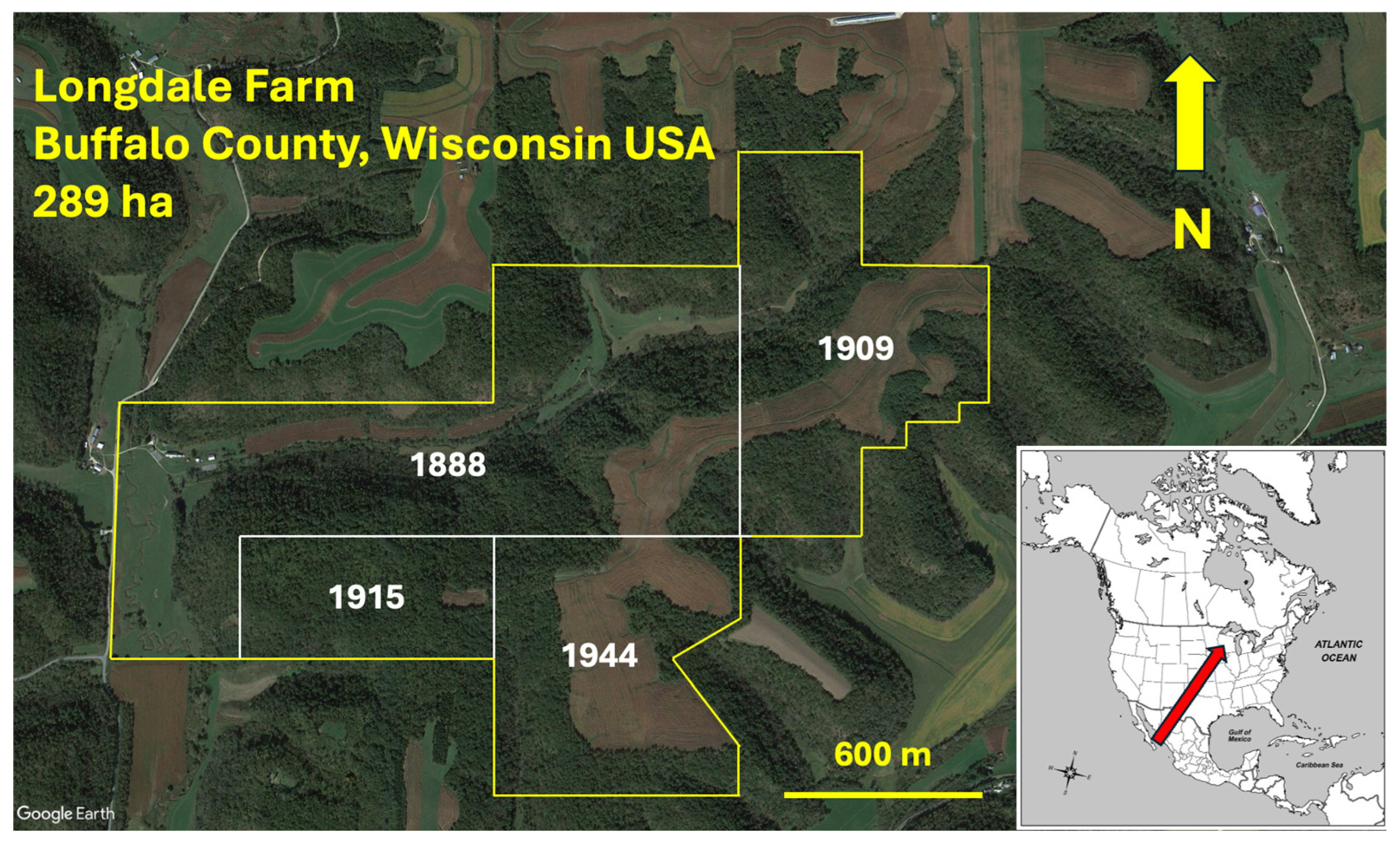
Longdale Farm is located in southern Buffalo County near the western border of Wisconsin in the Upper Midwestern USA (
Figure 1). Since 1888, the farm has been owned and managed by the Stettler family for 138 years and five generations (
Table 1). Ninety-three percent of the farms in the county are family farms [
35] but only 17% of farms in Wisconsin, including Longdale Farm, are designated as official Wisconsin Century Farms, having been continuously owned by the same family for >100 years [
36,
37]. Longdale Farm currently covers 289 ha, including mixed hardwood and softwood forests (213 ha) on steep blufflands, row croplands and grasslands (66 ha) in valley bottoms and along ridgetops, and livestock pasture (10 ha) bordering a coldwater trout stream (
Figure 1). At 289 ha, the farm is twice the size of the average farm in Buffalo County [
35] and three times the size of the average farm in Wisconsin [
38]. Aeolian loess (silt) deposits comprise the basis for Longdale Farm’s soils, ranging from thin, silty clay loams on steep, rocky ridgelands to deep silt loams in valley bottoms [
39]. There is some evidence [
40] to indicate that the indigenous and largely agricultural Cahokia civilization extended northward into western Wisconsin 1000 years ago, but they did not reach as far north as the site of the present-day Longdale Farm.
Croplands and pastures on the farm likely were cleared of their native vegetation (trees, brush, prairies) shortly after the farm was homesteaded in 1870, whereas bluff slopes have remained forested throughout. Some drier, south-facing slopes continue to contain remnant areas of native dry bluff prairie and bur oak savanna. Farm buildings and dwellings are situated adjacent to the valley floor in the extreme western portion of the farm (
Figure 1).
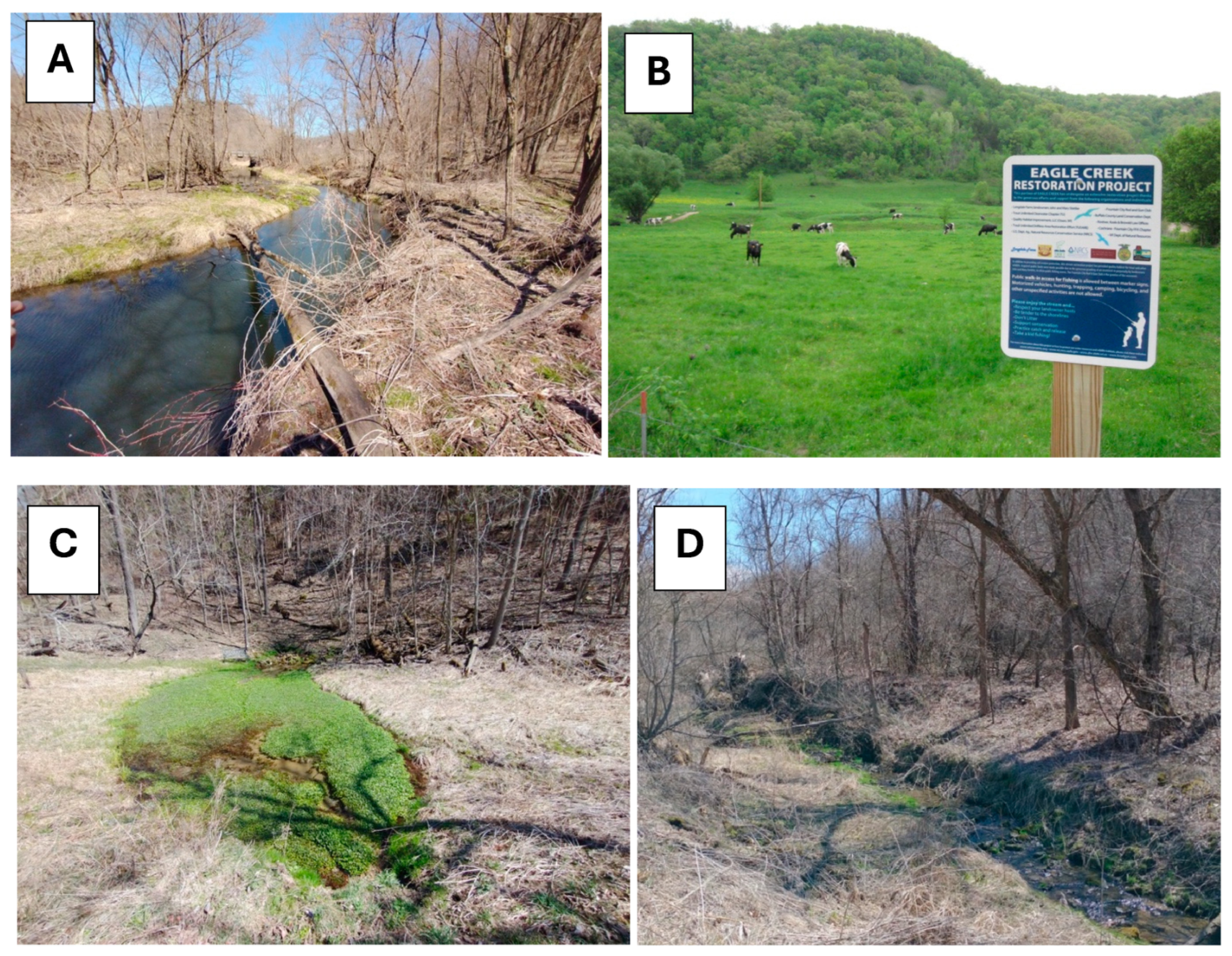
Eagle Creek, a Wisconsin Class II coldwater trout stream (natural reproduction of trout occurs, but some stocking is required to sustain a desirable sport fishery) [
41], flows north to south >1.5 km through a dairy cow pasture along the western edge of the farm (
Figure 1 and
Figure 2A,B). Two large groundwater springs (
Figure 2C) discharge (0.14–0.28 m
3/min flow rates) into Eagle Creek in the northwestern corner of the farm, and an unnamed, spring-fed tributary (
Figure 2D) flows east to west 2 km through the main farm valley and enters Eagle Creek in the cow pasture.
3. Methods
To document historical events and changes at Longdale Farm, we located, assembled, and examined a variety of governmental (online websites and databases) and family records that recorded real estate sales, livestock production, tree harvest, crop planting, harvest, and sales, equipment acquisition, building construction and modification, and various other events associated with family farm life. Additional albums of historical family photographs documenting farm life were examined. We also received oral and written answers to questions about farm activities from three generations of the current farm family (including three of the coauthors of this paper). Consent was obtained from all family members to include their information in this paper. We used all these sources to explore farm expansion, changing cropping practices, timber harvest, shifts in livestock production and management, and changes in wildlife on the farm.
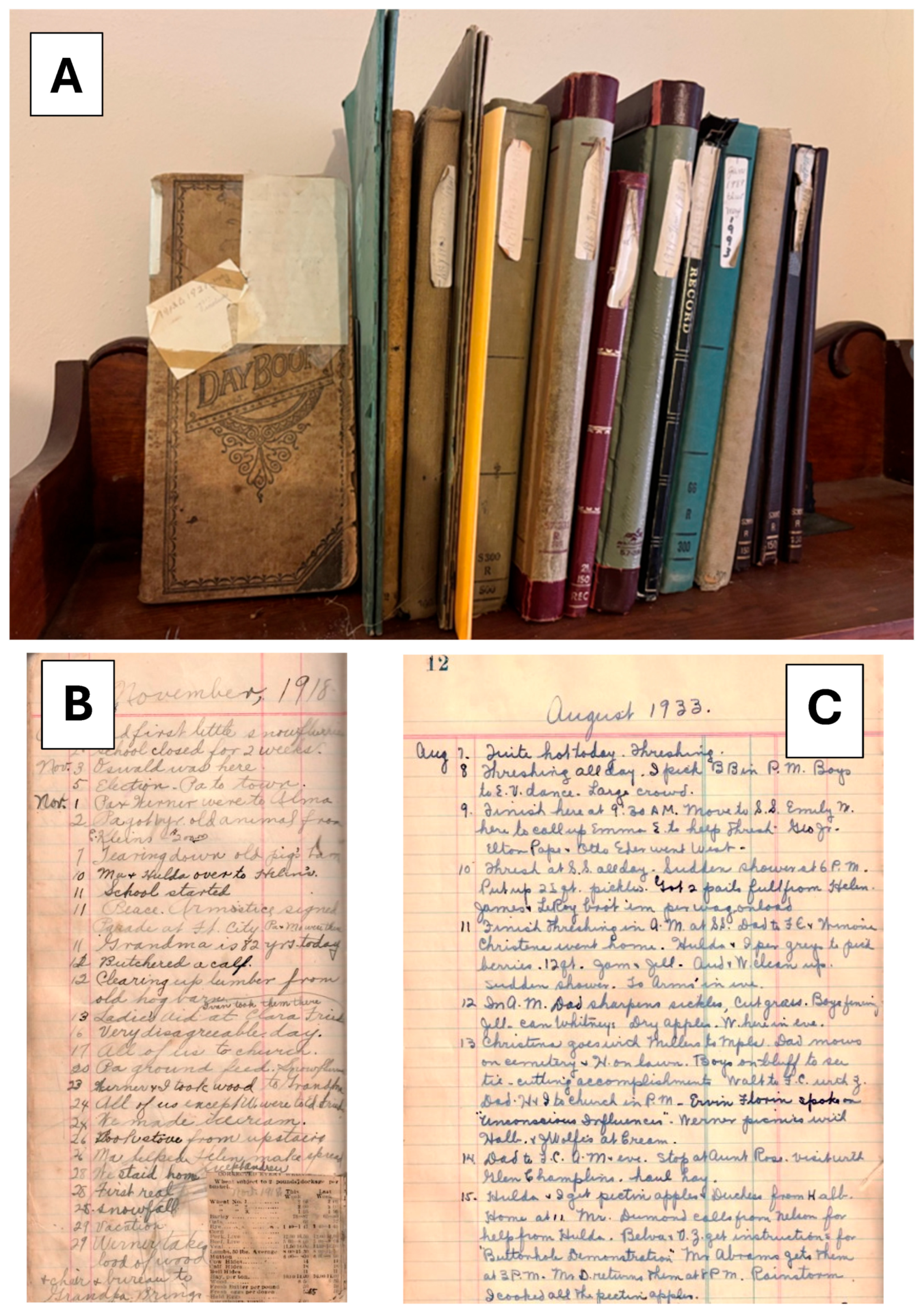
Most of our information on farm operations and activities was obtained from a hand-written “farm book” or diary, a near-daily record of farm events in a series of 16 journals spanning the years 1913–2007 (
Figure 3A–C). For nearly 100 years, several family members (usually farm wives) maintained the farm book, recording crop planting and harvest, livestock production, garden harvests and preservation, wood cutting, and family events and celebrations.
We systematically worked through the farm book year by year, searching for dates when specific farm events (e.g., new tractor purchased) or farm numbers (e.g., how many cows were milked) were recorded. We disregarded any entries related to farm visitors, off-farm trips, regional or national events, and descriptions of other happenings not directly related to Longdale Farm operations. Whenever possible, we paired dated historical photographs with farm book entries to better understand farm activities and events.
Due to the farm book’s diary format, it did not contain yearly crop harvest volume records, complete listings of numbers of livestock raised and/or sold in each year, annual milk sales, complete farm financial records, or equipment purchases or maintenance records. Other records of crop and livestock production or financial statements were either non-existent or sporadic. Consequently, we were unable to document most farm statistics much beyond occasional mentions in the farm book and could not perform any type of statistical trend analyses on such things as crop or livestock production, nor use them to assess how the self-sustainability of the farm may have changed. However, we were able to document, for example, what crops and livestock were raised in various years, how many cows were milked, how much hay was harvested and stored in the dairy barn, how many quarts of cucumber pickles were canned, and basically how farm life transpired each generation. This allowed us to create a generation-by-generation timeline of farm events at Longdale Farm, and provided insight into the many decisions made to keep the farm operating and profitable.
We also documented how many entries specifically mentioned various farm activities, including crop production (i.e., soil preparation, fertilizing, crop harvest), livestock (feeding, cleaning pens, sales, fencing repair and replacement), farm machinery purchases and repairs, logging/tree harvest (including fuelwood gathering, tree harvest and milling) food harvest and preservation (e.g., produce gardening, harvest, and processing, meat preparation and preservation), and other farm-related events (building and road maintenance). Starting with the year 1913 and continuing with a year selected at random (aided by an online random number generator;
https://www.calculator.net/random-number-generator.html; accessed 18 July 2026) from each decade, we examined all entries for the entire year and tallied how many “mentions” of farm activities fell into each of the aforementioned categories. We then grouped these tallies by farm family generation and compared categorical tallies among generations with the aid of a contingency table analysis (via on-line calculator:
http://www.physics.csbsju.edu/stats/contingency_NROW_NCOLUMN_form.html, accessed on 2 August 2026) to assess whether recorded events changed proportionally across those generations.
We also used these farm book mentions of farm activities to assess possible changes in farm diversification over time. To do that, we calculated a Simpson diversity index (ranging from 0 to 1, with 0 = no diversity, 1 = maximum diversity) for each year of farm book mentions, using tallies in each of the six farm activity categories to calculate a single diversity value for that year. We then used simple linear regression (VassarStats: Website for Statistical Computation:
http://vassarstats.net, accessed on 2 August 2026) to determine whether diversities (Y values in the regression) changed through the years (X values in the regression). We hypothesized that diversities of mentions would decrease through time as farm activities became less diversified.
4. Results
4.1. Farm Expansion and Development
Although the original farm was 65 ha (160 acres) when first homesteaded in 1870, it had already expanded to 130 ha by 1888 when ancestors of the current owners purchased the farm (
Figure 1). Subsequent purchases of adjoining properties east and south of the farm in 1909 (68 ha), 1915 (32.5 ha), and 1944 (58.5 ha) together more than doubled the 1888 farm size, adding significant areas of both cropland and forest (
Figure 1). The 1909 land purchased from a neighbor by the 2nd generation on Longdale Farm included both cleared ridgetop cropland and large tracts of forested hillsides, whereas the 1915 purchase from a different neighbor comprised all forest land to be used for livestock grazing in that forest. Both purchases acquired lands that were more easily accessible from existing Longdale property than they were from the properties of the previous adjacent owners. The 1944 purchase by the 3rd generation at Longdale included a large ridgetop field (more tillable land for the upcoming 4th generation) and additional forest lands (
Figure 1).
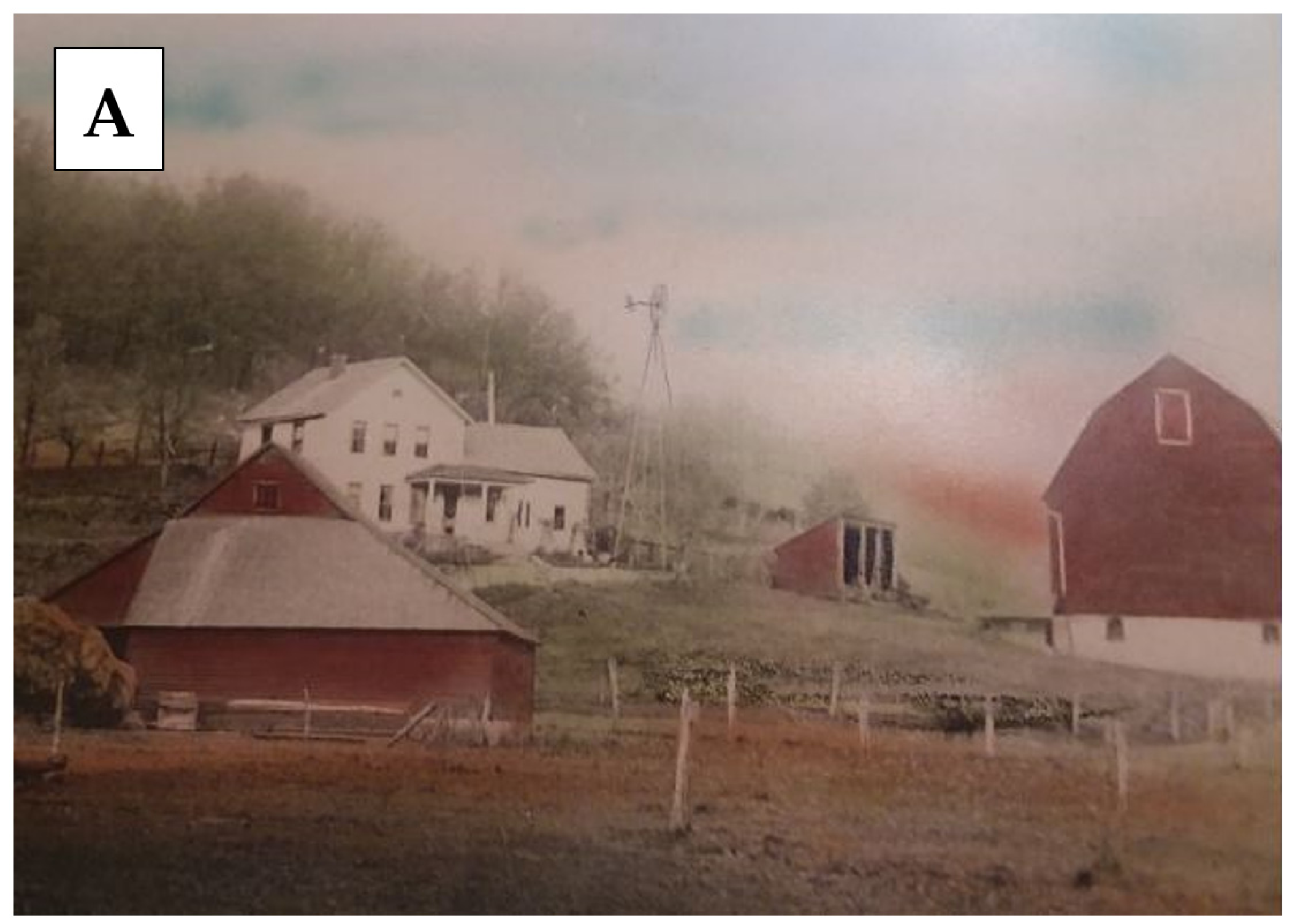
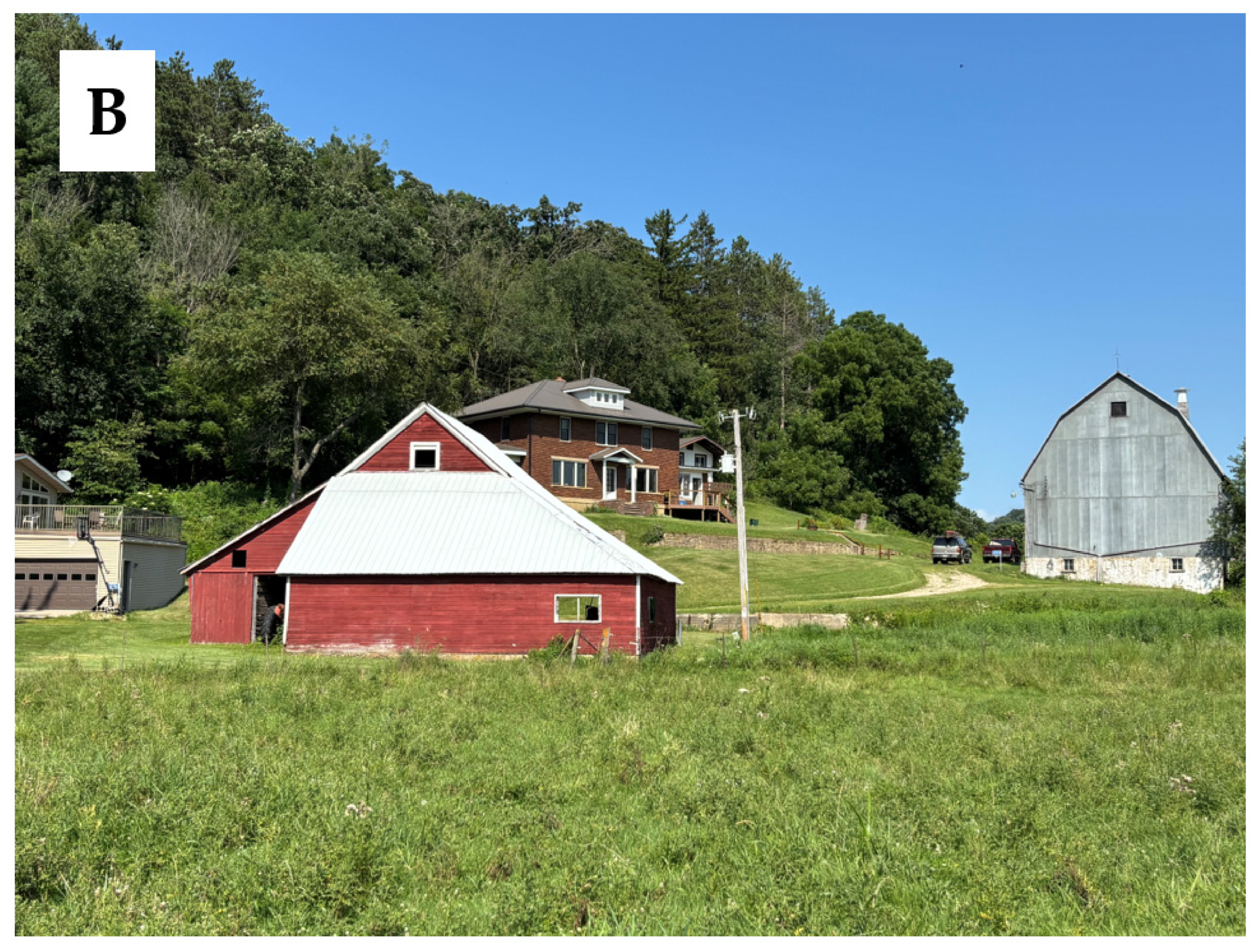
To facilitate efficient farm operations, a compact farmstead including a large house, dairy barn, corn cribs, granary, chicken coop, equipment storage sheds, spring house, and other associated buildings and livestock enclosures was developed in the valley in the northwestern corner of the farm (
Figure 1 and
Figure 4). This location near the large spring provided convenient access to drinking water for humans and livestock, and the cold spring water provided natural refrigeration for milk storage prior to sale. Not all buildings were constructed immediately after farm purchase, instead being added as needed for the continued diversification of farm operations. For example, the granary was built in 1905, the chicken coop in 1914, a new hog barn and corn crib in 1923, a machine shed in 1927, the ridgetop equipment shed in 1952, and the back barn for young dairy stock in 1955. A brick house was built in 1921 to replace the original, wood-construction home (
Figure 4A,B). Although some buildings and livestock enclosures have been removed, most major buildings remain and are still in use today.
4.2. Farm Demographics, Income, and Food Sources
Throughout the history of Longdale Farm, farm demographics, income, and food sources have shifted, and the farm has changed from being largely self-sufficient to being dependent on off-farm sources for most of its income, foods, and material goods (
Table 2). Every generation has had typically a single farm family in residence, although aging parents and one or more of their younger offspring often overlapped residence with the young family of another of their offspring. Additional hired workers were present at least during crop growing seasons during the first three generations to assist with fieldwork and harvest operations. Typically, only a single family member of each generation took over farm operations in conjunction with his/her own spouse and children.
All farm income and most human nutritional needs during the first three generations were dependent on on-site production of farm and farm garden commodities. During the past two generations, however, farm owners have had full-time employment off the farm, leasing croplands and pastures to other farmers and forest plots to hunters, participating in federal conservation reserve programs for additional income, and harvesting and selling timber (
Table 2). Although the past two generations have raised limited garden produce and occasional livestock and provided fish and game for the farm table, human foods mostly have been purchased from off-farm sources.
4.3. Livestock
Livestock production comprised a major part of the early days of Longdale Farm. All forested hillslopes on the farm were enclosed and subdivided by fencing. This allowed beef cattle raised for meat production and young stock that became milk-producing dairy cattle to graze among the trees during the late-spring through autumn time period. These cattle had access to water via spring ponds and small spring-fed creeks at the base of the hillslopes. During winter and early spring, cattle were confined near the dairy barn, corn cribs, and granary and fed a combination of hay, corn, and small grains produced on the farm during the previous growing season. Farm records indicate that typically 50 to 80 beef cattle were present on the farm during a normal year. Beef cattle were sold at market each year for revenue and also provided food for the farm family. Farm records indicate that beef cattle were mostly milking shorthorn breed steers (i.e., castrated males) during the first 30 years of the farm, which were sent to the meat market at approximately 1.5 years of age. Older female milking shorthorns culled from the dairy herd also were marketed for beef. Raising beef cattle was discontinued in 1980.
Dairy cattle likely have been a part of Longdale Farm since its beginning. Farm photographs from the early 1900s show the dairy barn, granary, and corn cribs in their current locations. The barn’s ground floor (original footprint approximately 30 × 20 m, later expanded to 30 × 46 m) contained a milking area for 40 to 50 cows plus pens for younger stock. Prior to rural electrification (1935 to 1938 in this portion of Wisconsin), a wood-fired (wood cut from farm forests), steam-powered generator provided DC electricity for milking operations. The upper portion of the barn was a single, large hay storage facility. A fenced confinement area outside the barn connected to the 10 ha pasture along the creek. Cows were milked twice each day, spending periods between milkings in the pasture (during the growing season) and/or the confinement area (year-round). During winter, cows were fed dried hay outdoors or indoors, depending on weather conditions, supplemented with corn and small grains during milking sessions. Three different dairy cattle breeds were raised on the farm during different time periods: milking shorthorn (1888–1915; used for both milk and beef), Guernsey (1915–1950; better butter fat production), and Holstein (1950–1974; better milk volume production). The farm’s dairy operations were discontinued in 1974 but dairy cattle owned by a neighboring farmer have continued to graze in the larger creek-side pasture (continuing to present day) and a smaller east–west valley pasture (discontinued in 2002) during the spring–summer–fall.
Hogs (Yorkshire breed) were raised on the farm each year for market sale and for family use from 1888 to 1962. Typically, 40 to 50 hogs were raised each year in a pasture near the creek and fed in a designated log barn. Later, hogs were raised in a single-story addition to the dairy barn with continuous access to pasture. Small numbers of hogs have been raised recently on the farm as an agricultural and entrepreneurial learning project by young family members.
Chickens and geese were present on the farm for most of its existence. Domestic geese were raised for family consumption, whereas chickens were raised for both egg production (typically leghorn breed) and meat (Rhode Island red breed). Geese roamed the farmstead, creeks, and spring ponds but chickens were restricted to a chicken coop and a small adjoining outdoor enclosure.
During early years on the farm, oxen and horses provided the main source of power for farm work and transportation. Oxen (two to six animals) initially were used for field work between 1888 and 1900, after which horses became the primary draft animal. Fields were tilled, cultivated, and harvested using strong draft horses and horse-drawn equipment, and smaller horse breeds were used for human transport (via carriages or horseback). When not being used, horses grazed in pastures with cattle or were sheltered in the barn. With the development of tractors and automobiles, the use of horses on the farm gradually diminished, although they were still used occasionally until the mid-1940s.
4.4. Crop Production
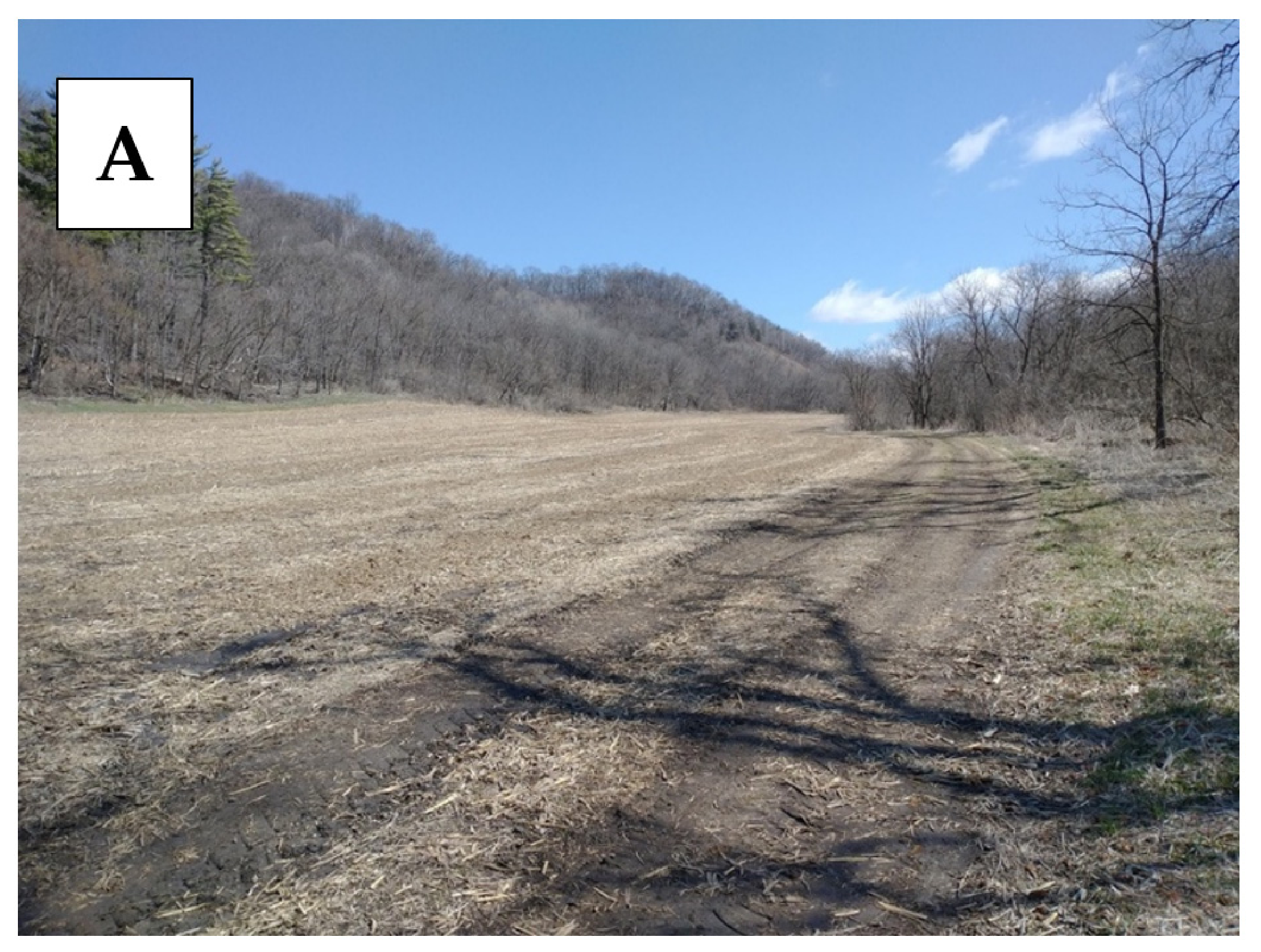
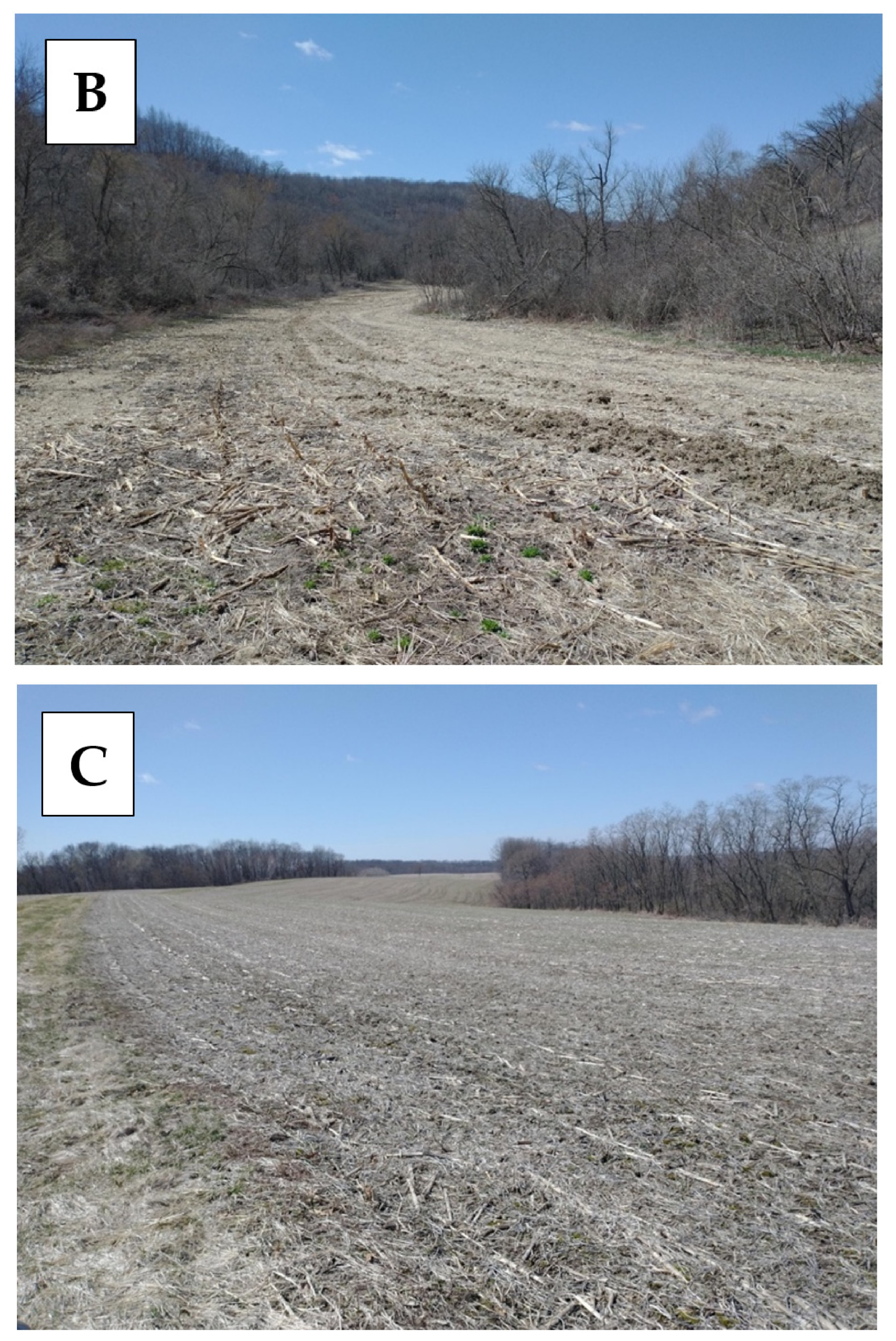
Seven separate, small (each <2 ha) crop fields are located along the farm’s valley floor whereas one very large field (48 ha) and one small field (0.7 ha) are located on the ridge top (
Figure 1 and
Figure 5). Access to the ridgetop fields is by a steep, winding, unpaved roadway (640 m long) that connects the valley to the ridge. Several small fields of planted and/or native grasslands (used for hay production) border the valley crop fields, occupying the hilly lands between the crop fields and the wooded hillslopes.
Throughout the farm’s history, the agricultural fields have been planted with a variety of different crops to be sold at market and/or to be used in support of the farm’s livestock operations. Wheat, oats, hay, and corn were staple crops throughout the farm’s first half-century or more. These crops were planted with oxen-drawn, horse-drawn, or tractor-pulled grain drills and corn planters and cut with hand-held scythes or propelled sickle cutters. Corn was shucked and stored on the cob in on-site ventilated corn cribs, whereas wheat and oats were bundled in the fields, transported to a stationary threshing machine (or grain separator), and fed through the thresher to separate the grain from the straw. The wheat and oats were stored in on-farm granaries until used for livestock feed or sold to market and the straw was used for livestock bedding. The original threshing machine was owned cooperatively by Longdale Farm and two neighboring farms, moved to each farm as needed during the harvest season. The threshing machine was stored at Longdale Farm when not in use, housed in a wooden shed built to protect it from the elements (that original building continues to be used for other machine storage).
Beginning in approximately 1970, crop production gradually shifted from owner-farmed to renter-farmed (i.e., neighboring farmers renting the land to produce crops for their own use) as Longdale Farm ownership switched over between 3rd and 4th generations (
Table 1 and
Table 2). Crop production in the valley fields has continued on the land rent model through the present day, but the large ridgetop field was removed from crop production for 25 years (1990–2014) and placed under a conservation reserve program (CRP) funded by the United States Department of Agriculture. Under this program, the federal government paid Longdale Farm (and others throughout the country) an annual allotment to take certain agricultural lands out of production and convert them to perennial vegetative cover (but not woody shrubs or trees) to reduce land erosion, improve water quality, and provide wildlife habitat [
42]. After the 25-year CRP period expired, the ridgetop field was tilled again and returned to crop production by a renter-farmer, a practice which continues to the present day.
Crop yields have varied through time, among fields, and with changing weather conditions (
Table 3). Corn yields have increased more than three-fold over the past 100 years, with recent corn yields in the ridgetop field approximately 6% higher than in the small valley fields (12.7 versus 12.1 tons/ha). Wheat was grown consistently only during the first few decades, and soybeans were not grown on the farm before 1990.
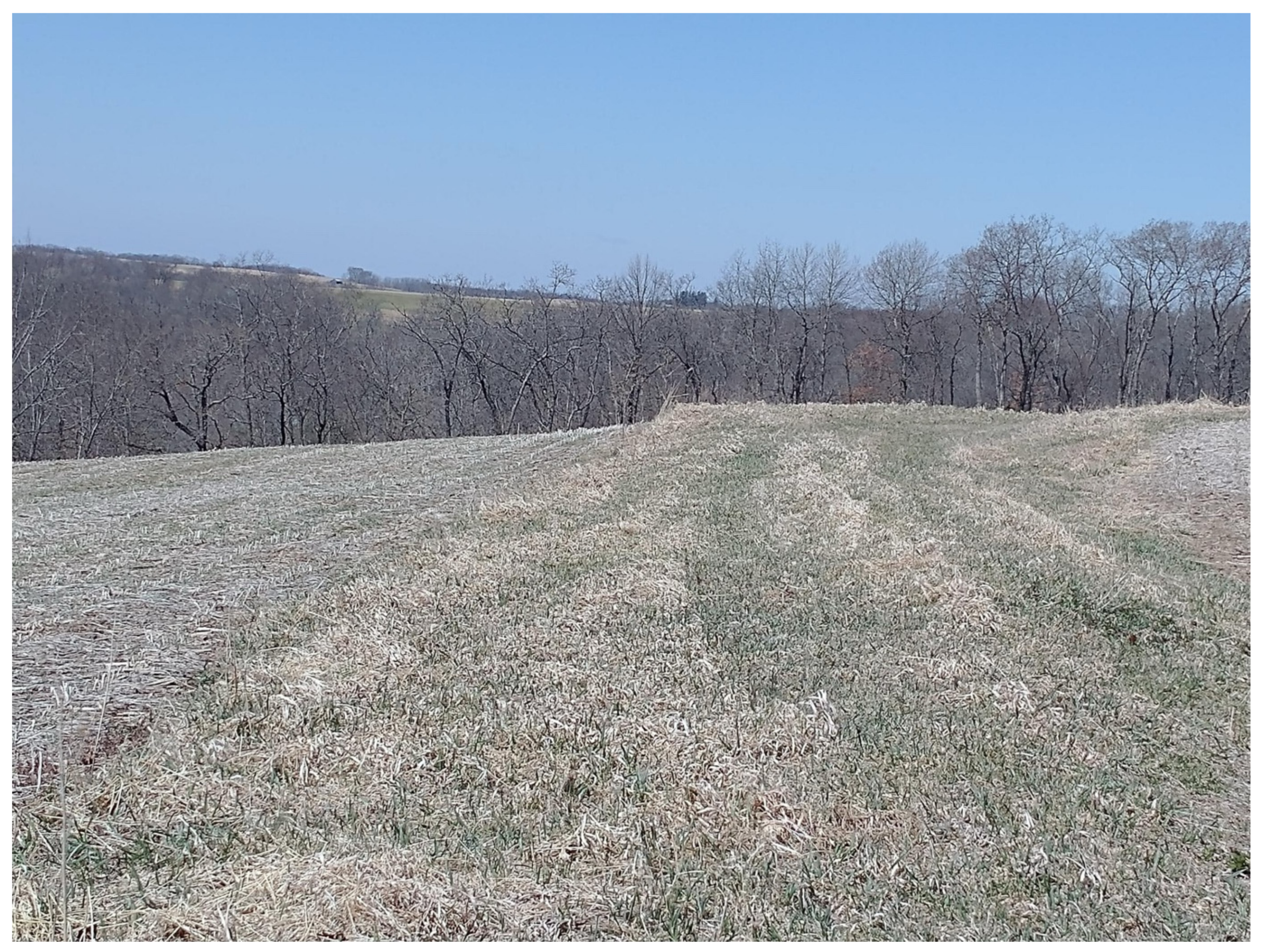
Crop fields currently are farmed using either a corn-soybean rotation (ridgetop) or continuous corn (valley), with yearly conventional tillage in the valleys and no-till on ridge tops. Valley fields are relatively flat with little need to manage soil erosion. However, the large ridgetop field is sloped, so >1.2 km of grassed terraces (
Figure 6) were constructed perpendicular to the slopes to slow runoff and intercept soils. In addition, 25 grassed waterways of varying lengths (860 m in total length) were installed around the periphery of the large ridgetop field to protect soils from eroding whenever water from heavy rains or snowmelt runs off into the forested hillsides. In several areas where grassed waterways meet the forested hillslopes, stands of black locust (
Robinia pseudoacacia) were planted in 1939 to further stabilize soils and discourage gully formation. Crop residues and no-till farming further protect the ridgetop soils from erosion. During fall 2025, a 20 m wide band of winter rye was planted experimentally around the periphery of the ridgetop field to provide a green, living barrier to snowmelt runoff and potentially heavy spring rains.
Soil fertility has been maintained on croplands through the many decades primarily via applications of livestock manure (cow, hog, chicken) produced on the farm. As the number of livestock was reduced over time, it became necessary to import manure from neighboring farms where livestock rearing was ongoing. Valley fields receive applications of cow manure from the neighboring dairy operation prior to spring planting. Recent (January 2025) testing of cropland soils have indicated elevated phosphorus (242 ppm) and potassium (639 ppm) levels and pH levels lower (6.9) than desired, both likely the result of manure applications to the valley and corn crop residues left in the soil. Future manure applications in the valley will be adjusted and corn crop residues will be baled and removed to keep phosphorus levels within a preferred (i.e., lower) target range. Chicken manure from other farms also has been applied occasionally to ridgetop fields to improve soil fertility. Two recent applications of agricultural lime spaced 4 years apart were used to neutralize soil acidity that slowly appeared following 25 years of CRP. In addition to manure produced by grazing dairy cattle, the creekside pasture also has been fertilized with inorganic fertilizer (phosphorus, nitrate) to support vigorous grass production. Each of 19 cropland parcels on Longdale Farm were inspected recently (September 2024) and found to be in compliance with Wisconsin Department of Agriculture soil and water conservation standards (Farmland Preservation Program, ss. 91.80 and 91.82, Wis. Stats.).
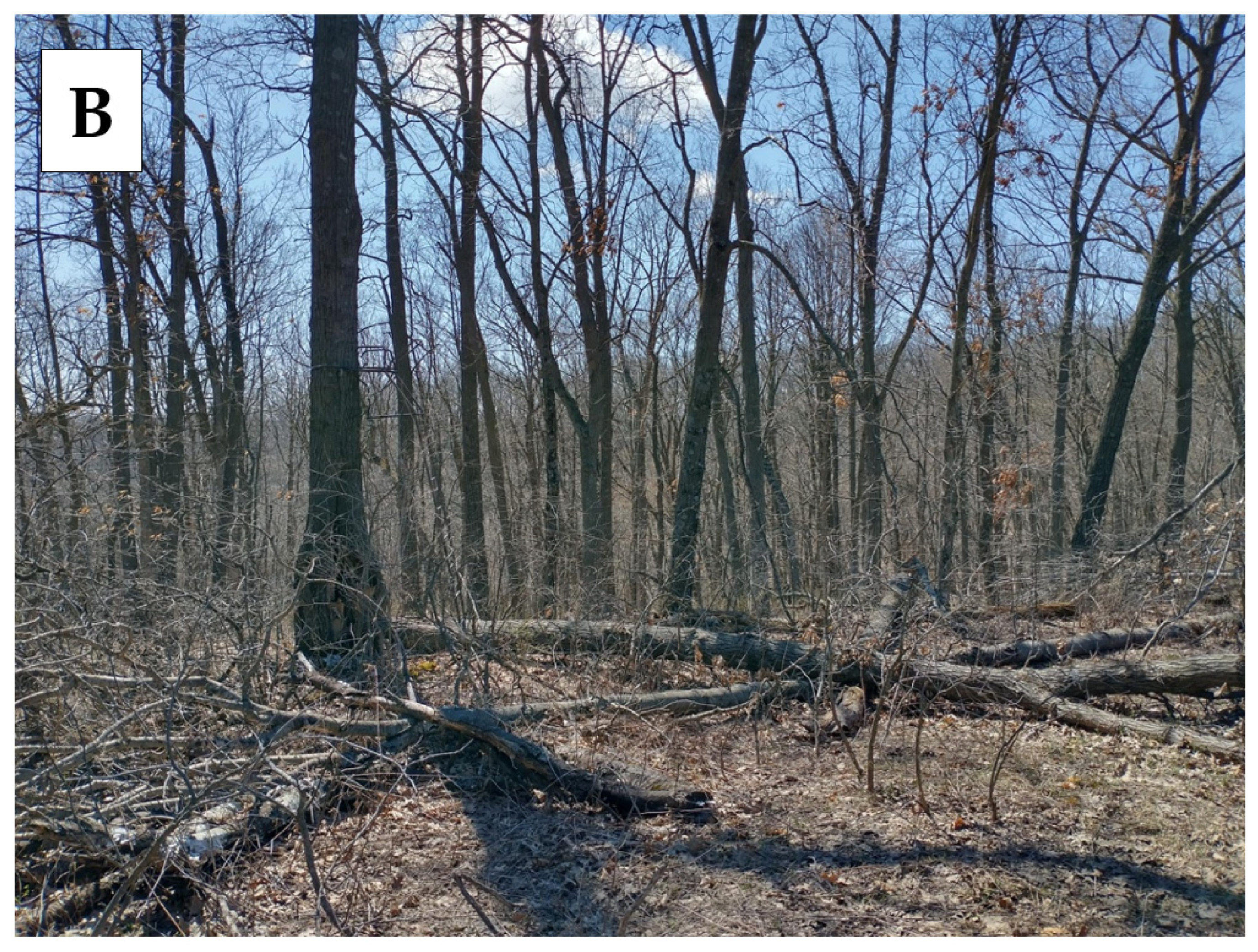
4.5. Forests, Logging, and Invasive Species Management
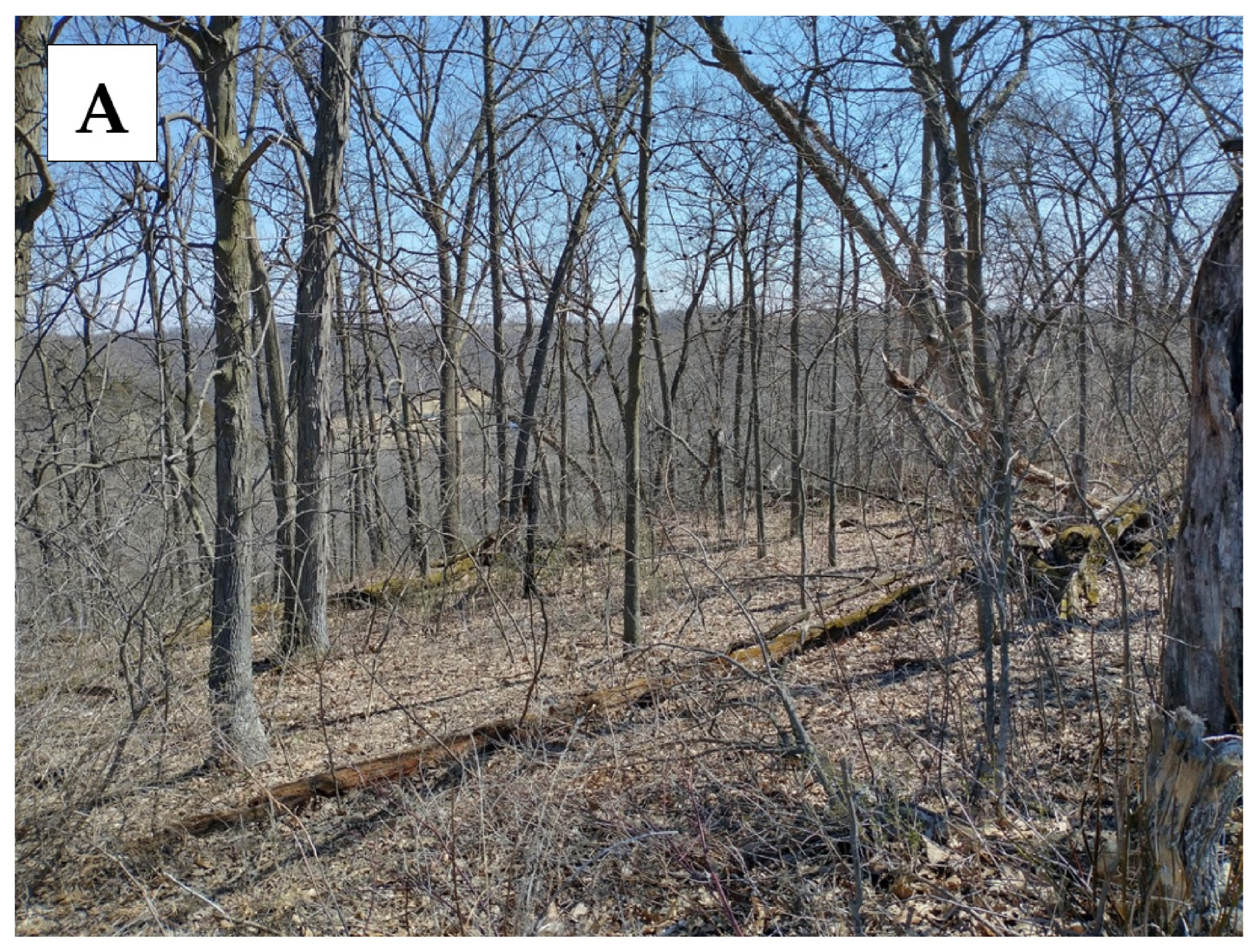
Farm hillslopes are covered by >200 ha of forests comprising a mix of native hardwood and softwood tree species (
Figure 1 and
Figure 7). Hardwoods include white (
Quercus alba), red (
Quercus rubra), black (
Quercus velutina), and bur oak (
Quercus macrocarpa), shagbark hickory (
Carya ovata), black walnut (
Juglans nigra), paper birch (
Betula papyrifera), quaking aspen (
Populus tremuloides), and various cherry species (
Prunus spp.), whereas softwoods are represented primarily by planted white pine (
Pinus strobus).
Trees on the farm have been harvested regularly both for on-farm use and for commercial sale (
Table 4). Wood was an extremely important farm resource during the farm’s early decades. Trees were cut and wood was split during fall and spring and hauled by horses to the farmstead to dry for the next year. Farm book entries frequently described fuel wood harvest, splitting, and drying through 1940 (
Table 4). Dried wood was burned to provide residential heating, for cooking, and to generate steam that powered a DC electrical generator used during milking operations and a mechanical grain thresher during the harvest season.
During the early years of the farm, timber harvested from the farm also was used to construct, at least in part, several of the buildings on the farm. Markings on several large beams in the barn, granary, and corncribs indicate that an adze was used to hew logs by hand, to produce timber of the proper dimensions for construction.
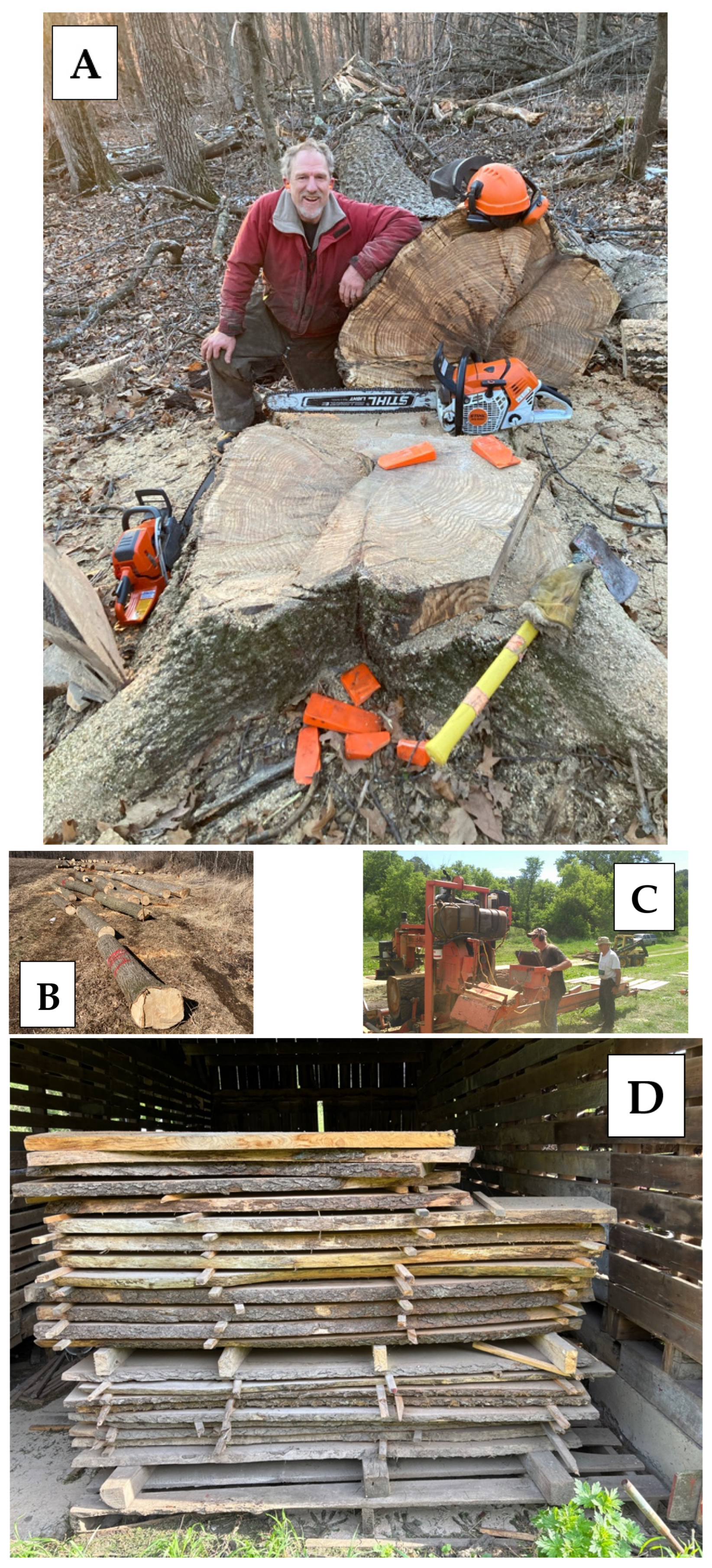
As timber harvest shifted from producing fuel wood to producing marketable lumber, tree cutting became more selective and focused mainly on the more valuable hardwood species (
Table 4). Sawyers felled the trees (
Figure 8A), dragged them out of the forests to flatter bordering lands, and cut them into manageable lengths (
Figure 8B). Logs were either milled on-site by a portable sawmill (
Figure 9C) or transported elsewhere for milling. Lumber was sold to market, with some retained for on-farm use (
Figure 8D). Tree harvest has varied through different time periods as trees reached marketable sizes in different forest tracts on the farm, with at least one period of salvage harvest after a severe windstorm toppled trees in one forest plot (
Table 4).
Since 2015, Longdale Farm timber harvest has become better planned and organized as farm forests were enrolled in a managed forest lands program supported by the Wisconsin Department of Natural Resources (WI DNR) [
43]. Farm owners and WI DNR foresters evaluate each forest stand and decide how many trees of what species should be harvested in any given year. This process has produced more variable timber harvests year-to-year (yearly harvest range = 8.5 to 104.2 m
3;
Table 5) but is intended to provide healthier and more sustainable forests long-term. During the past 10 years, 88% of timber volume harvested has comprised oaks, with other species each contributing 1 to 7% of harvest volume (
Table 5).
Invasive woody species have become more prevalent on Longdale Farm over the past 30 to 40 years. Common buckthorn (Rhamnus cathartica), honeysuckles (Lonicera spp.), barberry (Berberis vulgaris), and round-leaf bittersweet (Celastrus orbiculatus) are dispersed by fruit-eating birds that distribute the seeds via feces. These non-native plants have invaded forest edge habitats and have been managed/controlled via removal and/or spot chemical treatments as needed.
4.6. Upland Wildlife Management
When Longdale Farm was first established in the late 1800s, wild game species were abundant in the forests and adjoining fields. White-tailed deer (
Odocoileus virginianus), eastern cottontail (
Sylvilagus floridanus), fox squirrel (
Sciurus niger), eastern gray squirrel (
Sciurus carolinensis), wild turkey (
Meleagris gallopavo), and ruffed grouse (
Bonasa umbellus) were common on the farm and surrounding lands, supporting lengthy legal harvest seasons and market hunting for some species. Farm residents regularly supplemented their diets with wild game harvested on the farm. Unfortunately, market hunting decimated deer and turkey populations in western and southern Wisconsin, and both species were largely extirpated from Longdale Farm and surrounding lands by the early 1900s (
Table 6).
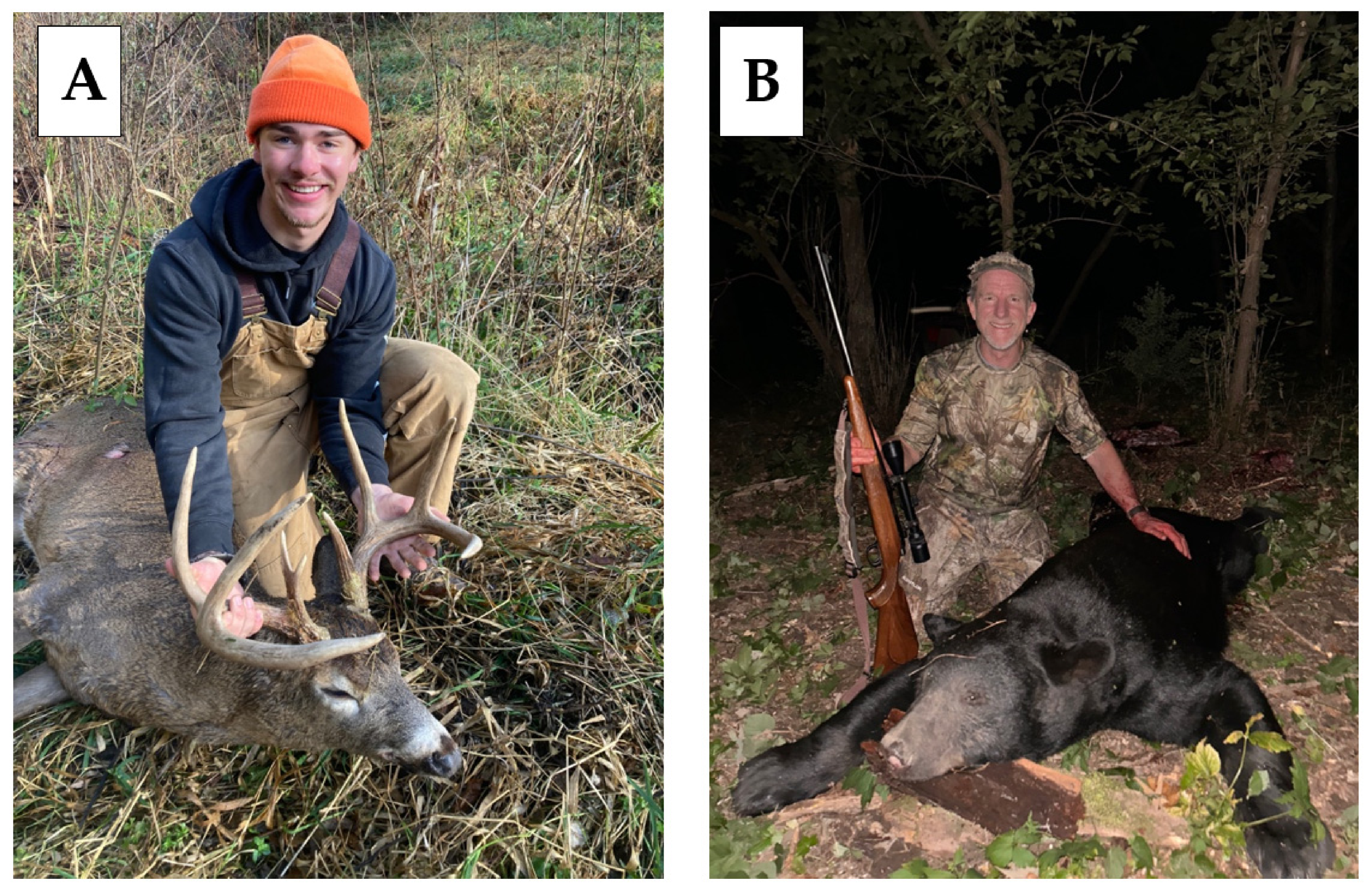
Stricter management of deer populations and reintroductions of turkeys in Wisconsin allowed those species to recover on Longdale Farm. After population recovery, the “first” deer was harvested on Longdale Farm in 1943 and the “first” turkey in 1985. Since then, the deer population has increased significantly. Annual deer harvest by farm residents (
Figure 9A), as well as by non-residents through seasonal hunting land leases, has averaged 20 deer/year (range = 10 to 30 deer) during the past 45 years (
Table 6). Hunting leases have generated increasing levels of farm income and have allowed for better control of expanding deer populations to limit crop damage (
Table 6).
Wild turkey from the State of Missouri USA were captured by state conservation commissions for release in Wisconsin in the 1970s and the population rapidly expended their distribution throughout Wisconsin [
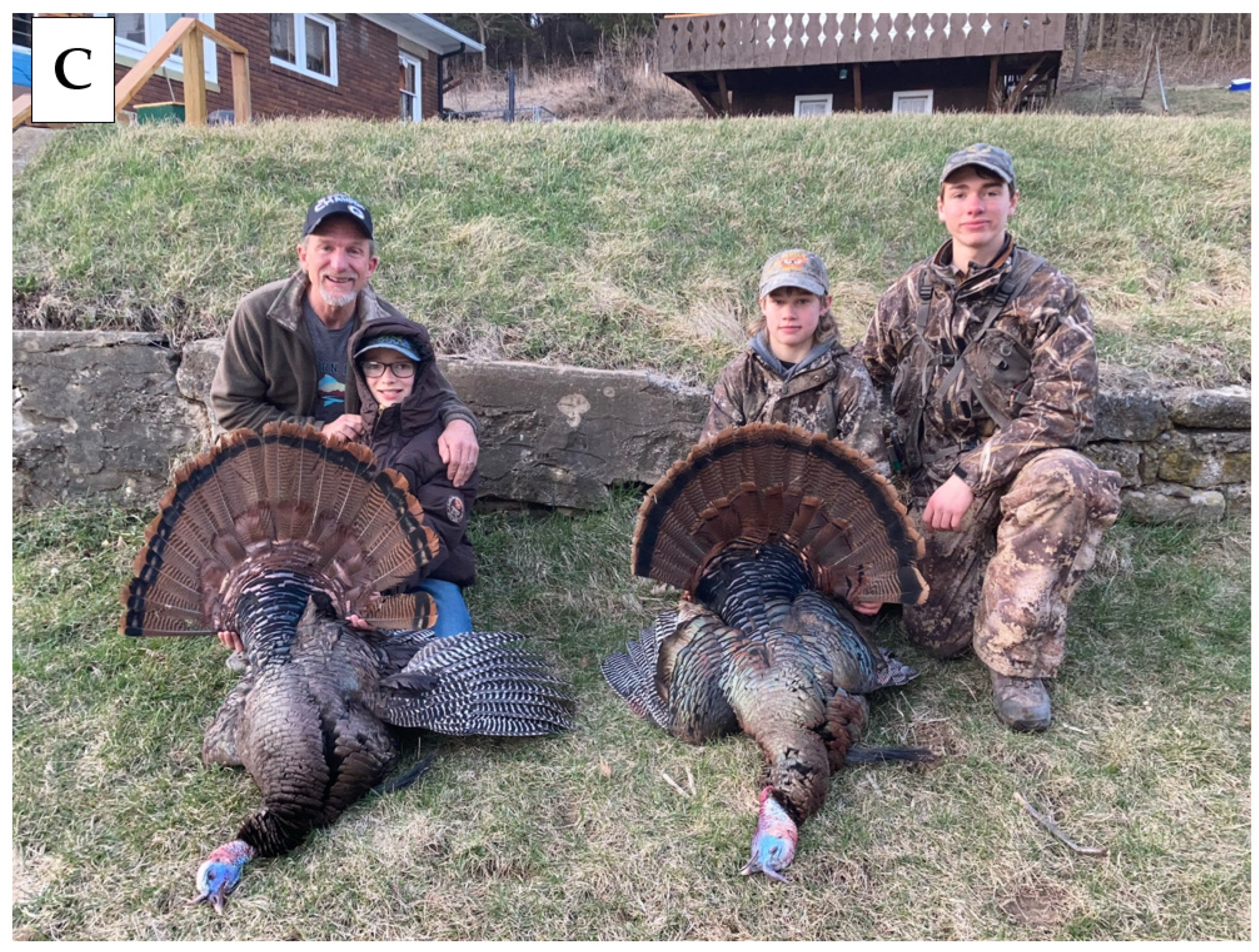
44]. The Longdale Farm wild turkey population currently is healthy, supporting annual spring harvests by farm residents averaging four tom (male) turkeys/year for the past 15 years (
Figure 9C). Specific harvest numbers for the 2023–2026 hunting seasons are: 6, 7, 1, and 4.
Black bear were largely absent from Buffalo County, Wisconsin, USA for over 100 years, but during the past 10 years the bear population on and around Longdale Farm has become large enough to support an annual fall hunting season. The first bear ever recorded as harvested on the farm was on 2024 (
Figure 9B), with trail cameras indicating the presence of multiple other individuals as well, including cubs.
4.7. Eagle Creek Trout Management
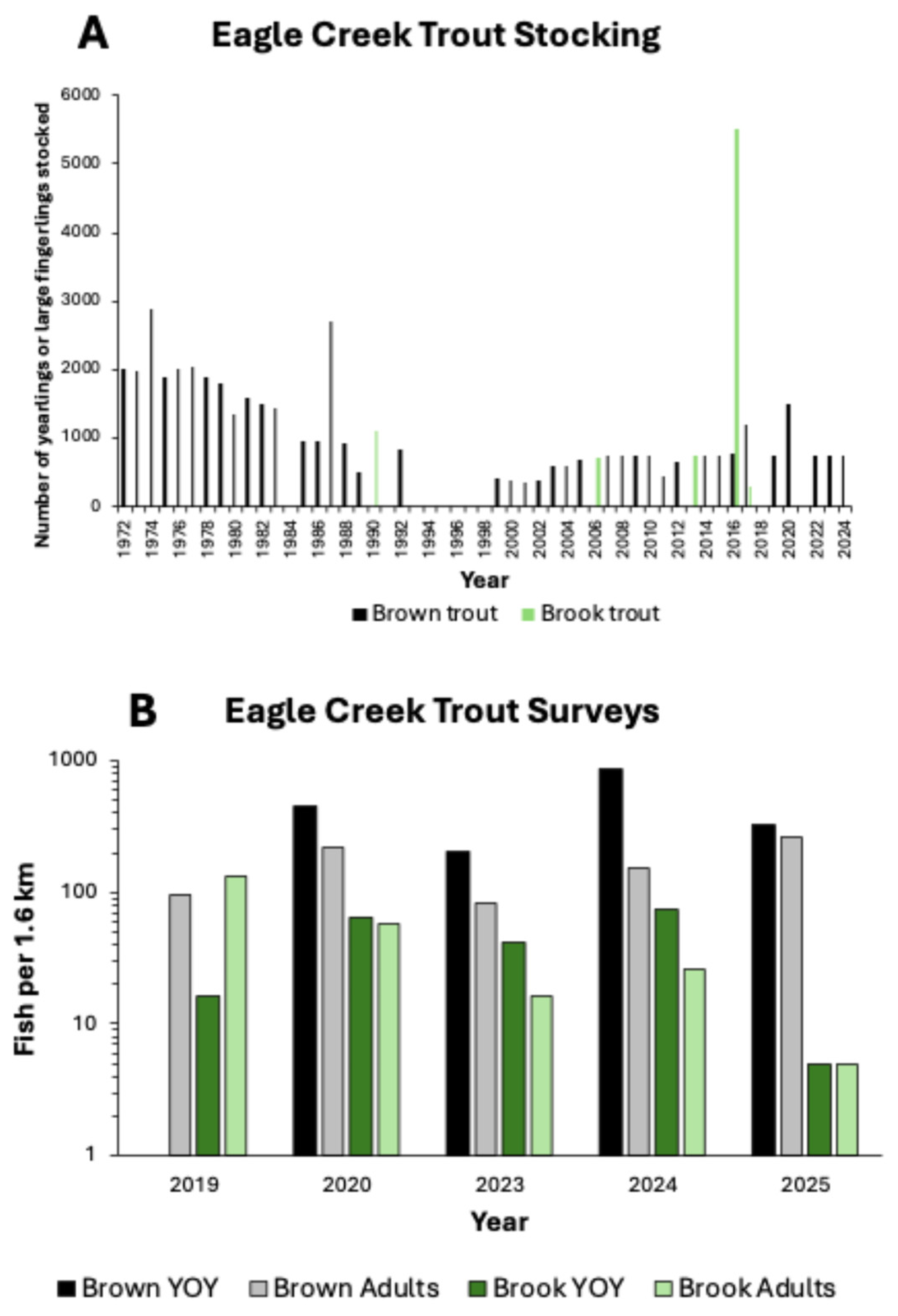
Prior to the 1980s, Eagle Creek supported a coldwater brown trout fishery sustained largely by annual stocking (Wisconsin DNR Class III trout stream) (
Figure 10A) [
45]. Unfortunately, soil erosion within the watershed increased due to livestock trampling of stream banks and row crop production on sloping fields such that the stream became unsuitable for trout due to excessive suspended sediments and high turbidity. Eroding soils were accompanied by elevated levels of soil nutrients such as phosphorus and ammonia nitrogen. A five-year (1985–1990) study by Buffalo County conservation technicians identified significant sources of eroding soils, including the dairy livestock pasture on Longdale Farm, and recommended best management practices (BMPs) to control the eroding soils [
46]. Due to poor water quality in Eagle Creek, trout stocking was discontinued for most of the 1990s (
Figure 10A).
Poor water quality persisted in Eagle Creek, resulting in the stream being placed on Wisconsin’s list of impaired waters (under Section 303d of the USA Clean Water Act) in 1998 for having excessive suspended sediment and nutrients. That listing and previous concerns had prompted various, watershed-wide actions (e.g., installing grade stabilization structures, streambank fencing, shaping, seeding, and erosion protection, stream crossing installations for livestock, upland nutrient management projects, manure storage and barnyard runoff control systems) that began in 1985 and eventually reduced suspended sediments in Eagle Creek by 89%, total phosphorus by 77%, and ammonia nitrogen by 66% compared to 1990 conditions [
36]. On Longdale Farm, one such action involved a stream habitat restoration of the section of Eagle Creek that flowed through the farm’s dairy livestock pasture, reducing streambank erosion and runoff of cattle wastes into the stream. In addition, CRP plantings on the ridgetop field and tree plantings adjacent to that field helped to reduce and/or prevent soil erosion via permanent vegetated soil cover and reduced runoff that previously had contributed to gully formation. After the ridgetop field was returned to crop production, the permanent grass terrace and the many grassed waterways installed previously continued to prevent soil erosion during stormwater and snowmelt runoff events. Maintaining portions of the valley fields with the steepest slopes in permanent vegetative cover (hay, prairie plantings) further encouraged rainwater infiltration and reduced runoff.
During 2010 and 2012, a two-phase stream habitat restoration project was conducted on most of the Eagle Creek segment on Longdale Farm (
Figure 2B). The restoration effort was undertaken and supported by Trout Unlimited, the WI DNR, the United States Department of Agriculture, and several other local groups and organizations. Stream banks were sloped to allow flood waters better access to the floodplain (to reduce stream power, reducing bank erosion), large rocks (riprap) were added to further protect stream banks around outside bends, and instream trout habitat was added (large mid-channel boulders, overhead bank cover).
The trout angling easement on Longdale Farm allows public access to >1.5 km of Eagle Creek during the designated Wisconsin general inland trout fishing season that runs from April through mid-October each year. Anglers are required to purchase both a general Wisconsin fishing license and an inland trout stamp. Eagle Creek (13.7 km section designated as coldwater) typically is stocked annually (mean ± SD; 1118 ± 655 fish) with yearling or large fingerling brown trout (
Salmo trutta) and occasionally (1676 ± 2165 fish) with brook trout (
Salvelinus fontinalis) (
Figure 10A) [
45]. Recent fish surveys of Eagle Creek by the Wisconsin Department of Natural Resources (WI DNR) indicated that brown trout have been five to 50 times more abundant than brook trout (except in 2019) (
Figure 10B) [
47]. In 2008, the WI DNR upgraded the coldwater section of Eagle Creek from Class III trout waters (fishery sustained largely by annual stocking) to Class II (natural reproduction of trout but not sufficient to maintain populations at habitat carrying capacity).
4.8. Farm Book Analysis
We examined, codified, and analyzed all farm book entries (2730 entries) made for the years 1913, 1918, 1928, 1932, 1946, 1956, 1965, and 1973. Although farm book entries continued through 2007, we did not include in our analysis any entries made during the final three decades, as those entries were done mostly by individuals no longer in residence at Longdale Farm. Consequently, mentions of farm activities were infrequent (one or two per month) and entries were judged to not be representative of actual activities occurring on the farm.
Across all years examined, farm activities were mentioned in >63% of entries in the farm book (
Table 7). Mentions related to crops (e.g., plowing, cultivating, harvesting) were more than twice as common as those for other activities. Mentions related to livestock (cleaning pens, sales of cattle, hogs, and eggs) and food production and preservation (gardening, fruit and potato harvests, canning, livestock slaughter, meat preservation) also were common, whereas mentions of equipment repairs, timber cutting, and other activities (e.g., farm road and building maintenance) each were limited to averages of once or twice per month (
Table 7).
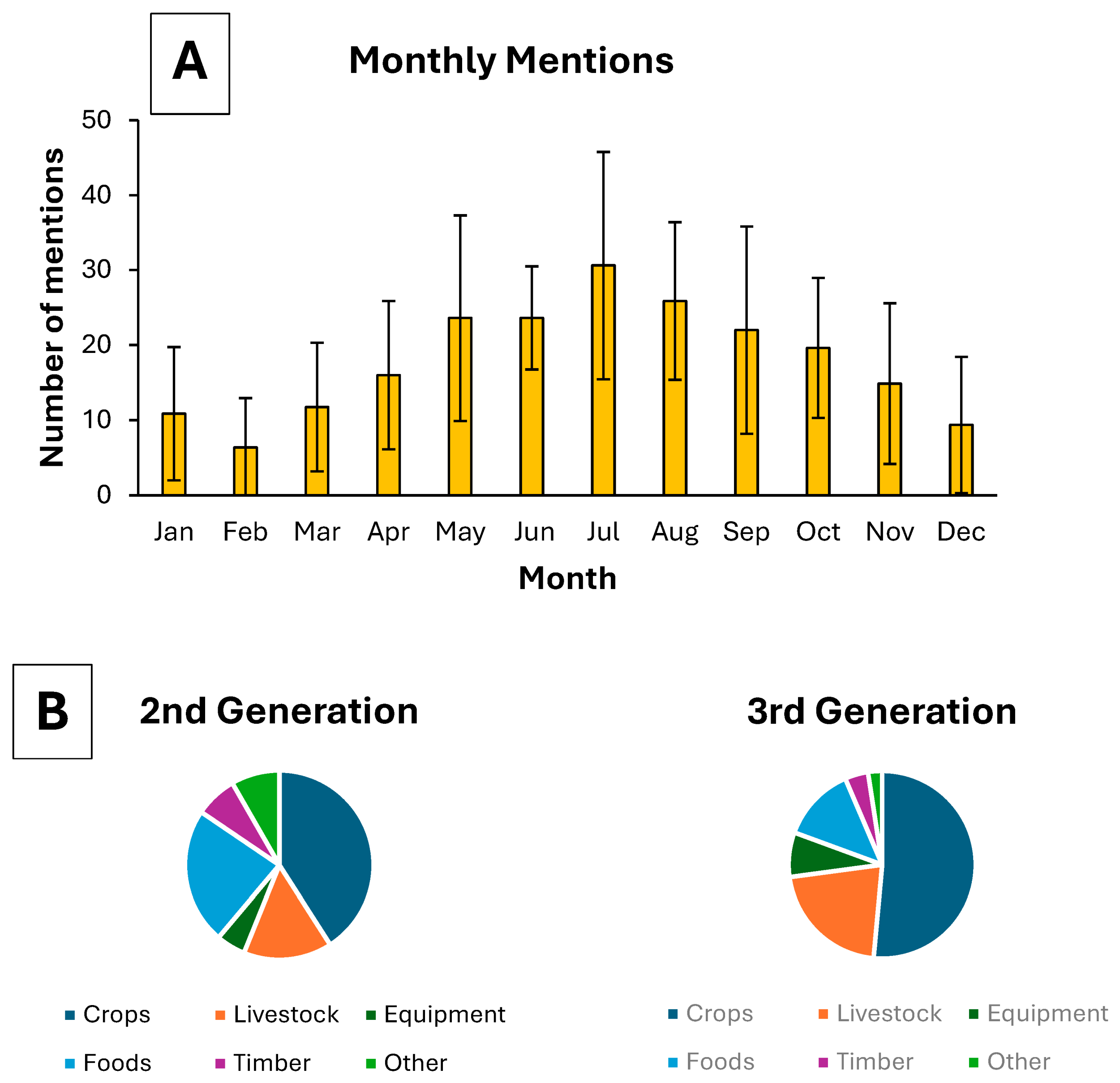
Mentions of farming activities in the Longdale Farm book were variable both within a given year and across the generations. Total farm activity mentions were not distributed evenly throughout the year, instead being more common during the April-through-October growing seasons (
Figure 11A). Categorical farm activity mentions also differed significantly (Chi-square = 84.1, df = 5,
p < 0.001) between the two generations examined, with food mentions proportionally more common during the 2nd generation and crop and livestock mentions proportionally more common during the 3rd generation (
Figure 11B).
Farm diversification, as assessed by Simpson diversities of tallies of farm activity categorical mentions, did not change significantly (linear regression F = 0.004, p = 0.952) across the eight years examined between 1914 and 1973. Simpson diversities of farm activity mentions ranged from 0.54 to 0.76, and averaged 0.66 (SD = 0.08).
5. Discussion
Our examination and assessments of the historical records available for Longdale Farm allowed us to accept at least partially all three hypotheses that we proposed about the 5th-generation family farm in Wisconsin, USA. First, after nearly 90 years as a largely self-sustaining, owner-farmed entity that produced both food and income for the farm families, the farm shifted to leasing croplands, shutting down livestock operations, harvesting and selling timber, and earning other income via full-time off-farm employment. Second, the farm crops became and continue to get more productive through mechanization and modernized farming techniques and crop genetics but farm diversification remained relatively unchanged. Finally, farming interests of recent generations differed greatly from those that preceded them, resulting in little direct livestock rearing and crop production by current owners, but increased management of forest lands for timber and wildlife production.
For the past 138 years, Longdale Farm has continued as a diversified farm, maintaining crop production, livestock, active forest harvest, and wildlife and fisheries habitats. Through five generations of ownership and management by the Stettler family, the farm expanded in size and its farming practices adapted to modernizing equipment and changing commodity markets. With an increasing focus on sustainability and long-term agroecological health, farm owners initiated new operations, adjusted others, and discontinued those that were no longer profitable or of interest to the current farming generation.
Since original purchase in 1888, Longdale Farm gradually expanded to more than double in size over the next 56 years. Much of this expansion included active croplands. This expansion was typical for farms in the USA and the Wisconsin region, driven by the need to support additional family farm members and assisted by the greater efficiencies and reduced labor needs associated with farm mechanization [
6,
14,
21,
48]. Freed from the time and power limitations imposed by farming with draft animals, petroleum-fueled tractors and mechanized tilling and harvesting equipment allowed a single person to efficiently manage larger farms [
21,
48]. Farm expansion also allowed the families of multiple siblings and/or generations to reside and work together on the farm as their sole means of support. Land acquisitions also provided more forests for timber production and livestock grazing for expanded herds.
More people working on the farm and mechanization of dairy operations also allowed for potential increases in herd size but this was constrained by the capacity of the dairy barn (50 milking stalls). Barn expansion to maintain young stock and upgraded milking equipment helped to boost milk production, but increased market demand for higher milk butter fat content and greater volumes of milk production overall led Longdale Farm to switch their dairy herd to different milking breeds (from milking shorthorn to Guernsey, then to Holstein) capable of meeting those demands. As other dairy farms in Wisconsin continued to expand herd size by constructing new and larger milking barns and associated facilities [
49,
50], Longdale Farm did not expand and eventually ceased dairy operations when family labor resources and interest waned, with profits not keeping pace with rising costs for livestock, equipment, and feed.
Several different crops have been raised on Longdale Farm, but only corn has been raised through the farm’s history. Farm book records on corn yields are lacking until the 1930s, but since then yields have increased significantly (three to four-fold or more). These increased yields closely follow national trends that are strongly associated with agricultural intensification, where hybrid and genetically modified seeds, herbicides and pesticides, and tractor guidance systems are credited with quadrupling (or greater) the corn yields since 1930 [
51]. Present-day corn yields on the farm (produced under lease agreements with a neighboring farmer) are at or above regional averages [
52]. Although wheat was only grown on the farm during the first few decades, wheat yields were typical for the region at that time [
53]. Present-day soybean yields (also on lands leased to a neighbor) are at or above regional yield averages for the county and the state of Wisconsin [
54].
During the early years on Longdale Farm, several of the traditional farming practices in use within the region during the late 1800s and early 1900s are not considered to be sustainable today. Frequent soil tilling with moldboard plows, tilling sloping lands, and grazing livestock on forested hillslopes and along streambanks all serve to weaken soils and make them more prone to erosion [
33,
34]. Over time, these practices were discontinued on Longdale Farm, replaced by more conservation-based best management practices (BMPs) typically used in rural areas of Wisconsin [
55], and that remain in use today. Many of these BMPs were implemented at Longdale Farm during the 3rd generation, after Andrew Stettler took several agricultural extension classes at the University of Wisconsin, learning and practicing the principles of soil conservation and sustainable farming. For example, to reduce soil erosion potential, grass waterways and terraces were installed on Longdale Farm’s ridgetop crop field, and the field was enrolled in the federal CRP [
42] for 25 years. When that field was brought back into production, it was switched to no-till farming to reduce soil disturbance, contour farming was initiated, and an overwinter cover crop was planted along the sloping field margins to further protect soils. In addition, livestock grazing was discontinued in the farm’s forests, and all forest lands were enrolled in state-sponsored forest management programs [
43] that will direct future forest improvement and harvest activities. Finally, the streambanks along Eagle Creek were sloped and stabilized as part of a stream habitat improvement project, reducing bank erosion while continuing to use the streamside pasture for livestock grazing.
There are several reasons that can drive the decision to undertake sustainable farming practices and implement BMPs designed to improve soil fertility and reduce soil losses, including financial incentives, peer pressure, and a desire to maintain resources for expected future generations [
56,
57,
58,
59]. In the case of Longdale Farm, a combination of these likely led Andrew Stettler and his descendants to regularly add more practices to protect their farmland. Conservation tillage, nutrient management, stormwater runoff controls, rotational grazing, and removing highly erodible lands from crop production became common practices on Longdale Farm during the past three generations, aided by governmental programs to financially incentivize such practices [
14,
42,
43]. Inclusion of these practices at Longdale Farm was made easier when neighboring farmers also moved toward improving sustainability, sharing with one another what practices worked best for them and together working to improve conditions at the watershed scale [
46,
56].
Habitat conservation and restoration efforts in Longdale Farm’s forest tracts and along the stream corridor have produced improved habitat for upland wildlife populations and coldwater stream fisheries, allowing for healthy population development. Upland game species have responded so well that modest control efforts (via increased doe deer harvest) have been initiated to limit livestock damage to growing crops, reducing the need for monetary assistance from government-sponsored wildlife damage compensation programs [
60]. Based on WI DNR surveys [
46], brown and brook trout populations in Eagle Creek have become largely self-sustaining, even supporting increased angler harvests, and the stream’s coldwater rating has improved.
It is increasingly rare for family farms to remain in family ownership beyond a third or fourth generation [
17]. In many parts of the world, farming has transitioned from a family-based undertaking to a commercial-scale business [
2,
11,
61]. Although family-owned farms still numerically and productively dominate the industry [
12,
15], farms are leaving family ownership at a rapid rate [
61]. Family farmers frequently quit the profession and sell the farm to a non-family buyer due to a combination of the physical constraints imposed by human aging, a lack of young family members willing and able to continue farming, and continuing unpredictability in commodity markets that can lead to financial strain [
61,
62,
63]. Longdale Farm beat the odds by having a continuing line of younger family members through five generations willing to take up farm ownership and management.
The conversion from owner-farmed to renter-farmed croplands at Longdale Farm, along with discontinuing the raising of most forms of livestock during the 1960s and 1970s, coincided with the transition from an aging 3rd-generation farm owner who was fully employed on the farm to a younger 4th-generation owner who was employed full-time off-farm. In the USA, a family farm lacking one or more descendants who plan to make farm operation their primary vocation usually is sold to a non-family member who will operate the farm [
17]. Retiring family farmers in Europe often make the same choice, selling to a non-family member but one who may rely on the retiree to provide valuable mentorship for some period after the sale [
64]. However, the owners of Longdale Farm, although not directly interested in continuing with active family farming, chose to rent their farmlands rather than sell.
Most of Longdale Farm’s croplands and livestock pastures have been leased to neighboring farmers for the past 50 years. The Stettler family retains ownership of the farm and manages the farm’s resources by determining what practices (e.g., tillage types, number of cows permitted) the lessees are permitted to use on the farm. Farmland leasing has become a common practice worldwide, allowing young farmers to affordably access farmable lands without the need to first purchase high-priced lands to farm [
65,
66,
67,
68,
69,
70]. By remaining in residence on the farm and dictating how their lands are to be treated, Longdale Farm owners have prevented the degradation of soils and erosion that often typify conditions on rented lands [
71]. Longdale Farm owners have continued direct control of the farm’s forestlands, most recently supported by professional advice from the Wisconsin DNR [
43].
That Longdale Farm has remained in family ownership now for nearly 50 years and two generations after family members stopped personally raising livestock and crops and operating a dairy indicates that interest in retaining the land remained strong among family members, and that various income streams (i.e., off-farm income, pasture and cropland rental, government payments for CRP enrollment, timber sales, stream angling easement sale, hunting leases) were sufficient to maintain the farm and its facilities comfortably. Whether or not this ownership model continues with possible future generations cannot be predicted with any degree of certainty, although the current economic and environmental sustainability of this farm appears to make passage to a 6th generation probable.