Spatiotemporal Evolution and Hotspot Transitions of Eco-Environmental Quality in the Yellow River Basin: Evidence from Ecological Restoration Projects


 , and
, and
Abstract
1. Introduction
2. Materials and Methods
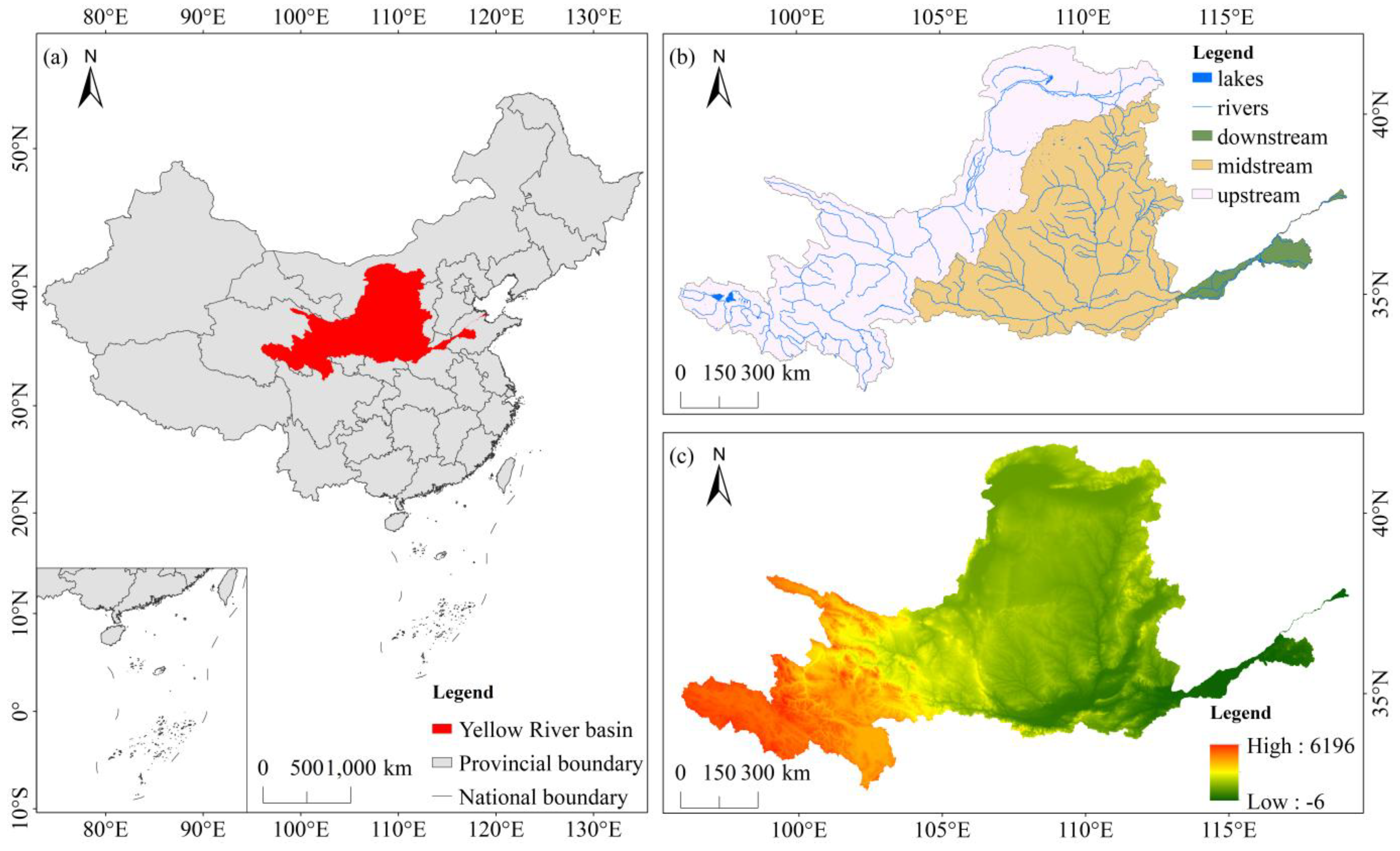
2.1. Study Area
2.2. Data Source and Processing Methodology
2.3. RSEI Construction
2.4. Spatial Autocorrelation Analysis
2.5. OLS Regression Analysis
2.6. STC and EHSA and RSEI-Based Ecological Index Cube
2.7. Multi-Model Integration Approach for Analyzing RSEI Driving Factors
2.8. Spatial Correspondence Analysis of Ecological Restoration Projects
2.9. Summary of Methodological Equations and References
3. Results and Analysis
3.1. Spatiotemporal Evolution of RSEI Hotspots and Coldspots in the YRB Based on the STC (2000–2021)
3.1.1. Global Spatial Autocorrelation of RSEI-Based EEQ
3.1.2. RSEI-Based STC Approach Capturing Dynamic Trajectories of Hotspot and Coldspot Evolution
3.2. Spatiotemporal Dynamics of Key EEQ Hotspot and Coldspot Regions Based on RSEI over Decadal Timescales
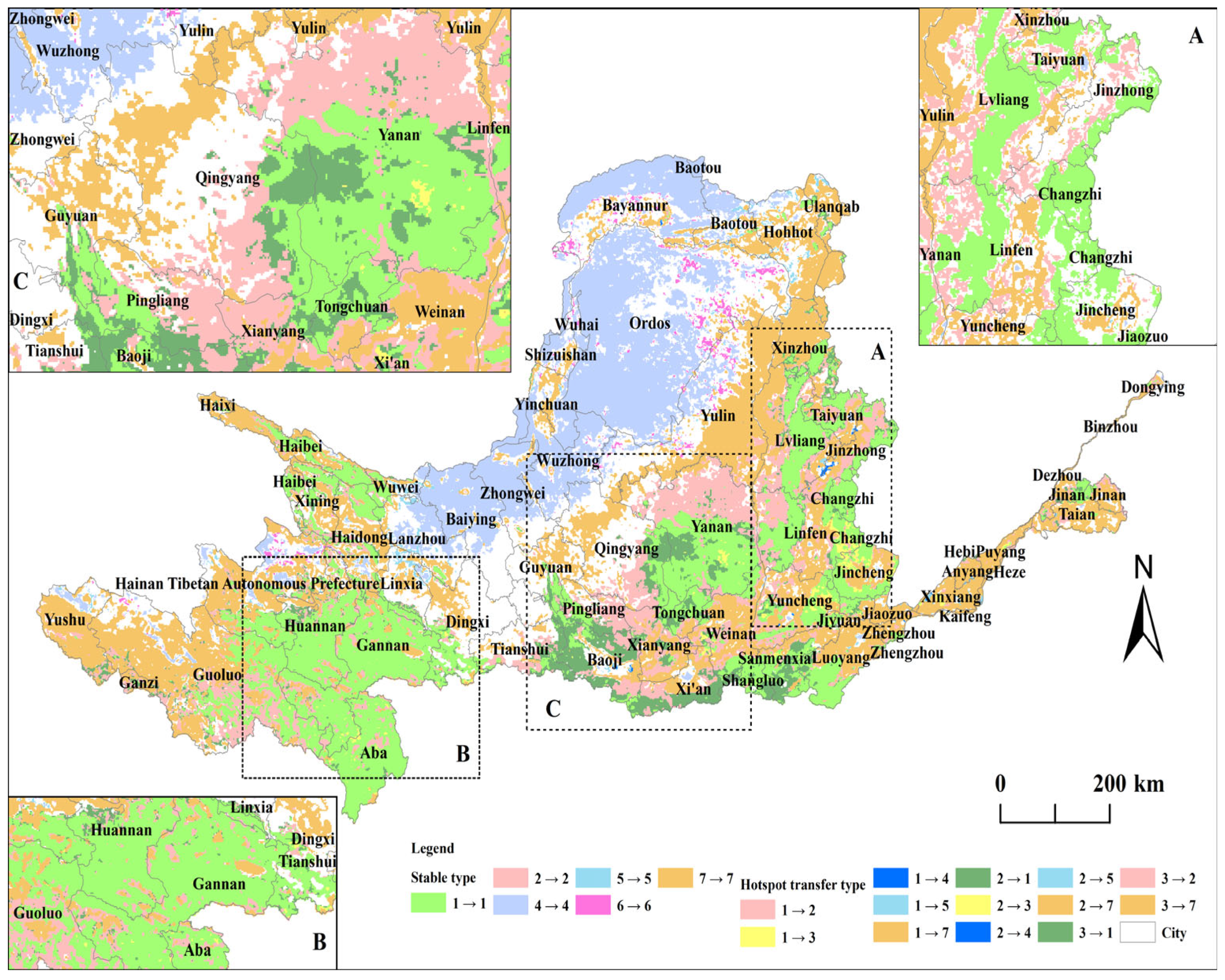
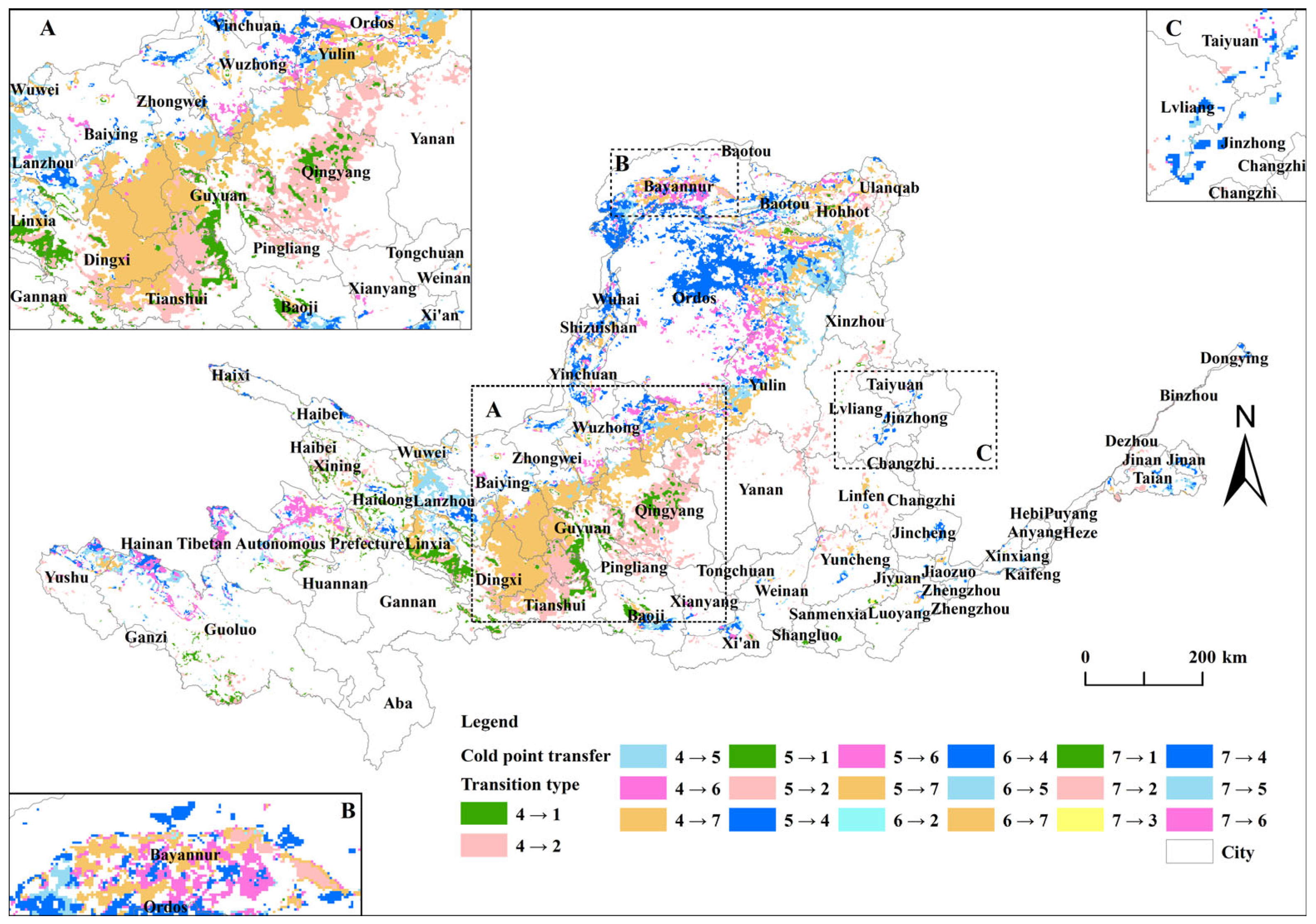
3.2.1. Spatiotemporal Transition of EEQ Hotspots and Coldspots for 2000–2010 and 2011–2021
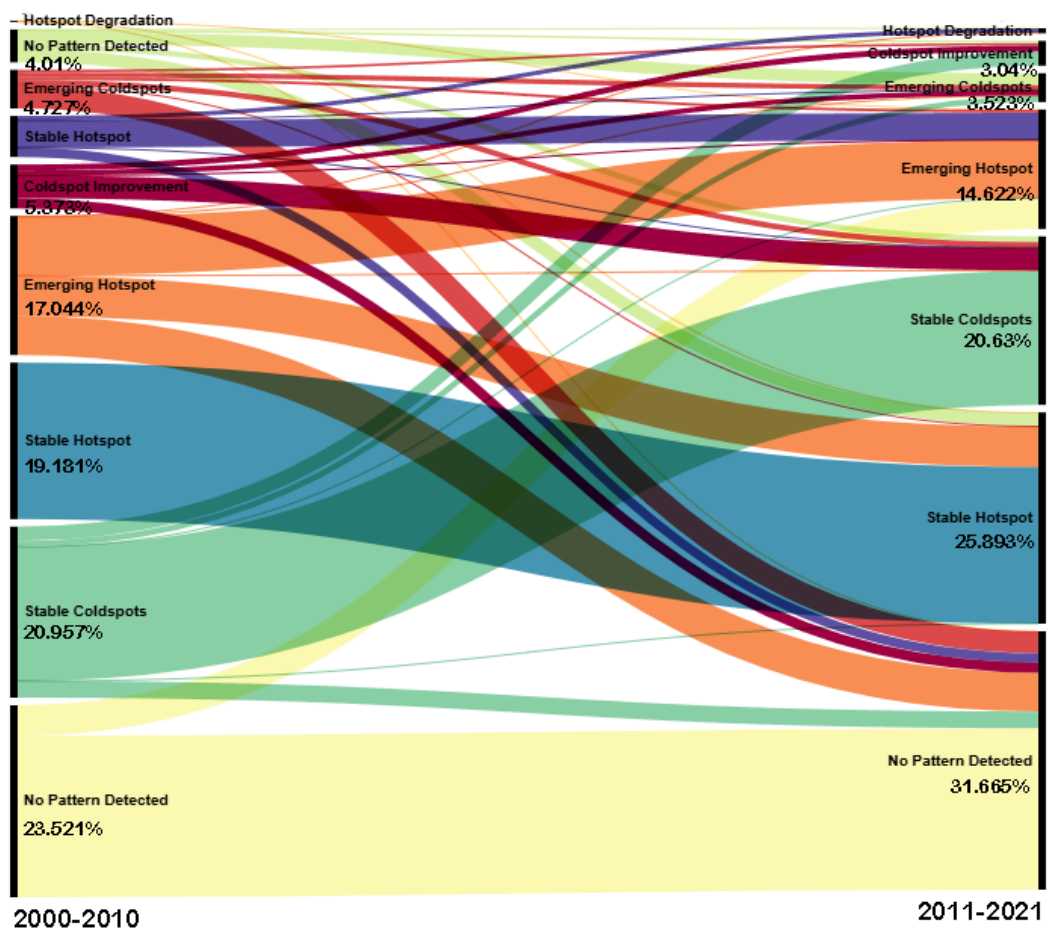
3.2.2. Evolutionary Trajectories of EEQ Hotspots and Coldspots Revealed Through Sankey Flow Analysis
3.3. Explaining the Spatiotemporal Heterogeneity of RSEI Drivers Through Integrated Geodetector, OLS, and MGWR Analyses
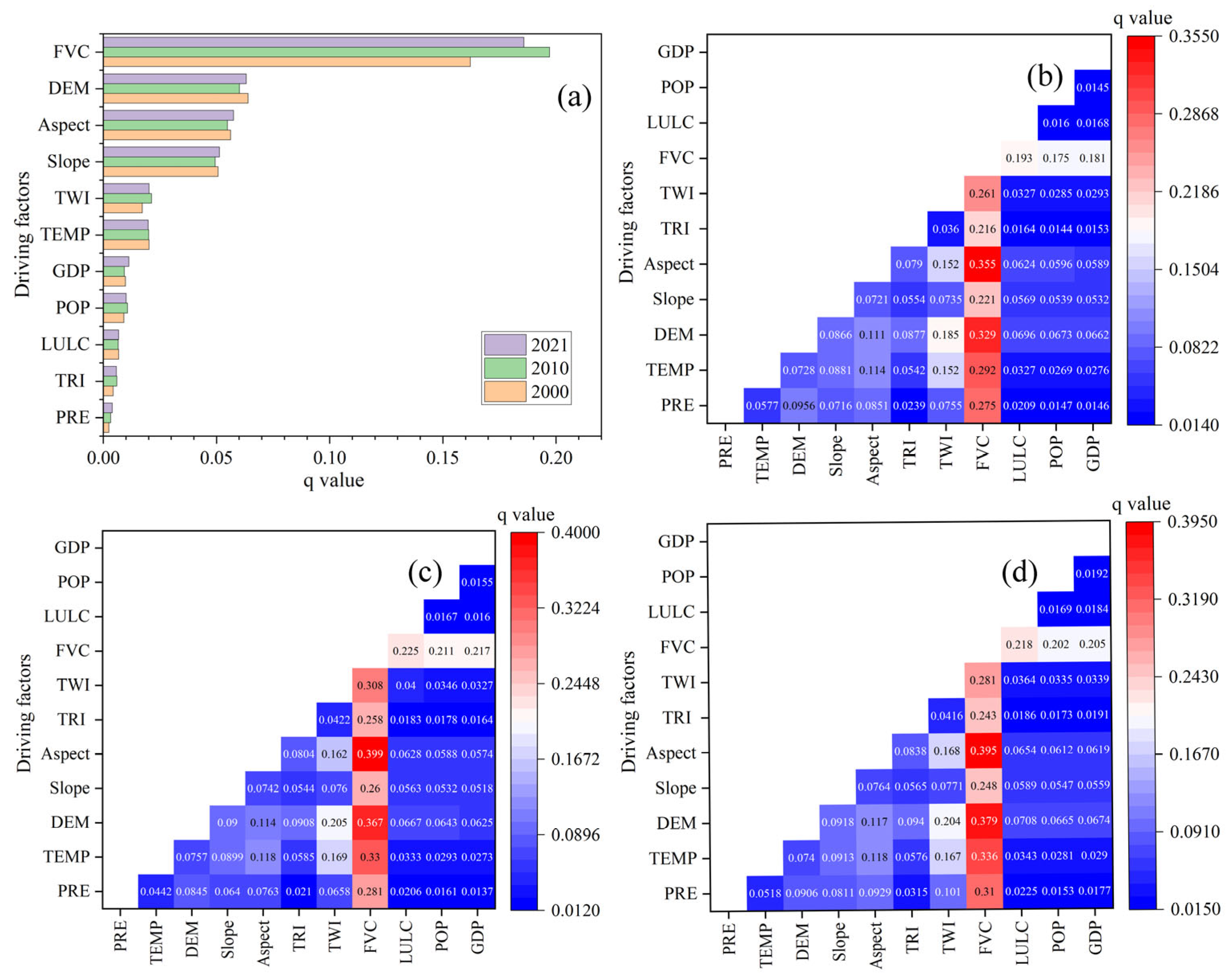
3.3.1. Attribution Strength and Interactive Effects of RSEI Drivers Based on Geodetector
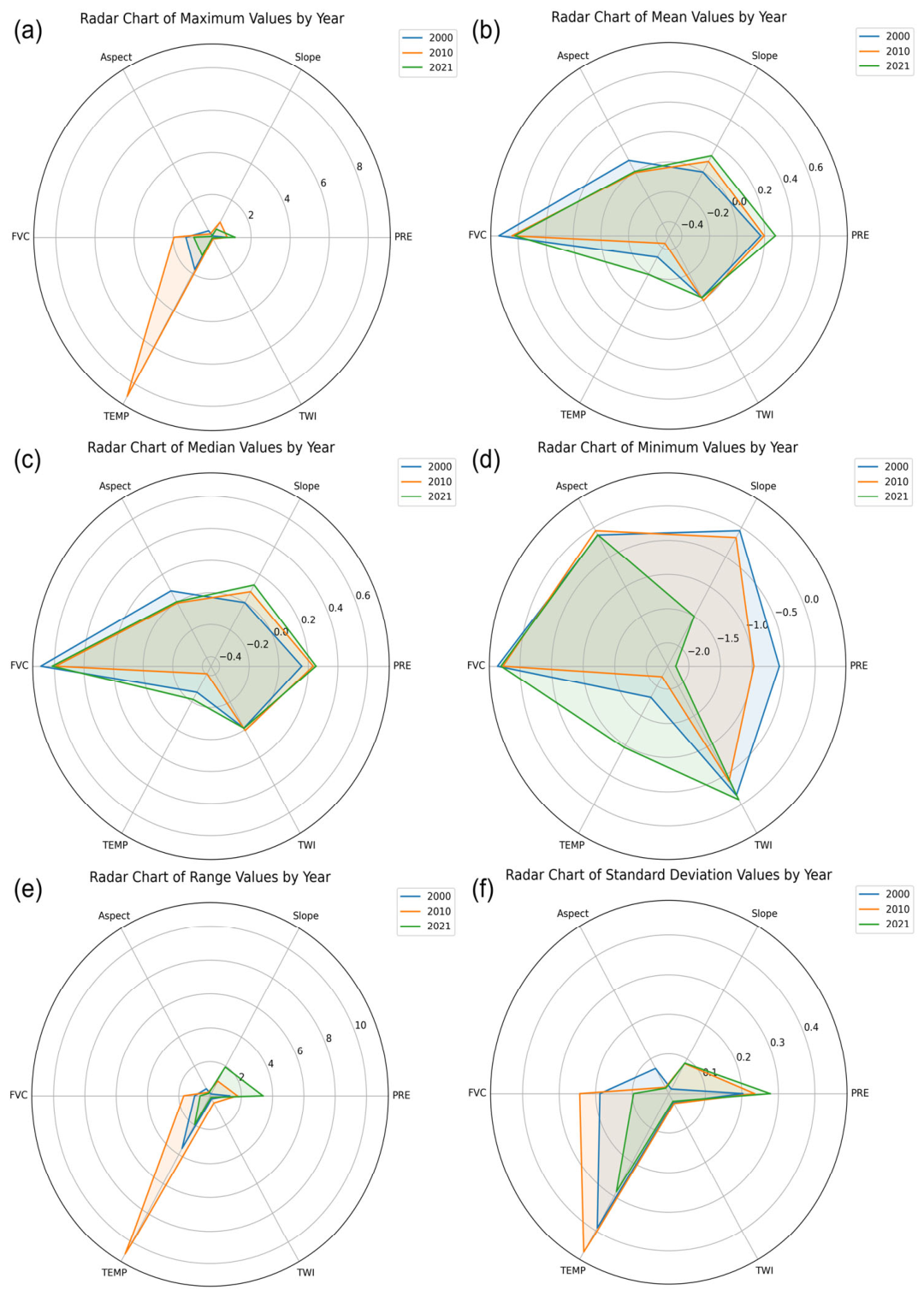
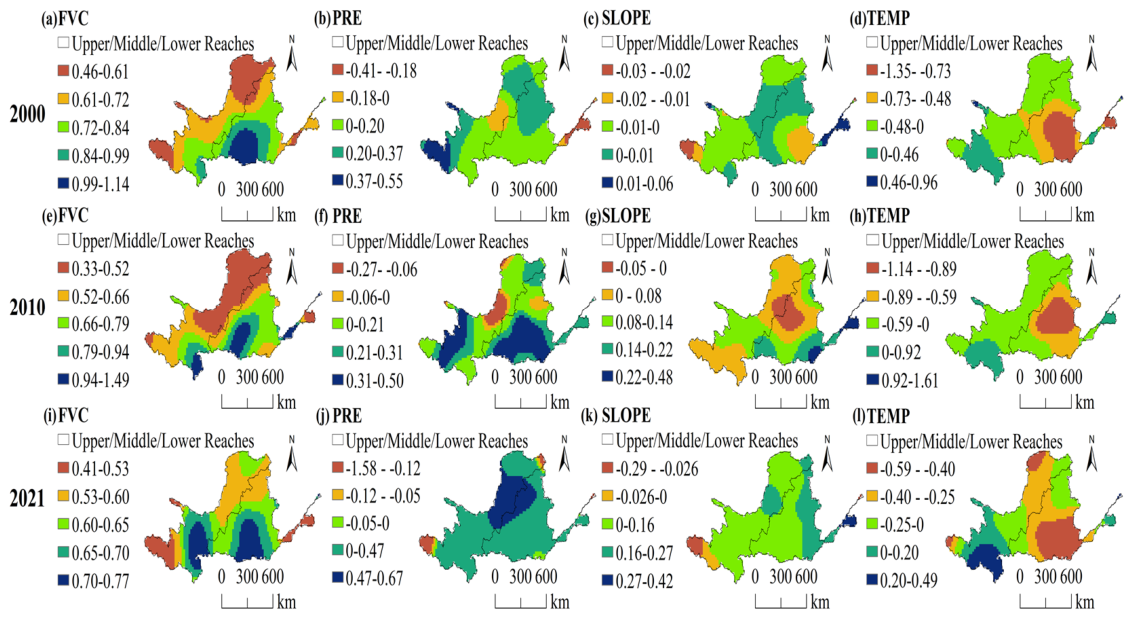
3.3.2. Spatiotemporal Heterogeneity of Key RSEI Drivers Revealed by OLS and MGWR
3.4. Policy Interventions and Spatiotemporal EEQ Hotspot and Coldspot Responses in the YRB
4. Discussion
4.1. Methodological Implications and EEQ Trajectory Detection
4.2. Comparison with Previous Studies and Implications for EEQ Assessment
4.3. Implications Beyond the YRB
4.4. Limitations and Future Research Directions
5. Conclusions
Supplementary Materials
Author Contributions
Funding
Data Availability Statement
Acknowledgments
Conflicts of Interest
References
- Nicholson, E.; Keith, D.A.; Wilcove, D.S. Assessing the Threat Status of Ecological Communities. Conserv. Biol. 2009, 23, 259–274. [Google Scholar] [CrossRef] [PubMed]
- Mackay, S.; Hales, R.; Hewson, J.; Addis, R.; Mackey, B. Addressing climate inaction as our greatest threat to sustainable development. Glob. Environ. Change 2025, 91, 102969. [Google Scholar] [CrossRef]
- Wei, W.; Zhang, Y.; Wei, X.; Xie, B.; Ma, Z.; Liu, C.; Yu, L.; Zhou, J.; Shi, W.; Liu, T.; et al. Construction and optimization of ecological security patterns based on ecosystem service function and ecosystem sensitivity in the important ecological functional area—A case study in the Yellow River Basin. Ecol. Eng. 2025, 215, 107609. [Google Scholar] [CrossRef]
- Zhao, L.; Chen, M.-n.; Yang, C.-h.; Zhang, R.-z.; Zhang, Q.-p.; Wang, Q. Characteristics of spatial and temporal carbon emissions from different land uses in Shanxi section of the Yellow River, China. Environ. Dev. Sustain. 2024, 26, 20869–20884. [Google Scholar] [CrossRef]
- Wohlfart, C.; Kuenzer, C.; Chen, C.; Liu, G. Social–ecological challenges in the Yellow River basin (China): A review. Environ. Earth Sci. 2016, 75, 1066. [Google Scholar] [CrossRef]
- Xu, H.; Wang, Y.; Guan, H.; Shi, T.; Hu, X. Detecting Ecological Changes with a Remote Sensing Based Ecological Index (RSEI) Produced Time Series and Change Vector Analysis. Remote Sens. 2019, 11, 2345. [Google Scholar] [CrossRef]
- Yang, Z.; Tian, J.; Su, W.; Wu, J.; Liu, J.; Liu, W.; Guo, R. Analysis of ecological environmental quality change in the Yellow River Basin using the remote-sensing-based ecological index. Sustainability 2022, 14, 10726. [Google Scholar] [CrossRef]
- Chen, F.; Huang, H.; Yang, G.; Li, X. Research on the dynamic change of the ecological environment and its influencing factors in the Yellow River basin based on Remote Sensing Ecological Index. J. Desert Res. 2023, 43, 252–262. [Google Scholar]
- Xu, Y.; Yang, X.; Xing, X.; Wei, L. Coupling eco-environmental quality and ecosystem services to delineate priority ecological reserves—A case study in the Yellow River Basin. J. Environ. Manag. 2024, 365, 121645. [Google Scholar] [CrossRef] [PubMed]
- Wang, F.; Li, W.-H.; Lin, Y.-M.; Nan, X.-X.; Hu, Z.-R. Spatiotemporal pattern and driving force analysis of ecological environmental quality in typical ecological areas of the Yellow River Basin from 1990 to 2020. Huan Jing Ke Xue = Huanjing Kexue 2023, 44, 2518–2527. [Google Scholar] [PubMed]
- Liu, J.; Hu, Y.; Feng, Z.; Xiao, C. A Review of Land Use and Land Cover in Mainland Southeast Asia over Three Decades (1990–2023). Land 2025, 14, 828. [Google Scholar] [CrossRef]
- Liu, X.; Ruibo, C.; Lijuan, H.; Rundong, L.; Shuhong, M.; Chanling, P.; Jiaxing, C.; Zhou, G. Ecological quality assessment of large-scale regions using RSEI improved with YTT temperature rectification. Int. J. Remote Sens. 2025, 46, 4274–4294. [Google Scholar] [CrossRef]
- Zhen, B.; Dang, G.; Zhu, L. Spatio-temporal changes and driving forces of ecological environment quality in northern China from 2000 to 2022. J. Geogr. Sci. 2025, 35, 763–782. [Google Scholar] [CrossRef]
- Boori, M.S.; Choudhary, K.; Paringer, R.; Kupriyanov, A. Spatiotemporal ecological vulnerability analysis with statistical correlation based on satellite remote sensing in Samara, Russia. J. Environ. Manag. 2021, 285, 112138. [Google Scholar] [CrossRef] [PubMed]
- Hägerstrand, T. What about people in regional science. Pap. Reg. Sci. 1970, 24, 7–21. [Google Scholar] [CrossRef]
- Ogungbire, A.; Pulugurtha, S.S. Spatiotemporal Risk Mapping of Statewide Weather-related Traffic Crashes: A Machine Learning Approach. Mach. Learn. Appl. 2025, 20, 100642. [Google Scholar] [CrossRef]
- Wei, J.; Zhong, Y.; Chen, A.; Tang, H.; Li, D. Space-time cube reveals escalating light pollution in China’s national parks: Impact of boundary geometry and human activities (1992–2021). Environ. Pollut. 2025, 377, 126462. [Google Scholar] [CrossRef] [PubMed]
- Cao, Z.; Wu, M.; Wang, D.; Wan, B.; Jiang, H.; Tan, X.; Zhang, Q. Space-time cube uncovers spatiotemporal patterns of basin ecological quality and their relationship with water eutrophication. Sci. Total Environ. 2024, 916, 170195. [Google Scholar] [CrossRef] [PubMed]
- Feng, Y.; Huang, D.; Hong, X.; Wang, H.; Loughney, S.; Wang, J. Spatial-Temporal Evolution of Maritime Accident Hot Spots in the East China Sea: A Space-Time Cube Representation. J. Mar. Sci. Eng. 2025, 13, 233. [Google Scholar] [CrossRef]
- Kovacs-Györi, A.; Lahnsteiner, D.; Schmitt, J.; Prinz, T. Spatiotemporal clustering based on international tourists’ overnight stay data in Salzburg, Austria: A seasonal analysis using space-time data cubes to enhance airport connectivity. Tour. Recreat. Res. 2025, 50, 1806–1825. [Google Scholar] [CrossRef]
- Wang, Z.; Yu, Y.; Cheng, Y.; Liu, D.; Cheng, Y.; Pereira, P. Land use and RSEI spatial-temporal changes in Horqin Sandland (Inner Mongolia, China). Ecol. Front. 2025, 45, 849–861. [Google Scholar] [CrossRef]
- Kamara, D.M.; Yang, Z.; Lahai, Y.A. Ecological Geospatial Monitoring and Assessment of Surface Water Environment Using Remote Sensing Ecological Index Model (RSEI) in Freetown, Sierra Leone, from 2010 to 2018. GSJ 2020, 8, 328–348. [Google Scholar]
- Karbalaei Saleh, S.; Amoushahi, S.; Gholipour, M. Spatiotemporal ecological quality assessment of metropolitan cities: A case study of central Iran. Environ. Monit. Assess. 2021, 193, 305. [Google Scholar] [CrossRef] [PubMed]
- Zhou, M.; Li, Z.; Gao, M.; Zhu, W.; Zhang, S.; Ma, J.; Ta, L.; Yang, G. Revealing the Eco-Environmental Quality of the Yellow River Basin: Trends and Drivers. Remote Sens. 2024, 16, 2018. [Google Scholar] [CrossRef]
- Wang, P.; Cheng, J.; Ma, S.; Yang, J.; Sun, H.; Zhao, J. Divergent Greenness and Productivity Recovery Potentials Across China’s Eight Forestry Engineering Regions During 2001–2025. Forests 2026, 17, 813. [Google Scholar] [CrossRef]
- Radeloff, V.C.; Dubinin, M.; Coops, N.C.; Allen, A.M.; Brooks, T.M.; Clayton, M.K.; Costa, G.C.; Graham, C.H.; Helmers, D.P.; Ives, A.R. The Dynamic Habitat Indices (DHIs) from MODIS and global biodiversity. Remote Sens. Environ. 2019, 222, 204–214. [Google Scholar] [CrossRef]
- Safaei, M.; Kleinebecker, T.; Weis, M.; Große-Stoltenberg, A. Tracking effects of extreme drought on coniferous forests from space using dynamic habitat indices. Heliyon 2024, 10, e27864. [Google Scholar] [CrossRef] [PubMed]
- Haque, M.R.; Moniruzzaman, M.; Arman; Hasan, M.R.; Lat, T.; Kabir, N.; Sarker, M.J.; Tijing, L.; Shon, H.K.; Ayejoto, D.A.; et al. Land use Transition and Ecological Consequences: A Spatiotemporal Analysis in South-Eastern Bangladesh. Earth Syst. Environ. 2025, 9, 1135–1148. [Google Scholar] [CrossRef]
- Wang, J.; Xu, C. Geodetector: Principle and prospective. Acta Geogr. Sin. 2017, 72, 116–134. [Google Scholar] [CrossRef]
- He, Z.; Guo, Q.; Yin, Z.; Luo, X.; Sun, M. Evolution and driving mechanisms of eco-environmental quality across different urbanization stages. Sci. Rep. 2025, 15, 22101. [Google Scholar] [CrossRef] [PubMed]
- Chen, A.; Yang, X.; Guo, J.; Zhang, M.; Xing, X.; Yang, D.; Xu, B.; Jiang, L. Dynamic of land use, landscape, and their impact on ecological quality in the northern sand-prevention belt of China. J. Environ. Manag. 2022, 317, 115351. [Google Scholar] [CrossRef] [PubMed]
- Xia, J.; Zhang, G.; Ma, S.; Pan, Y. Spatial Heterogeneity of Driving Factors in Multi-Vegetation Indices RSEI Based on the XGBoost-SHAP Model: A Case Study of the Jinsha River Basin, Yunnan. Land 2025, 14, 925. [Google Scholar] [CrossRef]
- Wu, N.; Zhou, Y.; Yin, S.; Gong, H.; Zhang, C. Revealing the nonlinear impact of environmental regulation on ecological resilience using the XGBoost-SHAP model: Evidence from the Yangtze River Delta region, China. J. Clean. Prod. 2025, 514, 145700. [Google Scholar] [CrossRef]
- Guo, Q.; He, Z.; Wang, Z. Prediction of monthly average and extreme atmospheric temperatures in Zhengzhou based on artificial neural network and deep learning models. Front. For. Glob. Change 2023, 6, 1249300. [Google Scholar] [CrossRef]
- Guo, Q.; He, Z.; Wang, Z. The Characteristics of Air Quality Changes in Hohhot City in China and their Relationship with Meteorological and Socio-economic Factors. Aerosol Air Qual. Res. 2024, 24, 230274. [Google Scholar] [CrossRef]
- Liu, W.; Cheng, Z.; Li, J.; Li, G.; Pan, N. Assessment of ecological asset quality and its drivers in Agro-pastoral Ecotone of China. Ecol. Indic. 2025, 170, 113072. [Google Scholar] [CrossRef]
- Zeng, J.; Luo, T.; Gu, T.; Chen, W. How does cultivated land fragmentation affect soil erosion: Evidence from the Yangtze River Basin in China. J. Environ. Manag. 2024, 360, 121020. [Google Scholar] [CrossRef] [PubMed]
- Li, J.; Sun, W.; Li, M.; Linlin, M. Coupling coordination degree of production, living and ecological spaces and its influencing factors in the Yellow River Basin. J. Clean. Prod. 2021, 298, 126803. [Google Scholar] [CrossRef]
- Yang, H.; Yu, J.; Xu, W.; Wu, Y.; Lei, X.; Ye, J.; Geng, J.; Ding, Z. Long-time series ecological environment quality monitoring and cause analysis in the Dianchi Lake Basin, China. Ecol. Indic. 2023, 148, 110084. [Google Scholar] [CrossRef]
- Feng, X.; Fu, B.; Piao, S.; Wang, S.; Ciais, P.; Zeng, Z.; Lü, Y.; Zeng, Y.; Li, Y.; Jiang, X.; et al. Revegetation in China’s Loess Plateau is approaching sustainable water resource limits. Nat. Clim. Change 2016, 6, 1019–1022. [Google Scholar] [CrossRef]
- Li, W.; Wang, W.; Chen, J.; Zhang, Z. Assessing effects of the Returning Farmland to Forest Program on vegetation cover changes at multiple spatial scales: The case of northwest Yunnan, China. J. Environ. Manag. 2022, 304, 114303. [Google Scholar] [CrossRef] [PubMed]
- Yang, F.; He, F.; Wang, Y.; Zhou, S.; Dong, G. Reconstructing forest cover changes for the middle and lower reaches of the Yellow River over the past millennium. Reg. Environ. Change 2024, 24, 18. [Google Scholar] [CrossRef]
- Du, L.; Dong, C.; Kang, X.; Qian, X.; Gu, L. Spatiotemporal evolution of land cover changes and landscape ecological risk assessment in the Yellow River Basin, 2015–2020. J. Environ. Manag. 2023, 332, 117149. [Google Scholar] [CrossRef] [PubMed]
- Cheng, C.; Wang, Y. Spatiotemporal Changes and the Drivers of Ecological Environmental Quality Based on the Remote Sensing Ecological Index: A Case Study of Shanxi Province, China. Land 2025, 14, 952. [Google Scholar] [CrossRef]
- Shao, Q.; Liu, S.; Ning, J.; Liu, G.; Yang, F.; Zhang, X.; Niu, L.; Huang, H.; Fan, J.; Liu, J. Assessment of ecological benefits of key national ecological projects in China in 2000-2019 using remote sensing. Acta Geogr. Sin. 2022, 77, 2133–2153. [Google Scholar] [CrossRef]
- Xu, H. A remote sensing index for assessment of regional ecological changes. China Environ. Sci. 2013, 33, 889–897. [Google Scholar]
- Moran, P.A. Notes on continuous stochastic phenomena. Biometrika 1950, 37, 17–23. [Google Scholar] [CrossRef]
- Wooldridge, J.M. Econometric Analysis of Cross Section and Panel Data; MIT Press: Cambridge, MA, USA, 2010. [Google Scholar]
- Wang, J.-F.; Zhang, T.-L.; Fu, B.-J. A measure of spatial stratified heterogeneity. Ecol. Indic. 2016, 67, 250–256. [Google Scholar] [CrossRef]
- Fotheringham, A.S.; Yang, W.; Kang, W. Multiscale geographically weighted regression (MGWR). Ann. Am. Assoc. Geogr. 2017, 107, 1247–1265. [Google Scholar] [CrossRef]
- Getis, A.; Ord, J.K. The Analysis of Spatial Association by Use of Distance Statistics. Geogr. Anal. 1992, 24, 189–206. [Google Scholar] [CrossRef]
- LaDue, C.A.; Farinelli, S.M.; Eranda, I.; Jayasinghe, C.; Vandercone, R.P. The influence of habitat changes on elephant mortality associated with human–elephant conflict: Identifying areas of concern in the north central dry zone of Sri Lanka. Sustainability 2021, 13, 13707. [Google Scholar] [CrossRef]
- Jin, A.; Li, H.; Wang, X.; Wang, Z. Spatiotemporal assessment of ecological quality and driving mechanisms in the Beijing metropolitan area. Sci. Rep. 2025, 15, 13136. [Google Scholar] [CrossRef] [PubMed]
- Li, X.; Jiang, L.; Meng, F.; Wang, S.; Niu, H.; Iler, A.M.; Duan, J.; Zhang, Z.; Luo, C.; Cui, S.; et al. Responses of sequential and hierarchical phenological events to warming and cooling in alpine meadows. Nat. Commun. 2016, 7, 12489. [Google Scholar] [CrossRef] [PubMed]
- Guo, L.; Chen, J.; Luedeling, E.; He, J.-S.; Cheng, J.; Wen, Z.; Peng, C. Early-spring soil warming partially offsets the enhancement of alpine grassland aboveground productivity induced by warmer growing seasons on the Qinghai-Tibetan Plateau. Plant Soil 2018, 425, 177–188. [Google Scholar] [CrossRef]
- Yang, J.; Huang, X. The 30 m annual land cover dataset and its dynamics in China from 1990 to 2019. Earth Syst. Sci. Data 2021, 13, 3907–3925. [Google Scholar] [CrossRef]
- Cao, M.; Wang, W.; Wei, J.; Forzieri, G.; Fetzer, I.; Wang-Erlandsson, L. Revegetation impacts on moisture recycling and precipitation trends in the Chinese Loess Plateau. Water Resour. Res. 2024, 60, e2024WR038199. [Google Scholar] [CrossRef]
- Chen, Y.; Wang, K.; Lin, Y.; Shi, W.; Song, Y.; He, X. Balancing green and grain trade. Nat. Geosci. 2015, 8, 739–741. [Google Scholar] [CrossRef]
- Yibin, W.; Fei, L.; Jian, W.; Hongyu, C.; Mengfei, L. The social-ecological benefits of grain for green program based on coupled coordination network: Taking the China’s Loess Plateau as an example. Land Use Policy 2024, 143, 107211. [Google Scholar] [CrossRef]
- Yang, X.; Meng, F.; Fu, P.; Wang, Y.; Liu, Y. Time-frequency optimization of RSEI: A case study of Yangtze River Basin. Ecol. Indic. 2022, 141, 109080. [Google Scholar] [CrossRef]
- He, Y.; Ye, B.; He, J.; Wang, H.; Zhou, W. Long Time-Series Monitoring and Drivers of Eco-Quality in the Upper-Middle Fen River Basin of the Eastern Loess Plateau: An Analysis Based on a Remote Sensing Ecological Index and Google Earth Engine. Land 2024, 13, 2239. [Google Scholar] [CrossRef]
- Wu, T.; Zhou, L.; Jiang, G.; Meadows, M.E.; Zhang, J.; Pu, L.; Wu, C.; Xie, X. Modelling Spatial Heterogeneity in the Effects of Natural and Socioeconomic Factors, and Their Interactions, on Atmospheric PM2.5 Concentrations in China from 2000–2015. Remote Sens. 2021, 13, 2152. [Google Scholar] [CrossRef]
- Wang, X.; Shi, S.; Zhao, X.; Hu, Z.; Hou, M.; Xu, L. Detecting Spatially Non-Stationary between Vegetation and Related Factors in the Yellow River Basin from 1986 to 2021 Using Multiscale Geographically Weighted Regression Based on Landsat. Remote Sens. 2022, 14, 6276. [Google Scholar] [CrossRef]
- Li, X.; Yu, K.; Xu, G.; Li, P.; Li, Z.; Shi, P.; Jia, L. Exploring ecosystem service dynamics and drivers in the upper and middle Yellow River Basin under large-scale ecological restoration. Ecol. Eng. 2025, 217, 107643. [Google Scholar] [CrossRef]
- Bai, R.; Wang, X.; Li, J.; Yang, F.; Shangguan, Z.; Deng, L. The impact of vegetation reconstruction on soil erosion in the Loess plateau. J. Environ. Manag. 2024, 363, 121382. [Google Scholar] [CrossRef] [PubMed]
- Yu, G.; Liu, T.; Wang, Q.; Li, T.; Li, X.; Song, G.; Feng, Y. Impact of land use/land cover change on ecological quality during urbanization in the lower Yellow River Basin: A case study of Jinan City. Remote Sens. 2022, 14, 6273. [Google Scholar] [CrossRef]
- Ya-shan, S.; Chong, D.; Chao, Y.; Chao, Q. Ecological Environmental Quality Evaluation of Yellow River Basin. Procedia Eng. 2012, 28, 754–758. [Google Scholar] [CrossRef][Green Version]
- Yin, D.; Li, X.; Li, G.; Zhang, J.; Yu, H. Spatio-Temporal Evolution of Land Use Transition and Its Eco-Environmental Effects: A Case Study of the Yellow River Basin, China. Land 2020, 9, 514. [Google Scholar] [CrossRef]
- Li, T.; Zhang, Q.; Singh, V.P.; Zhao, J.; Song, J.; Sun, S.; Wang, G.; Shen, Z.; Wu, W. Identification of Degradation Areas of Ecological Environment and Degradation Intensity Assessment in the Yellow River Basin. Front. Earth Sci. 2022, 10, 922013. [Google Scholar] [CrossRef]
- Tian, Y.; Wen, Z.; Zhang, X.; Cheng, M.; Xu, M. Exploring a multisource-data framework for assessing ecological environment conditions in the Yellow River Basin, China. Sci. Total Environ. 2022, 848, 157730. [Google Scholar] [CrossRef] [PubMed]
- Hobi, M.L.; Dubinin, M.; Graham, C.H.; Coops, N.C.; Clayton, M.K.; Pidgeon, A.M.; Radeloff, V.C. A comparison of Dynamic Habitat Indices derived from different MODIS products as predictors of avian species richness. Remote Sens. Environ. 2017, 195, 142–152. [Google Scholar] [CrossRef]
- Song, K.; Knighton, J.; Qiu, S.; Yang, X.; Suh, J.W.; Tavares, J.V.; Liu, Y.; Tai, X.; Fahey, R.; Neigh, C.S.R.; et al. Physiological fidelity of a satellite-derived forest resilience indicator in the Amazon. Nat. Ecol. Evol. 2026. [Google Scholar] [CrossRef] [PubMed]
- Hu, X.; Feng, H.; Tang, Y.; Wang, S.; Wang, S.; Wang, W.; Huang, J. Detection of the contribution of vegetation change to global net primary productivity: A satellite perspective. Remote Sens. 2024, 16, 4692. [Google Scholar] [CrossRef]
- Gatti, L.V.; Basso, L.S.; Miller, J.B.; Gloor, M.; Gatti Domingues, L.; Cassol, H.L.G.; Tejada, G.; Aragão, L.E.O.C.; Nobre, C.; Peters, W.; et al. Amazonia as a carbon source linked to deforestation and climate change. Nature 2021, 595, 388–393. [Google Scholar] [CrossRef] [PubMed]
- Kummu, M.; Varis, O. Sediment-related impacts due to upstream reservoir trapping, the Lower Mekong River. Geomorphology 2007, 85, 275–293. [Google Scholar] [CrossRef]
- Li, G.; Zhang, N.; Cao, Y.; Xia, Z.; Bao, C.; Fan, L.; Xue, S. Analysis of the temporal and spatial changes of ecological environment quality using the optimization remote sensing ecological index in the middle Yellow River Basin, China. Earth Sci. Inform. 2024, 17, 5107–5122. [Google Scholar] [CrossRef]
- Ge, L.; Mei, X.; Ping, J.; Liu, E.; Xie, J.; Feng, J. Identification of suitable vegetation restoration areas and carrying capacity thresholds on the Loess Plateau. J. Environ. Manag. 2025, 373, 123660. [Google Scholar] [CrossRef] [PubMed]
- Yin, C.; Zhao, W.; Pereira, P. Ecosystem restoration along the “pattern-process-service-sustainability” path for achieving land degradation neutrality. Landsc. Urban Plan. 2025, 253, 105227. [Google Scholar] [CrossRef]





| Data Type | Resolution | Source and Website |
|---|---|---|
| MODO9A1 | 500 m | GEE (https://developers.google.cn/earth-engine, accessed on 28 July 2026) |
| MOD11A2 | 1000 m | GEE (https://developers.google.cn/earth-engine, accessed on 28 July 2026) |
| MOD13A1 | 500 m | GEE (https://developers.google.cn/earth-engine, accessed on 28 July 2026) |
| DEM | 30 m | Geospatial Data Cloud (https://www.gscloud.cn/) |
| PRE | 1000 m | China Meteorological Data Services and Data Center (http://data.cma.cn/data/, accessed on 28 July 2026) |
| TEMP | ||
| GDP and POP | 1000 m | Resource and Environmental Science Data Platform (https://www.resdc.cn/findpwd.aspx, accessed on 28 July 2026) |
| FVC | 500 m | National Earth System Science Data Center (https://gre.geodata.cn/) |
| LULC | 30 m | Land use data were obtained from the China Land Cover Dataset (CLCD) |
| Method | Purpose | Main Formulation | Reference |
|---|---|---|---|
| RSEI | Quantification of EEQ | PCA-based integration of NDVI, WET, NDBSI and LST | Xu (2013) [46]; Xu et al. (2019) [6] |
| Moran’s I | Spatial autocorrelation assessment | Global spatial clustering measurement | Moran (1950) [47] |
| EHSA | Hotspot/coldspot trajectory identification | Space-time cube based classification | Getis. et al. [51,52] |
| GD | Driver detection and interaction analysis | q-statistic | Wang et al. (2016) [49] |
| OLS | Global regression relationship | Linear regression model | Wooldridge. et al. (2010) [48] |
| MGWR | Spatially heterogeneous relationships | Multiscale regression framework | Fotheringham et al. (2017) [50] |
| Coldspot and Hotspot Type | Upper Reaches | Middle Reaches | Lower Reaches | All Reaches |
|---|---|---|---|---|
| New Hotspot | 0.30 | 1.33 | 0.51 | 0.77 |
| Consecutive Hotspot | 1.23 | 4.13 | 0.58 | 2.51 |
| Intensifying Hotspot | 8.30 | 14.47 | 3.60 | 10.97 |
| Persistent Hotspot | 11.34 | 5.07 | 1.72 | 8.23 |
| Diminishing Hotspot | 0.13 | 0.02 | 0.35 | 0.09 |
| Sporadic Hotspot | 12.27 | 12.64 | 19.58 | 12.70 |
| Oscillating Hotspot | 2.66 | 22.63 | 6.34 | 11.75 |
| Historical Hotspot | 0.002 | 0.01 | 0.15 | 0.09 |
| New Coldspot | 0.002 | 0.002 | 0.01 | 0.002 |
| Consecutive Coldspot | 0.022 | 0.03 | 0.01 | 0.02 |
| Intensifying Coldspot | 0.10 | 0.01 | 0.11 | 0.06 |
| Persistent Coldspot | 14.12 | 0.260 | 0.901 | 7.52 |
| Diminishing Coldspot | 18.03 | 8.15 | 0.02 | 12.97 |
| Sporadic Coldspot | 2.56 | 1.50 | 2.16 | 2.05 |
| Oscillating Coldspot | 0.02 | 0.22 | 0.59 | 0.13 |
| Historical Coldspot | 1.01 | 0.49 | 0.023 | 0.74 |
| No Pattern Detected | 27.91 | 29.05 | 63.36 | 29.48 |
| Subcategory | Original EHSA Types Included | Ecological Interpretation |
|---|---|---|
|
| Long-term, stable improvement in ecological conditions |
|
| Newly appeared or intensifying hotspots indicate recent ecological improvement |
|
| Hotspots are weakening or disappearing, suggesting declining improvement or reversal |
| Intermittent or unstable hotspots, trend direction is uncertain | |
|
| Long-term, consistent degradation of ecological conditions |
|
| Newly emerging or strengthening coldspots indicate worsening ecological conditions |
|
| Coldspots are weakening, possibly indicating recovery potential |
| Unstable or intermittent coldspots, degradation trend is uncertain | |
|
| No significant spatial or temporal pattern observed |
| Model Parameters | 2000 | 2010 | 2021 |
|---|---|---|---|
| R-Squared | 0.89 | 0.85 | 0.90 |
| Adjusted R-Squared | 0.89 | 0.85 | 0.90 |
| AICc | 5523.33 | 7699.38 | 4607.86 |
| Sigma-Squared (RSS) | 0.11 | 0.15 | 0.10 |
| Year | Low Coverage (0–45%) | Moderate Coverage (45–60%) | Moderately High Coverage (60–75%) | High Coverage (75–100%) |
|---|---|---|---|---|
| 2000 | 0.23 | 0.37 | 0.44 | 0.61 |
| 2010 | 0.30 | 0.41 | 0.47 | 0.61 |
| 2021 | 0.31 | 0.46 | 0.54 | 0.69 |
| Period | Begin Year | Policy/Project | Main Area | Core Ecological Impact | Evolution Type |
|---|---|---|---|---|---|
| The first decade (2000– 2010) | 1999 | Grain for Green I | Loess Plateau and mid-reaches | Forest and grassland restoration; | No pattern detected (27.53%) Stable coldspots (20.96%) Stable hotspot (24.20%) Emerging hotspot (17.04%) |
| 2000 | Sanjiangyuan Conservation | Upper reaches | wetland and grassland recovery; | ||
| 2003 | Check Dam Pilot | Loess Plateau | sediment reduction | ||
| 2005 | Expanded Sanjiangyuan | Upper reaches | Biodiversity increased | ||
| The second decade (2011– 2021) | 2012 | YRB Comprehensive Plan (Revised) | Basin-wide | Integrated soil–water management; | No pattern detected (31.67%) Stable coldspots (20.63%) Stable hotspot (25.89%) Emerging hotspot (14.62%) |
| 2014 | Grain for Green II | Basin-wide | forest and grassland restoration | ||
| 2020 | Poverty-Aligned Restoration | Lower reaches | Fragmentation reduction | ||
| 2023 | Yellow River Protection Law | Basin-wide | SDG governance targeted |
| Ecological Restoration Project | Project Area (km2) | Overlap Hotspot Area (km2) | Project Hotspot Ratio (%) |
|---|---|---|---|
| Sanjiangyuan Conservation Project | 117,115.92 | 54,275.88 | 46.34 |
| Grazing Withdrawal Program | 408,220.36 | 129,342.61 | 31.68 |
| Grain for Green Program | 752,832.78 | 335,532.09 | 44.57 |
Disclaimer/Publisher’s Note: The statements, opinions and data contained in all publications are solely those of the individual author(s) and contributor(s) and not of MDPI and/or the editor(s). MDPI and/or the editor(s) disclaim responsibility for any injury to people or property resulting from any ideas, methods, instructions or products referred to in the content. |
© 2026 by the authors. Licensee MDPI, Basel, Switzerland. This article is an open access article distributed under the terms and conditions of the Creative Commons Attribution (CC BY) license.
Share and Cite
He, Z.; Zhang, Z.; Wang, Z.; Li, S.; Guo, Q.; Luo, X. Spatiotemporal Evolution and Hotspot Transitions of Eco-Environmental Quality in the Yellow River Basin: Evidence from Ecological Restoration Projects. Land 2026, 15, 1379. https://doi.org/10.3390/land15081379
He Z, Zhang Z, Wang Z, Li S, Guo Q, Luo X. Spatiotemporal Evolution and Hotspot Transitions of Eco-Environmental Quality in the Yellow River Basin: Evidence from Ecological Restoration Projects. Land. 2026; 15(8):1379. https://doi.org/10.3390/land15081379
Chicago/Turabian StyleHe, Zhenfang, Zuhan Zhang, Zhaosheng Wang, Shuo Li, Qingchun Guo, and Xinping Luo. 2026. "Spatiotemporal Evolution and Hotspot Transitions of Eco-Environmental Quality in the Yellow River Basin: Evidence from Ecological Restoration Projects" Land 15, no. 8: 1379. https://doi.org/10.3390/land15081379
APA StyleHe, Z., Zhang, Z., Wang, Z., Li, S., Guo, Q., & Luo, X. (2026). Spatiotemporal Evolution and Hotspot Transitions of Eco-Environmental Quality in the Yellow River Basin: Evidence from Ecological Restoration Projects. Land, 15(8), 1379. https://doi.org/10.3390/land15081379