1. Introduction
The Yellow River Basin (YRB) in China is of paramount importance to global history, ecological stability, and economic development [
1,
2,
3]. As the cradle of Chinese civilisation, it possesses profound cultural heritage, including oracle bone inscriptions and the legend of Yanhuang, which serve as foundational pillars for national identity [
4]. Cultural tourism functions as a vital conduit for accessing the depth of this history, disseminating traditional architectural techniques, and promoting multicultural exchanges worldwide. Cultural tourism plays a multifaceted role, encompassing economic, cultural, social, and ecological functions [
5]. The fusion of cultural and tourism development promotes social and economic growth and enhances spiritual experiences through cultural creation [
6]. As China’s economy rapidly expands and primary societal demands evolve, people’s spiritual needs for cultural life and identity have become increasingly prominent [
7]. Despite its strategic status, the YRB faces a critical challenge: while possessing vast cultural resource endowments, the translation of these resources into sustainable, high-quality development pathways remains uneven and under-optimized.
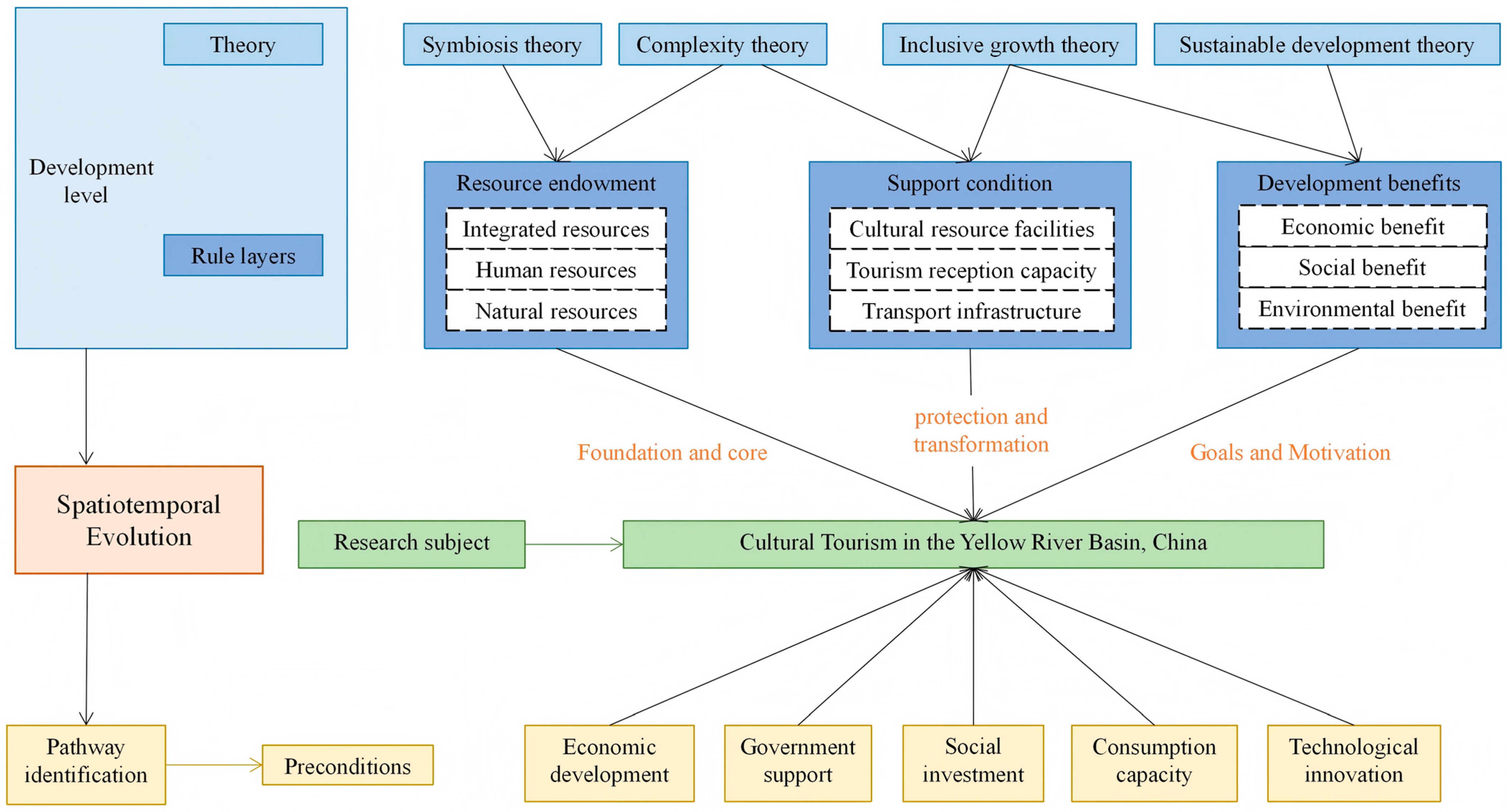
The CTD is fundamentally a complex and multi-factor process that can be theoretically grounded in Symbiosis Theory, a perspective viewing tourism as a symbiotic interaction among cultural resources, market demands, and policy environments [
8]. Historically, tourism research has predominantly relied on linear econometric models, which treat influencing factors as independent variables [
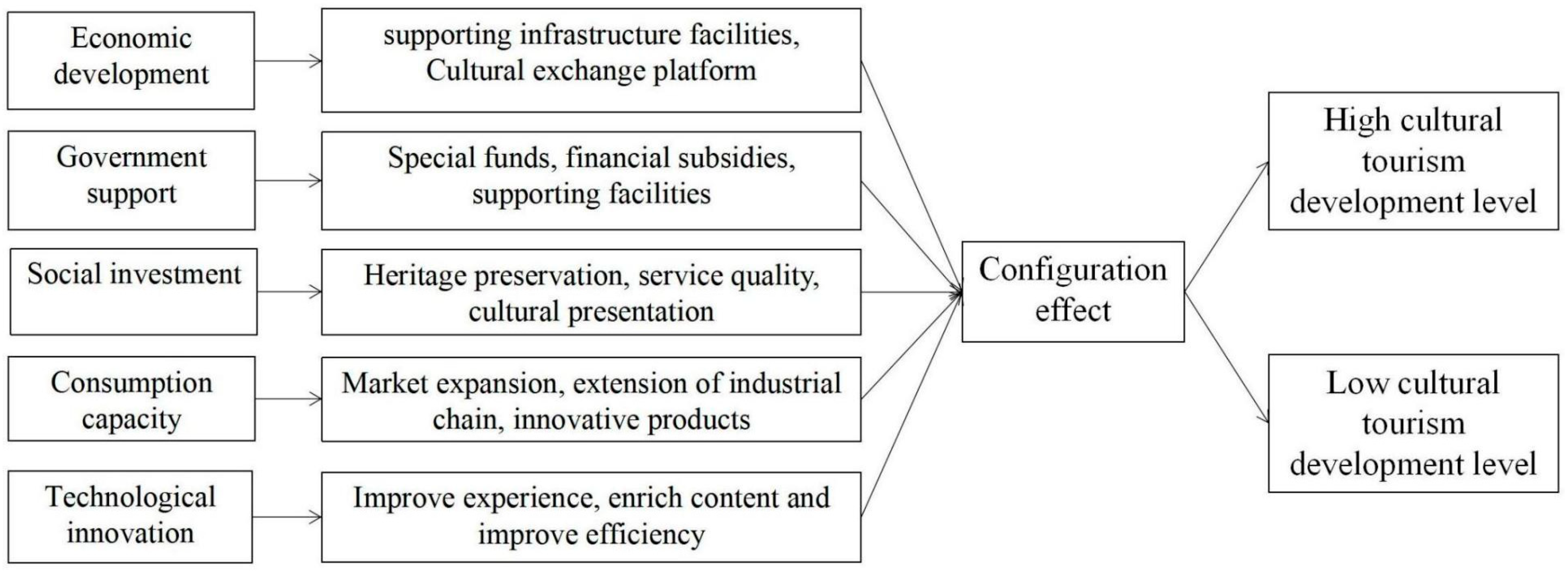
9]. However, a persistent limitation in the current literature is that these models often fail to capture configuration effects, a concept derived from Complexity Theory, whereby multiple factors such as economic base, policy support, and innovation interact in non-linear and interdependent ways to produce varying outcomes [
10]. Consequently, existing studies often focus on isolated factors rather than the holistic paths to success [
11].
CTD stems from the evolving relationship between culture and tourism, rooted in the 16th century’s Grand Tour [
12], where cultural experiences were the primary tourism purpose. Since the 20th century, culture and tourism have become increasingly interdependent [
13]. Cultural tourism was first defined by Robert Macintosh as activities in which tourists learn about others’ historical heritage, lives, and ideas. With the increasing proximity of culture to daily life, culture’s connotations continue to expand. In 2003, UNESCO extended heritage concept from tangible to intangible [
14]. In 2017, the World Tourism Organisation defined cultural tourism as tourism activities for which tourists are motivated by a certain essence [
15]. Most 21st-century research on cultural tourism has concentrated on tourism’s impact on social culture [
16,
17].
The association between Chinese culture and tourism has undergone various stages. Guiding Opinions on Promoting the Combined Development of Culture and Tourism, jointly issued by the former Ministry of Culture and the National Tourism Administration (NTA) in 2009, emphasized the combination of culture and tourism. The Ministry of Culture and Tourism in China, founded in 2018, significantly advanced the combined growth of cultural projects, the cultural sector, and the tourism sector. In 2021, the Ministry of Culture and Tourism released the 14th Five-Year Plan for Culture and Tourism Development, along with other documents, to enhance culture and tourism through resources, products, industries, markets, and government services. In 2022, the 20th National Congress of the Communist Party of China emphasised the deep integration and development of culture and tourism. The 2019 national strategy proposal for the YRB’s ecological protection and high-quality development produced major strategic opportunities and a conducive policy environment for CTD in the YRB.
Despite these policy frameworks, a gap persists: how do we quantitatively assess and identify the specific developmental recipes for different cities in this complex basin? Addressing this gap is a prerequisite for the effective establishment of the Yellow River National Cultural Park and the creation of an internationally influential cultural tourism belt.
A scientific and systematic evaluation of the YRB’s cultural tourism level should precede any promotion or establishment of a Yellow River National Cultural Park or Yellow River cultural tourism belt with international influence. The extant literature assessing CTD has concentrated on the integration and alignment of the cultural and tourism industries [
18], evaluating cultural tourism value [
19], and the integration of cultural elements and tourism [
20]. Nevertheless, few studies have assessed CTD from the perspective of co-ordinated symbiosis. Several existing studies employ econometric models based on economic principles to explore factors driving CTD [
21]. However, cultural tourism’s growth results from various factors’ combined impact, and the research approach requires refinement. To bridge these theoretical and practical gaps, this study employs a fuzzy-set Qualitative Comparative Analysis (fsQCA) to move beyond linear causality.
To provide a structured overview of the current academic landscape and identify critical limitations,
Table 1 summarizes the core focal points and inherent gaps in the existing literature.
As illustrated in
Table 1, while previous studies have contributed valuable insights, they remain fragmented. Existing research predominantly relies on econometric methods that treat influencing factors as independent variables, thereby failing to account for the complex, non-linear interactions and causal asymmetries inherent in tourism development. Furthermore, most studies overlook the necessity of examining CTD through a holistic lens that combines sustainable development with inclusive growth. Consequently, there is a critical need for research that moves beyond traditional regression-based approaches to identify the diverse, multi-faceted pathways through which CTD evolves. This study addresses this gap by utilizing fsQCA to unravel the complex configurations of conditions that drive CTD in the YRB.
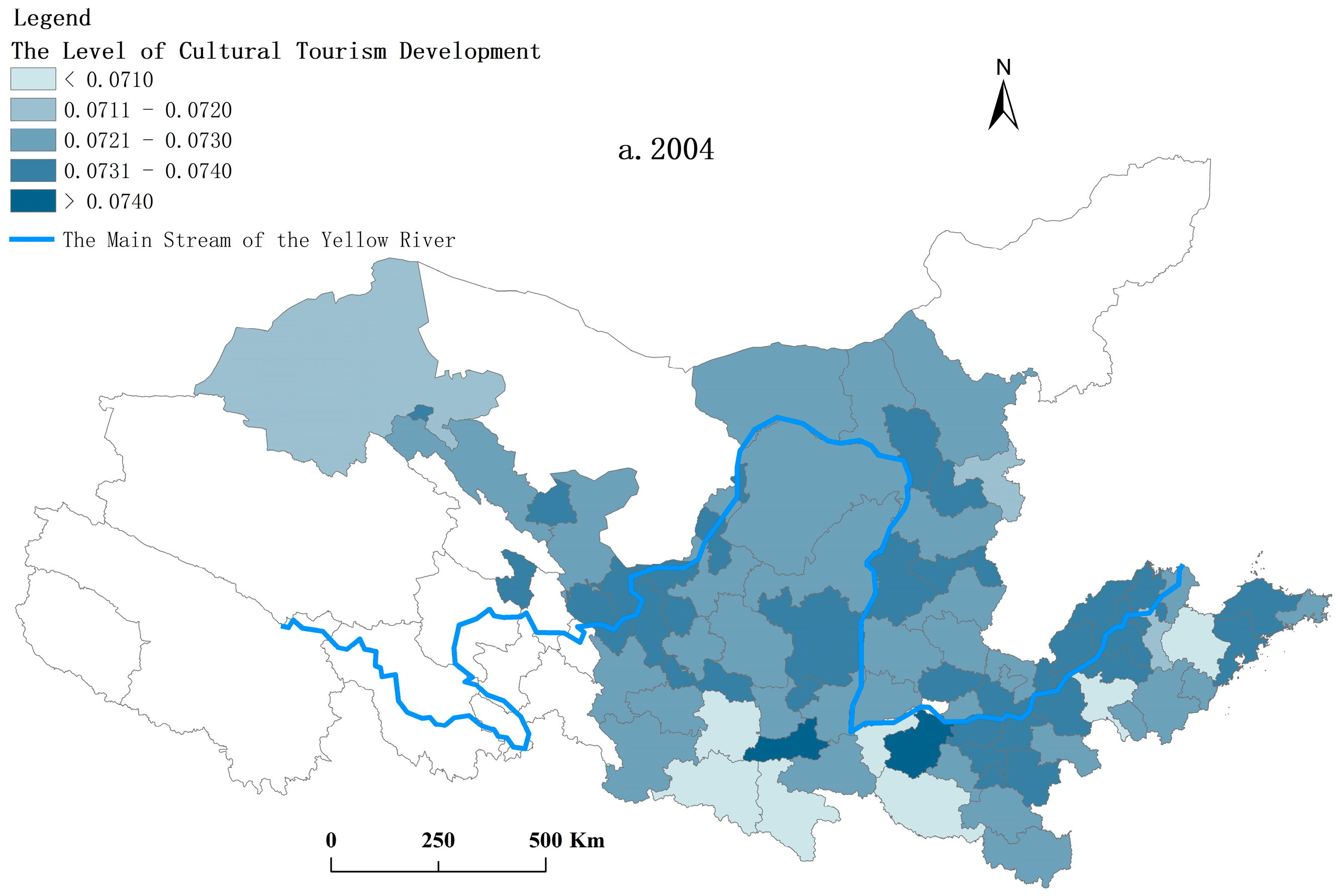
Motivated by these identified gaps, this study proposes the following research questions: (1) How can the level of CTD be rigorously assessed at the prefecture-level city scale in the YRB in China? (2) What are the spatiotemporal characteristics of CTD in the YRB from 2004 to 2019? (3) What are the configuration paths that lead to high or low levels of CTD across different regions in the YRB?
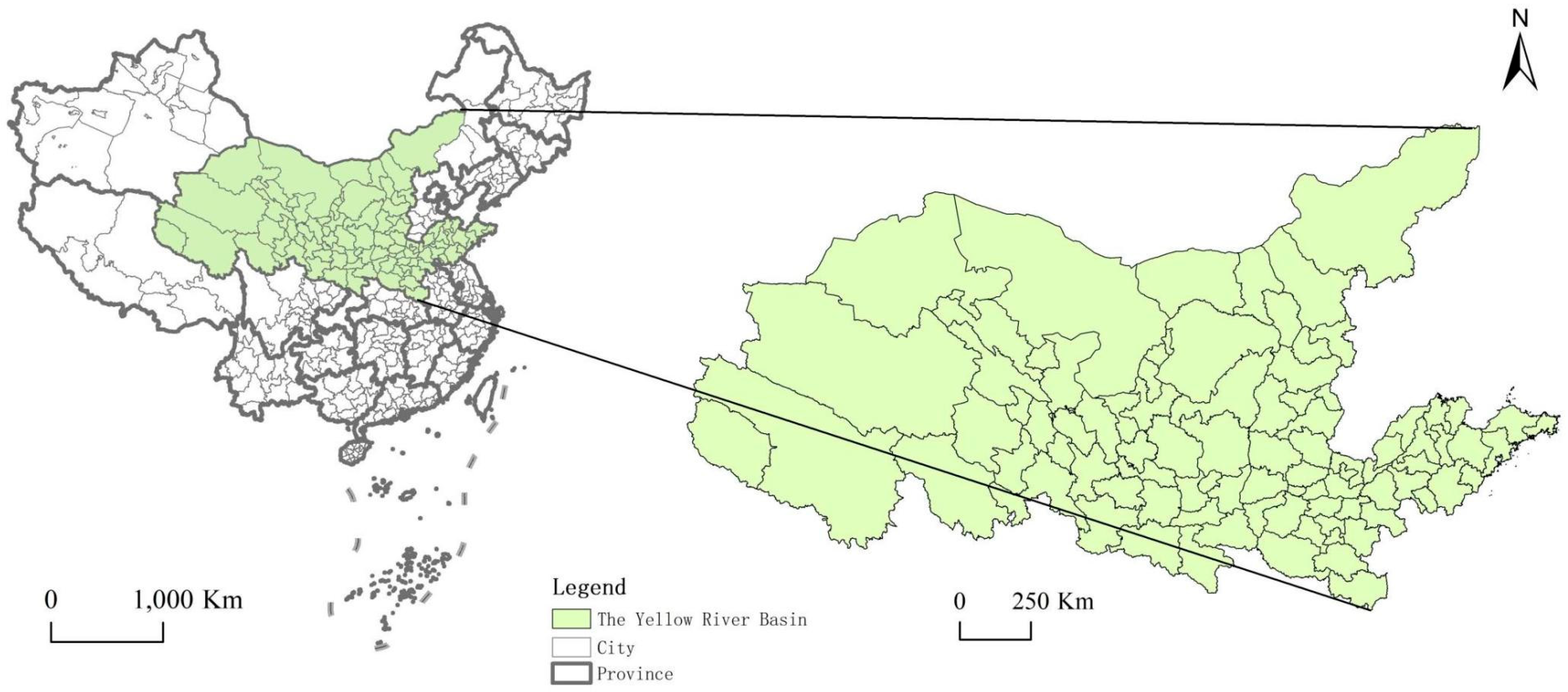
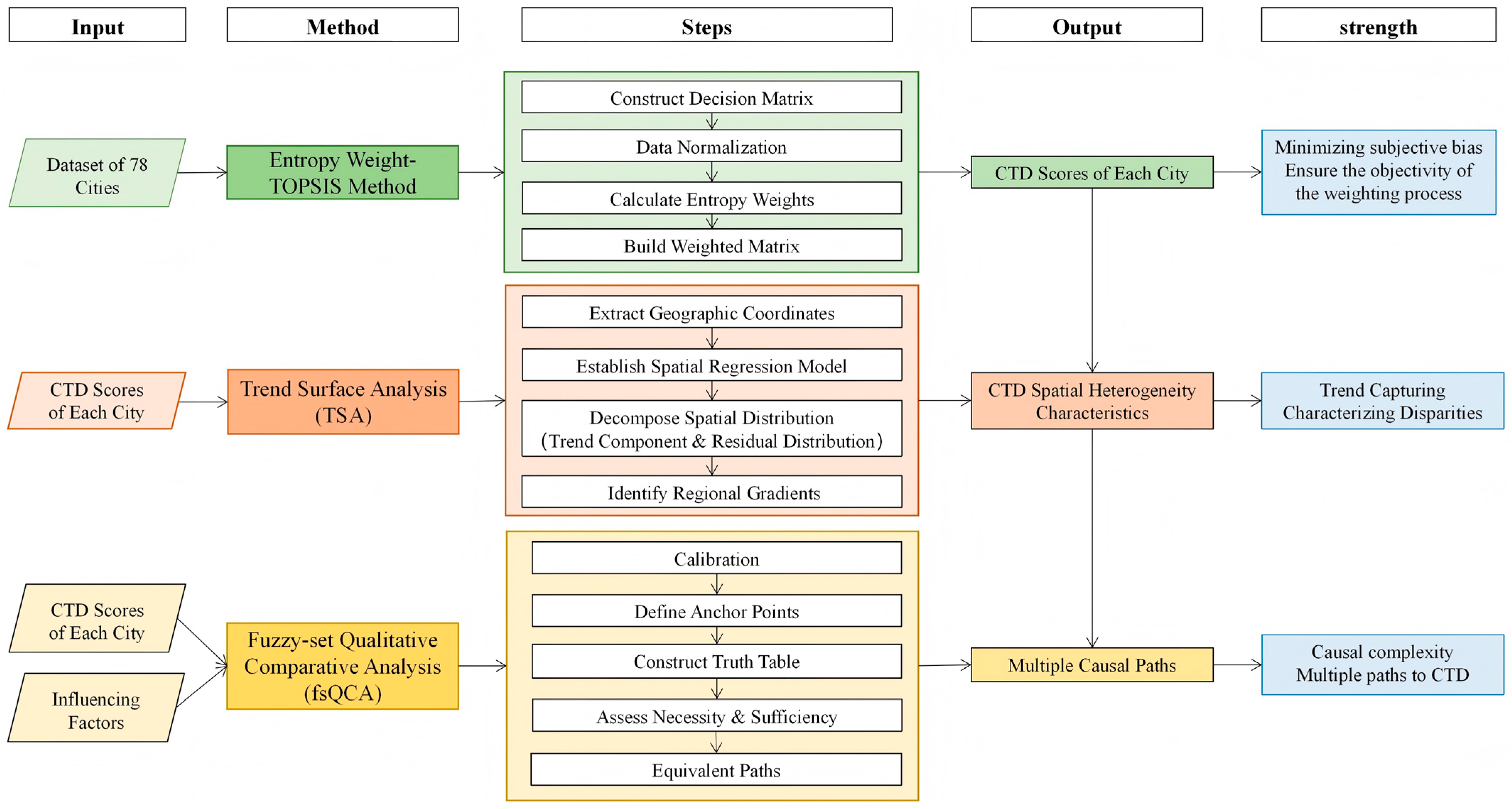
To address the above questions, this study proposes the following research design. This study examines CTD in 78 prefecture-level cities located in the YRB, China. Additionally, an indicator system was constructed from a symbiotic perspective based on holistic and process principles consisting of resource endowment, support conditions, and development benefits. The entropy weight method, an objective weighting technique, was employed to measure the dispersion of indicators, thereby mitigating subjective bias. Subsequently, the Technique for Order of Preference by Similarity to Ideal Solution (TOPSIS) was utilized to rank these cities based on their relative proximity to an ideal development level, effectively integrating the strengths of both methods to quantify the CTD index. Finally, the fuzzy-set qualitative comparative analysis (fsQCA) approach to investigate grouping paths and their spatial variations. The results could enhance cultural tourism growth and support sustainable development goals. The various development paths’ characteristics, advantages, and limitations were analysed to provide targeted improvement suggestions for underdeveloped regions. Moreover, this study aimed to optimise directions in well-developed regions to promote scientific cultural tourism in the YRB.
5. Conclusions
This study developed an index system based on resource endowment, supporting conditions, and development benefits, using the entropy weight–TOPSIS method, to assess CTD in 78 cities in the YRB from 2004 to 2019. The fsQCA method found multiple development pathways, compensating for traditional quantitative analyses’ limitations [
95]. The results reveal significant CTD growth, with regional disparities in resource endowment, supporting conditions, and development benefits.
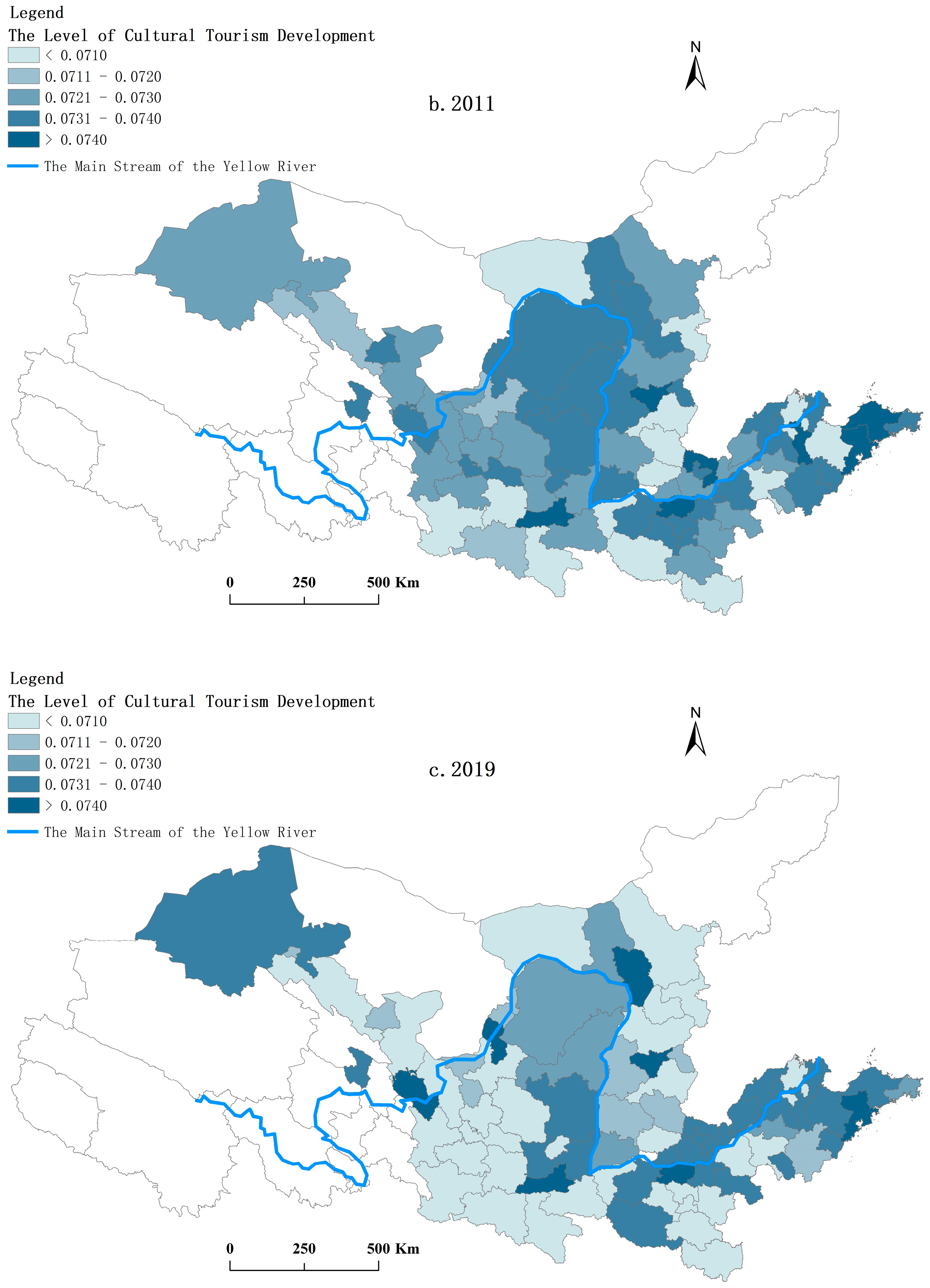
There was a notable CTD increase from 2004 to 2019. The CTD in the YRB gradually increased, with relatively high levels in the downstream and central areas and relatively low levels in the northern and southern regions. However, significant spatial differences were identified in resource endowment, supporting conditions, and development benefits. CTD was centred in cities boasting high economic advancement and rich cultural and tourism resources. The distribution along the Yellow River is characterised by obvious features.
The group analysis results demonstrate different high- and low-CTD paths. High CTD followed three paths: consumer market-driven under policy assistance, economic investment-driven, and government-led economic investment and innovation-driven CTD. Low CTD also had three paths: insufficient economic policy and innovation, deficient economic and consumer markets, and deficient economic and social investment.
Notable spatial disparities in CTD were found in the YRB. To achieve high CTD, the dominant factors were economic, scientific, and innovative, both at upstream and downstream stages. However, in the middle reaches, the dominant factors were science and technology innovation, as well as consumption capacity. For low CTD, economic investment and the generation of scientific and technological resources were the principal impelling forces. Economic development and the consumer market were dominant in the middle reaches, and the lack of effective economic policies and innovation in science and technology were dominant factors. Examining the YRB’s national historical and cultural cities revealed that high-CTD emergence is marked by the lack of scientific and technological consumer markets and a government-directed model of scientific and technological development. The low-CTD formation paths were government-supported economic development deficiency and consumption and innovation deficiency.
6. Discussion
6.1. Contribution
This study makes several novel contributions. First, it establishes a characteristic indicator system for assessing the CTD in the YRB, encompassing resource base, supporting conditions, and development benefits from a symbiotic perspective considering its holistic and processing nature. Compared with previous research, this study comprehensively examined sustainable CTD advantages. It emphasises CTD’s economic benefits and incorporates social and environmental benefits. Second, it resolves the difficulty of CTD’s multiple-factor interaction and single-path formation. Most studies on cultural tourism’s factors have been based on constructing econometric models, with factors considered to be independent; in practice, cultural tourism’s elements are inextricably linked and collectively shape its evolution. Due to differences in resource bases, supporting conditions, and development benefits, various cities’ CTD paths differ. For this reason, the fsQCA was employed to solve the problem of CTD’s multi-factor interactions and the difficulty of forming paths with multiple causes and one effect. Furthermore, Bayesian estimation was applied to study tourism and cultural tourism path formation from a complex dynamic perspective in the YRB. Finally, different development paths and balances with different development modes were analysed. This study further explains different development paths and analyses the development paths of different types of cultural tourism to balance different development modes.
6.2. Policy Implication
The findings indicate several suggestions for promoting cities’ cultural tourism to achieve high-quality development. First, the government must clarify its development positioning, expedite the strengthening of regional hub cities’ cultural tourism capacity, and leverage the radiation-driven role of high-CTD cities, such as Zhengzhou, Luoyang, Qingdao, Yantai, Jinan, Xi’an, and Taiyuan. Moreover, the government should adopt provincial capital and regional centre cities as nodes, open the Yellow River Culture Belt channel, take advantage of these cities’ abundant human and financial resources and robust scientific and technological innovation capacity, and construct a new pattern of staggered CTD in the basin. Additionally, the government should maintain a people-oriented perspective and focus on creating professionals in specific regions, perhaps by attracting cultural and tourism-related professionals through preferential policies and by enhancing the local population’s cultural and tourism expertise by providing specialised training. This approach aims to facilitate high-quality CTD. Furthermore, cities lagging in development should focus on cultural tourism investment and consumption capacity to achieve synergetic development, promote cultural tourism projects, and encourage high-quality cultural tourism and cultural and creative products. Meanwhile, artificial intelligence technology, digital technology, network platforms, and new media should integrate impressive, personalised, and high-value consumption and experience factors into local cultural tourism to create intelligent cultural tourism. Moreover, for cities with abundant cultural tourism resources but weak support conditions, local scientific and technological innovation levels must be enhanced through professional and technological education. Cities should enhance the construction of cultural tourism infrastructure, comprehensively examine cultural tourism resources characteristics, and create differentiated, specialised, and targeted cultural brands. Additionally, designing tourism products and services with high conversion and return rates and benefits of forming tourist centres with identifiability, cultural characteristics, and regional features is important. Finally, cities should construct recognisable, culturally, and geographically distinctive development models, broaden publicity methods, and enhance visibility to expand the international market.
6.3. Limitation and Future Research
This study had several limitations. First, the study period was limited, extending only to 2019, mainly due to COVID-19’s influence on cultural tourism. The primary objective of this study is to uncover the spatiotemporal evolution and pathway identification of cultural tourism in the YRB under normalized, regular conditions. Ensuring Research Focus and Baseline Establishment: The period of 2004–2019 captures a complete, stable, and rapid growth cycle of cultural tourism in China. For future research, we will analyze how COVID-19 impacted the cultural dimension of tourism and how the system recovers or transforms—a fascinating and critical research agenda. However, such an analysis requires a distinct theoretical framework (e.g., focusing on system resilience, and post-pandemic behavioral shifts) and comparative methodologies (pre- vs. post-COVID), which fall outside the scope of the current manuscript. Second, additional perspectives and subject evaluations should be included. Future research must consider incorporating big data and dynamic viewpoints into cultural tourism’s assessment framework. Specifically, as we transition to utilizing big data and dynamic datasets in future studies, we will move beyond the traditional entropy-weight TOPSIS method. Instead, we will focus on further refining the spatial research units and optimizing our analytical methodologies to better handle complex data structures. Moreover, subjective evaluations from tourists, enterprises, local inhabitants, the government, and other entities should be included. Finally, in-depth small-scale case studies that are comprehensively interpreted to further analyse cultural tourism’s formation mechanism are required.