1. Introduction
Cities in the 21st century are at a crossroads shaped by the acceleration of climate change, demographic pressure, and the need to redefine their development models. In this context, urban resilience has become a key concept for understanding how urban environments can anticipate, withstand, and adapt to environmental, social, and economic disturbances. Although the term originated in the natural sciences and engineering to describe specific risk situations [
1], its evolution has been transversal, incorporating ecological, social, and territorial dimensions. Since the 1970s, the concept of resilience—initially linked to ecology through the work of Crawford Stanley Holling [
2]—has expanded into the social sciences and urban studies, highlighting its capacity to interpret the responses of complex systems to crises or abrupt transformations. However, applying this ecological concept directly to social and urban dynamics presents operational limitations that must be addressed [
3] (p. 24).
In the urban domain, resilience has gained theoretical weight as a framework to interpret the socio-ecological and economic crises that characterize the 21st century under globalized uncertainty [
4,
5]. This multidimensional approach has fostered the development of methodologies that integrate environmental, social, and governance aspects within a single analytical framework. According to Leichenko [
6], this literature can be classified into four core areas: urban ecological resilience, urban hazards and disaster risk reduction, the resilience of urban and regional economies, and the promotion of resilience through urban governance and institutions. Understanding resilience within this relational system implies balancing these diverse urban dimensions [
7]. Nevertheless, as Chelleri [
8] cautions, the widespread application of this concept across multiple domains risks a conceptual trivialization of term, underscoring the vital importance of developing targeted, highly contextualized frameworks for specific urban typologies.
To prevent structural collapse within complex urban systems, contemporary frameworks demand comprehensive planning and a holistic approach that integrates public, private, and civil society stakeholders [
9]. Conversely, urban environments frequently face acute risk factors derived from weak local governance and deficient stakeholder participation in climate mitigation and risk management [
10] (p. 8).
This challenge is particularly relevant in heritage cities, where the preservation of historical legacy converges with the need to adapt to new climatic and urban conditions. These cities face unique constraints derived from their consolidated urban structures and the protection of their monumental heritage, requiring innovative and context-sensitive solutions rather than conventional structural interventions. Analyzing how historical cities manage these pressures not only reveals key strategies to safeguard cultural identity, but also offers transferable insights into how nature-based solutions (NbS) and the expansion of green spaces can mitigate the urban heat island effect and enhance urban biodiversity without compromising historical authenticity [
11].
The case study selected is Salamanca, recognized by UNESCO in 1988 as a World Heritage City. Salamanca has developed integrated strategies aimed at strengthening its environmental and urban resilience without compromising its historical identity. Climate projections indicate a progressive increase in extreme temperatures and a decrease in precipitation, posing direct risks to the city.
Between 2017 and 2023, the Integrated Sustainable Urban Development Strategy (EDUSI Tormes+) promoted the creation of a river corridor along the Tormes River, increasing green areas, urban gardens, sustainable mobility, and the regeneration of urban spaces [
12]. Subsequently, in 2019, the Special Plan for the Protection of Green Infrastructure and Biodiversity (PEPIVB) strengthened urban ecological connectivity and biodiversity conservation, incorporating initiatives such as SAVIA Red Verde Salamanca and LIFE Vía de la Plata. These actions enabled the expansion of tree cover in urban and peri-urban areas, reinforcing the city’s ecosystem services and climate benefits [
13,
14,
15].
In parallel, the Urban Agenda of Salamanca (AUSA) and its Local Action Plan (PALSA), approved in 2022, structure sustainability and urban adaptation policies focused on improving the physical environment, social cohesion, and the integration of NbS [
16]. These actions, aligned with the Sustainable Development Goals (SDGs) and international frameworks such as the Sendai Framework for Disaster Risk Reduction 2015–2030 [
17,
18], aim to transform Salamanca’s urban model into a greener, more inclusive, and resilient city.
To evaluate how these theoretical dimensions operate under different territorial realities, international literature highlights diverse urban models that handle the heritage-resilience nexus based on their primary vulnerabilities [
19]. For instance, historic urban landscapes have addressed climate and socioeconomic pressure through integrated spatial and institutional reorganizations, as seen in the resilient management plan of Quito; through functional and commercial revitalizations to safeguard local stability, as demonstrated in Morelia; or via cutting-edge NbS to manage hydrological risks, such as the Resilio project in Amsterdam [
20,
21,
22]. While these global frameworks offer valuable references, a critical knowledge gap remains regarding how medium-sized heritage cities, which operate under highly restrictive conservation regulations and limited municipal scales, can successfully synthesize these conservational, economic, and ecological paradigms into a single territorial strategy. This paper addresses this gap by analyzing the case of Salamanca, moving beyond an isolated case analysis to offer a transferable and replicable model for other historical centers facing identical environmental and structural challenges.
In this context, the present study seeks to evaluate and identify the role of green infrastructure planning and local strategies within the urban resilience framework of Salamanca. Given that recent municipal initiatives (2017–2025) lack long-term, open-access biophysical monitoring datasets, this study shifts the analytical focus toward environmental policy integration and institutional governance coherence. Rather than quantitatively measuring immediate physical microclimate impacts, this research evaluates how different municipal planning instruments are structurally aligned to address climate vulnerabilities in a high-density, heritage-protected urban fabric, establishing a qualitative and operational baseline for future ex-post empirical monitoring.
2. Materials and Methods
2.1. Study Area
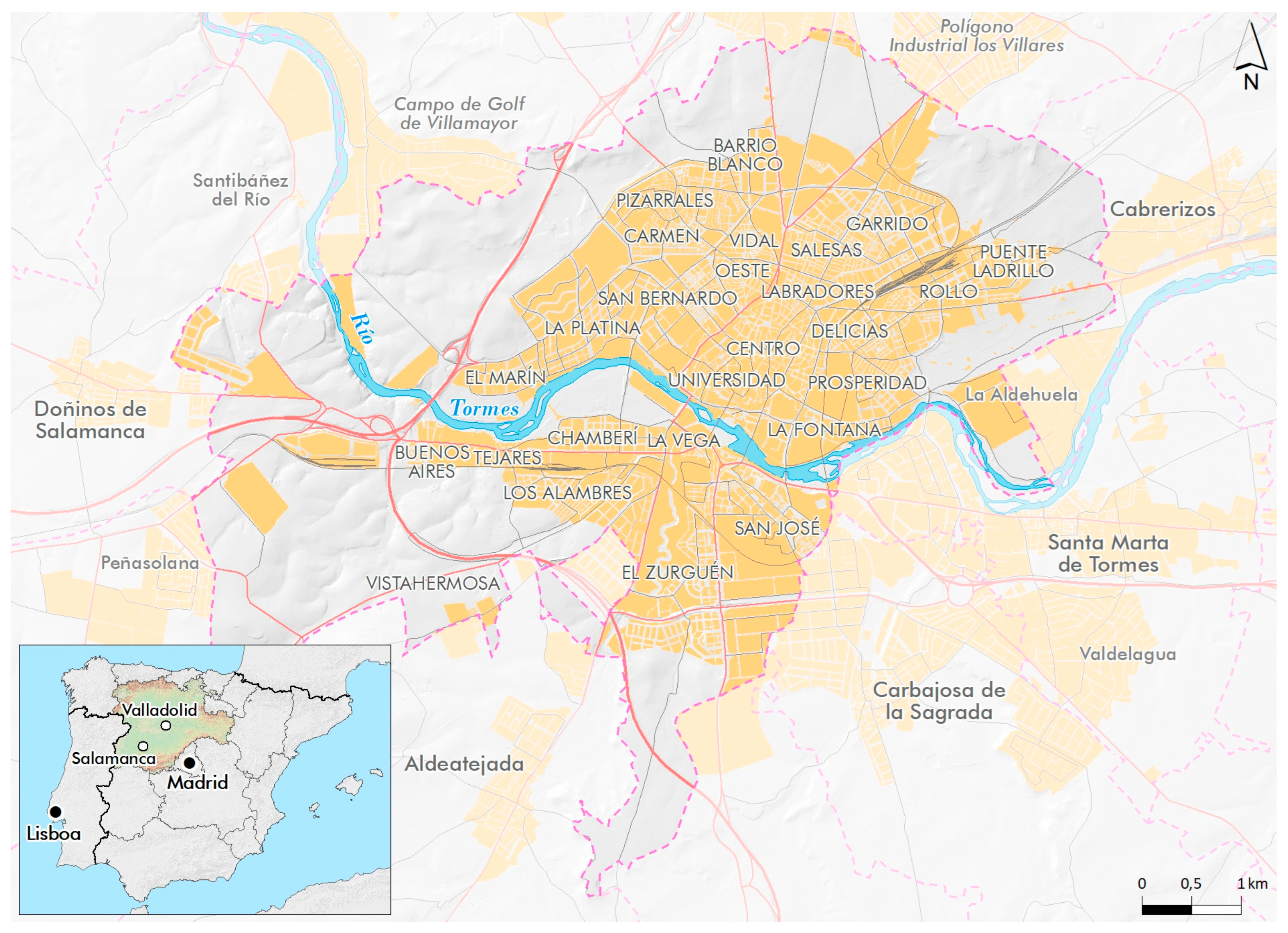
The city of Salamanca is located in the western part of the Iberian Peninsula, within the autonomous community of Castile and León (Spain), at an average elevation of approximately 800 m above sea level (
Figure 1). With a current population of 145,583 inhabitants, according to the Instituto Nacional de Estadística (INE) [
23], it represents a medium-sized urban center characterized by a compact urban structure and a strong historical imprint. Its historic center, designated as a World Heritage Site, contains a highly valuable monumental and architectural ensemble that constrains urban transformation processes and the implementation of climate adaptation measures.
The physical setting of Salamanca is defined by the valley of the Tormes River, a key element in the city’s environmental and landscape configuration. The fluvial corridor serves as a key ecological corridor, connecting peri-urban natural areas with the urban core, thereby enhancing ecological connectivity and supporting the development of green infrastructure [
24].
2.2. Data and Methodological Approach
From a climatic perspective, Salamanca exhibits a continental Mediterranean climate, characterized by cold winters, warm summers, and a marked annual thermal amplitude. These conditions, combined with the city’s compact urban morphology and the high heritage value of its historic fabric, make Salamanca a representative case for analyzing climate resilience in medium-sized heritage cities located in the interior of the Iberian Peninsula.
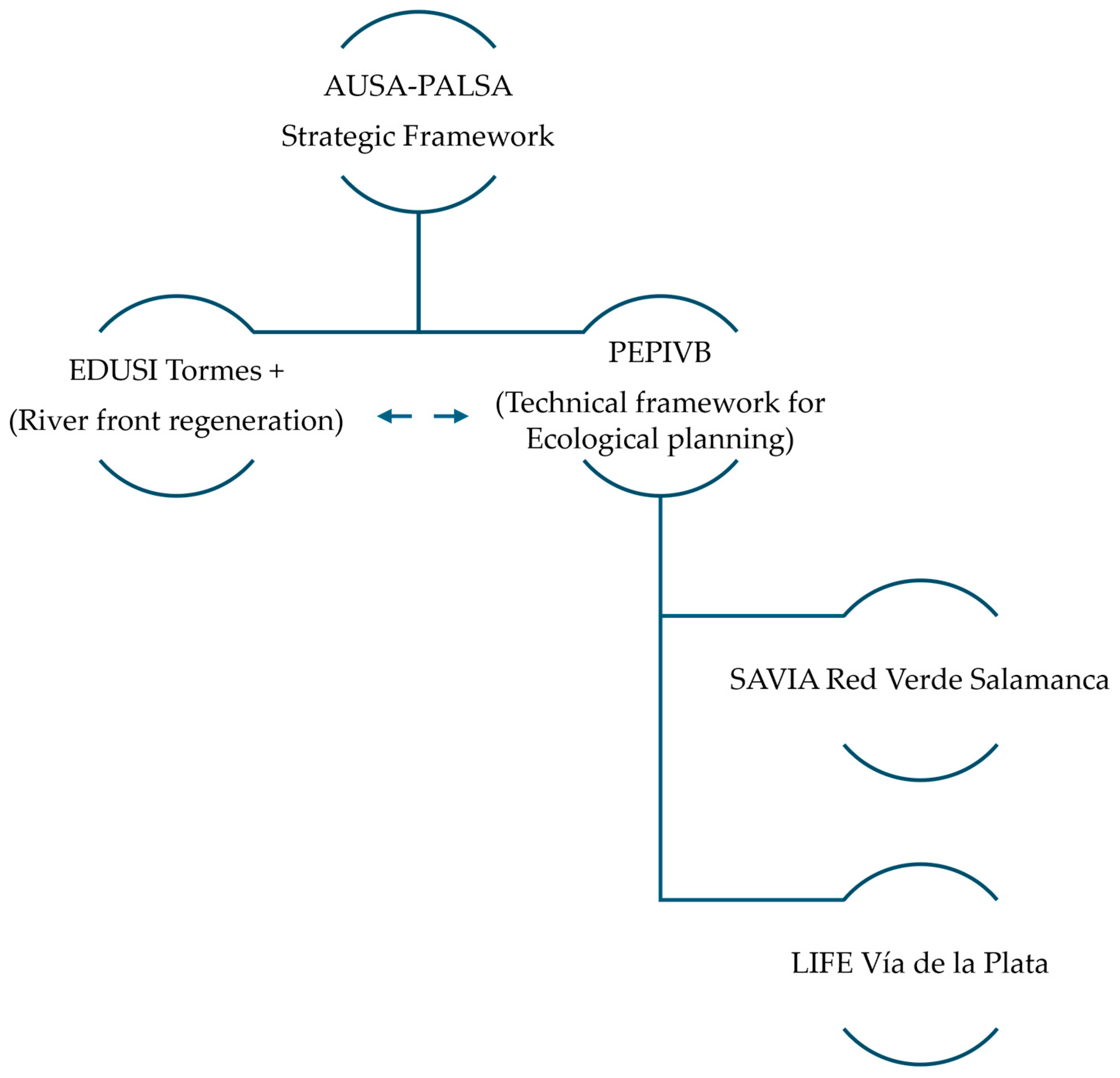
For this study, a methodological approach based on the review and comparison of the main local green infrastructure and urban resilience initiatives implemented between 2017 and 2025 was adopted. These initiatives constitute the operational framework for ecosystem management and the adaptive capacity of Salamanca. This set of instruments provides the institutional and territorial basis for the analysis and is hierarchically structured into three levels. As shown in
Figure 2, the Integrated Sustainable Urban Development Strategy (EDUSI Tormes+) and the Special Plan for the Protection of Green Infrastructure and Biodiversity (PEPIVB) function as key strategic instruments. In turn, SAVIA Red Verde Salamanca and LIFE Vía de la Plata are configured as projects derived from the PEPIVB, all of which are integrated within the broader strategic framework of the Urban Agenda of Salamanca (AUSA) and its Local Action Plan (PALSA).
- (1)
Main Strategies.
First, two key strategic planning documents that have guided the city’s urban ecological transition were analyzed in the study area:
EDUSI Tormes+, approved in 2017. This planning instrument promotes the regeneration of the Tormes riverfront through ecological restoration measures, public space enhancement, and the development of pedestrian and cycling routes. The strategy focuses on the restoration of the riparian system as the city’s main green infrastructure, adopting an integrated social and environmental approach to the neighborhoods located in the southwestern sector of Salamanca [
24].
PEPIVB, adopted in 2019. This plan constitutes the technical framework for urban ecological planning. It defines a structural network composed of the Tormes River, major urban parks, peri-urban spaces, and intra-urban ecological corridors. It also establishes criteria for habitat connectivity, the conservation of fertile soils, and the integration of nature-based solutions (NbS) into new urban developments [
25].
- (2)
Projects Derived from the PEPIVB.
Subsequently, two initiatives representing the operational implementation of the guidelines established in the PEPIVB were examined:
SAVIA Red Verde Salamanca. A municipal program aimed at the renaturalization of urban space through the planting of native species, the use of permeable pavements, and the development of climate corridors [
26].
LIFE Vía de la Plata. A project aimed at the restoration of the historical route of the Roman road as a green–blue axis, strengthening ecological connectivity between the city center and the northern and southern sectors of Salamanca [
27].
- (3)
Integrative Strategic Framework.
Finally, the Urban Agenda of Salamanca (AUSA) and its Local Action Plan (PALSA), approved in 2022, were analyzed. Both documents structure municipal strategic planning in alignment with the Sustainable Development Goals (SDGs) and the Sendai Framework. They also define quantitative indicators related to green infrastructure, sustainable mobility, and urban regeneration, while integrating the resilience perspective transversally into municipal governance in Salamanca [
16].
To operationalize the qualitative aspects of policy coherence and replace subjective narrative descriptions, this study adopts a structured Environmental Policy Integration (EPI) framework. The methodological analysis is executed through systematic content analysis and cross-coherence matrices applied to the selected municipal planning instruments.
The document selection criteria were established based on three explicit conditions: (i) statutory validity and operational deployment within the 2017–2025 timeline, (ii) direct administrative jurisdiction over the municipality of Salamanca, and (iii) explicit inclusion on nature-based solutions (NbS) or green infrastructure planning.
Following a systematic coding protocol, text units of the selected strategies were formally analyzed and categorized across three operational analytical dimensions:
(i) Strategic Objective Alignment, which evaluates the vertical consistency and top-down transmission of climate resilience targets from macro-strategies (AUSA) down to local pilot actions; (ii) Territorial/Spatial Synergy, assessing physical connectivity, operational scales, and geographic overlaps between concurrent plans along the Tormes riverfront and urban corridors; and (iii) Institutional Governance Mechanisms, tracking cross-sectoral coordination, multi-level funding structures, and administrative monitoring gaps.
Due to the highly recent execution and ongoing biological maturation of the initiatives under study (2017–2025), empirical downscaled datasets regarding microclimatic variables or biophysical indices are not yet operational in local frameworks. Therefore, this formalized matrix analysis monitors institutional planning coherence rather than quantifying physical ecological outcomes, establishing a replicable and rigorous qualitative baseline that transfers the validation of environmental benefits to the established international literature.
3. Research Results
The ecological infrastructure of Salamanca has become a central element in 21st-century urban planning, both due to its environmental function and its contribution to urban resilience. Since the approval of the General Urban Development Plan (PGOU) in 2007 [
28], the need to develop a specific plan for the protection of ecosystems and biodiversity had already been identified, anticipating the challenges associated with urban growth and climate change.
At the global level, initiatives such as the Paris Agreement (2015), the Sustainable Development Goals (SDGs) within the framework of the United Nations 2030 Agenda for Sustainable Development (2015), and the Sendai Framework for Disaster Risk Reduction 2015–2030 have established guiding principles for all Member States of the European Union (EU), also shaping local urban policies [
17,
18,
29].
Within this context, Salamanca adopted the Integrated Sustainable Urban Development Strategy, funded through the European Regional Development Fund (ERDF). Its Tormes+ program represents the first concrete intervention aimed at regenerating the banks of the Tormes River and strengthening the city’s green infrastructure, thereby establishing a link between international policy frameworks and local action [
30,
31].
3.1. EDUSI Tormes+ (2017–2023)
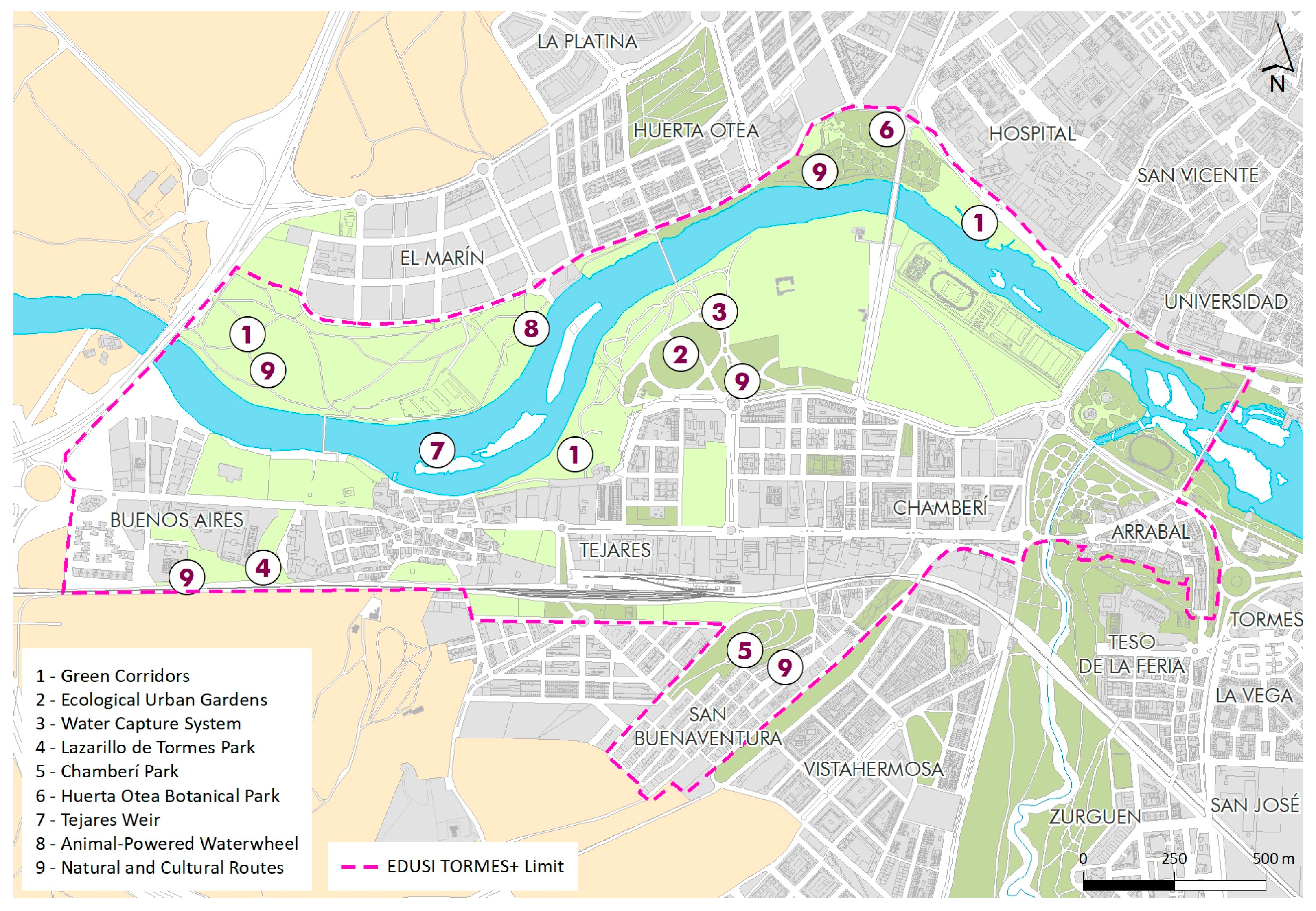
As a first step toward the territorial management of nature-based solutions (NbS), the EDUSI Tormes+ Strategy was approved in 2017 with the aim of regenerating the banks of the Tormes River and enhancing the integration of adjacent neighborhoods, including Tejares, Buenos Aires, Chamberí, and Huerta Otea [
30]. Beyond the recovery of degraded areas, this program sought to strengthen urban resilience through the creation of new green corridors (
Figure 3) in Salamanca.
The targeted selection of these peripheral and historically marginalized neighborhoods carries important implications for distributive environmental justice and the right to green infrastructure in vulnerable areas. As highlighted in contemporary socio-spatial literature [
32], addressing environmental degradation in the urban margins allows the periphery to function as the structural backbone of resilience for the consolidated, high-density historical center. By deploying NbS in these vulnerable sectors, the planning framework actively mitigates long-standing socio-spatial fragmentation, ensuring an equitable distribution of climate adaptation benefits across the entire municipal space.
The implemented actions included the expansion of green corridors along the Tormes riverbanks, the creation of urban gardens on previously degraded land, and interventions in strategic parks such as Lazarillo de Tormes, Chamberí, and Huerta Otea. These spaces are interconnected with other ecological corridors, strengthening environmental connectivity and creating new green lungs within the urban fabric of Salamanca.
According to the design directives and the official technical monitoring metrics of the EDUSI Tormes+ project [
24], these interventions are targeted to expand urban tree cover and structurally foster local biodiversity pathways, establishing an operational baseline for future ecological monitoring.
3.2. PEPIVB (2019): Technical Framework for Green Infrastructure
The approval of the PEPIVB in 2019 represented a significant step forward in consolidating municipal green infrastructure, as it established a comprehensive technical framework for urban ecological planning. This plan enabled the systematization of the structural components of the green network, the definition of criteria for intra-municipal ecological connectivity, and the orientation of interventions toward a more resilient urban model (
Table 1).
Table 1 synthesizes the main actions of the PEPIVB aimed at strengthening urban ecosystems, including increasing biodiversity, regenerating degraded spaces, improving urban and peri-urban connectivity and mobility, enhancing climate change adaptation, restoring rural axes, and incorporating innovative and technological solutions. Taken together, these actions seek to consolidate a more resilient, sustainable, and connected urban model, generating both environmental and social benefits.
Among the reference plans cited in the PEPIVB’s technical report, the EDUSI Tormes+ stands out, aligned with the “Europe 2020” strategy and oriented toward achieving the climate and energy objectives of the European Union (EU). The approval of this strategic framework for green infrastructure and biodiversity ensured continuity in these goals, particularly regarding commitments to reduce greenhouse gas emissions by 40% by 2030 (compared to 1990 levels) and by 60% by 2040 [
13].
The PEPIVB thus functions as the primary structural framework underpinning the city’s ecological planning. However, its impact can only be fully understood through the projects that operationalize its objectives and translate them into spatial interventions. In this regard, SAVIA Red Verde Salamanca and LIFE Vía de la Plata represent the two key initiatives that have enabled progress in the renaturalization of urban space and in the development of a more continuous and resilient green system.
3.3. Projects Derived from the PEPIVB: SAVIA Red Verde Salamanca and LIFE Vía de la Plata
As operational instruments of the PEPIVB, the SAVIA and LIFE programs have implemented concrete actions aimed at the ecological restoration of the urban environment, with the explicit planning goal of contributing to the mitigation of the urban heat island effect and the improvement of biodiversity, as prioritized in the strategic guidelines of the SAVIA Red Verde Salamanca.
3.3.1. SAVIA Red Verde Salamanca
SAVIA constitutes the municipal strategy aimed at interconnecting natural heritage, enhancing biodiversity, and improving quality of life, in line with the guidelines established by the PEPIVB. However, this initiative goes beyond the concept of “traditional green space”, positioning itself within a broader framework of environmental, social, and economic sustainability [
26].
SAVIA is structured around six urban and peri-urban ecosystems:
La Corona, located in the northern part of the municipal area and associated with dryland environments. It includes actions related to sustainable mobility, such as the cycling lane connecting Salamanca with Villamayor, as well as improvements in connectivity along traditional livestock routes, including drove roads (cañadas) and minor drovers’ paths (cordeles).
The Tormes River, focused on the renaturalization of the riverbanks and the integration of adjacent neighborhoods, in coordination with the EDUSI Tormes+ strategy previously mentioned.
La Dehesa, located in the western sector and composed of former agricultural and livestock estates. It encompasses areas of high ecological value, such as the former Polvorín de Tejares, and includes the city’s wastewater treatment plant in the study area.
El Zurguén, located in the southern sector, constitutes a peri-urban green infrastructure area associated with the stream of the same name. The historic Vía de la Plata route runs through this area, directly linking it to the LIFE project. In addition, the development of a forest park is planned within the urban area.
La Aldehuela, located in the eastern sector, integrates protected rural land, large agro-livestock estates, and areas with remnants of holm oak woodland, representing a relatively untransformed landscape within the urban system.
Interior, corresponding to the urban core, where interventions focus on green spaces, parks, urban gardens, and building façades. The enhancement of internal green infrastructure has been implemented in accordance with the guidelines established by the LIFE Vía de la Plata project [
33].
The actions implemented within this strategy are consistent with international frameworks, particularly the 2030 Agenda and the Sustainable Development Goals (SDGs), promoting principles of urban resilience and sustainability in Salamanca.
3.3.2. LIFE Vía de la Plata
Within the framework of the PEPIVB, the LIFE Vía de la Plata project promoted six strategic interventions designed to strengthen blue–green infrastructure and urban ecosystems along the route of the former Roman road. It constitutes a pilot program selected by the European Commission within the framework of climate change adaptation actions [
26,
34].
Implemented between 2020 and 2023, the LIFE project carried out 21 renaturalization actions along the corridor connecting the northern sector (La Corona) with the southern sector (El Zurguén) in Salamanca, as detailed in
Table 2.
The table synthesizes the main outcomes of the project, focusing on the implementation of nature-based solutions (NbS), including tree planting, the renaturalization of green spaces, the greening of buildings, and the creation of bioretention areas. Such interventions represent a significant step forward in enhancing the adaptability and resilience of the urban environment to climate change, promoting ecosystem sustainability, and facilitating the regeneration of degraded soils in Salamanca.
These interventions demonstrate a shift toward integrated blue–green infrastructure planning, highlighting the effectiveness of nature-based solutions in enhancing urban adaptive capacity within heritage contexts.
Overall, the PEPIVB, SAVIA Red Verde Salamanca, and LIFE Vía de la Plata form a coherent system of municipal ecological planning in Salamanca. The PEPIVB functions as the technical framework defining the structure of green infrastructure, while the SAVIA and LIFE programs operationalize its guidelines through concrete interventions. The EDUSI Tormes+ strategy acts as a prior operational phase in the renaturalization of the Tormes riverbanks and the integration of adjacent neighborhoods, reinforcing the connectivity later expanded by the projects derived from the PEPIVB.
The articulation of these instruments reveals an urban model oriented toward climate resilience, biodiversity recovery, and the regeneration of the urban landscape. This foundation highlights the need for a higher-level strategic framework—the Urban Agenda of Salamanca (AUSA) and its Local Action Plan (PALSA)—which organizes, coordinates, and guides these measures within an integrated vision of a sustainable city.
Although the AUSA and PALSA do not implement specific actions in the field of green infrastructure, they provide a structural framework that ensures coherence among the various municipal projects and strategies. Both documents consolidate an urban approach based on adaptability, ecological connectivity, and citizens’ well-being, particularly through the actions defined under Axis A: Salamanca as a high-quality physical environment.
Among its main lines of action are urban ecological restoration and the strengthening of connections with the natural environment, explicitly referencing the PEPIVB, SAVIA, and LIFE initiatives. In addition, the PALSA incorporates two key actions to be implemented:
Taken as a whole, this strategic structure provides the necessary framework to integrate natural heritage into sustainable urban planning, ensuring the continuity, coherence, and effectiveness of projects associated with NbS in Salamanca.
4. Summary and Discussion
The actions implemented within the framework of the PEPIVB have made a significant contribution to the modernization of urban green infrastructure in Salamanca. The SAVIA Red Verde Salamanca strategy has enabled progress not only in renaturalization processes, but also in climate adaptation and the improvement of urban quality of life, integrating environmental, social, and economic dimensions. The approach promoted by SAVIA responds to the need to enhance adaptive capacity to climate risks, while fostering a more efficient and sustainable use of natural resources.
In parallel, the EDUSI Tormes+ strategy has played a key role in the environmental restoration of the Tormes River corridor, promoting landscape integration between the river, the city, and the riverside neighborhoods. This intervention has contributed to the improvement of urban livability and to strengthening ecological connectivity in an area historically characterized by fragmentation.
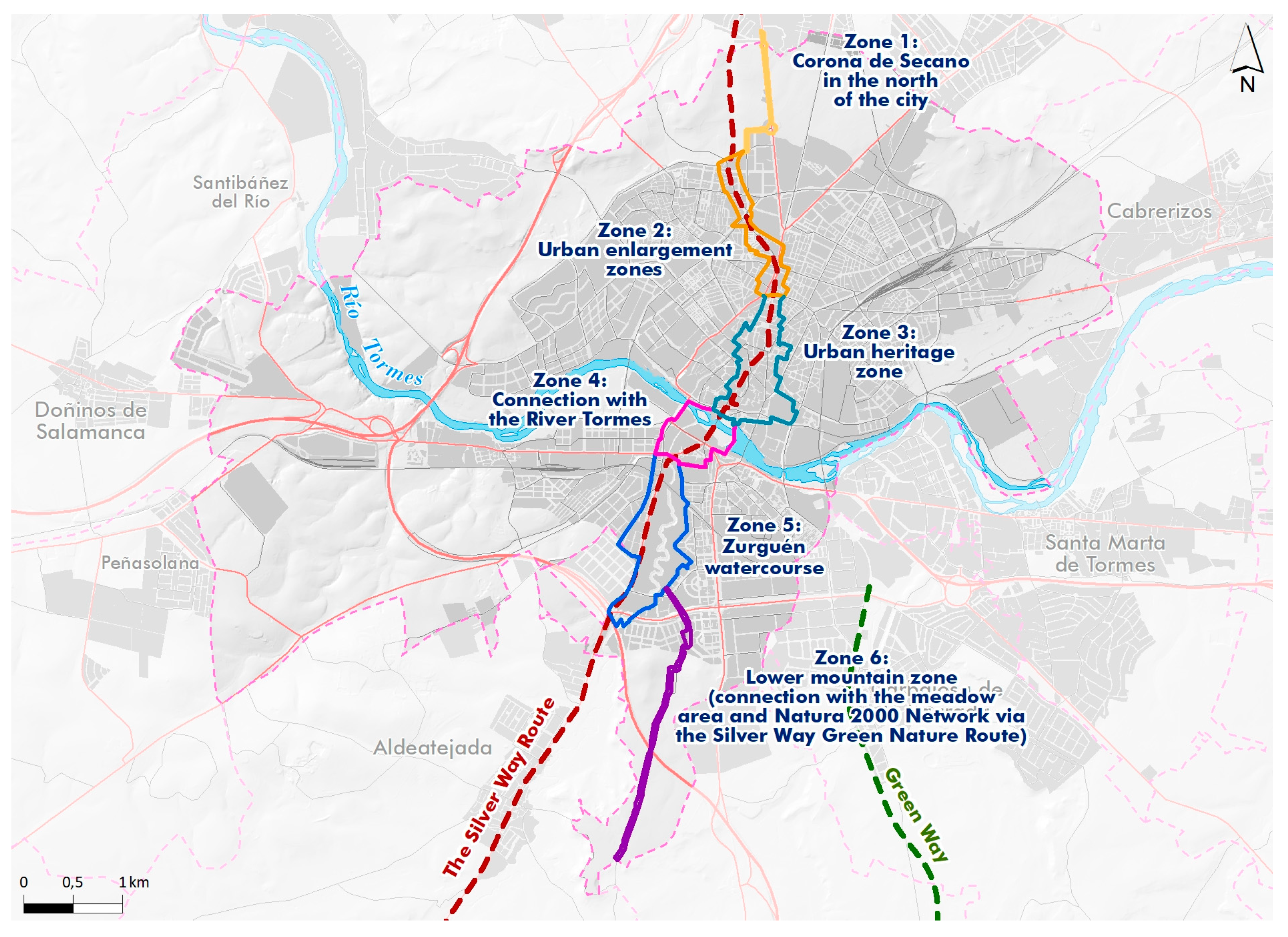
Furthermore, the LIFE Vía de la Plata project has successfully articulated the La Corona and Interior sectors with the Tormes River and El Zurguén areas, traversing the city from north to south through the environmental restoration of the historic Vía de la Plata route. This initiative has enabled the connection of peri-urban areas with the urban core through a set of renaturalization and tree-planting actions, as well as interventions in public spaces.
Figure 4 illustrates its integration, primarily within Zones 2 and 3. Among the most notable measures are the creation of a biodiversity island on Hermanas Fidalgo Street (Zone 1) and the installation of three nature-based benches in the vicinity of Puerta Zamora (Zone 2). As a result, these interventions have contributed to increasing urban biodiversity, implementing nature-based solutions (NbS), and mitigating the urban heat island effect. This suggests that the coordinated implementation of NbS can generate cumulative ecological benefits at the urban scale, reinforcing long-term climate adaptation strategies.
The LIFE project reflects an integrated approach that not only seeks environmental sustainability but also the restoration of ecological values within a heritage urban context. This articulation between culture and nature aligns with the principles outlined in Strengthening Cultural Heritage Resilience for Climate Change: Where the European Green Deal Meets Cultural Heritage [
35] (pp. 5–8), which emphasizes the need to integrate environmental principles into urban planning to ensure effective resilience.
The integration of social, environmental, and governance objectives constitutes, as highlighted by Leichenko [
6], a key element for advancing sustainable urban models aligned with the Sustainable Development Goals (SDGs), the 2030 Agenda, and the Sendai Framework. In this regard, Salamanca is progressively strengthening its green infrastructure system and plans further interventions through the PEPIVB, as outlined in the AUSA and its PALSA. This approach supports the consolidation of a blue–green narrative that connects the urban core with peri-urban spaces and surrounding municipalities.
However, these initiatives also present significant operational challenges and technical tensions. In the urban core, Salamanca’s status as a UNESCO World Heritage Site imposes strict regulations that directly collide with conventional green infrastructure deployments. For instance, inserting structural soils, sustainable drainage systems, or permeable pavements within the historic fabric triggers complex archeological evaluation protocols and strict structural constraints. Furthermore, interventions targeting urban biodiversity, such as installing some of the 382 nest boxes or fauna shelters recorded in
Table 2, face technical restrictions when dealing with facades designated as Bien de Interés Cultural (BIC), such as the Church Santiago or San Polo, where monumental protection limits physical attachments to prevent material degradation.
To resolve these contemporary tensions and justify structural urban adaptations under climate emergency frameworks, spatial planning must rely on highly efficient diagnostic paradigms. In this context, understanding microclimatic behavior in inland Mediterranean urban fabrics becomes critical. As demonstrated by Delgado-Capel et al. [
36], monitoring the relationship between land surface temperatures and specific urban configuration elements through advanced remote sensing provides a cost-effective, scalable methodology. Integrating these technological and diagnostic tools into contemporary Spanish urban planning allows local authorities to identify precise, low-impact intervention zones, optimizing nature-based solutions (NbS) during heatwave episodes without compromising historical authenticity or monumental integrity.
These technical tensions require highly customized, low-impact architectural integration solutions rather than standard ecological engineering, highlighting that in heritage environments, climate resilience must be negotiated alongside historical authenticity.
In this regard, the experience of Salamanca highlights the importance of transferring this approach to other cities with similar heritage characteristics. Actions such as the renaturalization of public space, the protection of biodiversity, the regeneration of degraded soils, and the implementation of NbS are consolidated as essential tools in the context of climate change, particularly in urban environments where it is necessary to balance heritage conservation with the strengthening of urban resilience.
A primary limitation is the current absence of continuous, open-access microclimatic and biodiversity monitoring datasets from the local administration, which prevents a quantitative ex-post biophysical evaluation of the interventions (such as satellite-derived Land Surface Temperature). Furthermore, because key projects like SAVIA and LIFE Vía de la Plata are of recent execution, their structural tree cover and NbS have not yet reached ecological maturity. Future research lines should integrate satellite remote sensing data and local climate sensor network to empirically validate whether the planning and policy alignment document herein effectively translates into measurable urban heat stress reduction and biodiversity enrichment at the street level.
5. Conclusions
Since the implementation of the EDUSI Tormes+ strategy (2017–2023) and the subsequent approval of the PEPIVB in 2019, Salamanca has made steady progress in the restoration of the Tormes River corridor and in the protection of its ecosystems and biodiversity. The SAVIA Red Verde Salamanca and LIFE Vía de la Plata projects, developed within the framework of the PEPIVB, are coherently integrated with EDUSI Tormes+ under the strategic planning of the AUSA and its PALSA. Together, these instruments consolidate an articulated urban strategy that simultaneously addresses environmental, social, and cultural dimensions.
This integrated approach has enabled Salamanca to move toward a resilient urban model based on long-term, coordinated interventions that connect multiple planning instruments and municipal initiatives. Although comparable experiences exist in other cities, the level of coherence and institutional integration achieved in Salamanca positions this model as a potentially replicable reference for heritage and historic urban contexts. In this regard, the case demonstrates that green infrastructure planning and urban resilience can be effectively combined within complex, historically constrained environments.
Looking ahead, municipal authorities have proposed the “Raíles Verdes” project (2026–2028), aimed at the renaturalization of the former railway corridor of the Ruta de la Plata, closed since 1 January 1985, as it passes through the city. Planned interventions, particularly in northeastern neighborhoods, focus on the regeneration of degraded areas, the promotion of social and environmental sustainability, and the integration of nature into everyday urban life. Collectively, this initiative reinforces ongoing efforts to consolidate Salamanca as a green and resilient city, while extending the spatial and functional scope of its blue–green infrastructure network.