Article

Contribution of Natural Water Retention Measures to Integrated Water Management in Ungauged Basins


by
Branislava B. Matić
1,
Barbara Karleuša
2,* and
Bojana Horvat
2
1
Faculty of Environmental Protection, Educons University, 21208 Sremska Kamenica, Serbia
2
Faculty of Civil Engineering, University of Rijeka, 51000 Rijeka, Croatia
*
Author to whom correspondence should be addressed.
Land 2026, 15(6), 1041; https://doi.org/10.3390/land15061041
Submission received: 2 April 2026 / Revised: 28 May 2026 / Accepted: 4 June 2026 / Published: 12 June 2026

Abstract

Interest in Natural Water Retention Measures (NWRMs) for large river basins is growing rapidly as a result of a wide range of benefits, including improved water retention capacity and regulation of ecosystem services. However, suitable site-specific NWRMs in small ungauged basins prone to flash floods and erosion, such as the Vrutci Reservoir Basin in Serbia, have yet to be evaluated and applied, primarily because of a lack of necessary data. The aim of this study was to design an easy-to-implement approach to evaluating the effects of NWRMs on peak discharge, tailored specifically to small basins with significant data gaps. The approach involves developing and analyzing a synthetic unit hydrograph (SUH) based on the available landscape geospatial data and evaluating the effects of NWRMs on the SUH before and after implementation of site-specific NWRMs. This methodological framework allows for quantification of the NWRMs’ effects on the basin and evaluates the proposed measures’ impact to secure better acceptance among stakeholders and informed decision-makers regarding their location in the basin. The results underscore a peak discharge rate reduction from 5% to 33% and hence indicate a positive impact on basin water retention potential. These results highlight the need for support for improved regulating ecosystem services in integrated water management.

1. Introduction

Contemporary water management requires an integrated approach that serves as a response to water issues and constraints that transcend the boundaries between water, land, and the environment and interrelate water with broader policy questions associated with regional economic development and environmental management [1]. Integrated water management (IWM) is a 21st-century paradigm. As an all-encompassing concept, it should certainly be the goal and, if at all possible, common practice [2]. In Europe, development of a River Basin Management Plan (RBMP) and Flood Risk Management Plan (FRMP), as stipulated by the Water Framework Directive (WFD) [3] and Floods Directive (FD) [4], enhances integrated water and land management principles at all spatial scales, from the local level to the large-transboundary-river-basin level. Simultaneously, with the shift toward IWM, the integration of ecosystem services [5,6,7] into international policies [8,9,10] underlines their supporting role in addressing diverse water and land management challenges and achieving the Sustainable Development Goals (SDGs) [11]. Furthermore, the ecosystem services (ESs) concept is aligned with Sustainable Land Management (SLM) objectives and measures for improving land and terrestrial ecosystem functions important for soil and water conservation [12]. The great challenge for sustainable water and land management worldwide is the evidence-based increase in extreme water-related events such as floods [13,14,15,16,17] and heavy rainfall [18,19,20,21,22,23], coupled with the uncertainty of the spatial and temporal distribution, frequency, intensity, and magnitude of future events. Precipitation is the most important input component of the hydrological cycle; therefore, its temporal variability and changes in intensity, as thoroughly described by Zolin et al. [24], significantly affect the terrestrial hydrologic cycle—that is, the quantitative and qualitative characteristics of the water system—through events such as surface runoff, flooding, and subsurface hydrodynamics. For small river basins (ranging from a few to several hundred square kilometers), short-duration extreme rainfall events are particularly interesting on account of wide-ranging water, land, and environmental issues caused by erosion, land degradation, water quality deterioration, and peak discharges [25].
Hydrological response as a function of rainfall, a basin’s physical features, hydrologic soil group (HSG), land cover (LC), and land management (LM) all affect a complex process that controls runoff and flood generation [26,27]. Consequently, the function and significance of a river basin’s retention capacity with respect to the water regime and IWM are manifold [28]. Rainfall abstractions—i.e., infiltration and depression storage as a function of topography, land cover, and land management—are the most important aspects in translating rainfall into runoff distribution at the catchment level [29]. Thus, increasing water retention capacity increases river basin rainfall and runoff discontinuity [30] and leads to more favorable, lower runoff potential.
Improving the coherence of flood risk management and WFD environmental objectives, supported by suitable land management, reinforces IWM [31] at the basin level by allowing for the implementation of flood risk management measures that increase the retention time of water in a basin (Natural Water Retention Measures—NWRMs). The overall result is improved linkage between different policy objectives [32] and sectors. NWRMs, as multi-functional measures, exist on a spectrum, ranging from those that restore natural processes to those that use ‘green-engineering’ to mimic a natural process, aiming to address water-related challenges by restoring and maintaining ecosystems and natural features of water bodies to perform a desired function (reduce flood/drought risk, improve water quality, recharge ground water, etc.) [32,33]. The term does not accurately represent the full suite of NWRMs’ benefits and co-benefits [34], which include climate change mitigation, erosion and sediment control, biodiversity and habitat protection, and soil conservation. Measures that can be classified as NWRMs are termed differently and correspond to different concepts; e.g., ecosystem-based adaptation (EbA), ecosystem-based disaster risk reduction (Eco-DRR), nature-based solutions (NbSs), low-impact development (LID), best management practices (BMP), sustainable urban drainage systems (SUDSs), engineering with nature, and ecological engineering [35,36,37]. Regardless of the term or concept used for improving retention capacity, it is generally accepted that the concept of ‘keeping the rain where it falls’ [38,39] helps reduce the risk of extreme water events due to increasing rainfall and runoff discontinuity. Adoption of NWRMs for transboundary water management as a form of support for the implementation of IWM and SLM principles is evident in the Danube River Basin (shared by 19 countries) Flood Risk Management Plan 2021 [40] and the plan for the Danube’s largest tributary, Tisza River (i.e., the Integrated Tisza River Basin Management Plan 2019) [41]. The various benefits of ES concepts in addressing water, land, and environmental management issues are indisputable. Labeling ESs as novel, all-encompassing solutions that replace grey infrastructure for any event regardless of magnitude or intensity is unrealistic and might be a source of misunderstanding for stakeholders and decision-makers. On the contrary, if ESs are accepted as supportive measures for grey infrastructure that are highly likely to be effective, e.g., with 2-, 5-, and 10-year return periods [40,42], they are much more likely to be integrated in sectoral policies and planning documents (environment, water, land and disaster risk reduction (DRR)) for different spatial scales.
In recent decades, the increasing number of studies and projects focusing on the benefits and efficiency of NWRMs and other ecosystem services concepts has been evident. Various methods based on the integration of geographical information system (GIS) software and hydrological modeling have been applied [43,44,45,46,47,48,49] for the assessment and evaluation of measures’ effectiveness in addressing sustainable development issues and constraints such as erosion, land degradation, water quality, floods, and droughts.
The Natural Resources Conservation Service (Soil Conservation Service) curve number rainfall–runoff model (CN rainfall–runoff model) [50] for directly calculating runoff from rainfall events based on basin retention has been widely applied in hydrologic analyses for decades. Scientists have reviewed and discussed the CN rainfall–runoff model’s theoretical interpretations and practicality [51,52,53,54,55], the effects of the abstraction coefficient value of 0.2 on runoff estimation, and the impacts of different types of land cover, soil type, urbanization, and landscape topography on CN rainfall–runoff-model-derived results [56]. However, the model in its original form is still used worldwide for runoff estimation in both ungauged and gauged locations [57]. The rationale for developing a CN rainfall–runoff model for small ungauged basin areas which are prone to flash floods and peak flows generated by short-duration extreme rainfall events is evident and well documented in the scientific and technical literature, owing to the straightforward link between surface runoff and retention capacity, depending on a basin’s natural features [28]. Researchers recommend using the CN rainfall–runoff model coupled with a synthetic unit hydrograph (SUH) to calculate peak discharge (runoff rate) for small ungauged basins [28,58,59,60].
Even though selection of site-specific NWRMs and IWM implementation have advanced for transboundary water management, these approaches have yet to be applied to small ungauged basins [61] located in the upper parts of large river sub-basins. Thus, the focus of this study is the evaluation of Natural Water Retention Measures’ effects on peak discharge in an ungauged basin (specifically with respect to a case study of Vrutci Reservoir Basin in Serbia).
In the methodological framework applied in this study, we integrated accepted statistical and hydrological methods and GIS to develop a CN rainfall–runoff conceptual model and synthetic unit hydrographs (SUHs) for basin subcatchments, in order to evaluate potential NWRM site-specific favorable effects on runoff rate. The impacts of site-specific measures are quantified for 17 subcatchments’ peak discharges generated by short-duration extreme rainfall events for the proposed NWRM scenario. Unlike existing approaches, the methodological framework described herein is designed primarily for small ungauged basins; i.e., basins with insufficient or non-existing data for which selecting an appropriate NWRM is rather difficult. This provides better insight into the most important processes that influence retention capacity and runoff potential within such basins and quantitative insight into the measures’ efficiency. Additionally, this approach facilitates selection of the appropriate, site-specific NWRMs from among a wide range of existing measures and allows detailed analysis of the impact the selected measures might have on runoff characteristics. Hence, it targets not only experts but also decision makers and stakeholders involved in the NWRM selection process. The methodology is applicable to small ungauged basins since it indicates some of the most important processes that influence retention capacity and runoff potential and reveals quantitative insight into measures’ efficiency. Thus, a robust and adjustable tool has been developed to provide useful data on data-limited basins relevant to IWM and SLM for stakeholders and decision-makers in water, land, spatial planning, environmental, agricultural, and other sectors.

2. Materials and Methods

2.1. Study Area

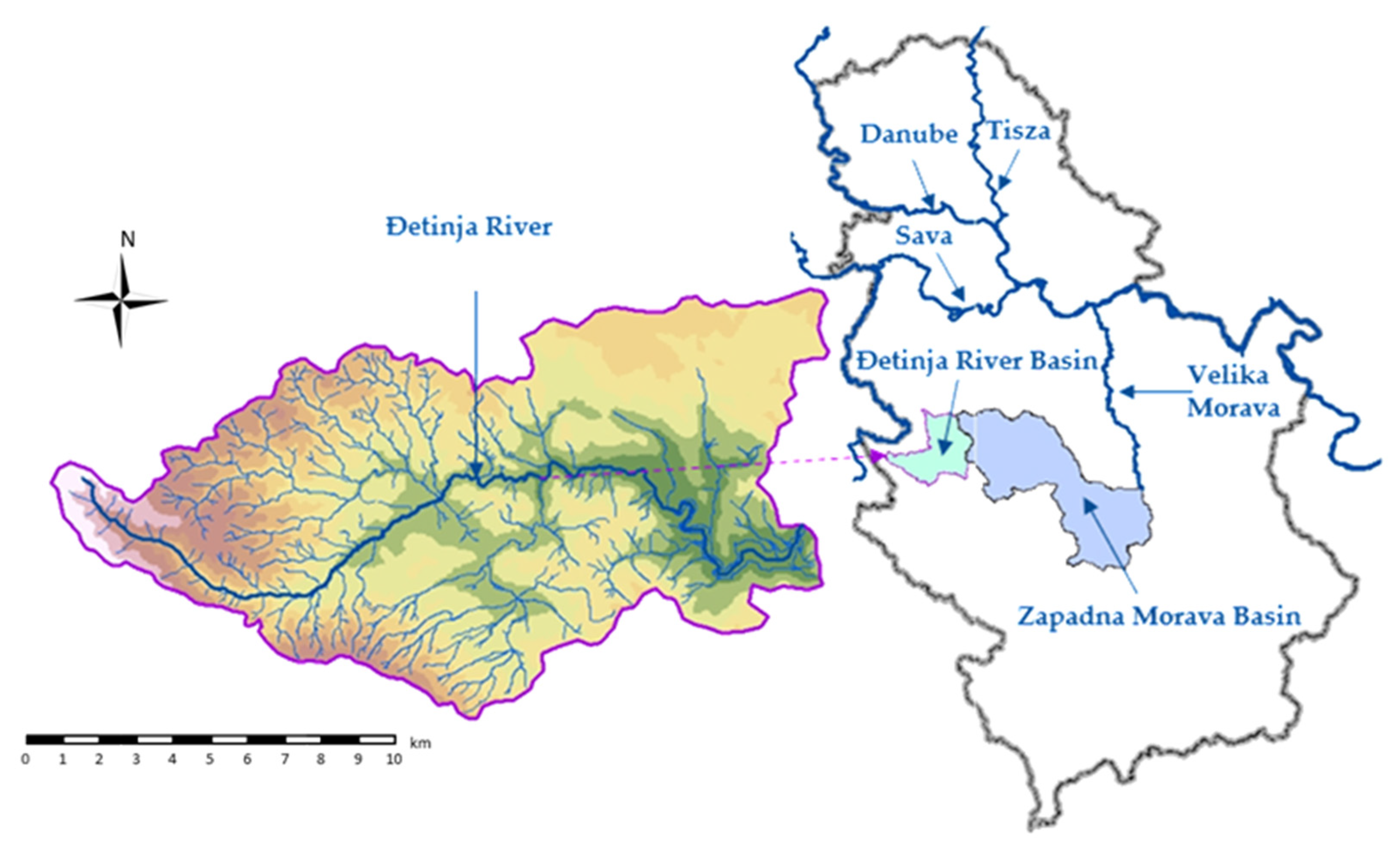
The Vrutci Reservoir Basin (VRB) (146 km2) is located in Western Serbia in the upper part of the Đetinja River Basin, the tributary of the Zapadna Morava River in Serbia. On a wider, continental scale, it is part of the Danube River basin (Figure 1).
The multipurpose Vrutci reservoir was created in 1984 via the construction of a dam at the entrance to the Đetinja River canyon to provide a water supply, flood protection, sediment retention, and low flow management during droughts [62].
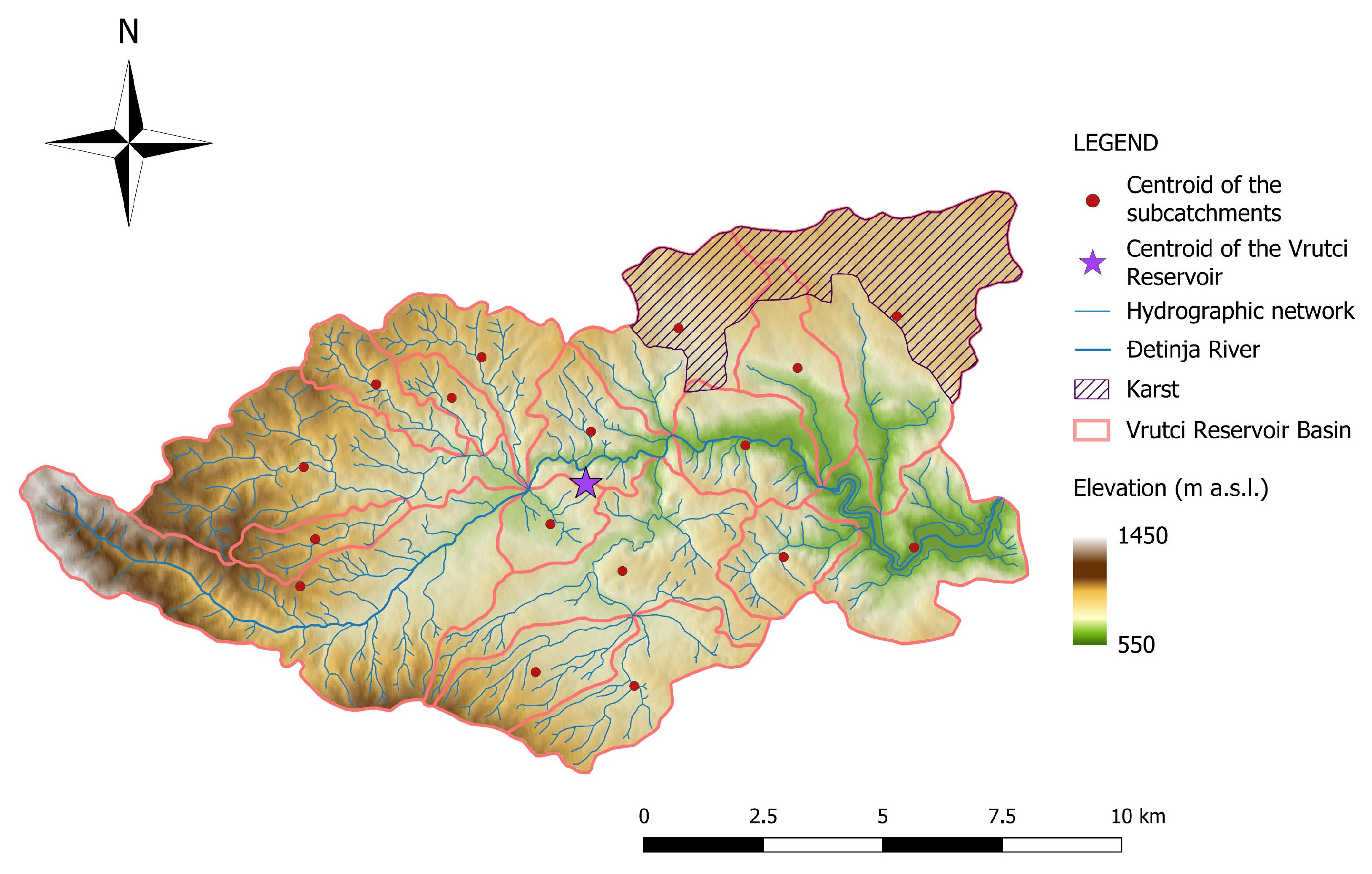
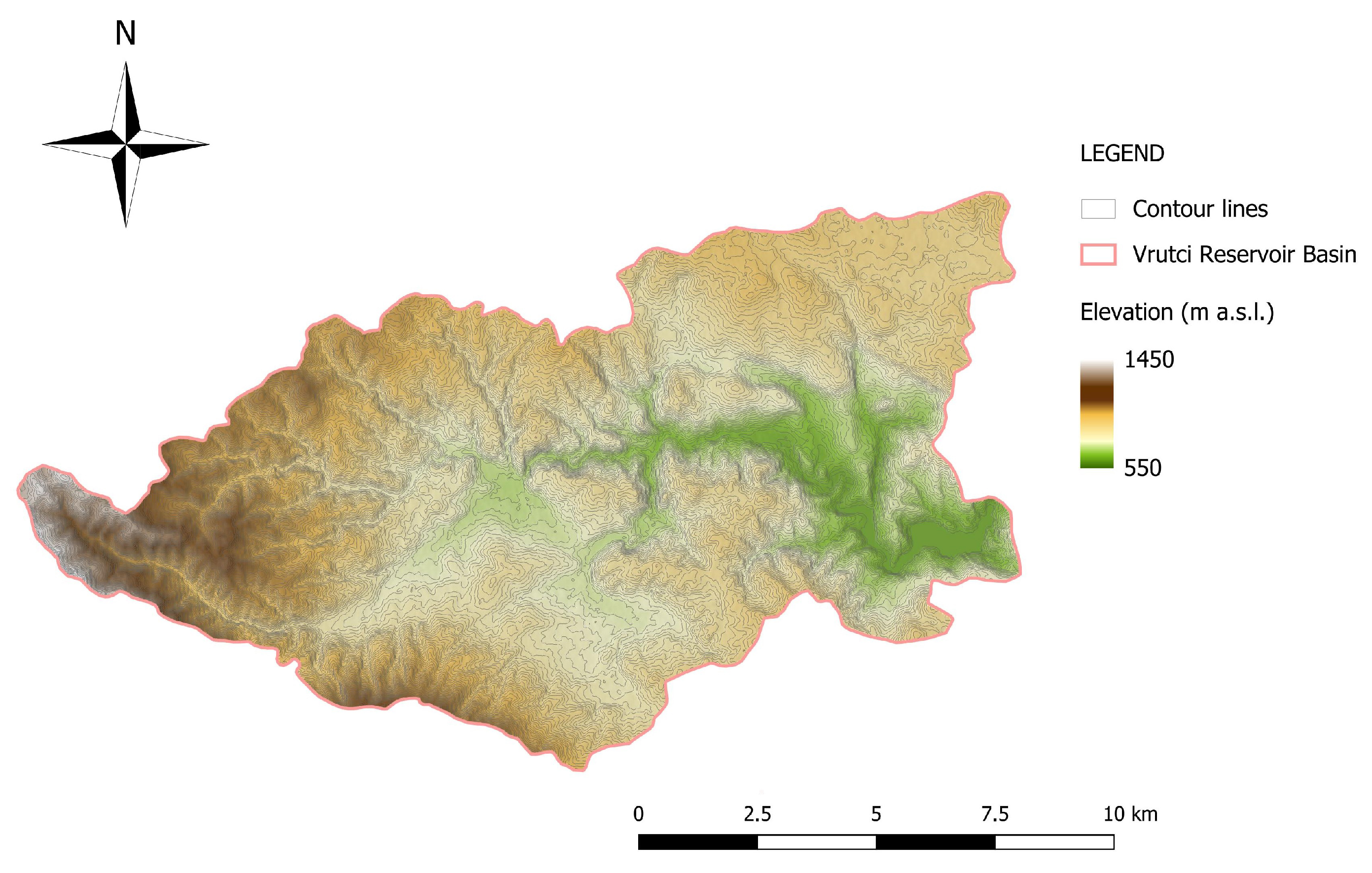
The prevailing topography is steep, with an average elevation of 882 m.a.s.l., ranging from 573 at the basin’s outlet to 1527 m.a.s.l. at the western perimeter, as displayed in Figure 2. The basin is 22 km long, and the centroid distance from the outlet is 10 km. There are evident problems indicating insufficient natural retention capacity and high runoff potential that result in flash (torrential) floods and significant erosion and sediment production due to geological and soil properties [63].
The adverse effect on reservoir water quality in the last decade was made evident by the cyanobacteria outbreak in 2013 [64], which might have long-term implications for the supply of drinking water.

2.2. Methodology Outline

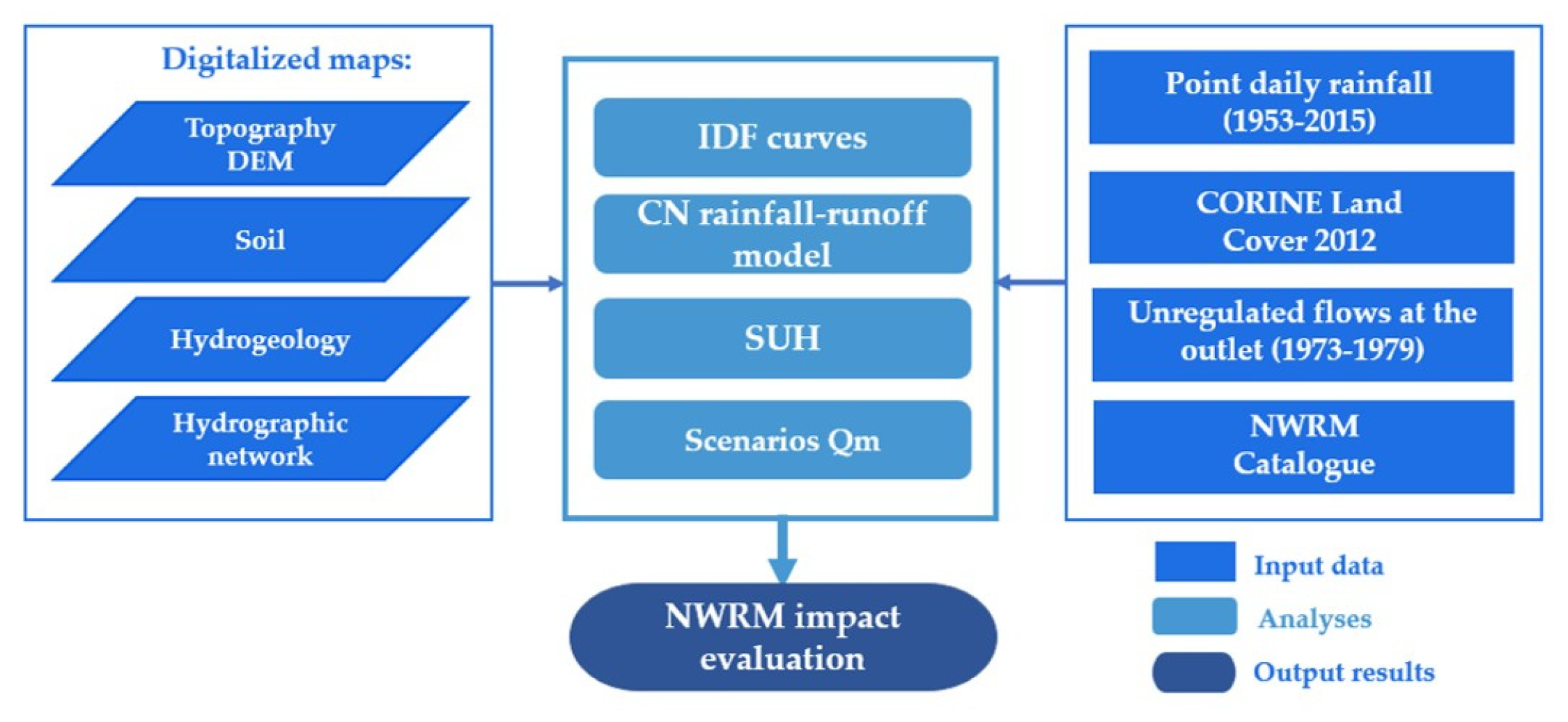
In consonance with the preceding material, we propose a methodological framework with which to acquire better insight into the processes that affect natural retention capacity in an ungauged basin with a number of water management issues. The methodological framework’s main steps (Figure 3) integrate well-documented interrelated statistical and hydrological methods applied to input data (rainfall, digitalized maps, and land cover/land use) and provide useful outputs for decision-making processes that support the implementation of IWM in ungauged basins based on NWRMs’ efficiency.
The digitalized input maps and observed unregulated daily flow at the outlet of the Vrutci Reservoir Basin (VRB) used in this research were provided by the Jaroslav Černi Water Institute [63]. Pan-European CORINE (Coordination of Information on the Environment) Land Cover (CLC) inventory open-source datasets for 2006 (CLC 2006) and 2012 (CLC 2012), temporally aligned with the available rainfall dataset, were employed to estimate land cover and land use in the study area (VRB). Datasets published by Republic Hydrometeorological Service of Serbia (RHMZ) [65] were utilized in point rainfall time-series analyses and the development of IDF (intensity–frequency–duration) curves. Spatial data processing and overlay analyses were performed using ArcMap 10.6.1 and QGIS 3.40.7.

2.3. Rainfall Analyses

Information on the spatial and temporal distribution of rainfall based on observed time series serves as the main input for better understanding a basin’s hydrologic regime when impacted by evident changes in rainfall intensity and frequencies [20,22,23]. Of particular interest for water resources engineering and management are IDF curves developed for localities around the world from observed short-duration point rainfall time series [66]. For ungauged basins, rainfall time series and IDF curves are rarely available. The satellite precipitation data recently used for ungauged basins underestimate high precipitation and significantly underestimate IDF curves [67,68,69].
No observed rainfall data were available for the study area; thus, the three surrounding locations presented in Table 1 were considered for IDF curve development.
A uniform spatial rainfall distribution across a small ungauged basin is recommended for hydrological studies as a fundamental assumption for synthetic unit hydrograph development [70]. As a consequence, observed daily rainfall data from Zlatibor meteorological station with the shortest distance to the Vrutci Reservoir Basin centroid for the 1951–2015 period (65 years) are included in Annual Maxima [71,72] time series. Due to a data quality issue identified by Zelenhasić and Ruski [59] for the year 1974, data from that year are excluded from the Annual Maxima time series.
The extreme value Gumbel distribution, which has been used extensively in hydrology, meteorology, and engineering [73], was applied to fit data and calculate return periods. This is a two-parameter distribution (scale α and location β) with constant skewness and kurtosis coefficients of 1.11396 and 4.5, respectively. The data used in the analyses are assumed to be independent [74]. Design values for different rainfall durations and return periods [75] were estimated using the following equation:
X = x ¯ + K t · S ,
where x ¯ is the mean, and S is the standard deviation. The frequency factor Kt for the Gumbel distribution defined by Chow [71] was calculated as follows:
K t = 6 π 0.5772 + l n l n T T 1 ,
In the frequency factor equation, 0.5772 is Euler’s constant, and T is the recurrence interval. Equation (3) is an empirical method developed by Janković [76], applied for hourly and sub-hourly rainfall intensity calculations based on annual maximum series:
I T , P = a 1440 1440 · A + 1 A · T + 1 B · H d ( P ) ,
In the preceding IDF curve equation, I is intensity, T is duration, P is return period, and Hd is daily maximum rainfall amount. Factors a and A are constant values, set as 1 and 0.3, respectively. The location factor B is 0.79 for Zlatibor meteorological station. The methodology was validated by comparison with observed short-duration rainfall data.
In addition to IDF curve development, trends in the World Meteorological Organization extreme precipitation indices R10mm (heavy precipitation days) and R20mm (very-heavy precipitation days) [73] were assessed via linear regression and the Mann–Kendal test [77], as this is a common approach for evaluating changes in rainfall statistics.

2.4. Land Cover/Land Use and Runoff Analyses

High runoff potential indicates low Vrutci Reservoir Basin retention capacity that results in various water management issues, such as floods, droughts, and water quality reduction. Extensive application of the CN model (Equation (4)) [50] for estimating an event-based rainfall–runoff response in ungauged basins as a function of LCLU, hydrologic soil group (HSG), and antecedent runoff condition is well-documented [54,57,78].
Q 0 = P I a 2 P I a + S   ,   I a = 0.2 · S ,
In the equation above, Q0 and P are depth (mm) of runoff and rainfall, respectively. The potential maximum water retention capacity of the basin, S (mm), is directly related to initial abstraction, Ia, by a factor of 0.2 [29]. Even though some researchers have questioned the accuracy of using a factor of 0.2 for initial abstraction estimation and proposed a new ratio [55,79], in this research, a factor of 0.2 is applied for runoff depth estimation:
Q 0 = P     0.2 · S 2 P   +   0.8 · S   ,   P > 0.2 · S ,
Equation (5) was applied to calculate the depth of runoff in the study area given the potential maximum water retention capacity, S, for different hydrologic soil groups (HSGs) [29,55,80] and curve numbers for normal runoff antecedent conditions (CNII) based on CLC land cover code data for Serbia [81].
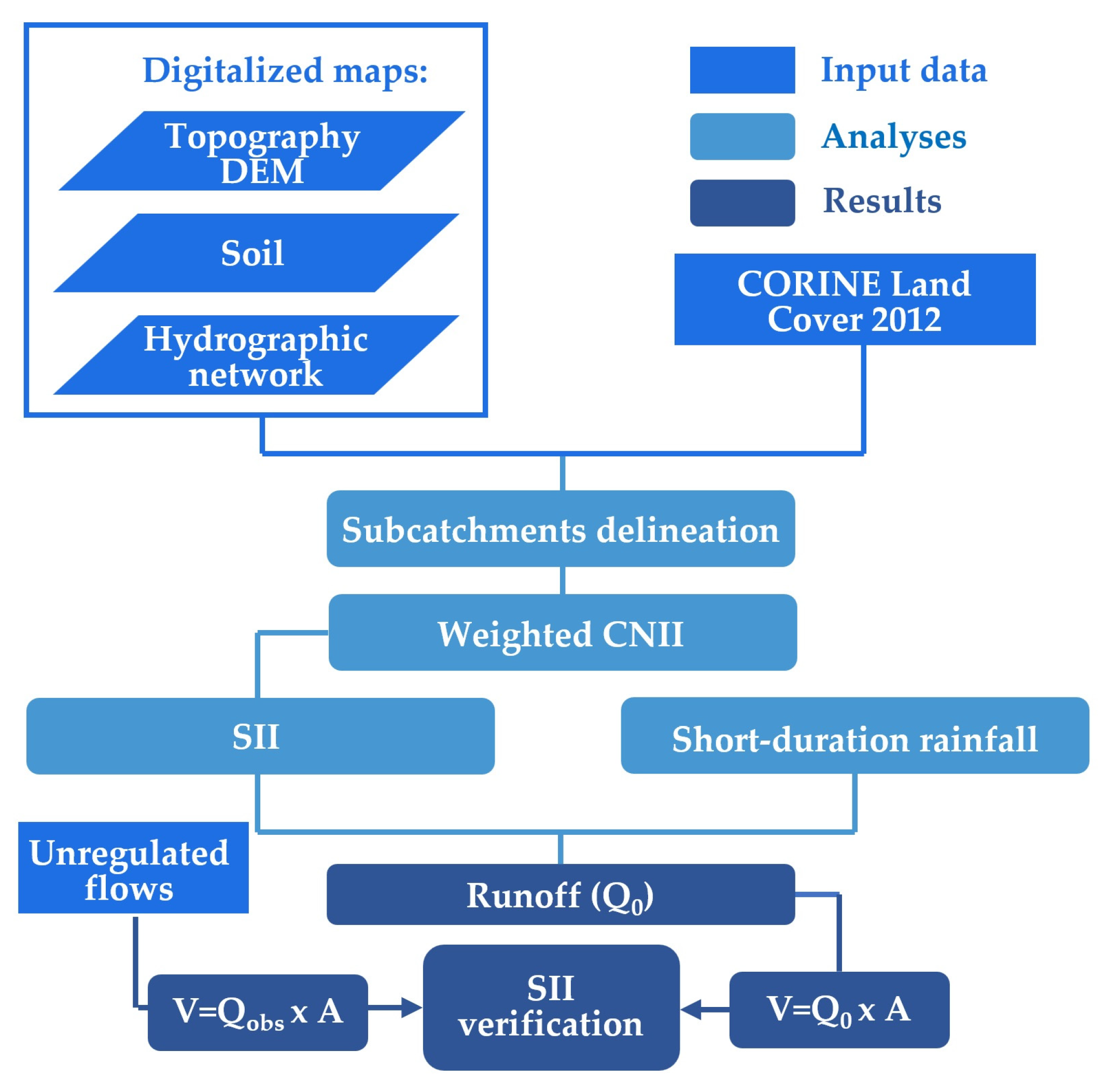
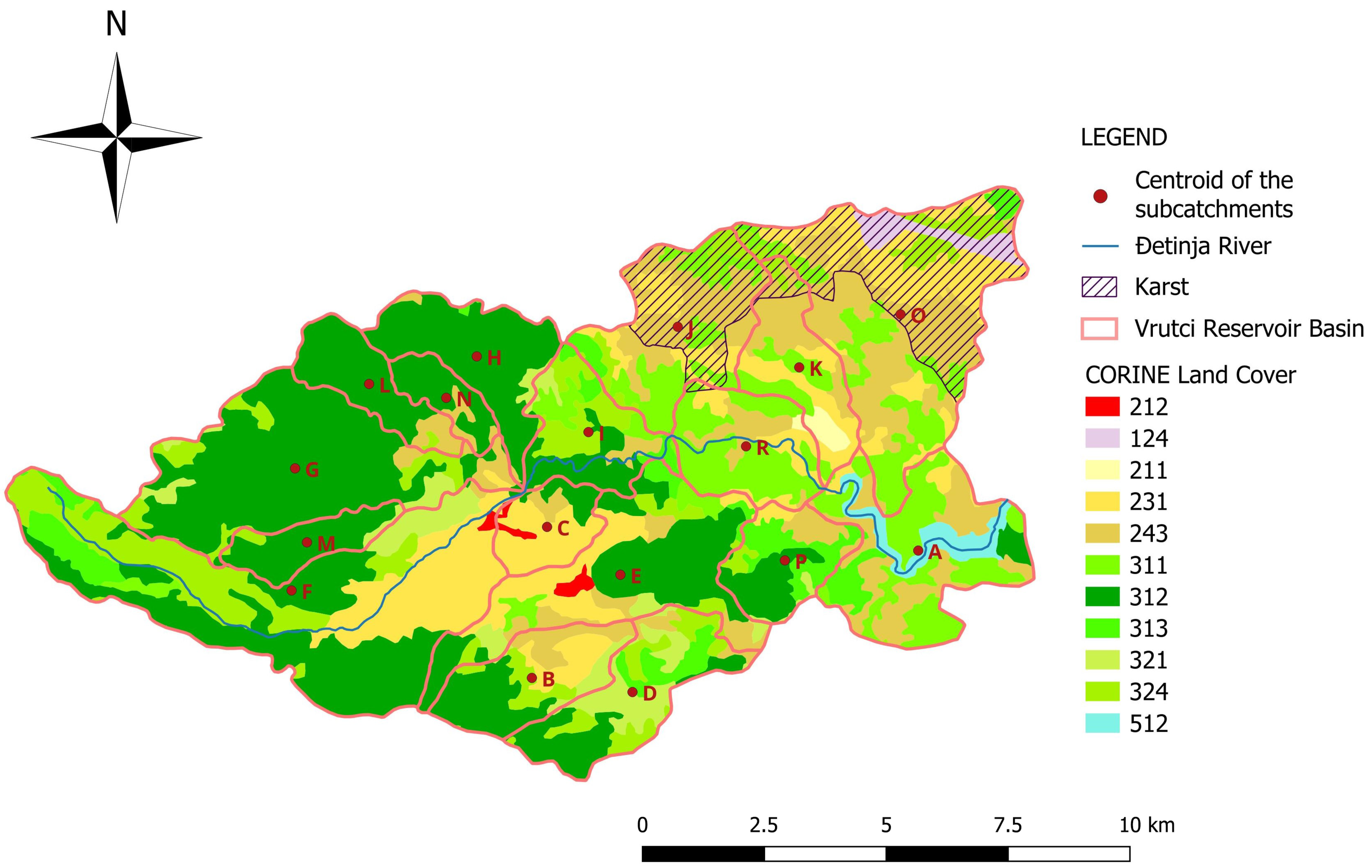
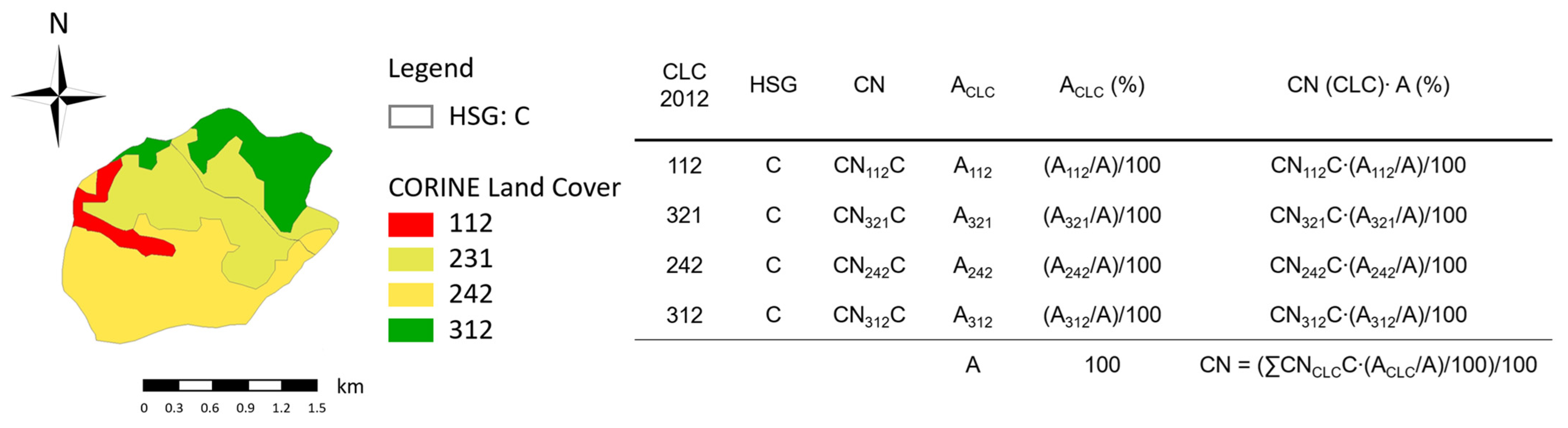
The GIS model was used to delineate 17 subcatchments, based on available DEM, soil spatial data, the hydrographic network [63], and CLC 2012 (Figure 4); subsequently, we estimated the weighed curve number (CN) for all antecedent runoff conditions (ARCs) drier-than-normal ARCI (CNI) and normal ARCII (CNII) and wetter-than-normal ARCIII (CNIII) estimates. The study area was decomposed into 17 subcatchments to evaluate the impact of spatial scale on the results. An illustration of a composite (weighted) CNII computation area based on HSG C and CLC 2012 land use codes is depicted in Figure 5. CLC 2012 land use codes 112, 231, 242, and 312 stand for discontinuous urban fabric, pastures, complex cultivation patterns, and coniferous forest, respectively.
Hydrologic soil group indicates runoff/retention potential: HSG A, with an infiltration rate > 7.6, has high retention potential; HSG B, with an infiltration rate of 3.8–7.6, indicates good retention potential; HSG C has a low infiltration rate (1.3–3.8) and low retention/good runoff potential; and HSG D, with an infiltration rate < 1.3, indicates high runoff potential with very low potential maximum water retention capacity [28]. Based on CNII calculations for two groups of subcatchments, the potential maximum water retention capacity was estimated using Equation (6):
S I I = 25.4 1000 C N I I 10 ,
For drier-than-normal antecedent conditions (CNI) and wetter-than-normal antecedent conditions (CNIII), the adjustment relation proposed by Hawkins et al. [82] and Chow et al. [83] was applied (Equation (7)) and included in Equation (6) to estimate SI and SIII. Accurate estimation of potential maximum water retention capacity values is crucial because of its impact on runoff (excess rainfall) estimate reliability.
C N I = C N I I 2.3 0.013 · C N I I   ,       C N I I I = C N I I 0.43 0.0057 · C N I I ,
For validation of the hydrological soil–cover complex (CN and S), we used estimated values of water quantity at the outlet based on observed unregulated daily flow prior to dam development that are available for 4 years (1973–1977) and compared them with water quantity daily data for the outlet based on VRB-weighted CN.

2.5. Synthetic Unit Hydrographs and Peak Discharge Analyses

Landscape geospatial features required for subcatchment SUH development are calculated based on intersected DEM and a hydrographic map [63]. The features analyzed in this research refer to basin characteristics with well-documented impacts on direct runoff and peak discharge [25,29,30,58,59] as a function of heavy-rainfall events uniformly distributed across the study area and hydrological soil–cover complex. These characteristics, such as area, slope, and length, are of particular interest for small-ungauged-basin SUH development [70,83,84]. More specifically, the geospatial characteristics that must be calculated for hydrological analyses in an ungauged basin include centroid location (Figure 6), longest flow path length (L), flow distance from the catchment centroid to the outlet (Lc), and average basin slope [85,86] (for the Vrutci Reservoir Basin and subcatchments).
Several strictly empirical (Snyder and SCS) or conceptual (single-linear reservoir, Nash and Clark) methods of basin runoff estimation are usually applied to develop SUH in ungauged basins as a function of parameters related to measurable basin characteristics [25,29,59,84]. More particulars on SUH method development and detailed explanations can be found in, e.g., [29,83,85]. For VRB subcatchments, the Snyder method for SUH development and peak runoff rate calculation related to basin characteristics was applied based on the empirical lag time equation developed for the Velika Morava River Basin in Serbia [85,87]:
t I = 0.40 · L 0.67 L L C J 0.086 ,
In the equation above, the time lag, tl (h), is the time from the centroid of excess rainfall to the occurrence of the peak runoff rate; L is the length of the main stream from the basin’s outlet to the upstream boundary of the basin (km); Lc is the length of the main stream from the basin’s outlet to the point opposite the centroid of the basin area (km); and J is the average basin slope. The adjusted lag time, tlR, for the SUH of rainfall duration, tR, was estimated as follows:
t I R = t I + a · t R ,
The coefficient a is 0.3 for the basins with an area up to 30 km2 [85,87]. Estimation of SUH time base, Tb, and widths—namely, the time until the peak Tp and time of recession Tr based on tlR (Equation (9)), as well as the area coefficient, K [85,87], which relates the time of recession with the time to peak—is summarized in Equation (10).
T p = t R 2 + t I R   ,       K = T r T p   ,       T b = T p 1 + K ,
Based on the calculated lag time and the resulting time base, Tb, for ungauged VRB peak discharge, Qm for contributing runoff, Q0, and area, A, was calculated using Equation (11).
Q m = 0.56 · A · Q 0 T b

2.6. NWRM Scenario Analyses

Based on the Catalogue of NWRMs available on the European NWRM+ platform [88], this ecosystem services concept includes a broad range of measures and types of LCLU based on mimicry of natural processes to improve basin water retention capacity. The total number of measures allocated to LCLU categories is 54, specifically agriculture (AG), forest (F), hydromorphology (HM), and urban area (UA). All NWRM groups comprise 14 diverse measures, except urban, which consists of 12 measures for improved water retention in urban areas. The level of benefits (low, medium, and high) provided by NWRMs can be assessed according to biophysical impacts, ecosystem services (ESs), and policy objectives based on comprehensive benefit tables. Moreover, details on applicability with respect to land cover, scale (drainage area), biophysical impact, costs vs. benefits, design guidelines, and so on are given for numerous measures.
The first phase in NWRM scenario development was exclusion of all measures intended for urban areas and hydromorphology except the basins and ponds in the HM category. The second step was selecting measures that would improve natural retention capacity and thus decrease high runoff potential that generates flash (torrential) floods, erosion, and sediment production due to geological and soil properties [63]. Consequently, the NWRMs with high-to-medium ranking with respect to biophysical impacts on runoff speed, erosion, and sediment delivery; increased water retention; reduced pollutant sources; and other benefits that contribute to Integrated Water Management in the VRB were obtained. Table 2 presents a summary of the NWRMs selected for scenario development with respect to biophysical impacts, ecosystem services [5,6,7], and contribution to Water Framework Directive [3] and Floods Directive objectives [4] required for Integrated Water Management and recommended spatial scales.
The selected NWRM scenario codes [88] are natural terracing (A10) and basins and ponds (N01), and F01-F06 are different measures, ranging from forest riparian buffers and afforestation of reservoir catchments to land use conversion (afforestation). The biophysical impact rating presented in Table 2 refers to slowing and reducing runoff; increasing retention and infiltration; conserving soil by reducing erosion; reducing pollutants; and so on. In addition to biophysical impacts (a medium-to-high regulatory ES), the landscape’s geospatial characteristics and drainage area size are elaborated. More details on ES benefits and contribution to IWM and SLM objectives are available online in the catalogue of NWRM and Global SLM Database [12].

3. Results and Discussion

3.1. Application of the Rainfall–Runoff Model to the Study Area

IDF curves obtained using the empirical method developed by Janković [76] were calculated for all sub-hourly (5–30 min) and sub-daily (1–12 h) durations and return periods from 2 to 100 years for Zlatibor meteorological station annual maximum series. The results of a comparison of two identical time series—specifically, 1951–1983 and 1984–2015—indicate differences and changes in short-duration heavy-rainfall intensity and frequency. Comparison of the IDF curves for the two time series reveals that the 10-year event in the former period became a 5-year event in the latter period (1984–2015). The Mann–Kendal test for WMO extreme precipitation indices R10mm (heavy-precipitation days) and R20mm (very-heavy-precipitation days) indicated significant trends in both indices. The changes in IDF statistics coincide with previous findings [18,19,20,21,22], while the trend analyses are in agreement with other studies conducted in Serbia [23]. The return periods of 25, 50, and 100 years were excluded because of time series length effects on the confidence interval for return periods longer than the time series. In addition, the majority of measures for improved ESs are more effective for high-probability, e.g., 2-, 5-, and 10-year return periods [40,42]. Thus, precipitation depth (56.4 mm) for the 5-year 1 h IDF curve based on 1984–2015 annual maximum series was selected as input data for the rainfall–runoff model of the Vrutci Reservoir Basin’s 17 subcatchments (Figure 7).
Analyses of CLC 2012 (Figure 8) revealed that the forests in the area, as a prevailing form of land cover in the VRB, comprise 35% coniferous forest (CLC 312), 12% broad-leaved forest (CLC 311), and 5% mixed forest (CLC 313). Land was principally used for agriculture, with significant areas of natural vegetation cover (CLC 243), corresponding to 15%, followed by complex cultivation patterns (CLC 242), at 12%, and transitional woodland–shrub cover (CLC 324), at 10%. Pastures account for 1.8% (CLC 231), while the share of land cover for airports (CLC 124) and waterbodies (CLC 512) is 1% each, and discontinuous urban fabric (CLC 112) and non-irrigated arable land (CLC 211) cover only 0.4% of the basin area.
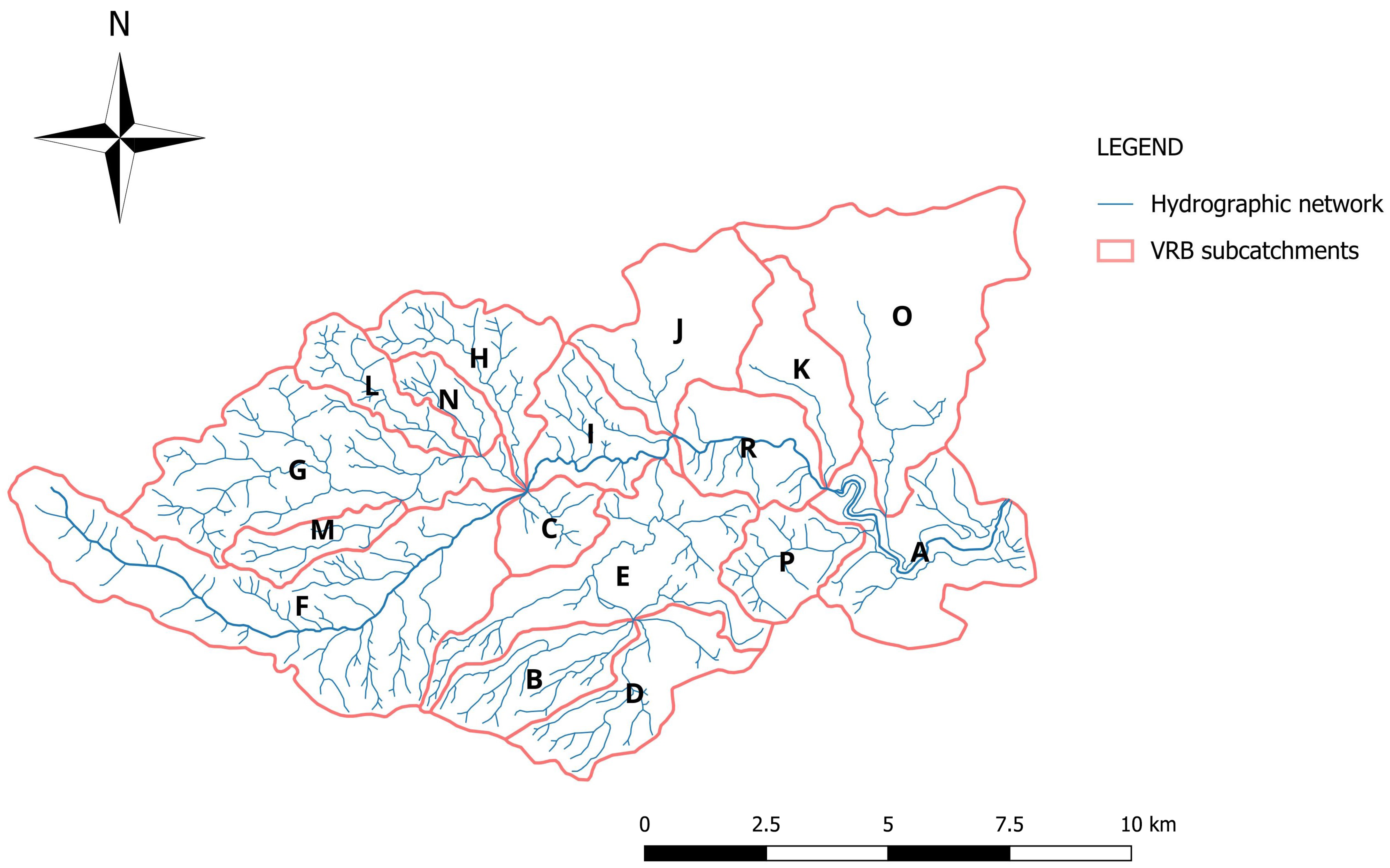
For the 17 delineated subcatchments (Figure 7), CLC 2012 values (Figure 8), and HSG C, three sets of weighted CNs, depending on the ARCs, were estimated—(i) CNI for drier-than-normal ARCs, (ii) CNII for normal ARCs, and (iii) CNIII for wetter-than-normal ARCIII —and, consequently, three sets of potential maximum retention capacity: SI, SII, and SIII. Given the area of the VRB (146 km2) and its subcatchments, a range from 3 to 24 km2 of runoff was calculated based on the assumption that there was a uniform spatial rainfall distribution across the basin [30,70,71,84]. The rainfall–runoff model’s results (Q0) for the 17 catchments are based on a 1 h 5-year heavy-rainfall-event depth of 56.4 mm (P), which corresponds to conditions for CN rainfall–runoff model application; namely, P > Ia for all subcatchments under ARCII. The summary results for SII and Q0 exhibited in Table 3 indicate that forest cover has a favorable impact on the VRB subcatchments’ potential maximum retention, SII. These results correspond to previous studies [45,88,89] and highlight the impact of LCLU on basin retention functionality [90] and improving regulating ESs. The largest retention capacity was subcatchment G (118 mm), with 78% of the area covered by forest, followed by subcatchments M (114 mm) and F (114 mm), with 91% and 48% forest cover, respectively. Very small retention capacity was observed for subcatchments O (56 mm) and C (64 mm), with 21% forest cover for the former and 18% for the latter. The estimated parameters CN and S were validated based on a comparison of water quantity at the VRB outlet. Observed daily rainfall data for Zlatibor meteorological station > 20 mm (very heavy precipitation days) [73] was selected for the period when unregulated flow was observed (1973–1977), and 20 independent events (with a span of at least 20 days) were selected. Water quantities at the outlet, calculated based on the weighted CNs for the VRB, were compared with the observed daily flow data for days when selected rainfall events occurred. The correlation coefficient for the two variables is 0.85, which confirms the validity of the CN values.

3.2. SUH and Peak Discharge in the Study Area

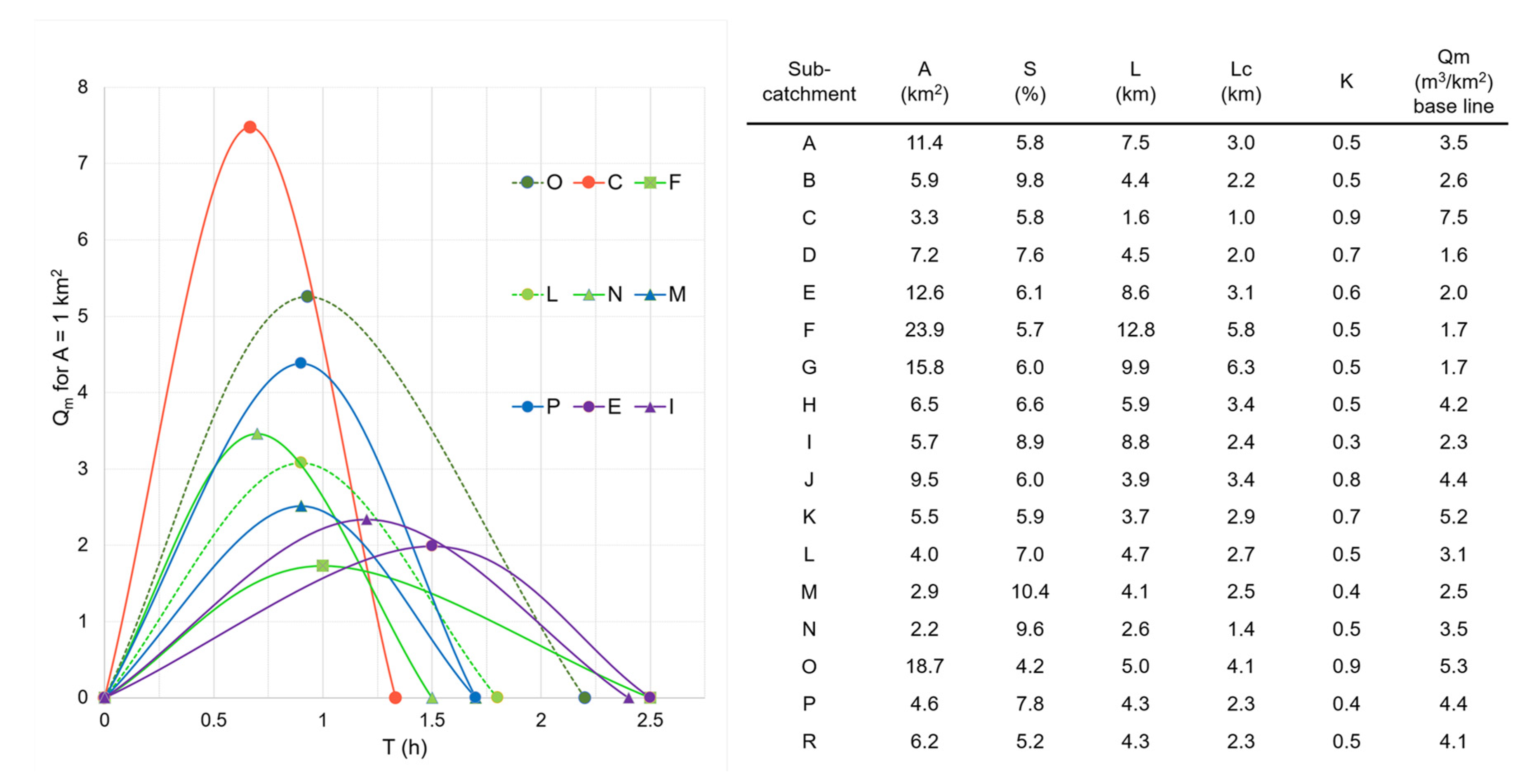
Figure 9 presents the results for the subcatchment landscape geospatial data for SUH development based on DEM for the VRB [63]. The GIS model was applied for basin centroid location, the longest flow path length (L), flow distance from the catchment centroid to the outlet (Lc), average basin slope (S), and the basin shape parameter (K). The empirical method developed by Jovanović and Radić for the Velika Morava River Basin [85,87] was applied for SUH time base (Tb) calculation.
The subcatchments’ peak discharges were calculated for ARCII for 1 h 5-year rainfall (56.4 mm) under the assumption of a uniform storm spatial distribution, as required for SUH development [25,29,30,58,59,60,70,84].
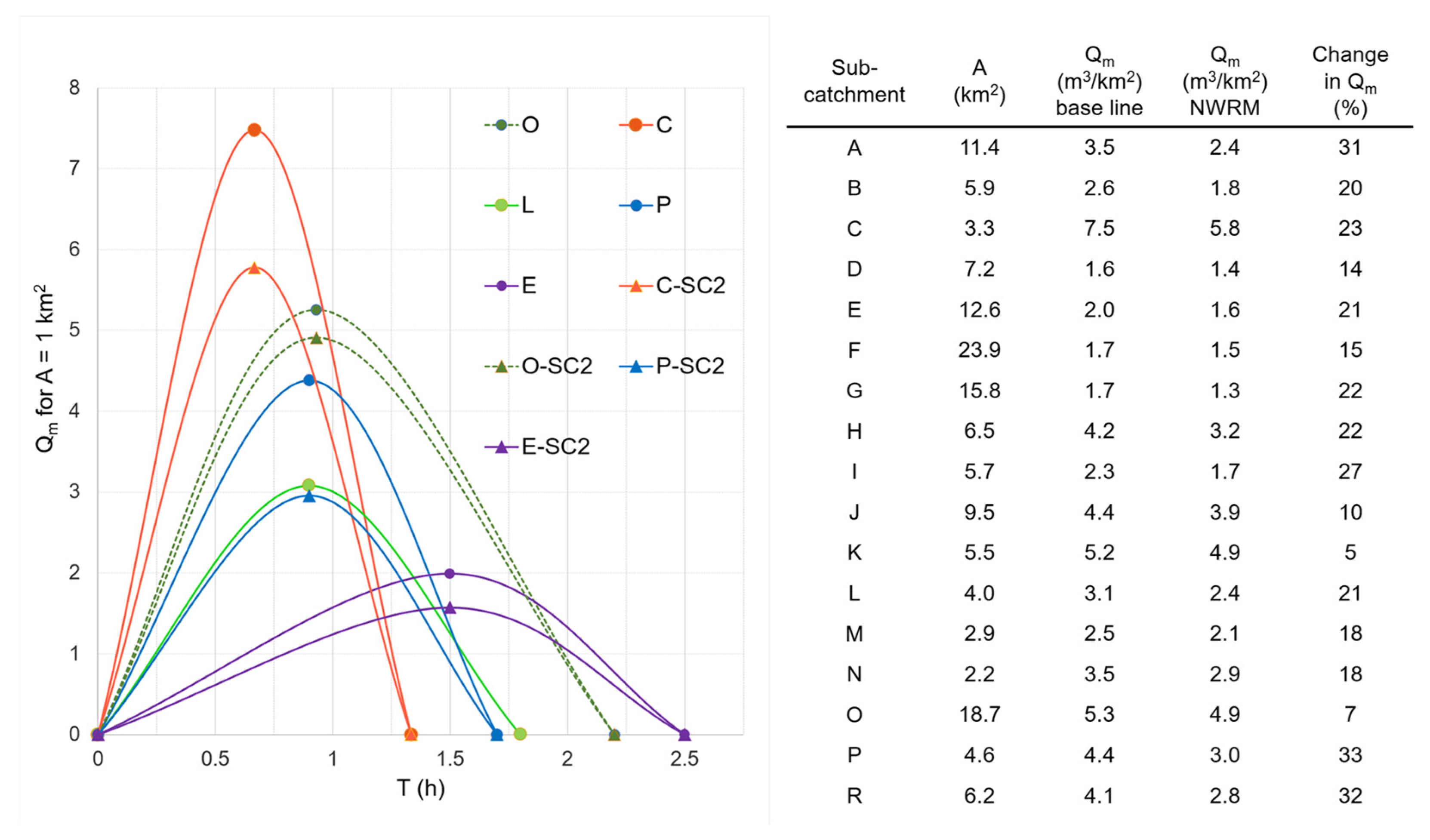
The peak discharge (Qm) for the selected subcatchments displayed in Figure 9 is the runoff peak rate from an area of 1 km2 for each catchment to exclude the impact of catchment area size on the peak discharge rate and provide visual insight into the effects of LCLU and basin characteristics on the SUH results. Subcatchments E, F, and I have good hydrologic conditions. Moderate retention potential is evident for L, M, and N, while high runoff potential is noticeable for C, O, and P. The basin shape parameter value of 0.9 for subcatchments C and O clearly indicates low retention potential, contrasting with the value of 0.4 for P, which is identical to the value for M and lower than that for the subcatchments with low runoff potential; namely, E (0.6) and F (0.6). The area covered by forest for P (70%) is higher than in subcatchments E (54%), F (48%), and I (%). Terrain is steeper for the subcatchments with low (E, F, and I) and moderate runoff potential, namely, L (7%), M (10%), and N (10%), than for O (4%), which, based on the results, has high runoff potential. For the subcatchments with low forest cover—namely, C (18%) and O (21%)—high runoff potential is evident, with a fast time to peak. Uniform conclusions are not feasible due to the heterogeneity of the results with respect to the hydrological soil–cover complex and landscape geospatial characteristics. The need for comprehensive evaluation of parameters that affect hydrologic conditions prior to selection of potential measures and possible locations is evident.

3.3. NWRM Scenario Evaluation

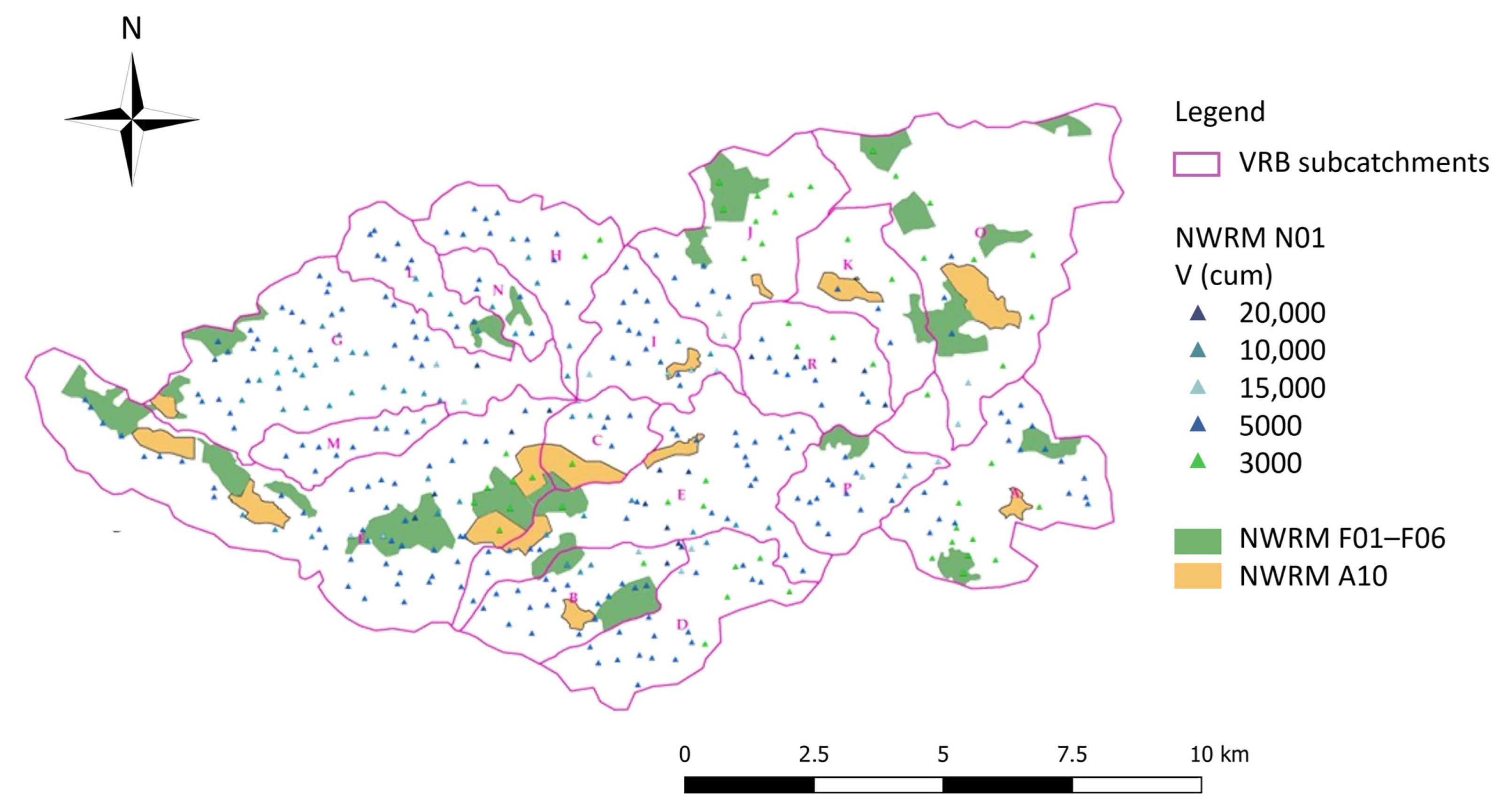
The proposed NWRM Scenario (Figure 10) was developed with reference to evident VRB issues (floods, erosion, significant water quantity issues, and sediment yield downstream) and the subcatchments’ specific feasibility with respect to landscape geospatial characteristics and hydrological soil groups.
The proposed NWRM scenario area (13.4 km2) comprises areas where forest measures have been applied (8.286 km2), traditional terracing (2.663 km2), and retentions (2.5 km2). The majority of subcatchments in which the proposed forest measures have been applied have an area covered by forest less than 50%. Establishment of evenly distributed retentions (N01) across the study area is proposed for all subcatchments, mainly in localities where natural depressions already exist. Basin shape parameters indicating fast runoff generation (>0.5), a slope greater than 0.6, and steep terrain in the upper parts of the subcatchments are criteria considered for traditional terracing locations. The NWRM scenario selected to evaluate the effects of the measures on Qm is an example, and different combinations of measures and localities can be applied.
Hygrograms of the effects of the NWRM scenario on the peak discharge rates for the selected subcatchments’ are depicted in Figure 11. For 10 subcatchments, the decrease in the runoff peak rate is more than 20%, with the most improved runoff regime observed for subcatchment P (33%). For subcatchment C, characterized by high runoff potential based on a basin shape value of 0.9, the hydrological soil–cover complex (forest cover = 18%, SII equal to 64 mm) reduction in Qm is 23%. A decrease of only 5% in the peak discharge rate for K is evident, even though a combination of all types of measures was considered due to the basin shape value (0.7), area covered by forest (24%), SII (70 mm), and slope (5.9%). For subcatchments B and F, the resulting peak discharge reduction rates differ significantly, corresponding to 20% and 15%, respectively, even though all NWRM scenario measures (A10, N01, and F01–F06) were proposed. The summary results presented in Figure 11 clearly indicate that the NWRMs have favorable effects on the hydrological regime, lowering runoff potential, and raising retention capacity.
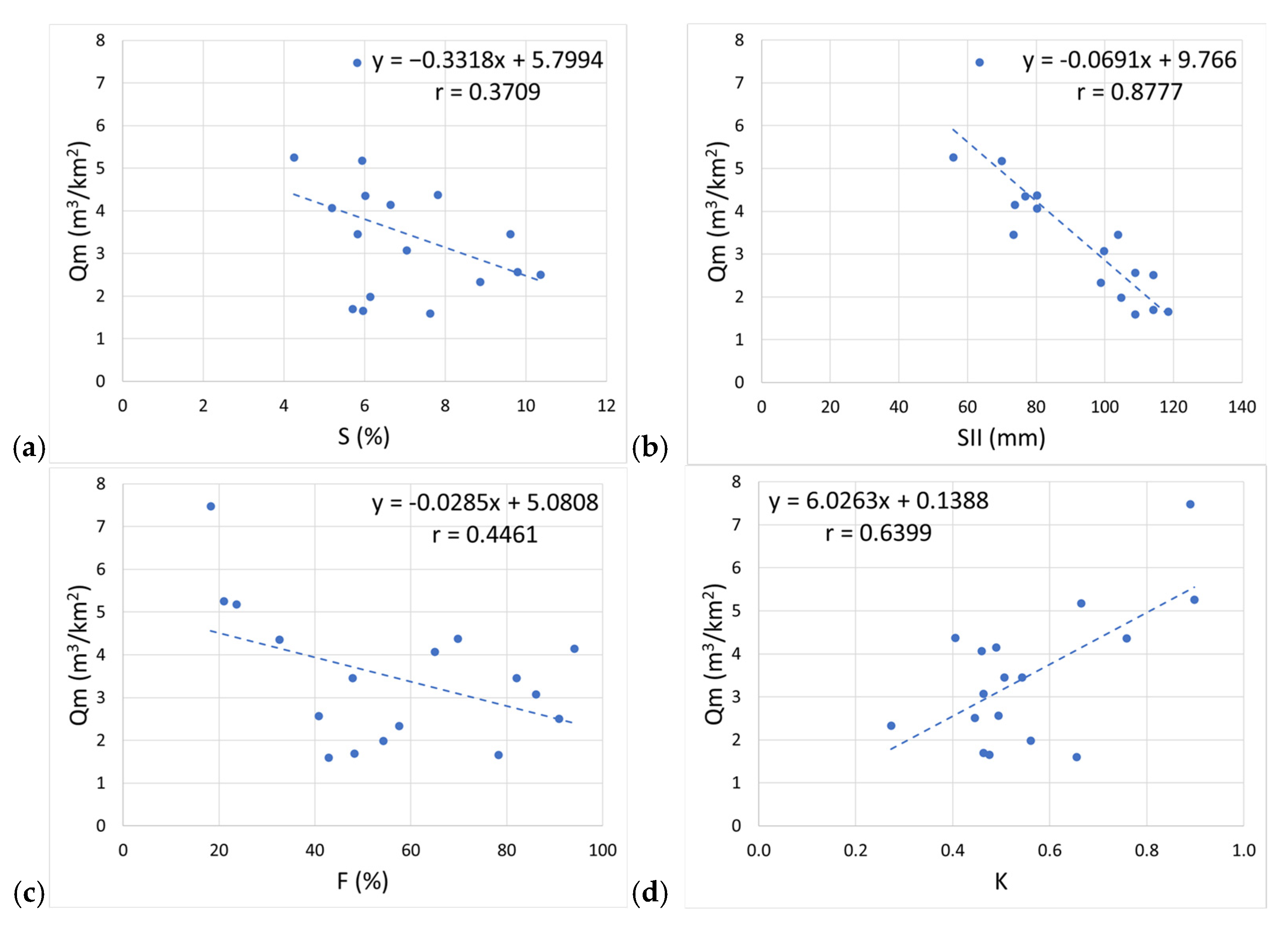
However, no simple explanation of the patterns appears feasible for either the landscape geospatial characteristics or measures proposed for individual subcatchments (Figure 12).
There is growing interest in measures based on regulating ecosystem services [5,6,7] that enlarge basin retention capacity by mimicking natural processes. More specifically, the significance of NWRMs’ multifunctionality and manifold benefits has been evidenced in recent studies that evaluated their effectiveness for improving land, environmental, and water management [31,32,37,38,39,40,42,90].
The estimation of precipitation based on IDF curves developed for point rainfall identical time series (1951–1983 and 1984–2015) indicates changes in short-duration heavy-rainfall statistics—a trend that is in agreement with other studies on rainfall intensity, frequency, and trend analyses [18,19,20,21,22,23]. IDF curves are developed because satellite and radar precipitation data underestimate short-duration heavy rainfall due to the impact of topography and microclimate at the local level, resulting in significant underestimation of IDF curves [67,68,69]. For the study area, an empirical method developed for Serbia [76] was applied to develop IDF curves based on observed daily point rainfall time series at Zlatibor meteorological station, which is 15 km away from Vrutci Reservoir basin. For many ungauged basins worldwide, this approach to the selection of a meteorological station might be useful given the impact of basin centroids in the estimation of geospatial parameters required for synthetic unit hydrograph development in small basins assumed to have uniform rainfall spatial distributions. The empirical methodology for IDF curves can be transferred outside of Serbia for locations with similar climate conditions but not for other climate zones with different rainfall patterns.
As a well-documented and widely applied approach [29,54,57,78], an empirical lumped CN model [50] was selected to estimate event-based rainfall–runoff response as a function of hydrological soil–cover complex [29,50,60,87]. Despite the fact that, over the past few decades, such models have been reviewed and discussed [51,52,53,54,55] and questions about the abstraction coefficient value of 0.2 have arisen [55,56], the model in its original form (i.e., with an abstraction coefficient value of 0.2) was used in this research, as it is still used worldwide for runoff estimation for ungauged and gauged locations. The results yielded by the rainfall–runoff model correspond to other studies on the impact of forest cover on runoff volume and hydrological regimes in basins [28,43,45,89,90,91], wherein researchers explain that forest cover exerts this effect by mitigating the impact of extreme rainfall events on erosion processes via deep root systems. Significant increases in CN and peak flows were observed after a forest fire in Attica, Greece [89]. In comparison with deforested areas, forest cover reduces peak discharge via a larger soil water storage capacity, increased infiltration rates, and reduced runoff velocity [92].
Based on the CN rainfall–runoff model analysis, VRB subcatchments G, L, M, and N, with more that 70% of the area covered by forest, have good hydrologic conditions and high retention potential, unlike subcatchments C and O, which are characterized by low forest cover and high runoff potential. The lack of observed data in ungauged basins is a great challenge with respect to the certainty of the estimated CN rainfall–runoff model output data. To validate the results, VRB water quantities at the basin outlet based on the CN model were compared with those based on the observed unregulated daily flows for selected independent daily rainfall values greater than 20 mm. The correlation coefficient of 0.85 suggests that the estimation of the hydrological soil–cover complex parameters was accurate.
SUHs were developed to evaluate NWRMs’ effects on peak discharge in the ungauged Vrutci Reservoir Basin, with significant water management issues (flash floods, erosion, and high sediment production, with downstream adverse effects on water quality), based on established principles and knowledge [25,29,58,59,60,70,71]. The subcatchment shape factors (L, Lc, and J) were estimated using the empirical method for calculating time lag and SUH time to peak and time base suitable for local conditions [84,85,86,87]. In summary, for normal antecedent runoff conditions (SII), the time-to-peak and peak discharge magnitude results for the subcatchments range from 0.7 h to 1.3 h and from 2 m3/s to 7 m3/s, respectively. We observed a significant impact on SUH time to peak for subcatchments C and O, with a basin shape parameter of 0.9.
The evaluation of the effects of the NWRM scenario on water retention capacity and resulting peak discharge magnitude emphasizes positive effects overall. Comparison of the peak discharge for the baseline scenario and NWRM scenario indicates a decrease in peak discharge rate for the latter for all VRB subcatchments, ranging from 5% to 33% for the proposed measures. The lowest decrease in peak discharge was observed for subcatchment O (5%), despite the fact that all types of NWRM scenario measures were proposed; on the contrary, for subcatchment C, the peak discharge rate reduction (23%) was significant. For subcatchments B and F, all measures proposed for the NWRM scenario were included in the evaluation, but the difference in resulting peak discharge change was significant: 20% and 15% for subcatchments B and F, respectively.
The first criterion for NWRM scenario selection was a medium-to-high biophysical impact on evident VRB issues (flash floods, erosion and sediment production, and adverse downstream effects on water quality) [33,93]. The second and third criteria were feasibility with respect to land availability and geospatial characteristics.
Although the observed changes in the peak discharge rate do not have a uniform pattern for different measures and basin characteristics, the results are in agreement with other studies [26,28,31,37,38,39,42,43,44,45,48] and policies [3,4,8,9,10,11,32,33,34], which acknowledge the benefits of increased basin potential maximum retention in providing regulatory ecosystem services to address different water management and LCLU issues in the study area. The results indicate that no simple explanation of the pattern appears feasible for either the landscape geospatial characteristics or measures proposed for the individual subcatchments. However, the necessity of comprehensive evaluation of the parameters that affect hydrologic conditions prior to prioritizing potential measures for feasible location selection is evident.
The results reveal a positive impact of the proposed NWRM scenario on basin water retention potential. They highlight the need to support improvement of regulating ESs for integrated water management [3,4]; the sustainable land management [12] objectives of global policies for water, land, and disaster risk reduction [8,9,10]; and the Sustainable Development Goals (SDGs) [11]—key targets for safe drinking water (SDG 6.1), water resource management (SDG 6.5), water-related ecosystems (SDG 6.6), terrestrial and freshwater ecosystems’ conservation and restoration (SDG 15.1), the need to stop deforestation and restore degraded forests (SDG 15.2), the need to combat desertification and restore degraded land (SDG 15.3), the need to ensure conservation of mountain ecosystems (SDG 15.4), and so on. Implementation feasibility depends on local policies, stakeholders’ acceptance, available funding, and the degree to which cooperation among decision-makers in different sectors can be improved.
The potential limitations of the methodology for assessing the potential NWRM site-specific favorable effects on SUH peak discharge replicability with regard to other ungauged basins include the unavailability of data and information for validating estimated runoff values, which might lead to over- or underestimation of peak discharge, as well as the low confidence and high uncertainty of the results. Furthermore, the proposed approach would most certainly benefit from incorporating landscape-planning perspectives (e.g., land tenure, land use conflicts, implementation costs, and production losses), which are, at this stage, outside the scope of this paper.
Further research directions include assessment of different NWRM scenarios with respect to spatial distribution and a combination of measures, application of this methodology to different small ungauged and gauged basins with similar characteristics, and the development of relevant indicators.

4. Conclusions

Analysis of short-duration heavy-rainfall indicated changes in intensity, duration, and frequency. The results obtained from the CN rainfall–runoff model indicate that forest cover has a positive impact on retention potential. Estimated runoff values were validated by comparison against observed unregulated flows, resulting in a correlation coefficient of 0.85. The NWRM scenario for determining the impact of land use changes on subcatchments’ peak discharge included measures with medium-to-high regulating ecosystem services benefits and biophysical impacts (reducing and slowing runoff, soil conservation, and pollution reduction). Although the observed changes in the peak discharge rate per square kilometer do not have a uniform pattern, the results underscore the benefits of improving regulating ecosystem services to address different water, land, and environmental issues based on applying NWRMs to less than 10% of the VRB area. Correspondingly, the significance of coordination between sectors to improve synergy among policy objectives and cooperation among different sectors has been emphasized. It is evident that NWRMs and other concepts based on ecosystem services for improving water retention potential in basins provide valuable contributions to water management. Our methodology indicates some of the most important processes that influence the retention capacity of the basin. Our methodological framework’s convenience is reflected in the efficiency with which the proposed measures’ impacts can be evaluated, making it useful for stakeholders and informed decision-makers planning their implementation in the basin. Its flexibility is reflected in the possibility of selecting different rainfall events, allowing for the development of infinite NWRM scenarios and applications in small basins, both ungauged and gauged. In this respect, this methodological approach can be considered a useful tool for providing information relevant to stakeholder’s consultations and decision-making in the environmental sector, water sector, agriculture, forestry, spatial planning, and other sectors involving small ungauged basins.

Author Contributions

Conceptualization, B.B.M. and B.K.; methodology, B.B.M.; software, B.B.M.; validation, B.B.M., B.K., and B.H.; formal analysis, B.B.M.; investigation, B.B.M.; resources, B.B.M. data curation, B.B.M.; writing—original draft preparation, B.B.M. and B.K.; writing—review and editing, B.B.M., B.K., and B.H.; visualization, B.B.M. and B.H.; supervision, B.B.M. and B.K.; project administration, B.K.; funding acquisition, B.K. All authors have read and agreed to the published version of the manuscript.

Funding

This research was funded by the European Union—NextGenerationEU—WaRM-CC—uniri-iz-25-27. The views and opinions expressed are solely those of the authors and do not necessarily reflect the official stance of the European Union or the European Commission. Neither the European Union nor the European Commission can be held accountable for them.

Data Availability Statement

CORINE Land Cover 2006 and CORINE Land Cover 2012 are available at https://land.copernicus.eu/en/products/corine-land-cover?tab=datasets (accessed on 1 October 2018). Climatological data are available at https://www.hidmet.gov.rs/latin/meteorologija/klimatologija_godisnjaci.php (accessed on 30 March 2026). The original contributions presented in the study are included in the article; further inquiries can be directed to corresponding author.

Acknowledgments

The access to the data and information available in Jaroslav Černi Water Institute (JCWI) internal projects and documentation repository is very appreciated. For doubt clarification, the research scope definition support provided by Edward A. McBean was invaluable.

Conflicts of Interest

The authors declare no conflicts of interest.

References

  1. Mitchell, B. Integrated Water Management. In Integrated Water Management: International Experiences and Perspectives; Mitchell, B., Ed.; Belhaven Press: London, UK, 1990; pp. 1–21. [Google Scholar]
  2. Viessman, W., Jr. Integrated Water Management. J. Contemp. Water Res. Educ. 2011, 106, 2. [Google Scholar]
  3. Water Framework Directive. Directive 2000/60/EC of the European Parliament and of the Council of 23 October 2000 Establishing a Framework for Community Action in the Field of Water Policy. Official Journal of the European Union, 23 October 2000; p. L 327/1 2000.
  4. Floods Directive. Directive 2007/60/EC of the European Parliament and of the Council of 23 October 2007 on the Assessment and Management of Flood Risks. Official Journal of the European Union, 23 October 2007; p. L 288/27 2007.
  5. de Groot, R.S.; Wilson, M.A.; Boumans, R.M.J. A Typology for the Classification, Description and Valuation of Ecosystem Functions, Goods and Services. Ecol. Econ. 2002, 41, 393–408. [Google Scholar] [CrossRef]
  6. Millennium Ecosystem Assessment. Ecosystems and Human Well-Being: Synthesis; Millennium Ecosystem Assessment: Washington, DC, USA, 2005. [Google Scholar]
  7. Brauman, K.A.; Daily, G.C.; Duarte, T.K.; Mooney, H.A. The Nature and Value of Ecosystem Services: An Overview Highlighting Hydrologic Services. Annu. Rev. Environ. Resour. 2007, 32, 67–98. [Google Scholar] [CrossRef]
  8. UN Convention on the Protection and Use of Transboundary Watercourses and International Lakes (Water Convention), March 17 1992, Ch XXXVII 10 (Entered into Force on 6 October 1996) 1996, 1936. Available online: https://unece.org/DAM/env/water/pdf/watercon.pdf (accessed on 2 March 2026).
  9. UN United Nations Convention to Combat Desertification in Those Countries Experiencing Serious Drought and/or Desertification (Convention to Combat Desertification), Particularly in Africa, 1994, Ch XXXVII 10 (Entered into Force on 26 December 1996) 1996. Available online: https://treaties.un.org/pages/ViewDetails.aspx?src=TREATY&mtdsg_no=XXVII-10&chapter=27&clang=_en (accessed on 2 March 2026).
  10. UN. Sendai Framework for Disaster Risk Reduction 2015–2030, (Sendai Framework for DRR). In Proceedings of the UN World Conference, Sendai, Japan, 18 March 2015. A/RES/69/283 (Endorsed on 3 June 2015). [Google Scholar]
  11. UN General Assembly. Transforming Our World: The 2030 Agenda for Sustainable Development, A/RES/70/1 (Adopted on 25 September 2015) 2015. Available online: https://digitallibrary.un.org/record/3923923?ln=en&v=pdf (accessed on 2 March 2026).
  12. Critchley, W.; Harari, N.; Mollee, E.; Mekdaschi-Studer, R.; Eichenberger, J. Sustainable Land Management and Climate Change Adaptation for Small-Scale Land Users in Sub-Saharan Africa. Land 2023, 12, 1206. [Google Scholar] [CrossRef]
  13. Plavšić, J.; Vladiković, D.; Despotović, J. Floods in the Sava River Basin in May 2014. In Proceedings of the Mediterranean Meeting on ″Monitoring, Modelling and Early Warning of Extreme Events Triggered by Heavy Rainfalls″, University of Calabria, Cosenza, Italy, 26–28 June 2014; PON 01_01503-MED-FRIEND project; University of Calabria: Cosenza, Italy, 2014. [Google Scholar]
  14. Vidmar, A.; Globevnik, L.; Koprivšek, M.; Sečnik, M.; Zabret, K.; Đurović, B.; Anzeljc, D.; Kastelic, J.; Kobold, M.; Sušnik, M.; et al. The Bosna River Floods in May 2014. Nat. Hazards Earth Syst. Sci. 2016, 16, 2235–2246. [Google Scholar] [CrossRef]
  15. Jamshed, A.; Birkmann, J.; Feldmeyer, D.; Rana, I.A. A Conceptual Framework to Understand the Dynamics of Rural–Urban Linkages for Rural Flood Vulnerability. Sustainability 2020, 12, 2894. [Google Scholar] [CrossRef]
  16. Mengistu, M.G.; Kruger, A.C.; Mbatha, S.M.S.; Ngwenya, S.B. Trends and Future Projections of Extreme Precipitation Indices in Limpopo Province, South Africa. Hydrology 2026, 13, 121. [Google Scholar] [CrossRef]
  17. Kaur, B.; Binns, A.; McBean, E.; Sandink, D.; Castro, K.; Gharabaghi, B. Urban Flood Susceptibility Mapping for Toronto, Canada, Using Supervised Regression and Machine Learning Models. J. Flood Risk Manag. 2025, 18, e70051. [Google Scholar] [CrossRef]
  18. Vasiljevic, B.; McBean, E.; Gharabaghi, B. Trends in Rainfall Intensity for Stormwater Designs in Ontario. J. Water Clim. Change 2012, 3, 1–10. [Google Scholar] [CrossRef]
  19. Peck, A.; Prodanovic, P.; Simonovic, S.P.P. Rainfall Intensity Duration Frequency Curves Under Climate Change: City of London, Ontario, Canada. Can. Water Resour. J./Rev. Can. Des Ressour. Hydr. 2012, 37, 177–189. [Google Scholar] [CrossRef]
  20. Donat, M.G.; Lowry, A.L.; Alexander, L.V.; O’Gorman, P.A.; Maher, N. More Extreme Precipitation in the World’s Dry and Wet Regions. Nat. Clim. Chang. 2016, 6, 508–513. [Google Scholar] [CrossRef]
  21. Hosseinzadehtalaei, P.; Tabari, H.; Willems, P. Climate Change Impact on Short-Duration Extreme Precipitation and Intensity–Duration–Frequency Curves over Europe. J. Hydrol. 2020, 590, 125249. [Google Scholar] [CrossRef]
  22. Jiang, A.; McBean, E.; Zeng, P.; Wang, Y. Changing Rainfall Patterns: A Perspective of Inter-Event Time between Rainfall Events and Annual Numbers of Rainfall Events. Stoch. Environ. Res. Risk Assess. 2025, 39, 445–464. [Google Scholar] [CrossRef]
  23. Tošić, I.; da Silva, A.S.A.; Filipović, L.; Tošić, M.; Lazić, I.; Putniković, S.; Stosic, T.; Stosic, B.; Djurdjević, V. Trends of Extreme Precipitation Events in Serbia Under the Global Warming. Atmosphere 2025, 16, 436. [Google Scholar] [CrossRef]
  24. Zolina, O.; Simmer, C.; Gulev, S.K.; Kollet, S. Changing Structure of European Precipitation: Longer Wet Periods Leading to More Abundant Rainfalls. Geophys. Res. Lett. 2010, 37, L06704. [Google Scholar] [CrossRef]
  25. Srebrenović, D. Applied Hydrology; Tehnička knjiga: Zagreb, Croatia, 1986. [Google Scholar]
  26. Zhao, Y.; Nearing, M.A.; Guertin, D.P. Modeling Hydrologic Responses Using Multi-Site and Single-Site Rainfall Generators in a Semi-Arid Watershed. Int. Soil Water Conserv. Res. 2022, 10, 177–187. [Google Scholar] [CrossRef]
  27. Bracken, L.J. 7.8 Flood Generation and Flood Waves. In Treatise on Geomorphology; Shroder, J.F., Ed.; Elsevier: Amsterdam, The Netherlands, 2013; pp. 85–94. [Google Scholar] [CrossRef]
  28. Matić, B.B. Rainfall Impact on River Basin Retention Capacity and Water Management. Doctoral Thesis, University of Novi Sad, Novi Sad, Serbia, 2019. [Google Scholar]
  29. Chin, D.A.; Mazumdar, A.; Roy, P.K. Water-Resources Engineering, 3rd ed.; Pearson Education Limited: London, UK, 2013. [Google Scholar]
  30. Jevđević, V. Hydrology: Part 1. Special Editions, Book 4; Hidrotehnički Institut “Ing. Jaroslav Černi”: Belgrade, Serbia, 1956. [Google Scholar]
  31. Evers, M.; Nyberg, L. Coherence and Inconsistency of European Instruments for Integrated River Basin Management. Int. J. River Basin Manag. 2013, 11, 139–152. [Google Scholar] [CrossRef]
  32. EU. Links Between the Floods Directive (FD 2007/60/EC) and Water Framework Directive (WFD 2000/60/EC); Resource Document, Technical Report-2014-078; EU: Brussels, Belgium, 2014. [Google Scholar]
  33. Drafing team of the WFD CIS Working Group Programme of Measures (WG PoM). EU Policy Document on Natural Water Retention Measures; Technical Report-2014-082; EU: Brussels, Belgium, 2014. [Google Scholar]
  34. EPA and the OPW Working Group. Natural Water Retention Measures (NWRM) Overview and Recommendations for Use in Ireland. Available online: https://www.catchments.ie/natural-water-retention-measures-a-nature-based-solution/ (accessed on 27 October 2024).
  35. Nesshöver, C.; Assmuth, T.; Irvine, K.N.; Rusch, G.M.; Waylen, K.A.; Delbaere, B.; Haase, D.; Jones-Walters, L.; Keune, H.; Kovacs, E.; et al. The Science, Policy and Practice of Nature-Based Solutions: An Interdisciplinary Perspective. Sci. Total Environ. 2017, 579, 1215–1227. [Google Scholar] [CrossRef]
  36. Ruangpan, L.; Vojinovic, Z.; Di Sabatino, S.; Leo, L.S.; Capobianco, V.; Oen, A.M.P.; McClain, M.E.; Lopez-Gunn, E. Nature-Based Solutions for Hydro-Meteorological Risk Reduction: A State-of-the-Art Review of the Research Area. Nat. Hazards Earth Syst. Sci. 2020, 20, 243–270. [Google Scholar] [CrossRef]
  37. Almasi, P.; Pagliacci, F.; Bettella, F.; Bortolini, L.; D’Agostino, V. Benefits, Co-Benefits, and Trade-Offs in Natural Water Retention Measures: A Review of Classifications and Indicators. Nat. Hazards 2025, 121, 16205–16246. [Google Scholar] [CrossRef]
  38. Collentine, D.; Futter, M.N. Realising the Potential of Natural Water Retention Measures in Catchment Flood Management: Trade-offs and Matching Interests. J. Flood Risk Manag. 2018, 11, 76–84. [Google Scholar] [CrossRef]
  39. Balatonyi, L.; Lengyel, B.; Berger, Á. Nature-Based Solutions as Water Management Measures in Hungary. Mod. Geográfia 2022, 17, 73–85. [Google Scholar] [CrossRef]
  40. Matić, B.B.; Karleuša, B. Ecosystem-Based Disaster Risk Reduction Framework as a Tool for Improved River Basin Natural Water Retention Capacity and Environmental Hazard Resilience. In Proceedings of the EWaS5 International Conference: “Water Security and Safety Management: Emerging Threats or New Challenges? Moving from Therapy and Restoration to Prognosis and Prevention”, Naples, Italy, 12–15 July 2022; MDPI: Basel, Switzerland, 21 October 2022; p. 40. [Google Scholar]
  41. Matic, B.; Perovic, M.; Vulic, D. Natural Water Retention Measures Contribution to Integrated Transboundary Tisza River Basin Management-Environmental and Flood Risk Management Objectives Synergy. In Proceedings of the International Symposim: Water Resources Management: New Perspectives and Innovative Practices, Novi Sad, Serbia, 23–24 September 2021. [Google Scholar]
  42. Vojinovic, Z.; Alves, A.; Gómez, J.P.; Weesakul, S.; Keerakamolchai, W.; Meesuk, V.; Sanchez, A. Effectiveness of Small- and Large-Scale Nature-Based Solutions for Flood Mitigation: The Case of Ayutthaya, Thailand. Sci. Total Environ. 2021, 789, 147725. [Google Scholar] [CrossRef] [PubMed]
  43. Roub, R.; Novák, P.; Hejduk, T. Optimization of Flood Protection by Semi-Natural Means and Retention in the Catchment Area: A Case Study of Litavka River (Czech Republic). Morav. Geogr. Rep. 2013, 21, 51–66. [Google Scholar] [CrossRef]
  44. Saadatkhah, N.; Tehrani, M.H.; Mansor, S.; Khuzaimah, Z.; Kassim, A.; Saadatkhah, R. Impact Assessment of Land Cover Changes on the Runoff Changes on the Extreme Flood Events in the Kelantan River Basin. Arab. J. Geosci. 2016, 9, 687. [Google Scholar] [CrossRef]
  45. Simić, Z.; Matić, B.B. Zapadna Morava River Basin Zoning Based on Low Flow Regime Evaluation. Water Util. J. 2018, 20, 49–56. [Google Scholar]
  46. López-Ballesteros, A.; Senent-Aparicio, J.; Srinivasan, R.; Pérez-Sánchez, J. Assessing the Impact of Best Management Practices in a Highly Anthropogenic and Ungauged Watershed Using the SWAT Model: A Case Study in the El Beal Watershed (Southeast Spain). Agronomy 2019, 9, 576. [Google Scholar] [CrossRef]
  47. Gu, J.; Cao, Y.; Wu, M.; Song, M.; Wang, L. A Novel Method for Watershed Best Management Practices Spatial Optimal Layout under Uncertainty. Sustainability 2022, 14, 13088. [Google Scholar] [CrossRef]
  48. Ćosić-Flajsig, G.; Karleuša, B.; Glavan, M. Green Infrastructure and Agro-Environmental Measures for Water Quality Management at the River Basin Scale. In Proceedings of the 12th World Congress of EWRA on Water Resources and Environment: Managing Water-Energy-Land-Food under Climatic, Environmental and Social Instability, Thessaloniki, Greece, 27 June–1 July 2023. [Google Scholar]
  49. Nauta, S.M.; Waterloo, M.J.; Gevaert, A.I.; de Bijl, J.; Brotherton, P. Micro-Catchments, Macro Effects: Natural Water Retention Measures in the Kylldal Catchment, Germany. Water 2024, 16, 733. [Google Scholar] [CrossRef]
  50. USDA-NRCS (Natural Resources Conservation Service). Chapter 10: Estimation of Direct Runoff. In National Engineering Handbook Part 630: Hydrology; USDA: Washiongton, DC, USA, 2004. [Google Scholar]
  51. Ponce, V.M.; Hawkins, R.H. Runoff Curve Number: Has It Reached Maturity? J. Hydrol. Eng. 1996, 1, 11–19. [Google Scholar] [CrossRef]
  52. Hawkins, R.H. Curve Number Method: Time to Think Anew? J. Hydrol. Eng. 2014, 19, 1059. [Google Scholar] [CrossRef]
  53. Ajmal, M.; Kim, T.-W. Quantifying Excess Stormwater Using SCS-CN–Based Rainfall Runoff Models and Different Curve Number Determination Methods. J. Irrig. Drain. Eng. 2015, 141, 04014058. [Google Scholar] [CrossRef]
  54. Bartlett, M.S.; Parolari, A.J.; McDonnell, J.J.; Porporato, A. Beyond the SCS-CN Method: A Theoretical Framework for Spatially Lumped Rainfall-runoff Response. Water Resour. Res. 2016, 52, 4608–4627. [Google Scholar] [CrossRef]
  55. Lee, K.K.F.; Ling, L.; Yusop, Z. The Revised Curve Number Rainfall–Runoff Methodology for an Improved Runoff Prediction. Water 2023, 15, 491. [Google Scholar] [CrossRef]
  56. Brandão, A.R.A.; Schwamback, D.; Ballarin, A.S.; Ramirez-Avila, J.J.; Vasconcelos Neto, J.G.; Oliveira, P.T.S. Toward a Better Understanding of Curve Number and Initial Abstraction Ratio Values from a Large Sample of Watersheds Perspective. J. Hydrol. 2025, 655, 132941. [Google Scholar] [CrossRef]
  57. Moglen, G.E.; Sadeq, H.; Hughes, L.H.; Meadows, M.E.; Miller, J.J.; Ramirez-Avila, J.J.; Tollner, E.W. NRCS Curve Number Method: Comparison of Methods for Estimating the Curve Number from Rainfall-Runoff Data. J. Hydrol. Eng. 2022, 27, 04022023-1–04022023-10. [Google Scholar] [CrossRef]
  58. Viessman, W., Jr.; Knapp, W.J.; Lewis, L.G. Introduction to Hydrology, 4th ed.; HarperCollins: Amsterdam, The Netherlands, 1996. [Google Scholar]
  59. Zelenhasic, E.; Ruski, M. Engineering Hydrology (in Serbian: Inženjerska Hidrologija); Naučna Knjiga: Belgrade, Serbia, 1991. [Google Scholar]
  60. U.S. Army Corps of Engineering. Engineering and Design: Flood-Runoff Analysis; EM 1110-2-1417; U.S. Army Corps of Engineering: Washington, DC, USA, 1994. [Google Scholar]
  61. Matić, B.B.; Simić, Z. Prospects for Sustainable Water Resources Management within the River Djetinja Catchment. Eur. Water 2017, 60, 55–60. [Google Scholar]
  62. Mirković, U.; Divac, N.; Brajović, L.; Đurić, S. Statistical Predictive Model for Horizontal Displacements of “Vrutci” Dam. In Proceedings of the 7th International Conference: Contemporary Achievements in Civil Engineering, Subotica, Serbia, 23–24 April 2019. [Google Scholar]
  63. Jaroslav Černi Water Institute (JCWI) Maps and Input Data. JCWI internal projects and documentation repository 2017.
  64. Kostić, D.; Obradović, V.; Vulić, D.; Subakov-Simić, G.; Predojević, D.; Trbojević, I.; Blagojević, A.; Marjanović, M.; Marjanović, P.; Naunović, Z. Drivers of Phytoplankton Blooms in the Vrutci Reservoir during 2014-2015 and Implications for Water Supply and Management. Water Res. Manag. 2016, 6, 3–12. [Google Scholar]
  65. RHMZ. Meteorological Yearbook 1 Climatological Data; RHMZ: Belgrade, Serbia, 1951–2015. [Google Scholar]
  66. Vasiljevic, B. Assessment of Changes in Precipitation Intensities in Ontario. Master’s Thesis, University of Guelph, Guelph, ON, Canada, 2007. [Google Scholar]
  67. Noor, M.; Ismail, T.; Shahid, S.; Asaduzzaman, M.; Dewan, A. Projection of Rainfall Intensity-Duration-Frequency Curves at Ungauged Location under Climate Change Scenarios. Sustain. Cities Soc. 2022, 83, 103951. [Google Scholar] [CrossRef]
  68. He, X.; Refsgaard, J.C.; Sonnenborg, T.O.; Vejen, F.; Jensen, K.H. Statistical Analysis of the Impact of Radar Rainfall Uncertainties on Water Resources Modeling. Water Resour. Res. 2011, 47, W09526. [Google Scholar] [CrossRef]
  69. Wanniarachchi, S.; Sarukkalige, R.; Hapuarachchi, H.A.P.; Gomes, P.I.A.; Rathnayake, U. Uncertainty Reduction in Near Real-Time Satellite Precipitation Estimates by Integrating Soil Moisture and Potential Evapotranspiration Using a Machine Learning Approach. Water Resour. Manag. 2026, 40, 188. [Google Scholar] [CrossRef]
  70. Žugaj, R. Small Basins Peak Water (in Croatian: Velike Vode Malih Slivova); University of Zagreb, Faculty of Mining, Geology and Petroleum Engineering: Zagreb, Croatia, 2010. [Google Scholar]
  71. Chow, V.T. Frequency Analyses of Hydrologic Data with Special Application to Rainfall Intensities; University of Illinois Experiment Station Bulletin Series No.414; University of Illinois: Champaign, IL, USA, 1953. [Google Scholar]
  72. Madsen, H.; Pearson, C.P.; Rosbjerg, D. Comparison of Annual Maximum Series and Partial Duration Series Methods for Modeling Extreme Hydrologic Events: 2. Regional Modeling. Water Resour. Res. 1997, 33, 759–769. [Google Scholar] [CrossRef]
  73. Klein Tank, A.M.G.; Zwiers, F.W.; Zhang, X.B. Guidelines on Analysis of Extremes in a Changing Climate in Support of Informed Decisions for Adaptation; WCDMP-No. 72, WMO-TD No. 1500; World Meteorological Organization: Geneva, Switzerland, 2009. [Google Scholar]
  74. McBean, E.A.; Rovers, F.A. Statistical Procedures for Analysis of Environmental Monitoring Data and Risk Assessment; Prentice Hall PTR: Pearson, NJ, USA, 1998. [Google Scholar]
  75. Yevjevich, V. Probability and Statistics in Hydrology; Water Resources Publications: Fort Collins, CO, USA, 1972. [Google Scholar]
  76. Janković, D. Heavy Rainfall Characteristics in Republic of Serbia (in Serbian: Karakteristike Jakih Kiša Na Teritoriji Republike Srbije). In Građevinski Kalendar; Savez građevinskih inženjera i tehničara: Belgrade, Serbia, 1994; pp. 248–268. [Google Scholar]
  77. EPA. Data Quality Assessment: Statistical Methods for Practitioners; EPA/240/B-06/003; EPA: Washington, DC, USA, 2006. [Google Scholar]
  78. Soulis, K.X. Estimation of SCS Curve Number Variation Following Forest Fires. Hydrol. Sci. J. 2018, 63, 1332–1346. [Google Scholar] [CrossRef]
  79. Liu, W.; Feng, Q.; Wang, R.; Chen, W. Effects of Initial Abstraction Ratios in SCS-CN Method on Runoff Prediction of Green Roofs in a Semi-Arid Region. Urban For. Urban Green. 2021, 65, 127331. [Google Scholar] [CrossRef]
  80. Đorković, M. Odredjivanje Hidrološke Grupe Zemljišta Pri Definisanju Oticanja u Metodi SCS. Vodoprivreda 1984, 87, 57–60. [Google Scholar]
  81. Zlatanović, N. An Integrated Design Discharge Calculation System for Small to Mid- Sized Ungauged Catchments in Serbia. Proc. IAHS 2024, 386, 339–344. [Google Scholar] [CrossRef]
  82. Hawkins, R.H.; Hjelmfelt, A.T., Jr.; Zevenbergen, A.W. Runoff Probability, Storm Depth, and Curve Numbers. J. Irrig. Drain. Eng. 1985, 111, 330–340. [Google Scholar] [CrossRef]
  83. Chow, V.T.; Maidment, D.R.; Mays, L.W. Applied Hydrology (International Edition); McGraw–Hill Series in Water Resources and Environmental Engineering; McGraw–Hill: Columbus, OH, USA, 1988. [Google Scholar]
  84. Lane, L.J.; Woolhiser, D.A.; Yevjevich, V. Influence of Simplifications in Watershed Geometry in Simulation of Surface Runoff; Hydrology papers; Colorado State University: Fort Collins, CO, USA, 1975. [Google Scholar]
  85. Jovanović, S. Hydrology (in Serbian: Hidrologija); Faculty of Civil Engineering, University of Belgrade: Belgrade, Serbia, 1990. [Google Scholar]
  86. U.S. Army Corps of Engineering HEC-HMS User Manual, Basin Characteristics. (v.4.8.0). 2020. Available online: https://www.hec.usace.army.mil/confluence/hmsdocs/hmsum/4.8/geographic-information/basin-characteristics (accessed on 27 March 2025).
  87. Jovanović, S.; Radić, Z. Hydrology Practicum (in Serbian: Zadaci Iz Hidrologije); Faculty of Civil Engineering, University of Belgrade, Naučna Knjiga: Belgrade, Serbia, 1987. [Google Scholar]
  88. European NWRM Catalogue of Natural Water Retention Measures (2013–2024). Available online: https://www.nwrm.eu/measures-catalogue (accessed on 28 February 2026).
  89. Vandecasteele, I.; Marí i Rivero, I.; Baranzelli, C.; Becker, W.; Dreoni, I.; Lavalle, C.; Batelaan, O. The Water Retention Index: Using Land Use Planning to Manage Water Resources in Europe. Sustain. Dev. 2018, 26, 122–131. [Google Scholar] [CrossRef]
  90. Šatalová, B.; Kenderessy, P. Assessment of Water Retention Function as Tool to Improve Integrated Watershed Management (Case Study of Poprad River Basin, Slovakia). Sci. Total Environ. 2017, 599–600, 1082–1089. [Google Scholar] [CrossRef]
  91. Herath, P.; Croke, B.; Prinsley, R.; Vaze, J.; Pollino, C. A Systematic Review of Forest Cover for Catchment-Scale Flood Mitigation: A Nature-Based Solution. J. Flood Risk Manag. 2025, 18, e70125. [Google Scholar] [CrossRef]
  92. Bril, V.C.; de Bruijn, J.; de Moel, H.; Sadana, T.; Busker, T.; Botzen, W.J.W.; Aerts, J.C.J.H. Assessing the Effectiveness of Nature-Based Solutions and Building-Level Flood Risk Reduction Measures: An Open-Source Coupled Model. Water Resour. Res. 2026, 62, e2025WR041436. [Google Scholar] [CrossRef]
  93. Strosser, P.; Delacámara, G.; Hanus, H.; Williams, H. A Guide to Support the Selection, Design and Implementation of Natural Water Retention Measures in Europe. Capturing the Multiple Benefits of Nature-Based Solutions; EU: Brussels, Belgium, 2015. [Google Scholar]
Figure 1. Geographical location of Vrutci Reservoir Basin (VRB): Vrutci Reservoir Basin (left), part of the Đetinja River Basin (right) [28].
Land 15 01041 g001
Figure 2. Elevation, contours, and spatial distribution of the Vrutci Reservoir Basin.
Land 15 01041 g002
Figure 3. Methodological framework.
Land 15 01041 g003
Figure 4. Schematic of the CN rainfall–runoff model applied to the VRB.
Land 15 01041 g004
Figure 5. Composite CNII calculation.
Land 15 01041 g005
Figure 6. Subcatchments and centroid locations.
Land 15 01041 g006
Figure 7. Locations of the VRB 17 subcatchments, and the hydrographic network.
Land 15 01041 g007
Figure 8. Subcatchments and forest cover (F) based on the spatial distribution of land cover.
Land 15 01041 g008
Figure 9. VRB subcatchment Qm/1 km2 and selected hydrographs for A = 1 km2.
Land 15 01041 g009
Figure 10. Proposed NWRM locations in the VRB.
Land 15 01041 g010
Figure 11. NWRMs’ effects on peak discharge in VRB subcatchments.
Land 15 01041 g011
Figure 12. Results of the regression analysis between individual landscape features and peak discharges before the measures were implemented: (a) basin slope; (b) retention capacity for normal ARC; (c) forest cover; and (d) shape of the basin.
Land 15 01041 g012
Table 1. Meteorological stations considered for IDF curve development.
NameElevationDistance from Centroid 1
Zlatibor1028 m.a.s.l.15 km
Sjenica1038 m.a.s.l.72 km
Požega310 m.a.s.l.35 km
1 Vrutci Reservoir Basin centroid.
Table 2. The main criteria for NWRM scenario selection.
NWRM
Code
Biophysical
Impact
ESPolicy
Objectives
Drainage Area
Scale (A)
A10Medium to highregulatingWFD, FD0–1 km2
N01Medium to highregulatingWFD, FDsize of the
basin/pond must be adapted to the drainage area
F01–F06Medium to highregulatingWFD, FD0–100 km2
Table 3. Land cover and runoff characteristics in the selected subcatchments.
SubcatchmentA
(km2)
Forest
(%)
CNIISII
(mm)
Q0
(mm)
A1148787315
B641701099
C318806418
D743701099
E1354711059
F2448691148
G1678681187
H69478747
I658729910
J1033777714
K524787016
L4867210010
M391691148
N282711049
O1921825620
P570768014
R665768014
Disclaimer/Publisher’s Note: The statements, opinions and data contained in all publications are solely those of the individual author(s) and contributor(s) and not of MDPI and/or the editor(s). MDPI and/or the editor(s) disclaim responsibility for any injury to people or property resulting from any ideas, methods, instructions or products referred to in the content.