Spatial Distribution and Source Apportionment of Potentially Toxic Elements in Soils Across a Full Lead–Zinc Mining–Beneficiation–Smelting–Tailings System

Abstract
1. Introduction
- (1)
- To quantify the disparities in soil PTE contamination across four functional zones (mining, beneficiation, smelting, and tailings) and reveal their spatial patterns and heterogeneity.
- (2)
- To assess the adult occupational health risks (both carcinogenic and non-carcinogenic) associated with exceeding PTE levels in soils in the beneficiation and smelting zones and identify the primary exposure pathways.
- (3)
- To qualitatively and quantitatively apportion soil PTE sources and analyze their correlation with soil physicochemical properties to elucidate the critical factors governing environmental behavior.
- (4)
- To formulate differentiated risk management strategies based on functional zoning.
- (1)
- Significant differences exist in the pollution levels, source compositions, and health risks of PTEs across different functional zones of the industrial chain.
- (2)
- Adult occupational health risks associated with the beneficiation stage have long been underestimated.
- (3)
- In scenarios with limited sample sizes, the integration of proportional symbol maps and Thiessen polygons can effectively reveal spatial distribution patterns of PTEs without the need for interpolation.
2. Materials and Methods
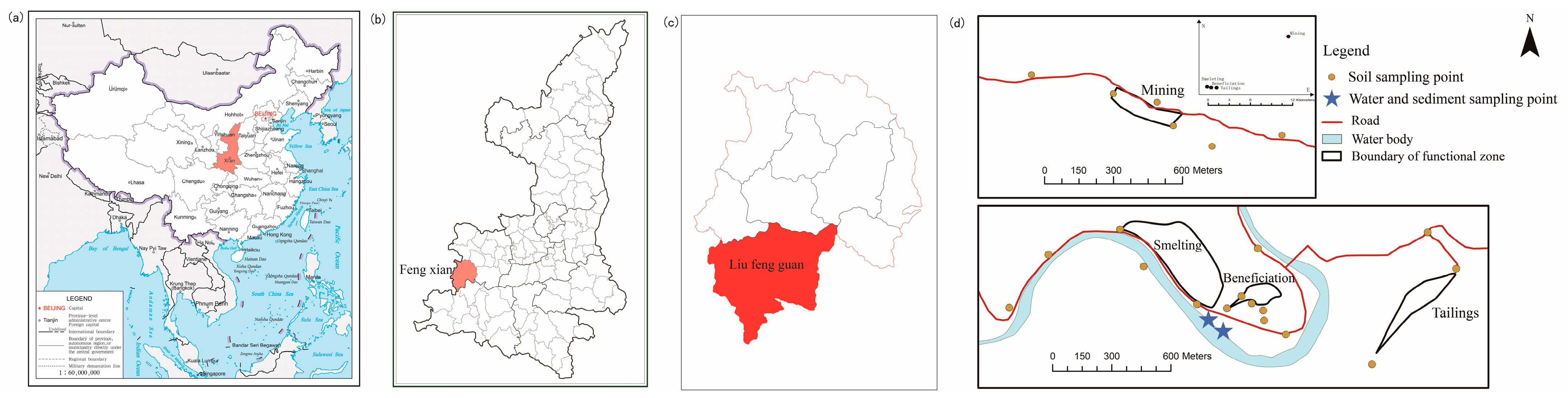
2.1. Study Area and Sampling
2.2. Sample Analysis and Quality Control
2.2.1. Physicochemical Analysis of Soil and Sediments
2.2.2. Surface Water Analysis
2.3. Evaluation Methods and Models
2.3.1. Assessment of Contamination Levels
Geo-Accumulation Index and Pollution Load Index
Single-Factor Pollution and Nemerow Integrated Pollution Indices
2.3.2. Potential Ecological Risk Assessment
2.3.3. Occupational Health Risk Assessment
2.3.4. Spatial Analysis
2.3.5. Source Apportionment of PTEs
2.4. Statistical Analysis and Quality Assurance
- (1)
- For descriptive statistics, potential ecological risk assessments, and spatial analysis, values below the LOD were replaced with 1/2 LOD.
- (2)
- For pollution indexing, Cr, Zn, Se, and Bi were excluded from PI and NIPI calculations due to the absence of corresponding thresholds in soil risk standards for development land. Samples with non-detected Se and Bi were excluded from Igeo, CF, and PLI calculations. Furthermore, samples with non-applicable coefficients of variation (CV) were omitted from the bubble plots.
- (3)
- For multivariate statistics (correlation, HCA, and PCA), Se, which had a detection rate exceeding 50%, was included after 1/2 LOD imputation. In contrast, Bi was excluded from these analyses due to its detection rate being below 50%. All multivariate analyses were performed on natural logarithm-transformed values to approximate a normal distribution and ensure the robustness of the statistical outputs.
3. Results
3.1. PTE Concentrations in Soil, Sediment, and Surface Water, and Soil Physicochemical Properties
3.2. Pollution Levels
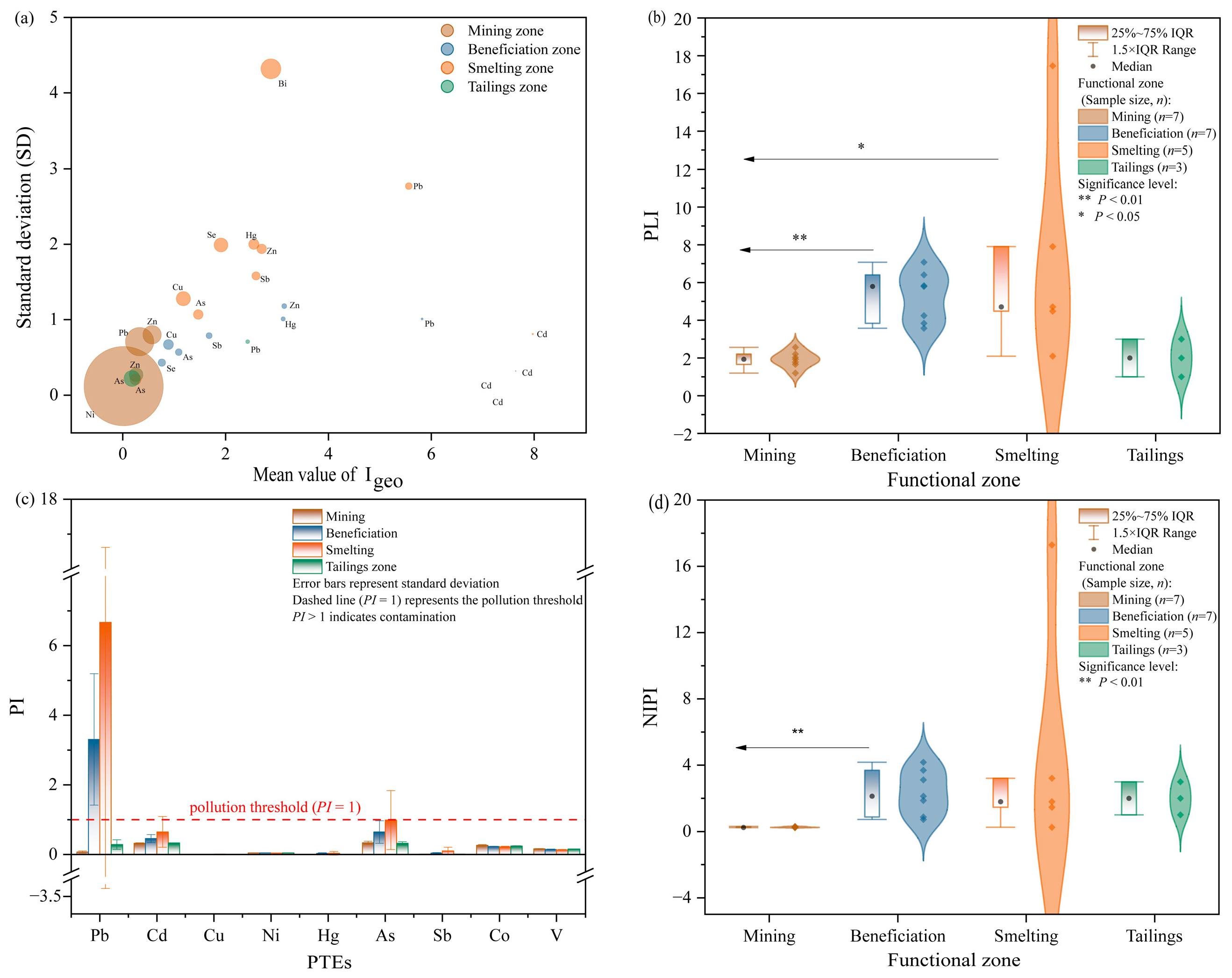
3.2.1. Pollution Assessment Based on Igeo and PLI
3.2.2. Pollution Assessment Based on PI and NIPI
3.3. Spatial Distribution Characteristics of PTEs
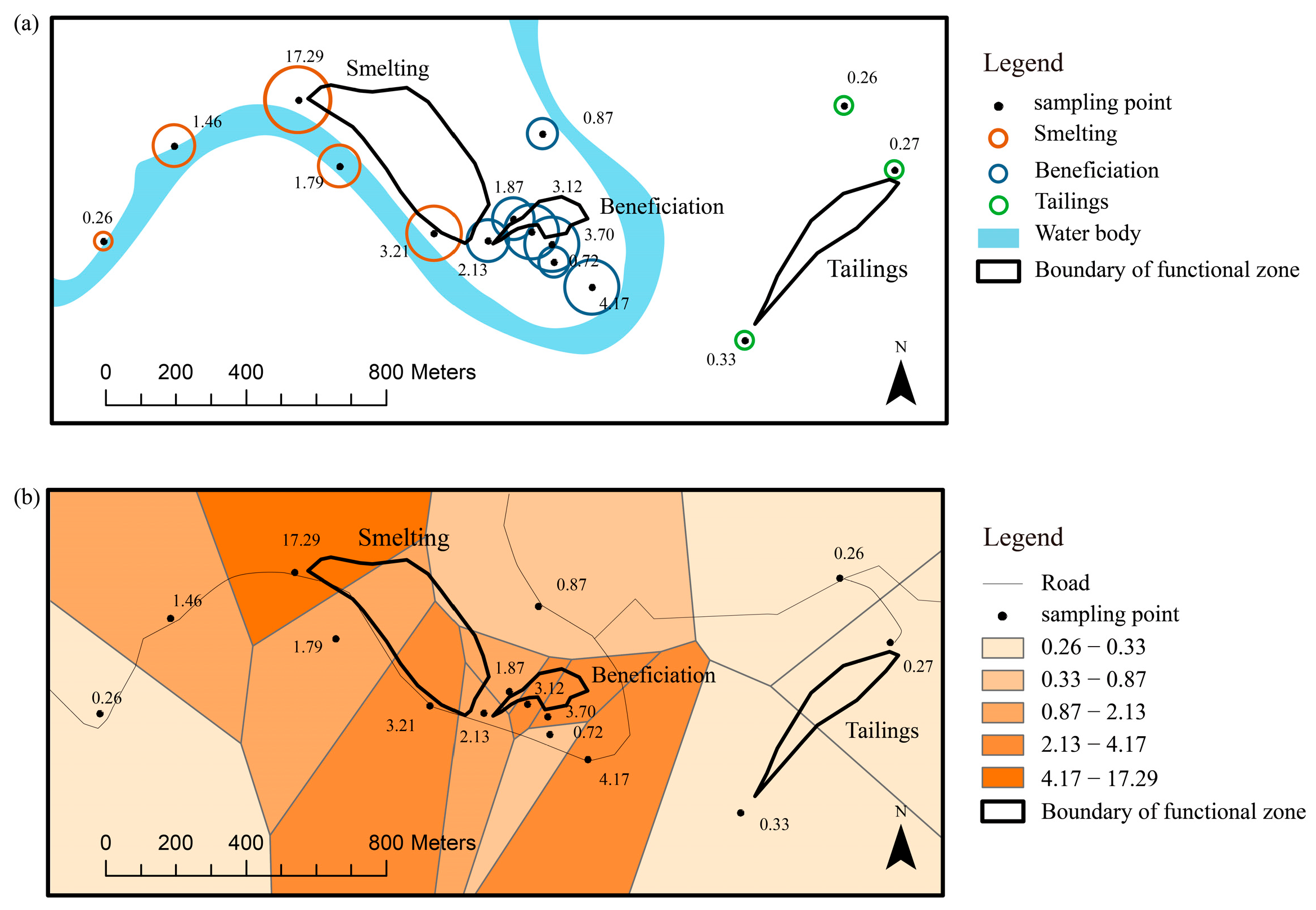
3.3.1. Visualization of Spatial Distribution
3.3.2. Evaluation of Spatial Representativeness of Sampling Sites
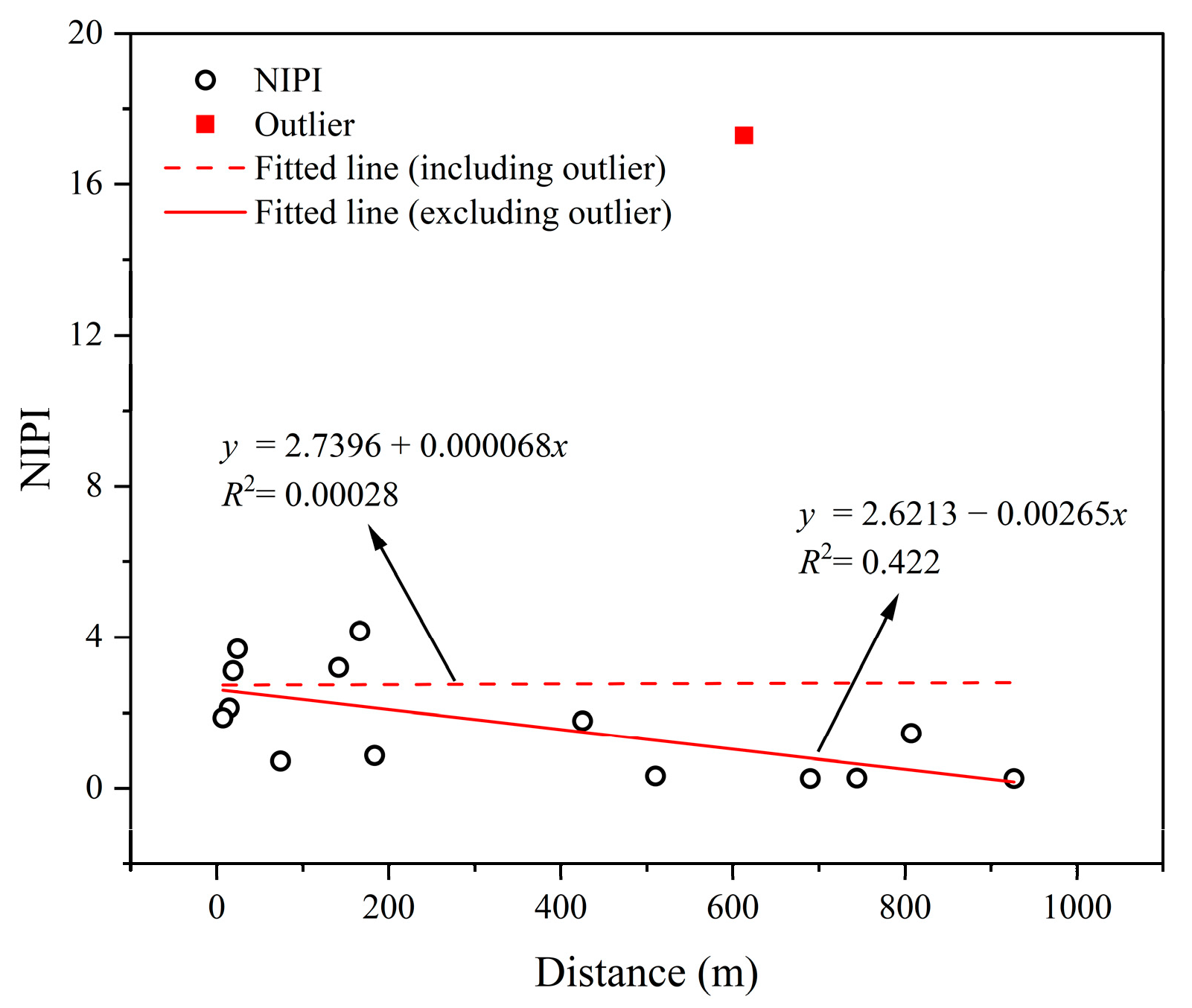
3.3.3. Distance Gradient Analysis in the Beneficiation–Smelting Area
3.4. Potential Ecological Risk Summary
3.5. Human Health Risk Assessment
3.6. Source Apportionment Results
3.6.1. Spearman Correlation Analysis
3.6.2. Hierarchical Cluster Analysis
3.6.3. Principal Component Analysis
4. Discussion
4.1. Transition of Pollution Patterns: From Monoelemental Dominance to Multielemental Synergy
4.2. Drivers of Integrated Pollution Load and Spatial Congruence
4.3. Composite Source Characteristics of Pollution from Beneficiation Activities
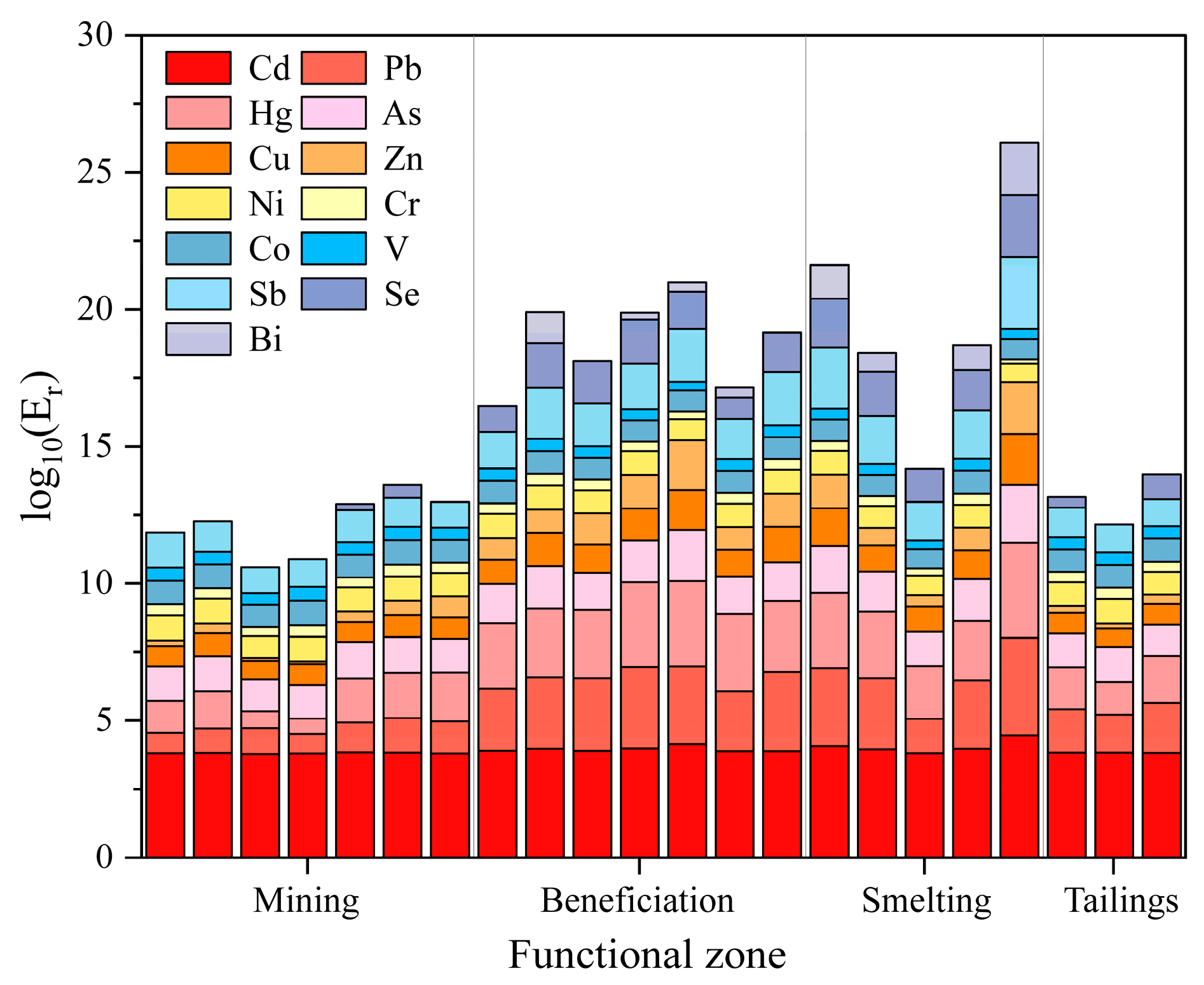
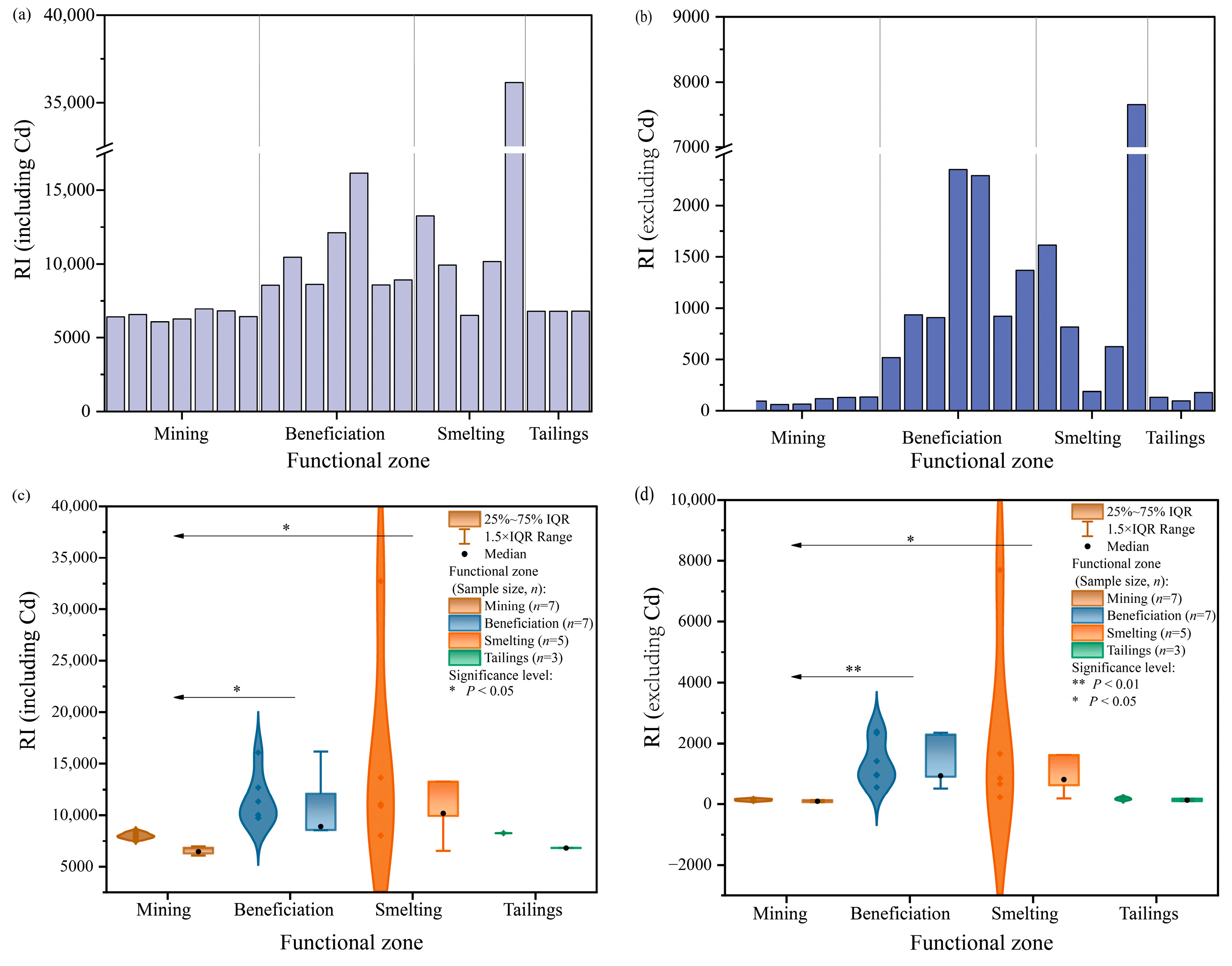
- First item: Following the exclusion of Cd (a characteristic smelting marker), the disparity in ecological risk between the beneficiation and mining zones became more pronounced (p-value decreased from 0.0121 to 0.0021), indicating Cd enrichment in the beneficiation zone independent of smelting.
- Second item: The RI boxplots revealed an elongated interquartile range with prominent outliers (local “hotspots”) in the smelting zone, whereas the beneficiation zone exhibited a more compact and uniform distribution, indicating relatively homogeneous non-point source inputs (e.g., waste rock piles and dust).
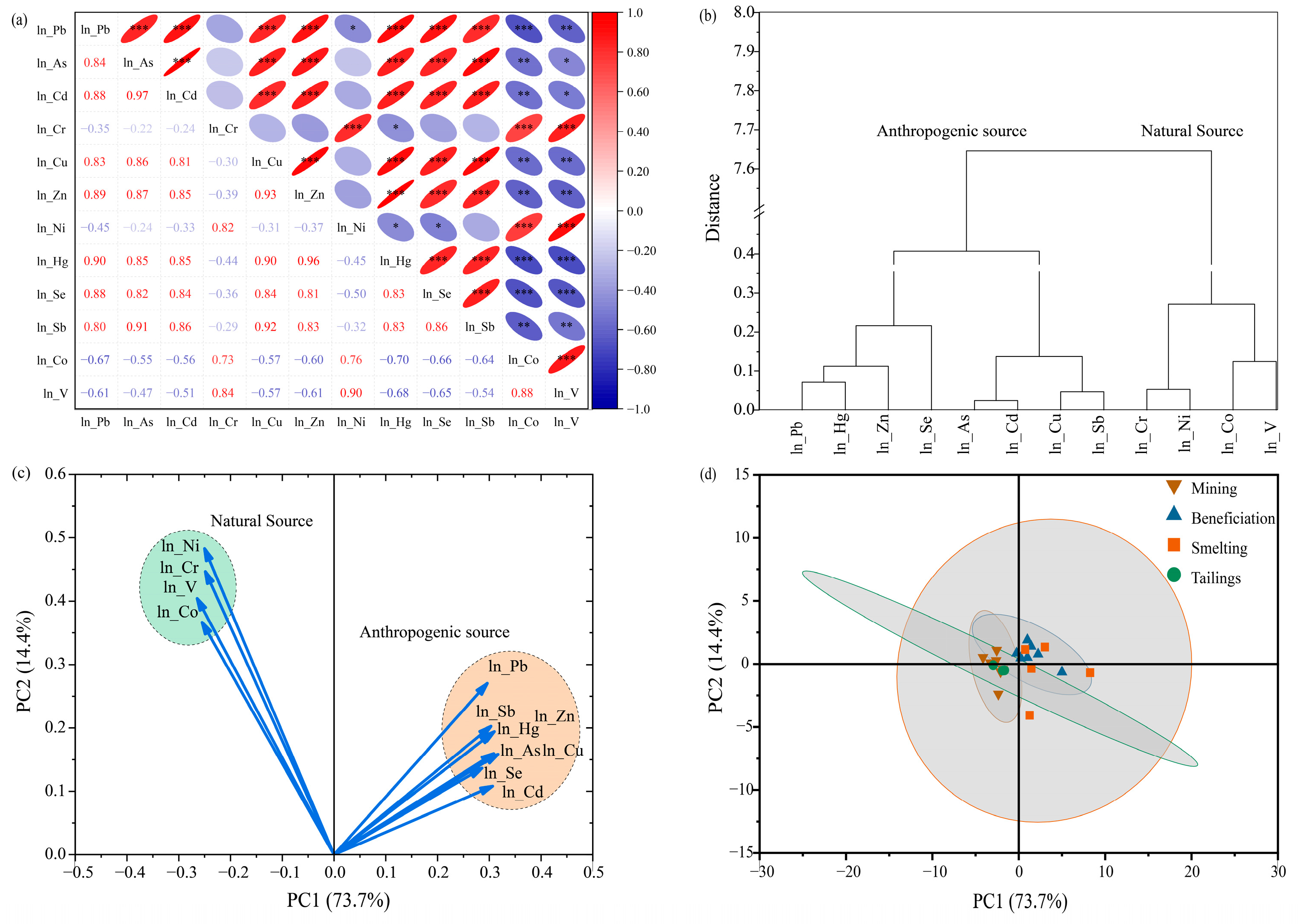
- Third item: PCA results show that the beneficiation and smelting zones have similar industrial source intensity, indicating that beneficiation processes can generate PTE pollution comparable to smelting. Meanwhile, the tailings zone showed no significant difference in PC1 scores compared with the beneficiation zone, supporting the contribution of beneficiation activities.
- Fourth item: The beneficiation zone is located approximately 60 m east (upwind) of the smelting zone. Given the ENE prevailing wind direction, upwind transport is difficult. In addition, the high-value area in the southern beneficiation zone is spatially separated from the southwestern downwind high-value area of the smelting zone, with a low-value transition zone between them, indicating a dual-core pattern and independent pollution sources.
4.4. Source Apportionment and Dominant Factors
- Processing or smelting activities: Eight elements (As, Pb, Cd, Cu, Zn, Hg, Se, and Sb) exhibited strong positive inter-correlations, high PC1 loadings, and tight hierarchical clustering. Collectively, these elements characterize the contamination footprint released across the entire “mining-beneficiation-smelting” industrial cycle. HCA further subdivided this group into a smelting-related signature (Pb–Hg–Zn–Se) and an ore-associated signature (As–Cd–Cu–Sb), reflecting differences in elemental release among production stages.
- Natural Source (Pedogenic and Lithogenic Background): In contrast, the Cr–Ni–Co–V group showed strong internal correlations but negative PC1 loadings and was negatively correlated with the anthropogenic tracers. They cluster independently at large distances, indicating control by geological background and parent materials with limited anthropogenic influence. This interpretation of a natural lithogenic source is supported by studies of carbonate-hosted Pb–Zn deposits [37].
- Functional Zone Gradient: The spatial hierarchy of PC1 scores (smelting > beneficiation > mining ≈ tailings) is perfectly congruent with the patterns revealed by the multi-index evaluation (PLI, NIPI, RI) and health risk levels. This alignment confirms the smelting zone as the epicenter of anthropogenic contamination and the primary driver of multielemental composite pollution and subsequent health risks.
4.5. Risk Discrepancies and Management Implications
- Health risk standards for occupational areas;
- Ecological risk for surrounding environments;
- Long-term monitoring of sensitive elements such as Cd.
4.6. Limitations and Future Perspectives
5. Conclusions
- Functional zone gradients: A clear hierarchy of pollution intensity was identified: Smelting Zone (multi-elemental composite pollution, high health risk) > Beneficiation Zone (extreme Pb enrichment, moderate integrated risk) > Mining and Tailings Zones (Cd-dominated, low integrated risk). Surface water and sediments remained uncontaminated.
- Priority contaminants: Pb and As are the main pollutants in the study area. In hotspot areas, they reached high pollution levels, with As posing a carcinogenic risk and Pb posing a non-carcinogenic risk at unacceptable levels, indicating the need for priority control.
- Binary source structure: Anthropogenic industrial activities are the fundamental cause of the composite pollution of Pb, Cd, As, Zn, Hg, and Sb. Conversely, natural pedogenic processes govern the distribution of Cr, Ni, Co, and V. Anthropogenic inputs strongly superimpose on the natural background.
- Spatial patterns: The pollution footprint follows a centric-radial pattern centered on the smelting–beneficiation areas. While smelting is the epicenter of multi-elemental accumulation, the environmental contribution of the beneficiation stage is significant and non-negligible.
Supplementary Materials
Author Contributions
Funding
Data Availability Statement
Conflicts of Interest
Abbreviations
| ABS | Dermal Absorption Fraction |
| ADDing | Incidental Oral Ingestion |
| ADDderm | Dermal Contact |
| ADDinh | Inhalation of Soil Particles |
| AF/SAF | Skin Adherence Factor |
| As | Arsenic |
| AT | Averaging Time |
| Bi | Bismuth |
| BW | Body Weight |
| CA | Cluster Analysis |
| Cd | Cadmium |
| CEC | Cation Exchange Capacity |
| Co | Cobalt |
| CR | Carcinogenic Risk |
| Cr | Chromium |
| Cr(VI) | Hexavalent Chromium |
| Cu | Copper |
| ED | Exposure Duration |
| EF | Exposure Frequency |
| ENE | East-Northeast |
| EPC | Exposure Point Concentration |
| Er | Potential Ecological Risk Coefficient |
| Hg | Mercury |
| HHRA | Human Health Risk Assessment |
| HI | Hazard Index |
| HQ | Hazard Quotient |
| IAvg | Average Pollution Index |
| Igeo | Geo-Accumulation Index |
| IMax | Maximum Single Pollution |
| IngR | Soil/Dust Ingestion Rate |
| InhR | Inhalation Rate |
| IQR | Interquartile Range |
| LOD | Limit Of Detection |
| NIPI | Nemerow Integrated Pollution Index |
| Ni | Nickel |
| PbS | Galena |
| PCA | Principal Component Analysis |
| PEF | Particulate Emission Factor |
| PI | Pollution Index |
| PLI | Pollution Load Index |
| PTEs | Potentially Toxic Elements |
| QA/QC | Quality Assurance and Quality Control |
| RfD | Reference Dose |
| RI | Comprehensive Potential Ecological Risk Index |
| RIV | Risk Intervention Values |
| RME | Reasonable Maximum Exposure |
| RSD | Relative Standard Deviation |
| RSV | Risk Screening Values |
| SA | Exposed Skin Surface Area |
| Sb | Antimony |
| SD | Standard Deviation |
| Se | Selenium |
| SF | Slope Factor |
| TOC | Total Organic Carbon |
| Tr | Toxic Response Factors |
| UCL | Upper Confidence Limit |
| USEPA | United States Environmental Protection Agency |
| V | Vanadium |
References
- Rouhani, A.; Gutiérrez, M.; Newton, R.A.; Al Souki, K.S. An Overview of Potentially Toxic Element Pollution in Soil around Lead–Zinc Mining Areas. Environ. Rev. 2025, 33, 1–16. [Google Scholar] [CrossRef]
- Chen, Q.; Liu, Y.; Li, W.; Zhao, W.; Li, H.; Huang, Q.; Yang, Y.; Bi, T.; Long, J. Elevated Thallium Enrichment, Source, and Health Risks in Soils Surrounding a Lead–Zinc Smelter, Southwest China. J. Hazard. Mater. Adv. 2026, 21, 100968. [Google Scholar] [CrossRef]
- El Aallaoui, A.; El Ghorfi, M.; Elghali, A.; Taha, Y.; Zine, H.; Benzaazoua, M.; Hakkou, R. Investigating the Reprocessing Potential of Abandoned Zinc-Lead Tailings Ponds: A Comprehensive Study Using Physicochemical, Mineralogical, and 3D Geometallurgical Assessments. Miner. Eng. 2024, 209, 108634. [Google Scholar] [CrossRef]
- Ma, Y.; Yao, X.; Wang, J.; Duan, H.; Hu, J.; Wu, T. Characteristics and Sources of Heavy Metal Pollution in Cropland near a Typical Lead–Zinc Processing Plant in Xieping Village, Hui County, China. Land 2023, 12, 1945. [Google Scholar] [CrossRef]
- Pan, Y.; Chen, M.; Wang, X.; Chen, Y. Ecological Risk, Source Apportionment, and Influencing Factors of Heavy Metals in Soil in a Typical Lead-Zinc Mining Watershed, Guangxi, China. J. Environ. Chem. Eng. 2024, 12, 112731. [Google Scholar] [CrossRef]
- Arifin, Y.I.; Rauf, J.; Akase, N.; Djibran, F.R.; Nurfaika; Lakilo, A.; Jahja, M.; Sakakibara, M. Integrated Geological Mapping and Spatial Distribution of Heavy Metal Contamination with Geoaccumulation Index Assessment in Juriya’s Artisanal Gold Mining Region, Gorontalo, Indonesia. J. Hazard. Mater. Adv. 2025, 19, 100861. [Google Scholar] [CrossRef]
- Hridoy, M.A.A.M.; Akter, P.; Bordin, C.; Acharjee, M.R.; Baki, A.O.; Neogi, S.; Masood, A.; David, G.S. Integrated Assessment of Heavy Metal Contamination and Human Health Risks in Granitic Soils of South India: A Multi-Index Approach to Pollution and Ecological Impacts. Results Surf. Interfaces 2025, 20, 100628. [Google Scholar] [CrossRef]
- Zhou, Y.; Jiang, D.; Ding, D.; Wu, Y.; Wei, J.; Kong, L.; Long, T.; Fan, T.; Deng, S. Ecological-Health Risks Assessment and Source Apportionment of Heavy Metals in Agricultural Soils around a Super-Sized Lead-Zinc Smelter with a Long Production History, in China. Environ. Pollut. 2022, 307, 119487. [Google Scholar] [CrossRef]
- Su, C.; Li, H.; Chen, S.; Shu, Y.; Li, Z.; Zhang, Q.; Yang, Y.; Xiang, L. Source-Oriented Landscape Apportionment of Heavy Metals by Using an Integrated Approach in Typical Mining Urban Agricultural Soil. Environ. Pollut. 2025, 382, 126719. [Google Scholar] [CrossRef]
- Yang, Y.; Jia, M. 3D Spatial Interpolation of Soil Heavy Metals by Combining Kriging with Depth Function Trend Model. J. Hazard. Mater. 2024, 461, 132571. [Google Scholar] [CrossRef]
- Geochemical Atlas of Northern Fennoscandia: Scale 1:4,000,000; Bølviken, B., Ed.; Geological Survey of Sweden: Uppsala, Sweden, 1986. [Google Scholar]
- Björklund, A.; Gustavsson, N. Visualization of Geochemical Data on Maps: New Options. J. Geochem. Explor. 1987, 29, 89–103. [Google Scholar] [CrossRef]
- Liu, X.; Zheng, L.; Li, Z.; Liu, F.; Obin, N. Optimization of Spatial Prediction and Sampling Strategy of Site Contamination Based on Thiessen Polygon Coupling Interpolation. Environ. Sci. Pollut. Res. 2023, 30, 78959–78972. [Google Scholar] [CrossRef]
- Deng, J.; Yu, J.; Wang, X.; Yu, D.; Ma, H.; Wu, Y.; Yu, C.; Pu, S. Spatial Distribution and Migration Characteristics of Heavy Metals at an Abandoned Industrial Site in the Southwest of China. J. Hazard. Mater. 2024, 480, 136447. [Google Scholar] [CrossRef] [PubMed]
- Tian, T.; Wu, C.; Yao, C.; Yi, S.; Sahito, Z.A. Unveiling Vegetation Restoration Effect on the Heavy Metal Immobilization and Aggregate-Associated Organic Carbon in Lead-Zinc Tailings. J. Environ. Sci. 2026, 163, 687–696. [Google Scholar] [CrossRef]
- Hu, S.; Xiong, X.; Li, X.; Wang, M.; Xu, D.; Zhou, W. Distribution and Leachability of Heavy Metals from Lead-Zinc Tailings with Different Degrees of Chemical Weathering in the Qinling Mountains. Appl. Geochem. 2025, 189, 106434. [Google Scholar] [CrossRef]
- GBW07405; Soil Certified Reference Material. National Research Center for Certified Reference Materials: Beijing, China, 1986.
- Zhang, Y.; Song, B.; Zhou, Z. Pollution Assessment and Source Apportionment of Heavy Metals in Soil from Lead–Zinc Mining Areas of South China. J. Environ. Chem. Eng. 2023, 11, 109320. [Google Scholar] [CrossRef]
- China National Environmental Monitoring Centre. Background Values of Soil Elements in China; China Environmental Science Press: Beijing, China, 1990. [Google Scholar]
- GB 36600–2018; Soil Environmental Quality Risk Control Standard for Soil Contamination of Development Land (Trial). Ministry of Ecology and Environment of the People’s Republic of China: Beijing, China; State Administration for Market Regulation: Beijing, China, 2018.
- Hakanson, L. An Ecological Risk Index for Aquatic Pollution Control.a Sedimentological Approach. Water Res. 1980, 14, 975–1001. [Google Scholar] [CrossRef]
- Ma, J.H.; Han, C.X.; Jiang, Y.L. Some problems in the application of potential ecological risk index. Geogr. Res. 2020, 39, 1233–1241. [Google Scholar] [CrossRef]
- U.S. Environmental Protection Agency (USEPA). Risk Assessment Guidance for Superfund: Volume I—Human Health Evaluation Manual (Part A); Risk Assessment Guidance for Superfund; Office of Emergency and Remedial Response, U.S. Environmental Protection Agency: Washington, DC, USA, 1989.
- U.S. Environmental Protection Agency. Exposure Factors Handbook: 2011 Edition; Office of Research and Development, U.S. Environmental Protection Agency: Washington, DC, USA, 2011.
- HJ 25.3-2019; Technical Guidelines for Risk Assessment of Soil Contamination of Land for Construction. Ministry of Ecology and Environment of the People’s Republic of China: Beijing, China, 2019.
- Ministry of Environmental Protection of the People’s Republic of China. Exposure Factors Handbook of Chinese Population (Adults); China Environmental Science Press: Beijing, China, 2013. [Google Scholar]
- Ferreira-Baptista, L.; De Miguel, E. Geochemistry and Risk Assessment of Street Dust in Luanda, Angola: A Tropical Urban Environment. Atmos. Environ. 2005, 39, 4501–4512. [Google Scholar] [CrossRef]
- U.S. Environmental Protection Agency. Integrated Risk Information System (IRIS) Database: Toxicity Values–Latest Update (2025); U.S. Environmental Protection Agency: Washington, DC, USA, 2025.
- Gui, H.; Yang, Q.; Lu, X.; Wang, H.; Gu, Q.; Martín, J.D. Spatial Distribution, Contamination Characteristics and Ecological-Health Risk Assessment of Toxic Heavy Metals in Soils near a Smelting Area. Environ. Res. 2023, 222, 115328. [Google Scholar] [CrossRef]
- U.S. Environmental Protection Agency. IRIS Toxicological Review of Inorganic Arsenic; U.S. Environmental Protection Agency: Washington, DC, USA, 2025.
- Tukey, J.W. Exploratory Data Analysis; Addison-Wesley Pub. Co.: Reading, MA, USA, 1977. [Google Scholar]
- Mcgill, R.; Tukey, J.W.; Larsen, W.A. Variations of Box Plots. Am. Stat. 1978, 32, 12–16. [Google Scholar] [CrossRef]
- Li, M.; Zhou, J.; Cheng, Z.; Ren, Y.; Liu, Y.; Wang, L.; Cao, L.; Shen, Z. Pollution Levels and Probability Risk Assessment of Potential Toxic Elements in Soil of Pb–Zn Smelting Areas. Environ. Geochem. Health 2024, 46, 165. [Google Scholar] [CrossRef]
- Adnan, M.; Zhao, P.; Xiao, B.; Ali, M.U.; Xiao, P. Heavy Metal Pollution and Source Analysis of Soils around Abandoned Pb/Zn Smelting Sites: Environmentalrisks and Fractionation Analysis. Environ. Technol. Innov. 2025, 38, 104084. [Google Scholar] [CrossRef]
- Ning, T.; Tian, Y.; Li, X.; He, Z.; Li, H.; Zhou, Y. Characteristics and Sources of Soil Contamination in a Lead–Zinc Mining Region in Gansu Province, China. Soil Sediment Contam. Int. J. 2025, 34, 2091–2109. [Google Scholar] [CrossRef]
- Duyckaerts, C.; Godefroy, G. Voronoi Tessellation to Study the Numerical Density and the Spatial Distribution of Neurones. J. Chem. Neuroanat. 2000, 20, 83–92. [Google Scholar] [CrossRef] [PubMed]
- Sutkowska, K.; Teper, L.; Czech, T.; Hulok, T.; Olszak, M.; Zogala, J. Quality of Peri-Urban Soil Developed from Ore-Bearing Carbonates: Heavy Metal Levels and Source Apportionment Assessed Using Pollution Indices. Minerals 2020, 10, 1140. [Google Scholar] [CrossRef]



| Parameter | Symbol | Unit | Value in This Study | References |
|---|---|---|---|---|
| Soil/dust ingestion rate | IngR | mg·day−1 | 100 | [24] |
| Inhalation rate | InhR | m3·day−1 | 14.5 | [25] |
| Exposure frequency | EF | days/year−1 | 350 | |
| Exposure duration | ED | years | 25 | |
| Body weight | BW | kg | 61.2 | [26] |
| Averaging time | AT | days | Carcinogens: 25,550 (70 years × 365); Non-carcinogens: 9125 (365 × ED) | [24] |
| Particulate emission factor | PEF | m3·kg−1 | 1,360,000,000 | |
| Exposed skin surface area | SA | cm2 | 5700 | |
| Skin adherence factor | AF/SAF | mg·cm−2 | 0.2 | [25] |
| Dermal absorption fraction | ABS | Dimensionless | As: 0.03; Other metals: 0.001 | [24,27] |
| Element | Exposure Pathway | RfD (mg·kg−1·d−1) | References | SF (kg·d·mg−1) | References |
|---|---|---|---|---|---|
| As | ingestion | 6.00 × 10⁻⁵ | [28] | 32.0 | [28] |
| inhalation | 4.29 × 10⁻⁶ | [29] | 18.1 | [30] | |
| dermal contact | 6.00 × 10⁻⁵ | [28] | 32.0 | [28] | |
| Pb | ingestion | 3.50 × 10⁻³ | [28] | - | - |
| inhalation | 3.52 × 10⁻³ | [29] | 6.30 * | [29] | |
| dermal contact | 3.50 × 10⁻³ | [28] | - | - |
| Functional Zone | P(HI > 1) | P(CR > 1 × 10⁻⁴) | P(CR > 1 × 10⁻⁶) | Mean HI | 95th Percentile HI | Mean CR | 95th Percentile CR |
|---|---|---|---|---|---|---|---|
| Mining Zone | 0.0861 | 1 | 1 | 0.66 | 1.09 | 6.05 × 10⁻⁴ | 9.59 × 10⁻⁴ |
| Tailings Zone | 0.1491 | 1 | 1 | 0.73 | 1.23 | 5.77 × 10⁻⁴ | 9.35 × 10⁻⁴ |
| Beneficiation Zone | 0.9527 | 1 | 1 | 2.62 | 5.29 | 1.16 × 10⁻³ | 2.26 × 10⁻³ |
| Smelting Zone (Primary UCL) a | 0.8901 | 0.999 | 1 | 5.35 | 19.68 | 1.77 × 10⁻³ | 4.37 × 10⁻³ |
| Smelting Zone (Sensitivity UCL) b | 0.8970 | 0.999 | 1 | 4.36 | 13.5 | 1.77 × 10⁻³ | 4.69 × 10⁻³ |
Disclaimer/Publisher’s Note: The statements, opinions and data contained in all publications are solely those of the individual author(s) and contributor(s) and not of MDPI and/or the editor(s). MDPI and/or the editor(s) disclaim responsibility for any injury to people or property resulting from any ideas, methods, instructions or products referred to in the content. |
© 2026 by the authors. Licensee MDPI, Basel, Switzerland. This article is an open access article distributed under the terms and conditions of the Creative Commons Attribution (CC BY) license.
Share and Cite
Shi, Y.; Sun, C.; Zhou, Y.; Teng, T.; Hu, W.; Wang, Y. Spatial Distribution and Source Apportionment of Potentially Toxic Elements in Soils Across a Full Lead–Zinc Mining–Beneficiation–Smelting–Tailings System. Land 2026, 15, 1029. https://doi.org/10.3390/land15061029
Shi Y, Sun C, Zhou Y, Teng T, Hu W, Wang Y. Spatial Distribution and Source Apportionment of Potentially Toxic Elements in Soils Across a Full Lead–Zinc Mining–Beneficiation–Smelting–Tailings System. Land. 2026; 15(6):1029. https://doi.org/10.3390/land15061029
Chicago/Turabian StyleShi, Yifei, Chen Sun, Yongfang Zhou, Teng Teng, Weiwei Hu, and Yi Wang. 2026. "Spatial Distribution and Source Apportionment of Potentially Toxic Elements in Soils Across a Full Lead–Zinc Mining–Beneficiation–Smelting–Tailings System" Land 15, no. 6: 1029. https://doi.org/10.3390/land15061029
APA StyleShi, Y., Sun, C., Zhou, Y., Teng, T., Hu, W., & Wang, Y. (2026). Spatial Distribution and Source Apportionment of Potentially Toxic Elements in Soils Across a Full Lead–Zinc Mining–Beneficiation–Smelting–Tailings System. Land, 15(6), 1029. https://doi.org/10.3390/land15061029