Connectivity and Resilience of Urban Cooling Networks: A Network-Based Assessment Under Heterogeneous Resistance



Abstract
1. Introduction
2. Methodology
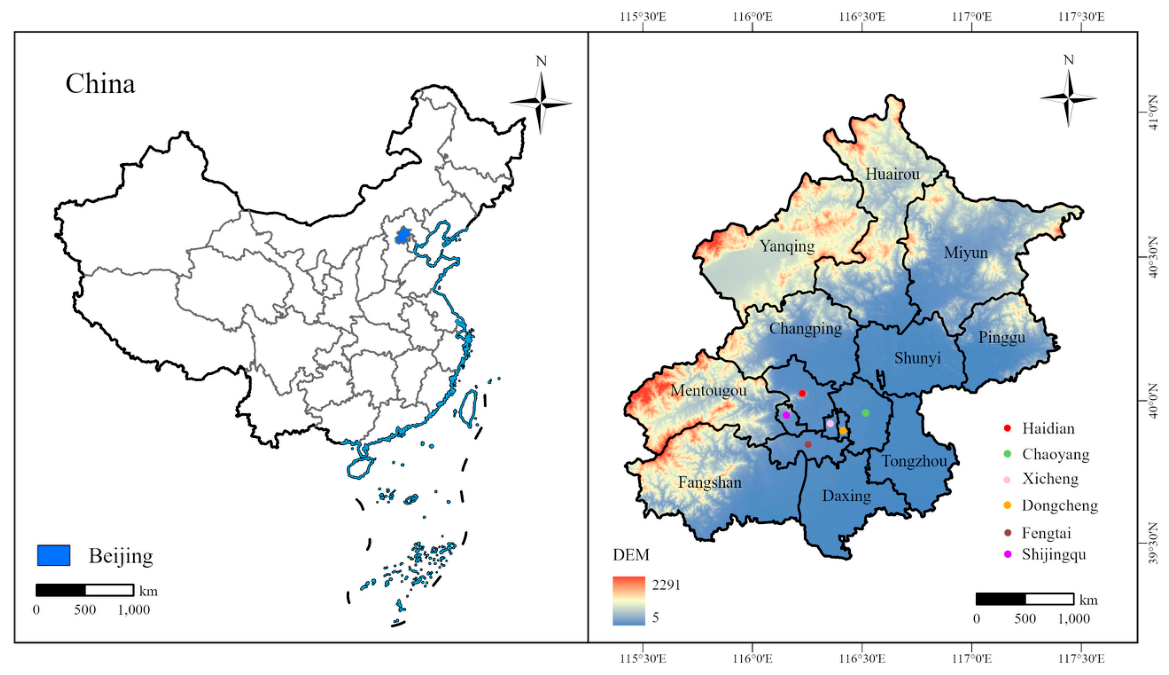
2.1. Study Area
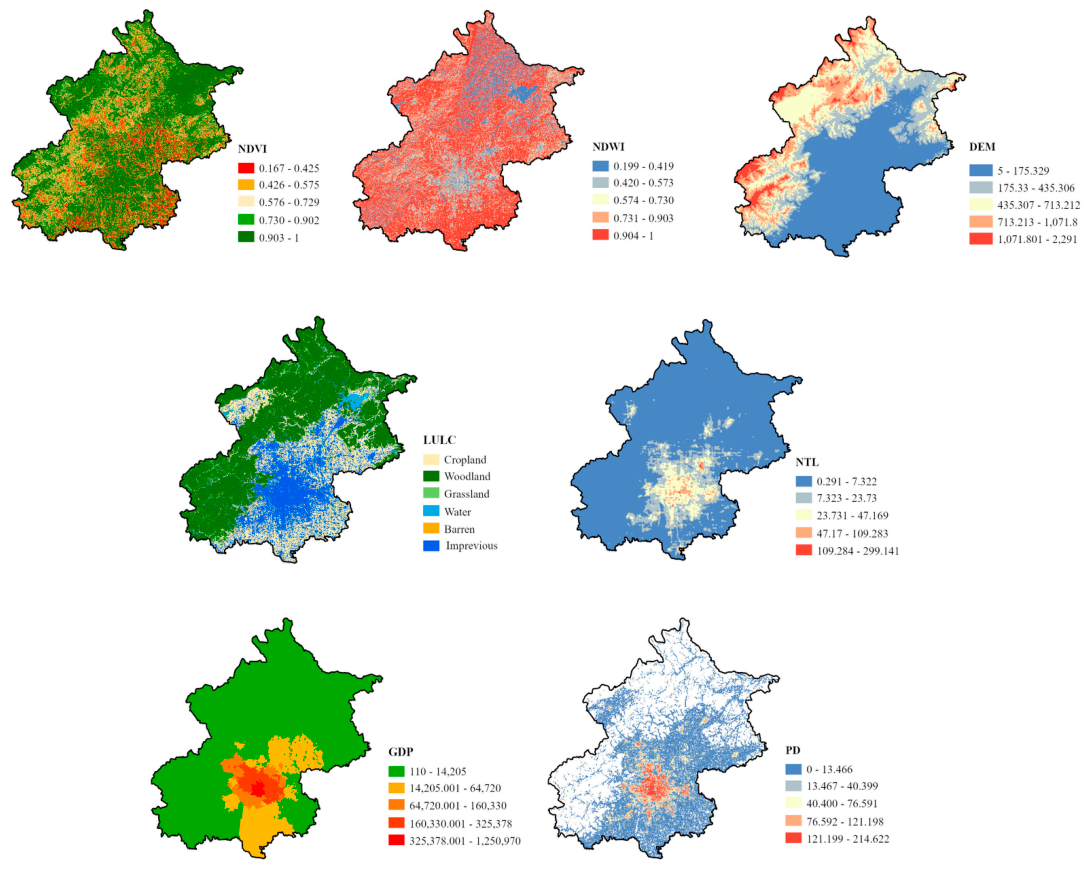
2.2. Data Source
2.3. LST Extraction and Cold Island Classification
2.3.1. LST and Relative LST (RLST)
2.3.2. Cold Island Classification
2.4. GeoDetector-Based Attribution of LST Drivers
2.5. Identification of CICS and Network Nodes
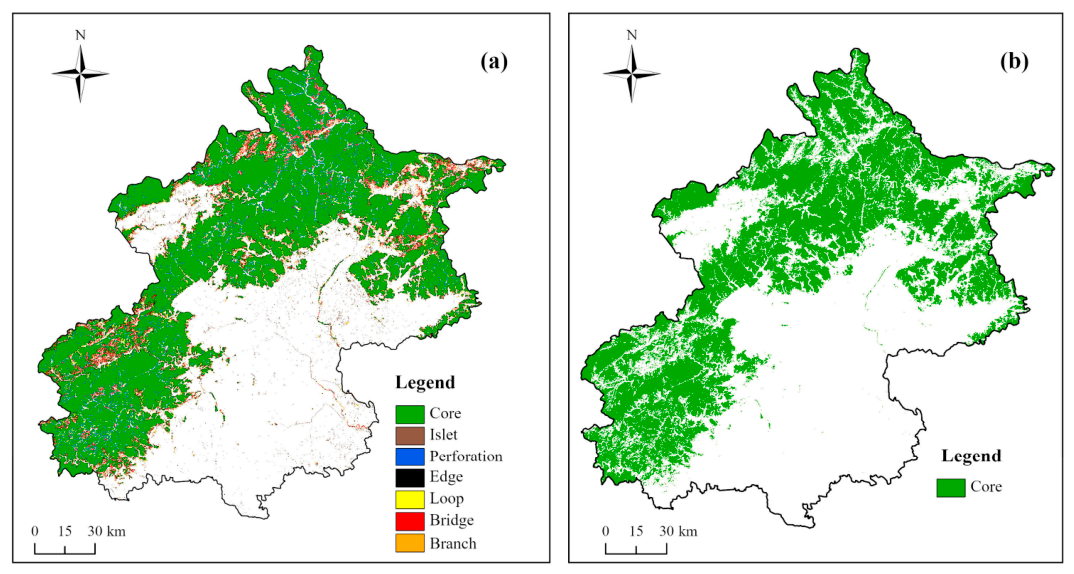
2.5.1. Morphological Spatial Pattern Analysis (MSPA)
2.5.2. Centroid Extraction for Network Node Definition
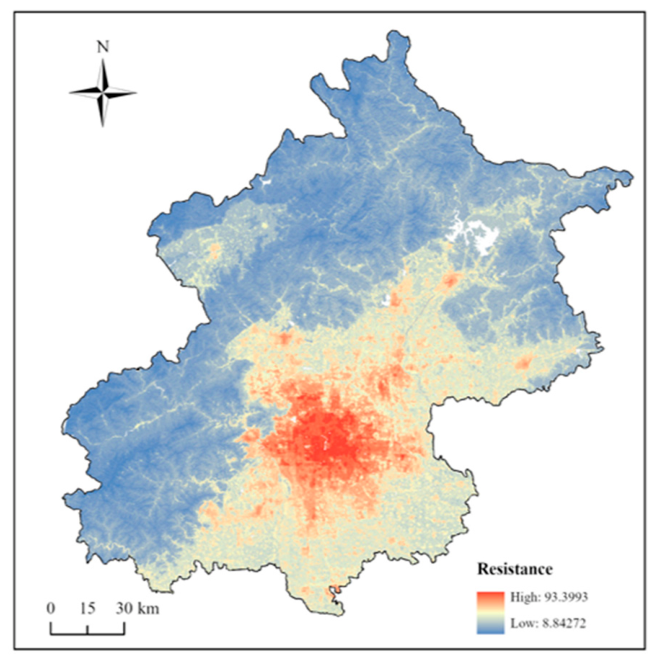
2.6. Construction of the Cooling Resistance Surface
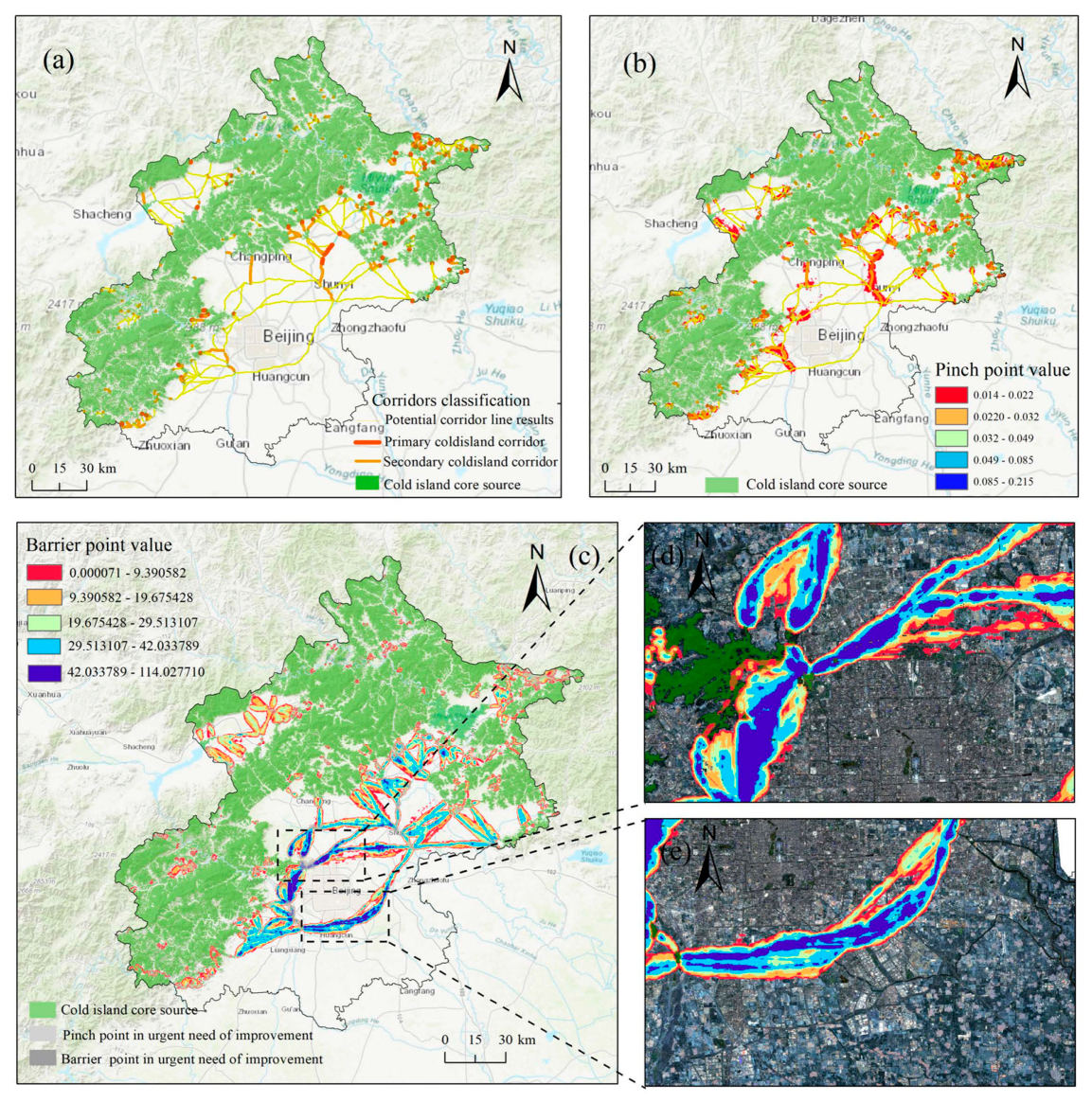
2.7. Circuit-Theory-Based Construction of the CIN
2.8. Resilience Assessment of the CIN
2.8.1. Calculation of Node Importance
2.8.2. Resilience Indicators
2.8.3. Node-Removal Simulation and Sensitivity Analysis
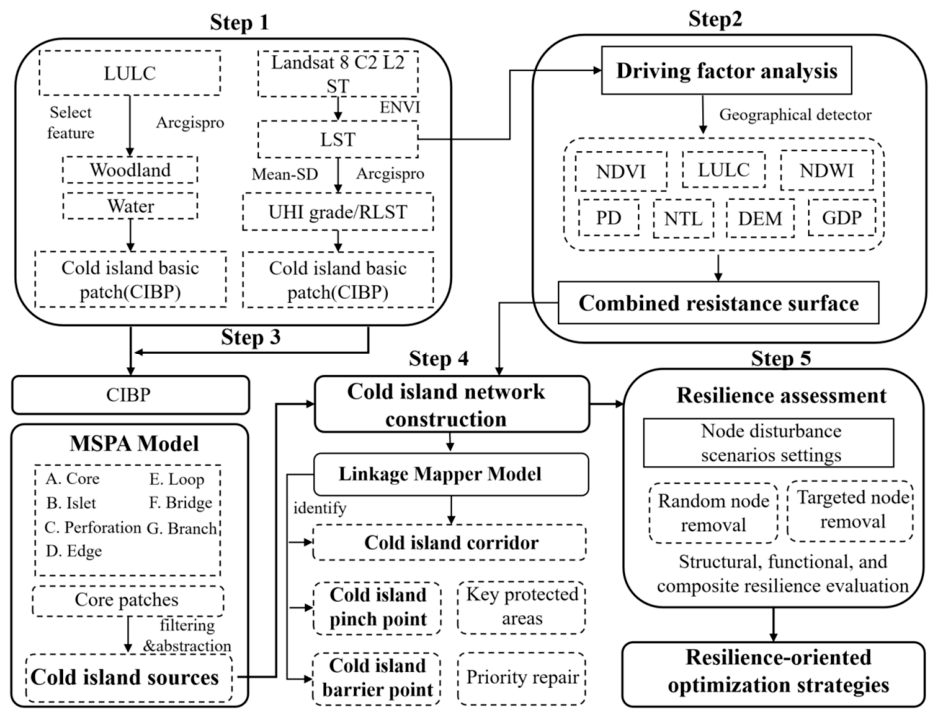
2.9. Research Framework
3. Results
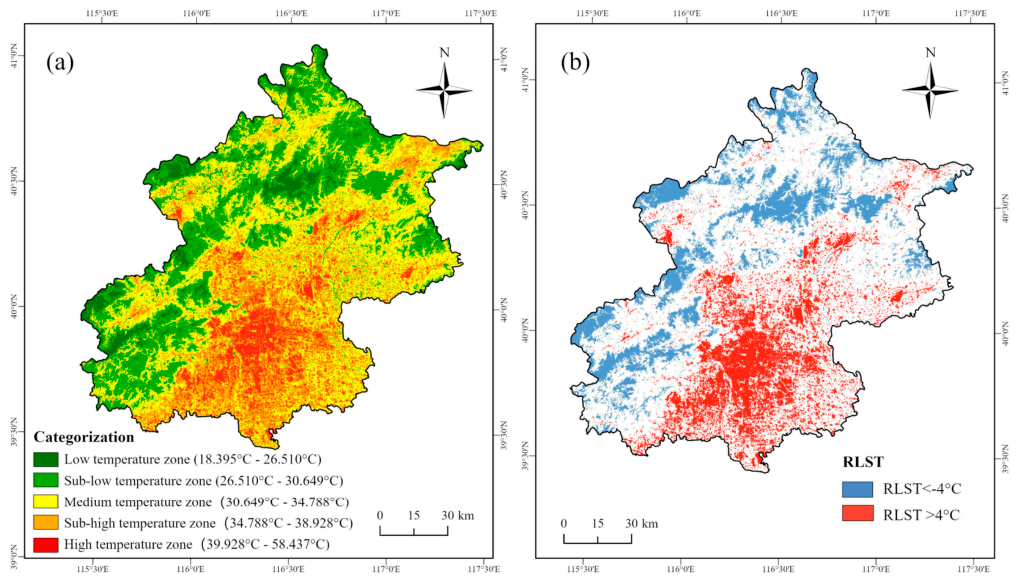
3.1. Spatial Distribution of LST
3.2. CICS Identification
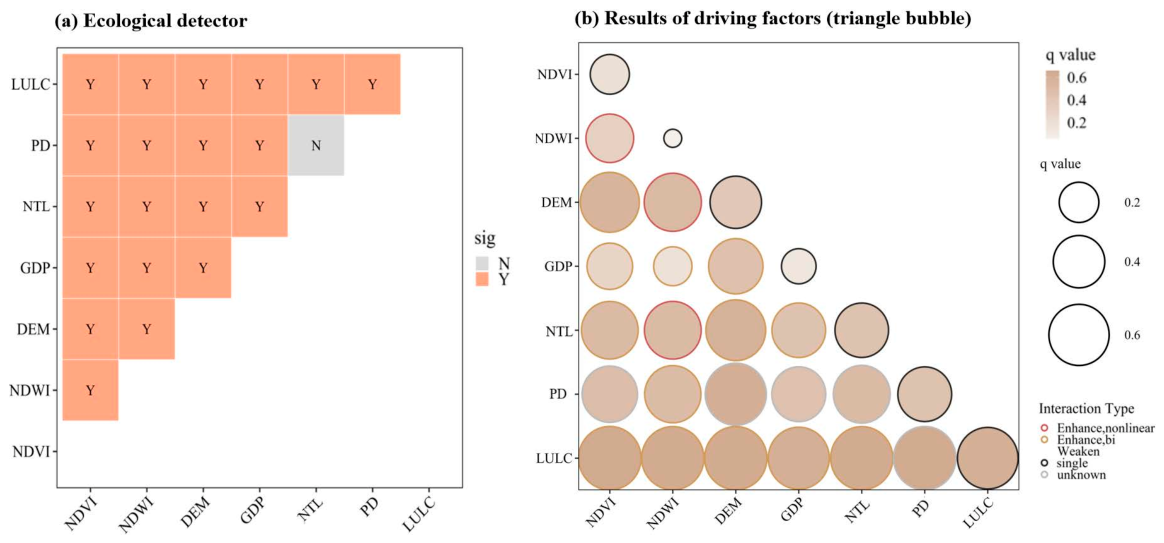
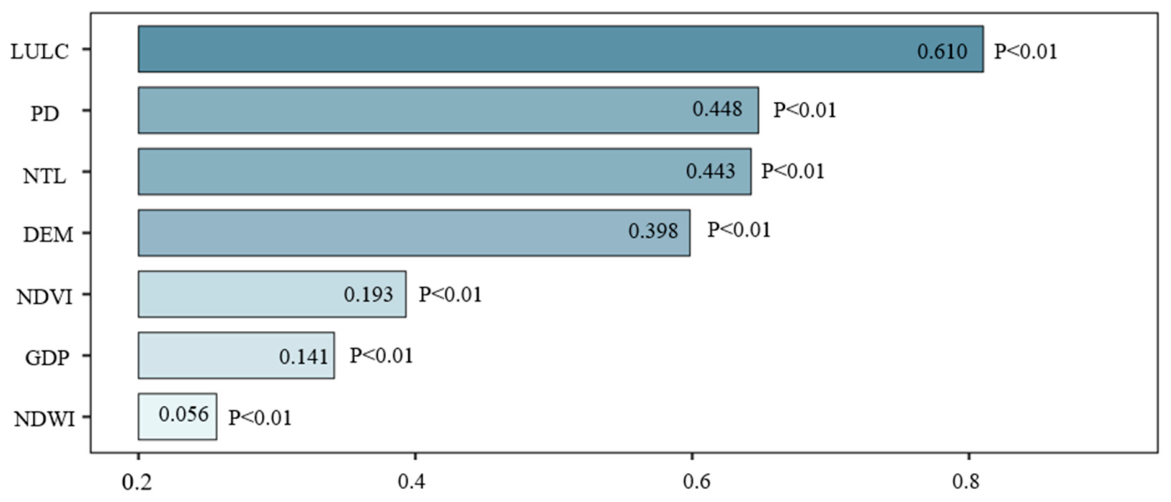
3.3. Results of GeoDetector
3.3.1. Driving Factors for LST
3.3.2. Results of Interaction and Ecological Detector
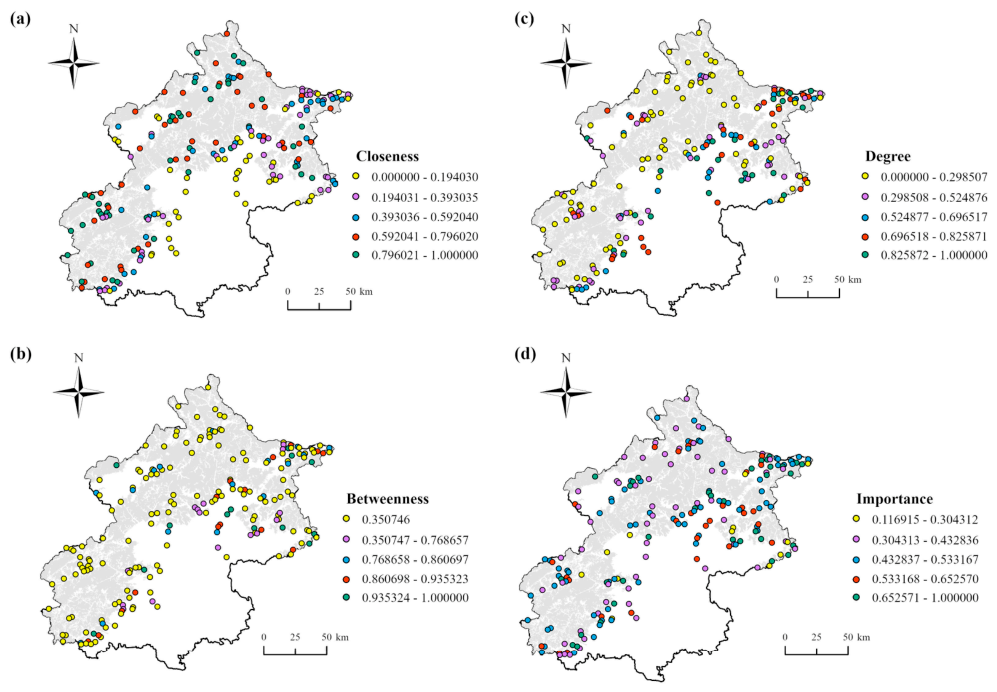
3.4. CIN Construction
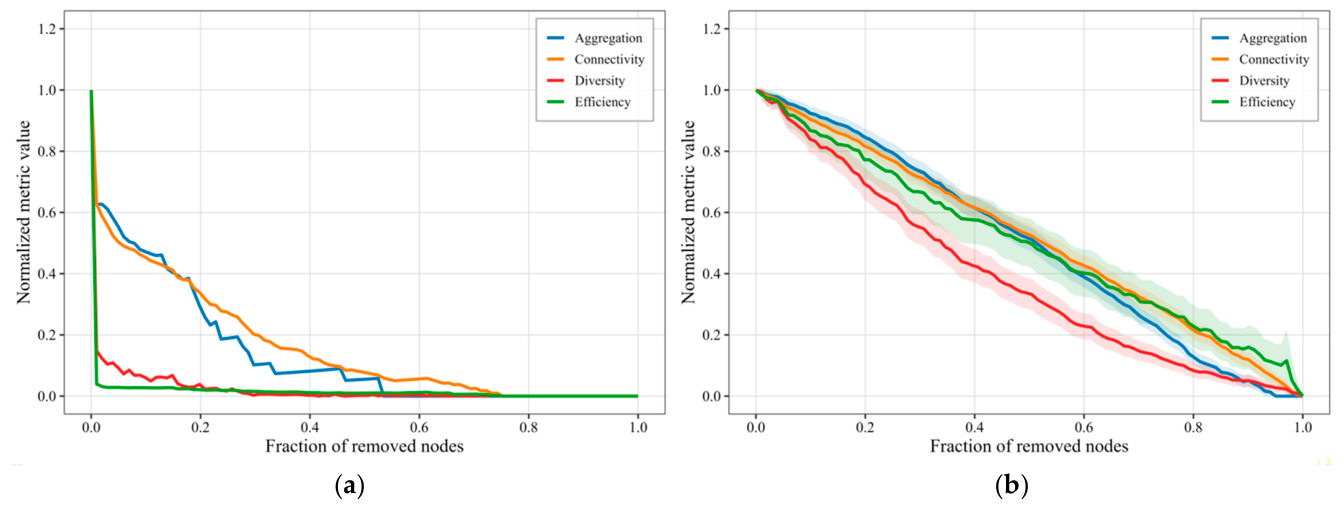
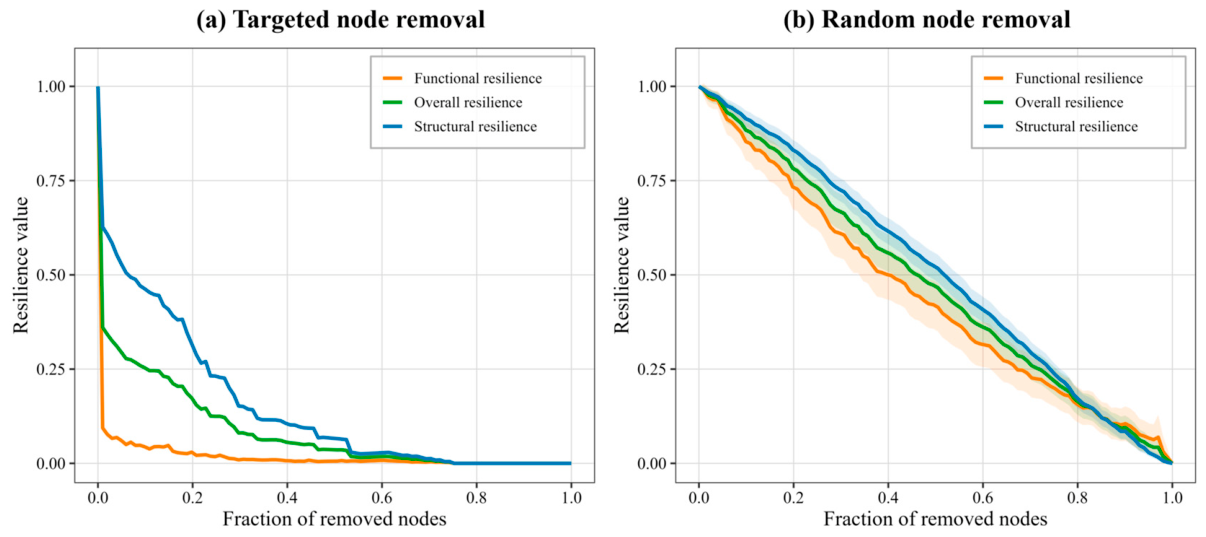
3.5. Results of CIN Resilience Simulation
4. Discussion
4.1. Driving Factors of LST
4.2. Why Is It Necessary to Construct CIN in Metropolitan Areas?
4.3. Threshold-like Degradation and Mechanisms of CIN Resilience Loss
4.4. Implications for Urban Management
4.5. Limitations and Prospects
5. Conclusions
Author Contributions
Funding
Data Availability Statement
Acknowledgments
Conflicts of Interest
Abbreviations
| CICS | Cold Island Core Sources |
| CIN | Cold Island Network |
| DEM | Digital Elevation Model |
| GDP | Gross Domestic Product |
| HINs | Heat Island Networks |
| LST | Land Surface Temperature |
| LULC | Land Use and Land Cover |
| NDVI | Normalized Difference Vegetation Index |
| NDWI | Normalized Difference Water Index |
| NTL | Nighttime Light |
| PD | Population Density |
| LCC | Largest Connected Component |
| RLST | Relative Land Surface Temperature |
| UCI | Urban Cold Island |
| UHI | Urban Heat Island |
References
- Ghorbany, S.; Hu, M.; Yao, S.; Wang, C. Towards a Sustainable Urban Future: A Comprehensive Review of Urban Heat Island Research Technologies and Machine Learning Approaches. Sustainability 2024, 16, 4609. [Google Scholar] [CrossRef]
- Yuan, Y.; Santamouris, M.; Xu, D.; Geng, X.; Li, C.; Cheng, W.; Su, L.; Xiong, P.; Fan, Z.; Wang, X.; et al. Surface urban heat island effects intensify more rapidly in lower income countries. npj Urban Sustain. 2025, 5, 11. [Google Scholar] [CrossRef]
- United Nations. Transforming Our World: The 2030 Agenda for Sustainable Development; United Nations: New York, NY, USA, 2015. [Google Scholar]
- Simpson, C.H.; Brousse, O.; Taylor, T.; Milojevic, A.; Grellier, J.; Taylor, J.; Fleming, L.E.; Davies, M.; Heaviside, C. The mortality and associated economic burden of London’s summer urban heat island effect: A modelling study. Lancet Planet. Health 2025, 9, e219–e226. [Google Scholar] [CrossRef]
- Fu, Q.; Zheng, Z.; Sarker, M.N.I.; Lv, Y. Combating urban heat: Systematic review of urban resilience and adaptation strategies. Heliyon 2024, 10, e37001. [Google Scholar] [CrossRef]
- Lin, Z.; Xu, H.; Han, L.; Zhang, H.; Peng, J.; Yao, X. Day and night: Impact of 2D/3D urban features on land surface temperature and their spatiotemporal non-stationary relationships in urban building spaces. Sustain. Cities Soc. 2024, 108, 105507. [Google Scholar]
- Mohamed, A.; Lorestani, N.; Shabani, F. Impact of urbanization on land surface temperature: A global perspective. Curr. Res. Environ. Sustain. 2025, 10, 100315. [Google Scholar] [CrossRef]
- Liao, W.; Guldmann, J.-M.; Hu, L.; Cao, Q.; Gan, D.; Li, X. Linking urban park cool island effects to the landscape patterns inside and outside the park: A simultaneous equation modeling approach. Landsc. Urban Plan. 2023, 232, 104681. [Google Scholar] [CrossRef]
- Zhu, Z.; Wu, M.; Ding, Y.; Liu, N.; Wei, J.; Hu, F.; Yao, X.; Li, J. Influence of multidimensional spatial factors on urban park cooling and carbon-saving effects: Insights under contrasting background meteorological conditions. Sustain. Cities Soc. 2025, 135, 106997. [Google Scholar] [CrossRef]
- Jia, X.; Song, P.; Yun, G.; Li, A.; Wang, K.; Zhang, K.; Du, C.; Feng, Y.; Qu, K.; Wu, M.; et al. Effect of Landscape Structure on Land Surface Temperature in Different Essential Urban Land Use Categories: A Case Study in Jiaozuo, China. Land 2022, 11, 1687. [Google Scholar] [CrossRef]
- Tanoori, G.; Soltani, A.; Modiri, A. Predicting Urban Land Use and Mitigating Land Surface Temperature: Exploring the Role of Urban Configuration with Convolutional Neural Networks. J. Urban Plan. Dev. 2024, 150, 04024029. [Google Scholar] [CrossRef]
- Liu, W.; Meng, Q.; Allam, M.; Zhang, L.; Hu, D.; Menenti, M. Driving Factors of Land Surface Temperature in Urban Agglomerations: A Case Study in the Pearl River Delta, China. Remote Sens. 2021, 13, 2858. [Google Scholar] [CrossRef]
- Tang, J.; Di, L.; Xiao, J.; Lu, D.; Zhou, Y. Impacts of land use and socioeconomic patterns on urban heat Island. Int. J. Remote Sens. 2017, 38, 3445–3465. [Google Scholar] [CrossRef]
- Feng, R.; Wang, F.; Wang, K.; Wang, H.; Li, L. Urban ecological land and natural-anthropogenic environment interactively drive surface urban heat island: An urban agglomeration-level study in China. Environ. Int. 2021, 157, 106857. [Google Scholar] [PubMed]
- Xiao, R.; Cao, W.; Liu, Y.; Lu, B. The impacts of landscape patterns spatio-temporal changes on land surface temperature from a multi-scale perspective: A case study of the Yangtze River Delta. Sci. Total Environ. 2022, 821, 153381. [Google Scholar] [CrossRef]
- Wang, W.; Samat, A.; Abuduwaili, J.; Ge, Y. Quantifying the influences of land surface parameters on LST variations based on GeoDetector model in Syr Darya Basin, Central Asia. J. Arid Environ. 2021, 186, 104415. [Google Scholar] [CrossRef]
- Zhou, M.; Wang, R.; Guo, Y. How urban spatial characteristics impact surface urban heat island in subtropical high-density cities based on LCZs: A case study of Macau. Sustain. Cities Soc. 2024, 112, 105587. [Google Scholar] [CrossRef]
- Wang, X.; Meng, Q.; Zhang, L.; Hu, D. Evaluation of urban green space in terms of thermal environmental benefits using geographical detector analysis. Int. J. Appl. Earth Obs. Geoinf. 2021, 105, 102610. [Google Scholar]
- Yao, X.; Ye, B.; Lan, Y.; Lin, Z.; Zhu, Z.; Yang, F.; Zeng, X. Diurnal contrast of urban park cooling effects in a “Furnace city” using multi-source geospatial data and optimal parameters-based geographical detector model. Sustain. Cities Soc. 2024, 114, 105765. [Google Scholar] [CrossRef]
- Zhao, Z.; Li, W.; Zhang, J.; Zheng, Y. Constructing an urban heat island network based on connectivity perspective: A case study of Harbin, China. Ecol. Indic. 2024, 159, 111665. [Google Scholar] [CrossRef]
- Qian, W.; Li, X. A cold island connectivity and network perspective to mitigate the urban heat island effect. Sustain. Cities Soc. 2023, 94, 104525. [Google Scholar] [CrossRef]
- Qiu, J.; Li, X.; Qian, W. Optimizing the spatial pattern of the cold island to mitigate the urban heat island effect. Ecol. Indic. 2023, 154, 110550. [Google Scholar] [CrossRef]
- Guo, N.; Liang, X. Robustness assessment of urban cold island network based on green infrastructure–A case study of Bengbu, China. Ecol. Indic. 2024, 169, 112842. [Google Scholar] [CrossRef]
- Gao, X.; Yuan, Z.; Liu, X.; Liu, F.; Kou, C. Achieving urban ecosystem resilience: Static and dynamic attack simulation and cascading failure analysis of urban blue-green infrastructure networks. Ecol. Indic. 2025, 179, 114205. [Google Scholar] [CrossRef]
- Agathangelidis, I.; Blougouras, G.; Cartalis, C.; Polydoros, A.; Tzanis, C.G.; Philippopoulos, K. Global Climatology of the Daytime Surface Cooling of Urban Parks Using Satellite Observations. Geophys. Res. Lett. 2025, 52, e2024GL112887. [Google Scholar] [CrossRef]
- Wu, Z.; Qiu, Y.; Ren, Y. Pervious surface fraction threshold and quantile-based optimization: A novel framework for heat mitigation in high-density urban areas. Build. Environ. 2025, 286, 113745. [Google Scholar] [CrossRef]
- Xu, Y.; Wang, W.; Chen, B.; Chang, M.; Wang, X. Identification of ventilation corridors using backward trajectory simulations in Beijing. Sustain. Cities Soc. 2021, 70, 102889. [Google Scholar] [CrossRef]
- Cao, J.; Zhou, W.; Yu, W.; Hu, X.; Yu, M.; Wang, J.; Wang, J. Urban expansion weakens the contribution of local land cover to urban warming. Urban Clim. 2022, 45, 101285. [Google Scholar] [CrossRef]
- Yao, L.; Sun, S.; Song, C.; Li, J.; Xu, W.; Xu, Y. Understanding the spatiotemporal pattern of the urban heat island footprint in the context of urbanization, a case study in Beijing, China. Appl. Geogr. 2021, 133, 102496. [Google Scholar] [CrossRef]
- Huang, Y.; Huang, J.; Huang, Y.; Li, T.; Ran, C.; Jin, J.; Zhao, S.; Liu, Y.; Fu, W. A network approach to promoting cold island connectivity for mitigating the urban heat island effect: Key areas and targeted strategies. J. Environ. Manag. 2025, 395, 127914. [Google Scholar] [CrossRef]
- Liu, F.; Liu, J.; Zhang, Y.; Hong, S.; Fu, W.; Wang, M.; Dong, J. Construction of a cold island network for the urban heat island effect mitigation. Sci. Total Environ. 2024, 915, 169950. [Google Scholar]
- Yang, J.; Huang, X. The 30 m annual land cover dataset and its dynamics in China from 1990 to 2019. Earth Syst. Sci. Data 2021, 13, 3907–3925. [Google Scholar] [CrossRef]
- Renc, A.; Łupikasza, E.; Błaszczyk, M. Spatial structure of the surface heat and cold islands in summer based on Landsat 8 imagery in southern Poland. Ecol. Indic. 2022, 142, 109181. [Google Scholar] [CrossRef]
- Deng, X.; Gao, F.; Liao, S.; Liu, Y.; Chen, W. Spatiotemporal evolution patterns of urban heat island and its relationship with urbanization in Guangdong-Hong Kong-Macao greater bay area of China from 2000 to 2020. Ecol. Indic. 2023, 146, 109817. [Google Scholar]
- Luo, J.; Fu, H. Constructing an urban cooling network based on PLUS model: Implications for future urban planning. Ecol. Indic. 2023, 154, 110887. [Google Scholar] [CrossRef]
- Soille, P.; Vogt, P. Morphological segmentation of binary patterns. Pattern Recognit. Lett. 2009, 30, 456–459. [Google Scholar] [CrossRef]
- Yue, X.; Liu, W.; Wang, X.; Yang, J.; Lan, Y.; Zhu, Z.; Yao, X. Constructing an urban heat network to mitigate the urban heat island effect from a connectivity perspective. Sustain. Cities Soc. 2024, 114, 105774. [Google Scholar] [CrossRef]
- Chen, M.; Sun, Y.; Yang, B.; Jiang, J. MSPA-based green space morphological pattern and its spatiotemporal influence on land surface temperature. Heliyon 2024, 10, e31363. [Google Scholar] [CrossRef]
- Cheng, S.; Li, S.; Qi, F. Research on the Construction Method of Heat Island Network Resistance Surface Based on County Perspective. Atmosphere 2023, 14, 1740. [Google Scholar] [CrossRef]
- Lian, D.; Yuan, B.; Li, X.; Shi, Z.; Ma, Q.; Hu, T.; Miao, S.; Huang, J.; Dong, G.; Liu, Y. The contrasting trend of global urbanization-induced impacts on day and night land surface temperature from a time-series perspective. Sustain. Cities Soc. 2024, 109, 105521. [Google Scholar] [CrossRef]
- Yang, N.; Lu, C.; Ouyang, L.; Chen, R.; Man, W.; Wang, Z.; Lin, J.; Yu, Q.; Li, Z. Exploring spatial–temporal evolution patterns of urban heat islands in summer and winter: Evidence from a megacity of China. Sci. Rep. 2025, 15, 13592. [Google Scholar] [CrossRef]
- Zhang, C.; Jia, C.; Gao, H.; Shen, S. Ecological Security Pattern Construction in Hilly Areas Based on SPCA and MCR: A Case Study of Nanchong City, China. Sustainability 2022, 14, 11368. [Google Scholar] [CrossRef]
- Guan, S.; Zhang, X.; Zhang, T.; Hu, H. Considering the supply and demand of urban heat island mitigation: A study on the construction of “Source-flow-sink” cooling corridor network of blue and green landscape. Ecol. Indic. 2025, 174, 113448. [Google Scholar]
- Guo, A.; Yue, W.; Yang, J.; Li, M.; Xie, P.; He, T.; Zhang, M.; Yu, H. Quantifying the impact of urban ventilation corridors on thermal environment in Chinese megacities. Ecol. Indic. 2023, 156, 111072. [Google Scholar] [CrossRef]
- McRae, B.H.; Beier, P. Circuit Theory Predicts Gene Flow in Plant and Animal Populations. Proc. Natl. Acad. Sci. USA 2007, 104, 19885–19890. [Google Scholar] [CrossRef] [PubMed]
- Liu, J.; Tian, Y.; Yang, Y.; Zhang, T.; Deng, Y.; Chen, W.; Yin, L.; Zhang, B. Constructing an urban cooling network based on multidimensional influencing factors of urban heat island and local climate zones. Build. Environ. 2026, 289, 114090. [Google Scholar] [CrossRef]
- Xie, P.; Yang, J.; Wang, H.; Liu, Y.; Liu, Y. A New method of simulating urban ventilation corridors using circuit theory. Sustain. Cities Soc. 2020, 59, 102162. [Google Scholar] [CrossRef]
- Freeman, L.C. Centrality in Social Networks. A Conceptual Clarification. Soc. Netw. 1978, 1, 215–239. [Google Scholar] [CrossRef]
- Zawadzka, J.E.; Garg, P.K.; Corstanje, R.; Verma, R. The relationship between spatial configuration of urban parks and neighbourhood cooling in a humid subtropical city. Landsc. Ecol. 2024, 39, 34. [Google Scholar] [CrossRef]
- Zhao, Y.; Fang, Y.; Zou, Y.; Li, G.; Li, B. Research on the resilience of ecological networks from the perspective of ecological security pattern: A case study of Wuhan metropolitan area. Sci. Rep. 2025, 16, 441. [Google Scholar] [CrossRef]
- Guo, N.; Liang, X.; Meng, L. Evaluation of thermal effects on urban road spatial structure: A case study of Xuzhou, China. Heliyon 2024, 10, e37244. [Google Scholar] [CrossRef]
- Li, J.; Nie, W.; Zhang, M.; Wang, L.; Dong, H.; Xu, B. Assessment and optimization of urban ecological network resilience based on disturbance scenario simulations: A case study of Nanjing city. J. Clean. Prod. 2024, 438, 140812. [Google Scholar] [CrossRef]
- Hu, C.; Huang, G.; Wang, Z. Exploring the seasonal relationship between spatial and temporal features of land surface temperature and its potential drivers: The case of Chengdu metropolitan area, China. Front. Earth Sci. 2023, 11, 1226795. [Google Scholar] [CrossRef]
- Logan, T.M.; Zaitchik, B.; Guikema, S.; Nisbet, A. Night and day: The influence and relative importance of urban characteristics on remotely sensed land surface temperature. Remote Sens. Environ. 2020, 247, 111861. [Google Scholar]
- Li, H.; Zhao, Y.; Wang, C.; Ürge-Vorsatz, D.; Carmeliet, J.; Bardhan, R. Cooling efficacy of trees across cities is determined by background climate, urban morphology, and tree trait. Commun. Earth Environ. 2024, 5, 754. [Google Scholar] [CrossRef]
- Yang, X.; Feng, F.; Wang, K.; Zhang, Y.; Ye, Y.; Liu, T.; Zhao, X.; Zhang, L.; Zheng, L. Exploring the formation mechanisms of composite cooling networks in megacities: Insights from optimal interpretable machine learning. Sustain. Cities Soc. 2025, 130, 106642. [Google Scholar] [CrossRef]
- Yuan, Y.; Li, C.; Geng, X.; Yu, Z.; Fan, Z.; Wang, X. Natural-anthropogenic environment interactively causes the surface urban heat island intensity variations in global climate zones. Environ. Int. 2022, 170, 107574. [Google Scholar] [CrossRef]
- Li, Y.; Schubert, S.; Kropp, J.P.; Rybski, D. On the influence of density and morphology on the Urban Heat Island intensity. Nat. Commun. 2020, 11, 2647. [Google Scholar] [CrossRef]
- Gao, Y.; Pan, H.; Tian, L. Analysis of the spillover characteristics of cooling effect in an urban park: A case study in Zhengzhou city. Front. Earth Sci. 2023, 11, 1133901. [Google Scholar] [CrossRef]
- Yu, Z.; Yang, G.; Zuo, S.; Jørgensen, G.; Koga, M.; Vejre, H. Critical review on the cooling effect of urban blue-green space: A threshold-size perspective. Urban For. Urban Green. 2020, 49, 126630. [Google Scholar] [CrossRef]
- Zhao, X.; Kong, K.; Wang, R.; Liu, J.; Deng, Y.; Yin, L.; Zhang, B. Assessing the Cooling Effects of Urban Parks and Their Potential Influencing Factors: Perspectives on Maximum Impact and Accumulation Effects. Sustainability 2025, 17, 7015. [Google Scholar] [CrossRef]
- Fang, Y.; Zhao, L. Exploring the supply-demand match and drivers of blue-green spaces cooling in Wuhan Metropolis. Urban Clim. 2024, 58, 102194. [Google Scholar]
- Liu, Z.; Han, Y.; Zheng, H.; Wu, W.; Chen, M.; Peng, D. Equity of cooling services of urban green spaces from the perspective of community life circles: Integrating cooling effects, service quality, and resident preferences. Trees For. People (Online) 2026, 23, 101132. [Google Scholar]
- Xu, J.; Wang, J.; Xiong, N.; Chen, Y.; Sun, L.; Wang, Y.; An, L. Analysis of Ecological Blockage Pattern in Beijing Important Ecological Function Area, China. Remote Sens. 2022, 14, 1151. [Google Scholar]
- Hall, K.R.; Anantharaman, R.; Landau, V.A.; Clark, M.; Dickson, B.G.; Jones, A.; Platt, J.; Edelman, A.; Shah, V.B. Circuitscape in Julia: Empowering Dynamic Approaches to Connectivity Assessment. Land 2021, 10, 301. [Google Scholar] [CrossRef]
- Peng, J.; Yang, Y.; Liu, Y.; Hu, Y.n.; Du, Y.; Meersmans, J.; Qiu, S. Linking ecosystem services and circuit theory to identify ecological security patterns. Sci. Total Environ. 2018, 644, 781–790. [Google Scholar] [PubMed]
- Doick, K.J.; Peace, A.; Hutchings, T.R. The role of one large greenspace in mitigating London’s nocturnal urban heat island. Sci. Total Environ. 2014, 493, 662–671. [Google Scholar] [PubMed]
- Peng, J.; Cheng, X.; Hu, Y.; Corcoran, J. A landscape connectivity approach to mitigating the urban heat island effect. Landsc. Ecol. 2022, 37, 1707–1719. [Google Scholar] [CrossRef]
- Hong, W.; Guo, R.; Li, X.; Liao, C. Measuring urban ecological network resilience: A disturbance scenario simulation method. Cities 2022, 131, 104057. [Google Scholar] [CrossRef]
- Wang, T.; Li, H.; Huang, Y. The complex ecological network’s resilience of the Wuhan metropolitan area. Ecol. Indic. 2021, 130, 108101. [Google Scholar] [CrossRef]
- Artime, O.; Grassia, M.; De Domenico, M.; Gleeson, J.P.; Makse, H.A.; Mangioni, G.; Perc, M.; Radicchi, F. Robustness and resilience of complex networks. Nat. Rev. Phys. 2024, 6, 114–131. [Google Scholar] [CrossRef]
- Albert, R.; Jeong, H.; Barabási, A.-L. Error and attack tolerance of complex networks. Nature 2000, 406, 378–382. [Google Scholar] [CrossRef]
- Engsig, M.; Tejedor, A.; Moreno, Y.; Foufoula-Georgiou, E.; Kasmi, C. DomiRank Centrality reveals structural fragility of complex networks via node dominance. Nat. Commun. 2024, 15, 56. [Google Scholar] [CrossRef]
- Chen, X.; Ma, S.; Chen, L.; Yang, L. Resilience measurement and analysis of intercity public transportation network. Transp. Res. Part D. Transp. Environ. 2024, 131, 104202. [Google Scholar]
- Cassi, D.; Bellingeri, M.; Scotognella, F.; Bevacqua, D.; Alfieri, R. A comparative analysis of link removal strategies in real complex weighted networks. Sci. Rep. 2020, 10, 3911. [Google Scholar] [CrossRef]
- Cao, Y.; Bu, X.; Zhang, J. Robustness evaluation of bus-subway composite network considering accessibility. Sci. Rep. 2025, 15, 10770. [Google Scholar] [CrossRef]
- Beijing Municipal Ecology and Environment Bureau. Beijing Action Plan for Climate Change Adaptation. 2024. Available online: https://sthjj.beijing.gov.cn/bjhrb/index/xxgk69/zfxxgk43/fdzdgknr2/zcfb/2024bzcwj/543352535/index.html (accessed on 8 January 2026).
- Beijing Municipal Health Commission. Beijing Municipal Action Plan for Climate Change and Health Adaptation (2025–2030). 2025. Available online: https://wjw.beijing.gov.cn/zwgk_20040/zcwj2024/202506/t20250623_4119247.html (accessed on 8 January 2026).
- Fang, Y.; Zhao, L.; Dou, B.; Li, Y.; Wang, S. Circuit VRC: A circuit theory-based ventilation corridor model for mitigating the urban heat islands. Build. Environ. 2023, 244, 110786. [Google Scholar] [CrossRef]






| Data | Spatial Resolution | Source |
|---|---|---|
| Landsat 8 OLI/TIRS Collection 2 Level-2 Surface Temperature | 30 m | USGS EarthExplorer |
| NDVI | 30 m | Resource and Environment Science and Data Center of the Chinese Academy of Sciences (RESDC) https://www.resdc.cn/ |
| NDWI | 30 m | NASA |
| DEM | 30 m | RESDC |
| LULC | 30 m | CLCD [32] |
| GDP | 1000 m | RESDC |
| NTL | 0.004° | RESDC |
| PD | 100 m | Worldpop (https://www.worldpop.org/) |
| Grade | Division Standard |
|---|---|
| High | LST > (μ + 1.5σ) |
| Sub-high | (μ + 0.5σ) < LST ≤ (μ + 1.5σ) |
| Normal | (μ − 0.5σ) ≤ LST ≤ (μ + 0.5σ) |
| Sub-low | (μ − 1.5σ) ≤ LST < (μ − 0.5σ) |
| Low | LST < (μ − 1.5σ) 1 |
| Interaction Type | Description |
|---|---|
| Weaken, nonlinear | q(X1∩X2) < min(q(X1), q(X2)) |
| Weaken, unique | Min(q(X1), q(X2)) < q(X1∩X2) < Max(q(X1), q(X2)) |
| Enhanced, bilinear | q(X1∩X2) > Max(q(X1), q(X2)) |
| Independent | q(X1∩X2) = q(X1) + q(X2) |
| Enhanced, nonlinear | q(X1∩X2) > q(X1) + q(X2) |
| Serial Number | Basic Unit | Meaning |
|---|---|---|
| 1 | Core | Major cold-source patches with large areas and high ecological quality; they serve as critical regions providing ecological functions and habitat environments. |
| 2 | Islet | Spatially isolated and small-scale cold-source units with limited ecological functions and weak connectivity to the main network. |
| 3 | Perforation | Transition zones located at the internal edges of Core areas, representing spatial units that reflect the functional transition from the interior to the periphery of the Core. |
| 4 | Edge | Transition belts at the external edges of Core areas; they serve as interfaces between the Core and non-cold-source surfaces and are susceptible to external disturbances. |
| 5 | Loop | Corridors connecting different parts within the same Core area, facilitating internal connectivity and energy circulation. |
| 6 | Bridge | Primary corridors connecting distinct Core areas; they function as critical pathways for cold energy diffusion and ecological flow. |
| 7 | Branch | Elongated areas connected to the core at one end, serving as secondary corridors or expansion paths. |
| Index Layer | Class | Cost | Weight |
|---|---|---|---|
| NDVI | 0.903–1 | 10 | 0.052 |
| 0.730–0.902 | 30 | ||
| 0.576–0.729 | 50 | ||
| 0.426–0.575 | 80 | ||
| 0.167–0.425 | 100 | ||
| NDWI | 0.904–1 | 10 | 0.074 |
| 0.731–0.903 | 30 | ||
| 0.574–0.730 | 50 | ||
| 0.420–0.573 | 80 | ||
| 0.199–0.419 | 100 | ||
| DEM | 1071.801–2291 | 10 | 0.138 |
| 713.213–1071.8 | 30 | ||
| 435.307–713.212 | 50 | ||
| 175.329–435.306 | 80 | ||
| 5–175.329 | 100 | ||
| LULC | Water | 5 | 0.231 |
| Woodland | 10 | ||
| Grassland | 30 | ||
| Cropland | 50 | ||
| Barren | 80 | ||
| Impervious | 100 | ||
| GDP | 325,378.001–1,250,970 | 100 | 0.156 |
| 160,330.001–325,378 | 80 | ||
| 64,720.001–160,330 | 50 | ||
| 14,205.001–64,720 | 30 | ||
| 110–14,205 | 10 | ||
| NTL | 109.284–299.141 | 100 | 0.204 |
| 47.170–109.293 | 80 | ||
| 23.731–47.169 | 50 | ||
| 7.323–23.73 | 30 | ||
| 0.291–7.322 | 10 | ||
| PD | 121.199–214.622 | 100 | 0.144 |
| 76.592–121.198 | 80 | ||
| 40.4–76.591 | 50 | ||
| 13.467–40.399 | 30 | ||
| 0–13.466 | 10 |
Disclaimer/Publisher’s Note: The statements, opinions and data contained in all publications are solely those of the individual author(s) and contributor(s) and not of MDPI and/or the editor(s). MDPI and/or the editor(s) disclaim responsibility for any injury to people or property resulting from any ideas, methods, instructions or products referred to in the content. |
© 2026 by the authors. Licensee MDPI, Basel, Switzerland. This article is an open access article distributed under the terms and conditions of the Creative Commons Attribution (CC BY) license.
Share and Cite
Wang, T.; Liu, Y.; Xu, W. Connectivity and Resilience of Urban Cooling Networks: A Network-Based Assessment Under Heterogeneous Resistance. Land 2026, 15, 1012. https://doi.org/10.3390/land15061012
Wang T, Liu Y, Xu W. Connectivity and Resilience of Urban Cooling Networks: A Network-Based Assessment Under Heterogeneous Resistance. Land. 2026; 15(6):1012. https://doi.org/10.3390/land15061012
Chicago/Turabian StyleWang, Tianyue, Yuxiang Liu, and Weizhen Xu. 2026. "Connectivity and Resilience of Urban Cooling Networks: A Network-Based Assessment Under Heterogeneous Resistance" Land 15, no. 6: 1012. https://doi.org/10.3390/land15061012
APA StyleWang, T., Liu, Y., & Xu, W. (2026). Connectivity and Resilience of Urban Cooling Networks: A Network-Based Assessment Under Heterogeneous Resistance. Land, 15(6), 1012. https://doi.org/10.3390/land15061012