1. Introduction
It is well established that the inadequate management of the environment and the workforce by mining companies in the past has left a persistent negative legacy and created a societal bias that is difficult to overcome [
1,
2]. This perception remains despite significant technological advancements [
3,
4], the adoption of contemporary management practices [
5,
6], and the implementation of more stringent regulatory frameworks [
7,
8].
In recent years, international practice has increasingly required not only an assessment of the environmental impacts of mining projects but also a systematic evaluation of their social impacts [
9,
10]. This shift acknowledges that the quality of life in local communities is determined not solely by environmental parameters but also by a wide range of socioeconomic factors, including population dynamics, structural changes in the local economy, extensive land-use transformations, and shifts in the number and nature of available employment opportunities [
11,
12].
A critical parameter to consider is the long-term nature of large-scale mining activities. Over time, such operations become embedded in local economic and social systems while simultaneously displacing or constraining other forms of development [
13,
14]. Consequently, when mining activities cease, either due to resource depletion or broader drivers such as the energy transition, local communities often struggle to redefine their development trajectory. This process is frequently accompanied by reduced social cohesion, higher unemployment, population decline, and increased rates of crime and delinquency [
15,
16].
Land management in mining regions presents significant challenges because numerous and often conflicting interests must be addressed. Yet, an essential constraint that differentiates the mining industry from most others is that extraction can occur only where the mineral deposit is located. Consequently, spatial planning options are inherently limited, except for the siting of selected ancillary facilities associated with the main mining operation.
As a result, assessments of mining projects commonly involve complex technical, economic, environmental, and social considerations. These include: (a) the relocation of settlements, (b) the destruction or replacement of public utility infrastructure, and (c) the long-term occupation of large land areas that restrict the spatial availability for other economic activities.
This paper first reviews how the social impacts of the mining industry have been addressed internationally and subsequently examines the degree to which these insights apply to the lignite mines of Western Macedonia. The key research questions guiding this study are as follows:
- -
What are the principal social impacts associated with the mining industry?
- -
How can effective land management help mitigate these impacts?
- -
How have legislation and best management practices evolved?
- -
To what extent are these changes reflected in the case of the lignite mines of Western Macedonia in the context of the rapid developments of the energy transition?
By critically applying the findings of the literature to the case of Western Macedonia, this study contributes to the broader debate on coal and lignite transition regions. The empirical evidence illustrates how long-term land occupation, mono-sectoral economic dependence, demographic decline, and stakeholder involvement interact under specific conditions of energy transition. In this respect, the case of Western Macedonia illustrates the territorial and socioeconomic challenges of energy transition processes, including the deployment of renewable energy and energy storage projects, as well as accelerated land reclamation to support productive diversification in former mining areas. Therefore, the study contributes to the international literature by highlighting the importance of integrating land-use change, socioeconomic restructuring, and participatory governance within place-based transition strategies for mining-dependent regions.
2. Materials and Methods
The methodological approach of this study combines a structured qualitative literature review with a case study analysis.
Initially, an international literature review was conducted to identify studies addressing the social impacts of the extractive industry. Relevant publications were identified through the Google Scholar database using the search phrase “impact(s) assessment” in article titles, combined with the keywords “mining” OR “mine”. The search covered the period from 2000 to 2025 and yielded more than 200 publications.
The initial set of publications was screened in two stages. First, studies focusing exclusively on environmental impacts were excluded, as the present research focuses specifically on social impacts. This initial screening was conducted through keyword filtering and review of article abstracts in order to assess thematic relevance to the objectives of the study. Second, among the remaining studies, priority was given to publications with significant academic impact, using citation counts as an indicator of influence, with emphasis on studies receiving more than 30 citations. Citation counts were used as an indicative proxy for academic influence and visibility within the field. However, this approach may underrepresent recent but potentially important contributions that have not yet accumulated a substantial number of citations.
In addition, a complementary search was conducted in Greek-language academic literature to identify undergraduate, postgraduate, and doctoral theses addressing the social impacts of mining activities in Greece. In this case, the same keywords and phrases were searched in the full text. This search also yielded more than 200 documents, of which 19 studies were selected based on thematic relevance to the objectives of this paper. Studies focusing exclusively on environmental impacts were excluded.
The selected literature was reviewed and organized into broad thematic categories reflecting the main areas of discussion in the international literature on mining-related social impacts. These thematic categories included: (i) the nature and scope of social impacts, (ii) methodological approaches to social impact assessment, (iii) stakeholder participation and corporate social responsibility, (iv) integrated environmental and social impact approaches, (v) coal mining and community change, and (vi) implications for transitioning coal and lignite regions.
Based on this thematic synthesis, the principal recurring dimensions most relevant to the case of the Region of Western Macedonia, Greece, were identified, including settlement relocation, long-term land occupation, economic dependence, demographic pressures, and stakeholder distrust. These dimensions formed the analytical framework for the case study analysis, which examined the extent to which the social impacts are identified in the study area. The region has experienced substantial social and economic challenges in recent years, largely associated with the European Union’s green energy transition strategy, while also reflecting the long-term structural transformations resulting from approximately six decades of lignite exploitation. Where available, quantitative socioeconomic and demographic data were incorporated to contextualize and empirically support the qualitative assessment. Specifically, the socioeconomic indicators were interpreted in relation to the principal thematic dimensions identified through the literature review. This approach allowed the case study analysis to connect broader conceptual patterns with region-specific empirical evidence.
Study Area Description
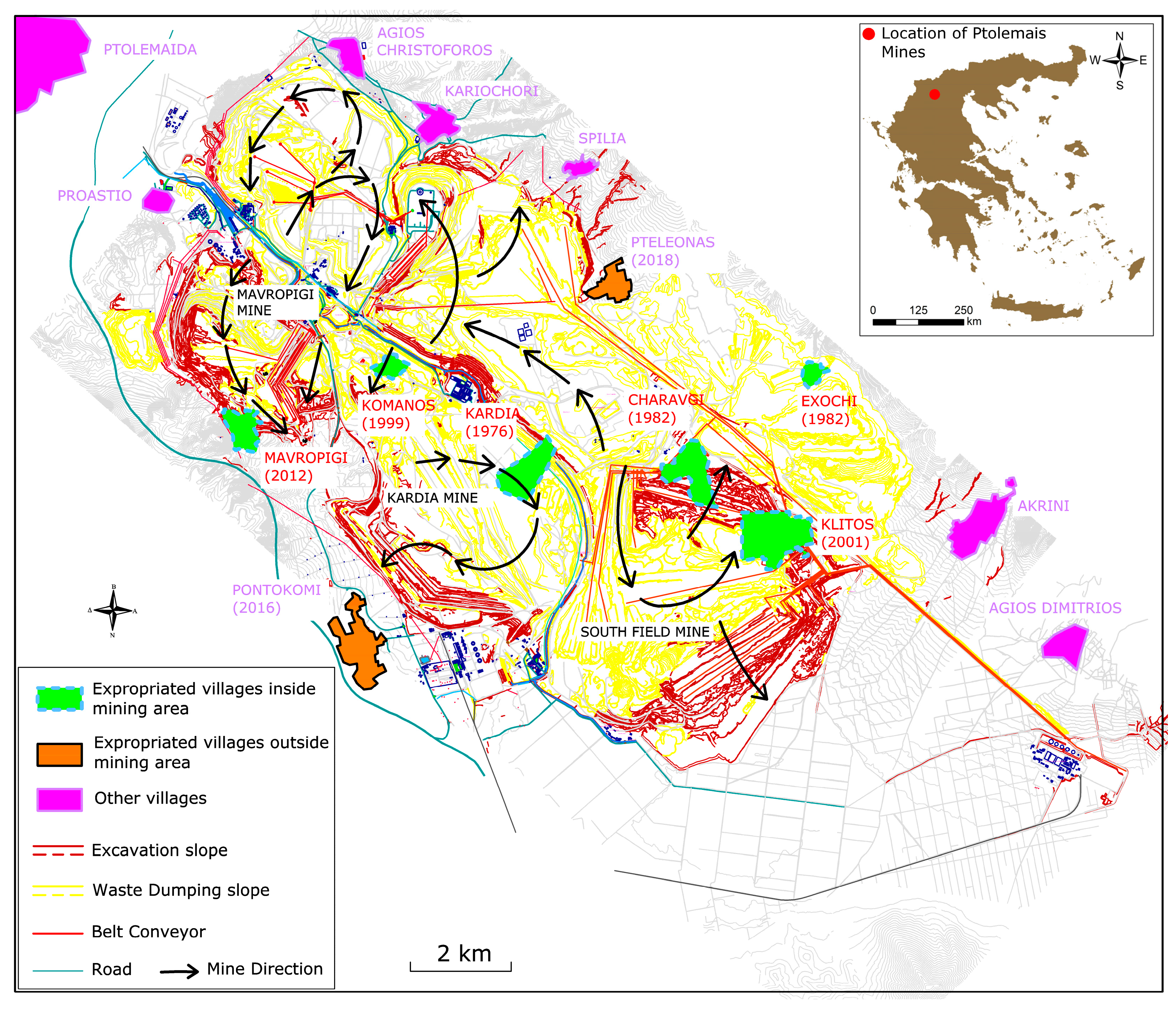
The study area includes the Ptolemais surface lignite mines, located in the Kozani province of Western Macedonia, Greece (
Figure 1). The mining sites, including inside and outside waste dumps and auxiliary facilities, cover a total area of 13,200 ha. Since 1958, 1.55 billion tonnes of lignite have been produced from ten mines for electricity generation, and 7.07 billion cubic meters of rock have been excavated. In 2002, lignite production in the Ptolemais mines peaked at 47.24 million tonnes [
17]. During the long period of mining operations, new mines were opened, and exhausted mining areas were covered with waste materials from neighbouring mines. After 2013, mining operations were gradually but significantly reduced, following the increased electricity production from natural gas–fired power stations and renewable energy sources. The mining operations were mainly based on the application of continuous surface mining equipment (bucket wheel excavators, belt conveyors, and spreaders) in combination with noncontinuous mining equipment for specific earthmoving tasks. In parallel with the mining activities, extensive environmental reclamation work was underway. The reclaimed land has been utilised for various purposes, including the installation of RES. Currently, the only two active mines (South Field and Mavropigi) are in a closure phase, with a plan to stop lignite production in 2026, while reclamation works will continue until all required activities defined in the mine environmental permitting terms are completed.
3. Literature Review
The extractive industry is a cornerstone of global economic development, providing critical raw materials and energy resources while generating profound, often contested social impacts. These impacts manifest across spatial and temporal scales, shaping livelihoods, settlement patterns, governance arrangements, and social relations in mining regions worldwide. Over the past two decades, a substantial body of literature has emerged to document, conceptualize, and assess these impacts, highlighting both recurring patterns and strong contextual specificities. This review synthesizes key contributions on the social impacts of mining, methodological approaches for their study and management, and empirical experiences from diverse geographical contexts, with particular attention to coal and lignite mining regions undergoing structural transition.
3.1. The Nature and Scope of Social Impacts of Mining
Social impacts of mining encompass changes in employment structures, income distribution, land use, housing conditions, health outcomes, cultural practices, social cohesion, and perceptions of well-being. Joyce and MacFarlane [
18] argue that these impacts are best understood as dynamic processes rather than static outcomes, evolving throughout the mining life cycle in response to economic fluctuations, demographic change, and stakeholder interactions. While mining can generate employment, infrastructure, and fiscal revenues, it may also produce social disruption, inequality, environmental degradation, and long-term dependency on a single industry.
Studies from diverse geographical contexts illustrate the mixed nature of these impacts. Research in agricultural and peripheral regions shows that mining can improve local employment and infrastructure while simultaneously undermining livelihood security through land degradation, water pollution, labour displacement, and increased vulnerability to mine closure [
19,
20]. In Indigenous and remote communities, these impacts are often closely linked to cultural identity and local autonomy, as mining development may disrupt traditional livelihoods, weaken social cohesion, and reduce community control over future development trajectories [
21].
Overall, the literature indicates that the social impacts of mining are multidimensional and context-dependent, but they also reveal recurring structural patterns across different settings. Although extractive activities may generate short-term economic benefits, they frequently reinforce economic dependency, social inequality, and community vulnerability, particularly in regions where development becomes strongly tied to a single extractive industry. These patterns are especially relevant in coal and lignite regions undergoing energy transition, where the long-term legacy of extraction shapes present social conditions and influences the capacity of local communities to adapt to post-mining change.
3.2. Methodological Approaches to Assessing Social Impacts
Social Impact Assessment (SIA) has become the primary instrument for identifying and managing the social consequences of mining projects. However, Joyce and MacFarlane [
18] highlight persistent limitations in SIA practice, including narrow scoping, insufficient baseline data, and an overemphasis on compliance-oriented, one-off assessments. These shortcomings are often compounded by limited community participation, reducing the capacity of SIA to support adaptive management and long-term planning.
In response, scholars have proposed more research-oriented, qualitative, and participatory frameworks to address the complexity of social impacts. Sairinen et al. [
22] propose a four-stage framework comprising: (i) research preparations, (ii) background studies, (iii) fieldwork, and (iv) analysis. Rooted in social science methods, this approach emphasizes theoretical sensitivity, qualitative inquiry, and local context, enabling researchers to identify social processes and unintended consequences often overlooked in standardized assessment procedures.
Quantitative and mixed-method approaches have also gained prominence. Structural equation modelling techniques, such as Partial Least Squares Structural Equation Modelling (PLS-SEM), have been used to examine relationships between mining activities, livelihood assets, corporate social responsibility (CSR), and community acceptance [
19]. Similarly, Nunfam [
23] demonstrates the value of convergent mixed-methods designs for assessing the social impacts of occupational heat stress on mining workers, capturing health, psychological, productivity, and well-being impacts that would remain insufficiently understood through single-method approaches. Collectively, these studies highlight the value of methodological pluralism in addressing emerging social risks in the mining sector.
Recent research has also sought to harmonize social impact assessment through indicator-based frameworks. Mancini and Sala [
2] review indicators used in sustainability and policy frameworks, including the UN Sustainable Development Goals (SDGs), the Global Reporting Initiative (GRI), EU impact assessment practices, and Social Life Cycle Assessment (SLCA) databases. Their analysis identifies land-use conflicts, health-related environmental impacts, and human rights as the most common negative impacts, while income and employment emerge as the main positive impacts. At the same time, they highlight persistent gaps in capturing demographic change, migration, and local land-use impacts. These limitations underscore the difficulty of representing place-specific social dynamics within macro-level frameworks.
While quantitative and indicator-based methods improve analytical rigor and comparability, the literature emphasizes that they should complement rather than replace qualitative and participatory approaches capable of capturing lived experiences, cultural meanings, power relations, and community perceptions [
18]. Despite important methodological advances, significant challenges remain in representing cumulative, long-term, and site-specific social transformations within standardized assessment frameworks. As a result, these methods may insufficiently capture dynamic processes such as institutional involvement, social acceptance, and uneven adaptive capacities during periods of structural transition. These limitations highlight the need for more integrated and context-sensitive approaches capable of linking measurable socioeconomic changes with the broader social dynamics experienced by mining communities.
3.3. Stakeholders Participation and Corporate Social Responsibility
Community perceptions strongly influence mine–community relations and the social licence to operate. Studies show that negative perceptions are associated with perceived environmental degradation, unequal distribution of benefits, and limited influence over decision-making [
24,
25]. Even where corporate social responsibility initiatives are implemented, they are often viewed as insufficient when they are not aligned with community priorities. Stakeholder engagement and corporate social responsibility initiatives may also operate as mechanisms through which alliances among mining companies, local authorities, and selected social groups influence public perceptions and contribute to the construction of legitimacy around mining activities.
Research also highlights that the marginalization of social impacts in mine planning may reflect institutional and structural governance failures rather than technical limitations [
26]. These findings underline the importance of transparent governance and meaningful stakeholder engagement in reducing social conflict.
3.4. Integrated and Cumulative Approaches of Environmental and Social Impacts
Given the cumulative and interconnected nature of mining impacts, several authors advocate for integrated, interdisciplinary assessment frameworks. Lechner et al. [
27] identify six critical aspects of planning in mining regions: (i) the temporal nature of mining operations; (ii) spatial dimensions of mining operations; (iii) irreversible changes that create post-mining landscapes; (iv) social dimensions of mining impacts and corporate responsibility; (v) cumulative dimensions of impacts; and (vi) a need to integrate methods from a range of disciplines. They propose participatory modelling approaches that link social, environmental, and economic systems across spatial and temporal scales. When established through the principles of adaptive assessment and iterative cycles, these approaches can evolve alongside advances in modelling and monitoring technologies, regulatory frameworks, and planning practices. Such frameworks are particularly relevant in mining regions experiencing multiple overlapping developments and long-term landscape transformation. Evidence from Arctic and boreal regions further underscores significant knowledge gaps regarding cumulative impacts, mitigation effectiveness, and social–ecological interactions, particularly for Indigenous communities [
28].
Applied research from mining and environmental management further reinforces the importance of integration across impact domains. Singh and Singh [
29] emphasize that social impacts are closely conditioned by the effectiveness of environmental mitigation and post-closure management, particularly in coal and lignite mining regions dominated by large-scale surface operations. Inadequate rehabilitation of land and water systems exacerbates long-term social risks, including health impacts, loss of ecosystem services, and constrained livelihood options. Conversely, strategic post-closure environmental management, encompassing reclamation, ecosystem restoration, and alternative land-use planning, can contribute to social stability and community acceptance, highlighting the interdependence of environmental performance, corporate social responsibility, and social outcomes.
3.5. Coal Mining and Community Change
Coal and lignite mining regions present particularly acute social challenges due to their strong path dependency and the centrality of extraction to regional economies. Longitudinal studies from Australia’s Bowen Basin highlight how social impacts vary over time and are shaped by labour recruitment strategies, housing markets, and cumulative development pressures. Lockie et al. [
30] conceptualize these dynamics through the notion of the resource community cycle, showing that rapid growth and subsequent contraction can erode social capital, strain local services, and undermine communities’ capacity to adapt to downturns.
Coal mining has also been associated with mining-induced displacement and resettlement, loss of physical and non-physical assets, and long-term health and environmental risks, particularly in large surface mining operations [
31]. In India and South Korea, studies document persistent deficits in education, healthcare, and employment opportunities in mining-dependent regions compared to non-mining areas, underscoring the uneven social development outcomes associated with coal extraction [
32]. These findings are especially relevant in the context of energy transitions, where coal regions face simultaneous environmental pressures and socioeconomic restructuring.
Research from Australia’s coal sector further suggests that while community engagement practices have expanded beyond minimal legislative requirements, they often remain decoupled from impact assessment and decision-making processes [
33]. This separation risks reframing participation as expectation or image management rather than democratization, limiting opportunities for social learning and co-produced solutions. In such contexts, stakeholder alliances involving extractive industries, labour organisations, and local institutions may further reinforce established development trajectories, shaping how mining continuity and transition policies are socially perceived and politically negotiated.
3.6. Implications for Transitioning Coal and Lignite Regions
As coal and lignite regions undergo decarbonization and mine closure, the social impacts of extraction acquire growing importance. Policy-oriented literature emphasizes the need for place-based, socially just transition strategies that address historical legacies of mining, support economic diversification, and strengthen local capacities [
34]. The reviewed studies collectively suggest that effective responses require moving beyond project-level mitigation toward integrated regional planning, early and continuous engagement, and alignment between social impact research, governance, and transition policy.
Recent work on mine closure further highlights that closure constitutes a profound social transition rather than a discrete technical or economic event. Marais [
35] demonstrates that the social impacts of closure are deeply embedded in the ways mining has historically structured settlement patterns, housing provision, and everyday life. The disruption of these arrangements affects not only employment but also community cohesion, service provision, and residents’ emotional and symbolic relationships to place. Housing systems designed around the mining life cycle frequently fail to provide security or adaptability after closure, intensifying vulnerability, displacement, and spatial inequality.
Importantly, Marais [
35] underscores the role of place attachment in shaping social well-being and community resilience during transition. Emotional bonds to mining landscapes, formed through social networks and shared histories, are often severed by closure processes yet remain largely invisible in conventional impact assessments and policy frameworks. This insight reinforces broader critiques of technocratic transition planning and highlights the need for socially sensitive, long-term approaches that recognize closure as an enduring social condition rather than an endpoint.
In this context, understanding the social impacts of extractive industries is essential not only for mitigating harm but also for informing sustainable post-mining futures. This perspective is particularly pertinent for lignite-dependent regions such as those in Greece, where rapid energy transition necessitates robust, evidence-based approaches to managing social change, inequality, and regional resilience.
More recent contributions published after the completion of the structured literature review further reinforce these findings by emphasizing the interconnections between just transition, regional resilience, and institutional capacity. Transition outcomes depend not only on economic restructuring but also on the institutional capacity of regions to adapt to long-term structural change. Neuhuber [
36] argues that transformative regional resilience and just transition are closely interconnected through welfare state arrangements, labour protection, and redistributive policies that shape communities’ adaptive capacities during decarbonization processes. Similarly, recent studies on coal-dependent and rural regions emphasize that effective adaptation requires place-sensitive and spatially differentiated development pathways, institutional coordination, and locally embedded diversification strategies capable of addressing demographic decline and uneven adaptive capacities across mining territories [
37,
38]. This perspective is particularly pertinent for lignite-dependent regions such as those in Greece, where energy transition necessitates robust, evidence-based approaches to managing social change and long-term regional resilience.
Table 1 summarizes the key thematic dimensions of the international literature on the social impacts of mining, organized by scale, mine lifecycle stage, and contribution to Social Impact Assessment. This overview provides the conceptual basis for the analysis of the Greek case studies that follow.
4. Insights of Greek-Language Literature
Despite the growing international literature on the social impacts of extractive activities and post-mining transitions, a substantial body of relevant research has also been produced in the Greek language, although it remains less visible in international academic debates. This literature includes both broader thematic studies on sustainable development, governance, land-use change, and post-mining planning, as well as empirical studies focusing on specific mining regions in Greece.
The broader Greek-language literature highlights that the social impacts of extractive industries extend beyond employment generation and regional income, influencing settlement patterns, local development trajectories, and social cohesion [
39,
40]. It also emphasizes the importance of mine closure planning, land reclamation strategies, and the adaptive reuse of post-mining landscapes as key factors for supporting long-term regional resilience [
41,
42,
43,
44]. In parallel, studies focusing on corporate governance and social acceptance underline the importance of transparency, institutional accountability, and stakeholder participation in shaping socially sustainable mining outcomes [
45,
46].
At the same time, empirical case-based research remains geographically concentrated. The studies identified as directly addressing the social impacts of extractive activities mainly focus on lignite mining in Western Macedonia, gold mining in north-eastern Halkidiki, and quarrying activities in Attica. Other significant extractive sectors in Greece, including bauxite mining and the LARCO mining–metallurgical complex in Central Greece, industrial mineral extraction in Milos, and smaller-scale mining operations, remain largely absent from the literature. This uneven empirical coverage limits comparative understanding of the territorial dimensions of extractive impacts and highlights the need for broader place-based research across different mining contexts.
4.1. Social and Spatial Implications of the Energy Transition in Western Macedonia
Over the last two decades, Greece has experienced a rapid transformation of its energy mix, particularly in electricity generation. The expanding role of natural gas as a transitional fuel, followed by the accelerated deployment of renewable energy sources (RES), has gradually displaced lignite, which historically constituted the backbone of national electricity production. Earlier studies suggested that lignite would remain the most cost-effective source of electricity in the long term [
47]. However, the introduction of the EU Emissions Trading System, combined with declining RES technology costs, fundamentally altered the economic competitiveness of lignite-based power generation.
These developments have had profound and measurable impacts on Western Macedonia, which functioned for nearly six decades as Greece’s primary energy hub and covered up to 70% of national electricity demand. The regional economy became highly specialized around lignite extraction and power generation, generating employment, relatively high incomes, and infrastructure development, while simultaneously creating a strong mono-sectoral dependency [
48]. Input–output analyses reveal the depth of this dependency: production, income, and employment multipliers associated with lignite activity reached 3.6, 2.6, and 11.9, respectively [
49]. Between 2012 and 2018, the gradual reduction in lignite activity resulted in a 48% decline in lignite production and a 60% decrease in lignite-based electricity generation nationwide. During the same period, the regional economy experienced an estimated GDP loss of approximately EUR 993 million.
Despite these socioeconomic costs, environmental indicators improved markedly during the same period. CO2 emissions declined by 47%, PM10 concentrations by 79%, and SO2 emissions by 69%, highlighting the environmental benefits of decarbonization but also underscoring the uneven spatial distribution of costs and benefits. This asymmetry reinforces the argument that energy transitions are not purely technical processes, but also deep territorial and social transformations.
Western Macedonia has not lost its energy identity entirely. The region remains active in RES deployment and ranks relatively high at the national level in solar, hydroelectric, wind, and biomass energy production [
48]. Nevertheless, structural constraints and less favourable natural conditions compared to other regions limit its ability to reclaim a dominant position in the new energy landscape. Its main comparative advantages lie in existing transmission infrastructure and the availability of large-scale reclaimed mining land suitable for photovoltaic installations.
Land-use transformation has, therefore, emerged as a critical dimension of the post-lignite transition. Beyond energy production and storage, alternative land uses, including industrial parks, green spaces, and mixed economic zones, have been proposed to diversify the regional economy. The redevelopment of former lignite sites, such as the Kardia Power Plant area, aims to strengthen an emerging Kozani–Ptolemaida development axis, generate economies of scale, and attract new investment while preserving elements of industrial heritage [
50]. Stakeholder-based studies emphasize the importance of combining land reclamation with economically productive uses across the approximately 200,000 hectares affected by mining activities, allowing for the coexistence of photovoltaics, industrial zones, recreation areas, and reforestation [
51].
Equally critical is the social dimension of the transition. Survey-based research highlights spatially differentiated perceptions and varying levels of trust in institutions, with citizens broadly supporting energy transition goals but expressing strong concerns regarding governance, transparency, and the distribution of benefits [
52]. Social acceptance of RES projects is conditional upon meaningful participation, local reinvestment of benefits, and credible support mechanisms for affected communities. These findings underscore that the success of the Just Transition framework depends not only on financial instruments but also on inclusive, place-based governance.
In conclusion, the energy transition in Western Macedonia illustrates the interrelated nature of energy systems, land use, and regional development. While decarbonization delivers clear environmental gains, it simultaneously exposes structural vulnerabilities rooted in long-term economic specialization. A sustainable post-lignite future for the region requires integrated spatial planning, economic diversification, and a socially grounded transition process capable of restoring resilience and territorial cohesion.
4.2. Gold Mining in North-Eastern Halkidiki
The mining project in north-eastern Halkidiki is one of the most emblematic cases of socio-spatial conflict related to extractive activities in Greece during the economic crisis [
50]. It illustrates how mining reshapes land use, local economies, and social relations. The specificity of the case is shaped by four interrelated dynamics: the intensification of extractive capitalism, the restructuring of spatial planning under crisis conditions, the emergence of strong local resistance, and the expanded spatial footprint of contemporary mining.
The literature highlights the central role of land in transforming local socio-economic structures over both short- and long-term horizons. Mining expansion has been associated with environmental pressures, risks to water and forest ecosystems, and constraints on other productive sectors such as agriculture, forestry, and tourism. As mining becomes dominant, the regional economy tends towards mono-sectoral specialization, limiting diversification and generating uneven socio-spatial outcomes [
53]. At the same time, local communities perceive land as an intergenerational resource linked to long-term livelihood security, reinforcing resistance to irreversible land-use changes [
54].
Research in the Municipality of Aristotle indicates that prioritizing mining in spatial planning frameworks constrains alternative land uses, while institutional arrangements tend to favour extractive activities framed as strategically important [
53]. In this context, post-mining restoration and monitoring are emphasized as mechanisms to address long-term impacts. However, their effectiveness depends on early integration into planning processes and meaningful community participation [
54].
At the social level, mining expansion has contributed to intra- and inter-settlement differentiation. Communities more closely linked to mining employment tend to support the project, whereas those oriented towards tourism or agriculture are more likely to oppose it. Although compensatory measures and local development initiatives have been introduced, their ability to reduce tensions depends on transparent governance and alignment with local priorities [
53,
54].
A defining feature of the Halkidiki case is the emergence of a long-standing social movement opposing mining activities. Beyond environmental concerns, this movement challenges the broader model of extractive specialization and promotes alternative development paths centred on environmental protection and participatory planning. Its presence has contributed to delays in project implementation, highlighting the role of social mobilization in shaping extractive trajectories [
53].
The conflict is also reflected in political processes. Electoral analysis for 2009–2015 shows that attitudes toward gold mining became a key axis of political competition in the Municipality of Aristotle, with voting patterns broadly reflecting local economic orientations and employment structures [
55].
Overall, the Halkidiki case demonstrates how extractive investments under crisis conditions can intensify socio-spatial inequalities and challenge long-term regional sustainability [
53]. At the same time, the literature emphasizes the importance of environmental monitoring, transparency, and binding commitments to land reclamation as key elements for building trust, even if they do not fully resolve underlying development tensions [
54]. The case underlines the need for integrated land-use planning that balances economic, environmental, and social objectives.
4.3. The Case of Quarries in Markopoulo, Attica
Complementary insights into social responses to extractive activities in Greece are provided by the case study of the Markopoulo quarry, which focuses explicitly on public opposition and trust in regulatory institutions [
56]. The study reveals a predominantly negative stance among residents, with approximately 70% opposing quarry operations, primarily due to widespread distrust in state authorities and environmental control mechanisms. Environmental degradation, health impacts, and landscape deterioration constitute the most frequently cited concerns. Importantly, however, opposition is shown to be conditional rather than absolute: a large majority of respondents express a positive attitude towards the continuation of quarrying activities under alternative extraction methods, particularly underground exploitation. This finding underscores that social conflict is not necessarily directed against extractive activity per se, but against specific technologies, governance failures, and perceived environmental risks. The Markopoulo case thus reinforces the argument that transparency, effective regulation, and technological adaptation play a decisive role in shaping social acceptance and mitigating socio-spatial conflicts associated with extractive land uses [
56].
The international and Greek-language literature reviews highlighted recurring social impact dimensions associated with mining activities and post-mining transitions. These dimensions were synthesised into an analytical framework linking literature findings to the Western Macedonia context, as presented in
Table 2. This framework guided the subsequent case study analysis.
5. Extending the Literature Review Findings in the Study Area
Using the analytical framework derived from the literature review (
Table 2), the case study analysis examines how the key social impacts associated with mining activities and post-lignite transition are manifested in Western Macedonia. The region has experienced significant social and economic pressures in recent years due to the European Union’s green energy transition strategy, while also bearing the long-term structural effects of approximately six decades of lignite exploitation.
5.1. Critical Social Impacts
5.1.1. Expropriation and Resettlement of Villages
The need for the spatial development of extensive, continuous surface mining activities, driven by high production rates, led to the timely expropriation and relocation of villages located in areas of planned lignite exploitation or required for the external dumping of excavated waste materials. In this context, six villages (Kardia, Haravgi, Komanos, Klitos, Mavropigi, and Pontokomi) were expropriated for excavation activities, while two villages (Exochi and Pteleonas) were expropriated for waste dumping activities (
Figure 1).
Table 3 presents the main data of the expropriated villages. Following the National Energy and Climate Plans, including the phase-out of the mining operations by the end of 2028, the villages of Pontokomi and Pteleonas will remain outside excavations or dumping mining activities, and their areas will be transferred to the Greek Public for further exploitation.
The expropriation and resettlement of villages due to expanding surface mining activities have caused significant social impacts on local communities. Beyond physical displacement, these processes disrupted social networks, weakened community cohesion, and altered residents’ sense of place and identity. Although relocation to new settlements was intended to preserve community continuity, bureaucratic delays and disagreements between residents and authorities in some cases led to the cancellation of resettlement plans. As a result, populations were dispersed across the region’s main urban centres rather than relocated collectively. This dispersal intensified social fragmentation, undermining traditional support systems and local cultural identity. At the same time, residents faced challenges related to urban integration, changing livelihoods, and increased living costs.
5.1.2. Land Acquisition for Mining
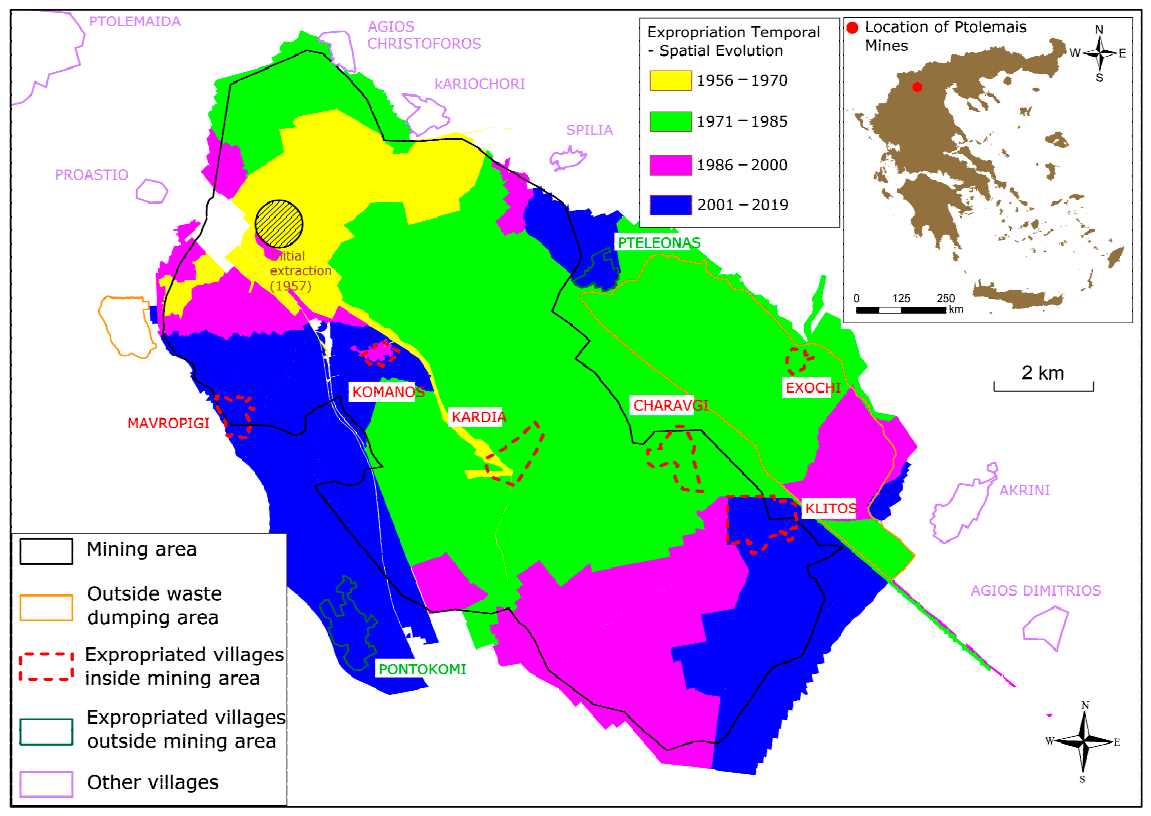
The corresponding spatiotemporal evolution of land acquisition (1956–2019) for the development of the Ptolemais surface lignite mines, concerning approximately 15-year time periods, is shown in
Figure 2. The relative production data compared with the expropriated land are presented in
Table 4.
The higher land acquisition rate in the period 1971–1985, although followed by lower production rates during this period, was related to long-term planning for the future expansion of mining operations, combined with the construction of new power plants [
57].
The long-term commitment of approximately 13,200 hectares of land to mining activities has had distinct social implications in a region historically characterized by low-productivity agriculture. Despite its limited yields, agricultural land played an important role in supporting local livelihoods, social cohesion, and supplementary income. During the operational phase of the mines, efforts were made to mitigate these impacts through the gradual rehabilitation of land and its leasing to local farmers.
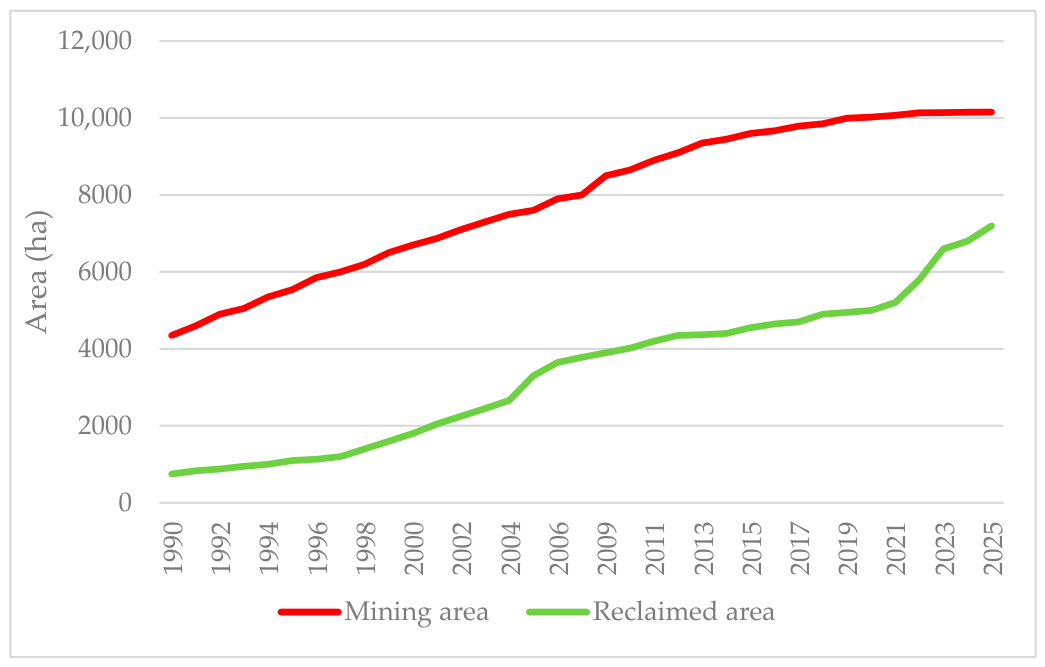
Figure 3 illustrates the evolution of land occupied by mining activities in relation to reclaimed areas over the period 1990–2025 in the Ptolemais lignite mines, highlighting the long-standing parallel development of extraction and reclamation processes. A marked decline in lignite production began approximately fifteen years ago, in line with the acceleration of mine closure and phase-out policies. This decline is also reflected in the reduced rate of land expropriation for the expansion of mining operations observed after 2010. At the same time, land reclamation activities have intensified significantly over the past five years. As shown in
Figure 3, reclamation had already been implemented concurrently with mining operations during earlier phases of mine development. This recent increase reflects a strategic shift toward the faster restoration and repurposing of post-mining landscapes. The objective is to facilitate their transition to new land uses and mitigate the socioeconomic impacts associated with the cessation of lignite-based activities.
In the evolving post-mining landscape, the increasing development of photovoltaic parks, contributing to the shift in the broader energy transition, needs to be combined with the availability of rehabilitated land for agricultural leasing, providing opportunities for local communities to re-engage with land-based activities. This dynamic highlights the need for a balanced approach to land-use planning, ensuring that renewable energy deployment is aligned with local socio-economic needs and supports a diversified and inclusive development pathway.
5.1.3. From Lignite Dependency to Transition Risk: Socioeconomic Indicators
Western Macedonia represents a characteristic case of a regional economy shaped by extractive industrial specialization and path dependency, reflecting patterns widely discussed in the international literature on mining regions and mono-industrial development. Its economic structure has historically relied on a highly specialized development model in which a significant share of regional production was concentrated within the lignite-bearing basin and strongly linked to the energy sector. This model generated employment and regional income but created comparatively limited and uneven employment opportunities across the broader regional economy. At the same time, the contribution of other productive sectors has remained weak, indicating a reduced diversification capacity. Although agriculture constitutes one of the few relatively dynamic sectors, it has traditionally generated low-paid employment. This structural imbalance has been further intensified by the process of energy transition. An effective substitution of lignite-based electricity generation with alternative, greener forms of production and employment can modify the substantial trend of a declining regional output and income [
58].
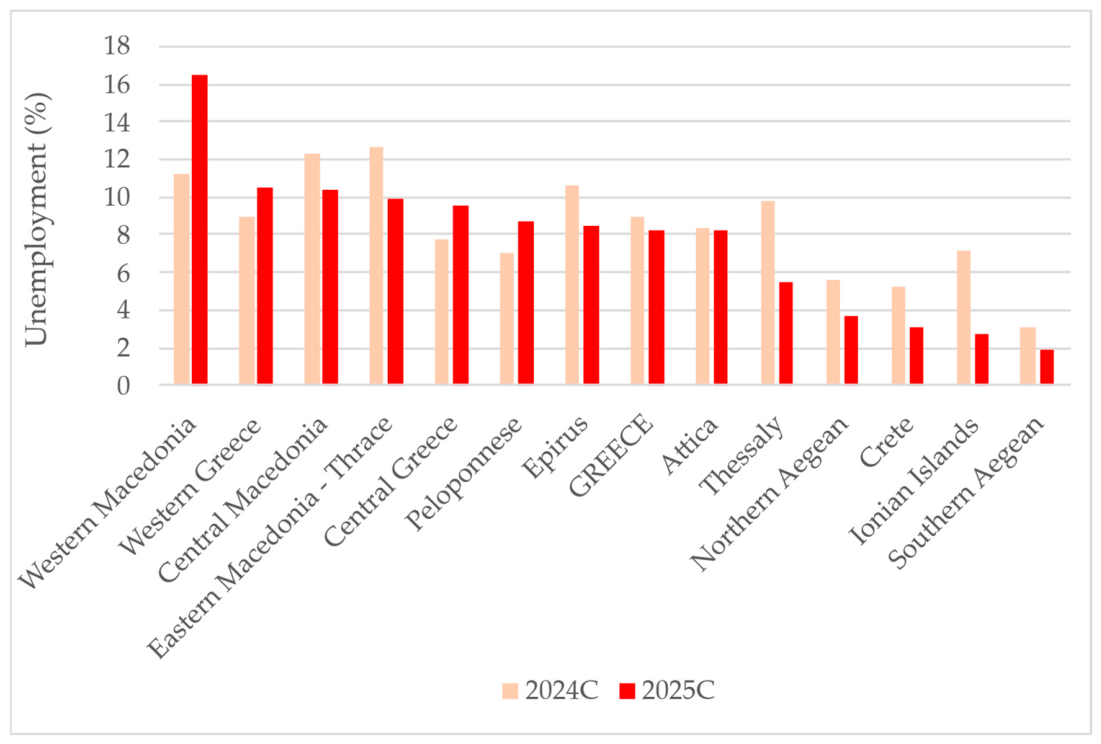
In this context, labour market indicators confirm the persistence of severe socioeconomic pressures, consistent with findings in the literature regarding the social costs of deindustrialisation and the decline of extractive industries. Western Macedonia exhibits the highest unemployment rate in Greece, reaching 16.5%, almost double the national average of 8.2% (
Figure 4). Employment levels remain among the lowest nationwide, with only 92.4 thousand employed persons, while the number of unemployed reaches 18.3 thousand, a figure disproportionately high relative to the size of the economically active population [
59]. Notably, Western Macedonia is the only Greek region that continues to exhibit unemployment rates at such levels, suggesting that the post-lignite transition, despite successive policy plans and official announcements, has not yet translated into a socially sustainable restructuring of the regional economy. High unemployment, weak employment indicators, persistent long-term unemployment, and the decline of traditional economic activities collectively shape an environment in which the transition remains socially fragile and requires targeted and place-based policy interventions.
Furthermore,
Table 5 provides empirical support for the structural shifts in employment in Western Macedonia between 2010 and 2025, particularly the decline in industry and mining (B–E). Employment in this sector shows an overall decrease (from 20.7 thousand in 2010 to 14.5 thousand in 2025), reflecting the phase-out of lignite activities. Employment growth in the public and social sectors (O–Q), particularly after 2020, suggests partial compensation through state-supported activities rather than through sustainable economic diversification. By contrast, agriculture (A) and sectors such as trade and tourism (G–I) remain relatively weak, failing to offset these losses [
60].
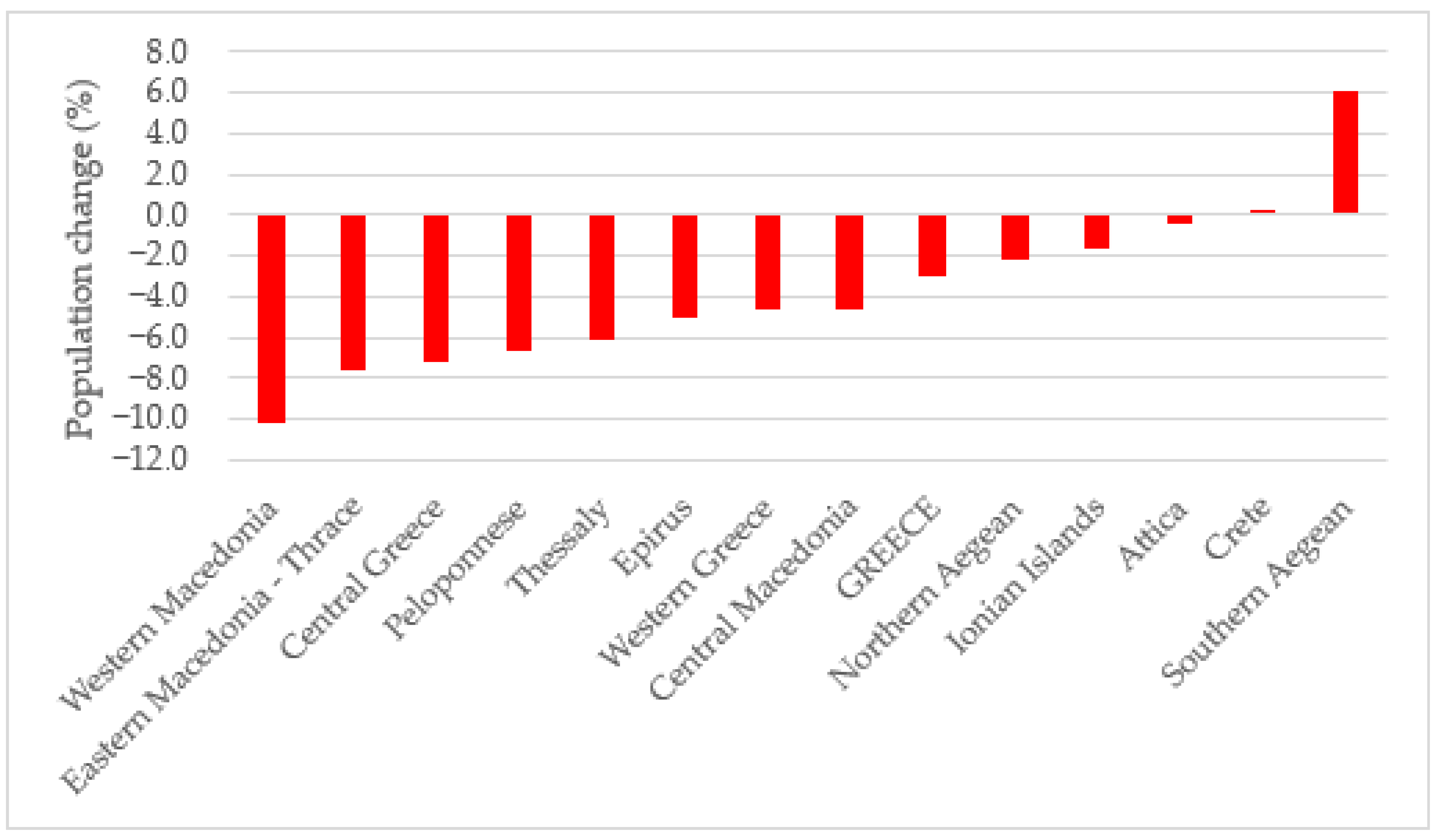
Beyond labour-market deterioration, the region’s demographic trajectory further underscores the depth of the ongoing socioeconomic crisis. Western Macedonia recorded the largest population decline in Greece in the 2021 national census (
Figure 5). Population shrinkage is estimated at approximately 10%, significantly exceeding the national average decline of 3.5%. This demographic contraction reflects broader processes of outmigration, ageing, and declining local opportunities. It also reinforces concerns frequently highlighted in the literature on peripheral extractive regions undergoing industrial decline. The scale of this demographic downturn confirms that population loss constitutes one of the most critical and long-term challenges for regional sustainability.
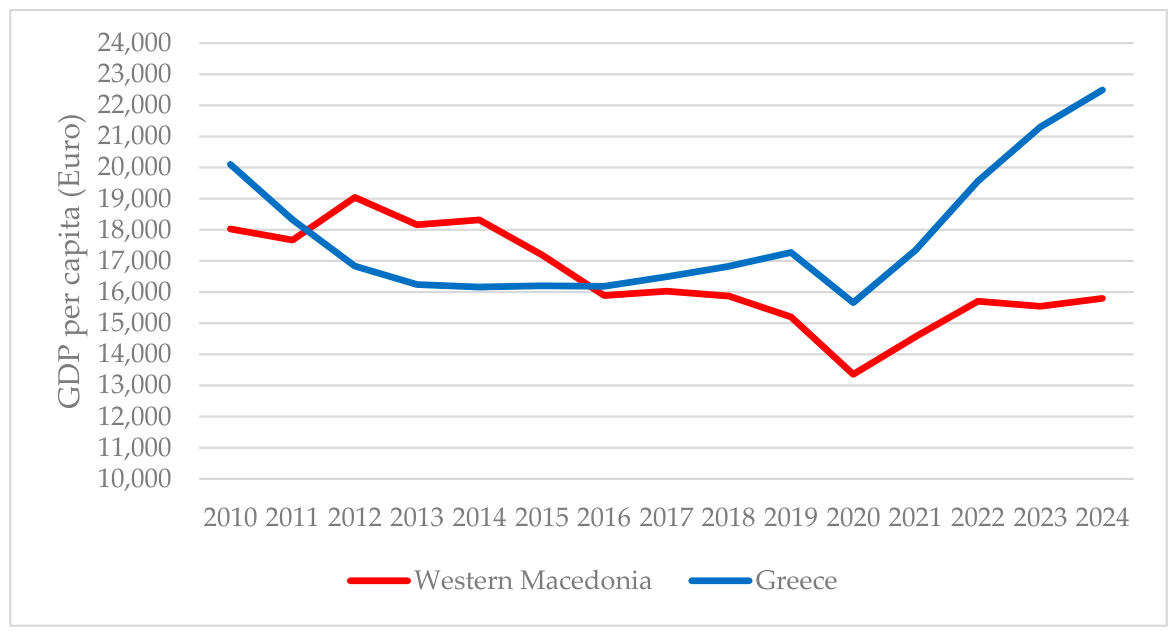
Further evidence of structural vulnerability emerges from an examination of economic trends over the last 15 years, comparing Western Macedonia with national developments. At the national level, Greece experienced a deep recession during 2010–2013, followed by stagnation until 2017 and subsequently moderate economic recovery, which was disrupted by the COVID-19 crisis in 2020. In contrast, Western Macedonia’s real GDP per capita did not decline significantly during the initial phase of the sovereign debt crisis, as it increased in 2012 compared to 2010 (
Figure 6). This outcome is primarily explained by a 33.8% increase in industrial output during that period, driven largely by the expansion of electricity production. However, in the subsequent years, and particularly as lignite phase-out policies gradually intensified, real GDP per capita in Western Macedonia declined sharply, with a contraction stronger than that observed at the national level.
The region’s sensitivity to shifts in energy production is further highlighted by developments in 2022, when lignite-based electricity generation was partially reactivated in response to the energy crisis following the disruption of natural gas supply routes through Ukraine. During that period, GDP per capita increased at a rate exceeding the national average, illustrating the continuing centrality of energy production to regional economic performance. While this temporary rebound underscores the strategic role of Western Macedonia in national energy security, it simultaneously reveals a critical weakness: the region remains highly dependent on a single sector, limiting its resilience and undermining its long-term prospects in the framework of energy transition. This dependence constitutes a key dimension of socioeconomic vulnerability. It also confirms the urgency of developing a just and diversified transition pathway capable of mitigating the social impacts of post-lignite restructuring [
58].
From a broader perspective, the socioeconomic indicators examined above confirm several structural patterns identified in the international literature on coal- and lignite-transition regions. The unemployment, demographic decline, and strong dependence on energy-related activities observed in Western Macedonia are consistent with the broader dynamics of mono-sectoral dependency and limited adaptive capacity discussed in studies of mining regions undergoing post-mining restructuring [
30,
34,
35,
36,
37,
38]. In particular, the observed labour-market deterioration and the inability of alternative sectors to compensate for employment losses reflect the “resource community cycle” described by Lockie et al. [
30], whereby mining-dependent regions experience long-term socioeconomic instability following the contraction of dominant extractive activities. Similar transition-related vulnerabilities, including population decline, uneven regional resilience, and difficulties in economic diversification, have also been documented in European coal regions such as Lusatia, the Ruhr area [
61,
62], Upper Silesia, Belchatow [
63], and other territories supported by the EU Just Transition Mechanism [
64]. At the same time, comparative evidence from Germany suggests that proactive structural policies, long-term investment planning, and stronger institutional coordination may reduce uncertainty and mitigate social impacts during coal phase-out processes [
61,
62]. The case of Western Macedonia, therefore, reflects a broader pattern of socio-spatial vulnerability associated with energy transition in coal-dependent regions rather than an isolated regional phenomenon. At the same time, the significantly higher increase in unemployment in coal mining regions compared to other regions [
64] highlights the importance of place-specific conditions and differences in regional adaptive capacity.
5.1.4. Stakeholder Distrust in Decision-Making Processes
Distrust among stakeholders, particularly ordinary citizens, civil society organizations, and local authorities, has been a persistent feature throughout the entire history of lignite mining in Western Macedonia. This scepticism did not emerge only in the context of the recent transition but has deep historical roots that evolved alongside the development of mining activities. In the early years, local communities were hesitant to engage with the sector, often perceiving lignite exploitation as a temporary endeavour with limited long-term prospects. As mining operations expanded and became the dominant economic activity in the region, concerns shifted toward the adequacy and effectiveness of environmental protection measures, with many stakeholders questioning whether development was being pursued at the expense of ecological sustainability.
In the most recent phase, marked by the lignite phase-out, distrust has taken on new dimensions. After an initial period of intense public reaction and resistance to what was widely perceived as an abrupt and poorly managed transition, stakeholders gradually acknowledged the irreversible nature of the shift toward a post-lignite economy. However, this realization has been accompanied by growing uncertainty and doubt regarding the policy choices and strategic pathways proposed to address the resulting socio-economic crisis. In several instances, such reactions can be considered justified, particularly considering delays in project implementation and decision-making processes that, irrespective of their technical merits, were often perceived as lacking inclusiveness and broad societal consensus.
A key factor reinforcing this distrust lies in the institutional framework governing stakeholder participation. Although formal procedures for public engagement exist, they are frequently limited in scope and impact. Participation is often limited to informational meetings or the submission of opinions and proposals that carry no binding authority for decision-makers. As a result, stakeholders tend to perceive these processes as symbolic rather than substantive, further weakening confidence in governance structures.
Furthermore, the repeated announcement of ambitious private-sector investment plans that were later delayed, revised, or cancelled has contributed to a widespread perception of inconsistency and, in some cases, outright misrepresentation. Such developments have strengthened the perception among local communities that they are being misled. As a result, trust has been undermined not only in individual projects but also in the broader transition agenda.
Finally, divisions within local society linked to political preferences further complicate the formation of common stakeholder positions. Citizens often tend to support or oppose transition policies based on their relationship with central or regional authorities. This situation reduces the ability of local actors to act together and express shared priorities, ultimately limiting their influence on decision-making processes.
Taken together, the interplay of historical experience, institutional limitations, unmet expectations, and political polarization has posed significant challenges to the effective governance of the transition process. International experience from other energy transition contexts demonstrates that the design of stakeholder participation mechanisms can influence public trust and policy legitimacy. Studies on public engagement in transition planning show that participation processes limited to consultation and information-sharing often fail to provide stakeholders with meaningful influence over decision-making. As a result, such processes may reinforce perceptions of procedural injustice and exclusion. By contrast, more collaborative approaches involving deliberative forums, co-creation practices, and the incorporation of local knowledge into planning processes have been associated with higher levels of legitimacy and social acceptance [
65]. Similar conclusions emerge from the Corrib Gas project in Ireland, where weak transparency and limited responsiveness to local concerns contributed to long-lasting social conflict and distrust toward both state authorities and private investors [
66]. These experiences and challenges are particularly relevant for Western Macedonia, where the optimal exploitation of the former mine land, which is reclaimed at an accelerated pace during the last decade, is required to support new productive activities, considering the priorities of local stakeholders.
5.2. Future Perspectives
5.2.1. Institutional and Regulatory Constraints
The findings indicate that the future trajectory of Western Macedonia’s transition to the post-lignite era will depend on the region’s ability to address institutional constraints and develop productive post-mining land uses. However, the implementation of this transition remains constrained by institutional, regulatory, and technical barriers, limiting the effective absorption of resources from the European Just Transition Mechanism.
Recent evidence from renewable energy communities indicates a significant gap between project planning and implementation, reflecting delays in permitting procedures, grid connection limitations, and uneven access to financing mechanisms [
67]. Although local interest in renewable energy initiatives remains strong, these implementation barriers reduce the capacity of such investments to generate timely socioeconomic benefits for the region.
At the same time, efforts to strengthen local participation in renewable energy investments suggest an emerging recognition of the need to align the transition process with community interests [
68]. However, without improvements in institutional coordination, regulatory efficiency, and stakeholder inclusion, the transition risks failing to deliver the economic restructuring needed to address the region’s structural vulnerabilities.
Strengthening governance capacity and improving the operational effectiveness of transition policies are therefore essential preconditions for enhancing regional resilience and ensuring that the transition contributes to socially sustainable development.
5.2.2. Development of New Land Uses in Post-Mining Areas
Mitigating the socioeconomic impacts of the energy transition in Western Macedonia requires a strategic approach to the redevelopment of post-mining land. Future land-use planning should move beyond short-term economic substitution and support the restoration of ecosystem functions alongside the creation of new productive activities.
Integrated planning approaches that combine environmental, economic, and social criteria are particularly important for identifying sustainable post-mining land uses [
69,
70,
71]. Such approaches can support the balanced development of renewable energy projects, agricultural activities, and other productive uses that contribute to economic diversification while addressing environmental rehabilitation needs.
The adaptive reuse of reclaimed land and existing infrastructure offers an important opportunity to strengthen regional resilience and facilitate a more balanced post-lignite transition [
72]. However, realizing this potential requires coherent planning frameworks, stakeholder participation, and targeted investment support mechanisms capable of linking land restoration with long-term regional development objectives.
6. Discussion
6.1. Linking Literature and Empirical Findings
The findings of the Western Macedonia case study confirm the multidimensional character of the social impacts associated with mining activities and post-mining transitions, as highlighted in both international and Greek-language literature. In line with the broader literature, the empirical evidence indicates that the effects of lignite exploitation extended beyond direct employment generation, influencing settlement patterns, land-use structures, demographic stability, and institutional trust.
The case study demonstrates that the historical contribution of lignite mining to regional development created significant economic benefits, including employment opportunities, infrastructure development, and income generation. At the same time, however, the concentration of economic activity around a single dominant sector generated structural dependencies that reduced the adaptive capacity of the regional economy. This confirms the literature’s argument that mining regions often combine short-term developmental gains with long-term socioeconomic vulnerabilities.
The empirical findings also reinforce the importance of land as a critical interface between mining operations and social impacts. In Western Macedonia, long-term land occupation, settlement relocation, and the reconfiguration of productive land uses have had persistent consequences for local livelihoods and regional development opportunities. These dynamics illustrate that the optimal exploitation of reclaimed land is not simply a technical consequence of mining, but a central component of the social transformation experienced by mining-dependent regions.
At the same time, the case study adds empirical depth to the literature by illustrating how the transition away from lignite intensifies pre-existing structural weaknesses. Rather than creating entirely new challenges, the transition has exposed and amplified vulnerabilities rooted in long-term economic specialization, limited diversification, and institutional rigidities. This suggests that the social outcomes of energy transition are strongly conditioned by the historical development trajectory of mining regions. They also depend on the extent to which transition planning addresses inherited territorial imbalances.
6.2. Uneven Territorial Impacts of Transition
One of the most significant findings of this study is that the post-lignite transition in Western Macedonia is producing uneven territorial outcomes. While the environmental benefits of reduced lignite use, including lower emissions and improved environmental indicators, contribute to national and European sustainability objectives, the associated social and economic costs are not distributed proportionately in the local mining region.
This asymmetry is reflected in the persistence of high unemployment, demographic decline, and reduced economic resilience in Western Macedonia during the energy transition process. The evidence suggests that although environmental gains are broadly distributed, the immediate adjustment burdens are borne primarily by the local communities that historically supported the lignite-based energy system. In this respect, the transition represents not only an environmental transformation but also a territorial redistribution of costs and benefits.
The uneven territorial impacts are also temporal in nature. Employment losses and economic contraction tend to occur during the decline of mining activity, whereas the benefits expected from new investments and economic diversification typically materialize over a longer time horizon. This temporal gap increases the vulnerability of transition regions. It may also undermine public confidence in the transition process, particularly when visible socioeconomic losses precede the emergence of credible alternatives.
These findings underline the importance of integrating territorial equity considerations into transition planning. Without mechanisms that ensure that local communities benefit in a timely and tangible way from the transition process, the relevant policies may inadvertently reinforce existing regional disparities. In this sense, the concept of a “just transition” requires not only environmental effectiveness but also the balanced territorial distribution of transition benefits.
6.3. Governance and Implementation Gaps
The findings indicate that the effectiveness of transition policies in Western Macedonia depends on the gradual alignment between strategic planning, investment implementation, and local socioeconomic adaptation. Recent years have seen the establishment of policy frameworks and institutional mechanisms intended to support economic diversification, land redevelopment, and renewable energy investment, creating an important basis for the regional transition process.
At the same time, the empirical evidence suggests that the translation of these strategic priorities into tangible regional outcomes is still ongoing. The scale and speed of the lignite phase-out create significant adjustment demands, while the benefits of new investments, land-use transformations, and labour-market restructuring require time to materialize. As a result, a temporary imbalance may emerge between the decline of established activities and the full deployment of alternative development opportunities.
In this context, stakeholder concerns appear to be linked not to the absence of institutional planning mechanisms, but to the transitional period required for these mechanisms to generate visible local outcomes. This highlights the importance of maintaining policy continuity, strengthening coordination among transition measures, and ensuring that the timing of implementation supports local socioeconomic resilience.
These findings suggest that the key issue is not the strategic orientation of the transition framework, but the effective synchronization of the multiple processes involved in regional restructuring. The capacity of the transition process to deliver socially balanced outcomes will depend on the extent to which investment, land exploitation planning, and employment measures evolve in an integrated and timely manner.
6.4. Policy Implications Under the EU Just Transition Framework
The results suggest that the current policy priorities under the Just Transition Framework are broadly aligned with the structural needs of Western Macedonia, particularly regarding economic diversification, land rehabilitation, and the promotion of renewable energy investments. These priorities correspond to the main challenges identified in the case study and provide an appropriate strategic basis for regional restructuring.
However, the findings indicate that the effectiveness of these policy directions depends on the degree to which they are translated into integrated place-based interventions capable of producing measurable local benefits. In regions with strong historical dependence on extractive activities, transition planning needs to address not only sectoral substitution but also the broader territorial consequences of long-term specialization.
This implies that transition strategies should coordinate reclaimed-land planning, investment timing, labour-market adaptation, and stakeholder participation within an integrated regional framework. Such coordination requires the activation of targeted policy instruments, including income-support measures for local communities, incentives for productive private investment, and reskilling programmes adapted to regional transition needs. Measures with broad social impact, such as the continuation of district heating services, are particularly important for mitigating social impacts and reducing the outmigration of younger population groups. At the same time, dedicated investment incentives could attract large-scale projects in the agri-food and manufacturing sectors, while reskilling initiatives implemented by the University of Western Macedonia could facilitate labour-market adaptation. Complementary investments in transport connectivity could further strengthen regional accessibility and economic integration.
In this context, emphasis must be placed on the optimal and diversified exploitation of reclaimed land, extending beyond currently deployed renewable energy installations and planned significant energy infrastructure projects. While large-scale investments, primarily in photovoltaic parks, pumped-storage facilities, and other large-scale projects, such as data centers, have already been implemented, the remaining reclaimed land in the former mining areas constitutes a significant territorial asset for supporting broader regional restructuring and productive diversification. Thus, the mining operator has accelerated land reclamation activities in areas designated for transfer to public development bodies, to enable their use for new productive purposes, as indicated in
Figure 3. This creates a critical policy challenge: ensuring that reclaimed land is not only restored but also effectively repurposed and integrated into a diversified regional development strategy capable of generating employment and mitigating the socio-economic impacts of lignite phase-out.
Therefore, the case of Western Macedonia highlights that a just transition in mining regions requires moving beyond strategic policy design toward implementation frameworks that can effectively align environmental objectives with regional socioeconomic resilience. Despite some implementation delays, institutional stakeholders indicate that the pace of development is expected to accelerate in the next few years, reinforcing the importance of readiness in planning and governance mechanisms. Ultimately, the long-term success of transition policies depends on their ability to convert strategic priorities into tangible and inclusive local development outcomes.
7. Conclusions
This paper examined the social impacts of mining activities through a combined literature review and case study analysis of the lignite mines in Western Macedonia, Greece. The findings confirm that mining constitutes a deeply transformative spatial and socio-economic process, generating both significant benefits and long-term structural vulnerabilities. While lignite exploitation historically supported regional development through employment, infrastructure, and income multipliers, it also reshaped land use, displaced settlements, and created a strong economic dependency that now constrains the region’s adaptive capacity in the framework of the energy transition.
The international literature highlights that social impacts of mining are multidimensional, cumulative, and strongly context-dependent, evolving across the life cycle of mining projects. Key dimensions include land-use conflicts, livelihood disruption, demographic change, and challenges in governance and stakeholder participation. These findings are largely reflected in the case of Western Macedonia, where extensive land occupation and economic specialization have had long-lasting effects on social cohesion, spatial organization, and development trajectories.
The empirical analysis further demonstrates that the transition away from lignite has intensified pre-existing structural weaknesses. High unemployment, population decline, and continued dependence on energy-related activities indicate that the region is experiencing a complex and uneven restructuring process. These outcomes suggest that the social impacts of energy transition are strongly influenced by the structural characteristics inherited from the mining development model.
A central conclusion of this study is that the phase-out of the lignite industry in Western Macedonia is characterized by spatial, temporal, and social asymmetries that shape the regional experience of energy transition.
First, spatial asymmetry emerges because the environmental benefits associated with reduced lignite use contribute to national and European sustainability objectives, while the economic and social adjustment costs are concentrated primarily in the local mining region. This creates an uneven territorial distribution of transition impacts, where the communities most directly affected by the restructuring process do not necessarily experience immediate compensatory benefits.
Second, temporal asymmetry is reflected in the mismatch between the decline of lignite-related economic activities and the longer time required for alternative investments and productive land uses to generate measurable socioeconomic benefits. This time lag increases transitional pressures on employment, demographic stability, and regional resilience.
Third, social asymmetry arises because the burdens of transition are not distributed evenly across the regional population. Settlements and local communities historically linked to extractive activities are more directly exposed to employment losses and reduced short-term economic opportunities, while the benefits of the transition are expected to emerge gradually and across broader territorial scales.
Recognizing these three interrelated asymmetries is essential for understanding why the transition process generates differentiated local impacts despite its broader environmental benefits at national and European scales. The findings suggest that the long-term success of transition policies depends on the extent to which these spatial, temporal, and social imbalances are addressed through integrated planning, coordinated implementation, and the timely creation of tangible opportunities for the affected communities. As indicated in the analysis, in addition to currently deployed renewable energy installations and planned energy infrastructure and other large-scale projects, the optimal exploitation of land designated for transfer to public development bodies, being reclaimed at an accelerated pace, is critical to enable its use for new productive purposes.
The findings further suggest that the main governance limitations observed in Western Macedonia are primarily procedural rather than institutional. Although dedicated governance structures and public bodies responsible for managing the just transition process have been established at national and regional levels, the pace of project implementation on the remaining reclaimed land could be faster in the short term. Some delays appear to be associated with the complexity of coordination among multiple stakeholders and lengthy administrative and planning procedures.
Beyond the specific case of Western Macedonia, this study contributes to the broader literature on coal and lignite transition regions by demonstrating the value of integrating literature-based social impact dimensions with empirical regional analysis. Rather than examining individual transition indicators in isolation, the paper highlights the interconnections between land-use transformation, demographic decline, labour-market restructuring, governance challenges, and regional adaptive capacity. In doing so, it provides a place-based analytical framework that can support comparative research and policy evaluation in other mining regions undergoing accelerated post-extractive transition processes.
Overall, the experience of Western Macedonia demonstrates that the success of energy transition policies in mining regions depends on their ability to combine environmental objectives with territorially balanced socioeconomic outcomes. A socially effective transition, therefore, requires integrated planning approaches capable of reducing implementation gaps, strengthening local resilience, and translating the benefits of transition into tangible opportunities for the communities most directly affected.