Article

Does Trade Union Participation Increase Rural–Urban Migrant Workers’ Willingness of Homestead Withdrawal?


1
School of Management, Anhui University, Hefei 230601, China
2
College of Land Management, Nanjing Agricultural University, Nanjing 210095, China
*
Author to whom correspondence should be addressed.
Land 2026, 15(5), 830; https://doi.org/10.3390/land15050830
Submission received: 31 March 2026 / Revised: 30 April 2026 / Accepted: 11 May 2026 / Published: 13 May 2026

Abstract

Enhancing the willingness of rural–urban migrant workers (RUMs) to pursue the withdrawal of rural homesteads is a key measure to deepen the reform of the rural land system and advance new-type urbanization. This study aims to examine the impact of trade union participation on RUMs’ willingness to withdraw from rural homesteads (WFRH). It further offers implications for improving trade union services and refining relevant institutional arrangements for homestead withdrawal. Based on valid questionnaire data from 1949 RUMs in Hefei, Anhui Province, China, analytical methods, including the ordered Probit model, Propensity Score Matching (PSM), and KHB model, are adopted for empirical analysis. The main conclusions are as follows: trade union participation significantly enhances RUMs’ willingness to WFRH. This conclusion remains robust after the replacement of explained variables, adjustment of econometric models, and use of the PSM method to correct for selection bias. Heterogeneity analysis based on an ordered probit model reveals that the impact of trade union participation on homestead withdrawal willingness is more pronounced among females, individuals under 45 years old, and those with a college degree or above. Mediation effect test based on the KHB model finds that urban identity and sense of social fairness play mediating roles between trade union participation and RUMs’ homestead withdrawal willingness. Trade union participation improves their withdrawal willingness by strengthening their urban identity and sense of social equity. Efforts should be made to enhance the willingness of RUMs to withdraw from homesteads by improving the service function system of “capacity cultivation + rights protection + emotional connection” of trade unions, expanding the effective coverage of trade union organizations, promoting the collaborative linkage between “trade unions and governments”, and strengthening the full process service support for homestead withdrawal. The study conclusions help optimize the allocation of rural land resources and advance the integration of urban and rural development.

1. Introduction

With rapid industrialization and urbanization, a large number of rural residents have moved to cities for work and settled there, forming a significant population of rural–urban migrant workers (RUMs). Against this backdrop, the abandonment, vacancy, and inefficient use of rural homesteads have become increasingly prominent, while the demand for construction land to support rural industrial revitalization continues to grow [1]. Actively guiding RUMs to withdraw from their rural homesteads with compensation voluntarily is an important measure to promote rural industrial revitalization and advance the reform of the rural homestead system [2]. The Chinese Communist Party and the state attach great importance to this issue. Both the Rural Revitalization Master Plan (2025) and the No. 1 Central Document in 2025 emphasize the need to lawfully safeguard the rural homestead-use rights of rural residents who have settled in cities and to explore the establishment of mechanisms for voluntary, compensated withdrawal. In practice, however, the willingness of RUMs to withdraw from their rural homesteads remains low [3], with more than half of those who have settled in cities exhibiting a complex mindset of being “unwilling to withdraw” and “hesitant to withdraw” [4,5], which significantly hinders the process of comprehensive rural revitalization and new-type urbanization. Therefore, an in-depth investigation into the formation mechanisms of RUMs’ decision-making regarding homestead withdrawal holds important practical significance for scientifically designing incentive policies for voluntary homestead withdrawal and for steadily advancing the process of citizenization.
Currently, the academic community has conducted extensive research on the influencing mechanisms of the willingness to withdraw from rural homesteads (WFRH). By combining theoretical analysis with empirical models, studies have verified the effects of factors such as individual and household resource endowments [6,7], the external environment [8,9], and internal cognition and emotions [10,11] on the willingness to WFRH. Based on these findings, scholars have proposed policy recommendations to enhance the willingness of RUMs to withdraw from their rural homesteads, including improving market compensation mechanisms [12], strengthening social security measures [13], and establishing democratic consultation mechanisms [14]. Concurrently, research on trade unions has focused on their functional positioning [15], influencing factors [16], and optimization pathways [17], affirming the positive role of trade unions in safeguarding workers’ rights and promoting the modernization of social governance, while offering insights for their improvement and refinement. Overall, issues such as limited income and inadequate livelihood capacity are the primary reasons why RUMs remain cautious about withdrawing from their rural homesteads [18]. As a core social organization connecting the vast number of workers, trade unions can promote employees’ capacity development and comprehensive competence enhancement by providing public services such as education, training, and legal assistance [15]. Their role in facilitating the withdrawal of RUMs from rural homesteads and completing the urbanization transition is becoming increasingly evident. On the one hand, trade union participation can foster the urban integration of RUMs in economic dimensions such as employment, income, and living conditions, as well as in cultural and psychological dimensions [19]. This enables RUMs to develop a sense of belonging to the city, strengthens their urban identity, weakens the residential function and emotional attachment to rural homesteads, and consequently makes them more inclined to withdraw from their rural homesteads [20]. On the other hand, trade union participation contributes to the improvement of labor protections for RUMs, thereby enhancing their sense of social fairness [21]. Those with a higher sense of social fairness tend to have more optimistic expectations regarding urban life after withdrawing from rural homesteads [22] and thus may demonstrate a more positive attitude and intention toward withdrawing from their rural homesteads. It is evident from the above that existing studies have noticed close correlations among trade union participation, urban identity recognition, perceived social equity, and the homestead withdrawal willingness of rural migrant populations. However, existing studies on trade unions are relatively scattered and fragmented, failing to form a systematic analytical framework. Moreover, most of them incorporate trade union participation as an auxiliary control variable into the analysis, and few take it as a core explanatory variable. Meanwhile, research on the willingness to withdraw from homesteads mostly proceeds from perspectives such as individual internal and external characteristics or the policy environment. Few studies have considered the role of social organizations, especially the lack of exploration into the specific mechanism of action of social organizations and the differences in their target groups. Overall, few existing studies directly analyze the formation mechanism of rural migrants’ homestead withdrawal decisions from the perspective of trade union participation.
Given this, based on data from 1949 valid questionnaires completed by RUMs in Hefei, Anhui Province, China, this study systematically explores the impact and underlying mechanisms of trade union participation on their willingness to WFRH using methods such as the Ordered Probit model, Propensity Score Matching (PSM), and the KHB model. The findings aim to provide insights for optimizing trade union services and designing institutional arrangements to facilitate the withdrawal of RUMs from rural homesteads. Compared with previous studies, the marginal contributions of this study may lie in three aspects. First, it focuses on RUMs as a key group in homestead withdrawal, employing a combination of theoretical analysis and empirical methods to examine the impact and mechanisms of trade union participation on their willingness to withdraw, thereby complementing existing research on the driving forces behind homestead withdrawal. Second, it incorporates urban identity and the sense of social fairness into the analytical framework, offering a new perspective for understanding the pathways through which trade union participation influences the willingness to WFRH. Third, it identifies group differences in the effect of trade union participation on the willingness to withdraw, thereby enhancing the practical applicability of the research findings.

2. Theoretical Analysis and Research Hypotheses

2.1. Impact of Trade Union Participation on the Willingness to Withdraw from Rural Homesteads

According to social support theory [23], trade unions can provide RUMs with emotional support, instrumental support, informational support, and appraisal support through their embedded resource support functions, thereby enhancing the human capital level of RUMs. Human capital, as the core of livelihood capacity, makes RUMs more productive and capable of development, profoundly influencing their decision-making horizons and behavioral patterns [24]. As the human capital level of RUMs improves, their risk-bearing capacity is enhanced, their understanding of homestead withdrawal policies is improved [25], and their sole dependence on rural homesteads is reduced [26], which in turn facilitates an increase in their willingness to WFRH. Moreover, RUMs often occupy a relatively disadvantaged position, characterized by weak individual capacity and prominent collective action dilemmas. The original purpose of establishing trade unions was to protect the legitimate rights and interests of vulnerable groups in employment [27]. Based on collective action theory, trade unions can integrate and amplify scattered individual demands through organizational means, forming stronger bargaining power and supervisory capacity, effectively safeguarding the legitimate rights and interests as well as the reasonable and lawful claims of RUMs [28], ensuring that their entitled benefits in homestead withdrawal are realized, and ultimately increasing their motivation to WFRH. Based on the above analysis, this study proposes Hypothesis H1:
Hypothesis H1:
Trade union participation has a positive effect on the willingness of rural–urban migrant workers to withdraw from rural homesteads.

2.2. Moderating Role of Urban Identity

Currently, most RUMs “live in cities but remain rooted in rural areas,” facing an identity crisis in which they feel caught between two worlds [29]. Joining trade unions can promote both the “self-identification” of RUMs and the “recognition by others” among urban residents. First, RUMs generally believe that participation in trade unions represents organizational recognition of their occupational contributions [30]. Based on their urban occupational identity, they develop a psychological sense of attachment and belonging that makes them feel “at home in the city,” thereby enhancing their willingness to stay in cities and their self-identification with an urban identity. At the same time, trade union participation helps expand the social networks of RUMs, facilitates frequent contact and interaction with urban residents, narrows the emotional distance between them and residents, and assists them in integrating into urban society [31]. Moreover, the resource support function inherent in trade unions makes them an important platform for RUMs to further enhance their own capacity for citizenization. The influence of trade unions also helps RUMs gradually align themselves with urban residents in terms of daily life, consumption habits, and behavioral norms [32], making it easier for urban residents to psychologically categorize them as similar, thereby achieving social identity recognition from others.
Furthermore, an individual’s sense of identification with a particular group can significantly influence their attitudes and behaviors [33]. Once RUMs develop an “identity” as urban residents, they will more consciously fulfill the responsibilities and obligations associated with that identity, making decisions and taking actions accordingly [34]. Those with a strong urban identity tend to have a stronger willingness to withdraw from their rural homesteads [20]. First, RUMs who possess an urban identity are more inclined to reside permanently in cities, leaving their rural housing and homesteads largely unused, thereby weakening the residential security function of rural homesteads [35]. Second, those who have fully integrated into urban culture and identify themselves as urban residents are less emotionally attached to their rural roots [36], and the cultural and emotional functions of rural homesteads are correspondingly diminished. Trade union participation can enhance the urban identity of RUMs, and those with a stronger urban identity will be more motivated to integrate into cities while withdrawing from rural areas. Their attachment to land and rural ties will gradually weaken, making them more willing to relinquish their rural homestead use rights and to utilize the property income from homestead withdrawal to better settle in cities [11]. Based on the above analysis, this study proposes Hypothesis H2:
Hypothesis H2:
Urban identity plays a mediating role between trade union participation and the willingness of rural–urban migrant workers to withdraw from rural homesteads.
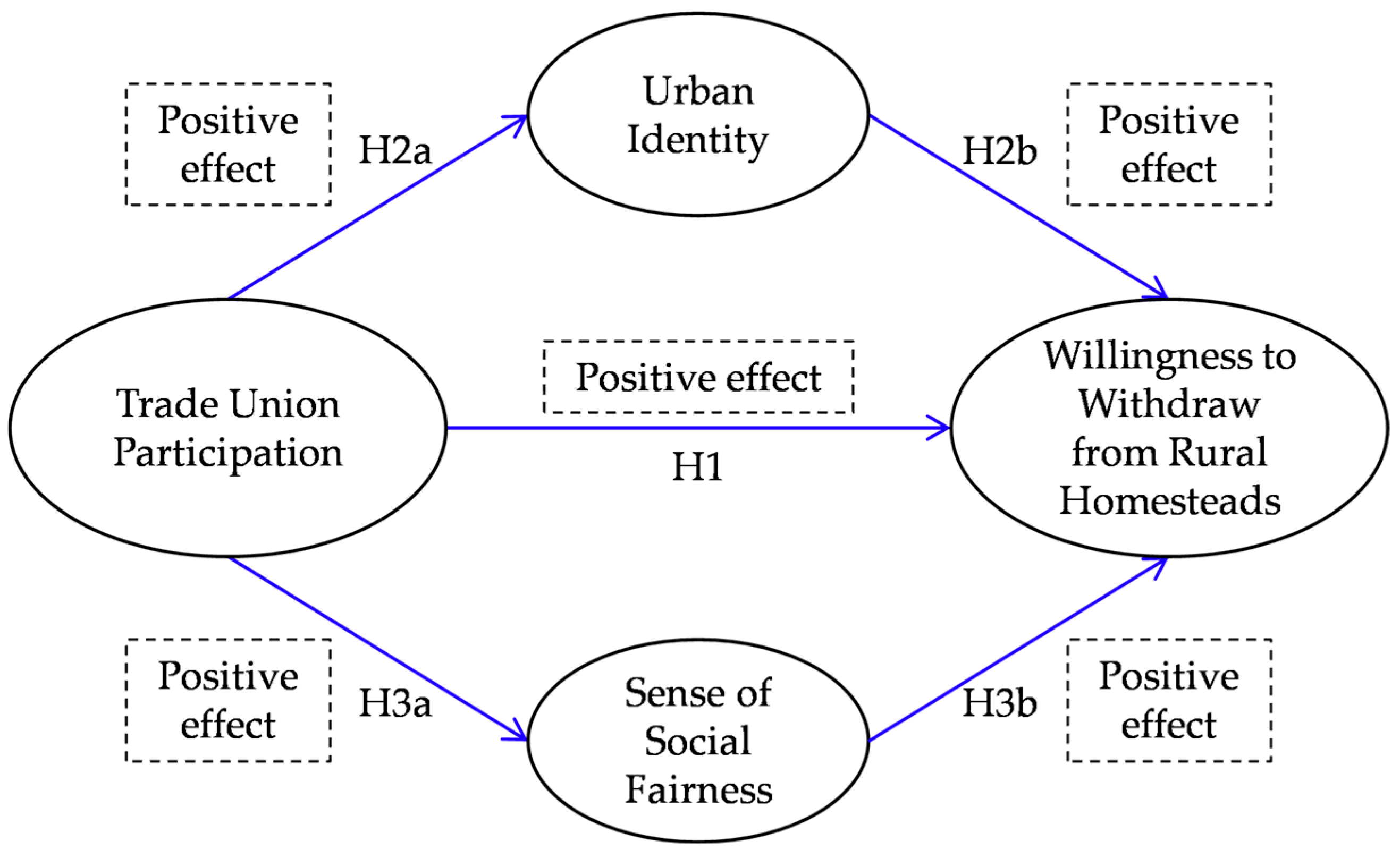
Hypothesis H2a:
Trade union participation has a positive effect on urban identity.
Hypothesis H2b:
Urban identity has a positive effect on the willingness to withdraw from rural homesteads.

2.3. Moderating Role of Sense of Social Fairness

Sense of social fairness refers to the subjective psychological perception individuals hold when assessing issues of social fairness. Constrained by limited human capital and skill levels, RUMs are predominantly employed in private and collective enterprises, where they face notable disadvantages in terms of working conditions, compensation, and social welfare. Given the difficulty of improving their social status through their own efforts, comparisons with others often lead to a heightened sense of social unfairness [37]. In this context, the social support function of trade unions plays an important role in enhancing the sense of social fairness among RUMs. First, trade union participation can significantly improve the employability and occupational welfare of RUMs [15], thereby enhancing their sense of gain derived from non-agricultural employment and consequently strengthening their perception of social fairness. Second, the imbalance in rights and interests caused by the inability of RUMs to access urban basic public services on an equal footing with urban residents [38] is a fundamental reason for their weakened sense of social fairness [39]. The labor rights protection and legal assistance provided by trade unions can help redress this power imbalance and enhance the sense of social fairness among RUMs [30]. Third, the democratic functions of trade unions can provide opportunities for employees to participate in enterprise policy-making and even social policy-making, contributing to the construction of a more equitable social environment and thereby improving the sense of social fairness among RUMs.
Furthermore, as an important component of behavioral control [40], the sense of social fairness has gradually become a key psychological force influencing the willingness of RUMs to WFRH. On the one hand, RUMs who perceive social injustice often harbor biases against existing homestead withdrawal policies, and a distrust stemming from fears of being shortchanged inevitably weakens their intention to relinquish homestead land [41]. Conversely, an enhanced sense of social fairness can significantly increase individuals’ political trust [42] and promote their recognition of institutional and procedural fairness in homestead withdrawal, thereby making them more inclined to WFRH. On the other hand, if RUMs have a higher sense of social fairness, they tend to form positive expectations regarding the stability and sustainability of urban life [43], and their perception of risks such as rising living costs and changes in lifestyle after withdrawal will diminish [2]. Consequently, their functional dependence on rural homesteads will decrease, and the likelihood of their decision to withdraw will increase. Based on the above analysis, this study proposes Hypothesis H3:
Hypothesis H3:
Sense of social fairness plays a mediating role between trade union participation and the willingness of rural–urban migrant workers to withdraw from rural homesteads.
Hypothesis H3a:
Trade union participation has a positive effect on sense of social fairness.
Hypothesis H3b:
Sense of social fairness has a positive effect on the willingness to withdraw from rural homesteads.
Based on the above analysis, the theoretical analysis framework of this study is constructed (Figure 1).

3. Materials and Methods

3.1. Investigation Area

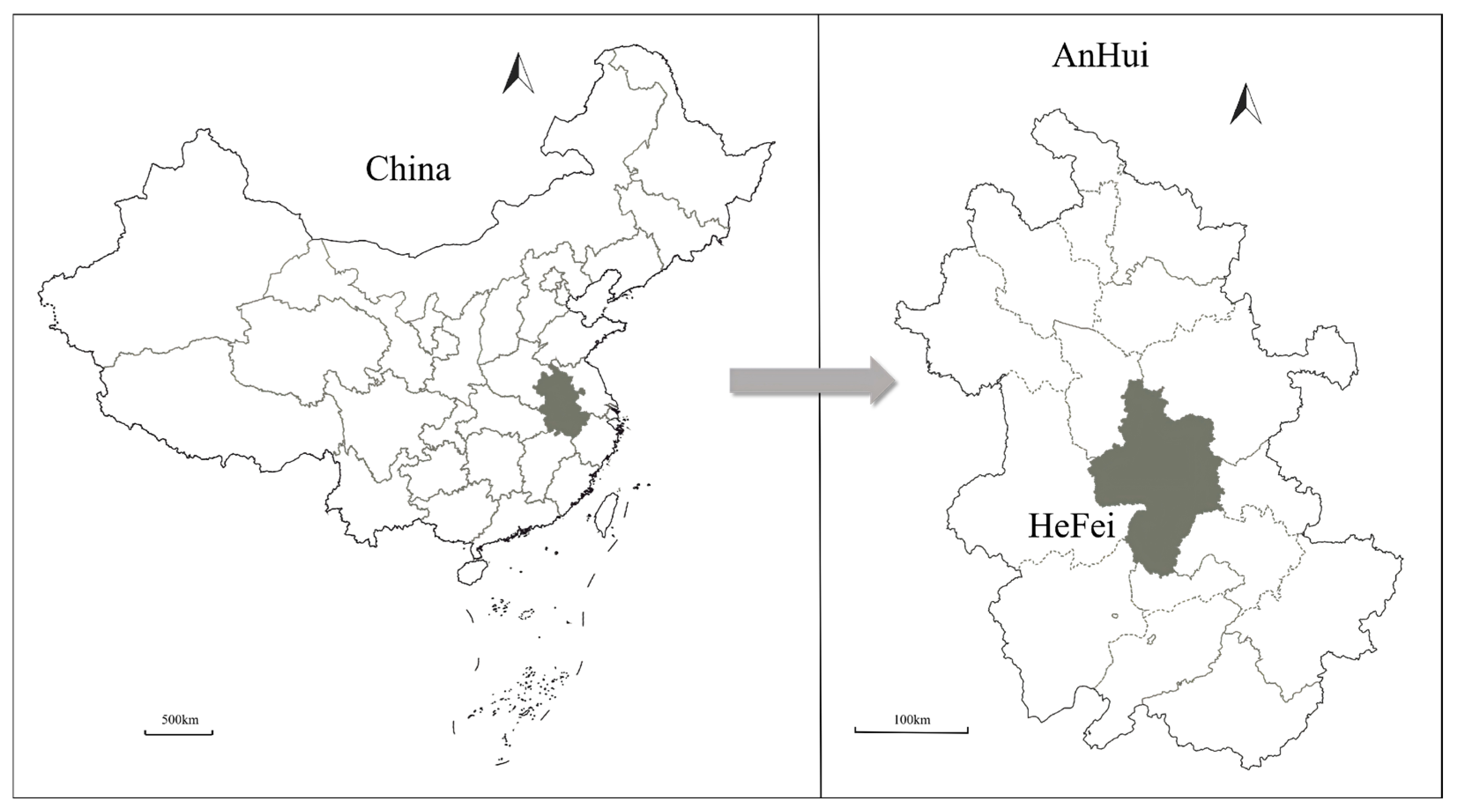
This study takes Hefei City as the survey site (see Figure 2). Located in central China, Hefei is the provincial capital of Anhui Province and a key node city in the Yangtze River Delta urban agglomeration. In recent years, Hefei’s urbanization process has continued to accelerate. Its permanent resident urbanization rate exceeded 86% in 2024, and the scale of population agglomeration ranks among the leading provincial capitals in central China. Anhui is a major labor-exporting province in China with a sizable rural–urban migrant population. As the provincial core hub of population inflow, Hefei draws massive migrant groups, placing heavy pressure on the citizenization of such migrants. In addition, per capita cultivated land resources in Hefei remain relatively scarce. Structural tension between the supply and demand of rural homesteads and the expansion of urban construction land has become prominent. This situation further makes the local demand for rural homestead withdrawal highly urgent. Hefei, therefore, possesses strong typicality.
In terms of regional representativeness, Hefei features three prominent attributes: high population agglomeration, limited per capita land resources, and rapid urbanization. Its socioeconomic structure is highly consistent with that of numerous central provincial capitals and other rapidly urbanized cities in China. This study does not rely on the local particularities of Hefei but is rooted in the above structural conditions with universal significance. For similar cities with large-scale net population inflow, a high proportion of rural migrant populations, and urbanization still in the accelerated stage, the conclusions of this study possess strong applicability and policy reference value.

3.2. Data Sources and Description

The data used in this study are derived from a random survey conducted by the research team between October 2023 and September 2024, using a combination of online and offline methods. Survey locations included Hefei Bus Station, Hefei South Railway Station, and Furong Community in Shushan District, Hefei, Anhui Province, China. All respondents participated voluntarily and were fully informed of the survey objectives in advance. All data were anonymized. Meanwhile, all respondents met two basic criteria: having stable employment in urban areas and owning homestead housing in their rural hometowns. A total of 2000 questionnaires were distributed and collected. After excluding questionnaires with incomplete variable information, 1949 valid questionnaires were used in the study, yielding an effective response rate of approximately 97.45%. The survey collected information on respondents’ basic individual and household characteristics, their trade union participation, urban identity, and willingness to WFRH.
Among the respondents, males constituted a slight majority, accounting for 60.49%. The average age of respondents was approximately 40 years, with the majority (86.30%) falling within the 25 to 55 age range. The gender and age distribution of the sample are generally consistent with the findings of the 2024 Migrant Workers Monitoring Survey Report released by the National Bureau of Statistics [44], indicating a certain degree of sample representativeness. A total of 40.69% of respondents held a university degree, demonstrating a good understanding of the questionnaire content. Meanwhile, 57.98% of respondents rated their physical health status as above average, and 35.45% perceived their Mandarin proficiency as average. The number of laborers per household was predominantly two or three, accounting for 77.58% of the sample. The largest share of respondents (34.74%) reported an annual household income between 50,000 and 100,000 RMB, which is largely consistent with the current socioeconomic characteristics of the rural population. Regarding housing types in rural hometowns, the majority of respondents (85.48%) lived in single-story or multi-story houses. In addition, the average contracted land area per household was 5.37 mu, with 57.21% of respondents holding contracted land areas between 2 and 6 mu in their rural hometowns. A total of 58.80% of respondents had purchased commercial housing in urban areas. When asked about their willingness to WFRH, the proportion of respondents who selected “moderate,” “relatively willing,” or “very willing” amounted to 68.86%, while 31.14% explicitly expressed unwillingness to withdraw, indicating a need for further incentives.

3.3. Variable Selection

3.3.1. Dependent Variable

The dependent variable in this study is the willingness to withdraw from rural homesteads. This was measured by asking respondents: “Are you willing to transfer (withdraw from) your rural homestead in your hometown with compensation?”

3.3.2. Core Explanatory Variable

The core explanatory variable in this study is trade union participation. This was measured by asking respondents: “Do you participate in the trade union of your workplace or in the collective activities organized by it?”

3.3.3. Mediating Variable

The mediating variable M1 in this study is urban identity. This was measured by asking respondents: “Do you perceive yourself as a rural person or an urban person?”
The mediating variable M2 in this study is the sense of social fairness. This was measured by asking respondents: “Do you feel that society is fair?”

3.3.4. Control Variable

Drawing on previous studies [3,4,5,6,7,8,9,10,11], control variables were set, including gender, age, education level, physical health status, Mandarin proficiency, number of laborers in the household, annual household income, type of housing in the rural hometown, area of contracted land in the rural hometown, and whether commercial housing has been purchased.
At the stage of empirical analysis, Stata 17.0 is adopted for data collation and analysis. The descriptive statistics of the variables in this study are presented in Table 1.

3.4. Model Specification

The dependent variable, “willingness to WFRH,” is an ordinal categorical variable with values ranging from 1 to 5. Therefore, the Ordered Probit model is employed to estimate the impact of trade union participation on the willingness to WFRH [45]. The model is specified as follows:
Assuming   W i l l i n g n e s s   = α 1 + β 1 P a r + β 2 c o n t r o l + ε
In Equation (1), W i l l i n g n e s s   represents the latent tendency of willingness to withdraw from rural homesteads. P a r denotes trade union participation; C o n t r o l indicates control variables; and ε is the random disturbance term.
The selection rule is specified as follows:
W i l l i n g n e s s = 1 ,         i f   W i l l i n g n e s s   r 0               2 , i f   r 0   <   W i l l i n g n e s s   r 1           3 , i f   r 1 < W i l l i n g n e s s   r 2           4 , i f   r 2 < W i l l i n g n e s s   r 3 5 ,       i f   r 3 < W i l l i n g n e s s  
In Equation (2), r 0 < r 1 < r 2 < r 3 is the coefficient to be estimated, and W i l l i n g n e s s denotes the willingness of rural–urban migrant workers to withdraw from rural homesteads.
At the same time, to address sample selection bias, the study employed the propensity score matching (PSM) method to test for potential endogeneity in the benchmark model [46].
Furthermore, to test the mediating role of urban identity and sense of social fairness, a stepwise regression approach was adopted to construct the following models [47]:
M   = α 0 + α 1 P a r   + α 2 c o n t r o l   + μ 1  
W i l l i n g n e s s = γ 0 + γ 1 P a r + γ 2 M + γ 3 c o n t r o l + μ 2
In Equations (3) and (4), M represents the mediating variable (i.e., urban identity and sense of social fairness); α 1 ,   α 2 ,   γ 1 ,   γ 2 ,   γ 3 are all coefficients to be estimated. α 0 ,   γ 0 are constant terms; μ 1 ,   μ 2 are residuals. Equation (3) captures the effect of trade union participation on the mediating variable, while Equation (4) captures the direct effects of trade union participation and the mediating variable on the willingness of RUMs to withdraw from rural homesteads.
Moreover, given that the KHB model applies to nonlinear probability models and can address the issue of different scales between mediating variables and dependent variables [48], this study employs the KHB model to decompose the magnitude of the mediating effects of the mediating variables.

4. Empirical Findings and Analysis

4.1. Benchmark Regression

First, the model results show that the effect of trade union participation on the willingness of RUMs to WFRH is significantly positive at the 1% level (Table 2). Hypothesis H1 is verified.
In addition, the regression model results show that control variables such as age, physical health, Mandarin proficiency, annual household income, and area of contracted land in the rural hometown have significant effects on the willingness to WFRH (Table 2). Among them, age, physical health status, Mandarin proficiency, and annual household income have a significant positive impact on the willingness to withdraw from homesteads, while the area of contracted land in the rural hometown has a significant negative impact on the willingness to withdraw from homesteads.

4.2. Correction of Selection Bias

The participation of RUMs in trade unions in their workplaces is not a random event. Those who participate in trade unions may differ from those who do not in terms of certain individual and household characteristics, and the effect of trade union participation on the willingness to WFRH may also be influenced by these differences, thus giving rise to endogeneity due to selection bias. Therefore, the Propensity Score Matching (PSM) method is employed to correct for this bias and further test the effect of trade union participation on the willingness to WFRH.
First, RUMs who participate in trade unions are assigned to the treatment group, and those who do not participate are assigned to the control group. A Logit model is then established to estimate the propensity scores of RUMs for trade union participation. Based on the estimation results, three commonly used matching methods—nearest neighbor matching, radius matching, and kernel matching—are employed to match the two groups of RUMs, making them more comparable across various characteristic variables. Finally, based on the matched samples, the average difference in the willingness to WFRH between the treatment and control groups is calculated, yielding the average treatment effect (ATT) of trade union participation on the willingness to WFRH. Before applying the PSM method, a balance test is required to examine whether there are significant differences in control variables between the groups of RUMs who participated in trade unions and those who did not before matching, and whether such differences are substantially reduced after matching. As shown in Table 3, the bias rates of each variable between the treatment group and the control group in this study are significantly lower after matching than before. The PSM method effectively reduces the standardized bias between the treatment group and the matched control group, achieving results largely comparable to those of a randomized experiment.
Table 4 presents the average treatment effect on the treated (ATT) results obtained from propensity score matching. The average treatment effects estimated using nearest neighbor matching, kernel matching, and radius matching are 0.356, 0.347, and 0.346, respectively, all of which are significant at the 1% level. This indicates that trade union participation has a significantly positive effect on the willingness of RUMs to WFRH. Taking radius matching as an example, the willingness to WFRH among RUMs in the treatment group was 3.248 (above the general level), while that in the control group (i.e., matched RUMs who did not participate in trade unions) was 2.901 (below the general level). The mean value of the treatment group was 0.347 higher than that of the control group, representing an increase of approximately 11.96%. Thus, after eliminating observable systematic differences between the two groups through matching, those who participated in trade unions demonstrated a greater willingness to WFRH, which re-validates the research hypothesis of this study.

4.3. Robustness Tests

Two methods, namely variable substitution and model replacement, were employed to conduct robustness tests. (1) Variable substitution: the original ordered variable measuring the degree of willingness for compensated withdrawal from rural homesteads was replaced with a binary variable asking “whether respondents are willing to accept homestead demolition and land consolidation to relocate to central villages or urban areas”, and a Probit regression was performed. (2) Model replacement: an Ordered Logit model was used to re-run the regression. As shown in Table 5, after replacing the dependent variable and changing the model specification, trade union participation still has a significant effect on the willingness to WFRH, and the direction of the effect remains unchanged, which further demonstrates the robustness of the benchmark regression results in this study.

4.4. Heterogeneity Analysis

Table 6 reports the heterogeneity estimation results of the effect of trade union participation on the willingness of RUMs to WFRH across different dimensions, including gender, age, and education attainment. The results indicate that trade union participation has a stronger effect on the willingness to WFRH among female migrants, those under 45 years of age, and those with an associate’s degree or higher.

4.5. Mediating Effect Test

In Table 7, Model 7-1 represents the effect of trade union participation on urban identity; Model 7-2 represents the effect of trade union participation on sense of social fairness; and Model 7-3 represents the direct effects of trade union participation, urban identity, and sense of social fairness on the willingness to WFRH. The results show that trade union participation has a significantly positive effect on both urban identity and sense of social fairness, supporting Hypotheses H2a and H3a. Furthermore, trade union participation, urban identity, and sense of social fairness all significantly and positively drive the willingness of RUMs to WFRH, supporting Hypotheses H2b and H3b.
Synthesizing the results of Models 7-1, 7-2, and 7-3, it can be seen that both urban identity and sense of social fairness play mediating roles between trade union participation and the willingness to WFRH.
Furthermore, the KHB method was employed to decompose the magnitude of the mediating effects of the mediating variables. The results (Table 8) show that the mediating effects of both urban identity and sense of social fairness pass the significance test. Thus, Hypotheses H2 and H3 are supported. Moreover, the direct effect of trade union participation is larger than its indirect effect, and the indirect effect of sense of social fairness is stronger than that of urban identity.

5. Discussion

Promoting the withdrawal of rural homesteads by RUMs is a crucial measure for deepening the reform of the rural property rights system, facilitating the citizenization of this population, and achieving the bidirectional flow of urban and rural production factors. Based on social support theory and collective action theory, this study incorporates urban identity and the sense of social fairness into its analytical framework to systematically explore the impact and mechanisms of trade union participation on the willingness for the withdrawal of rural homesteads.
The research findings are as follows: Trade union participation has a significant positive impact on RUMs’ willingness to WFRH. This may be attributable to the social support—emotional, informational, and instrumental—that trade unions provide to RUMs, thereby influencing their behavioral decision-making. On the one hand, the social support afforded through trade union participation enhances the human capital of rural households, alleviates the sense of isolation and identity anxiety associated with leaving one’s home village, and strengthens RUMs’ capacity to tolerate the uncertainties inherent in urban life, thereby weakening the livelihood dependency and place-based emotional attachment that rural homesteads have traditionally carried. On the other hand, trade unions are capable of aggregating individual demands and, through collective organized action, generating greater bargaining power to safeguard farmers’ lawful rights and interests and secure their anticipated returns, thereby fostering a stronger willingness toward withdrawal of rural homesteads. This finding is consistent with existing research demonstrating that trade unions enhance the capacities of vulnerable employment groups and protect their rights and interests [49,50].
In addition, several control variables—including age, physical health, Mandarin proficiency, annual household income, and area of contracted land in rural hometown—also significantly influence willingness toward withdrawal of rural homesteads, broadly consistent with the existing literature [51,52]. Age exerts a significant positive effect. As rural households grow older, their agricultural productivity declines, and retirement-age individuals become eligible for greater long-term resettlement compensation—such as urban medical insurance and pension coverage—reducing dependence on rural homesteads as a security mechanism. Older migrants may also pursue withdrawal in hopes of securing better living conditions for their descendants [53]. Physical health exerts a positive effect. Healthier RUMs face lower post-withdrawal health risks, possess stronger non-agricultural employability, and hold more optimistic urban life expectations, all of which reinforce willingness toward withdrawal. Mandarin proficiency exerts a significant positive effect. Proficient Mandarin enables better comprehension of homestead policies and legal terms [54], while also facilitating social integration, expanding social networks, and attenuating place-based emotional attachment to rural homesteads. Annual household income exerts a significant positive effect. Higher-income households command a more stable material foundation, greater capacity to absorb withdrawal-related risks, and stronger motivation to pursue higher-order housing needs, thereby elevating willingness toward withdrawal [55]. The area of contracted land in the rural hometown exerts a significant negative effect. Larger landholdings deepen emotional bonds and asset dependencies, intensify loss aversion, and reinforce agricultural producer identity. Relocating to urban areas would also increase rural–urban commuting costs, further dampening willingness toward withdrawal of rural homesteads [56,57].
The mechanism analysis demonstrates that trade union participation primarily enhances the willingness for the withdrawal of rural homesteads by improving urban identity and the sense of social fairness. This is likely because the various forms of support provided by trade unions strengthen RUMs’ capacity for urbanization and improve their socioeconomic status, thereby enhancing both urban identity and sense of social fairness. In turn, urban identity reflects a higher level of urban integration among RUMs, while sense of social fairness generates more optimistic expectations regarding urban life, collectively driving greater willingness toward withdrawal of rural homesteads [58,59]. This finding offers a novel contribution to the existing literature. Although prior studies have confirmed that trade union membership enhances RUMs’ sense of organizational belonging, fairness perception, and urban life satisfaction, thereby strengthening their urban settlement intentions and willingness to remain in cities [60,61], insufficient attention has been paid to the pathways through which psychological factors—such as urban life satisfaction and sense of social fairness—shape willingness and behavioral inclinations toward withdrawal of rural homesteads.
Heterogeneity analysis indicates that the effect of trade union participation on the willingness for the withdrawal of rural homesteads is more pronounced among females, individuals under the age of 45, and groups with an educational attainment of an Associate Degree or above. It is worth noting that the gender-differentiated findings of this study diverge from those reported by Bao H., He Y.B., et al. [62]. This study posits that, compared to their male counterparts, female workers are more susceptible to labor market discrimination and consequently derive greater marginal utility from the vocational training and legal assistance provided by trade unions. Furthermore, women tend to exhibit stronger emotional sensitivity, and the emotional support and cultural integration activities offered by trade unions are more effective in alleviating the psychological distress associated with leaving one’s home community, thereby more substantially attenuating their emotional attachment to rural homesteads. With respect to age, RUMs under 45 constitute a comparatively younger cohort with stronger human capital endowments in terms of learning capacity and employability; they are thus better positioned to rapidly upgrade their occupational skills through union-organized training and to mitigate livelihood risks following withdrawal. Younger individuals are also more receptive to new ideas, less constrained by rural social norms and place-based sentiments, and more inclined to trust organizational structures and embrace policy initiatives, facilitating deeper engagement with homestead withdrawal policies through trade union channels. Moreover, younger cohorts tend to operate according to a “development-oriented” behavioral logic, directing their aspirations toward urban rather than rural contexts, prioritizing access to urban development resources over the security functions of rural homesteads, and thus responding more favorably to the resource support trade unions provide [57,62]. Regarding educational attainment, those with an associate degree or above possess stronger rights consciousness and are more adept at leveraging trade union resources to secure reasonable compensation and maximize their returns. Additionally, highly educated individuals tend to have greater occupational competitiveness, benefit more extensively from union resource support, and are better equipped to process and internalize the policy interpretations, market information, and labor rights protection guidance disseminated by trade unions. This capacity reduces the informational asymmetries that might otherwise sustain a wait-and-see posture, thereby effectively elevating the willingness of higher-educated RUMs toward withdrawal of rural homesteads [57]. Therefore, this study not only deepens the theoretical understanding of RUMs’ willingness for the withdrawal of rural homesteads but also reveals the varying degrees of influence that trade union participation has on migrants with different identity attributes, providing a more targeted direction for the precise design of incentive policies for the withdrawal of rural homesteads.
It should be noted that this study still presents certain limitations: (1) Restricted by survey resources and practical conditions, the sample size utilized in this study is relatively limited, and the data primarily originates from Hefei, a new first-tier city in China, resulting in limited regional representativeness; future research could expand the sample coverage area on a broader scale to enhance the universality of the research conclusions and their reference value for policymaking. (2) The measurement of trade union participation uses “whether participating” as the primary indicator, which, although effectively reflecting the trade union participation status of RUMs, remains insufficient to cover its multidimensional connotations; future studies could incorporate dimensional indicators such as the degree of activity participation, subjective efficacy, and practical utility for a more precise measurement.

6. Conclusions and Policy Implications

Guided by theories such as social support and social integration, this paper constructs a theoretical analysis framework regarding the impact of trade union participation on the willingness of RUMs to WFRH and conducts an empirical analysis using valid questionnaire data from 1949 RUMs. The research results indicate the following: (1) Trade union participation has a significant positive impact on the willingness of the agricultural transfer population to withdraw from homesteads, and the intensity of the impact varies among different groups. (2) Trade union participation can improve the rural–urban migrants’ willingness of rural homestead withdrawal by strengthening their urban identity and sense of social fairness. (3) Control variables such as Age, Physical Health, Mandarin Proficiency, Annual Household Income, and the Area of Contracted Land in Rural Hometown also exert a significant impact on RUMs’ willingness to WFRH.
Based on the above research conclusions, the following policy recommendations are proposed:
On the one hand, the tripartite trade union service system encompassing “capacity building, rights protection, and emotional connection” should be improved to expand the effective coverage of trade union organizations. First, trade unions should cultivate and enhance the livelihood capabilities of RUMs in urban areas through measures such as strengthening non-agricultural vocational training, providing personalized career planning guidance, and facilitating job placement. Second, trade unions should play an active role in standardizing employment contracts, mediating labor disputes, eliminating employment discrimination, safeguarding democratic participation rights, and unblocking channels for expressing demands, thereby protecting the employment and labor rights of RUMs and further enhancing their sense of social fairness. Third, trade unions can improve the urban identity of RUMs by establishing interactive communication platforms between them and urban residents, implementing heartwarming projects for migrant workers, and organizing employee networking events. At the same time, given the group heterogeneity in the effect of trade union participation on the willingness for the withdrawal of rural homesteads, trade unions should focus on meeting the needs of key demographic groups through service measures such as offering vocational training courses suitable for women, strengthening the handling of workplace discrimination against women, providing youth entrepreneurship guidance and housing subsidies, enriching youth spiritual and cultural exchange activities, and establishing industry–university–research cooperation platforms. In addition, it is necessary to advance the construction of trade unions in industries that absorb a large number of RUMs, such as the construction and service sectors, and to increase their enthusiasm for trade union participation through measures like intensifying publicity, lowering membership fee standards, and simplifying enrollment procedures, thereby expanding the effective coverage of trade union services for RUMs.
On the other hand, the coordinated linkage between the “government and trade unions” should be promoted to strengthen full-process service support for the withdrawal of rural homesteads. First, the concept of “government-led and trade union-empowered” should be established to deeply integrate the government’s policy-making capacity with the trade union’s organizational and service functions, clarifying the role positioning and responsibility boundaries between government policy leadership and trade union service empowerment. Subsequently, trade unions should be guided to provide “one-stop, full-chain” services ranging from decision-making consultation to resettlement development for RUMs willing to undergo the withdrawal of rural homesteads. Specifically, before the withdrawal of rural homesteads, trade unions should act as policy translators and disseminators, assisting the government in strengthening policy publicity and education, surveying willingness and demands, providing psychological counseling, and conducting organizational mobilization, to improve the reach and credibility of the policy regarding the withdrawal of rural homesteads. Meanwhile, during the withdrawal of rural homesteads, trade unions should assume the roles of legal advisors and rights guardians, playing an active part in negotiating compensation schemes, providing professional consultation and legal aid, and supervising the standardization of the withdrawal process, thus ensuring the fairness of the policy implementation. Furthermore, after the withdrawal of rural homesteads, trade unions can serve as tracking observers and boosters for urban integration, helping RUMs take root in the city more quickly and stably through measures such as providing non-agricultural vocational training and job placement, housing information services, child-caring activities, and social mutual-aid events.

Author Contributions

Conceptualization, W.F., J.G., and M.O.; Methodology, W.F. and Y.B.; Formal Analysis, W.F.; Writing—original draft and editing, Y.B., J.W., and W.F.; Funding acquisition, W.F., M.O., and J.G. All authors have read and agreed to the published version of the manuscript.

Funding

This work was supported by the Youth Project of Humanities and Social Sciences Research, Ministry of Education, China (Grant No. 21YJC630024), National Social Science Fund Major Project of China (Grant No. 24&ZD102), and National Social Science Fund Key Project of China (Grant No. 23AZD032).

Institutional Review Board Statement

Not applicable.

Informed Consent Statement

We obtained informed consent from all the subjects involved in this study.

Data Availability Statement

The original contributions presented in the study are included in the article, further inquiries can be directed to the corresponding author.

Conflicts of Interest

The authors declare no conflicts of interest.

Abbreviations

The following abbreviations are used in this manuscript:
WFRHWithdraw from rural homesteads
RUMsRural–urban migrant workers
CNYChinese Yuan
USDUnited States Dollar

References

  1. Liu, Y.Q.; Wang, S.; Yan, J.L.; Zhang, Y.N.; Dai, L. Characteristics and dynamic mechanisms of typical village land transition in developed areas of the southeast coast, China. Acta Geogr. Sin. 2025, 80, 1405–1422. [Google Scholar]
  2. Cao, C.; Ma, L.B.; Wu, S.S.; Yao, L.T. Influencing factors and classification governance of farmers willingness to withdraw from rural homesteads: Based on the perspectives of risk perception and comprehensive satisfaction. J. Nat. Resour. 2025, 40, 2808–2827. [Google Scholar] [CrossRef]
  3. Jin, H.T.; Guo, Q.S.; Shi, Q.H. “Home” and “Face” in the Village: Why farmers are unwilling to withdraw from the homestead? An explanation based on the embeddedness of Informal Institutions. China Rural Surv. 2022, 4, 42–57. [Google Scholar]
  4. Han, W.L.; Liu, L. Ownership consciousness, resource endowment and homestead withdrawal intention. Issues Agric. Econ. 2020, 3, 31–39. [Google Scholar] [CrossRef]
  5. Wei, C.L.; Lan, F.X.; Gong, C.H. “Farmer Rationality” and “Governmental Rationality” for rural homestead quitting: Survey and thinking based on the desire for homestead quitting of rural transfer population in Guangxi. West Forum 2020, 3, 66–72. [Google Scholar]
  6. Wang, J.L.; Guo, G.C.; Tan, L.Y. Farmers’ willingness to homestead withdraw and influencing factors: Based on survey data of 1292 farmers in Suzhou and Suqian. J. Agro-For. Econ. Manag. 2023, 22, 123–132. [Google Scholar] [CrossRef]
  7. An, F.J.; Zhao, C.W.; Tang, B.Y.N.; Chen, Z.Q.; Zeng, H.Y. The willingness of rural households in mountainous areas to quit their homesteads: A research from the perspective of family life cycle. J. Arid Land Resour. Environ. 2024, 38, 111–119. [Google Scholar] [CrossRef]
  8. Zhu, D.W.; Zhu, F.L. Study on farmers’ willingness to exit homestead under different economic development level-based on 549 samples from Jiangsu province. Chin. J. Agric. Resour. Reg. Plan. 2021, 42, 207–215. [Google Scholar]
  9. Han, S.; Guo, G.C.; Wang, J.L. A study on the impact of risk carrying capacity and policy revgulation on willingness to rural residential land withdrawal: An analytical framework based on extended planned behavior theory. China Land Sci. 2023, 37, 62–72. [Google Scholar]
  10. Peng, C.S. Influence of peasants’ cognition of homestead’s property rights on their willingness to return rural homestead: An empirical analysis based on survey data of 1413 rural households in 6 counties of Anhui Province. China Rural Surv. 2013, 1, 21–33+90–91. [Google Scholar] [CrossRef]
  11. Yan, J.H.; Wang, B.; Zheng, W.B. Homeland attachment, urban integration and rural-urban migrants willingness to withdraw rural residential land: A survey in Xiamen, Fujian Province. China Land Sci. 2022, 36, 20–29. [Google Scholar]
  12. Fu, W.F.; Guo, J.; Ou, M.H.; Yi, J.L. Research on compensation standard of quitting rural residential land based on opportunity cost. China Popul. Resour. Environ. 2018, 28, 60–66. [Google Scholar]
  13. Wang, Z.L.; Wang, M. Influencing factors of farmers’ homestead withdrawal decision based on the technology acceptance model and perceived risk: Evidence from Chongqing. Resour. Sci. 2021, 43, 1335–1347. [Google Scholar]
  14. Luo, Y.H.; Liao, M.L. The principles, models, and safeguarding mechanisms of farmers exit from homestead land in the era of rural revitalization. Inn. Mong. Soc. Sci. 2025, 46, 91–99. [Google Scholar] [CrossRef]
  15. Han, S.; Gao, J. Responsibility, mission, organizational reform and experience enlightenment of the trade union in the new era: Based on the study of advance the modernization of social governance. Trib. Study 2020, 10, 52–60. [Google Scholar] [CrossRef]
  16. Luo, L.F.; Liu, P.Y.; Ye, C.S. A study on influential factors of the establishment of trade unions in enterprises from the perspective of cost-benefit. Chin. J. Manag. 2025, 22, 32–43. [Google Scholar]
  17. Xu, C.F. Optimization of participation path of trade union organizations in social co-governance of food safety. Food Mach. 2025, 41, 63–67. [Google Scholar] [CrossRef]
  18. Han, S.; Guo, G.C.; Liu, J.J. Functional dependence, risk bearing capacity, and willingness to exit homestead land. J. Huazhong Agric. Univ. (Soc. Sci. Ed.) 2025, 2, 207–219. [Google Scholar] [CrossRef]
  19. Huang, J.P. The organizational integration path of migrant workers’ urban social integration. J. South China Agric. Univ. (Soc. Sci. Ed.) 2019, 18, 63–73. [Google Scholar]
  20. Qian, L.; Chen, F.L.; Lu, H.Y.; Qian, W.R. Study on the influence of urban identity on transfer of rural homestead use right: Based on the survey of farmers in Wenzhou City. J. Agrotech. Econ. 2019, 8, 40–52. [Google Scholar] [CrossRef]
  21. Long, S.Q.; Feng, X.T. Social structure, reference group and sense of injustice among new generation of migrant workers. Youth Stud. 2015, 1, 39–46+95. [Google Scholar]
  22. Deng, R.; Xiao, Y. How fairness affects expectation of new generation of migrant workers’ urban integration? An empirical study based on urban community level. J. Agro-For. Econ. Manag. 2020, 19, 526–536. [Google Scholar] [CrossRef]
  23. Cohen, S.E.; Syme, S.I. Social Support and Health; Academic Press: Cambridge, MA, USA, 1985. [Google Scholar]
  24. Liao, C.R.; Liu, B.; He, Y.Q.; Guo, L. Impact of intergenerational differences and livelihood capital on the willingness for rural residential land withdrawal: An empirical analysis based on 415 rural household survey data. J. Agro-For. Econ. Manag. 2024, 23, 671–680. [Google Scholar] [CrossRef]
  25. Sun, P.F.; Zhang, R.H.; Zhao, K.; Zhou, S.Q. The influence of human capital on farmers’ behavior of quitting rural residential land. Econ. Surv. 2022, 39, 41–50. [Google Scholar] [CrossRef]
  26. Sun, L.; Yuan, S.F.; Zhu, C.M. Effect of inclusive finance on farming households’ homestead exit: A case of 401 households in the pilot area of Chengdu City. Resour. Sci. 2021, 43, 2342–2355. [Google Scholar]
  27. Deng, R. Does the membership of the trade union improve the migrant workers’ employment quality? Empirical evidence from floating population survey. Mod. Econ. Sci. 2020, 42, 117–128. [Google Scholar]
  28. Sun, Z.W.; He, X.X. Trade union construction and the protection of migrant workers’ labor rights and interests: Also on a “scarecrow mechanism”. J. Manag. World 2012, 12, 46–60+81. [Google Scholar] [CrossRef]
  29. Li, R.R.; Duan, M.Q. The lost identity: A typological study on the identity crises of the new urban residents in China’s urbanization drive. Comp. Econ. Soc. Syst. 2019, 3, 118–125. [Google Scholar]
  30. Hu, E.H.; Zhao, J.Y.; Shan, H.M.; Jiang, K.S. Research on the impact of the coupling of HRMPs and labor union practices on employees’ career growth. J. Manag. 2023, 36, 62–74. [Google Scholar] [CrossRef]
  31. Zhao, Y.J. From drifting to positioning: Researches on urban identity for rural migrant workers. Zhejiang Soc. Sci. 2018, 4, 93–102+158–159. [Google Scholar] [CrossRef]
  32. Chen, W.L.; Shi, X.J. Lifestyle modernization of the new generation of migrant workers. J. Hebei Univ. Technol. (Soc. Sci. Ed.) 2015, 7, 52–57. [Google Scholar] [CrossRef]
  33. Tajfel, H.; Billig, M.G.; Bundy, R.P.; Flament, C. Social categorization and intergroup behaviour. Eur. J. Soc. Psychol. 1971, 1, 149–178. [Google Scholar] [CrossRef]
  34. Zhao, Z.X.; Zang, Z.P. Incentive and governance: Media trust mechanism of platform media from the perspective of social cognition: Empirical evidence of the mediating effect based on identity. Sci. Manag. 2024, 44, 82–91. [Google Scholar]
  35. Zhang, Y.C.; Xiong, W.Y. Labor migration types, function claims and household willingness of homestead transfer: Sample evidence from the agricultural transfer population. Geogr. Res. 2025, 44, 731–749. [Google Scholar]
  36. Zhao, P.; Huang, D.L. Internal mechanism of identity impact on migrant workers’ urban settlement willingness: An empirical study with the sense of urban ascription as an intermediary variable. J. Hunan Agric. Univ. (Soc. Sci.) 2020, 21, 36–43. [Google Scholar] [CrossRef]
  37. Sun, W.W.; Zhu, X.Y. Education and perception of distributive justice: Based on structural explanation, relative deprived theory and attribution theory. Sociol. Rev. China 2018, 6, 65–75. [Google Scholar]
  38. Tong, D.J.; Jin, Y.T.; Song, L. Measurement, situation and promotion path of migrant workers citizenization: Perspective of basic public service equalization. Economist 2022, 4, 118–128. [Google Scholar] [CrossRef]
  39. Zheng, G.C. Social equity in China: Value judgment, unbalanced interest and institutional guarantee. J. Renmin Univ. China 2009, 23, 2–11. [Google Scholar]
  40. Nie, W.; Feng, X.T. Perception of social discrimination, sense of social fairness and the youth’s fertility intention. Youth Stud. 2024, 2, 40–52+95. [Google Scholar]
  41. Zhang, Y. Study on the Compensation and Incentive Mechanism of Rural Homestead Exit. Ph.D. Thesis, China University of Mining and Technology, Xuzhou, China, 2016. [Google Scholar]
  42. Zhao, L.Y. Income gap, sense of social fairness and hierarchical government trust. Social. Stud. 2019, 2, 79–88. [Google Scholar]
  43. Deng, R.; Ran, G.H.; Xiao, Y.; Liu, Y.J. Life adaptation, fair perception and the expectations of migrant workers in the integrating process into urban community. Issues Agric. Econ. 2016, 37, 58–69+111–112. [Google Scholar] [CrossRef]
  44. National Bureau of Statistics of China. 2024 Migrant Workers Monitoring Survey Report. Available online: https://www.stats.gov.cn/sj/zxfb/202504/t20250430_1959523.html (accessed on 30 April 2025).
  45. Variyam, J.N.; Blaylock, J.; Smallwood, D. A probit latent variable model of nutrition information and dietary fiber intake. Am. J. Agric. Econ. 1996, 78, 628–639. [Google Scholar] [CrossRef]
  46. Rosenbaum, P.R.; Rubin, D.B. The central role of the propensity score in observational studies for causal effects. Biometrika 1983, 70, 41–55. [Google Scholar] [CrossRef]
  47. Wen, Z.L.; Zhang, L.; Hou, J.T.; Liu, H.Y. Testing and application of the mediating effects. Acta Psychol. Sin. 2004, 36, 614–620. [Google Scholar]
  48. Karlson, K.B.; Holm, A.; Breen, R. Comparing regression coefficients between same-sample nested models using logit and probit: A new method. Sociol. Methodol. 2012, 42, 286–313. [Google Scholar] [CrossRef]
  49. Ji, W.W.; Lai, D.S. Can Trade unions guarantee the interests of migrant population? J. Manag. World 2019, 35, 88–101. [Google Scholar] [CrossRef]
  50. Liu, X.Y.; Hu, E.H.; Wu, W.H. The impact of the enterprise-union coupling relationship on construction workers’ safety behavior. Chin. J. Manag. 2026, 23, 85–96. [Google Scholar]
  51. Xia, M.; Lin, S.M.; Guo, G.C. Influential factors of farmers’ willingness in rural residential land quittance in different economic developed areas in Jiangsu Province. Resour. Sci. 2016, 38, 728–737. [Google Scholar]
  52. Liu, G.D.; Hao, K.T.; Wu, W. Analysis on the influence of homestead withdrawal intention from the intergenerational perspective: An empirical study based on 1,177 questionnaires in Guanzhong Area of Shaanxi Province. J. Northwest Univ. (Philos. Soc. Sci. Ed.) 2023, 53, 72–82. [Google Scholar] [CrossRef]
  53. Fu, W.F.; Guo, J.; Ou, M.H.; Meng, L.; Yin, S. Cost-benefit, policy recognition and households’ compensation satisfaction of rural settlements consolidation. China Popul. Resour. Environ. 2017, 27, 138–145. [Google Scholar]
  54. Li, C.; Wang, C.W.; Zheng, W.B. How to implement the rural homestead withdrawal policy: Based on the theory of policy implementation process. Soc. Policy Res. 2022, 4, 87–101. [Google Scholar] [CrossRef]
  55. Sun, X.H.; Lu, C.S.; Xu, J. Research on intention, influencing factors and countermeasure of rural residential land quittance based on investigation of Wuhu City. J. Anhui Agric. Sci. 2015, 43, 289–291+294. [Google Scholar] [CrossRef]
  56. Chen, M.Q.; He, W.J.; Liu, T.J.; Wang, Y.P.; Wu, Q.S. An empirical analysis of farmers’ willingness for intensive use of rural residential land: A case study of Jiangxi Province. Chin. Rural Econ. 2009, 8, 63–69. [Google Scholar] [CrossRef]
  57. Huang, S.L.; Wang, Z.X.; Wang, L.Y. Impact effect analysis and mechanism exploration of farmers’ willingness to exit contracted land on their willingness to exit homesteads: Based on a moderated mediation effect test. J. China Agric. Univ. 2021, 31 93–102. [Google Scholar]
  58. Guo, B.; Yuan, L.; Lu, M. Analysis of influencing factors of farmers’ homestead revitalization intention from the perspective of social capital. Land 2023, 12, 812. [Google Scholar] [CrossRef]
  59. Lu, M.; Guo, B.; Chen, G.; Yuan, L.; Xing, R.; Huang, Y. A study on the factors influencing farmers’ intention to revitalize idle homesteads based on improved TPB framework—Analysis of the moderating effect of farmer differentiation. Sustainability 2022, 14, 15759. [Google Scholar] [CrossRef]
  60. Cui, Y.D.; Xu, S.; Jiang, Y.H. Trade unions and migrant workers’ willingness to stay in cities: On the paradox of dual functions of trade unions. J. Financ. Econ. 2022, 48, 123–137. [Google Scholar] [CrossRef]
  61. Deng, R. Empirical study on the influence of trade union membership on the subjective welfare of migrant workers. World Econ. Pap. 2021, 4, 23–40. [Google Scholar]
  62. Bao, H.; He, Y.B.; Fan, X.; Li, Y.; Lei, D.M. Research on the influence of livelihood capital and intergenerational differences on rural households’ withdrawal intention: An empirical analysis based on 2522 questionnaires in Yunnan Province. Chin. J. Agric. Resour. Reg. Plann. 2026, 1–14. [Google Scholar]
Figure 1. Theoretical Analytical Framework.
Land 15 00830 g001
Figure 2. Investigation Area (the darker shaded area).
Land 15 00830 g002
Table 1. Variable definitions and descriptive statistics.
Variable TypeVariable NameDefinition and AssignmentMeanStandard Deviation
Dependent Variablewillingness to withdraw from rural homesteads1 = Very unwilling;
2 = Somewhat unwilling;
3 = Neutral; 4 = Somewhat willing;
5 = Very willing
3.0801.211
Core Independent Variabletrade union participation0 = no participation; 1 = participation0.5390.499
Mediating Variableurban identity0 = rural resident; 1 = urban resident0.2790.449
sense of social fairness1 = Very unfair; 2 = Somewhat unfair; 3 = Neutral;
4 = Somewhat fair; 5 = Very fair
3.1241.097
Control VariableGender0 = Female; 1 = Male0.6050.489
Age1 = under 25 years; 2 = 25 to 34 years; 3 = 35 to 44 years; 4 = 45 to 54 years; 5 = 55 years and above3.0411.110
Educational attainment1 = Elementary school and below;
2 = Junior high school/vocational high school;
3 = Senior high school/vocational college;
4 = Bachelor’s degree/associate’s degree;
5 = Graduate degree
3.1661.019
Physical Health1 = Very unhealthy; 2 = Somewhat unhealthy;
3 = Average; 4 = Somewhat healthy; 5 = Very healthy
3.5791.035
Mandarin Proficiency1 = Very non-standard; 2 = Somewhat non-standard;
3 = Average; 4 = Somewhat standard; 5 = Very standard
3.3231.039
Number of LaborersActual number of people/Persons1.5910.577
Annual Household Income1 = 50,000 RMB or fewer;
2 = (50,000, 100,000] CNY;
3 = (100,000, 150,000] CNY;
4 = (150,000, 200,000] CNY;
5 = 200,000 or more
2.5961.135
Type of Housing in Rural Hometown1 = Tiled-roof house; 2 = Single-story house;
3 = Multi-story building; 4 = Luxury villa
2.4050.729
Area of Contracted Land in Rural Hometown1 = 2 mu or fewer; 2 = [2,4) mu; 3 = [4,6) mu;
4 = [6,8) mu; 5= 8 mu or more
2.8161.259
Whether to Purchase Commercial Housing0 = No; 1 = Yes0.5880.492
Note: In 2024, the average annual exchange rate is 1 CNY = 0.140 USD.
Table 2. Results of the benchmark regression.
Variable NameCoefficientsStandard Errors
Trade Union Participation0.321 ***0.051
Gender−0.0140.049
Age0.069 ***0.024
Education Attainment−0.0310.028
Physical Health0.220 ***0.027
Mandarin Proficiency0.109 ***0.028
Number of Laborers−0.0110.025
Annual Household Income0.047 **0.023
Type of Housing in Rural Hometown−0.0290.034
Area of Contracted Land in Rural Hometown−0.041 **0.019
Whether to Purchase Commercial Housing0.0340.052
Model Observation IndicatorsLR chi2 = 214.590
Prob > chi2 = 0.0000
Note: *** and ** indicate significance at the 1% and 5% statistical levels, respectively.
Table 3. Balance test results before and after propensity score matching.
Matching MethodPs R2LR chi2SignificanceMean BiasMedian Bias
Before Matching0.079212.3600.00019.00014.300
Nearest Neighbor Matching (k = 4)0.0012.9200.9832.0001.700
Radius Matching (0.05)0.0012.1500.9951.4001.200
Kernel Matching0.0012.1000.9961.4001.300
Table 4. Results of the average treatment effect on the treated.
Matching MethodTreatment GroupControl GroupAverage Treatment Effect on the Treated (ATT)T-Value
Nearest Neighbor Matching (k = 4)3.2482.8920.356 ***5.330
Radius Matching (0.05)3.2482.9010.347 ***5.710
Kernel Matching3.2482.9020.346 ***5.700
Note: *** indicate significance at the 1% statistical levels.
Table 5. Results of the robustness test.
Variable Name(1) Variable Replacement(2) Model Replacement
CoefficientsStandard ErrorsCoefficientsStandard Errors
Trade Union Participation0.357 ***0.0630.549 ***0.087
Control VariablesControlledControlled
Prob > chi20.0000.000
Log likelihood−1205.842−2908.764
Note: *** indicate significance at the 1% statistical levels.
Table 6. Results of the heterogeneity analysis.
Variable NameGender HeterogeneityAge HeterogeneityEducation Attainment Heterogeneity
FemaleMaleUnder 4545 or AboveBelow Associate DegreeAssociate Degree or Above
Trade Union Participation0.348 ***
(0.082)
0.300 ***
(0.065)
0.351 ***
(0.066)
0.256 ***
(0.083)
0.260 ***
(0.069)
0.393 ***
(0.076)
Control VariablesControlledControlledControlledControlledControlledControlled
Number of Observations770117911507991057892
LR chi2104.350123.540123.710107.140128.53093.570
Prob > chi20.0000.0000.0000.0000.0000.000
Note: *** indicate significance at the 1% statistical levels.
Table 7. Results of the mediating effect test.
Variable NameModel 7-1
(Urban Identity)
Model 7-2
(Sense of Social Fairness)
Model 7-3
(Willingness to Withdrawal of Rural Homesteads)
Trade Union Participation0.393 ***
(0.068)
0.239 ***
(0.052)
Urban Identity 0.351 ***
(0.051)
0.114 **
(0.057)
Sense of Social Fairness 0.240 ***
(0.024)
Control VariablesControlledControlledControlled
Model Observation IndicatorsLR chi2 = 251.080LR chi2 = 396.680LR chi2 = 316.760
Prob > chi2 = 0.000Prob > chi2 = 0.000Prob > chi2 = 0.000
Note: *** and ** indicate significance at the 1% and 5% statistical levels, respectively.
Table 8. Results of the mediating effect test based on the KHB method.
Influence PathEffect ValueEffect ProportionStandard ErrorsSignificance
Mediation Effect A: Trade Union Participation → Urban Identity Recognition → Willingness to Exit Homestead0.0144.23%0.0070.040
Mediation Effect B: Trade Union Participation → Sense of Social Equity → Willingness to Exit Homestead0.07823.56%0.0140.000
Direct Effect: Trade Union Participation → Willingness to Exit Homestead0.23972.21%0.0520.000
Total Indirect Effect0.09227.79%0.0160.000
Total Effect0.331100%0.0510.000
Disclaimer/Publisher’s Note: The statements, opinions and data contained in all publications are solely those of the individual author(s) and contributor(s) and not of MDPI and/or the editor(s). MDPI and/or the editor(s) disclaim responsibility for any injury to people or property resulting from any ideas, methods, instructions or products referred to in the content.