1. Introduction
Population aging has become one of the most profound demographic transformations in China, characterized by both rapid growth and pronounced spatial heterogeneity. Between 1987 and 2025, the national median age increased from 21.4 to 40.1 years [
1], and the proportion of the population aged 65 and above has reached 15.6% [
2]. Older adults generally exhibit higher chronic care demands and reduced mobility, making convenient access to primary healthcare a critical determinant of health equity and well-being. Recent studies confirm that 15 min access to essential services positively correlates with residents’ life satisfaction and quality of life [
3]. However, population aging in China is geographically uneven [
4], and regions with high concentrations of older adults often lack adequate healthcare provision.
By 2020, many provinces in Northeast China and parts of the southwest had become hyper-aged societies (with over 14% of residents above 65), with more than 90% of county-level units in some northeastern provinces classified as hyper-aged. In contrast, certain less-developed western areas still exhibit comparatively lower elderly shares (e.g., Tibet and Qinghai) [
4]. This imbalance is expected to intensify as low fertility and demographic momentum continue. China’s total population is projected to peak around 2035 and subsequently decline, while the elderly share continues to rise. Such spatial and temporal disparities underscore the need for geographically explicit approaches that can capture variations in both population demand and service supply across large regions.
Existing studies have extensively evaluated healthcare accessibility using methods such as the two-step floating catchment area (2SFCA) model [
5,
6], gravity-based approaches, and inequality indices (e.g., Gini or Theil coefficients) [
7]. Recent advances further integrate multisource geospatial data to improve the measurement of public service accessibility [
8,
9,
10]. Centrality-driven assessments of urban public space access have highlighted service disparities across transport modes [
11]. In addition, facility service capacity and spatial competition have been refined using spatial partitioning techniques [
12]. While these methods effectively quantify travel-based access and distributional inequality, they typically conceptualize healthcare accessibility as a function of socioeconomic factors alone. In practice, healthcare facility location and population settlement patterns are shaped by long-term interactions between human activity and the natural environment [
13,
14]. Terrain, land cover, vegetation, and climate influence long-term patterns of human settlement and infrastructure development, particularly in geographically constrained regions. Ignoring these ecological constraints may therefore obscure the underlying mechanisms driving spatial mismatches between healthcare supply and elderly demand [
15]. Regions with rugged terrain or fragile ecosystems often face higher costs and greater practical difficulties in expanding healthcare infrastructure. As a result, vulnerable elderly populations in these areas are at greater risk of inadequate access. Addressing this challenge requires an integrated socio-ecological perspective, ensuring that health service planning accounts for environmental barriers while striving to meet the needs of an aging society.
From a socio-ecological systems perspective, healthcare accessibility arises from the coupled evolution of human development and environmental conditions [
16,
17]. To operationalize this perspective, this study integrates remote-sensing data with spatial accessibility analysis. Rather than directly measuring healthcare demand, the remote-sensing indicator used in this study is intended to provide a socio-ecological contextual representation of human activity intensity under environmental constraints. Specifically, this study adopts the Vegetation Nighttime Condition Index (VNCI) proposed by [
18], which combines MODIS-derived Normalized Difference Vegetation Index (NDVI) data with VIIRS nighttime light imagery. Nighttime light intensity serves as a robust proxy for human activity and urbanization [
19,
20], whereas NDVI reflects ecological conditions and land-cover characteristics [
21]. Accordingly, VNCI reflects the balance between human activity and ecological background conditions, serving as a contextual indicator of socio-ecological development rather than a proxy for elderly healthcare demand. In this study, ecological conditions are therefore represented through remotely sensed environmental context rather than through explicit terrain or climatic impedance modeling. In parallel, elderly-oriented healthcare accessibility is estimated using an enhanced two-step floating catchment area (2SFCA) method. This approach is based on high-resolution population grids, geocoded primary healthcare facilities, and network-based travel times incorporating a Gaussian distance-decay function.
Building on these methods, the study further examines the coupling and coordination between the socio-ecological state (VNCI) and healthcare accessibility using a coupling coordination model and a relative development index. In the accessibility model, the demand side is explicitly represented by the spatial distribution of the elderly population (aged 65+), while healthcare facilities constitute the supply side. This integrated framework enables the identification of regions where healthcare provision is synchronized with local human-environment conditions. It also reveals areas where accessibility lags behind the socio-ecological baseline, as well as regions where it exceeds it. By combining remote sensing indicators with accessibility modeling, this study advances the application of satellite data in health geography. It offers new insights into the spatial mechanisms underlying healthcare inequality in aging societies. The findings provide evidence-based implications for optimizing primary healthcare resource allocation, while also supporting differentiated policy strategies across regions with distinct socio-ecological characteristics.
This study aims to address the following research questions: (1) What are the spatial patterns of elderly-oriented primary healthcare accessibility across mainland China? (2) How does the VNCI vary spatially and what socio-ecological contexts does it reflect? (3) What types of spatial mismatches between healthcare accessibility and socio-ecological development can be identified through coupling coordination analysis and the Relative Development Index (RDI)?
This paper is structured as follows:
Section 2 provides an overview of the study area and data sources and outlines the methodological framework.
Section 3 presents the empirical findings, highlighting the spatial distribution of healthcare accessibility across 31 provinces and its relationship with ecological and development indicators. The discussion and conclusion are provided in
Section 4 and
Section 5.
2. Materials and Methods
2.1. Study Area
The study area covers Mainland China, excluding Hong Kong, Macao, and Taiwan. These regions are excluded because several datasets used in this study—such as the gridded population data and healthcare facility information—are only consistently available for mainland administrative units. Including these regions could introduce inconsistencies in data coverage and comparability.
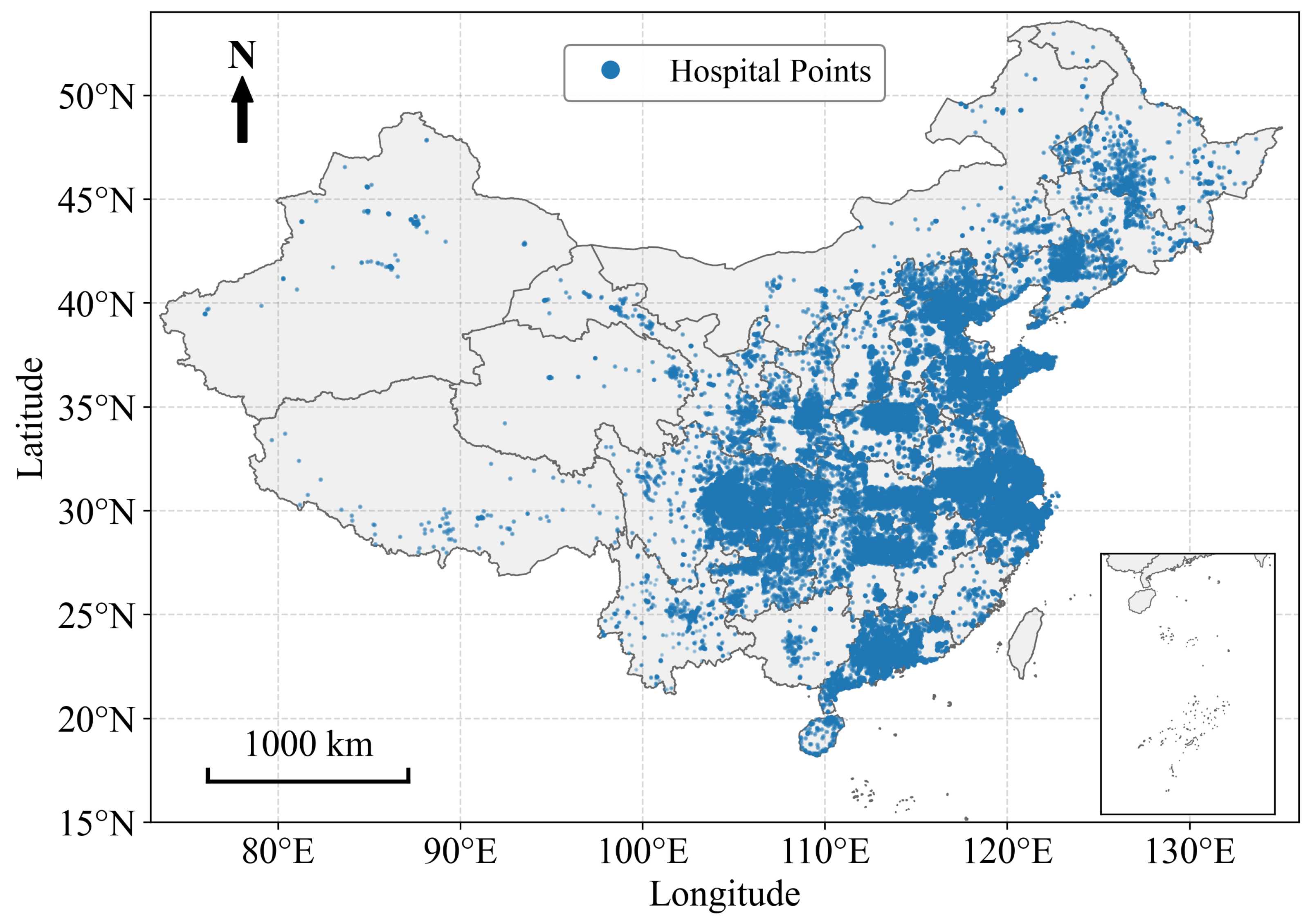
Figure 1 illustrates the spatial distribution of primary healthcare institutions across China. Overall, the density of primary healthcare facilities is substantially higher in the eastern and central regions than in the western regions. Building on this spatial pattern, the subsequent analysis further investigates elderly-oriented healthcare accessibility and examines how it relates to the broader socio-ecological development context.
2.2. Data Sources and Preprocessing
These datasets provide the environmental context, population demand, healthcare supply, and transportation network required for the subsequent accessibility modeling and socio-ecological analysis.
2.2.1. Environmental and Socio-Ecological Data
The Normalized Difference Vegetation Index (NDVI) can be used as a proxy for ecological cover and environmental background conditions [
22]. In this study, it is derived from the MODIS MOD13A1 Version 6.1 product, which provides 16-day composites at a spatial resolution of 500 m and is accessed via Google Earth Engine. NDVI is calculated from near-infrared and red reflectance and ranges from
to
.
Nighttime lights provide a well-established proxy for human settlement patterns and socioeconomic activity. Monthly VIIRS Day/Night Band composite data for the year 2020 are used to represent nighttime light intensity [
23]. Compared with legacy DMSP-OLS products, VIIRS data offer higher spatial resolution and improved radiometric sensitivity, enabling the detection of both high-intensity urban cores and low-intensity rural lighting.
2.2.2. Population and Healthcare Supply Data
A gridded population dataset at 100 m spatial resolution is employed to characterize the spatial distribution of elderly residents. This dataset is derived from China’s Seventh National Population Census (2020) using an ensemble-learning approach (ASPECT product) and provides age-specific population estimates, including a dedicated layer for individuals aged 65 years and above. The 65+ population grid is used to represent spatial patterns of elderly healthcare demand.
Primary healthcare supply locations are obtained from point-of-interest (POI) data provided by the Gaode (AutoNavi) map platform. Using the
AMapPoi Python interface (version 2.0), the geographic coordinates of hospitals and clinics considered to provide primary healthcare services are extracted. Facility supply capacity is approximated using a composite indicator derived from hospital bed numbers and counts of medical staff associated with each facility. Data on hospital beds and medical personnel were obtained from the China Urban Statistical Yearbook and the China Health Statistical Yearbook published by the National Health Commission of China [
24,
25]. These statistical yearbooks provide comprehensive information on healthcare resources, including the number of beds and healthcare personnel across medical institutions in China, and are widely used and extended in studies of healthcare resource allocation and accessibility [
26,
27]. Because detailed capacity information is not uniformly available for every facility, representative capacity parameters were derived from provincial-level statistics. Building size information extracted from the facility function map was also used in this process [
28].
2.2.3. Transportation and Land-Cover Data
To model travel impedance, a comprehensive road network is constructed by integrating OpenStreetMap (OSM) road data with an auxiliary rural road dataset designed to capture village-level roads that are often underrepresented in OSM [
29,
30]. The two datasets were first harmonized in a common coordinate system and then merged into a unified network layer. Overlapping segments were reconciled, and rural roads were added to improve connectivity in sparsely mapped areas. The resulting network provides realistic connectivity for both urban and rural travel.
Land cover information is obtained from the Copernicus Global Land Cover dataset at 100 m spatial resolution (Epoch 2018) to identify built-up areas, agricultural land, vegetation, and water bodies [
31]. This land-cover mask is applied to focus the analysis on inhabited and agriculturally relevant areas while excluding large water bodies and uninhabited natural regions.
All spatial datasets are resampled in 1000 m and projected to a common coordinate system, using the World Mollweide projection for national-scale analysis and local UTM zones for detailed travel-time computation. NDVI and NTL data are aggregated into monthly or annual composites as required. The elderly population grid and healthcare facility locations are subsequently integrated with the road network to support accessibility analysis.
2.3. Construction of the Vegetation Nighttime Condition Index (VNCI)
To characterize regional socioeconomic development from a socio-ecological perspective, the Vegetation Nighttime Condition Index (VNCI) is calculated at the pixel level. The VNCI is derived from a triangular feature space constructed using the Normalized Difference Vegetation Index (NDVI) and nighttime light intensity (NTL), following the approach proposed by [
18] (Equation (
1)). Within this NDVI–NTL feature space, VNCI is defined as a normalized measure of a pixel’s observed NTL value relative to the expected baseline associated with its vegetation condition. Specifically, for each pixel, its NDVI value is used to identify the minimum and maximum NTL values within a narrow NDVI interval, thereby delineating the local lower and upper bounds of NTL. The VNCI is then calculated as the relative position of the pixel’s actual NTL value within this NDVI-specific NTL range. Higher VNCI values indicate a greater degree of human-dominated development, characterized by high nighttime light intensity and relatively low vegetation cover, whereas lower VNCI values reflect ecologically dominated conditions with limited human activity. VNCI thus provides a spatially explicit indicator of human settlement intensity under local vegetation and land-cover constraints. It should be interpreted as a contextual measure of socio-ecological development intensity rather than as a direct measure of healthcare demand or service need. In this study, VNCI is computed at a spatial resolution of 1000 m using annual composite NDVI and VIIRS nighttime light data for the year 2020.
where
represents the vegetation index of pixel
i and
and
denote the minimum and maximum nighttime light intensity values corresponding to the NDVI interval of pixel
i, respectively. The upper bound of the NDVI–NTL feature space is characterized by a linear envelope function, such that
, where
a and
b are empirical parameters representing the intercept and slope of the upper development boundary. These parameters are estimated using pixels sampled from the entire study area, covering the full spectrum of development conditions from low to high urbanization levels. The index is computed at a spatial resolution of 1000 m using annual composite NDVI and nighttime light data for the year 2020.
2.4. Enhanced Two-Step Floating Catchment Area (2SFCA) Model
To quantify elderly-oriented spatial accessibility to primary healthcare services, this study employs a network-based enhanced two-step floating catchment area (2SFCA) model. In this framework, healthcare facilities represent the supply side, while the spatial distribution of the elderly population (aged 65+) represents the demand side.
The traditional 2SFCA method typically relies on Euclidean (straight-line) distance. This approach often fails to capture physical barriers and the tortuosity of real-world road networks, leading to an overestimation of accessibility. To address this limitation, the topological road network derived from OpenStreetMap (OSM) was integrated to calculate shortest-path travel time as a measure of spatial impedance. This ensures that both service coverage and distance-decay effects reflect actual travel conditions. The model is implemented in two steps:
(i) Calculation of Supply-to-Population Ratios
For each healthcare facility
j, a supply-to-population ratio
is calculated by aggregating the population of all demand locations
i within a predefined travel-time catchment threshold. Distance-decay effects are subsequently incorporated in the second step when accessibility is calculated for each demand location. To reflect urban–rural differences in mobility, a 15 min catchment is applied in urban areas and a 30 min catchment in rural areas. These thresholds are consistent with accessibility standards promoted by the National Health Commission of the People’s Republic of China. The standards emphasize the development of a “15-min primary healthcare service circle” in urban communities. They also allow longer travel times for rural residents due to lower facility density and transportation constraints [
32].
where
denotes the service capacity of facility
j, estimated from provincial-level statistics on hospital beds and medical staff, with facility-level adjustment (see
Section 2.2.2 for details).
represents the elderly population (aged 65+) at demand location
i, which explicitly defines the demand side of the accessibility model. Urban and rural demand locations were classified based on VNCI thresholds, following the classification scheme proposed by [
18].
represents the network-based travel time between
i and
j, and
is the travel-time threshold defining the catchment area.
(ii) Calculation of Healthcare Accessibility
In the second step, the healthcare accessibility at each demand location
i is obtained by summing the distance-weighted supply-to-population ratios of all healthcare facilities within the defined catchment area. A Gaussian distance-decay function is used to model decreasing service utilization with increasing travel time. The accessibility index
is formulated as
where
denotes the healthcare accessibility at demand location
i;
is the supply-to-population ratio of facility
j derived in Step 1. The function
represents a Gaussian distance-decay function, which models the decreasing likelihood of service utilization with increasing travel time and is defined as
This formulation ensures that the distance-decay weight is normalized to unity at and decreases continuously to zero at the catchment boundary. It therefore accounts for both spatial impedance and population competition in healthcare accessibility estimation.
2.5. Coupling Coordination Analysis and Relative Development Index
To evaluate the interaction between elderly-oriented healthcare accessibility and regional socio-ecological development, a coupling coordination model is employed. The coupling coordination degree
is defined as
where
represents the coupling degree, measuring the strength of interaction between the two subsystems, and
denotes the comprehensive development index, reflecting their overall development level. The coupling degree
is calculated as
and the comprehensive development index
is defined as
where
and
denote the standardized values of healthcare accessibility and socio-ecological development (VNCI), respectively, obtained using the min-max normalization method. The weighting coefficients
and
are both set to 0.5, thereby assigning equal importance to the two subsystems. In the absence of strong empirical evidence supporting differential weighting, equal weights were adopted as a parsimonious assumption. Following existing studies, the coupling coordination degree is classified into three categories: low coupling coordination [0, 0.3], moderate coupling coordination (0.3, 0.5], and high coupling coordination (0.5, 1] [
33].
The RDI is defined as the ratio between healthcare accessibility and the socio-ecological development context represented by VNCI. It should be emphasized that VNCI is not interpreted as a direct indicator of healthcare demand. Instead, it represents the broader socio-ecological development context. Therefore, the coupling coordination analysis and the RDI are intended to identify relative spatial alignment between healthcare accessibility and regional development conditions rather than to directly evaluate healthcare adequacy or unmet demand.
To further examine whether the allocation of primary healthcare resources for the elderly population is leading or lagging behind regional socio-ecological development, the Relative Development Index (RDI) is introduced, defined as
Based on the tolerance interval method commonly adopted in the literature,
indicates that healthcare accessibility is relatively lower than the socio-ecological development context.
indicates synchronous development between healthcare provision and socio-ecological conditions, and
indicates that healthcare accessibility is relatively higher than the socio-ecological development context [
34].
To reduce the influence of extreme ratios caused by very low VNCI values, outliers were identified using the interquartile range (IQR) method. Values beyond 1.5×IQR were then excluded prior to regional classification [
35,
36].
This framework assumes that healthcare accessibility and socio-ecological development conditions may interact spatially. This assumption is particularly relevant for primary healthcare services in China, where spatial planning emphasizes local accessibility (e.g., the “15-min primary healthcare service circle”). It is therefore influenced not only by economic development but also by settlement patterns and environmental constraints. The analysis focuses on identifying relative spatial alignment rather than establishing causal relationships.
3. Results
3.1. Spatial Patterns of Elderly-Oriented Healthcare Accessibility
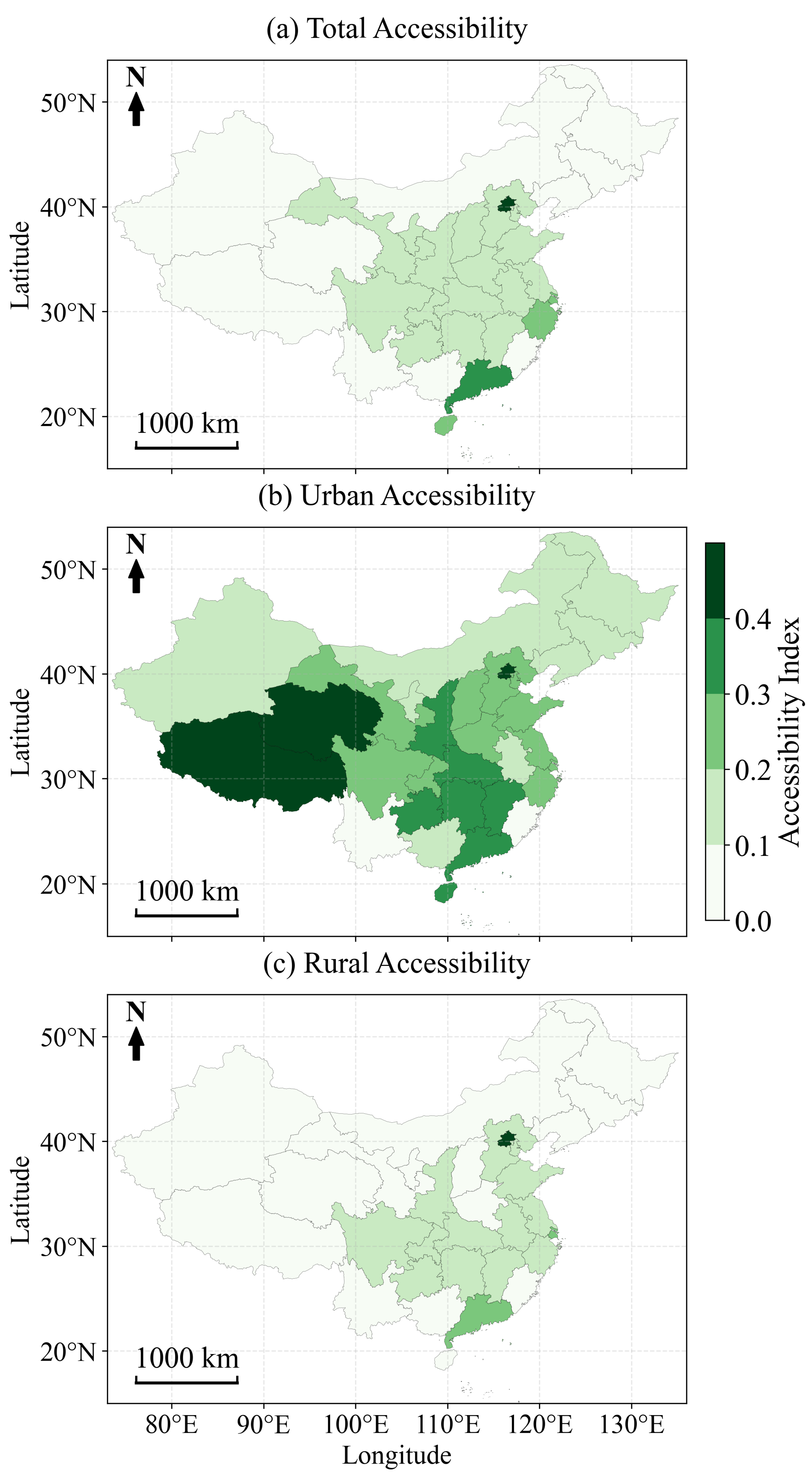
Figure 2 illustrates the provincial-level average accessibility to primary healthcare resources for the elderly population across China. Overall, accessibility exhibits a pronounced East–West gradient, with higher values concentrated in the eastern coastal regions, particularly the Yangtze River Delta and the Pearl River Delta. Substantially lower levels are observed in western and northeastern regions.
Marked urban-rural disparities are also evident. Urban areas, especially megacities and provincial capitals, display notably high accessibility levels. In contrast, rural areas generally experience lower accessibility and greater spatial heterogeneity, particularly in western provinces and ecologically constrained regions. Notably, several eastern municipalities (e.g., Guangdong and Tianjin) and most central provinces (e.g., Shaanxi, Hubei, Hunan, and Jiangxi) exhibit relatively higher urban accessibility than both their eastern and western counterparts. Central cities typically face lower population density and aging pressure than eastern cities. They also benefit from more complete primary healthcare networks than western cities. As a result, demand locations can be effectively covered within reasonable service catchments.
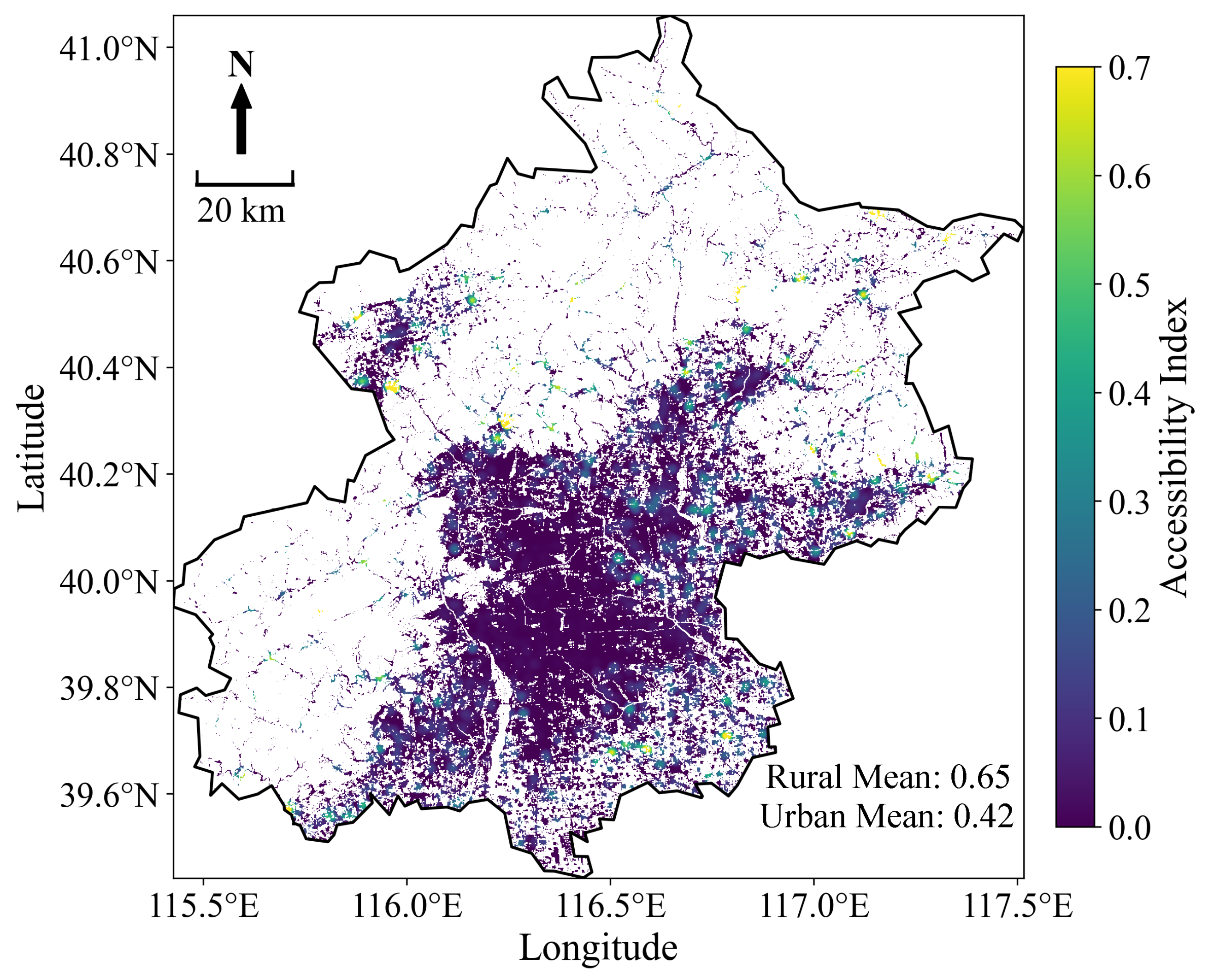
The enhanced two-step floating catchment area (2SFCA) results further reveal two distinctive spatial patterns through statistical analysis of the results. First, in megacities such as Beijing and Shanghai, elderly healthcare accessibility in suburban and rural areas exceeds that in urban cores.
Figure 3 illustrates this pattern using Beijing as an example, where detailed spatial distributions show higher accessibility levels in rural areas (approximately 0.65) compared with urban areas (approximately 0.42). This counterintuitive pattern may be related to extremely high population density and intense competition for healthcare resources within urban service catchments. Similar patterns have been reported, with high population concentration in metropolitan cores reducing per-capita accessibility despite dense facility networks [
10,
37]. By contrast, lower population density and reduced service pressure in suburban and rural areas lead to higher spatial matching efficiency.
Second, the Tibet Autonomous Region exhibits relatively high urban accessibility. However, this pattern also exposes pronounced intra-regional urban-rural disparities. Rural areas show substantially lower accessibility than urban areas.
3.2. Spatial Distribution of the Vegetation Nighttime Condition Index (VNCI)
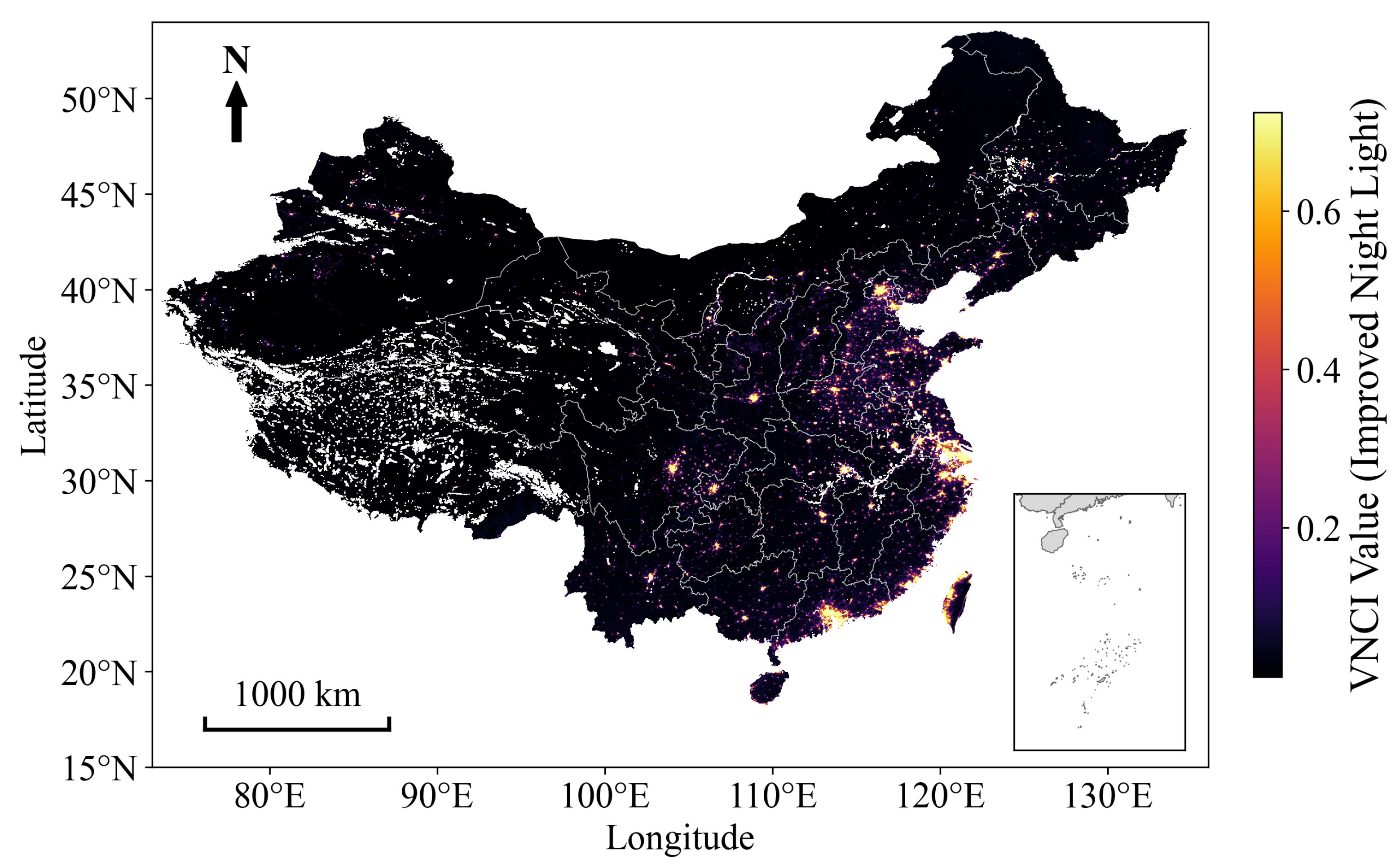
Figure 4 presents the spatial distribution of VNCI, revealing substantial East-West disparities. The highest VNCI values are concentrated in eastern coastal provinces, especially in megacities and highly urbanized regions, indicating intense human activity and limited vegetation cover. In contrast, central and western regions exhibit much lower VNCI values, reflecting weaker economic activity and stronger ecological constraints.
At finer spatial scales, VNCI does not follow a simple coastal–inland gradient. Instead, a pronounced core–periphery structure emerges within provinces: provincial capitals and major economic centers form high-VNCI cores, while surrounding rural areas display substantially lower values. Even in relatively underdeveloped provinces, localized clusters of urbanization generate distinct VNCI peaks. These patterns demonstrate that VNCI effectively integrates information on urbanization intensity, land-use concentration, and ecological constraints within a single indicator, providing a critical foundation for subsequent coupling analysis.
3.3. Coupling Coordination and Relative Development Index (RDI)
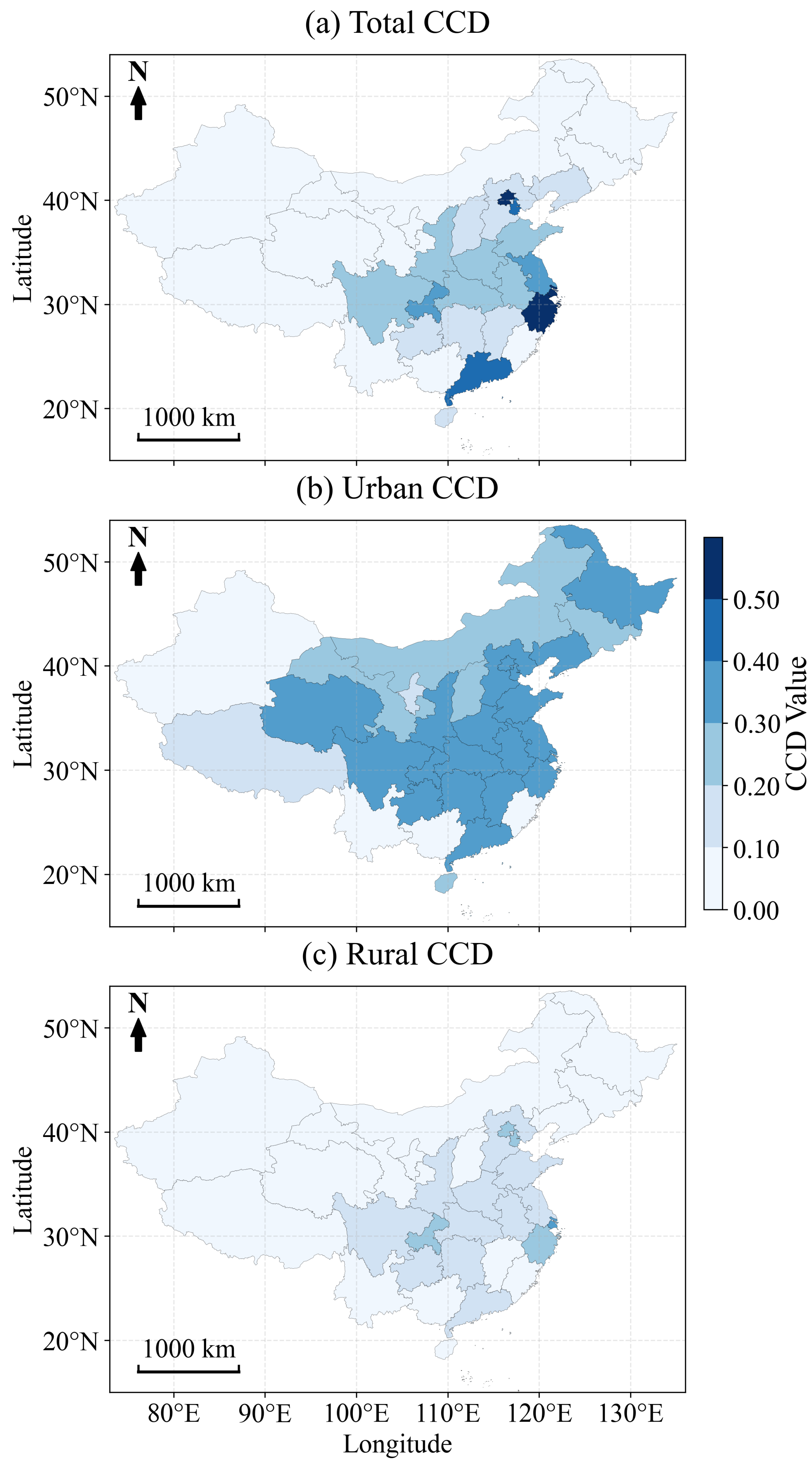
Figure 5 depicts the spatial distribution of coupling coordination degrees between elderly healthcare accessibility and VNCI. Overall, eastern provinces exhibit the highest levels of coupling coordination, indicating a strong alignment between healthcare provision and socio-ecological development activity. Economically developed provinces such as Guangdong, Zhejiang, and Tianjin consistently demonstrate high coordination levels. In contrast, most central and western provinces fall into low or moderate coordination categories, reflecting structural mismatches between development intensity and healthcare resource allocation.
Across all regions, urban areas display higher coupling coordination than rural areas. Notably, even in highly developed regions such as Beijing and Shanghai, rural areas lag behind urban cores, leading to consistently lower coupling coordination in rural systems. Overall, the coupling analysis reveals a clear East–West disparity. Eastern regions achieve relatively effective synergy between development and healthcare provision, although demand pressure remains high, whereas western regions remain constrained by low development levels and weak coordination.
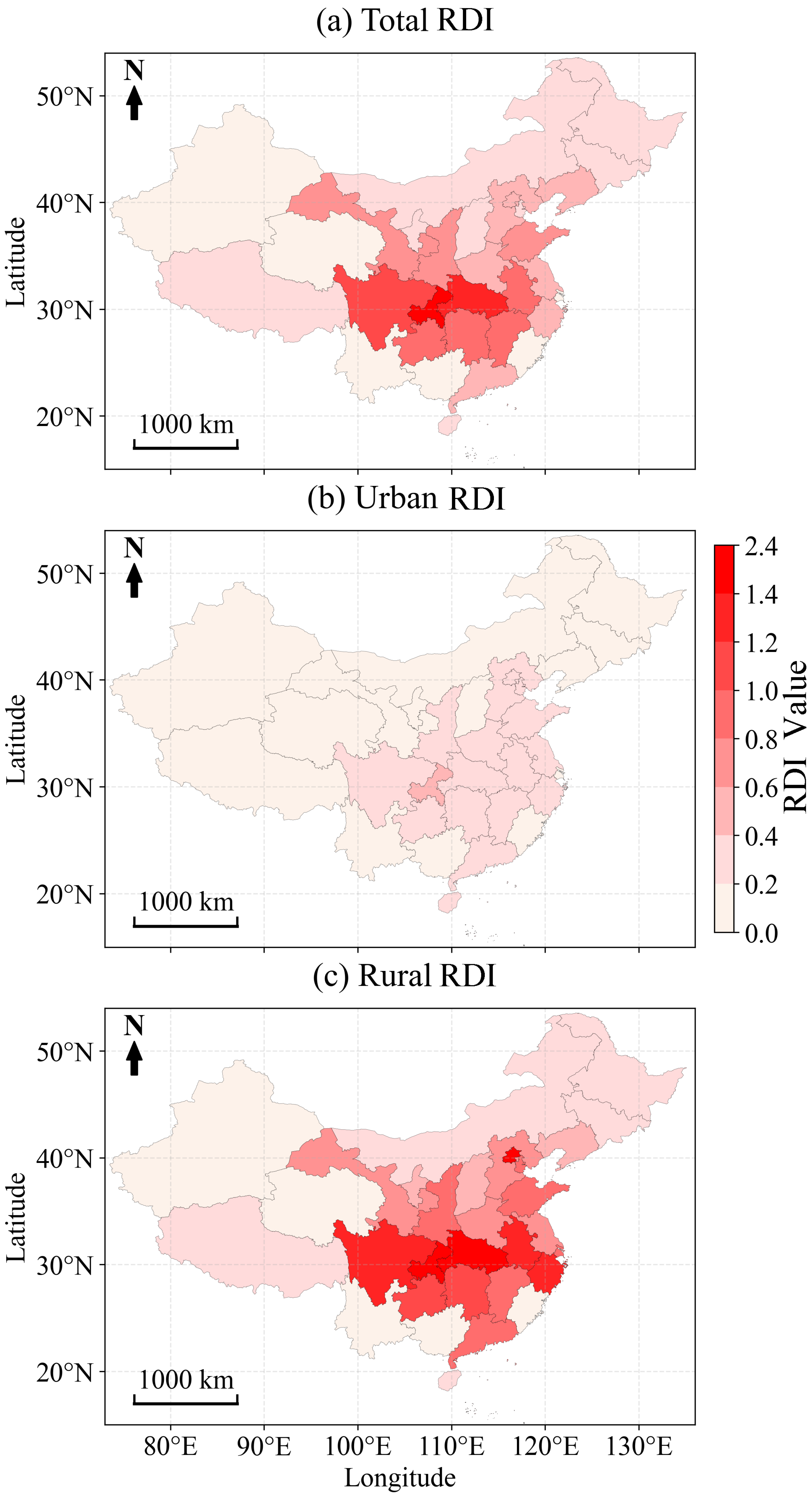
Figure 6 presents the spatial distribution of the Relative Development Index (RDI), revealing pronounced discrepancies between socio-ecological development intensity and healthcare supply capacity. In most eastern provinces and many urban areas, RDI values are below 1, indicating that healthcare accessibility is relatively low compared with the intensity of local socio-ecological development reflected by VNCI. Consequently, despite high absolute accessibility, eastern coastal cities continue to experience relative supply pressure due to exceptionally high VNCI levels.
In contrast, many central and western rural areas exhibit RDI values above 1. This pattern is largely associated with relatively low VNCI values in these regions. Under such conditions, even modest levels of healthcare accessibility may produce comparatively high RDI values. Therefore, these regions should be interpreted as areas where accessibility appears relatively high compared with the local socio-ecological development context rather than as regions with abundant healthcare resources.
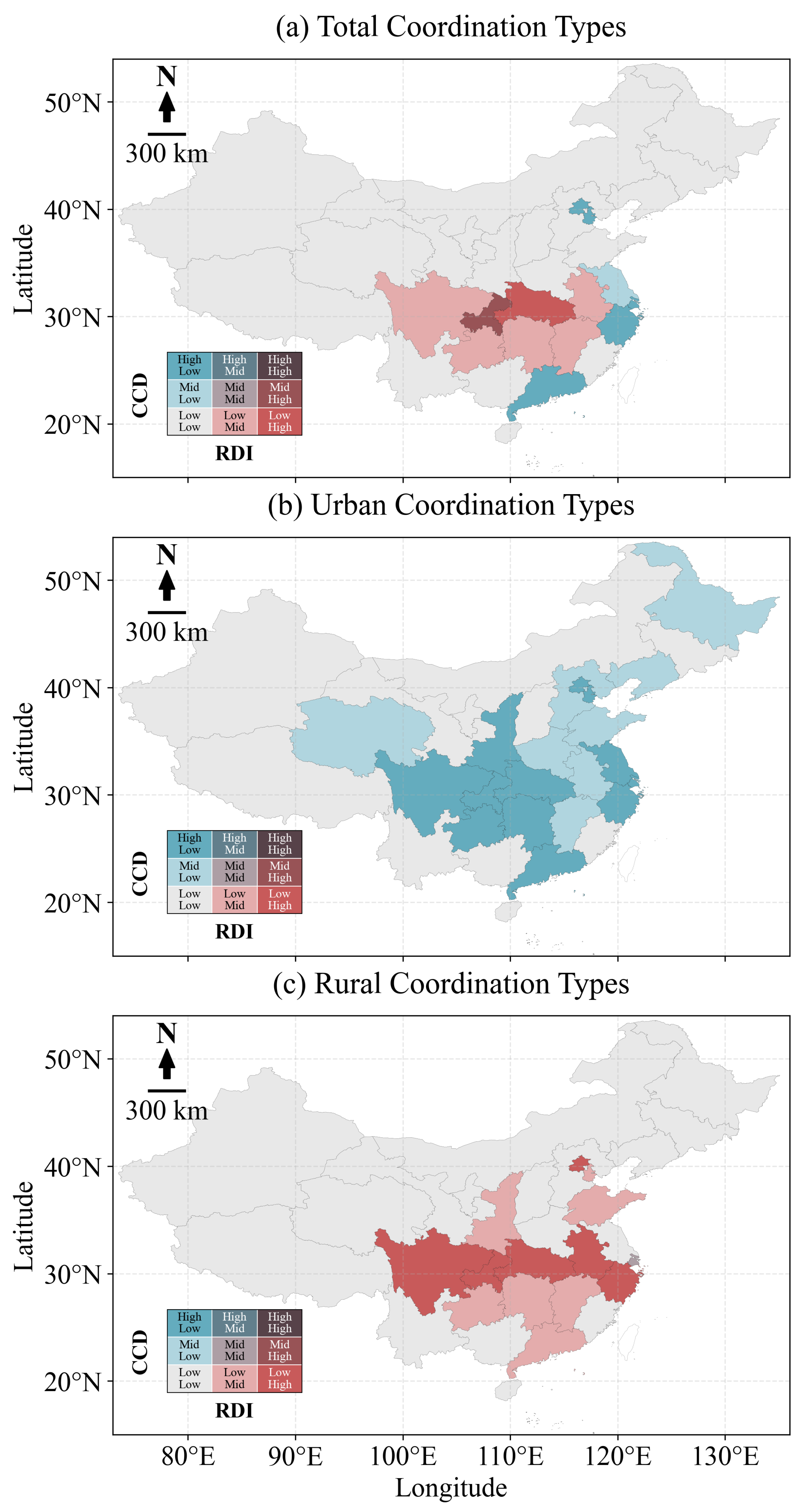
Integrating coupling coordination and RDI results identifies three dominant regional types. The first type is characterized by high coordination and low RDI and is typical of economically advanced eastern regions such as Shanghai and Zhejiang. This pattern suggests that healthcare accessibility is relatively lower compared with the intensity of socio-ecological development reflected by VNCI. The second type exhibits medium coordination and medium RDI and is common in central provinces such as Hubei and Sichuan, where socio-ecological development and healthcare provision remain broadly synchronized.
The third type is defined by low coordination and low RDI and is prevalent in underdeveloped western regions, reflecting persistent structural constraints. Urban areas are more likely to belong to the first two categories, whereas many rural counties remain concentrated in the third.
By explicitly accounting for socio-ecological development intensity, this framework reveals that regions with relatively high accessibility may still face substantial demand pressure. In contrast, areas with lower accessibility may exhibit relative supply surpluses. These surpluses are driven by weak development foundations rather than true adequacy.
4. Discussion
This section interprets the empirical results within the broader socio-ecological context and compares the observed spatial patterns with findings from previous studies on healthcare accessibility in China.
4.1. Regional Pattern Analysis of Healthcare Accessibility and Socio-Ecological Development
This section focuses on interpreting the mechanisms underlying the observed regional differences and situating them within the broader socio-ecological context.
Figure 7 illustrates the cross-classification of regions based on the Relative Development Index (RDI) and coupling coordination degree.
Eastern regions, including Beijing, Shanghai, Zhejiang, Guangdong, and Jiangsu, are predominantly characterized by a low RDI and high coupling coordination pattern. Although these regions exhibit relatively strong coordination between socio-ecological development and healthcare provision, their low RDI values suggest that healthcare accessibility is relatively lower compared with the intensity of local socio-ecological development. Under the combined pressures of high population density, accelerated population aging, and concentrated urban activity, effective accessibility may be diluted within dense metropolitan service catchments. In such contexts, intense competition for healthcare resources within urban service catchments may reduce per-capita accessibility despite dense facility networks. Consequently, the findings suggest that future policy attention in eastern regions may need to consider not only additional capacity but also the spatial redistribution and operational efficiency of existing primary healthcare services.
Most central regions, such as Hunan, Anhui, and Jiangxi, together with parts of the western region, including Sichuan and Guizhou, fall into medium or low RDI and medium or low coupling coordination categories.
In these regions, socio-ecological development activity and healthcare provision tend to remain at intermediate levels, producing a relatively balanced but still developing coordination state. Compared with eastern metropolitan regions, demand pressure associated with population concentration is generally lower, while, compared with remote western areas, the healthcare infrastructure is relatively more developed. As a result, the relationship between accessibility and socio-ecological development appears relatively synchronized. However, breaking this intermediate equilibrium remains a key challenge. Future improvements may require a dual-driven pathway that simultaneously enhances regional socio-ecological development vitality and improves the allocation efficiency of healthcare services.
Finally, large portions of western China, along with some central and eastern areas, cluster in the low RDI and low coupling coordination category, indicating a persistent low-level development trap. In these regions, weak socio-ecological development foundations, dispersed settlement patterns, and environmental constraints jointly limit both healthcare accessibility and regional development intensity. Rugged terrain, long travel distances, and limited infrastructure may further constrain the effective conversion of healthcare supply into accessible services, particularly in rural areas. These factors contribute to the persistence of a low-level coordination state in which both accessibility and development remain constrained. The findings above are broadly consistent with previous studies that report significant spatial inequalities in healthcare accessibility across China [
7,
37,
38].
However, the present study extends these findings by incorporating a socio-ecological perspective. By integrating VNCI with accessibility modeling, the analysis highlights how ecological constraints and human development jointly shape the spatial allocation of healthcare resources. This approach helps explain why regions with similar economic levels may exhibit different patterns of healthcare accessibility and coordination, particularly in environmentally constrained western regions.
4.2. Advantages of Remote Sensing-Based Indicators for Healthcare Accessibility Assessment
By integrating MODIS, NDVI, and VIIRS nighttime light data, this study provides a more nuanced assessment of elderly-oriented healthcare accessibility than conventional population-based approaches. The VNCI captures fine-scale spatial heterogeneity in human activity and settlement intensity across varying ecological contexts, including urban–rural gradients and core–periphery structures. As demonstrated by Wu et al. (2023), the triangular NDVI-NTL feature space enhances nighttime light contrast while accounting for ecological background conditions. Consistent with this framework, the VNCI results highlight concentrated urban clusters and reveal how ecological constraints shape development patterns. This helps explain why regions with comparable GDP levels may exhibit markedly different levels of alignment between healthcare supply and population demand.
Remote sensing further improves the realism of healthcare accessibility modeling. Previous studies have demonstrated the value of satellite-derived indicators, such as nighttime light data and vegetation indices, in capturing spatial patterns of human activity, urbanization, and environmental conditions [
39,
40]. By integrating these data sources, the VNCI provides a more comprehensive representation of human–environment interactions, which is particularly relevant for large-scale assessments of public service accessibility. Land-cover masks derived from Copernicus data reduce the risk of overestimating accessibility in uninhabited or environmentally constrained areas, while the integration of Google Earth Engine with GIS-based network analysis enables efficient processing of large-scale, multi-source spatial data. More broadly, combining health geography with remote sensing reveals structural patterns that are difficult to detect using single-discipline approaches. These patterns include resource saturation in dense urban cores, low-level equilibrium in rural regions, and the mediating role of ecological conditions in shaping effective healthcare access.
Overall, this study highlights the broader potential of remote sensing for health planning and spatial equity analysis. By translating satellite observations into indicators of human–environment interaction and integrating them with demand-side accessibility modeling, Earth observation data provide valuable insights into the spatial mechanisms underlying healthcare inequality. Such approaches are particularly important in aging societies, where aligning healthcare provision with both demographic demand and environmental context is essential for achieving sustainable and equitable service systems.
Beyond the empirical findings for China, this study contributes to the broader literature on spatial accessibility and socio-ecological analysis in two ways. First, the integration of the Vegetation Nighttime Condition Index (VNCI) with accessibility modeling provides a framework for linking environmental constraints with public service provision. Second, the combined use of accessibility analysis, coupling coordination, and relative development indices offers a systematic approach to identifying spatial mismatches between development intensity and service supply. This framework can potentially be applied to other large and geographically heterogeneous countries where ecological conditions and uneven development jointly influence the spatial distribution of public services.
4.3. Limitations and Future Research
Several limitations should be acknowledged when interpreting the findings of this study. First, the analysis is based on cross-sectional data for 2020, which captures spatial patterns at one point in time but does not reflect temporal changes in healthcare accessibility, population aging, or socio-ecological conditions. Longitudinal analysis would be needed to examine dynamic trends and possible causal relationships.
Second, although VNCI provides a useful socio-ecological proxy by integrating vegetation and nighttime light information, it represents environmental context rather than explicit ecological constraints [
18]. Variables such as terrain slope, altitude, or seasonal accessibility barriers are not directly incorporated into the accessibility model in this study. Factors such as income, education, health status, institutional capacity, and public expenditure are not directly captured by this indicator. Therefore, VNCI should be interpreted as a contextual socio-ecological indicator rather than a comprehensive measure of healthcare demand, and the identified relationships should be understood as spatial associations rather than causal effects.
Third, the enhanced 2SFCA model estimates potential spatial accessibility rather than actual healthcare utilization. As noted in previous studies, accessibility indicators capture the spatial opportunity to obtain services but may not fully reflect real utilization patterns influenced by individual preferences, affordability, or service quality [
37]. In addition, facility service capacity was approximated using proxy indicators derived from aggregated healthcare statistics and building-size information, which may not fully capture actual differences in service capability among individual facilities.
Fourth, this study is conducted at the national scale and primarily focuses on provincial-level patterns. Such an approach is suitable for identifying broad spatial disparities, but it may mask substantial intra-provincial heterogeneity, especially in large and geographically diverse provinces.
Because VNCI reflects socio-ecological development intensity rather than healthcare need itself, the results should be interpreted as indicating relative contextual mismatch rather than direct supply–demand adequacy.
Future research could extend this framework by incorporating longitudinal data, finer-scale administrative units, and additional socio-ecological development indicators. It would also be valuable to combine spatial modeling with alternative research methods, including household surveys, field investigations, qualitative interviews, and policy evaluation approaches.
5. Conclusions
This study proposes an integrated socio-ecological framework to assess elderly-oriented primary healthcare accessibility in China. By synthesizing the satellite-derived Vegetation Nighttime Condition Index (VNCI) with the Enhanced 2SFCA model, this framework complements traditional census-based approaches. It enables a finer-grained analysis of the interplay between healthcare supply, aging demand, and ecological environments. Beyond the empirical analysis for China, this framework also demonstrates how remote sensing-derived socio-ecological indicators can be integrated with accessibility modeling to examine spatial mismatches between development intensity and public service provision.
The main findings are threefold. First, a pronounced spatial inequality exists, with accessibility decreasing from the eastern coast to the western inland. However, high accessibility in urban centers does not necessarily indicate adequate service provision. Second, the VNCI-based coupling analysis suggests potential mismatches between development and healthcare provision. Eastern megacities may face relative supply shortages due to excessive demand concentration (high coordination, low RDI), whereas western rural areas appear constrained by a “low-level equilibrium” of weak infrastructure and fragile ecological conditions.
These results provide useful insights for policy discussions on improving the spatial equity of primary healthcare services. For eastern regions, strategies may need to shift from simple capacity expansion to efficiency optimization and spatial redistribution. For ecologically sensitive western regions, healthcare improvements may need to be synchronized with basic infrastructure development to break the low-level development trap. However, these interpretations should be treated with caution because the analysis is based on proxy indicators and cross-sectional data.
Future research could further refine this framework by incorporating temporal dynamics of VNCI, additional socio-ecological development indicators, and complementary research methods such as surveys, field investigations, or qualitative approaches. This would help to better understand the mechanisms shaping elderly healthcare accessibility.