1. Introduction
Over the past decades, mountain areas in Europe and beyond have experienced significant demographic and socio-economic transformations characterized by population decline, aging, and the progressive abandonment of traditional economic activities. These processes, closely linked to broader patterns of agricultural land abandonment and rural restructuring, have intensified spatial and social disparities between lowland and upland territories [
1,
2,
3]. In the Italian Alps, Alpine regions lost approximately 2.2% of their population between 2011 and 2019, contributing to service erosion, reduced entrepreneurial opportunities, and declining territorial attractiveness [
4]. Although some areas show signs of demographic stabilization linked to policy innovation and changing societal preferences [
5,
6], many peripheral valleys continue to face structural vulnerability.
In response, regional and local development strategies increasingly emphasize the valorization of territorial capital—natural, cultural, and social resources—as a lever for regeneration and resilience [
7]. Within this framework, tourism has become a strategic driver of mountain development by generating employment, supporting local entrepreneurship, and reinforcing territorial identity [
8]. International tourism has recently recovered and expanded, confirming its continued economic relevance and the growing demand for destinations offering environmental quality and experiential authenticity [
9]. Mountain regions, including the Alpine arc, remain among the most significant tourism areas globally [
10].
However, tourism growth also raises concerns regarding environmental pressure, landscape transformation, and socio-cultural commodification [
11]. Sustainable tourism has therefore evolved into a multidimensional concept that integrates environmental protection, community participation, and inclusive governance [
12]. Among emerging forms, wellness tourism reflects the growing demand for well-being-oriented experiences in mountain contexts [
13,
14,
15].
Alpine territories are particularly suited to nature-based tourism due to their ecosystem services, including forests, protected landscapes, and high environmental quality [
16]. The integration of forest ecosystem services into tourism strategies can generate employment, support landscape stewardship, and strengthen community engagement [
17,
18]. Forest-based recreational and therapeutic activities further contribute to local economic diversification [
19].
Yet the sustainability of tourism initiatives in fragile mountain regions depends less on resource endowment than on governance capacity. Effective tourism development requires institutional arrangements capable of coordinating multiple stakeholders—local residents, entrepreneurs, associations, and public authorities—within shared planning and decision-making processes. The stakeholder approach, rooted in organizational theory [
20], has been further advanced in recent literature and now represents a key analytical framework for understanding governance dynamics in tourism systems [
21,
22,
23].
In mountain contexts, collaboration is particularly critical given small-scale economies, strong place-based identities, and interdependence between environmental resources and local livelihoods [
24]. Recent research highlights the importance of multi-level coordination and network-based governance for enhancing resilience in mountain territories [
25,
26,
27], while collaborative governance mechanisms have been shown to strengthen policy legitimacy and innovation in rural tourism systems [
28,
29].
Despite this growing literature, limited attention has been devoted to how structured organizational models can operationalize stakeholder collaboration in peripheral Alpine valleys. Existing governance frameworks often remain conceptual, with fewer empirically grounded proposals for territorially embedded coordination mechanisms capable of integrating ecosystem-based tourism, inter-municipal cooperation, and local development strategies [
30]. This gap is particularly evident in inner Alpine territories characterized by demographic decline, service reduction, and fragmented governance.
This study addresses this gap by analyzing the territorial governance system of the Val Canale and Canal del Ferro valleys in Northeast Italy and by co-designing a stakeholder-based Organizational Model (OM) for sustainable tourism development. The research is grounded in the premise that strengthening inter-municipal coordination and formalizing stakeholder networks are essential for transforming dispersed initiatives into coherent territorial strategies. The proposed OM constitutes a multi-level governance framework aimed at institutionalizing collaborative mechanisms and enhancing alignment between local and regional actors.
This study addresses the following research questions:
RQ1: How is the current territorial governance system structured in the Val Canale and Canal del Ferro area with respect to sustainable tourism development?
RQ2: What relational strengths and fragmentation patterns emerge from stakeholder interactions?
RQ3: How can a stakeholder-based organizational model enhance inter-municipal cooperation and sustainable tourism governance in peripheral Alpine territories?
These questions are logically interconnected and follow a progressive analytical framework. RQ1 examines the structural configuration of the governance system, RQ2 explores its relational dynamics and fragmentation patterns, and RQ3 builds on these findings to develop an organizational model. This sequence reflects a transition from empirical diagnosis to institutional design.
2. Materials and Methods
2.1. Study Area
The study was conducted in the Val Canale and Canal del Ferro valleys, located in the Friuli Venezia Giulia region in northeastern Italy. The research area comprises seven of the eight municipalities—Chiusaforte, Dogna, Malborghetto Valbruna, Moggio Udinese, Pontebba, Resia, and Resiutta—covering 676.55 km
2 and hosting 5715 inhabitants in 2024 (
Table 1). The municipality of Tarvisio was excluded due to its significantly higher level of tourism development and its prior recognition as a UNWTO-certified sustainable destination. As a structurally stronger outlier, its inclusion would have distorted the analysis of governance dynamics among the more fragile and territorially comparable municipalities. The study therefore focuses on governance dynamics within structurally comparable municipalities.
The area is characterized by low population density, dispersed settlements, and altitudinal gradients ranging from 280 to 2753 m above sea level. As shown in
Table 1, all municipalities have experienced population decline between 2011 and 2024, reflecting broader demographic trends affecting peripheral Alpine territories. Despite these vulnerabilities, the valleys retain significant environmental and cultural capital that constitutes a potential foundation for sustainable tourism development.
To better characterize the territorial configuration of the study area, spatial mapping was conducted using QGIS 3.40 (QGIS Development Team, Open Source Geospatial Foundation, Beaverton, OR, USA), based on regional cartographic sources, OpenStreetMap data, and publicly available environmental datasets.
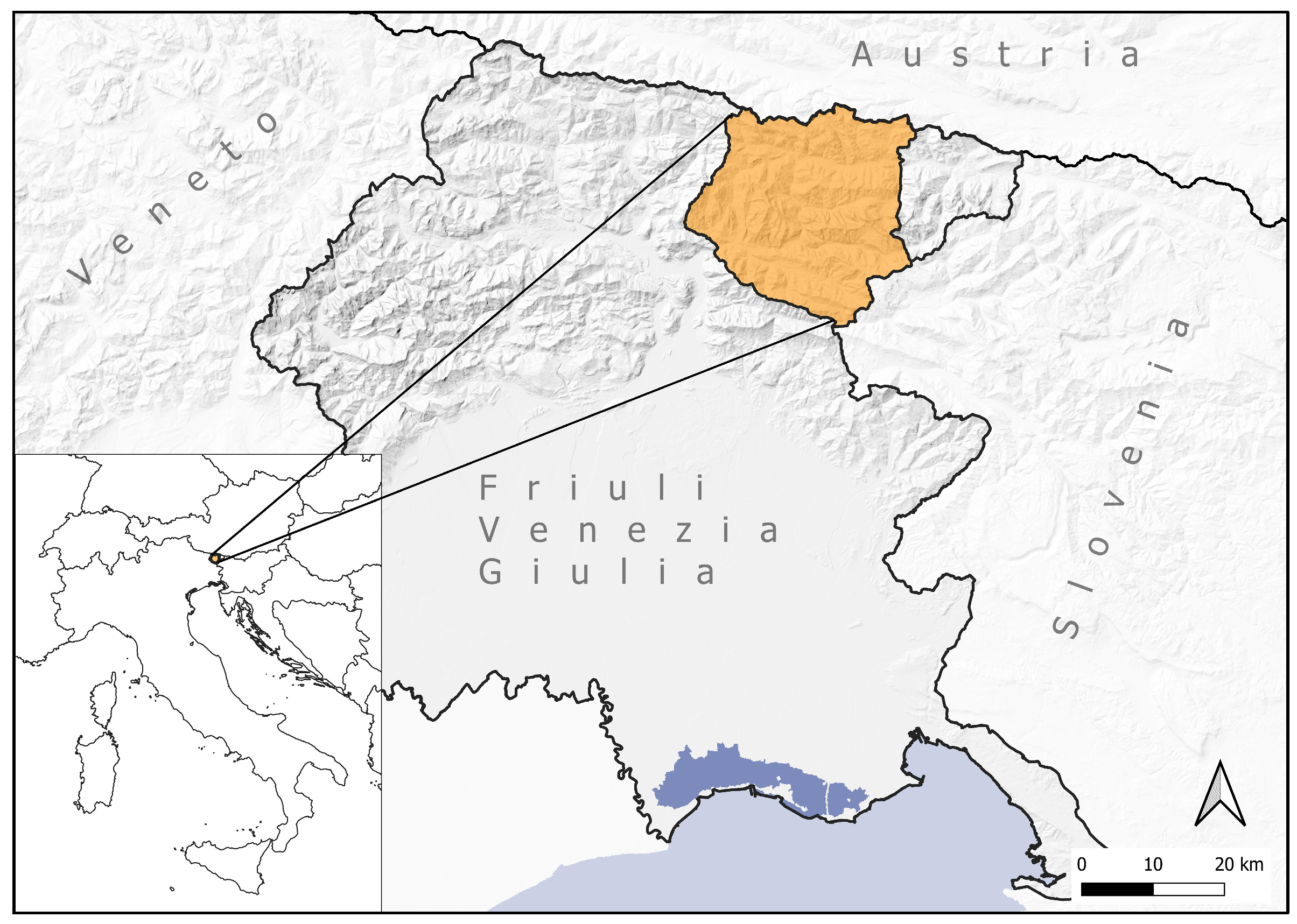
Figure 1 provides a geographical overview of the study area within the Friuli Venezia Giulia region.
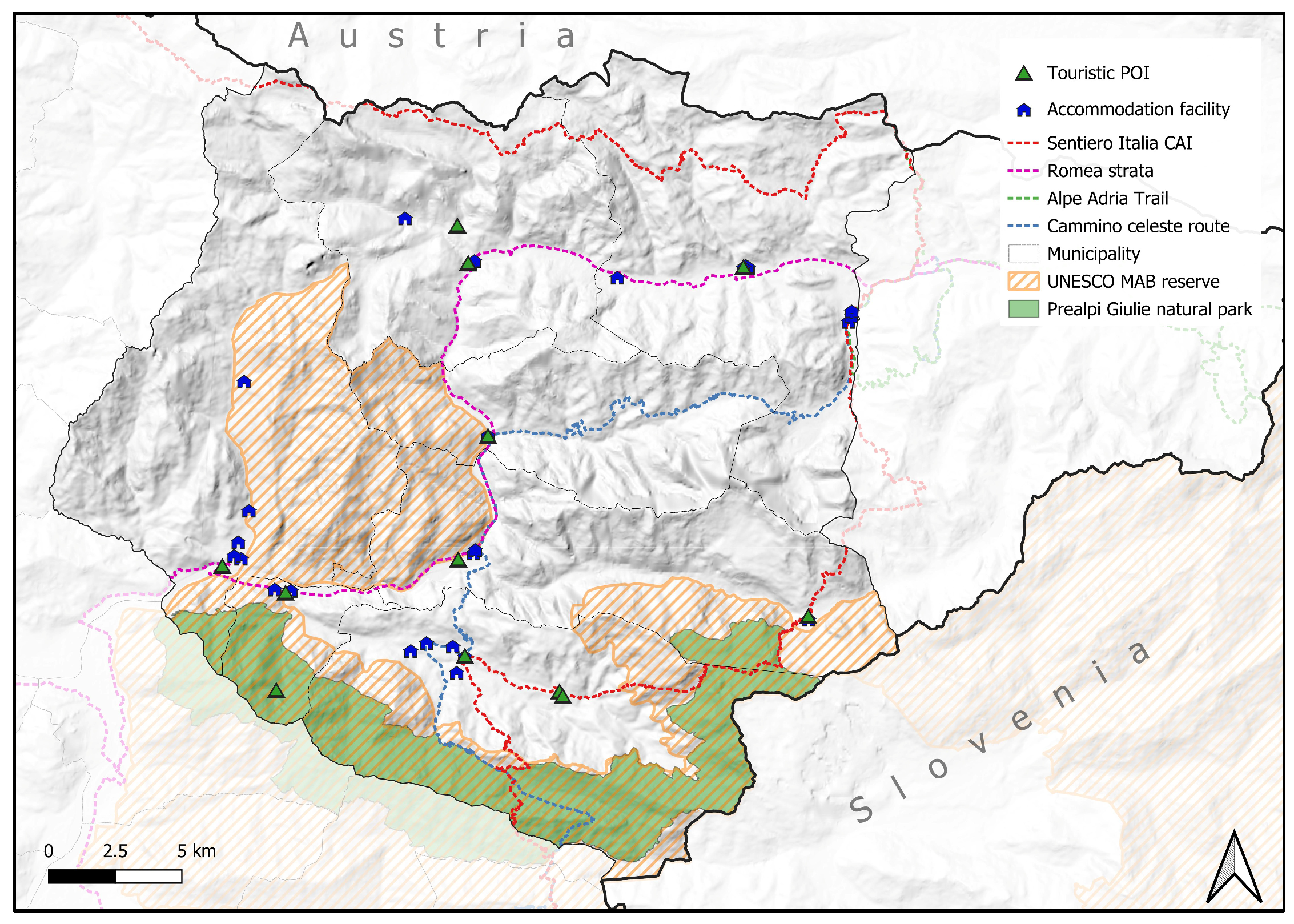
Figure 2 delineates the administrative boundaries of the seven municipalities and illustrates the principal hiking routes crossing the valleys—such as the Romea Strata, Sentiero Italia CAI, Alpe Adria Trail, and Cammino Celeste—together with the spatial distribution of accommodation facilities and major tourist points of interest (POIs). The figure also highlights the main protected areas, including the Julian Prealps Natural Park and the UNESCO Man and the Biosphere (MAB) Julian Alps Biosphere Reserve (established in June 2019, the Biosphere Reserve extends across eleven municipalities). Overall, the presence of these protected areas across multiple jurisdictions underscores the strong interconnections between administrative boundaries and natural heritage.
While environmental assets and trail networks are widely distributed throughout the territory, hospitality infrastructure is unevenly concentrated. Municipalities such as Moggio Udinese, Resia, and Malborghetto-Valbruna exhibit higher densities of tourism services, whereas Dogna presents limited accommodation capacity.
Overall, this spatial configuration reveals the coexistence of abundant natural resources and infrastructural disparities, providing an essential territorial context for the subsequent analysis of governance dynamics.
2.2. Research Design
To provide a comprehensive assessment of the territorial governance system, this study adopts a qualitative single-case study design. This approach is particularly suitable for examining complex governance dynamics within bounded territorial systems, where institutional arrangements, relational networks, and local resources interact in context-specific ways.
The research design integrates multiple qualitative methods, including Stakeholder Analysis (SA), the Actor-Linkage Matrix (ALM), and Appreciative Inquiry (AI). The combination of structural-relational mapping and participatory inquiry enables methodological triangulation, strengthening analytical robustness and supporting the identification of fragmentation patterns, coordination gaps, and opportunities for institutional innovation.
The methodological framework is grounded in participatory and stakeholder-oriented approaches, widely recognized as essential for analyzing governance systems in natural resource management, rural development, and tourism planning [
31,
32,
33]. By integrating relational analysis with stakeholders’ future-oriented perspectives, the study moves beyond descriptive diagnosis toward the co-design of a stakeholder-based Organizational Model.
As a qualitative single-case study, the research seeks analytical generalization rather than statistical representativeness. Its objective is to develop a transferable governance framework grounded in empirical evidence while acknowledging the context-specific nature of the findings.
The study was conducted between June 2023 and August 2024.
2.2.1. Stakeholder Analysis and Actor-Linkage Matrix
Stakeholder Analysis (SA) was employed to identify relevant actors, assess their roles, and examine relational structures within the tourism governance system. SA is widely used in environmental governance and tourism studies to map stakeholders, understand their roles and interests, and analyze patterns of interaction and collaboration [
34,
35,
36].
Stakeholders were identified through semi-structured interviews with the mayors of the seven municipalities. Mayors were selected as key informants due to their institutional roles and comprehensive knowledge of local actors involved in tourism and territorial development. The interviews were conducted in person and lasted approximately 60 min each. With the interviewees’ consent, responses were transcribed in real time during the discussions.
During the interviews, mayors were asked to identify tourism-related actors active in their municipality, describe existing forms of collaboration, and evaluate the intensity and type of relationships with other municipalities and territorial actors.
Stakeholders were classified according to two complementary criteria: functional role and territorial scope. Functionally, actors were distinguished based on their primary role within the tourism system (institutional governance, territorial coordination, associative representation, or economic service provision). Territorial classification differentiated between actors operating at the municipal level and those active across the entire valley. This dual framework enabled a structured analysis of both horizontal (inter-municipal) and vertical (multi-level) governance dynamics.
This classification informed the construction of the Actor-Linkage Matrix (ALM), allowing interactions to be assessed not only in terms of intensity but also according to the governance level at which they occur. By distinguishing municipal and supra-municipal actors, the ALM facilitated the examination of coordination patterns across governance scales and ensured consistency in mapping relational structures.
To assess relational structures and governance patterns, the study applied the ALM method developed by Biggs and Matsaert [
37], which systematically examines interactions by classifying them according to their functional type. This approach aligns with recent literature on multi-stakeholder systems and coordination dynamics [
38]. Within this framework, relationships were categorized into three types:
Each relationship was evaluated using a four-point scale (0–3), where 0 indicates no relationship and 3 represents a consolidated and structured connection. The classification criteria were clarified during data collection to ensure consistency in evaluation across municipalities.
2.2.2. Appreciative Inquiry
To complement the structural stakeholder analysis with a participatory and future-oriented perspective, the study employed the Appreciative Inquiry (AI) method, which explores community strengths, shared aspirations, and collaborative potential [
39,
40].
AI is structured around the “4D Cycle”: Discovery, Dream, Design, and Destiny. The Discovery phase identifies existing strengths and successful practices; the Dream phase encourages participants to envision desirable future scenarios; the Design phase translates these visions into strategic actions; and the Destiny phase focuses on implementation and long-term sustainability.
In this study, interview questions were adapted from Joyner et al. [
39], who applied the AI framework to analyze community-tourism relationships. The adaptation ensured methodological consistency while tailoring the inquiry to the specific context of sustainable tourism governance in mountain areas (
Table 2).
A total of sixteen interviews were conducted, involving three territorial authorities, representatives of the seven municipalities, two tourism associations, and four entrepreneurial actors. Participants were selected to ensure balanced representation across institutional, associative, and private-sector perspectives.
Each interview lasted approximately 60 min and followed a semi-structured format organized according to the four AI phases. With the interviewees’ consent, responses were transcribed in real time during the discussions.
3. Results
3.1. The Stakeholder Analysis and Actor-Linkage Matrix
The Stakeholder Analysis (SA) and Actor-Linkage Matrix (ALM) generated three main outputs: (i) the identification of relevant actors involved in tourism development, (ii) their classification into functional categories, and (iii) the examination of relational patterns among them.
To obtain a comprehensive overview of the most active stakeholders in the study area, semi-structured interviews were conducted with the mayors of the seven municipalities. This preliminary phase allowed for the construction of a systematic stakeholder inventory, organized according to both thematic categories and territorial distribution.
Overall, 62 tourism-related stakeholders were identified, increasing to 69 when including the seven municipal administrations (
Table 3). For analytical purposes, stakeholders were grouped into four categories: municipal administrations; territorial actors operating across the study area; associations (including tourism, cultural, and other civic organizations); and entrepreneurial actors, comprising accommodation providers, guides and freelancers, and other tourism-related businesses.
This classification provided the foundation for the subsequent Actor-Linkage Matrix (ALM) analysis, which examined the patterns and intensity of collaboration among stakeholders in order to better understand the existing governance structure and the degree of territorial cooperation.
The interviews were designed to collect detailed information on the nature, frequency, and strength of relationships among local actors. Based on these data, two ALMs were constructed to explore the relational dynamics of the tourism governance system. The matrices were analyzed descriptively to identify patterns of relational density, asymmetries, reciprocity, and fragmentation within the network.
The first matrix (
Table 4) maps inter-municipal relationships as well as connections between municipalities and territorial actors. Interaction levels were assessed using a four-point scale (0–3), where 0 indicates the absence of a relationship (light grey) and 3 denotes a consolidated and structured collaboration (dark grey).
The analysis shows that, with the exception of Chiusaforte, Malborghetto Valbruna, and Resia, most municipalities maintain active relationships primarily with geographically adjacent territories. This pattern suggests that administrative proximity plays a significant role in shaping institutional interaction and coordinated tourism-related activities. At the same time, the limited presence of strong cross-valley ties highlights fragmentation within the governance network, potentially constraining the development of integrated territorial strategies.
A second Actor-Linkage Matrix (ALM) examined the internal and external relationships between municipalities and local associations and entrepreneurial actors (
Table 5). For analytical clarity, associations were classified into three categories: tourism associations (A1), cultural associations (A2), and other civic organizations (A3). Entrepreneurial actors were similarly grouped into accommodation providers (E1), freelancers—including tourist and nature guides (E2)—and other tourism-related businesses (E3).
The results largely corroborate the patterns identified in the first matrix. In particular, the municipality of Resia exhibits a relatively strong and diversified relational network extending across the study area, indicating a higher degree of external engagement. In contrast, most other municipalities display predominantly inward-oriented networks, maintaining relationships mainly with associations and enterprises located within their own administrative boundaries. Dogna represents a specific case, as no internal associations or entrepreneurial actors were identified, resulting in limited relational capacity within the local tourism system.
Overall, the findings reveal a fragmented governance configuration and uneven collaboration patterns among municipalities. This fragmentation emerges from low reciprocity levels between municipalities, asymmetric recognition of collaborative ties, and the limited presence of cross-valley interactions identified through the ALM analysis. Only a small number of local administrations demonstrate the capacity to establish sustained cross-boundary linkages, while the majority remain embedded within locally confined relational structures. Such structural fragmentation is likely to hinder the formulation and implementation of coordinated, valley-scale strategies for sustainable tourism development.
3.2. The Appreciative Inquiry
The Appreciative Inquiry (AI) was structured around its four phases—Discovery, Dream, Design, and Destiny—with a tailored set of questions guiding each stage. Sixteen stakeholders were interviewed: three territorial authorities, representatives of the seven municipalities, two tourism associations, and four entrepreneurial actors. The interviews collected perceptions, evaluations, and forward-looking visions regarding tourism development and the potential establishment of a coordinated organizational structure. The qualitative material provided in-depth insights into both the current governance configuration and stakeholders’ expectations for future territorial coordination.
3.2.1. Discovery Phase
During the Discovery phase, stakeholders were invited to identify existing strengths and successful practices within the local tourism system. While some respondents struggled to articulate clearly defined strengths, many highlighted persistent difficulties in achieving effective inter-municipal cooperation. Nevertheless, several interviewees acknowledged the presence of informal yet dynamic networks driven by highly motivated actors.
The Julian Prealps Natural Park was frequently cited as a key cross-municipal connector, fostering cooperation across administrative boundaries. Pro Loco associations also emerged as pivotal operational actors, actively supporting municipal tourism initiatives. Present in each municipality and already collaborating through a Pro Loco Consortium, these associations represent an existing, though informal, coordination structure.
At the same time, respondents emphasized the absence of a shared territorial identity and the lack of a central coordinating body capable of managing stakeholder relationships, aligning initiatives, and defining strategic priorities. These weaknesses point to structural governance gaps rather than resource limitations.
Table 6 summarizes the main tourism typologies, stakeholders and resources currently present in the area. The findings reveal a diversified tourism portfolio, albeit characterized by varying degrees of maturity and institutionalization. Nature-based tourism—encompassing hiking, forest-based wellbeing activities, and environmental interpretation—emerges as the most developed segment, supported by associations, guides, and accommodation providers and grounded in extensive forest and protected-area resources. Other forms of tourism, including cycling, cultural and heritage tourism, winter sports, and niche outdoor activities, are present but remain comparatively fragmented and small-scale. Overall, the Discovery phase highlights a territory rich in environmental and cultural capital but lacking structured coordination mechanisms.
3.2.2. Dream Phase
In the Dream phase, stakeholders articulated their vision for the future of the valleys. A strong consensus emerged around the need to establish a supra-municipal territorial network capable of supporting local tourism development. Participants emphasized that such a network should be inclusive and multifunctional, involving public institutions, associations, and private operators.
Crucially, respondents stressed that coordination must operate at the valley scale while respecting each municipality’s distinct identity. The envisioned network should not replace local autonomy but rather facilitate cooperation, provide administrative support, and enhance strategic coherence. Interviewees also underlined the importance of a recognized and trusted coordinating structure capable of supporting daily operational needs.
The preferred tourism typologies for future development include slow tourism, community-based tourism, nature-based tourism, and cycling tourism, alongside a general commitment to sustainability principles. These preferences reflect a clear shift toward low-impact, territorially embedded tourism models.
3.2.3. Design Phase
During the Design phase, stakeholders translated their shared vision into concrete governance proposals. A central theme was the need for a structured supra-municipal coordination mechanism to overcome the fragmented and locally confined approach to tourism development.
Several participants proposed the establishment of a valley-level coordination platform or community cooperative responsible for project management, financial alignment, and integrated destination marketing. Soft-mobility tourism—particularly cycling routes and coordinated territorial packages—was identified as a priority area requiring cross-municipal planning and shared service standards.
At the same time, stakeholders acknowledged challenges in public–private collaboration, including differences in administrative cultures and operational practices. Overall, the Design phase highlighted the necessity of institutionalizing cooperation beyond existing informal networks.
3.2.4. Destiny Phase
In the Destiny phase, attention shifted to implementation and long-term sustainability. The Canal del Ferro and Val Canale Mountain Community was widely recognized as a legitimate coordinating body, although stakeholders emphasized the need to strengthen its managerial and strategic capacity.
Proposals included the creation of a valley tourism forum, the development of integrated digital platforms, and the allocation of dedicated personnel to support coordination activities. Participants stressed that sustainable implementation requires stable resources, inclusive decision-making, and incremental institutional consolidation.
Overall, the Destiny phase confirmed that long-term sustainable tourism development depends on formalized multi-level coordination mechanisms and strengthened institutional capacity.
4. Discussion
4.1. Governance Fragmentation and Relational Patterns
The findings provide a comprehensive understanding of the governance dynamics shaping sustainable tourism development in the Val Canale and Canal del Ferro valleys. In response to RQ1 and RQ2, the analysis reveals a governance system characterized not by resource scarcity but by relational fragmentation and weak supra-municipal coordination.
Although the territory benefits from significant environmental and cultural capital—including protected areas, extensive trail networks, and diversified tourism activities—the Actor-Linkage Matrix highlights limited cross-boundary collaboration and uneven relational intensity among municipalities. Interactions tend to follow patterns of geographic proximity rather than strategic alignment, resulting in localized clusters of cooperation rather than an integrated valley-wide governance structure. This indicates that spatial proximity substitutes for institutional coordination, reinforcing fragmented rather than systemic governance patterns.
These findings are consistent with previous research on peripheral mountain regions, where strong local identities and institutional autonomy often coexist with limited multi-level coordination [
25,
41,
42]. The asymmetries identified in relational patterns—particularly the concentration of cross-municipal engagement in a few municipalities such as Resia—suggest the presence of uneven relational capacity across the territory. This dynamic reflects a broader governance imbalance, in which a limited number of actors assume bridging roles while the majority remain locally embedded. Such configurations are typically associated with weak network integration and limited collective action capacity [
43,
44].
Importantly, the spatial characterization of the territory confirms that development constraints do not stem from insufficient environmental assets. Instead, infrastructural disparities and uneven service distribution underscore the need for integrated planning mechanisms capable of connecting dispersed resources into coherent tourism systems. In this respect, the study reinforces the argument that governance capacity—rather than territorial endowment—constitutes the critical determinant of sustainable mountain tourism development. This finding aligns with recent governance literature emphasizing that coordination capacity and network integration are key drivers of resilience in peripheral territories [
25,
27].
4.2. Stakeholder Vision and Institutional Gaps
The Appreciative Inquiry findings reinforce this interpretation. Stakeholders consistently articulated a shared vision centered on slow, nature-based, and community-oriented tourism models, aligned with contemporary sustainable tourism paradigms [
45]. At the same time, they highlighted the absence of a formal coordination structure capable of translating these shared aspirations into concrete and operational strategies.
This divergence between strategic vision and institutional capacity highlights a fundamental governance mismatch. While normative alignment among stakeholders appears relatively strong, institutional mechanisms to support collective action remain weak. As a result, cooperation tends to remain episodic and project-based rather than embedded in stable governance arrangements.
More broadly, the findings indicate that the principal challenge facing peripheral Alpine territories lies not in resource activation, but in institutional alignment and coordination capacity. In this regard, the results point to limitations in institutional capacity and capability building at the valley level, particularly with respect to strategic coordination, administrative expertise, and the availability of stable resources for long-term implementation. These constraints limit the ability of local systems to move from informal collaboration toward sustained and structured governance.
4.3. The Proposed Organizational Model
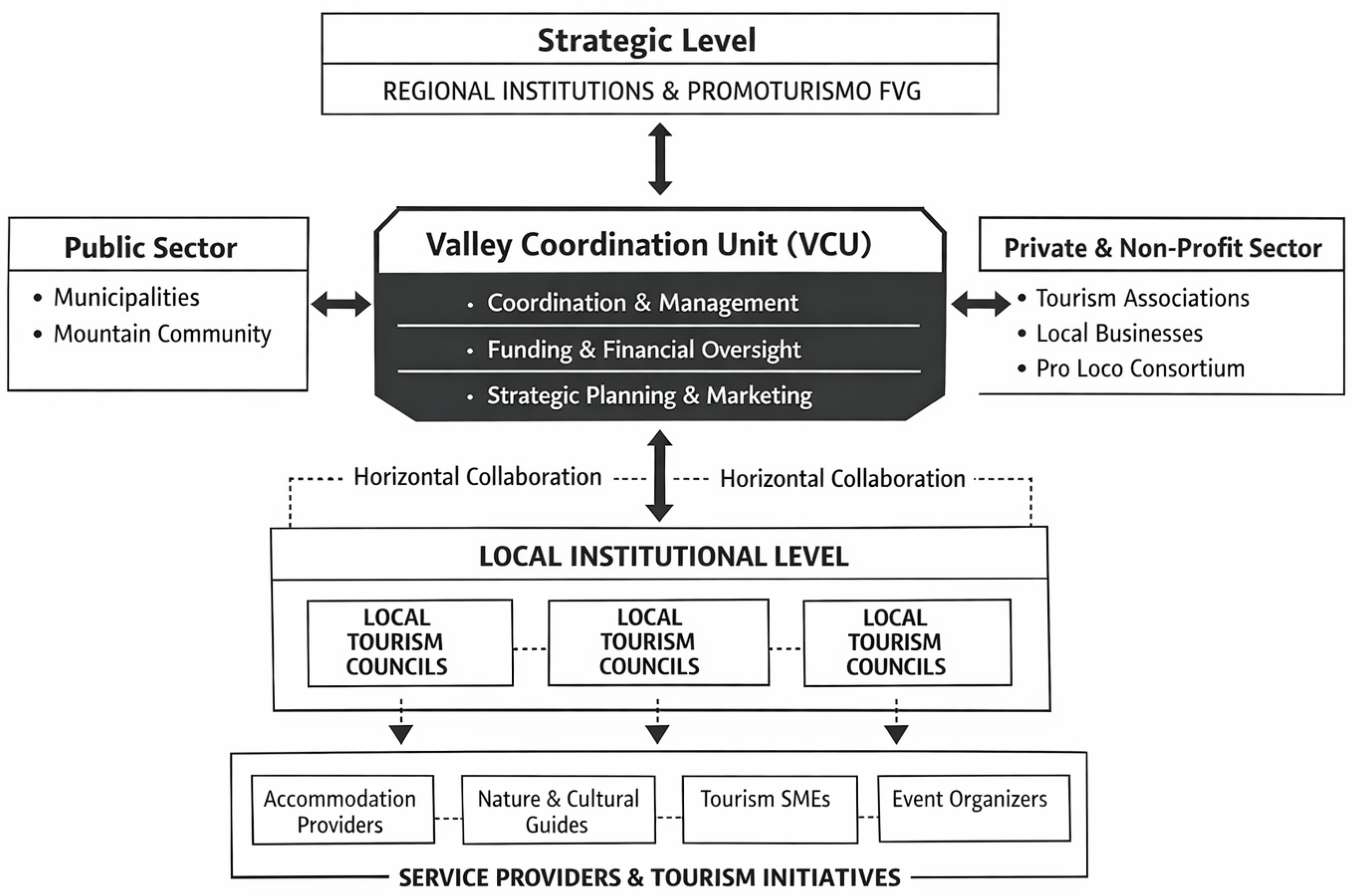
The proposed Organizational Model directly addresses this structural gap. By introducing a Valley Coordination Unit operating at the meso-institutional level, the model seeks to bridge municipal autonomy and territorial strategy. This structure institutionalizes horizontal cooperation among municipalities while facilitating vertical alignment with regional actors, thereby operationalizing principles of collaborative governance [
28,
29].
More specifically, the model is grounded in stakeholder theory [
20,
21,
22,
23], which emphasizes the need to recognize, coordinate, and balance the interests of multiple actors within complex governance systems. In peripheral mountain territories, where institutional fragmentation and strong local identities prevail, stakeholder coordination requires structured mechanisms capable of aligning diverse actors—public administrations, associations, and private enterprises—within a shared strategic framework. The model therefore represents a shift from descriptive stakeholder mapping toward institutionalized coordination.
The multi-level architecture contributes to governance innovation in three ways: it formalizes inter-municipal coordination beyond informal networks, strengthens administrative and strategic capacities at the valley scale, and integrates public and private stakeholders within a coherent operational structure. This configuration reflects a collaborative governance approach in which distributed decision-making is supported by a central coordinating function.
The model emerged inductively from the qualitative findings, particularly from the Design and Destiny phases of the Appreciative Inquiry. Stakeholders explicitly articulated the need for supra-municipal coordination and discussed multiple organizational alternatives during the interviews. The proposed structure synthesizes these recurring proposals and aligns them with the relational patterns identified in the ALM, ensuring consistency between empirical evidence and governance design.
Figure 3 synthesizes this configuration across four governance levels—strategic, coordinating, local institutional, and operational—establishing both vertical and horizontal integration. In doing so, it provides a structured response to the fragmentation identified in the empirical analysis.
The case illustrates how peripheral Alpine territories may transition from fragmented relational systems to structured collaborative governance through the institutionalization of coordination mechanisms. Beyond the specific context, the proposed model highlights the critical role of meso-level coordination structures in bridging local autonomy and territorial strategy, offering a replicable approach for overcoming governance fragmentation in peripheral regions.
From a theoretical perspective, the study contributes by operationalizing stakeholder theory within a place-based, multi-level governance framework, linking relational analysis to institutional design.
More broadly, the findings confirm that sustainable mountain tourism is fundamentally a governance challenge, where the effectiveness of development strategies depends less on resource availability than on the capacity to organize, align, and institutionalize stakeholder interaction within coherent multi-level systems.
4.4. Limitations
This study presents some limitations that should be acknowledged. As a qualitative single-case study, the findings allow for analytical rather than statistical generalization. The Actor-Linkage Matrix captures relational dynamics at a specific point in time, and governance patterns may evolve. Moreover, the analysis does not include visitor perspectives, cross-border dynamics, or seasonal variations, which may influence tourism development processes.
However, these limitations do not compromise the validity of the results, as the study adopts a triangulated methodological approach combining stakeholder analysis, relational mapping, and participatory inquiry. This integrated design enhances the robustness of the findings while accounting for the context-specific nature of the study.
5. Conclusions
This study analyzed the territorial governance system of the Val Canale and Canal del Ferro valleys with the aim of designing a stakeholder-based Organizational Model (OM) to support sustainable tourism development in a peripheral Alpine context. By integrating Stakeholder Analysis, Actor-Linkage Matrix, Appreciative Inquiry, and spatial contextualization, the research provided a multi-dimensional assessment of relational, institutional, and territorial dynamics.
In response to the research questions, the findings show that the primary constraint to sustainable tourism development in the study area is not the lack of environmental or cultural resources, but the fragmentation of governance structures and the limited coordination among municipalities. While local actors demonstrate motivation and sectoral vitality, the absence of a structured supra-municipal mechanism restricts the translation of dispersed initiatives into coherent territorial strategies.
The proposed Organizational Model introduces a meso-level coordination unit designed to institutionalize collaborative governance, strengthen administrative and strategic capacities, and facilitate both horizontal inter-municipal integration and vertical alignment with regional actors. By formalizing stakeholder cooperation within a structured multi-level framework, the model addresses relational asymmetries and enhances territorial resilience.
Beyond the specific case, the study contributes to place-based governance literature by operationalizing stakeholder theory within a territorially embedded organizational architecture. The analytical approach and governance model offer transferable insights for other peripheral mountain regions confronting similar coordination challenges.
This study is subject to scope-related limitations. As a qualitative single-case analysis, the findings are context-specific and intended for analytical rather than statistical generalization. The exclusion of additional perspectives—such as visitors, cross-border dynamics, and seasonal variations—suggests directions for future research.
Future research should adopt longitudinal social network analysis to examine governance evolution, integrate mobility and demand-side data, and explore comparative applications of the proposed model in other Alpine and mountain contexts.
In conclusion, sustainable mountain tourism in peripheral territories depends less on resource availability than on the capacity to construct inclusive, coordinated, and multi-level governance systems. Institutional innovation and structured stakeholder collaboration emerge as key conditions for transforming territorial potential into long-term sustainable development.