1. Introduction
Urban environments significantly shape welfare, connectivity, resilience, and community-based adaptation (CBA) through interdependent socio-spatial networks. Urban scaling relations emerge from local interactions that generate scale-dependent network densities and externalities governed by a small set of principles [
1]. While spatial, social, economic, and ecological subsystems are jointly implicated, the role of urban form, particularly how subsystems organise as overlapping (semi-lattice) versus hierarchical (tree) structures, remains under-specified in design and policy discourse [
2,
3]. After the pandemic, some ideas related to the demand for a new or different urbanism have arisen. What have we tried? What would we like to avoid? What lessons can be transferred and where, so that urban form can be treated as organised complexity, rather than static geometry, thereby supporting sustainable placemaking and robust decision-making?
Sustainable development is increasingly understood as inseparable from questions of urban form, because spatial configuration determines how cities balance welfare, connectivity, resource efficiency, and socio-cultural continuity. Studies show that compact, fine-grained, and mixed-use morphologies tend to support lower-carbon mobility, everyday proximity and adaptive reuse, while mono-functional, hierarchical layouts often undermine resilience by limiting redundancy and community agency. Recent work highlights how semilattice-like urban fabrics, typically originating from incremental, bottom-up evolution, promote informal stewardship, micro-scale adaptability, and diverse ecological performances, while planned tree-type patterns correlate with social segmentation, infrastructural fragility, and higher conflict in sustainability transitions. Complementing this, global experimentation with participatory and geodesign methods underscores the need for negotiation-centred planning tools that can translate community knowledge into long-term sustainability pathways.
Sustainable development means that the physical structure of cities directly shapes resource consumption, mobility patterns, social interaction, and resilience. Urban form is therefore a mechanism for achieving sustainability goals, ensuring that environmental protection, social equity, and long-term economic viability reinforce one another. For urban form, this means compact, mixed-use, walkable, and adaptable environments that minimise ecological impact while supporting diverse human needs. Planning theories have long grappled with how to operationalise sustainable development goals in practice. The rational/synoptic tradition emphasises explicit goal hierarchies, alternative generation, and impact comparison within comprehensive choice models [
4,
5,
6,
7,
8], while incrementalism characterises real-world policy as successive limited comparisons under bounded information and political feasibility [
9]. Mixed-scanning approaches blend strategic direction-setting with incremental operational steps, mitigating the utopianism of full rationalism and the conservatism of pure incrementalism [
10]. Contemporary planning scholarship urges bridging normative theory and outcomes so that equity, diversity, and democratic practice are explicitly evaluated in urban policy and land-use decisions [
11,
12].
Alexander [
13] distinguished between semilattices (overlapping patterns from organic evolution) and trees (strict hierarchies from top-down planning), arguing that the structure–life relation, how physical configuration supports lived ‘patina,’ diversity, and everyday safety, matters for land-use resilience. This resonates with contemporary network-and-flow approaches that view cities as multi-scalar interaction systems where connectivity structures co-produce land values, movement, exposure, and vitality [
14]. Empirical studies link compact, well-connected environments with stronger local social activity and higher neighbourhood satisfaction when accessibility and land-use mix are present, though trade-offs and thresholds require careful evaluation [
15,
16]. At street and block scales, operational measures of morphology, such as meshedness (network redundancy) and aggregate isovists (visual field/edge conditions), can link form to perceived imageability, enclosure, human scale, transparency, and complexity, attributes associated with walkability and urban life [
17,
18,
19].
The Rio Conventions on climate change and biological diversity established sustainable development as both the premise and target for local planning [
20,
21]. However, normative ideals often diverge from planning practice [
22]. Where major planning theories stand when sustainable development conflicts with community preferences remains an open question. Can semilattice qualities be purposefully assimilated into top-down planned fabrics without sacrificing governance clarity or service delivery? This paper interrogates how structural logics of urban form shape land-use outcomes and sustainability trade-offs, connecting planning traditions to the morphological and governance attributes of neighbourhoods.
We analysed two Jerusalem neighbourhoods, Ramat Shlomo (a planned, ‘tree-type’ settlement built in the 1990s) and Ezrat Torah (an older, incrementally evolved ‘semilattice-type’ neighbourhood), whose residents share Haredi (ultra-Orthodox Jewish [
23,
24]) community affiliations but differ in developmental pathway and spatial organisation. We ask: (i) How do overlapping versus hierarchical spatial structures shape land-use mix, accessibility, and experiential qualities (patina, safety proxies, everyday activity)? (ii) How do planning logics (rational, incremental, mixed-scanning) interact with neighbourhood morphology to produce sustainability trade-offs? (iii) Could a community-negotiated, geodesign-supported process align communities’ preferences with urgent goals (for example, equitable access, environmental quality, resilient connectivity?
Our contributions include: (i) operational indicators linking form to experience, meshedness (network redundancy/robustness) and aggregate isovists (morphology-to-perception), positioned alongside established design-for-walkability constructs; and (ii) a geodesign-supported negotiation of alternative land-use scenarios to expose and manage welfare–connectivity–resilience trade-offs, focusing on reproducibility, open evaluation, and policy relevance. By coupling morphological diagnostics with an explicit decision framework, the paper contributes to planning and landscape architecture, urban contexts, and multifunctional, resilient systems, demonstrating how urban form mediates social cohesion, accessibility, and environmental performance in culturally specific settings.
2. Literature Review
The emergence of cities is commonly associated with the shift from hunter-gatherer mobility to more settled forms of collective life, where cooperation became essential for survival [
25]. Foundational theories in urban systems science, including Christaller’s Central Place Theory, situated cooperation, functional hierarchy, and spatial ordering at the core of settlement formation. Subsequent critiques, most notably by Mumford [
26], challenged the rational-comprehensive, top-down planning ethos that proliferated in the twentieth century, arguing that such methods overlook the relational, adaptive, and often unpredictable social structures that shape organically evolving environments. These debates intensified during the post-war modernist period, when large-scale transformations and idealised master plans sought to remake cities along egalitarian but reductionist spatial logics [
27].
Amid these theoretical tensions, Simon [
7] advanced a formal view of planning as a structured process of decomposing complex design problems into subproblems that could be evaluated and synthesised systematically. Building on this systems-oriented perspective, Alexander’s early work proposed hierarchical methods for resolving conflicting design factors through a bottom-to-top synthesis of partial solutions [
28]. His subsequent distinction between tree structures, characteristic of top-down planned environments, and semilattice structures, characteristic of organically evolved neighbourhoods, remains a touchstone in debates on urban form [
2]. Semilattices, defined by overlapping subsystems, reflect the complex interdependencies of lived urban life, whereas tree structures compartmentalise functions into isolated units. This structural contrast shapes the diversity of land uses, the adaptability of spatial configurations, and the emergence of what Alexander termed a “patina of life” [
3,
29]. The recent work by Neglia [
30] reinforces the importance of these morphological distinctions, showing how urban form influences both landscape functioning and territorial design processes.
Bill Hillier’s concept of the dual-structure city [
31,
32], developed within space syntax theory, proposes that urban environments consist of two interdependent spatial logics: a foreground network of highly integrated, movement-rich streets that supports economic exchange, encounters and urban vitality, and a background network of locally connected, more segregated residential streets that prioritise privacy, social reproduction and everyday routines. This duality explains how cities simultaneously accommodate high-intensity flows and stable community life, and why the balance between the two shapes long-term sustainability. In global scholarship, the concept is used to show that resilient and liveable neighbourhoods emerge when foreground and background systems are well-coupled, creating permeability, redundancy, and opportunities for informal adaptation, whereas overly hierarchical or compartmentalised layouts weaken these synergies. Alexander, McHarg, and others advanced these ideas into comprehensive design frameworks grounded in behavioural settings, ecological design, and pattern languages [
33,
34,
35]. They argued that cities should be organised around interacting systems rather than rigid hierarchies, reinforcing the centrality of complexity, diversity, and multi-scalar interactions in shaping robust urban environments [
36,
37]. These principles informed diverse movements, from New Urbanism’s emphasis on interconnected street networks [
38,
39] to Space Syntax studies of spatial hierarchy and configurational depth [
31,
32,
40]. Mortaheb et al. [
41] highlighted how form-based planning frameworks influence travel behaviour, urban structure, and land use efficiency, adding empirical weight to debates on how planning tools can shape spatial outcomes.
Despite this influence, empirical validation of Alexander’s structure–life hypothesis has been limited. Later work by Batty [
42,
43,
44] reframed urban complexity through network-based representations, emphasising that planning problems consist of interrelated factors whose weighted relationships determine feasible solutions. By modelling these interactions as networks, Batty showed how planners reconcile competing interests through iterative averaging, generating solutions that reflect the structure of interdependencies rather than linear hierarchies. This perspective shifted planning towards a future-oriented mode grounded in connectivity, dynamic processes, and spatial systems thinking.
These network-based insights underpin contemporary geodesign, which integrates agent-based interactions, spatial flows, and explicit goal-setting into iterative, stakeholder-driven planning processes [
8,
40]. Geodesign emphasises measurable objectives, prioritisation, and conflict resolution through structured compromise. Its methods, using spatial diagrams [
45,
46], weighted factor relationships, and iterative negotiation align closely with land-system science’s focus on multi-actor governance, spatial trade-offs, and sustainability constraints. Through scenario testing and open deliberation, geodesign supports planning processes that align land-use decisions with community norms, environmental limits, and long-term goals.
Against this theoretical backdrop, the dual case study of Ramat Shlomo and Ezrat Torah examines how different structural logics, planned, tree-like morphology versus organic, semilattice forms, shape the lived spatiality of Jerusalem’s Haredi neighbourhoods [
47,
48]. By analysing the relationships between social norms, spatial organisation, and the adaptive capacity of each morphology, the study shows how geodesign-supported scenario building can strengthen decision-making in close-knit, segregated settings. The findings highlight the importance of structural flexibility, network redundancy, and overlapping functional patterns for sustaining vibrant, adaptive urban environments, and underscore how planning methodologies grounded in systems thinking can support more nuanced and sustainable futures.
3. Materials and Methods
The methodological framework for this study combines spatial analysis, configurative morphology, and geodesign-based collaborative planning. The database comprised spatial transformations and configurative attributes that document the built form and developmental trajectories of the two neighbourhoods, forming the basis for a geodesign workflow supported by open digital processes. Using GIS, we first calculated meshedness coefficients (α-indices) to assess the number of cycles present in each street-network graph relative to its theoretical maximum. To achieve this, the OpenStreetMap street layer was clipped to neighbourhood boundaries and converted into a network from which edges and junctions were extracted. The resulting meshedness factor indicates the degree of network redundancy independent of network size, ranging from 0 for pure tree structures to 1 for maximal planar graphs, with higher α-values reflecting greater connectivity. Following this, street networks were evaluated using the α-index formula α = (e − v + 1)/(2v − 5). To capture spatial complexity beyond connectivity alone, we applied aggregate isovist cascade analysis to calculate the coefficient of variation (CV), a scale-free descriptor of temporal “spatial wobble”. We further derived a suite of isovist-based metrics, including area, compactness, drift, variance, directed visibility, choice, occlusivity, and overt and covert control, to characterise patterns of visual connectivity and spatial control within each neighbourhood.
Isovistic analysis provides valuable insight into the spatial form structures’ visibility, movement potential, and experiential complexity, but it also has several limitations. First, isovists only capture geometric visibility, meaning that they model what can be seen from a point but not how people actually move, perceive, or socially interpret space. As a result, they may overemphasise visual properties while underrepresenting social dynamics, behavioural patterns, or cultural norms that influence how spaces are used. Second, isovist outputs are highly sensitive to modelling assumptions, including observer height, boundary definitions, and whether vegetation, furniture, fences, or temporary structures are included, which can significantly alter the results in dense neighbourhoods. Third, isovists are typically static, plan-based representations, unable to account for temporal changes such as varying crowd densities, ritualised movement patterns, or rhythms of daily religious activity that are especially relevant in culturally cohesive enclaves. Fourth, isovist metrics often privilege two-dimensional plan geometry, providing limited insight in steep or three-dimensional environments where topography, vertical layering, or multilevel circulation significantly structure everyday mobility. Finally, while isovists can identify conditions linked to safety, enclosure, or exposure, they do not inherently explain causal social processes such as trust, informal surveillance, or community cohesion; thus, in this study, these were interpreted alongside geodesign network-based evidence to avoid overly deterministic conclusions.
To complement these structural measures, we assessed spatial complexity through the Isovist_App by calculating the coefficient of variation (CV) for the aggregate isovist cascade, capturing temporal “spatial wobble”, a proxy for the dynamism and variability inherent in spatial experience [
49]. Additional spatial transformations and configurative attributes were isolated and quantified including geometric and relational properties derived from the isovist fields. These metrics, developed from Benedikt’s [
17] foundational work and expanded through Hanson [
50] and Hillier [
32] within Space Syntax theory, were visualised using a colour gradient from red (highest values) through orange, yellow, green, and blue to purple (lowest values), thus illustrating differences in visibility structure, enclosure, and spatial control.
The digital negotiation planning methodology followed Steinitz’s A Framing for Geodesign: Changing Geography by Design [
8], providing a structured, iterative process for collaborative planning. This framework was operationalised through Geodesignhub, developed by Dr. Hrishi Ballal, which enables multi-actor participation using open digital tools to facilitate interdisciplinary plan preparation, public engagement, and negotiated decision-making. Negotiation is central to Geodesignhub’s capacity to navigate complex, often contested planning environments, making it appropriate for the culturally sensitive and politically nuanced context of Haredi neighbourhoods in Jerusalem.
A two-day geodesign workshop was held in June 2023 with residents, representatives from the Jerusalem Municipality (planning, strategy, environment, community services, and GIS), and the Ministry of Construction and Housing. The objective was to formulate an agreed-upon planning scenario for Ezrat Torah and Ramat Shlomo for the year 2045. Background materials included resident preferences gathered via dedicated applications, open-access datasets (surface, topography, satellite imagery), policy documents, and both ongoing and approved outline plans. After site visits and review of these materials, participants engaged in structured evaluation of ten spatial planning systems, water infrastructure (WI), green infrastructure (GI, including approximately 800,000 m2 of new green areas), energy (EI), transportation (TRANS), industry and commerce (COMIND), institutions (INST, totalling 662,000 m2 for schools and social uses), tourism (TOUR), medium-density housing up to eight stories (MRES, 792,000 m2), high-density mixed-use residential development (MIX, 1,431,424 m2), and culture and heritage (CUL). Each system was defined by planning goals consistent with projected 2045 needs. During the workshop, participants were organised into four teams, Government (GOV), Development (DEV), Community (COM), and Environment (ENV), each prioritising the ten planning systems according to its own values and mandates. Teams then prepared project and policy diagrams, assessed their impacts and costs, revised them, and entered a structured negotiation process using Geodesignhub. Two iterative rounds of negotiation generated a consolidated 2045 scenario that integrates spatial structure, community preferences, infrastructural requirements, and long-term sustainability objectives.
4. Case Study Neighbourhoods: Ramat Shlomo and Ezrat Torah
Ramat Shlomo (planned in the mid-1990s with intensive state involvement) and Ezrat Torah (early 20th-century enclave that Haredified incrementally) are both located within Jerusalem’s wider ultra-Orthodox belt. In 2022, Ramat Shlomo accommodated approximately 15,000 residents in 2691 dwellings across 1.314 km2, whereas Ezrat Torah housed around 11,100 residents in 2844 units within a markedly smaller area of 0.407 km2. By 2045, statutory and programme-based projections anticipate an expansion to roughly 13,280 units in Ramat Shlomo and 7500 units in Ezrat Torah.
Although situated within the same broader Haredi enclave in northeastern Jerusalem, the neighbourhoods have followed divergent developmental pathways [
24,
51]. Ezrat Torah evolved incrementally over many decades, its built form shaped by small-scale additions and the gradual consolidation of Haredi families. In contrast, Ramat Shlomo was conceived as a planned neighbourhood and rapidly settled from the mid-1990s, offering residents the opportunity to relocate from smaller, expensive inner-city apartments to relatively larger and more affordable dwellings on the metropolitan periphery.
Ramat Shlomo was the first in a sequence of neighbourhoods allocated to the Haredi population by the Jerusalem Municipality and the national government. It was established on land expropriated from the adjacent Arab village of Shuafat. By 2022, it housed approximately 15,000 residents in 2691 units and had an average density of 11.4 persons per square metre. Reflecting its original planning rationale, Ramat Shlomo remains divided into several tightly bounded enclaves, each accommodating a distinct Haredi sect [
23,
52]. These spatial divisions reinforce strict inter-sect boundaries and have resulted in a fragmented and relatively immobile housing market. Current plans foresee the addition of approximately 10,600 new units by 2045, serving an estimated 58,000 residents, bringing the neighbourhood’s total to around 13,280 units.
In contrast, Ezrat Torah’s urban fabric reflects a layered history and more organic evolution. It comprises three sub-neighbourhoods, Mahaniim, Tel-Arza, and Shikon Chabad. Mahaniim and Tel-Arza originated through private initiatives in the early twentieth century and were initially inhabited by secular and traditional Jewish families; Mahaniim attracted Yemenite Jewish immigrants, while Tel-Arza developed around craft workshops and small industry. Shikon Chabad, founded after the 1967 War, was established by the Chabad organisation to meet the housing needs of its expanding community. Limited state investment in subsequent decades created an infrastructural vacuum gradually filled by ultra-Orthodox associations [
47,
51]. As more Haredi families settled in the area, increasing demand for educational and religious institutions led to the conversion of former industrial buildings into schools and synagogues. Today, Ezrat Torah functions as a unified housing market in which all Haredi sub-sects may buy or rent freely [
23,
47]. In 2022, it housed around 11,100 residents in 2844 units and exhibited a higher density of 27 persons per square metre. Plans for 2045 envisage a further 4600 units, bringing the neighbourhood to an estimated 7500 dwellings and a projected population of roughly 30,150.
Together, Ramat Shlomo and Ezrat Torah illustrate how communities with similar cultural norms and lifestyles can produce and sustain distinctly different urban forms [
52]. Their contrasting development paths, planned and hierarchical versus organic and incremental, give rise to two central research questions. First, how do these spatial logics manifest in the topological characteristics of each neighbourhood and in the structure–life relationship articulated by Alexander? Second, how can the relative importance of different planning priorities for 2045 be evaluated, and in what ways might digital negotiation tools support consensus-building around both major and minor planning objectives? The subsequent section addresses these questions by examining the complex networks of social, spatial, and institutional relationships that shape planning outcomes in the two neighbourhoods.
5. Results
5.1. Beyond Socio-Spatial Interaction: Understanding Complex Networks
It is not always feasible to analyse complex social networks in-depth since their features may only be implicit in social interactions. This section presents a holistic approach to this challenge and attempts to overcome this hurdle by partitioning the system into a hierarchy of subsystems and their entities that mirrors the ways in which human agents interact with one another in purposive situations.
Alexander [
2] suggested that an old urban district contains more semilattices than new ones. We implemented this idea by generating a meshedness coefficient that helps identify the structural differences and structure–life relationships between the old and new neighbourhoods (
Figure 1a,b). For Ramat Shlomo, we identified 356 edges and 240 junctions. For Ezrat Torah, we identified 302 edges and 197 junctions. The meshedness Factor = (e − v + 1)/(2v − 5) for Ramat Shlomo was 0.246 and 0.272 for Ezrat Torah, which is a strong predictor of urban life.
One reason for the lack of notable difference between the two values is that the meshedness factor does not consider the topography. To correct for this, we drew on a definition put forward by Jacobs [
53] (p. 161), where urban activity is influenced by four factors: connectivity, diversity, density, and compactness. We found that consistent with Jacobs’ argument as they relate to shorter blocks, Ezrat Torah’s blocks are shorter than Ramat Shlomo’s, which allows for more interactions and flow between populations, route choices, increased chance encounters, and an overall more vibrant urban environment. In addition, Ezrat Torah’s connectivity increases with its proximity to existing urban services (e.g., the Light Rail and the Old City).
This urban activity is enhanced by the diversity of commercial, residential, and civic structures situated in close proximity that complement each other. Unlike Ramat Shlomo’s relative homogeneity, Ezrat Torah’s residential buildings serve a variety of formal and informal uses. These initiatives attract users from outside the neighbourhood both day and night and are a lifeline to businesses. In both neighbourhoods, multi-purpose public institutions tend to concentrate complementary services (synagogue, mikveh, kindergarten).
Ezrat Torah’s denser urban fabric has facilitated in the emergence and preservation of larger overall social networks because it increases proximity among a larger number of people and provides greater access to places where people can connect with their community. In contrast, Ramat Shlomo’s topography, which discourages walking, tends to impede this type of proximity, and most gatherings take place in the courtyards of public institutions.
Meshedness is also related to the wobble factor because it derives from a base whose edges are open and interlinking. Since the Isovist_App generates results rapidly to achieve visual and statistical stability [
19], spatial wobble values can be obtained to quantify complexity within a plan [
49]. Our analyses showed consistent residual variations over time with a distinct amplitude and range where the underlying spatial wobble volatility in the isovist cascade could account for each neighbourhood’s layout. By calculating the coefficient of variation, we investigated the planned/radial organisation of Ramat Shlomo compared to the more organic development of Ezrat Torah. The coefficient of variation expresses the ratio of the standard deviation to the mean, which is dimensionless. These values describe the topological qualities of spatial systems independently of plan scale or depth complexities, which enabled us to compare the two neighbourhoods’ spatial systems.
Table 1 shows that the correlation coefficient for Ezrat Torah was roughly twice that for Ramat Shlomo. This indicates that Ezrat Torah is more structured around distributive, if not path-like systems with more winding roads, whereas Ramat Shlomo’s structure has a dominant arcing/crescent grid to it.
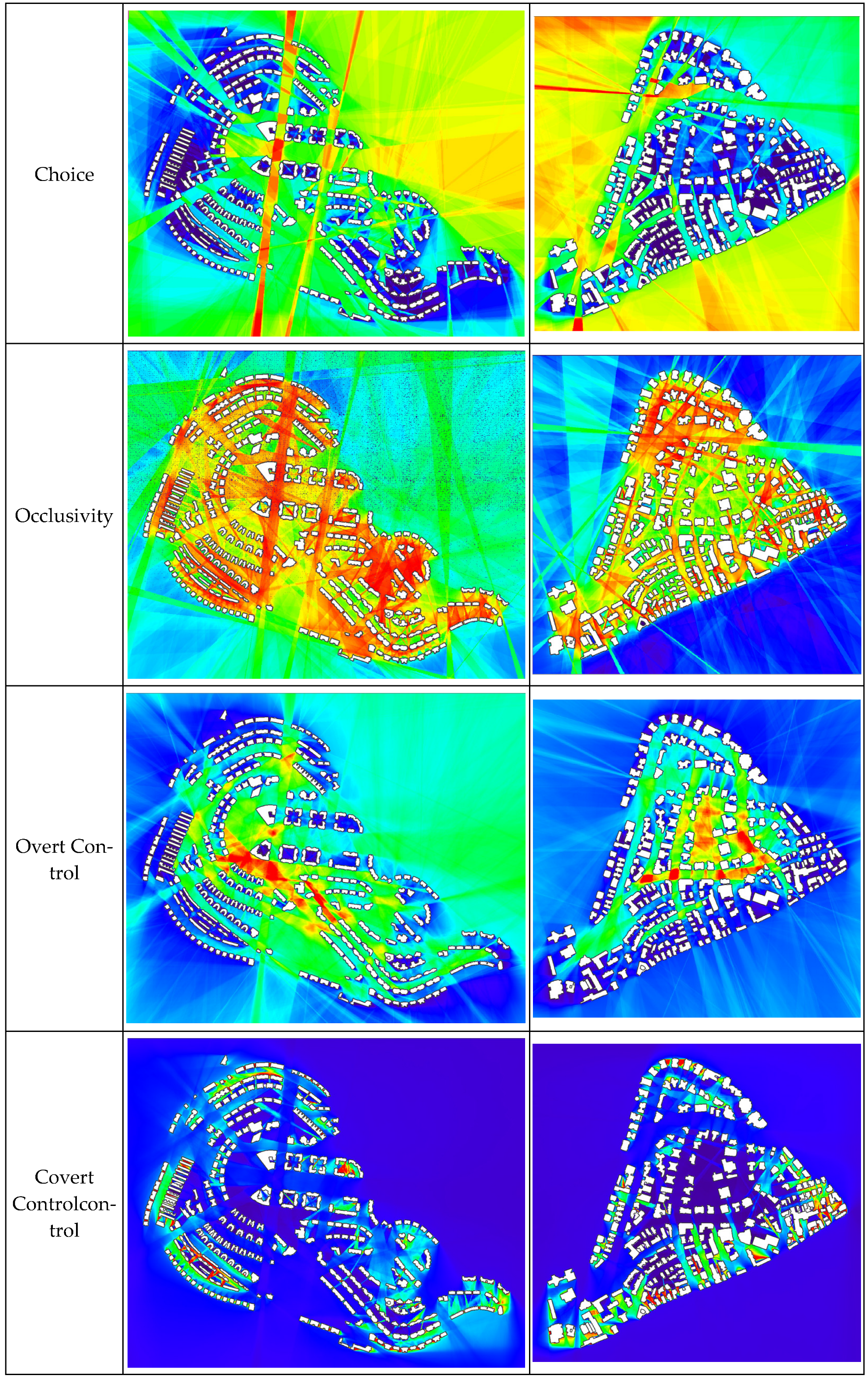
We then examined the isovist fields using the Isovist_App (
Figure 2), whose default representation ranks the highest value in red, through orange, yellow, and green, to the lowest value in blue purple. We examined the isovist field areas (connectivity), compactness, occlusivity, drift, variance, directed visibility, choice, and overt and covert control. “Area” corresponds to the number of points directly associated with a particular location, whereas “compactness” measures the extent to which the spatial experience of an observer is contiguous. Movement along the main axes of the neighbourhoods makes it possible to identify new surfaces in the visual field. We used “Drift” [
54] to characterise the inherent flow within a series of spaces, “Variance” [
17] to indicate the level of complexity and eccentricity of an isovist, “Directed Visibility” to express the percentage of the user-defined subject regions that a location can see, and inversely, the number of times a location appears from that region, and “Choice” [
55] to indicate the probability that any location would appear on all the shortest paths from all spaces to all others.
In visibility graph terminology, the most insightful components are considered to be occlusivity and control. Occlusivity indicates how previously unseen spaces can be revealed during movement [
17], and is indicative of differing spatial experiences. While the occlusivity of Ezrat Torah creates a delicate filigree of structures within the neighbourhood forming meaningful civic spaces, in Ramat Shlomo, there is extreme dominance of the major axis lines. This increases naturally from top to bottom due to its dome-like topography. The topography also plays a role in overt control [
56], which describes the visual ‘linking’ dominance of any location. This calculation showed that within both neighbourhoods, the inner space gave its immediate neighbours the opportunity to move to multiple restricted visual fields or serve as a junction. However, in Ramat Shlomo, the findings indicated more overt control in the public areas where a location can ‘see’ regions of space which themselves ‘see’ relatively fewer, more separated spaces than it does.
Covert control [
18] is defined as the ability of any location to overlook others while avoiding scrutiny itself. In Haredi communities, the potential for any location to be visually controlled is crucially important for the enforcement of social norms [
48,
51]. In Ezrat Torah, covert control is increased when a location can ‘see’ regions of space that in turn ‘see’ relatively more, better-connected regions of space than it does. For Ramat Shlomo, locations that are high in covert control offer a ready visual connection to large areas but themselves are fairly concealed, making them useful for surreptitious oversight.
Thus overall, as an example of a top-down planning approach corresponding to Alexander’s definition of an urban tree structure, Ramat Shlomo emerged as having limited flexibility to introduce changes or respond to emerging needs. Each change from the original plan needs to be made from the root, as defined by Benfield, and would require a significant investment in infrastructure, would affect relatively fewer people, and entail additional changes on the sub-neighbourhood scale. This is exacerbated by the sectoral division of the population into sub-neighbourhoods that result in frozen housing markets. In contrast, in Ezrat Torah is an example of a long-term bottom-up planning approach, where each generation adds its patina, resulting in what Alexander termed a semilattice urban structure. The neighbourhood is multigenerational, dynamic, and characterised by flexible planning that allows for a variety of small, one-off changes that affect many people. Based on existing agreements, large goals (building violations policy) and small ones (pocket gardens) can be achieved. Each change to this fully constructed neighbourhood, including urban renewal, is made from what Linneblum called from the branch, using the current situation as a base, and developing from it, and does not lead to significant changes at the neighbourhood level.
Given the dangers of rational-comprehensive planning that would impact the city’s intimate, constantly changing, and largely unpredictable social and relational structures, the next section discusses geodesign planning to overcome these shortcomings.
5.2. Future Planning for Ezrat Torah and Ramat Shlomo Neighbourhoods in 2045
An Ezrat Torah and Ramat Shlomo workshop was organised and run by the authors as a two-day workshop to understand how geodesign can improve the structure–life relationship in close-knit communities and segregated settings. The first day of the workshop began with a presentation of Alexander’s [
13] argument that reclassifying design factors depends on identifying the structure of the problem, which can then determine the network of factors that influence its solution. After learning the basics of Geodesignhub, the participants were organised into four interest teams: Government (GOV), Development (DEV), Community (COM), and Environment (ENV). Each team defined and prioritised the main interests for its planning design and ranked each system accordingly. Each team selected, edited, or added a project and policy diagrams. These were assessed for their impacts and costs and then revised and assessed again to generate a planning scenario for 2045.
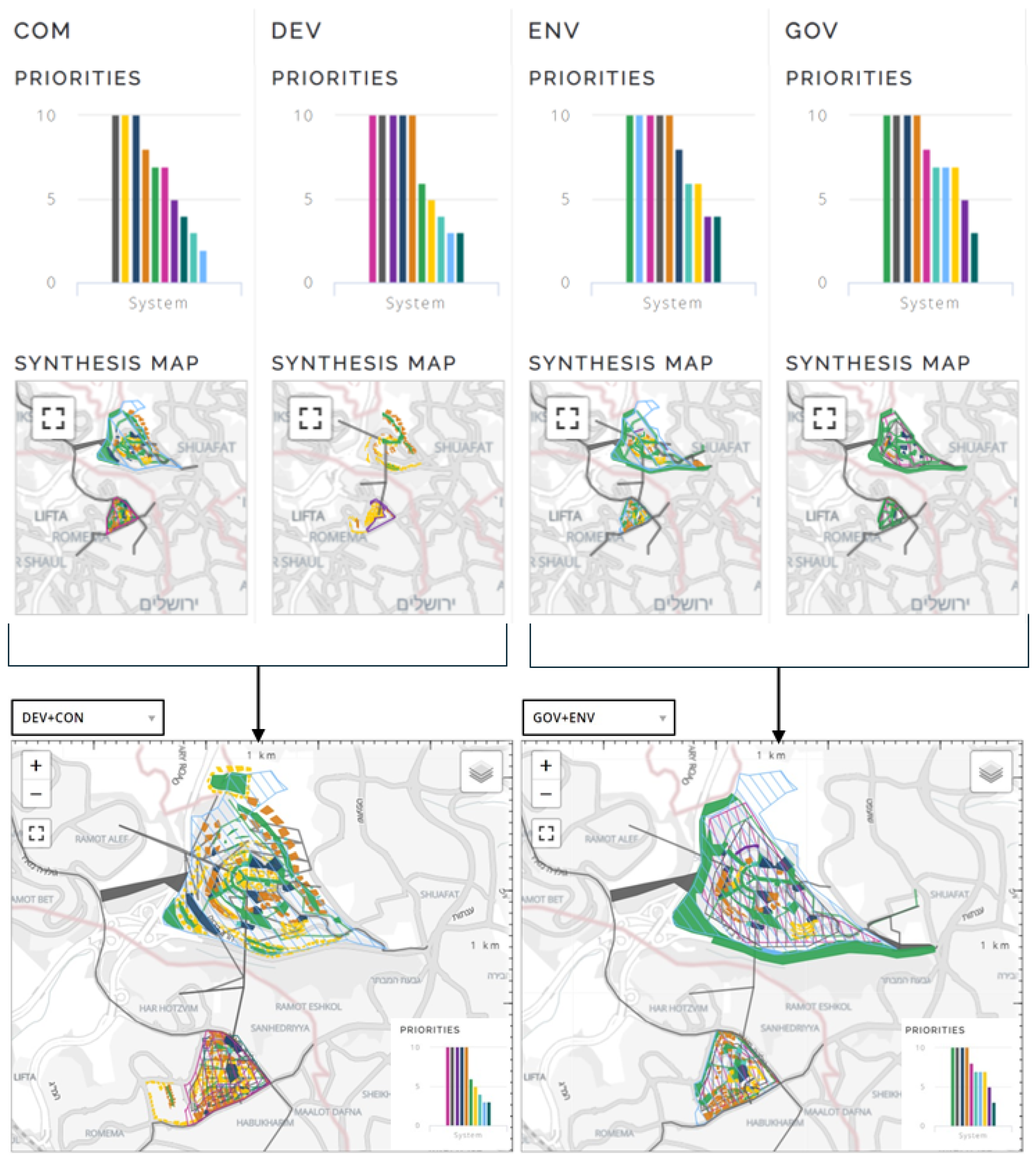
Figure 3 shows that stakeholders’ priorities (e.g., walkability, proximity to services, privacy, and institutional clustering) are directly mediated by the morphological characteristics.
On the second day, the teams applied the notion that key factors affecting a design problem need to be interpreted as ideas for sub-solutions associated with the key actors [
14]. To do so, the connection between stakeholders’ preferences and urban-morphological factors were quantified through meshedness, block structure, isovist metrics, and topographic constraints. The teams began informal negotiations followed by an assessment process to reach a negotiated agreement. Since this planning process was set in a wider political context that directly influences the goals adopted and the importance ascribed to them, the workshop then used a sociogram to determine mutual proclivities for formal negotiation. These were based either on the similarity of designs or their potential symbioses. For this purpose, two larger groups were formed by merging “Development” and “Community” (DEV + COM), since they shared a set of values focused on the common good. “Government” and “Environment” (GOV + ENV) were merged, since they emphasised increasing density, creating green spaces, employment, and connecting neighbourhoods (
Figure 3).
The urban development of the DEV + COM team was centred on the higher density mix of residences and services along the main roads of Ezrat Torah. Its high density was seen as an asset, since it leads to more impersonal social interactions between neighbours, which allows residents to interact more frequently. Ramat Shlomo only has a few semilattices within the tree urban structure, which affords less proximity amidst a greater number of people, and makes establishing and maintaining larger social networks more difficult. The team identified growth pressures. Based on Rowe’s works [
57], they proposed creating shorter blocks that would allow for more route choices, increased chance encounters, and a more vibrant urban environment (
Figure 3, left). They also recommended maintaining the lower-density development trends and encouraging distributed growth across sub-neighbourhoods. In this scenario, only the northeastern part of Ramat Shlomo bordering Shuafat and the southern part of Ezrat Torah should follow the existing plan for higher-density mixed development by 2026. Their most controversial decisions were to connect Ramat Shlomo with Shuafat and to build in the remaining (off-limits) green space left from Ramot Forest. This choice reflects in large part the existing confiscation policy of agricultural lands, especially those of Arab citizens, which are then rezoned for residential purposes.
The GOV + ENV team was also asked to consider the daily life of Haredi communities including the effect of land ownership on the ways they consume public services and housing. To do so, the participants examined scenarios involving relocation, construction, the extending of existing structures and new constructions while incorporating the current urban fabric and the high-rise constructions included in the official plans. In both neighbourhoods, they first protected the region’s major assets and developed denser urban patterns than in the past (
Figure 3 right). They suggested innovative policies and projects, including mixed higher-density development, in part to support prior infrastructure investments. They introduced conservation policies for green areas, water, and the cultural landscape. They retained both neighbourhoods’ greenbelts while promoting pocket gardens and an expansion of linked conserved landscapes. The key policy decisions were to designate rooftops of residential buildings for photovoltaic cell conversion to industrial scale and to mandate that all new public building should be energy efficient to respond to the demands of climate change. These overarching policies and projects were defined up to 2045.
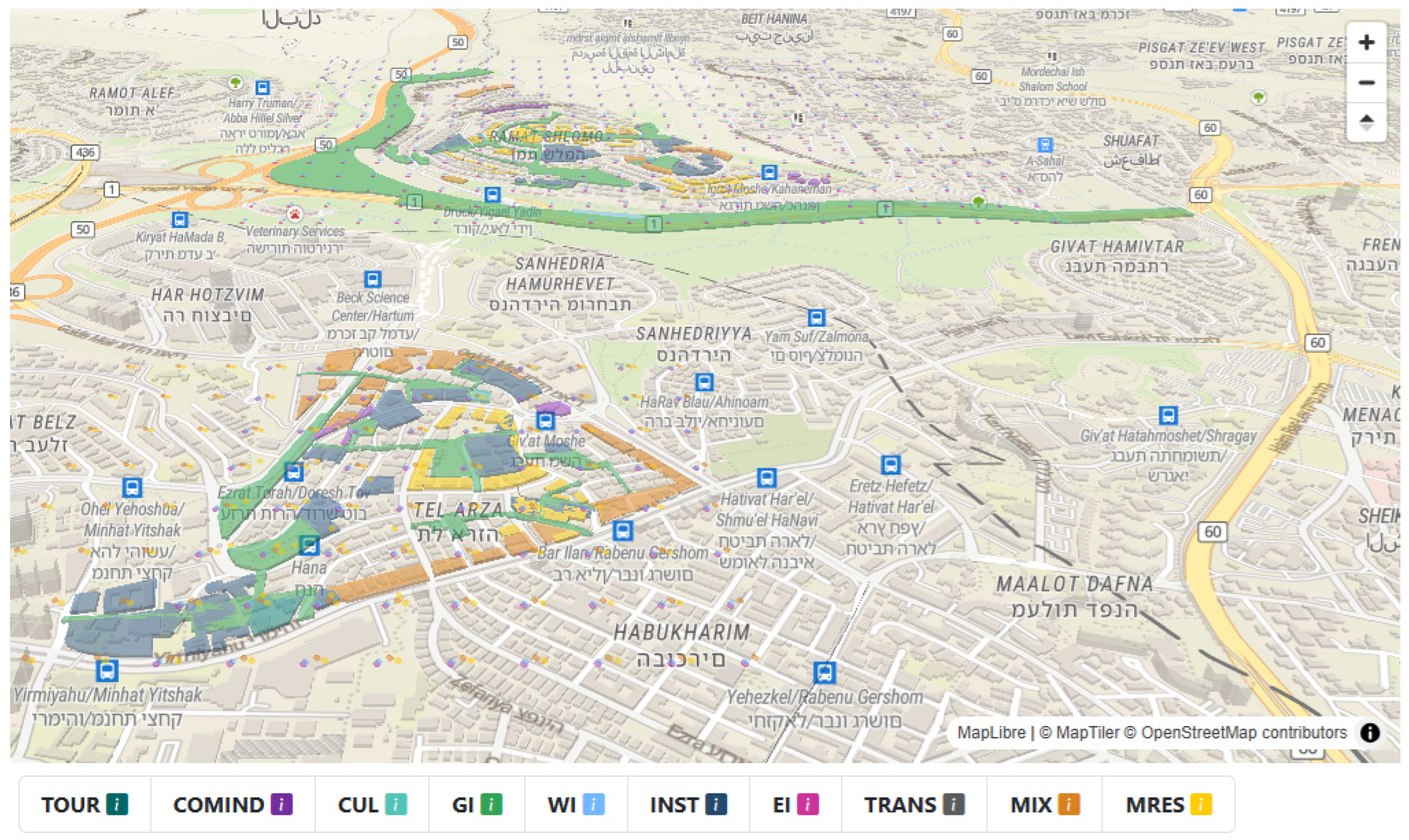
In structures where each factor is directly or indirectly related to every other factor, this process leads to a series of successive compromises through which the initial factors are reconciled towards the final scenario (
Figure 4). Alexander [
2] proposed a multi-step hierarchical method in which the problem matrix is decomposed into a hierarchy of subproblems in such a way that the most closely related subsets of factors form the base of the hierarchy. Since this type of matrix incorporates the relative weight of the relationships between parts of the problem, we chose to deal with the most pressing demand for mixed-use high-density housing first (MIX, up to 12 stories, in brown) over the cultural preference for medium-density housing (MRES, up to 4 stories, in yellow) that does not require elevators. A closer look at each polygonal area showed that the workshop participants favoured MIX policies and projects along the Light Rail route rather than MRES, the current market trend. In terms of transportation, they opted to increase public transportation on the existing highways rather than accommodate private vehicles (more parking). This decision was based on the high number of Torah institutions of higher learning throughout the neighbourhood and adjacent areas.
Note that these two sites have unique fingerprints in terms of both their subproblems and the order or hierarchies in which the subproblems can be solved to generate a final sustainable planning scenario. Problems of this kind are solved by determining a set of weights and looking at the relationships between factors (or actors), where the weights are generated based on the strength and pattern of these structure–life relationships. Optimal resilient solutions can be based on consensus, and processes are formulated in terms of sequential averaging. Since these highly conflicting subsets constitute the base level of the hierarchy, we proceeded from bottom to top to synthesise other subproblems as a series of partial solutions. Thus, after minimising the spatial separation within the neighbourhoods by resolving residential needs and transportation issues, we then discussed industry/commerce, institutions, and culture/heritage projects and policies, all of which had to meet targets and budget pressures. CBA issues, including water, green systems, and energy issues, were easier to address at this point because they were already well-connected with the broader urban context. If the easiest problems are reconciled first, the problems become harder rather than easier as the designer proceeds to reconcile subproblems while moving up the hierarchy, and an agreement on a difficult problem is more likely to invalidate earlier agreements. Therefore, the matrix should contain links connecting the least-correlated factors or those with the greatest negative correlations to better focus on welfare when aiming to achieve a compromise.
These results illustrate how specific social behaviours and community goals correspond to measurable spatial conditions and vice versa, and how the geospatial metrics help explain observed social practices. The emergence of informal mixed-use activity in Ezrat Torah is linked with high isovist connectivity and shorter block lengths. It explains how Ezrat Torah’s preference for dense socio-spatial interactions aligns with higher block permeability, greater visual complexity, and stronger spatial redundancy. Ramat Shlomo’s patterns of sub-group cohesion and ritualised movement (e.g., reliance on institutional courtyards in Ramat Shlomo due to limited pedestrian permeability) however, aligns with its hierarchical street layout, longer blocks, and reduced isovist variation.
6. Discussion
This article offers a renewed perspective on the relationship between sustainable development and the planning of culturally specific urban enclaves. By comparing two Haredi neighbourhoods in Jerusalem, Ezrat Torah, an organically evolved semilattice, and Ramat Shlomo, a planned tree-type enclave, the study demonstrates the continued relevance of Banfield’s root-model logic for planned environments and Lindblom’s incrementalism for organically developed ones. Through this comparative lens, we show how systematic differences between bottom-up development in Ezrat Torah and top-down planning in Ramat Shlomo shape welfare outcomes, community-based adaptation (CBA), connectivity, and long-term resilience, and how digital planning tools may help introduce semilattice qualities into newly planned neighbourhoods facing environmental and social pressures. Although situated in a specific cultural context, the findings offer insights relevant to other communities where cultural cohesion strongly influences spatial behaviour.
Haredi residential choices are deeply shaped by intra- and inter-sect relationships [
58,
59], resulting in enclaves across global cities with distinctive socio-spatial logics. Ezrat Torah and Ramat Shlomo illustrate how individuals and institutions interact differently under varying degrees of state involvement. Ezrat Torah functions as a self-organising semilattice with overlapping socio-spatial networks, while Ramat Shlomo reflects a tree-type structure whose spatial logic has been continually reinforced by formal planning.
By integrating normative planning theories with Alexander’s structural theory, the study illuminates the implications of tree-type versus semilattice development. Building on Alexander’s [
2] observation that older districts often contain richer semilattice patterns, we operationalised this distinction through meshedness coefficients and isovist-cascade metrics, revealing structural differences and their corresponding structure–life relationships. Alexander’s pattern language provides a framework of design principles that create places that are human-scaled, coherent, and socially supportive. Many of these patterns, such as mixed-use clusters, accessible public spaces, pedestrian networks, and adaptable building forms, align with sustainable development’s emphasis on ecological efficiency and social well-being. In essence, Alexander offers a bottom-up, human-centred design logic that operationalises sustainability through everyday spatial configurations.
Ezrat Torah exemplifies incremental bottom-up growth in the absence of strong planning systems. Its semilattice structure emerges from indirect community leadership, informal regulation, and generational layering. Current planning processes already account for forthcoming Light Rail infrastructure and the desire to preserve perimeter blocks. This raises important questions regarding whether such neighbourhoods can retain semilattice qualities under intensifying development pressures and at what point incremental, branch-level adjustments precipitate root-level transformations. In contrast, consistent with Alexander’s critique of modernist hierarchy, Ramat Shlomo’s spatial form reflects direct community leadership, strong state intervention, and municipal support. Its establishment involved land expropriation and rapid, peripheral expansion, producing an ordered but rigid environment with limited flexibility and reinforced sectoral divisions. The decision to subdivide the neighbourhood into sect-specific sub-areas decreases social compactness and limits everyday interactions. This again supports Alexander’s claim that interaction, not hierarchy, is the essential design construct for resilient urban environments.
The final scenario emerging from the geodesign process synthesises social and physical units, illustrating new possibilities for integrating tree-type and semilattice qualities. It positions Ramat Shlomo as an evolving system shaped simultaneously by macro-level governance and micro-level social dynamics. However, decision-making remains opaque, reflecting the wider challenge of planning for fast-growing enclaves where both conflict and interdependence must be managed.
7. Conclusions
Urban environments shape welfare, connectivity, resilience, and community-based adaptation (CBA) through interdependent socio-spatial networks in which urban scaling relations emerge from local interactions and produce scale-dependent densities and externalities. Our comparative analysis of two Haredi neighbourhoods in Jerusalem, Ezrat Torah (semilattice) and Ramat Shlomo (tree), shows that semilattice fabrics, built up incrementally, support redundancy, proximity, and adaptive re-use, strengthening everyday connectivity and resilience; whereas tree-like, top-down structures tend to harden hierarchies, constrain permeability, and reduce the scope for low-conflict, distributed adjustments. In this sense, urban form is a mechanism for sustainable development, mediating resource consumption, mobility, social interaction, and long-term ecological performance.
The post-pandemic debate sharpened demands for proximity, walkability, and flexible, human-scaled public spaces. In our cases, semilattice qualities, shorter blocks, overlapping catchments, mixed-use clusters and fine-grained routes, align with these demands, enhancing informal stewardship and CBA. In contrast, the tree-type layout, longer blocks, single-threaded access, mono-functional enclaves, limits redundancy and increases dependence on formal infrastructures when shocks occur. These findings suggest that sustainable placemaking requires design and policy that cultivate overlap, permeability, and modular adaptability, and that evaluate trade-offs explicitly rather than assuming that comprehensive, hierarchical layouts will deliver equitable outcomes.
The paper examines whether embedded morphological characteristics can be modified through subsequent bottom-up strategies and to what extent. Evidence from our geodesign-supported scenarios indicates bounded but non-trivial retrofit potential in planned, tree-type environments: targeted cross-links that shorten blocks, micro-scale mixed-use insertions at junctions, multi-entry institutional campuses, and reprogramming of residual spaces can measurably increase network redundancy and local accessibility without wholesale replanning. However, the scope of change is conditional on parcel structures, topography, regulatory constraints, and governance arrangements. In organically evolved semilattices, in contrast, incremental, community-driven adjustments propagate through overlapping networks with lower coordination costs, making adaptation more feasible and less conflict-prone. The conclusion is therefore twofold: (i) bottom-up strategies can introduce semilattice qualities into planned enclaves, but primarily through distributed, edge- and connector-focused interventions rather than root-level redesign; and (ii) the magnitude and distribution of achievable gains depend on institutional flexibility and the existence of multiple, cross-scale pathways for movement and use.
Methodologically, we contribute by coupling operational indicators of morphology, meshedness and aggregate isovists [
17,
18,
19] with a negotiation-centred geodesign workflow that surfaces stakeholder priorities and transparently weights trade-offs. Positioned alongside established design-for-walkability constructs, these metrics help articulate the structure–life relationship originally posited by Alexander [
13]. The framework also situates planning logics within practice: the rational/synoptic tradition clarifies goals and alternatives in tree-type settings [
4,
5,
6,
7,
8]; incrementalism aligns with semilattice evolution under bounded information and political feasibility [
9]; and mixed scanning provides a pragmatic bridge between strategic direction and stepwise implementation [
10], consistent with contemporary calls to evaluate equity, diversity, and democratic practice in land-use decisions [
11,
12].
In policy terms, the results align local urban design with the Rio Convention’s climate and biodiversity mandates by identifying morphology as a first-order lever for resource efficiency, resilience, and social wellbeing [
20,
21,
22]. Practically, planning systems in culturally cohesive enclaves should (i) prioritise permeability and overlapping catchments over single-threaded hierarchies; (ii) enable fine-grained block structures with multiple route choices; (iii) promote micro-mixed-use clusters at nodes and along connectors; (iv) design multi-entry, multi-programmed institutional campuses that act as everyday civic anchors; and (v) embed adaptive monitoring and iterative negotiation so that evolving community preferences can be reconciled with wider sustainability goals. These steps do not eliminate governance complexity, but they re-configure it into a distributed problem-solving architecture better matched to organised complexity.
Despite its contributions, this research has several limitations that should be acknowledged. First, the analysis was grounded in two culturally specific Haredi neighbourhoods in Jerusalem, a context where exceptionally high levels of religious cohesion, leadership structures, and community-based regulation strongly shape spatial behaviour; as such, the findings are not fully generalised to enclaves with different cultural, political, or institutional dynamics. Second, while the study operationalises Alexander’s semilattice, tree distinction through meshedness and isovist-cascade metrics, these indicators inevitably simplify complex socio-spatial processes. Third, the comparative design juxtaposes an organically evolved neighbourhood with a planned enclave, making it difficult to disentangle cultural effects from planning-system effects, particularly given differing degrees of municipal intervention, land-use regulation, and state involvement. Fourth, the geodesign-supported negotiation process, although effective for exploring planning scenarios, reflects the assumptions, framing, and weighting embedded in its modelling environment, and the participatory component is limited by the representativeness of participants and by power asymmetries within Haredi communities. Finally, the study captures neighbourhood development at a specific moment of transformation, including imminent Light Rail expansion and densification pressures, meaning that both semilattice and tree-type characteristics may evolve in ways not fully captured in the current analysis. Although research in this area is challenging, these limitations suggest the need for further longitu-dinal, multi-site, and mixed-methods research, including simulations of future urban form changes, to deepen the understanding of how cultural cohesion, planning logics, urban morphology, and broader sustainability goals co-produce sustainability outcomes in diverse enclaved settings.
Finally, while our results speak from a specific cultural context, the mechanisms they foreground—overlap vs. hierarchy, redundancy vs. compartmentalisation, distributed vs. centralised adjustment—are broadly relevant to cities seeking low-carbon mobility, equitable access and ecological robustness. The practical message is clear: sustainable development is most durable where semilattice qualities—redundancy, permeability, and human-scaled complexity—are designed for, measured, and iteratively strengthened, and where geodesign-supported negotiation is used to align community values with long-term climate and biodiversity commitments.