1. Introduction
Food security has emerged as one of the most pressing global challenges, driven by population growth, climate change impacts on agriculture, and the economic instability of developing nations whose economies primarily depend on agricultural production [
1,
2]. In 2017, an estimated 124 million people across 51 countries faced crisis-level food insecurity, with East Africa among the most affected regions. Timely detection of agricultural production shortfalls, ideally months before harvest, can enable proactive humanitarian response, yet monitoring systems in cloud-prone tropical regions remain critically limited. Shi et al. argue that food security represents a critical factor for social harmony, political stability, and sustainable economic development, emphasizing that evaluation models are essential for formulating agricultural policies and standardizing food markets [
3]. The application of satellite-based remote sensing for Earth observation has expanded significantly, enabling the assessment of geophysical changes, including deforestation, coastal erosion, and agricultural monitoring, across diverse geographic regions [
4,
5].
Synthetic Aperture Radar (SAR) imagery for crop monitoring has increased significantly in recent years, offering advantages over traditional optical remote sensing methods [
6,
7]. Countries along the Equatorial Belt, including Kenya, experience persistent cloud coverage and atmospheric variability that severely limit the utility of optical and spectral imagery for agricultural monitoring [
6]. Uasin Gishu County, Kenya, is a strategically important farming region, often referred to as Kenya’s “maize basket,” supporting multiple long growing seasons that are critical to national food security and economic stability [
8].
Traditional agronomic monitoring relies on spectral and electro-optical imagery, with the near-infrared band providing sensitivity to chlorophyll content, making it ideal for crop health studies [
9]. However, cloud cover, atmospheric conditions, and precipitation events pose significant challenges for satellite- and airborne optical sensors in equatorial regions [
10]. As Whelen and Siqueira note, “since significant portions of global agricultural land are frequently cloud-covered, synthetic aperture radar (SAR) is a reliable form of gathering crop measurements, even in regions where acquiring clear optical imagery is challenging” [
11].
SAR sensors operate as all-weather, day-and-night, active systems that can penetrate clouds and collect data regardless of atmospheric conditions [
12]. The recent availability of free, high-temporal-resolution SAR data from programs such as the European Space Agency’s Copernicus Sentinel-1 mission has opened new possibilities for agricultural monitoring at scale [
13]. Inglada et al. write that “the recent availability of high temporal and spatial resolution SAR image time series opens the possibility of improving early crop type mapping” [
13]. These platforms have demonstrated potential for “monitoring global food security, economic stability, and environmental conditions” [
14].
The Coefficient of Variation (CV) algorithm, initially developed for L-band SAR applications, is effective for measuring agricultural change using C-band imagery under certain conditions [
14]. Plant physiological changes across crop growth stages produce detectable variations in radar backscatter that can be quantified using CV analysis of time-series SAR imagery [
11]. Studies have demonstrated that “both VV and VH polarizations individually and combined are routinely able to produce overall accuracies above 90%” using this methodology [
11]. The temporal power and high spatial resolution of SAR imaging satellites make them well-suited for change detection and for observing areas with high spatial variability in agricultural settings [
15].
Despite these advantages, SAR has seen limited adoption for agricultural applications due to its inherent complexity in calibration, terrain correction, and data interpretation [
16]. Kanal et al. note that “the agricultural sector is yet to fully implement RS (remote sensing) technologies due to knowledge gaps on their sufficiency, appropriateness, and techno-economic feasibilities” [
17]. Processing SAR data into usable products requires substantial computational resources and specialized expertise, creating barriers for implementation in resource-limited settings [
12].
Smallholder farming systems, which dominate agricultural production in sub-Saharan Africa, present unique challenges for remote sensing classification. These systems are characterized by fragmented parcels typically under 2 hectares, high within-field heterogeneity due to intercropping and variable planting dates, diverse crop mixes, and complex field boundaries often delineated by trees or other vegetation. At the 10-m resolution of Sentinel-1, individual smallholder plots may span only a few pixels, creating mixed-pixel effects that complicate classification. These characteristics make supervised machine learning approaches particularly challenging, as obtaining representative training samples across the landscape’s variability is difficult.
The primary contributions of this work are threefold: (1) we establish a statistically derived CV threshold value (0.357) with quantified classification accuracy (87.5% overall, 96.6% user’s accuracy for agriculture) specific to East African maize-based cropping systems, providing calibrated parameters transferable to similar agroecological zones; (2) we demonstrate a complete, replicable workflow using freely available data and standard GIS software, lowering implementation barriers for resource-limited organizations; and (3) we explicitly connect SAR-derived land classification to operational food security intelligence, showing how classification outputs translate to production estimates and early warning indicators. While the CV algorithm itself is well established, its application to smallholder agricultural systems in tropical Africa and the operational framework connecting remote sensing outputs to food security decision-making represent a novel contribution to the literature.
2. Materials and Methods
2.1. Study Area
Uasin Gishu County is located in the Kenyan Rift Valley on a plateau that forms part of the Great Rift Valley system, resulting in a temperate climate with annual temperatures ranging from 8 °C to 27 °C. The county experiences two rainy seasons with annual rainfall ranging from 914 to 1219 mm, distributed relatively evenly throughout the year. According to the Kenyan Ministry of Agriculture, rainfall in the county is reliable and evenly distributed, with even the driest months between November and February receiving some precipitation [
18]. The study area spans approximately 0.00° to 0.52° S latitude and 34.90° to 35.55° E longitude, covering the southern portion of the county below the equator.
The region’s economy is predominantly agrarian, with agriculture accounting for approximately 80% of rural household income and 90% of land classified as arable [
18]. Uasin Gishu is considered Kenya’s “maize basket” due to its combination of high, reliable rainfall, relatively large farm sizes compared to other Kenyan counties (though still predominantly smallholder operations under 10 hectares by international standards), and fairly mechanized farming practices [
19]. The main crops grown include maize, wheat, beans, and Irish potatoes, with dairy and poultry farming accounting for a significant share of agricultural activity. Soil types in the region include red loam, red clay, brown clay, and brown loam, which, combined with consistent rainfall and a temperate climate, make the area highly conducive to diverse crop production [
20].
Despite its agricultural importance, Uasin Gishu faces challenges common to developing agrarian regions. Maize yields remain below potential (averaging 2 tons per hectare, where 6 tons per hectare is achievable) due to limited rural infrastructure, restricted access to fertilizers, prevalence of smallholder rather than commercial farming operations, and limited availability of high-yielding crop varieties [
19]. Transportation from fields to markets is difficult, and distributing funding for agricultural improvement is challenging given the predominance of small-scale operations without centralized cooperative structures.
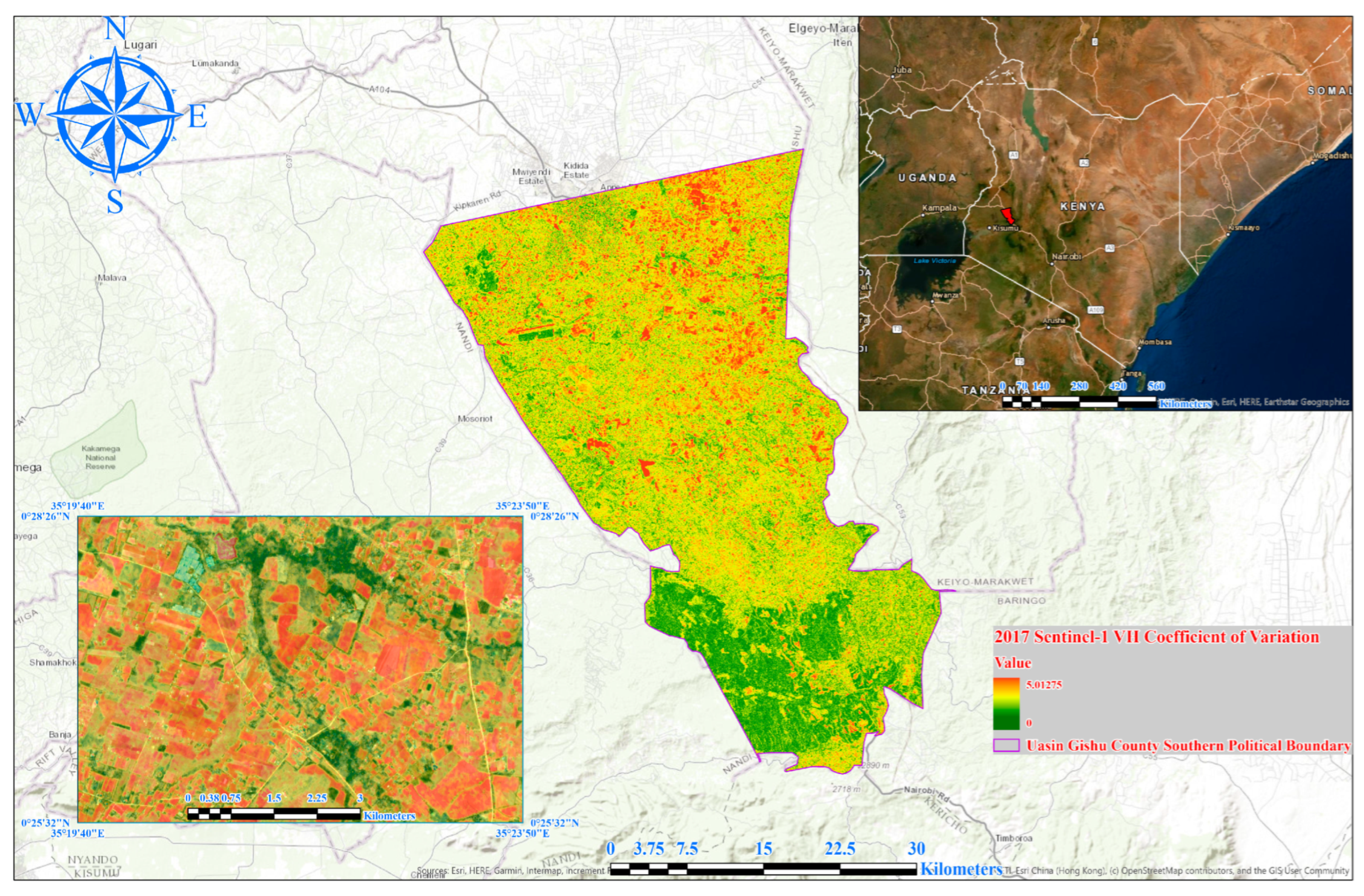
This study area was selected in consultation with crop analysts from the Kenyan government who identified Uasin Gishu as an ideal location for SAR-based agricultural monitoring due to its heavy agricultural production, temperate climate, extended growing seasons, and national significance for food security. The county’s characteristics make it representative of productive smallholder agricultural regions across East Africa, where cloud cover limits the utility of optical remote sensing (
Figure 1).
2.2. Reference Data and Validation Approach
A fundamental challenge motivating this research is the lack of reliable ground-truth data for agricultural classification in developing regions. Unlike the USA, where the USDA Cropland Data Layer (CDL) provides annual field-level crop identification, no equivalent systematic ground-truth collection program exists in Kenya or in most of sub-Saharan Africa [
21]. The most recent crop mask available for Uasin Gishu County dates to 2010, and consultation with USDA Foreign Agricultural Service analysts confirmed that updated field-level classification data are unavailable for the study period.
This ground truth gap is precisely the challenge this methodology addresses. The goal is to develop classification approaches that can function without in situ validation data, enabling agricultural monitoring in regions where such data collection is logistically or economically infeasible. Rather than treating the absence of ground truth as a limitation to be overcome before analysis, this study treats it as the operational context that the methodology must accommodate.
For validation purposes, contemporaneous Sentinel-2 multispectral imagery from 2017 served as the primary independent reference data. Cloud-free acquisitions during the growing season clearly distinguish vegetated agricultural fields from bare soil, forest, water bodies, and built-up areas through visual interpretation of true-color composites. In areas where small-scale field plots were difficult to delineate at 10-m resolution, high-resolution baseline imagery from ESRI’s ArcGIS Pro basemap supplemented the Sentinel-2 reference. It should be noted that high-resolution imagery in equatorial regions, due to persistent cloud cover, is typically a composite of unknown temporal origin, introducing some uncertainty in validation comparisons. This reference-based validation approach, while less rigorous than field-collected ground truth, represents the realistic validation scenario for operational food security monitoring in data-sparse regions.
2.3. Data Sources
This research used Sentinel-1 C-band SAR imagery processed as Radiometric Terrain-Corrected (RTC) products via the Alaska Satellite Facility’s Hybrid Pluggable Processing Pipeline (HyP3) cloud-based system [
22]. The RTC products were generated using GAMMA Remote Sensing Software (GAMMA Remote Sensing AG, Gümligen, Switzerland), which employs Digital Elevation Models (DEMs) to orthorectify SAR images and correct for geometric and radiometric distortions caused by the side-looking sensor geometry [
23]. Shimada et al. explain that side-looking geometry causes “foreshortening, layover, shadowing, and radiometric variations due to slope,” which distort the physical location of the data and complicate analysis [
24]. Small notes that radiometric terrain correction “enhances the quality of backscatter estimates allowing for applications such as monitoring of deforestation, land-cover classification, and delineation of wet snow-covered areas” [
25].
The Sentinel-1 imagery, acquired in Interferometric Wide (IW) swath mode from descending orbit track 130, provides spatial resolutions of 10 m and 30 m, with a temporal resolution of 6–12 days depending on the orbital configuration. Sentinel-1A launched on 3 April 2014, followed by Sentinel-1B on 25 April 2016, enabling consistent coverage regardless of weather conditions. The VH (vertical transmit, horizontal receive) cross-polarization was selected because of its sensitivity to volumetric scattering, making it ideal for detecting low-lying, dense vegetation, including the leaf and stem structures of row crops [
12]. For validation, ESA’s Sentinel-2 multispectral imagery provided optical reference data comprising 12 bands at spatial resolutions of 10, 20, and 60 m, with a 10-day temporal resolution. A 2015 crop mask of Kenya, obtained from ArcGIS Online, was used to identify known agricultural areas [
26].
2.4. Data Preprocessing and Masking
Several preprocessing steps were implemented to reduce classification errors from non-agricultural land cover types that exhibit high temporal backscatter variability unrelated to crop phenology.
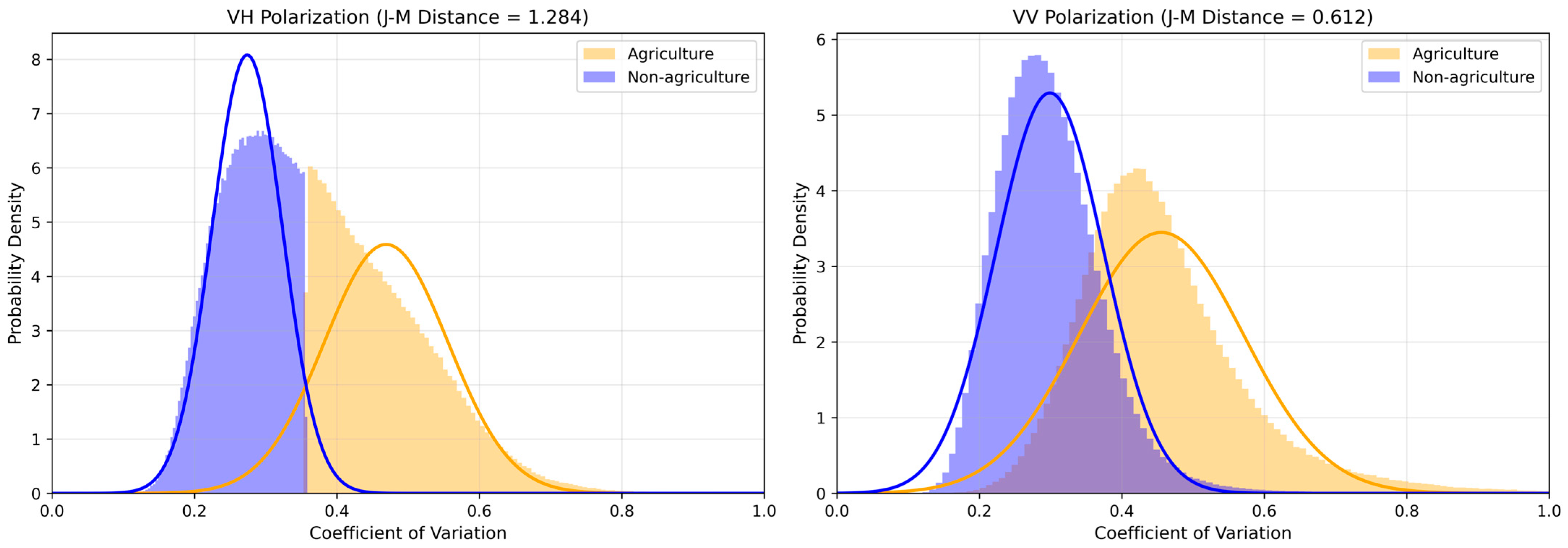
Polarization Selection: Quantitative analysis compared VH and VV polarizations for CV-based classification. Using identical agricultural and non-agricultural sampling areas, VH polarization achieved a Jeffries-Matusita (J-M) distance of 1.284 compared to 0.612 for VV, indicating substantially greater class separability. Cohen’s d effect size was 2.76 for VH versus 1.60 for VV. The superior performance of VH cross-polarization reflects its sensitivity to volumetric scattering within the crop canopy. In contrast, VV co-polarization showed greater sensitivity to water-surface roughness, which confounded agricultural classification. Based on these quantitative metrics, VH was selected for the final analysis (
Figure 2).
Hydrological Masking: A hydrological mask derived from OpenStreetMap water body polygons excluded major water bodies from the analysis. Water surfaces exhibit temporally variable backscatter due to wind-driven changes in surface roughness, seasonal water-level fluctuations, and variability in specular reflection. These dynamics generate elevated CV values that could be misclassified as agricultural activity without masking.
Urban Area Masking: Built-up and urban areas identified using the Global Human Settlement Layer (GHSL) built-up classification were masked to prevent misclassification of developed land where construction activity, vehicle movement, or surface modifications might produce agricultural-like temporal variability in backscatter.
Edge Pixel Buffering: Buffer zones of 200 m were applied around water bodies and urban areas to mitigate edge pixel effects. Mixed pixels at land-cover boundaries contain contributions from multiple surface types, resulting in ambiguous CV signatures that can lead to classification errors. Buffering these transition zones improved classification specificity in the core agricultural and non-agricultural areas.
These preprocessing decisions represent deliberate methodological choices to maximize classification accuracy within the constraints of an automated, unsupervised approach. The masking strategy prioritizes precision (reducing false positives) over recall (capturing all agricultural pixels), which is appropriate for food security applications where overestimating cultivated area could lead to underestimating food assistance needs.
2.5. GIS Processing Workflow
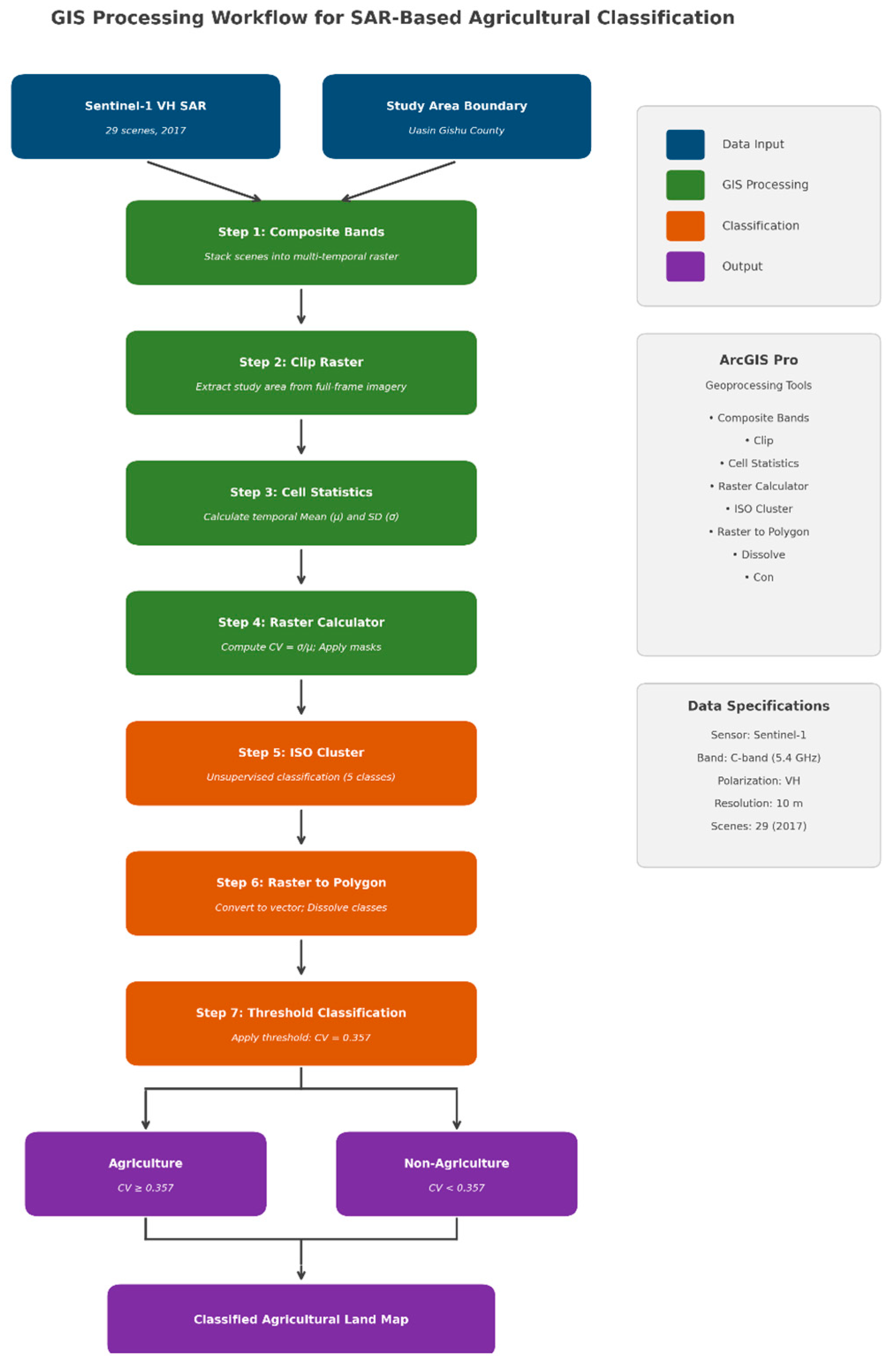
A comprehensive GIS workflow was developed in ArcGIS Pro 2.1 (Esri, Redlands, CA, USA) to process the multi-temporal SAR data stack (
Figure 3). We collected 29 Sentinel-1 C-band VH-polarized SAR scenes covering the southern half of Uasin Gishu County (constrained by the UTM Zone 36N/36S boundary at the equator, which limited the HyP3 RTC processing footprint) in 2017, totaling approximately 122 GB of data per polarization. The processing workflow consisted of the following sequential steps:
Step 1: Time-Series Stack Creation: The “Composite Bands” geoprocessing tool was employed to stack all 29 scenes into a mosaicked raster, enabling joint time-series processing across all layers. This step is essential for computing pixel-level statistics across the temporal dimension.
Step 2: Spatial Subsetting: The “Clip” geoprocessing tool was used to extract the area of interest from the full-frame mosaicked imagery, using the Uasin Gishu County administrative boundary polygon for the southern part of our Sentinel-1 coverage. This step reduced the data volume, enabling more efficient processing.
Step 3: Statistical Computation: The “Cell Statistics” geoprocessing tool calculated both the multi-temporal mean (μ) and standard deviation (σ) for each pixel across the time-series stack.
Step 4: Coefficient of Variation Calculation: The “Raster Calculator” tool computed the CV for each pixel by dividing the standard deviation by the mean: CV = σ/μ. This produces a single-band raster in which pixel values represent the degree of temporal variance in backscatter over the monitoring period. The Sentinel-1 RTC products were delivered in power scale (linear), and CV was computed in this linear domain, which is methodologically appropriate since CV is designed for ratio-scale data.
Step 5: Feature Masking: Using ancillary data layers, major water bodies, urban areas, and buffer zones around these features were masked from the CV raster to reduce classification errors caused by non-agricultural sources of temporal variability.
2.6. Unsupervised Classification Using ISO Cluster
Following CV computation, an unsupervised land classification was performed using the ISO Cluster and Maximum Likelihood Classification tools in ArcGIS Pro [
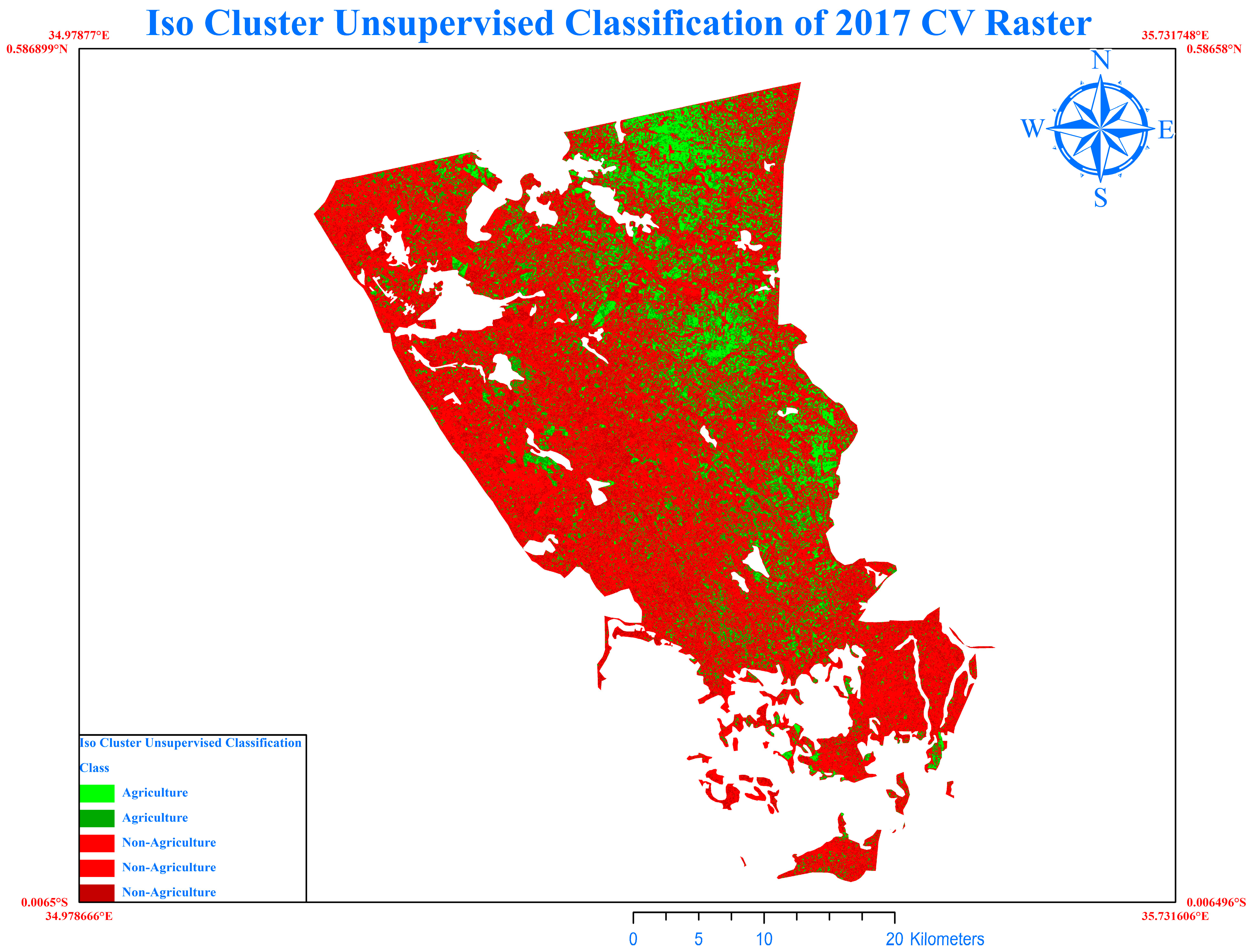
27]. The ISO Cluster algorithm generates cluster centroids through iterative self-organizing data analysis, while the Maximum Likelihood classifier assigns pixels to clusters based on statistical probability. Five classes were identified through iterative testing: three produced insufficient discrimination between agricultural and non-agricultural signatures, while seven or more classes posed interpretability challenges. This combined approach partitioned the CV raster without requiring training data. The ISO Cluster step served an exploratory role, confirming that the CV data contained separable class structure and that existing unsupervised algorithms could meaningfully distinguish agricultural from non-agricultural signatures. However, subsequent cluster interpretation required manually assigning ISO classes to land-cover categories based on visual comparison with Sentinel-2 imagery (
Figure 4). The final classification relies solely on the statistically derived CV threshold of 0.357, not on the ISO Cluster output.
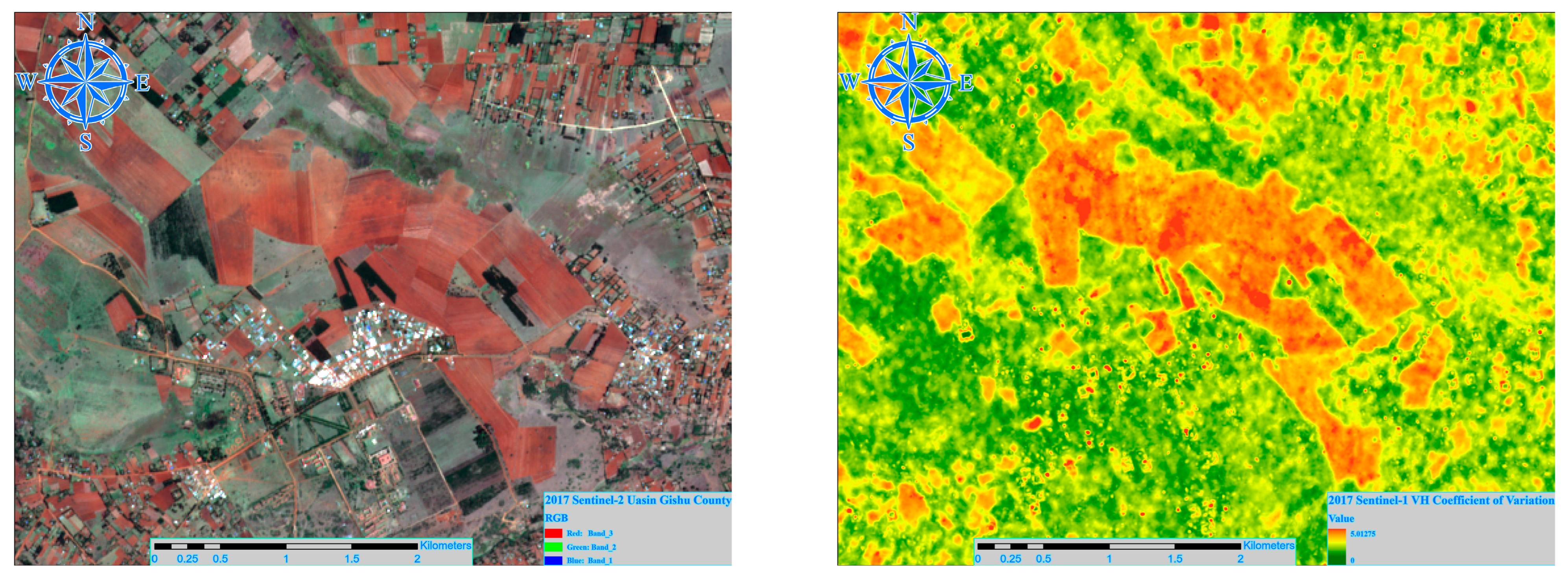
The classification workflow proceeded through several additional processing steps. First, the classified raster was evaluated by comparing it with Sentinel-2 multispectral imagery displayed in a true-color composite (
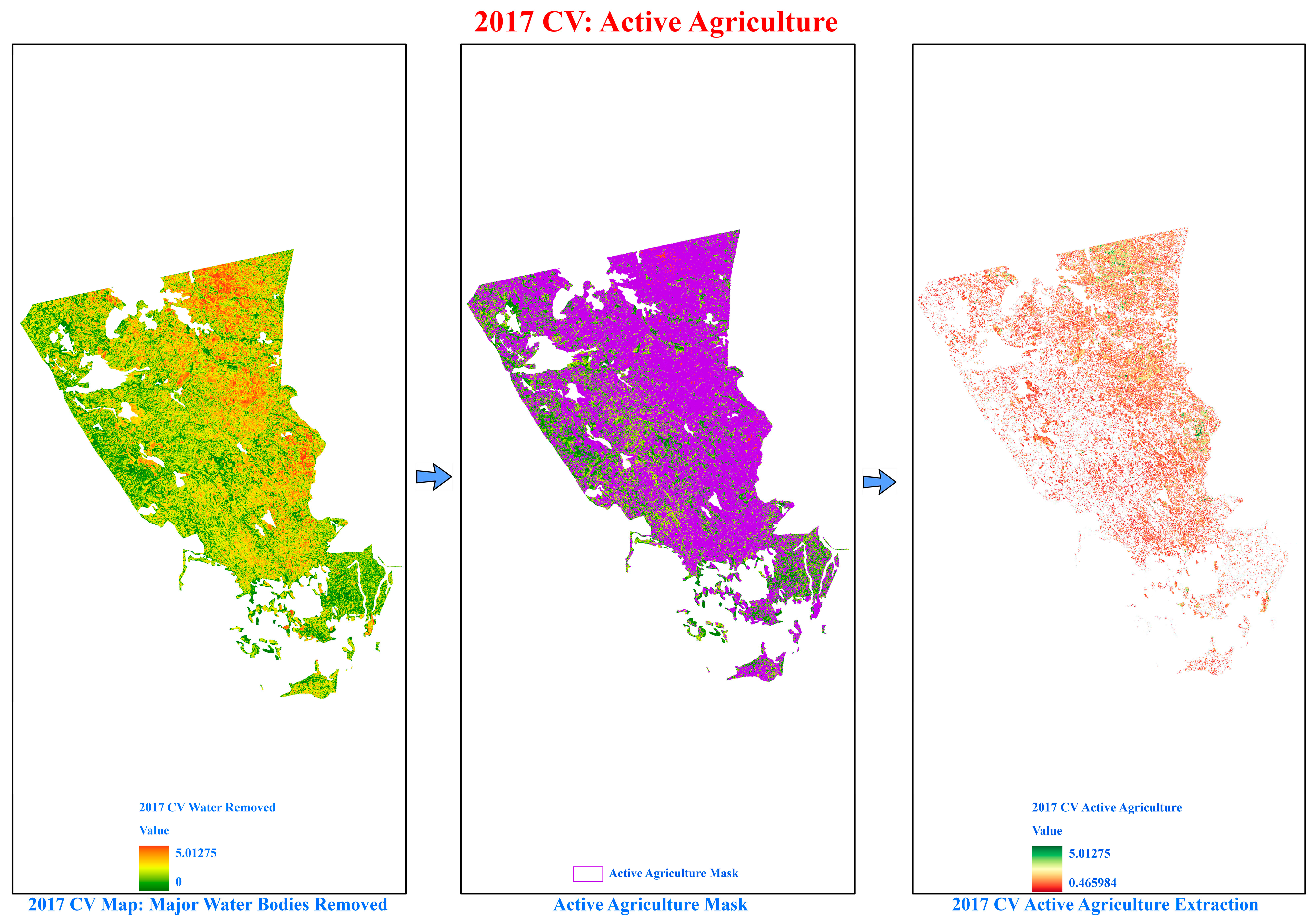
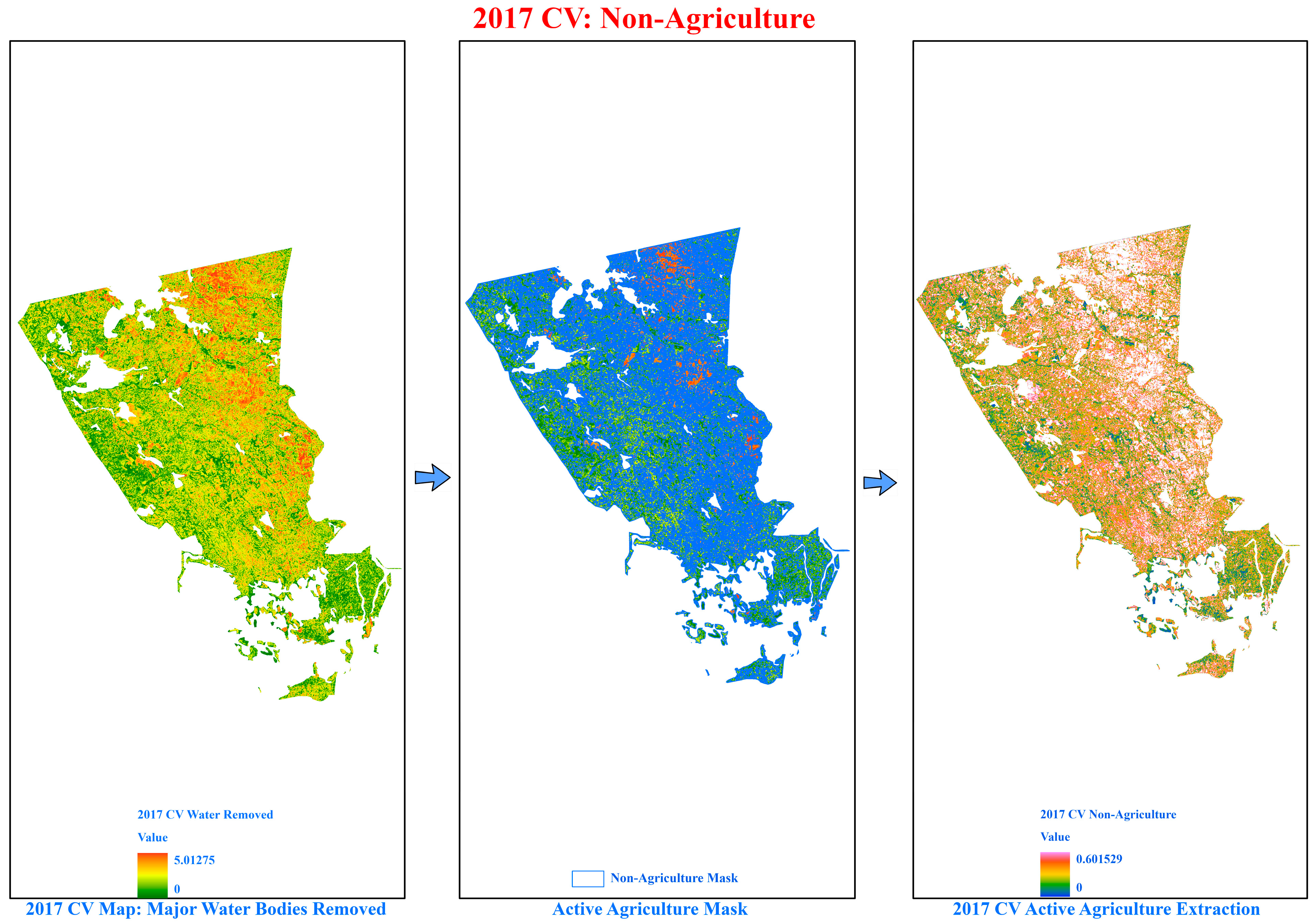
Figure 5). Visual assessment indicated that classes 0 and 4 represented active agriculture, while classes 1, 2, and 3 corresponded to non-agricultural land cover. The “Raster to Polygon” tool converted the classification into a polygon feature class, enabling the separation of the CV raster into distinct active-agriculture and non-agriculture components. The “Dissolve” tool consolidated class attributes, and the “Con” tool (conditional evaluation) split classes into individual rasters for each land-cover category (
Figure 6 and
Figure 7).
2.7. Statistical Threshold Determination
A Python (version 3.10.19) script using the GDAL (version 3.11.4) and SciPy (version 1.15.2) libraries was developed to determine optimal CV threshold values by statistical analysis of class distributions. The script extracted all valid pixel values from the masked CV rasters, computed descriptive statistics for each class, and fitted normal distributions to characterize the statistical properties of each land-cover type.
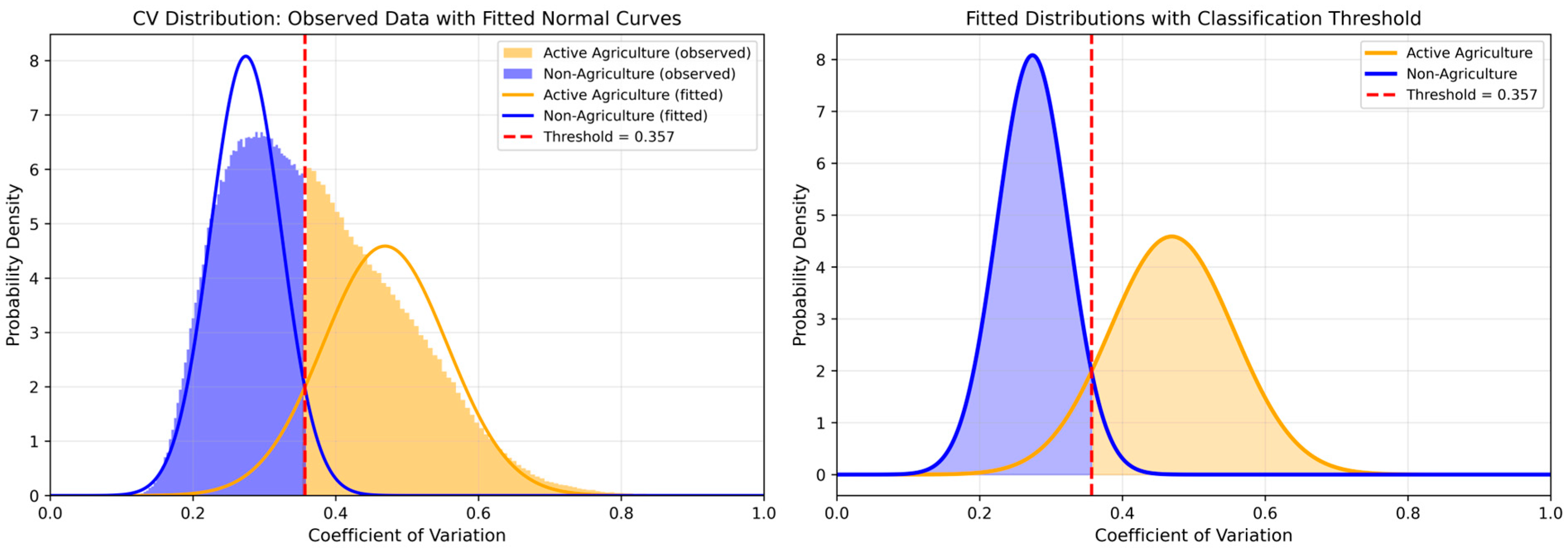
Active agriculture pixels (n = 581,807) exhibited CV values with a mean of 0.469 (SD = 0.087), while non-agricultural pixels (n = 623,484) showed a mean CV of 0.274 (SD = 0.049). The higher mean and wider distribution for agricultural areas reflect the substantial temporal variability in backscatter associated with crop planting, growth, and harvest cycles. The tighter distribution for non-agricultural areas indicates more temporally stable land cover.
The optimal classification threshold was determined analytically by computing the intersection point of the two fitted normal distributions using Brent’s root-finding method. This intersection, at CV = 0.357, corresponds to the value at which the misclassification probability is equal for both classes. At this threshold, 90.2% of active agriculture pixels and 95.3% of non-agriculture pixels fall on the correct side of the decision boundary based on the fitted distributions (
Figure 8). The complete threshold-determination script is provided in
Supplementary Materials, enabling replication and adaptation in other study areas. Formal normality testing (Shapiro–Wilk and D’Agostino-Pearson tests) rejected the null hypothesis for both distributions (
p < 0.001); however, with sample sizes exceeding 500,000 pixels, such rejections are expected even for minor deviations. The non-agriculture class was approximately symmetric (skewness = −0.29), while the agriculture class exhibited moderate positive skewness (1.04). Despite these departures, the fitted normal distributions provided an effective basis for threshold determination, as validated by classification accuracy.
3. Results
3.1. Coefficient of Variation Analysis
The CV analysis of the 29-scene time-series stack produced a single-band raster depicting temporal variance across the study area (
Figure 1). Areas shaded green in the CV output represent little to no variation (CV approaching 0), yellow indicates moderate variation, and red represents high variance (CV values exceeding 0.5). Compared with Sentinel-2 optical imagery from the corresponding period, a qualitative spatial agreement was observed between high-variance regions in the CV product and known active agricultural fields visible in the optical data.
The time-series SAR raster stack exhibited substantial variation in vegetation across active agricultural fields during the growing and harvest seasons, as expected given the phenological changes associated with crop development. Areas identified as active agriculture exhibited substantial temporal variation in backscatter, corresponding to planting, vegetative growth, and harvest. In contrast, non-agricultural areas, including settlements, forests, and permanent vegetation, exhibited relatively stable backscatter values throughout the monitoring period.
3.2. Land Classification Results
The unsupervised ISO Cluster classification successfully partitioned the CV raster into five distinct classes (
Figure 4). A visual comparison with Sentinel-2 true-color imagery confirmed that the classification accurately distinguished agricultural from non-agricultural land cover. Classes exhibiting higher CV values (classes 0 and 4) corresponded to active agricultural areas visible in optical imagery. In contrast, the lower-variance classes (1, 2, and 3) comprised built-up areas, permanent vegetation, and other non-agricultural land-cover types.
Separating the classification into active agriculture and non-agriculture components enabled independent analysis of each category (
Figure 6 and
Figure 7). The resulting maps clearly delineate the patchwork pattern of smallholder agricultural plots characteristic of the study region, with field boundaries distinctly visible in the high-variance (active agriculture) layer. The methodology successfully captured the fragmented nature of agricultural land use in Uasin Gishu County, where small-scale farming operations predominate.
3.3. Threshold Value Determination
Statistical analysis of the separated CV rasters revealed distinct distributions for each land cover category. Active agriculture exhibited a mean CV of 0.469 (SD = 0.087), while non-agricultural areas showed a mean CV of 0.274 (SD = 0.049). The optimal classification threshold of 0.357, determined by the intersection of the fitted normal distributions, achieved correct classification rates of 90.2% for agricultural pixels and 95.3% for non-agricultural pixels, as shown in the statistical model (
Figure 8). The clear separation between the two distributions, with minimal overlap in the 0.30–0.40 range, indicates strong discriminatory power for binary agricultural classification.
3.4. Classification Accuracy Assessment
A stratified random sampling approach was used to assess classification accuracy against independent reference data. Two hundred stratified random points were generated across the study area, consistent with established accuracy assessment guidance recommending a minimum of 50 samples per class for binary classifications [
28]. A single interpreter performed all 200 assessments to ensure internal labeling consistency. Each point was visually interpreted using cloud-free Sentinel-2 imagery (10-m true-color composite) from 2017, applying documented criteria: geometric field patterns (rectangular or irregular plot boundaries), tillage evidence (bare soil signatures consistent with recent cultivation), and vegetation contrast against surrounding land cover. In areas where small-scale field plots were difficult to delineate at 10-m resolution, high-resolution baseline imagery from ESRI’s ArcGIS Pro basemap provided supplementary reference. However, it should be noted that such composite imagery in equatorial regions has an unknown temporal origin due to persistent cloud cover.
The updated confusion matrix (
Table 1) summarizes classification performance based on the expanded 200-point validation sample. The matrix shows 115 true positives (agriculture correctly classified), 60 true negatives (non-agriculture correctly classified), 21 false negatives (agriculture misclassified as non-agriculture), and 4 false positives (non-agriculture misclassified as agriculture). This distribution indicates that the conservative threshold slightly under-detects agricultural activity rather than over-detects it, which is preferable for food security applications where underestimating production could mask emerging shortfalls.
The classification achieved an overall accuracy of 87.5% with a Kappa coefficient of 0.73, indicating substantial agreement between the CV-based classification and reference data. User’s accuracy for agriculture was 96.6%, indicating that when the methodology classified a pixel as agricultural, it was almost always correct. Producer’s accuracy for non-agriculture was 93.8%, demonstrating reliable identification of non-agricultural areas. The lower producer’s accuracy in agriculture (84.6%) reflects omission errors, with 21 cultivated pixels misclassified as non-agriculture, primarily due to edge pixels, pastoral lands, and land cover types where preprocessing masks or threshold placement excluded pixels exhibiting intermediate temporal dynamics. This asymmetry is consistent with the conservative masking strategy, which prioritizes precision over recall. It is appropriate for food security applications, where overestimating cultivated area could lead to underestimating food assistance needs.
3.5. Translating Classification to Food Security Intelligence
To demonstrate the practical utility of this methodology for food security assessment, we calculated the total area classified as active agricultural land in Uasin Gishu County. The CV-based classification identified approximately 810 km
2 of actively cultivated land during the 2017 growing season, representing approximately 54% of the 1513 km
2 southern study area. This aligns with government statistics indicating that 90% of the county’s land is classified as arable, with agriculture as the primary land use [
18].
Using Uasin Gishu County’s average maize yields of 2.86 tonnes per hectare (based on recent government statistics), we calculated illustrative production scenarios assuming different maize fractions of the classified agricultural area: at 30% maize fraction, an estimated 69,500 tonnes; at 50% maize fraction, 115,900 tonnes; and at 70% maize fraction, 162,200 tonnes. These scenarios are intended to bracket the plausible range of maize contribution to total cultivated area rather than serve as empirical estimates, reflecting the multi-crop nature of the study area where maize, wheat, beans, and potatoes are commonly grown and crop-type discrimination is beyond the scope of the CV-based binary classification. For context, government statistics indicate that Uasin Gishu County produces approximately 483,000 tonnes of maize from 107,000 hectares. Our classified agricultural area of 81,038 hectares in the southern portion is proportionate to these county-wide figures, providing an independent plausibility check of the classification results.
Critically, this analysis was conducted entirely using freely available satellite data and standard GIS software, without requiring field visits to a region with limited infrastructure. For organizations monitoring food security across multiple countries, such as FEWS NET, WFP, or the GEOGLAM Crop Monitor, this scalable approach enables systematic tracking of agricultural activity in data-sparse regions where traditional survey methods are impractical or prohibitively expensive.
4. Discussion
4.1. Effectiveness of SAR-Based Agricultural Monitoring
This study demonstrates that time-series Sentinel-1 C-band VH SAR data can effectively measure agricultural change in equatorial regions where cloud cover severely limits optical remote sensing capabilities. The CV algorithm successfully identified areas with high temporal backscatter variance, corresponding to dynamic vegetation changes associated with active crop cultivation. As noted by Veloso et al., countries along the Equatorial Belt experience high cloud cover, which limits the utility of optical data for broad-area crop monitoring [
6]. The SAR-based approach substantially addresses this limitation.
The CV-based approach was selected over supervised machine learning methods (random forest, support vector machines, deep learning) for several pragmatic reasons relevant to food security applications in data-sparse regions. First, CV requires no labeled training data, a critical advantage where ground-truth datasets are unavailable or outdated. Second, the algorithm is computationally efficient and interpretable, producing a single physically meaningful metric (temporal variance) rather than black-box classifications. Third, the resulting threshold values are transferable: once calibrated for a cropping system, they can be applied to new areas without retraining. While machine learning approaches may achieve higher classification accuracy with sufficient training data, the CV method’s minimal data requirements and interpretability make it better suited for operational deployment in resource-limited contexts.
The selection of VH polarization proved appropriate for this agricultural application. VH cross-polarization is sensitive to volumetric scattering, making it particularly effective for detecting the leaf and stem structures of low-lying row crop vegetation [
12]. Additionally, preliminary analysis confirmed that VH polarization is less sensitive to water bodies than VV polarization, reducing the risk of classification errors in areas with hydrological features. VV co-polarization showed sensitivity to water surface roughness, producing high variance over water bodies, confounding the CV algorithm, and generating false positives for agricultural activity.
The identified CV threshold of 0.357 provides a quantitative parameter that could be applied to other agricultural regions with similar cropping systems. The classification achieved an overall accuracy of 87.5% with a Kappa coefficient of 0.73, indicating substantial agreement with the reference data. User’s accuracy for agriculture (96.6%) demonstrates that the methodology produces highly reliable agricultural classifications. The lower producer’s accuracy for agriculture (84.6%) reflects omission errors concentrated at field boundaries, pastoral lands, and mixed land-cover types with intermediate temporal dynamics, consistent with the conservative masking strategy that prioritizes classification precision. Non-parametric threshold alternatives, including kernel density estimation and Otsu’s method, could identify the decision boundary without distributional assumptions and represent a worthwhile direction for future methodological comparison, though the 87.5% overall accuracy validates that the fitted normal intersection provides an effective basis for operational threshold determination.
4.2. Implications for Food Security Monitoring
The methodology demonstrated here is directly relevant to operational food security monitoring systems. Organizations including the Famine Early Warning Systems Network (FEWS NET), the Group on Earth Observations Global Agricultural Monitoring Initiative (GEOGLAM), and the World Food Programme (WFP) require timely, systematic agricultural monitoring across regions where ground-based data collection is limited [
2]. The CV-based approach addresses several operational requirements.
First, the methodology operates without ground-truth training data, enabling deployment in regions lacking crop data layers or systematic field surveys. The threshold value established here (CV = 0.357) is empirically derived from a single county and year and should be treated as a calibration reference rather than a directly portable parameter. Transferability would depend on similar cropping systems (maize-dominated with comparable growing seasons), analogous SAR acquisition parameters (C-band, VH polarization, similar incidence angles), and comparable terrain and land cover composition. Local validation would be required before application in other agroecological zones. Second, the workflow uses freely available data (Sentinel-1) and standard GIS software (ArcGIS Pro), lowering implementation barriers for resource-limited organizations. A single analyst can process county-scale or national-scale classifications without specialized SAR expertise or high-performance computing infrastructure.
Third, SAR’s weather independence addresses a critical gap in tropical agricultural monitoring. During the 2017 long rains season analyzed here, Kenya experienced a delayed onset of rainfall, which delayed crop development. Optical monitoring systems that rely on cloud-free imagery may miss or delay the detection of such anomalies, precisely when timely information is most critical. SAR-based CV analysis can detect reduced temporal variability indicative of delayed planting or crop failure regardless of cloud conditions.
Fourth, the classification outputs directly translate into food security intelligence products. The approximately 810 km2 of actively cultivated land, combined with FAO yield data, yields production estimates suitable for food balance sheet calculations and early warning assessments. Implementation would require minimal additional investment, as Sentinel-1 data are freely available and the processing workflow uses standard GIS software already deployed in most food security monitoring operations.
4.3. Classification Limitations and Confounding Factors
Manual interpretation of the accuracy assessment points, combined with visual analysis of the classification results, identified several sources of classification confusion and methodological limitations.
Edge Pixel Effects: The CV classification algorithm struggles with edge pixels at boundaries between land cover types, despite buffering around masked features. Mixed pixels that contain partial contributions from multiple surface types yield intermediate CV values that may be inconsistently classified. This effect was particularly pronounced around small-scale field plots, which were difficult to distinguish at the 10-m spatial resolution of both Sentinel-1 and Sentinel-2, especially when adjacent to housing, forests, landscaping features, or poultry farms.
Pastoral and Grazing Lands: Manual inspection revealed that the CV algorithm may struggle to distinguish pastoral and grazing lands from cultivated areas. These land uses exhibit temporal variability due to seasonal vegetation changes and livestock activity, potentially producing CV signatures similar to active crop cultivation. The reference imagery showed mixed land use, which complicated visual interpretation and likely contributed to classification uncertainty.
Wetland and Seasonally Inundated Areas: Bog and swamp features near water bodies are occasionally classified as active agriculture because their CV values are similarly elevated. These wetland areas experience seasonal water-level fluctuations and vegetation dynamics that produce temporal backscatter variability comparable to that in cultivated fields. While hydrological masking removed major water bodies, smaller wetland features embedded within the agricultural landscape were not systematically excluded.
Land Clearing and Regrowth: Evidence of recent land clearing was visible in Sentinel-2 imagery, with some misclassification attributable to vegetation regrowth in formerly cleared forest areas. Such transitional land cover exhibits high temporal variability, which the CV algorithm interprets as similar to agricultural activity.
Landscape Features: Broad-leafed trees were identified along dirt roads, in the middle of active fields, and separating farm plots. These features likely serve to mitigate erosion or delineate ownership boundaries. The land tenure system in Kenya, whether fields are owned by individuals, communities, or the government, or operated under sharecropping arrangements, may influence field boundary characteristics, thereby affecting classification accuracy at field edges.
Reference Data Limitations: The accuracy assessment relied on Sentinel-2 imagery from 2017, supplemented by high-resolution ESRI basemap imagery in areas difficult to interpret at 10-m resolution. High-resolution imagery in equatorial regions is typically a temporal composite of unknown origin, due to persistent cloud cover, which introduces uncertainty into validation comparisons. This temporal mismatch between reference imagery and SAR observations may contribute to apparent classification errors that actually reflect legitimate land cover changes.
The CV algorithm performed well on clearly identifiable active agriculture visible in Sentinel-2 imagery, as well as on tilled fields, forests, and other temporally stable vegetation. The primary sources of error appear to be edge effects, mixed land use, and land-cover types with agriculture-like temporal dynamics, rather than fundamental limitations of the CV approach itself.
4.4. Broader Research Context and Future Directions
Several methodological extensions emerge from this analysis that could improve CV-based agricultural classification.
Temporal Alignment with Crop Calendars: The full-year temporal aggregation used in this study captures total agricultural activity regardless of planting date or growing season, which is appropriate for binary classification but cannot distinguish between cropping seasons or crop types. Areas with staggered planting dates may exhibit different CV magnitudes than areas with synchronized cultivation. Breaking up the annual Sentinel-1 composite into subsets aligned with specific crop planting schedules could improve classification accuracy by isolating phenological signals specific to different crop types. This approach could enable delineation of crop diversity, particularly for crops grown in proximity that differ in stem structure, leaf characteristics, height, and other physiological properties.
NDVI Time-Series Integration: Applying the CV algorithm to time-series Normalized Difference Vegetation Index (NDVI) imagery may help address edge pixel confusion and improve discrimination between agricultural and non-agricultural land cover. While atmospheric variability limits the utility of NDVI in equatorial regions, this approach could be validated in data-rich environments with controlled field plots and corresponding Sentinel-2 or Landsat imagery before application to cloud-prone areas.
Multi-Frequency SAR Comparison: Studies using both Sentinel-1 C-band and NASA-ISRO NISAR L-band over the same study area would test the CV algorithm’s transferability across SAR frequencies. The longer-wavelength L-band penetrates the vegetation canopy more effectively, potentially improving crop-type discrimination.
Threshold Transferability Assessment: Validating the 0.357 threshold across agroecological zones with similar cropping systems would establish the geographic applicability of the calibrated parameters. Testing in regions with reliable ground truth would quantify how to adjust threshold values across different climate regimes, crop types, and SAR acquisition parameters.
Edge Pixel Sensitivity Analysis: A systematic assessment of classification performance across varying buffer distances around masked features would quantify the contribution of edge effects to overall accuracy and inform preprocessing decisions for operational implementation.
5. Conclusions
This study presents a comprehensive GIS workflow for agricultural land classification using multi-temporal Sentinel-1 SAR imagery processed with a Coefficient of Variation algorithm, specifically designed for operational contexts where ground-truth data are unavailable. The methodology successfully distinguished active agricultural areas from non-agricultural land in southern Uasin Gishu County, Kenya, achieving an overall accuracy of 87.5% with a Kappa coefficient of 0.73 when validated against Sentinel-2 reference imagery.
Key findings include: (1) VH-polarized SAR time series effectively capture temporal variance associated with crop phenological cycles, with active agriculture exhibiting a mean CV of 0.469 compared to 0.274 for non-agricultural areas; (2) preprocessing masks for water bodies, urban areas, and edge pixels reduce classification errors from non-agricultural sources of temporal variability; (3) the optimal classification threshold of 0.357 achieved user’s accuracy of 96.6% for agriculture, meaning pixels classified as agricultural were highly reliable; (4) omission errors reducing producer’s accuracy for agriculture to 84.6% were primarily attributable to edge pixels, pastoral lands, and land cover types where preprocessing masks or threshold placement excluded pixels exhibiting intermediate temporal dynamics; and (5) the CV algorithm performed well over clearly identifiable active agriculture, tilled fields, and temporally stable land cover, with limitations concentrated at boundaries and in areas of mixed land use.
The free and open-source nature of Sentinel-1 data makes this approach a cost-effective tool for governments, NGOs, and analysts addressing food security challenges. Unlike optical monitoring, which fails during cloudy conditions when crops are most vulnerable to rainfall anomalies, SAR provides an uninterrupted observation capability. The operational significance is substantial: a single analyst using standard GIS software can monitor agricultural activity across an entire county or multiple countries without field access or ground-truth data, providing systematic coverage that ground-based surveys cannot achieve at comparable cost or timeliness.
Future research should focus on aligning CV analysis with crop calendars to improve crop-type discrimination, validating threshold transferability across different agroecological zones, testing classification performance using NISAR L-band data, and systematically assessing edge-pixel sensitivity to inform preprocessing decisions for operational implementation.