Article

Effects of Social Capital on Land Disputes and Regulation Through Administrative Intervention: Case Study Based on Yangtze River Economic Panel Data, 2010 to 2021


Department of Land Management, College of Public Administration, Huazhong University of Science and Technology, Wuhan 430074, China
*
Author to whom correspondence should be addressed.
Land 2026, 15(2), 236; https://doi.org/10.3390/land15020236
Submission received: 22 December 2025 / Revised: 25 January 2026 / Accepted: 26 January 2026 / Published: 30 January 2026
(This article belongs to the Section Land Socio-Economic and Political Issues)

Abstract

Land disputes can pose significant threats to the life and property of residents, and integrated resolutions of land disputes can create opportunities for refining and adjusting land resources and rights. Over time, research on the determinants of land disputes has evolved from focusing on legal, administrative, and economic factors to exploring deeper social factors, particularly social capital. Drawing on data from China Judgement Online, Chinese social surveys, and various statistical yearbooks, this study uses an econometric model to innovatively assess three types social capital (social networks, interpersonal trust, and institutional trust) as key determinants of land disputes. The findings reveal that both structural social capital (represented by social networks) and cognitive social capital (in the form of institutional trust) can significantly reduce land disputes. Furthermore, administrative intervention may have a mediating effect by mitigating the negative influence of structural social capital on land disputes. The findings of this study not only advance the theoretical understanding of the influence of social capital on land disputes but also offer practical insights into preventing and resolving such disputes, thereby contributing to the establishment of a peaceful and secure society.

1. Introduction

Land disputes have gained prominence as an important indicator of social stability on the global policy agenda. The European Union and United Nations (EU-UN) partnership underscores the significance of addressing land-related grievances and conflicts early on. They stated in their 2012 Land and Conflicts report that “addressing land grievances and conflicts is fundamental to creating sustainable peace. Such early attention can reduce the human, economic, social, environmental costs of conflict.” Exploring the root causes of land-related conflicts can garner support for government agencies tending to land-related affairs. Given the importance of proactive land disputes, scholars from various academic fields, including, but not limited to, land laws, institutions, policies, land use planning, and environmental conservation, have persistently sought to identify the causes of land disputes. Examples include issues related to land rights, laws, and regulations [1]; land administration [2]; land use planning [3,4]; and natural resource allocations [5]. Over time, land disputes have evolved into increasingly complex and diverse phenomena, often resulting from a combination of multiple social background factors rather than a single trigger [6,7]. Consequently, it is not sufficient to exclusively analyze direct causes based on official factors such as laws, policies, and regulations. A more comprehensive understanding of the causes of land disputes necessitates a broad consideration of various social background factors.
Previous studies have indicated that social factors, such as population migration, marriage, and ethnic customs, are important triggers for land disputes [6,8]. While social factors leading to land disputes can be explored through micro-case analysis, the specific relationship between macro social–environmental factors and land disputes remains poorly understood. Indeed, the random occurrence of neighboring disputes is not uncommon, making land disputes highly fragmented and incidental. Official reasons such as policies and administration cannot fully explain the occurrence of land disputes, so it is crucial to understand how social environments, as unofficial factors, indirectly influence these disputes.
Social capital refers to the total resources that individuals or groups acquire through their social networks. It is a means to gain a competitive advantage [9,10] and is an important research subject relevant to land-related conflicts. It encompasses elements such as trust, norms, and social networks that foster collective action [11]. Social capital can be categorized into structural social capital and cognitive social capital [12], representing a complex construct with multiple elements [13]. Numerous studies have examined the relationship between social capital and various types of disputes, highlighting its role in mitigating conflicts and addressing collective problems [11,14,15], so the role of social capital in conflict behavior warrants further investigation [16,17].
Previous studies have theoretically enhanced our understanding of the effects of social capital on various types of disputes within social environments. However, few studies have quantitatively investigated the effects of social capital on land disputes, and little attention has been paid to the heterogeneous effects of different types of social capital. The literature also lacks specificity regarding any representative variable to measure conflicts and violent behaviors. Moreover, it is still unclear why individuals continue to engage in disputes in relatively peaceful regions and what the causes of small-scale land disputes between households or individuals are. The Chinese context, which features rich data and institutional specificity, may offer constructive support for studying the relationship between social capital and land disputes. Incorporating Chinese narratives would contribute valuable empirical evidence and meaningful insights into this topic.
This study focuses on the overall influence of social capital on land disputes, in order to determine the distinct effects of structural social capital (social networks) and cognitive social capital (interpersonal trust and institutional trust). We centered this investigation on two key questions: (1) how do the dual attributes of social capital (i.e., structural social capital and cognitive social capital) affect land disputes? (2) In what way does administrative intervention regulate the influence of social capital on land disputes, that is, what is the moderating effect of administrative intervention on this influence?
The remainder of this paper is organized as follows. Section 2 presents our theoretical framework and articulates our research hypotheses. Section 3 provides a comprehensive explanation of the methods, models, and data used to support this study. Section 4 presents our empirical analysis and Section 5 provides a discussion based on the empirical results. Finally, Section 6 completes this paper with conclusions, implications, limitations, and future directions.

2. Theoretical Analysis and Research Hypotheses

Robust social capital plays a particularly crucial role in the context of social disputes. Varshney (2001) [18] argued that a lack of social capital can lead to the occurrence of social conflicts in multi-ethnic regions. Black and Gent (2006) [19] posited that refugees or displaced persons may clash with community residents because of a deficiency in social capital. To align with the focus of this study, we organized the framework analysis into four parts: the sequential effects of (1) social networks, (2) interpersonal trust, and (3) institutional trust on land disputes, as well as (4) regulation of these effects through administrative intervention.

2.1. Understanding Social Capital and Land Disputes Based on the SOR Framework

This study defines land dispute as a competition between two or more parties over the ownership, use, transfer, benefits, and development of various types of land; this competition can manifest as opposition, cursing, insults, disputes, fights, intentional injuries, and group protests and conflicts [20,21]. Land disputes not only pose a significant threat to the life and property of residents but also expose the shortcomings of the land system, reflect the changes in traditional social culture, construct negotiation fields, and provide opportunities to reshape social norms [22,23]. Therefore, it is of crucial importance to promote the integrated resolution of land disputes.
The social capital examined in this study includes structural social capital (social networks) and cognitive social capital (interpersonal trust and institutional trust) [11,12,24]. The former primarily pertains to the social relationships among members within an organization, encompassing social networks, social structures, and exclusivity; the latter relates to the collective cognition within an organizational culture, including shared goals and visions, trust, and reciprocity among members. From a structural perspective, social capital provides people with personal connections and recognition functioning as a platform for exchange among people. From a cognitive standpoint, social capital provides emotional and intellectual sustenance for people. Both perspectives encompass factors that can affect the occurrence of land disputes.
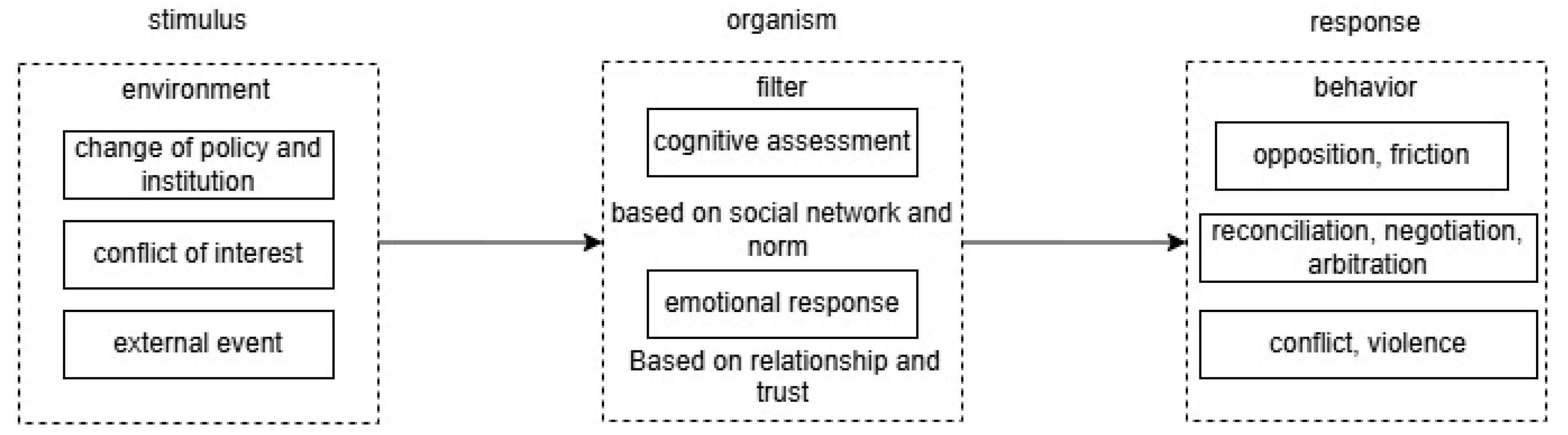
The research model used in this study is based on the Stimulus–Organism–Response (SOR) framework proposed by Mehrabian and Russell (1974) [25]. The SOR framework is primarily used to explore the relationship between environmental stimuli and individual consciousness and behavior. This study uses the SOR framework to analyze the effects of social capital on land disputes. The process of land dispute development is as follows: external stimuli (S) are processed through the internal organic (O) state (cognition, emotion) of individuals or groups, ultimately leading to specific land dispute behaviors (R). Social capital, such as relational networks, trust, and norms, plays a crucial role in the transmission and regulation of cognitive stimuli and emotional development in organisms. The SOR framework is depicted in Figure 1.
External stimuli refer to the triggers of land disputes, including a change in policy and institution, conflicts of interest, and external events. Social capital acts like a filter, affecting the interpretation of these stimuli by individuals and regulating their emotional response, influencing to the occurrence of land disputes. This study aligns with Putnam’s explanatory framework, which asserts that social capital is a social resource established by individuals through social connections, existing in the form of social networks and trust [9,11,12,26]. Firstly, social capital influences the cognitive evaluation path of individuals toward external stimuli. Individuals rely on their social networks to obtain land information and assess gains and losses. In the case of a high degree of social networking and a widely recognized norm of reciprocity, individuals are more likely to form an objective understanding and may be more inclined to engage in rational negotiation. Conversely, a closed social network or distorted land information is prone to generating inappropriate perceptions, which gives rise to vicious conflicts [27]. Secondly, social capital affects the emotional response pathway of individual towards external stimuli through social trust. A higher level of trust can reduce the emotional intensity with which an individual responds to external stimuli, decreasing their response intensity in a land dispute. In regions with high social trust, land conflicts are more likely to be mitigated via mutual trust, which leads to a decrease in the intensity of disputes. In regions where social trust is lacking, because of the absence of basic trust, individuals are more prone to experiencing extreme emotions, such as helplessness or indignation in response to external stimuli, leading to vicious land disputes [28]. Overall, by shaping the cognition and emotions of individuals, social capital has a significant influence on whether land disputes occur, how they unfold, and how they escalate. A healthy social capital, encompassing diverse connections, can buffer land disputes and promote negotiation, whereas a fractured, closed, or polarized social capital can amplify contradictions, leading to intensified land disputes.

2.2. Social Networks’ Effects on Land Disputes

As the core of social capital and through information transmission, norm formation and resource mobilization, social networks significantly influence the emergence, development, and evolution of land disputes. Firstly, social networks are the primary source of land information. They influence the development of land disputes by affecting individual cognitive frameworks through informal dissemination of land information. Subjective and closed social networks transmit filtered and distorted land information, serving as a breeding ground for rumors and gossip [29], which, in turn, lead to the development of land disputes. Unified and open social network connections facilitate the formation of shared cognition among individuals, reducing land disputes. Secondly, social networks influence the occurrence of land disputes through resource allocation coordinating human, social, material, knowledge, and strategic resources in land affairs. Lastly, different social network structures directly influence the types of land disputes. Closed social networks are characterized by strong solidarity, high trust, and consistency in action and land disputes are unlikely to arise within such networks, although large-scale conflicts unanimously directed against outsiders are more likely to occur. In contrast, loose social networks possess more diverse sources of nodes and cognitive conclusions, with significant internal differences, making it difficult to organize collective action. Such networks are more prone to internal land disputes, but less likely to experience large-scale conflicts [27]. In Chinese rural society, fair and modern social organizations serve as vital platforms for promoting information dissemination and increasing legal and institutional knowledge. These organizations facilitate information sharing and collaborative decision-making among individuals, reducing land disputes. Simultaneously, the behavioral norms established among members of these organizations can also limit individual speech and behavioral tendencies, preventing inappropriate conduct. Therefore, this study posits that social networks can inhibit land disputes. A strong social network leads to more efficient circulation of land-related information, increasing communication among residents making it easier for them to avoid land disputes. We concur with Fuhse (2021) [30]; Kuang & Hu’s (2023) [31] argument that modern, equitable social networks prevent land disputes by providing a platform for individuals to participate in land affairs and limiting the behavioral tendencies of individual members by enhancing communication and understanding.
Hypothesis 1. 
Social networks have an inhibitory effect on land disputes; a dense social organization within a given region leads to fewer land disputes, while a sparse social organization leads to more land disputes.

2.3. Emotional Effects of Interpersonal Trust on Land Disputes

Interpersonal trust in land affairs refers to the psychological state in which an individual is willing to relinquish some of their own rights and assume corresponding risks based on positive expectations of others’ behavior or conduct in daily land affairs interactions. Interpersonal trust reduces land disputes by exerting an emotional influence, fostering mutual trust among social members and promoting cooperative behavior [28]. According to Sabatier (1992) [32], interpersonal trust can encourage cooperation and collective participation, while affecting individual behavior and decision-making, thereby alleviating disputes in daily individual actions [33]. In the area of land affairs, interpersonal trust serves as a fundamental guarantee and a “lubricant” that can ease relations and reduce the occurrence of land disputes.
As a source of emotional influence, interpersonal trust affects land disputes in two dimensions: relational and psychological. Firstly, interpersonal trust motivates individuals to engage in mutually beneficial joint actions and adopt reciprocal strategies rather than competitive ones [34]. Negotiations grounded in interpersonal trust are more likely to generate consensus. Secondly, the effectiveness of negotiation and mediation highly depends on the level of trust and communication habits within a specific cultural context [35]. Interpersonal trust helps alleviate preconceived cognitive biases related to land affairs, facilitating the development of a unified stance across individuals or organizations, which can prevent land disputes. A region with strong interpersonal trust is more cooperative and has fewer land disputes.
Hypothesis 2. 
Interpersonal trust inhibits land disputes; high interpersonal trust in a given region leads to fewer land disputes, while low interpersonal trust leads to more land disputes.

2.4. Cognitive Effects of Institutional Trust on Land Disputes

Institutional trust in land affairs refers to the confidence of individual in the fairness, effectiveness, and predictability of the systems, procedures, and institutions that safeguard their land rights. Strong institutional trust promotes the development of widely accepted behavioral standards and normative systems in society, which can prevent land disputes through cognitive influence [36]. Basolo et al. (2009) [37] and Han et al. (2017) [38] contended that institutional trust diminishes the public perception and willingness to take action in the presence of risk. In terms of land affairs, institutional trust plays a pivotal role in guiding and limiting the behavioral tendencies of social members, thereby mitigating the occurrence of land disputes.
Firstly, institutional trust provides individuals with recognized and accepted outcomes in the resolution of land disputes, ensuring the smooth execution of land-related processes. Secondly, institutional trust promotes cooperative behavior and encourages residents’ willingness to participate in the adjudication and enforcement of land affairs [39,40,41], thereby creating a feedback mechanism for land management to enhance satisfaction in land affairs. Lastly, institutional trust can motivate residents to prioritize social norms, including laws and customs [42], and to take legal and reasonable actions to express their demands, effectively reducing land disputes.
Hypothesis 3. 
Institutional trust inhibits land disputes; high institutional trust in a given region results in fewer land disputes, while low institutional trust results in more land disputes.

2.5. Social Capital, Administrative Intervention and Land Disputes

Administrative intervention refers to the traditional and direct mediation that involves the government using administrative power and resources to directly intervene and manage land affairs in a top-down, relatively rigid, and compulsory manner. While appropriate administrative intervention is an indispensable part of social governance, an expanded administrative role can diminish the effects of social capital on land affairs. The Chinese government maintains a focus on social control and a mastery of social resources in terms of its social governance [43]. Hence, incorporating the presence and function of government intervention into the analysis framework of the impact for social capital on land disputes is essential. More dispersed and spontaneous social capital may reduce its effects on land disputes in cases where administrative organizations excessively intervene.
Firstly, administrative intervention affects social networks and their roles. Excessive administrative intervention systematically weakens the land dispute suppression effect of open social networks through a coherent logic of erosion–substitution–distortion. Excessive administrative intervention also limits the growth space of social organizations [44], thereby reducing the development of open social networks. When the government compulsorily directly decides on land affairs, the self-mediation mechanism of open social networks immediately becomes ineffective and its core function (providing diverse, flexible, and low-cost solutions) is replaced by a single, rigid administrative mode. Social networks shift from being the subject of problem-solving to being a passive object of acceptance, losing their status as the main entity that suppresses the occurrence of land disputes. Simultaneously, administrative pressure also promotes structural distortion of open social networks, so open social bonds shrink and become closed and exclusive. The core function of the internet shifts from internal negotiation and conflict resolution to external collective action mobilization, and its role shifts from suppressing land disputes into promoting them.
Secondly, administrative intervention influences social trust and its effects on land disputes. Aghion et al. (2010) [45] noted a strong negative correlation between government intervention and social trust levels, and Shi et al. (2011) [46] found that government intervention can reduce social interpersonal trust. Therefore, administrative intervention can reduce the inhibitory effect of interpersonal trust on land disputes by reducing social interpersonal trust. Indeed, excessive administrative intervention can lead to policy variability and an unstable market environment, thereby reducing institutional trust [47]. In land affairs, government intervention can interfere with public expectations for the future, and unstable expectations can easily lead to risky behavior, contributing to the occurrence of land disputes. As interpersonal trust and institutional trust affect land disputes within an informal system, there are significant challenges in competing with administrative intervention as a formal system in the area of land affairs. Administrative intervention in land affairs can easily overshadow the influence of other informal organizations or social factors affecting land disputes.
Hypothesis 4. 
Administrative intervention negatively affects the relationship between structural social capital and land disputes. An increased presence of administrative intervention diminishes the inhibitory effect of structural social capital on land disputes.
Hypothesis 5. 
Administrative intervention negatively moderates the relationship between interpersonal trust and land disputes. Higher administrative intervention weakens the inhibitory effect of interpersonal trust on land disputes.
Hypothesis 6. 
Administrative intervention negatively moderates the relationship between institutional trust and land disputes. Higher administrative intervention weakens the inhibitory effect of institutional trust on land disputes.

2.6. Conceptual Framework

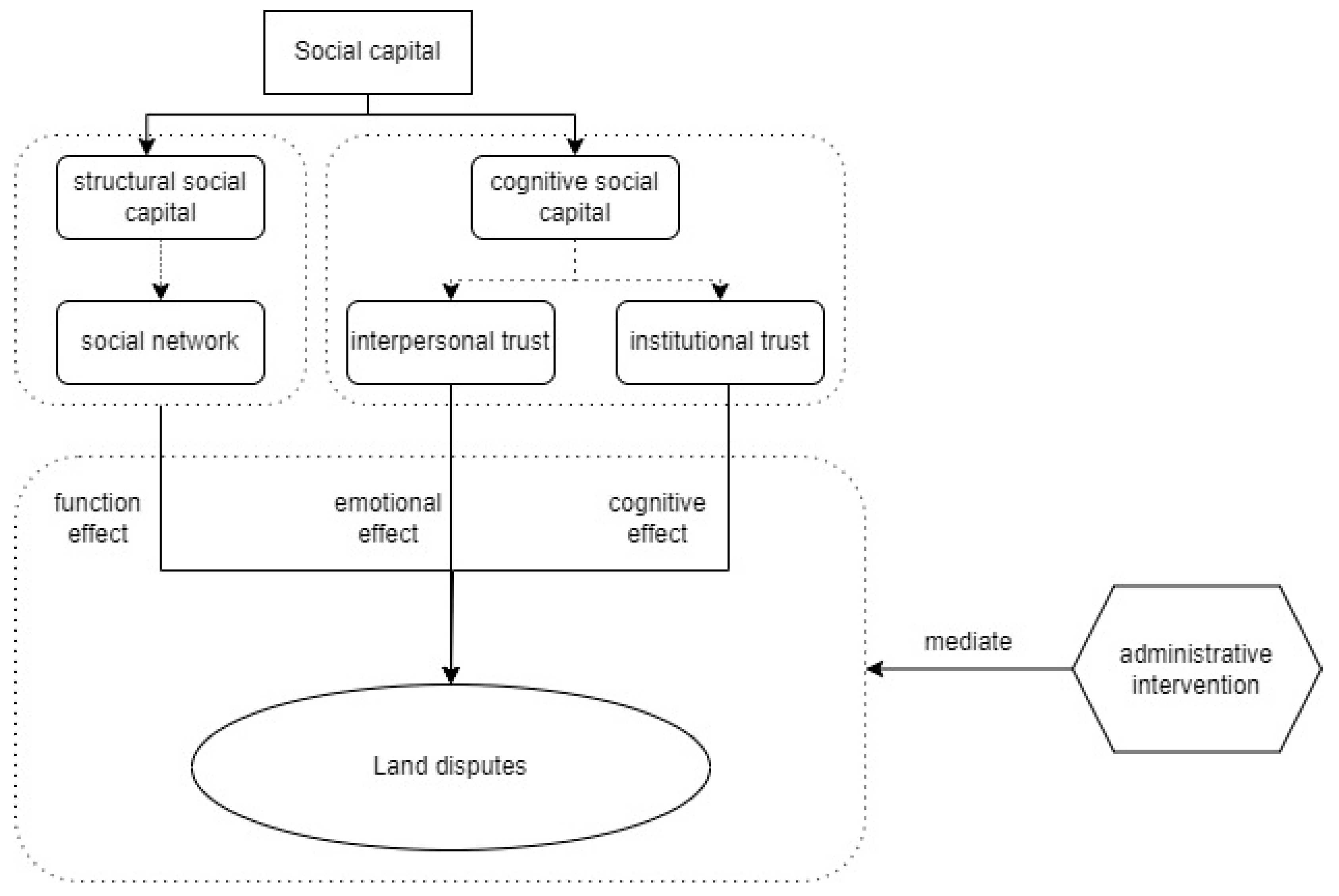
Based on previous theoretical analysis, this study proposes a conceptual framework to illustrate the relationship among the following factors: (1) social capital, (2) structural social capital (represented by social networks), (3) cognitive social capital (including interpersonal trust and institutional trust), (4) administrative intervention, and (5) land disputes. The framework is visually represented in Figure 2. Social capital comprises structural social capital (represented by social networks) and cognitive social capital (including interpersonal trust and institutional trust). All three types of social capital (social networks, interpersonal trust, and institutional trust) have a combined effect on land disputes. Simultaneously, administrative intervention plays a regulatory role by mediating the influence of different types of social capital on land disputes. Specifically, our framework addresses the following key questions: (1) how does structural social capital affects land disputes? (2) How does cognitive social capital, including interpersonal and institutional trust, affect land disputes? (3) How does administrative intervention regulate the influence of different types of social capital on land disputes?

3. Models, Data, and Methodologies

3.1. Research Area

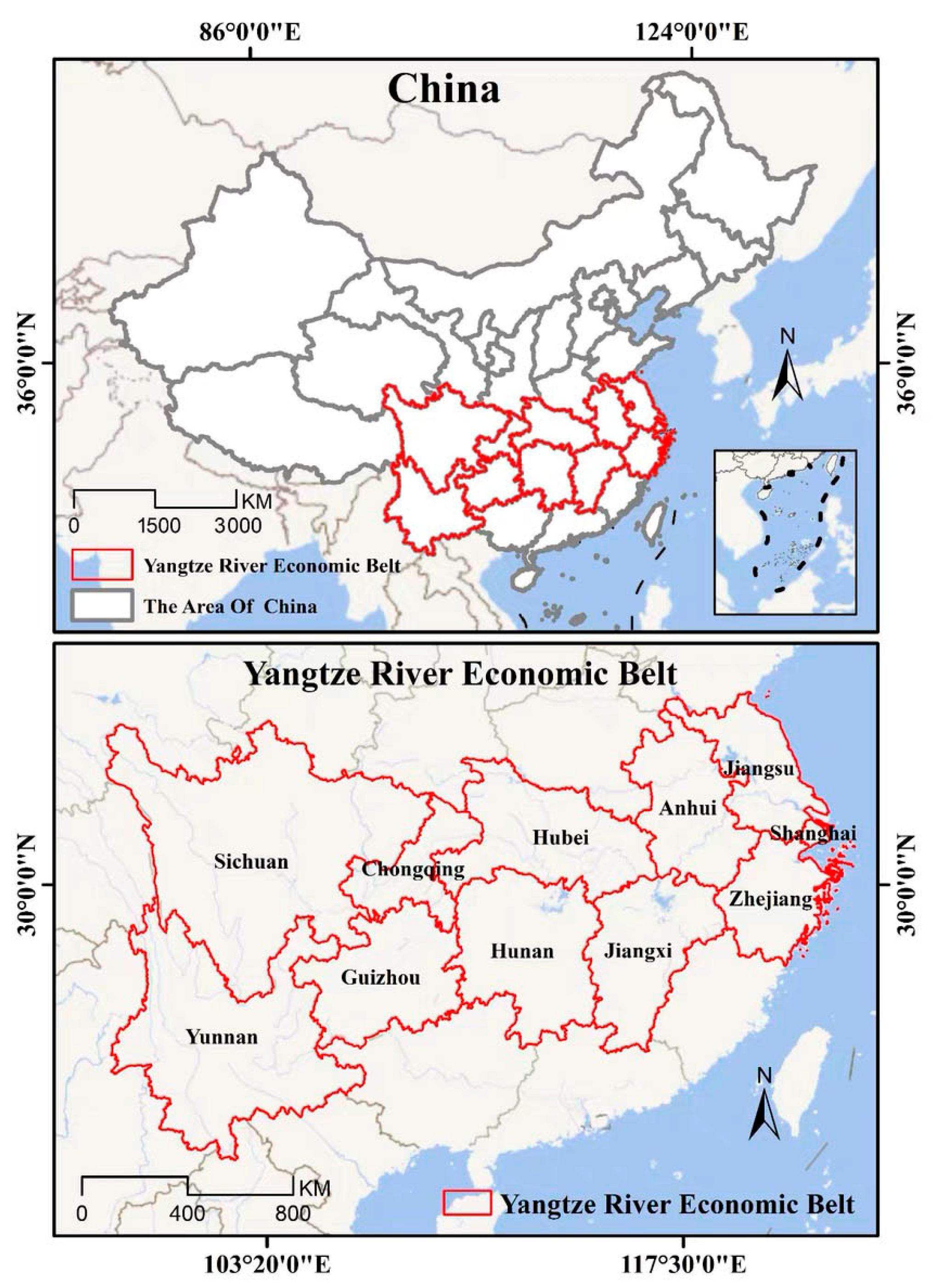
The Yangtze River Economic Belt, situated in southern China, spans the Shanghai and Chongqing Municipalities, as well as Jiangsu, Zhejiang, Anhui, Jiangxi, Hubei, Hunan, Sichuan, Yunnan, and Guizhou Provinces. The belt covers an expansive area of approximately 2,052,300 square kilometers and contributes to over 40% of China’s total GDP. In September 2016, the Outline of the Development Plan for the Yangtze River Economic Belt was introduced to promote the coordinated and high-quality development of regions along the river. This strategy established a new development pattern referred to as “one axis, two wings, three poles, and multiple points” for the Yangtze River Economic Belt.
Several factors motivated our selection of the Yangtze River Economic Belt as the focus of this study. Firstly, compared to northern China, southern China has experienced faster economic development, a higher degree of marketization and more frequent land policy changes, facilitating a comprehensive policy analysis. Social capital in southern China has also developed rapidly and changed significantly, providing ample data for the research topic of this paper—the effects of social capital on land disputes. Secondly, as a region of high-quality economic development, the Yangtze River Economic Belt frequently experiences land disputes due to policy changes, increasing land value, and rapid urbanization. Thirdly, the Yangtze River Economic Belt covers the western region of the upper reaches, the middle region of the middle reaches, and the eastern region of the lower reaches of the broader study area. These areas exhibit significant economic, social and cultural differences. In addition, the substantial differences in social capital between the eastern and western regions make them more suitable for analyzing the effects of social capital on land disputes. (Figure 3).

3.2. Empirical Model

Considering omitted variable bias and panel data structure, this study adopted a panel model that including both regional and temporal fixed effects as the benchmark analysis framework. We used the fixed effects regression model on panel data using STATA SE 16.0 to identify the specific effects of different types of social capital. For this purpose, we established two econometric models, (a) and (b), while observing the moderating role of administrative intervention in the influence of social capital. Model (a) was expressed as:
Y p , t = β 0 + β 1 S o c i a l C a p i t a l p , t + β 2 C o n t r o l p , t + μ p + γ t + ε p , t
where subscripts p and t represent provinces and years, respectively; Y p , t is the dependent variable, representing the land dispute situation of province p in year t; S o c i a l C a p i t a l p , t is the core explanatory variable, which includes social networks, interpersonal trust, and institution trust; β 1 is the pivotal parameter in model (a); C o n t r o l p , t denotes multiple control variables; μ p and γ t represent province-fixed and time-fixed effects respectively; and ε p , t is the random error.
We established model (b) to investigate the effects of the interaction between administrative intervention and different types of social capital on land disputes. A social capital administrative intervention interaction term based on the model (a) was added as follows:
Y p , t = β 0 + β 1 S o c i a l C a p i t a l p , t + β 0 + β 2 S o c i a l C a p i t a l p , t × I n t e r v e n t i o n p , t + β 3 I n t e r v e n t i o n p , t + β 4 C o n t r o l p , t + μ p + γ t + ε p , t
where I n t e r v e n t i o n p , t is the moderating variable and β 2 is the core parameter.

3.3. Variables and Indicators

3.3.1. Dependent Variable

(1) 
Land disputes.
We used the number of land dispute lawsuits per unit of GDP in the region as a measure of the land disputes in each province. The data of regional land disputes was obtained from China Judgements Online, which included data from 2010 to 2021, covering 11 provinces (cities) and municipalities in the Yangtze River Economic Belt. The number of land disputes in different provinces was obtained through clustering of cases. The GDP data were obtained from various China Statistical Yearbooks.

3.3.2. Core Explanatory Variables

(1) 
Structural Social Capital (Social Networks)
We selected the social network density, which refers to the number of social organizations per capita, as a measure of the structured social capital. The number of regional social organizations and regional population data were both obtained from various China Statistical Yearbooks.
(2) 
Interpersonal Trust
Based on data obtained from the Chinese General Social Survey (CGSS), we assessed the level of trust among residents in various social interactions, including trust toward neighbors, fellow villagers, relatives, acquaintances, and strangers. We computed the per capita value to reflect interpersonal trust at the provincial level [48,49,50].
(3) 
Institutional Trust
Based on data obtained from the CGSS, we assessed the level of institutional trust by averaging an individual’s trust in the central government, the district government, the county government, and township governments [51].

3.3.3. Moderating Variables

(1) 
Administrative intervention.
Public affairs expenditures include personnel and daily expenses for agricultural administrative operations, engineering maintenance, and technology promotion. The government’s investment in public budgets has increased its involvement in land affairs. We collected data on public budget expenditure and fiscal expenditure from various China Statistical Yearbooks. used the ratio of public budget expenditure to fiscal expenditure relative to the GPD of each province as a measure of the provincial administrative intervention capacity [52,53].

3.3.4. Control Variables

Based on the existing literature and the theme of this paper, we identified the following indicators as control variables [54,55,56,57,58]: (1) per capita GDP, (2) education (measured by the average years of education of the surveyed population in each province), (3) urbanization level (calculated as the proportion of the urban population), (4) resource endowment (calculated based on the per capita arable land area), and (5) construction of property rights (measured by the number of villages that completed the property rights reform divided by the total number of villages).

3.4. Data and Descriptive Statistical Analysis

We obtained the number of land dispute lawsuits from China Judgement Online, data on social organizations from the China Social Statistical Yearbook, interpersonal and institutional trust data was from the Chinese Social Survey (CSS), and property rights reform data from the China Rural Management Statistical Yearbook. Other economic, fiscal, and population data were obtained from various China Statistical Yearbooks, Provincial Statistical Yearbooks, and the China Rural Policy Reform Statistical Yearbooks. A few variables were treated with natural logarithms to eliminate possible heteroscedasticity. We used mean values to impute a few missing values and outliers. The variable names, units, and descriptive statistics are presented in Table 1.
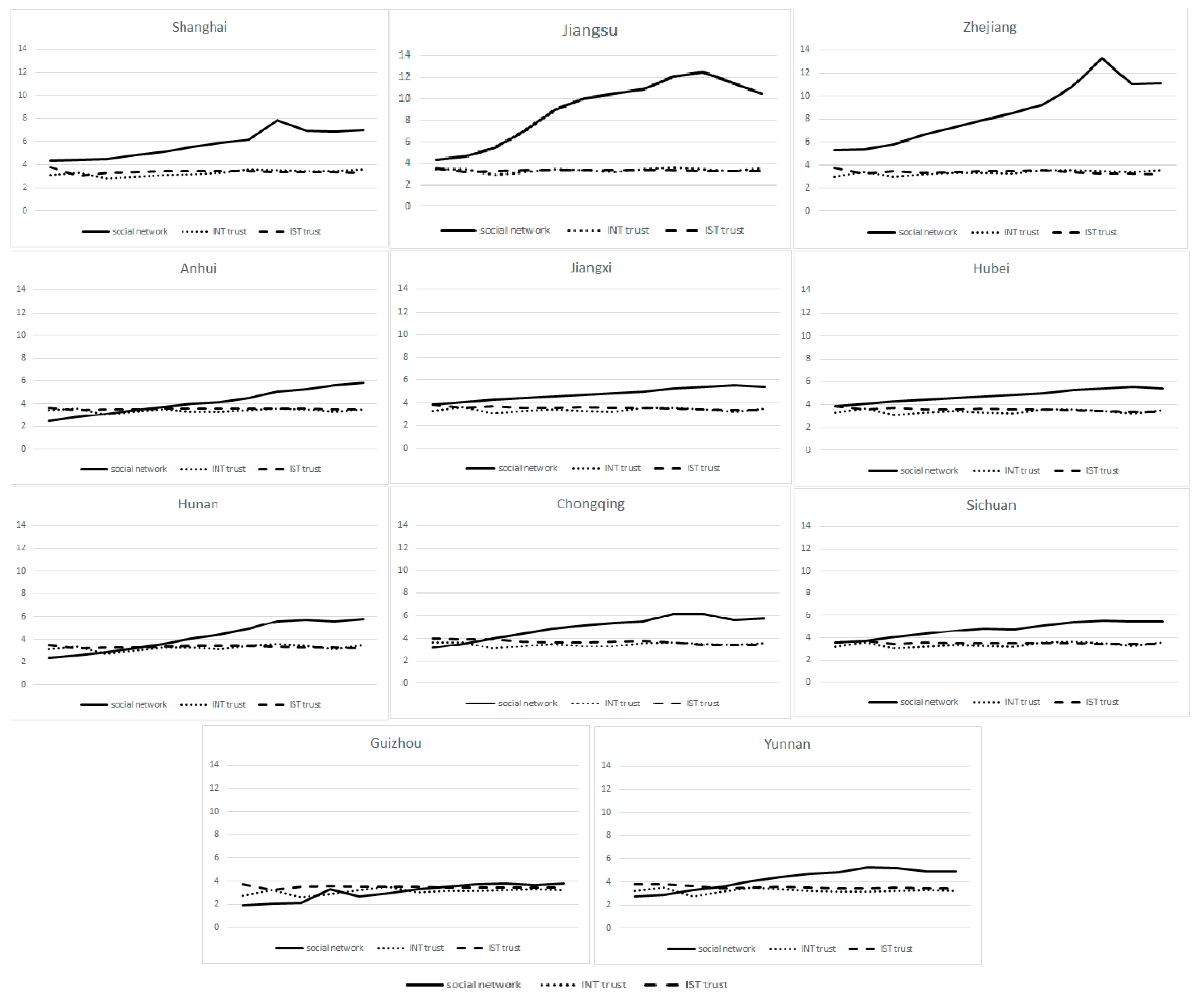
We collected panel data for the core independent variables of 11 provinces in China, spanning 2010 to 2021, and drew a trend chart, as shown in Figure 4. The analysis revealed significant variations in social networks densities among the provinces. The social network density growth rate in eastern China (Shanghai, Zhejiang, Jiangsu Provinces) was relatively high, but it was low in central and western regions. Some provinces exhibited a marked decline in the social network density after 2018. The numerical distribution of interpersonal and institutional trust in each province was relatively consistent and stable.

4. Empirical Analysis

4.1. Main Effect

Table 2 reports the regression results of model (a). Structural social capital (social networks) exerted a significant (1% level) inhibitory effect on land disputes in model 1 (−0.441 ***) and a significant (5% level) inhibitory effect on land disputes in model 4 (0.385 **). This inhibitory effect remained relatively stable, preliminarily verifying H1. Model 2 demonstrated that interpersonal trust had a negative effect on land disputes within a 1% confidence interval (−0.329 *** and −0.145 *), validating H2. Models 3 and 4 showed that institutional trust had a significant inhibitory effect on land disputes (−0.287 **and−0.221 *, respectively), validating H3. We conducted a Hausman test to further ensure the accuracy of model estimations; the results supported the selection of fixed effects.

4.2. Robustness Test of Main Effect

A series of robustness tests were conducted to obtain regression results (Table 3). Firstly, to reduce potential model estimation errors arising from the disproportionately high number of land disputes in Yunnan Province, model 5 was established to exclude Yunnan from the regression. Social networks and institutional trust remained statistically significant (−0.446 *** and −0.160 *, respectively). Secondly, considering the limited number of land disputes in 2010 and 2011, we adjusted the research interval to 2012–2021 in model 6. Structural social capital and institutional trust still significantly inhibited land disputes (−0.518 *** and −0.388 **, respectively). Thirdly, we modified the search keyword on China Judgement Online from “land disputes” to “agricultural land” and recalculated the unit disputes as the replaced dependent variable in model 7. The social network and institutional trust results remained statistically significant (−0.305 ** and −0.193 *, respectively). Fourthly, we introduced a one-period lag to the core dependent variable and considered the lag effect in model 8. Structural social capital and institutional trust once again exhibited statistically significant inhibitory effects (−0.295 * and −0.294 **, respectively).
In summary, our calculations indicate that structural social capital measured by social organization density significantly inhibits land disputes, while institutional trust as a measure of cognitive social capital significantly negatively affects land disputes. However, the previously observed inhibitory effect of interpersonal trust, as a measure of cognitive social capital on land disputes is not sufficiently robust.

4.3. Moderating Effect

Next, we examined the effects of the interaction between different types of social capital and administrative intervention on land disputes. Table 4 displays empirical results.
The interaction effect between structured social capital and administrative intervention was a key focus of this study. Model 10 revealed a social networks–administrative intervention interaction coefficient of 0.753 ***. However, the coefficients in model 9 and model 10 were both negative, indicating that administrative intervention overshadows the inhibitory effect of structural social capital on land disputes. When administrative intervention is relatively weak, the inhibitory role of structural social capital is more prominent. However, as administrative intervention intensifies, the negative effect of structural social capital on land disputes gradually diminishes. These findings verify H4.
In model 12, the interpersonal trust administrative intervention interaction coefficient was 3.566 ***. However, the coefficients in model 11 and model 12 were both negative, indicating that intensifying administrative intervention weakens the inhibitory effect of interpersonal trust on land disputes, supporting H5.
In model 14, the institution trust administrative intervention interaction coefficient was 1.917. However, the coefficients in model 13 and model 14 were both negative, indicating that administrative intervention diminishes the inhibitory effect of institutional trust on land disputes. However, because the interaction coefficient did not pass the significance test in model 14, H6 could not be conclusively verified. The insignificant interaction terms in model 14 also prevented the regression results from supporting H6.

4.4. Robustness Test of Moderating Effect

Another moderating effect test is a robustness check. The overall marketization index score from the report on marketization indices of each Chinese province can be used as a measurement indicator [52]. A lower marketization index indicates more robust administrative intervention. For clarity, we also determined the reciprocal of the total marketization index score and standardized it as the final indicator of administrative intervention. Table 5 displays empirical results.
Model 16 showed that the structural social capital administrative intervention interaction coefficient, as measured by the marketization index score, was 1.466 ***. However, the coefficients in model 15 and model 16 were both significantly negative, indicating that administrative intervention, when measured by the marketization coefficient, significantly reduces the inhibitory effect of social networks on land disputes, validating H4. Similarly, the crowding-out influence of government intervention on the inhibitory effect of interpersonal trust on land disputes was evident in model 17 and model 18, supporting H5. In model 20, the institutional trust administrative intervention interaction was insignificant, so H6 failed to pass the robustness check.
In summary, administrative intervention exhibits a significant crowding-out effect on the inhibitory relationship between structural social capital and interpersonal trust related to land disputes. Expanding administrative intervention diminishes the inhibitory effect of social networks on land disputes by extending the scope of government power and weakening the degree of residents’ autonomy.

5. Discussion

This study focused on the effects of social capital on land disputes, offering marginal contributions compared to prior research. Firstly, we established a theoretical SOR model, with social capital, its effects and land disputes as elements. The SOR framework not only encompasses the effects of structural social capital (social networks) and cognitive social capital (interpersonal trust and institutional trust) but also incorporates administrative intervention as a mediator of these effects. Secondly, we emphasized the effects of social background on land disputes. Furthermore, with a larger more representative sample compared to some prior studies, this research may provide a more accurate depiction of the Chinese social environment and how it contributes to the nuances of land affairs in China. The results also may offer valuable insights into the government’s efforts in the rational allocation of resources for preventing and resolving land disputes.
The regression and robustness test results demonstrate that social capital plays a significant inhibitory role in land disputes. Regions with higher levels of structural social capital and institutional trust exhibit fewer land disputes. Our regression results align with those of Yao (2012) [15], Colletta (2000) [16], Bian (2004) [59], and Aghajanian (2012) [60]. Our study is novel in that it differentiates social capital, breaks down the effects of different forms and measurements of social capital (including social network and institutional trust) for better understanding and specifies land dispute lawsuits as an exogenous variable measuring conflicts and violence. Our results are contrary to the research conclusions of Du et al. (2025) [61] and Zhang et al. (2020) [62]. Du et al. [61] emphasized that social networks enhance the possibility of subject choice conflict by enhancing mobilization ability, while Zhang et al. [62] believed that rural management with more social network capital is more prone to land rights protection behavior. This contrast highlights the different roles of different types of social capital in different situations. The social capital we studied focuses on the preventive role of open social networks and universal community trust in daily and neighborhood land disputes; the driving role mentioned earlier focuses on the mobilization role of targeted, geographical and closed social capital in the face of land disputes. This contradiction further underscores the importance of establishing modern, healthy, and open social capital.
Similarly to Nelson (2017) [63], we found a strong link between social networks and intergroup conflicts. Social networks, as significant social background factors, have a long-term effect on land disputes. Regions with a low social network density appear to be more prone to land disputes than regions with a high social network density. Social networks are key sources of information, as well as representations of the interactive dynamics among individuals [64,65]. On the one hand, social networks function as objective information–transmission platforms for land affairs, promoting communication and understanding among residents; on the other hand, they influence individual behaviors to suppress land disputes [30,31]. Thus, social networks play a dual role in inhibiting land disputes by facilitating interaction and communication.
Our results indicate that the effects of institutional trust on social behaviors especially appear in collectivist societies, substantiating the findings of Taniguchi (2012) [66], Rand (2016) [39] and Xu and Zhang (2023) [67]. Prior studies have linked trust to behaviors such as helping, comforting, sharing and cooperating [68,69,70]. Our regression results provide additional evidence that institutional trust, independent of generalized trust, has a suppressive effect on land disputes. From a cognitive perspective, institutional trust guides and limits individual behavioral tendencies, ensuring their willingness to participate in land affairs management, facilitating cooperation among different entities in land affairs, and ensuring the rationality of land affairs execution. In summary, institutional trust fosters, mutual assistance, communication, sharing, and cooperation among people, thereby, reducing the occurrence of land disputes in their region.
Our mediating effect analysis revealed that administrative intervention significantly weakens the inhibitory effects of structural social capital on land disputes. This finding is consistent with that of Chen et al. (2023) [44] and Jimmy and Moussa (2016) [71]. Firstly, stronger administrative intervention limits the development and scale of structural social capital. Secondly, administrative intervention takes precedence over informal systems, such as structural social capital, in dealing with land disputes, reducing the effectiveness of structural social capital. Thirdly, intensified administrative intervention hinders marketization, undermining the transformation and upgrading of structural social capital. The findings of this study seem to contradict other research that emphasizes the promoting effect of administrative intervention [72]. However, this difference may stem from differences in intervention methods and social foundations. Promoters typically focus on the initial empowerment provided by administrative power in scenarios in which social capital is weak. We focused on the substitution and erosion of informal mediation norms through direct and compulsory administrative intervention when they already exist in the community. These two perspectives collectively point to a more critical issue: how administrative intervention can adjust its role and methods based on the developmental stage of social capital, thereby transforming from a “substitute” to an “enabler” and avoiding falling into the governance trap of short-term effectiveness and long-term inhibition.

6. Conclusions and Implications

6.1. Key Findings

Based on the land dispute data from China Judgement Online, various statistical yearbooks from 11 provinces spanning 2011 to 2021, and a novel SOR framework model, this study examined the effects of social capital on land disputes and how administration intervention mediates these effects. The findings can be summarized as follows:
(1)
Structural social capital, measured by social organization density, significantly inhibits land disputes.
(2)
Institutional trust, measured by the average level of government trust, also significantly inhibitory land disputes.
(3)
Administrative intervention plays a negative regulatory role in the effects of structural social capital (social networks) on land disputes.

6.2. Theoretical and Practical Implications

Given that our findings suggest the potential effects of social capital on land disputes, the theoretical and practical implications of this work are noteworthy. Land disputes are a multifaceted societal challenge and resolving them necessitates attention be paid not only to natural, legal, administrative, and economic factors but also to various social factors, such as social backgrounds, social capital, social participation, and social support. China’s active implementation of “village revitalization” strategies with a focus on “rural culture and civilization” aligns with the emphasis on social capital as a crucial environmental factor in citizens’ behaviors [73,74]. This study may serve as a theoretical reflection, prompting a reconsideration of potential social factors affecting land disputes and highlighting often overlooked social conditions for a more comprehensive evaluation of the causes of land disputes.
The findings of this study also may have concrete and practical policy implications for Chinese government agencies. Firstly, local governments should prioritize the development of high-quality social organizations and aim to increase the density of structural social capital by (1) establishing special funds to support community organizations and rural cooperatives through purchasing services or project subsidies; (2) providing systematic legal, negotiation, and project management training for social organization leaders and mediator; and (3) regularly holding community governance forums with participation from multiple people to systematically exchange experiences and resolve land affair grievances. Secondly, local governments should enhance the rationality and transparency of administrative processes to foster citizens’ trust in their government by (1) standardizing the handling process of land affairs and retaining an index of land affairs administrative cases and (2) ensuring the openness and transparency of the administrative process and achieving full chain tracking of land administration. Thirdly, recognizing that administrative intervention weakens the inhibitory effect of social networks on land disputes, the government should (1) exercise control over administrative intervention in land affairs, (2) reduce direct control over land affairs, (3) take efforts to strengthen social networks in order to facilitate their effective role in land affairs management and (4) clearly incorporate the development and empowerment of social capital into the framework of land affairs management, performance evaluation, and fiscal budget. This will elevate the status of social capital from a spontaneous and peripheral supplementary element to a systematic and core policy goal. In this way, administrative intervention and social capital can move from mutual inhibition to mutual reinforcement.
This conclusion also provides practical suggestions for other regions with multiple land rules and unbalanced power relations. In many southern regions of China and indigenous communities in some high-income countries, the coexistence of formal laws, customary laws and traditional community ownership in the land system is the norm. Our findings can assist such regions in demonstrating governance resilience when using informal institutions, such as social capital, to compensate for the shortcomings of formal institutions. Simultaneously, our results provide scientific directional suggestions for the methods, strategies, and degree of administrative intervention that can prevent administrative intervention from suppressing, through institutional squeeze, the inhibitory effect of social capital on land disputes.

6.3. Contributions, Limitations, and Future Research Directions

In this study, we constructed a benchmark analysis framework for connecting administrative measures and grassroots governance innovation in future land affairs governance. The main contributions of this paper include exploring the process of how social environmental factors affect land disputes, as well as investigating the limiting effects of traditional administrative measures on the positive effects of the social environment. Firstly, we focus on the effects of social capital on land disputes and factors. We explored the inhibitory effects of open social networks and social trust on dispute and how traditional mandatory administrative intervention can weaken these disputes inhibiting and dispute-resolving functions. Furthermore, we created an explanatory bridge for the macro environment to influence micro behavior and established a logical framework for the regional atmosphere to influence individuals’ actions and strategies. Finally, we provided effective and feasible measures for the social governance of land affairs.
This study has two notable limitations. Firstly, the data collected from China Judgement Online only include land disputes that reached the litigation stage. This limitation means that the overall effect of social capital encompasses not only its influence on the emergence of land disputes but also its influence on resolving and reducing land disputes in order to avoid lawsuits. However, these two distinct effects were not classified or analyzed separately in this study. Secondly, most of the lawsuit data supporting this paper pertain to land disputes in rural parts of southern China. The potential effects of urban-rural and north–south differences on the results remain unexplored.
Future research should build upon this work by delving deeper into a few other areas. Firstly, further investigation should focus on targeting and classifying the specific roles of different types of social capital in various stages of land disputes. This might allow for a more detailed exploration of the mechanism through which social capital influences land disputes. Secondly, as land disputes encompass a broad range of contexts and types [58], it is important to recognize that the effects of social capital may vary. Incorporating different types of land disputes into the analysis might yield valuable findings, enabling a more comprehensive understanding of the relationship between social capital and land disputes.

Author Contributions

Conceptualization, S.T. and M.G.; Methodology, S.T. and M.G.; Software, M.G.; Validation, M.G.; Formal analysis, M.G.; Writing—original draft, M.G.; Writing—review & editing, S.T.; Supervision, S.T.; Project administration, S.T. All authors have read and agreed to the published version of the manuscript.

Funding

This research received no external funding.

Data Availability Statement

The original contributions presented in this study are included in the article. Further inquiries can be directed to the corresponding author.

Conflicts of Interest

The authors declare no conflict of interest.

References

  1. Home, R. Land dispute resolution and the right to development in Africa. J. Jew. Stud. 2020, 45, 72–92. [Google Scholar] [CrossRef]
  2. Fahriyandy, D.; Roychansyah, M.S.; Eng, S.T.M.; Eng, D. Negotiation as Process in Resolving Land Conflict: A Case Study in Forest Land Dispute in Indonesia. Ph.D. Thesis, Universitas Gadjah Mada, Yogyakarta, Indonesia, 2014. [Google Scholar]
  3. Ansah, B.O.; Chigbu, U.E. The Nexus between Peri-Urban Transformation and Customary Land Rights Disputes: Effects on Peri-Urban Development in Trede, Ghana. Land 2020, 9, 187. [Google Scholar] [CrossRef]
  4. Kaya, I.A.; Erol, N.K. Conflicts over Locally Unwanted Land Uses (LULUs): Reasons and solutions for case studies in Izmir (Turkey). Land Use Policy 2016, 58, 83–94. [Google Scholar] [CrossRef]
  5. Di Falco, S.; Laurent-Lucchetti, J.; Veronesi, M.; Kohlin, G. Property Rights, Land Disputes and Water Scarcity: Empirical Evidence from Ethiopia. Am. J. Agric. Econ. 2020, 102, 54–71. [Google Scholar] [CrossRef]
  6. Gariba, J. Contestations, Forest Resources and the Politics of Boundaries: The Evolution and Dynamics of the Nkonya-Alavanyo Land Dispute in Ghana. Legon J. Sociol. 2015, 5, 33–58. Available online: https://catalogue.leidenuniv.nl/permalink/31UKB_LEU/s5ab2f/alma9939085660402711 (accessed on 25 January 2026).
  7. Shi, W. The main types and development trends of rural land disputes. Mod. Econ. Res. 2010, 1, 68–71. [Google Scholar] [CrossRef]
  8. van Leeuwen, M. Crisis or continuity?: Framing land disputes and local conflict resolution in Burundi. Land Use Policy 2010, 27, 753–762. [Google Scholar] [CrossRef]
  9. Richardson, J.G. Handbook of Theory and Research for the Sociology of Education; Greenwood Pub Group: San Francisco, CA, USA, 1986. [Google Scholar]
  10. Yan, J. Social Capital and National Governance; Peking University Press: Beijing, China, 2015. [Google Scholar]
  11. Weil, F.D.; Putnam, R.D. Making Democracy Work: Civic Traditions in Modern Italy. Contemp. Sociol. 1994, 23, 373. [Google Scholar] [CrossRef]
  12. Uphoff, N. Learning from Gal Oya—Possibilities for Participatory Development and Post-Newtonian Social Science. Asia-Pac. J. Rural Dev. 1996, 6, 103–107. [Google Scholar] [CrossRef]
  13. Halpern, P. Peter Bergmann: The education of a physicist. Phys. Perspect. 2005, 7, 390–403. [Google Scholar] [CrossRef]
  14. Donald Moon, I. Foundations of Social Theory. By James S. Coleman. Cambridge: Harvard University Press, 1990. 993p. $39.50. Am. Political Sci. Rev. 1991, 85, 263–265. [Google Scholar] [CrossRef]
  15. Yao, L. Evolution of Rural Social Capital and the Resolution of Social Contradictions. Gansu Soc. Sci. 2012, 201, 20–23. [Google Scholar] [CrossRef]
  16. Colletta, N.J. The Nexus Between Violent Conflict, Social Capital and Social Cohesion: Case Studies from Cambodia and Rwanda; The World Bank: Washington, DC, USA, 2000. [Google Scholar]
  17. Pinchotti, S.; Verwimp, P. SOCIAL CAPITAL and the RWANDAN GENOCIDE A Micro-Level Analysis. 2007. Available online: https://ideas.repec.org/p/hic/wpaper/30.html (accessed on 25 January 2026).
  18. Varshney, A. Ethnic conflict and civil society—India and beyond. World Politics 2001, 53, 362–398. [Google Scholar] [CrossRef]
  19. Black, R.; Gent, S. Sustainable return in post-conflict contexts. Int. Migr. 2006, 44, 15–38. [Google Scholar] [CrossRef]
  20. Cui, X. Resolution of land disputes involving multiple stakeholders from the perspective of rural revitalization. Shandong Soc. Sci. 2018, 11, 123–128. [Google Scholar] [CrossRef]
  21. Guo, L. Land Dispute Mediation and Its System Improvement under the Background of Rural Revitalization. J. Huazhong Univ. Sci. Technol. (Soc. Sci. Ed.) 2022, 36, 23–30. [Google Scholar] [CrossRef]
  22. Xie, Q.; Ma, R. Opportunism, Land Property Right, Legal Authority and Rural “Boundary Dispute” in China—Refined Explanation from the Perspective of Institutional Economics and Legal Sociology. West Forum 2012, 22, 1–9. [Google Scholar] [CrossRef]
  23. Rabbani, R.; Narezi, G.; Rabbani, A.; Rabbani, E. The Socioenvironmental Function of Rural Property: Building a New Proposal for the Resolution of Land Disputes in the South of the State Bahia, Brazil. Rev. Catalana Dret Ambient. 2020, 11, 1–29. [Google Scholar] [CrossRef]
  24. Kawachi, I.; Berkman, L. Social Cohesion, Social Capital, and Health; Oxford University Press: Oxford, UK, 2000. [Google Scholar]
  25. Mehrabian, A.; Russell, J.A. The Basic Emotional Impact of Environments. Percept. Mot. Ski. 1974, 38, 283–301. [Google Scholar] [CrossRef]
  26. Durlauf, S.; Fafchamps, M. Empirical Studies of Social Capital: A Critical Survey. 2003. Available online: https://ideas.repec.org/p/att/wimass/200312.html (accessed on 25 January 2026).
  27. Lin, N. Social Capital—A Theory of Social Structure and Action; Cambridge University Press: Cambridge, UK, 2002. [Google Scholar]
  28. Fukuyama, F. Trust: The Social Virtues and the Creation of Prosperity; Free Press Paperbacks: New York, NY, USA, 1996. [Google Scholar]
  29. Portes, A. Social Capital: Its Origins and Applications in Modern Sociology. Annu. Rev. Sociol. 1998, 24, 12–13. [Google Scholar] [CrossRef]
  30. Fuhse, J.A. Social Networks of Meaning and Communication; Oxford Academic: New York, NY, USA, 2021. [Google Scholar]
  31. Kuang, X.; Hu, K. Social Networks, Farmland Ownership and Farmers’ Behavior in Reducing Fertilizer Application. South China Rural Area 2023, 39, 22–29. [Google Scholar] [CrossRef]
  32. Sabatier, P.A. Governing the Commons: The Evolution of Institutions for Collective Action. By Elinor Ostrom. Cambridge: Cambridge University Press, 1990. 279p. $14.95 paper. Am. Political Sci. Rev. 1992, 86, 248–249. [Google Scholar] [CrossRef]
  33. Yu, Z.; Gong, X.; Cui, Z. How does Social Capital Influence Farmers’ adoption of Conservation Tillage Technology: Mediation Effects of Value Cognition and Land Transfer. J. Agro-For. Econ. Manag. 2022, 21, 414–423. [Google Scholar] [CrossRef]
  34. Chen, Y.; Ye, H.; Wang, D. Measurement of trust level and its impact on cooperation: Evidence from a set of experimental micro data. J. Manag. World 2010, 4, 54–64+12. [Google Scholar] [CrossRef]
  35. Parkinson, M. Deliberative Democracy in Practice. In Palgrave Macmillan; Springer: Berlin/Heidelberg, Germany, 2012. [Google Scholar]
  36. Wang, X.; Zhang, J.; He, K. The Impacts of Social Trust and Group Norms on Farmers. Ecol. Mod. 2019, 40, 215–225. [Google Scholar] [CrossRef]
  37. Basolo, V.; Steinberg, L.J.; Burby, R.J.; Levine, J.; Cruz, A.M.; Huang, C. The Effects of Confidence in Government and Information on Perceived and Actual Preparedness for Disasters. Environ. Behav. 2009, 41, 338–364. [Google Scholar] [CrossRef]
  38. Han, Z.; Lu, X.; Horhager, E. The effects of trust in government on earthquake survivors’ risk perception and preparedness in China. Nat. Hazards 2017, 86, 437–452. [Google Scholar] [CrossRef]
  39. Rand, D.G. Cooperation, Fast and Slow: Meta-Analytic Evidence for a Theory of Social Heuristics and Self-Interested Deliberation. Psychol. Sci. 2016, 27, 1192–1206. [Google Scholar] [CrossRef]
  40. Li, D.; Tian, B. A sense of gain in people’s livelihood, government trust, and urban and rural residents’ election participation behavior. Study Pract. 2021, 9, 31–41. [Google Scholar] [CrossRef]
  41. Pu, S.; Yuan, W. Study on the Influence of Government trust on the will of farmland transfer and its mechanism on the background of rural revitalization. J. Beijing Adm. Inst. 2018, 4, 28–36. [Google Scholar] [CrossRef]
  42. Tang, L.; Luo, X.; Zhang, J. Social supervision, group identity and farmers’ domestic waste centralized disposal behavior: An analysis based on mediation effect and regulation effect of the face concept. China Rural Surv. 2019, 2, 18–33. [Google Scholar] [CrossRef]
  43. Ding, X. Debate on the ‘China Model’; Social Science Academic Press: Beijing, China, 2010. [Google Scholar]
  44. Chen, Y.; Ye, S.; Wang, J. Spatial-temporal differentiation and influencing factors of social organization service capacity of cities in China-Analysis based on social organization registration data. Resour. Dev. Mark. 2023, 39, 1144–1154. [Google Scholar] [CrossRef]
  45. Aghion, P.; Algan, Y.; Cahuc, P.; Shleifer, A. Regulation and Distrust. Q. J. Econ. 2010, 125, 1015–1049. [Google Scholar] [CrossRef]
  46. Shi, Y.; Li, T.; Ding, Y. Government Behavior and Social Trust: Empirical Evidence from Provincial Level in China. In Proceedings of the 9th China Law and Economics Forum; Shandong University School of economics(center), Zhejiang University School of Economics, Editorial Department of Economic Research: Shanghai, China, 2011; pp. 799–811. [Google Scholar]
  47. Zhang, W.; Ke, R. Trust in China: A Cross-Regional Analysis. Econ. Res. J. 2002, 20, 59–70+96. [Google Scholar] [CrossRef]
  48. Miao, S. Farmers’ Small-scale Irrigation Facilities Participative Behavior under Multi-dimensional Social Capital Perspective. China Popul. Resour. Environ. 2014, 24, 46–54. [Google Scholar] [CrossRef]
  49. Qi, Y.; Zhang, Z. Structural Shift of Interpersonal Trust in Transitional China. Sociol. Rev. China 2022, 10, 124–144. [Google Scholar] [CrossRef]
  50. Wang, L.; Xiang, H.; Ma, H.; Du, D. The Influence of Social Norms on Farmers’ Participation in the Supply Behavior of Small-scale Irrigation and Water Conservancy Facilities: The Mediating Effect based on Interpersonal trust. J. Econ. Water Resour. 2023, 41, 113–122+236. [Google Scholar] [CrossRef]
  51. Kong, Z.; Yan, X. The Effect of Rural Minimum Livelihood Guarantee on Government Trust: Theoretical Analysis and Empirical Test. J. Hunan Agric. Univ. (Soc. Sci.) 2023, 24, 58–67. [Google Scholar] [CrossRef]
  52. Fan, Z.; Zhang, J. Flypaper Effect: An explanation to the Expanding of Local Governments’ Size. China Ind. Econ. 2010, 12, 5–15. [Google Scholar] [CrossRef]
  53. Liao, C.; Zhang, Z. Local Government intervention and total Factor Productivity: From the Perspective of Resource Mismatch. Econ. Surv. 2023, 40, 3–12. [Google Scholar] [CrossRef]
  54. Qu, S.; Xia, Y.; Zhang, F. Quantitative Evaluation and Prevention, Control and Resolution of Rural Land Disputes: Based on the 2015 Large Sample Rural Survey of Seven Provinces in China. Rural Econ. 2017, 4, 24–31. [Google Scholar] [CrossRef]
  55. Tan, S.; Qi, R. Land Expropriation Conflicts during Rapid Urban Expansion. China Land Sci. 2011, 25, 26–30. [Google Scholar] [CrossRef]
  56. Tan, S.; Zou, S. Study on the Evolution Characteristics and Influencing Factors of Land Disputes in the Yangtze River Economic Belt. China Land Sci. 2022, 36, 22–31. [Google Scholar] [CrossRef]
  57. Zhang, J.; Zhang, Y. A Study on the Willingness of Farmers to Maintain Land Rights and Interests and Its Influencing Factors: Based on Empirical Data of 1030 Land Transfers from Farmers in 12 Provinces (Cities). Rural Econ. 2020, 4, 26–33. [Google Scholar] [CrossRef]
  58. Zhou, Y. The Types, Causes and Solutions of Rural Land Disputes. Academics 2008, 1, 171–176. [Google Scholar]
  59. Bian, Y. Source and Functions of Urbanites’ social capital: A network Approach. Soc. Sci. China 2004, 3, 136–146+208. [Google Scholar]
  60. Aghajanian, A. “Social Capital and Conflict”. HiCN Working Paper 134; Households in Conflict Network: Berlin, Germany, 2012. [Google Scholar]
  61. Du, H.; Li, G.; He, X. The Impact of Social Networks on Villagers’ Participation in Land Expropriation under the Rural Revitalization Strategy. J. China Emerg. Manag. Sci. 2025, 11, 50–66. [Google Scholar]
  62. Zhang, J.; Gong, Y.; Gao, J. Exploration of Interest Disputes and Safeguarding Rights of Rural Households Leasing Out Farmland: An Empirical Test of 1030 Sample Farmers in China. J. Agro-For. Econ. Manag. 2020, 19, 624–633. [Google Scholar] [CrossRef]
  63. Nelson, R.E. The Strength of Strong Ties: Social Networks and Intergroup Conflict in Organizations. Acad. Manag. J. 2017, 32, 377–401. [Google Scholar] [CrossRef]
  64. Li, C.; Guo, P. Impact of social networks and willingness to settle on the psychological integration of migrant workers in urban areas. J. China Agric. Univ. 2024, 29, 225–236. [Google Scholar] [CrossRef]
  65. Vonneilich, N. Social Relations, Social Capital, and Social Networks: A Conceptual Classification. In Social Networks and Health Inequalities: A New Perspective for Research; Klärner, A., Gamper, M., Keim-Klärner, S., Moor, I., von der Lippe, H., Vonneilich, N., Eds.; Springer International Publishing: Berlin/Heidelberg, Germany, 2022; pp. 23–34. [Google Scholar] [CrossRef]
  66. Taniguchi, H. The Determinants of Formal and Informal Volunteering: Evidence from the American Time Use Survey. Volunt. Int. J. Volunt. Nonprofit Organ. 2012, 23, 920–939. [Google Scholar] [CrossRef]
  67. Xu, Y.; Zhang, Y. Institutional trust and prosocial behavior in China: An experimental approach. J. Soc. Psychol. 2023, 163, 79–93. [Google Scholar] [CrossRef]
  68. Batson, C.D. Sociobiology and the role of religion in promoting prosocial behavior: An alternative view. J. Personal. Soc. Psychol. 1983, 45, 1380–1385. [Google Scholar] [CrossRef]
  69. Penner, L.A.; Dovidio, J.F.; Piliavin, J.A.; Schroeder, D.A. Prosocial behavior: Multilevel perspectives. Annu. Rev. Psychol. 2005, 56, 365–392. [Google Scholar] [CrossRef] [PubMed]
  70. Uslaner, E.M. The Moral Foundations of Trust; Cambridge University Press: Cambridge, UK, 2002. [Google Scholar] [CrossRef]
  71. Jimmy, P.K.; Moussa, I.M. Social capital and conflict management in the irrigated scheme of Malanville in Benin. Cah. Agric. 2016, 25, 65003. [Google Scholar] [CrossRef]
  72. Xu, L.; Jiang, S.; Chen, X. “System-Capital-Action”:How to Build A Community of Grassroots Social Governance?—Based on A Case Study of S Town in Southwest Shandong Province. J. Northwest AF Univ. (Soc. Sci. Ed.) 2023, 23, 38–47. [Google Scholar] [CrossRef]
  73. Jiang, Q.; Guo, S. The Impact of Social Capital on Villagers’ participation in Rural Human Settlement Governance. Chin. J. Agric. Resour. Reg. Plan. 2024, 45, 177–189. [Google Scholar] [CrossRef]
  74. Li, D.; Tian, B. Research on the Participation of Returning Rural Migrants in Rural Construction and its influence Mechanisms from the Perspective of Social Capital. J. Huazhong Agric. Univ. (Soc. Sci. Ed.) 2023, 6, 129–140. [Google Scholar] [CrossRef]
Figure 1. Stimulus–organism–response theory analytical model of social capital and land disputes.
Land 15 00236 g001
Figure 2. Analysis framework diagram.
Land 15 00236 g002
Figure 3. Regional illustration of the Yangtze River Economic Belt.
Land 15 00236 g003
Figure 4. Trend chart of core independent variables of 11 provinces (cities) in the Yangtze River Economic Belt.
Land 15 00236 g004
Table 1. Descriptive statistical analysis of variables.
VariableMeanStandard
Deviation
MinimumMaximum
Land disputes0.0640.09400.425
Social network5.2452.2971.89713.292
Interpersonal trust3.3340.2152.6073.675
Institutional
trust
3.4770.1663.0033.986
Administrative
intervention
0.0210.0090.0090.063
Per capita
GDP
5.8823.2971.32317.362
Education8.9690.8806.76411.767
Urbanization0.5740.1310.3380.893
Resource0.7350.3520.0651.818
property rights0.3200.39901.031
Table 2. Regression results of main effect.
VariableModel 1Model 2Model 3Model 4
Social network−0.441 ***
(0.142)
−0.385 **
(0.146)
Inter trust −0.329 ***
(0.108)
−0.145 *
(0.124)
Insti trust −0.287 **
(0.110)
−0.221 *
(0.119)
Per capita GDP0.433
(0.263)
−0.151
(0.189)
−0.216
(0.193)
0.292
(0.262)
Edu−1.138 ***
(0.276)
−0.591 **
(0.232)
−0.652 ***
(0.233)
−1.033 ***
(0.279)
Urbanization0.440 **
(0.191)
0.434 **
(0.191)
0.580 ***
(0.197)
0.511 ***
(0.192)
Resource0.245
(0.149)
0.385 ***
(0.139)
0.588 ***
(0.154)
0.382 **
(0.160)
Property −0.104
(0.075)
−0.082
(0.075)
−0.052
(0.077)
−0.073
(0.074)
Constant0.035
(0.120)
0.050
(0.123)
−0.033
(0.114)
0.187
(0.128)
R20.80590.80480.79660.8351
a. *** significant at 0.01; ** at 0.05 and * at 0.1; b. Bold entries denote significance; c. The values in bracket are S.E.
Table 3. Robust test results of main effect.
VariableModel 5Model 6Model 7Model 8
Social network−0.446 ***
(0.135)
−0.518 ***
(0.150)
−0.305 **
(0.136)
Inter trust−0.144
(0.125)
−0.191
(0.136)
−0.112
(0.112)
Insti trust−0.160 *
(0.113)
−0.388 **
(0.149)
−0.193 *
(0.109)
Lag
Social network
−0.295 *
(0.155)
Lag
Inter trust
−0.097
(0.126)
Lag
Insti trust
−0.294 **
(0.120)
Per capita GDP0.398
(0.243)
0.575 **
(0.266)
−0.211
(0.240)
0.254
(0.302)
Edu−1.104 ***
(0.257)
−1.289 ***
(0.296)
−1.037 ***
(0.261)
−0.770 ***
(0.285)
Urbanization0.443 **
(0.174)
0.498 **
(0.214)
0.837 ***
(0.174)
0.501 **
(0.196)
Resource0.218
(0.152)
0.447 **
(0.169)
0.122
(0.150)
0.681 ***
(0.165)
Property −0.076
(0.068)
−0.049
(0.071)
−0.087
(0.069)
−0.047
(0.081)
Constant0.257
(0.116)
0.432 ***
(0.155)
−0.042
(0.120)
0.046
(0.130)
R20.81490.86860.91230.8351
a. *** significant at 0.01; ** at 0.05 and * at 0.1; b. Bold entries denote significance; c. The values in bracket are S.E.
Table 4. Regression results of moderating effect.
VariableModel 9Model 10Model 11Model 12Model 13Model 14
Social network−0.375 **
(0.155)
−1.257 ***
(0.298)
Inter trust −0.280 **
(0.125)
−0.864 ***
(0.173)
Insti trust −0.230 *
(0.118)
−0.435 *
(0.269)
Government0.153
(0.144)
−0.554 **
(0.249)
0.117
(0.153)
−3.833 ***
(0.884)
0.189
(0.143)
−1.708
(2.243)
Social network × government 0.753 ***
(0.221)
Inter trust ×
government
3.566 ***
(0.778)
Insti trust ×
government
1.917
(2.262)
Per capita GDP0.323
(0.282)
0.824 ***
(0.307)
−0.168
(0.191)
0.045
(0.182)
−0.230
(0.193)
−0.279
(0.202)
Edu−1.061 ***
(0.285)
−1.233 ***
(0.277)
−0.597 **
(0.233)
−0.553 **
(0.215)
−0.647 ***
(0.233)
−0.631 ***
(0.234)
Urbanization0.492 **
(0.197)
0.441 **
(0.188)
0.476 **
(0.199)
0.442 **
(0.184)
0.617 ***
(0.198)
0.607 ***
(0.198)
Resource0.202
(0.155)
0.199
(0.148)
0.336 **
(0.153)
0.385 ***
(0.142)
0.468 **
(0.178)
0.441 **
(0.181)
Property −0.100
(0.075)
−0.094
(0.072)
−0.082
(0.075)
−0.034
(0.070)
−0.057
(0.077)
−0.053
(0.077)
Constant−0.015
(0.128)
0.203
(0.138)
0.003
(0.137)
0.317 **
(0.144)
−0.084
(0.120)
0.005
(0.160)
R20.80980.84710.80690.83510.80280.8054
a. *** significant at 0.01; ** at 0.05 and * at 0.1; b. Bold entries denote significance; c. The values in brackets are S.E.
Table 5. Robust test results of moderating effect.
VariableModel 15Model 16Model 17Model 18Model 19Model 20
Social network−0.286 *
(0.153)
−2.198 ***
(0.435)
Inter trust −0.192 *
(0.122)
−1.435 ***
(0.263)
Insti trust −0.171 *
(0.115)
−0.417 *
(0.372)
Government0.360 **
(0.148)
−0.397 *
(0.213)
0.355 **
(0.156)
−4.129 ***
(0.873)
0.395 ***
(0.146)
−0.802
(1.729)
Social network × government 1.466 ***
(0.316)
Inter trust ×
government
4.438 ***
(0.853)
Insti trust ×
government
1.238
(1.783)
Per capita GDP0.164
(0.279)
0.687 **
(0.280)
−0.212
(0.187)
0.015
(0.174)
−0.259
(0.189)
−0.290
(0.194)
Edu−0.995 ***
(0.276)
−1.251 ***
(0.260)
−0.645 ***
(0.229)
−0.654 ***
(0.206)
−0.683 ***
(0.227)
−0.670 ***
(0.229)
Urbanization0.566 ***
(0.193)
0.408 **
(0.181)
0.563 ***
(0.196)
0.451 **
(0.177)
0.662 ***
(0.194)
0.658 ***
(0.194)
Resource0.095
(0.159)
0.087
(0.151)
0.192
(0.161)
0.178
(0.145)
0.289
(0.186)
0.268
(0.189)
Property −0.100
(0.073)
−0.106
(0.067)
−0.087
(0.074)
−0.055
(0.066)
−0.068
(0.075)
−0.066
(0.075)
Constan−0.091
(0.128)
0.385 **
(0.156)
0.093
(0.135)
0.826 ***
(0.215)
−0.137
(0.119)
0.068
(0.164)
R20.82590.88710.80690.89700.82170.8233
a. *** significant at 0.01; ** at 0.05 and * at 0.1; b. Bold entries denote significance; c. The values in brackets are S.E.
Disclaimer/Publisher’s Note: The statements, opinions and data contained in all publications are solely those of the individual author(s) and contributor(s) and not of MDPI and/or the editor(s). MDPI and/or the editor(s) disclaim responsibility for any injury to people or property resulting from any ideas, methods, instructions or products referred to in the content.