1. Introduction
No planning can be divorced from the inherent attributes of land, and one of the core tasks of planning is to regulate and guide land use. Urban–rural historic and cultural heritage conservation planning refers to the legal and strategic blueprint and action plan formulated for the systematic protection, inheritance, and revitalization of historic and cultural heritage within urban and rural areas. It mainly achieves the spatial fixation of historic and cultural heritage through the control of land development rights, and it guides the transformation of land from economic appreciation to the sustainable development direction of cultural value inheritance. It is of great significance for carrying forward historic and cultural heritage, strengthening cultural confidence, and promoting high-quality development in urban and rural areas. Currently, China has established a tiered, categorized, and graded conservation system for urban and rural historic and cultural heritage, encompassing cultural relic heritage sites, historic and cultural cities, towns, villages, and districts, as well as intangible cultural heritage. As a crucial implementable tool, conservation planning plays a pivotal role in safeguarding historic and cultural heritage [
1,
2]. However, as a complex systemic endeavor involving the coordinated operation of multiple plans, systems, and stakeholders, conservation planning often faces challenges in terms of strategic conflicts and difficulty in achieving equilibrium. This leads to difficulties in planning formulation, approval, implementation, and supervision, including a narrow focus on task completion, undue influence by capital interests, and poor overall effectiveness.
The establishment of China’s territorial spatial planning system in 2019 marked a milestone achievement in addressing longstanding challenges within urban and rural planning, including multiple overlapping plans, fragmented departmental responsibilities, and misaligned authority, duties, and interests [
3]. In 2021, the Ministry of Natural Resources and the National Cultural Heritage Administration issued the
Guiding Opinions on Strengthening the Conservation and Management of Historic and Cultural Heritage in the Formulation and Implementation of Territorial Spatial Planning [
4]. In 2024, the Ministry of Natural Resources formally released the
Technical Guidelines for the Conservation of Historic and Cultural Heritage in Territorial Spatial Planning [
5]. Both underscore the significant importance of historic and cultural heritage for the sustainable development of urban and rural land resources and the human living environment. Furthermore, the evolving complex relationships within heritage conservation now benefit from substantive policy guidance as territorial spatial planning advances. However, for conservation plans to effectively respond to this policy guidance, concrete implementation pathways and technical methodologies are required. This necessitates a clear understanding of the participants, value orientations, and behavioral patterns involved in conservation planning.
The existing research on the conservation and revitalization of urban–rural historic and cultural heritage has primarily focused on heritage value [
6], stakeholders’ demands and responsibilities regarding heritage renewal [
7,
8,
9], and performance evaluations of heritage conservation [
10,
11]. These studies have failed to connect with specific processes, such as planning formulation and approval, offering limited exploration of participant relationships and behavioral decision-making mechanisms. However, since the late 20th century, game theory has been progressively applied to urban and rural planning research. Early scholars explored the role and implications of game theory [
12,
13], public–private power dynamics in urban development [
14], and the strategic behaviors and influences of participants in urban and town planning [
15]. Recent research has deepened, with Abolhasani, Zhu, and Zhong, respectively, using game theory to develop a land-use interactive decision-making framework [
16,
17], resolve conflicts between historical preservation and profit-seeking [
18], and examine stakeholder impacts on historic district regeneration [
19]. Zhang and Lin summarized the game-theoretic relationships within territorial spatial planning processes [
20,
21], while Zhou, Huang, and Ge revealed the game-theoretic essence of multiple planning conflicts within China’s spatial planning system [
3,
22,
23]. These findings provide crucial references for the present study.
Historic and cultural towns are officially recognized and designated by the Chinese government as towns that preserve exceptionally rich cultural relics and hold significant historic value or revolutionary commemorative significance. They can relatively fully reflect the traditional features and local characteristics of a specific historic period, occupying a position among historic and cultural cities, villages, and historic districts. As an important component of urban–rural historic and cultural heritage, research on the spatial form [
24,
25], typological characteristics [
26], and evaluation systems [
27,
28,
29] of historic and cultural towns has increased since China announced its first batch in 2003. Following the enforcement of the
Regulations on the Protection of Historic and Cultural Cities, Towns, and Villages (first promulgated in 2008 by the State Council; amended in 2017) and the
Requirements for the Formulation of Conservation Plans for Historic and Cultural Cities, Towns, and Villages (Trial) (jointly issued in 2012 by the Ministry of Housing and Urban–Rural Development and the National Cultural Heritage Administration), research has focused on the theoretical foundations [
30,
31], institutional frameworks [
32,
33], and technical methodologies of conservation planning [
34,
35,
36]. Since the establishment of the territorial spatial planning system, scholars have further exposed numerous practical challenges in the conservation planning of historic and cultural towns. Scholars have begun attempting to address longstanding challenges by analyzing the power structures [
2], value orientations [
37], and decision-making frameworks [
38] within historic town conservation planning. They also seek effective integration methods between conservation plans and the territorial spatial planning system. However, research on this topic remains highly complex, with limited substantial outcomes accumulated to date.
Therefore, given the developmental context, current research status, and practical challenges in the conservation of urban and rural historic and cultural heritage, there is an urgent need for studies that clarify the operational mechanisms of heritage conservation plans throughout their entire life cycle—from formulation to implementation. Within the framework of game theory, this paper approaches the subject from the perspective of historic town conservation planning. Through analysis of laws and regulations, practical cases, and online big data, it examines the composition of participants, equilibrium conditions, and the nature of conflicts within historic town conservation planning. This research makes two significant contributions: first, it reveals the structural relationships among participants, clarifying their rights–interest logic and decision-making tendencies; second, based on the analysis, it identifies key factors leading to the game equilibrium or conflict of historic town conservation plans, thereby proposing strategies to overcome these dilemmas. These findings provide robust evidence and decision-making guidance for historic town conservation planning, as well as for the protection of historic and cultural cities, villages, neighborhoods, and traditional settlements. They also offer insights for effectively integrating heritage conservation with territorial spatial planning.
2. Theory, Materials, and Methods
2.1. Theory and Methodology
2.1.1. The Game Theory of Planning Rights
In classical Chinese, the term “game” originally referred to board games, Go, and gambling. Modern game theory research began in 1928 when mathematician John von Neumann proved its fundamental principles. Subsequently, scholars such as Oskar Morgenstern, John F. Nash, and Richard Selten continued to refine and optimize these principles, leading to increasingly widespread practical applications of game theory [
39,
40]. Games consist of elements such as participants, actions, information, and strategies. The behavioral decisions of participants fundamentally determine their gains or losses, as well as the overall dynamics and outcome of the game [
41,
42]. Games can be categorized into cooperative and non-cooperative games. Cooperative games, also known as positive-sum games, emphasize team rationality. Participants in cooperative games can establish binding agreements based on enduring relationships, thereby achieving maximum collective benefits. Non-cooperative games, conversely, emphasize individual rationality. Participants in non-cooperative games often pursue personal interests through their respective strengths, resulting in decisions and outcomes characterized by greater volatility and instability.
In recent years, scholars have not only explored urban and rural planning through game theory but also extended its theoretical framework. Jian Lin, through the outcomes of land development rights allocation in spatial planning, points out that multiple planning conflicts reflect the game conflicts within the government, between different government departments, between the government and the market, and between the government and society during its formulation and implementation. When the cost of delegating authority is high for administrative departments, non-cooperation becomes the rational choice for a single department [
21]. Mei Huang and Wenhui Ge expand the applicability of game theory in spatial planning, extending it to all the stages of the planning process. They proposed the theory of planning rights games, arguing that planning rights are the authority to allocate and utilize resources within planning, which can be explained through both theoretical and legal frameworks. They also point out that the game of planning rights involves not only interactions among governments at various levels and their functional departments but also encompasses diverse games among governments, markets, and stakeholders [
22,
23]. The formulation, approval, implementation, and supervision of historic town conservation plans involve multi-planning coordination, with participation from multiple stakeholders across laws and regulations, administrative, technical, and operational systems, and the primary objective is to rationally allocate cultural heritage resources to meet protection, display, and display–utilization needs. The research findings of Jian Lin, Mei Huang, Wenhui Ge, and others provide further theoretical and methodological support for this study.
2.1.2. Game Logic of Conservation Planning for Historic and Cultural Towns
One of the key research topics in contemporary game theory is the fundamental exploration of game logic and cognition. Shared knowledge and shared beliefs have broadened the analytical perspective on game equilibrium, advancing the scientific interpretation of conflict and cooperation in games [
43]. Game theory research on historic town conservation planning specifically examines the decision-making equilibrium among planning participants, thereby seeking optimal solutions to adversarial conflicts within the planning process. Based on this, this paper constructs a systematic theoretical framework and logical approach for researching the conservation planning of historic and cultural towns, grounded in both academic and legal principles. It does so by integrating fundamental game theory concepts (elements, types, and decision-making tendencies) with the multi-objective, multi-stakeholder, and multi-stage characteristics of spatial planning, as identified by Lin Jian, Huang Mei, and Ge Wenhui in their study.
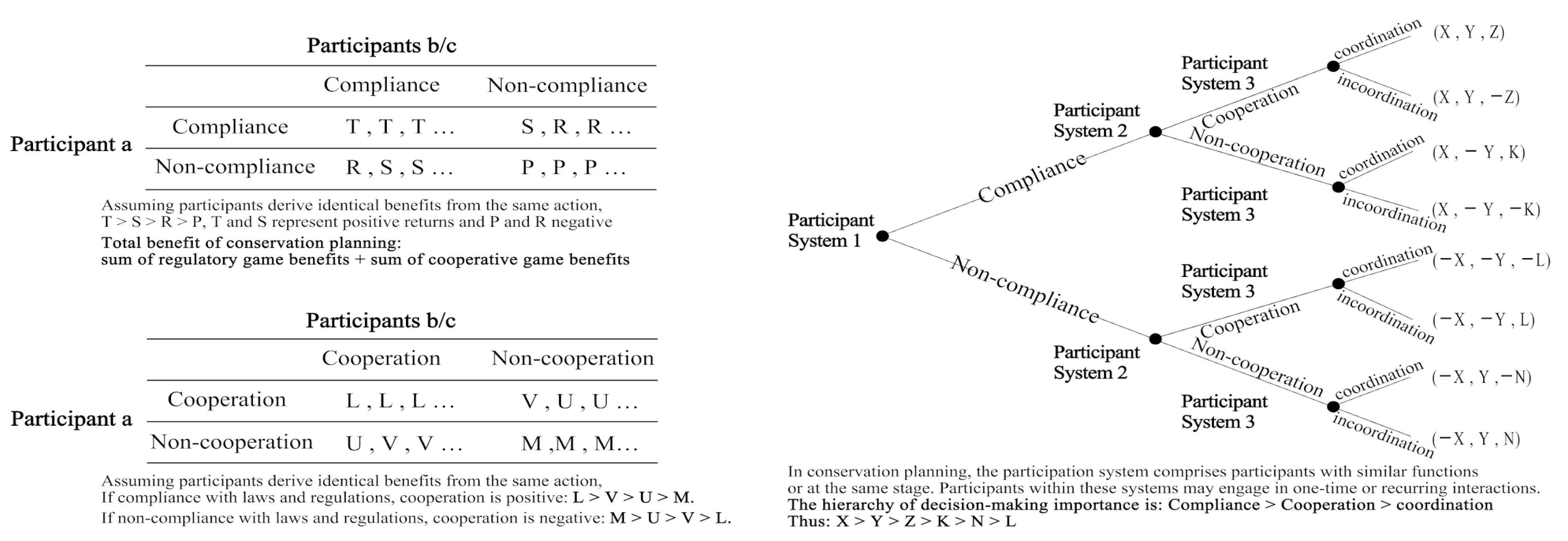
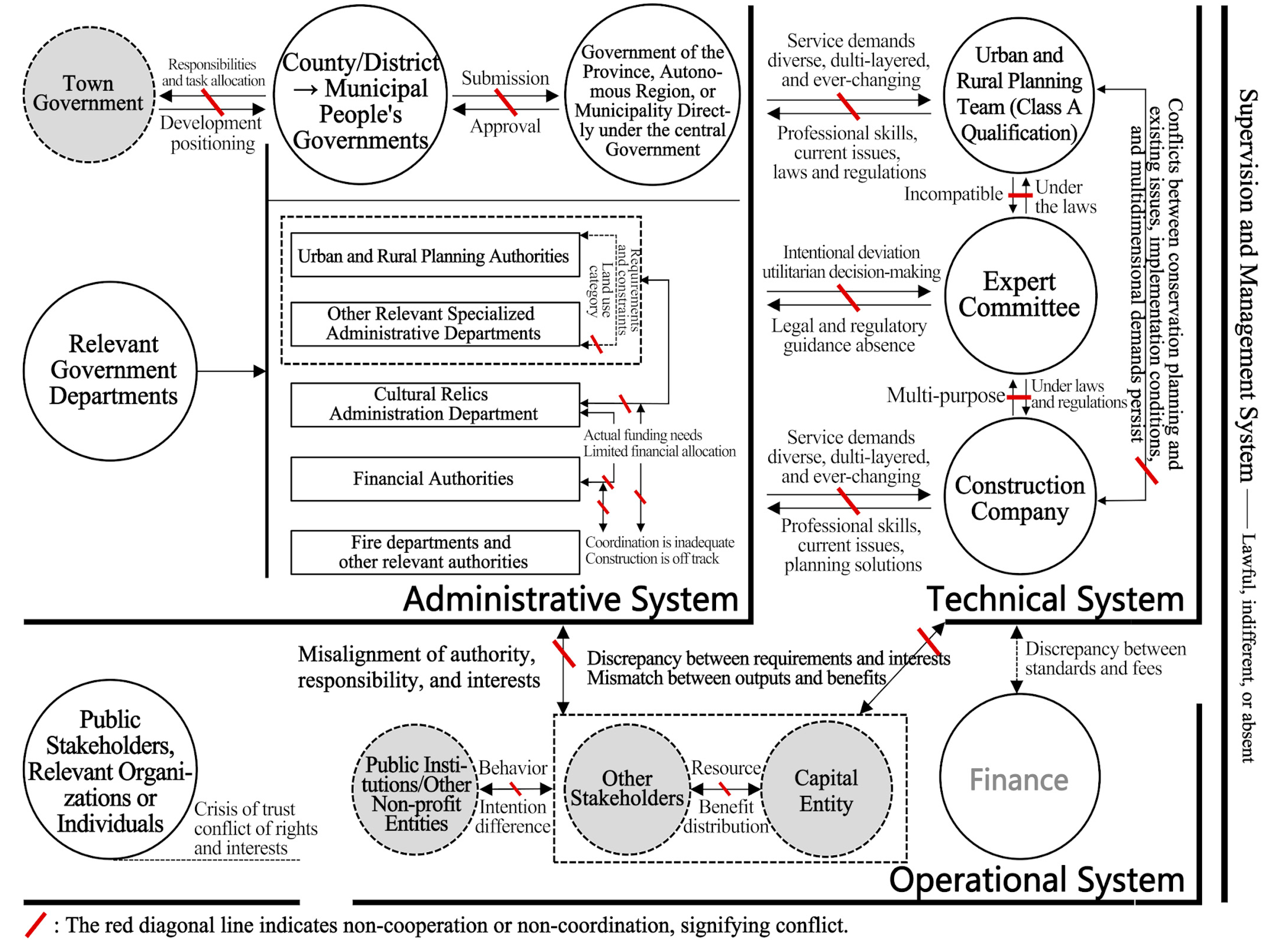
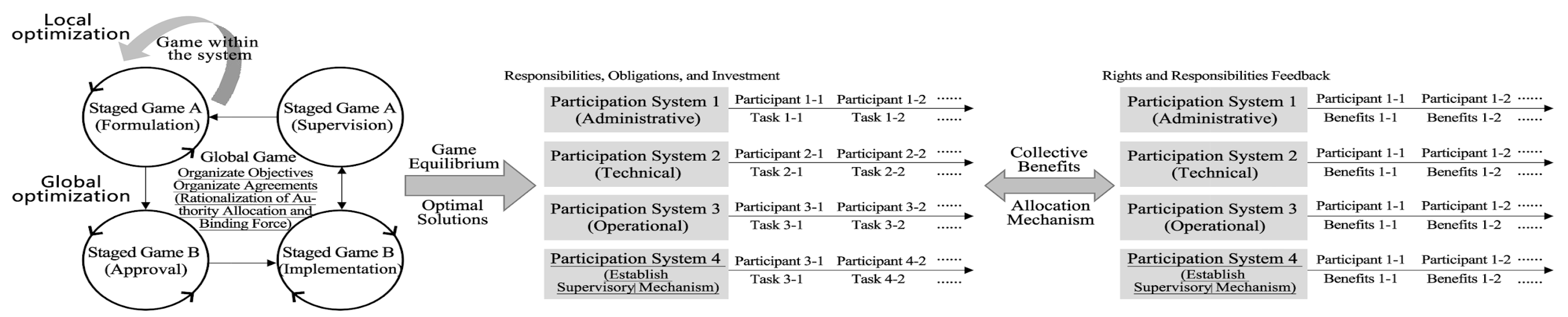
From a legal perspective, participants in the administrative, technical, and operational systems of historic town conservation planning must collaborate under the constraints or guidance of relevant laws, regulations, and standards to advance the orderly formulation, approval, and implementation of conservation plans. This inherently involves rational team-based decision-making. Theoretically speaking, decisions among participants—whether within or between systems—should reach a consensus before they act independently. This ensures alignment of authority, responsibilities, and interests, yielding a positive-sum outcome for overall benefits. However, if the binding agreements of laws and regulations fail to reach a lasting stable state, the structure of the participants changes or is subject to external interference, or if there are information deviations and authority misplacements among the participants, the rational situation of the team may be disrupted, and the participants may turn to pursue personal rational behavioral decision-making and judgment. In other words, historic town conservation planning involves dual levels of strategic interaction (
Figure 1): (1) At each planning stage, the system internally first chooses between compliance or non-compliance with laws and regulations while simultaneously selecting cooperation or non-cooperation among internal participants. (2) After internal games establish a general tendency, the dominant system ultimately decides whether to comply with or disregard the legal requirements in the conservation plan. Other system participants then choose to cooperate or not cooperate with the dominant system’s decision. For relatively flexible aspects of the plan, participants across systems further decide whether to continue or discontinue coordination, thereby forming external games. In conclusion, the different game stages in the entire game process of the conservation planning of historic towns and the game behaviors among systems all have a sequential nature. The decision outcomes of participants at each stage correspond to corresponding efficiency values, and the final effectiveness depends on the progressive accumulation of each decision made by every participant or participating system.
2.2. Materials and Data Sources
Through the interpretation of game theory, planning rights games, and the logic of historic town conservation planning games, it becomes evident that game-theoretic behavior permeates every stage of the conservation planning process. While decision-making by planning participants must adhere to the legal constraints of laws and regulations, the planning rights game simultaneously requires coordination of the authority, responsibilities, and interests among participants. This coordination pertains to the control, utilization, and allocation of land and market resources. Consequently, research on the planning rights game in historic town conservation planning should be grounded in multidimensional evidence or data. Firstly, we systematize relevant laws and regulations governing historic town conservation planning, focusing on analyzing statutory participants, their participation weights, and responsibilities within the planning process. This clarifies the team-rational cooperation game logic underlying the fundamental agreements of historic town conservation planning. Secondly, conduct a comparative analysis using four towns across two provinces as case studies. Examine the composition of participants and their decision-making behaviors to summarize the game-theoretic trajectories and dynamics within the process of historic town conservation planning to discover the phenomena of equilibrium and conflict in these games. Thirdly, we collate data on non-statutory participants in China’s historic and cultural town conservation and display–utilization projects. Integrating findings from the analysis of game-theoretic behaviors in statutory rationality and case studies, inferences are drawn regarding participant composition and related interest distribution during the formation of equilibrium and conflict in historic town conservation planning. This further clarifies the equilibrium model of town conservation planning and identifies the root causes of conflict stemming from the breakdown of group rationality. These analyses aim to interpret the participatory elements, game equilibrium, and conflict dynamics within conservation planning, uncovering underlying operational rules to provide foundational insights or cautionary lessons for planning formulation and implementation.
Among them, the case studies employed for empirical analysis are Tucheng, Yongxing, Dongxi, and Yushan. Firstly, these four sites exhibit highly representative game-theoretic behaviors in conservation planning. Moreover, the research team maintains close ties with these locations, enabling access to primary documentation regarding conservation planning projects. This facilitates the analysis of their game-theoretic processes and dynamics, as well as the construction of game models. Secondly, Tucheng and Yongxing belong to the same province, while Dongxi and Yushan are within the same municipality, directly under the central government. Historic towns within the same province or municipality share the same higher-level administrative management, although local responsible agencies may differ. Provinces and municipalities are at the same administrative level but vary in jurisdictional scope and administrative structure. This facilitates examining how foundational resources and administrative structures influence the negotiation processes and dynamics of conservation planning. Furthermore, Tucheng and Dongxi are designated as National Historic and Cultural Towns, Yongxing as a Provincial Historic and Cultural Town, and Yushan as an Other Historic and Cultural Town. This hierarchical classification of heritage status facilitates analysis of how towns with differing historic and cultural values influence participant composition and decision-making behaviors, thereby revealing the underlying causes of the evolving game dynamics. Therefore, this case selection effectively supports research into the equilibrium, conflicts, and mechanisms of conservation planning games.
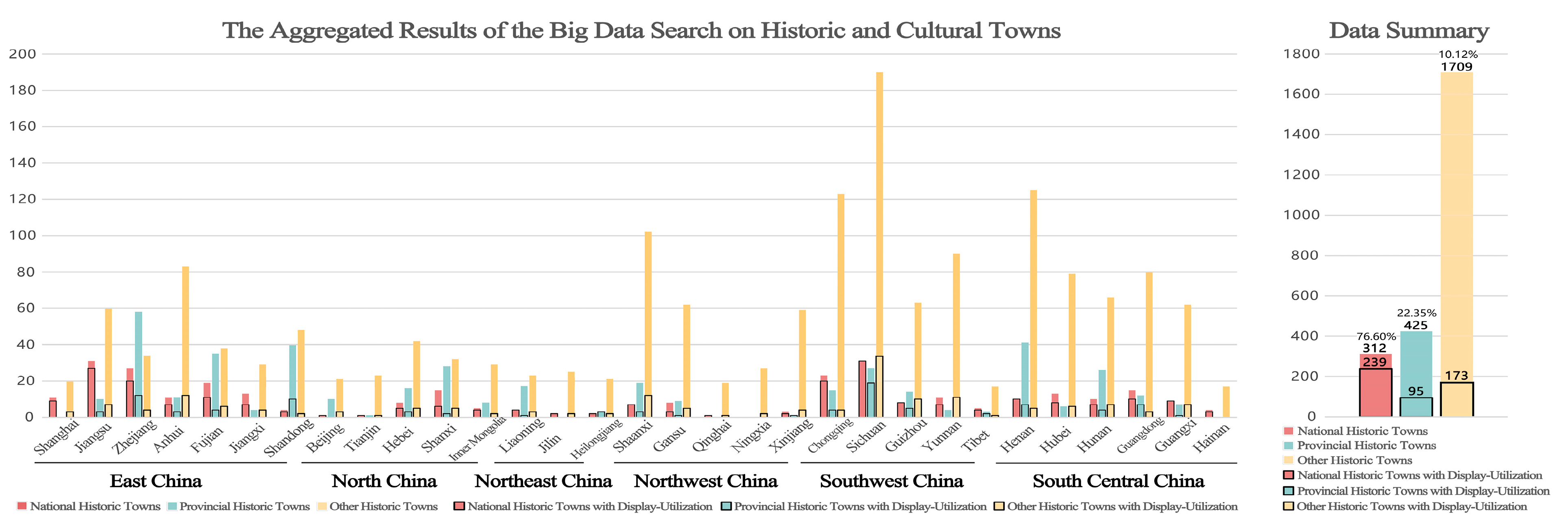
The nationwide dataset of non-statutory participants in historic and cultural towns was primarily obtained from information regarding capital relationships, equity structures, and operational statuses within conservation plans or development projects. The dataset of non-statutory stakeholders in nationally designated historic and cultural towns primarily derives from information regarding capital relationships, equity structures, and operational statuses within relevant conservation plans or display–utilization projects. These display–utilization projects encompass museums, exhibition halls, and experience centers dedicated to showcasing the cultural heritage of these towns, as well as industry development initiatives, cultural tourism facilities, and street-renovation projects undertaken with conservation as a prerequisite. We utilized publicly available information from local portal websites, bidding platforms, investment promotion sites, corporate information portals, and tourism information networks. Through precise searches and Python 3.12-based computational techniques, the dataset covers 312 National Historic and Cultural Towns, 425 Provincial Historic and Cultural Towns (currently available on online platforms), and 1709 Other Historic and Cultural Towns (including municipality-, county-, or district-level designated historic and cultural towns and other towns with outstanding historic and cultural value). The project’s search period spans June 2002 to June 2022 (no new National Historic and Cultural Towns were designated after 2022). The data retrieval methodology and workflow are illustrated in
Figure 2.
3. Results
3.1. Rational Team Game Analysis Based on Laws and Regulations
Relevant laws, regulations, ordinances, and standards form the fundamental baseline for the conservation planning process of historic and cultural towns. From the perspective of the participatory system for historic town conservation planning, the laws and regulations system plays an extremely important role. It imposes certain binding constraints on the decision-making behaviors of other participating systems throughout the formulation, approval, implementation, and supervision processes. In particular, it provides relatively clear stipulations regarding the functions, responsibilities, and authorities of participants in the conservation planning process. The conservation planning for historic and cultural towns must first be formulated, approved, implemented, and supervised in accordance with the Regulations on the Protection of Historic and Cultural Cities, Towns, and Villages (first promulgated in 2008 by the State Council; amended in 2017), the Requirements for the Formulation of Conservation Plans for Historic and Cultural Cities, Towns, and Villages (Trial) (jointly issued in 2012 by the Ministry of Housing and Urban–Rural Development and the National Cultural Heritage Administration), and the Measures for the Requirement and Approval of Conservation Plans for Districts in Historic and Cultural Cities, Towns, and Villages (issued in 2014 by the Ministry of Housing and Urban–Rural Development). They must also comply with relevant provisions in the Urban and Rural Planning Law of the People’s Republic of China (enacted in 2007 by the Standing Committee of the National People’s Congress; amended in 2015 and 2019), the Law of the People’s Republic of China on Protection of Cultural Relics (enacted in 1982 by the Standing Committee of the National People’s Congress; amended in 1991, 2007, 2013, 2015, and 2017; revised in 2002 and 2024), the Law of the People’s Republic of China on Intangible Cultural Heritage (enacted in 2011 by the Standing Committee of the National People’s Congress), and the Urban Purple Line Management Measures (issued in 2003 by the Ministry of Construction; amended in 2011 by the Ministry of Housing and Urban–Rural Development). Additionally, some provinces, municipalities directly under the central government, and autonomous regions require adherence to relevant requirements in local regulations or measures.
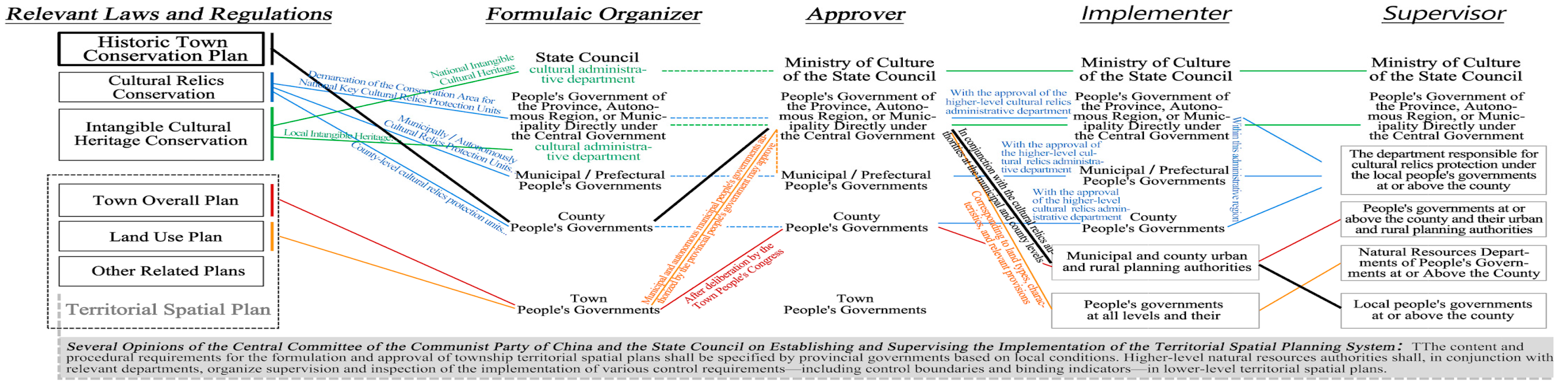
By reviewing the legal and regulatory framework governing the conservation planning of historic towns, it is evident that the participation system for such planning primarily comprises administrative, technical, and operational components. Within the administrative system, statutory participants mainly consist of people’s governments at all levels and their associated departments, responsible for organizing the formulation, approval, and overseeing implementation. Town or township people’s governments are non-statutory participants in the conservation planning process and may provide auxiliary support for relevant tasks when necessary. The technical system’s statutory participants primarily comprise planning formulation organizations (Class A qualification), experts in relevant fields, and construction companies, responsible for formulation, review, and construction. Cultural inheritors or artisans are non-statutory participants in the technical system, capable of providing technical support for the implementation of the conservation plan. The composition of participants in the operational system carries some uncertainty. Typically, costs for drafting the historic town conservation plan, implementing protective construction, and subsequent maintenance management are primarily covered by local finances or local government financing vehicles. When a historic town needs to be developed and utilized, other capital entities and profit-making units and individuals may participate in the formulation of conservation planning and operation management. These participants make decisions regarding conservation planning actions within their respective responsibilities, as stipulated by laws, regulations, and agreements. This fosters relatively balanced rational team collaboration aimed at maximizing collective benefits. The participants mentioned in laws and regulations, along with their functions and corresponding levels of involvement, are summarized in
Table 1.
3.2. Game Process and Dynamic Analysis Based on Case Comparisons
3.2.1. Conservation Plans for the Historic and Cultural Towns of Tucheng and Yongxing
Tucheng Town flourished through shipping and gained renown for its red culture, earning a designation as one of China’s second batch of Historic and Cultural Towns in 2005. As early as 2001, the Tucheng Town People’s Government initiated infrastructure restoration of ancient streets and alleys to preserve the millennia-old heritage. In 2003, it convened the drafting of the “Tucheng Ancient Town Conservation Plan (2003–2020)”. In 2005, the conservation plan was implemented. A tourism development company (state-owned enterprise) was established to advance the preservation and development of the red tourism industry. The relevant authorities legally approved the construction activities, while the local residents collaborated in supervising, protecting, repairing, and renovating the town. In 2013, the Red Tourism Company (another state-owned enterprise) was established to provide financial support for Tucheng’s preservation, exhibition, and utilization projects. Around 2015, the Red Tourism Company established holding companies for scenic area operations, travel agencies, and hotel management, investing in and managing specialized projects for the renowned town. Subsequently, the New Long March Education Center (a public institution) was established to conduct cultural promotion and research-based educational activities. As the development and utilization of the renowned town gradually improved, other private enterprises or individual businesses—such as cultural and creative firms, property management companies, and liquor stores—also established operations in Tucheng. These entities joined efforts to protect and develop the town’s historic and cultural heritage, continuing to collaborate on its construction, promotion, and management.
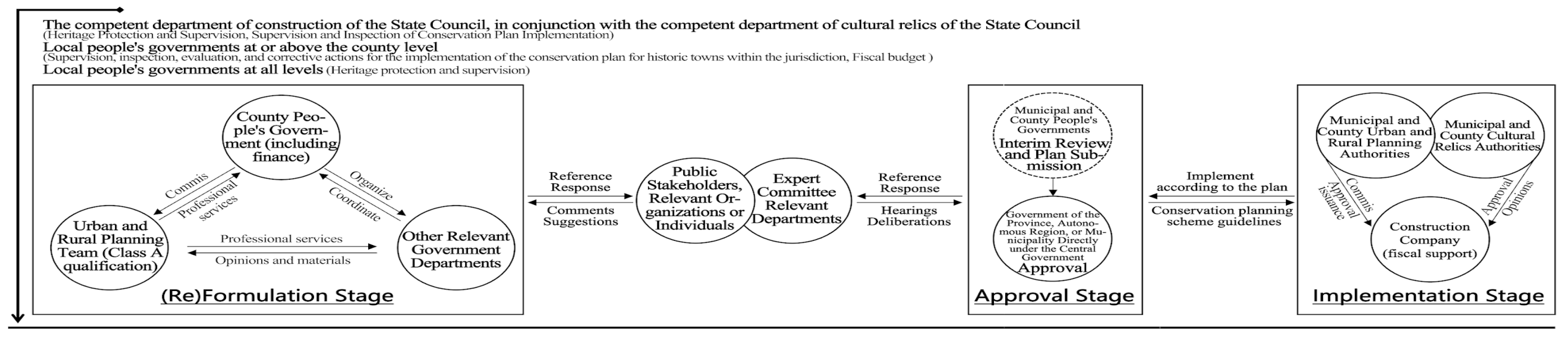
In December 2020, the Provincial Department of Housing and Urban–Rural Development issued the “Letter Regarding the Timely Completion of Formulation (or Reformulation) and Approval of Conservation Plans for Historic and Cultural Cities, Towns, Villages, and Districts.” This marked the commencement of the “Conservation Plan for the Tucheng Historic and Cultural Town (2021–2035) (Reformulated Edition)”. The county government organized the town government to implement the reformulation. The town government acknowledged the professional judgment of the planning team, calling for discussions between the team and relevant departments and stakeholders. Representatives conveyed public opinions, and a consensus was reached on prioritizing protection to drive development. During the approval process, the county government organized expert reviews and hearings with relevant departments, with the evaluation opinions generally adhering to the consistent principle of prioritizing protection. Throughout the reformulation and approval process for the Tucheng Historic and Cultural Town Conservation Plan, all the participants communicated effectively and coordinated closely, ensuring relatively smooth progress. Only during the stage of planning submission for review did a brief stalemate occur between the government and the planning compilation team due to economic disputes (
Figure 3).
Yongxing was once a major ancient commercial hub and was designated a Provincial Historic and Cultural Town in 2006. In 2008, the Yongxing Town Government commissioned a planning team to draft the “Yongxing Historic and Cultural Town Conservation Plan (2008–2020)”. The plan was submitted to the Provincial People’s Government for approval in 2011 and received official endorsement in 2013. During the implementation period of this conservation plan, the town government prioritized renewal projects. Residential properties within the protected zone that had been expropriated were sealed off, leading to widespread abandonment, decay, and collapse of traditional-style buildings. Additionally, some residents who were dissatisfied with the compensation and relocation arrangements refused to move out, continuing to live in neighborhoods riddled with dilapidated structures—posing significant safety hazards. In 2015, a fire occurred within the core protected area of the historic town. Following the disaster, residents independently rebuilt structures on the original sites. The new buildings, which not only violated the conservation plan’s provisions on scale, height, and appearance but also represented a broader trend of replacing traditional dwellings with modern ones, exposed the chronic absence of an effective supervisory system for Yongxing’s conservation plan. In 2019, the town government sought to develop the historic town, launching a public investment solicitation for the “Yongxing Ancient Town Construction Project.” However, to date, it has not reached a cooperation agreement with any investors.
In December 2020, the Provincial Department of Housing and Urban–Rural Development issued the “Letter Regarding the Timely Completion of Formulation (or Reformulation) and Approval of Conservation Plans for Historic and Cultural Cities, Towns, Villages, and Districts.” This also marked the commencement of the “Yongxing Historic and Cultural Town Conservation Plan (2021–2035) (Reformulated Edition)” project. During the formulation stage, the town government organized symposiums between the planning team and local residents. During these discussions, the local elders advocated for prioritizing preservation and restoration. The representatives of the ancient town’s residents consistently emphasized property rights and residential interests. Meanwhile, the town government argued that the existing higher-level plans were inconsistent with the town’s realities and insufficient as a basis for the reformulated conservation plan. They contended that the reformulated plan should fully consider the town’s development needs, reduce the intensity of protective controls to facilitate investment attraction, and maximize investment estimates to secure greater fiscal allocations. Faced with these disputes, the planning team reached compromises within the flexible scope of laws and regulations to finalize the conservation plan. Before submission for approval, the county and municipal governments convened joint reviews with the relevant departments and experts. The plan’s ambiguous direction led to persistent controversy. Some leaders and urban–rural planning authorities prioritized development, while cultural relics and cultural authorities insisted on strict protection. The finance department’s objections to the high investment estimates, as well as fire safety concerns, were repeatedly emphasized. Simultaneously, the participants at this meeting speculated about the preferences of higher-level authorities, causing the town government to remain indecisive in finalizing the relevant provisions of the conservation plan (
Figure 4).
3.2.2. Conservation Plans for the Historic and Cultural Towns of Dongxi and Yushan
Dongxi enjoys the reputation of a “Shan-shui ancient town.” In 2002, it was designated as a traditional town in urgent need of rescue. The local town government promptly commissioned the planning team to formulate the “Dongxi Ancient Town Conservation Plan (2003–2020)”. During implementation, the local government proactively advanced the town’s preservation, restoration, and infrastructure development while safeguarding residents’ rights. In 2007, Dongxi was designated as one of China’s third batch of Historic and Cultural Towns. In 2012, it was added to the second batch of municipal-level historic and cultural towns. Subsequently, the Tourism Investment Company (a state-owned enterprise) collaborated with the government to complete street facade renovations and key building restorations. Projects within the town’s protected area, including renovations of directly managed public housing, the slow-moving transportation system, and landscape enhancements, were placed on the agenda. The town’s operation and management were entrusted to the Cultural Development Company and the Ancient Town Company (both state-owned enterprises), which subsequently hired local residents for on-site positions.
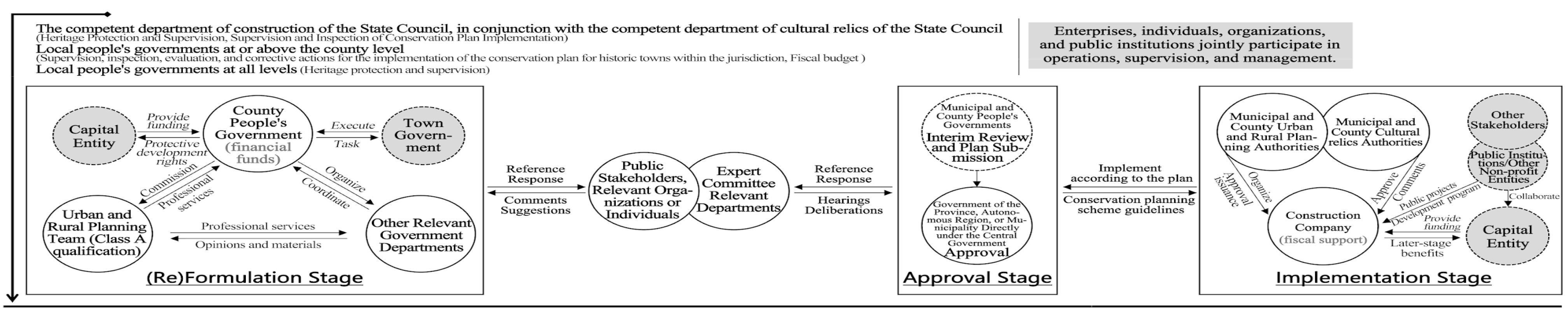
In 2019, the General Office of the Municipal People’s Government issued “the Opinions on Strengthening the Planning and Implementation of Historic and Cultural Conservation”, proposing to compile and revise a series of historic and cultural resource conservation plans between 2019 and 2022. In 2020, under the coordination of the District Bureau of Planning and Natural Resources where Dongxi Town is located, the Tourism Investment Company and the town government jointly commissioned a planning team to initiate the “Dongxi Town Historic and Cultural Town Conservation Plan (Reformulated Edition) 2020–2035”. Both the Tourism Investment Company and the local government emphasized that the plan must prioritize protection while continuously advancing the town’s development. The planning formulation and approval processes proceeded in an orderly manner. During the reformulated plan’s implementation, the local government and Travel Investment collaborated to construct new public rental housing. After orderly relocation of tenants from directly managed public housing, renovations proceeded in accordance with the conservation plan. Other privately owned properties underwent renovation guided by the government, incorporating the wishes of owners or occupants. Traditional artisans actively participated in the town’s revitalization efforts under government initiatives. By 2021, the town’s renovation was largely complete, establishing a cluster of cultural businesses, professional associations, and related organizations (
Figure 5).
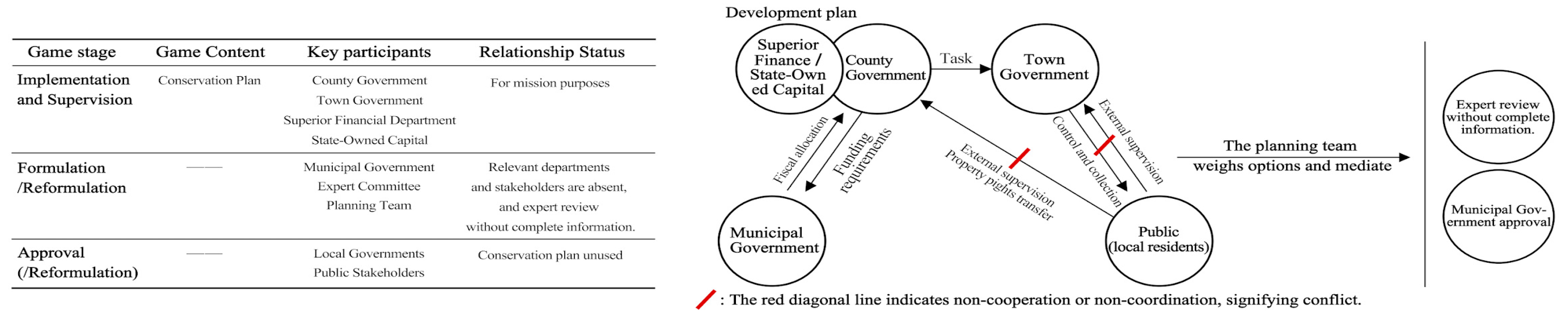
Yushan Ancient Town flourished due to its salt industry. In 2002, it was listed alongside Dongxi as a traditional town in urgent need of rescue. However, the relevant authorities failed to promptly implement effective measures for its protection and restoration. In 2013, the first phase of a comprehensive tourism development project for the ancient town, invested in by a tourism group (state-owned enterprise), commenced construction. However, the actual project turned out to be a large-scale imitation ancient structure in the county seat, leaving the conservation and utilization of Yushan in a state of stagnation. In 2014, the County People’s Government Office issued a notice on the implementation plan for protecting historic and cultural towns, emphasizing the need to expedite the preparation of a specialized conservation plan for Yushan. It also established a county-level committee for historic and cultural towns, aiming to explore conservation mechanisms and clarify the responsibilities of various departments. However, due to weak initiative and low cooperation among the relevant responsible entities, progress was slow and yielded no significant results. In 2015, the county government explicitly assigned the task of formulating the conservation plan to Yushan. The town government then commissioned a planning team to initiate the work. During the formulation process, the town government faced pressure from higher-level administrative inspections while also seeking to secure a fiscal allocation, making the task feel particularly burdensome. After the completion of the formulation work, the county and town governments held only a brief hearing before submitting the plan to the municipal government for approval. Before the approval, the relevant departments and experts conducted a joint review of the submitted plan without adequate preparation.
Compared to Dongxi, the preservation, utilization, and development of Yushan Ancient Town have seen the involvement of state-owned enterprises. However, due to the slow and lax pace of historic town protection, longstanding issues such as cultural loss, damage to traditional features, and complex residential situations are difficult to resolve effectively in the short term, leading the actual focus of the relevant administrative bodies to lie elsewhere, resulting in the town’s preservation efforts lacking dedicated leadership. Despite repeated public appeals regarding these issues, no tangible results have been achieved. This has directly led to the conservation plan remaining largely ineffective even after its completion (
Figure 6).
3.3. Analysis of Non-Statutory Participants in Conservation Planning Games
Based on the data review of the laws and regulations and the analysis of cases, there are two relatively prominent states of game equilibrium and conflict in historic and cultural town conservation planning. Both Tucheng and Dongxi demonstrate equilibrium states characterized by adherence to statutory constraints, and their rights, responsibilities, and interests are also matched. Agreement-based equilibrium is primarily driven by statutory participants, with participants lawfully fulfilling their respective duties within prescribed rights and responsibilities. Equilibrium between rights, responsibilities, and interests typically requires coordinating the substantive roles of non-statutory stakeholders, such as state-owned enterprises, private capital, and public representatives. Both equilibrium types reflect the rational team-oriented behavior of participants, whose decisions are driven by maximizing collective interests. Prior to planning commencement, stakeholders prioritize reaching a coordinated consensus and adhere to agreements on authority and benefit distribution throughout the process. This sustained lawful collaboration fosters a virtuous cycle of historic town preservation and sustainable utilization. Yongxing and Yushan exhibit two conflict states: violations of laws and regulations, and imbalances in authority, responsibility, and interests. These manifest when statutory participants fail to conduct work in an orderly manner according to legal agreements, or when non-statutory participants introduce new biased influences in power and interest distribution. Participants deviate from collective rationality, making decisions based on personal achievements, responsibilities, and interests, thereby creating conflict. This results in difficulties in formulating conservation plans or renders them ineffective after formulation. Therefore, based on the review of the laws and regulations and empirical research on the negotiation processes of historic and cultural towns, the formulation and implementation of historic and cultural town conservation plans possess a certain degree of foresight. However, participants are not limited to the entities mentioned in laws, regulations, and standards, and the scope, depth, and form of participation by various stakeholders are not entirely stable. Moreover, the composition and attributes of non-statutory participants are significantly influenced by the state of conservation, display–utilization, and development and construction of historic and cultural towns.
According to the aggregated results of the big data search on historic and cultural towns (
Figure 7), the display–utilization rate (the proportion of historic towns with display–utilization out of the total number) of national historic and cultural towns (76.6%) is significantly higher than that of provincial historic and cultural towns (22.35%) and other historic and cultural towns (10.12%). Simultaneously, the display–utilization rate of renowned towns in economically developed regions is markedly higher than that in relatively underdeveloped areas. Detailed statistics indicate (
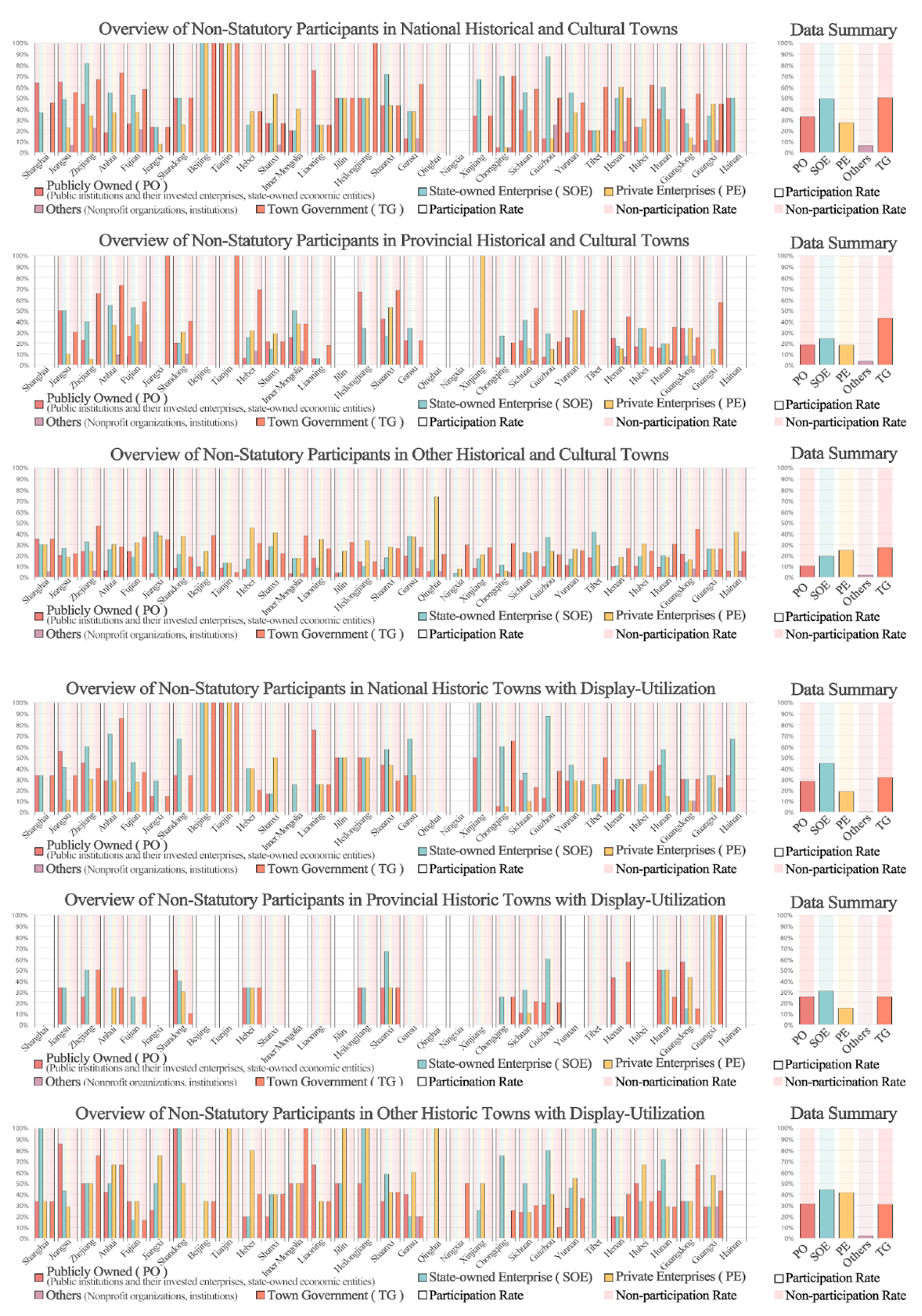
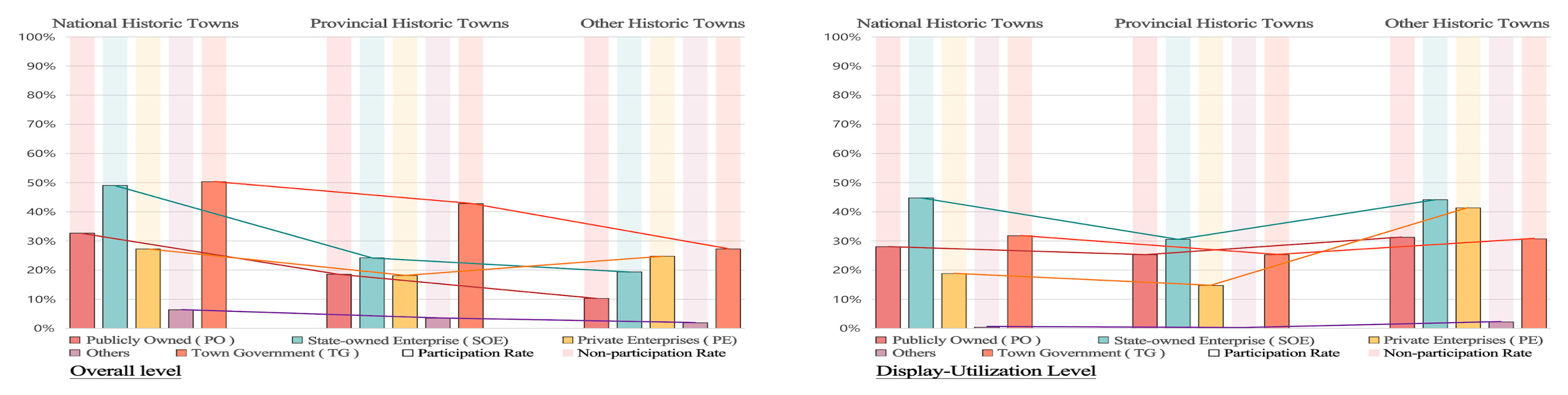
Figure 8) that town governments (as grassroots implementers within the administrative system, tasked with both heritage preservation and local development) exhibit high participation rates in various projects related to the conservation plans of historic and cultural towns at all levels and categories (50.32%, 42.82%, 27.27%, 31.80%, 25.26%, and 30.73%), while participation by other public organizations or individuals (third-party supervisors, evaluators, and innovative practitioners characterized by independence, professionalism, advocacy, and flexibility) was extremely low (6.41%, 3.53%, 1.93%, 0.42%, 0.00%, and 2.23%). Publicly owned entities, state-owned enterprises (economic entities funded or controlled by administrative bodies or public institutions, possessing dual public and commercial interests), and private enterprises (including limited liability companies, partnerships, and proprietorships oriented toward private property rights and individual profit maximization) participated commonly in the conservation plans of towns of all levels and categories, although their participation rates showed notable variations. A comprehensive data trend analysis indicates (
Figure 9) that town governments exhibit higher overall participation in historic town conservation planning, with a diminishing trend as the town’s designation level decreases, although the magnitude of this change is relatively small. Public economic entities follow a similar pattern. State-owned enterprises generally participate at slightly lower rates than town governments, also showing a decreasing trend, but with a more pronounced magnitude of change. For historic and cultural towns already in display–utilization, state-owned enterprises exhibit higher participation rates than other non-statutory entities across all tiers of historic towns. Their involvement is notably higher in national historic and cultural towns and other historic and cultural towns compared to provincial historic and cultural towns. Private enterprises show insignificant participation in national and provincial historic and cultural towns, yet their participation rate in other historic and cultural towns is comparable to that of state-owned enterprises, indicating a distinct trend discontinuity. Overall, from the statistical analysis of non-statutory participant data and the findings from case studies, it can be inferred that the composition of participants in the conservation planning of historic towns, as well as the negotiation processes and dynamics identified through case analyses, are broadly applicable to the actual circumstances of conservation planning for most historic and cultural towns across the country.
5. Conclusions
Historic and cultural towns possess dual attributes of preservation and development. Whether decision-making among participants across multiple planning frameworks and systems remains coordinated hinges primarily on stakeholders’ perceptions and judgments regarding the preservation–development relationship during the formulation, implementation, and supervision of conservation plans. Despite conservation plans being legally binding, requiring participants to adhere to predetermined rules of collective rationality, conflicts among multiple planning frameworks may still trigger decision-making dilemmas. This involves choosing between prioritizing preservation with rational utilization or yielding as much as possible to economic development and construction—a choice that carries inherent zero-sum antagonism. The scope of historic town conservation plans aligns with the town’s administrative boundaries. Given finite resource capacities, stakeholders must balance conservation, utilization, and socioeconomic development needs. Plans must therefore define implementation approaches—such as resource protection, renewal, or removal—while delineating spatial scales and land-use designations. Actors compete for resources, spatial dominance, and control over heritage and environmental elements, which can trigger market and leadership contests. These contests involve multidimensional rivalries over capital, authority, and technology, ultimately leading to conflicts over rights. From resource contention to aspirations for rights, conflicts in conservation planning exhibit a cumulative effect of deepening over time. From a planning perspective, this primarily involves determining, implementing, and managing the scope of protection, the content of conservation, and the requirements and control measures. It may even influence the determination of the form, methods, and degree of showcasing and utilizing within the conservation plan.
Moreover, when participants engage in decision-making for historic town conservation planning, their functions, responsibilities, rights, and interests become closely intertwined, and the value, rights and responsibilities, and capital efficiency of historic towns are key elements that constitute the game of conservation planning. Generally, the higher the value level of the heritage, the greater the enthusiasm of the participants and thus the easier it is to generate positive feedback regarding the game of conservation planning. This has been confirmed through case studies and broader statistical analysis. Participants also demonstrate a stronger willingness to maintain the rational collaborative relationships established by laws and regulations. State-owned enterprises and local public economic entities embody distinct governmental will, exhibiting strong stability and coordination. Consequently, they serve as crucial pillars for the preservation, display, and utilization of historic and cultural towns. Additionally, private enterprises are extensively involved in the conservation and utilization of historic towns. However, most private enterprises, along with some state-owned enterprises and public economic entities, prioritize individual gains and focus on the comprehensive value of the town. Consequently, they tend to invest in other historic and cultural towns that possess historic and cultural value while being subject to fewer legal and regulatory constraints and offering greater operational flexibility. These aspects indicate that the behavioral decisions of non-statutory participants exhibit distinct divergences in intent, influencing the composition and decision-making of statutory participants, which may alter the established cooperative framework of the conservation plan, potentially creating new game dynamics and evolving strategic scenarios.
In summary, the protection and continuity development of urban and rural historic and cultural heritage are vital to the cultural lifeline of the Chinese nation. Historic and cultural towns serve as quintessential representatives of such heritage. Research into the equilibrium, conflicts, and mechanisms within the planning of historic and cultural conservation for these towns provides a window into the broader study of urban and rural heritage conservation. In heritage conservation, if participants focus solely on individual rationality, even in a non-cooperative equilibrium game, it is difficult to ensure mutual benefits for all parties. In fact, this approach is more likely to lead to conflict, which rarely results in win–win outcomes but may instead cause mutual loss. Therefore, how to manage relationships within the game, transforming adverse outcomes into “harmonious integration,” thereby enabling participants to maximize collective benefits through cooperative equilibrium while ensuring that each party gains its due share, remains a crucial long-term issue in the protection of urban and rural historic and cultural heritage. The progressive implementation of territorial spatial planning has effectively mitigated conflicts arising from fragmented planning systems and divergent functional responsibilities across departments. This research contributes to helping urban and rural historic and cultural heritage protection and transmission overcome the dilemmas of the game and avoid the operational drawbacks of individual-driven actions.
This paper has certain limitations. Firstly, to present complex game scenarios in an intuitive manner, the research simplified the game process to some extent, making it difficult to fully capture abrupt changes and persistence in participant relationships and decision-making behaviors. Secondly, while the case analyses and statistical findings provide rich insights, the large number of historic and cultural towns with varying circumstances inevitably renders the induction of game models and the interpretation of their operational mechanisms exploratory in nature. This approach may exhibit qualitative dependencies and retrospective biases. Moving forward, we will address these limitations through further research. This can be achieved by increasing the number of case studies and incorporating methods such as weighted indices and matrix analysis to deepen our understanding of the regulatory patterns governing decision-making among participants. This will enhance the study of game-theoretic relationships and mechanisms within historic town conservation planning. Furthermore, the research can be extended to other heritage types, including historic and cultural cities, villages, and districts, thereby constructing a more comprehensive and systematic research framework.