


Abstract
Against the backdrop of accelerating global spatial restructuring, metropolitan areas have become crucial spatial units for enhancing regional competitiveness and securing industrial chains. Although China has continuously advanced metropolitan area development, low land use efficiency remains a key constraint on sustainable progress. Metropolitan integration presents a new approach to addressing this challenge. This study constructs an analytical framework of “direct effects–indirect effects–dynamic evolution” and measures metropolitan integration and land use efficiency using a multidimensional indicator system and a super-efficiency slacks-based measure (SBM) model incorporating undesirable outputs. Employing the system generalized method of moments (System GMM) estimator, this study conducts both baseline and mediation analyses using balanced panel data for 32 Chinese metropolitan areas from 2016 to 2022. The results show that both metropolitan integration and land use efficiency improved steadily during the study period. The coefficient on metropolitan integration is positive and statistically significant, and the lagged dependent variable is also positive and statistically significant, indicating substantial persistence over time. Heterogeneity analyses further indicate that the estimated association is more pronounced in eastern metropolitan areas and nationally designated metropolitan areas. In addition, industrial agglomeration and industrial specialization operate as important mediating channels in this relationship. Based on these findings, the study proposes policy recommendations to strengthen metropolitan integration and industrial collaboration, thereby improving land use efficiency.
1. Introduction
Against the backdrop of global industrial chain restructuring and spatial reorganization, reshaping regional spatial organization and governance models has become a key strategy for countries seeking to enhance competitiveness and respond to development challenges. Metropolitan development is widely regarded as an essential pathway for optimizing factor allocation and strengthening regional resilience [1]. It has gradually evolved into a core spatial carrier supporting national economic stability and safeguarding industrial and supply chain security.
In OECD member countries, metropolitan areas have become major territorial units for national economic activity and spatial restructuring. Large metropolitan regions tend to concentrate a high share of economic output, innovation resources, and high-end production factors, with their development momentum largely driven by agglomeration economies, scale effects, and efficiency gains arising from cross-regional factor mobility. However, the performance of metropolitan development exhibits substantial heterogeneity. Not all metropolitan areas achieve the expected agglomeration benefits or development objectives, and some experience challenges such as spatial imbalance, resource misallocation, environmental pressures, and social polarization during development [2]. These patterns suggest that metropolitan development is a continuously evolving process rather than a linear, self-optimizing outcome. Instead, metropolitan areas undergo ongoing spatial restructuring and institutional adjustment across different stages of development, with their performance largely determined by the effectiveness of internal coordination mechanisms [3].
In advancing new-type urbanization and coordinated regional development, modern metropolitan areas in China are increasingly emerging as new engines driving spatial restructuring and economic growth [4]. As spatial units formed by core cities and their peripheral cities through functional linkages and factor flows, metropolitan areas play an essential role in improving the efficiency of factor allocation, promoting industrial division of labor and coordination, and enhancing regional competitiveness [5]. However, rapid urbanization and the expansion of construction land have led to relatively low land use efficiency, a major constraint on the sustainable development of metropolitan areas. For a long time, local governments in China have relied excessively on incremental land expansion in land management, resulting in land scarcity in core cities, inefficient land use in peripheral cities, and growing imbalances in land use across regions [6]. These challenges are further compounded by dependence on land-based fiscal revenues, administrative boundary barriers, and the urban–rural dual land system, which together have intensified problems of land misallocation and extensive land use [7,8]. Against this backdrop, how metropolitan integration can be leveraged to address inefficient land use and achieve a more intensive, efficient allocation of land resources has become a central issue for both academic research and policy practice.
The existing literature has undertaken multi-level empirical investigations into the relationship between regional integration and urban land use efficiency, with particular attention to coupling effects and underlying mechanisms across different spatial scales. Overall, regional integration is generally associated with improvements in urban land use efficiency; however, the pathways and outcomes of this relationship exhibit notable spatial heterogeneity across regions, development stages, and city hierarchies. In terms of spatial scale, empirical studies have focused mainly on representative regions such as the Yangtze River Delta Urban Agglomeration, the Middle Reaches of the Yangtze River Urban Agglomeration, and the Yangtze River Economic Belt. Other studies have extended the analysis to the national prefecture-level city scale or to specific metropolitan areas, thereby enhancing the breadth and representativeness of spatial coverage. Regarding mechanisms, regional integration is commonly examined through channels such as freer factor mobility, industrial structure adjustment, market integration, and transport connectivity, all of which are associated with more efficient resource allocation and overall improvements in land use efficiency [9,10,11]. The integration process also exhibits pronounced spatial spillover effects, with regional coordination effects being particularly evident in eastern China, where efficiency improvements tend to extend to peripheral cities [12,13]. By contrast, in central and western regions, the role of integration appears to operate primarily through its direct association with local land use efficiency [14]. Responses also differ across city types: large cities tend to benefit more from technological and capital agglomeration, whereas smaller cities may initially face resource outflows but can gradually achieve efficiency compensation and high-quality transformation through factor integration and technology spillovers [15]. Some studies further suggest that, in the early stages of integration, one-sided factor absorption may give rise to an “efficiency trap,” generating negative externalities for peripheral cities [16]. From a causal perspective, while some studies document a unidirectional association from regional integration to land use efficiency, others emphasize a dynamic, bidirectional coupling between the two processes [17,18]. Taken together, the existing evidence indicates that regional integration has played an important role in promoting more intensive and efficient urban land use in China.
Although existing studies have generated substantial empirical evidence at broader spatial scales such as urban agglomerations and economic belts, systematic investigations into the relationship between regional integration and land use efficiency at the metropolitan scale remain relatively limited. Most prior research focuses on overall trends at larger spatial scales and pays insufficient attention to metropolitan areas as spatial units characterized by denser factor linkages and higher potential for resource allocation efficiency. As a result, mechanisms operating at the metropolitan level and heterogeneity across different metropolitan areas have not been adequately identified, constraining the applicability and policy relevance of existing findings for fine-grained regional governance.
In practice, metropolitan areas constitute a key spatial unit within national regional development strategies. Compared with broader regional units, they exhibit stronger capacities for factor agglomeration and institutional coordination. Accordingly, the process of metropolitan integration may involve distinctive evolutionary logics and development pathways in shaping land use efficiency. However, much of the existing literature emphasizes static effect estimation, with limited attention to the spatial processes and dynamic evolution through which integration influences land use efficiency. This limitation makes it difficult to capture temporal dynamics and regional heterogeneity in the underlying mechanisms.
Against this backdrop, adopting the metropolitan scale as the analytical unit and systematically examining the mechanisms and evolutionary characteristics through which regional integration is associated with land use efficiency can contribute to a more complete theoretical framework and provide empirical evidence to support more refined and targeted regional governance.
Given that metropolitan areas differ from urban agglomerations in terms of spatial scale, the influence range of core cities, and institutional arrangements, the effects and pathways through which integration is associated with land use efficiency may also differ and therefore warrant further investigation. Building on theoretical analysis and empirical examination, this study aims to systematically examine the overall relationship between metropolitan integration and land use efficiency, as well as the mechanisms underlying this relationship. In doing so, the study seeks to provide theoretical insights and policy-relevant evidence to support more efficient land resource allocation and the advancement of sustainable spatial governance in metropolitan areas.
2. Theoretical Framework and Hypotheses
Metropolitan integration is widely regarded as an important indicator of cities entering a more advanced stage of development. Its core lies in promoting deep integration between core cities and peripheral cities through factor mobility, functional complementarity, and institutional coordination [19]. This process reflects a transition in urban development from competition toward coordination, emphasizing transport connectivity, resource integration, industrial collaboration, and the optimization of governance mechanisms. Building on the recognition of intercity differences and functional complementarities, metropolitan integration seeks to achieve coordinated development across economic, social, cultural, ecological, and governance dimensions through well-developed infrastructure networks and public service systems [20]. At a deeper level, it reflects the formation of close intercity linkages within overlapping spheres of interaction, enabled by efficient transport and information networks. Through economic division of labor and functional complementarity, cities become increasingly integrated, facilitating a more efficient allocation of resources and activities [21,22]. At the same time, metropolitan integration involves the establishment of metropolitan governance structures and inter-municipal cooperation mechanisms that promote coordinated action among governments at different levels [23,24]. It also encompasses cultivating a shared metropolitan identity and strengthening residents’ sense of spatial belonging, thereby enhancing regional cohesion and integrative awareness [25]. Under the leadership of core cities, metropolitan integration advances intercity coordination and overall development through cross-boundary cooperation, functional specialization, and resource sharing [26,27]. From a policy perspective, metropolitan integration in China has been promoted primarily through coordinated transport infrastructure development, integration of factor markets, joint provision and sharing of public services, and intercity industrial division of labor and collaboration [28]. Overall, metropolitan integration represents a multidimensional and systemic process encompassing economic, spatial, social, institutional, and cultural dimensions. Its essence lies in fostering efficient internal integration and coordinated progress through institutional alignment and spatial connectivity.
Based on the above definitions and conceptualization, and to facilitate quantitative measurement and empirical analysis, this study operationalizes the multidimensional nature of metropolitan integration into three core dimensions: market integration, transport integration, and public service integration. Market integration reflects the degree of integration in economic operations and serves as an institutional foundation for factor mobility and efficient resource allocation [29]. Transport integration captures the level of physical connectivity across space and constitutes a fundamental basis for building an efficient, networked spatial structure [30]. Public service integration reflects the coordination of social development and functions as a key mechanism for promoting orderly population mobility and enhancing the overall carrying capacity of metropolitan areas [31]. Together, these three dimensions represent metropolitan integration from the institutional, spatial, and service perspectives, respectively, and jointly constitute its core components.
Beyond the three core dimensions discussed above, industrial integration, although closely related to the integration process, differs in its functional role. Rather than constituting a foundational dimension of integration, industrial integration primarily represents a structural response mechanism. This outcome naturally emerges from intensified factor connectivity and intercity coordination in production and specialization following institutional, spatial, and service integration [32].
Accordingly, this study treats industrial integration as a mediating variable, used to examine how institutional coordination, spatial connectivity, and public service integration enhance land use efficiency through industrial coordination and the division of labor [33,34,35], rather than incorporating it directly into the composite metropolitan integration index. This analytical distinction is consistent with the practical evolution of metropolitan integration. It helps preserve both the logical coherence of the causal mechanism and the rigor of the empirical modeling framework.
In this study, industrial integration is primarily reflected in two interrelated dimensions: industrial agglomeration and industrial specialization among cities within a metropolitan area. Industrial agglomeration emphasizes the spatial concentration of factors, firms, and segments of industrial value chains within localized areas, capturing economies of scale and density effects. Industrial specialization, by contrast, reflects functional complementarity and intercity division of labor within the regional industrial system [36]. Together, these two dimensions constitute the fundamental mechanisms of metropolitan industrial linkage and serve as key transmission channels through which institutional, spatial, and service integration influence land use efficiency.
2.1. Direct Effects of Metropolitan Integration on Land Use Efficiency
Integration across market, transport, and public service domains constitutes the institutional and spatial foundation for the efficient functioning of metropolitan areas, directly contributing to overall improvements in land use efficiency. From a theoretical perspective, drawing on insights from New Economic Geography, can be understood as being driven not only by transport costs and economies of scale, but also by the institutional environment that supports factor mobility and efficient resource allocation [37].
On the one hand, market integration reduces transaction costs and expands market scale by dismantling interregional institutional barriers and establishing unified market systems and platforms for factor mobility. This process lowers institutional frictions and enables production factors—such as capital, labor, and technology—to circulate more freely and be optimally allocated across a broader spatial scope, thereby enhancing internal accessibility and allocation flexibility within metropolitan areas [38]. Improved factor matching and production efficiency help mitigate land waste caused by fragmented urban planning and redundant construction, ultimately leading to higher land use efficiency. On the other hand, transport integration improves intercity connectivity by constructing efficient, well-coordinated regional transport networks, reducing spatial and temporal barriers between cities, and expanding the effective spatial range of economic activity and population mobility within metropolitan areas [39]. Enhanced transport accessibility strengthens economic linkages between core cities and peripheral cities, increases land accessibility and development potential in peripheral areas, and enables previously underutilized or idle land to be more effectively developed. At the same time, it helps relieve excessive land pressure in core cities caused by over-concentration, thereby optimizing the overall spatial pattern of land use. In addition, public service integration promotes a more balanced spatial distribution of public resources—such as education and healthcare—within metropolitan areas. By alleviating the excessive concentration of public services in core cities, this process weakens their population and factor siphoning effects on peripheral cities, guides a more rational internal distribution of population, and facilitates coordinated and efficient land use across the metropolitan area [40,41,42].
Overall, metropolitan integration—grounded in the New Economic Geography framework, which emphasizes enhanced spatial connectivity and free factor mobility, and by reducing institutional and spatial frictions—creates favorable conditions for efficient land use through the joint effects of institutional harmonization, spatial interconnection, and coordinated public service provision. These mechanisms collectively promote the intensive use and optimal allocation of land resources within metropolitan areas.
2.2. Indirect Effects: Industrial Agglomeration and Industrial Specialization
Metropolitan integration can also indirectly enhance land use efficiency by facilitating industrial agglomeration and coordinated industrial specialization. According to New Economic Geography, improvements in intra-regional market integration and transport accessibility help overcome geographic barriers, promote free factor mobility, and encourage spatial concentration, thereby fostering more efficient forms of industrial spatial organization [37].
On the one hand, market integration expands the scale of unified regional markets, allowing firms to move beyond the constraints of individual city market size and to agglomerate across the metropolitan area around their respective comparative advantages. The spatial concentration of related firms and industrial chain segments generates economies of scale and agglomeration benefits, substantially increasing output intensity per unit of land and contributing to more intensive and efficient land use. On the other hand, transport integration provides essential support for cross-city industrial specialization. Improved transport connectivity reduces the costs of multi-location firm deployment and intercity coordination, facilitating the formation of integrated metropolitan supply chain networks. Cities can develop specialized industries based on their comparative advantages and achieve differentiated development under conditions of enhanced connectivity, thereby avoiding low-level homogeneous competition and redundant industrial construction. This process contributes to a more efficient regional industrial layout and a more rational land use structure. Meanwhile, public service integration ensures the free movement of labor and a more balanced spatial distribution of talent within metropolitan areas. More equalized access to education, healthcare, and other public services reduces excessive concentration of talent in a small number of core cities, enabling multiple industrial clusters to emerge across different cities. This process supports a more balanced regional division of labor between population and industry. Through the scale economies generated by industrial agglomeration and the functional complementarities arising from specialized industrial division of labor, metropolitan integration indirectly promotes improvements in land use efficiency [43,44].
2.3. Dynamic Evolutionary Effects of Metropolitan Integration on Land Use Efficiency
The impact of metropolitan integration on land use efficiency is not static; rather, it unfolds and intensifies through a dynamic process of evolution. As integration deepens, its underlying mechanisms exhibit clear stage-specific characteristics and cumulative effects. This dynamic process can be theoretically grounded in the “polarization–diffusion” mechanism proposed by growth pole theory, which posits that development initially concentrates around core cities, generating polarization effects [45], and subsequently diffuses outward to peripheral areas through spillover processes, ultimately fostering regional coordination [46].
In the early stage of integration, improvements in infrastructure connectivity and market openness directly contribute to initial gains in land use efficiency. Core cities, benefiting from first-mover advantages, attract production factors and industries, rapidly increasing development intensity and land use efficiency, thereby exhibiting pronounced polarization effects. However, this phase may also be accompanied by unidirectional resource flows toward core cities, leading to industrial hollowing out and inefficient land use in peripheral cities. As a result, disparities in land use efficiency within the metropolitan area may widen.
As integration deepens, the continuous improvement of regional transport networks, the maturation of systems of industrial division of labor, and the gradual equalization of public services begin to alleviate excessive factor concentration in core cities. Industries and population are spreading toward peripheral cities, pushing the metropolitan spatial structure to evolve from a monocentric pattern toward a polycentric and networked configuration [47]. At this stage, diffusion effects become increasingly evident: core cities promote the development of peripheral cities through spillovers of capital, technology, and managerial expertise, facilitating industrial upgrading, gradient transfer, and more efficient factor allocation—consequently, improvements in land use efficiency spread from localized areas to the metropolitan area as a whole.
The mature stage is characterized by a process of rebalancing. Regional collaborative governance mechanisms become more institutionalized, while economic, transport, and public service systems achieve deeper integration. Inter-city specialization and cooperation stabilize, giving rise to a polycentric structure based on functional complementarity. Production factors circulate more evenly and efficiently across a broader spatial scale, enabling land resources to be allocated more evenly among economic, social, and ecological objectives. At this stage, land use efficiency enters a relatively stable phase of sustained improvement.
From the perspective of new economic geography, the evolution of land use efficiency reflects the continuous optimization of industrial spatial structures as transport costs decline and market size expands. Through a dynamic interplay of agglomeration and diffusion between core and peripheral cities, metropolitan areas achieve simultaneous improvements in resource allocation efficiency and spatial organization [37].
In summary, the dynamic evolution of metropolitan integration follows a staged process of “polarization–diffusion–rebalancing,” representing a transition from localized efficiency gains to system-wide improvements, and from static optimization to dynamic coordination. Through this process, metropolitan areas gradually establish a balanced, efficient, and sustainable land use system, enabling long-term improvements in land use efficiency.
Based on the above mechanism analysis, this study constructs a systematic analytical framework (see Figure 1). Starting from three dimensions of metropolitan integration—market integration, transport integration, and public service integration—the framework illustrates how metropolitan integration influences land use efficiency through both direct and indirect channels. In addition, the framework explicitly incorporates the stage-specific characteristics of this process within the dynamic evolution of metropolitan integration. On this basis, the following research hypotheses are proposed:
Figure 1.
Mechanisms of metropolitan integration’s impact on land use efficiency.
H1.
Metropolitan integration enhances land use efficiency within metropolitan areas, and its promoting effect varies across metropolitan areas with different spatial locations and planning levels.
H2.
Industrial agglomeration serves as a mediating mechanism through which metropolitan integration affects land use efficiency.
H3.
Industrial specialization serves as a mediating mechanism through which metropolitan integration affects land use efficiency.
3. Data and Methodology
3.1. Research Area
The study area comprises 32 metropolitan areas in China. Among them, 18 are nationally designated metropolitan areas, while the remaining 14 have not yet been officially approved at the national level but have been incorporated into urban agglomeration plans or relevant provincial and municipal development plans. Including all these metropolitan areas in a unified analytical framework allows for a systematic depiction of the overall development pattern and stage-specific characteristics of metropolitan development in China (see Figure 2).
Figure 2.
Spatial Distribution of 32 Metropolitan Areas in China.
Regarding the delineation of metropolitan spatial boundaries, this study primarily relies on officially released national metropolitan area plans, urban agglomeration plans, and relevant provincial and municipal planning documents. On the one hand, existing studies and empirical assessments suggest that delineation methods based on commuting time thresholds—such as the “one-hour commuting circle”—often yield overly narrow spatial boundaries and fail to capture the actual development characteristics of Chinese metropolitan areas adequately. On the other hand, metropolitan development in China is strongly policy-oriented, with spatial organization and development trajectories being substantially shaped by government planning and institutional arrangements. Therefore, using official planning documents as the primary basis for delineation helps more accurately reflect the practical development boundaries and policy context of metropolitan areas. For a small number of metropolitan areas for which no clear official delineation has yet been established, spatial boundaries are determined with reference to commonly adopted delineation approaches in existing studies (see Table 1).
Table 1.
China’s 32 Metropolitan Areas and Their Spatial Extent.
3.2. Data Source
The study period spans from 2016 to 2022, covering 131 prefecture-level cities within 32 metropolitan areas. The year 2016 is selected as the starting point primarily because China’s Consumer Price Index (CPI) classification of goods and services was adjusted beginning in 2016, making it inconsistent with earlier statistical standards. As this study uses CPI-based indicators to assess price convergence in metropolitan integration, setting 2016 as the initial year helps avoid comparability issues arising from changes in statistical definitions. In addition, several metropolitan-level statistical indicators are not fully updated in more recent years, and for most cities, the available data currently extend only through 2022. Taking into account the consistency of statistical standards, data availability, and sample completeness—and noting that the period from 2016 to 2022 corresponds to a critical stage during which China’s metropolitan areas rapidly formed and integration levels steadily increased—this study ultimately adopts 2016–2022 as the research period.
The data used to measure metropolitan integration and land use efficiency are primarily drawn from authoritative statistical yearbooks, official statistical databases, and open-source spatial data platforms. These sources include the China City Statistical Yearbook, the China County and City Construction Statistical Yearbook, the China Environmental Statistical Yearbook, prefecture-level city statistical yearbooks, the CEInet Statistical Database, the official website of the National Bureau of Statistics of China, and road network data from OpenStreetMap (OSM). Data for the control variables are primarily obtained from the China City Statistical Yearbook and the CEInet Statistical Database.
The employment data for 18 industrial sectors used to calculate the mediating variables—industrial agglomeration (IA) and industrial specialization (IS)—are collected by the authors through web scraping from the National Bureau of Statistics website using Python 3.11. The industries include: mining; manufacturing; production and supply of electricity, gas, and water; construction; transportation, warehousing, and postal services; information transmission, computer services, and software; wholesale and retail trade; accommodation and catering; finance; real estate; leasing and business services; scientific research, technical services, and geological exploration; water conservancy, environmental management, and public facilities management; resident services and other services; education; health care, social security, and social welfare; culture, sports, and entertainment; and public administration and social organizations.
To ensure data comparability and completeness, all variables are organized annually at the prefecture-level city scale. Missing observations are first supplemented using official sources such as government statistical bulletins, and any remaining gaps are estimated using multiple linear interpolation. The processed data are then standardized as required for subsequent empirical analysis. To eliminate the influence of price fluctuations, all indicators involving monetary values—such as gross domestic product (GDP), GDP per capita, and average wages—are converted to constant prices using appropriate deflators.
3.3. Indicator System Construction and Measurement Methods
3.3.1. Indicator System
- (1)
- Metropolitan Integration Indicator System
Based on the definition of metropolitan integration established above, this study constructs an indicator system along three core dimensions corresponding to economic linkages, spatial connectivity, and social integration, namely market integration, transport integration, and public service integration. Market integration reflects the intensity of factor mobility and economic linkages within metropolitan areas; transport integration captures intercity spatial accessibility and commuting convenience; and public service integration measures the degree of balanced provision and social sharing of basic public resources.
Specifically, following Zhou and Feng [51], market integration is measured using three indicators: convergence in commodity prices, labor prices, and capital prices. These are calculated based on the eight major categories of the Consumer Price Index (CPI), the average wage of employees in urban non-private units, and the ratio of GDP to fixed asset stock, respectively, to capture intra-metropolitan disparities. The resulting indicators are then subjected to a reverse transformation to represent convergence, with higher values indicating a higher degree of market integration.
Transport integration is measured following the approach proposed by Jiang et al. [34]. Commuting accessibility is used as the core indicator and is calculated based on the road network by estimating the average commuting time from the core city to each peripheral city within a metropolitan area. The commuting time indicator is then inversely transformed to obtain an accessibility index, with higher values indicating stronger transport connectivity among cities.
Public service integration is measured using an index of public service equalization. Drawing on Yang and Chen [52], this study selects indicators related to education, healthcare, and culture—including the student–teacher ratio in primary schools, the student–teacher ratio in secondary schools, the number of hospital beds, the number of licensed (assistant) physicians, and the number of public library volumes—to calculate intercity disparities. These indicators are also inversely transformed to represent the degree of balance, with higher values indicating a more even distribution of public service resources.
Overall, this indicator system captures key aspects of metropolitan integration, including market integration, infrastructure connectivity, and public service equalization. It provides a comprehensive quantitative basis for the subsequent construction of composite indices and empirical analysis of metropolitan integration (see Table 2).
Table 2.
Evaluation Indicator System for Metropolitan Integration.
- (2)
- Metropolitan Land Use Efficiency Indicator System
The measurement of land use efficiency using data envelopment analysis (DEA) methods has been widely applied in the literature, and the construction of related indicator systems is relatively well established. Building on this foundation, and following Xue et al. [53], this study constructs an evaluation framework for metropolitan land use efficiency that incorporates three dimensions—input indicators, desirable output indicators, and undesirable output indicators (see Table 3)—to comprehensively capture input–output performance and environmental constraints in land use.
Table 3.
Evaluation Indicator System for Metropolitan Land Use Efficiency.
Specifically, the input indicators include land input, capital input, and labor input, measured by built-up land area, total fixed asset investment, and employment in secondary and tertiary industries, respectively. The desirable output indicators cover economic, social, and environmental benefits: economic performance is represented by value added in secondary and tertiary sectors; social performance is measured by average employee wages; and ecological performance is proxied by the green coverage ratio of built-up areas. The undesirable output indicators capture the negative environmental externalities associated with land use, including industrial sulfur dioxide (SO2) emissions, industrial wastewater discharge, and industrial smoke and dust emissions.
Overall, this indicator system integrates economic, social, and environmental dimensions of land use performance while explicitly incorporating undesirable outputs. It provides a systematic, comparable framework for subsequent measurement and comparison of land use efficiency across metropolitan areas.
3.3.2. Measurement Methods
Based on the established indicator systems, this study proceeds to measure metropolitan integration and land use efficiency (see Table 4). Specifically, market integration is calculated using the relative price method and the Theil index to capture price segmentation in commodity, labor, and capital markets. After applying reverse transformation to the relevant indicators, a composite market integration index is constructed using the entropy weighting method. Transport integration is measured by creating an origin–destination (OD) cost matrix from a network dataset, with commuting costs representing the strength of transport linkages among cities; these commuting costs are likewise inversely transformed. Public service integration is assessed using the Gini coefficient to measure inequality in public service provision, and after reverse transformation, a composite index is constructed using equal weighting.
Table 4.
Indicator Measurement Methods.
On this basis, the three dimensions of metropolitan integration—market, transport, and public service integration—are aggregated using the entropy weighting method to obtain an overall metropolitan integration index. Land use efficiency is then measured using a super-efficiency slacks-based measure (SBM) model incorporating undesirable outputs.
- (1)
- Relative Price Dispersion Method
The measurement of commodity price segmentation in this study is based on the relative price dispersion approach proposed by Parsley and Wei [54], with appropriate adjustments to account for the availability of price data at the Chinese city level. Given the lack of long-term, consistently tracked data on absolute commodity prices at the city level, this study uses the year-on-year Consumer Price Index (CPI) as a proxy to capture intercity differences in price changes. In theory, the first difference in the logarithm of the price level ratio between two cities can be equivalently expressed as the difference in the logarithmic changes in their year-on-year CPI indices. Based on this equivalence, this study adopts the absolute difference in CPI changes between cities as the core measure of price dispersion. To construct a metropolitan-level indicator of commodity price segmentation, these intercity price differences are aggregated using household consumption expenditure weights across the eight major CPI consumption categories. Furthermore, by taking the inverse of the commodity price segmentation index, this study derives a commodity price convergence index that reflects the degree of integration in commodity markets within metropolitan areas.
- (2)
- Theil Index
The Theil index is a widely used entropy-based measure of relative disparity that effectively mitigates scale effects and is commonly applied to assess income distribution and regional development differences. Its underlying principle is to characterize disparities by measuring the extent to which individual units or regions deviate from the overall average level, with larger values indicating greater dispersion. Given its suitability, this study applies the Theil index to analyze factor market integration within metropolitan areas, focusing on the dispersion of labor and capital prices. Labor prices are proxied by average employee wages, while capital prices are measured using the ratio of gross domestic product to fixed asset investment stock, calculated at the metropolitan area–year level. To ensure consistency between indicator direction and factor price convergence, the Theil index is standardized and directionally adjusted to construct indicators of labor price convergence and capital price convergence. Higher values indicate smaller internal price disparities and greater factor market integration within metropolitan areas.
- (3)
- OD Cost Matrix Analysis
The OD cost matrix is a commonly used analytical tool in transport geography and regional science. By quantifying the minimum travel cost between cities, measured in time or distance, it captures the strength of regional linkages and is widely applied in accessibility analysis, commuting assessment, and the measurement of transport integration. Based on a network dataset, this study constructs an OD cost matrix to estimate the average highway commuting time from the metropolitan core city to each peripheral city. According to the Code for Design of Urban Road Engineering (CJJ37-2012) [55], and taking into account road congestion and intercity differences, the midpoint values of the recommended speed ranges are adopted as parameters: 80 km/h for expressways, 50 km/h for arterial roads, and 40 km/h for sub-arterial roads, to ensure the general applicability and comparability of the results. Finally, the average commuting time is normalized and reverse-processed to obtain the transport integration index (TI), with higher values indicating stronger transport linkages and a higher degree of integration within the metropolitan area.
- (4)
- Gini Coefficient
The Gini coefficient is a widely used indicator of inequality in resource distribution and has been extensively applied in studies of income distribution, public resource allocation, and regional disparities. Owing to its ability to capture the overall degree of dispersion across units, the Gini coefficient is particularly suitable for assessing the equalization of public services. Accordingly, this study employs the Gini coefficient to measure the degree of intercity inequality in the provision of public services—such as education, healthcare, and cultural services—within metropolitan areas. Specifically, for each public service indicator, the Gini coefficient is calculated across cities within a metropolitan area to reflect the dispersion in service provision levels. To ensure consistency in indicator direction, the Gini coefficient is reverse-transformed so that higher values indicate a more equal distribution of public services. Subsequently, equal weights are assigned to all public service indicators and aggregated to construct the metropolitan-level public service integration index (SI). A higher value of this index indicates a higher degree of public service equalization and a stronger level of public service integration within the metropolitan area.
- (5)
- Entropy Weight Method
The entropy weight method is an objective weighting approach in which indicator weights are determined by the degree of dispersion—greater variability yields higher weights, whereas lower variability results in lower weights. This approach reduces subjectivity and provides an objective assessment of indicator importance, making it widely adopted in composite index construction. In this study, the entropy weight method is used to construct the market integration index and the metropolitan integration index (MPI). A higher index value indicates greater integration.
- (6)
- Super-Efficiency Slacks-Based Measure Model with Undesirable Outputs
This study employs a super-efficiency slacks-based measure (SBM) model incorporating undesirable outputs to evaluate metropolitan land use efficiency (LUE). By extending the traditional SBM model to include undesirable outputs, the model simultaneously assesses the positive performance of land inputs in generating economic, social, and environmental benefits, while also capturing the restraining effects of negative ecological outputs such as pollution emissions. The super-efficiency SBM model further allows for the differentiation of decision-making units (DMUs) with efficiency scores equal to 1, thereby providing a more comprehensive evaluation of land use performance under the dual consideration of desirable and undesirable outputs. The SBM model with undesirable outputs defined by Tone [56] is expressed as follows:
where denotes the efficiency value of the evaluated decision-making unit (DMU). The model simultaneously measures inefficiency from both the input and output perspectives. Each DMU contains types of inputs, types of desirable outputs, and types of undesirable outputs. The variables represent the slack terms for inputs, desirable outputs, and undesirable outputs, respectively. , and are the matrices of inputs, desirable outputs, and undesirable outputs, and is the weight vector.
Unlike the traditional SBM model, the super-efficiency SBM model excludes the evaluated DMU from the reference set during computation, enabling efficiency scores for efficient DMUs to exceed one and thereby allowing further ranking and discrimination among efficient units. A higher efficiency value indicates better performance; when ≥ 1, the DMU is considered efficient, whereas efficiency values < 1 suggest that the DMU is inefficient.
3.4. Empirical Model
Given data availability and the practical requirements of the research question, this study employs balanced panel data for 32 Chinese metropolitan areas from 2016 to 2022 and constructs a dynamic panel model to empirically examine the effects of metropolitan integration on urban land use efficiency and its underlying mechanisms. Specifically, the system generalized method of moments (System GMM) estimator is used to analyze the dynamic impact of metropolitan integration on land use efficiency. Furthermore, a mediation model is developed to examine the mediating roles of industrial agglomeration and industrial specialization in the relationship between metropolitan integration and land use efficiency.
3.4.1. Model Specification
To examine whether metropolitan land use efficiency exhibits dynamic persistence, this study first introduces a one-period lag into a fixed-effects regression. The estimated coefficient on the lagged land use efficiency variable is positive and statistically significant at the 1% level (coefficient = 0.446, p < 0.001), indicating a pronounced dynamic feature in metropolitan land use efficiency. Furthermore, the Wooldridge test for serial correlation in panel data indicates first-order autocorrelation at the 10% significance level (F = 3.86, p = 0.059), suggesting that the sample may exhibit weak serial dependence. In addition, the panel dataset used in this study is characterized by a large cross-sectional dimension (N) and a relatively short time dimension (T). Under such conditions, conventional fixed-effects estimators may yield biased results. Accordingly, this study adopts the System GMM estimator to improve the consistency and robustness of the empirical estimates.
To analyze the dynamic impact of metropolitan integration on land use efficiency while controlling for unobserved individual effects and potential endogeneity, this study specifies a dynamic panel regression model within the System GMM framework. The model is formulated as follows:
where denotes the metropolitan area, denotes the year, represents the land use efficiency of the metropolitan area, and is its first-order lag. denotes the level of metropolitan integration, represents the vector of control variables, is the individual fixed effects, and is the random error term.
To further examine the mediating roles of industrial agglomeration (IA) and industrial specialization (IS) in the relationship between metropolitan integration and land use efficiency, this study follows the mediation analysis procedure proposed by Wen and Ye [57]. Based on the direct-effect model, mediating variables are incorporated to construct a mediation effect model, which is used to verify the underlying mechanism empirically. The specific models are as follows:
where and represent the levels of industrial agglomeration and industrial specialization, respectively, which serve as the mediating variables used to test the transmission mechanisms. All other model specifications remain consistent with those in the baseline regression model.
3.4.2. Variable Definitions and Indicator Selection
- (1)
- Dependent Variable
Metropolitan land use efficiency (LUE) is the dependent variable. It is calculated using the super-efficiency slacks-based measure (SBM) model described above and reflects the comprehensive utilization performance of land resources per unit area within metropolitan areas.
- (2)
- Core Explanatory Variable
Metropolitan integration (MPI) is the core explanatory variable. It is derived from the multidimensional composite evaluation framework introduced earlier and captures the degree of integration in metropolitan areas across market integration, transport connectivity, and public service provision.
- (3)
- Control Variables
Per capita GDP (Lnpgdp). Regional economic development is measured by the logarithm of per capita GDP, expressed in constant prices using the same deflation method described above. Higher levels of economic development enhance local governments’ capacity to improve infrastructure and optimize land-use patterns, which may increase land use efficiency.
Industrial structure upgrading (Indu). This variable is measured by the ratio of value added in the tertiary sector to that in the secondary sector, capturing the evolution of the regional industrial structure. An increasing share of the service sector is typically associated with more efficient resource allocation and more intensive land use.
Openness (Open). The ratio of total imports and exports to regional GDP measures openness. A higher degree of openness facilitates inflows of external resources and advanced technologies, which can improve the efficiency with which land resources are allocated and utilized.
Human capital (Hrl). Human capital is proxied by the proportion of students enrolled in regular undergraduate and junior college programs relative to the resident population. Higher human capital generally implies stronger capacities for technology absorption and application, thereby supporting improvements in land use efficiency.
Technology expenditure share (Tech). This variable is measured by the share of science and technology expenditure in total local fiscal expenditure, reflecting government investment in technological innovation. Greater technological investment may foster more advanced land-use technologies and practices, promoting more efficient use of land resources.
Education expenditure share (Edu). This indicator captures the proportion of education expenditure in local fiscal spending and reflects government emphasis on education. Increased investment in education contributes to overall human capital accumulation and may indirectly enhance land use efficiency.
- (4)
- Mediating Variables
Industrial Agglomeration (IA). Following Fang et al. (2021) and Lu and Zhong [58,59], this study measures industrial agglomeration using the location quotient (LQ). The LQ captures the relative concentration of a specific industry in a city by comparing the city-level share of employment in that industry with the national average. At the metropolitan level, city-specific LQs are weighted by each city’s share of total metropolitan employment to obtain a weighted location quotient. The metropolitan industrial agglomeration index is then constructed as the average of the weighted LQs across 18 industries.
Industrial Specialization (IS). Following Longhi et al. [60], this study adopts the Krugman Specialization Index to measure the level of industrial specialization within metropolitan areas. Although initially developed to quantify differences in industrial structures, this index is employed here to capture industrial division of labor by interpreting intercity industrial structure differences as an external manifestation of specialization. Larger differences indicate a more pronounced differentiation in industrial composition across cities, thereby reflecting a higher level of industrial specialization within the metropolitan area. Specifically, the index is calculated by comparing pairwise differences in employment shares across 18 industries within cities in the same metropolitan area, then aggregating these differences at the metropolitan level to construct the industrial specialization indicator.
4. Results
4.1. Measurement Results of Indicators
4.1.1. Measurement Results of Metropolitan Integration
Based on the descriptive statistics (Table 5), the level of metropolitan integration exhibits a steady upward trend over the period 2016–2022. The mean value increases from 0.491 in 2016 to 0.591 in 2022, representing an overall rise of approximately 20.4%, which indicates a continuous strengthening of factor mobility and spatial linkages within metropolitan areas.
Table 5.
Descriptive Statistics of Metropolitan Integration Levels, 2016–2022.
In terms of dispersion, the standard deviation remains within 0.096–0.120, suggesting that differences in integration levels across metropolitan areas persist throughout the study period. Regarding the range, the minimum value rises from 0.254 to 0.424, while the maximum value increases from 0.767 to 0.845. This pattern implies that, alongside the overall improvement in integration, metropolitan areas with relatively low initial levels have gradually improved, whereas those with higher initial levels have further consolidated their leading positions. Overall, metropolitan integration has continued to advance, displaying a clear pattern of broad-based improvement.
Table 6 reports the average levels of metropolitan integration for each metropolitan area over the study period. As shown in the table, substantial differences exist in integration levels across metropolitan areas. Overall, the Changsha–Zhuzhou–Xiangtan metropolitan area ranks first, with an average integration level of 0.754. The Suzhou–Wuxi–Changzhou and Hangzhou metropolitan areas follow, ranking second and third with values of 0.738 and 0.660, respectively. By contrast, the Capital Metropolitan Area records an integration level of only 0.301, placing it at the bottom of the ranking among all metropolitan areas.
Table 6.
Average Metropolitan Integration Levels and Rankings.
4.1.2. Measurement Results of Metropolitan Land Use Efficiency
Table 7 presents the descriptive statistics of land use efficiency for metropolitan areas. Over the period 2016–2022, metropolitan land use efficiency exhibits a clear and sustained upward trend. The mean value increases from 0.574 in 2016 to 0.879 in 2022, representing a substantial improvement and indicating steady efficiency gains during the study period. The standard deviation remains within 0.235–0.276, suggesting persistent differences in land use efficiency across metropolitan areas. The minimum value consistently lies between 0.264 and 0.355, while the maximum value remains relatively high, ranging from 1.011 to 1.292. This pattern indicates that some metropolitan areas are approaching the efficiency frontier, while the overall dispersion has not expanded markedly.
Table 7.
Descriptive Statistics of Metropolitan Land Use Efficiency, 2016–2022.
Table 8 presents the average land use efficiency of each metropolitan area over the study period. As shown in the table, land use efficiency varies substantially across metropolitan areas. Metropolitan areas such as Hohhot (1.032), Yinchuan (1.029), Shenzhen (1.024), and Guangzhou (1.014) rank at the top, indicating that their land use efficiency is close to the efficiency frontier. Fuzhou, the Capital Metropolitan Area, the West Pearl River Estuary, Ningbo, and Changsha–Zhuzhou–Xiangtan also record efficiency values above 0.9, reflecting relatively strong performance.
Table 8.
Average Metropolitan Land Use Efficiency and Rankings.
By contrast, metropolitan areas including Changchun (0.306), Guiyang (0.407), Jinan (0.412), and Zhengzhou (0.426) exhibit comparatively low efficiency levels and are positioned at the lower end of the distribution, suggesting substantial room for improvement in land use efficiency. Notably, some metropolitan areas with relatively lower levels of economic development, such as Hohhot and Yinchuan, nevertheless display high land use efficiency. This pattern may be associated with more intensive land use under tighter land supply constraints, the relatively manageable expansion pace of small and medium-sized metropolitan areas, and a better alignment between industrial structure and land use patterns. Overall, metropolitan land use efficiency shows pronounced regional differentiation: high efficiency is not solely determined by economic scale but may also reflect differences in land-use practices and development models across metropolitan areas.
4.2. Baseline Regression Analysis
The baseline regression results examining the relationship between metropolitan integration and land use efficiency are reported in Table 9. Several diagnostic tests indicate that the model specification is reliable and well-behaved. The p-value of the AR(1) test is statistically significant, whereas the p-value of the AR(2) test is not statistically significant, indicating the presence of first-order serial correlation but no evidence of second-order serial correlation, which is consistent with the requirements of the System GMM estimator. In addition, the Hansen test yields a p-value well above 0.1, suggesting that the instrument set is valid and that there is no evidence of over-identification.
Table 9.
Baseline Regression Results.
The baseline results show that the coefficient on metropolitan integration (MPI) is 0.673 and is statistically significant at the 1% level, indicating that a higher level of metropolitan integration is associated with higher land use efficiency. After controlling for other factors, improvements in metropolitan integration are associated with a more efficient allocation of land resources, facilitating a shift from extensive expansion toward more intensive and efficient land use patterns.
From a mechanistic perspective, metropolitan integration may enhance intercity factor mobility, functional coordination, and institutional alignment. These processes can help reduce administrative fragmentation and market barriers, alleviate spatial misallocation of land, capital, and labor, and thereby improve the efficiency and performance of land resource use across a broader spatial scale.
Taken together, these results provide empirical support for Hypothesis H1, which posits that metropolitan integration is associated with higher land use efficiency within metropolitan areas.
The regression results show that the coefficient on the first-order lag of land use efficiency (L.LUE) is 0.838 and is statistically significant at the 1% level, indicating strong dynamic persistence in metropolitan land use efficiency. This estimate implies that higher land use efficiency in the previous period is associated with higher land use efficiency in the current period, reflecting a pronounced persistence over time.
From an evolutionary perspective, this dynamic persistence reflects path dependence and cumulative effects in the formation of land use efficiency. Metropolitan areas with relatively low efficiency face high adjustment costs associated with spatial restructuring, making rapid short-term improvements difficult and increasing the likelihood of a “lock-in” effect. By contrast, metropolitan areas with higher efficiency tend to rely on existing advantages in industrial agglomeration and spatial governance, exhibiting a clear continuation of efficiency over time. Accordingly, land use efficiency is not the outcome of random fluctuations, but rather evolves gradually under constraints imposed by prior development trajectories and existing spatial structures.
Regarding the control variables, the coefficient on industrial structure upgrading (Indu) is positive and statistically significant at the 1% level, indicating that a shift toward higher value-added activities is associated with higher land use efficiency in metropolitan areas. An increasing share of the service sector is typically accompanied by higher output density and more intensive spatial utilization, which is consistent with more efficient land allocation. The coefficient on openness (Open) is also positive and statistically significant at the 5% level, suggesting that greater openness is associated with more intensive and efficient land use, potentially through enhanced factor mobility, technology inflows, and institutional spillovers. By contrast, the coefficient on technological expenditure (Tech) is negative and statistically significant at the 1% level, indicating that, during the study period, higher public investment in science and technology is not associated with higher land use efficiency. This pattern may reflect lagged effects in the translation of technological inputs into land-use-related outcomes. The remaining control variables—including human capital, economic development level, and education expenditure—are not statistically significant, suggesting that their direct associations with metropolitan land use efficiency are not identified in the present sample.
4.3. Heterogeneity Tests
According to growth pole theory, in the early stages of integration, core cities tend to achieve efficiency gains first through factor agglomeration and industrial concentration. In contrast, peripheral cities may be constrained by a “siphoning effect.” As core cities advance to higher stages of development and overall coordination within the metropolitan area improves, diffusion effects gradually emerge, raising efficiency levels in peripheral cities. Metropolitan areas are not necessarily positioned at the same stage of the “polarization–diffusion” trajectory. Such differences may stem from regional development gradients associated with spatial location, as well as from variations in functional positioning and the intensity of policy support at the national planning level.
Accordingly, this study conducts heterogeneity analysis and groups the sample along two dimensions—spatial location and planning hierarchy. The specific grouping criteria are reported in Table 10.
Table 10.
Sample Grouping for Heterogeneity Analysis.
Spatial location: Following China’s long-established regional classification scheme, the sampled metropolitan areas are divided into eastern and central–western groups. This grouping is intended to identify whether differences in regional development stages moderate the effect of metropolitan integration.
Planning hierarchy: Based on whether a metropolitan area has been officially approved as a national-level metropolitan area, the sample is further divided into national-level and non-national-level metropolitan areas. This classification is used to examine heterogeneity in the impact of metropolitan integration on land use efficiency across different planning hierarchies. The grouping is based on planning approvals in effect up to 2025, which helps avoid an excessively small sample of national-level metropolitan areas that could weaken statistical inference, while preserving the substantive distinction implied by planning status.
Table 11 reports the results of the heterogeneity regressions examining the impact of metropolitan integration on land use efficiency. The model diagnostic tests indicate that the specifications are appropriate across all subsamples. In each grouped regression, the AR(1), AR(2), and Hansen tests satisfy the required statistical conditions, suggesting a valid model specification, an appropriate instrument set, and no evidence of second-order serial correlation. Overall, the estimation results are reliable and robust.
Table 11.
Heterogeneity Test Results.
Across all subsamples, the coefficient on the first-order lag of the dependent variable (L.LUE) is positive and statistically significant at the 1% level, indicating that metropolitan land use efficiency exhibits pronounced dynamic persistence regardless of regional location or planning level. In terms of magnitude, the lagged coefficient is larger for nationally designated metropolitan areas than for non–nationally designated ones, and larger for metropolitan areas in the central and western regions than for those in the eastern region. This pattern suggests that land use efficiency in nationally designated and central–western metropolitan areas is more strongly dependent on existing development trajectories, reflecting a higher degree of path dependence.
From a spatial perspective, the coefficient on metropolitan integration (MPI) is statistically significant at the 5% level in eastern metropolitan areas, with an estimated value of 0.995. By contrast, the coefficient on MPI in central and western metropolitan areas is not statistically significant. These results indicate evident regional heterogeneity in the association between metropolitan integration and land use efficiency, with the estimated association being identified primarily in eastern metropolitan areas.
This pattern suggests that in eastern regions—where market development is more advanced, and the institutional foundations for factor mobility and interjurisdictional coordination are relatively well established—metropolitan integration is more likely to be reflected in improvements in the efficiency of land resource allocation. In central and western regions, by contrast, the institutional benefits of integration may not yet have been fully realized, and the direct association between metropolitan integration and land use efficiency is therefore not identified in the current sample.
From the perspective of planning hierarchy, the coefficient on metropolitan integration (MPI) is statistically significant at the 1% level in nationally designated metropolitan areas, with an estimated value of 1.239, whereas the coefficient on MPI in non-national metropolitan areas is not statistically significant.
These results indicate that the association between metropolitan integration and land use efficiency is more pronounced in nationally designated metropolitan areas, reflecting the critical supporting role of national-level planning in promoting cross-jurisdictional coordination, factor integration, and spatial governance. By contrast, non-national metropolitan areas tend to face more limited institutional coordination and policy support, so the integration process has not yet been fully translated into improvements in land use efficiency.
Taken together, the heterogeneity analysis shows that the association between metropolitan integration and land use efficiency varies significantly across metropolitan areas with different spatial locations and planning hierarchies. The estimated association is primarily observed in eastern metropolitan areas and nationally designated metropolitan areas, thereby supporting Hypothesis H1 regarding the heterogeneous nature of the integration effect.
4.4. Robustness Tests
To ensure the reliability of the baseline regression results and the robustness of the conclusions, two sets of robustness checks are conducted. First, the dependent variable is replaced with an alternative land use efficiency measure that excludes undesirable outputs (LUEC) to assess the sensitivity of the results to the construction of the efficiency indicator. Second, the core explanatory variable is replaced with its one-period lag (L.MPI) to mitigate potential reverse causality concerns and further examine the robustness of the findings.
The results of the robustness checks are reported in Table 12. Diagnostic tests indicate that all robustness regressions pass the AR(1), AR(2), and Hansen tests, suggesting that the model specifications are appropriate, the instrument sets are valid, and the estimation results are reliable. In addition, the coefficient on the first-order lag of the dependent variable is positive and statistically significant at the 1% level across all robustness specifications, indicating stable dynamic persistence in land use efficiency.
Table 12.
Robustness Test Results.
When the land use efficiency measure incorporating undesirable outputs (LUE) is replaced with the conventional land use efficiency indicator (LUEC), the coefficient on metropolitan integration (MPI) remains positive and statistically significant at the 1% level, with an estimated value of 0.323. This result indicates that the estimated association between metropolitan integration and land use efficiency is not sensitive to the specific construction of the efficiency indicator. Accordingly, the findings are unlikely to be driven by measurement choices, supporting the robustness of the estimated relationship.
To further address potential endogeneity and reverse causality concerns, the one-period lag of metropolitan integration (L.MPI) is introduced. The estimated coefficient on L.MPI is 0.567 and is statistically significant at the 1% level, indicating that higher lagged levels of metropolitan integration are associated with higher land use efficiency. This finding suggests that the estimated association between metropolitan integration and land use efficiency is robust to the inclusion of dynamic structure and potential endogeneity.
Taken together, these results indicate that the positive association between metropolitan integration and land use efficiency persists across alternative indicator definitions and after accounting for potential endogeneity. The overall conclusions, therefore, exhibit strong robustness and temporal stability.
4.5. Mechanism Analysis
The System GMM estimation results with industrial agglomeration (IA) and industrial specialization (IS) as mediating variables are reported in Table 13. The diagnostic tests indicate that the AR(1), AR(2), and Hansen tests satisfy the requirements of the System GMM framework, suggesting that the model specification is appropriate and that the estimates are robust and reliable.
Table 13.
Mediation Effect Test Results.
The mediation analysis indicates that industrial agglomeration plays a meaningful mediating role in the relationship between metropolitan integration (MPI) and land use efficiency (LUE). Specifically, the estimated coefficient on MPI in the IA equation is 0.118 and is statistically significant at the 1% level, indicating that higher levels of metropolitan integration are associated with higher degrees of industrial agglomeration within metropolitan areas. This association can be attributed to the role of integration in reducing institutional barriers, lowering factor mobility costs, and promoting the equalization of public services, thereby creating conditions conducive to the efficient allocation of factors and the spatial concentration of industries across the metropolitan area. Furthermore, the estimated coefficient on IA in the LUE equation is 0.172 and is statistically significant at the 1% level, indicating that higher levels of industrial agglomeration are associated with higher land use efficiency. This association is consistent with mechanisms such as economies of scale, shared inputs, and knowledge spillovers, which enhance overall productivity and resource-use efficiency, thereby improving land use efficiency.
The decomposition of effects shows that the indirect association transmitted through industrial agglomeration accounts for approximately 8.6% of the total estimated association between metropolitan integration and land use efficiency, suggesting that industrial agglomeration constitutes an important transmission channel through which metropolitan integration is associated with land use efficiency.
Notably, the estimated coefficients on the lagged terms of industrial agglomeration (L.IA) and land use efficiency (L.LUE) are 0.999 and 0.807, respectively, and are statistically significant at the 1% level, which indicates strong dynamic persistence and path dependence in the evolution of both industrial agglomeration and land use efficiency. These results not only support the appropriateness of adopting a dynamic specification and the System GMM approach but also reflect the cumulative nature of industrial organization patterns and land use performance over time.
Taken together, the empirical results support Hypothesis H2, suggesting that industrial agglomeration serves as a transmission channel through which metropolitan integration is associated with improvements in land use efficiency.
The mediation analysis further indicates that industrial specialization (IS) also plays an essential mediating role in the relationship between metropolitan integration (MPI) and land use efficiency (LUE). First, along the transmission pathway, the estimated coefficient on MPI in the IS equation is 0.108 and is statistically significant at the 1% level, indicating that higher levels of metropolitan integration are associated with greater industrial specialization within metropolitan areas. This result suggests that integration facilitates cross-city factor mobility, reduces inter-city transaction and spatial costs, and enhances the capacity of peripheral cities, thereby creating conditions for cities to specialize according to comparative advantage and engage in inter-city industrial coordination, ultimately fostering a differentiated industrial structure. Second, the estimated coefficient on IS in the LUE equation is 1.536 and is statistically significant at the 1% level, indicating that higher levels of industrial specialization are associated with higher land use efficiency.
Further decomposition of effects shows that the indirect association transmitted through industrial specialization accounts for approximately 24.0% of the total estimated association between metropolitan integration and land use efficiency, suggesting that industrial specialization constitutes an essential channel through which metropolitan integration is associated with land use efficiency.
In addition, the dynamic effect tests show that the coefficients on the lagged terms of industrial specialization (L.IS) and land use efficiency (L.LUE) are 0.825 and 0.708, respectively, and are statistically significant at the 1% level. These estimates reveal strong dynamic persistence and path dependence in both industrial specialization and land use efficiency. The results further support the appropriateness of adopting a dynamic specification and the System GMM approach, and highlight the temporal continuity and cumulative nature of industrial division patterns and land use performance.
Taken together, the empirical evidence supports Hypothesis H3, suggesting that industrial specialization serves as a critical mediating channel through which metropolitan integration enhances land use efficiency.
5. Conclusions
5.1. Research Findings
This study examines the relationship between metropolitan integration and land use efficiency using a sample of 32 metropolitan areas in China. The results show that metropolitan integration is associated with higher land use efficiency, with heterogeneous effects across metropolitan areas at different spatial locations and planning levels, and that these effects operate partly through industrial agglomeration and industrial specialization. The main findings are summarized as follows.
- (1)
- During the study period, both metropolitan integration and land use efficiency exhibit sustained improvement. The overall level of metropolitan integration increases steadily, although substantial disparities remain across metropolitan areas. Land use efficiency improves significantly on average, with a growing number of high-efficiency metropolitan areas, while pronounced differentiation persists across metropolitan areas.
- (2)
- The baseline regression results indicate that metropolitan integration is positively associated with land use efficiency stably and robustly. In addition, the coefficient on the first-order lag of land use efficiency is positive and statistically significant, suggesting strong dynamic persistence in land use efficiency.
- (3)
- The impact of metropolitan integration on land use efficiency displays pronounced heterogeneity. From a spatial perspective, the estimated association between metropolitan integration and land use efficiency is identified primarily in eastern metropolitan areas, while the corresponding estimates for central and western metropolitan areas are not statistically distinguishable from zero. From a planning hierarchy perspective, metropolitan integration is associated with higher land use efficiency in national-level metropolitan areas, whereas this association is not clearly identified in non-national-level metropolitan areas.
- (4)
- The mediation analysis shows that industrial agglomeration and industrial specialization serve as significant transmission channels linking metropolitan integration and land use efficiency. Higher levels of metropolitan integration are associated with stronger industrial agglomeration and deeper industrial specialization, both of which are, in turn, associated with higher land use efficiency. The indirect effects transmitted through industrial agglomeration and industrial specialization account for approximately 8.6% and 24.0% of the total effect, respectively. Moreover, the coefficients on the lagged terms of the relevant variables are statistically significant, indicating strong dynamic persistence in industrial agglomeration, industrial specialization, and land use efficiency.
5.2. Policy Implications
In recent years, the Chinese central government has introduced a series of policies to promote the development of modern metropolitan areas and to provide systematic guidance for metropolitan integration at multiple levels. Building on the existing national strategic framework and in light of the empirical findings and theoretical analysis of this study, several policy recommendations are proposed to enhance land use efficiency through metropolitan integration.
- (1)
- Enhancing land use efficiency through integration-oriented development.
On the one hand, reducing market fragmentation and institutional barriers requires accelerating the development of a unified and open regional market. This can be achieved by harmonizing market access standards and regulatory rules across cities, establishing regional platforms for factor transactions and logistics, and fostering a fair, competitive environment that facilitates the smooth circulation of capital, technology, and other production factors within metropolitan areas. On the other hand, transport integration should be strengthened to improve the accessibility of “one-hour commuting circles.” Priority should be given to enhancing connectivity between intercity railways, suburban rail systems, and urban transit networks; developing multi-level transfer hubs and transit-oriented operational models; and enhancing commuting efficiency and service quality. At the same time, a more balanced spatial allocation of public services—such as education and healthcare—should be promoted to enhance the attractiveness and carrying capacity of peripheral cities, alleviate excessive concentration in core cities, and foster functional complementarity and coordinated development within metropolitan areas.
- (2)
- Enhancing land use efficiency through coordinated industrial specialization.
In terms of industrial collaboration, cross-city coordination mechanisms should be established to facilitate the orderly outward relocation of industries from core cities and their effective absorption by peripheral cities. Core cities should concentrate on research and development, headquarters functions, and high-end services, while manufacturing support and related activities can be gradually transferred to peripheral cities. Leveraging advantages in land availability and labor supply, peripheral cities can accommodate these industries, thereby increasing land use intensity and output efficiency. To ensure the long-term sustainability of such cooperation, effective regional coordination mechanisms should be institutionalized through intercity agreements, benefit-sharing arrangements, joint approval procedures, and fiscal incentives. These measures can systematically reduce institutional transaction costs and ensure that industrial relocation and specialization proceed in an orderly and predictable manner, thereby making coordinated industrial development a reliable pathway to improving land use efficiency.
- (3)
- Adopting differentiated development pathways.
More developed eastern metropolitan areas should prioritize high-end, green, and internationally oriented development, leveraging relatively mature market systems and factor allocation conditions to improve both the quality and efficiency of integration. In contrast, metropolitan areas in central and western regions should focus on addressing deficiencies in infrastructure provision and institutional coordination, thereby strengthening the foundational conditions for integration. Furthermore, national-level metropolitan areas should take the lead in advancing cross-regional coordination and institutional innovation, achieving early breakthroughs in factor allocation, joint public service provision, and spatial governance, and generating demonstrative and spillover effects. Non-national-level metropolitan areas, by contrast, should advance integration incrementally in line with their development conditions, steadily improving infrastructure connectivity and institutional coordination to lay a solid foundation for sustained improvements in land use efficiency.
5.3. Broader Implications and Future Research
Unordered spatial expansion and imbalances in core–periphery spatial structures constitute important factors underlying low land use efficiency in metropolitan areas and have repeatedly emerged as common challenges in metropolitan development across countries [2,3]. These problems are typically rooted in a structural mismatch between the cross-regional expansion of economic activities and spatial functions, and fragmented systems of territorial governance, which, in turn, undermine overall resource allocation efficiency and spatial governance effectiveness at the metropolitan scale. Examining the relationship between metropolitan integration and land use efficiency helps clarify the formation logic of these spatial problems and provides empirical insights into the complex interactions between land resource allocation and spatial governance.
Despite the contributions of this study, several limitations remain, pointing to directions for future research. First, the evaluation framework for metropolitan integration can be further refined. The current indicator system does not fully capture mechanisms of coordinated public governance or joint ecological protection, which could be incorporated into future research to more comprehensively measure the multifaceted forms of coordination within metropolitan areas. Second, greater attention should be paid to the dynamic role of institutional factors. Given the relatively recent introduction of metropolitan strategies at the national level, the long-term effects of institutional arrangements have yet to materialize fully. Future studies could employ longer time series data to examine how institutional evolution influences land use intensification over time. Third, the analytical scope of underlying mechanisms can be expanded. Beyond industrial agglomeration and specialization, future research may consider additional channels such as technology diffusion, environmental regulation, digital infrastructure, and housing market dynamics, thereby constructing a more systematic framework for understanding the mechanisms through which metropolitan integration affects land use efficiency.
Author Contributions
J.X.: conceptualization, methodology, data curation, formal analysis, writing—original draft preparation, writing—review and editing. F.D.: conceptualization, formal analysis, writing—review, and editing. All authors have read and agreed to the published version of the manuscript.
Funding
This research received no external funding.
Data Availability Statement
Metropolitan integration and land use efficiency are measured using data drawn from the China City Statistical Yearbook, China County and City Construction Statistical Yearbook, China Environmental Statistical Yearbook, various prefecture-level city statistical yearbooks, the CEInet Statistical Database, the official website of the National Bureau of Statistics, as well as road network data from OpenStreetMap. The data required for the control variables are sourced from the China City Statistical Yearbook and the CEInet Statistical Database. The 18-sector employment data used to calculate the mediating variables IA and IS were obtained by the author through web-scraping from the National Bureau of Statistics website using Python 3.11.
Conflicts of Interest
The authors declare no conflicts of interest.
References
- Fujita, M.; Thisse, J.F. Economics of Agglomeration: Cities, Industrial Location, and Regional Growth; Cambridge University Press: Cambridge, UK, 2002; ISBN 978-0-521-80524-7. [Google Scholar]
- OECD. Competitive Cities in the Global Economy. In OECD Territorial Reviews; OECD Publishing: Paris, France, 2006. [Google Scholar] [CrossRef] [Scilit]
- Salet, W.; Thornley, A.; Kreukels, A. Metropolitan Governance and Spatial Planning; Spon Press: London, UK, 2003; ISBN 978-0-415-27448-7. [Google Scholar]
- Zhu, Y.; Zhang, S.; Huang, J. Toward Cross-Regional Governance: Innovations in Territorial Spatial Planning for Metropolitan Regions. Urban Plan. Forum 2025, 4, 1–7. [Google Scholar] [CrossRef]
- Cardoso, R.V.; Meijers, E.J. Secondary yet Metropolitan? The Challenges of Metropolitan Integration for Second-Tier Cities. Plan. Theory Pract. 2017, 18, 616–635. [Google Scholar] [CrossRef] [Scilit]
- Gao, G.; Pan, Z. Progress, Problems and Key Tasks of Cultivating and Developing Modern Urban Agglomerations in China. Adm. Reform 2025, 4, 4–13. [Google Scholar] [CrossRef]
- Liu, Y.; Chen, J. Land System, Financing Mode and Industrialization with Chinese Characteristics. China Ind. Econ. 2020, 3, 5–23. [Google Scholar] [CrossRef]
- Zhang, X.; Yu, H.; Hou, Y. How Does Administrative Division Reform Differentially Affect Land Resource Allocation. China Ind. Econ. 2025, 4, 80–98. [Google Scholar] [CrossRef]
- Gao, X.; Zhang, A.; Sun, Z. How Regional Economic Integration Influence on Urban Land Use Efficiency? A Case Study of Wuhan Metropolitan Area, China. Land Use Policy 2020, 90, 104329. [Google Scholar] [CrossRef] [Scilit]
- Pan, L.; Hu, H.; Jing, X.; Chen, Y.; Li, G.; Xu, Z.; Zhuo, Y.; Wang, X. The Impacts of Regional Cooperation on Urban Land-Use Efficiency: Evidence from the Yangtze River Delta, China. Land 2022, 11, 915. [Google Scholar] [CrossRef] [Scilit]
- Ge, K.; Zou, S.; Lu, X.; Ke, S.; Chen, D.; Liu, Z. Dynamic Evolution and the Mechanism behind the Coupling Coordination Relationship between Industrial Integration and Urban Land-Use Efficiency: A Case Study of the Yangtze River Economic Zone in China. Land 2022, 11, 261. [Google Scholar] [CrossRef] [Scilit]
- Sun, Y.; Wu, L.; Jin, X.; Fu, H.; Fan, Y.; Ma, G. Spatial synergistic effect of regional integration on urban land use efficiency in Yangtze River Delta urban agglomeration. Geogr. Res. 2024, 43, 2104–2120. [Google Scholar] [CrossRef]
- Chen, D.; Zhao, K.; Lu, X. Study on the Driving Effect of Regional Integration on Urban Land Use Efficiency from the Spatial Perspective. J. Northeast. Univ. (Soc. Sci.) 2023, 25, 86–94. [Google Scholar] [CrossRef]
- Chen, D.; Lu, X.; Zhang, C. Study on the Direct-driving and Spatial-spillover Effects of Regional Integration on Urban Land Use Efficiency. Inq. Into Econ. Issues 2021, 12, 62–70. [Google Scholar]
- Zhao, J.; Zhu, D.; Cheng, J.; Jiang, X.; Lun, F.; Zhang, Q. Does Regional Economic Integration Promote Urban Land Use Efficiency? Evidence from the Yangtze River Delta, China. Habitat Int. 2021, 116, 102404. [Google Scholar] [CrossRef] [Scilit]
- Hu, X.; Zhong, C. Influence of the Integration of Regional Production Factors on Urban Land Use Efficiency—A Case of Urban Agglomeration in the Middle Reaches of the Yangtze River. Jinan J. (Philos. Soc. Sci.) 2017, 39, 14–21. [Google Scholar] [CrossRef]
- Lu, X.; Chen, D.; Kuang, B. Coupling Effect of Industrial Integration and Urban Land Use Efficiency: Taking the Urban Agglomeration of the Middle Reaches of the Yangtze River as a Case. China Land Sci. 2018, 32, 66–73. [Google Scholar] [CrossRef]
- Yang, J.; He, J.; Chen, D. Evolution of the Coupling Relationship between Regional Integration and Land Use Efficiency in the Middle Yangtze River Urban Agglomeration. Urban Probl. 2019, 1, 63–69. [Google Scholar] [CrossRef]
- Chen, X. Constraints and Reforming Path of Our Metropolitan Integration Development. Chin. Public Adm. 2010, 11, 82–85. [Google Scholar]
- Fang, C.; Zhang, Y. Dynamic Mechanism, Spatial Organization Patterns and Structure of Integrated Urbanization Areas in China. Urban Plan. Forum 2014, 6, 5–12. [Google Scholar] [CrossRef]
- Batten, D.F. Network Cities: Creative Urban Agglomerations for the 21st Century. Urban Stud. 1995, 32, 313–327. [Google Scholar] [CrossRef] [Scilit]
- Meijers, E. Summing Small Cities Does Not Make a Large City: Polycentric Urban Regions and the Provision of Cultural, Leisure and Sports Amenities. Urban Stud. 2008, 45, 2323–2342. [Google Scholar] [CrossRef] [Scilit]
- Feiock, R.C. Rational Choice and Regional Governance. J. Urban Aff. 2007, 29, 47–63. [Google Scholar] [CrossRef] [Scilit]
- Lefèvre, C. Metropolitan Government and Governance in Western Countries: A Critical Review. Int. J. Urban Reg. Res. 1998, 22, 9–25. [Google Scholar] [CrossRef] [Scilit]
- Kübler, D. Citizenship in the Fragmented Metropolis: An Individual-Level Analysis from Switzerland. J. Urban Aff. 2018, 40, 63–81. [Google Scholar] [CrossRef] [Scilit]
- Geng, H.; Jiao, H.; Ye, L. Research and Prospect of Metropolitan Area Integration. Hum. Geogr. 2022, 37, 1–9. [Google Scholar] [CrossRef]
- Fang, Y.; Xu, Y.; Sun, W.; He, B. Planning for Metropolitan Area Integration: Shenzhen’s Experience and Its Reflections. Urban Plan. Forum 2022, 5, 99–106. [Google Scholar] [CrossRef]
- National Development and Reform Commission (NDRC). Guiding Opinions on Fostering and Developing Modern Metropolitan Areas (Fa Gai Gui Hua [2019] No. 328); National Development and Reform Commission: Beijing, China, 2019. Available online: https://www.ndrc.gov.cn/xxgk/zcfb/tz/201902/t20190221_962397.html (accessed on 12 December 2024).
- Qi, N. Market Integration, Factor Mobility, and Innovation Efficiency of Circulation Enterprises. J. Commer. Econ. 2024, 11, 18–21. [Google Scholar] [CrossRef]
- Wu, Y.; Wang, H. Empirical Analysis on the Impact of the Integration of Cross-Administrative Highway Transport on Regional Economic Development. Highway 2024, 69, 208–215. [Google Scholar]
- Zhang, X. Digitization Empowering Regional Public Service Integration: Internal Logic and Operation Mechanism. Contemp. Econ. Manag. 2023, 45, 68–75. [Google Scholar] [CrossRef]
- Xu, Z.; Gao, Y.; Huo, Z. Regional Economic Integration, Agglomeration of Producer Services and Manufacturing Transformation and Upgrading. Forum Sci. Technol. China 2022, 1, 122–130. [Google Scholar] [CrossRef]
- Zhu, C.; Zhang, X. Has the Construction of Digital Government Promoted the Upgrading of Industrial Structure? A Quasi-Natural Experiment Based on the Construction of an Integrated Online Government Service Platform. Ind. Econ. Rev. 2024, 15, 71–88. [Google Scholar] [CrossRef]
- Jiang, H.; Zhang, W.; Yu, J.; Shang, S.; Zhou, L. Mechanism of influence of accessibility on the evolution of the spatial pattern of producer services driven by transportation integration: A case study of the Yangtze River Delta region, China. Prog. Geogr. 2024, 43, 657–673. [Google Scholar] [CrossRef] [Scilit]
- Liao, Q.; Hu, Q.; Liu, H. A Study on the Relationship Between Market Integration, Industrial Upgrading and Consumption Upgrading. J. Commer. Econ. 2024, 2, 174–178. [Google Scholar] [CrossRef]
- Vang, J.; Sedita, S.R.; Baklanov, N.; Wickstrøm, K.A. Agglomeration, Regional Specialization and Firm Performance: Revisiting and Unravelling the Old Riddle. Eur. Plan. Stud. 2025, 33, 917–944. [Google Scholar] [CrossRef] [Scilit]
- Krugman, P. Increasing Returns and Economic Geography. J. Political Econ. 1991, 99, 483–499. [Google Scholar] [CrossRef] [Scilit]
- Gan, Q.; Chen, S. The impact of market integration on regional economic growth from the perspective of upgrading industrial structure. Ind. Econ. Res. 2021, 4, 40–53. [Google Scholar] [CrossRef]
- Shi, Q. The Impact of Transportation Integration on Industrial Layout in the Wuhan Metropolitan Area and Its Optimization. J. Commer. Econ. 2017, 12, 128–129. [Google Scholar] [CrossRef]
- Qi, Y.; Qin, Y. A Study on the Relationship between Public Service Equalization and Uneven Economic Development in Urban Agglomerations. Stat. Decis. 2020, 36, 77–81. [Google Scholar] [CrossRef]
- Li, H.; Dong, Y. Does Equalization of Basic Public Services Narrow the Regional Gap of the Quality of Economic Growth? J. Quant. Technol. Econ. 2020, 37, 48–70. [Google Scholar] [CrossRef]
- Cheng, P.; Chen, X.; Lin, H.; Gan, J. Can the Equalization of Basic Public Services Reduce the Degree of Domestic Market Segmentation? An Empirical Research Based on Provincial Panel Data. J. Yunnan Univ. Financ. Econ. 2018, 34, 35–46. [Google Scholar] [CrossRef]
- Liao, C.; Zhang, Z. Industrial Integration, Industrial Structure Optimization and High-Quality Economic Development. Reform Econ. Syst. 2023, 6, 62–71. [Google Scholar]
- Li, P.; Zhao, X.; Jiang, Y.; Yao, W.; Yu, X. Spatiotemporal characteristics and the impact on economic development efficiency of the functional division of urban agglomerations in China. Prog. Geogr. 2024, 43, 644–656. [Google Scholar] [CrossRef] [Scilit]
- Perroux, F. Note Sur La Notion de “Pôle de Croissance”. Écon. Appl. 1955, 8, 307–320. [Google Scholar] [CrossRef] [Scilit]
- Hirschman, A.O. The Strategy of Economic Development; Yale University Press: New Haven, CT, USA, 1958; ISBN 978-0-300-00559-2. [Google Scholar]
- Xin, D.; Ma, T. Commuter Travel Behavior Modeling in Metropolitan Areas Based on Cumulative Prospect Theory: A Case Study of Xi’an, China. Complexity 2024, 2024, 8867264. [Google Scholar] [CrossRef] [Scilit]
- Wang, H. Synergistic Development, Operational Mechanisms and Growth Pole Effects in Metropolitan Areas. Ph.D. Thesis, Southwestern University of Finance and Economics, Chengdu, China, 2024. [Google Scholar]
- Zhao, Z.; Wang, J.; Tang, S. Multi-Scale Characteristics and Driving Mechanisms of Innovation Network Evolution in the Capital Metropolitan Area. Urban Dev. Stud. 2025, 32, 10–19. [Google Scholar] [CrossRef]
- Shi, X.; He, C.; Wang, B.; Chen, K.; Zhang, D.; Yang, M.; Xu, Q.; Wu, Y. Interaction and Synergy in the Planning of the Modern Capital Metropolitan Area. Urban Dev. Stud. 2023, 30, 1–9. [Google Scholar] [CrossRef]
- Zhou, Z.; Feng, J. Threshold effect of market integration on technological innovation in the Yangtze River Delta urban agglomeration. J. Chongqing Univ. (Soc. Sci. Ed.) 2023, 29, 18–36. [Google Scholar] [CrossRef]
- Yang, X.; Chen, H. Regional Difference and Convergence of Equalization of Basic Public Services in Urban and Rural Areas in China. J. Quant. Technol. Econ. 2020, 37, 127–145. [Google Scholar] [CrossRef]
- Xue, D.; Yue, L.; Ahmad, F.; Draz, M.U.; Chandio, A.A.; Ahmad, M.; Amin, W. Empirical Investigation of Urban Land Use Efficiency and Influencing Factors of the Yellow River Basin Chinese Cities. Land Use Policy 2022, 117, 106117. [Google Scholar] [CrossRef] [Scilit]
- Parsley, D.C.; Wei, S.-J. Explaining the Border Effect: The Role of Exchange Rate Variability, Shipping Costs, and Geography. J. Int. Econ. 2001, 55, 87–105. [Google Scholar] [CrossRef] [Scilit]
- CJJ37-2012; Code for Design of Urban Road Engineering. Ministry of Housing and Urban-Rural Development of the People’s Republic of China: Beijing, China, 2012.
- Tone, K. Variations on the Theme of Slacks-Based Measure of Efficiency in DEA. Eur. J. Oper. Res. 2010, 200, 901–907. [Google Scholar] [CrossRef] [Scilit]
- Wen, Z.; Ye, B. Analyses of Mediating Effects: The Development of Methods and Models. Adv. Psychol. Sci. 2014, 22, 731–745. [Google Scholar] [CrossRef] [Scilit]
- Fang, Y.; Bi, D.; Chen, H.; Peng, T. Spatial effects of knowledge-intensive business services clustering on tourism innovation in urban agglomerations. Acta Geogr. Sin. 2021, 76, 1521–1536. [Google Scholar] [CrossRef]
- Lu, F.; Zhong, S. Evaluation of the Development Level of Digital Industry Clusters and Its Spatiotemporal Evolution. Econ. Geogr. 2024, 44, 113–123. [Google Scholar] [CrossRef]
- Longhi, C.; Musolesi, A.; Baumont, C. Modeling Structural Change in the European Metropolitan Areas during the Process of Economic Integration. Econ. Model. 2014, 37, 395–407. [Google Scholar] [CrossRef] [Scilit]
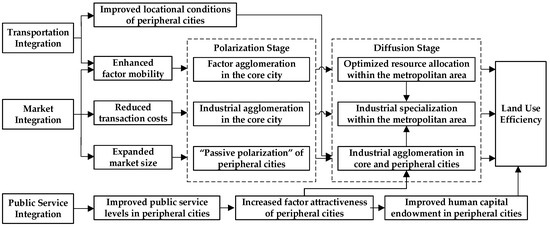
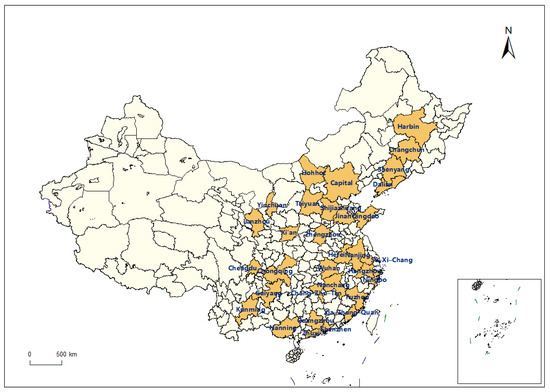
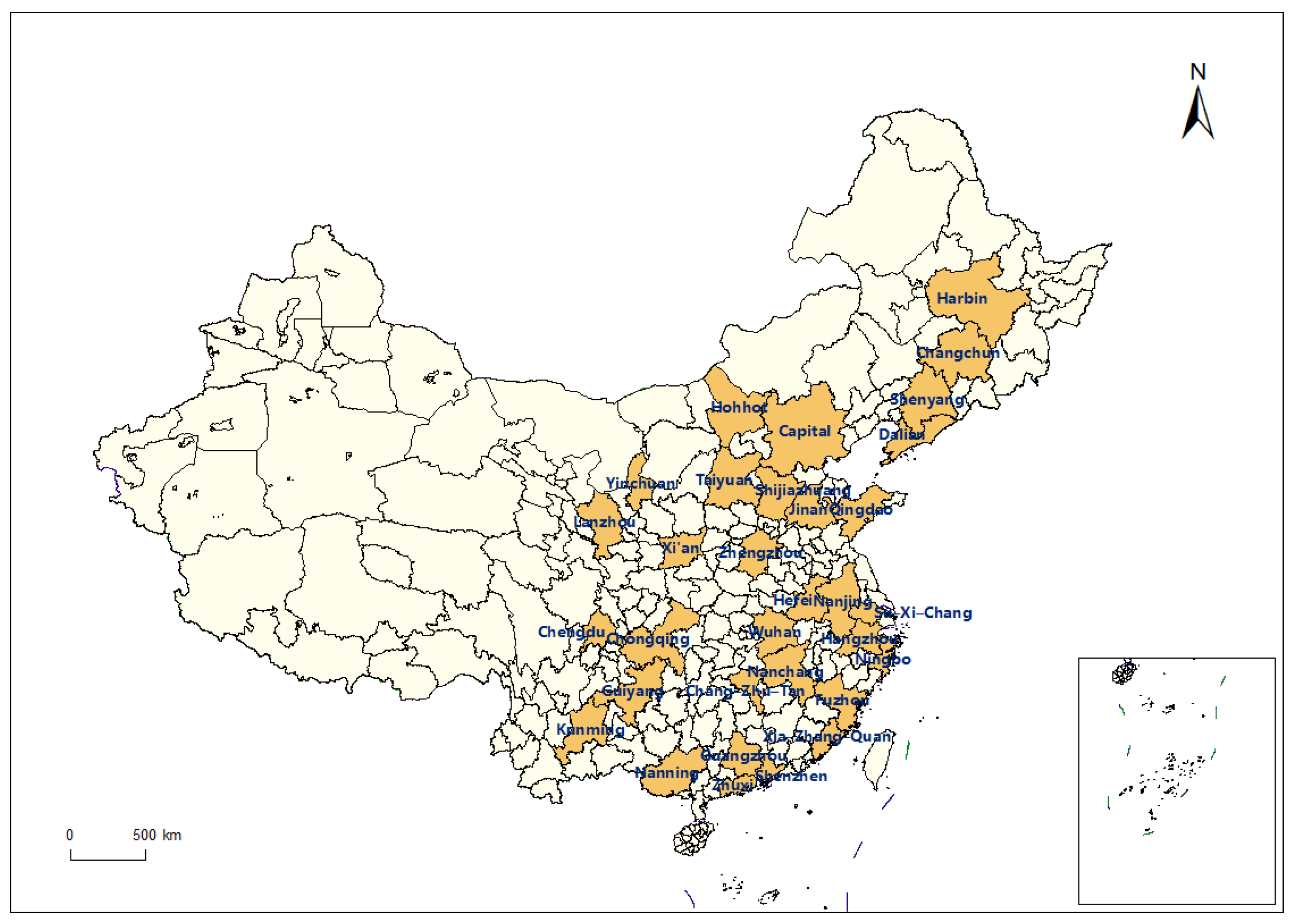

Disclaimer/Publisher’s Note: The statements, opinions and data contained in all publications are solely those of the individual author(s) and contributor(s) and not of MDPI and/or the editor(s). MDPI and/or the editor(s) disclaim responsibility for any injury to people or property resulting from any ideas, methods, instructions or products referred to in the content. |
© 2025 by the authors. Licensee MDPI, Basel, Switzerland. This article is an open access article distributed under the terms and conditions of the Creative Commons Attribution (CC BY) license.