Article

Beyond Green: Toward Architectural and Urban Design Scenarios for Therapeutic Landscapes

Faculty of Architecture, University of Belgrade, 11120 Belgrade, Serbia
*
Author to whom correspondence should be addressed.
Land 2026, 15(1), 114; https://doi.org/10.3390/land15010114
Submission received: 30 November 2025 / Revised: 2 January 2026 / Accepted: 4 January 2026 / Published: 7 January 2026

Abstract

This paper presents the results of an integrated research and design process developed within the Master’s study programme in Architecture at the University of Belgrade—Faculty of Architecture, aimed at exploring architectural agency in conditions of ecological degradation, declining biodiversity, and the urgent need for regenerative transformation of the built environment. Moving beyond technologically driven notions of “green design,” the study investigates architectural approaches that support ecosystem restoration, biodiversity enhancement, and multispecies coexistence while strengthening health and well-being. Grounded in a three-phase methodological framework, the research (1) formulates conceptual models of therapeutic landscapes through typo-morphological, place-based, and adventure-based analytical approaches; (2) evaluates these models using the New European Bauhaus (NEB) Checklist to assess their alignment with the core values of sustainability, beauty, and togetherness; and (3) synthesizes the findings into regenerative design scenarios that integrate ecological processes, multisensory experience, and community participation. The results position therapeutic landscapes as a spatial practice in which architecture functions as ecological infrastructure, a metabolic system where natural cycles, cultural meanings, bodily experiences, and more-than-human agencies interact. In this sense, architectural design becomes the basis for re-naturalization, regeneration, ecological care, multisensory experience, and resilience in urban, peri-urban, and rural communities.

1. Introduction

1.1. General Background

Over the past few decades, architectural design practice and education have been increasingly shaped by a transdisciplinary focus on ecological and climate crises, biodiversity loss [1], and the growing recognition of eco-cultural values [2], social responsibility, and justice [3]. As a result, many paradigms of “planning green infrastructure” [4] have proven insufficiently comprehensive in addressing the complexity of urban socio-ecological systems [5] and the challenges of ecosystem management [6] associated with the issue’s growing complexity [7]. The need to analyze the built environment more comprehensively leads to the acceptance of broader approaches that examine the landscape from differentiated perspectives: socio-ecological and public health dimensions [8], sustainable design [9], green building performance [10], landscape planning and assessment [11], and holistic, systems-based frameworks [12]. Taking this challenge into account, the field has increasingly acknowledged that architecture and urban planning must operate in a deeply relational context among culture, ecology, and circularity, and that their spatial practices must be situated within this complex framework. The aim is to open imagination toward an ecological understanding of the built environment as an interdependent, evolving system.
The widening critical debate on greenwashing [13] and technocratic sustainability [14] has directed experts and practitioners toward a complex relationship between the built environment and its natural context, with a focus on urban landscapes [15]. To encourage ecological sensitivity among future professionals in architecture and urban design, this research investigates the diverse dimensions of therapeutic landscapes beyond traditional notions of green [16] and sustainability [17]. While technological innovation is undoubtedly significant, it is inseparable from cultural and social problems. It has been made evident that this relationship must be a central concern for all global development agendas.
The 2030 Agenda for Sustainable Development recognizes that reducing poverty and overall development of the planet depend on health and safe ecosystems [18]. With the vision of Europe becoming the first climate-neutral continent, the European Green Deal [19] resonates across a wide range of broader European policy frameworks, specifically through the Davos Declaration [20] and the Baukultur Quality System [21]. In line with the New European Bauhaus (NEB) values [22] and principles [23], the need for an integrated exploration of urban and natural landscapes became the focus in finding ways to reaffirm environmental biodiversity in the process of creating a sustainable [24], aesthetically valued built environment [25]. In this way, urban landscapes are recognized as metabolic infrastructures that unfold social [26] and circular practices [27] with cultural meaning [28] and ecological dynamics [29]. In the spirit of promoting the value of NEB, the need for a comprehensive survey of the landscape [30] was the first step in researching approaches to address circularity [31] and biodiversity reaffirmation [32]. Today, human activities and spatial formations significantly shape the geological imprint of contemporary societies on the planet.
In his works, Morton introduces the term dark ecology [33]. He challenges the romantic notion of nature as a place beyond human influence, emphasizing that all nature is already deeply intertwined with technological, cultural, and human systems [34]. This is entirely consistent with the idea that, in the modern period, culture is inseparable from nature [35]. This claim offers a basis for considering a posthumanist ecological framework [36], in which the human, nonhuman, technological, and biological are not separate categories but interconnected components of a common ecosystem [37]. This fact and the awakened awareness of man’s position in the space/time system acknowledge the deep ecological footprint of the human species but also recognize that humans are no longer (or never were) able to fully control the development of nature or even the culture they themselves have created. Resilience is realized through the synergistic behavior of nature and culture as a self-regulating system that is provided through the components of homeostasis—the skills of a living organism in its effort to remain in the optimal range despite changing environmental conditions. All ecological approaches share the idea of intertwined processes in the mediation of all aspects of the environment, shaped through interconnections and dynamic feedback between culture and nature, spirit and matter, and text and life.
This ecological framework highlights therapeutic landscapes and the health-promoting capacities of environments. From spa towns and sanatoria to contemporary green solutions and biophilic design, therapeutic landscapes have shown their potential to support human wellbeing. In the context of the spa landscape, such an understanding further reinforces the need to integrate ecological, architectural, and social components into a unified protection system, contributing to a different view of the values of authenticity and integrity. Adopting an ecological perspective in architecture typically entails applying advanced technologies and approaches grounded in the concept of a sustainable place. The integration of technological innovations is inevitable and consistent with contemporary conceptions of an advanced digital society. The current trend of societal digitization indicates a new relationship between humans and their biological bodies, in which the boundaries between humans as biological beings and technological services become blurred and unrecognizable [38]. They are internalized, and, in a sense, we accept them in our daily lives. The result is a cyborg world, part natural, part social, technically empowered and without clear boundaries or margins [39]. Nature and the city are synergistically united through an eco-technological infrastructure that ensures the system’s adaptability. This means that the natural and cultural components are viewed through a standard techno-ecological system, in which energy efficiency, biodiversity, health, recreation, and place memory are integrated through innovative systems and modern infrastructure networks.

1.2. Motivation: Ongoing Thematic Trajectories

The current higher-education curriculum in architecture exhibits similar tendencies. The design studio, traditionally the main course of architectural pedagogy, has been gradually adopting transdisciplinary orientations in which sustainability, ecological awareness, environmental sensitivity, and social responsibility are increasingly central. This pedagogical evolution reflects the broader context of the discipline, in which practitioners are currently reinventing the roles of architects and urban designers—as mediators in complex environmental systems. Such educational models question the assumption that design competences are restricted to aesthetic and tectonic domains; instead, they promote a design deeply rooted in a relational context [40].
These strategies position architectural artefacts and the environment as active participants in ecological processes. Architectural structures can be considered as a part of the ecosystem. A building can serve as a biotope [41], providing habitat for plants and animals, not just for humans [42]. Conceptualized as components of ecosystems, built structures can also provide ecosystem services by serving as artificial elements that enhance the experience of nature. If architecture is seen as part of the biotope [43] and as a habitat for plants and animals [44], the management of cultural heritage [45] is integrated with environmental protection policy [46]. In cultural heritage contexts, integration with the natural environment is likely to enhance the provision of ecological services. The built heritage, in turn, actively contributes to the ecosystem’s value, and vice versa. It can be seen as a new form of resilience [47], the system’s ability to remain within the same regime and maintain its capacity to adapt to changes [48] and survive [49]. This approach could provide a broader perspective related to the analysis, preservation, and improvement of unique regional processes that nurture the patterns of all actors of living and non-living nature, material and non-material culture, and enable a productive future that can strengthen heritage as a spatial and programmatic resource for environmental recovery [50]. A systemic understanding of biodiversity, through the relationship between nature and culture, goes beyond a merely materialist account of their figurations, ensuring dynamic transformations of form and meaning in accordance with the changes and tendencies in the development of society as a whole. Architecture becomes a subject of environmental management, a demarcation line, and a source of future growth in accordance with recognized values. Sustainability is insufficient; a regenerative approach is needed to address environmental, social, economic, and cultural problems.
The concept of ecosystem preservation and the sustainable use of its services underpin biodiversity resilience. This implies that landscapes involve a wide range of non-human actors. The urban environment should be accessible and open, and adaptable. Openness entails uncertainty, and amid emerging chaos, spontaneous events can yield unexpected turns, creating space for new experiences. All those characteristics and their specific relations provide a speculative framework comprising a perceptible realm, interaction, and various situational activities and concerns. They all became driving forces for the design concept and a basis for the new interdisciplinary design agenda.
The connection of people to nature, as well as the benefits they derive from interaction with the natural environment, have consistently been widely recognized [51]. On this premise, therapeutic landscapes are recognized as places where the built and the natural intertwine [52], places that significantly contribute to human health and well-being [53], allowing people to get closer to nature [54] and to balance their physical, mental, and spiritual well-being [55]. In this context, parks and park forests, promenades, and other forms of organized and articulated nature are created to enable human contact with nature and to nurture psychological and physical well-being, as well as to reduce stress.

1.2.1. Therapeutic Landscapes

Therapeutic landscapes are environments [56] that operate through relational ecologies [57], including natural and cultural processes [58], as well as embodied sensory experiences, to support personal and collective health [59] and wellbeing [60]. In past years, this ecological concept has undergone extensive transformation, from a healing environment in natural settings that emphasize encounter with nature—forests, spas, rivers, etc. In contemporary perspectives, these environments encompass hybrid socio-ecological interrelations that shape how spaces develop therapeutic capacities [59,61]. Therapeutic landscapes are no longer static geographic locations; they now imply relational dynamics that shape embodied experiences and produce health and well-being. These relational ecologies include ongoing interactions among human and non-human actors, physical conditions, and cultural and societal patterns, and often extend beyond the physical boundaries of the place. Online engagement and participation, place-based memory, sedimentation of experience, and emotional attachment can broaden the therapeutic outcomes of a place beyond its physical boundaries [60]. Another significant part within the therapeutic landscape is the focus on the multisensory experience of ambiance [62]. As they are more than just visual experiences, new phenomenological approaches emphasize soundscapes, thermal and tactile sensations, humidity, light, and smell as core components in co-producing emotional and physical responses. These atmospheres create an immersive ambiance that can modulate people’s moods and emotions, supporting well-being. They are often shaped by cultural memory and identity, which are fundamental to the therapeutic experience, in that they accumulate symbolic meaning and local stories of collective heritage. Many famous therapeutic spaces and spa settlements operate within these cultural ecologies, where identity rooted in tradition shapes perceptions of a site. The cultural dimensions presented are increasingly relevant to the regeneration of historical spa settlements in Europe. These new approaches treat human well-being as inseparable from the vitality of the ecosystem [56,63]. In this sense, well-being itself becomes an expanded condition of environmental systems, supporting ecological resilience, biodiversity, and ecological regeneration. These understandings signal a paradigm shift toward an integrative approach to environmental well-being [64].

1.2.2. New European Bauhaus (NEB)

The NEB initiative emerged alongside broader debates on the quality of the built environment, in which the Davos Baukultur plays a key role. Although the Davos Quality System and NEB use different frameworks, they share a common vision and values for achieving high-quality built environments. NEB emerges as a framework that operationalizes the ambitions of the European Green Deal [22] by integrating sustainability, aesthetics, and social inclusion as core values [65]. It is not just a policy instrument; it is a means of communicating key values for the built environment. NEB does not view architectural practices as merely technical procedures but recognizes their potential to mitigate ecological crises. The central vision of this framework is that environments must be recognized as holistic socio-ecological systems. This viewpoint resonates fully with contemporary theoretical perspectives that view landscapes and built spaces as inseparable.
Accordingly, NEB also emphasizes cultural memory and embodied experience as crucial to social well-being through its three core values: Beautiful, Sustainable, Together. These elements constitute spatial quality; they inform how places function, how they are perceived, and how they are sustained over time. These core values are operational guiding principles in the design process and serve to evaluate spatial designs. In this sense, sustainability is approached not through ecological metrics; beauty is redefined as experiential richness, and inclusiveness focuses on accessibility and social justice, ensuring that communities have agency in shaping their environments.
NEB recognizes the potential of the design process for ecological transition and cultural renewal, encouraging experimentation, transdisciplinary collaboration, and the exploration of new architectural typologies. The idea is not just to revitalize existing environments, but to create socially and aesthetically anchored places that cultivate collective wellbeing. This forms an essential conceptual bridge toward theories of therapeutic landscapes, which similarly interpret places as relational ecologies whose well-being potential emerges from the interplay of environmental qualities, cultural meanings, and embodied experiences. By integrating the concept of therapeutic landscapes with the NEB values, it becomes possible to form a more nuanced scenario of spatial transformation.

1.3. Paper Outline and Objectives

Relying on the analysed research trends and trajectories in the domain of theory, the specific objective of the research is to develop an integrated conceptual and methodological framework that positions the New European Bauhaus (NEB) values within contemporary pedagogical and design-research practices. The research objective is to formulate scenarios that contribute to a broader educational shift toward designing environments that support wellbeing, relational ecological thinking, and socially inclusive spatial practices.
Accordingly, the research questions are defined:
  • RQ1: How can the framework NEB values contribute to a deeper understanding of therapeutic landscapes?
  • RQ2: In what ways can the values of the NEB be embedded within architectural and urban design curricula to foster student competencies?
This study’s narrative is developed through the following distinctive sections. The first part of the paper (Introduction) presents the state of the art, which is established through a set of structured subsections outlining the research framework. The subsections General Background and Motivation provide a broader contextual framework by identifying ongoing theoretical trajectories. This is followed by two analytically focused subsections—Therapeutic Landscapes and The New European Bauhaus (NEB) [22]. The second part (Methodology) explains the research methodology and introduces the case study area. The third part of the paper (Findings and Discussion) provides the key research insights. Limitations of the research are also discussed. Finally, the Conclusion presents the findings and recommendations for further study.

2. Materials and Methods

The study was carried out in three interlinked phases, integrating design research, qualitative analysis, and evaluative synthesis to develop regenerative design scenarios for therapeutic landscapes that support Healing, Multispecies Coexistence, and Ecosystem Resilience.
  • Phase 1—Development of Conceptual Models
Grounded in typo-morphological exploration, programming, and conceptual modeling within a design studio environment.
  • Phase 2—NEB Evaluation of Conceptual Models
Structured assessment of the conceptual models through the New European Bauhaus (NEB) Checklist, measuring their alignment with the three core NEB values [22].
  • Phase 3—Deriving Regenerative Design Scenarios
Cross-referencing the conceptual models with NEB scores to form integrative scenarios supporting therapeutic landscapes, multispecies coexistence, and ecological resilience.
The three selected lowland spas represent comparable geomorphological, ecological, and cultural environments, enabling analytical consistency and the transferability of findings.

2.1. First Phase—Therapeutic Landscapes Perspectives: Development of Conceptual Models

The University of Belgrade—Faculty of Architecture, the oldest architectural school in the region, has nearly 180 years of experience in educating architects and engineers, covering fields of architecture, urbanism, technologies, and structural engineering. Since 2008, within the Bologna process, the Faculty has implemented a 3 + 2 Bachelor–Master program leading to the degree “Master in Architecture”, aligned with the European higher education framework.
The study program is based on an integrative approach that links the technical sciences, the arts, and the social sciences to contemporary social, spatial, and environmental challenges. The Bachelor’s program provides foundational knowledge, while Master’s studies enable advanced, research-based knowledge through educational modules in Architecture, Urbanism, Architectural Technology, and Structural Engineering.
Since 2014, the Faculty has been accredited by the RIBA validation system, ensuring international recognition of the diploma and emphasizing the Design Studio as the core of architectural education, integrating research, education, and practice. Faculty cherish the 30/30/30% ratio balancing between theoretical, applied, and studio-based knowledge at the bachelor level, changing towards a 40/60% ratio in favor of Studio design applied knowledge, where Theoretical courses, a legacy that stems before the Bologna process, are still very deeply rooted in curricula, but now through a wide variety of elective courses chosen by students individually. Increasing curricular flexibility at the Master’s level supports student mobility, academic collaboration, and individualized study paths, alongside a long-standing PhD program that attracts candidates from the wider EX-YU region.
Currently, the Faculty strategically advances responsible and sustainable architectural education by integrating research and teaching at the Master level. This article contributes to that agenda as part of the research project SPATTERN [66].
The research was conducted within an integrated design module consisting of a Design Studio course and a Theoretical Seminar at the Master’s programme at the University of Belgrade—Faculty of Architecture. Conceptual perspectives were established in the seminar and tested, articulated, and spatialized through iterative studio design work. Proposals were guided by two mentors (senior professors) and two teaching assistants, and were additionally evaluated by an external guest critic. Two-thirds of the students participating in the design studio were women, reflecting the typical gender ratio at the University of Belgrade—Faculty of Architecture.
Designing models was guided by a “three-fold framework” that was set from the theoretical background and implemented through two stages: (1) Typo-morphological exploration, (2) Programming, and (3) Conceptual modeling.
  • Typo-morphological exploration tested how natural and artificial elements collide.
  • Programming—setting up design perspectives that test the relation within selected spaces;
  • Conceptual modeling that tests various spatial articulation and ambient sequence.
SPATTERN project resources and reference materials:
As a part of the broader research conducted within the SPATTERN Project—Future Heritage of Spa Settlements: Digital Platform for Advancing Knowledge and Innovation in Urban Morphology Approach for Environmentally Sensitive Development in Serbia (Science Fund of the Republic of Serbia, PRISMA Program, 2023–2026) [67,68,69], students had access to an extensive set of background resources. These included literature, reports, and documentation related to the selected case study areas. The materials were used as contextual and reference resources to support a deeper understanding and analysis of the case studies.
Analytical exploration:
The analytical process in the first phase focused on identifying mechanisms and values essential to the construction of regenerative architectural interventions. The following components structured the analysis:
(a)
Place-based approach
In the contemporary approach to education, which is based on teaching that takes place far from the real space in the abstract conditions of the classroom and has an imaginative character, the place’s natural character is difficult to understand. Therefore, the application of the place-based approach, which emphasizes getting to know and understanding the place through multiple purposeful visits and multimedia exploration, was an additional step in the analytical thinking [70]. Guided by the project’s potential programmatic and spatial framework for interventions, students focused on the complexity of the proposed context, its natural and cultural resources, and its values.
The application of the place-based approach, which emphasizes getting to know and understanding the place, through site visits, mapping, and diagraming, students developed a deeper understanding of the spa settings by exploring: natural and cultural resources; spatial exposure, enclosure, and visual horizons; flora, fauna, and ecological rhythms; experiential qualities and spatial identity. This process revealed perceptual characteristics and ambient values essential for therapeutic and multisensory engagement.
  • (b) Adventure-based approach
Through the application of the adventure-based approach, semi-structured interviews, occasional storytelling with residents and users of the spa facilities, and exploration of postcards and other archival material, students cross. The line between observing the place and beginning to engage with its life drew the local community closer and led them to accept the space as their own. In this way, the students connected with the place and became a part of it.
Through the application of the adventure-based approach, including storytelling and archival exploration (historic postcards, photographs, and local narratives), students crossed the boundary between observation and participation. This approach strengthened empathy and responsibility toward local communities; understanding of everyday spatial practices; integration of lived experiences into spatial interpretation; and awareness of the socio-ecological relations embedded in spa culture. The adventure-based approach enabled students to adopt the place as active participant in design thinking rather than merely a context for intervention [71].

2.2. Second Phase—NEB Evaluation: Identifying Core Values

All Design models are evaluated using a self-assessment tool for built environment projects that assesses their compliance with the New European Bauhaus values: (1) Beautiful, (2) Sustainable, (3) Together (the NEB Checklist) [25]. The primary goal is to achieve the three main pillars of NEB’s core values and to implement them through design. The Checklist is used to evaluate the projects’ compliance with the NEB core values, given that the Working Principles were not applicable. The Checklist for three NEB core values consists of 76 multiple-choice questions, divided into Beautiful (26), Sustainable (29), and Together (21). Each section addressing the core values is further subdivided into three subsections. The tool provides an assessment expressed as a percentage at the levels of the overall Checklist, section, and subsection.
The aim was to determine the extent to which conceptual models fulfill regenerative, aesthetic, social, and ecological expectations defined by the NEB framework.

2.3. Third Phase—Scenarios for Supporting Healing, Multispecies Coexistence, and Ecosystem Resilience

The third phase synthesized insights from both conceptual modeling (Phase 1) and NEB evaluation (Phase 2) to develop regenerative design scenarios. This phase employed a cross-referencing method that compared: the morphological and ecological strategies; the NEB alignment results; the identified site-specific natural and cultural values; the character of therapeutic, multispecies, and ecosystem-supportive interventions.
Based on this evaluation, models were grouped into scenario clusters, each representing a distinct regenerative pathway.
This phase aligns with contemporary scenario-building methodologies in landscape and urbanism [72], enabling speculative yet evidence-based projections of spatial strategies that support healing, biodiversity, and ecological resilience.

2.4. Case Study Area

Before presenting the case studies, it is necessary to explain the criteria for selecting these three spa settlements [67]. First, as Serbia is filled with spa settlements from the very north of the country, through the middle, all the way to the far south, there were two major possibilities. To choose one representative—a role model from each part of a morphologically and topologically diverse territory, or to choose one specific territory in terms of climate, geothermal, and other natural features of the place, and select a variety of spa settlements different in their microposition, way of their development, content focus, and spatial pattern. For the purpose of being able to penetrate into deeper layers of understanding the therapeutic landscape in a multiscalar way, we have decided to go with the second solution choosing the very north Pannonian region as besides its natural determinants it is best analized, administered and also belongs to a variety of protected internationally recognized corridors like IBA, EMERALD [73,74], Danube transnational protection area zone and alike [75]. Furthermore, it made it possible to establish a spa near the muddy lake, a spa near the lowland river, and a spa on the hillside of the nationally protected forest park of Fruška Gora, thereby covering a diverse spectrum of natural environments.
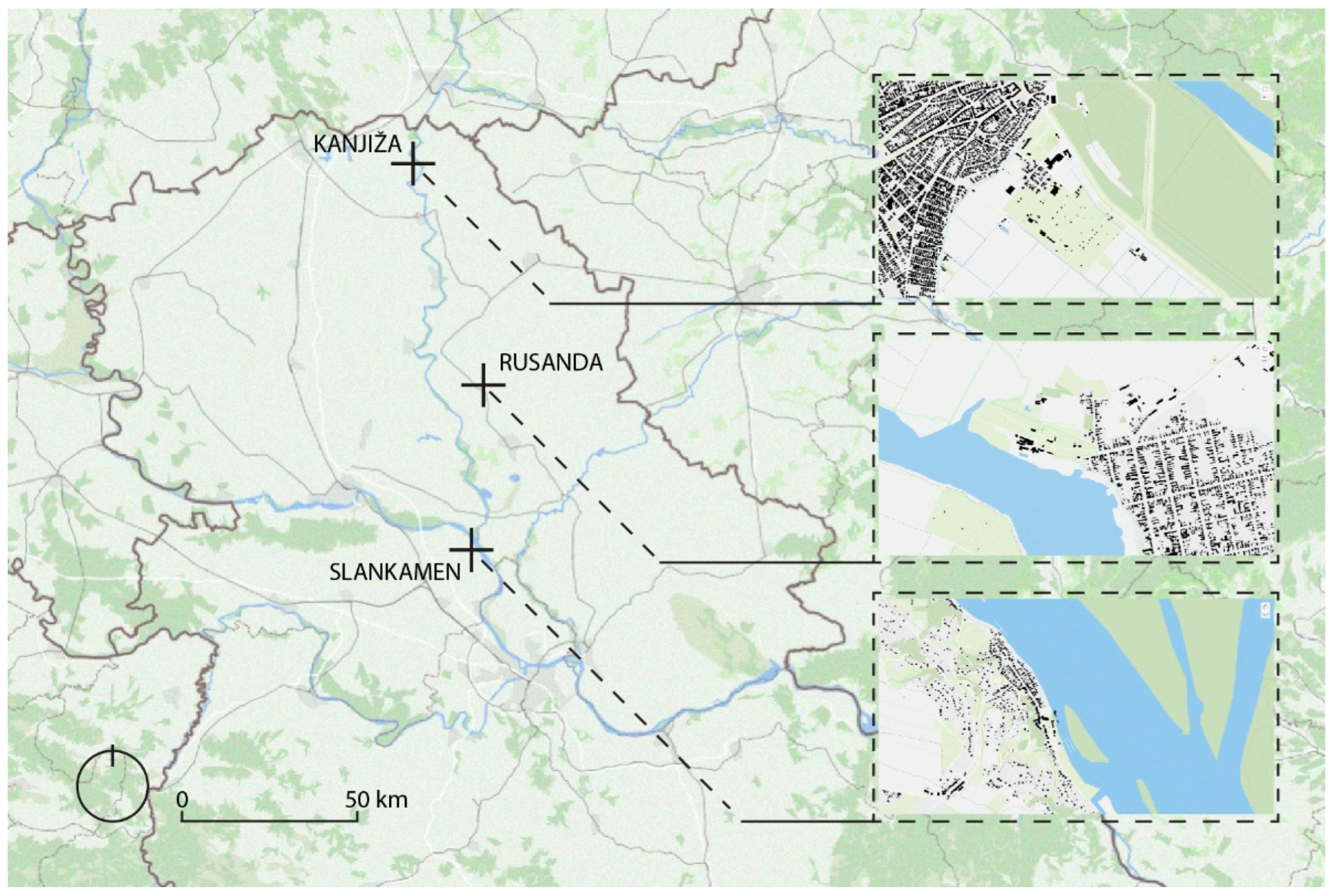
The selected case studies, Spa Kanjiža, Spa Rusanda and Spa Slankamen will be presented first of all through the perspective of those elements of the place that were determined in mutual discussions with students as key parameters connected to the theme of the therapeutic landscape, namely the specific relationship between the natural and built characteristics of the place and the spatial characteristics that determine the values and properties, as well as challenges of each aspect of the place-based and adventure-based approach (Figure 1).
The spatial character of spa settlements in Vojvodina arises from the combination of distinctive hydrothermal, therapeutic, cultural-historical, ecological, urban, and recreational features. First of all, belonging to the region of the former Pannonian Sea, the spas of Vojvodina combine two crucial, for health and ecology, distinctive features: geothermal springs and high salinity clay structured soil, which, in addition to the usual thermal springs, also abound with mud rich in mineral properties [76]. This situation supports a distinct biodiversity of flora and fauna, particularly halophyte plant species, as well as a wide range of birds and small pond insects and arthropods, which are internationally recognized as part of the EMERALD and IBA networks [77]. The area’s natural richness is matched by its cultural and historical significance, which has shaped its social and political position: it was part of the Austro-Hungarian Empire and has consistently retained its multicultural Hungario-Balkan character. This image creates a specific spa typomorphological framework, akin to a palimpsest rich in layers of both natural and cultural heritage [78].

2.4.1. Spa Kanjiža—Character and Identity

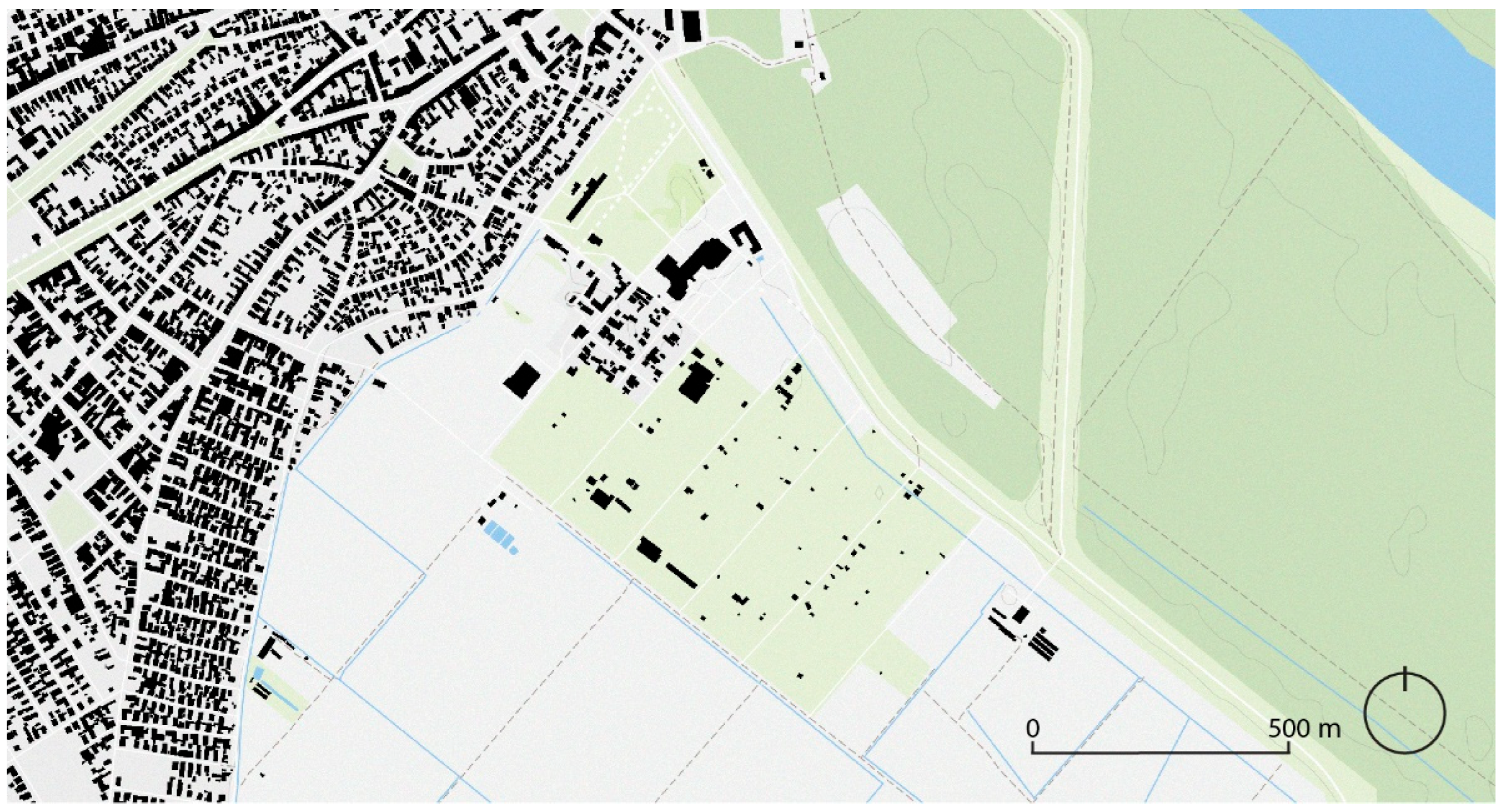
Spa Kanjiža is situated on the alluvial Panonian plain between the left bank of the Tisa River and the old Kanjiža urban settlement (Figure 2). It is characterized by lowland terrain formed through the interplay of natural and urban landscapes in a mutually complementary, multi-layered manner [79]. The specific position between natural and urban creates a unique feature of the place, a fragile territory that constantly balances between urban pressure and ecological survival [80,81]. On the one hand, as one of the oldest settlements in Vojvodina, dating back to the 11th century, Kanjiža has strong historical significance. On the other hand, as recognised as part of the EMERALD biodiversity network and the IBA bird protection area, it also has strong ecological importance. The development of the spa was encouraged by the hydrography of the wider territory and by the relief characterized by the Tisa River flood zone. The natural landscape consists of salt marshes, a specific, protected cultural landscape of high biodiversity, which is made up of soil rich in salts and minerals of the former Pannonian Sea, as well as a high level of groundwater that points to the development of a specific marsh and muddy landscape [82]. The urban pattern of the settlement, formed before the first regional urban plans, comprises a tangle of winding streets that, unusual for this region, meet at irregular angles, creating a distinctive networked urban pattern. As the terrain is flat, these streets create endless pedestrian alleys and undisturbed views, making them a defining feature of the Kanjiža spa. The current appearance of the spa dates back to the beginning of the century, as a result of a captured spring 6 km from the old settlement of Kanjiža, when thermal water was introduced as beneficial for health and in line with it was piped into the designated park zone around which, in the midst of European ideas about the need to move away from the urban areas and use natural environment as a healing resource, a system of bathrooms and places to relax and spend time in the natural and culturally rich ambience of the spa was built [83]. The previously mentioned and built network of long streets was further structured into sensory promenades, enriched by amenities for various programs and ambient features, thereby emphasizing the space’s contemplative qualities. Therefore, therapeutic landscape of the Kanjiža spa is a delicate combination of the natural conditions of the environment and the lowland landscape marked by the river Tisza as its backbone, and those man-made created elements, primarily an endless tangle of promenades rich in vegetation, full of precisely orchestrated sensory experiences, which meet from all sides and unite in the area of the park from which the heart of the spa’s identity beats.

2.4.2. Spa Rusanda—Character and Identity

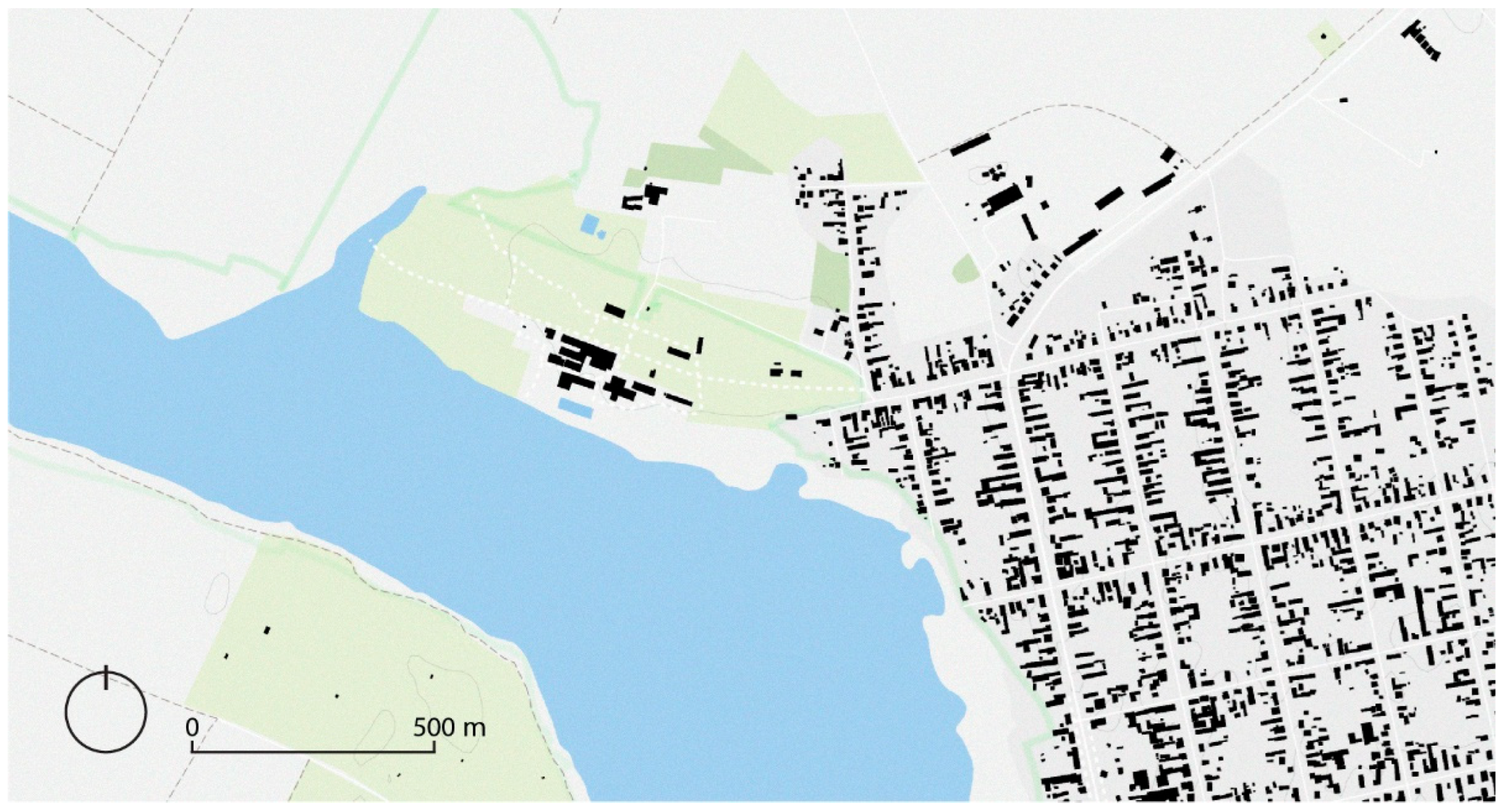
Spa Rusanda is situated on the alluvial Panonian plain on the edge of Rusanda Lake and in proximity to Melenci settlement. It is characterized by a patchwork of different patterns, ranging from a flat, muddy landscape, through park-forest and agricultural landscapes, to the geometrically rectangular urban pattern of the Melenci settlement [84]. The vast, occasionally dried-up lake captures the main feature and a backbone of the health and well-being character of the place [85]. The specific position of the spa facilities between a visually predominant, artificially created park-forest setting and the geometrically patterned settlement of Melenci creates a fragile bordering territory in permanent negotiation between the local community and the health facility’s everydayness [84]. These specific patterns are connected only by a walking lane that borders the lake on the side of the Melenci settlement, creating tension between the agricultural ecology of the settlement and that of the lake and park-forest [86]. On one hand, in nurturing strong health commitments, the spa center is distant from the surrounding area, closed, and inaccessible (Figure 3).
On the other hand, the lack of a visual boundary between the mentioned patterns creates a relaxed atmosphere and a unique sensory experience. The development of the spa dates to the late 19th century, but it was fully developed as a health center in a rather functionalist manner as part of the Yugoslav health center system after WWII. The development of the settlement follows a different trajectory, reaching its peak after WWII, when mud-healing benefits were introduced [79,84]. The current appearance of the spa stands in a limbo between past and present, between the local community and health facility users, and between natural and agricultural landscapes, and awaits a protection and regeneration strategy. Therefore, the therapeutic landscape of the Rusanda spa is a robust juxtaposition of sensory experiences vanishing into the unbounded landscape.

2.4.3. Spa Slankamen—Character and Identity

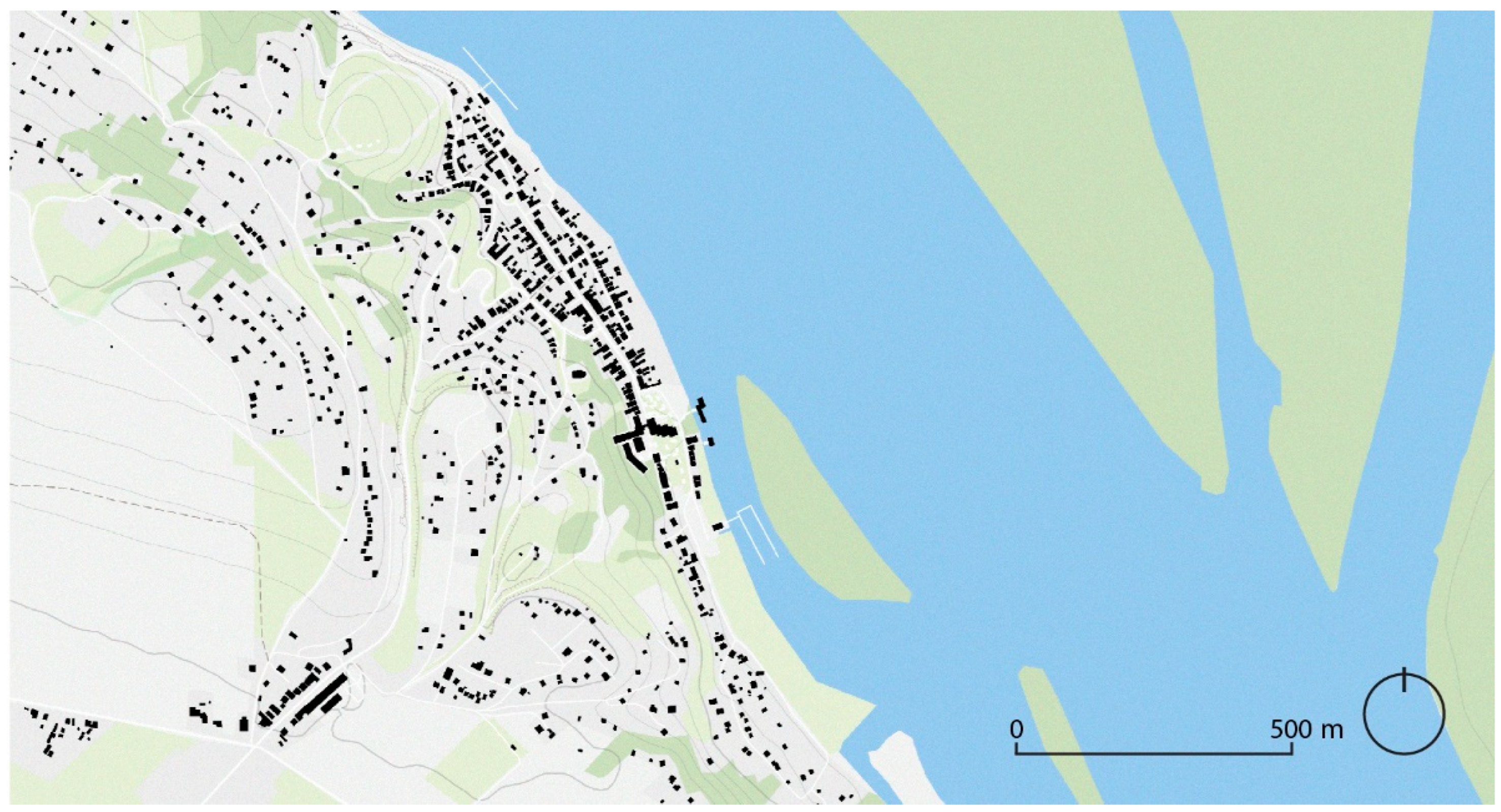
Spa Slankamen is situated on a sloped hillside of the nationally recognised and protected forest Fruska Gora, on the confluence of the Danube and Tisa rivers between Belgrade and Novi Sad [87]. The settlement existed from the Roman period, probably because the landscape consisting of river and hill bursts with fresh air, is protected from the wind due to dense forest (Figure 4). The confluence was usually a place bustling with fishing, and it also stood on the main boat trail between west and east, with a good strategic position on the hill [88]. The name of the settlement literally means salty stone, probably getting the name from its salty spring water. Although there is evidence that both the Romans and the Turks used water from the spring during their rule, the beginning of the use of Slankamen as a spa center dates back to the start of the 20th century, when, not far away from the water storage, 28 baths were built along a 50-room hotel. Being in the vicinity of Belgrade, Novi Sad, and Titel, the place was a convenient retreat from the hustle and bustle of city life, yet not so distant as to be developed independently [79,89]. The spa, the natural surroundings, and the settlement are united in a cohesive whole that integrates the place’s natural and cultural characteristics. In the last two decades, due to dramatic fluctuations in the Danube’s water level, both the river and the coastal ecosystem have been disrupted, altering the area’s metabolism beyond recognition. The introduction of new invasive species of flora and fauna, as well as the evident threat to indigenous biodiversity, is becoming a new reality [90]. Although reality is not predictive, the diversity of natural and cultural resources still creates a healing atmosphere, emphasizing the quality of air and water evaporation as its primary values. Therefore, the therapeutic landscape of the Slankamen spa is based on natural qualities of Fruska Gora in correlation with microclimatic conditions, which provide mineral water springs and a mild climate throughout the year.
As a result, through the analytical phase of the studio, in groups focusing on specific case studies and on overlapping results with peer groups, they reached a set of conclusions. Based on these data, a specific ecological and cultural distinctiveness and aesthetic exceptionality were proposed (see Table 1 and Table 2).

3. Findings and Discussion

The discussion and results section is structured according to the insights generated during the two main research phases: (a) the development and evaluation of conceptual models in relation to the NEB values, and (b) the clustering of the models into distinct design scenarios for supporting healing, multispecies coexistence, and ecosystem resilience.
The first part presents and interprets the 21 conceptual models, outlining the distinct design perspectives they reveal across diverse therapeutic landscapes (for a more detailed overview of all student works, see Supplementary Materials). The second part is comparative and evaluative, focusing on how each conceptual model aligns with the NEB core values of Beautiful, Sustainable, and Together. The third part is synthetic and systematizing, as it consolidates the findings by grouping the conceptual models into specific design scenarios and examining their applicability across different spatial and contextual conditions.

3.1. Identification of Conceptual Models

The identification of conceptual models emerges from the need to capture the diverse design perspectives through which contemporary therapeutic landscapes are formed and perceived. The development of conceptual models in this research draws upon recognized design perspectives, thematic interpretation, and evaluative insights generated across all student projects. Each model, therefore, reflects a distinct design lens through which the therapeutic characteristics of place can be interpreted, articulated, or regenerated, revealing key values, site-specific challenges, and spatial potentials. The presented conceptual models include their guiding idea, underlying motivation, identified ecological or spatial focus, contextual determinants, and transformative goals related to the therapeutic landscape (e.g., wellbeing, resilience, eco-cultural diversity, multispecies coexistence).

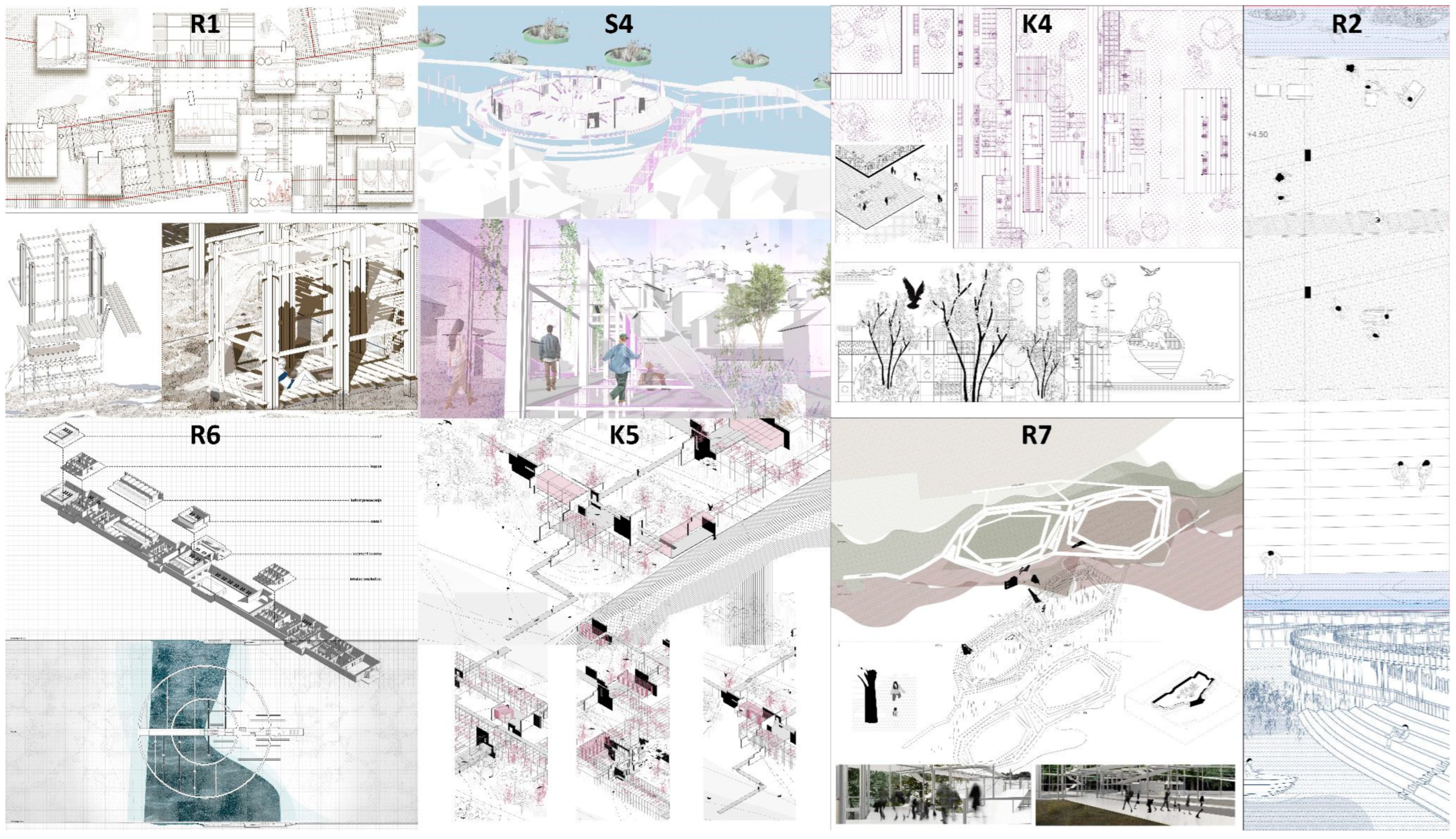
3.1.1. Conceptual Model R1: Threshold of Change

The project explores adaptable and open access to the Rusanda mud lake, whose seasonal morphodynamics constantly reshape the landscape [91]. These fluctuations create unstable terrain conditions that distance humans from nature, producing a sense of alienation. The intervention aims to reduce this divide by bringing all landscape participants (people, water, vegetation, and habitat systems) into closer interaction. Through a series of access points and experiential sequences, the project encourages users to engage with the environment, develop a sense of responsibility towards the natural setting, and foster attachment to the place. In parallel, the proposal complements the spa’s existing healing and well-being programs by expanding them through direct engagement with the lake’s changing ecological processes.
The conceptual model is grounded in the recognition of the lake’s seasonal morphological changes and their formative influence on spatial experience. A network of adaptable access docks establishes a spatial-program pattern that connects users with the shifting shoreline, turning climatic instability, such as fluctuating water levels, into a design driver rather than a limitation. Biodiversity is supported by increasing points of interaction between humans and habitat systems, enabling the preservation of ecological values through carefully framed encounters. The model functions as a regenerative space for metabolic processes, in which users coexist with the lake within a shared environmental system, reinforcing continuous cycles of renewal between natural processes and human presence (Table 3).

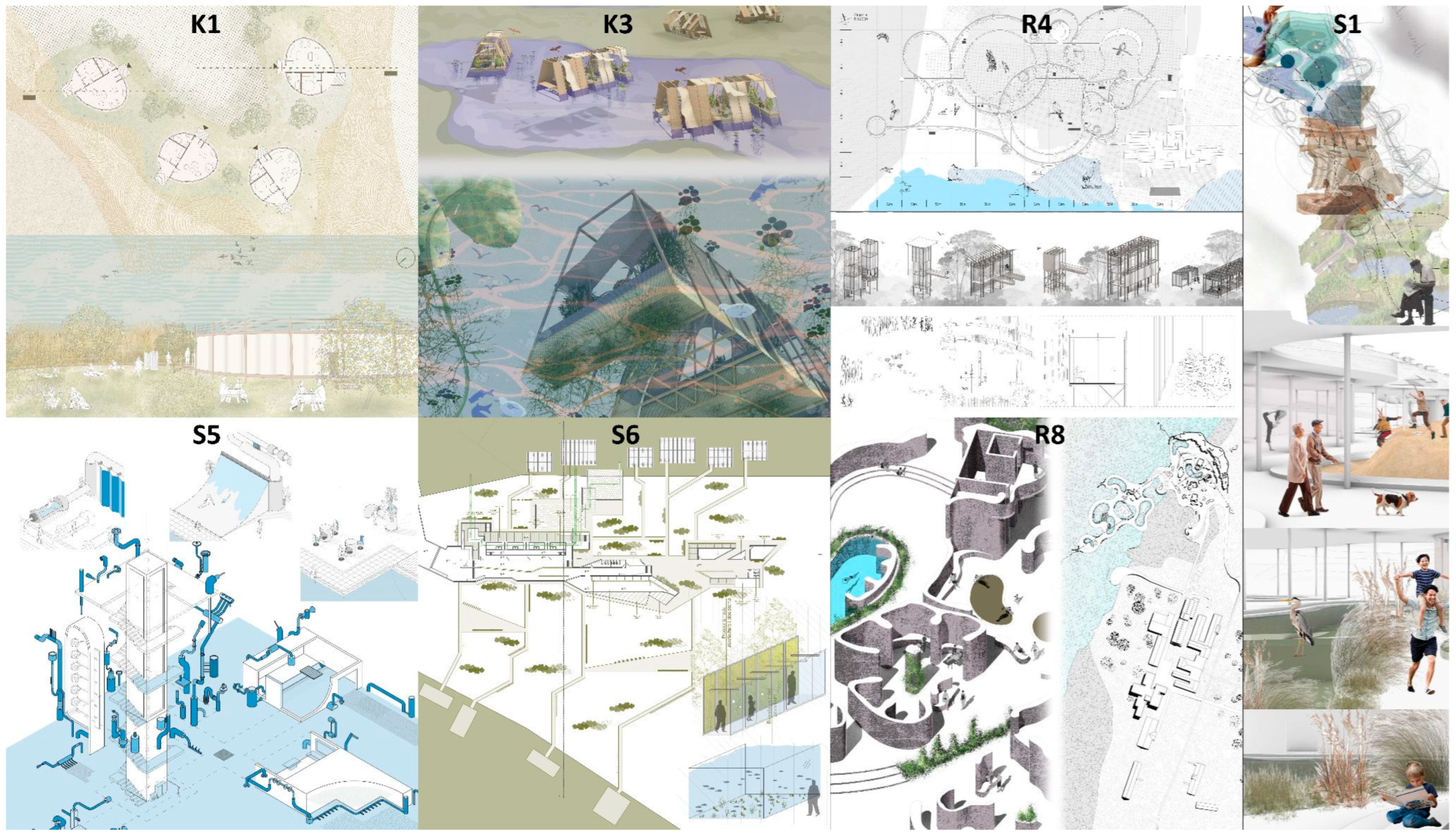
3.1.2. Conceptual Model K1: Panacea

The project positions reed as the fundamental spatial, ecological, and programmatic medium for regenerating the Tisa riverbank and establishing a therapeutic environment for both people and endangered biotopes [92]. The dense, tactile, and ever-moving morphology of the reed bed interrupts the infinite visual horizon of the Pannonian landscape, creating an immersive multisensory field in which sound, movement, texture, and light become active components of experience. Reed functions simultaneously as habitat, shelter, construction material, and atmospheric generator: it provides nesting grounds for birds, amphibians, and insects, stabilizes eroding soils, filters water, and forms protective microclimates along the river. Through the cultivation and strategic placement of reed structures, ranging from platforms and shelters to zones for exercise, rest, and therapeutic treatments, the project restores broken ecological links while offering humans a grounded, nature-oriented setting for healing and recreation.
The conceptual model adopts the morphology of reeds as the dominant landscape logic, shaping both spatial organization and program around this dynamic natural element. The center is structured into zones that follow the linear movement of the Tisa, creating a sequence of spaces where reed density, height, and permeability guide circulation, activities, and encounters between humans and non-human species. Climatic determinants, such as recurrent flooding and erosion, are addressed through the strategic use of reed as a flexible, renewable, and climate-responsive material that stabilizes terrain and enriches water with oxygen and minerals. Biodiversity is reinforced by enabling harmonious coexistence between vegetation, wildlife, and visitors, while spatial metabolism emerges through natural filtration, atmospheric enrichment, and soil revitalization. Reed thus becomes both the ecological engine and architectural framework of the project, ensuring resilience, coexistence, and therapeutic value across seasons (Table 4).

3.1.3. Conceptual Model K2: Garden of Scents

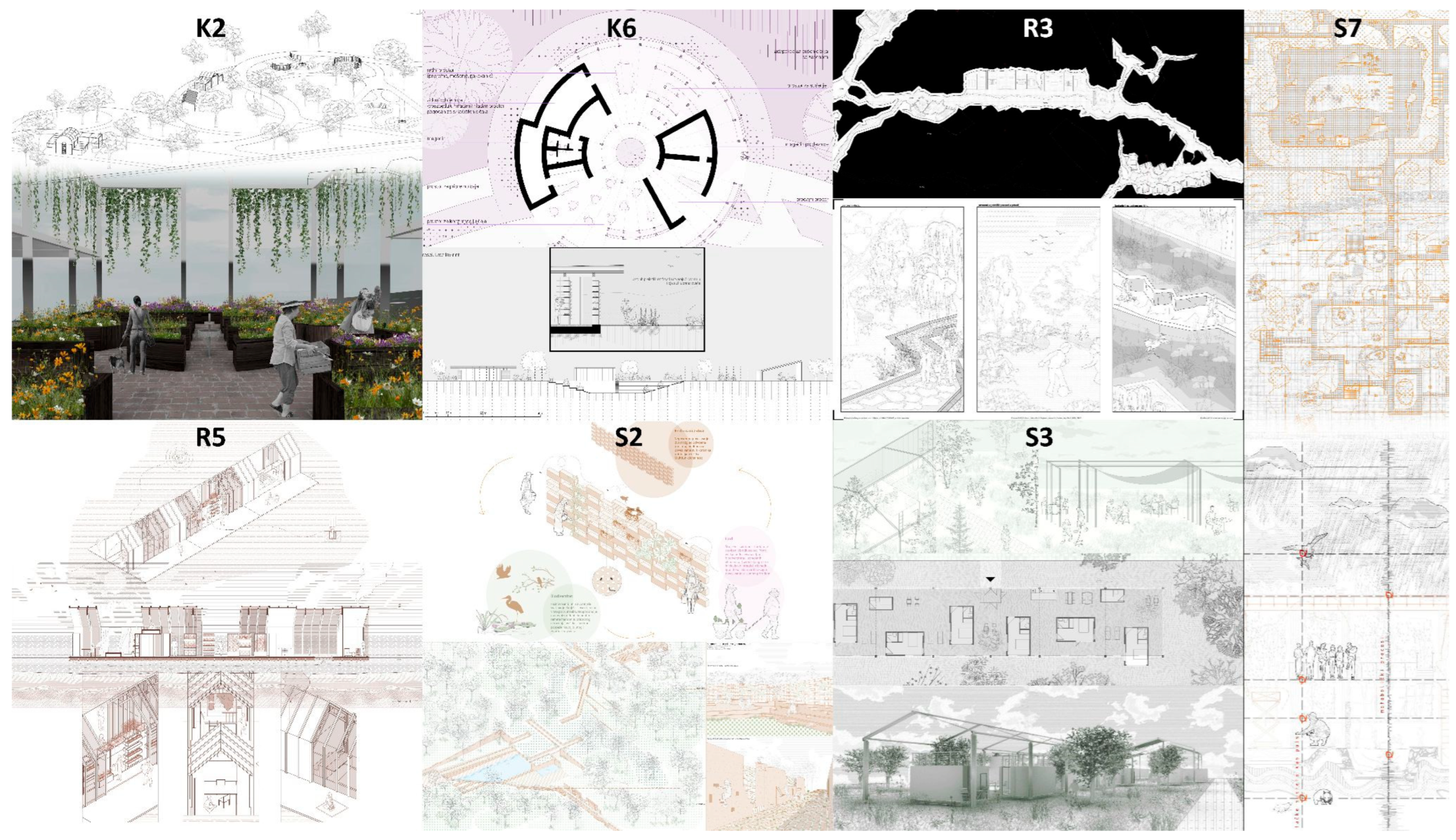
The Garden of Scent builds upon the rich yet underused floral resources of the Kanjiza region, positioning medicinal plants as the primary catalyst of spatial, ecological, and cultural regeneration [93]. By organizing the garden as a multisensory environment in which fragrance, texture, seasonal color changes, and tactile qualities are experienced simultaneously, the project establishes a therapeutic field that connects health, education, and local identity. The cultivation and display of medicinal herbs structure the garden into three intertwined roles: an engagement center for the local community with educational and craft-based activities; a pollinator field designed to restore missing ecological links of feeding and nesting; and a healing, contemplative extension of the nearby spa complex. The so-called “garden of scents” enables visitors to reconnect with natural rhythms through sensory immersion, bridging human well-being with ecological care.
This conceptual model employs the morphological potential of medicinal plants as its foundational spatial resource, transforming botanical structure into a design principle. The garden is organized as an educational, therapeutic, and ecological center where spatial-program patterns follow the logic of plant growth, seasonal cycles, and climatic conditions. Biodiversity enhancement is achieved by establishing a pollinator field that restores fragmented ecological connections and supports the return of birds, insects, and other species dependent on medicinal flora. Through the synergy of community involvement, ecosystem functioning, and therapeutic practices, the project forms a unified metabolic system in which human activity contributes to the regeneration of habitat conditions. The model thus frames the garden not merely as a cultivated landscape but as an eco-sensory interface in which beauty, healing, and ecological renewal converge (Table 5).

3.1.4. Conceptual Model K3: Eco Crankshaft

The project begins by recognizing the severe degradation of the Kanjiza salt meadows—rare wet habitats inhabited by specific flora and fauna and understood as one of the last living traces of the ancient Pannonian Sea. To address the disappearance of these fragile ecosystems, the proposal introduces a mobile architectural device, the Eco Crankshaft, conceived as a lightweight shelter and multipurpose structure that can be repositioned across the site [94]. Its configuration enables multiple uses: shading from sun or rain, resting and observation points, and elevated platforms for small pockets of native vegetation. Crucially, its movement across the landscape reinterprets traditional agricultural practices such as plowing and soil turning, transforming them into a contemporary tool for ecological care rather than extraction. By gently disturbing compacted soil, the mechanism re-aerates the ground, allowing moisture, microorganisms, and plant roots to reach the layers needed for regeneration, while simultaneously providing a peaceful space for human presence.
The conceptual model is grounded in the distinctive morphology of the salt meadows, understood as a geological and ecological remnant of the ancient Pannonian Sea. Spatial logic emerges from the introduction of a mobile mechanism that serves both user needs and the requirements of a sensitive landscape [94]. Climatic determinants, especially periodic droughts, soil salinity, and fluctuating moisture conditions, are addressed through a system that promotes aeration and soil turnover, making regenerative processes part of the spatial experience. Biodiversity is supported by facilitating the restoration of indigenous plants and fauna, whose habitats depend on the proper functioning of salt-meadow ground layers. The metabolic dimension of the design arises from the movement of the structure itself: each relocation initiates soil breathing, micro-disturbance, and cycles of natural renewal, making the architecture an active agent within the ecological system. In this way, the project repositions human presence within a delicate landscape as a partner in regeneration rather than a force of disruption (Table 6).

3.1.5. Conceptual Model S1: Fluid Beach

The project addresses the long-term withdrawal of everyday urban life from the Danube riverfront, a consequence of unpredictable annual fluctuations of water levels, erosion patterns, and seasonal flooding. Rather than resisting these dynamics, the Fluid Beach proposes an adaptive riverbank that operates with water, filtering, guiding, and transforming it into a spatial experience. The design interprets the river’s natural rhythm as a readable sequence of micro-landscapes for movement, leisure, and learning, where seasonal shifts continuously reshape how the space is used and perceived [95].
Central to the concept is a hydro-morphological system based on shallow depressions, sand ridges, and vegetated zones, traces left by the cycles of floods and droughts. These traces are translated into three interdependent landscape layers: aquatic, sandy, and marshy zones. Together, they form a porous ecological infrastructure that slows surface runoff, enhances sediment deposition, preserves moisture during droughts, and provides habitats for fish spawning and wetland biodiversity. A lightweight access network follows the logic of these shifting terrains, reconnecting the town with the river through diverse sensory walking sequences and small therapeutic or recreational stops. The Fluid Beach thus becomes an operational model that reinterprets the river’s natural metabolism into a year-round, resilient, and continuously transforming public landscape (Table 7).

3.1.6. Conceptual Model S2: Seasonscape Therme

The project recognizes the dried depressions of the Tisa floodplain—landforms once cyclically shaped by seasonal inundation—as dormant ecological structures with the capacity to regenerate an almost-extinguished wetland ecosystem. By merging these natural forms with the typology of a public spa, the design introduces a regenerative center in which therapeutic, ecological, and cultural values converge. Movement through the site follows the rhythm of seasonal change. In periods of high water, platforms partially submerge and reconnect with the thermal and river systems, whereas in dry phases they serve as contemplative or recreational grounds. This spatial and temporal interplay builds a unified environment in which the human body, seasonal cycles, and the natural metabolism of water and soil create a layered therapeutic landscape [72].
Morphologically, the project treats dry depressions as potential lakes, natural reservoirs whose cyclical filling and emptying shape new spatial gradients. Programmatically, the spa typology is interwoven with embedded earth structures, floating platforms, and shaded thermal paths that support both recreation and ecological learning. Climatic determinants are addressed by recognizing seasonal flooding as a driver of habitat formation, thereby enabling the re-establishment of wetland dynamics. Biodiversity is strengthened by creating conditions for the regeneration of native wetland flora and fauna and restoring habitats that previously depended on periodic water movement. The metabolic logic of the space emerges through the synergy of community participation and natural processes: soil aeration, water infiltration, sedimentation cycles, and vegetative succession form an integrated system in which people and nature engage in mutual regeneration (Table 8).

3.1.7. Conceptual Model S3: Archi-Pharmacy

The project establishes a subtle, reciprocal interface between architecture and nature, aiming to dissolve the boundary that typically separates the built environment from its natural context. The design positions nature as an unexplored resource whose sensory and therapeutic potentials (plants, humidity, sounds, light, airflow) become active components of the spatial experience. A sequence of interspaces mediates between the interior and the exterior, enabling users to transition gradually into natural atmospheres while remaining supported by the architectural structure [96]. Through gardens of medicinal plants, open passages oriented toward the river, and carefully choreographed views, the project cultivates a slow, perceptual immersion that enhances therapeutic processes. Architecture thus becomes a gentle infrastructure for nature, amplifying rather than overriding ecological qualities, and creating a coherent healing environment grounded in the identity of Stari Slankamen and its tradition of natural remedies.
Conceptually, the project is grounded in a transitional morphology where the built and unbuilt form a continuous gradient rather than a separation. This morphological softness enables interspaces to function as sensory thresholds that guide movement, perception, and engagement with the surrounding vegetation and river landscape. Spatially, the program is structured as a network of semi-open and open rooms that support therapeutic routines, allow gradual exposure to outdoor conditions, and frame ecological encounters. Climatic adaptation is achieved through non-invasive microclimate modulation (shade, ventilation, moisture, and filtered light), thereby creating comfort without disrupting natural processes. Ecologically, the project strengthens biodiversity by integrating medicinal vegetation as both a therapeutic medium and a habitat, enabling mutual coexistence between users and local species. At the metabolic level, the architecture participates in a balanced built–unbuilt system where circulation, sensory perception, and ecological regeneration unfold simultaneously, resulting in a spatial continuum that supports healing, coexistence, and environmental renewal (Table 9).

3.1.8. Conceptual Model S4: Filterscape

The project addresses the growing problem of abandoned riverfronts in Slankamen, where frequent mosquito invasions have significantly reduced the quality of public outdoor life. Instead of treating this issue solely as an environmental or sanitary problem, the design explores the atmospheric and spatial capacity of architecture to mediate comfort and accessibility. By layering porous, translucent, transparent, and perforated hybrid materials, the riverbank is transformed into a sequence of spatial filters that gradually modulate air, light, moisture, and movement [97]. These layered zones create an ever-changing sensory envelope in which vegetation, bio-filters, textile membranes, and movable panels interact to soften climatic discomforts and restore the experiential richness of the river landscape. The aim is not to eliminate natural processes but to choreograph them so that visitors can re-enter a landscape long perceived as inhospitable.
The conceptual framework is grounded in understanding the riverbank as a multilayered morphological system in which built and natural strata overlap. Spatial–program patterns are organized into distinct filtration zones, each defined by its materiality and porosity, creating gradients of micro-climatic adaptation. Climatic determinants are addressed by spatial filters that mitigate the density and spread of mosquito swarms while simultaneously enabling airflow, shading, and cooling. Biodiversity is supported by integrating natural vegetation and biological filtration mechanisms that attract predator species and stabilize ecological relationships. The metabolic dimension of the project lies in restoring systemic balance. Instead of mechanical eradication, natural defense cycles and atmospheric exchanges become active design agents, producing a resilient and self-adjusting riverfront ecology (Table 10).

3.1.9. Conceptual Model K4: Symbiosis of Flow

The project is grounded in the recognition of the riverbank as a living, dynamic gradient where terrain, vegetation, and microclimates shift in response to the Tisa’s seasonal rhythms. By descending from the embankment toward the river, a sequence of layered platforms is introduced as an extended, imagined isohypsis that choreographs access to the water. These platforms do not operate as static architectural objects; instead, they function as soft interfaces that mediate between human movement and the spontaneous growth of coastal vegetation. Medium- and tall-riparian shrubs are permitted to enter the structure, forming a porous, interwoven system in which people walk at canopy level and experience the sensorial density of the river landscape. Through feeders, nests, and planting encouragement, the project amplifies ecological presence, turning the riverbank into a shared multispecies field. In this sense, architecture becomes a mediator of coexistence, aligning with contemporary landscape theories that advocate “thickened” environments where human and nonhuman agencies overlap [37].
From a typomorphological standpoint, the sloping terrain toward the Tisa is treated as a transitional morphology that gradually releases the visitor into the river landscape. The platforms operate as spatial-programmatic extensions of existing contours, forming microgradient conditions that naturally accommodate diverse plant assemblages shaped by localized humidity, shading, and wind exposure. Climatic determinants are addressed through the project’s responsiveness to these microclimates, enabling vegetation patches to thrive while providing comfortable, shaded, multisensory routes for visitors. Biodiversity is strengthened by purposefully integrating bird feeders, nesting elements, and small pockets of habitat infrastructure, reinforcing missing ecological links. In terms of spatial metabolism, the project establishes a unique regenerative system in which human presence coexists with plant and animal worlds without disrupting natural processes. The result is a landscape architecture model that functions as an ecological corridor for species movement and human perception, where coexistence becomes the primary spatial logic rather than a secondary effect (Table 11).

3.1.10. Conceptual Model R2: The Path

The project identifies the micro-habitats of rare lacustrine plant communities in Rusanda. It reframes them as therapeutic ecologies that can directly support the spa’s medical profile (cardio-vascular and dermatological patients). Architecture becomes an enabling infrastructure rather than a dominant form, a light, elevated path that traces zones of sensitive vegetation and allows visitors to move through them without disturbing their metabolic cycles. By using biodegradable and low-impact materials such as mycelium composites, wood waste, and locally sourced biomass, the trail accepts its own temporal character, echoing Junya Ishigami’s [98] idea that architecture should emerge from the environment’s own logic rather than impose form upon it.
Morphological patterns of plant growth serve as a structuring principle: the path follows ecological gradients, turning botanical clusters into spatial cues for rhythm, rest, and recovery. Climatic comfort emerges from materials that moderate humidity, shade, and wind, creating a micro-bioclimatic continuum rather than discrete programmatic zones. Vegetation is treated as an active therapeutic agent, not as scenery, and the trail enables a self-sustaining movement circuit that respects habitat thresholds while enhancing human well-being. In aligning circulatory flow with ecological processes, the project establishes a balanced coexistence in which architecture functions as metabolic infrastructure, supporting natural regeneration while offering a gentle framework for rehabilitation (Table 12).

3.1.11. Conceptual Model R3: Habitat in the Rift

Positioned at the edge of the Rusanda forest reserve, the project proposes an architectural intervention that approaches a sensitive habitat without disturbing its ecological integrity. The project adopts a non-intrusive approach that follows the logic of natural processes, positioning architecture as an instrument of environmental resonance rather than domination, a view aligned with Corner’s argument that landscape operates as an active, processual field rather than a fixed scenic backdrop [91]. The concept introduces a subterranean linear structure that moves like a delicate rift beneath the forest floor, slipping between valuable layers of low, mid, and high vegetation. By sinking the program underground, a research corridor, observation niches, and therapeutic micro-spaces, architecture becomes a concealed mediator that allows visitors, researchers, and spa users to sense, study, and engage with the forest ecosystem without obstructing or fragmenting it. The narrow cut of the “rift” brings natural light from above, allowing the sky and canopy to be absorbed into the interior experience. At the same time, the ground and vegetation remain visually and physically intact.
The design acknowledges the forest as a unique and vulnerable ecological entity. It therefore aligns the built form with existing natural flows, soil layers, root systems, humidity patterns, and shade gradients. By using the subterranean environment to stabilize temperature and moisture, the project ensures optimal conditions for both human use and ecosystem continuity. Protected plant layers remain undisturbed above the structure, while the corridor integrates observation, monitoring, and conservation processes into a single operational system. This approach emphasizes non-intrusive coexistence, creating a research-oriented infrastructure that supports long-term environmental stewardship and maintains the richness and stability of forest biodiversity (Table 13).

3.1.12. Conceptual Model R4: Flight and Walk—Ornitocenter
Rooted in an attentive reading of avian behavior, the project establishes a spatial framework that respects the naturally formed boundaries between bird habitats, whether seasonal or permanent. Instead of imposing enclosure, it introduces a legible yet unobtrusive architectural interface that supports coexistence without disrupting ecological rhythms. Through suspended walkways, soft-edge paths, and elevated observation structures, the design enables humans to access and understand the forest ecosystem while maintaining the integrity of sensitive zones. The architecture serves as a mediator—granting visibility, a gradual approach, and sensory engagement while encouraging the return and stability of species previously deterred by human disturbance. This aligns with Alberti’s [99] argument that resilient hybrid ecosystems emerge when human activities adapt to, rather than override, multispecies dynamics (Table 14).
The project interprets the forest reserve as a morphologically coherent habitat unit defined by terrain gradients, vegetation layers, and species-specific nesting and feeding conditions. A calibrated network of paths and lookout points maintains stable microclimatic conditions vital for migration staging, resting, and long-term species sustainability. By engaging the upper, mid-level, and understory ecological strata, the design reinforces balanced coexistence among bird species while fostering broader ecosystem health. Human movement is harmonized with natural processes through elevated circulation, minimal ground contact, and controlled access, enabling research and monitoring without ecological disruption. Such an approach aligns with ecological design principles that emphasize adaptive, low-impact interfaces between humans and wildlife [99].

3.1.13. Conceptual Model R5: ARCHIpelag

Drawing on the unique saline ecology and seasonal atmospheric dynamics of Lake Rusanda, the project explores how architecture can become a floating extension of the lake’s therapeutic landscape. Each unit is conceived as a lightweight, modular house, an interpretation of the traditional Vojvodina dwelling, designed to drift, anchor, and realign itself with continuous fluctuations of water levels, aerosols, and mud-evaporation zones. Accessible only by a small local boat, these floating structures allow visitors to experience the lake through direct exposure to its mineral-rich air, microclimatic variations, and characteristic ecological rhythms. Built from recycled local materials and crafted with traditional techniques, the units minimize environmental impact while enabling an intimate encounter with the ecosystem’s natural benefits across different seasons.
As a spatial system, the project treats the saline lake as a distinct morphological unit whose hydrological cycles, seasonal depth variations, and atmospheric movements actively shape the architecture. The floating houses form an adaptive archipelago that responds to changes in temperature, humidity, evaporation intensity, and shifting waterlines, creating a resilient habitat aligned with local climatic patterns. By using natural and biodegradable materials, the system supports biodiversity preservation and enhances the lake’s ecosystem functions. Embedded within the broader environmental processes, the platforms activate ecosystem services: therapeutic mud, aerosols, saline air, and lacustrine vegetation, transforming them into a sustainable model of tourism and well-being. This aligns with Kellert’s argument that built environments can amplify, rather than suppress, the human–nature relationship when they operate as ecological mediators rather than isolated objects [100]. In this way, the project synchronizes human presence with natural resources, establishing a long-term, ecologically attuned relationship between visitors and the fragile lake environment (Table 15).

3.1.14. Conceptual Model R6: Barking Mad House

The project examines how architectural interface can enhance the therapeutic capacity of Rusanda Spa by addressing the temporal imbalance between the long process of preparing medicinal mud and its relatively brief use in medical treatments. Positioned directly within the dynamic mud-lake ecosystem, the structure functions as both a spatial instrument and an active participant in natural processes. Designed to partially submerge and reposition itself with seasonal fluctuations in lake levels, the architecture functions almost like a moving submarine, slowly gliding across the lakebed to collect, stabilize, and prepare mud through a sequence of integrated chambers. By embedding its operational cycle into the ecological rhythms of the saline lake, the project explores how therapeutic production systems can coexist with sensitive aquatic environments. Its configuration, organized into points, lines, and volumes, follows the logic of a mobile laboratory, enabling the research, preparation, and distribution of pelotherapy materials while minimizing interference with the larger ecosystem. Through this approach, the architecture becomes a hybrid entity: both a device for healing practices and a mediator that reveals the hidden processes through which natural therapeutic resources emerge.
The concept positions the mud-processing system as an infrastructure that simultaneously supports ecological, climatic, and therapeutic performance. The underground chambers are calibrated to stabilize temperature and humidity, ensuring efficient preparation under shifting microclimatic conditions and variable water levels (Table 16). By aligning with natural cycles such as evaporation, sedimentation, and seasonal stratification, the structure ensures that mud extraction and treatment follow sustainable, low-impact principles. Natural ecosystem processes and therapeutic applications are integrated into a single operational sequence, thereby forming a coherent regenerative loop. The project supports long-term preservation of medicinal mud reserves through ecological extraction methods, controlled processing, and environmentally responsible technologies. This synergy strengthens the relationship between human health, scientific research, and the lake ecosystem, demonstrating how architecture can facilitate the renewal rather than depletion of natural therapeutic materials [101].

3.1.15. Conceptual Model K5: Nest-Scape

The project addresses the problem of spatial metabolism by rethinking the landscape as a living network in which natural and human actors continuously influence one another. Positioned in the biodiverse environment of Kanjiža, the proposal establishes a hybrid habitat that preserves and enhances the area’s ecological richness. The architectural system functions as an interconnected matrix of micro-habitats, vertical gardens, and bird-support structures, enabling the cultivation of native plant species and providing feeding, sheltering, and nesting opportunities for a variety of birds. Through lightweight spatial frames, porous boundaries, and open infrastructural walkways, the intervention becomes a dynamic ecological interface rather than a static form, supporting daily atmospheric, biological, and social interactions [101]. Community participation is embedded through outdoor laboratories, educational programs, and stewardship activities, turning the site into a shared platform for observing, learning, and co-creating biodiversity.
Framed as a responsive eco-network, the project interprets the landscape as a system of interdependent flows in which every element (vegetation, soil, climate, seasonal change, and human presence) co-produces environmental stability. Integrating natural habitats with community-maintained structures creates adaptive conditions for the survival of plant and bird species amid climatic fluctuations. The networked configuration strengthens ecological resilience by linking microclimates, circulation paths, and multispecies habitats into a cohesive environmental infrastructure. Active engagement of local inhabitants ensures continuous care and monitoring, enhancing resource conservation and long-term ecosystem protection. Through mutually supportive relationships between humans and nature, the project generates a stable yet evolving framework that sustains biodiversity and encourages new forms of coexistence (Table 17).

3.1.16. Conceptual Model R7: Capturing the Eco-Top

The project builds upon the concept of the ecotope as a multi-sensory eco-educatorium, forming a vertical spatial sequence that reveals the hidden complexity of the Rusanda landscape. Through intertwined ramps and elevated walkways, the structure guides visitors from the lowest ecological layers—saline water, mud deposits, wetland soil, towards the treetop canopy, drawing them into a continuous learning spiral. This embodied ascent reinforces what Spirn describes as the landscape’s “dynamic field of ecological relations” [93], allowing users to perceive interdependence, microclimatic gradients, and seasonal ecological rhythms through direct experience. The architecture thus becomes a pedagogical medium, enabling ecological knowledge to emerge through movement, observation, and gradual immersion in the natural environment.
The project forms a linear-vertical habitat structure that reveals ecological interactions across ecosystem layers. At the same time, a system of ramps follows natural gradients to enable physical and sensory engagement with different habitat zones. By incorporating seasonal variations in aquatic and wetland environments, the design adapts spatial functionality to water levels, temperature changes, and ecological cycles, supporting long-term ecosystem balance. It enhances understanding of biodiversity complexity by exposing relationships between species and environmental factors, linking environmental education with natural processes, and encouraging active public participation in conservation. Through this integrative ecological framework, the project strengthens ecosystem awareness and contributes to the stability of the broader landscape (Table 18).

3.1.17. Conceptual Model S5: Hydro-Pump

The project reinterprets the traditional artesian well, a long-standing infrastructural element in Pannonian towns, transforming it into a hybrid community hub that unites ecological function and social life. Building on the cultural presence of artesian wells and the ecological fragility of Rusanda’s shallow saline lake, the design introduces a new architectural “water center” that integrates a clean-technology system with everyday communal activities. Through a playful landscape of shallow pools, water-spray platforms, shaded resting spots, and a vertical hydro-tower inspired by the logic of water flows, the project shows how an infrastructural system can become an active participant in the ecosystem, shaping not only water regulation but also social identity and sensory experience. In the sense that Stephen Kellert argues that nature-based infrastructures strengthen cultural relationships to ecological systems [100,101], the project reframes the artesian mechanism as both a life-supporting mechanism and a generator of communal identity, experience, and environmental awareness.
The project recognizes the artesian well as a morphological and cultural anchor for sustainable water management, activating it as a community water center that supports conservation, education, and social interaction. By designing the architectural system in direct relation to groundwater flows, the intervention aligns built form with natural hydrological processes, thereby helping maintain ecosystem balance and optimize water resources. The project further enhances restoration of existing local flows by improving water quality and renewing natural courses, ensuring resilience against the recurring low-water problem. By connecting technical systems (pumping, distribution, circulation) with ecological and social processes, the design creates an integrated hydro-infrastructure that supports sustainability, shared responsibility, and long-term stewardship of natural resources (Table 19).

3.1.18. Conceptual Model S6: Fish Incubator

In response to the alarming decline in Danube fish species, the project introduces an in situ hatchery and an eco-monitoring laboratory embedded directly in the aquatic environment. Conceived as a regenerative water-based micro-infrastructure, it enables controlled breeding, habitat revitalisation, and continuous assessment of pollution and hydrological conditions. The architectural system reveals the normally invisible ecological cycles of the river, encouraging visitors and the local community to understand how everyday behaviours influence aquatic wellbeing. Building on insights from Naiman & Turner [102] on the need for integrated human–river systems and adaptive ecological management, the project positions architecture as an active mediator that supports riverine ecosystem recovery.
The design examines fish population decline driven by land-use change, pollution, and habitat fragmentation, thereby informing a species-support apparatus that responds to the spatial dynamics of the Danube. It establishes a combined hatchery and educational centre to promote species conservation and raise community awareness about aquatic ecosystem protection. By inducing controlled microclimatic conditions (temperature, humidity, and water purity), the system maintains optimal reproductive and developmental parameters throughout the year. The project restores fish habitats using nature-based solutions that improve water quality, regenerate aquatic ecosystems, and support long-term ecological balance. Through an integrated framework for monitoring, education, and participatory stewardship, the project creates a holistic eco-restorative network that connects technical systems with social and hydrological processes (Table 20).

3.1.19. Conceptual Model R8: Amoebious

The project revives the traditional culture of therapeutic mud bathing by introducing a bio-circular system in which double-bottomed tubs naturally use plants and microorganisms to purify and prepare mud collected from Lake Rusanda. The design reconnects people with the lake through an ecologically responsible process of mud extraction, natural sediment filtration, and seasonal adaptation. Instead of fixed architectural masses, the spatial configuration responds to fluctuating water levels and the lake’s shifting morphology, creating a fluid, adaptive environment shaped by natural metabolic cycles. This adaptive approach aligns with Spirn’s understanding of the landscape as an active, dynamic system in which human activity is part of larger ecological processes [93].
The project also achieves the following: Recognizes the potential of the tradition of mud bathing and uses it as a morphological determinant shaping the identity of the place. Introduces a system of double pools enabling natural water filtration. Monitors seasonal lake changes, adapting spatial organization and use according to natural variations in water levels throughout the year. Supports a balanced symbiosis between plants, microorganisms, and humans. Establishes a cycle of natural purification and sustainable use of medicinal mud, shaping space in accordance with natural needs and ecological processes (Table 21).

3.1.20. Conceptual Model K6: Fragrance Labyrinth

The fragrance labyrinth constitutes a multisensory spatial sequence in which vision is placed on equal footing with smell, touch, taste, and movement. Within a compact and choreographed vegetal structure, the visitor encounters dense flora and active fauna, producing an immersive experience of near-naturalness. Although initially perceived as a construct designed for human enjoyment, the labyrinth establishes a reciprocal dialogue among all actors in the cultural landscape (humans, plants, insects, and birds), functioning simultaneously as a pollinator platform and a living medicinal herbarium. Drawing on multisensory architectural principles [103], the project positions sensory pathways as experiential tools for ecological awareness, enabling visitors to perceive the delicate mutualisms that sustain biodiversity.
The project builds upon the specific morphology of the salt-marsh landscape, using its spatial logic as a framework for integrating ecological functions into design. The scent labyrinth is conceived as an immersive, multisensory environment that enables users to move through aromatic plant fields and interact with the surrounding ecosystem through smell, touch, and visual cues. By responding to the microclimate of halophyte plant communities, the spatial organisation adapts to their ecological requirements, creating a resilient structure that supports growth and seasonal regeneration. As a pollinator platform, the system encourages biodiversity, facilitating the coexistence and sustainability of medicinal and aromatic plants while reinforcing their ecological roles. Through guided sensory flows, the design fosters an interactive relationship between humans and the environment, transforming the space into a dynamic interface where ecological processes become perceptible, experiential, and educational (Table 22).

3.1.21. Conceptual Model S7: Flew over the Archaeo-Nest

Addressing the challenge of presenting archaeological findings in situ while ensuring their protection, the project establishes a hybrid structure that operates simultaneously as a laboratory, gallery, research hub, and public resting space. Positioned within the saline, semi-desert landscape characteristic of the Kanjiža terrain, the open canopy framework allows both the scientific community and visitors to engage with the archaeological layers without displacing or endangering them. Its spatial logic stages the encounter between cultural memory and ecological processes, forming a continuous experience that links excavation, observation, and public interpretation. The lightweight wooden-steel canopy adapts to the terrain’s fragility, creating a porous interface in which cultural and natural phenomena coexist through controlled exposure and subtle spatial articulation (Table 23). This approach echoes Corner’s view of landscape as an active field of relational processes rather than a static form [91].
Interlacing the Conceptual Threads
Across a wide range of topics, scales, spatial scopes, and applied strategies, students demonstrated a high level of understanding of all previously identified values. They addressed a diversity of challenges identified and exposed. All conceptual design models benefit from topological and morphological analyses, an understanding of the reality of the targeted challenges, and the ability to embed the model in accordance with the place’s spatial rhythms and dynamics. Dramatic and unpredictable climate changes, changes that were reflected in the overall landscape, such as changes in river-basin structure, seasonal changes in fluctuations in waterbed, as well as unplanned urban development that does not respect natural boundaries, nor protected areas, were carefully processed and complemented with other challenges, mostly in line with sensory experience and healing practices for both man and nature. Through place-based and adventure-based approaches, students were able to precisely determine how to address the recognized challenge with respect to spatial articulation, as well as program distribution and capacity. Getting to know and understand helps in detecting programs and tools through which one can tackle a challenge like a subterranean observation center (R3), a research infrastructure for forest habitat that will not disturb the overall rhythm of the place (R3), or a floating eco service platform intended to initiate lost community connection to the lake (R5). Appropriating and adopting the enhanced interlacing eco-sensory potential of the place and community benefits, focusing on designing pollinator gardens (K6), open, interactive, and community-accessible, attractive spaces that sharpen the place’s sensory experience (K2, S2, K6), and promoting somewhat misplaced resources, such as widely used medicinal herbs.
Conceptual design models that focused on impaired biodiversity sought strong points in spatial and programmatic patterns that, in accordance with the understanding of the cyclical and other microclimatic conditions of the place, were strengthened both through concepts that help preserve and restore natural properties of the place, promote attractive and open accessibility that could overcome a distance and a barrier between people and other living beings, and improve awareness-raising and inclusion of the community and individuals in the process of its recovery. Getting to know and familiarizing with it pushed the boundaries of man-centered architecture into understanding it as infrastructure, and adopting the place further anticipated architecture for eco-cultural diversity and coexistence. It was a challenging but beautiful assignment, playful and inclusive, like for example Adaptive Hydro-scape (R1), coexistence platform (K4), therapeutic bio-material trail (R2), or even atmospheric Filtering Envelope (S4). Ultimately, design models that primarily benefited from adventure-based approaches were driven by the desire to restore a place’s rhythm, its metabolism, or the recognized possibility of a hybrid cyborg homeostasis, and sought mechanisms for recovery through adaptability and resilience, thereby challenging the sustainability of recognized environmental features. These concepts point to the capacity of architecture to be built through action, without a fixed picture or a predetermined form, with the help of nature and in cooperation with it. Bio sensitive remediation challenges (K1), soil aeration tactics (K3), various fluvial adaptation strategies (S1, S6, R8) all benefited from the unique metabolism of the place that can only be understood through the correlation of topology and morphology of the place on one side and place-based and adventure-based approach on the other. It should be emphasized that conservation and protection became the sole intention in light of the community’s needs, as students recognized that consumer trends in wellness practices needed to be reduced. In appreciating and connecting with the place, they sought to propose recyclable materials, local practices, and non-invasive technologies, recognizing that disturbances during the construction and structuring of the place can endanger the functioning of various ecosystems and pollute them.

3.2. NEB Evaluation

Evaluation of student projects was conducted using the official New European Bauhaus (NEB) checklist [104]. The checklist operationalizes each of the three values through a set of criteria, thus enabling a systematic and comparable assessment of projects. Each criterion is assessed using a standardized scoring scale built into the checklist template. The total percentage results shown in Table 24 were obtained through automatic calculation within the checklist. This approach ensures methodological consistency while reducing subjective influence. Assessment based on a checklist allows combining qualitative evaluation and quantitative comparison.
By evaluating student results using NEB criteria and values, a set of particular values that are generally satisfied in relation to the thematic framework was clearly identified and evenly distributed. It means that almost all conceptual models focus on one. The value of beauty, with an average of 70% satisfaction, shows that integration into the context and quality of experience were the prime goals. Students were challenged by identity and purpose, as, for most of them, from a cosmopolitan, mainly urban perspective, these settlements were not understood as vibrant and vital, and their identity was somewhat obscured by layers of everyday problems. Interestingly, concepts that emphasize integration were nearly equally effective in providing a high-quality experience. The value of “together,” with an almost identical average satisfaction rate, indicates that physical inclusion was of primary importance, followed by inclusion and the creation of vibrant community life. It seems that architectural students and professionals sometimes envision places in action being able to anticipate all possible flexibilities and adaptabilities of the space designed forgetting that users might not always be ready to adapt so easily. Interestingly, satisfaction in climate change mitigation and adaptation sensitivity of the design models was almost in all cases followed by other environmental problems meaning that students were able to interlock and intertwine multiple environmental issues into the united mechanism for adaptation or resilience. The value of sustainability, the most challenging and complex, was satisfied by around 60%. Interestingly, conceptual models are evenly distributed between climate change and other environmental problems, mainly biodiversity and ecological recovery, targeting circularity peripherally through materials and building techniques, but not focusing on it as a topic to be challenged with. Obviously, physical inclusion was implicitly applied as architects are trained to absorb it in their designs, but interestingly, even though social inclusion is somewhat closer to students mastering integrative urbanism, conceptual models directly provided solutions open to the processes of social inclusion or creating a sense of vibrant community accessible and attractive spaces.

3.3. Design Scenarios for Therapeutic Landscapes

Conceptual design models have given us a broad scope of possible solutions for recognized challenges, a range of spatial and programmatic approaches to the topic of therapeutic landscape, forming a base and grounding in the judgment that the development of space as a therapeutic landscape is a complex process that requires a multiscalar approach, a deep knowledge of the natural and cultural processes that build its genius loci, and a model that needs multidisciplinary approach as well as an approach that requires a high awareness of the importance of recognizing and preserving heritage, which is understood as the unity of ecological and cultural services, which determines, first of all, the adaptable nature of spatial metabolism in both senses—ecological and social. Responsibility was established as a shared aim, rather than a primary goal, at the beginning of the process, thereby providing a stable platform for NEB evaluation, a component of the exploration. NEB evaluation exploration addressed questions about networking different aspects and identified limitations in the proposed design process, leading us to conclude that the inclusion of potential users is necessary from the outset of the analysis and determination of the place’s challenges and values. It also pointed out that certain aspects of sustainability, beauty, and togetherness require additional attention. Thus, the balance of the achieved values would be stronger. This refers primarily to circularity, which should be introduced as a distinct value in the consideration of how one approaches any challenge, as well as questions concerning what vibrancy or identity mean in the context of a therapeutic landscape, especially a spa context.
In gathering results from both phases of exploration, being the identification of conceptual design models and NEB evaluation, three distinguished scenarios for therapeutic landscape arose.

3.3.1. Architecture as an Interface for Sensing and Healing of Place

Architecture as an interface for sensing and healing the place refers to a scenario in which architecture plays an active role in healing the natural and cultural values of a place by addressing disturbed ecosystem mechanisms or forgotten cultural niches within its heritage. The main benefits of the approach are interactivity that provides a sensual experience through greater integration of the proposed designs with more or less specialized everyday practices.
Here, we discuss a set of conceptual models based on the acceptance and domestication of the place, the development of responsibility towards it, and the use of its services in an ecologically responsible and conscious manner (Figure 5). This scenario primarily concerns seasonal flooding and water retention, or biodiversity, and consistently emphasizes the sensory interface (K2, S3, K6, S7) or microclimate modulation (S2, R3, R5).
In terms of NEB values, these conceptual models primarily satisfy the value of beauty, focusing on both multiscalar integration into the existing context and the experience the newly designed model can provide. Referring to the conceptual models K2, S2, S3, and K6, the strategy offers a broad approach to the value of togetherness through social inclusion, while also placing special emphasis on the place’s vibrancy as a necessary mechanism for its successful implementation. Conceptual models R3, R5, S7, on the other hand, through a careful but still firm and precise construction approach, recognize the challenge of building as an of place violation and find sustainable solutions that, through careful treatment through circularity, physical inclusion and the inclusion of other environmental beneficial treatments, reduce the intrusive aspect of building in the circumstances of a sensitive ecologically already damaged heritage.
Architecture as an interface presupposes participation logics proposing actions that directly generate and accelerate natural processes, encouraging a deep connection between man and nature, and anticipating nurturing as a prime adaptation and resilient environmental strategy.
Therapeutic landscape is envisioned through the creation of rare species habitat educatorium where nature meets culture in an uninvasive way (S2, S7), community medical herbs gardens where man and nature help each other (K2, K6), or productive laboratories merged with specific light spa services (R3, R5) providing better healing conditions as an addition spa program.

3.3.2. Architecture as a Framework for Ecosystem Adaptability and Resilience

Resistance to unforeseen changes, long-term and silent, or short-term and explosive, natural hazards represents a particular focus for the scenario Architecture as a framework for ecosystem adaptability and place resilience. It refers to a scenario in which architecture builds a supporting system that will act in moments when adaptability and resilience are of prime importance. This scenario has to deal with the idea of imagining and designing an open-ended structure, a frame for the process of recuperation that can act as a protector and defense mechanism at one time, but also to be used in periods of low risk, i.e., a low level of environmental threats. For instance, a concept design that targets protection against erosion of riverbanks (K1) or one that targets aeration of salt marshes (K3) also addresses soil remediation and the biodiversity agenda. The one focused on fluvial adaptability through a playground (S5, S8, R4) and adaptive shore access (S1) both include local communities as the main drivers and activity generators. These projects rely on an understanding of landscape metabolism, with particular emphasis on identifying spatial links that can preserve or enhance a place’s resilience and those that ensure its adaptability. Here, the example of a reed-based remedy (K1) for flood-generated erosion, along with the filtration mechanisms of the local water and soil, stands out. These are so-called infrastructural projects where architecture plays a supporting role, an alarm system for when and where it is needed as a signal station (S5) that is lit in case of threat. At the same time, the presence of people is directed toward activities primarily aimed at supporting the place’s cultural vitality and vibrancy.
Here, we discuss a set of conceptual models based on understanding the eco-mechanisms of the place. The development of awareness and responsibility towards the place is one of the primary virtues of the proposed design, followed by experiential and incorporation principles, and the use of its services in an ecologically responsible and conscious manner. This scenario primarily addresses bio-remediation strategies (K1, K3), fluvial and aquatic regeneration challenges (R4, S1, S6), and the circularity potential of mud and other natural resources (R8, S5).
In terms of NEB values, these conceptual models primarily prioritize sustainability, integrating both topological and morphological features of the place in line with recognized environmental challenges, to make the therapeutic nature of the landscape a framework for adaptation and resilience. Referring to the conceptual models K1, K3, R4, and S5, the strategy provides a broad approach to the value of togetherness through social inclusion and place vibrancy, but is less concerned with the physical accessibility of the proposed model. These models provide design concepts that also value beauty and lead to well-integrated and experienced spatial constructs. Conceptual models S1, S6, and R8, on the other hand, through careful incorporation into the existing topography support, physical and social inclusion.
Architecture, as a framework, presupposes ecological awareness and an understanding of place rhythms and seasonal changes as dynamic forces that must be incorporated into the design logics.
The therapeutic landscape is protected and recovered, but not through actual healing, but through building a system, whether a filter (K1), aeration (K3), irrigation (S5, S6), aquatic (S1, R8, S6), or soil remediation system (K3, R4), that will ultimately provide an adaptable and resilient place (Figure 6).

3.3.3. Architecture as an Infrastructure for Eco-Cultural Diversity and Coexistence

Architecture as an infrastructure for eco-cultural diversity and coexistence recognizes the juxtaposition between ecological and cultural services a place can offer and refers to a scenario in which architecture interweaves natural and cultural patterns of the place, building a unified whole in which diversity and multispecies existence intertwine.
Here we are talking about a set of conceptual models based on the interconnections between ecological and social services, meaning that each concept has a dual aim: to protect and support human interaction in a naturally advanced and supported environment, building a soft therapeutic system capable of both providing a safe place for human interaction and a safe place for biodiversity. Here, man and nature collide, intertwine, and interlace; they are in permanent coexistence, sometimes through biodiversity education facilities (R7, K5, R2, K4) or through a complex matrix of small-scale, human-centered activities that do not disturb the natural environment (R1, S4, R2). This scenario primarily addresses seasonal regenerative morpho-dynamics (R1), atmospheric filtering (S4), and the support of nurturing and educational activities aligned with threatened biodiversity (K4, K5).
In terms of NEB values, these conceptual models primarily satisfy the value of togetherness, focusing across all spatial scales and providing an inclusive, accessible, open, and adoptable environment that captures the basic definition of therapeutic landscape. Referring to the conceptual models R1, S4, K4, and K5, the strategy provides a broad approach to the value of togetherness through social inclusion, while also emphasizing environmental place sensitivity and experience. Conceptual models R2, R6, and R7, on the other hand, through careful yet large-scale interventions, focus on multidimensional approaches that unite health benefits with contact between spa facility users and the local community.
Architecture, as an infrastructure, presupposes participation logics that propose actions that directly generate and accelerate spatial interaction, cohesion, and incorporation into the existing context, encouraging deep connections among different users, between humans and nature, and anticipating new reprogramming potentials for spa development and social and economic growth.
Therapeutic landscape is regarded as a primary mediator linking different participants in the life of the place. Sometimes biomateriality is provided in combination with a facility that complements the healing program (R2, R6). At other times, the focus is on biodiversity through the interplay of human-centered leisure activities (R1, R7, K5, K4). Ultimately, it can serve as an essential mosquito-protection system that also engages users in superficial play and a vibrant form of relaxation (K4). The infrastructural aspect supports life, articulates the boundary between the natural and the built, and encourages the development of the place (Figure 7).

4. Conclusions

In the context of contemporary urban life, climatic and ecological disturbances, and the general destabilization of environmental homeostasis, the creation of therapeutic landscape strategies has become an urgent topic. In the search for an answer to the question of how to protect and improve the therapeutic properties of places, this research, placed in the corpus of the architectural and urban design education, provides a significant answer that architecture with the support of other disciplines can respond to the problems of the relationship between natural and built characteristics of the place to enable their coexistence and include people, foremost local communities, as the basic generators of this process.
Therefore, concluding remarks follow three research streams, namely (a) to establish the connection between built environment and therapeutic landscape, (b) to position built environment in the process of protecting and improving therapeutic properties of the place and (c) to foresee architecture as mediator and regulator of the connection between natural and cultural heritage in the context of NEB values, i.e., to envision the creation of therapeutic design scenarios.
Conceived through an analytical and critical methodological framework, using a place-based and adventure-based approach to know, understand, appreciate, and appropriate, the responsible connection between the built environment and the therapeutic landscape can be established. This multiscalar and multidimensional approach enables the interweaving of multiple disciplinary frameworks, yielding clear guidance on specific needs, particular obstacles and challenges, as well as the significant values of the investigated place.
Through a variety of proposed conceptual models that address the place’s ecological and cultural problems, therapeutic properties were integrated into remediation, adaptation, sensory, resilience, and biodiversity agendas, providing an integrated environment that supports and enhances conditions for both people and their surroundings. Architectural design is central to protection strategies, integrating other disciplines into a unified vision that satisfies all proposed NEB values.
Whether as an interface, a framework, or an infrastructure, this approach has exceptional potential for a multiscalar and multidisciplinary approach where architecture dealing with vulnerable and specific environments through synchronization, balance, overlapping, and networking complex challenges, needs and aspirations, provides porosity of the place, its flexibility and openness in mediating beautiful, sustainable and togetherness in various ways and scales. It is important to emphasize that results should not only encourage design practice in the domain of architecture and urbanism but also that city authorities and policymakers might consider these scenarios as valuable argumentative and methodological frameworks in decision-making and regulation processes. Additionally, other disciplines addressing spatial issues (ecology, the arts, urban psychology and sociology, etc.) can benefit from the proposed scenarios as accelerators for their work.
Limitations are two-fold. The first concerns the disciplinary nature of the educational environment, meaning that only architecture students were involved in the research. Therefore, to deepen understanding of architecture’s relationship to the therapeutic landscape, it would be beneficial to broaden the research and foster a multidisciplinary environment with peer students and peer educators from different specialties. Another limitation of the research is related to the spatial context in which it was conducted. Although the observed region is distinct and recognizable for its natural and cultural characteristics, it lacks greater diversity in climatic and topographic conditions. In this sense, future research could extend the applied methodological framework to other territories characterized by different climate regimes, topographic structures, and cultural contexts, thereby further examining the adaptability and transferability of the proposed approach.
Through design that respects the coexistence of nature and culture, a therapeutic landscape becomes a territory and a valuable resource for ecological and cultural versatility and the first line of its resilience.

Supplementary Materials

The following supporting information can be downloaded at https://www.mdpi.com/article/10.3390/land15010114/s1. Additional visual documentation of the presented conceptual models is provided as Supplementary Materials.

Author Contributions

Conceptualization, J.R.T., V.K. and A.N.; methodology, J.R.T., V.K. and A.N.; validation, J.R.T., V.K. and A.N.; formal analysis, J.R.T., V.K., A.N., R.P. and J.I.G.; investigation, J.R.T., A.N., R.P. and J.I.G.; data curation, J.R.T., V.K., A.N., R.P. and J.I.G.; writing—original draft preparation, J.R.T., V.K. and A.N.; writing—review and editing, J.R.T., V.K., A.N., R.P. and J.I.G.; visualization, R.P. and J.I.G.; project administration, J.R.T. and A.N. All authors have read and agreed to the published version of the manuscript.

Funding

This research was supported by the Science Fund of the Republic of Serbia, Grant No. 7408, Future Heritage of Spa Settlements: Digital Platform for Advancing Knowledge and Innovation in Urban Morphology Approach for Environmentally-Sensitive Development in Serbia—SPATTERN (https://spattern.org/ (accessed on 3 January 2026)).

Data Availability Statement

The original contributions presented in this study are included in the article/Supplementary Materials. Further inquiries can be directed to the corresponding author.

Acknowledgments

During the preparation of this manuscript, the authors used Grammarly for the purposes of grammar, spelling, punctuation, and style editing. The authors have reviewed and edited the output and taken full responsibility for the content of this publication.

Conflicts of Interest

The authors declare no conflicts of interest. The Science Fund of the Republic of Serbia had no role in the design of the study, in the collection, analyses, or interpretation of data, in the writing of the manuscript, as well as in the decision to publish the results.

Abbreviations

The following abbreviations are used in this manuscript:
NEBNew European Bauhaus
DSDesign scenarios

References

  1. Nikezić, A.; Marković, D. Place-based education in the architectural design studio: Agrarian landscape as a resource for sustainable urban lifestyle. Sustainability 2015, 7, 9711–9733. [Google Scholar] [CrossRef]
  2. Wright, T.S. Definitions and frameworks for environmental sustainability in higher education. High. Educ. Policy 2002, 15, 105–120. [Google Scholar] [CrossRef]
  3. Beatley, T. The Ethics of Cities: Shaping Policy for a Sustainable and Just Future; UNC Press Books: Chapel Hill, NC, USA, 2024. [Google Scholar]
  4. Tzoulas, K.; Korpela, K.; Venn, S.; Yli-Pelkonen, V.; Kaźmierczak, A.; Niemela, J.; James, P. Promoting ecosystem and human health in urban areas using Green Infrastructure: A literature review. Landsc. Urban Plan. 2007, 81, 167–178. [Google Scholar] [CrossRef]
  5. Korpela, K.M. Place-identity as a product of environmental self-regulation. J. Environ. Psychol. 1989, 9, 241–256. [Google Scholar] [CrossRef]
  6. Brussard, P.F.; Reed, J.M.; Tracy, C.R. Ecosystem management: What is it really? Landsc. Urban Plan. 1998, 40, 9–20. [Google Scholar] [CrossRef]
  7. Puchol-Salort, P.; O’Keeffe, J.; van Reeuwijk, M.; Mijic, A. An urban planning sustainability framework: Systems approach to blue green urban design. Sustain. Cities Soc. 2021, 66, 102677. [Google Scholar] [CrossRef]
  8. Wolch, J.R.; Byrne, J.; Newell, J.P. Urban green space, public health, and environmental justice: The challenge of making cities ‘just green enough’. Landsc. Urban Plan. 2014, 125, 234–244. [Google Scholar] [CrossRef]
  9. Fleming, R.; Roberts, S.H.; Isaac, C. Sustainable Design for the Built Environment; Routledge: Oxfordshire, UK, 2024. [Google Scholar]
  10. Bungau, C.C.; Bungau, T.; Prada, I.F.; Prada, M.F. Green Buildings as a Necessity for Sustainable Environment Development: Dilemmas and Challenges. Sustainability 2022, 14, 13121. [Google Scholar] [CrossRef]
  11. Halecki, W.; Stachura, T.; Fudała, W.; Stec, A.; Kuboń, S. Assessment and planning of green spaces in urban parks: A review. Sustain. Cities Soc. 2023, 88, 104280. [Google Scholar] [CrossRef]
  12. Ristić Trajković, J.; Krstić, V.; Milovanović, A.; Calheiros, C.S.C.; Ćujić, M.; Karanac, M.; Kazak, J.K.; Di Lonardo, S.; Pineda-Martos, R.; Garcia Mateo, M.C.; et al. Moving Towards a Holistic Approach to Circular Cities: Obstacles and Perspectives for Implementation of Nature-Based Solutions in Europe. Sustainability 2024, 16, 7085. [Google Scholar] [CrossRef]
  13. Forliano, C.; Battisti, E.; de Bernardi, P.; Kliestik, T. Mapping the greenwashing research landscape: A theoretical and field analysis. Rev. Manag. Sci. 2025, 19, 3407–3456. [Google Scholar] [CrossRef]
  14. Han, A. How businesses can minimise the risks of inadvertent greenwashing? LSE J. Geogr. Environ. 2024, 2, 1–11. [Google Scholar]
  15. Zhang, X.; Lin, E.S.; Tan, P.Y.; Qi, J.; Ho, R.; Sia, A.; Waykool, R.; Song, X.P.; Olszewska-Guizzo, A.; Meng, L.; et al. Beyond just green: Explaining and predicting restorative potential of urban landscapes using panorama-based metrics. Landsc. Urban Plan. 2024, 247, 105044. [Google Scholar] [CrossRef]
  16. Nikezić, A. Enhancing Biocultural Diversity of Wild Urban Woodland through Research-Based Architectural Design: Case Study—War Island in Belgrade, Serbia. Sustainability 2022, 14, 11445. [Google Scholar] [CrossRef]
  17. Zhong, W.; Schroeder, T.; Bekkering, J. Designing with nature: Advancing three-dimensional green spaces in architecture through frameworks for biophilic design and sustainability. Front. Archit. Res. 2023, 12, 732–753. [Google Scholar] [CrossRef]
  18. Assembly, U.G. Transforming Our World: The 2030 Agenda for Sustainable Development; United Nations Environment Programme: Nairobi, Kenya, 2015. [Google Scholar]
  19. European Commission. The European Green Deal; European Commission: Brussels, Belgium, 2019. [Google Scholar]
  20. Council of Europe/Swiss Confederation. Davos Declaration: Towards a High-Quality Baukultur for Europe; Swiss Federal Office of Culture: Davos, Switzerland, 2018. [Google Scholar]
  21. Federal Office of Culture. The Davos Baukultur Quality System: A Tool for Assessing the Quality of the Built Environment; Swiss Confederation: Bern, Switzerland, 2023. [Google Scholar]
  22. European Commission. The New European Bauhaus: A Creative and Interdisciplinary Initiative Shaping Future Ways of Living; European Commission: Brussels, Belgium, 2021. [Google Scholar]
  23. Sadowski, K. Implementation of the New European Bauhaus Principles as a Context for Teaching Sustainable Architecture. Sustainability 2021, 13, 10715. [Google Scholar] [CrossRef]
  24. European Commission. NEB Investment Guidelines; European Commission: Brussels, Belgium, 2024. [Google Scholar]
  25. European Commission. NEB Compass; European Commission: Brussels, Belgium, 2022. [Google Scholar]
  26. Gehl, J. Cities for People; Island Press: Washington, DC, USA, 2010. [Google Scholar]
  27. Armour, T.; Armour, S.; Hargrave, J.; Revell, T. Cities Alive: Rethinking Green Infrastructure; Arup: London, UK, 2014; pp. 1–15. [Google Scholar]
  28. Building Better Building Beautiful Commission. Living with Beauty; GOV.UK: London, UK, 2020.
  29. La Roche, P.M. Carbon-Neutral Architectural Design; CRC Press: Boca Raton, FL, USA, 2017. [Google Scholar]
  30. World Green Building Council. The Circular Built Environment Playbook; World Green Building Council: London, UK, 2023. [Google Scholar]
  31. EIB. The Circular City Centre (C3) a Guide for Circularity in the Urban Built Environment; EIB: Luxembourg, 2023. [Google Scholar]
  32. C40 Cities Climate Leadership Group-C40 Knowledge Hub. How to Enhance, Restore and Protect Biodiversity in Your City; C40 Knowledge Hub: London, UK, 2023. [Google Scholar]
  33. Morton, T. Dark Ecology: For a Logic of Future Coexistence; Columbia University Press: New York, NY, USA, 2016. [Google Scholar]
  34. Morton, T. Ecology Without Nature: Rethinking Environmental Aesthetics; Harvard University Press: Cambridge, MA, USA, 2009. [Google Scholar]
  35. Wolf-Myer, M. Review of The Three Ecologies, by Felix Guattari. Reconstr. Stud. Contemp. Cult. 2003, 3, 1–2. [Google Scholar]
  36. Latour, B. Agency at the Time of the Anthropocene. New Lit. Hist. 2014, 45, 1–18. [Google Scholar] [CrossRef]
  37. Haraway, D.J. Staying with the Trouble: Making Kin in the Chthulucene; Duke University Press: Durham, NC, USA, 2020. [Google Scholar]
  38. Banham, R. Architecture of the Well-Tempered Environment; University of Chicago Press: Chicago, IL, USA, 2022. [Google Scholar]
  39. Swyngedouw, E. Circulations and metabolisms:(hybrid) natures and (cyborg) cities. Sci. Cult. 2006, 15, 105–121. [Google Scholar]
  40. Rooij, R.; Klaassen, R.; Cavallo, R.; Arts, J.A. Architecture and built environment design education: Disciplinary and pedagogical developments. Int. J. Technol. Des. Educ. 2020, 30, 837–848. [Google Scholar]
  41. Holling, C.S. Resilience and stability of ecological systems. Annu. Rev. Ecol. Syst. 1973, 4, 1–23. [Google Scholar] [CrossRef]
  42. Francis, R.A.; Lorimer, J. Urban reconciliation ecology: The potential of living roofs and walls. J. Environ. Manag. 2011, 92, 1429–1437. [Google Scholar] [CrossRef] [PubMed]
  43. Elmqvist, T.; Setälä, H.; Handel, S.; van der Ploeg, S.; Aronson, J.; Blignaut, J.N.; Gómez-Baggethun, E.; Nowak, D.; Kronenberg, J.; de Groot, R. Benefits of restoring ecosystem services in urban areas. Curr. Opin. Environ. Sustain. 2015, 14, 101–108. [Google Scholar] [CrossRef]
  44. Barthel, S.; Isendahl, C. Urban gardens, agriculture, and water management: Sources of resilience for long-term food security in cities. Ecol. Econ. 2013, 86, 224–234. [Google Scholar] [CrossRef]
  45. Termorshuizen, J.W.; Opdam, P. Landscape services as a bridge between landscape ecology and sustainable development. Landsc. Ecol. 2009, 24, 1037–1052. [Google Scholar] [CrossRef]
  46. Beatley, T. Handbook of Biophilic City Planning & Design; Island Press: Washington, DC, USA, 2016. [Google Scholar]
  47. Rossler, M. World Heritage Cultural Landscapes; Taylor & Francis: London, UK, 2006. [Google Scholar]
  48. Smith, L. Uses of Heritage; Routledge: Oxfordshire, UK, 2006. [Google Scholar]
  49. Palang, H.; Spek, T.; Stenseke, M. Digging in the past: New conceptual models in landscape history and their relevance in peri-urban landscapes. Landsc. Urban Plan. 2011, 100, 344–346. [Google Scholar] [CrossRef]
  50. DeSilvey, C. Curated Decay: Heritage Beyond Saving; University of Minnesota Press: Minneapolis, MN, USA, 2017. [Google Scholar]
  51. Kaplan, R.; Kaplan, S. The Experience of Nature: A Psychological Perspective; Cambridge University Press: New York, NY, USA, 1989. [Google Scholar]
  52. Chiesura, A. The role of urban parks for the sustainable city. Landsc. Urban Plan. 2004, 68, 129–138. [Google Scholar] [CrossRef]
  53. Thompson, C.W. Linking landscape and health: The recurring theme. Landsc. Urban Plan. 2011, 99, 187–195. [Google Scholar] [CrossRef]
  54. Berman, M.G.; Jonides, J.; Kaplan, S. The cognitive benefits of interacting with nature. Psychol. Sci. 2008, 19, 1207–1212. [Google Scholar] [CrossRef]
  55. Varga-Szilay, Z.; Barševskis, A.; Benedek, K.; Bevk, D.; Jojczyk, A.; Krištín, A.; Růžičková, J.; Jelaska, L.Š.; Veromann, E.; Vilumets, S. Improving biodiversity in Central and Eastern European domestic gardens needs regionally scaled strategies. bioRxiv 2024. [Google Scholar] [CrossRef]
  56. Milligan, C.; Wiles, J. Landscapes of care. Prog. Hum. Geogr. 2010, 34, 736–754. [Google Scholar] [CrossRef]
  57. Williams, A. Therapeutic Landscapes: The Dynamic Between Place and Wellness; University Press of America: Lanham, MD, USA, 1999. [Google Scholar]
  58. Bell, S.L.; Phoenix, C.; Lovell, R.; Wheeler, B.W. Seeking everyday wellbeing: The coast as a therapeutic landscape. Soc. Sci. Med. 2015, 142, 56–67. [Google Scholar] [CrossRef] [PubMed]
  59. Bell, S.L.; Foley, R.; Houghton, F.; Maddrell, A.; Williams, A.M. From therapeutic landscapes to healthy spaces, places and practices: A scoping review. Soc. Sci. Med. 2018, 196, 123–130. [Google Scholar] [CrossRef] [PubMed]
  60. Gesler, W.M. Therapeutic landscapes: Medical issues in light of the new cultural geography. Soc. Sci. Med. 1992, 34, 735–746. [Google Scholar] [CrossRef]
  61. Duff, C. Networks, resources and agencies: On the character and production of enabling places. Health Place 2011, 17, 149–156. [Google Scholar] [CrossRef]
  62. Finlay, J.; Franke, T.; McKay, H.; Sims-Gould, J. Therapeutic landscapes and wellbeing in later life: Impacts of blue and green spaces for older adults. Health Place 2015, 34, 97–106. [Google Scholar] [CrossRef]
  63. Mang, P.H. Ben Regenerative Development and Design: A Framework for Evolving Sustainability; Wiley: Hoboken, NJ, USA, 2016. [Google Scholar]
  64. Dobson, J.; Redman, J. Environmental wellbeing: A concept and principles for research, policy and action. Local Environ. 2025, 1–19. [Google Scholar] [CrossRef]
  65. Hu, M.; Świerzawski, J.; Kleszcz, J.; Kmiecik, P. What are the concerns with New European Bauhaus initiative? Vernacular knowledge as the primary driver toward a sustainable future. Next Sustain. 2023, 1, 100004. [Google Scholar] [CrossRef]
  66. The Spattern Project. Available online: https://spattern.org/ (accessed on 28 December 2025).
  67. Đokić, V.; Simić, D.; Nikezić, A.; Milojević, M.; Ristić Trajković, J.; Krstić, V.; Šošević, U.; Pešić, M.; Janković, S.; Cvetković, N.; et al. SPATTERN Database of Spa Settlements in Serbia; University of Belgrade-Faculty of Architecture: Belgrade, Serbia, 2024. [Google Scholar]
  68. Đokić, V.; Simić, D.; Nikezić, A.; Milojević, M.; Ristić Trajković, J.; Krstić, V.; Šošević, U.; Pešić, M.; Janković, S.; Cvetković, N.; et al. SPATTERN Study: Questionnaire for the State-of-the-Art; University of Belgrade-Faculty of Architecture: Belgrade, Serbia, 2024. [Google Scholar]
  69. Đokić, V.; Simić, D.; Nikezić, A.; Milojević, M.; Ristić Trajković, J.; Krstić, V.; Šošević, U.; Pešić, M.; Janković, S.; Cvetković, N.; et al. SPATTERN Review of Methodological Approaches; University of Belgrade-Faculty of Architecture: Belgrade, Serbia, 2024. [Google Scholar]
  70. Gruenewald, D.A. The Best of Both Worlds: A Critical Pedagogy of Place. Educ. Res. 2003, 32, 3–12. [Google Scholar] [CrossRef]
  71. Till, J. The negotiation of hope. In Architecture and Participation; Jones, P.B., Petrescu, D., Till, J., Eds.; Routledge: Oxfordshire, UK, 2005; pp. 25–44. [Google Scholar]
  72. Ahern, J. From fail-safe to safe-to-fail: Sustainability and resilience in the new urban world. Landsc. Urban Plan. 2011, 100, 341–343. [Google Scholar] [CrossRef]
  73. Emerald Network (Council of Europe—Bern Convention). Available online: https://www.coe.int/en/web/bern-convention/emerald-network (accessed on 28 December 2025).
  74. Emerald Network Status and Action Plans. Available online: https://www.eu4environment.org/app/uploads/2025/11/Summary-paper-Roadmaps-Action-plans-Emerald-Network.pdf (accessed on 28 December 2025).
  75. Danube Strategy. Available online: https://www.icpdr.org/publications/danube-strategy-uniting-policies-under-roof-river-basin (accessed on 28 December 2025).
  76. Zeremski, T.; Tomić, N.; Milić, S.; Vasin, J.; Schaetzl, R.J.; Milić, D.; Gavrilov, M.B.; Živanov, M.; Ninkov, J.; Marković, S.B. Saline Soils: A Potentially Significant Geoheritage of the Vojvodina Region, Northern Serbia. Sustainability 2021, 13, 7891. [Google Scholar] [CrossRef]
  77. Ecological Networks of Serbia. Available online: http://www.natura2000.gov.rs/en/protected-areas/ (accessed on 24 December 2025).
  78. Trišić, I.; Štetić, S.; Maksin, M. The significance of protected natural areas for tourism in the Vojvodina Province (Northern Serbia)–analysis of sustainable tourism development. Spatium 2020, 2020, 1–7. [Google Scholar] [CrossRef]
  79. Maћjкa, M. Climate and Its Health Importance in Serbian Spas; Serbian Geographical Society: Belgrade, Serbia, 2003. [Google Scholar]
  80. General Plan of the Municipality of Kanjiža. Available online: http://www.kanjiza.rs/invest/docs/planske_dok/Generalni-plan-kanjiza.jpg (accessed on 24 December 2025).
  81. Spatial Plan of the Municipality of Kanjiža. Available online: http://www.kanjiza.rs/invest/docs/planske_dok/Prostorni-plan-opstine.jpg (accessed on 24 December 2025).
  82. Martinović, M.; Zlokolica Mandić, M.; Vukićević, Z. Geotermalni Atlas Vojvodine; Pokrajinski Sekretarijat za Energetiku i Mineralne Sirovine: Novi Sad, Serbia, 2010. [Google Scholar]
  83. Klimo, A. Mineral waters of the Pannonian basin spas in the Republic of Serbia. Srp. Arh. Celok. Lek. 2011, 139, 203–208. [Google Scholar] [CrossRef] [PubMed]
  84. Spatial Plan of the Special Purpose Area for Protected Natural Assets “Okanj Bara” and “Rusanda”. Available online: https://www.ekourbapv.vojvodina.gov.rs/wp-content/uploads/2018/08/P1-Pregledna-25000.pdf (accessed on 28 December 2025).
  85. Šainović, M.; Dragović, G.; Knežević, N.; Lukić, R.; Paunović, I.; Nešić, D. The important characteristics of mineral water’Banja Rusanda’-Melenci for the therapeutical uses. Opšta Med. 2001, 7, 253–256. [Google Scholar]
  86. Rusanda Nature Park. Available online: https://pzzp.rs/zastita-prirode/zasticena-podrucja/parkovi-prirode/item/1015-pp-rusanda.html (accessed on 28 December 2025).
  87. General Regulation Plan of the Settlement Novi Slankamen. Available online: https://www.indjija.rs/upload/2018/%D0%94%D0%BE%D0%BA%D1%83%D0%BC%D0%B5%D0%BD%D1%82%D0%B0/%D0%A3%D1%80%D0%B1%D0%B0%D0%BD%D0%B8%D0%B7%D0%B0%D0%BC/%D0%9F%D0%93%D0%A0%20%D0%9D%D0%9E%D0%92%D0%98%20%D0%A1%D0%9B%D0%90%D0%9D%D0%9A%D0%90%D0%9C%D0%95%D0%9D%20-%20%D0%A0%D0%88%D0%A3.pdf (accessed on 26 December 2025).
  88. Vujko, A.; Petrović, M.D.; Dobić, M. Prirodni i Antropogeni Resursi Kao Pokretači Razvoja Turizma–Primer Starog Slankamena. Ekon. Poljopr. 2016, 16, 1466. [Google Scholar]
  89. Šaraba, V.S.; Obradović, V.B. Microbiological diversity of saline healing water of Slankamen Banja-Serbia. Tehnika 2019, 74, 303–308. [Google Scholar] [CrossRef]
  90. Landscape of Exceptional Features Ade i Otseci Kod Slankamena. Available online: https://pzzp.rs/zastita-prirode/zasticena-podrucja/predeli-izuzetnih-odlika/item/1000-pio-ade-i-otseci-kod-slankamena.html (accessed on 28 December 2025).
  91. Corner, J. Recovering Landscape: Essays in Contemporary Landscape Theory; Princeton Architectural Press: New York, NY, USA, 1999. [Google Scholar]
  92. Girot, C. Four Trace Concepts in Landscape Architecture. In Recovering Landscape: Essays in Contemporary Landscape Architecture; Princeton Architectural Press: New York, NY, USA, 2009. [Google Scholar]
  93. Spirn Whiston, A. The Language of Landscape; Yale University Press: New Haven, CT, USA, 2000. [Google Scholar]
  94. Mostafavi, M.; Doherty, G. Ecological Urbanism; Harvard University Graduate School of Design: Cambridge, MA, USA, 2010; Volume 1. [Google Scholar]
  95. Meyer, E.K. Sustaining beauty. The performance of appearance. J. Landsc. Archit. 2008, 3, 6–23. [Google Scholar] [CrossRef]
  96. Zumthor, P. Atmospheres: Architectural Environments. Surrounding Objects; Birkhäuser: Basel, Switzerland, 2006. [Google Scholar]
  97. Hensel, M. Performance-Oriented Architecture: Rethinking Architectural Design and the Built Environment; John Wiley & Sons: Hoboken, NJ, USA, 2013. [Google Scholar]
  98. Ishigami, J. Freeing Architecture; LIXIL: Tokyo, Japan, 2018. [Google Scholar]
  99. Alberti, M. Cities That Think like Planets: Complexity, Resilience, and Innovation in Hybrid Ecosystem; University of Washington Press: Seattle, WA, USA, 2016. [Google Scholar]
  100. Kellert, S.R. Building for Life: Designing and Understanding the Human-Nature Connection; Island Press: Washington, DC, USA, 2012. [Google Scholar]
  101. Kellert, S.R. Birthright: People and Nature in the Modern World; Yale University Press: New Haven, CT, USA, 2012. [Google Scholar]
  102. Naiman, R.J.; Turner, M.G. A Future Perspective on North America’s Freshwater Ecosystems. Ecol. Appl. 2000, 10, 958–970. [Google Scholar] [CrossRef]
  103. Pallasmaa, J. The Eyes of the Skin: Architecture and the Senses; John Wiley & Sons: Hoboken, NJ, USA, 2024. [Google Scholar]
  104. New European Bauhaus (NEB) Checklist. Available online: https://new-european-bauhaus.europa.eu/tools-and-resources/neb-checklist_en (accessed on 26 December 2025).
Figure 1. Spatial distribution of selected case study areas.
Land 15 00114 g001
Figure 2. Spatial Morphology and Landscape Structure of Kanjiža Spa.
Land 15 00114 g002
Figure 3. Spatial Morphology and Landscape Structure of Rusanda Spa.
Land 15 00114 g003
Figure 4. Spatial Morphology and Landscape Structure of Spa Slankamen.
Land 15 00114 g004
Figure 5. Overview of Conceptual Models within the Design Scenario 1.
Land 15 00114 g005
Figure 6. Overview of Conceptual Models within the Design Scenario 2.
Land 15 00114 g006
Figure 7. Overview of Conceptual Models within the Design Scenario 3.
Land 15 00114 g007
Table 1. Topological and morphological character of the case study area.
SPANatural vs. UrbanChallengeValues
Kanjiža
-
Soft lacing networking between natural and urban
-
Therapeutic in line with everyday
-
Biodiversity in decline
-
Protection of soil character
-
Openness
-
Accessibility
-
Visual exposure
-
Spaces of flow
Rusanda
-
Strong bordering between natural and urban
-
Therapeutic vs. everyday
-
Disconnection from the lake
-
Slow and technologically unproductive way of mud preparation
-
Naturally enclosed area
-
Attractive muddy features of the place
Slankamen
-
Negotiating patchworks of urban and natural
-
Therapeutic distant from the everyday
-
Protection of flora and fauna
-
Metabolism of the place
-
Openness
-
Multisensor space
-
Framing econiche
Table 2. Identification of place-based and adventure-based approach features and particular values.
ApproachSpa
KanjižaRusandaSlankamen
FeatureParticular ValueFeatureParticular ValueFeatureParticular Value
place
based
get to know
-
geometry and bordering lines of riverbad
-
sense of scale
-
structural clarity
-
sense of scale
-
boder lines
-
topography
understand
-
capturing atmosphere
-
flora and fauna
-
microclimate
-
flora and fauna
-
scope of activities
adventure basedappropriate
-
spending time together
-
awareness
-
micronarrative
-
cultural values
-
activity
adopt
-
responsibility
-
productivity
-
empathy
-
responsibility
-
local community
Table 3. Overview of Conceptual Model R1.
Conceptual ModelDesign PerspectiveStudentSpaKeywords/Notions
R1Threshold of ChangeAdaptive Hydroscape: A Model of Access, Interaction, and Seasonal Lake DynamicsAnđela SavićevićRusanda
  • engagement
  • seasonal morphodynamic
  • ecological membrane
  • adaptive rhythms
  • nature–human interaction
  • regenerative landscape infrastructure
Land 15 00114 i001
Table 4. Overview of Conceptual Model K1.
Conceptual ModelDesign PerspectiveStudentSpaKeywords/Notions
K1PanaceaBio-Remediation Framework: Ecological and Therapeutic Regeneration of Riverbank LandscapesInes MarjanovićKanjiža
  • reed-based spatial ecology
  • multisensory environment
  • flood–erosion adaptability
  • sheltering and enhancement
  • natural filtration metabolism
Land 15 00114 i002
Table 5. Overview of Conceptual Model K2.
Conceptual ModelDesign PerspectiveStudentSpaKeywords/Notions
K2Garden of ScentsEco-Sensory Community Field: A Medicinal Plant Habitat for Pollinators and Local EngagementIva JovanovićKanjiža
  • medicinal plants
  • eco-sensory therapeutic field
  • pollinator habitat restoration
  • seasonal cultivation cycles
  • community–nature synergy
Land 15 00114 i003
Table 6. Overview of Conceptual Model K3.
Conceptual ModelDesign PerspectiveStudentSpaKeywords/Notions
K3Eco CrankshaftMobile Landscape Reconditioning Scaffold: A Soil-Aeration and Habitat-Support MechanismJana JevtićKanjiža
  • salt-meadow morphodynamics
  • mobile soil-regeneration mechanism
  • habitat restoration
  • climatic aeration cycles
  • adaptive human–landscape coexistence
Land 15 00114 i004
Table 7. Overview of Conceptual Model S1.
Conceptual ModelDesign PerspectiveStudentSpaKeywords/Notions
S1Fluid BeachFluvial Adaptation Pathway: A Resilient Access Network for Shifting River MorphologiesMila MilakovićSlankamen
  • fluvial adaptability
  • porous ecological infrastructure
  • seasonal morphologies
  • adaptive access networks
  • river-driven spatial metabolism
Land 15 00114 i005
Table 8. Overview of Conceptual Model S2.
Conceptual ModelDesign PerspectiveStudentSpaKeywords/Notions
S2Seasonscape ThermeWetland Regeneration Continuum: A Seasonal Spa Ecology for Biodiversity RecoveryMina SofronijevićSlankamen
  • seasonal flooding
  • wetland regeneration
  • hybrid spa–ecology typology
  • soil metabolism + water retention
  • community–nature co-regeneration
  • wellness activities
Land 15 00114 i006
Table 9. Overview of Conceptual Model S3.
Conceptual ModelDesign PerspectiveStudentSpaKeywords/Notions
S3Archi-PharmacyReciprocal Healing Interface: A Transitional Zone Between Built and Natural SystemsNikolina ČubriloSlankamen
  • transitional morphology
  • sensory interspaces
  • microclimate modulation
  • biodiversity
  • built–unbuilt continuum
Land 15 00114 i007
Table 10. Overview of Conceptual Model S4.
Conceptual ModelDesign PerspectiveStudentSpaKeywords/Notions
S4FilterscapeAtmospheric Filtration Envelope: A Porous Hybrid Material System for Riverfront ComfortNina KulinčevićSlankamen
  • porous atmospheric filters
  • multilayered riverbank morphology
  • climatic micro-adaptation
  • recreation
  • engagement
Land 15 00114 i008
Table 11. Overview of Conceptual Model K4.
Conceptual ModelDesign PerspectiveStudentSpaKeywords/Notions
K4Symbiosis of FlowCoexistence Platforms: Layered Riverbank Interfaces for Multispecies Habitat SupportNina MilenkovićKanjiža
  • multispecies coexistence
  • layered platforms
  • microclimate-driven vegetation patterns
  • habitat enhancement infrastructure
  • terrain–river gradient morphology
Land 15 00114 i009
Table 12. Overview of Conceptual Model R2.
Conceptual ModelDesign PerspectiveStudentSpaKeywords/Notions
R2The PathTherapeutic Bio-Material Trail: Nature-Integrated Circuit for Well-Being and RecoveryTamara MiličićRusanda
  • biomateriality
  • metabolic pathway
  • therapeutic ecology
  • microclimate modulation
  • permeable structure
  • nature-integrated rehabilitation
Land 15 00114 i010
Table 13. Overview of Conceptual Model R3.
Conceptual ModelDesign PerspectiveStudentSpaKeywords/Notions
R3Habitat in the RiftSubterranean Observation Corridor: A Non-Intrusive Research Infrastructure within a Forest HabitatAnja MarićRusanda
  • subterranean morphology
  • ecological non-intrusion
  • tectonic porosity
  • vegetation-driven spatial articulation
  • ambiental modulation
  • quiet ecology zone
Land 15 00114 i011
Table 14. Overview of Conceptual Model R4.
Conceptual ModelDesign PerspectiveStudentSpaKeywords/Notions
R4Flight and Walk—OrnitocenterAvifaunal Coexistence Framework: A Spatial System for Bird Habitat Protection and Human AccessAnja StojanovićRusanda
  • species-sensitive zoning
  • canopy-interface pathways
  • non-intrusive observatories
  • experiential sequence
  • coexistence choreography
  • processual landscape
Land 15 00114 i012
Table 15. Overview of Conceptual Model R5.
Conceptual ModelDesign PerspectiveStudentSpaKeywords/Notions
R5ARCHIpelagFloating Eco-Service Platform: A Seasonal Mud-Lake Habitat for Health and RegenerationBojana StanRusanda
  • modular amphibious structure
  • floating micro-habitats
  • seasonal adaptive morphology
  • archipelagic spatial system
  • lightweight ecological tectonics
  • hydro-responsive architecture
  • healing habitats
Land 15 00114 i013
Table 16. Overview of Conceptual Model R6.
Conceptual ModelDesign PerspectiveStudentSpaKeywords/Notions
R6Barking Mad HouseMud-Processing Architecture: A System for Therapeutic Material ProductionDara PetrovićRusanda
  • submerged modular spine
  • mobile therapeutic infrastructure
  • pelotherapy apparatus
  • hydro-morphological adaptation
  • resource-responsive architecture
  • process-driven spatial system
Land 15 00114 i014
Table 17. Overview of Conceptual Model K5.
Conceptual ModelDesign PerspectiveStudentSpaKeywords/Notions
K5Nest-ScapeEco-Network Habitat Matrix: A Multispecies Support Structure Driven by Community ParticipationJelena MarićKanjiža
  • hybrid habitat matrix
  • responsive ecological networking
  • adaptive microclimates
  • multispecies coexistence
  • community-driven stewardship
  • outdoor laboratories
Land 15 00114 i015
Table 18. Overview of Conceptual Model R7.
Conceptual ModelDesign PerspectiveStudentSpaKeywords/Notions
R7Capturing the EcotopVertical Habitat Learning Spiral: A Multi-Level Eco-Educatorium for Biodiversity ExperienceMarta VulićRusanda
  • vertical ecological gradient
  • learning spiral
  • habitat stratification
  • ecological transition zones
  • immersive eco-navigation
Land 15 00114 i016
Table 19. Overview of Conceptual Model S5.
Conceptual ModelDesign PerspectiveStudentSpaKeywords/Notions
S5Hydro-PumpCommunity Hydro-Infrastructure Hub: An Artesian-Well Model for Social and Ecological ServicesMihajlo KitićSlankamen
  • ecological flow
  • water-based morphology
  • infrastructural landscape
  • environmental stewardship
  • playful landscape
  • hydro-infrastructure
Land 15 00114 i017
Table 20. Overview of Conceptual Model S6.
Conceptual ModelDesign PerspectiveStudentSpaKeywords/Notions
S6Fish IncubatorAquatic Regeneration Node: An In-Situ Fish Hatchery and Monitoring LaboratoryMilica PetrovićSlankamen
  • eco-hatchery infrastructure
  • habitat restoration
  • ecological learning
  • regenerative micro-infrastructure
  • aquatic habitat apparatus
  • eco-restorative network
Land 15 00114 i018
Table 21. Overview of Conceptual Model R8.
Conceptual ModelDesign PerspectiveStudentSpaKeywords/Notions
R8AmoebiousBio-Circular Mud Bath System: A Seasonal Adaptive Structure for Healing and Ecological CyclesMina GolubovićRusanda
  • metabolic landscape cycles
  • morpho-fluid spatial logic
  • hydro-morphological responsiveness
  • regenerative bathing culture
  • landscape as infrastructure
  • bio-circular system
Land 15 00114 i019
Table 22. Overview of Conceptual Model K6.
Conceptual ModelDesign PerspectiveStudentSpaKeywords/Notions
K6Fragrance LabyrinthMultisensory Pollinator Garden: A Spatial Herbarium for Biodiversity Restoration and CultureNastasija PiperinKanjiža
  • sensory morphogenesis
  • multisensory spatial sequencing
  • ecological microclimate design
  • immersive herbarium structure
  • scent-based wayfinding
  • living biocultural infrastructure
Land 15 00114 i020
Table 23. Overview of Conceptual Model S7.
Conceptual ModelDesign PerspectiveStudentSpaKeywords/Notions
S7Flew Over the Archaeo-NestHybrid Archaeological Canopy: A Flexible Research, Exhibition, and Habitat InterfaceNeda SretenovićSlankamen
  • archaeological landscape morphology
  • hybrid canopy
  • layered terrain interface
  • suspended circulation
  • process-based architecture
  • landscape–research integration
Land 15 00114 i021
Table 24. Student Project Evaluation Based on NEB Core Values (Beautiful–Sustainable–Together).
StudentProject CodeBeautifulIntegration to the Built and Natural EnvironmentQuality of ExperienceIdentity and PurposeSustainableCircularityClimate Change Mitigation and AdaptationOther Environmental AspectsTogetherPhysical InclusionSocial InclusionCreation of Vibrant Communities
Anđela SavićevićR167%79%83%28%61%50%58%78%83%100%60%90%
Ines MarjanovićK1 69%91%63%50%88%95%77%91%67%85%39%75%
Iva JovanovićK283%100%92%50%56%41%54%75%69%95%61%50%
Jana JevtićK385%100%90%65%93%95%88%95%67%50%78%75%
Mila MilakovićS156%83%54%25%81%82%81%82%65%90%50%55%
Mina SofronijevićS288%100%100%60%67%59%64%77%71%100%28%80%
Nikolina ČubriloS383%92%100%50%56%41%58%68%71%100%39%70%
Nina KulinčevićS467%83%75%40%59%36%73%64%88%100%83%80%
Nina MilenkovićK469%91%85%25%57%36%64%68%91%100%89%85%
Tamara MiličićR269%83%75%45%76%95%64%73%90%100%89%80%
Anja MarićR382%95%100%39%54%45%50%68%67%70%45%85%
Anja StojanovićR469%82%80%45%82%95%73%80%73%65%85%70%
Bojana StanR591%100%100%70%71%95%54%68%53%40%33%85%
Dara PetrovićR677%92%85%50%60%86%54%41%93%100%89%90%
Jelena MarićK565%91%75%25%65%77%54%68%81%60%89%95%
Marta VulićR761%73%75%35%51%36%46%75%88%100%89%75%
Mihajlo KitićS573%82%80%55%84%95%88%68%66%45%78%75%
Milica PetrovićS672%91%73%50%83%82%88%77%64%80%44%65%
Mina GolubovićR864%92%75%20%81%91%77%77%72%80%83%55%
Nastasija PiperinK687%100%100%55%65%59%68%68%78%100%78%55%
Neda SretenovićS784%100%81%70%75%91%68%68%69%70%67%70%
Conceptual models evaluation results according to NEB values. Legend: NEB-aligned: Exceptional, Good.
Disclaimer/Publisher’s Note: The statements, opinions and data contained in all publications are solely those of the individual author(s) and contributor(s) and not of MDPI and/or the editor(s). MDPI and/or the editor(s) disclaim responsibility for any injury to people or property resulting from any ideas, methods, instructions or products referred to in the content.