Review

How Has South Africa’s Land Reform Policy Performed from 1994 to 2024? Insights from a Review of Literature


1
Economic Analysis Unit, Agricultural Research Council, 1134 Park Street, Pretoria 0028, South Africa
2
Geo-Informatics Division, Agricultural Research Council-Natural Resource and Engineering (ARC-NRE), Private Bag X79, Arcadia, Pretoria 0001, South Africa
3
School of Animal, Plant and Environmental Science, University of the Witwatersrand, Private Bag X3, Johannesburg 2050, South Africa
4
National Authority for Remote Sensing and Space Sciences (NARSS), Cairo 1564, Egypt
5
South Africa Department of Agriculture and Animal Health, University of South Africa, 28 Pioneer Ave, Florida Park, Roodepoort 1709, South Africa
6
Department of Agricultural Science, Nelson Mandela University, Gqeberha 6031, South Africa
*
Author to whom correspondence should be addressed.
Land 2025, 14(12), 2443; https://doi.org/10.3390/land14122443
Submission received: 20 October 2025 / Revised: 24 November 2025 / Accepted: 28 November 2025 / Published: 18 December 2025

Abstract

South Africa’s land reform program is a cornerstone of efforts to redress historical injustices, guided by the 1997 White Paper on Land Reform Policy and structured around restitution, redistribution, and tenure reform. Three decades into implementation, this study systematically reviews the policy performance from 1994 to 2024, focusing on these pillars and related governance measures. Despite repeated policy revisions and extensive public debate, significant gaps persist between objectives, such as equitable access, tenure security, and poverty reduction—and actual outcomes. Using PRISMA guidelines, 94 peer-reviewed articles were selected from Scopus (1994–2024) alongside key policy documents and official reports. Evidence shows that land reform has consistently fallen short of its targets. Restitution claims remain largely cash-based, undermining tenure security, while redistribution has transferred less than 14% of agricultural land, far below the 30% target. Beneficiaries under the Proactive Land Acquisition Strategy (PLAS) often hold insecure lease agreements, and most households in former homelands lack title deeds, perpetuating vulnerability. The weak institutional capacity, poor coordination, and inadequate post-settlement support further constrain progress. The review concludes that the most fundamental policy priority is establishing a unified national framework that guarantees secure land tenure through the issuance of title deeds, complemented by integrated post-settlement support and transparent beneficiary selection. Strengthening tenure security is essential for enabling investment, improving livelihoods, and achieving equitable and sustainable land reform.

1. Introduction

South Africa’s land reform program remains a central pillar in the country’s effort to address historical injustices [1,2]. Centuries of colonialism and apartheid left the majority Black population (3.5 million) dispossessed of land, while a small white minority controlled most of the country’s agricultural resources between 1960 and 1983 [3,4]. The 1913 Natives Land Act and other discriminatory legislation confined Black South Africans to small “native reserves” (only 7% of the country’s land), reinforcing spatial and economic inequalities, and this indicated the need for a transformative land reform agenda after 1994 [5], the 1913 Natives Land Act.
Following the beginning of democracy in 1994, the ANC-led government prioritized land reform to promote social justice, economic empowerment, and national reconciliation [6]. The 1997 White Paper on South African Land Policy established a framework for tackling historical land dispossession, emphasizing three pillars: restitution, redistribution, and tenure reform [7].
Land restitution focused on returning land or providing compensation to individuals and communities dispossessed after 1913 due to racially discriminatory laws [8]. Redistribution, on the other hand, aimed at equitable access to land for productive purposes, particularly for the poor, women, and emerging farmers, thereby supporting broader rural development objectives [9]. Lastly, tenure reform aimed to strengthen the security of tenure for those living on communal land or informal settlements, protecting vulnerable and marginalized populations from eviction and safeguarding their livelihoods [7].
Despite these ambitions and measures put in place, the results have been reported to be unsatisfactory [10]. This was supported by the 2005 National Land Summit which brought together government, civil society, and farmers’ organizations, producing a consensus that existing approaches (such as the “willing buyer, willing seller” model) were insufficient to meet the scale of demand [11].
By 2014, only about 10% of targeted commercial farmland had been redistributed, with restitution hindered by numerous factors including administrative delays, contested claims, and slow compensation [12]. Post-settlement support including training, finance, and infrastructure has often been inadequate, limiting the productivity of redistributed land [13,14]. Gender disparities also persist, with women frequently underrepresented as beneficiaries of land reform initiatives [15,16].
Given the realities, the challenges indicated the need for ongoing evaluation to ensure land reform advances social and economic transformation. Thus, the 2011 green paper on land reform, National Development Plan 2030, along with the High-Level Panel on Land Reform 2017 reviewed the land reform objectives and shaped a consensus within government, reaffirming the enduring relevance of evaluating the land reform pillars to strengthen the capacity and policy outcome [11].
In this light, regular performance assessments of land reform policies are therefore important. This is because monitoring outcomes enables policymakers to gauge the effectiveness of interventions in place, identify gaps, and refine strategies to address emerging challenges. Drawing on lessons learned over the past three decades can also help scale successful initiatives while addressing persistent weaknesses [12]. Additionally, international comparative research can provide insights into alternative land reform approaches, informing policy adaptation in South Africa [17].
Land reform policy is one of the key policies that carry out the constitutional mandate. As it says, “South Africa belongs to all those who live in it”. This is in vain if 70% of agricultural land is owned by a minority group. While previous commissioned work has evaluated the performance of the South African land reform, this work needs to be continuously updated.
However, the existing literature on South African land reform reveals significant gaps. Theoretically, most studies adopt a descriptive approach, focusing on policy intent or isolated program components, without integrating frameworks that link land reform outcomes to broader socio-economic transformation [10,18]. Methodologically, prior research often lacks systematic, longitudinal reviews that synthesize evidence across all three pillars—restitution, redistribution, and tenure reform—over the full 30-year period [19,20]. Many evaluations emphasize administrative indicators such as claims settled, neglecting outcome quality, gender equity, and tenure security [16,21]. This study addresses these gaps by conducting a comprehensive mixed-methods review of 94 peer-reviewed publications and key policy documents spanning 1994–2024, combining a bibliometric analysis with qualitative synthesis. By integrating performance trends, thematic clusters, and comparative insights, the study offers a holistic assessment of design, implementation, and outcomes, thereby informing policy refinement and future research directions [12].
The study focuses on the three pillars of land restitution, land redistribution, and tenure reform—and their alignment with the stated objectives. Specifically, the study seeks to (i) evaluate the progress against policy targets, (ii) identify structural and institutional constraints affecting implementation, and (iii) examine equity outcomes, including gender representation among beneficiaries. By integrating these dimensions, the study provides a comprehensive evidence-based review to inform future policy design.

2. Methodology

2.1. Research Design

This study used a convergent mixed-methods design, integrating quantitative and qualitative strands during interpretation. The quantitative component involved a bibliometric analysis of 94 Scopus-indexed publications, mapping trends, author networks, and keyword clusters. The qualitative component synthesized policy documents and scholarly literature on tenure security, gender equity, and post-settlement support. Integration occurred through data triangulation and interpretive synthesis, aligning statistical patterns with policy narratives. This approach ensured robust, context-sensitive insights into land reform performance across three decades.

2.2. Sourcing of Literature

The data collection for this review was conducted through document analysis, a qualitative research method that involves a systematic review and interpretation of textual materials to extract relevant information. This approach was particularly suitable for examining the evolution and impact of land reform policies in South Africa. The documents analyzed included government reports, such as strategic reviews and diagnostic assessments published by the Department of Agriculture, Land Reform, and Rural Development (DALRRD) and the Department of Planning, Monitoring, and Evaluation (DPME). These reports provided insights into policy implementation, challenges, and outcomes.
Key policy documents were also reviewed, notably the White Paper on South African Land Policy [7], which outlines the foundational principles and objectives of land reform in the post-apartheid era. In addition, legislation such as the Restitution of Land Rights Act (1994) [22] and the Extension of Security of Tenure Act (1997) [23] were examined to understand the legal frameworks guiding restitution, redistribution, and tenure reform. The analysis was complemented by a review of academic literature, including peer-reviewed journal articles, books, and conference papers authored by leading scholars in the field. This triangulation of sources ensured a comprehensive understanding of the policy landscape, scholarly debates, and practical implications of land reform in South Africa.
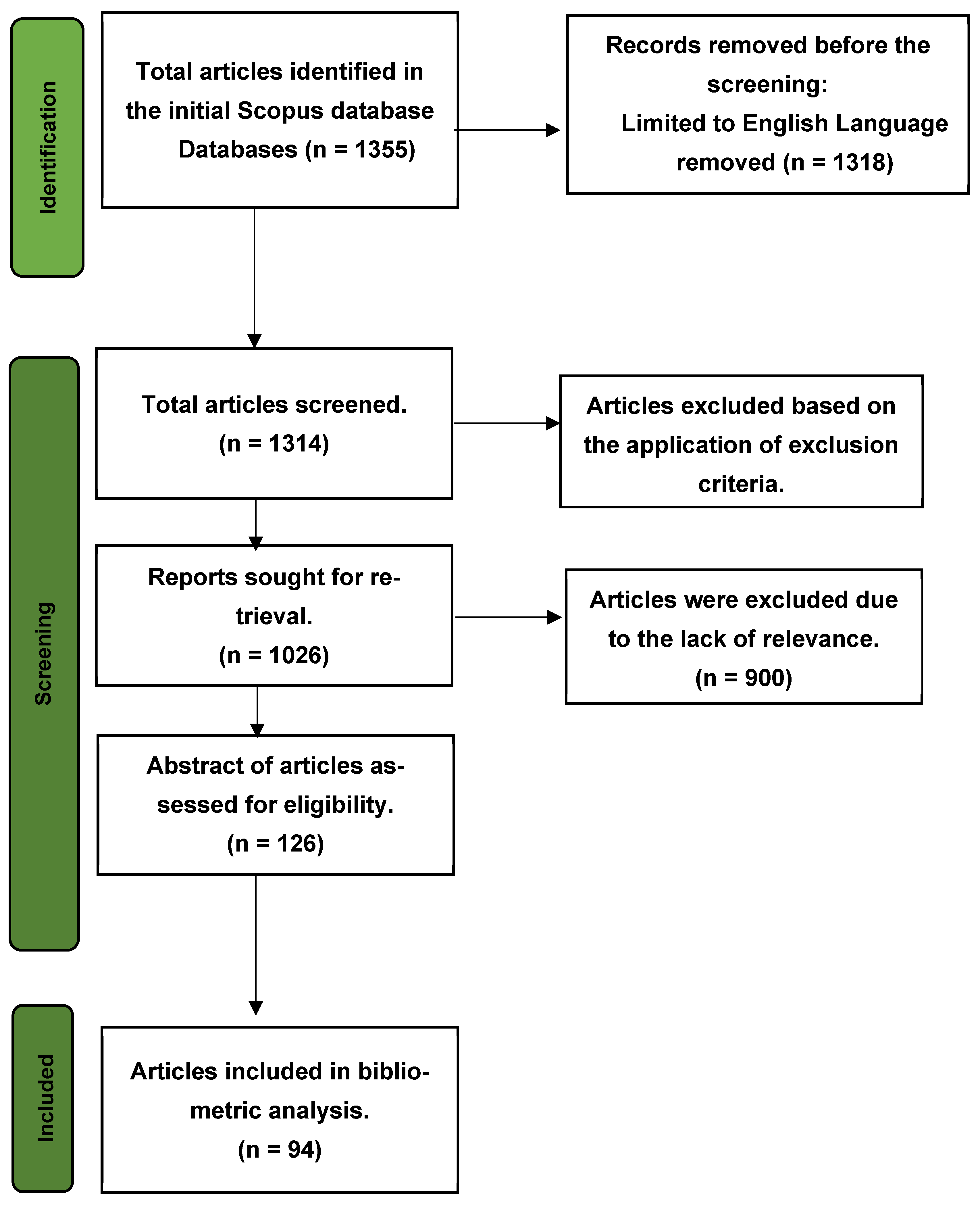
The study review followed the PRISMA guidelines for systematic reviews. A total of 1355 records were initially retrieved from Scopus using Boolean search terms: TITLE-ABS-KEY (“land reform” OR “restitution” OR “redistribution” OR “tenure security” AND “South Africa”), limited to English-language publications between 1994 and 2024. After removing duplicates and non-English records, 1314 articles were screened. Exclusion criteria included the following: (i) lack of relevance to South African land reform policy, (ii) focus on unrelated sectors (e.g., urban housing without land reform context), and (iii) absence of empirical or policy analysis.
Quality assessment considered journal credibility (peer-reviewed status), methodological rigor (clear research design, data sources, and analytical approach), and citation impact. Articles from high-impact journals and those employing robust qualitative or quantitative methods were prioritized. Grey literature (policy reports and government documents) was included for contextual completeness but evaluated for source reliability. Ultimately, 94 articles from Scopus database met inclusion criteria and were analyzed alongside five key policy documents and official reports.
The inclusion and exclusion criteria are demonstrated in Figure 1 (flow diagram of the steps followed during bibliometric analysis). The bibliometric analysis was preferred for this study due to its quantitative and statistical approach, objectivity, and ability to model the research field comprehensively [24,25].
The bibliometric analysis was used not only to map research trends but also to identify thematic clusters (e.g., tenure security and redistribution outcomes) that were then compared against documented policy performance indicators such as hectares redistributed, tenure security improvements, and poverty reduction targets. This integration allowed us to assess whether scholarly focus aligns with or diverges from actual policy outcomes.
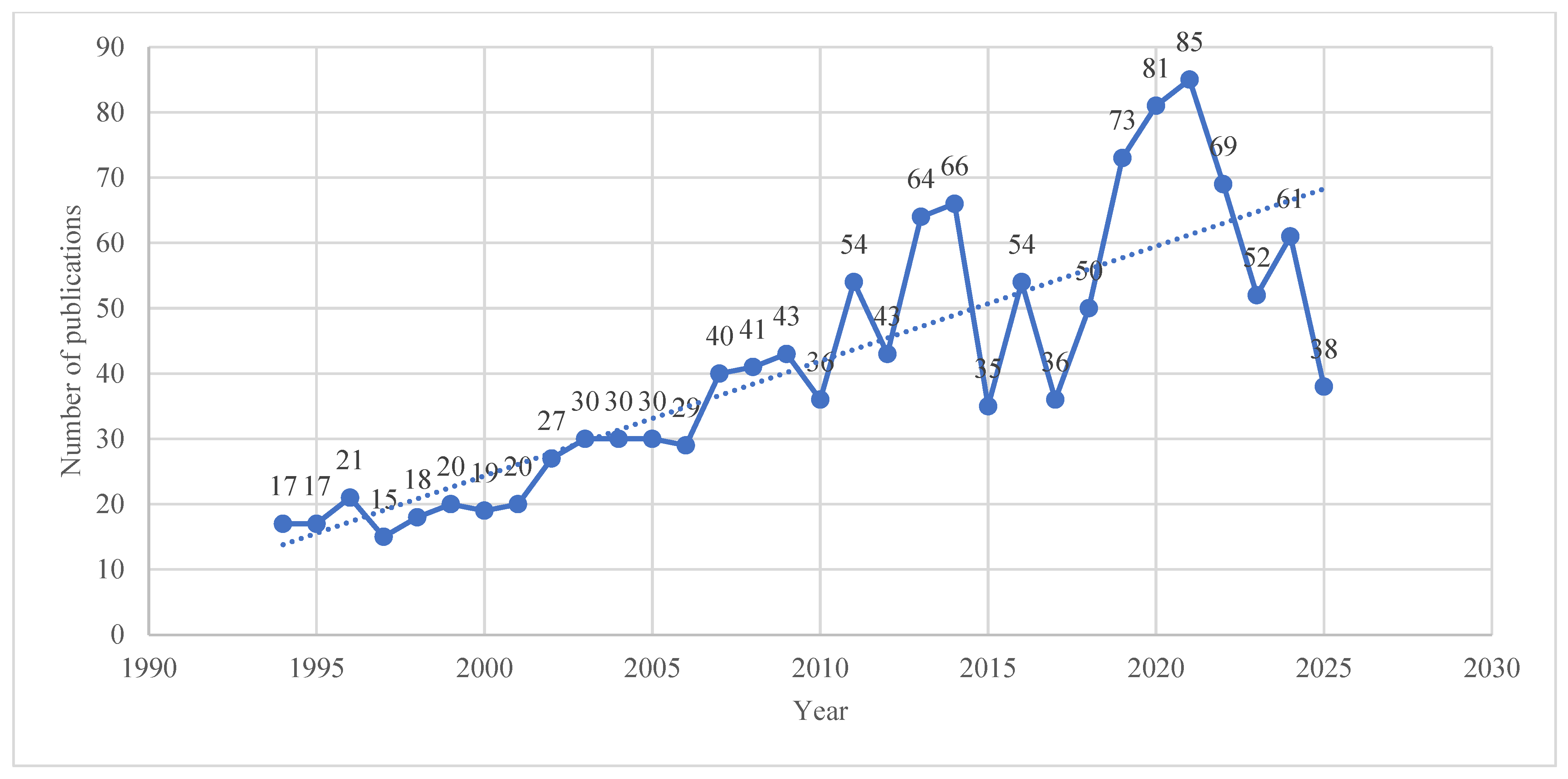
The upward trend in academic publications on land reform in South Africa from 1990 to 2025, as depicted in Figure 2, reflects a growing scholarly interest in the subject, driven by the socio-political and economic significance of land redistribution in the post-apartheid era. The increase in publications corresponds with key policy developments and public debates surrounding land reform, particularly its role in addressing historical injustices, poverty alleviation, and agricultural productivity.
A synthesis report by the Department of Planning, Monitoring, and Evaluation (DPME) highlights that land reform has been positioned as a strategic lever for unlocking agricultural potential and promoting food security, economic development, and social equity [12]. The report identifies the alignment of land reform with agrarian reform and the National Development Plan (NDP) as a catalyst for intensified research activity. Moreover, the challenges faced by land reform projects, such as inefficiencies in implementation, lack of post-settlement support, and market-based constraints have prompted critical academic inquiry into the effectiveness of various reform models
The literature also points to the influence of international development paradigms and donor-funded research initiatives, which have contributed to the volume of publications. For instance, studies funded by the Human Sciences Research Council (HSRC), United States Agency for International Development (USAID), and National Treasury have explored the economic impact of land reform and the viability of redistributed farms, thereby enriching the academic discourse [27,28].
In summary, the rise in land reform publications in South Africa reflects the evolving policy landscape, the persistent socio-economic challenges, and the need for evidence-based interventions. This scholarly engagement is essential for informing future reforms and ensuring that land redistribution contributes meaningfully to national development goals.
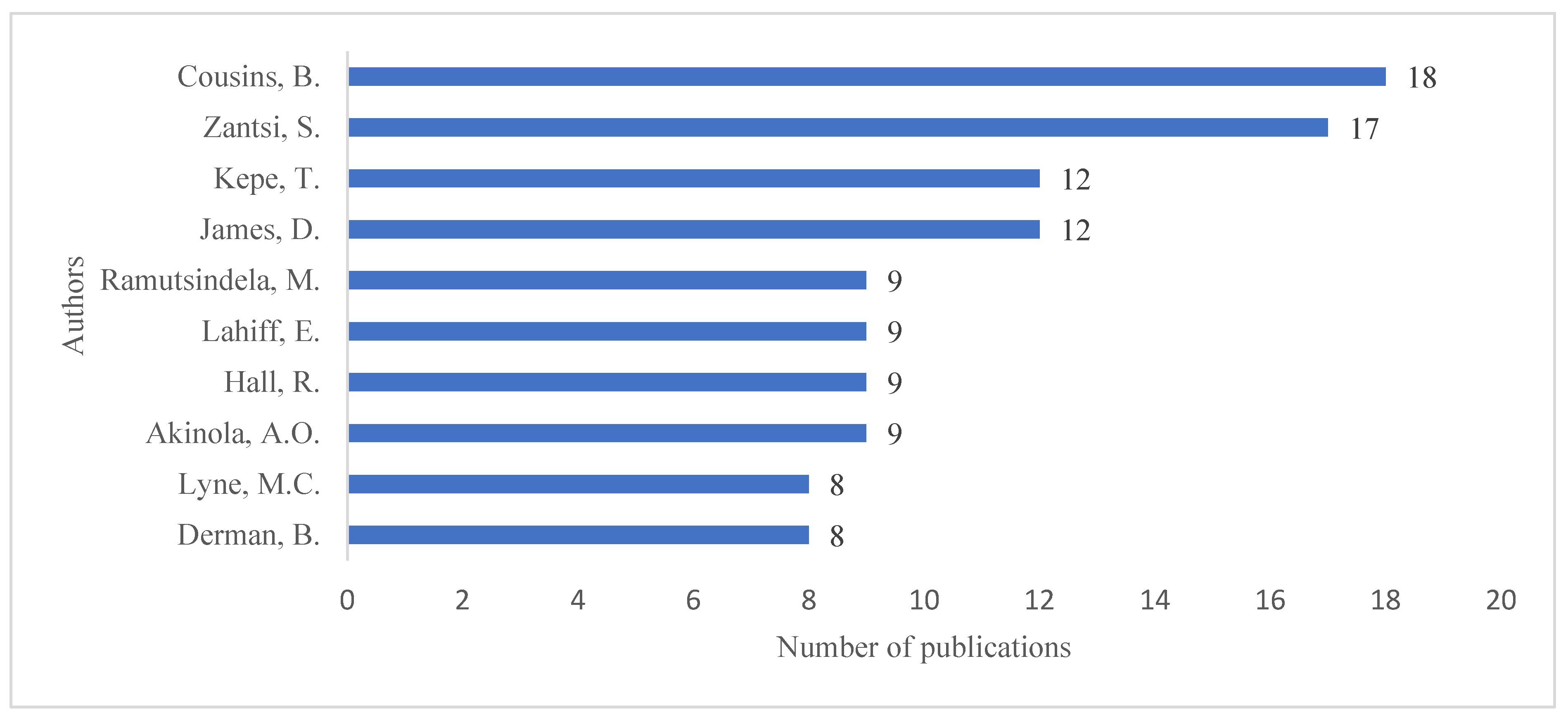
Figure 3 illustrates the distribution of academic publications on only land redistribution in South Africa by leading authors. This distribution highlights the central role of these scholars in shaping the discourse on land reform, particularly in the post-apartheid context. Their work spans critical themes such as efficacy of the redistribution models, rural livelihoods, and the political economy of land governance. For instance, Cousins and Hall have extensively criticized market-based land reform approaches and advocated for more inclusive, pro-poor strategies [18,29]. Similarly, Kepe and Ramutsindela [19] have explored the intersection of land reform with environmental conservation and spatial justice. The prominence of these authors suggests a robust and evolving body of literature that continues to inform policy debates and implementation strategies in South Africa.
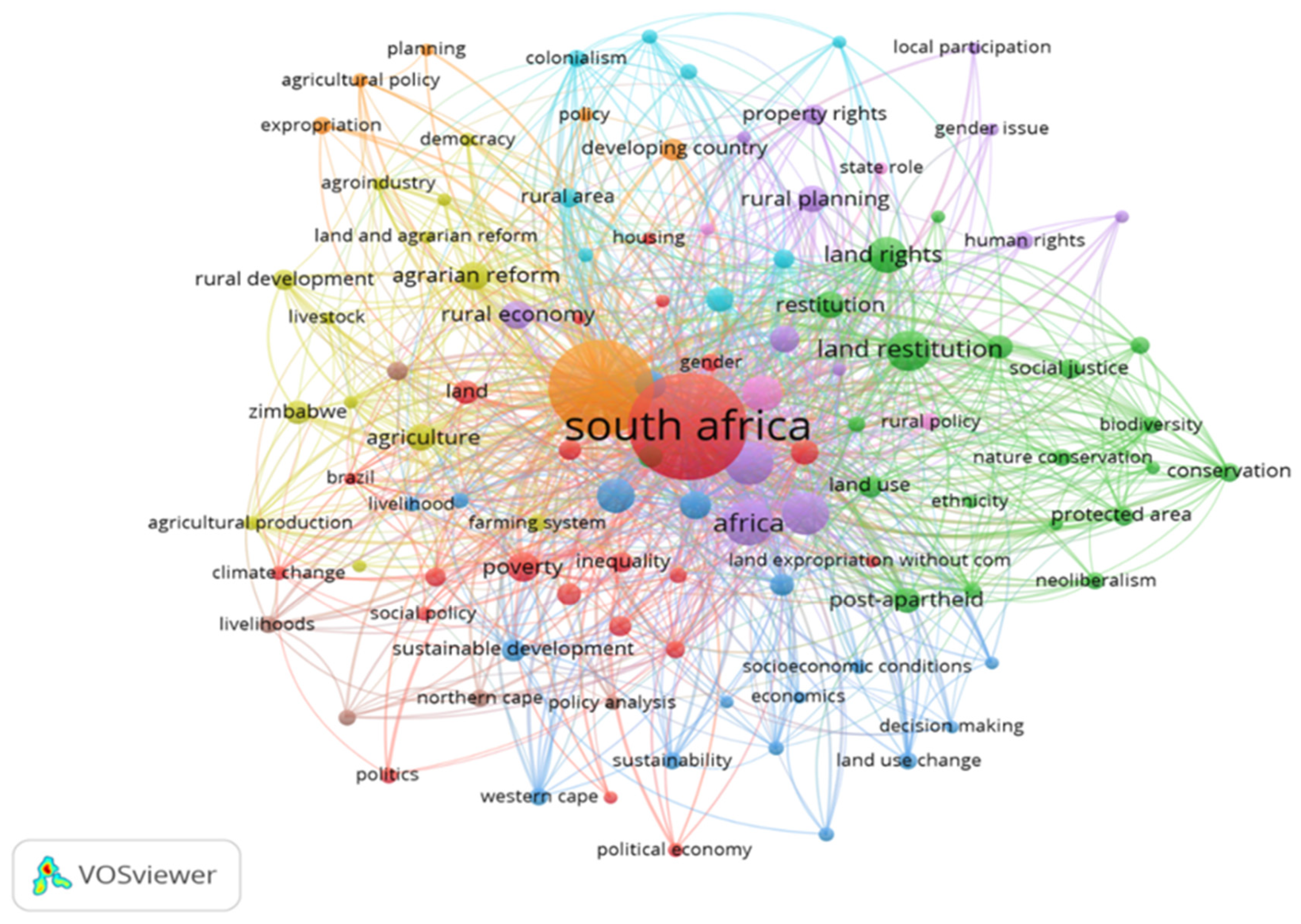
Figure 4 indicates VOSviewer version 1.6.20 network visualization in the image presents a thematic clustering of academic discourse on land reform in South Africa, with each color-coded cluster representing a distinct but interconnected research focus. At the center of the network is the term “South Africa”, highlighted in red, signifying its centrality to the scholarly conversation.
The red cluster includes terms such as “Africa,” “poverty inequality,” and “farming system,” reflecting research that situates land reform within broader continental and socio-economic contexts, emphasizing the structural challenges of poverty and agricultural transformation. The green cluster focuses on “land restitution,” “land rights,” and “conservation,” indicating a strong emphasis on legal frameworks, historical redress, and the environmental dimensions of land reform. The blue cluster features terms like “policy analysis,” “sustainability,” and “political economy,” pointing to studies that critically evaluate the design, implementation, and long-term viability of land reform policies within South Africa’s governance structures.
The yellow cluster includes “agricultural policy,” “agrarian reform,” and “rural development,” suggesting a focus on the intersection between land reform and agricultural productivity, rural livelihoods, and development planning. The purple cluster introduces themes such as “human rights,” “social justice,” and “biodiversity,” highlighting normative and ethical considerations, as well as the ecological implications of land redistribution.
Lastly, the light blue cluster encompasses “local participation,” “property rights,” and “developing country,” which reflect grassroots engagement, tenure security, and comparative perspectives from Global South Contexts.
Together, these clusters reveal a multidimensional and interdisciplinary approach to land reform scholarship in South Africa, integrating legal, economic, environmental, and social justice perspectives. This visualization underscores the complexity of land reform and the diverse academic efforts to understand and address its challenges.
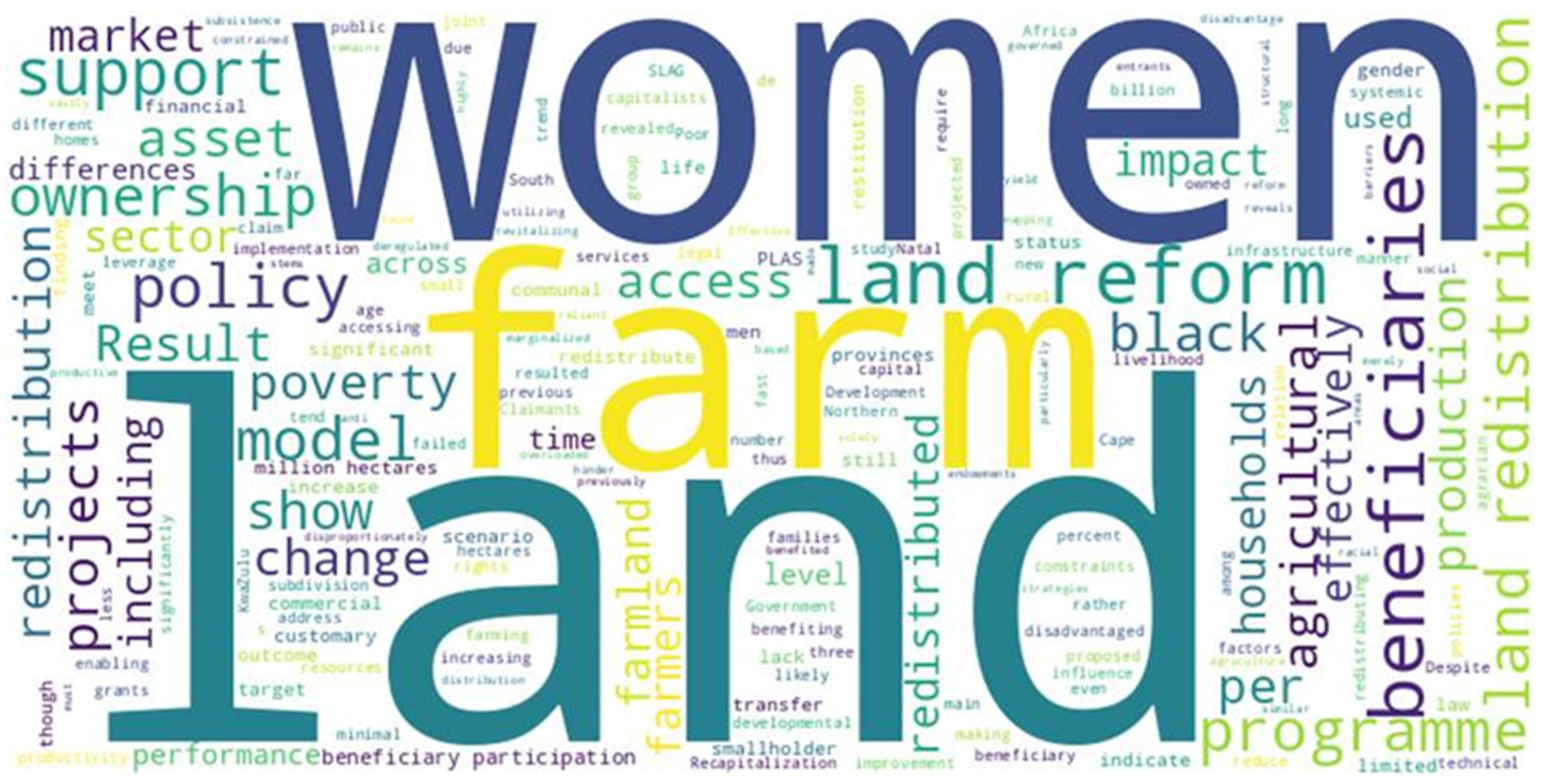
The word cloud visually highlights the most frequently occurring terms in the findings related to land reform and farming as shown in Figure 5. The most prominent words are “women,” “farm,” and “land,” suggesting a strong emphasis on gender dynamics, agricultural activity, and access to land. Other notable terms such as “redistribution,” “beneficiaries,” “programme,” and “policy” point to the structural and institutional aspects of land reform, including the mechanisms through which land is allocated and the individuals or groups who benefit. The presence of words like “support” and “ownership” further underscores the importance of enabling environments and secure tenure in achieving equitable land reform outcomes. Overall, the word cloud encapsulates the central themes of gender inclusion, land access, policy frameworks, and programmatic support in the broader discourse on land reform.

3. Results and Synthesis of Literature

In this review, the descriptive data analysis was employed to examine trends in academic publications on land reform in South Africa. Descriptive analysis is a quantitative method used to summarize and interpret data in a meaningful way, providing insights into patterns, distributions, and relationships without making causal inferences. The analysis involved visualizing publication trends over time (1994–2024) using line graphs, which revealed a steady increase in scholarly output, peaking around 2021. Additionally, a horizontal bar chart was used to identify the most prolific authors in the field, such as Ben Cousins and Siphe Zantsi, indicating the concentrated expertise and influence within the academic community.
To further explore the thematic relationships, a VOSviewer-generated network visualization was analyzed. This tool grouped keywords into color-coded clusters, each representing distinct research themes such as land restitution, agrarian reform, policy analysis, and social justice. These visualizations enabled the identification of dominant topics and conceptual linkages within literature. Overall, the descriptive analysis provided a foundational understanding of the scope, focus, and evolution of land reform scholarship in South Africa, serving as a basis for deeper qualitative or inferential studies.

3.1. Performance of the South African Land Reform Policy

This section presents the results, a synthesis of the literature that has been consulted. The presentation is broken down into the three components of the land reform policy.

Land Restitution

Land restitution in South Africa has yielded mixed results. Approximately 4 million hectares of land have been transferred to black communities, with approximately R22 billion (US$1.1 billion) paid out in cash compensation thus far [30]. Of these, most are urban claims. Urban claims seem to have progressed efficiently while rural restitution has been slow due to the complexity of the documentation, group claim logistics, and the delayed implementation capacity. Many claims were settled, but often through financial compensation rather than land return, weakening the redress component [21]. Over 90% of restitution claims were settled through cash compensation due to dual factors: beneficiary preference for immediate financial benefits amid urbanization and limited farming skills, and systemic constraints such as budget shortages, administrative delays, and political pressure for rapid settlements, making payouts more expedient than land transfers [21].
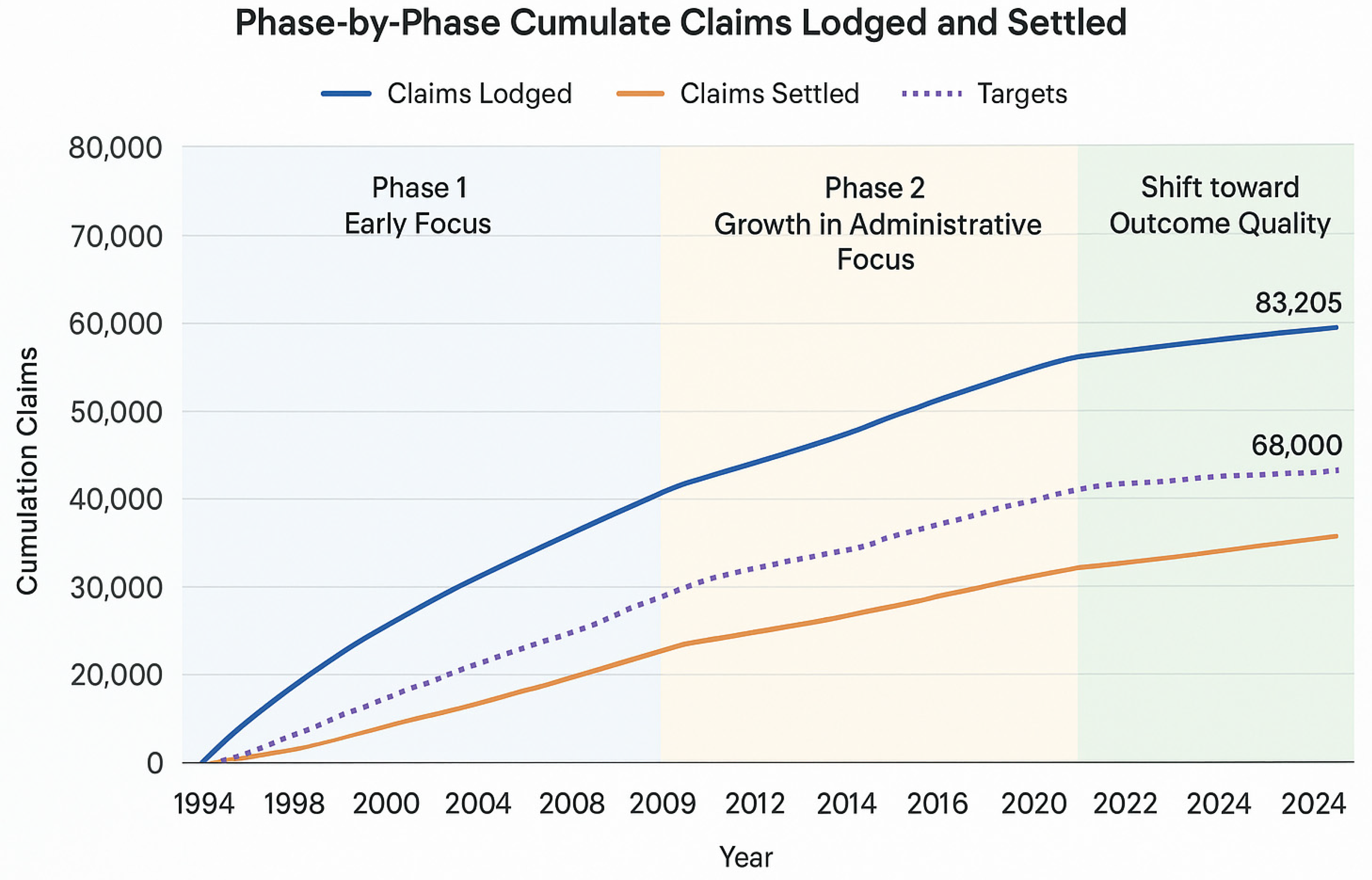
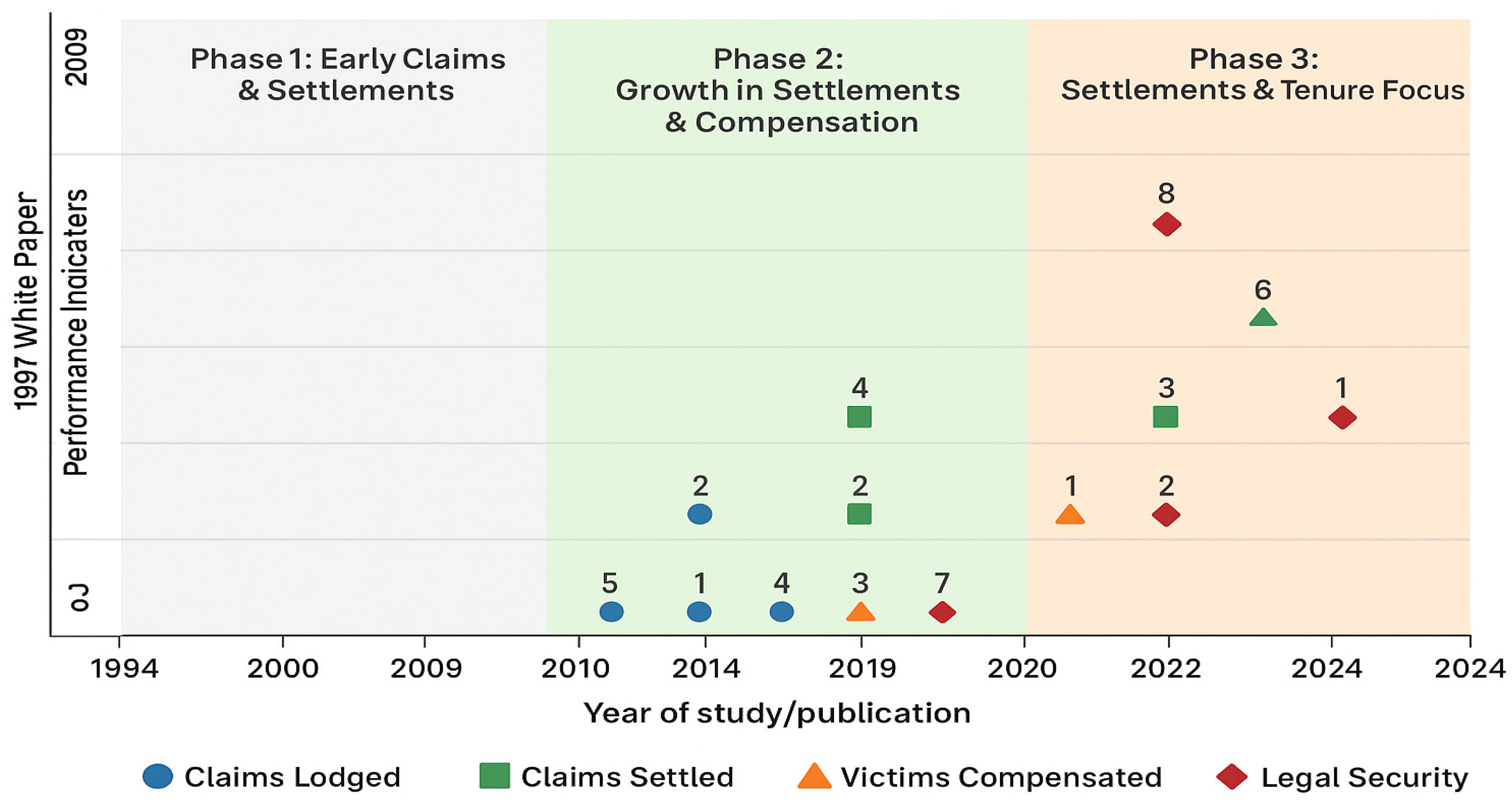
The participation and utilization of restituted land remain low, with beneficiaries lacking the financial capabilities for production [31,32]. Process-driven targets (like claim numbers) are occasionally met, especially post-recovery interventions, but outcomes in terms of livelihoods are largely underwhelming. The 30-year land restitution review can be summarized into three phases as illustrated in Figure 6 and Figure 7. The figures show the chart that tracks the density of the research literature (number of studies/reports) by tracking the trend of claims lodged, vs. the claimed settled and the targets sets in Figure 7, focusing on specific land restitution performance indicators from the 1997 White Paper.

3.2. Phase 1: Early Claims and Settlements (1994–2009)

Notable, Figure 6 shows that the early period was marked by a sparse research focus on all performance indicators, with a density of 0. By 2004, the few studies that emerged, such as those by Hall [29] and Carter and May [33], quickly identified that tenure rights were weak and the focus was on urban monetary compensation. This indicated that the issue of unsecured land rights was recognized early on; yet, it had not become a sustained research priority.
During this phase, most of the literature emphasis was on policy analysis rather than robust performance tracking. In Figure 7, it can be noted that the phase struggled with delivery, though there is an upward trend of claims and targets. The Phase 1 early focus noted an increase in claims lodged, higher than the target sets with lower settlements. By 1999, fewer than 1000 claims had been made, confirming a slow start. By 2004, although 48,000 claims were settled [34], the literature noted that most claimants opted for cash, and the process was weak in terms of tenure security [29].
This phase achieved the objective of initial mobilization, with around 79,696–80,000 claims lodged, and only 48,000–60,000 settled [35]. Nevertheless, due to the sluggish progress in rural areas, the initiative was unable to achieve its objective of addressing injustice through sustainable land-based strategies, as it hindered rural development goals. The initial scarcity of literature reflected the program’s lack of significant, documented final outcomes.

3.3. Phase 2: Growth in Administrative Focus (2010–2020)

Claims Lodged (Blue Circles): This indicator has a major focus in the research field during this phase, with a notable concentration of 12 studies dedicated to it from 2014 to 2018 (densities of 5 and 4). This metric is prominent around 2010 and 2018, indicating an early research interest in the initial scale and demand of the program. This period was marked by an emphasis on achieving high settlement numbers. By 2013/14, 76,000 claims had been finalized, and over 1.8 million beneficiaries were reached by 2015/16. However, the goal of equitable redress was predominantly delivered in cash: the 2010/11 data clearly show that 90% of the settled claims were compensated in cash, a trend that persisted through 2019/20. Importantly, the literature confirmed that land tenure insecurity remained [31], indicating that the primary aim of securing tenure was being systematically undermined by the preference for simpler cash settlements.
Claims Settled (Green Squares): This indicator also had a major focus in the research field, with a notable concentration of nine studies dedicated to 2019 (densities of 4 and 2). The substantial amount of literature in this area indicates that researchers, much like the government, were primarily interested in the administrative task of processing and finalizing claims. The studies largely concentrated on the bureaucratic efficiency and the number of “settled” claims, rather than the quality or sustainability of the outcomes for claimants. To support this, most of literature during the phase highlighted restitutions that lacked post-settlement support, with disputes increasing [31].
The high research density on claims lodged and settled aligns perfectly with the government’s emphasis on high settlement numbers in Figure 7. Though the imbalances continued, the strong legal security on literature obscured the quality of the deficiency due to dispute-related factors.

3.4. Phase 3: Shift Toward Outcome Quality (2021–2024)

Legal Security (Red) and Victims Compensated (Orange): This phase marks a critical change in research focus. The most outcome-focused metrics, Victims Compensated (density 1 in 2021) and, more importantly, Legal Security (densities 10 in 2022, and 1 in 2024), finally appear and gain traction in the literature. The belated but increasing density of studies focusing on the legal security of tenure reveals a growing awareness within the research community that the constitutional promise of restitution was often left incomplete. The fact that the literature only seriously began to address the legal quality of the redress in the 2019 and 2020’s suggests a decade-long gap where the final, crucial objective of providing secure tenure was neglected by both policy evaluation and academic scrutiny, despite the high density of research confirming claims had been “settled”.
Although recent reports indicate ongoing administrative achievements, such as settling 641 claims in 2023 compared to a target of 406, the literature is now addressing the fundamental issues. The goal of achieving tenure security is identified as unfulfilled [32]. The limited amount of land acquired, with 3504 ha obtained versus a target of 6150 ha in 2021/22, demonstrates that the program remains financially burdensome, with minimal improvements in legal security [21]. Consistent with this, research by [36] emphasizes that tenure objectives remain unmet, revealing that claims resolved in Phase 2 often left beneficiaries with land but lacking legal security. Consequently, the latest studies confirm that securing tenure is the program’s most significant ongoing shortcoming.
The recent but growing focus on research regarding the legal security of tenure (2021–2024) is closely linked to the formal acknowledgment and ongoing efforts to address the issues of post-settlement support and title deeds, which have arisen from the large number of cash-based settlements over the past twenty years. This delayed research emphasis, as noted by Kepe, and Hall [32] and Chitonge [21], is directly connected to the current crisis within the program, highlighting that the administrative closures of the last two decades have failed to meet the fundamental legal and developmental goals. This recent shift in research attention confirms the presence of a significant, accumulated problem of tenure insecurity that results in an imbalanced trend in Figure 7.

3.5. Land Redistribution

South Africa has about 78 million hectares of agricultural land. The 2017 Land Audit report [37] has shown that 72% of this land is still in the hands of the white minority. This highlights the shortfall of the land redistribution component. Even the Land and Agriculture Advisory Panel has come to the same conclusion about the shortfall of land redistribution. The most cited figure is that only 10% of the 78 million hectares has been redistributed.
Land redistribution initiatives from 1994 to 2024 have consistently encountered major obstacles, hindering the program from fulfilling its primary goals of reducing poverty and enhancing livelihoods. Initially, the redistribution was limited to small-scale transfers of unproductive land with little support after settlement, resulting in a negligible effect on poverty levels. During the 2000s, even though the focus shifted towards improving livelihoods, progress was sluggish as projects continued to falter due to a lack of essential resources, infrastructure, and comprehensive support services for beneficiaries, with women and marginalized groups still underrepresented. This pattern has largely continued into the 2010s and 2020s. Despite the increased participation from beneficiaries under new strategies like PLAS, the research consistently shows that the projects remain unsustainable and fail to significantly enhance livelihoods, highlighting the overarching conclusion that merely providing land access is inadequate to combat poverty without additional support, infrastructure, and market connections. The 30-year land redistribution review can be summarized below, noting the objectives and achievements [38,39].
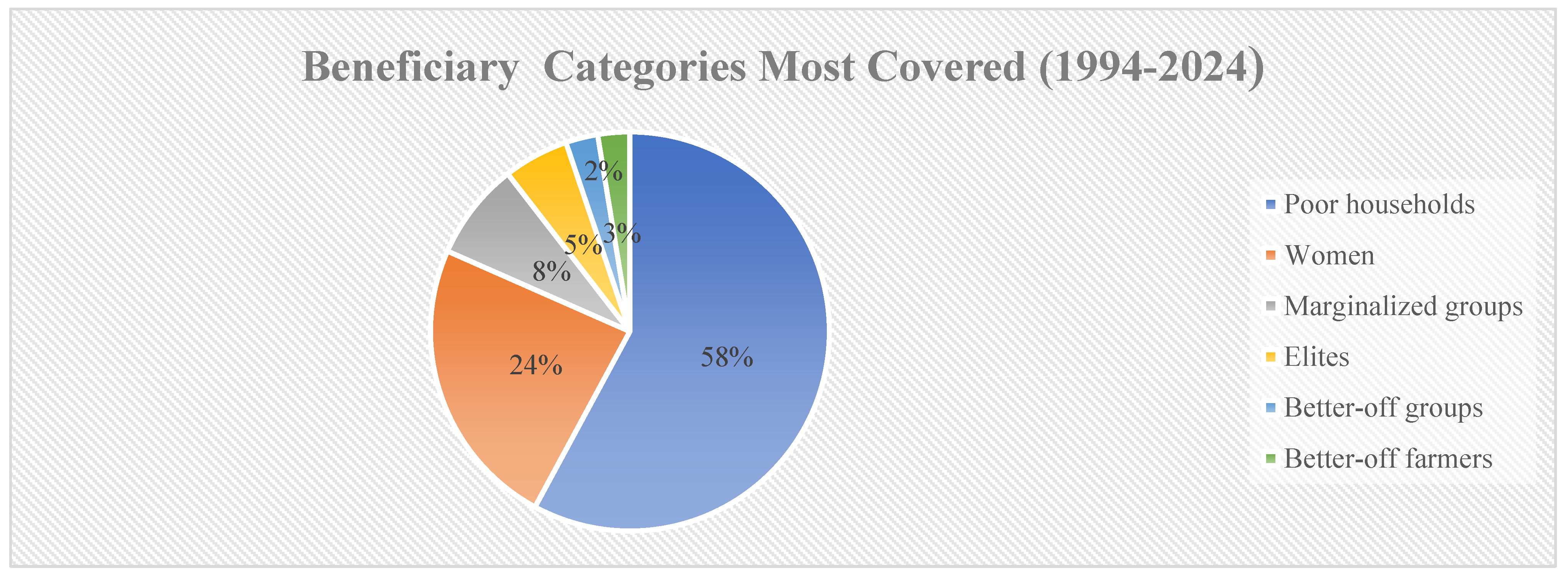
Consequently, Figure 8 shows which groups were most frequently mentioned in the literature covering the redistribution objectives over the years. It is noteworthy that poor households dominate the coverage, appearing in almost every year. Women are consistently mentioned but always underrepresented (<25% of beneficiaries). Marginalized groups (8%) (broadly defined) appear occasionally. Elites/emerging farmers and appear more in later years (2013 onwards), with better-off groups dominating the coverage. In summary, while policies target the poor and women, in practice, emerging farmers and elites capture increasing benefits, leaving vulnerable groups underserved.
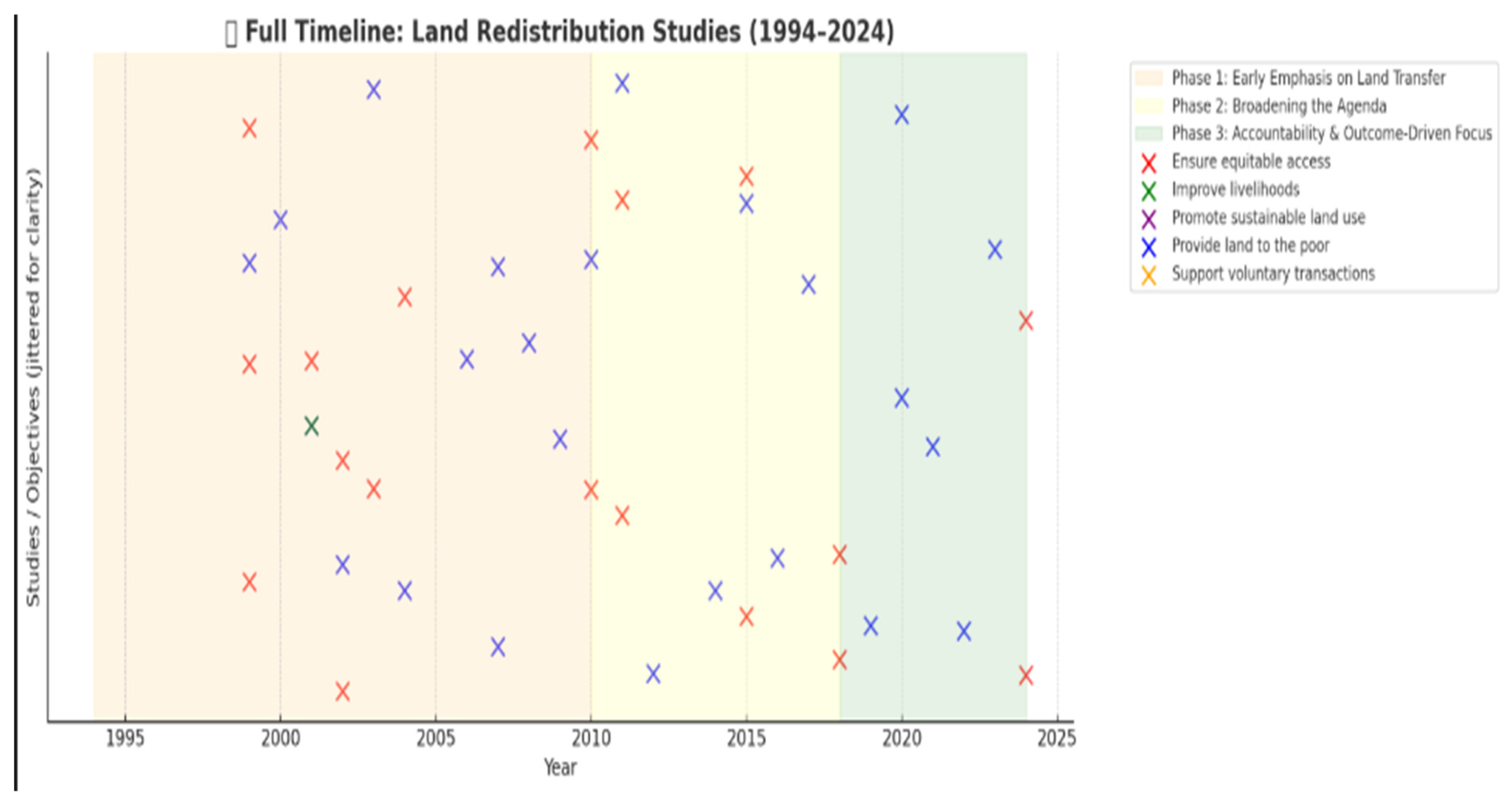
Table 1 shows the land redistribution studies between 1994–2024 summarized based on what objectives were achieved and not achieved during the period of 1994–2024.
Table 1 and Figure 9 shows that, from 1994 to 2024, South Africa’s land redistribution initiative underwent three distinct stages. The first phase (1994–2010) concentrated on land transfer, achieving some progress for impoverished households, women, and labor tenants through the promotion of land use (Blue x’s) and equitable access (Red x’s), but it struggled with sustainability, poverty alleviation, and the improvement in livelihood (Green X’s).
The second phase (2010–2018) expanded the program’s scope, geographically extending projects, diversifying land use, and incorporating emerging farmers. However, many projects lacked viability, had inconsistent effects on livelihoods, and received limited support services.
The third phase (2019–2024) emphasized accountability and results-oriented strategies, implementing enhanced monitoring, wider beneficiary inclusion, and slight improvements in tenure security, income, and poverty reduction. Nonetheless, ongoing issues, particularly weak sustainability, unmet redistribution goals, and uneven equity outcomes continue to hinder the program’s transformative potential.

3.6. Land Tenure

The work of the Surplus People Project (SPP) in the 1980s established that, from 1960 to 1983, a total of 3.5 million Black people had been forcibly removed from their land [45]. These brutal and forced removals dating back to 1913 are the main causes of the land restitution.
Land ownership in South Africa was the most effective tool of apartheid, whose express purpose was to restrict Black South Africans from buying or owning land. The exclusion not only undermined livelihoods and agricultural productivity but also created economic inequality by denying access to basic resources and opportunities. Their effects can be felt today, with most rural communities still lacking secure land rights. Tenure insecurity also inhibits long-term investment, as potential investors. Land rights are, therefore, the cornerstone of successful land reform because the success of such critical elements as land restitution and land redistribution depends on the extent to which tenure security is guaranteed. In this regard, the objective of this literature review is to examine the performance of land rights in South Africa from 1999 up to today, focusing on how tenure arrangements have affected productivity, investment, and rural development.
To evaluate the effectiveness of land tenure reform, we reflect on the original objectives outlined in South Africa’s White Paper on Land Reform Policy. According to this policy document, the aim of tenure reform was “To bring all people occupying land under a unitary, legally validated system of landholding” [7]. Additionally, this component of land reform aimed to devise secure forms of land tenure, help resolve tenure disputes and provide alternatives for people displaced in the process. The specific targets were (1) to upgrade tenure security for Black citizens in urban and rural areas, where tenure was and remains highly conditional; (2) to resolve overlapping and competing tenure rights among those forcibly removed and resettled on land belonging to others; (3) to make communal tenure more beneficial and strengthen tenure rights under that system; and (4) to extend security of tenure to those living on land owned by others primarily in white commercial farming areas [7].
To achieve these, it was envisaged that rights would replace permits; people would choose tenure systems suited to their circumstances; tenure systems would uphold the Constitution’s commitment to basic human rights and equality; and existing land practices on the ground would form the basis for determining rights, adjudication principles, and the establishment of new tenure systems and legislation [7].
Traditional leaders remain central to land governance in communal areas, influencing tenure security and access. Evidence from former homelands shows land allocation often occurs through customary systems, sometimes involving informal fees that disadvantage women and poorer households. Despite the Communal Land Rights Act (2004) [46], implementation is uneven, and dual authority persists. While some leaders facilitate access, elite capture and gender bias remain, underscoring the need to harmonize statutory and customary frameworks for equity [47].

3.7. Tenure Security on Redistributed Land

Regarding Target (1), most Black South Africans who acquired land through the Proactive Land Acquisition Strategy (PLAS) and State Lease and Disposal Policy under the redistribution program have not received title deeds. Instead, they issue lease agreements. It is reported that 2500 hectares of land acquired under PLAS still legally belong to the state [48]. A commissioned study on land redistribution (PLAS) by the Agricultural Research Council which involved a survey of close to 2000 farms representing 98% of PLAS farms between 2006–2018 suggests that all farms were on leasehold. This arrangement does not constitute secure tenure as envisioned in the White Paper.
A significant body of evidence shows that many land redistribution beneficiaries in South Africa do not receive formal title deeds, which has direct implications for their productivity and ability to secure loans from financial institutions. A case study conducted in Limpopo demonstrates how a PLAS beneficiary, having used a PLAS subsidy to repair infrastructure in her acquired farm, could not secure a Land Bank loan to finance her farm operations because of her not having a title deed to the property [49].
Many land redistribution beneficiaries, especially in South Africa, operate on communal or redistributed land without formal title deeds. Surveys of potential beneficiaries highlight that most farm on communal land and feel constrained by the lack of secure tenure, with 66% expressing this limitation and 61% willing to relocate for better opportunities [50].
A large proportion of land redistribution beneficiaries hold off-register or informal land rights rather than formal title deeds. Research estimates that up to two-thirds of South Africans hold such off-register rights, and converting these to title deeds faces major administrative and social challenges [51]. The State Land Lease and Disposal Policy (SLLDP) often result in beneficiaries leasing land from the state rather than owning it outright, further limiting the issuance of title deeds [45]. Case studies and surveys across provinces such as the Eastern Cape, KwaZulu-Natal, and Limpopo confirm that most smallholder and emerging farmers lack formal ownership documentation. Studies on land redistribution in South Africa have highlighted some common challenges. In the Waterberg District, for instance, unclear tenure security led to lower beneficiary participation, inconsistent land use, and hampered productivity due to uncertainty over land rights [31].
Similarly, in Mahikeng, beneficiaries of the Proactive Land Acquisition Strategy (PLAS) had limited autonomy due to a lack of ownership, requiring departmental permission for farm improvements, which affected productivity and investment decisions [52]. The Greater Kokstad Municipality case also showed limited socio-economic advancement despite improvements in infrastructure and training, partly due to insecure tenure and a lack of access to credit [53]. These cases suggest that clear tenure security and ownership are crucial for effective land use, productivity, and socio-economic advancement.
Many land redistribution beneficiaries, especially in South Africa, operate on communal or redistributed land without formal title deeds. The absence of title deeds undermines tenure security, which is critical for long-term investment in land and agricultural productivity. Without secure tenure, beneficiaries are less likely to make productivity-enhancing investments and are often unable to use land as collateral for loans, restricting access to credit from financial institutions [54].
This perpetuates a cycle where beneficiaries remain dependent on state support and are unable to accumulate capital or scale up operations [45]. Empirical evidence from multiple case studies highlights that the lack of formal land rights is a key barrier to both productivity and financial inclusion [54]. In South Africa, the lack of post-settlement support and secure tenure are cited as key reasons for the underperformance of land reform programs [50].

3.8. Tenure Security on Restituted Land

On a positive note, land acquired through restitution has generally been transferred with complete tenure security, often to a trust or committee elected by the beneficiary community. However, it is worth noting that most beneficiaries (>90%) of restitution opt for financial compensation [21].
In relation to Target (4), the Land Reform (Labor Tenants) Act, No. 3 of 1996, was intended to secure tenure for individuals who provide labor in exchange for residence and agricultural land use rights. However, evidence indicates that many tenants still experience insecure tenure: they are often prohibited from keeping livestock, relocated to marginal land, and, in some cases, evicted [55].
Evicted farm workers are forced to move to growing informal settlements near rural towns in under-resourced and underserviced municipalities [56] where inequality is still rife [57]. When farmworkers are evicted, they are uprooted not only from their land and their livelihoods [57,58], rendering them destitute—this also fractures farmworker households [58]. Minimal consideration and analysis are directed towards the effects of farm evictions on women [49]; however, during these evictions, it is the women who bear the prime responsibility for rebuilding their families’ lives [57].
Farmworker evictions bring about a number of social challenges including but not limited to displacement, job losses which lead to poverty, the disruption of children’s education, the lack of access to ancestral graves, and a lack of sense of belonging in the new places of residence [57,59], with evicted farmworkers often struggling with prejudice from longstanding residents in their new environment [60].
Despite the existence of the ESTA legislation, many evicted farm workers cannot seek support through this legislation because they lack access to legal resources and are therefore unable to challenge landowners who possess historic power [57,59,61]. Policies such as the ESTA have limitations that prevent them from protecting the rights of farm workers and the continuing evictions are indicative of the shortfalls of these policies [57]. The Communal Land Rights Act, No. 11 of 2004 [46], aims “to provide legal security of tenure by transferring communal land to communities or awarding comparable redress,” and to establish the necessary administrative frameworks. However, a survey of rural households and traditional leaders in seven former homelands reveals that access to communal land has become prohibitively expensive. For example, in Umhlabuyalingana (KwaZulu-Natal), part of the former KwaZulu homeland, a local applicant pays R1500 for a residential plot, while outsiders are charged up to R15,000, often with additional costs in the form of soft drinks, beer, and food [20]. These amounts are beyond the reach of most ordinary households.

3.9. Progress for Rural Women

Positively, the same survey found that, compared to the past, rural women both young and old now have the right to apply for land to build homes or engage in farming. This marks a shift from the historical norm where women could only access land through men, typically after marriage. Land redistribution and restitution programs have enabled rural women to access larger plots, expand agricultural activities, and improve household livelihoods [62]. This is supported by legal reforms, such as post-apartheid policies and the Constitution, which guarantee equal land rights for women and have removed formal barriers to women’s land ownership [63]. Consequently, beneficiaries of land restitution have experienced improved food security, with a notable 10% reduction in food insecurity among recipient households, as seen in areas like Buffalo City where women reported increased outputs and community benefits after gaining access to restituted land [64].
Studies conducted in other parts of the country—Western Cape, Eastern Cape, Free State, and Limpopo—demonstrate that current land ownership trends continue to deprive most Black impoverished rural women [49,57]. Due to customary law and patriarchal norms and values that are still prevalent in South Africa and rural areas, for women who live in former homelands and those who live and work on white commercial farms, tenure security and land ownership is still reliant on relationships with men, whether husbands, fathers, or brothers [16,49]. Despite the initiation of the land reform program, there is a notable disparity between men and women in the ownership of land, with men owning more land than women [16,49,65]. The shortage of land ownership amongst women is indicative of inefficient land reform policies or the substandard implementation of these policies, which leads to women being disadvantaged when it comes to accessing land [66]. While the DRDLR, as part of the SLAG and LRAD programs, implemented a quota strategy with some focus on women, this has been abandoned upon the introduction of the PLAS program [49], which moves us further away from any hope of achieving gender equality within the land distribution program.
Access to land for rural women is not only gendered, but also classed, which means ordinary rural Black women are at a disadvantage when it comes to accessing land due to their limited education, class, lack of economic privilege, and lack of power [16]. Furthermore, some studies have concluded that, when women receive farms, the farms are in a poor state [49]. Additionally, once redistribution has materialized, in most districts, DAFF and DRDLR officials rarely visit or offer post-distribution support [49].
The inequalities between men and women farm laborers extends beyond land ownership. Women are the most vulnerable as they often are discriminated against, exploited and face unequal treatment in relation to wages, working conditions, and access to resources in an already oppressive environment within which their lives are dominated by a male partner and a farmer [49,67]. For example, to reduce costs, farmers often scale down on the number of permanent farm workers, replacing them with seasonal, off-farm workers [68].
The gendered impacts of land reform cannot be understood in isolation; they intersect with race and class to shape access and tenure security. Historically, apartheid policies entrenched racialized land ownership, leaving Black women doubly marginalized—first by race and then by gender [16,29]. Class further compounds these inequalities: better-off, politically connected men often capture redistribution benefits, while poor rural women remain excluded due to limited resources, education, and social capital [45,53]. Evidence from KwaZulu-Natal and Limpopo shows that women in communal areas face patriarchal norms that restrict independent land rights, even under post-apartheid reforms [63,69]. Intersectionality thus reveals that land reform failures are not only gendered but also deeply embedded in structural inequalities, requiring policies that address overlapping disadvantages rather than treating gender as a standalone category.
Compared to men, women are more likely to be employed as seasonal farm workers [67,70], further reinforcing the precarity of their working conditions and the ability to earn a living. Several studies emphasize that private land transactions and formal land registration improve tenure security, but many beneficiaries still lack formal titles, leading to informal or perceived security [71]. Some research highlights the exclusion of customary and social tenure systems from formal recognition, perpetuating tenure insecurity despite land redistribution efforts [72].
A few studies note that beneficiaries may perceive their tenure as secure despite lacking formal documentation, indicating a complex relationship between legal status and perceived security [73]. Policy and institutional shortcomings, including ineffective programs and elite capture, contribute significantly to tenure insecurity [74].

3.10. Determinants and Outcomes of Tenure Security

Empirical studies show that a range of factors beyond legal title, including social dynamics, authority relations, state politics, and local norms, influence tenure security. For example, even where formal titles exist, tenure may remain insecure due to weak enforcement, social exclusion, or conflicting claims [75]. Conversely, perceived security shaped by lived experience, political patronage, or group solidarity can be high even in the absence of formal documentation [76].
The literature consistently links improved tenure security to positive human well-being and environmental outcomes, such as increased investment in land, the adoption of sustainable practices, and enhanced food security [77]. However, the relationship is mediated by other factors, including access to credit, extension services, and a broader socio-political context [78]. Notably, interventions focused solely on titling or formalization have sometimes undermined existing rights, particularly for marginalized groups, underscoring the need for context-sensitive approaches [79].

3.11. Policy and Measurement Challenges

Measuring tenure security remains challenging due to the diversity of indicators and local realities. While legal recognition is important, the literature urges policymakers to consider the full spectrum of tenure arrangements and to design interventions that strengthen both formal and informal systems [79]. Survey-based and participatory approaches are recommended to capture the multidimensional nature of tenure security and inform more equitable and effective land policies [80].

4. Discussion

4.1. Comparison of Conditions Before and After Land Reform

Before 1994, apartheid entrenched racial segregation and land dispossession, concentrating ownership among a white minority while Black communities were confined to homelands under customary systems led by traditional authorities [29,51]. This created dual agrarian structures: commercial farming versus subsistence agriculture, perpetuating poverty and inequality [33]. Post-reform, democratic governance introduced constitutional guarantees and policies like the 1997 White Paper to dismantle inequities. While reforms aimed to empower marginalized groups and broaden land access, weak post-settlement support, insecure tenure, and gender disparities persist [12,16,69]. Traditional leaders continue to influence land allocation, creating tension between statutory and customary systems [63,72]. Despite progress, elite capture and patriarchal norms constrain transformation.
Land reform performance is shaped by the appropriateness of policy models, quality of implementation, property rights security, and adaptation to local contexts. Success is more likely when reforms are flexible, well-supported, and tailored to local realities, while failures often stem from top-down, poorly executed, or mismatched approaches. With the study conducted by [81], we find that there is an over-reliance on formal titling, weak land administration, lack of political will, insufficient support for customary and social tenure systems, and slow, bureaucratic processes. In the poor performance of South Africa’s Land Reform Policy, several hurdles and caveats can be drawn.
Inappropriate Policy Models: Applying large-scale commercial farming models to smallholder or rural poor contexts often leads to unworkable project designs and irrelevance for beneficiaries, as seen in South Africa and Namibia [82]. Weak Implementation and Support: Poor policy execution, inadequate support structures, and bureaucratic inefficiencies undermine land reform outcomes, especially in South Africa [83]. Unclear or Insecure Property Rights: Instability in land tenure and property rights discourages investment and leads to land informality, as observed in Peru and China [84].
Group Ownership Challenges: Farms owned by groups of beneficiaries often face coordination and management difficulties, contributing to declining performance [85]. Market and Institutional Barriers: Reluctance to embrace functional land markets, policy misalignment, and lack of integration with broader economic systems limit productivity and sustainability [86]. Inadequate Adaptation to Local Conditions: Imposing external production systems or technologies without considering local needs and knowledge results in poor outcomes, particularly in irrigation schemes and agricultural reforms [87].
There are also nudges for success that can be highlighted which, if carefully examined and scaled up, could improve performance.
Adaptation and Flexibility: Beneficiaries who adapt or amend official project plans to fit local realities often see modest livelihood improvements [82]. Clear Property Rights and Market Orientation: Reforms that clarify land rights, enable market transactions, and protect property rights tend to improve efficiency and rural development, as seen in China [88]. Effective Support and Infrastructure: Where land reform is paired with adequate support, infrastructure, and integration into functional markets, positive outcomes are more likely [88].
Evidence from case studies confirms that elite capture has significantly undermined land redistribution goals. For example, research in Mpumalanga and North-West provinces shows that better-off emerging farmers and politically connected individuals often dominate beneficiary lists, while poorer households and women remain underrepresented [31,45] In Mahikeng, PLAS beneficiaries with political ties secured large farms, whereas marginalized groups lacked access to credit and infrastructure [52]. Similarly, in the Greater Kokstad Municipality, redistribution projects favored elites, resulting in limited socio-economic advancement for vulnerable groups [53].
This pattern is closely linked to macroeconomic policy choices, particularly the adoption of neoliberal agricultural policies emphasizing market-led reform and fiscal austerity. The “willing buyer, willing seller” model, combined with minimal state intervention, inflated land prices and constrained budgets [89,90]. Structural Adjustment-era reforms prioritized commercial viability over equity, reinforcing barriers for smallholders and women [10,29]. These policies shifted land reform from a redistributive justice agenda toward a market efficiency paradigm, limiting transformative potential and perpetuating inequality.

4.2. There Are Key Lessons from Other Countries That South Africa Can Consider

Land reform is widely recognized as a tool for reducing poverty, improving equity, and promoting rural development, but its success depends on context-specific design, implementation, and supporting policies. Effective land reform requires clear property rights, attention to local power dynamics, and integration with broader social and economic policies. Poverty Reduction and Welfare Gains: Land reform can significantly reduce poverty and hunger, as seen in China’s 1950s reforms, which improved subsistence welfare for peasants, though effects on broader welfare were limited without complementary policies [91]. In Zimbabwe, access to land enhanced resilience, asset accumulation, and opportunities for rural poor, but required agrarian support to maximize benefits and reduce persistent inequalities [92].
Importance of Clear Rights and Local Context: Unclear property rights and dual land systems (urban/rural) can hinder integration and efficiency, as in China [88]. In Ghana, Kenya, and Vietnam, transaction costs and unequal access rise if local power structures are ignored; reforms must be tailored to local contexts and accompanied by measures to prevent elite capture [93]. Implementation Challenges and Political Economy: Many reforms falter due to inadequate attention to political, governance, and community participation issues, not just technical or economic design [94]. Politically driven or rushed reforms, such as in Indonesia and peri-urban Zimbabwe, can lead to informal settlements, market distortions, and limited livelihood improvements [95].
While lessons from countries such as China, Zimbabwe, Ghana, and Kenya provide useful insights into land reform design and implementation, their applicability to South Africa requires careful contextualization. Unlike these cases, South Africa’s land question is deeply rooted in the legacy of apartheid, which entrenched racialized land ownership and created dual tenure systems, formal freehold in commercial farming areas and customary tenure in former homelands [29,74]. This historical backdrop means reforms cannot simply replicate external models without adapting to local socio-political dynamics, including strong constitutional protections for property rights, complex communal governance, and persistent inequalities in resource access [10,11]. For instance, China’s reforms thrived under a centralized authority and uniform tenure systems [88,91], whereas South Africa operates within a democratic, rights-based framework emphasizing stakeholder participation—often slowing implementation. Similarly, Zimbabwe’s fast-track reform illustrates the risks of politically driven processes, which South Africa seeks to avoid through market-based mechanisms [92]. Experiences from Ghana and Kenya further show that neglecting local power structures and transaction costs can lead to elite capture and deepen inequality [93]. Thus, the comparative evidence should inform policy innovation, but strategies must be tailored to address South Africa’s unique challenges of tenure insecurity, elite capture, and inclusive rural development within a constitutional order. This bibliomhaveic analysis reinforces these concerns: while research on tenure security and livelihoods has grown, the policy outcomes remain focused on administrative targets rather than transformative impacts [31,34].

4.3. Limitations of the Study and Future Research

This study has several limitations. First, restricting the review to English-language sources indexed in Scopus and official policy documents introduces a language bias, potentially excluding culturally nuanced perspectives. Second, the reliance on secondary data limits insights into real-time implementation and community-level experiences. Third, the absence of primary fieldwork constrains the understanding of beneficiary perspectives and local governance practices.
Future research should incorporate multilingual sources and grey literature to broaden cultural representation. Primary data collection through interviews and participatory methods would complement bibliometric trends and deepen contextual understanding. Comparative studies across post-colonial contexts and longitudinal analyses could enhance global relevance. Finally, integrating geospatial tools and socio-economic modeling would provide granular insights into land use patterns and equity outcomes.

5. Conclusions

The South African Land Reform Policy is one of the biggest and bold social justice and economic transformation policies undertaken by the first democratic government. This study sets out to look back at the progress thus far since the first implementation of land reform in the late 1990s. The study investigated the three components driving the South African Land Reform—restitution, redistribution, and tenure reform.
A systematic review of peer-reviewed, grey literature and policy documents, as well as reports was conducted to assess the land reform policy performance. The major benchmarks were the targets and objective set out in the 1997 White Paper on South African Land Reform Policy as well as some revised targets from the National Development Plan and National Department of Land Reform updates.
What was established through the review is that land reform policy is a complex process than what has been set up in the 1997 White Paper and much of the work, especially implementation, has been left to the government of the day by the White Paper and constitution. This is where most of the inefficiencies of the poor performance emanates from. Overall, the land reform policy has not performed well in the last 30 years.
Land restitution has slightly performed better than most of the two components. On land restitution, the trend in official targets for land restitution underscores a fundamental disconnect between policy intent and execution. For most of the program’s lifetime (Phase 1 and 2), the cumulative number of claims settled consistently lagged behind the government’s own targets. Moreover, the trend in claims settled reveals a chronic failure to convert these initial demands into legally secure redress, perpetuating the very land insecurity the program was designed to solve. Most of the claims settled are urban land claims since they tend to be easy to verify.
On land redistribution, the target of transferring 30% has been consistently unmet in 1999 and 2014. There is also a good chance that it will not be met in 2030. As of recent assessments, only about 7–14% of the target land has been redistributed. The lack of accurate figures is also something that is part of the challenges confronting land reform, “coordination,” and the proper tallying of land. Northern Cape and KwaZulu-Natal were the biggest recipients of redistributed land; yet they contribute the least to the national agricultural output. Redistribution has been hindered by bureaucracy, weak institutional capacity, corruption, and poor policy coordination. Evidence suggests that land reform has had a limited effect on poverty reduction, food security, or the economic upliftment of beneficiaries, and benefitted men and better-off people. This is against the objective of land reform. In terms of the comparison between the land redistribution sub-programs, the Settlement Land Acquisition Grant and the Land Reform for Agricultural Development farms often use ≤70% of land, while PLAS farms tended to perform better, with >90% usage in some cases.
The persistent underperformance of land reform in South Africa is not solely a technical issue but reflects deeper structural challenges: (1) institutional factors include the weak capacity within the Department of Agriculture, Land Reform and Rural Development, fragmented coordination between agencies, and inadequate post-settlement support systems [10,12]; (2) political dynamics have also shaped outcomes: policy shifts driven by electoral pressures, elite capture, and contested narratives around expropriation without compensation have created uncertainty and slowed implementation [29,45]; and (3) economic constraints remain critical, as land reform has consistently received less than 1% of the national budget, limiting resources for acquisition and support services [89]. Additionally, market-based approaches under the “willing buyer, willing seller” model have inflated transaction costs and favored better-off beneficiaries, undermining equity goals [74]. These interlinked factors suggest that future reforms must address governance weaknesses, secure adequate funding, and balance political feasibility with developmental objectives.
Women are underrepresented in land reform, at generally less than 25% of beneficiaries. In terms of land tenure security, while many claims are settled through financial compensation, the land is restituted with title deeds given to communities. However, on land redistribution, most of farms redistributed under PLAS are only given 30-year lease agreements. This is farfetched from the objectives given in the 1997 White Paper on South Africa Land Reform Policy.

6. Recommendations

We, therefore, recommend that, when conceptualizing tenure security, which is commonly defined as the degree of confidence that land users will not be arbitrarily deprived of their rights, there must be assurance that these rights are recognized and protected by legal and social remedies. However, literature cautions against a binary view (secure/insecure), emphasizing, instead, a spectrum of security shaped by the completeness of the rights bundle (e.g., use, transfer, and exclusion) and the context in which these rights are exercised [79]. The tripartite framework of legal (de jure), actual (de facto), and perceived tenure security has gained traction for its ability to capture the nuances of land tenure, especially in settings where formal documentation is rare and social or customary arrangements predominate [76].
Based on the findings of this review, we recommend the following actionable steps to strengthen tenure security and improve land reform outcomes:
(1)
Strengthen tenure security—issue title deeds for redistributed land within a defined timeframe, with safeguards like the state’s right of first refusal to prevent speculative resale.
(2)
Improve post-settlement support—provide structured support for five years, including infrastructure, credit access, training, and market linkages.
(3)
Enhance institutional coordination—establish an integrated land reform management system with clear accountability and performance monitoring.
(4)
Address gender inequities—enforce gender quotas and targeted capacity-building for women farmers.
(5)
Ensure data transparency—create a centralized, publicly accessible database tracking transfers, beneficiaries, and outcomes.
(6)
Engage communities—harmonize statutory and customary governance through participatory frameworks promoting equity and transparency.
On land redistribution, the fundamental challenge is selecting appropriate beneficiaries with the right skills and giving them well-packed and consistent support for at least five years to ensure that each beneficiary has an equal chance of success. Moreover, giving title deeds should not be conditional, but mandatory if the right beneficiary is selected, because beneficiaries find it difficult to use land as collateral in private financial banks and some are already old, and, by the time (30 years) they obtain title deeds, some might not be alive. However, to deal with the issue of beneficiaries reselling land to the land reform farms, the state must always get the right of first refusal. Moreover, if the right beneficiaries with a convincing succession plan are selected, then there will be little room for reselling the land.
To strengthen land reform outcomes, South Africa should complement existing strategies with innovative approaches drawn from global best practices and technological solutions. Lessons from Vietnam’s land tenure system, which combines secure, transferable land-use rights with market flexibility, could inform reforms that move beyond restrictive leases toward long-term rights that enable investment and credit access [88,91]. Similarly, Brazil’s integrated land reform program, which links redistribution to rural development funds and cooperative farming models, offers a blueprint for improving productivity and equity [92]. In addition, technology-enabled solutions such as blockchain-based or GIS-driven land registries can enhance transparency, reduce corruption, and accelerate title issuance, while centralized data management systems can integrate cadastral maps, beneficiary profiles, and monitoring indicators for real-time policy evaluation. Mobile platforms for extension services and market information, coupled with pilot land-sharing schemes that subdivide large farms into viable units with a shared infrastructure, could further promote sustainability and inclusivity. These innovations, adapted to South Africa’s socio-political context, would help overcome persistent challenges of tenure insecurity, elite capture, and weak post-settlement support.

Author Contributions

Conceptualization, W.S.; data curation M.L.; formal analysis, S.Z. and W.S.; methodology, W.S. and T.J.M.; project administration, K.A. and S.Z.; resources, K.A. and M.M.; software, S.M.; supervision, S.Z. and M.M.; validation, P.M. and M.W.M.; writing—original draft, S.M., M.L. and M.W.M.; writing—review and editing, T.J.M., M.M. and P.K. All authors have read and agreed to the published version of the manuscript.

Funding

This research was funded by the Department of Agriculture, Land Reform, and Rural Development (DALRRD) grant number ISCO12504000105 and the APC was funded by ISCO12504000105.

Data Availability Statement

The raw data supporting the conclusions of this article will be made available by the authors upon request.

Conflicts of Interest

The authors declare no conflicts of interest.

References

  1. Mabin, A. Dispossession, Exploitation and Struggle: An Historical Overview of South African Urbanization. In The Apartheid City and Beyond; Routledge: London, UK, 2003; pp. 12–24. [Google Scholar]
  2. Ngcukaitobi, T. Land Matter; Penguin Random House South Africa: Johannesburg, South Africa, 2021; Available online: https://www.penguinrandomhouse.co.za/book/land-matters-south-africa%E2%80%99s-failed-land-reforms-and-road-ahead/9781776095971 (accessed on 25 August 2025).
  3. Jacobs, P.; Lahiff, E.; Hall, R. Land Redistribution; Institute for Poverty, Land and Agrarian Studies (PLAAS): Cape Town, South Africa, 2003; Available online: http://hdl.handle.net/10566/4423 (accessed on 25 August 2025).
  4. Mbatha, M.W.; Mlambo, V.H.; Mubecua, M.A. Apartheid legacies on South Africa’s agricultural sector: A sustainable livelihood approach. Artha J. Soc. Sci. 2022, 21, 55. [Google Scholar] [CrossRef]
  5. Department of Land Affairs. Land Reform|South African Government; Government of South Africa: Pretoria, South Africa, 2016. Available online: https://www.gov.za/issues/land-reform (accessed on 26 August 2025).
  6. Department of Agriculture, Forestry and Fisheries (South Africa). Strategic Plan 2013–2018; Government of South Africa: Pretoria, South Africa, 2013. Available online: https://www.gov.za/sites/default/files/gcis_document/201501/daff-strategic-plan-2013-2014-2017-2018.pdf (accessed on 26 August 2025).
  7. Department of Land Affairs (DLA). South African Land Policy White Paper; Government of South Africa: Pretoria, South Africa, 1997. Available online: https://www.gov.za/documents/white-papers/south-african-land-policy-white-paper-01-apr-1997 (accessed on 26 August 2025).
  8. Mostert, H. Land restitution, social justice and development in South Africa. S. Afr. Law J. 2002, 119, 400. [Google Scholar]
  9. Department of Agriculture, Land Reform and Rural Development (DALRRD). Annual Report 2018/19; Government of South Africa: Pretoria, South Africa, 2018. Available online: https://www.dalrrd.gov.za (accessed on 27 August 2025).
  10. Cousins, B. Land reform in South Africa is failing. Can it be saved? Transformation 2016, 92, 135–157. [Google Scholar] [CrossRef]
  11. Parliament of South Africa. Diagnostic Report on Land Reform in South Africa; Parliament of South Africa: Cape Town, South Africa, 2017. Available online: https://www.parliament.gov.za/storage/app/media/Pages/2017/october/High_Level_Panel/Commissioned_Report_land/Diagnostic_Report_on_Land_Reform_in_South_Africa.pdf (accessed on 30 August 2025).
  12. Department of Planning, Monitoring and Evaluation (DPME). Diagnostic Research to Determine the Reasons for Failure of Land Reform Projects; Government of South Africa: Pretoria, South Africa, 2025. Available online: https://www.dpme.gov.za/publications/research/strategic%20research%20assignmentS/31.03.2025_Land%20reform%20synthesis%20report.pdf (accessed on 30 August 2025).
  13. Masoka, N.S. Post-Settlement Land Reform Challenges: The Case of the Department of Agriculture, Rural Development and Land Administration, Mpumalanga Province. Ph.D. Dissertation, University of Mpumalanga, Mbombela, South Africa, 2014. [Google Scholar]
  14. Tshigomana, T.S. Post-Settlement Challenges on Land Restitution Beneficiaries in the Vhembe District. Ph.D. Thesis, University of Venda, Thohoyandou, South Africa, 2021. Available online: https://univendspace.univen.ac.za/items/00c8e32b-8012-4c9f-a5f0-3d19f96fe4e1 (accessed on 30 August 2025).
  15. Gumata, N.; Ndou, E. Accelerated Land Reform, Mining, Growth, Unemployment and Inequality in South Africa: A Case for Bold Supply-Side Policy Interventions; Springer Nature AG: Cham, Switzerland, 2019. [Google Scholar]
  16. Makhetha, E. Rural livelihoods and land reform in South Africa: An intersectional perspective on women lived experiences. Soc. Sci. Humanit. Open 2025, 10, 100234. Available online: https://www.sciencedirect.com/science/article/pii/S2590291124002341 (accessed on 1 September 2025). [CrossRef]
  17. Jankielsohn, R.; Duvenhage, A. Radical Land Reform In South Africa—A comparative perspective? South. J. Contemp. Hist. 2017, 42, 1–23. [Google Scholar] [CrossRef]
  18. Cousins, B. More than socially embedded: The distinctive character of ‘communal tenure’ regimes in South Africa and its implications for land policy. J. Agrar. Change 2007, 7, 281–315. [Google Scholar] [CrossRef]
  19. Kepe, T.; Ramutsindela, M. Poverty and natural resources in the rural areas of South Africa. Dev. S. Afr. 2012, 29, 1–10. [Google Scholar]
  20. Zantsi, S.; Mack, G.; Möhring, A.; Cloete, K.; Greyling, J.C.; Mann, S. South Africa’s land redistribution: An agent-based model for assessing structural and economic impacts. Agrekon 2025, 64, 93–112. Available online: https://www.tandfonline.com/doi/full/10.1080/03031853.2025.2509488 (accessed on 2 September 2025). [CrossRef]
  21. Chitonge, H. Resettled but not redressed: Land restitution and post-settlement dynamics in South Africa. J. Agrar. Change 2022, 22, 722–739. Available online: https://onlinelibrary.wiley.com/doi/10.1111/joac.12493 (accessed on 2 September 2025). [CrossRef]
  22. Government Gazette. Restitution of Land Rights Act. 1994. Available online: https://www.gov.za/sites/default/files/gcis_document/201409/act22of1994.pdf (accessed on 2 September 2025).
  23. Government Gazette. Extension of Security of Tenure Act. 1997. Available online: https://www.gov.za/sites/default/files/gcis_document/201409/a62-97.pdf (accessed on 2 September 2025).
  24. Mkhongi, F.A.; Musakwa, W. Trajectories of deagrarianization in South Africa—Past, current and emerging trends: A bibliometric analysis and systematic review. Geogr. Sustain. 2022, 3, 325–333. [Google Scholar] [CrossRef]
  25. Zahra, A.A.; Nurmandi, A.; Tenario, C.B.; Rahayu, R.; Benectitos, S.H.; Mina, F.L.P.; Haictin, K.M. Bibliometric analysis of trends in theory-related policy publications. Emerg. Sci. J. 2021, 5, 96–110. [Google Scholar] [CrossRef]
  26. Page, M.J.; McKenzie, J.E.; Bossuyt, P.M.; Boutron, I.; Hoffmann, T.C.; Mulrow, C.D.; Shamseer, L.; Tetzlaff, J.M.; Akl, E.A.; Brennan, S.E.; et al. The PRISMA 2020 statement: An updated guideline for reporting systematic reviews. BMJ 2021, 372, n71. [Google Scholar] [CrossRef]
  27. Gandidzanwa, C.; Verschoor, A.J.; Sacolo, T. Evaluating Factors Affecting Performance of Land Reform Beneficiaries in South Africa. Sustainability 2021, 13, 9325. [Google Scholar] [CrossRef]
  28. Mfune, W. Land Reform in South Africa: The Issues and Challenges—Ideology, Politics and Post-Settlement Support Services. Ph.D. Thesis, University of Pretoria, Pretoria, South Africa, 2022. [Google Scholar]
  29. Hall, R. A political economy of land reform in South Africa. Rev. Afr. Political Econ. 2004, 31, 213–227. [Google Scholar] [CrossRef]
  30. Sihlobo, W. South Africa Is Making Progress with Its Land Reform. Wandile Sihlobo Blog. 2024. Available online: https://wandilesihlobo.com/2024/12/09/south-africa-is-making-progress-with-its-land-reform/ (accessed on 5 September 2025).
  31. Netshipale, A.J.; Oosting, S.J.; Raidimi, E.N.; Mashiloane, M.L.; De Boer, I.J.M. Land reform in South Africa: Beneficiary participation and impact on land use in the Waterberg District. NJAS—Wagening. J. Life Sci. 2017, 83, 57–66. [Google Scholar] [CrossRef]
  32. Tjale, M.M.; Mwale, M.; Kilonzo, B.M. Can restitution change lives of farm beneficiaries? Case of Waterberg district municipality, South Africa. Suid-Afr. Tydskr. Vir Landbouvoorligt./S. Afr. J. Agric. Ext. 2022, 50, 156–172. [Google Scholar] [CrossRef]
  33. Carter, M.R.; May, J. Poverty, livelihood and class in rural South Africa. World Dev. 1999, 27, 1–20. [Google Scholar] [CrossRef]
  34. Commission on Restitution of Land Rights Annual Report: Briefing; Parliamentary Monitoring Group: Pretoria, South Africa, 2024; Available online: https://pmg.org.za/committee-meeting/5255/ (accessed on 7 September 2025).
  35. Department of Agriculture (Republic of South Africa). Annual Report 1999; Department of Agriculture: Pretoria, South Africa, 1999.
  36. Kepe, T.; Hall, R. Land Redistribution in South Africa: Towards Decolonisation or Recolonisation? Politikon 2018, 45, 128–137. [Google Scholar] [CrossRef]
  37. Department of Rural Development and Land Reform. 2007. Land Audit Report. Available online: https://www.gov.za/sites/default/files/gcis_document/201802/landauditreport13feb2018.pdf (accessed on 7 September 2025).
  38. Ranchod, V. Land Reform in South Africa: A General Overview and Critique. Ph.D. Thesis, University of KwaZulu-Natal, Durban, South Africa, 2004. [Google Scholar]
  39. Rugege, S. Land reform in South Africa: An overview. Int. J. Leg. Inf. 2004, 32, 283–312. [Google Scholar] [CrossRef]
  40. Minister of Agriculture and Land Affairs. Land Redistribution for Agricultural Development: A Sub-Programme of the Land Redistribution Programme. Available online: https://www.gov.za/sites/default/files/gcis_document/201409/land-redistribution-agricultural-development.pdf (accessed on 10 September 2025).
  41. Lahiff, E.; Cousins, B. Smallholder Agriculture and Land Reform in South Africa. 2005. Available online: https://uwcscholar.uwc.ac.za/items/86606854-f6ac-4406-9f7a-a173ea1c7a00 (accessed on 7 September 2025).
  42. South African Regional Poverty Network (SARPN). SARPN—South Africa. 2020. Available online: https://www.sarpn.org/documents/d0001822/index.php (accessed on 10 September 2025).
  43. Anseeuw, W.; Mathebula, N. Land Reform and Development: Evaluating South Africa’s Restitution and Redistribution Programmes. 2008. Available online: https://www.researchgate.net/publication/254389747_Land_Reform_and_Development_Evaluating_South_Africa%27s_Restitution_and_Redistribution_Programmes (accessed on 10 September 2025).
  44. Mabuza, N.N. Socio-Economic Impact of Land Reform Projects Benefitting from the Recapitalisation and Development Programme in South Africa. Master’s Thesis, University of Pretoria (South Africa), Pretoria, South Africa, 2016. [Google Scholar]
  45. Mtero, F.; Gumede, N.; Ramantsima, K. Elite capture in South Africa’s land redistribution: The convergence of policy bias, corrupt practices and class dynamics. J. S. Afr. Stud. 2023, 49, 5–24. [Google Scholar] [CrossRef]
  46. Government Gazette. Communal Land Rights Act. 2004. Available online: https://www.gov.za/sites/default/files/gcis_document/201409/a11-041.pdf (accessed on 7 September 2025).
  47. van Huffel, A.L.S. State regulation and misconstructions of customary land tenure in South Africa. Afr. Hum. Rights Law J. 2024, 24, 58–76. [Google Scholar] [CrossRef]
  48. Sihlobo, W. BizNews: SA Govt. Is Hoarding 2,5 Million Hectares of Land Acquired Under Land Redistribution. 2025. Available online: https://iono.fm/e/1566964 (accessed on 15 September 2025).
  49. Makhetha, E.; Hart, T. Hunger for farmland among female farmers in Limpopo Province: Bodies, violence and land. Agenda 2018, 32, 65–77. [Google Scholar] [CrossRef]
  50. Zantsi, S. Profiling Potential Land Redistribution Beneficiaries In South Africa: Implications for Agricultural Extension and Policy Design. S. Afr. J. Agric. Ext. 2019, 47, 35–151. [Google Scholar] [CrossRef]
  51. Kingwill, R. Land and Property Rights: ‘Title Deeds as Usual’ Won’t Work. Econ3 × 3. 2017. Available online: https://www.econ3x3.org/article/land-and-property-rights-title-deeds-usual-wont-work (accessed on 15 September 2025).
  52. Yacim, J.; Grace Merafe, B.; Zulch, B.; Paradza, P. Assessing Land Management Strategies and Social Implications of PLAS Beneficiaries in Mahikeng, South Africa. 2023. Available online: https://ideas.repec.org/p/afr/wpaper/afres2023-009.html (accessed on 15 September 2025).
  53. Amoah, C.; Tyekela, N. The socio-economic impact of land redistribution on the beneficiaries in the Greater Kokstad Municipality of South Africa. Prop. Manag. 2021, 39, 653–669. [Google Scholar] [CrossRef]
  54. Allsobrook, C. Tenure rights recognition in South African land reform. S. Afr. J. Philos. 2019, 38, 408–418. [Google Scholar] [CrossRef]
  55. Kelly, J.E. Land reform for a landless chief in South Africa: History and land restitution in KwaZulu-Natal. Afr. Stud. Rev. 2021, 64, 884–908. [Google Scholar] [CrossRef]
  56. Ntshakala, T. Farm Evictions and Increasing Rural Local Municipal Responsibilities in Submission for the Division of Revenue: Technical Report 2017/2018; Financial and Fiscal Commission: Midrand, South Africa, 2017. [Google Scholar]
  57. Andrews, M. The everyday violence of eviction. Agenda 2018, 32, 78–84. [Google Scholar] [CrossRef]
  58. Atkinson, D. Going for Broke: The Fate of Farm Workers in Arid South Africa; HSRC Press: Cape Town, South Africa, 2007. [Google Scholar]
  59. Andrew, N. South Africa’s land ownership system as a barrier to social transformation. Rev. Int. Étud. Dév. 2020, 243, 233–261. [Google Scholar]
  60. Marais, L.; Lenka, M. Urban housing for rural peasants: Farmworker housing in South Africa. Dev. S. Afr. 2021, 38, 391–403. [Google Scholar] [CrossRef]
  61. Department of Human Settlement. Annual Report 2014/15 Municipality Profile, Stellenbosch Municipality; Western Cape Provincial Government: Cape Town, South Africa, 2014.
  62. Qayiso, O.; Modiba, F.S. How has South Africa’s land redistribution program improved women’s livelihoods? Russ. J. Agric. Socio-Econ. Sci. 2021, 118, 60–68. [Google Scholar] [CrossRef]
  63. Khuzwayo, N.; Chipungu, L.; Magidimisha, H.H.; Lewis, M. Examining women’s access to rural land in UMnini Trust traditional area of KwaZulu-Natal, South Africa. Town Reg. Plan. 2019, 75, 31–43. [Google Scholar] [CrossRef]
  64. Ngarava, S. Implications of land restitution as a Transformative Social Policy for Water-Energy-Food (WEF) insecurity in Magareng Local Municipality, South Africa. Land Use Policy 2023, 133, 106878. [Google Scholar] [CrossRef]
  65. Department of Agriculture, Land Reform and Rural Development. Annual Performance Plan. 2025. Available online: https://static.pmg.org.za/DALRRD_2024-25_final_APP.pdf (accessed on 20 September 2025).
  66. Mubecua, M.A.; Nojiyeza, S. Land expropriation without compensation: The challenges of Black South African women in land ownership. J. Gend. Inf. Dev. Afr. 2019, 8, 7–19. [Google Scholar]
  67. Commission For Gender Equality. Do Women Reap What They Sow? The Experiences of Women Farm Workers. 2024. Available online: https://cge.org.za/wp-content/uploads/2025/09/Women-Farmworkers-Report-Final-1.pdf (accessed on 20 September 2025).
  68. Phuhlisani, N. Tenure Security of Farm Workers and Dwellers. 2017. Available online: https://www.parliament.gov.za/storage/app/media/Pages/2017/october/High_Level_Panel/Commissioned_Report_land/Commissioned_Report_on_Tenure_Security_Phuhlisani_NPC.pdf (accessed on 20 September 2025).
  69. Pheko, L.L. Women, land and livelihoods in South Africa’s land reform programme. Policy Brief Policy Anal. Programme 2014, 1. [Google Scholar]
  70. Visser, M.; Ferrer, S. Farm Workers’ Living and Working Conditions in South Africa: Key Trends, Emergent Issues, and Underlying and Structural Problems a Report Prepared by The Pretoria Office of the International Labour Organization. 2015. Available online: https://static.pmg.org.za/3/160127report.pdf (accessed on 21 September 2025).
  71. Pienaar, G. Land Tenure Security: The Need for Reliable Land Information. 2013. Available online: https://hsf.org.za/publications/focus/focus-70-on-focus/focus-70-oct-g-pienaar.pdf (accessed on 21 September 2025).
  72. Twala, C.; Vhiga, H.L. Pitfalls of PTOs in land ownership and control: Rethinking access for rural development in South Africa. Interdiscip. J. Rural Community Stud. 2024, 6, 1–11. [Google Scholar] [CrossRef]
  73. Mudhara, M.; Chitja, J.; Sahadeva, A. Application of Research Findings to Support Empowerment of Women for Irrigated Food Production and Improved Household Food Production; Water Research Commission: Pretoria, South Africa, 2020. [Google Scholar]
  74. Lahiff, E.; Li, G. Agricultural Land Redistribution and Land Administration in Sub-Saharan Africa: Case Studies of Recent Reforms; World Bank: Washington, DC, USA, 2024. [Google Scholar] [CrossRef]
  75. Valkonen, A. Examining sources of land tenure (in)security. A focus on authority relations, state politics, social dynamics and belonging. Land Use Policy 2021, 101, 105191. [Google Scholar] [CrossRef]
  76. Gelder, J.L. What tenure security? The case for a tripartite view. Land Use Policy 2009, 27, 449–456. [Google Scholar] [CrossRef]
  77. Tseng, T.-W.J.; Robinson, B.E.; Bellemare, M.F.; BenYishay, A.; Blackman, A.; Boucher, T.; Childress, M.; Holland, M.B.; Kroeger, T.; Linkow, B.; et al. Influence of land tenure interventions on human well-being and environmental outcomes. Nat. Sustain. 2020, 4, 242–251. [Google Scholar] [CrossRef]
  78. Asaaga, F.A.; Hirons, M.A.; Malhi, Y. Questioning the link between tenure security and sustainable land management in cocoa landscapes in Ghana. World Dev. 2020, 130, 104913. [Google Scholar] [CrossRef]
  79. Doss, C.; Meinzen-Dick, R. Land tenure security for women: A conceptual framework. Land Use Policy 2020, 99, 105080. [Google Scholar] [CrossRef]
  80. Robinson, L.W.; Ontiri, E.; Alemu, T.; Moiko, S.S. Transcending landscapes: Working across scales and levels in pastoralist rangeland governance. Environ. Manag. 2017, 60, 185–199. [Google Scholar] [CrossRef]
  81. Hull, S.; Babalola, K.; Whittal, J. Theories of Land Reform and Their Impact on Land Reform Success in Southern Africa. Land 2019, 8, 172. [Google Scholar] [CrossRef]
  82. Aliber, M.; Cousins, B. Livelihoods after Land Reform in South Africa. J. Agrar. Change 2013, 13, 140–165. [Google Scholar]
  83. Zantsi, S.; Nengovhela, R. The policy–practice gap: A comment on South Africa’s land redistribution. Dev. Pract. 2024, 34, 437–446. [Google Scholar] [CrossRef]
  84. Albertus, M.; Popescu, B. Does Equalizing Assets Spur Development? Evidence From Large-Scale Land Reform in Peru. SSRN Electron. J. 2019, 15, 255–295. [Google Scholar] [CrossRef]
  85. Kirsten, J.; Machtehe, C.; Ndlovu, T.; Lubambo, P. Performance of land reform projects in the Northwest province of South Africa: Changes over time and possible causes. Dev. S. Afr. 2016, 33, 442–458. [Google Scholar] [CrossRef]
  86. Mbatha, N.C.; Muchara, B. Slow progress in South Africa’s Land Reform Process: Fear of Property Rights and Free Markets? J. Green Econ. Dev. 2015, 1, 1–23. [Google Scholar]
  87. Bjornlund, V.; Bjornlund, H.; van Rooyen, A.F. Exploring the factors causing the poor performance of most irrigation schemes in post-independence sub-Saharan Africa. Int. J. Water Resour. Dev. 2020, 36 (Suppl. S1), S54–S101. [Google Scholar] [CrossRef]
  88. Zhou, Y.; Li, X.; Liu, Y. Rural land system reforms in China: History, issues, measures and prospects. Land Use Policy 2019, 91, 104330. [Google Scholar] [CrossRef]
  89. Aliber, M. Forms of agricultural support and the “culture of dependency and entitlement”. Agrekon 2019, 58, 141–153. [Google Scholar] [CrossRef]
  90. Lahiff, E. Land Redistribution in South Africa: Progress to Date. 2007. Available online: https://sarpn.org/documents/d0002695/Land_Redistribution_South_Africa.pdf (accessed on 30 September 2025).
  91. Wan, G.; Zhang, J.; Zuo, C. The Welfare Effects of Land Reform: Lessons from Yunnan, China. J. Dev. Stud. 2023, 59, 1608–1625. [Google Scholar] [CrossRef]
  92. Chipenda, C. A Transformative Social Policy Perspective on Land and Agrarian Reform in Zimbabwe. Afr. Spectr. 2024, 59, 89–118. [Google Scholar] [CrossRef]
  93. Narh, P.; Cosmas, L.; Sabbi, M.; Pham, V.; Nguyen, T. Land Sector Reforms in Ghana, Kenya and Vietnam: A Comparative Analysis of Their Effectiveness. Land 2016, 5, 8. [Google Scholar] [CrossRef]
  94. Burns, A.F.; Rajabifard, A.; Shojaei, D. Undertaking land administration reform: Is there a better way? Land Use Policy 2023, 132, 106824. [Google Scholar] [CrossRef]
  95. Resosudarmo, I.A.P.; Tacconi, L.; Sloan, S.; Hamdani, F.A.U.; Subarudi Alviya, I.; Muttaqin, M.Z. Indonesia’s land reform: Implications for local livelihoods and climate change. For. Policy Econ. 2019, 108, 101903. [Google Scholar] [CrossRef]
Figure 1. PRISMA flowchart inclusion and exclusion criteria. Source: Authors’ compilation and adapted from [26].
Land 14 02443 g001
Figure 2. Publication by year; authors’ compilation using Scopus database.
Land 14 02443 g002
Figure 3. Documents by leading authors in land redistribution.
Land 14 02443 g003
Figure 4. Co-occurrence utilizing VOSviewer for network visualization/keywords analysis. Scheme: Authors’ compilation.
Land 14 02443 g004
Figure 5. Most frequently occurring terms.
Land 14 02443 g005
Figure 6. Land restitution literature density.
Land 14 02443 g006
Figure 7. Phase-by-phase cumulative land restitution claims lodged vs. settlement vs. targets. Scheme: Authors’ compilation using Department of Agriculture reports from 1994–2024.
Land 14 02443 g007
Figure 8. Land redistribution beneficiary categories most covered in 1999–2024. Scheme: Compiled by authors.
Land 14 02443 g008
Figure 9. Full timeline: land redistribution studies between 1994–2024.
Land 14 02443 g009
Table 1. Land reform studies in the last 30 years, achievements, and missed objectives.
Phase & YearsAchievedNot Achieved
Phase 1: Early Emphasis on Land Transfer (1994–2010)
Goal: This period was about kick-starting redistribution
  • The early phase of land redistribution from 1994 to 2010 showed limited success in meeting the objectives.
  • Land transfer took place through projects like LRAD (2001) [40]. Poor households and some women benefitted, and labor tenants gained partial tenure security.
  • By 2004, only about 2.9% of agricultural land had been redistributed, benefiting fewer than 200,000 households [29].
  • Essentially, the state met its land transfer target, but without meaningful livelihood transformation [29].
  • Minimal livelihood improvements.
  • Weak sustainability and viability of projects.
  • Uneven geographic spread across provinces.
  • Poverty reduction was minimal.
  • Overall, South Africa had only redistributed about 4% of its land to the previously disadvantaged and marginalized groups were still largely underserved [41].
Phase 2: Broadening the Agenda (2010–2018):
This phase saw expansion and diversity.
  • Increase in beneficiary participation: The latest PLAS model successfully increased beneficiary participation, reaching a high of 100% per farm, a significant jump from the 19% seen under the previous SLAG model. Participation was also higher on redistribution farms (65%) compared to restitution farms (18%) [31].
  • Projects spread more evenly across provinces.
  • Inclusion of emergent farmers alongside poor households and women
  • Land use diversification (residential, agricultural, and commonage).
  • Greater recognition of equity (gender and marginalized groups). Modest progress was made, with gender equity improving slightly, though women still constituted less than 25% of beneficiaries [15].
  • Sustainability and viability still weak: Many projects failed to produce income or reduce poverty consistently. The sustainability of redistributed land remained doubtful due to a continued lack of post-settlement support, infrastructure, and market linkages
  • Inconsistent livelihood impacts (income and poverty). Most beneficiary households became heavily reliant on public grants and paid labor rather than becoming productive farmers.
  • Many projects were incomplete or stalled, and market-led reform began to favor better-off groups, failing to serve the poorest as intended.
  • Inadequate support services (credit and extension).
  • As a result, land access alone did not substantially improve livelihoods.
Phase 3: Accountability and Outcome-Driven Focus (2019–2024):
This phase introduced monitoring, accountability, and justice debates, with a continued disconnect between policy and implementation and tangible outcomes.
  • Stronger monitoring and accountability systems;
  • Broader beneficiary inclusion (farm workers, women, poor households, and emergent farmers);
  • Some gains in poverty reduction, tenure security, and income [42];
  • Policy debates (EWC) foreground systemic justice.
  • Long-term sustainability and viability remain weak. Very few projects were sustainable. An assessment found that, out of 39 projects, only 4 were likely to survive, and just 3 in a sustainable manner [43].
  • Land redistribution target (30% by 2025) not met. The redistribution program continued to mainly benefit better-off emerging farmers, with the poorest groups remaining underserved [15].
  • Support: Post-settlement support was mostly absent, and most projects still lacked the necessary infrastructure and market access for viability. The Recapitalization and Development Program, intended to support projects, was implemented on a very limited number of projects [44].
  • Livelihood transformation is uneven and incomplete. Livelihood improvement was minimal, with only 0.4% of official beneficiaries effectively benefiting from the projects [43].
Disclaimer/Publisher’s Note: The statements, opinions and data contained in all publications are solely those of the individual author(s) and contributor(s) and not of MDPI and/or the editor(s). MDPI and/or the editor(s) disclaim responsibility for any injury to people or property resulting from any ideas, methods, instructions or products referred to in the content.