Article

Impact of Land Consolidation on Farmers’ Abandonment Behavior: A Study Based on the Triple Farmland Scale Perspective

1
College of Management, Sichuan Agricultural University, Chengdu 611130, China
2
National Key Laboratory of Food Security and Tianfu Granary, Sichuan Agricultural University, Chengdu 611130, China
*
Authors to whom correspondence should be addressed.
Land 2025, 14(12), 2429; https://doi.org/10.3390/land14122429
Submission received: 23 November 2025 / Revised: 13 December 2025 / Accepted: 14 December 2025 / Published: 16 December 2025
(This article belongs to the Section Land Socio-Economic and Political Issues)

Abstract

Reducing farmland abandonment and improving land resource utilization efficiency are critical pathways for safeguarding national food security. This study aims to identify the mechanism through which Land Consolidation (LC) affects farmers’ abandonment behavior at the land parcel scale, providing empirical evidence for improving LC policies and optimizing abandonment governance strategies. Using micro-survey data from 5014 land parcels in Sichuan Province collected in 2024, this study employs Probit, IV-Probit, and other econometric models to conduct empirical analysis, combining mechanism tests and heterogeneity analysis to systematically evaluate the suppression effects of LC. The results show that: (1) On the whole, LC significantly inhibits farmers’ abandonment behavior, with a notable decrease in the probability of abandonment for renovated land parcels. (2) The mechanism analysis indicates that LC alleviates farmers’ resource constraints and labor bottlenecks by expanding parcel size, operational scale, and improving the degree of land parcel consolidation, thereby reducing abandonment risk. (3) The heterogeneity analysis reveals that LC shows stronger suppression effects on abandonment behavior in flat land parcels, remote land parcels, and among ordinary farmers. In conclusion, LC is not only an essential measure for improving land quality and agricultural production efficiency but also a key policy tool for reducing farmers’ abandonment, stabilizing land use, and ensuring food security. Future efforts should promote targeted consolidation strategies, strengthening differentiated governance for varying land attributes and farmer types to achieve accurate and efficient abandonment management.

1. Introduction

Farmland abandonment is a common phenomenon in the process of urbanization and industrialization across the world [1,2]. In China, 26.64% of farmers have experienced farmland abandonment, with abandoned land accounting for 9.88% of total farmland, showing a spatial distribution characteristic of “higher in the south, lower in the north” [3]. In response, The Central Document No. 1 for 2023–2025 emphasizes the need to “intensify efforts to utilize abandoned farmland”, “promote the utilization of abandoned land”, and “advance the reclamation of abandoned land”. Coordinated utilization of abandoned land is an essential measure for preserving farmland resources, tapping into the potential for food security, expanding income channels for farmers, and advancing the construction of a strong agricultural nation [4]. Therefore, exploring the driving mechanisms behind farmers’ abandonment behavior is of great significance for improving land resource utilization efficiency and strengthening national food security.
The formation of abandonment behavior is a rational decision made by farmers under specific socio-economic constraints, influenced by multiple interacting factors, including the inherent conditions of the farmland [5], household resource endowments [6], agricultural production benefits [7], property rights arrangements [8], and the development of land transfer markets [9]. In recent years, the combination of declining agricultural comparative returns, continuous labor outflow, and rising production costs has weakened farmers’ willingness to engage in farming, resulting in regional, structural, and persistent abandonment patterns [10]. Traditional policy tools based on administrative orders, land quotas, or subsidies have gradually shown diminishing marginal effects and are less effective in curbing the spread of abandonment [11,12]. Against this backdrop, it is crucial to clarify the internal logic of farmers’ abandonment behavior and identify the key factors behind abandonment in different regions and among different types of farmers.
In this regard, the hilly areas of Sichuan Province represent a particularly meaningful and distinctive context. These areas are characterized by fragmented and sloping plots, strong topographic relief, and the coexistence of near and distant parcels for the same household. At the same time, they face accelerated out-migration of working-age labor, a rapidly ageing farming population, and a strong dependence on off-farm income. These ecological, demographic, and labor-market conditions jointly increase cultivation costs and operational risks, especially for marginal and remote plots, and thus make hilly Sichuan one of the regions where farmland abandonment pressure is especially acute. Understanding how policy instruments such as Land Consolidation (LC) operate under these geomorphological and socio-economic constraints is therefore essential for designing regionally appropriate abandonment governance strategies.
Against this backdrop, LC has become a key policy tool for improving land use practices and enhancing farmland utilization efficiency [13]. It is crucial for achieving the goals of agricultural modernization and rural revitalization strategies. LC, through engineering and institutional measures such as land leveling, irrigation and drainage systems, field roads, soil improvement, and property rights adjustment, significantly improves the physical conditions of farmland, lowers cultivation barriers, and enhances farmers’ accessibility to production and expected returns, thereby boosting their ability and willingness to continue farming [14,15]. Particularly in hilly areas with complex natural conditions, fragmented land, and underdeveloped infrastructure, LC can effectively alleviate abandonment problems caused by limited mechanization, high cultivation costs, and poor infrastructure [16].
To address the limitations of existing research, this study uses a dataset from the hilly areas of Sichuan Province to systematically examine the impact mechanisms of LC on farmers’ abandonment behavior at the land parcel scale. Compared to the existing literature, this study’s marginal contribution is reflected in two main aspects. First, the research perspective is innovative: we develop a theoretical analysis framework of “Land Consolidation–Scale Operation–Abandonment Behavior” from the perspective of the triple scale of farmland management (plot scale, operational scale, and contiguity scale). Second, the empirical analysis is deepened at the micro level: using plot-level data, we identify the pathways and heterogeneous effects of LC on farmers’ abandonment behavior under the specific conditions of hilly Sichuan, providing scientific evidence and decision-making references for optimizing policies on abandoned land governance and farmland protection.

2. Theoretical Analysis

2.1. Conceptualising Farmland Abandonment

In the international literature, farmland abandonment is widely recognised as a multidimensional phenomenon rather than a simple yes/no state [17]. It can involve complete cessation of cultivation or partial underuse; it can be temporary or long-term; and in some contexts, it may be driven by ecological restoration or policy-induced set-aside. In this study, we define abandonment in a way that is consistent with our survey instrument: a plot is considered “abandoned” if it has not been cultivated for at least one full agricultural year, and is not under any planned crop rotation or policy-induced fallow scheme. This operational definition corresponds most closely to complete, non-ecological abandonment at the plot level.
Moreover, the risk of abandonment is shaped by a non-linear interaction among land quality, accessibility and socio-economic conditions. High-quality but very remote plots can still be at risk of abandonment if access and service costs are prohibitive, whereas relatively low-quality but conveniently located plots may be maintained for subsistence, risk diversification or sentimental reasons. In hilly Sichuan, where rugged terrain, ageing farmers and migration are jointly at play, these non-linearities are especially pronounced and provide important background for understanding farmers’ abandonment decisions.

2.2. Land Consolidation, Triple Farmland Scale and Farmers’ Abandonment Behavior

Building on the above conceptualisation, we view LC as an important policy tool that intervenes in farmers’ abandonment behavior by reshaping the scale conditions of farmland management. In the framework of behavioral economics, human behavioral choices are not entirely based on rational maximization but are made as relatively satisfactory decisions under the constraints of cognitive limitations and environmental factors [18,19]. Similarly, farmers’ land use behavior is influenced by this, especially their abandonment behavior, which involves both a rational trade-off between agricultural production costs and benefits and is deeply affected by multidimensional factors such as natural endowments, policy support, social environment, and cognitive capacity. In practical situations, farmland abandonment is often a rational exit decision made by farmers when faced with low farming returns, high input costs, poor farming conditions, and multiple alternative sources of income [20,21,22]. Based on this, this study views LC as an important tool for intervening in farmers’ farmland abandonment behavior and explores its mechanism: by improving the scale of land management, enhancing land quality, and improving production conditions, LC can increase farmers’ willingness to continue farming.
Land Consolidation policies can increase land parcel sizes, thereby inhibiting farmers’ abandonment of land. As a key policy at the national level for promoting farmland protection and agricultural modernization, LC improves land use conditions in two main ways: First, it uses engineering techniques to enhance the physical attributes of farmland and agricultural infrastructure, such as leveling land, filling ditches, and constructing irrigation and drainage systems. These efforts integrate previously uneven, irregularly shaped, and dispersed plots into a more compact, regular-shaped, and mechanizable farmland pattern [23]. Second, it adjusts and registers land rights and ownership to promote spatial consolidation and the unification of land rights for contracted farmland, thereby reducing land fragmentation and moving towards a concentration of farmland ownership [24]. In practice, LC policies are essentially land rights adjustment projects aimed at “consolidating small plots into larger ones”, which significantly increases plot regularity and average area, and reduces boundary-to-area ratios and operational transition costs, thus enhancing farming efficiency. Previous studies show that each reduction in the number of land parcels increases total factor productivity by approximately 8%; the increased costs of field operations caused by fragmented land plots are further amplified in the context of labor shortages in agriculture [25]. The coexistence of high production costs and low returns weakens farmers’ enthusiasm for farming and encourages them to abandon less profitable land. Therefore, LC reduces the number of plots, improves land quality and scale, not only helping to lower marginal production costs and improve economic accessibility, but also alleviating the issue of rural labor shortages, thereby fundamentally strengthening farmers’ intrinsic incentives to continue farming.
Land Consolidation policies can also promote the concentration of land transfers and increase operating scales, thereby inhibiting farmers’ abandonment of land. Land transfer is a key mechanism for concentrating farmland in the hands of more capable agricultural operators and promoting moderate-scale farming. However, for a long time, the fragmentation of land plots and unclear property rights have led to high transaction costs, inhibiting the development of land transfer markets [26]. LC improves the physical attributes of farmland and clarifies ownership. On one hand, the regularization of plot boundaries and uniformity of shape helps reduce friction costs caused by boundary disputes, conflicts over machinery access roads, and measurement errors. On the other hand, the increased uniformity of land quality reduces the value judgments resulting from differences in farmland between transaction parties, thus making it possible to establish a unified land transfer price system within the village, which reduces bargaining costs and transaction uncertainties [27]. Furthermore, the expansion of average plot size means fewer households involved in each unit of land transfer, improving the efficiency of contract signing and reducing transaction negotiation costs. In summary, LC lowers land transfer costs, expands the space for concentrated farmland management, enhances agricultural economic efficiency, and fundamentally strengthens farmers’ willingness to continue farming, thereby reducing abandonment behavior.
Land Consolidation policies encourage operators to plant crops in concentrated, contiguous areas, thus promoting the expansion of contiguous land plots and inhibiting farmers’ abandonment behavior. In traditional smallholder farming models, fragmented, dispersed, and small plots make it difficult to share agricultural machinery and service resources, hindering the formation of agricultural specialization and collective action. LC improves spatial concentration and quality consistency, providing the material basis for operators to form concentrated, contiguous planting, unified fertilization, irrigation, and pest control mechanisms [28]. First, the regularization of plot shapes and clear boundaries improves spatial continuity, facilitating the formation of agricultural cooperatives and family farms to implement contiguous land management, thus reducing coordination costs in agricultural production [29]. Second, as the number of plots decreases, the number of adjacent plots for each operator decreases, making coordinated decision-making easier, in line with the principle that “small groups are more likely to organize collective actions”, helping to unify cultivation plans and optimize operational resource allocation [30]. Third, contiguous farmlands are better suited for the use of modern agricultural machinery and drones, effectively addressing the minimum service scale threshold issue in agricultural service outsourcing, reducing farmers’ marginal costs for hiring services, and improving service accessibility and coverage [31]. In conclusion, LC facilitates spatial agglomeration of farmland, strengthens the external division of labor and machinery sharing in agricultural production, reduces cultivation thresholds, and increases the likelihood that farmers will continue farming.
Based on the above analysis, the following hypotheses are proposed:
H1: 
Land Consolidation has a significant inhibitory effect on farmers’ abandonment behavior.
H2a: 
Land Consolidation inhibits farmers’ abandonment behavior by promoting the expansion of land parcel size.
H2b: 
Land Consolidation inhibits farmers’ abandonment behavior by increasing farmland management scale.
H2c: 
Land Consolidation inhibits farmers’ abandonment behavior by promoting the expansion of contiguous farmland.

3. Materials and Methods

3.1. Data Source

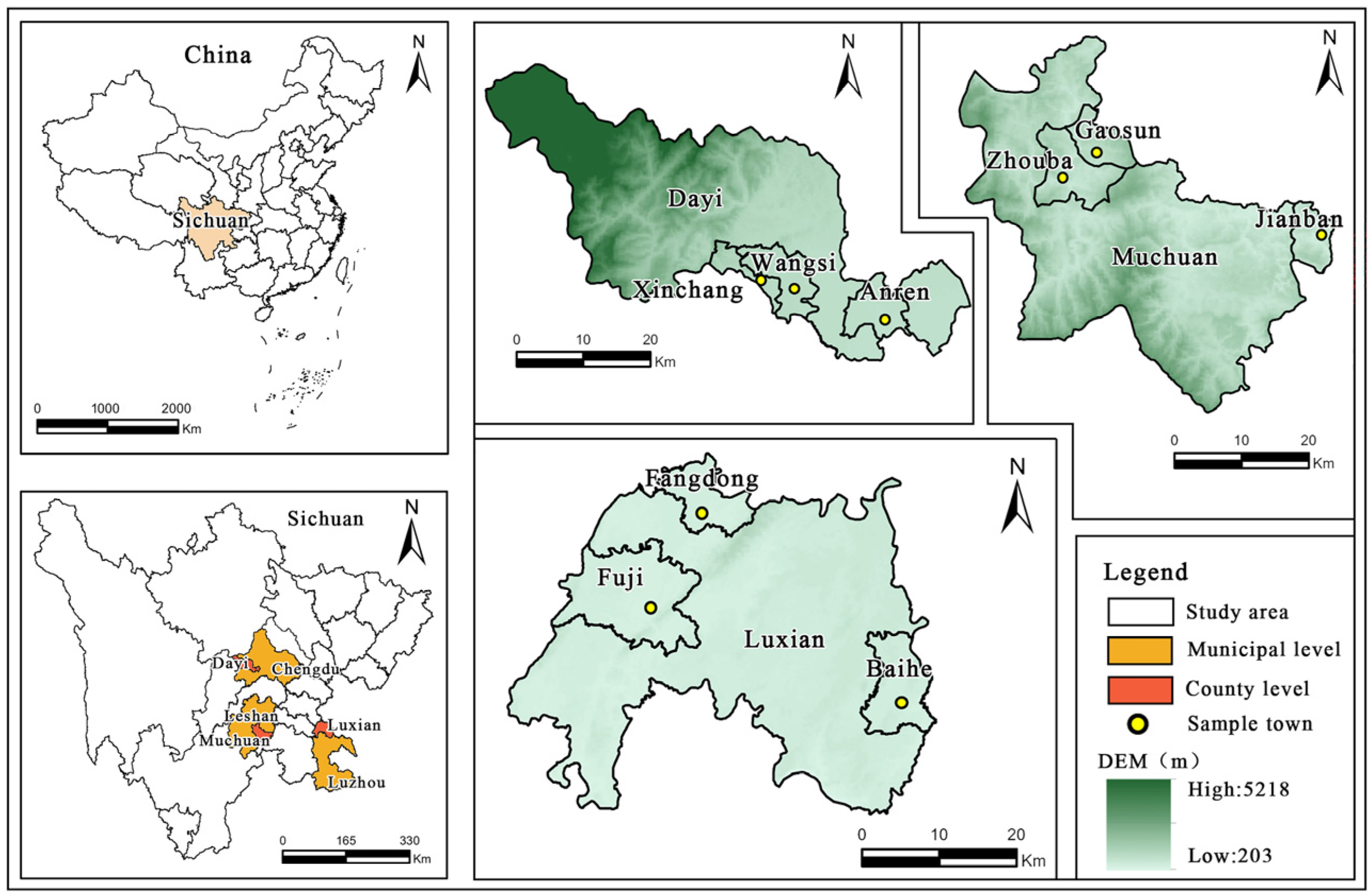
This study focuses on Sichuan Province and analyzes the mechanisms through which LC affects farmers’ abandonment behavior at the plot level (Figure 1). When selecting the research area, regional differences, economic development levels, and agricultural production characteristics were fully considered. A multi-stage sampling design was adopted. First, an equidistant random sampling method was used to divide the counties in the province into three groups based on per capita GDP, and one county was randomly selected from each group as the sample county. Next, within each selected county, towns and villages were chosen according to a unified standard. The final survey area covered 3 districts, 9 towns, and 54 villages within the province. After selecting the villages, a random interval method was applied to determine the households to be surveyed, with 20 to 24 sample households selected per village. The survey covered household composition, agricultural production details, and rural comprehensive development conditions. After data collection and processing, the final dataset included 1167 households and 5014 plots.

3.2. Variable Selection

Dependent Variable: In this study, following the design by Sun et al. [32], the dependent variable is directly measured by asking farmers whether their land plots are abandoned. If the answer is yes, the value is assigned as 1; otherwise, it is assigned as 0. More specifically, a plot is defined as “abandoned” if it has not been cultivated for at least one full agricultural year and is not part of any planned crop rotation or policy-induced fallow scheme.
Core Independent Variable: The core independent variable used to represent the Land Consolidation status of the farmer’s land is whether the household’s contracted land has undergone LC [24]. The variable is constructed based on questions from the survey, specifically asking whether the family’s contracted land has undergone land leveling, irrigation and drainage works, field road construction, soil improvement, or farmland electrification. If at least one of these five questions is answered affirmatively, it is recorded as 1; otherwise, it is recorded as 0.
Control Variables: Based on the previous literature, the control variables selected in this study include the household head’s gender, age, years of education, labor force ratio, whether the household head is a village official, household size, distance from home, whether the land is designated as basic farmland, plot terrain, participation in land transfer, per capita annual income, agricultural insurance, distance to the county, road hardening rate, and per capita village income level. The definitions of the key variables and their descriptive statistics are shown in Table 1.

3.3. Model Specification

Given that the dependent variable is a binary variable, this study employs a Probit model to examine the direct effect of Land Consolidation on farmers’ abandonment behavior at the plot level:
Y i = α 0 + α 1 F R i + α 2 C o n t r o l s i + ε i
In Formula (1), Y i , represents the farmland abandonment behavior of plot; F R i denotes Land Consolidation;   C o n t r o l s i represents a set of control variables, including household-head-level, household-level, plot-level, production-operation-level, and village-level characteristics;   α 0 is the constant term; α 1 and α 2 are the coefficients to be estimated; and ε i is the robust standard error.
To further investigate the mechanism through which Land Consolidation affects farmers’ abandonment behavior, this study examines three intermediary pathways—operating scale, plot size, and contiguity scale—using the following model:
M i = β 0 + β 1 F R i + β 2 C o n i + δ i
In Formula (2), M i represents the mediating variable, respectively referring to operating scale, plot size, and contiguity scale; β 0 is the constant term; δ i denotes the random disturbance term; and β 1 , β 2 represent the regression coefficients.
In general, there may exist a potential reverse causality between LC and farmers’ abandonment behavior. To address the possible endogeneity problem in the model estimation, this study adopts the instrumental variable (IV) method to estimate Equations (1) and (2). Specifically, the LC level of other households’ plots within the same village (excluding the current household) is used as an instrumental variable for the core explanatory variable.
The choice of the instrumental variable is based on the following considerations: (1) LC projects are usually implemented at the village level, and the progress of policy implementation among different households within the same village tends to be relatively consistent, satisfying the relevance condition. (2) A farmer’s abandonment behavior is generally determined by the consolidation condition of his or her own plots and is not directly influenced by other households’ consolidation activities, which ensures that the instrumental variable is highly correlated with the endogenous variable while independent of the error term, thus satisfying the exclusion restriction in theory.

4. Results

4.1. Analysis of Regression Results

The results presented in Table 2 show that LC has a significant negative effect on farmers’ abandonment behavior at the 1% significance level. After sequentially introducing control variables related to household head characteristics, household characteristics, plot characteristics, production and management characteristics, and village characteristics, the estimation results in columns (2)–(6) consistently demonstrate that LC significantly suppresses farmland abandonment. This finding indicates that the engineering measures associated with LC not only enhance land productivity (“efficiency gains”) but also facilitate mechanized operations by improving the physical and infrastructural conditions of farmland, thereby reducing labor input costs (“cost savings”). Collectively, these improvements stimulate farmers’ motivation to continue cultivating their land rather than abandoning it, thereby confirming Hypothesis 1.

4.2. Robustness Tests

To ensure the reliability of the baseline regression results, this study conducts three robustness tests Table 3: (1) Adjusting the measurement of the core explanatory variable: The indicator for LC is redefined by replacing “whether the plot has undergone consolidation” with “whether the household possesses plots included in high-standard farmland construction”, followed by re-estimation using the new specification [10]. (2) Filtering plot samples: Plots that have been withdrawn from agricultural production are excluded from the sample, and the regression analysis is re-conducted using the adjusted dataset [33]. (3) Changing the measurement of the dependent variable: The dependent variable is redefined from the binary variable “whether the plot is abandoned” to the logarithm of the “abandoned area”, and the regression is re-estimated accordingly. The results obtained from these three robustness checks indicate that, even after multiple modifications in sample definitions and variable measurements, the estimation results remain highly consistent with those of Table 2. The direction and significance of the impact of LC on farmers’ abandonment behavior remain unchanged. This consistency further confirms the robustness of the baseline regression results, indicating that LC significantly reduces farmers’ likelihood of abandoning cultivated land.

4.3. Endogeneity Discussion

To address potential bias caused by sample self-selection, this study employs the Propensity Score Matching (PSM) method. By matching samples based on multiple covariates, the PSM approach enhances the comparability between the treatment group and the control group, thereby correcting for selection bias. Table 4 reports the re-estimated results based on the PSM method.
The results show that, after controlling for observable systematic differences between samples, the significant inhibitory effect of LC on farmers’ abandonment behavior remains robust. This indicates that the observed relationship is not driven by sample selection bias, but reflects a genuine causal impact of LC on reducing farmland abandonment.
To further mitigate potential bias arising from unobservable factors, this study builds upon the Propensity Score Matching (PSM) analysis by employing the Two-Stage Least Squares (2SLS) method based on instrumental variables. In selecting the instrumental variable, this paper follows previous studies and, based on aggregated data at the village level, uses the average LC status of other farmers’ plots within the same village (excluding the current household) as the instrumental variable for the core explanatory variable [34]. Table 5 presents the results of the 2SLS estimation addressing endogeneity. After applying this method, the estimated coefficient of LC on farmers’ abandonment behavior remains significantly negative at the 1% statistical level. The first-stage estimation confirms that the selected instrumental variable exerts a significant effect on LC, ruling out the problem of weak instruments and validating the instrument’s relevance and exogeneity. The results obtained from both endogeneity treatment approaches—PSM and 2SLS—are consistent, further reinforcing the robustness of the baseline regression findings and confirming that LC plays a significant role in reducing farmers’ farmland abandonment behavior.

4.4. Mediation Effects

The empirical findings presented above have confirmed that LC significantly reduces farmers’ abandonment behavior. To further explore the underlying mechanisms, this section examines whether LC influences abandonment behavior through three key dimensions of farmland scale management—namely, plot size, management scale, and contiguity scale.
(1)
Land Consolidation, Plot Size and Farmers’ Abandonment Behavior
Following Wang et al. [35], this study uses the average plot area to measure plot size. The regression results indicate that LC significantly expands plot size. Larger plots directly enhance farmers’ incentives to adopt agricultural machinery. Previous studies have shown that a higher degree of land fragmentation is positively associated with the likelihood of farmland abandonment [36,37]. Moreover, scale enlargement makes mechanized operations more economically viable, substantially improving labor productivity and reducing unit production costs, thereby increasing overall agricultural profitability. In this sense, LC facilitates plot enlargement, providing favorable conditions for scale-oriented farming and effectively reducing the probability of abandonment.
(2)
Land Consolidation, Management Scale and Farmers’ Abandonment Behavior
Drawing on the work of Hu et al. [38], this paper measures management scale as the sum of the contracted land area and land rented in, minus the land rented out. The regression results reveal that LC significantly promotes the expansion of farmland management scale. By improving the physical conditions and tenure structure of farmland, consolidation reduces land fragmentation and enhances spatial concentration, thus expanding the operational scale of farming. Under the traditional small-scale, fragmented farming structure, farmers often face problems such as low productivity, poor adaptability to mechanization, and high production costs—all of which lower expected returns and trigger abandonment of marginal plots. LC, by consolidating scattered plots, improving field roads and irrigation systems, and reducing spatial disconnection and conversion costs, allows farmers to operate at lower marginal costs, thereby improving land-use efficiency.
With larger management scales, farmers can more easily access agricultural machinery and socialized services, improving labor productivity and mitigating the constraints caused by rural labor outmigration. Scale expansion also brings about cost-dilution effects, increasing marginal returns per unit of land and enhancing agricultural comparative income. According to rational smallholder theory, when the marginal return of farming exceeds the opportunity cost of abandonment, farmers are more likely to continue cultivation rather than leave land idle. Furthermore, larger operational scales promote specialization and social division of labor, attracting agricultural service providers and lowering service prices, which strengthens farmers’ incentives to farm. Meanwhile, land consolidation reduces transaction costs and uncertainty associated with fragmentation, improving the land transfer market and providing farmers with institutional channels to lease or transfer land, thereby decreasing abandonment due to limited management capacity.
(3)
Land Consolidation, Contiguity Scale and Farmers’ Abandonment Behavior
Following Xu et al. [39], this study measures contiguity scale by whether adjacent plots grow the same crop, with the ratio of contiguous plots to total plots at the household level serving as the indicator. Column (3) of Table 6 shows that LC significantly increases the contiguity scale. By breaking fragmented land patterns, improving field infrastructure, and optimizing property boundaries, consolidation fosters spatially integrated and contiguous farmland. In traditional farming, households typically face the “many small and scattered plots” problem, which constrains operational efficiency, mechanization, and irrigation infrastructure, leading to high marginal cultivation costs and higher abandonment likelihood. LC, through contiguous consolidation and large-scale development, effectively reduces spatial fragmentation, enabling intensive and efficient land use and providing a practical foundation for curbing abandonment. An enlarged contiguity scale enhances agricultural returns in several ways. First, it reduces the time and financial cost of cross-plot machinery operations, improving mechanization efficiency and lowering per-unit cultivation costs. Second, contiguous plots exhibit strong scale and synergy effects in irrigation, pest control, fertilization, and disaster prevention, minimizing redundant management and improving productivity. Third, larger contiguity facilitates access to socialized agricultural services (e.g., machinery outsourcing, farm management, agricultural insurance), maintaining production stability amid labor shortages and market risks. Most importantly, contiguous farming raises farmers’ comparative returns by improving the balance between marginal productivity and opportunity costs. According to rational choice theory, when the marginal benefits of cultivation exceed alternative returns, farmers are more likely to continue farming rather than abandon land. In summary, the contiguity scale acts as a mediating channel through which LC mitigates farmers’ abandonment behavior, highlighting its pivotal role in promoting agricultural intensification and sustainability.

4.5. Heterogeneity Analysis

China’s agricultural production is characterized by small-scale and fragmented operations, where most farmers manage multiple plots of farmland that vary in accessibility, soil quality, and productivity. These intrinsic differences in plot attributes are crucial factors influencing farmers’ land-use decisions [40]. Consistent with both the domestic and international literature on land abandonment and land consolidation, we focus on three dimensions that are particularly salient in hilly Sichuan: (i) terrain conditions, which directly affect the feasibility and cost of mechanisation; (ii) distance to the homestead or village centre, which proxies access costs and supervision difficulty; and (iii) the type of farming entity, which captures differences in resource endowments, market access and organisational capacity between ordinary smallholders and new-type agricultural operators. To account for these variations, this study divides the sample according to both plot characteristics and types of farming entities, and conducts separate regressions to compare the differential effects of LC across diverse physical conditions and managerial structures.
Plot topography and distance from residence are key indicators of cultivation convenience and land quality, both of which significantly affect farmers’ decisions regarding land use [41]. Accordingly, plots are classified into two categories based on topography—flat plots and steep plots. Based on the average distance from households to their plots within a village, plots are further categorized into near-distance plots and far-distance plots [42]. Additionally, based on the nature of the management entity, farmers are classified as either ordinary smallholders or new-type agricultural operators [43]. On this basis, the heterogeneity of the impact of LC on farmers’ abandonment behavior is empirically tested, and the regression results are reported in Table 7.
The results reveal significant heterogeneity in the effects of LC across different plot types, distances, and farming entities. The possible explanations are as follows:
Differences in Topography: The inhibitory effect of LC on abandonment is substantially stronger for flat plots than for steep plots. Flat plots are more compatible with the construction standards of high-quality farmland; the improvement in land regularity and road accessibility reduces technical barriers to mechanization and enhances the delivery of agricultural service operations, thus lowering production costs and significantly reducing abandonment risk. In contrast, steep or sloped plots remain limited by terrain constraints, and even after consolidation, the suitability for mechanized farming remains low. Farmers continue to rely heavily on manual labor, making it difficult to substantially suppress abandonment behavior.
Differences in Farmer Type: The suppressive effect of LC on abandonment is notably stronger among ordinary smallholders than among new-type agricultural operators. For ordinary farmers, LC improves cultivation conditions and reduces production costs, thereby directly enhancing the comparative profitability of farming and lowering the likelihood of abandonment caused by insufficient returns. In contrast, new-type agricultural operators generally possess stronger resource endowments, better access to capital, and higher risk tolerance. Their land-use efficiency is inherently higher, and even without consolidation, they are less likely to abandon farmland. Thus, the marginal improvement from LC is relatively limited, reflecting greater policy sensitivity among smallholders.
Differences in Plot Distance: The inhibitory effect of LC on abandonment is more pronounced for far-distance plots than for near-distance plots. Prior to consolidation, distant plots are typically characterized by low utility and high risk, and thus the post-consolidation improvements in returns are more substantial. When making land-use decisions, farmers perceive a greater marginal benefit from re-cultivating distant plots after consolidation, thereby reducing abandonment. Conversely, nearby plots are inherently more convenient for cultivation; farmers are more likely to continue using them even without consolidation, which results in a relatively smaller effect of LC in reducing abandonment.
In summary, the heterogeneity analysis demonstrates that LC exerts differentiated impacts across various physical and managerial contexts—its effects are strongest for flat plots, distant plots, and ordinary smallholders, underscoring the importance of designing targeted and context-specific land consolidation policies to effectively mitigate farmland abandonment.

5. Discussions

The issue of farmland abandonment is a growing concern in rural China, driven by factors such as the fragmentation of farmland, low agricultural profitability, and labor outflow. LC has emerged as a key policy tool to address this issue, yet its effectiveness in influencing farmers’ abandonment behavior has not been sufficiently explored. This study aims to analyze the impact of LC on farmers’ abandonment behavior by examining the multi-dimensional data from 2024, including plot, household, and regional characteristics. The findings contribute to the understanding of how LC influences farmers’ land use decisions, offering insights for policy improvements in the areas of land preservation and agricultural sustainability.
The primary innovations of this research include: (1) Focusing on the direct relationship between LC and farmers’ abandonment behavior from a plot-level perspective, which allows for a more granular analysis of the mechanisms behind land abandonment and LC interventions; (2) Analyzing the heterogeneous effects of LC across different farmer groups based on factors such as terrain, farm size, and farmer types, which provides a more comprehensive and context-specific understanding of LC’s impact.
This study confirms that LC significantly reduces farmers’ land abandonment behavior by improving the physical conditions of the land, expanding plot sizes, increasing plot consolidation, and enhancing agricultural infrastructure such as irrigation and road access. These improvements lower production costs and labor intensity, which, in turn, alleviate the pressures associated with labor outflow and encourage continued land cultivation [44,45]. The findings are consistent with previous research, which has shown that improving land quality and accessibility through LC can directly impact farmers’ decisions to abandon land [46,47,48]. Furthermore, this study found that LC has a more pronounced effect on certain groups of farmers. For example, the inhibitory effect of LC on land abandonment was significantly stronger for flat plots and distant plots compared to hilly or closer plots. This suggests that improvements in infrastructure and land consolidation have a greater impact on distant and less accessible plots. These results align with earlier studies highlighting the importance of infrastructure in reducing the costs and risks associated with agricultural production [49,50,51]. Another important finding is that LC is more effective in supporting smallholder farmers than larger-scale farming operations. This outcome is due to the fact that smallholder farmers often face more significant challenges in maintaining land productivity and are more reliant on land consolidation and improved agricultural infrastructure. On the other hand, larger farming operations tend to be more resource-endowed and have higher productivity, making them less susceptible to land abandonment, even in the absence of LC [52,53,54].
However, this study has several limitations that should be acknowledged and that point to avenues for future research. First, our measure of farmland abandonment is based on a single binary question capturing complete non-cultivation for at least one agricultural year. This does not allow us to distinguish partial or seasonal underuse, which is common in hilly and mountainous regions. Second, although we control for a wide range of household, plot and village characteristics and employ PSM and IV methods, potential endogeneity cannot be fully ruled out. In particular, the instrumental variable based on village-level LC among other households may still affect farmers’ behaviour through social norms or collective actions, and the scale mediators are likely to be jointly determined with abandonment decisions. Our mediation analysis should therefore be interpreted as providing evidence consistent with the proposed mechanisms rather than as a fully identified structural model. Finally, the empirical analysis is based on a single-year cross-section from hilly Sichuan; caution is required when extrapolating the results to other regions or to long-term dynamics. Future studies could address these limitations by collecting panel data that track changes in land use and farmers’ expectations over time, by incorporating more detailed indicators of tenure security and perceived LC quality, and by applying more advanced identification strategies to disentangle the joint determination of LC, scale and abandonment. Comparative analyses across different geomorphological regions and institutional settings would further improve our understanding of where and for whom LC is most effective in mitigating farmland abandonment.

6. Conclusions

Based on the 2024 micro-survey data from 54 villages, 1167 farmers, and 5014 plots in Sichuan Province, this study systematically examines the impact of LC on farmers’ abandonment behavior using multi-level data from plots, farmers, and regions. The following main conclusions were drawn:
LC has a significant inhibitory effect on farmers’ abandonment behavior. By improving land topography, expanding plot sizes, increasing plot consolidation, and optimizing infrastructure such as irrigation and roads, LC effectively reduced the cost of farming inputs and labor intensity, alleviating the pressure of land abandonment caused by labor outflow.
LC indirectly reduces abandonment by facilitating moderate-scale farming under local conditions. On one hand, land consolidation and the resulting expansion of plot size, operational scale and contiguity improve the economies of scale and mechanisation adaptability of agricultural production, thereby lowering the marginal costs of land use. On the other hand, the expansion and spatial concentration of farmland create more favourable conditions for the provision of agricultural machinery services and other socialized services, which reduces farmers’ reliance on family labour and weakens the incentives for abandonment, especially among smallholders in hilly areas.
The effects of LC show significant heterogeneity. In terms of plot conditions, the inhibitory effect on land abandonment is more significant for flat plots, and is stronger for distant plots compared to near plots. This suggests that improvements in infrastructure and consolidation have played an important role in reducing the difficulty of cross-plot operations and enhancing the ease of land transfer. In terms of farmer types, ordinary farmers benefit more from LC than new-type operators, indicating that LC plays a crucial role in supporting smallholder farmers’ continued cultivation.
Based on these findings, we propose the following policy recommendations:
(1)
Continue to promote the construction of high-standard farmland and improve infrastructure. In areas prone to land abandonment, further investment in LC should be increased, particularly for sloped, distant, and fragmented plots. Key improvements should focus on irrigation systems, road accessibility, and leveling of plots to enhance the cultivability and production stability of farmland.
(2)
Promote the integration of LC and mechanized agricultural services. During the consolidation process, it is essential to consider the adaptability of mechanization. By improving road conditions, organizing plots, and consolidating them, the difficulty of mechanized operations can be reduced. Agricultural machinery service organizations should be encouraged to expand operations across plots. At the same time, financial subsidies and policy support should be used to guide machinery cooperatives in establishing stable partnerships with smallholder farmers, thus enhancing service accessibility and coverage.
(3)
Strengthen differentiated consolidation and targeted governance. A differentiated governance strategy should be adopted based on the different plot conditions and farmer types. For example, in mountainous and hilly areas, the focus should be on terrace transformation and road improvements. For distant plots, efforts should be made to reduce daily maintenance and land transfer supervision costs. For ordinary smallholder farmers, more service subsidies and information support should be provided to enhance their capacity for sustained cultivation.
(4)
Strengthen the synergy between LC and land system reforms. While promoting LC, it is essential to improve land transfer systems and establish clear land ownership confirmation systems for farmers, reduce transaction costs, enhance farmers’ long-term expectations for land management, and improve the stability and positive use of farmland.
(5)
Focus on guiding farmer behavior and building a diversified governance mechanism. Policy implementation should not solely rely on improving material conditions but also incorporate public awareness campaigns, benefit subsidies, and the development of social service platforms to guide farmers to increase their awareness of farmland utilization. At the same time, a diversified governance mechanism involving government, collectives, markets, and service organizations should be established to create a long-term, joint effort in curbing land abandonment.

Author Contributions

Conceptualization, Z.M. and R.R.; methodology, Z.M.; formal analysis, Z.M.; investigation, D.X.; writing—original draft preparation, Z.M. and D.X.; writing—review and editing, Z.M. and D.X.; supervision, D.X.; funding acquisition, D.X. All authors have read and agreed to the published version of the manuscript.

Funding

This work was supported by the Youth Program of the Hunan Natural Science Foundation (2025JJ60446), the Science and Technology Program of the Hunan Provincial Department of Natural Resources (No. HBS20240106), and the Key Project of the Hunan Provincial Department of Education (23A0222). and supported by the Sichuan Rural Development Research Center (CR2324).

Data Availability Statement

The raw data supporting the conclusions of this article will be made available by the authors on request.

Conflicts of Interest

The authors declare no conflicts of interest.

References

  1. Ren, C.; Zhou, X.; Wang, C.; Guo, Y.; Diao, Y.; Shen, S.; Reis, S.; Li, W.; Xu, J.; Gu, B. Ageing threatens sustainability of smallholder farming in China. Nature 2023, 616, 96–103. [Google Scholar] [CrossRef] [PubMed]
  2. Lee, J.; Oh, Y.-G.; Yoo, S.-H.; Suh, K. Vulnerability assessment of rural aging community for abandoned farmlands in South Korea. Land Use Policy 2021, 108, 105544. [Google Scholar] [CrossRef]
  3. Wang, Y.; Yang, A.; Yang, Q. The extent, drivers and production loss of farmland abandonment in China: Evidence from a spatiotemporal analysis of farm households survey. J. Clean. Prod. 2023, 414, 137772. [Google Scholar] [CrossRef]
  4. Xie, H.; Ouyang, Z.; Liu, W.; He, Y. Impact of farmer differentiation on farmland abandonment: Evidence from Fujian’s hilly mountains, China. J. Rural Stud. 2025, 108, 103494. [Google Scholar] [CrossRef]
  5. Hong, C.; Prishchepov, A.V.; Bavorova, M. Cropland abandonment in mountainous China: Patterns and determinants at multiple scales and policy implications. Land Use Policy 2024, 145, 107292. [Google Scholar] [CrossRef]
  6. Zheng, L. Does off-farm work induce farmland abandonment? Evidence from China. China Agric. Econ. Rev. 2024, 16, 664–682. [Google Scholar] [CrossRef]
  7. Chen, M.; Lu, H.; Xu, D. “Absorbing in” or “Crowding out”: The impact of high-standard farmland construction on farmers’ land withdrawal. Land Use Policy 2025, 157, 107661. [Google Scholar] [CrossRef]
  8. Sun, Y.; Miao, Y.; Xie, Z.; Jiang, X. Address the challenge of cultivated land abandonment by cultivated land adoption: An evolutionary game perspective. Land Use Policy 2025, 149, 107412. [Google Scholar] [CrossRef]
  9. Li, Y.; Li, R.; Guo, S.; Xu, D. Why do aging households in agriculture prefer land abandonment to transfer? Evidence from hill plots in Sichuan, China. Land Degrad. Dev. 2024, 35, 4985–4996. [Google Scholar] [CrossRef]
  10. Li, R.; Zhou, W.; Guo, S.; Song, J.; Xu, D. The impact of high-standard farmland construction on farmland abandonment by farm households: Evidence from rural China. Appl. Econ. 2025, 1–17. [Google Scholar] [CrossRef]
  11. Fischer, J.; Hartel, T.; Kuemmerle, T. Conservation policy in traditional farming landscapes. Conserv. Lett. 2012, 5, 167–175. [Google Scholar] [CrossRef]
  12. Takayama, T.; Hashizume, N.; Nakatani, T. Impact of direct payments on agricultural land use in less-favoured areas: Evidence from Japan. Eur. Rev. Agric. Econ. 2020, 47, 157–177. [Google Scholar] [CrossRef]
  13. Jiang, Y.; Long, H.; Tang, Y.-T.; Deng, W. Measuring the role of land consolidation to community revitalization in rapidly urbanizing rural China: A perspective of functional supply-demand. Habitat Int. 2025, 155, 103237. [Google Scholar] [CrossRef]
  14. Zhou, Y.; Li, P.; Zhang, Q.; Cheng, G. Socio-economic impacts, challenges, and strategies for whole-region comprehensive land consolidation in China. Land Use Policy 2025, 150, 107461. [Google Scholar] [CrossRef]
  15. Zhou, Y.; Guo, L.; Liu, Y. Land consolidation boosting poverty alleviation in China: Theory and practice. Land Use Policy 2019, 82, 339–348. [Google Scholar] [CrossRef]
  16. Zhang, Y.; Liang, Z.; Wang, L.; Zou, W.; Xia, M. How does land consolidation affect nongrain production? Evidence from county-level data in Jiangsu Province, China. Heliyon 2024, 10, e33728. [Google Scholar] [CrossRef] [PubMed]
  17. Gradinaru, S.R.; Iojă, C.I.; Vanau, G.O.; Onose, D.A. Multi-dimensionality of land transformations: From definition to perspectives on land abandonment. Carpathian J. Earth Environ. Sci. 2020, 15, 167–177. [Google Scholar] [CrossRef]
  18. Cao, H.; Li, F.; Zhao, K.; Qian, C.; Xiang, T. From value perception to behavioural intention: Study of Chinese smallholders’ pro-environmental agricultural practices. J. Environ. Manag. 2022, 315, 115179. [Google Scholar] [CrossRef] [PubMed]
  19. Liu, T.; Du, L.; Hou, J.; Zeng, X.; Zhang, W.; Xu, H. The influences of China’s Cultivated Land Fertility Protection Subsidy policy on farmers’ agro-eco-environmental protection behavior: An application of the extended theory of planned behavior. J. Environ. Manag. 2025, 394, 127219. [Google Scholar] [CrossRef]
  20. Movahedi, R.; Jawanmardi, S.; Azadi, H.; Goli, I.; Viira, A.-H.; Witlox, F. Why do farmers abandon agricultural lands? The case of Western Iran. Land Use Policy 2021, 108, 105588. [Google Scholar] [CrossRef]
  21. Xu, D.; Deng, X.; Guo, S.; Liu, S. Labor migration and farmland abandonment in rural China: Empirical results and policy implications. J. Environ. Manag. 2019, 232, 738–750. [Google Scholar] [CrossRef] [PubMed]
  22. Feng, Y.; Li, J.; Feng, D. Research on the Influencing Factors of the Cropland Abandonment Behavior of Different Typical Types of Farming Households: Based on a Survey in Mountainous Areas. Land 2025, 14, 2057. [Google Scholar] [CrossRef]
  23. Li, S.; Li, X. Global understanding of farmland abandonment: A review and prospects. J. Geogr. Sci. 2017, 27, 1123–1150. [Google Scholar] [CrossRef]
  24. Niu, W.; Luo, L.; Shi, Y.; Chai, C.; Wang, H.; Tian, Q.; Jin, Y.; Kong, X.; Yu, Q.; Ren, L.; et al. Impacts of “One Household One Plot” and “One Village Group One Plot” fragmentation consolidation models on cultivated land use transition from perspective of human-land system. Habitat Int. 2025, 156, 103252. [Google Scholar] [CrossRef]
  25. Peng, J.; Huang, A.; Chen, J.; Chen, L. Farmland’s Comprehensive Improvement and Agricultural Total Factor Productivity Increase: Empirical Evidence from China’s National Construction of High-Standard Farmland. Land 2025, 14, 2218. [Google Scholar] [CrossRef]
  26. Zhang, C.; Chen, D.; Yang, Q.; Sun, X.; Zheng, W. Rural land consolidation as an instrument for decreasing farmers’ dependence on ecosystem services: Heterogeneity analysis based on consolidation modes and topographic types. Ecol. Inform. 2024, 82, 102715. [Google Scholar] [CrossRef]
  27. Zhang, Z.; Ma, W.; Yang, H.; Yao, Y.; Zhang, Y.; Li, W. Exploring the role of arable land consolidation suitable for agricultural machinery in mitigating land fragmentation in hilly and mountainous areas. J. Environ. Manag. 2025, 389, 126097. [Google Scholar] [CrossRef] [PubMed]
  28. Shao, Y.; Zhu, L.; Jia, W. Contiguous planting on fragmented cultivated land and reduction of chemical pesticides and chemical fertilizers: Evidence from rice farmer in China. J. Environ. Manag. 2025, 374, 124062. [Google Scholar] [CrossRef] [PubMed]
  29. Miao, X.; Li, Z.; Wang, M.; Mei, J.; Chen, J. Measurement of cultivated land ecosystem resilience in black soil region of Northeast China under the background of cultivated land protection policy in China: Case study of Qiqihar City. J. Clean. Prod. 2024, 434, 140141. [Google Scholar] [CrossRef]
  30. Hao, W.; Hu, X.; Wu, G.; Zhang, Z.; Cai, M.; Zhou, H.; Liu, X. The impact of plot size and farm size on crop production: Evidence from mechanization and labor input perspectives. Energy Nexus 2025, 19, 100530. [Google Scholar] [CrossRef]
  31. Deng, X.; Xu, D.; Zeng, M.; Qi, Y. Does outsourcing affect agricultural productivity of farmer households? Evidence from China. China Agric. Econ. Rev. 2020, 12, 673–688. [Google Scholar] [CrossRef]
  32. Sun, J.; Li, J.; Cui, Y. Does Non-Farm Employment Promote Farmland Abandonment of Resettled Households? Evidence from Shaanxi, China. Land 2024, 13, 129. [Google Scholar] [CrossRef]
  33. Zheng, L.; Jin, S.; Su, L. Of nothing comes nothing: The impact of agricultural comparative return on cropland abandonment. J. Rural. Stud. 2025, 119, 103759. [Google Scholar] [CrossRef]
  34. Zhuang, J.; Luo, B. The Impact of Farmland Consolidation on Farmers’ Land Abandonment Behavior: An Analysis Based on the Governance Strategy of “Farmland Consolidation–Factor Market–Crop Layout”. J. Nanjing Agric. Univ. (Soc. Sci. Ed.) 2024, 24, 132–145. (In Chinese) [Google Scholar] [CrossRef]
  35. Wang, J.; Cao, Y.; Fang, X.; Li, G. Does land tenure fragmentation aggravate farmland abandonment? Evidence from big survey data in rural China. J. Rural Stud. 2022, 91, 126–135. [Google Scholar] [CrossRef]
  36. Ren, S.; Ye, S.; Zhang, L.; Gao, P.; Tittonell, P.; Song, C. Reducing cropland fragmentation may not be universally beneficial at increasing land use efficiency: Evidence from multiscale spatial analysis of Huang-Huai-Hai region, China. Land Use Policy 2025, 159, 107806. [Google Scholar] [CrossRef]
  37. Chaudhary, S.; Wang, Y.; Dixit, A.M.; Khanal, N.R.; Xu, P.; Fu, B.; Yan, K.; Liu, Q.; Lu, Y.; Li, M. A Synopsis of Farmland Abandonment and Its Driving Factors in Nepal. Land 2020, 9, 84. [Google Scholar] [CrossRef]
  38. Hu, X.Y.; Huang, J.; Xu, J.H. Impact of “consolidating small plots into a large field” policy on farmland large-scalemanagement from three dimensions: Taking Yangshan County in Guangdong Province as an example. Resour. Sci. 2024, 46, 1540–1553. (In Chinese) [Google Scholar] [CrossRef]
  39. Xu, Z.G.; Zhang, D.; Cheng, B.D. The logic of large-scale farming for ensuring China’s food security: Based on the perspectives of scale economies of household and plot. J. Manag. World 2024, 40, 106–122. (In Chinese) [Google Scholar] [CrossRef]
  40. Xu, D.; Liu, Y.; Li, Y.; Liu, S.; Liu, G. Effect of farmland scale on agricultural green production technology adoption: Evidence from rice farmers in Jiangsu Province, China. Land Use Policy 2024, 147, 107381. [Google Scholar] [CrossRef]
  41. Zheng, X.; Yang, F.; Fan, D.; Yan, Y. Rural human settlement environment, non-agricultural transfer of labour and arable land abandonment in China. Heliyon 2024, 10, e36418. [Google Scholar] [CrossRef]
  42. Ma, Z.; Ran, R.; Xu, D. The Effect of Peasants Differentiation on Peasants’ Willingness and Behavior Transformation of Land Transfer: Evidence from Sichuan Province, China. Land 2023, 12, 338. [Google Scholar] [CrossRef]
  43. Zheng, L. Big hands holding small hands: The role of new agricultural operating entities in farmland abandonment. Food Policy 2024, 123, 102605. [Google Scholar] [CrossRef]
  44. Mejlumyan, D.; Maru, T.; Kusadokoro, M.; Urutyan, V.; Yeghiazaryan, G.; Kawabata, Y. Understanding farmers’ intentions to abandon farmland in mountainous regions of Armenia. J. Environ. Manag. 2025, 391, 126573. [Google Scholar] [CrossRef] [PubMed]
  45. Subedi, Y.R.; Kristiansen, P.; Cacho, O. Drivers and consequences of agricultural land abandonment and its reutilisation pathways: A systematic review. Environ. Dev. 2022, 42, 100681. [Google Scholar] [CrossRef]
  46. Liu, Y.; Dai, L.; Long, H. Theories and practices of comprehensive land consolidation in promoting multifunctional land use. Habitat Int. 2023, 142, 102964. [Google Scholar] [CrossRef]
  47. Pan, H.; Wu, Y.; Choguill, C. Optimizing the rural comprehensive land consolidation in China based on the multiple roles of the rural collective organization. Habitat Int. 2023, 132, 102743. [Google Scholar] [CrossRef]
  48. Zhong, L.; Wang, J.; Zhang, X.; Ying, L.; Zhu, C. Effects of agricultural land consolidation on soil conservation service in the Hilly Region of Southeast China–Implications for land management. Land Use Policy 2020, 95, 104637. [Google Scholar] [CrossRef]
  49. Ying, L.; Dong, Z.; Wang, J.; Mei, Y.; Shen, Z.; Zhang, Y. Rural economic benefits of land consolidation in mountainous and hilly areas of southeast China: Implications for rural development. J. Rural Stud. 2020, 74, 142–159. [Google Scholar] [CrossRef]
  50. Zhou, J.; Cao, X. What is the policy improvement of China’s land consolidation? Evidence from completed land consolidation projects in Shaanxi Province. Land Use Policy 2020, 99, 104847. [Google Scholar] [CrossRef]
  51. Zhou, Y.; Li, Y.; Xu, C. Land consolidation and rural revitalization in China: Mechanisms and paths. Land Use Policy 2020, 91, 104379. [Google Scholar] [CrossRef]
  52. Li, Y.; Wu, W.; Liu, Y. Land consolidation for rural sustainability in China: Practical reflections and policy implications. Land Use Policy 2018, 74, 137–141. [Google Scholar] [CrossRef]
  53. Liang, C.; Zhou, Y. Unlocking rural vitality: Assessing the multidimensional impacts of land consolidation on rural comprehensive development capacity in post-poverty China. J. Rural Stud. 2025, 120, 103870. [Google Scholar] [CrossRef]
  54. Qiu, T.; Luo, B.; Boris Choy, S.T.; Li, Y.; He, Q. Do land renting-in and its marketization increase labor input in agriculture? Evidence from rural China. Land Use Policy 2020, 99, 104820. [Google Scholar] [CrossRef]
Figure 1. Map of study area.
Land 14 02429 g001
Table 1. Descriptive statistical analysis of variables.
VariableDefinition and MeasureMeanSD a
Abandonment BehaviorWhether the plot is abandoned: Yes = 1, No = 00.1050.306
Land ConsolidationWhether the plot underwent Land Consolidation: Yes = 1, No = 00.0640.244
Household Head’s AgeAge (years)60.059.852
Household Head’s GenderGender: Male = 1, Female = 00.9020.297
Years of EducationYears of education (years)6.5523.381
Labor Force RatioProportion of family members in the labor force to total household members0.5760.271
Village OfficialWhether a household member is a village official: Yes = 1, No = 00.1660.372
Household SizeNumber of household members living together (persons)4.2341.729
Distance from HomeDistance from the plot to home (in meters)5.5501.384
Basic FarmlandWhether the plot is designated as basic farmland: Yes = 1, No = 00.9190.273
Plot TerrainPlot characteristics (Plain = 1, Hill = 2, Mountain = 3)1.8450.721
Land Transfer BehaviorWhether the plot participates in land transfer: Yes = 1, No = 00.6770.468
Per Capita Annual IncomeHousehold total income/total number of household members (in Yuan per person)9.6771.276
Agricultural InsuranceWhether the household purchases agricultural insurance: Yes = 1, No = 00.0900.286
Distance from Village to CountyDistance from the village committee to the county center (kilometers)3.2210.647
Road Hardening RateRoad hardening rate in the village (%)2.5112.103
Village Income LevelPer capita annual income in the village (Yuan)10.290.819
Plot SizeAverage plot size per household (mu)1.2101.274
Operating ScaleSum of contracted land area and transferred-in area minus transferred-out area (mu)2.2311.459
Contiguous Plot SizeWhether the plot is contiguous with neighboring plots: Yes = 1, No = 00.2090.406
Note: a SD= Standard deviation. “mu” is a unit of area in China, approximately equal to 0.0667 ha or 667 m2.
Table 2. Regression Results.
Dependent Variable: Farmers’ Abandonment Behavior
(1)(2)(3)(4)(5)(6)
LC−0.792 ***−0.744 ***−0.747 ***−0.718 ***−0.677 ***−0.659 ***
(0.158)(0.159)(0.163)(0.172)(0.176)(0.179)
Household Head’s Age 0.006 **0.007 ***0.010 ***0.011 ***0.011 ***
(0.003)(0.003)(0.003)(0.003)(0.003)
Household Head’s Gender 0.0180.015−0.0120.0130.004
(0.082)(0.082)(0.084)(0.086)(0.087)
Years of Education −0.020 ***−0.014 *−0.005−0.005−0.002
(0.008)(0.008)(0.008)(0.008)(0.008)
Labor Force Ratio 0.186 *0.197 **0.199 **0.183 *
(0.095)(0.098)(0.100)(0.101)
Village Official −0.154 **−0.088−0.065−0.042
(0.071)(0.073)(0.074)(0.075)
Household Size 0.081 ***0.091 ***0.095 ***0.090 ***
(0.014)(0.014)(0.014)(0.015)
Distance from Home 0.076 ***0.073 ***0.082 ***
(0.021)(0.021)(0.022)
Basic Farmland −0.229 ***−0.207 **−0.241 ***
(0.085)(0.084)(0.085)
Plot Terrain 0.430 ***0.359 ***0.238 ***
(0.036)(0.038)(0.048)
Land Transfer Behavior −0.327 ***−0.349 ***
(0.053)(0.053)
Per Capita Annual Income −0.042 *−0.006
(0.022)(0.024)
Agricultural Insurance 0.243 ***0.322 ***
(0.090)(0.091)
Distance from Village to County −0.031
(0.049)
Road Hardening Rate −0.016
(0.013)
Village Income Level −0.286 ***
(0.055)
Constant−1.225 ***−1.471 ***−2.041 ***−3.401 ***−2.740 ***0.167
(0.024)(0.200)(0.244)(0.292)(0.361)(0.701)
Regional VariablesControlControlControlControlControlControl
Chi224.979 ***46.402 ***72.224 ***241.184 ***288.776 ***319.185 ***
N501450145014501450145014
Note: Robust standard errors in parentheses; *, ** and *** refer to p < 0.1, p < 0.05, and p < 0.01.
Table 3. Robustness Tests.
Farmers’ Abandonment Behavior
Replacement of the Core Explanatory VariableFiltering Plot SamplesReplacement of the Explained Variable
LC −0.661 ***−0.086 **
(0.179)(0.037)
High-standard farmland construction−0.711 ***
(0.176)
Control variablesControlControlControl
Regional VariablesControlControlControl
F 21.163 ***
Chi2315.830 *** 317.049 ***
N501449845014
Note: The control variables are the same as those shown in Table 2, and the estimates are omitted. Same for all tables below. Robust standard errors in parentheses; ** and *** refer to p < 0.05, and p < 0.01.
Table 4. The results of PSM estimates.
PSM MethodsTreatControlATTS.E.T-Value
Nearest neighbor matching0.0220.092−0.070 ***0.018−4.27
NN matching with caliper0.0220.078−0.055 ***0.012−4.67
Kernel matching0.0220.0870.0786 ***0.011−6.10
Note: *** refer to p < 0.01.
Table 5. Results of endogeneity test.
VariablesFirst StageSecond Stage
LCFAB
LC −0.4645 ***
(−7.17)
IV0.9447 ***
(13.64)
Control variablesControlControl
Regional VariablesControlControl
Kleibergen-Paap rk LM statistic−0.029 ***
N50145014
Note: *** refers to p < 0.01.
Table 6. Mediation Effect Test.
Plot SizeOperating ScaleContiguous Plot SizeFarmers’ Abandonment Behavior
LC0.343 ***0.358 ***0.352 ***−0.627 ***−0.651 ***−0.650 ***
(0.071)(0.079)(0.080)(0.184)(0.181)(0.179)
Plot Size −0.221 ***
(0.044)
Operating Scale −0.101 ***
(0.026)
Contiguous Plot Size −0.112 *
(0.065)
Control variablesControlControlControlControlControlControl
Regional VariablesControlControlControlControlControlControl
F211.754 ***221.811 ***
Chi2 125.335 ***301.380 ***326.323 ***322.578 ***
N501450145014501450145014
Note: * and *** refer to p < 0.1 and p < 0.01.
Table 7. Heterogeneous Effects of LC on Farmers’ Abandonment Behavior.
VariablesFarmers’ Abandonment Behavior
Type of TerrainType of FarmerDistance of Plot
SteepFlatNew Agricultural Business EntitiesOrdinary FarmersDistantNear
LC−0.304−0.518 ***−0.174 ***−0.563 ***−0.925 ***−0.274 ***
(0.200)(0.065)(0.051)(0.088)(0.170)(0.065)
Control variablesControlControlControlControlControlControl
Regional VariablesControlControlControlControlControlControl
Component difference p-value0.0500.0100.000
N9754039933408118393175
Note: *** refers to p < 0.01.
Disclaimer/Publisher’s Note: The statements, opinions and data contained in all publications are solely those of the individual author(s) and contributor(s) and not of MDPI and/or the editor(s). MDPI and/or the editor(s) disclaim responsibility for any injury to people or property resulting from any ideas, methods, instructions or products referred to in the content.