
Article

Official Projection vs. Public Perception: Measuring the Perceptual Discrepancy of Creative Industry Parks in the Industrial Heritage Category Using Large Language Models

School of Architecture and Design, China University of Mining and Technology, Xuzhou 221116, China
*
Author to whom correspondence should be addressed.
These authors contributed equally to this work.
Land 2025, 14(12), 2371; https://doi.org/10.3390/land14122371
Submission received: 21 October 2025 / Revised: 26 November 2025 / Accepted: 2 December 2025 / Published: 4 December 2025
(This article belongs to the Special Issue Big Data-Driven Urban Spatial Perception)

Abstract

Industrial tourism serves as a medium for disseminating industrial culture and strengthening public awareness. Quantifying the discrepancies between official projections and public perceptions is essential for shaping the destination image and enhancing appeal and competitiveness. This study examines five industrial heritage creative industry parks using large language models (LLMs) and multimodal data to address this issue. The results indicate the following: (1) Multimodal data fusion improves feature representation. (2) A clear discrepancy exists between official projections and public perceptions. The official perspective emphasizes the Cultural value of heritage, in contrast to the public’s greater concern with the Service experience perception. Despite this divergence, there is alignment in the recognition of the Creative industry form dimension. (3) Public sentiment regarding the parks is predominantly positive. However, an analysis of negative sentiments reveals that insufficient supporting facilities and poor consumption experience are the primary sources of dissatisfaction. Through large language models and multimodal data, this study proposes a framework for quantifying the gaps between official projections and public perceptions. It also provides practical insights and empirical support for the management and planning of industrial heritage creative industry parks.

1. Introduction

Within the context of current urban stock development, industrial heritage has emerged as a new engine driving urban renewal. The industrial tourism market continues to expand, with its economic and social benefits becoming increasingly evident [1]. In China, the government places considerable emphasis on the renewal of industrial heritage [2]. Among various renewal models, the creative industry park approach has emerged as a mainstream pathway for transforming industrial heritage both domestically and internationally [3,4]. The industrial heritage creative industry parks (the parks) refer to a park that transforms old industrial spaces into complexes that integrate cultural exhibitions, artistic creation, and creative industries by leveraging industrial heritage resources [5]. By preserving the historical character of industrial spaces and maintaining the memory of urban development, it also promotes the integration of emerging business formats and the restructuring of spatial functions. Consequently, the parks provide an appropriate context for exploring the multifaceted perception of industrial heritage.
The adaptive reuse of industrial heritage serves as a form of urban renewal, aligning with environmental policies and sustainable development principles [6]. Through functionally reconfiguring, old industrial buildings are transformed into comprehensive venues for heritage preservation, cultural dissemination, and recreational experiences, which achieves efficient resource utilization while preserving the historical value of industrial heritage [7,8,9]. This approach has been thoroughly validated in practice. For instance, numerous industrial sites in Europe have been reconfigured into educational bases that integrate heritage preservation, cultural dissemination, and educational functions [10]. Similarly, China has actively promoted the transformation of industrial heritage, exemplified by the development of Shougang Park into a comprehensive complex that combines commercial, technological, and tourism functions, which has emerged as a new landmark for urban renewal [11]. These practices demonstrate that, in the development of industrial tourism, heritage managers prioritize balancing historical preservation with functional reuse [12,13,14], aiming to foster high-quality urban development through the sustainable reuse of industrial heritage.
The sustainable development of industrial tourism depends not only on spatial and resource conditions but also on the public’s willingness to explore destinations and their cognitive interest [15]. As industrial tourism develops, it attracts a growing number of participants. Research indicates that factors driving public participation in industrial tourism are diverse, including industrial historical identity, interest in historic architecture [16], curiosity about industrial heritage and demand for recreational facilities [17]. Therefore, shaping a destination image that aligns with public expectations is essential for enhancing public satisfaction and promoting the sustainable development of industrial tourism. Research on industrial tourism destination images has primarily focused on industrial heritage landscapes [18,19] and public perception studies [20]. For example, some studies have analyzed text and location data from social media using content analysis and Importance-Performance Analysis (IPA) methods to identify and assess industrial heritage landscapes [21]; other scholars have employed field sampling method to investigate the determining factors of public loyalty to creative industry parks [22]; still others have applied mixed-method approaches, including content analysis and principal component analysis, to explore disparities in perceptions between experts and communities regarding the image of industrial heritage tourism destinations and their impact on urban well-being [23]. Current research has recognized the importance of public participation; however, with the rapid urbanization and development of industry tourism, discrepancies between official planning and public expectations have become increasingly prominent, often constraining public satisfaction. However, existing study primarily focuses on a single perspective.
Since Grosspietsch proposed that tourism destination image can be divided into projected image and perceived image [24], comparative studies of these two have become an important direction in destination image research. The projected image, originating from the supply side, represents the destination representation that is constructed and disseminated to the public through systematic integration and refinement of tourism elements [25,26,27]. Official projections reflect the destination marketing focus [28]. The perceived image, originating from the demand side, reflects the public’s overall impressions, feelings, and evaluations of the destination [29]. It refers to a holistic mental construct of the destination held by the public [28]. Official entities have historically dominated the construction and dissemination of destination image, with the projected image serving as the foundational framework for public perceptions. With the advent of the big data era, the proliferation of User-generated content (UGC), including online reviews and travelogs, has occurred. The public has evolved from passive recipients of information to active co-constructors and disseminators of destination image. Research indicates that alignment between the projected image and the perceived image is crucial for effective destination marketing and sustainable development [30,31]. China’s industrial heritage transformation follows a distinct top-down characteristic, with the government playing a leading role in planning and development [32]. In this model, discrepancies often emerge between the official projections and the public’s actual perceptions. Accurately identifying and measuring the cognitive gaps accurately between the official and the public has become a crucial issue requiring resolution.
The difference between projected image and perceived image is an important issue in destination image research. Scholars have employed diverse research methods, including questionnaire surveys [33,34], qualitative interviews [35], and content analysis [36,37,38], demonstrating that discrepancies exist between official projections and public perceptions. These research findings provide both theoretical and practical foundation for the construction and management of destination image [39,40]. Existing research primarily employs statistical analysis to establish matching models, identifying and quantifying the importance of different value dimensions. For instance, some studies have identified mismatches between official publicity and tourists’ perceptions employing content and sentiment analysis methods, which suggest relevant optimization strategies [41]. Other scholars utilized online photos as data sources to compare content differences between officially promoted images and those spontaneously shared by the public [42]. The variety of current research methods and data sources has grown, providing valuable insights for destination image research. However, most studies rely on single text or image data for analysis, which limits the comprehensive capture of multidimensional perceptions. Furthermore, some limitations remain in areas such as multimodal data fusion and framework construction for measuring discrepancies [43,44,45].
Advances in artificial intelligence, particularly in LLMs and MLLMs, have enabled new possibilities for text, images, and sentiment analysis. Their exceptional capabilities in semantic understanding and visual data processing help address limitations associated with multidimensional perceptual information [46]. Recent studies have begun to employ LLMs for research on tourism destination images, spatial perceptions, and landscape environments. These studies primarily employ text-based analysis, image-based analysis, and some studies utilize multimodal methods that integrate text and images. For instance, some studies apply LLMs to analyze text and sentiment from social media related to urban green spaces [47]; others leverage the image-to-text recognition capabilities to examine the perceptions of street spaces [48]; still others use LLMs to investigate the cultural ecosystem services through social media data [49]; as well as employ large vision-language models to evaluate the visual features of urban recreational spaces [50]. These studies demonstrate the potential applications of large language models in tourism research and environmental perceptions. Moreover, studies indicate that integrating multimodal data can improve the comprehensiveness and accuracy of feature extraction [51,52]. However, multimodal data analysis still faces challenges such as data heterogeneity, information redundancy, and cross-modal alignment, which require a more systematic approach to validate the technical process [53,54].
Despite these advancements, there is still a lack of systematic quantitative research on discrepancies. Additionally, targeted research measuring the discrepancy between projected image and perceived image in the context of an industrial tourism destination image is still deficient [55]. Therefore, this study selects industrial heritage creative industry parks as research subjects and develops a framework for quantifying discrepancies between official projections and public perceptions, utilizing large language models and multimodal data. At the theoretical level, this framework addresses the limitations of traditional methods and single-modal data, enabling the comprehensiveness and replicability of discrepancy quantification. In addition, the multimodal fusion approach can be transferred to other domains where both image and text data are available. At the practical level, the research findings offer new insights into destination image shaping and the sustainable development of industrial tourism, while providing data driven decision support for the management and operation of creative industrial parks.
The main objectives of this study are as follows: first, identify the focus of official and public attention and measure the perception discrepancies across perceptual dimensions; second, examine the overall emotional tendency of the public towards the park through emotional analysis and reveal the factors driving these sentiments; third, develop a replicable and scalable process for quantifying perceptual differences. Following the research objectives, this study seeks to answer the following questions:
  • What perceptual dimensions do official projections and public perceptions focus on in industrial heritage creative industry parks, and which of these dimensions exist significant discrepancies between the two?
  • What is the public’s overall emotional tendency towards these creative industry parks, and what are the key factors driving these emotions?
  • How can large language models and multimodal data be leveraged to construct an effective framework for quantifying perceptual discrepancy?

2. Methods

2.1. Research Framework

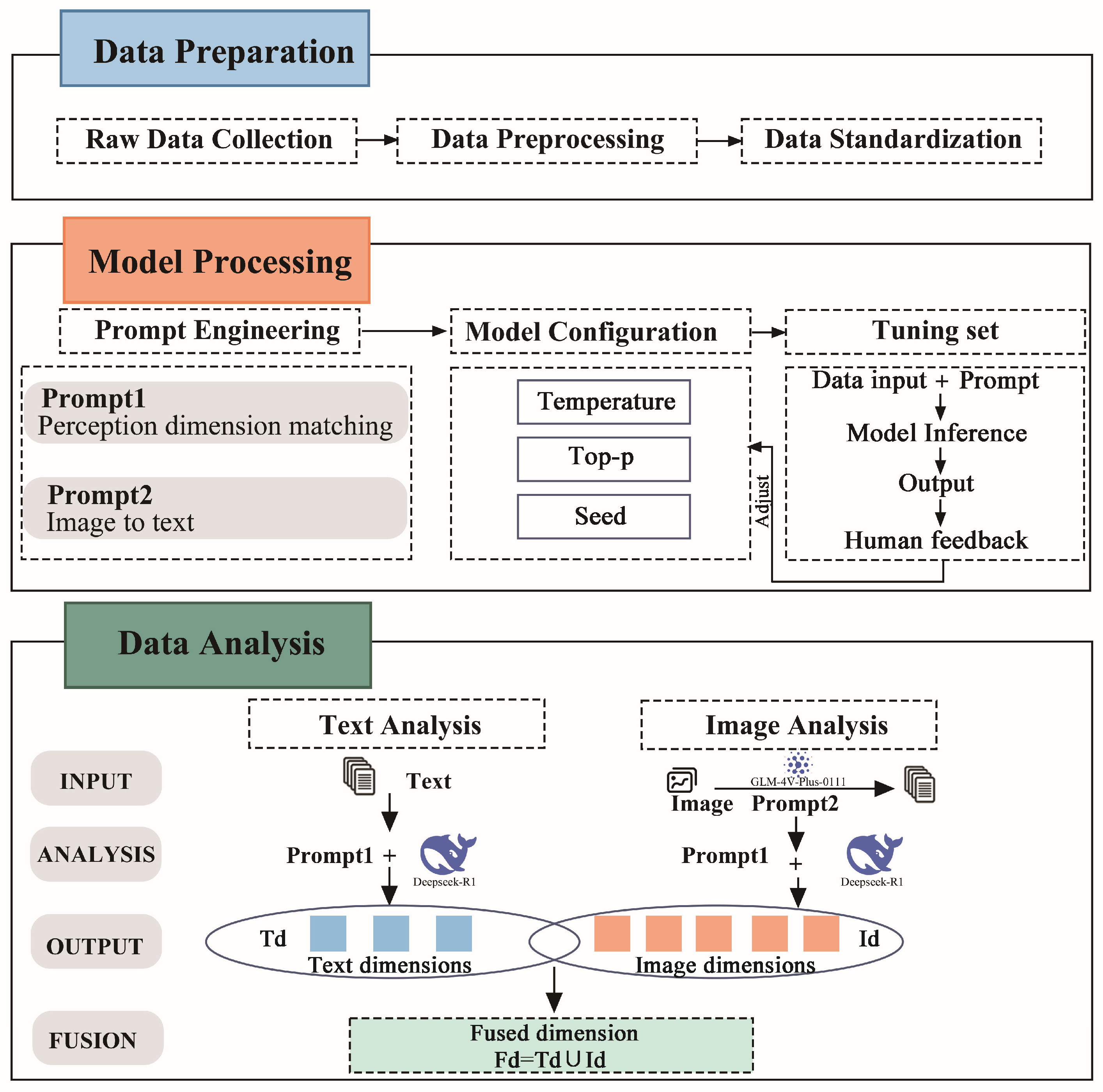
Figure 1 illustrates the research framework for this study. We selected five representative parks as research subjects and collected textual and visual data from official websites and the Dianping platform. After data cleaning and preprocessing, we established a structured prompt framework and applied LLMs for analysis. Text and sentiment analysis were conducted using the DeepSeek-R1 model, while image analysis was performed using the GLM-4V-Plus-0111 model in combination with DeepSeek-R1. To verify the reliability of the model outputs, we invited volunteers to manually annotate the data and evaluated model performance using confusion matrices. Finally, we fused the results of textual and images to quantify the perceptual discrepancies between official and public perspectives, providing a foundation for subsequent discussions and management recommendations.

2.2. Study Area

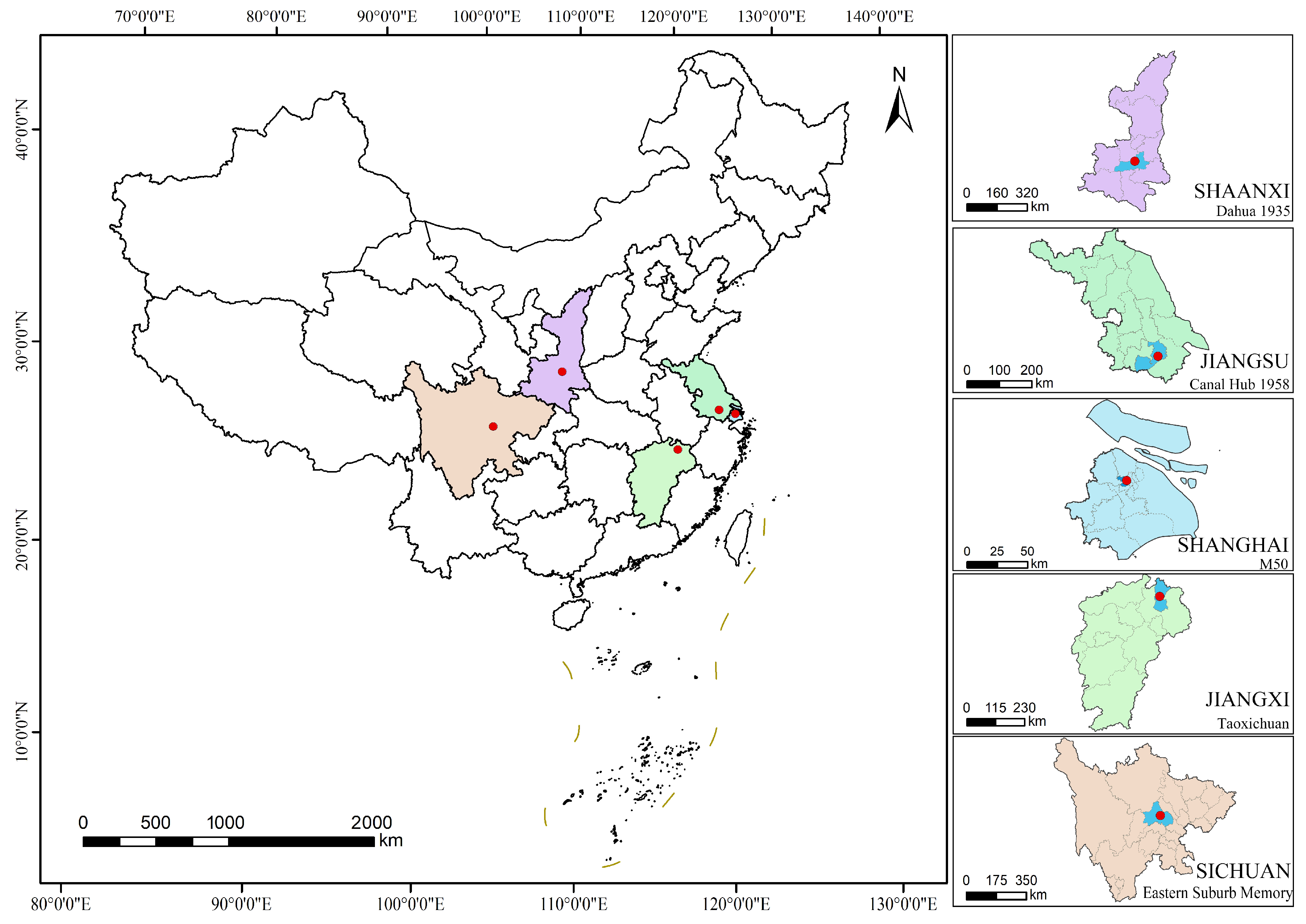
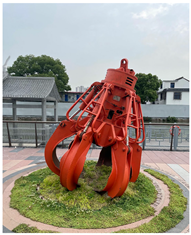
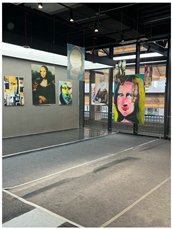
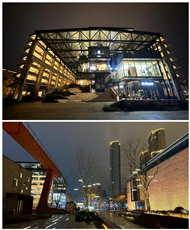
To ensure the data’s representativeness and generalizability, five parks, including Dahua 1935, Taoxichuan Creative Industry Park, Canal Hub 1958, Eastern Suburb Memory, and M50 Creative Industry Park (Figure 2), were selected as research subjects according to the following four criteria:
  • Exemplary in the transformation of industrial heritage into creative industry parks, serving as models of successful adaptation.
  • The transformed parks exhibit a functional integration of cultural, artistic, commercial, and innovative activities.
  • The parks encompass various types of industrial heritage and geographic distributions, reflecting the diversity of the research subjects in both type and regional characteristics.
  • The parks offer sufficient data to support a comprehensive analysis.
A detailed introduction of the parks is shown in Table 1.

2.3. Perceptual Dimension System

To accurately capture the park’s multifaceted perceptions, this study develops a multi-dimensional system. Based on the emphasis placed on intangible value of industrial heritage in the Dublin Principles [56], insights from previous relevant studies [21,40,57,58,59], and a consideration of the specific characteristics of creative industry parks. The perceptual dimension system is divided into four main dimensions and twelve sub-dimensions. This classification system encompasses the material attributes and intangible characteristics of industrial heritage creative industry parks, offering a comprehensive reflection of the destination’s image (Table 2).

2.4. Data Collection and Preprocessing

2.4.1. Data Collection

This study collected data on official projections and public perceptions from various sources, covering the period from 1 January 2019 to 31 January 2025.
Specifically, official projection data consist of two sources: the official government websites and the authoritative official media outlets. The former comes from official government websites of the cities where the parks are located, such as the Sichuan Provincial Department of Culture and Tourism and the Shanghai Municipal People’s Government Website. The latter primarily originates from media outlets, including People’s Network and Wuxi Daily. We used the names of parks and relevant expressions as search keywords, such as “Dahua 1935,” “Eastern Suburb Memory,” and “Dongjiao Creative Industry Park.” The retrieved texts were then manually screened, retaining those thematically focused on the parks with high relevance, excluding irrelevant content such as financial reports, land acquisition notices, and commercial advertisements. The retrieval and screening process was jointly conducted by the author and two graduate students familiar with the research field to ensure data accuracy. Following two rounds of independent screening and cross-check, the findings were ultimately reviewed and confirmed by the corresponding author. Finally, this study obtained 320 official texts, comprising over 190,000 words and 470 image data.
For public perception data, we exploited Dianping (https://www.dianping.com), a popular social media platform in China known for its large user base and extensive reviews. It has been widely used to quantify public perceptions and therefore serves as a reliable data source for this study [60]. Python 3.11.0 was employed to collect publicly available review data for the five parks from Dianping. After data preprocessing, we removed invalid and duplicate reviews, resulting in a dataset containing 21,914 text reviews and 99,064 images.
We acknowledge the disparities in data volume between official and public sources, as well as between textual and visual data. We emphasize that these discrepancies arise from distinct identities and content features of the official and public perspectives as presented on different platforms. These discrepancies do not affect the validity of the data, as our analysis is based on proportional content analysis rather than the absolute number of comments. This approach ensures that the data accurately reflect the essence of official projections and public perceptions, despite sample size discrepancies.
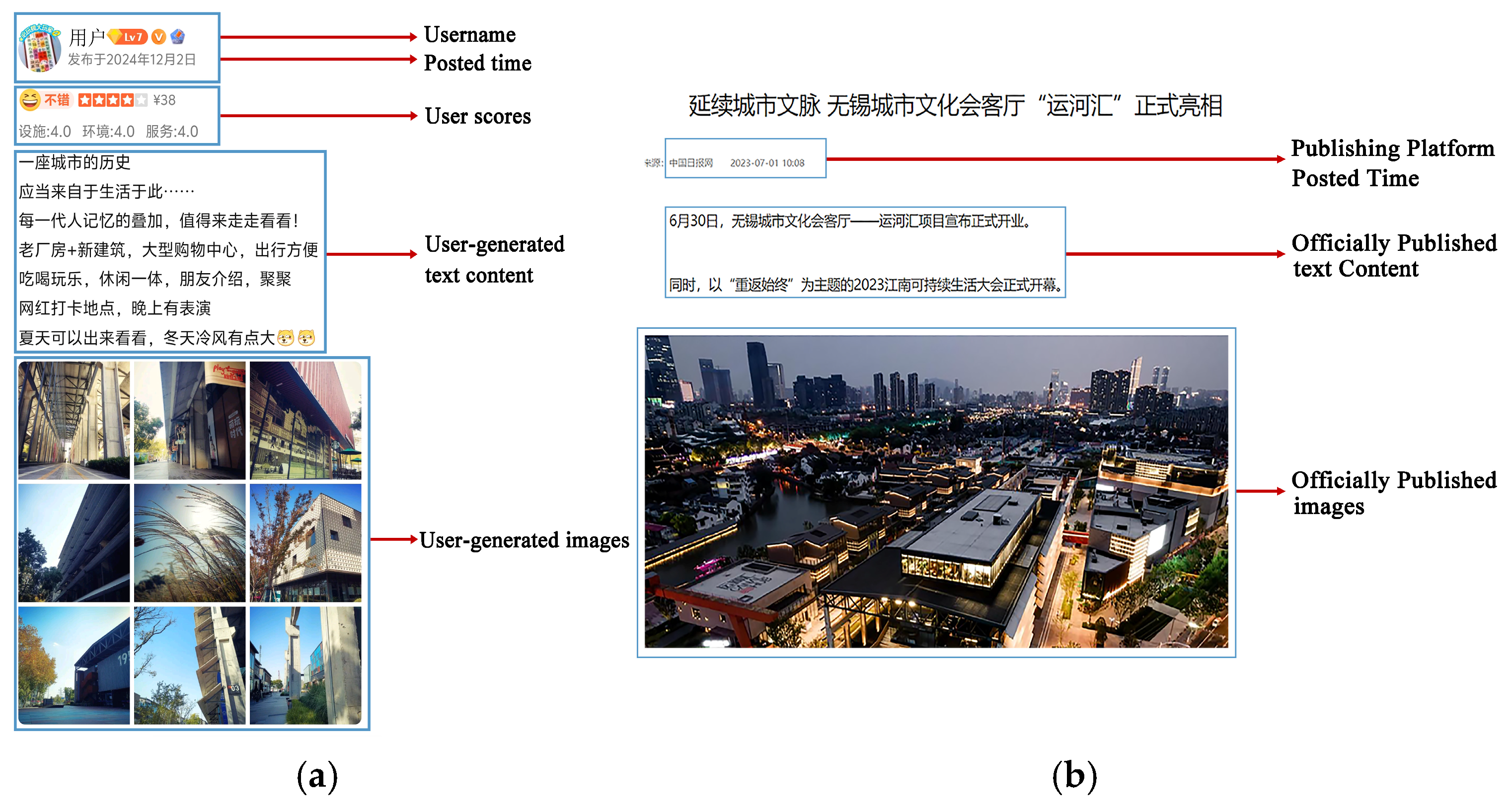
Figure 3 displays the online reviews and the official media outlets’ content related to the Canal Hub 1958. Each review in the public dataset contains the following information: user ID, user rating, comment text, associated images, and posting date. The official dataset comprises the following elements: publishing platform, textual content, images, and publishing date.

2.4.2. Data Preprocessing

To ensure data usability, the text and image data must undergo preprocessing. In the text preprocessing stage, stop words, special characters, HTML tags, and punctuation were removed. Simultaneously, reviews containing fewer than ten characters were excluded to eliminate non-informative entries. In the image preprocessing stage, a hash algorithm was applied to detect and remove duplicate images, thereby reducing redundancy.

2.5. Large Language Models and Prompt Engineering

LLMs and MLLMs are advanced deep-learning algorithms trained on vast amounts of textual and visual data [61]. These models perform outstandingly in text, image, and sentiment analysis tasks. Their advanced capabilities in semantic understanding, visual cognition, and sentiment recognition provide a strong foundation for multimodal data processing.
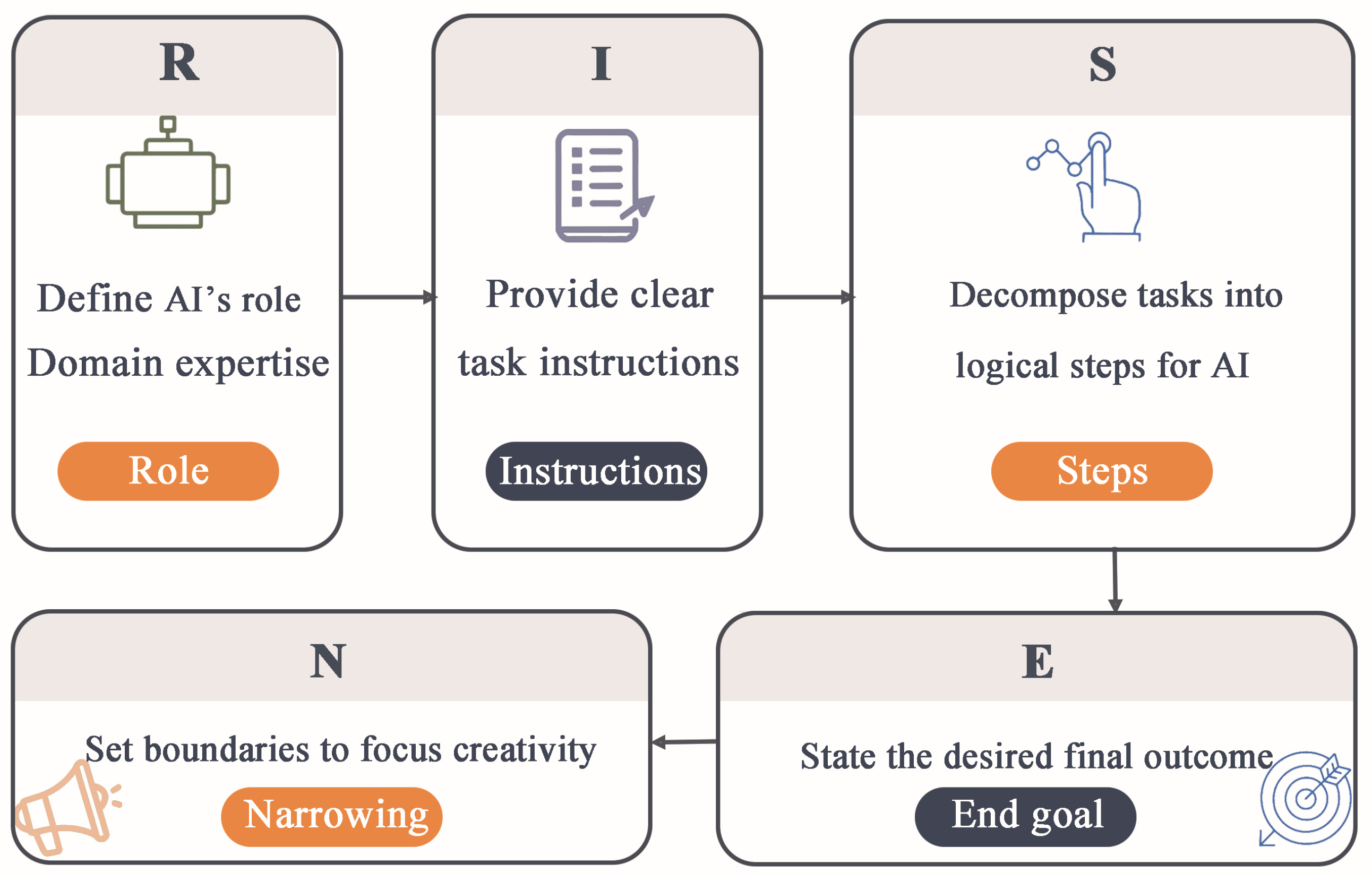
Prompt engineering is a technique designed to improve model performance by formulating tailored prompts for LLMs [62]. Previous studies have shown that prompt-based methods significantly improve LLMS performance, particularly when large model parameters and training samples are scarce [63]. Precise and well-structured prompts are crucial for generating high-quality and reliable outputs. Recent studies have also summarized key principles and strategies for prompt engineering design [64]. To improve model performance, this study adopts the RISEN (Role Instructions Steps End goal Narrowing) framework for prompt engineering and refine it based on the generated responses. The prompt engineering framework is illustrated in Figure 4.

2.6. Analysis Methodology

The official texts and social media data analyzed in this study were written in Chinese and included context-specific vocabulary, place names, and other linguistic elements. To mitigate language bias, all steps of the text involving the LLMs, including model input and output, are conducted in Chinese. For clarity, figures and tables were translated into English. More details on model parameter settings and prompts in the Supplementary Materials.

2.6.1. Text Analysis

The DeepSeek-R1 model (https://www.deepseek.com/) was employed for text analysis. Released by Deepseek company in January 2025, Deepseek-R1 is an open-source reasoning model developed using reinforcement learning (RL). It supports chain-of-thought (CoT) reasoning and excels in logical reasoning, Chinese text processing, and sentiment analysis. Text analysis utilized Python scripts to leverage the DeepSeek-R1 API, achieving an automated submission and analysis process through the constructed prompt framework. Additionally, according to the distinct characteristics of official long texts and user-generated short texts, the prompt tasks were differentiated to accommodate varying semantic structures. These prompts enable the model to generate outputs that better align with established standards, as demonstrated in Table 3.

2.6.2. Sentiment Analysis

This study utilized the Deepseek-R1 model with zero-shot learning to analyze the sentiment of the public’s text reviews. The criteria for quantifying sentiment were based on the five-point Likert scale, ranging from 1 to 5 (see Table 4 for details). Additionally, we divided sentiment scores into three levels: positive sentiment (scores of 4 and 5), neutral sentiment (scores of 3), and negative sentiment (scores of 1 and 2) for further interpretation.
This research employed a framework that integrated the sentiment scores from the LLM and the user star ratings from the Dianping platform. The rating is a discrete variable ranging from 1 to 5 stars, which can effectively reflect the public’s overall satisfaction. The concordance between sentiment scores and user star ratings is shown in Table 4. Combining sentiment scores with ratings allowed us to identify the potential discrepancies between the ratings and expressed emotions. For example, some reviews exhibited high ratings but conveyed negative expressions in the text. Analyzing these differences can provide targeted and complementary information for the planning and management of the parks. Additionally, we calculated average sentiment scores to reflect overall emotional inclinations towards various aspects using the following formula:
E i = s = 1 5 s P i s
where Ei is the emotional score for the perceptual dimension i, s is the sentiment score (ranging from 1 to 5), and Pis represents the proportion of dimension i at sentiment score s.

2.6.3. Image Analysis

In the image data analysis stage, the multimodal large language model GLM-4V-Plus-0111 (https://www.zhipuai.cn/) was employed. Developed by Zhipu AI and released on 11 January 2025, this model demonstrates exceptional capabilities in image recognition and multimodal comprehension. It translates key visual elements into semantically accurate and linguistically fluent textual descriptions.
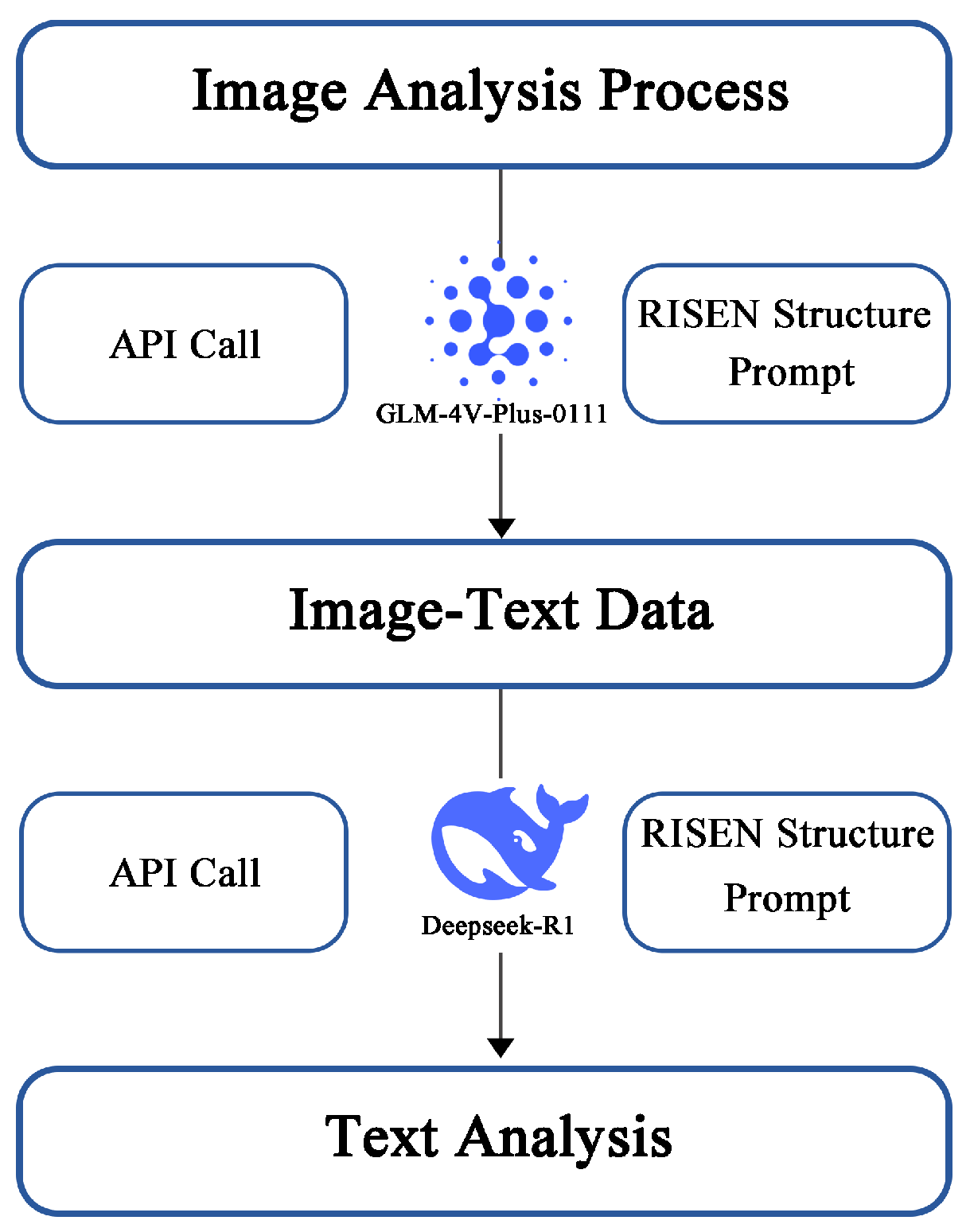
The image analysis process consisted of two main stages, as illustrated in Figure 5. First, the Zhipu API was utilized to convert image data into accurate and coherent textual descriptions. Second, the generated textual data were automatically analyzed with the DeepSeek-R1 model. This procedure aligns closely with the previously described text analysis. Since images often contain rich and complex visual information, the analysis focused on the core visual elements to ensure accuracy. To minimize the potential for hallucinations of LLMs, comparative verification indicated that the results were most reliable when each image was matched with a sub-dimension, assigning each image to at most one sub-dimension. The detailed prompt engineering is presented in Table 5.

2.6.4. Validation

To validate the performance of the LLMs, 500 samples were randomly selected for manual annotation. To ensure unbiased model evaluation, this study distinguished between model tuning and evaluation datasets. Specifically, prompt engineering and parameter optimization were exclusively conducted on the tuning set. The final performance assessment was conducted on an independent test set to prevent data cross-contamination.
Five volunteers were invited to assess the results generated by the models. They were provided with the same prompt information as the LLMs, including role specifications, task descriptions, and steps. Cohen’s kappa was calculated to assess the consistency, achieving a score of 0.76, indicating a substantial level of agreement among the volunteers [65].
The model’s performance was evaluated across the following two tasks. First, in the sentiment analysis task, the model outputs sentiment scores ranging from 1 to 5. Comparing the model’s outputs with manually annotated data revealed that the model achieved an overall accuracy of 93% in this task. Second, in the perceptual dimension matching task, the model was assessed on its ability to identify whether a perceptual dimension “existing” or “non-existent”. A confusion matrix consisting of true positives (TP), true negatives (TN), false positives (FP), and false negatives (FN) was employed to evaluate the model’s performance in this task. The overall performance was derived by calculating the average performance across all dimensions, ensuring that all dimensions contribute equally to the final result [66]. In the model evaluation, accuracy is the proportion of correctly predicted instances out of the total samples; precision represents the proportion of predicted positive instances that are actually positive; recall reflects the proportion of actual positive samples that are correctly identified, and the F1 score is the harmonic mean of precision and recall. The evaluation results yield an accuracy of 0.82, a precision of 0.83, a recall of 0.73, and an F1 score of 0.78. Overall, the LLMs have demonstrated strong performance in both the sentiment analysis and perceptual dimension matching tasks.

2.7. Multimodal Data Fusion and Discrepancy Quantification

2.7.1. Multimodal Data Fusion

The study utilizes a multimodal data analysis approach (Figure 6). Text and image data possess distinct advantages and informational focuses: text data is typically unstructured, reflecting subjective evaluations and experiences, while image data presents intuitive visual features. The study of single-modal has limitations. Relying solely on textual content may fail to capture visual characteristics, while relying on image data alone may lack detailed descriptions of public experiences. Integrating both textual and image modalities enables more comprehensive insight, improving the interpretability of the model [67]. The specific method for text and image data fusion is as follows:
F d = T d I d
Td and Id represent the sub-dimensions for text and images, and Fd is the fused dimensions.
To illustrate the fusion process concretely, we take an example of fusing text and image data generated under the same user ID in public perception data:
Text-matched perceptual dimensions (Td): {AE,AP,EL}
Image-matched perceptual dimensions: Image 1(Id1): {IR}, Image 2(Id2): {AP}, Image 3(Id3): {EL}
The fused dimensions (Fd): {AE,AP,EL,IR}

2.7.2. Frequency Distribution and Chi-Square Test

This study examined the distributional characteristics of official projections and public perceptions by calculating the frequency and percentage for each dimension. Chi-square test was conducted using SPSS 24.0 to determine whether statistically significant differences existed between the two across these dimensions. The proportion of the perceptual dimension was calculated using the following formula:
P i = C i j = 1 12 C j
where Pi is the proportion of i-th perceptual dimension, Ci is the frequency of the i-th perceptual dimension, and the denominator is the total frequency across all perceptual dimensions.

3. Results

3.1. Multimodal Data Fusion Results

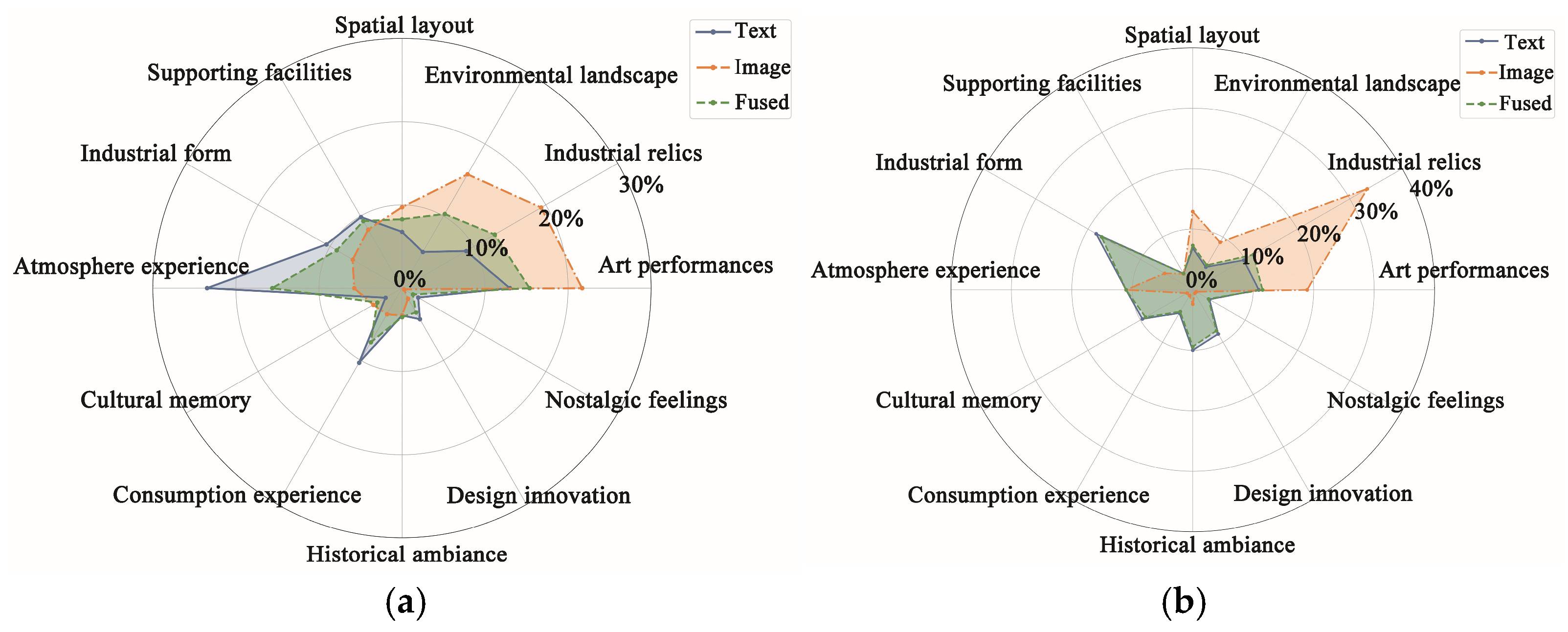
To examine the differences and complementarity between text and image data in characterizing the features of the parks, and to validate the effectiveness of multimodal data integration, this section conducts a statistical analysis of the text and image results. The analytical results for text, image, and multimodal data are presented in Figure 5.

3.1.1. Statistical Results of Public Perceptions

As shown in Figure 7a, textual and image data exhibit differences and complementarity in the distribution of public perceptual dimensions. In textual data, the public focuses more on the AE (23.48%) and AP (12.98%). In image data, IR (19.35%) and EL (15.79%) account for higher proportions. This indicates that text and image data possess distinct informational focuses: text expresses subjective perceptions, while images convey intuitive visual characteristics. After fusing text and image data, the distribution of dimensions becomes more balanced. Based on a comparison of data before and after multimodal fusion, the coverage rate of text-based perceptual dimensions increases by 61.75% compared to the text-only modality, while the coverage rate of image-based perceptual dimensions increases by 81.75% compared to the image-only modality. These results indicate that multimodal fusion effectively enhances the representational capacity of single-modal data. By integrating the subjective expressions conveyed through text with the visual characteristics captured in images, this approach enables a more nuanced and comprehensive understanding of public perception.

3.1.2. Statistical Results of Official Projections

As illustrated in Figure 7b, differences are also observed in the dimensions of official projection. Textual data emphasizes the dimensions of IR (18.45%) and AP (10.92%), while image data reveals higher proportions for IR (33.33%) and SL (12.90%). Due to the limited scale of official image data, the integrated data shows no significant deviation compared with single text data. However, even with constrained data, incorporating image data leads to a more balanced data structure. This result also indicates that multimodal data can compensate for the limitations of a single data type, enhancing the comprehensiveness and interpretability of the data.

3.2. Quantification and Validation of Discrepancies Between Official Projections and Public Perception

By calculating the proportion distribution, we found significant discrepancies between official projections and public perceptions across multiple dimensions (Table 6). The chi-square test results indicated statistically significant differences across all dimensions (p < 0.01), though the effect sizes were relatively small. This finding is likely attributed to the large sample size in this study, which enhances statistical power and enables the detection of systematic albeit minor non-random differences. The interpretation of effect sizes should be considered within the specific research context [68]. Comparisons with relevant literature reveal that the observed p-values and effect sizes in this study align with findings from previous studies [29,42]. Given that p-values can be highly sensitive to sample size in large datasets, the present analysis primarily relied on comparing frequency distributions to quantify differences, with p-values and effect sizes serving as reference indicators.
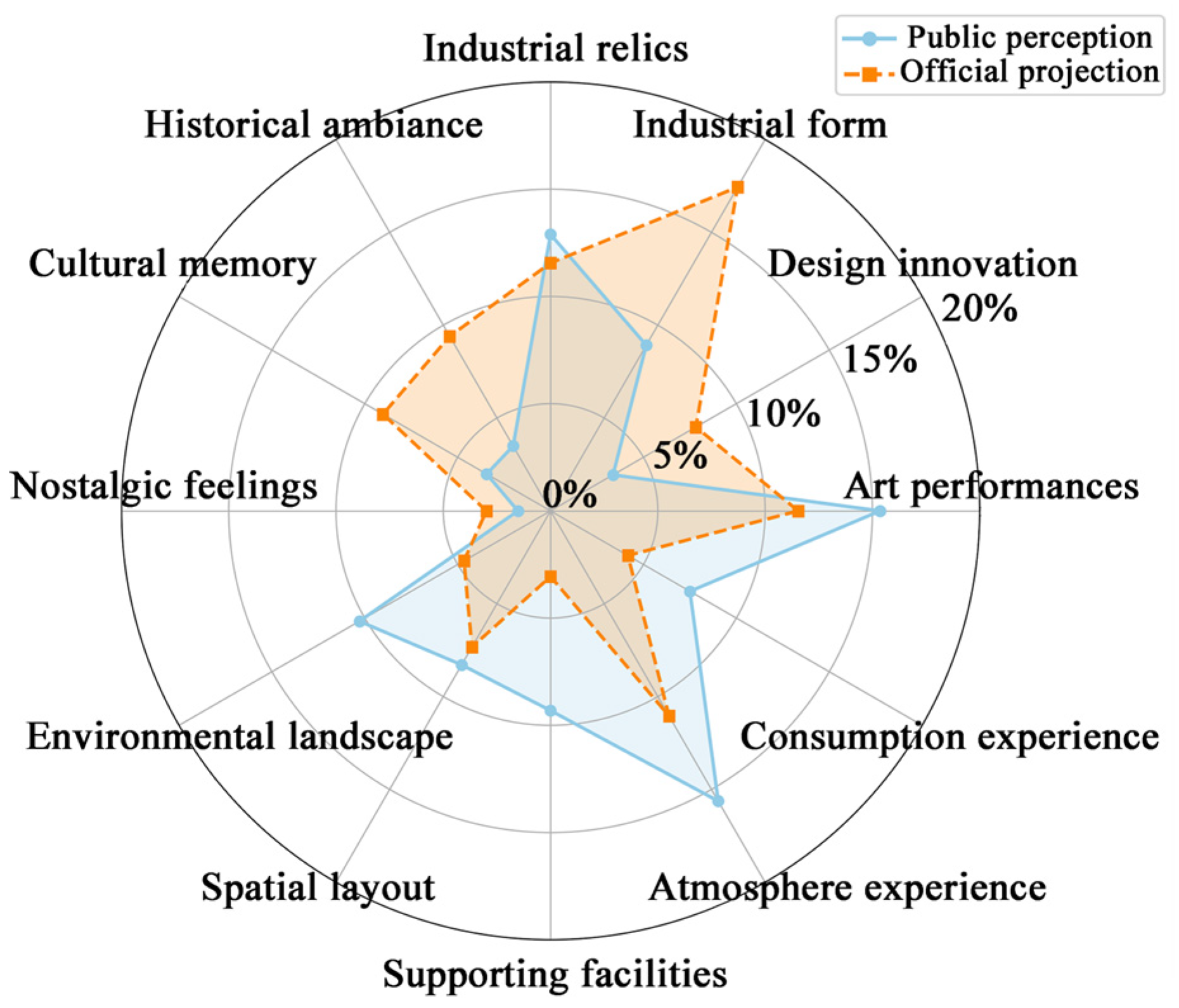
In official projections data, the Creative industry form and the Cultural value of heritage were the most frequently projected dimensions. In public perceptions data, Service experience perception and Creative industry form emerged as the most prominent perceived dimensions. We found that both official and public perspectives recognize the Creative industry form dimension. However, at the sub-dimensions, the official government highlights the IF, accounting for 17.43% and the public perceived AE more frequently, at 15.63%, as shown in Figure 8.

3.3. Distribution of Sentiment

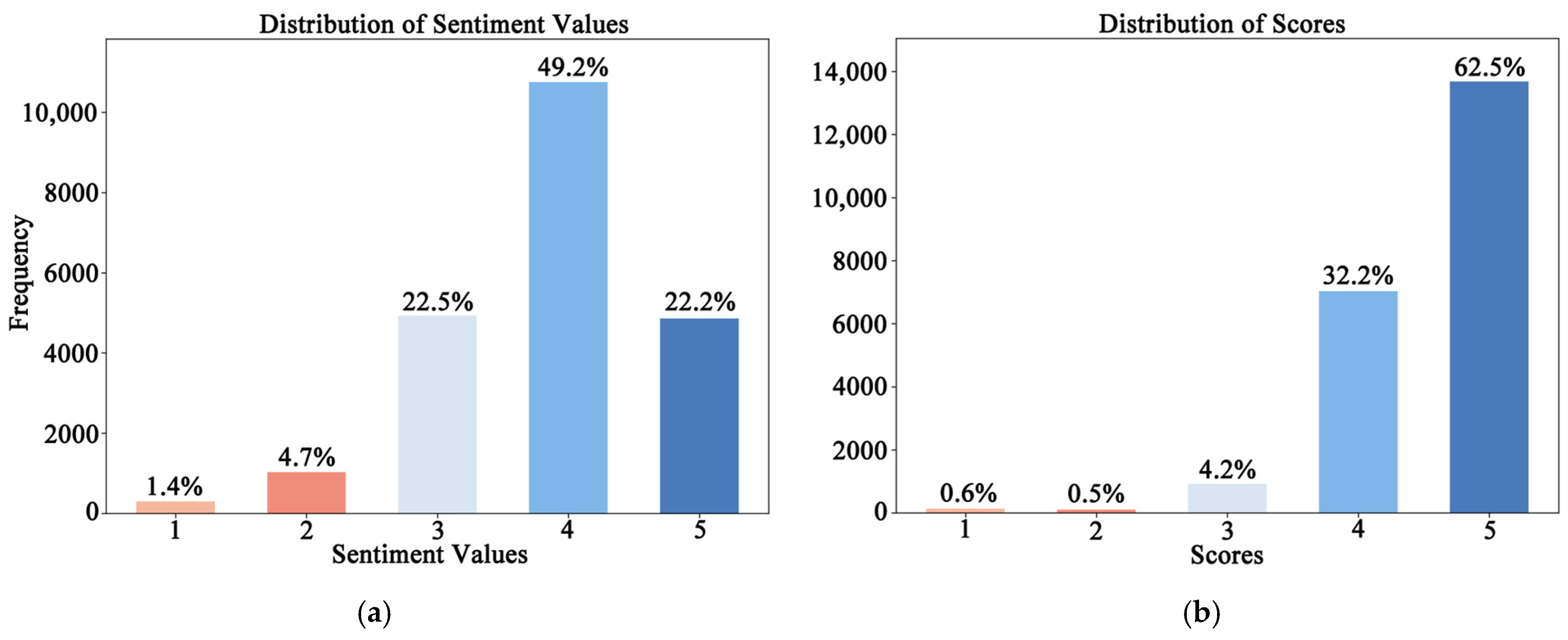
As shown in Figure 9a, the sentiment analysis results based on the LLM indicate that the sentiment values of public reviews toward the parks exhibit a distinctly right-skewed distribution. Reviews with a sentiment score of 4 account for 49.2%, representing the highest proportion among all sentiment values. After classifying sentiment values into three categories, the results reveal that positive reviews dominate, comprising 71.4% of the total. Negative reviews account for 6.15%, while neutral comments constitute 22.45%. This distribution suggests that the public is generally satisfied with the parks. Negative emotions make up a relatively small proportion.
Figure 9b displays the distribution of user ratings, a discrete variable ranging from 1 to 5. Ratings of 5 account for 62.5%, while ratings of 4 constitute 32.2%. Positive emotions account for 94.7%, indicating that most of the public delights in the parks. Ratings of neutral emotions make up 4.2%. In general, sentiment scores and user ratings demonstrate a clear positive trend in public perceptions.
A further comparison of the sentiment analysis results from the LLM with the user ratings reveals that while the overall emotional tendencies of both are similar, subtle differences exist in their specific distribution structures. Specifically, for positive sentiment proportion, the LLM results indicated 71.4%, and user ratings accounted for 94.7%. For neutral sentiment, the LLM identified a proportion of 22.45%, while user ratings constituted only 4.2%. This discrepancy stems from the distinct scoring mechanisms. The LLM sentiment values employ integer ranges from 1 to 5 and classify sentiment strictly according to the five-point Likert scale. For example, “quite good” is categorized as a score of 4, “excellent” receives a score of 5, and content with no clear emotional tendency or mixed positive and negative cues receives a score of 3. In contrast, user ratings are a discrete variable ranging from 1 to 5 stars, with each star interval containing two values, providing the public with a broader range of options. Consequently, some reviews with high user ratings were classified as neutral by the LLM due to the unclear emotional cues or negative expressions in the textual content. Detailed text mining of low-rated and neutral reviews reveals that public dissatisfaction mainly arises from high parking fees, limited diversity in industrial formats, expensive pricing, inadequate supporting facilities, and unclear signage systems.
In addition, calculating the average scores across dimensions indicates that the public expresses stronger positive sentiments in sub-dimensions such as DI (4.05), CM (4.02), and NF (4.02). Negative emotions are mainly manifested in dimensions including SF (3.79), CE (3.86), and AE (3.94). This indicates that deficiencies in management services and spatial planning within negatively impact the public’s emotional experiences. These findings emphasize the need to improve service quality and optimize spatial planning.

4. Discussion

Measuring the cognitive gaps between official and public perspectives has significant practical implications for prompting sustainable development. Quantifying the disparities between official projections and public perceptions across perceptual dimensions in parks offers valuable strategic insights for management and planning.

4.1. Mapping and Quantification of Perceptual Dimensions

This study employed LLMs and multimodal data analysis to identify the focus of official and public attention toward parks and measure the perceptual gaps between these two subjects. By designing a structured prompting framework and leveraging the API of the Deepseek-R1 and GLM-4V-Plus-0111 models, we mapped textual and image data to perceptual dimensions, establishing an analytical framework for multimodal fusion data. Then, we quantify the perceptual discrepancies by calculating the distribution frequencies of perception dimensions in both official and public datasets. The results indicate that LLMs demonstrate strong performance in semantic comprehension, visual recognition, and sentiment analysis. Recent studies have also highlighted the application potential of LLMs in text and visual analysis [18]. Multimodal data fusion achieves information complementarity, providing a more nuanced and comprehensive understanding of the research. The continuous advancement of model technology and the expansion of parameter scale significantly enhance the ability to analyze and multimodal data. Compared to previous studies based on machine learning methods, a key advantage of LLMs is their reduced dependency on large-scale annotated data [49,51]. Deep learning models often require large volumes of manually labeled samples for domain-specific training [69]. Studies have illustrated that LLMs can accomplish complex text, image, and sentiment analysis tasks through zero-shot or few-shot learning. They have demonstrated strong performance across diverse research fields, including tourism destination image analysis [7071,72], urban planning [73], and environmental perception studies [74].

4.2. Discrepancies Between Official Projections and Public Perceptions

This study employs LLMs to analyze and integrate multimodal data. It enables a quantitative analysis of perception disparities by statistically comparing the distribution between official and public perceptions across multiple dimensions. The results indicate that significant discrepancies between official and public perceptions in the perceptual dimensions. These findings are consistent with prior research on cognitive biases between official and public perspectives [40,75]. Such discrepancies originate from inherent differences in position and needs between the official and the public, resulting in inconsistent spatial perceptions and expectations of the creative industry park among these two parties. From the official perspective, as the leading actor in spatial planning and development, it is grounded in macro-level narratives and overall development strategy [37]. Furthermore, in promoting the adaptive reuse of industrial heritage, the official emphasizes balancing historical value with functional repurposing, while also considering multiple factors, including economic benefits, sustainable development, and cultural heritage [12,14]. Additionally, during the implementation phase, practical factors such as technical feasibility and budget constraints often result in deviations between the final renovation outcomes and the initial planning. Although some projects conducted preliminary social surveys in the early stages, public participation remains insufficient. From the public perspective, as users and experiencers of the space, their evaluations are largely based on the immediate sensory experiences within the environment [76]. The public places greater emphasis on specific micro-level perceptions, such as the completeness of supporting facilities, artistic ambiance, and spatial accessibility. The high levels of public perceptions of space reflect intense demands and expectations. Identifying these specific needs provides empirical evidence for enhancing the park’s spatial planning and management. Therefore, how to balance and coordinate the needs and expectations between the two groups is the core issue to enhance the consistency of the tourism destination image.
Specifically, the research results indicate that the most pronounced discrepancies exist in the Service experience perception dimension, followed by the Cultural value of heritage dimension. The public pays more attention to the Service experience perception dimension, particularly perceived more frequently than officially projected on the SF and CE dimensions. This aligns with previous research findings that supporting facilities constitute the core category for tourists in destination image perception [77,78]. However, official projections in this dimension are relatively limited. Further sentiment analysis displays that inadequate supporting facilities and poor consumption experience are the primary factors eliciting negative emotions, which is consistent with the result in cultural heritage research showing that the evaluation of facilities is generally low [79]. This suggests that these issues should be prioritized for improvement in future management and planning work. The official perspective emphasizes the Cultural value of heritage dimension, focusing on the dissemination of historical culture and values, particularly on HA and CM. Previous studies have also indicated that official entities have over-interpreted the importance of historical value [32]. These apparent discrepancies between official projections and public perceptions not only undermine the effectiveness of official communications but may also trigger public disappointment and negative evaluations.
Secondly, the results indicate a relatively high degree of consistency in the Creative industry form dimension, with a high proportion and ranking in both official and public data. Suggesting that it constitutes a key perceptual dimension within the parks, consistent with existing research findings showing artistic value holds significant importance in both official and tourist perceptions. It also aligns with the creative-oriented characteristics of this reuse model [4]. Further analysis of sub-dimensions reveals that the public pays more attention to the AP dimension. Previous studies have also indicated that the public shows greater interest in art activities in creative industrial parks [17]. In contrast, official entities focus more on the IF and DI aspects, reflecting a macroscopic perspective in overall planning [80].
Thirdly, the results also show that the proportion of the Spatial Environmental Perception dimension remains relatively low in both official projections and public perceptions. This suggests that the dimension is not a central focus within the parks. This finding is consistent with the previous studies, indicating that environmental landscape elements are frequently mentioned in public reviews but are not the spotlight of their expressions [81]. However, this contrasts with another study on tourist satisfaction with the reuse of industrial heritage [82], which may be attributed to differences in landscape dimension classification, as that study included artworks and installation elements in the landscape dimension. From the perspective of spatial environment perception alone, it does not belong to the core perception dimension. Negative sentiment analysis indicates that environmental quality, spatial accessibility, and visual guiding systems significantly influence public satisfaction. These findings align with prior studies, which have shown that low-quality environments diminish spatial aesthetic appeal and are more likely to invoke negative evaluations [83,84,85]. Therefore, it is recommended that official entities improve environmental cleanliness, greenery quality, and the clarity of signage systems, while optimizing spatial layout to enrich overall environmental experiences and mitigate negative emotions.

4.3. Implications for Operational Management and Planning

By examining the discrepancies between official projections and public perceptions, as well as sentiment analysis, this study can identify dimensions where public experience can be enhanced and aspects that require improvement. Based on the results, the following strategies are proposed:
In the Service experience perception dimension, improving supporting facilities and the consumption experience are crucial for enhancing public [86]. Sentiment analysis indicates lower satisfaction levels with supporting facilities and the consumption experience. To enhance overall satisfaction, in the supporting facilities dimension, the park management should optimize supporting facilities by conducting regular inspections and maintenance, thereby ensuring that basic service facilities remain fully functional and operate reliably. Additionally, training should be implemented for park staff to enhance their overall service capabilities and service awareness. In the consumption experience dimension, local tourism authorities should collaborate with the park management to regularly monitor commodity prices, ensuring that they remain within reasonable ranges. Furthermore, park management should establish a multi-channel public feedback mechanism to gather public issues and suggestions. Through these measures, public satisfaction regarding supporting facilities and consumption experiences will be enhanced.
In the Cultural value of heritage dimension, the public does not perceive HA and CM frequently, but shows strong emotional resonance within these dimensions. This also demonstrates that historical authenticity and cultural identity play a crucial role in stimulating positive public sentiment. Therefore, the park operators should adopt a comprehensive strategy to systematically present the tangible and intangible cultural value of industrial heritage. Specifically, park operators can adopt visualization technologies [87,88,89,90] and historical narrative strategies [91] to facilitate diversified digital expressions and scenarized displays of industrial heritage. This helps construct immersive and interactive spaces that enhance the experience and deepen public engagement. Furthermore, creative design should be employed to incorporate industrial, historical, and cultural symbols into the spatial environment in more tangible and perceptible forms.
In the Creative industry form dimension, research has demonstrated that a creative atmosphere exerts a significant positive effect on enriching public experiences and fosters place attachment [92]. Based on the public’s frequent perception of the AP, park operators can strengthen the park’s artistic identity through visual forms such as graffiti and installation art, enhancing visual impact. Addressing the significant divergence between official and public perceptions regarding IF, park management should introduce cultural and creative industries, trendy consumption, and other business forms into its investment promotion and industrial planning. This strategy promotes the diversification and innovation of business formats, thereby enhancing the park’s vitality and public recognition.
In the Spatial environmental perception dimension, environmental quality and spatial accessibility significantly impact public satisfaction, particularly given the relatively low satisfaction levels in environmental quality and spatial accessibility. To address these issues, park management authorities should establish a routine environmental cleaning and maintenance mechanism while improving the quality of greenery and landscaping to maintain the park’s cleanliness and aesthetic appeal. Furthermore, park operators should consider collaborating with relevant transportation authorities during peak tourist seasons to increase the accessibility of public transport. Concurrently, they should optimize the clarity of internal signage systems to reduce congestion. Particular emphasis should be placed on improving transportation routes and spatial layouts around Instagrammable spots and high-traffic areas.

4.4. Limitations and Future Research

Although this study effectively quantifies the perception discrepancies between official and public viewpoints, several aspects still need to be addressed. These limitations include the following: (1) The public data mainly comes from online platforms, and the user base consists mainly of young people. This may lead to bias in the representativeness of the research samples. Future studies may incorporate questionnaire surveys and field investigations to improve data coverage and representativeness, thereby enabling a deep exploration of the conclusions. (2) Official image datasets are relatively limited in volume. Future research can explore additional channels to expand the dataset, such as incorporating official promotional video data. (3) Aligning different data modalities still faces challenges related to data heterogeneity. With the advancement of technology, future studies may introduce more sophisticated MLLMs to enhance sensory simulation and improve multimodal analysis, paving the way for broader applications in perception analysis research. (4) This study primarily focuses on the creative industry park model, with limited comparative analysis of other industrial heritage renewal models, such as industrial heritage parks and museum types. Different types may influence the perceived structure and preferences of the public. Future research could broaden its scope to include multiple types of industrial heritage reuse models, thereby improving the generalizability and guiding value of the research findings.

5. Conclusions

Research on the discrepancy between official projections and public perceptions is crucial for shaping successful tourism destination images. This study validates the effectiveness of LLMs for multimodal data analysis and confirms their applicability in destination image perception research. Through the comparison of official and public multimodal data, our research reveals the following findings:
(1)
Discrepancies exist between official projections and public perceptions across dimensions. Official narratives adopt a macro perspective, emphasizing the park’s historical and cultural value, and functional layout. Consequently, this places greater emphasis on promoting dimensions such as HA, CM, and IF. However, constrained by the spatial presentation of heritage elements, the public’s overall perception of this dimension remains relatively weak. Therefore, subsequent planning should enhance the visual representation and scenarization of heritage elements to bridge this cognitive gap. As primary users of the space, the public prioritizes sensory experiences and functional services. Consequently, their perception intensity regarding dimensions such as supporting facilities and consumption experience within the Service experience perception is significantly higher than that of official projections. This disparity reflects the differing positions and needs between the two parties. Furthermore, both official projections and public perceptions exhibit a high proportion of attention to the Creative industry form dimension, highlighting the need to sustain and further enhance this dimension in future park operations.
(2)
The public’s overall sentiment toward the park is predominantly positive, with particularly high satisfaction levels associated with the DI, CM, and NF dimensions, which serve as key factors driving positive sentiment. Negative sentiments are primarily concentrated in the SF and CE dimensions, where issues such as inadequate supporting facilities, poor consumer experience, and limited spatial accessibility significantly impact public satisfaction.
(3)
This study develops an analytical framework utilizing LLMs and multimodal data to quantify perceptual discrepancies. By employing structured prompts and LLM APIs, this approach facilitates the systematic analysis of both textual and image data. The integrated data provides a more holistic representation of the park’s perceptual image, significantly enhancing model interpretability. Furthermore, it also provides a reusable analytical pipeline for similar multimodal research.
In summary, these findings provide valuable insights for park operations management and planning. It is recommended that official planners and park operators should prioritize addressing factors with significant discrepancies that substantially impact public satisfaction, thereby enhancing overall satisfaction and promoting the parks’ sustainable development.

Supplementary Materials

The following supporting information can be downloaded at: https://www.mdpi.com/article/10.3390/land14122371/s1.

Author Contributions

Conceptualization, B.H.; methodology, X.Y.; data collection, X.Y.; validation, X.Y.; formal analysis, X.Y. and B.H.; writing—original draft preparation, X.Y. and B.H.; writing—review and editing, J.Z.; visualization, X.Y.; supervision, B.H.; project administration, B.H. and J.Z. All authors have read and agreed to the published version of the manuscript.

Funding

This research was funded by the Social Sciences of Jiangsu Province, grant number 23SHB014; Graduate Innovation Program of China University of Mining and Technology, grant number 2025WLJCRCZL299; Postgraduate Research & Practice Innovation Program of Jiangsu Province, grant number SJCX25_1439.

Institutional Review Board Statement

The authors declare that no ethical review was required for this study. This research complies with the Terms of Service (ToS) of the data source platforms, and all data used are publicly accessible and non-confidential. Written informed consent was not required because all data were anonymized by removing irrelevant identifiers to ensure privacy security.

Data Availability Statement

The original contributions presented in the study are included in the Supplementary Materials, further inquiries can be directed to the corresponding author.

Acknowledgments

The authors would like to thank all project funders, journal editors, and the anonymous reviewers for their comments and suggestions. During the preparation of this study, the authors used Deepseek-R1 and GLM-4V-Plus-0111 models for the text, sentiment, and image analysis. The authors have reviewed the output and take full responsibility for the content of this publication.

Conflicts of Interest

The authors declare no conflicts of interest.

Abbreviations

The following abbreviations are used in this manuscript:
UGCUser-generated content
LLMsLarge language models
MLLMsMultimodal Large Language Models

References

  1. Soares, Z.M.; Marques, J.; Sousa, C. Regional development through industrial tourism: A literature review. RPER 2024, 68, 7–27. [Google Scholar] [CrossRef]
  2. Qiu, Q.; Zuo, Y. “Intangible cultural heritage” label in destination marketing toolkits: Does it work and how? J. Hosp. Tour. Manag. 2023, 56, 272–283. [Google Scholar] [CrossRef]
  3. Yuan, J.; Liu, Y. Research on tourism development of cultural and creative industry park based on the network text analysis: A case study of dafen oil painting village in Shenzhen. In Proceedings of the 2017 3rd International Conference on Information Management (ICIM), Chengdu, China, 21–23 April 2017; pp. 37–41. [Google Scholar] [CrossRef]
  4. Han, S.H.; Zhang, H. Progress and prospects in industrial heritage reconstruction and reuse research during the past five years: Review and outlook. Land 2022, 11, 2119. [Google Scholar] [CrossRef]
  5. Jiang, Z.; Qi, Z.; Chen, L.; Xu, L.; Wan, D.; Burak-Gajewski, P.; Zawisza, R.; Liu, L. External spatial morphology of creative industries parks in the industrial heritage category based on spatial syntax: Taking Tianjin as an example. Buildings 2024, 14, 559. [Google Scholar] [CrossRef]
  6. Montenegro, Z.; Marques, J.; Sousa, C. Industrial tourism as a factor of sustainability and competitiveness in operating industrial companies. Sustainability 2023, 15, 14243. [Google Scholar] [CrossRef]
  7. Fonseca, F.; Ramos, R.A.R. Vacant industrial buildings in Portugal: A case study from four municipalities. Plan. Pract. Res. 2019, 34, 239–254. [Google Scholar] [CrossRef]
  8. Kuzior, A.; Lyulyov, O.; Pimonenko, T.; Kwilinski, A.; Krawczyk, D. Post-industrial tourism as a driver of sustainable development. Sustainability 2021, 13, 8145. [Google Scholar] [CrossRef]
  9. Price, W.R. Mining for tourists: An analysis of industrial tourism and government policy in Wales. Tour. Plan. Dev. 2021, 18, 435–456. [Google Scholar] [CrossRef]
  10. Ćopić, S.; Đorđević, J.; Lukić, T.; Stojanović, V.; Đukičin, S.; Besermenji, S.; Stamenković, L.; Tumarić, A. Transformation of industrial heritage: An example of tourism industry development in the Ruhr area (Germany). Geogr. Pannonica 2014, 18, 43–50. [Google Scholar] [CrossRef]
  11. Zhang, Y.; Zhang, G.; Guo, P. Regeneration path of abandoned industrial buildings: The moderating role of the goodness of regeneration mode. J. Clean. Prod. 2021, 297, 126668. [Google Scholar] [CrossRef]
  12. Vardopoulos, I. Critical sustainable development factors in the adaptive reuse of urban industrial buildings. A fuzzy DEMATEL approach. Sustain. Cities Soc. 2019, 50, 101684. [Google Scholar] [CrossRef]
  13. Harfst, J.; Sandriester, J.; Fischer, W. Industrial heritage tourism as a driver of sustainable development? A case study of Steirische Eisenstrasse (Austria). Sustainability 2021, 13, 3857. [Google Scholar] [CrossRef]
  14. Zhang, Y.; Shi, P.; Wang, L. A study of the affective motives of city industrial heritage tourists: A case study from Tianjin, China. J. Tour. Cult. Change 2023, 21, 237–252. [Google Scholar] [CrossRef]
  15. Chen, J.S.; Kerstetter, D.L.; Graefe, A.R. Tourists’ reasons for visiting industrial heritage sites. J. Hosp. Leis. Mark. 2001, 8, 19–31. [Google Scholar] [CrossRef]
  16. Lu, N.; Liu, M.; Wang, R. Reproducing the discourse on industrial heritage in China: Reflections on the evolution of values, policies and practices. Int. J. Herit. Stud. 2020, 26, 498–518. [Google Scholar] [CrossRef]
  17. Bittner, J.; Skowron, B.M. Visitor Characteristics, Activities and Satisfaction at Two Industrial Tourism Sites in the Ruhr Area: A Quantitative Descriptive Study. Proc. Int. Conf. New Find. Humanit. Soc. Sci. 2025, 2, 20–55. [Google Scholar] [CrossRef]
  18. Fan, C.; Li, S.; Liu, Y.; Jin, C.; Zhou, L.; Gu, Y.; Gai, Z.; Liu, R.; Qiu, B. Using social media text data to analyze the characteristics and influencing factors of daily urban green space usage—A case study of Xiamen, China. Forests 2023, 14, 1569. [Google Scholar] [CrossRef]
  19. Calcagni, F.; Batallé, J.N.; Baró, F.; Langemeyer, J. A tag is worth a thousand pictures: A framework for an empirically grounded typology of relational values through social media. Ecosyst. Serv. 2022, 58, 101495. [Google Scholar] [CrossRef]
  20. Prentice, R.C.; Witt, S.F.; Hamer, C. Tourism as experience: The case of heritage parks. Ann. Tour. Res. 1998, 25, 1–24. [Google Scholar] [CrossRef]
  21. Li, J.; Pan, J.; Dou, Q.; Fu, F.; Shi, Y. Digital footprint as a public participatory tool: Identifying and assessing industrial heritage landscape through user-generated content on social media. Land 2024, 13, 743. [Google Scholar] [CrossRef]
  22. Chen, A.; Peng, N.; Hung, K.P. Examining tourists’ loyalty toward cultural quarters. Ann. Tour. Res. 2015, 51, 59–63. [Google Scholar] [CrossRef]
  23. Mukherjee, A.; Banerji, H. Disparities in expert and community perceptions of industrial heritage and implications for urban well-being in West Bengal, India. npj Herit. Sci. 2025, 13, 44. [Google Scholar] [CrossRef]
  24. Grosspietsch, M. Perceived and projected images of Rwanda: Visitor and international tour operator perspectives. Tour. Manag. 2006, 27, 225–234. [Google Scholar] [CrossRef]
  25. Shao, C.; Chung, W. The impact of park environmental characteristics and visitor perceptions on visitor emotions from a cross-cultural perspective. Urban For. Urban Green. 2024, 102, 128575. [Google Scholar] [CrossRef]
  26. Bramwell, B.; Rawding, L. Tourism marketing images of industrial cities. Ann. Tour. Res. 1996, 23, 201–221. [Google Scholar] [CrossRef]
  27. He, Z.; Deng, N.; Li, X.; Gu, H. How to “Read” a Destination from Images? Machine Learning and Network Methods for DMOs’ Image Projection and Photo Evaluation. J. Travel Res. 2021, 61, 597–619. [Google Scholar] [CrossRef]
  28. Wang, Z.; Udomwong, P.; Fu, J.; Onpium, P. Destination image: A review from 2012 to 2023. Cogent Soc. Sci. 2023, 9, 2240569. [Google Scholar] [CrossRef]
  29. Mak, A.H.N. Online destination image: Comparing national tourism organisation’s and tourists’ perspectives. Tour. Manag. 2017, 60, 280–297. [Google Scholar] [CrossRef]
  30. Qu, Y.; Xiang, G.; Dong, Y. Network mechanism contrast: A new perspective of the ‘projection-perception’ contrast of the destination image. Curr. Issues Tour. 2023, 26, 1482–1498. [Google Scholar] [CrossRef]
  31. Marine-Roig, E.; Ferrer-Rosell, B. Measuring the gap between projected and perceived destination images of Catalonia using compositional analysis. Tour. Manag. 2018, 68, 236–249. [Google Scholar] [CrossRef]
  32. Li, Y.; Liang, J.; Huang, J.; Shen, H.; Li, X.; Law, A. Evaluating tourist perceptions of architectural heritage values at a World Heritage Site in South-East China: The case of Gulangyu Island. J. Hosp. Tour. Manag. 2024, 60, 127–140. [Google Scholar] [CrossRef]
  33. Vegara-Ferri, J.M.; Ibáñez-Ortega, D.; Carboneros, M.; López-Gullón, J.M.; Angosto, S. Evaluation of the tourist perception of the spectator in an eSport event. Publicaciones 2020, 50, 371–384. [Google Scholar] [CrossRef]
  34. Cassia, F.; Vigolo, V.; Ugolini, M.M.; Baratta, R. Exploring city image: Residents’ versus tourists’ perceptions. TQM J. 2018, 30, 476–489. [Google Scholar] [CrossRef]
  35. Guan, L.P.; Ayob, N.; Puah, C.H.; Arip, M.A.; Jong, M.C. Destination image perception mediated by experience quality: The case of Qingzhou as an emerging destination in China. Electronics 2023, 12, 945. [Google Scholar] [CrossRef]
  36. Chen, X.; Li, J.; Han, W.; Liu, S. Urban Tourism Destination Image Perception Based on LDA Integrating Social Network and Emotion Analysis: The Example of Wuhan. Sustainability 2022, 14, 12. [Google Scholar] [CrossRef]
  37. Ding, J.; Tao, Z.; Hou, M.; Chen, D.; Wang, L. A comparative study of perceptions of destination image based on content mining: Fengjing Ancient Town and Zhaojialou Ancient Town as examples. Land 2023, 12, 1954. [Google Scholar] [CrossRef]
  38. Sun, S.; Wang, L.; Zhao, E.; Wang, S. How do tourists perceive churches as tourism destinations? A text mining approach through online reviews. Int. J. Tour. Res. 2024, 26, e2711. [Google Scholar] [CrossRef]
  39. Duan, X.; Marafa, L.M.; Chan, C.S.; Xu, H.; Cheung, L.T. Measuring the gaps in the projected image and perceived image of rural tourism destinations in China’s Yangtze River Delta. Sustainability 2020, 12, 5121. [Google Scholar] [CrossRef]
  40. Chen, Q.; Xu, S.; Liu, R.; Jiang, Q. Exploring the discrepancy between projected and perceived destination images: A cross-cultural and sustainable analysis using LDA modeling. Sustainability 2023, 15, 9296. [Google Scholar] [CrossRef]
  41. Seyfi, S.; Elhoushy, S.; Kuhzady, S.; Vo-Thanh, T.; Zaman, M. Bridging the Green Marketing Communication Gap: Assessing Image Coherence in Green Hotels. Int. J. Tour. Res. 2025, 27, e70027. [Google Scholar] [CrossRef]
  42. Stepchenkova, S.; Zhan, F. Visual destination images of Peru: Comparative content analysis of DMO and user-generated photography. Tour. Manag. 2013, 36, 590–601. [Google Scholar] [CrossRef]
  43. Jeon, J.Y.; Jo, H.I.; Lee, K. Potential restorative effects of urban soundscapes: Personality traits, temperament, and perceptions of VR urban environments. Landsc. Urban Plan. 2021, 214, 104188. [Google Scholar] [CrossRef]
  44. Huang, X.; Han, Y.; Meng, Q.; Zeng, X.; Liao, H. Do the DMO and the tourists deliver the similar image? Research on representation of the health destination image based on UGC and the theory of discourse power: A case study of Bama, China. Sustainability 2022, 14, 953. [Google Scholar] [CrossRef]
  45. Li, Y.; He, Z.; Li, Y.; Huang, T.; Liu, Z. Keep it real: Assessing destination image congruence and its impact on tourist experience evaluations. Tour. Manag. 2023, 97, 104736. [Google Scholar] [CrossRef]
  46. Sun, P.; Zhao, H.; Zhong, J.; Cao, S.; Gao, M. Popularity influence mechanism of coastal spaces in urban areas: Insights from multi-modal large language models. Cities 2025, 161, 105909. [Google Scholar] [CrossRef]
  47. Zhang, W.; Su, Y. Perception study of urban green spaces in Singapore urban parks: Spatio-temporal evaluation and the relationship with land cover. Urban For. Urban Green. 2024, 99, 128455. [Google Scholar] [CrossRef]
  48. Zhu, H.; Chang, J.; An, X.; Li, S. Global and local feature extraction of urban historical spatial perception using large language models: A case study of Harbin Central Street District. Cities 2025, 165, 106183. [Google Scholar] [CrossRef]
  49. Luo, H.; Zhang, Z.; Zhu, Q.; Ameur, N.E.H.B.; Liu, X.; Ding, F.; Cai, Y. Using large language models to investigate cultural ecosystem services perceptions: A few-shot and prompt method. Landsc. Urban Plan. 2025, 258, 105323. [Google Scholar] [CrossRef]
  50. Wang, Y.; Hou, X.; Wang, X.; Fan, W. Public Perception of Urban Recreational Spaces Based on Large Vision–Language Models: A Case Study of Beijing’s Third Ring Area. Land 2025, 14, 2155. [Google Scholar] [CrossRef]
  51. Zheng, X.; Huang, Y.; Xie, Z.; Zheng, A. Quantifying tourist perception of cultural landscapes in traditional towns in China using multimodal machine learning. npj Herit. Sci. 2025, 13, 320. [Google Scholar] [CrossRef]
  52. Hu, T.; Geng, J. Research on the perception of the terrain image of the tourism destination based on multimodal user-generated content data. PeerJ Comput. Sci. 2024, 10, e1801. [Google Scholar] [CrossRef]
  53. Guo, C.; Yang, Y. A multi-modal social media data analysis framework: Exploring the complex relationships among urban environment, public activity, and public perception—A case study of Xi’an, China. Ecol. Indic. 2025, 171, 113118. [Google Scholar] [CrossRef]
  54. Song, S.; Li, X.; Li, S.; Zhao, S.; Yu, J.; Ma, J.; Wang, M. How to bridge the gap between modalities: Survey on multimodal large language model. IEEE Trans. Knowl. Data Eng. 2025, 37, 5311–5329. [Google Scholar] [CrossRef]
  55. Wu, X.; Yu, L.; Fang, H.; Wu, J. Research on the protection and reuse of industrial heritage from the perspective of public participation—A case study of northern mining area of Pingdingshan, China. Land 2021, 11, 16. [Google Scholar] [CrossRef]
  56. ICOMOS; TICCIH. Joint ICOMOS-TICCIH Principles for the Conservation of Industrial Heritage Sites, Structures, Areas and Landscapes. Available online: https://ticcih.org/about/about-ticcih/dublin-principles/ (accessed on 25 June 2025).
  57. Bing, Z.; Tang, S.; Wang, R. Exploring the Spatial Differentiation of Urban Tourism Image Based on Geotagged Photos: Taking Five World Famous Tourist Cities as Examples. World Reg. Stud. 2022, 31, 64–75. [Google Scholar] [CrossRef]
  58. Zhang, Y.; Yan, S.; Liu, J.; Xu, P. Popularity influence mechanism of creative industry parks: A semantic analysis based on social media data. Sustain. Cities Soc. 2023, 90, 104384. [Google Scholar] [CrossRef]
  59. Wang, X.; Zhu, B.; Chen, Z.; Ma, D.; Sun, C.; Wang, M.; Jiang, X. Landscape Perception in Cultural and Creative Industrial Parks: Integrating User-Generated Content (UGC) and Electrodermal Activity Insights. Sustainability 2024, 16, 9228. [Google Scholar] [CrossRef]
  60. Jia, M.; Chen, J.; Chen, Y.; Ge, Y.; Zheng, L.; Yang, S. Coupling Relationship Between Tourists’ Space Perception and Tourism Image in Nanxun Ancient Town Based on Social Media Data Visualization. Buildings 2025, 15, 1465. [Google Scholar] [CrossRef]
  61. Raiaan, M.A.K.; Mukta, M.S.H.; Fatema, K.; Fahad, N.M.; Sakib, S.; Mim, M.M.J.; Ahmad, J.; Ali, M.E.; Azam, S. A review on large language models: Architectures, applications, taxonomies, open issues and challenges. IEEE Access 2024, 12, 26839–26874. [Google Scholar] [CrossRef]
  62. White, J.; Fu, Q.; Hays, S.; Sandborn, M.; Olea, C.; Gilbert, H.; Schmidt, D.C. A prompt pattern catalog to enhance prompt engineering with chatgpt. arXiv 2023, arXiv:2302.11382. [Google Scholar] [CrossRef]
  63. Min, S.; Lyu, X.; Holtzman, A.; Artetxe, M.; Lewis, M.; Hajishirzi, H.; Zettlemoyer, L. Rethinking the Role of Demonstrations: What Makes In-Context Learning Work? In Proceedings of the 2022 Conference on Empirical Methods in Natural Language Processing, Abu Dhabi, United Arab Emirates, 7–11 December 2022; pp. 11048–11064. [Google Scholar] [CrossRef]
  64. Bsharat, S.M.; Myrzakhan, A.; Shen, Z. Principled instructions are all you need for questioning llama-1/2, gpt-3.5/4. arXiv 2023, arXiv:2312.16171. [Google Scholar]
  65. Landis, J.R.; Koch, G.G. The measurement of observer agreement for categorical data. Biometrics 1977, 33, 159–174. [Google Scholar] [CrossRef] [PubMed]
  66. Takahashi, K.; Yamamoto, K.; Kuchiba, A.; Koyama, T. Confidence interval for micro-averaged F1 and macro-averaged F1 scores. Appl. Intell. 2022, 52, 4961–4972. [Google Scholar] [CrossRef]
  67. Zhang, J.; Shi, Y.; Zhao, L.; Cai, C.; Furuya, K. Toward sustainable and differentiated protection of cultural heritage illustrated by a multisensory analysis of Suzhou and Kyoto using deep learning. npj Herit. Sci. 2025, 13, 287. [Google Scholar] [CrossRef]
  68. Cohen, J. Statistical Power Analysis for the Behavioral Sciences; Routledge: Abingdon, UK, 2013. [Google Scholar] [CrossRef]
  69. Yang, C.; Zhang, Y. Public emotions and visual perception of the East Coast Park in Singapore: A deep learning method using social media data. Urban For. Urban Green. 2024, 94, 128285. [Google Scholar] [CrossRef]
  70. Stepchenkova, S.; Kirilenko, A.; Yang, J. Capturing differences between culturally dissimilar audiences in the authentication of SMIs who organically promote destinations: The large language model approach. J. Destin. Mark. Manag. 2025, 35, 100957. [Google Scholar] [CrossRef]
  71. Lin, Y.; Feng, Y.; Li, J.; MacInnis, E.; Yang, C. Understanding the landscape of a modern Chinese city and summer resort from a missionary’s perspective: Text mining ‘Beard Family Papers’ via large language models. Landsc. Res. 2025, 50, 1007–1024. [Google Scholar] [CrossRef]
  72. Wei, Q.; Yang, M.; Wang, J.; Mao, W.; Xu, J.; Ning, H. Tourllm: Enhancing llms with tourism knowledge. arXiv 2024, arXiv:2407.12791. [Google Scholar] [CrossRef]
  73. Zhao, X.; Huang, H.; Yang, T.; Lu, Y.; Zhang, L.; Wang, R.; Liu, Z.; Zhong, T.; Liu, T. Urban planning in the age of large language models: Assessing OpenAI o1’s performance and capabilities across 556 tasks. Comput. Environ. Urban Syst. 2025, 121, 102332. [Google Scholar] [CrossRef]
  74. Changyu, C.; Hanting, Y.; Yuhan, G. Perception and Reality: Urban Green Space Analysis Using Language Model-Based Social Media Insights. In Proceedings of the 29th International Conference of the Association for Computer Aided Architectural Design Research in Asia (CAADRIA), Singapore, 20–26 April 2024; Volume 2, pp. 119–128. [Google Scholar] [CrossRef]
  75. Kim, S.; Lehto, X.Y. Projected and perceived destination brand personalities: The case of South Korea. J. Travel Res. 2013, 52, 117–130. [Google Scholar] [CrossRef]
  76. Pan, Y.; Nik Hashim, N.H.; Goh, H.C. Public perception of cultural ecosystem services in historic districts based on biterm topic model. Sci. Rep. 2024, 14, 11717. [Google Scholar] [CrossRef]
  77. Nian, S.; Chen, M.; Yan, J.; Du, Y.; Su, X. Tourist crowding versus service quality: Impacting mechanism of tourist satisfaction in World Natural Heritage Sites from the Mountain Sanqingshan National Park, China. Sustainability 2024, 16, 8268. [Google Scholar] [CrossRef]
  78. Wei, Y.; Chen, M. Tracing the Evolution of Tourist Perception of Destination Image: A Multi-Method Analysis of a Cultural Heritage Tourist Site. Sustainability 2025, 17, 5476. [Google Scholar] [CrossRef]
  79. Zang, Z.; Fu, H.; Cheng, J.; Raza, H.; Fang, D. Digital threads of architectural heritage: Navigating tourism destination image through social media reviews and machine learning insights. J. Asian Archit. Build. Eng. 2024, 24, 1–18. [Google Scholar] [CrossRef]
  80. Wang, J.; Fan, W.; You, J. Evaluation of tourism elements in historical and cultural blocks using machine learning: A case study of Taiping Street in Hunan Province. npj Herit. Sci. 2025, 13, 30. [Google Scholar] [CrossRef]
  81. Yousaf, S.; Kim, J.M. Analyzing Tourist Online Environmental Discourse With Big Data: A Study of 43 UNESCO Natural World Heritage Sites. Int. J. Tour. Res. 2025, 27, e70087. [Google Scholar] [CrossRef]
  82. Han, C.; Song, Y.; Zhao, Y. An Evaluation Study on Tourists’ Environmental Satisfaction after Re-Use of Industrial Heritage Buildings. Sustainability 2024, 16, 3032. [Google Scholar] [CrossRef]
  83. Fang, Z.; Yao, J.; Shi, J. The influence of environmental factors, perception, and participation on industrial heritage tourism satisfaction—A study based on multiple heritages in Shanghai. Buildings 2024, 14, 3508. [Google Scholar] [CrossRef]
  84. Kimic, K.; Polko, P. The use of urban parks by older adults in the context of perceived security. Int. J. Environ. Res. Public Health 2022, 19, 4184. [Google Scholar] [CrossRef]
  85. Lorenzo, M.; Ríos-Rodríguez, M.L.; Suárez, E.; Hernández, B.; Rosales, C. Quality analysis and categorisation of public space. Heliyon 2023, 9, e13861. [Google Scholar] [CrossRef] [PubMed]
  86. Chen, F.; Chaiyakut, P.; Panthupakorn, P. A Comparative Study of the Transformation of Old Industrial Sites in China into Cultural and Creative Parks. Silpa Bhirasri J. Fine Arts 2025, 13, 25–60. [Google Scholar] [CrossRef]
  87. Koo, S.; Kim, J.; Kim, C.; Kim, J.; Cha, H.S. Development of an augmented reality tour guide for a cultural heritage site. J. Comput. Cult. Herit. JOCCH 2019, 12, 1–24. [Google Scholar] [CrossRef]
  88. Deng, B.; Xu, H.; Lei, Z. From phygital experience to virtual travel in cultural heritage destination: The role of tourist inspiration. Curr. Issues Tour. 2025, 15, 1–22. [Google Scholar] [CrossRef]
  89. Bigne, E.; Curras-Perez, R.; Ruiz, C.; Andreu, L. I want to travel to the past! The role of creative style and historical reconstructions as antecedents of informativeness in a virtual visit to a heritage tourist destination. Curr. Issues Tour. 2024, 27, 3369–3384. [Google Scholar] [CrossRef]
  90. Jia, M.; Feng, J.; Chen, Y.; Zhao, C. Visual Analysis of Social Media Data on Experiences at a World Heritage Tourist Destination: Historic Centre of Macau. Buildings 2024, 14, 2188. [Google Scholar] [CrossRef]
  91. Lovell, J. Fairytale authenticity: Historic city tourism, Harry Potter, medievalism and the magical gaze. In Authenticity and Authentication of Heritage; Routledge: Abingdon, UK, 2021; pp. 60–77. [Google Scholar]
  92. Wei, M.; Liu, M.; Peng, Y.; Zhou, X.; Li, S. Effects of creative atmosphere on tourists’ post-experience behaviors in creative tourism: The mediation roles of tourist inspiration and place attachment. Int. J. Tour. Res. 2023, 25, 79–96. [Google Scholar] [CrossRef]
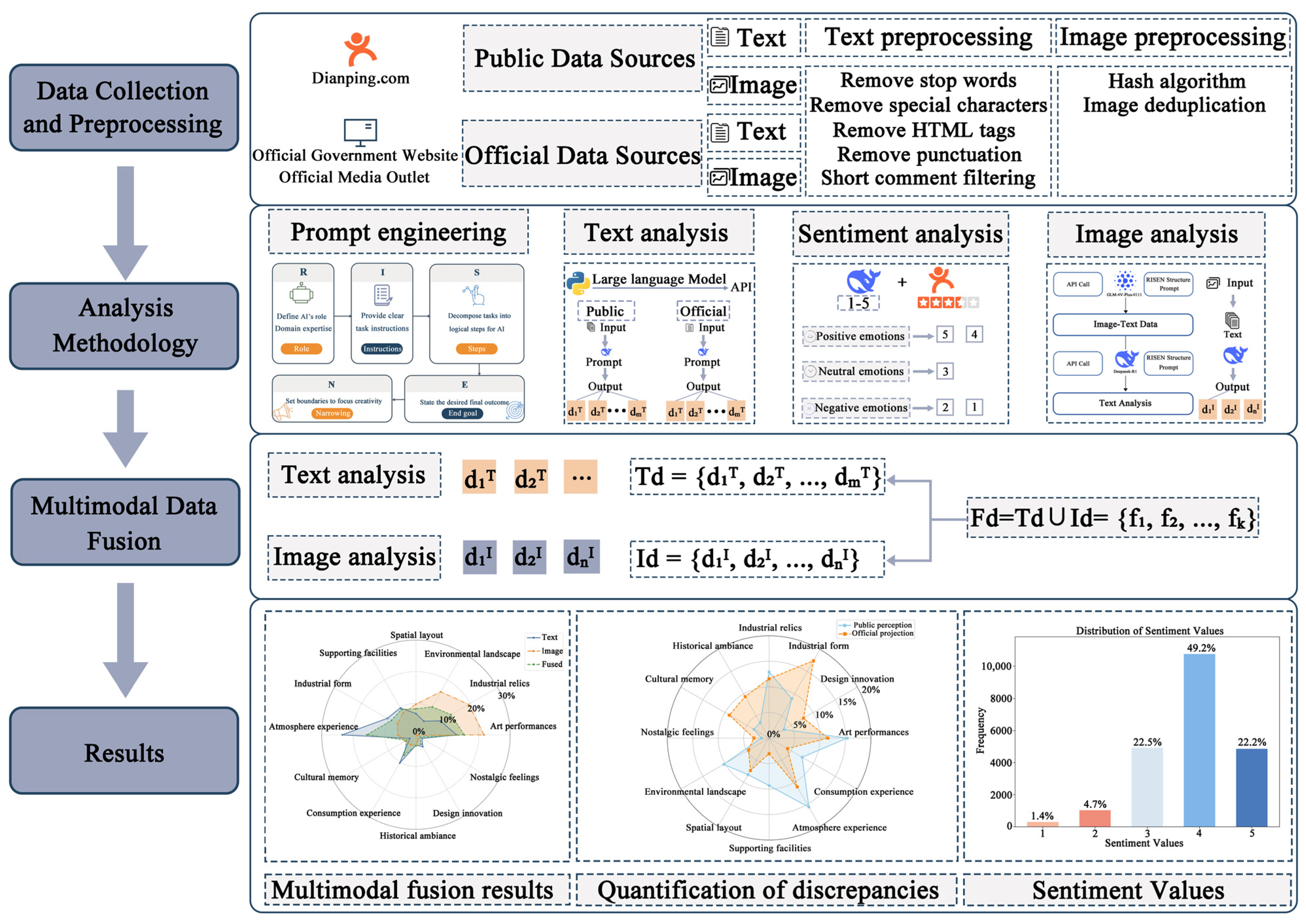
Figure 1. Research framework. Data sources: official projections (n = 320 texts, n = 470 images) and public perceptions (n = 21,914 reviews, n = 99,064 images). Data collection spans 1 January 2019, to 31 January 2025.
Land 14 02371 g001
Figure 2. Study area.
Land 14 02371 g002
Figure 3. (a) public online review; (b) Official website’s content.
Land 14 02371 g003
Figure 4. RISEN prompt engineering.
Land 14 02371 g004
Figure 5. Image analysis process.
Land 14 02371 g005
Figure 6. Multimodal data processing.
Land 14 02371 g006
Figure 7. (a) Statistical results of public perceptions; (b) statistical results of official projections.
Land 14 02371 g007
Figure 8. Dimensions of Public Perceptions versus Official Projections.
Land 14 02371 g008
Figure 9. (a) Sentiment values distribution; (b) user ratings distribution.
Land 14 02371 g009
Table 1. Introduction to the five parks used in this study.
Park NameArea
(Hectare)
Geographic LocationBrief Introduction
Dahua 19358.7Shaanxi ProvinceDahua 1935, originally Chang’an Dahua Textile Mill, has been transformed into a cultural and commercial complex centered on industrial heritage renovation and adaptive reuse. It integrates urban consumption functions such as fashion, dining, culture, entertainment, and tourism.
Taoxichuan Creative Industry Park8.9Jiangxi ProvinceTaoxicuan is based on the protection and utilization of ceramic industrial heritage. It offers diverse business forms, including Taoxicuan cultural and art space, social spaces, research study base, and other industry forms.
Canal Hub 19586.2Jiangsu ProvinceCanal Hub 1958, originally a historic steel industrial plant along the Wuxi canal. It integrates diverse scenarios including cultural and creative arts, specialty dining, leisure and social spaces, family-friendly interactions, trendy retail.
Eastern Suburb Memory20Sichuan ProvinceEastern Suburb Memory integrates art exhibitions, industrial heritage, graffiti walls, commercial spaces, and more into a multifunctional cultural district.
M50 Creative Industry Park4.1ShanghaiM50 Creative Industrial Park is one of the most iconic examples of industrial heritage revitalization in Shanghai. It has established a diverse ecosystem integrating contemporary art, creative design, and cultural consumption.
Table 2. Perceptual dimension system.
DimensionSub-DimensionAbbreviationExplainExamples
Cultural value of heritageIndustrial relicsIRPhysical remains of industrial civilizationProduction facilities, industrial equipment, and factory buildings
Historical ambianceHAConveying historical authenticity and temporal accumulation.History, sense of era, mottled traces
Cultural memoryCMThe intangible cultural values and spiritual values of industrial heritage.Culture, memory, inheritance, and spirit
Nostalgic feelingsNFEvoking collective nostalgia through recognizable industrial symbols, fostering emotional connection and identity.Nostalgia, the past, reminiscence, emotional belonging
Spatial environmental perceptionSpatial layoutSLIndustrial architectural and renovation design, reflecting style and layout features.Style, materials, renovation design, layout, structure
Environmental landscapeELThe integrated landscape system within the creative industry parks site, including lighting, sculptures and greenery.Environment design, lighting, sculptures, nightscape, greenery
Creative industry formArt performancesAPIndustrial spaces hosting artistic creation and exhibitions.Art exhibitions graffiti, theaters, performances
Design innovationDICreative clusters that driving the functional transformation and innovation within industrial heritage.Design studios, innovation hubs, creative incubators
Industrial formIFAgglomeration, diversity, operational vitality, and development potential of creative industries.Industrial clusters, diverse business formats, operational status
Service experience perceptionSupporting facilitiesSFBasic services such as catering, transportation, navigation, and convenient facilitiesShops, transportation, parking lots, recreational facilities, navigation, restrooms
Atmosphere experienceAESocial interaction, check-in behavior, and emotional experiencesInternet-famous spaces, photography, check-in, vibrant ambiance
Consumption experienceCEPerception of the scene, price judgment, price sensitivity, and willingness to pay in cultural consumptionprice-performance ratio, cultural and creative, products
Table 3. Text analysis prompt engineering.
Framework PartPublic’s Text AnalysisOfficial’s Text Analysis
RoleRole: You are an expert in destination image perception, specializing in industrial tourism, with expertise in:
  • Destination image theory.
  • Specialize in text analysis and multi-dimensional perception analysis from user-generated content.
Role: You are an expert in destination image perception, specializing in industrial tourism, with expertise in:
  • Destination image theory.
  • Specialize in text mining and multi-dimensional perception analysis.
  • Understanding the narrative structure of the official discourse system.
InstructionsYour task is to analyze the text reviews
in depth. Specific tasks are matching the
text reviews to perceptual dimensions
and providing confidence levels,
ultimately outputting up to three valid
matching dimensions.
Your task is to analyze the official text in depth. Specific tasks include splitting long texts into smaller chunks based on semantic boundaries;
matching the text content to perceptual dimensions and providing confidence levels; ultimately outputting up to three valid matching dimensions.
Steps
  • Text preprocessing: Identify the core semantic content of text reviews.
  • Perceptual dimension matching: identify keywords and semantic features in the text. Match them with perceptual dimensions and output confidence levels (0.0–1.0). Filter the dimensions with a confidence level ≥ 0.6 as valid matches.
  • Result output: sorted by confidence level in descending order (up to 3 dimensions).
  • Text preprocessing and segmentation: Identify the core content of the official text. Segment the text by detecting semantic boundaries (such as topic change points), and ensure the meaning remains intact.
  • Perceptual dimension matching: identify keywords and semantic features within the segmented text. Match them with perceptual dimensions and output confidence levels (0.0–1.0). Filter the dimensions with a confidence level ≥0.6 as valid matches.
  • Result output: sorted by confidence level in descending order (up to 3 dimensions).
End GoalOutput structured analysis results, including perceptual dimensions matching and confidence levels (sorted in descending order). The results must be presented in a modularized and clearly structured format to ensure effective text analysis.Output structured analysis results, including perceptual dimensions matching and confidence levels (sorted in descending order). The results must be presented in a modularized and clearly structured format to ensure effective text analysis.
Narrowing
  • All matches are restricted to the perceptual dimensions listed in Table 2.
  • Output formatted in Markdown.
  • Splitting based on the semantic boundaries to recognize key topic changes.
  • All matches are restricted to the perceptual dimensions listed in Table 2.
  • Output formatted in Markdown.
InputInput data: Text reviews posted by the public on the Dianping platform.
“It is rich in artistic atmosphere, can be regarded as the most instagrammable spot, which is great for wandering around.”
Input data: Official text content published on the platform.
“Relevant data show that more than 300 enterprises have settled in this park … In 2025, Chengdu International Fashion Industrial Park will continue to promote digital transformation and introduce more international digital art exhibitions.”
OutputComment Number: 1
Primary Dimension: Atmospheric experience
Confidence Level: 0.9
Secondary Dimension: Art performances
Confidence Level: 0.8
Third Dimension: null
Text Number: 1
“Relevant data shows that there are more than 300 enterprises settle in this park … ”
Primary Dimension: Industrial form
Confidence Level: 0.9

Text Number: 2
“The proportion of business formats such as modern fashion, creative design, cultural and tourism consumption continues to expand … ”
Primary Dimension: Industrial form
Confidence Level: 0.9

Text Number: 3
“In 2025, Chengdu International Fashion Industrial Park will give full play to the “early advantage” of digital transformation and development … ”
Primary Dimension: Art performances
Confidence Level: 0.9
Table 4. Five-point Likert scale for measuring the performance of sentiment.
Sentiment ValuesUser Star
Ratings
Sentiment LabelQuantitative Basis
55, 4.5Very Positive“very/too/extremely/completely” + positive word
44, 3.5Positive“Quite/comparatively/kinda/quite” + positive word
33, 2.5NeutralNo clear emotional tendency or both positive and negative
22, 1.5NegativeAdverbs of degree + negative words
11, 0.5Very NegativeStrong adverbs + negative words
Table 5. Image analysis prompt engineering.
Step 1: Image-Text Prompt Engineering.
RoleRole: You are an expert in destination image perception, specializing in industrial tourism, with expertise in:
  • Destination image theory.
  • Specialize in visual feature identify and multi-dimensional perception analysis.
InstructionsYour task is to recognize the core visual elements and key content within the image and generate semantically rich and coherent visual description text.
Steps
  • Image feature identify: the core visual content of the image is recognized by the enhanced visual module;
  • Text generation: visual features are transformed into semantically rich and coherent text descriptions by the language generation module.
End GoalOutput structured analytical results, comprising the image sequence number and the image description content, to facilitate the transformation from image to text.
NarrowingThe description should be based on the visual elements visible in the image, and any speculation or derivation is prohibited.
Output formatted in Markdown.
Input dataImage data released on the platforms by both the public and official.
InputLand 14 02371 i001Land 14 02371 i002Land 14 02371 i003
OutputThere is a red mechanical device located on a circular grassy area.

The mechanical device appears to be part of a large grab bucket or crane, with a vibrant color.
The scene shows an indoor space with multiple paintings hanging on the wall, each varying in style and rich in color. The floor is gray, and several large metal frames are positioned within the space.This picture depicts a modern architectural structure with a distinct industrial design style.

The building primarily consists of a metal framework with multiple floors inside.
Step 2: Text analysis prompt engineering.
RoleConsistent with the text analysis role description.
InstructionsYour task is to analyze the text in depth. Matching the text content with perceptual dimensions and outputting the best-matched dimension along with its confidence levels.
Steps
  • Text preprocessing: Identify the core semantic content of text reviews.
  • Perceptual dimension matching: identify keywords and semantic features in the text. Match them with 12 perceptual dimensions and output confidence levels (0.0–1.0). Filter the dimensions with a confidence level ≥0.6 as valid matches.
  • Result output: match the dimension with the highest confidence level, selecting at most one dimension.
End goalOutput structured analysis results, including image sequence number, perceptual dimensions matching and confidence levels. The results must be presented in a modularized and clearly structured format to effectively accomplish image-text analysis.
Narrowing
  • All matches are restricted to the perceptual dimensions listed in Table 2.
  • Match at most one dimension
  • Output formatted in Markdown.
InputImage Serial Number:
1328776515.0_1
There is a red mechanical device located on a circular grassy area…
Image Serial Number:
1792521113.0_0
The scene shows an indoor space with multiple paintings hanging on the wall…
Image Serial Number:
1529806494.0_2
This picture depicts a modern architectural structure…
OutputImage Serial Number:
1328776515.0_1
Matching dimension:
Industrial relics
Confidence Level: 0.9
Image Serial Number:
1792521113.0_0
Matching dimension:
Art performances
Confidence Level: 0.9
Image Serial Number:
1529806494.0_2
Matching dimension:
Spatial layout
Confidence Level: 0.9
Table 6. Frequency distribution and chi-square test of official projections and public perceptions across dimensions.
DimensionSub-DimensionOfficial ProjectedPublic Perceivedχ2pφ
FrequencyPercentageFrequencyPercentage
Cultural value of heritageIndustrial relics69211.56%11,60012.89%8.929<0.0010.0096
Historical ambiance5639.4%31373.49%530.305<0.0010.0743
Cultural memory5409.02%30943.44%479.953<0.0010.0707
Nostalgic feelings1792.99%13721.52%75.783<0.010.0281
Total197432.97%19,20321.34%
Spatial environmental perceptionSpatial layout4397.33%74608.29%6.818<0.0010.0084
Environmental landscape2794.66%925910.29%198.752<0.0010.0455
Total71811.99%16,71918.58%
Creative industry formArt performances69111.54%13,82115.36%63.745<0.0010.0258
Design innovation4687.82%30253.36%317.698<0.0010.0575
Industrial form104417.43%80328.92%474.958<0.0010.0703
Total220336.79%24,87827.64%
Service experience perceptionSupporting facilities1833.06%83819.31%270.429<0.0010.0531
Atmosphere experience66111.04%14,07015.63%91.237<0.0010.0308
Consumption experience2494.16%67487.5%92.652<0.0010.031
Total109318.25%29,19932.44%
Disclaimer/Publisher’s Note: The statements, opinions and data contained in all publications are solely those of the individual author(s) and contributor(s) and not of MDPI and/or the editor(s). MDPI and/or the editor(s) disclaim responsibility for any injury to people or property resulting from any ideas, methods, instructions or products referred to in the content.