Article

How Bike-Sharing Affects the Accessibility Equity of Public Transit Systems—Evidence from Nanjing


1
School of Transportation, Southeast University, Nanjing 211189, China
2
Jiangsu Key Laboratory of Urban ITS, Southeast University, Nanjing 211189, China
3
Jiangsu Collaborative Innovation Center of Modern Urban Traffic Technologies, Southeast University, Nanjing 211189, China
4
Department of Logistics and Maritime Studies, Faculty of Business, The Hong Kong Polytechnic University, Hung Hom, Hong Kong
5
School of Modern Posts, Nanjing University of Posts and Telecommunications, Nanjing 210003, China
*
Author to whom correspondence should be addressed.
Land 2024, 13(12), 2200; https://doi.org/10.3390/land13122200
Submission received: 20 October 2024 / Revised: 4 December 2024 / Accepted: 10 December 2024 / Published: 16 December 2024
(This article belongs to the Special Issue Urban Land Expansion and Regional Inequality)

Abstract

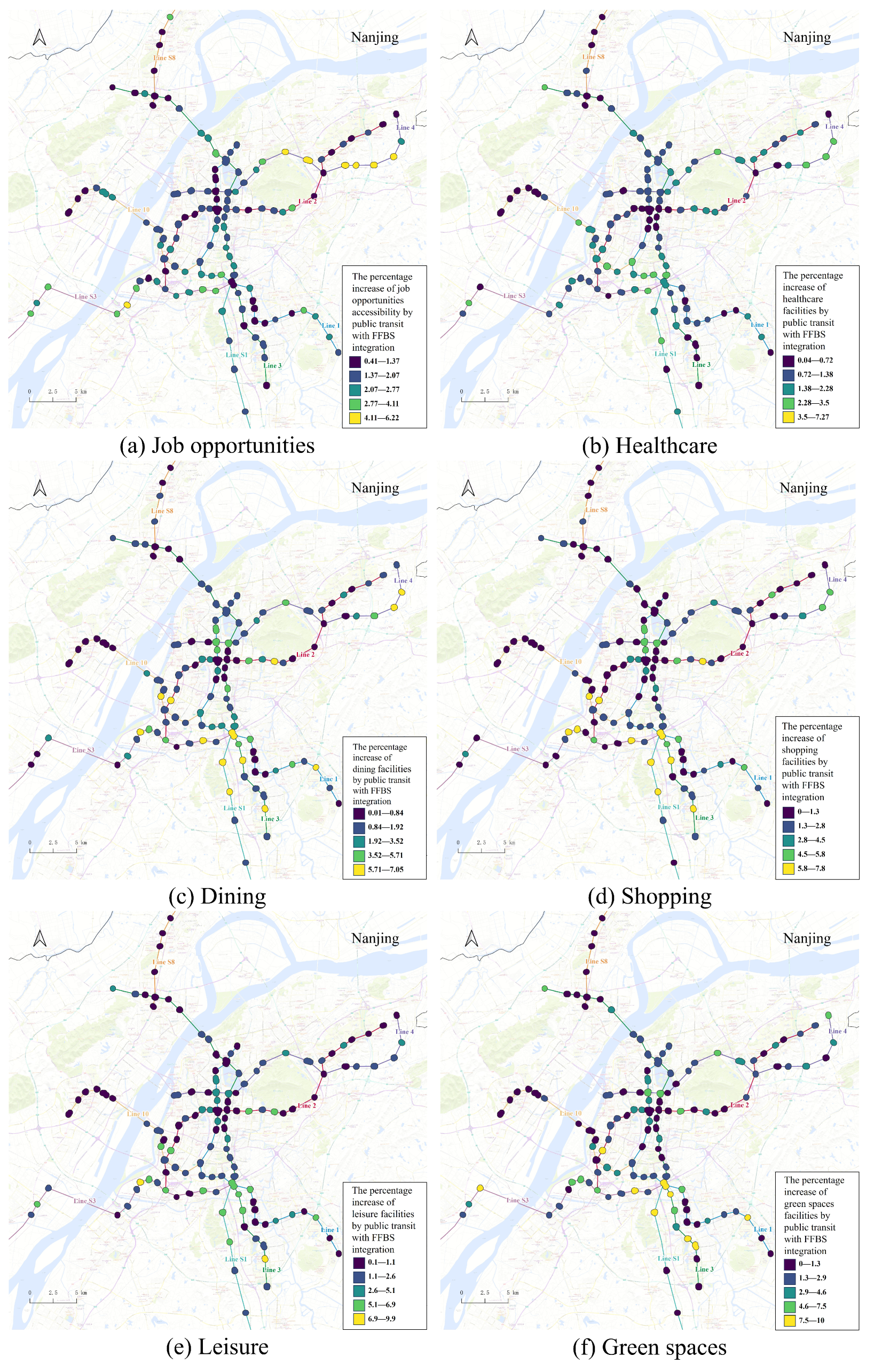
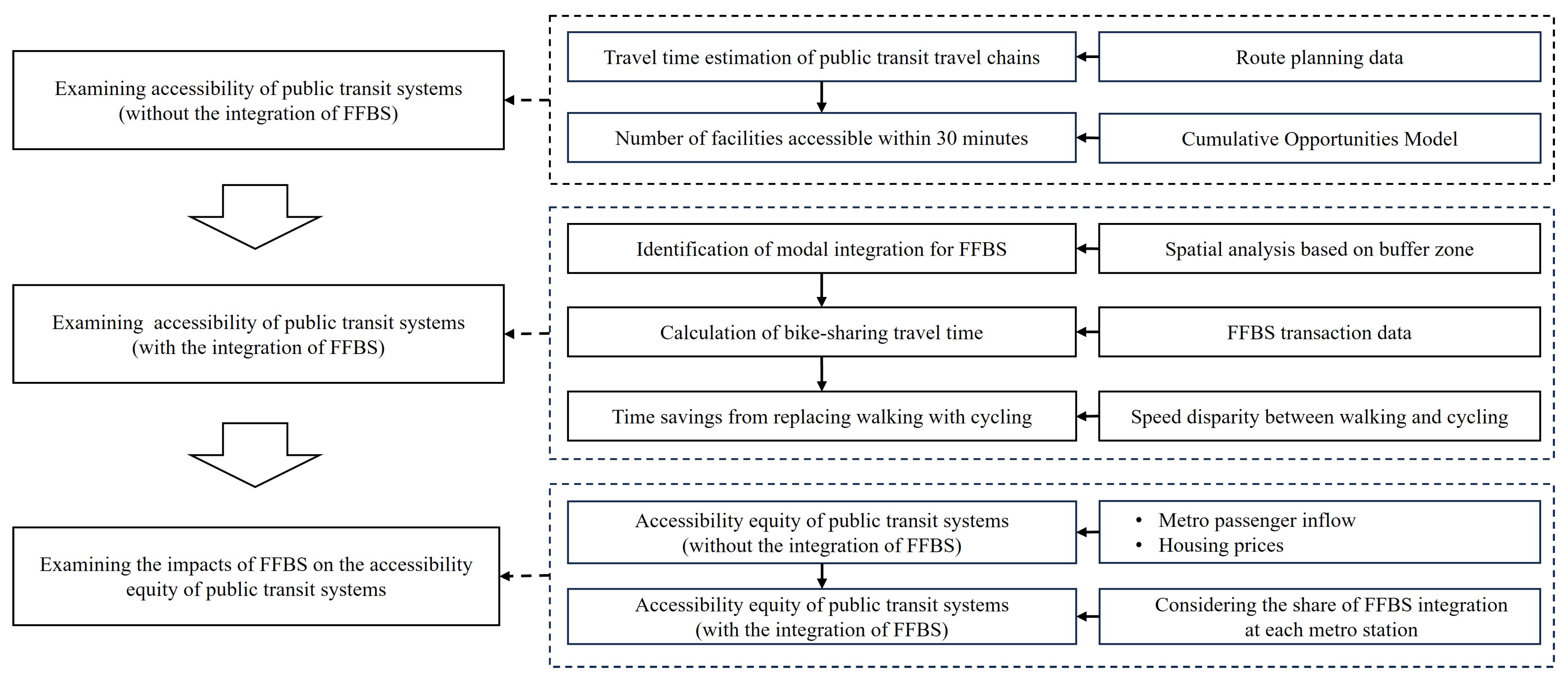
This study examines how Free-Floating Bike-Sharing (FFBS) affects the accessibility equity of public transit sytems by serving as a first-mile feeder. To evaluate accessibility improvements for various opportunities within a 30-min travel time, we construct a complete travel chain approach based on multi-source, real-world data from Nanjing, China. The results indicate that FFBS significantly enhances accessibility, particularly for job opportunities and green spaces, with improvements of up to 180.02% and 155.82%, respectively. This integration also enhances the accessibility equity of public transit systems, particularly in green spaces, with a Gini coefficient improvement of 0.0336. Additionally, we find that areas with low housing prices exhibit greater accessibility inequality, while those with moderate housing prices benefit more from FFBS integration. These findings can potentially support transport planners in optimizing and managing FFBS and public transit systems to facilitate sustainable and inclusive transportation networks.
Keywords: micromobility; free-floating bike-sharing; accessibility equity; Lorenz curve; Gini coefficient micromobility; free-floating bike-sharing; accessibility equity; Lorenz curve; Gini coefficient