Article

Understanding the Normalization of Plantation Agriculture: The Case of Hass Avocado in Colombia

1
Department of Civil and Environmental, Universidad de la Costa, Calle 58#55–66, Barranquilla 080001, Colombia
2
International Ph.D. Program in Agricultural Economics, Bioeconomy and Sustainable Food Systems IPPAE, Justus-Liebig-Universität Gießen, Senckenbergstraße 3, 35390 Gießen, Germany
Land 2024, 13(11), 1911; https://doi.org/10.3390/land13111911
Submission received: 7 October 2024 / Revised: 8 November 2024 / Accepted: 12 November 2024 / Published: 14 November 2024

Abstract

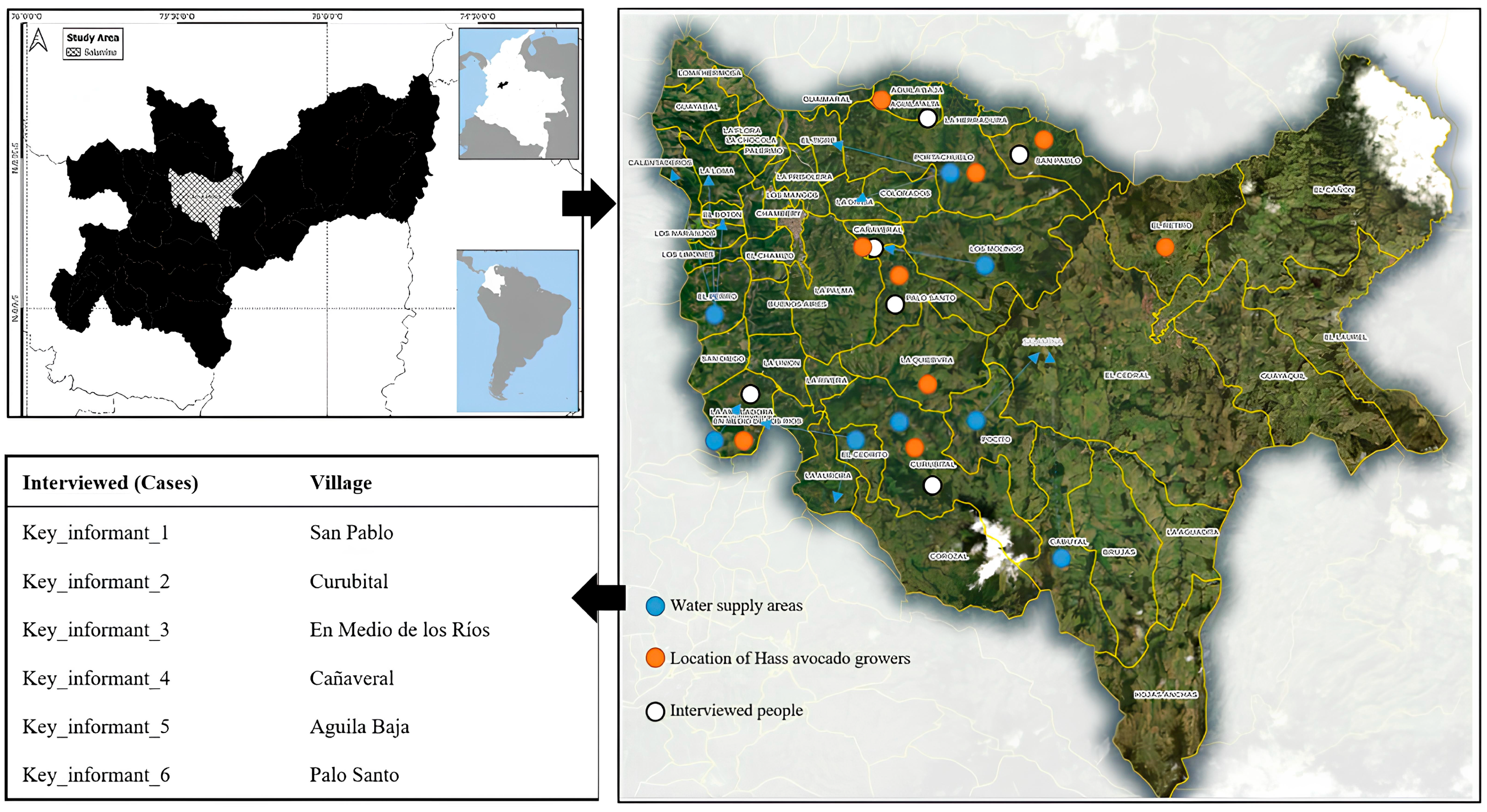
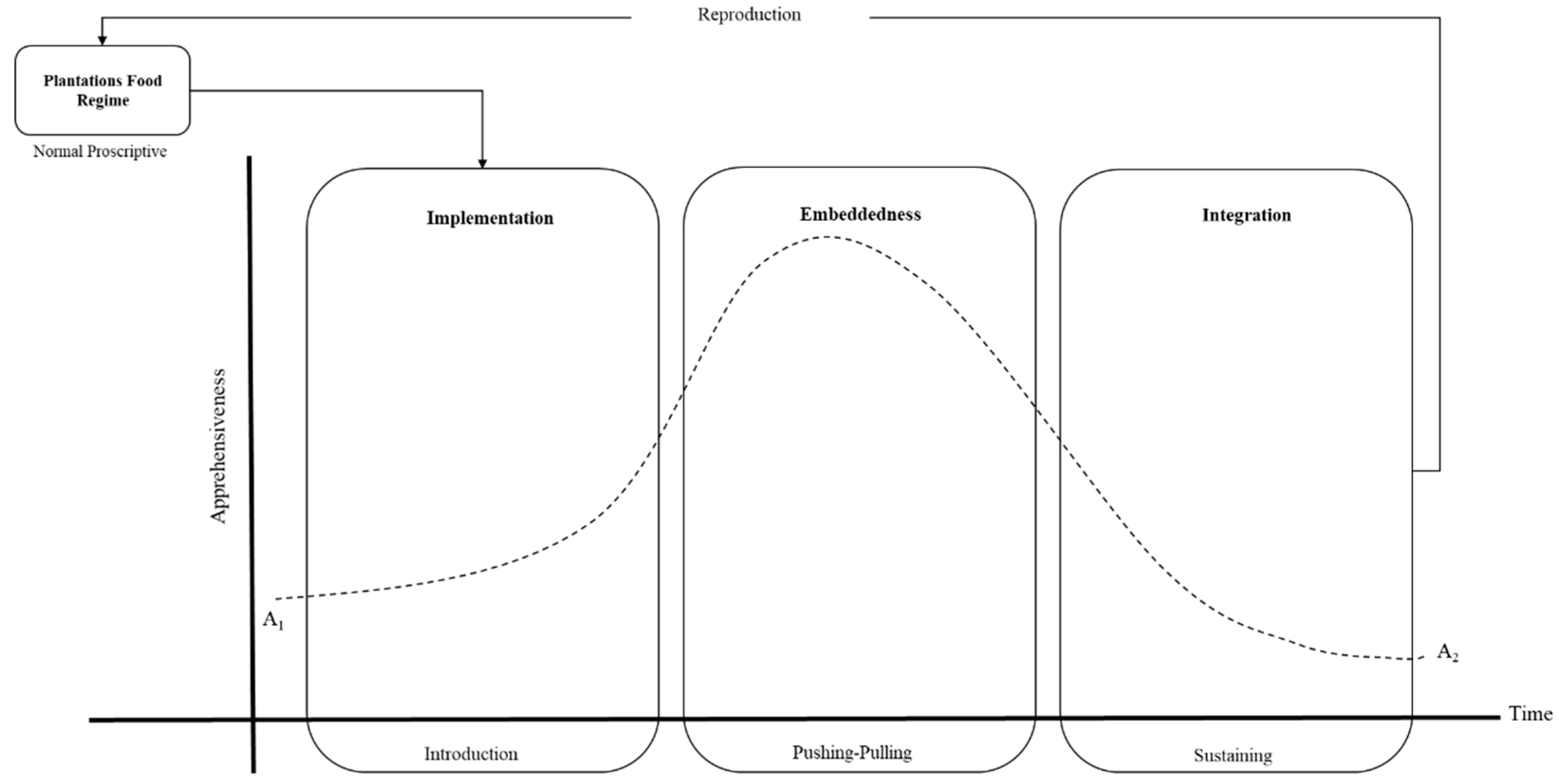
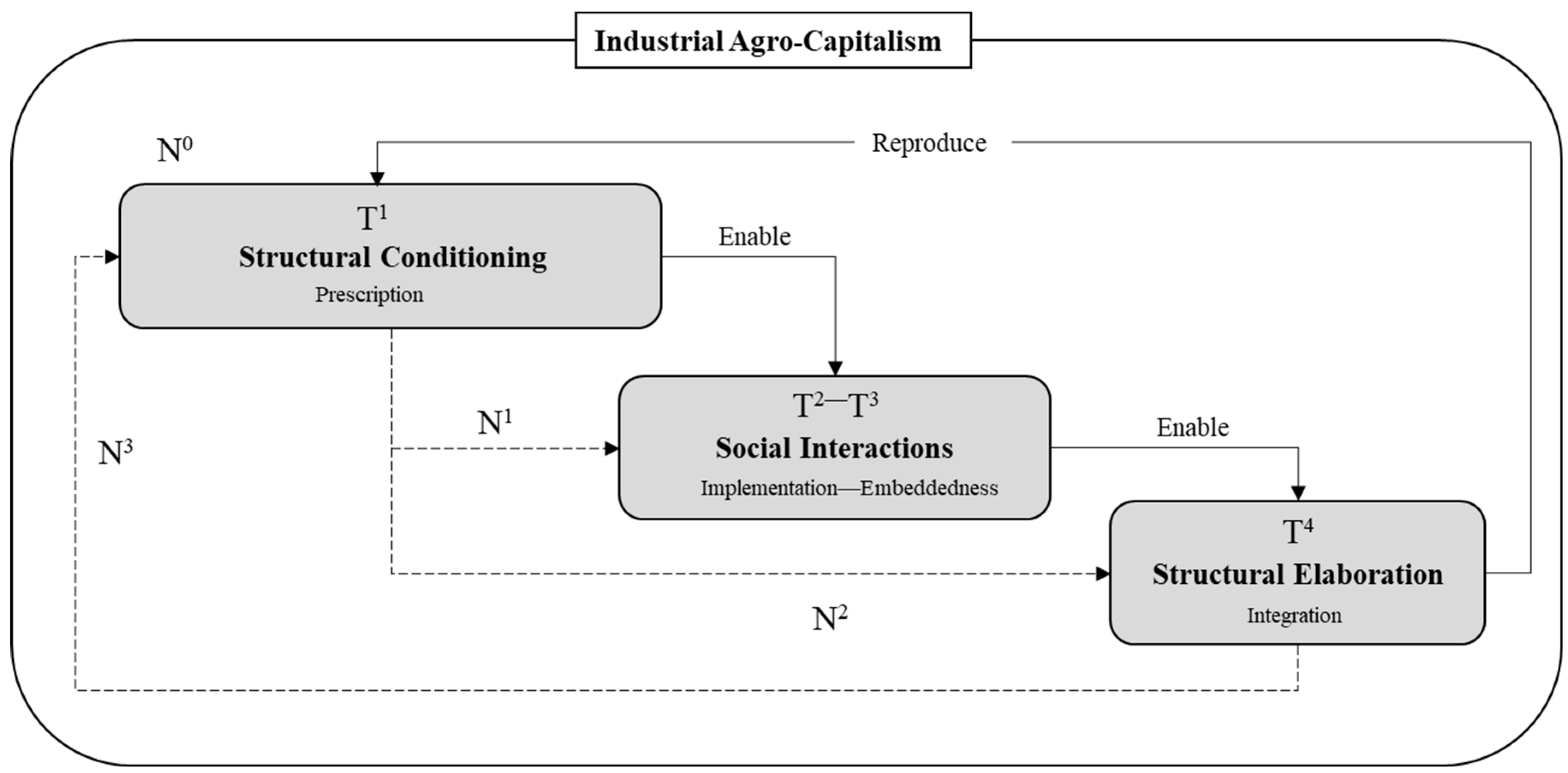
Plantations are not inherently normal, yet they have been normalized within traditional agricultural landscapes. This is the premise through which we explore why plantations thrive despite numerous social and ecological drawbacks. Accordingly, the aim of this paper is to present a framework to elucidate why Hass avocado plantations succeed, using Salamina, Colombia as a case study. We argue that these plantations prosper through a process of normalization, driven by the dynamic interplay between social structures and human agency in agriculture. Our theoretical framework regarding normalization unfolds in three stages: prescription, implementation embeddedness, and integration. To reach this outcome, we first build a theoretical foundation based on realist social theory and subsequently conduct a primarily qualitative case study, focusing on neighboring respondents to plantations for understanding the process of introduction, development, and persistence of these plantations in the landscape. Additionally, we consider supplementary interviews and secondary information to understand the context of Hass avocado expansion. We found that while normalization may appear to involve passive conformity, our analysis highlights the critical role of human agency. As our study demonstrates, agency fosters reflection and sustains various forms of resistance and counterbalance against systemic pressures. This recognition underscores the potential for proactive engagement and transformative action within agricultural systems, challenging and reshaping the prevailing norms.
Keywords: agrarian change; landscape intensification; food regime; critical realism; agency structure agrarian change; landscape intensification; food regime; critical realism; agency structure