Article

Assessing Land-Cover Changes in the Natural Park ‘Fragas do Eume’ over the Last 25 Years: Insights from Remote Sensing and Machine Learning

by
Paula Díaz-García
1 and
Adrián Regos
2,3,4,*
1
Facultade de Ciencias, Universidade da Coruña, 15071 A Coruña, Spain
2
Misión Biológica de Galicia del Consejo Superior de Investigaciones Científicas (MBG-CSIC), 36143 Santiago de Compostela, Spain
3
Centre de Ciencia i Tecnologia Forestal de Catalunya, Ctra. St. Llorenç de Morunys km 2, 25280 Solsona, Spain
4
BIOPOLIS Program in Genomics, Biodiversity and Land Planning, CIBIO/InBIO (Research Centre in Biodiversity and Genetic Resources), Campus de Vairão, 4485-661 Vairão, Portugal
*
Author to whom correspondence should be addressed.
Land 2024, 13(10), 1601; https://doi.org/10.3390/land13101601
Submission received: 14 May 2024 / Revised: 25 June 2024 / Accepted: 25 September 2024 / Published: 1 October 2024

Abstract

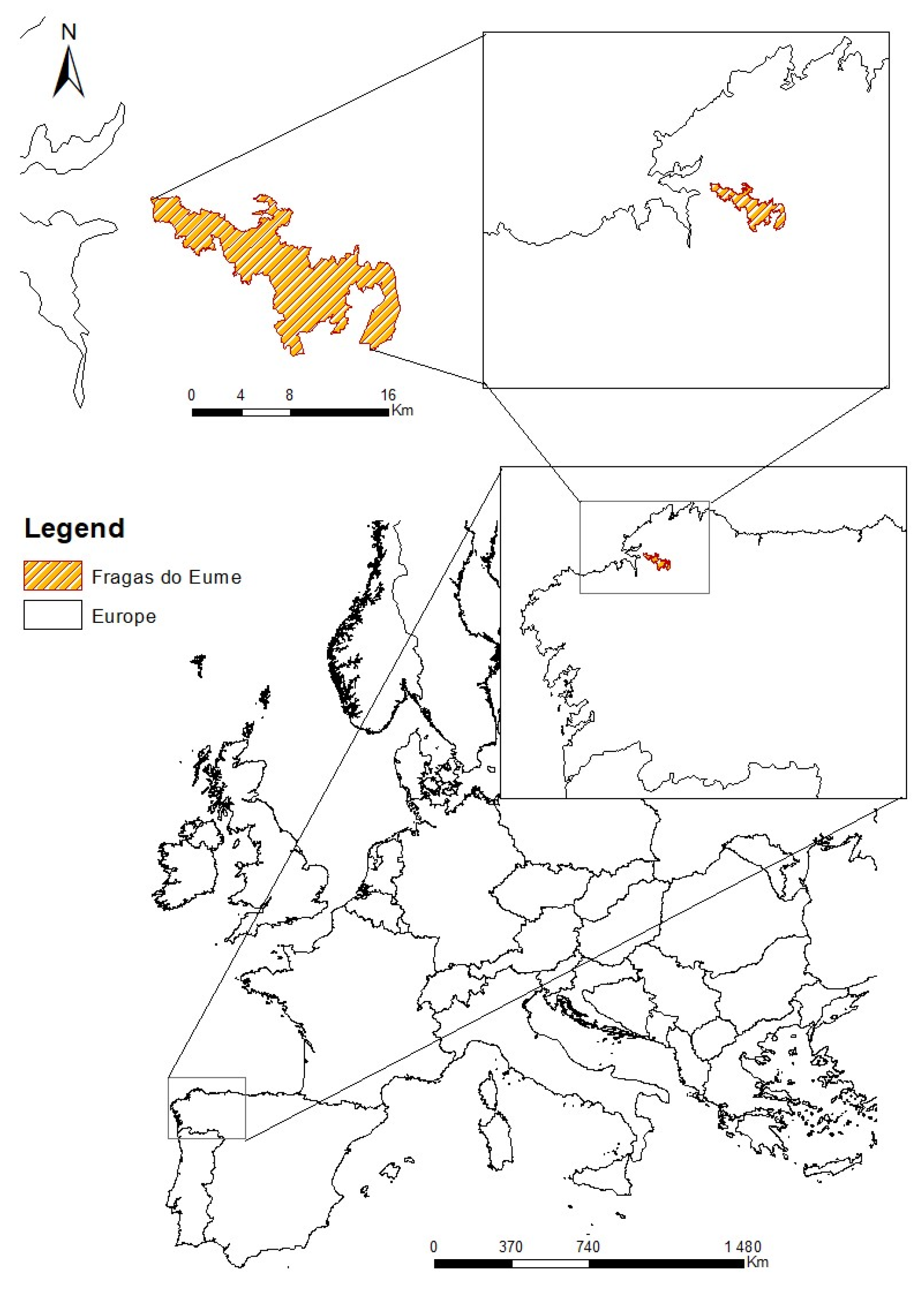
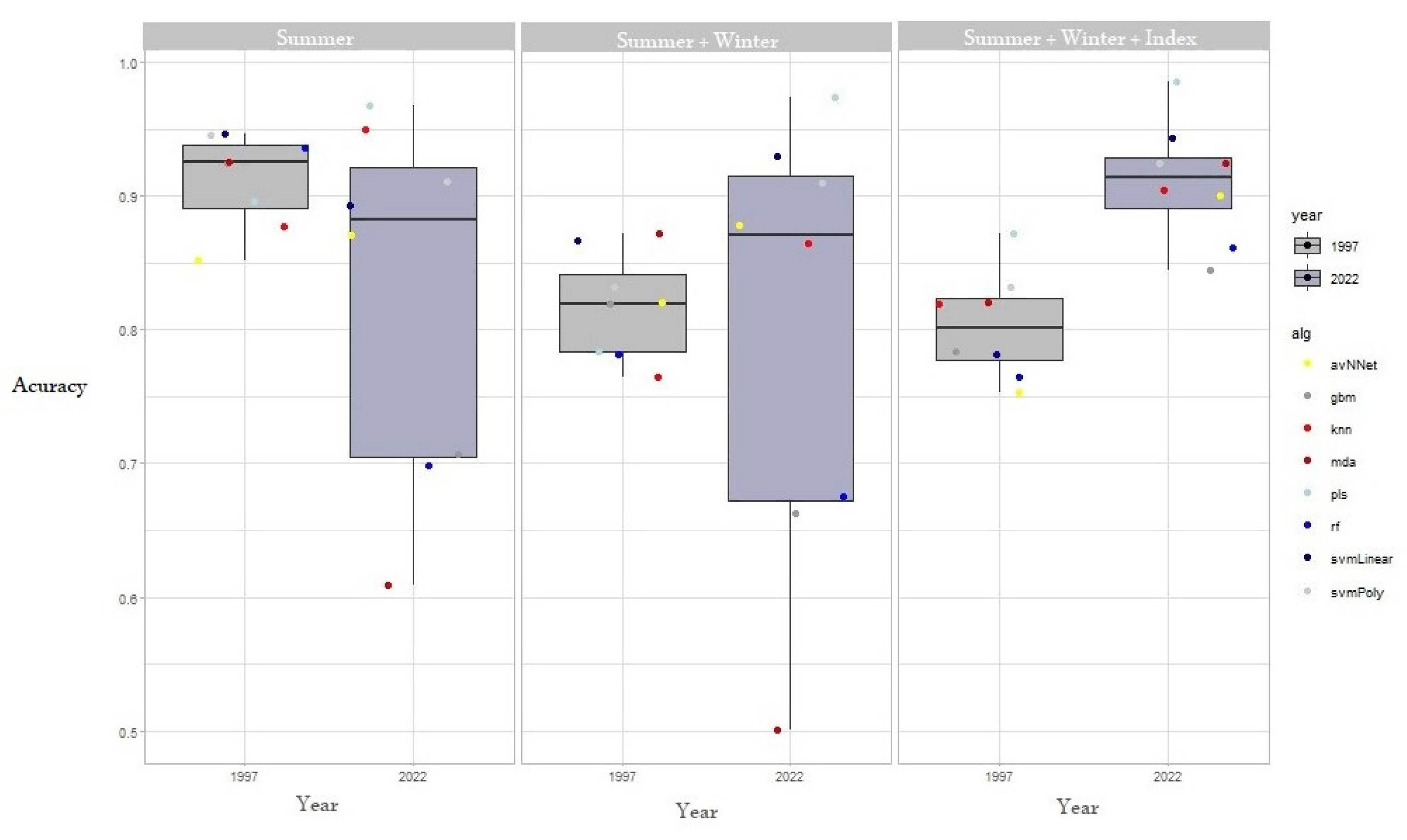
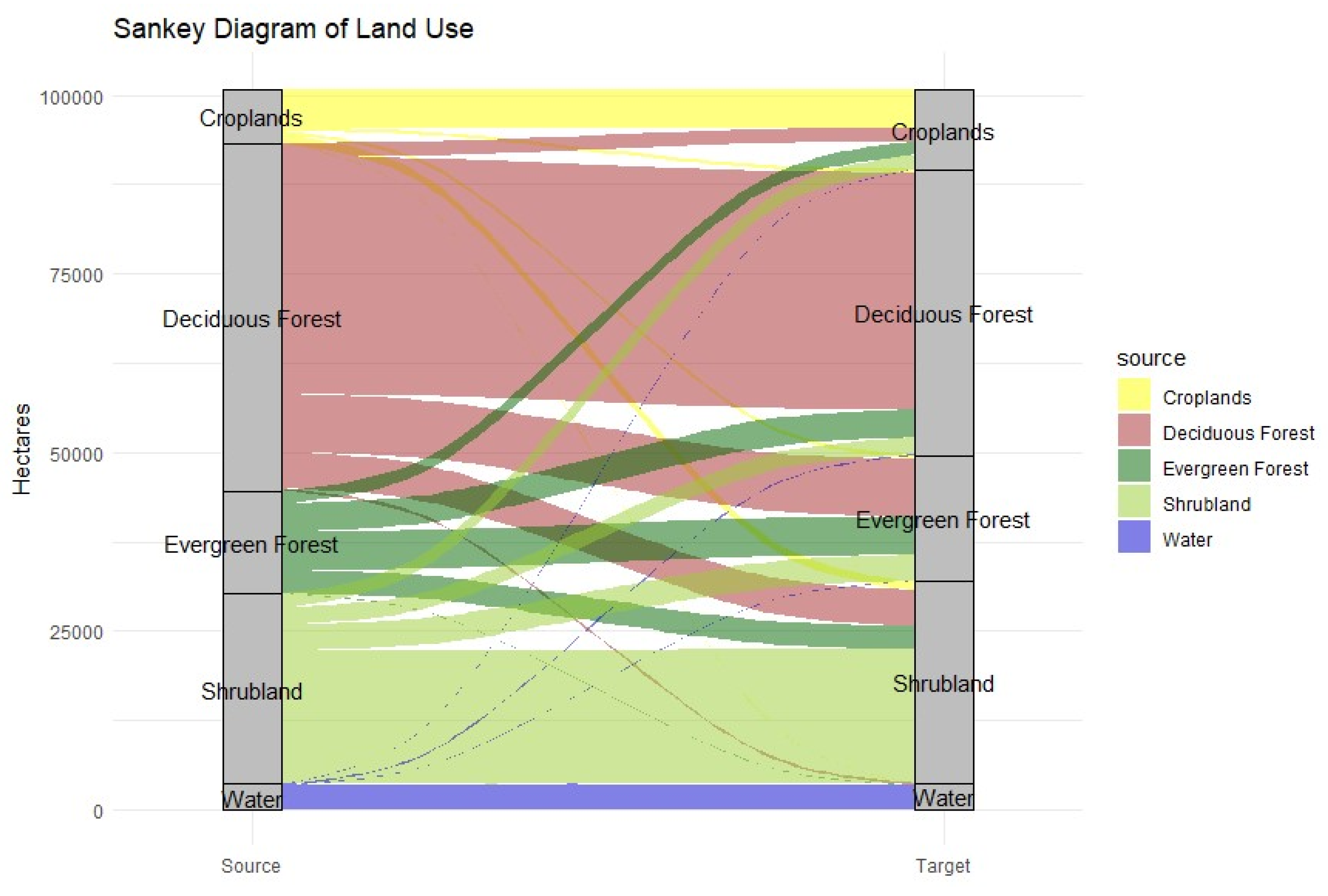
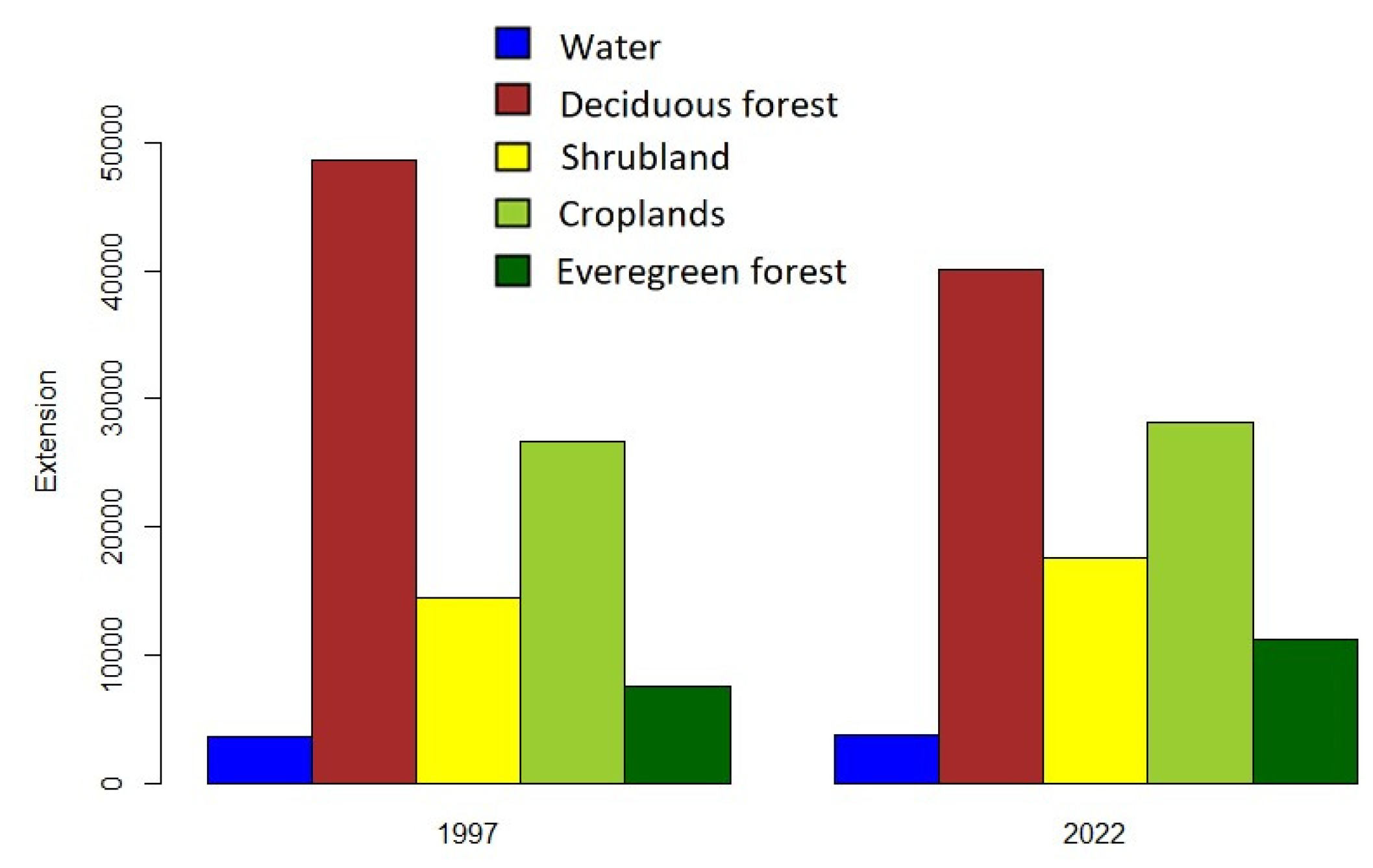
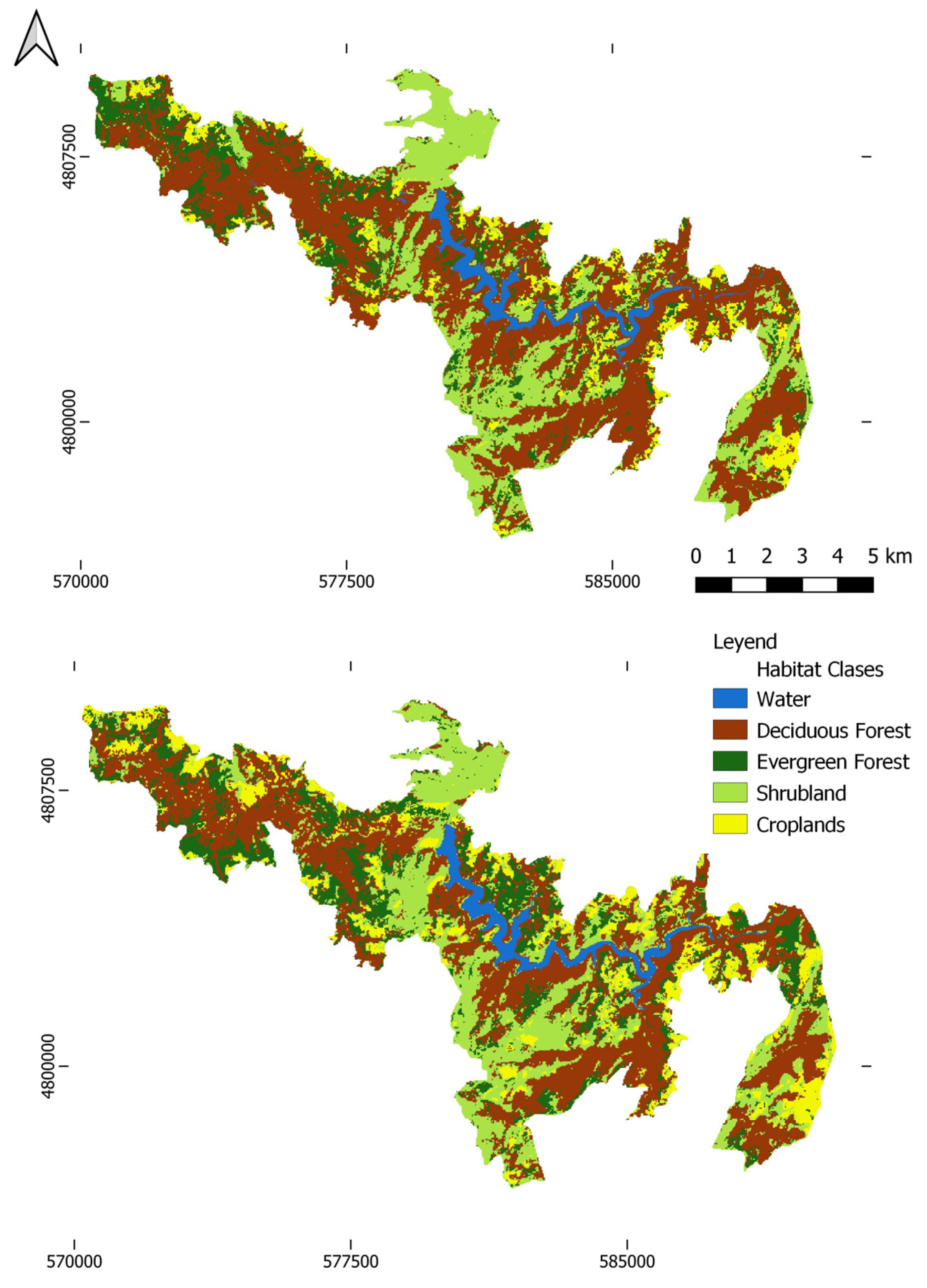
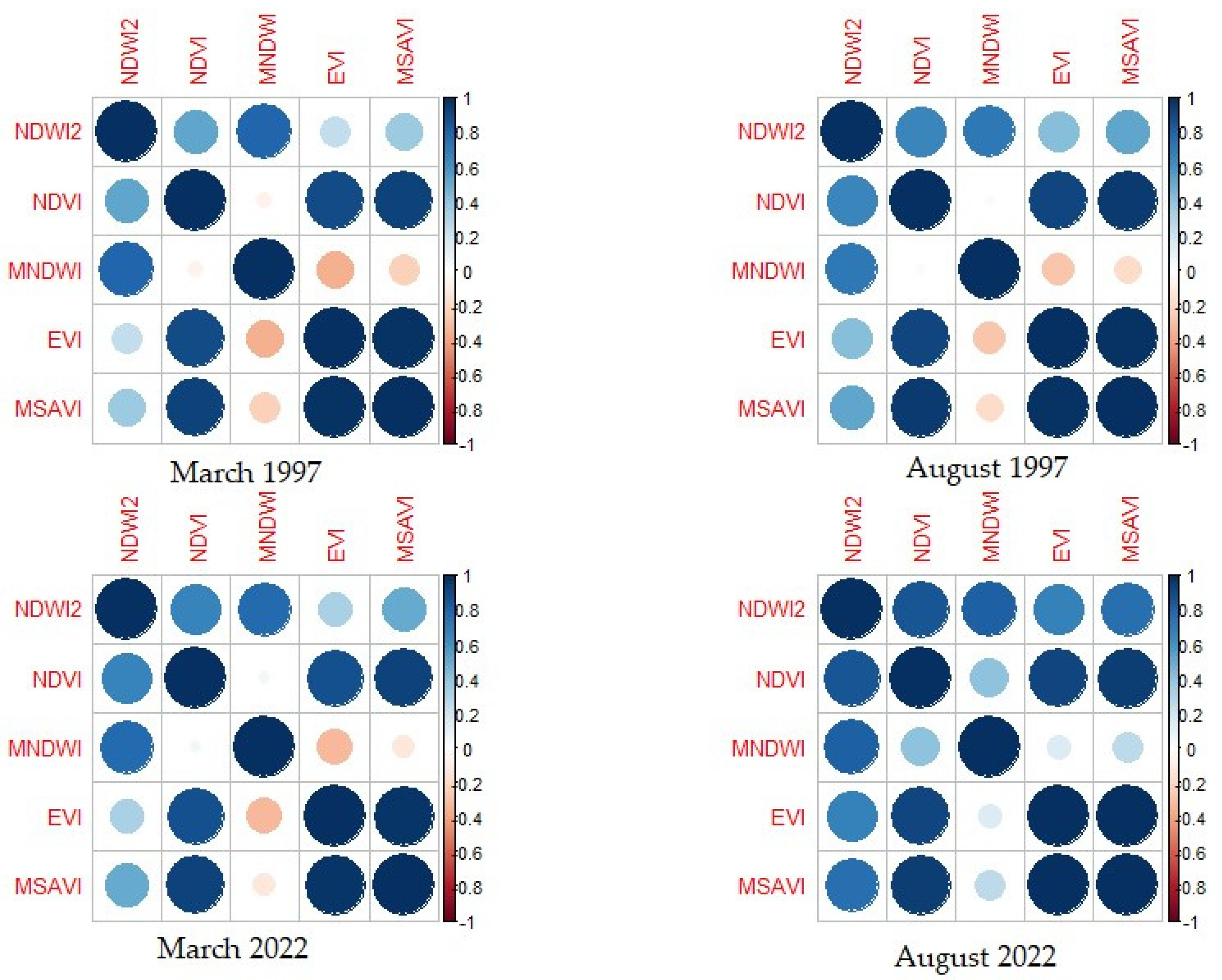
The ‘Fragas do Eume’ Natural Park includes one of the best-preserved Atlantic forests in Europe. These forests are part of the Natura 2000 Network. This scientific study focuses on analysing land-cover changes in the ‘Fragas do Eume’ Natural Park (NW Spain) over a 25-year period, from 1997 to 2022, using machine learning techniques for the classification of satellite images. Several image processing operations were carried out to correct radiometry, followed by supervised classification techniques with previously defined training areas. Five multispectral indices were used to improve classification accuracy, and their correlation was evaluated. Land-cover changes were analysed, with special attention to the transitions between eucalyptus plantations and native deciduous forests. A significant increase in eucalyptus plantations (48.2%) (Eucalyptus globulus Labill.) was observed, while native deciduous forests experienced a decrease in their extent (17.6%). This transformation of the landscape affected not only these two habitats, but also cropland and scrubland areas, both of which increased. Our results suggest that the lack of effective conservation policies and the economic interest of fast-growing tree plantations could explain the loss of native deciduous forests. The results highlight the need to implement pro-active and sustainable management measures to protect these natural forest ecosystems in the ‘Fragas do Eume’ Natural Park.
Keywords: Atlantic deciduous forests; Galicia; landsat satellite mission; long-term analysis; image classification; artificial intelligence; remote sensing Atlantic deciduous forests; Galicia; landsat satellite mission; long-term analysis; image classification; artificial intelligence; remote sensing