Article

Design Element Preferences in Public Facilities: An Eye Tracking Study

1
College of Fashion and Design, Donghua University, Shanghai 200051, China
2
School of Design, Shanghai Jiao Tong University, Shanghai 200240, China
*
Authors to whom correspondence should be addressed.
Land 2023, 12(7), 1411; https://doi.org/10.3390/land12071411
Submission received: 9 June 2023 / Revised: 11 July 2023 / Accepted: 12 July 2023 / Published: 14 July 2023
(This article belongs to the Special Issue Landscape Architecture and Design in Urban and Peri-Urban Environment)

Abstract

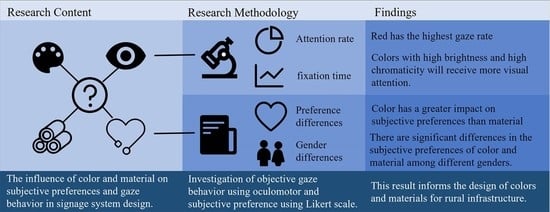
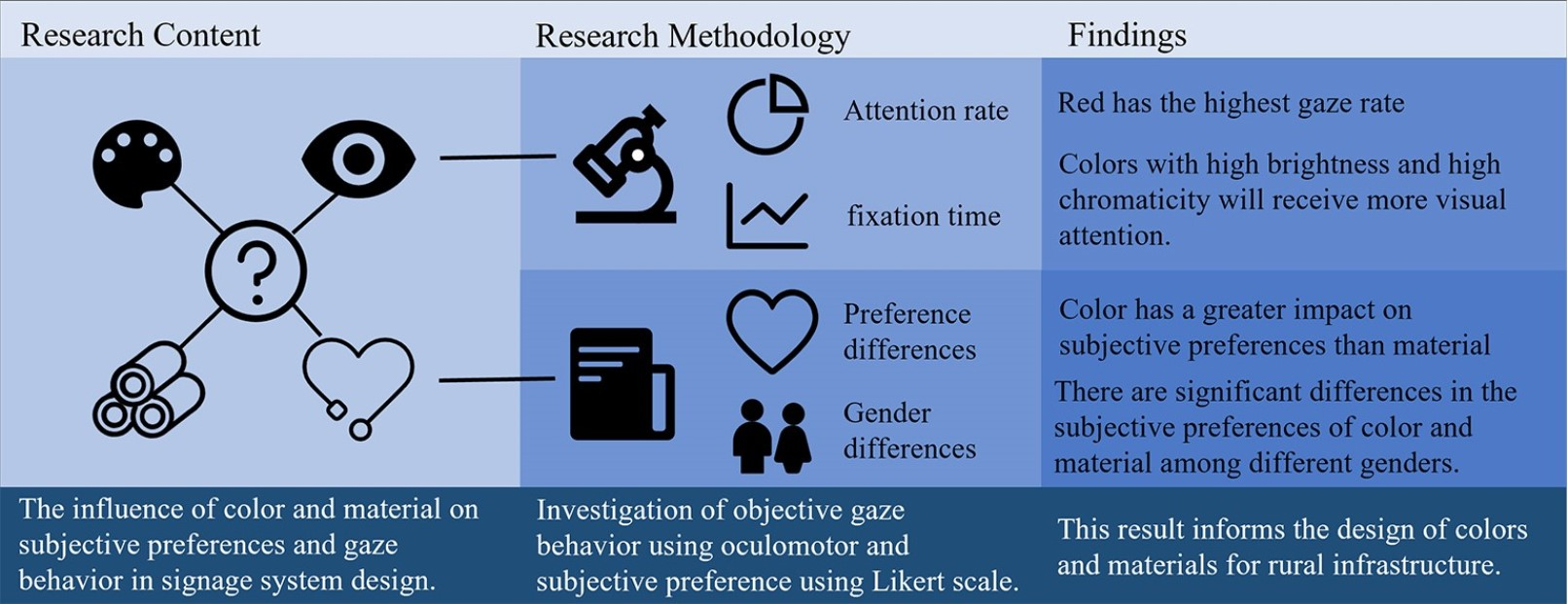
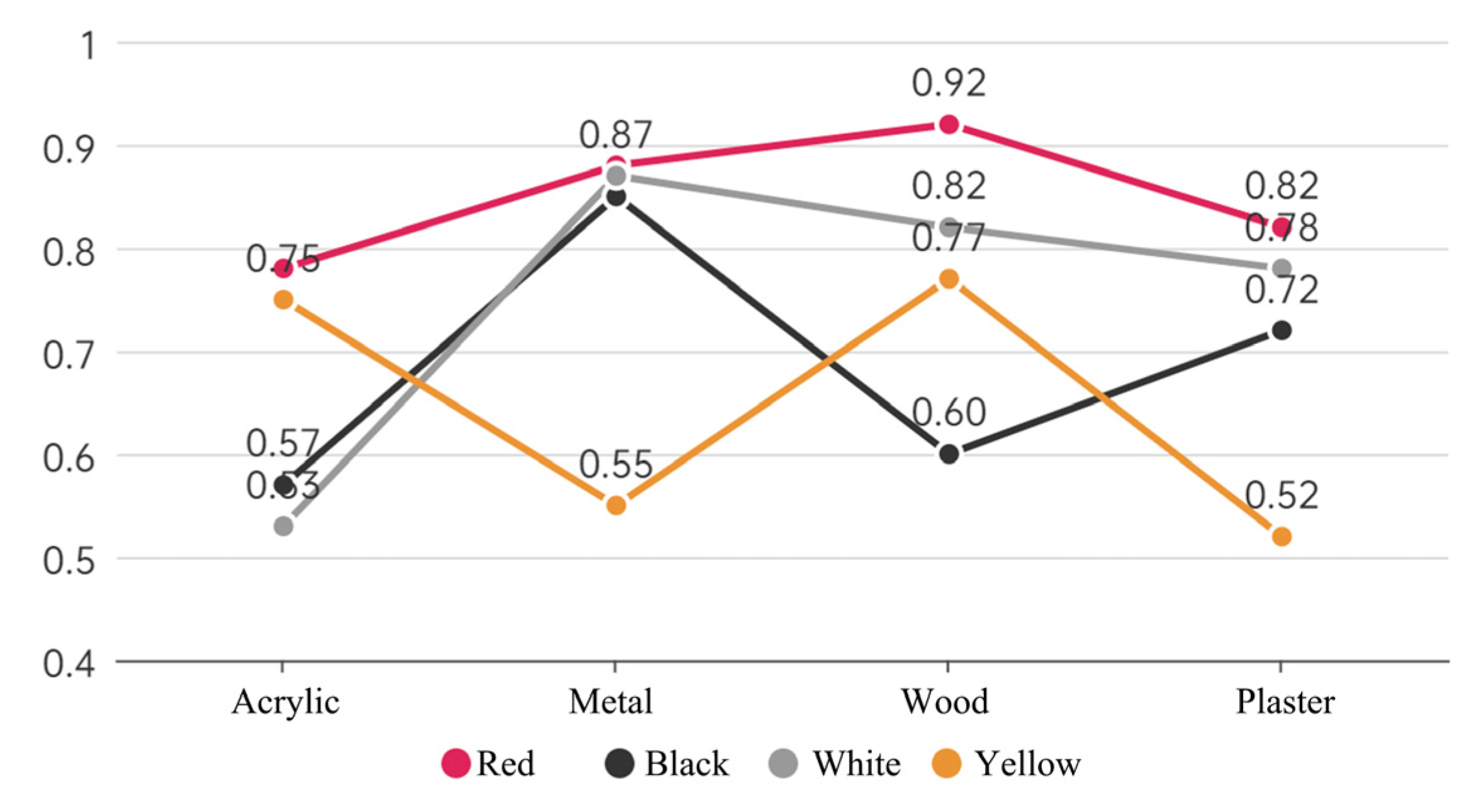
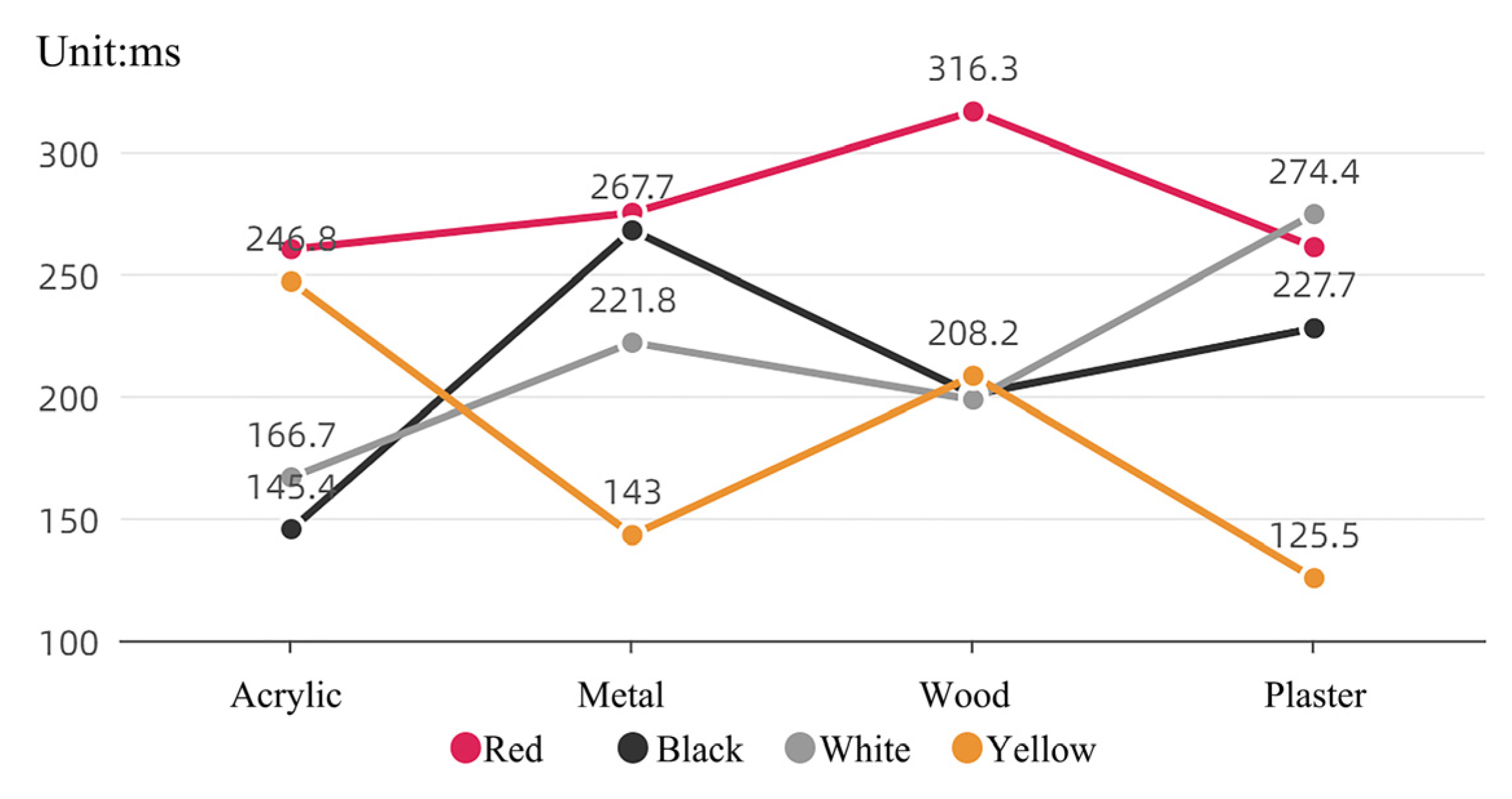
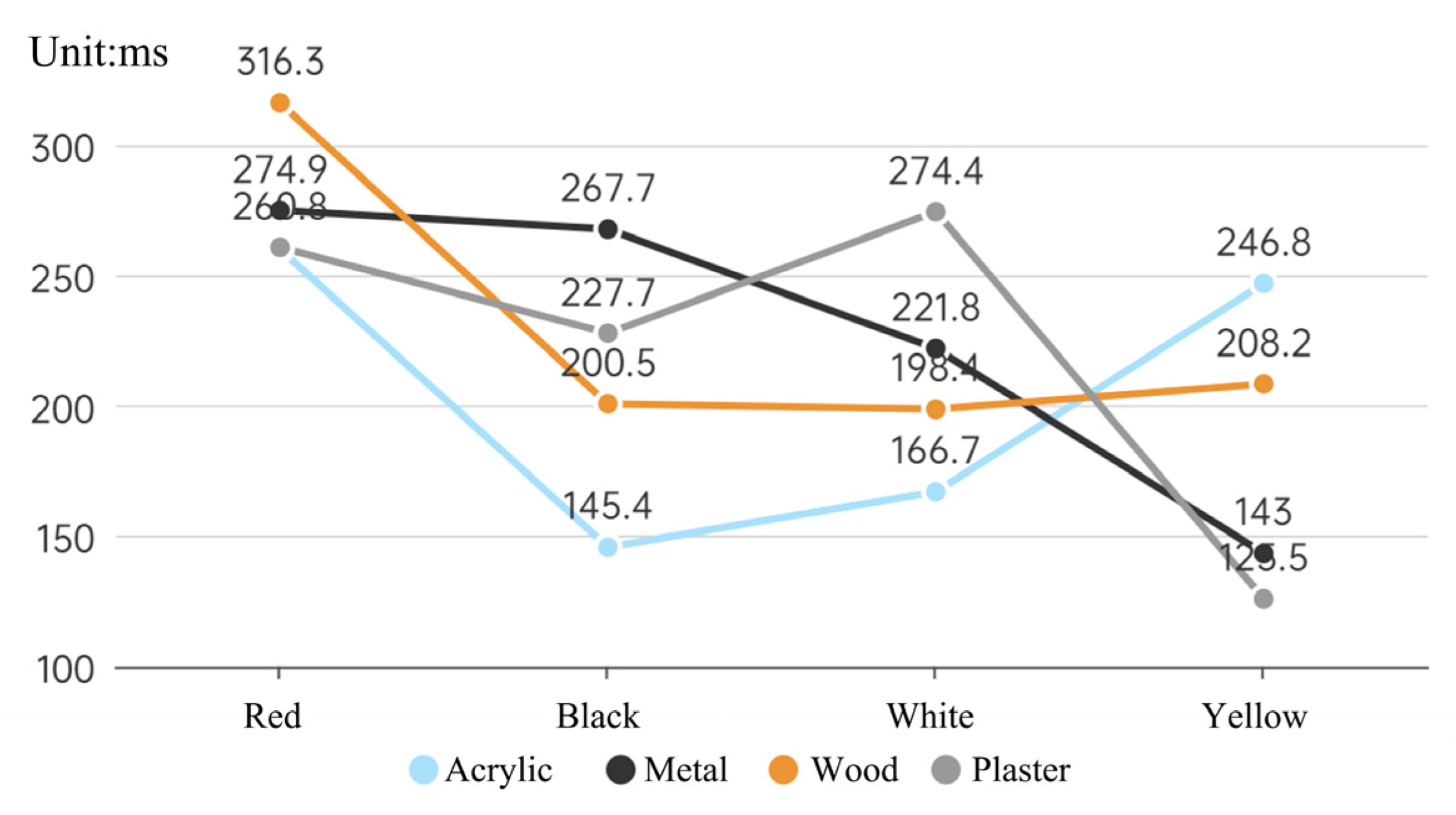
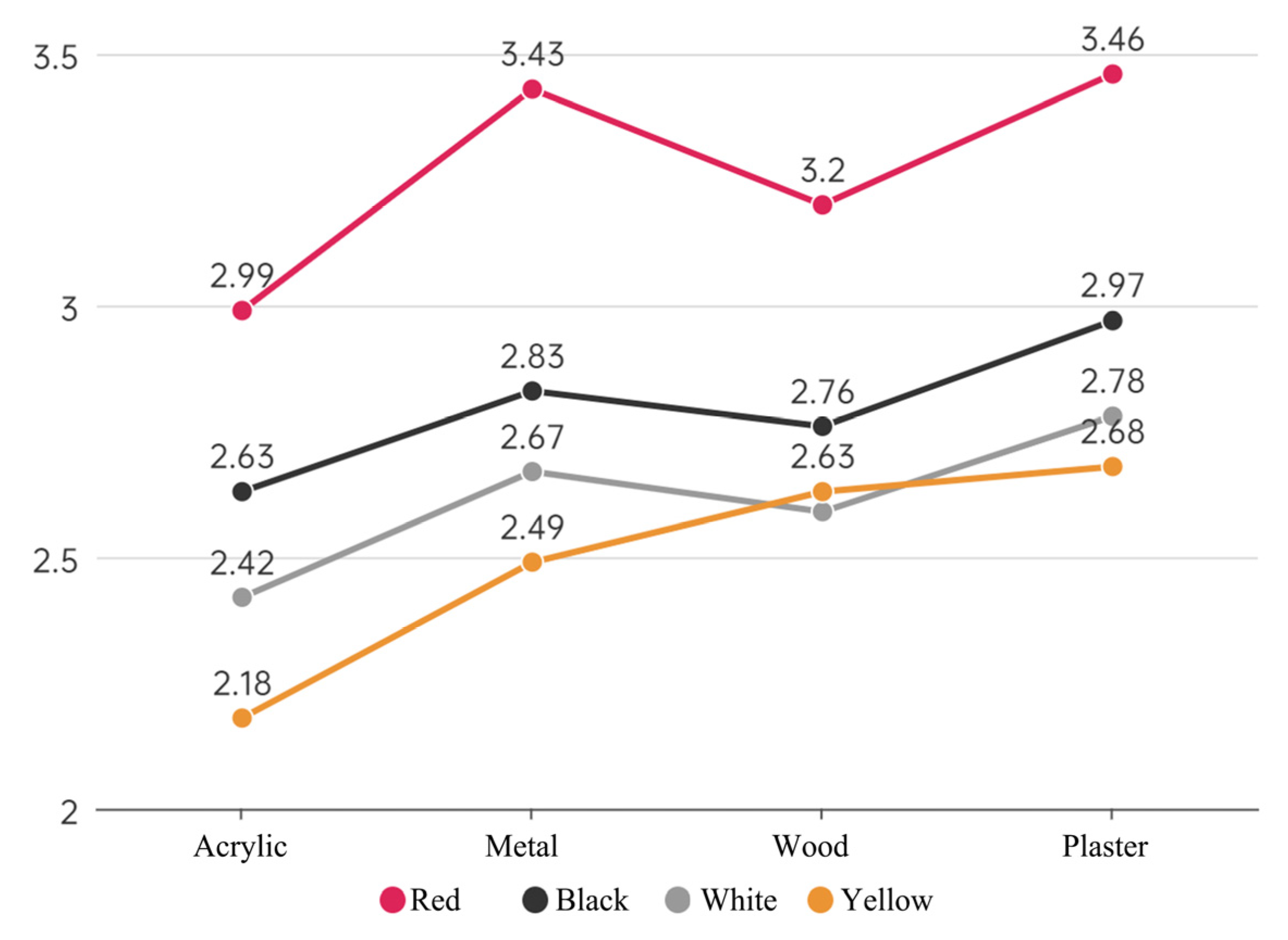
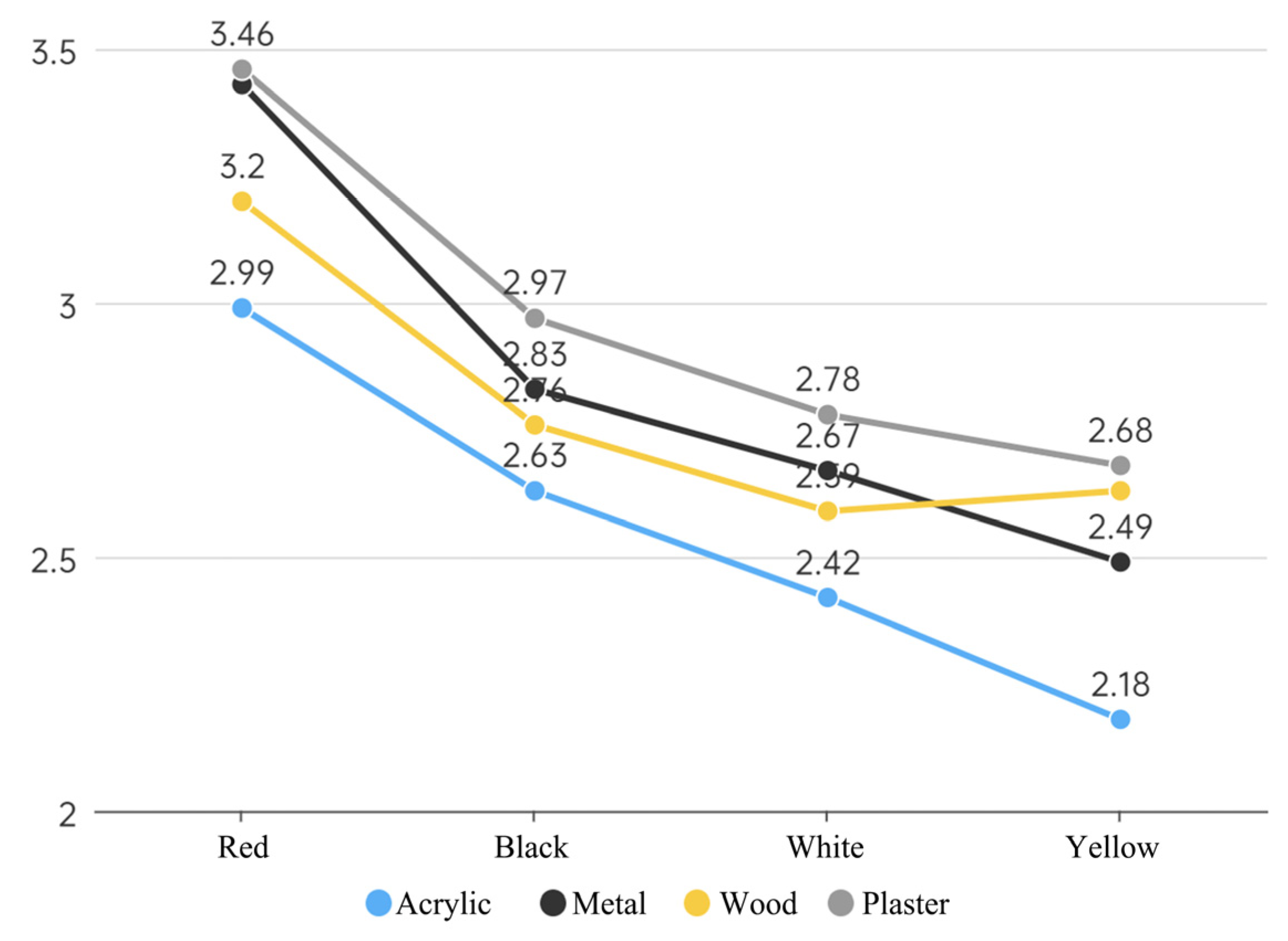
As a highly used form of architecture, public facilities are closely related to people’s daily lives. The aesthetic level of their design greatly affects the quality of people’s lives and interactions, as well as the appearance of the whole area. However, research on their design elements has not received enough attention, and few quantitative studies on the design of public facilities simultaneously focus on multiple influencing factors such as color and material. Therefore, this study uses eye-tracking technology and audience aesthetic preference evaluation to explore the appropriate combination of color and materials in sign design. This study found that, in the design of public facilities and in terms of aesthetic preference, firstly, color has more influence on subjective preference and objective gaze behavior than material. Secondly, men prefer technological and changeable colors and materials, and women prefer soft and uniform materials. Finally, visitors spend more time gazing at their preferred signs, which means that visitors’ top-down gaze behavior and bottom-up psychological perception are highly unified. Regarding material perception, visitors’ subjective preferences are influenced by the physical or cultural properties of the material itself. This study’s results will provide suggestions for future urban and landscape architecture design in terms of color and material aesthetics, and the research methodology can be applied to more scenarios in environmental spaces.
Keywords: public facility; design element; environmental aesthetics preference; visual attention process; color; material public facility; design element; environmental aesthetics preference; visual attention process; color; material
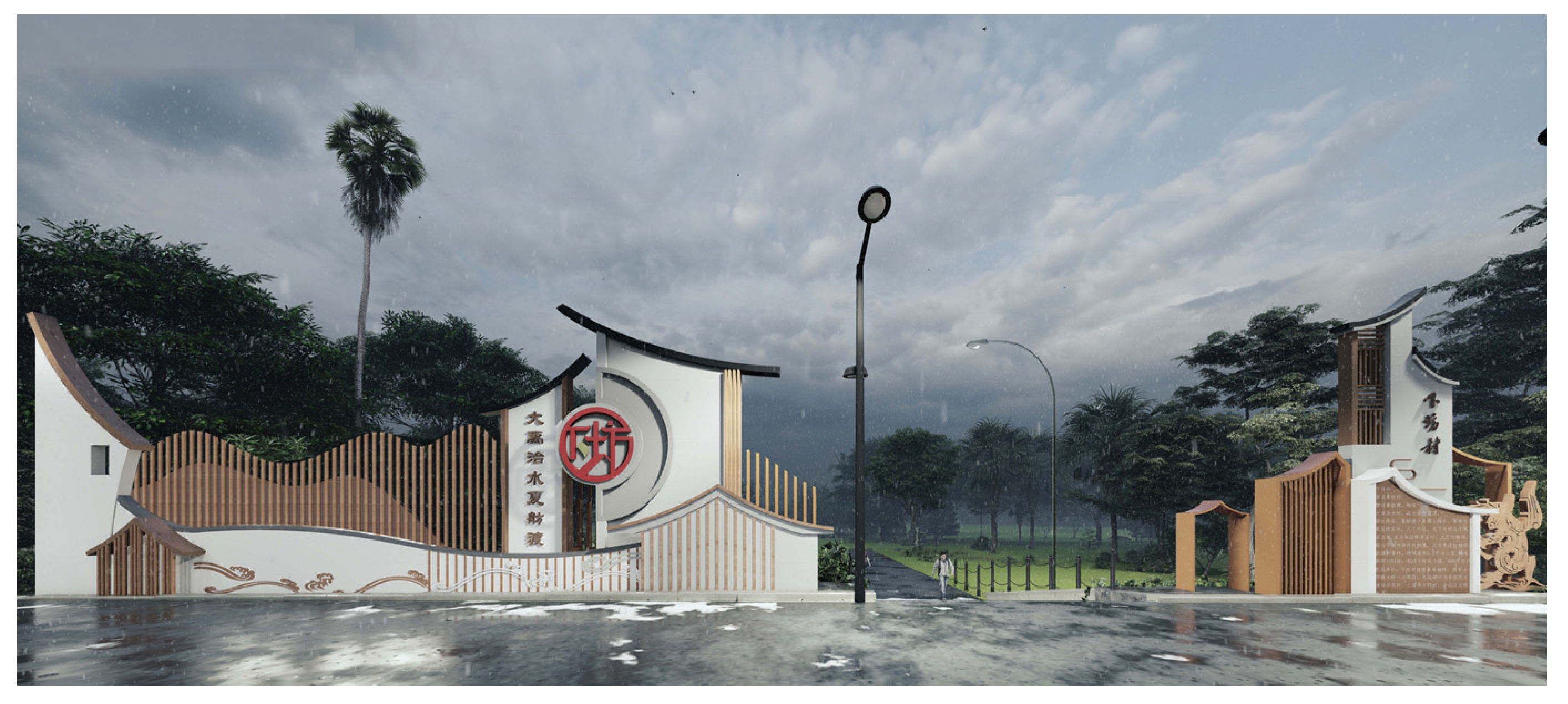
Graphical Abstract