Abstract
The general consensus is that physical activity can prevent and manage lifestyle-induced chronic diseases, and moderate-to-vigorous physical activity (MVPA) has been included in several guidelines of WHO as an indicative intensity standard. Numerous studies have confirmed that improving the spatial quality of urban parks can be very helpful in supporting physical activities, and that the quality of parks is significantly related to the intensity of physical activities. However, few studies have explored the spatial characteristics of activating physical activities. Using a modified System for Observing Play and Recreation in Communities (SOPARC), this study examines the relationship between spatial characteristics and MVPA through a binary logistic regression model. The results reveal that: firstly, inconsistent with other similar studies, the most observed group in the park is the adults rather than the seniors, and the proportion of the females (51%) is higher; secondly, the distribution of MVPA in different groups shows that the seniors have less interaction with other groups, and they have a significant spatial attachment. Thirdly, in functionality, large lawn and jogging trails have been proved to be the most effective features to promote the occurrence of MVPA; among the activity, except for the significant correlation between equipped and MVPA, other attributes can be proved to encourage MVPA as well as those in comfort. In conclusion, our results can contribute to the planning and design of the urban park as well as the further management and allocation of the space and facilities under the vision of promoting public health.
1. Introduction
Across the globe, urban policy makers are increasingly exploring solutions to improve the sub-healthy living conditions of urban people. The World Health Organization (WHO) stated that “regular physical activity can prevent and manage many chronic diseases, as well as reduce symptoms of depression and anxiety, and strengthen thinking and learning skills” [1,2,3], and developed guidelines to put forward suggestions on exercise duration, frequency, and intensity for people of different ages. Evidence shows that moderate-to-vigorous physical activities (MVPA) can improve physical and mental health of different age groups and patients with chronic diseases such as obesity and cardiovascular disease [4,5,6,7].
Promoting the service level for physical activity by improving the spatial quality of urban parks is a key strategy for promoting public health [8]. Numerous studies have shown that physical activity in the natural environment has considerable benefits for mental health in the urban city [9,10]. In the COVID-19 pandemic, Yang et al. [11] confirmed the role of urban greening in alleviating the reduction of people’s movement during the epidemic. Compared with the enclosed environment inside a building, green spaces in urban parks are considered to provide additional resilience to the city’s public health by effectively maintaining social distancing [12,13,14]. The green space index (e.g., Normalized Difference Vegetation Index of NDVI; Green View Index of GVI) calculated by remote sensing data or street view data in existing studies has widely confirmed the promotion of green exposure in parks on physical activities [15]. However, these studies have explored less the spatial types and characteristics that stimulate physical activity.
Exploring the park spaces and facilities that attract different groups to engage in physical activities can help guide the optimization of urban parks and enhance the overall vitality of parks for multi-user needs [16]. Different age groups have distinct spatial preferences and usage patterns when engaging in physical activities in parks. For instance, Yu Bao et al. [17] found that children prefer semi-open spaces composed of dense vegetation and diverse entertainment facilities. Rehrer et al. [18,19] mentioned that teenagers favor large open spaces, which can provide places for them to meet, have a picnic, and play outdoor games. Van Hecke [20] showed that outdoor venues providing sports-related facilities can promote physical activities of children aged 5–11. Lu et al. [21] found that the seniors tend to have physical activities on the walking paths and in the shade. Park spaces and facilities also influence the intensity of physical activity levels. In Kemperman’s [22] study, adults and seniors prefer to engage in MVPA such as Tai Chi and square dancing on well-paved plazas. Zhai et al. [23] found that the time spent by seniors on lawns is negatively correlated with their participation in MVPA, indicating that their physical activity intensity is influenced by such spaces. In another study, Zhai et al. [24] found that adults who enter parks with their children engage in more group MVPA activities in spaces with a stronger natural atmosphere.
In general, park quality is directly and significantly related to physical activity intensity. Several studies identify park quality as the presence of specific park features or characteristics [25], such as spatial comfort and usability. These differences in park spatial characteristics can lead visitors to exhibit varying levels of activity preferences in similar types of spaces, thereby affecting the health benefits of park greenery for individuals [26]. For example, Jenny Veitch et al. [27] found that walkways with sufficient widths for two-way walking are more popular because they are more comfortable to use and are considered an important factor in promoting MVPA. Bai et al. [28] showed that residents’ higher levels of MVPA is associated with better cleanliness and usability of parks. Other spatial elements such as accessibility [29] and shade [30] have been shown related to the occurrence of MVPA. Strengthening the understanding of the causal relationship between park spatial characteristics and MVPA can effectively provide guidance for further promoting physical activity levels in park planning and design from a park quality perspective.
The monitoring of physical activity behavior of urban park visitors is the core content to analyze the interaction mechanism between spatial environment and public health [31]. The methods used in the existing research on physical activity and green spaces are mostly based on self-reported questionnaires (e.g., HKTCS, IPAQ), which may be subjective and self-reflective. The accelerometer method can reflect the activity characteristics of several groups, but to present the overall physical activity in a specific area of the park is difficult. In the monitoring process for group activities, the number of visitors and physical activity types vary greatly given the complex configuration of the urban park space environment where the System for Observing Play and Recreation in Communities (SOPARC) is often used as the main observation method. Moreover, the systematic observation method can effectively reduce the direct contact among people in the research process and allow the quick understanding of the physical activity level of urban park visitors in the post-COVID-19 era. The SOPARC mainly tracks visitors’ social information and instantaneous levels and types of physical activity, but rarely involves the influence of spatial environment on the physical activity [29,32]. Additionally, the majority of studies that have used the SOPARC method expressed the results in the form of graphs, without correlating how spatial information affected their conclusions [33,34], and thus cannot provide direct guidance for the design of urban parks.
In summary, strong evidence supports the positive role of park green space in promoting the MVPA of visitors. However, localized empirical studies in China are lacking in activities and spatial type preferences of different age groups and the spatial characteristics that encourage MVPA in parks. The present study uses the SOPARC to count park visitors’ physical activity and park spatial characteristics, graphically represents the spatial distribution of MVPA among various groups in parks, and finally, it explores the correlation between MVPA and park spatial characteristics. To guide the rational allocation of space types and facilities in the planning and design of urban parks, we aim to explore the following issues: (1) Which spaces are preferred by different age groups for MVPA behavior? (2) What are the spatial characteristics of urban parks that encourage MVPA of visitors?
2. Materials and Methods
2.1. Study Area
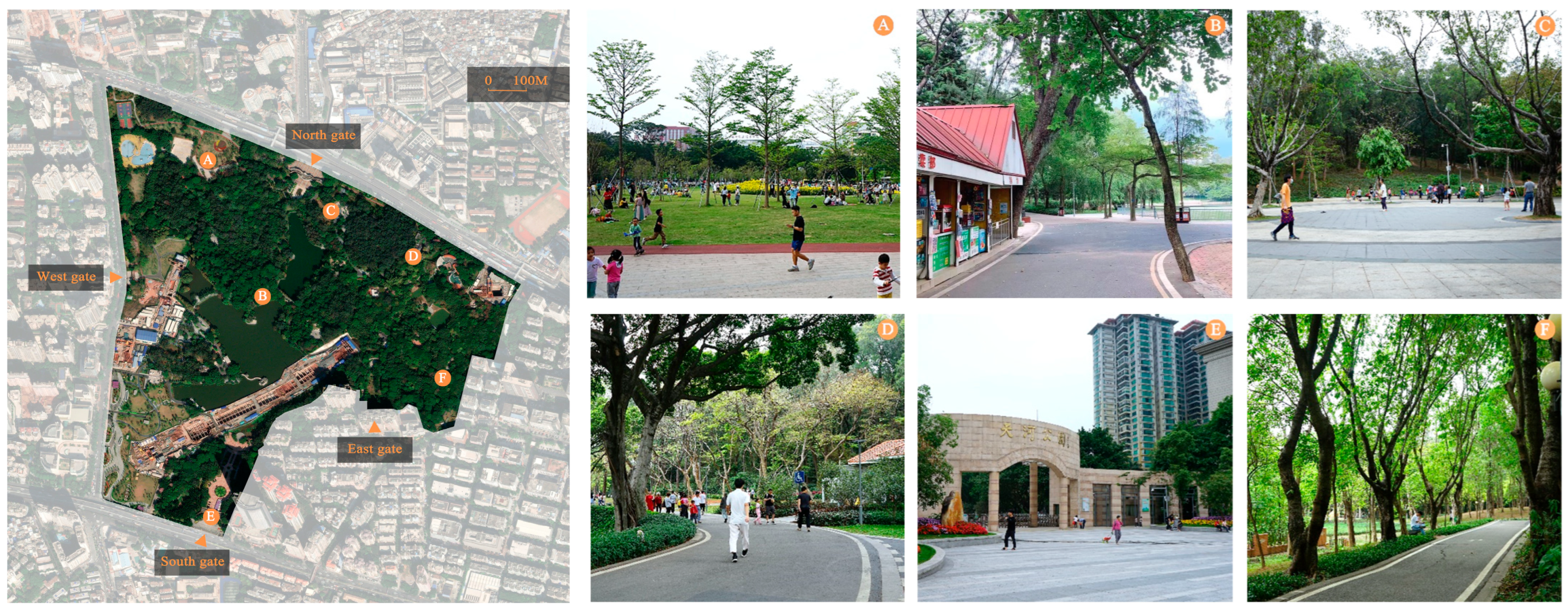
China’s major cities are undergoing an intense period of traditional urban park renewal. Coordinating the balance between the traditional landscape of urban parks and the changes in modern urban life, realizing the sharing of ecological landscape and environment, and enhancing the environmental quality to promote healthy physical exercise are important trends [35,36]. In the park internal implementation and physical environment optimization, increased attention is paid to the spatial environment needs of the visitors’ physical activities. Tianhe Park in Guangzhou, which covers an area of 70.7 hectares, is a representative case of a regional comprehensive park with an average daily visitor volume of 10,000 to 20,000. In recent years, leisure and jogging trails with complete outdoor activity places and facilities have been added to the park, and have been shown ideal for leisure and sports activities of the surrounding residents (Figure 1). The Tianhe Park empirical research, which can better characterize the activities of citizens in China’s new urban parks environment, is used to examine the special case of the post-COVID era.
Figure 1.
Maps and sceneries of Tianhe Park, (A–F) show different forms of scenery.
2.2. Study Method
2.2.1. Method Introduction
SOPARC was first proposed by McKenzie [37], a scholar from the San Diego State University, in 2006. The method is a systematic observation based on instantaneous batch sampling technology, which is specially used for collecting information on physical activity and park use. The observation collection technology is suitable for the diverse and open community environment, and allows for easy standardizing of demographic statistics, such as race, age, and gender of the participants. The method application is based on the SOPARC observation scale.
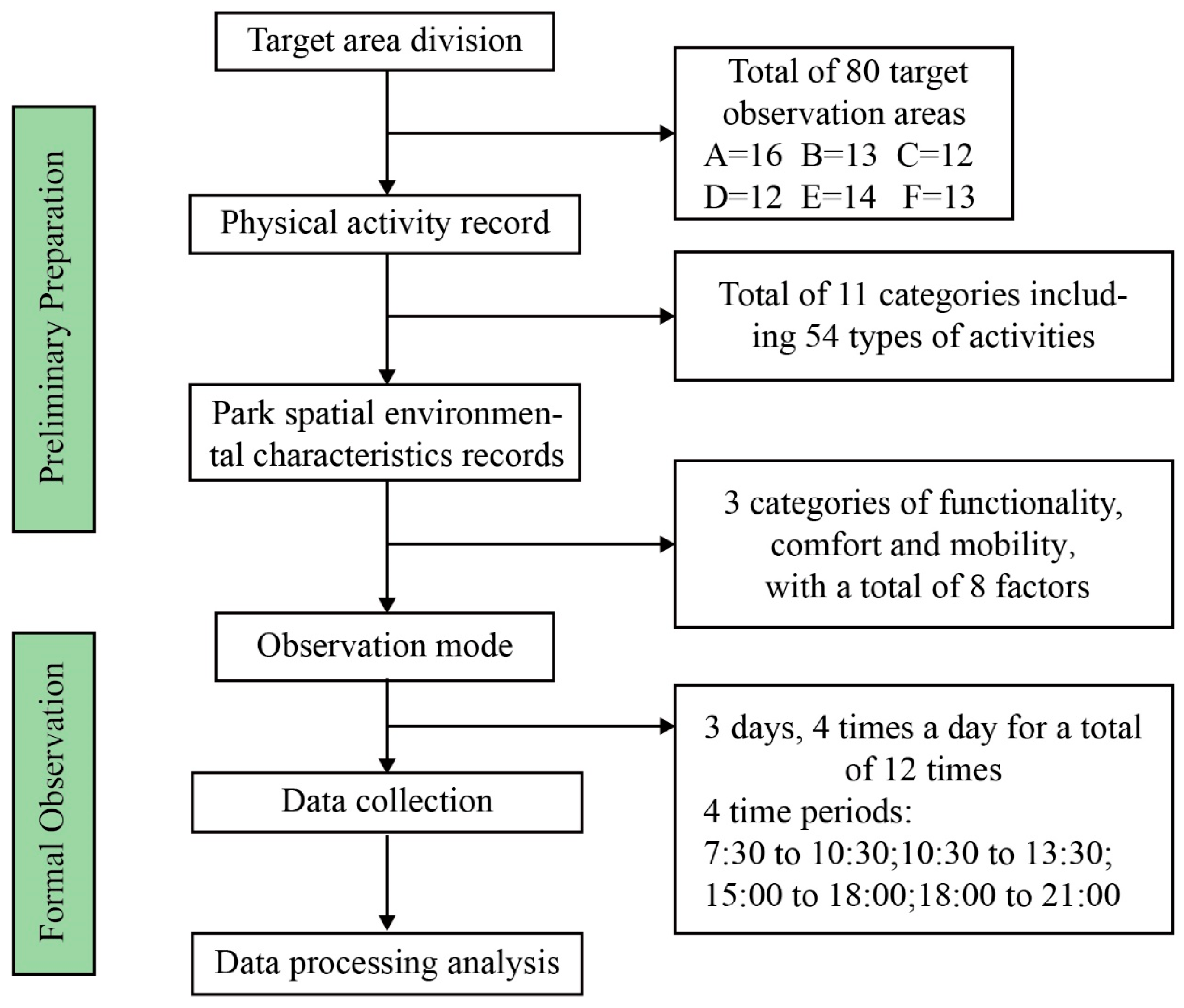
On the basis of the observation scale proposed by McKenzie, we refine the classification of physical activity and indicators of spatial characteristics. The following section mainly describes the SOPARC method in detail from the aspects of observation area division, physical activity recording, park space feature recording, and data collection and analysis, as shown in Figure 2.
Figure 2.
Experimental procedure flow chart.
2.2.2. Target Area Division
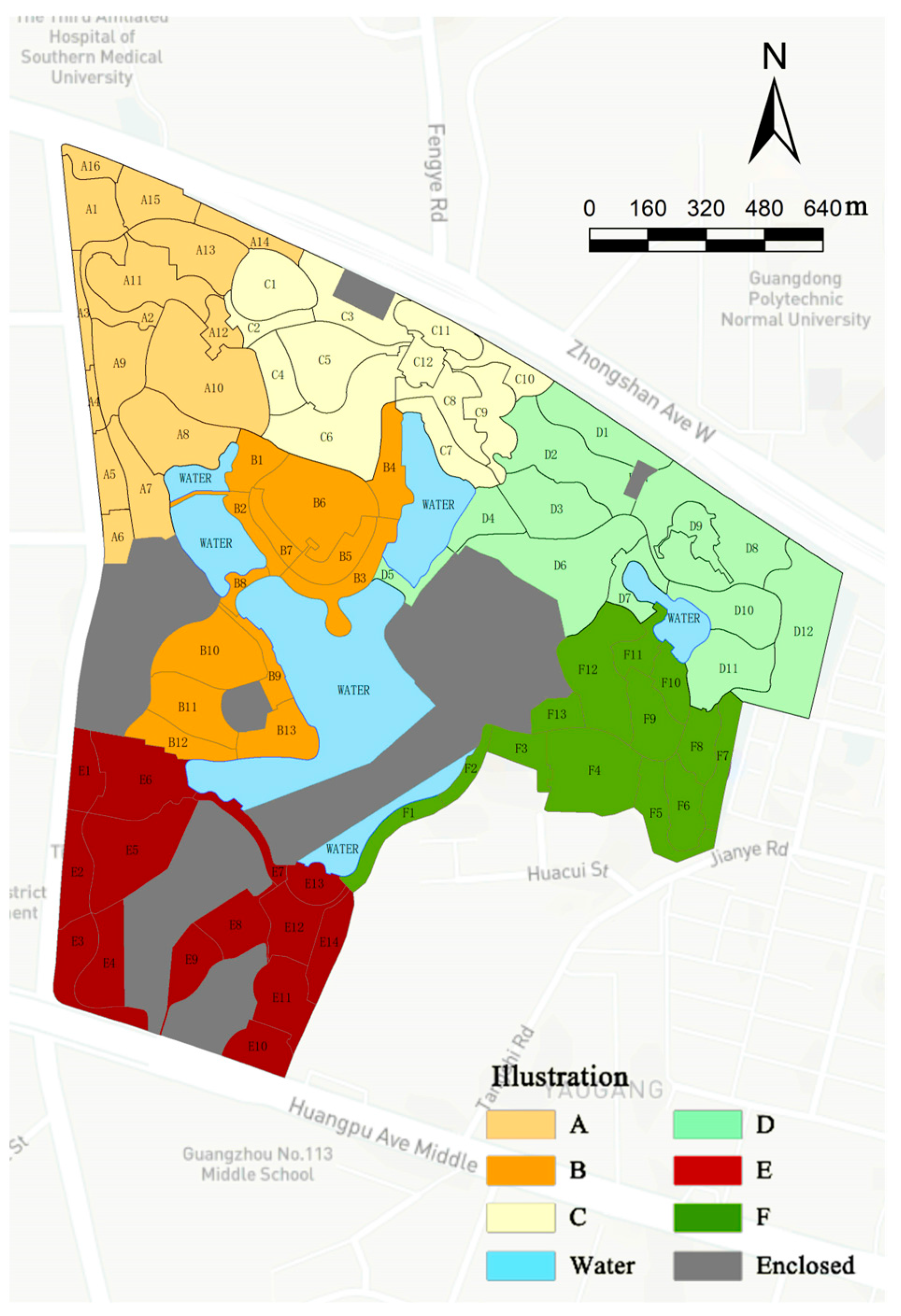
This study excludes areas that were closed for construction and thus inaccessible. The entire park is divided into six zones (A–F) based on spatial function, form, and appearance. A total of 80 target observation areas were delineated based on the park’s road network, as shown in Figure 3 (A = 16, B = 13, C = 12, D = 12, E = 14, F = 13). The gray areas represent the closed-off sections due to subway construction. Given that several observation areas had topographical features or buildings, observers selected one to three observation points based on the specific conditions to ensure an accurate count of all active individuals within the study area. This approach ensured that the observer’s line of sight covered the entire observation area.
Figure 3.
Delineate the target area.
2.2.3. Physical Activity Record
The SOPARC is well-established for monitoring the physical activity behavior of urban park visitors [38,39]. For the purpose of the present study, we based our analysis objectives and reference the activity intensity categories defined by Ainsworth [40] and Qiu [41]. Visitors sitting or standing while engaged in leisurely activities such as talking were recorded as sedentary behavior (SB), and walking at normal speed was recorded as light physical activity (LPA). More intense activities were recorded as MVPA. In terms of activity types, Tai Chi, Tai Chi-sword, and other activities unique to the Chinese region were added on the basis of on-site observations. See Appendix A for details. According to the population division standards of physical activity guidelines from various countries [42,43,44], the observed people were divided into four age groups: children—0–11 years old, teenagers—12–17 years old, middle-aged—18–59 years old, and seniors—over 60 years old.
2.2.4. Park Characteristic Records
In this study, the spatial characteristics of the park were defined as environmental variables related to physical activities at the level of activity perception, which is consistent with the definitions in similar previous studies [45,46]. Based on the environmental records in McKenzie’s SOPARC table, variables such as temperature [47], shade [30], and spatial type [48] were added to the statistics. These variables have been proven to have a significant correlation with the physical activities in the park. The spatial characteristics were divided into three categories—functionality, comfort, and activity—with a total of eight factors. The definitions and classifications of the scales are shown in Table 1. Static environmental information was only recorded during the first observation, whereas the area’s light and temperature needs were recorded at each observation.
Table 1.
Park characteristics variable and definition.
2.3. Data Collection
The study selected six students—three males and three females of relevant majors—as SOPARC observers by relying on the platform of colleges and universities. Before data collection, they received observation training through videos and actual cases to familiarize themselves with the definitions and actual operation requirements of various items in the SOPARC procedure, to ensure the consistency of the distinction among people of all ages and physical activity levels.
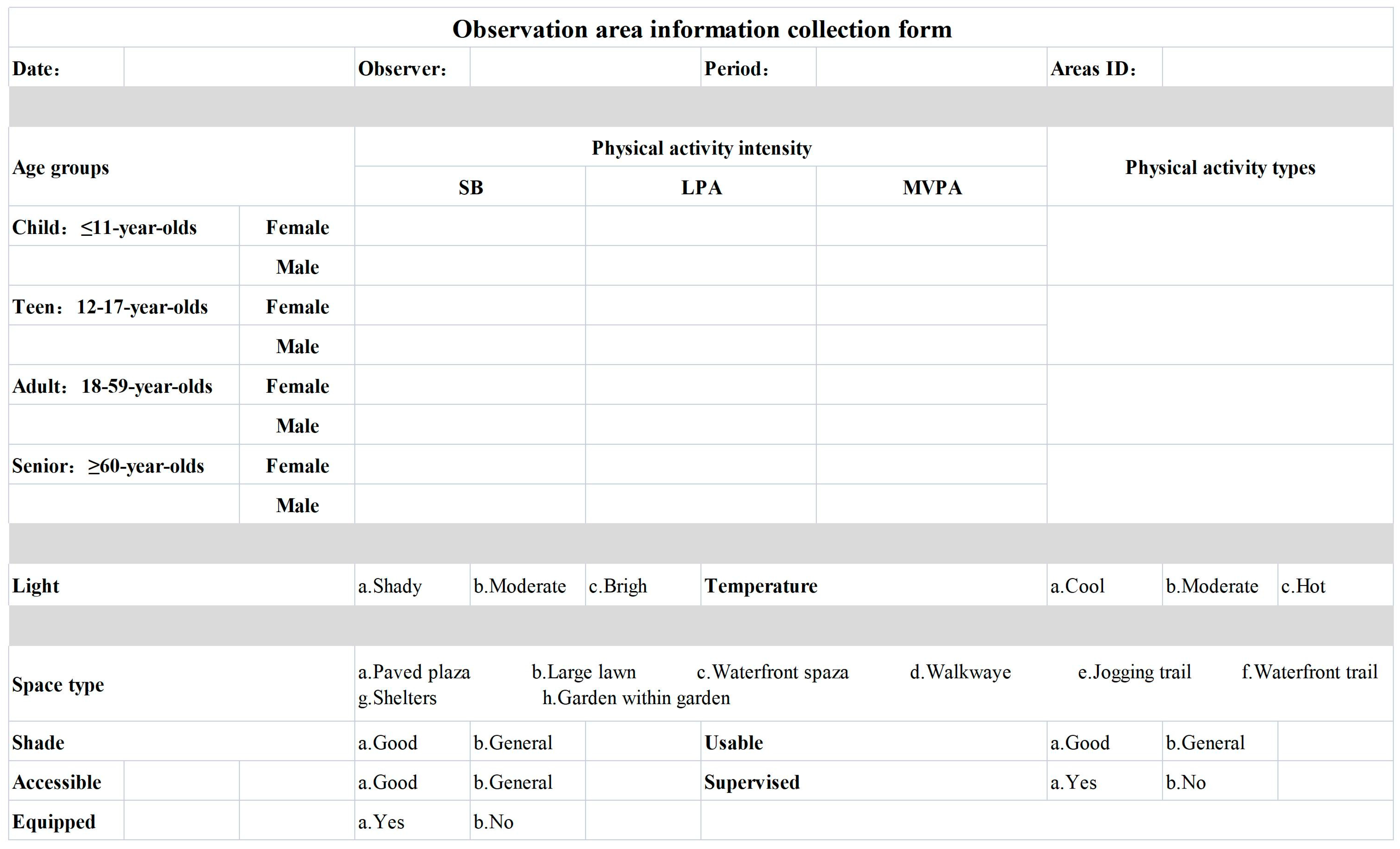
To ensure the objectivity of data acquisition and avoid the contingency of a single survey, we carried out this study between October and November 2021 during sunny days, excluding adverse weather factors such as thunderstorms and cloudy weather. Three valid observations were made, including one weekday and two weekends. During the observation period, the highest temperature was 24 ± 6 °C, lowest temperature was 15.5 ± 4.5 °C, relative humidity was 68 ± 13%, and the wind force was level 2. Prior to the formal observation, a full-day preliminary survey was carried out at Tianhe Park, which showed the peak periods of visitor flow were from 6:00 to 11:30 and from 17:30 to 22:00. To ensure the statistical quantity of visitors, four observation periods were selected—7:30 to 10:30, 10:30 to 13:30, 15:00 to 18:00, and 18:00 to 21:00—with four rounds of observation a day [49] to ensure the scientific accuracy of the SOPARC statistical data. During the formal observation, each observer was responsible for collecting data for 10 min per designated area. The information was recorded manually in a designated form, as shown in Appendix B. After the data collection was completed, the observer moved to the adjacent area to prepare for the next round of observation.
2.4. Data Analysis
After the observation, the spatial environmental information, subject characteristics, and physical activity intensity, and the type data from each observation area were summarized. To better promote the public health benefits of urban parks, we focused on the spatial requirements of MVPA. By visualizing the distribution of MVPA among different age groups using Arcgis10.8, we can better understand the spatial preferences of MVPA for each group. In addition, to explore the association between MVPA and spatial characteristics in parks, we adopt the binary logistic regression model, with spatial characteristics factors as independent variables and physical activity intensity as dependent variables. Widely used for binary classification problems and facilitating the observation of sample probability scores, the model classified physical activity intensity into “with MVPA” and “without MVPA” categories for the present analysis. All aforementioned statistical analyses were realized by using SPSS 19.0 software.
3. Results
3.1. Descriptive Statistics
Table 2 shows the spatial characteristics of Tianhe Park. Functionally, the space types that mainly support physical activities are paved plaza and walkway. In terms of comfort, according to the observation of different periods, the park has moderate overall light and slightly cool temperature. Most observation areas in the park have good shade, although a few observation areas are slightly insufficient due to tree thinning during the park renovation in recent years. In terms of activity, the usability and accessibility of the space is good, although a few areas are supervised. Moreover, the park has fewer pieces of fitness equipment, the majority of which require updating or repair.
Table 2.
Descriptive statistics of park spatial characteristics.
Table 3 summarizes the age, gender composition, and park usage of the observed individuals. A total of 33,946 visitors were observed and had a significant variation in age composition, of which more than 52% were middle-aged and only 4% were teenagers. In terms of gender, males accounted for 65% of the teenage population and were significantly more than females, while no significant differences were observed among other age groups. In terms of usage time, visitors of all age groups mostly visited the park on weekends, with only 13% of teenagers observed on weekdays. In terms of usage period, all groups had low observations during the night; in particular, the seniors mostly used the park during the day and only 11% were observed entering the park at night. Children often used the park at noon and afternoon, while teenagers were more frequently observed in the morning and afternoon. As for the largest group of adults, their use of parks was observed mainly in the afternoon. In terms of physical activity level, the seniors mainly engaged in SB, and the proportion of LPA was the greatest in adults. Notably, the teenage group had a significantly higher proportion of MVPA, at 39%.
Table 3.
Characteristics of age groups observed in the park.
Table 4 summarizes the types of physical activity and the observed frequencies in different age groups. Linear activities such as walking and running were found as the main physical activities of residents in urban green spaces. Sitting on benches, lawns, and stair plazas to watch passersby or natural scenery was also popular among visitors of all ages. MVPA types varied among the different age groups, who showed other preferences in addition to walking and running. For example, children were observed to engage in activities such as chasing, riding bicycles, and playing with toys with their parents. Teenagers tended to participate in sports such as soccer and badminton. Young adults had a wide range of MVPA, but after walking and running, jogging was the most frequently observed activity. Many seniors were observed to engage in group activities with Chinese characteristics, such as square dancing, Tai Chi, and Tai Chi-sword.
Table 4.
Descriptive statistics of the types of physical activity in age groups.
3.2. Spatial Location of MVPA Observed in Different Age Groups
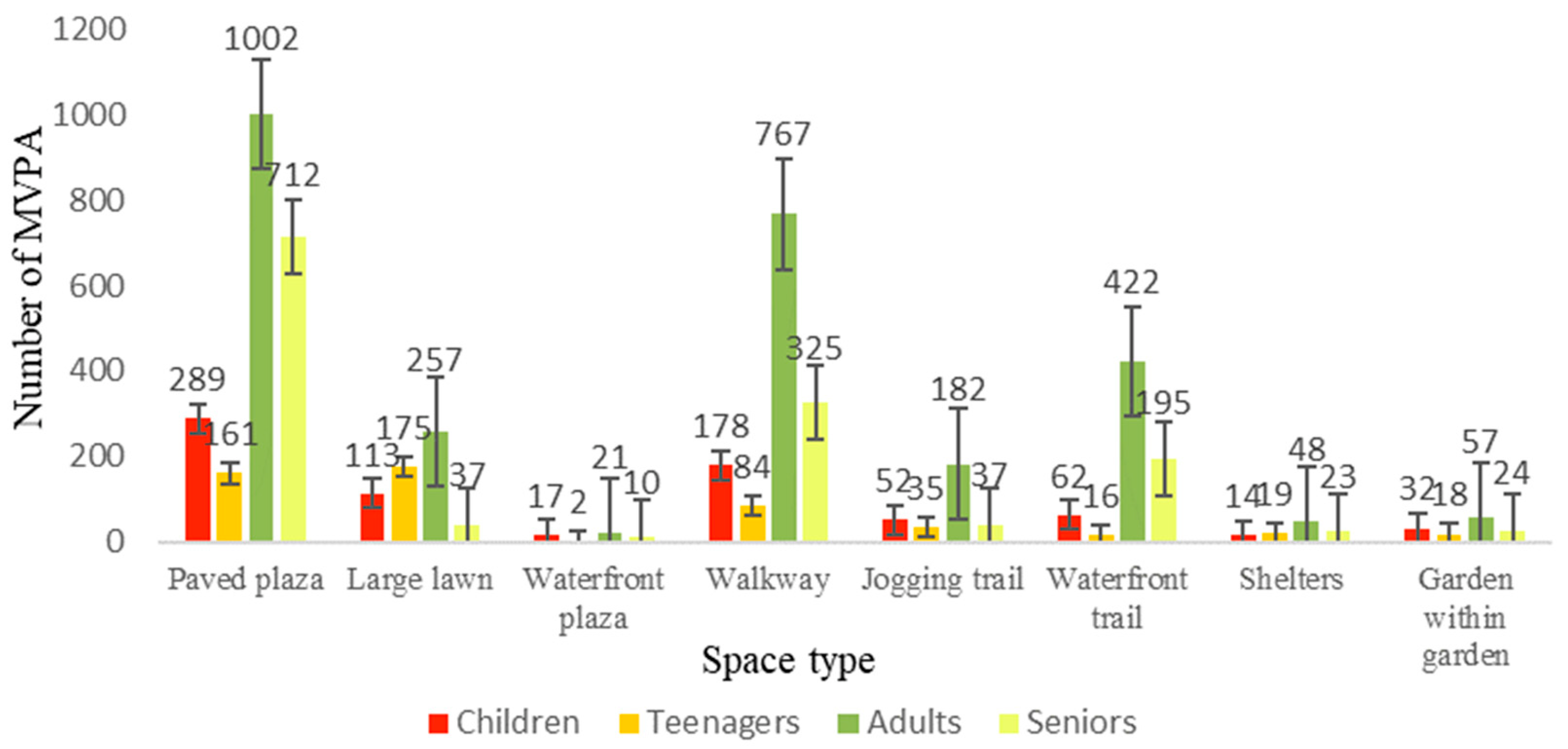
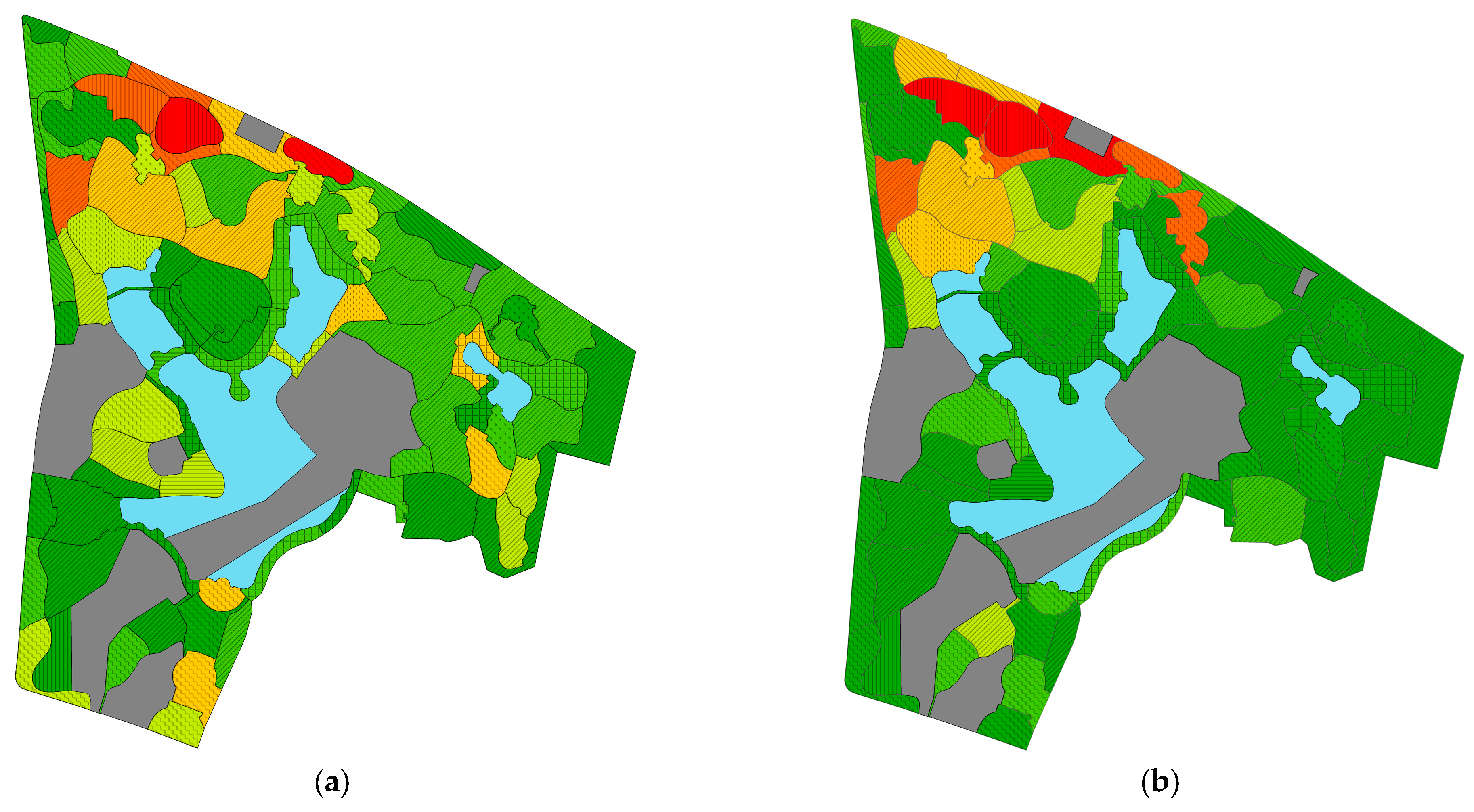
Figure 4 shows the number of MVPA participants in different types of spaces across age groups. The data show that adults and seniors engage in MVPA in similar types of spaces, mainly on paved plaza, walkways, and waterfront trail. By contrast, children and teenagers prefer to engage in MVPA on large lawns rather than waterfront trail, in addition to the paved plaza and walkways. Notably, the paved plaza are the gathering places for MVPA among children, adults, and seniors, while large lawns are the favorite spaces for MVPA among teenagers. Details can be found in Appendix C.
Figure 4.
Number of MVPA of different age groups in each space type.
Table 5 summarizes the average number of MVPA participants in gathering spaces across different age groups. Although children, adults, and seniors mainly gathered in the paved plaza for MVPA, the average number of participants is much smaller than that in large lawns. The children and teenagers carried out an average number of 38 and 58 MVPA on large lawns compared with an average number of 12 and 7 on the paved plaza. By contrast, the seniors carried out an average number of 30 MVPA on paved plaza and only 12 on large lawns. ANOVA Post Hoc test (LSD) analysis indicates significant differences in the distribution of MVPA among children and teenagers in space types, demonstrating that large lawns are preferred by these younger age groups, particularly teenagers, and have significantly greater MVPA numbers based on mean deviation (MD). Furthermore, multiple comparisons revealed that compared with paved plaza, the seniors do not appear to prefer spaces specifically designed for physical activity such as jogging trails.
Table 5.
Average number of MVPAs of different ages in the agglomeration.
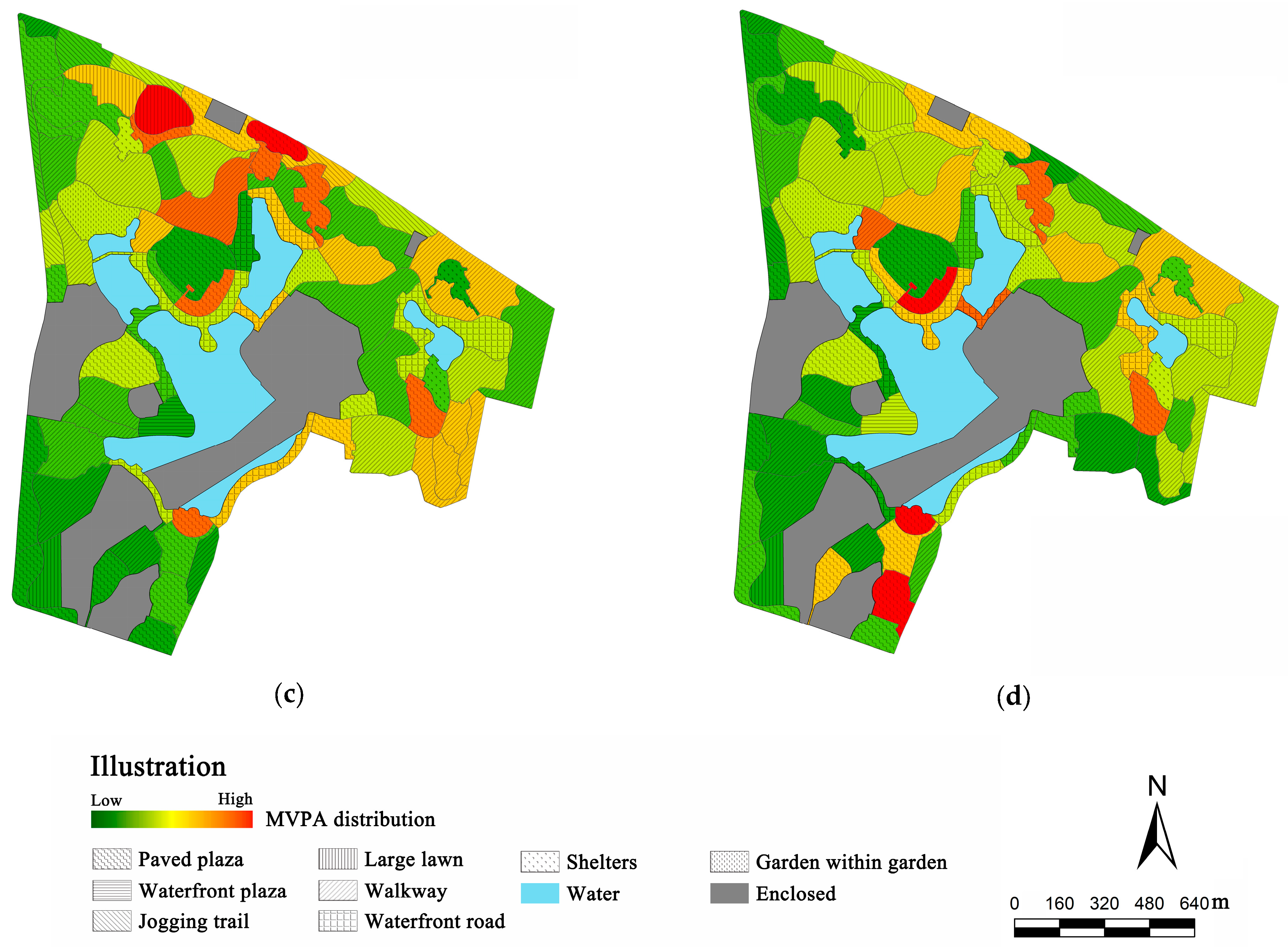
Figure 5 provides a visual representation of the spatial distribution of MVPA among different age groups. MVPA among children and teenagers is concentrated in the northwest corner of the park, with the latter gathering in two large lawns and adjacent paved plazas, while children showed high MVPA in the plaza at the north entrance. MVPA among adults is mainly distributed in the northeast corner of the park with a scattered distribution, and also in the spaces where MVPA is more prevalent among children and teenagers. The distribution of MVPA among the seniors and other age groups, especially teenagers, has little overlap, and is mainly concentrated in spaces near the park’s water bodies. Overall, the park has a unique distribution of MVPA among different age groups.

Figure 5.
Distribution of MVPA activities in different age groups, (a) dedicated children, (b) dedicated teenagers, (c) dedicated adults, and (d) dedicated seniors.
3.3. Relationship between Park Spatial Characteristics and MVPA
Table 6 summarizes the association between the spatial characteristics and the physical activity of the observed park visitors by testing the likelihood ratio of the binary logistics regression model and considering the differences in park use characteristics. Statistical results show that χ2 = 27,226.9, p < 0.001, indicating the significance of the regression model. According to the parameter estimation results of the regression coefficient (Beta) and relative odds ratio (OR) in the table, and taking non-MVPA physical activity (a set of SPA and LPA) as a control, the output results of the logistics model are characterized as follows at α = 0.05 level.
Table 6.
Relationship between park spatial characteristics and MVPA.
Among the demographic factors, no significant difference is observed in the MVPA during weekdays and weekends. The probability of MVPA activity is higher in the morning (OR = 1.364, p < 0.001), whereas the probability of mild to moderate physical activity is higher in the noon and afternoon (OR = 0.542, p < 0.001 and OR = 0.344, p < 0.001). The probability of MVPA activity is highest among teenagers (OR = 4.368, p < 0.001). No significant correlation was observed between gender difference and MVPA level.
Among the spatial functional factors, only large lawns, waterfront plazas, jogging trails, and waterfront trails are significantly associated with MVPA. When the most important spatial type supporting physical activity in the area is a large lawn, the probability of MVPA activity significantly increases (OR = 2.781, p < 0.001). The level of MVPA is also higher on the jogging trails (OR = 1.369, p = 0.015). When the main spatial types are waterfront plaza and trail, moderate-to-mild physical activity is more likely to be carried out (OR = 0.211, p < 0.001 and OR = 0.489, p < 0.001).
Among the factors of environmental comfort, light, temperature, and shade are significantly correlated with MVPA. When the area has dark and moderate light, mild to moderate physical activity is more likely carried out (OR = 0.827, p = 0.001 and OR = 0.874, p = 0.002), while cool and moderate light is more conducive to MVPA activity (OR = 1.282, p < 0.001 and OR = 1.275, respectively, p < 0.001). More MVPA activities can be performed in areas with good shade (OR = 1.127, p = 0.002).
Among the spatial activity factors, nearly all variables except fitness equipment are associated with MVPA. When the environment is more usable, the probability of MVPA activity is lower (OR = 0.855, p = 0.017). When the area has good environmental accessibility, the probability of MVPA is high (OR = 1.232, p = 0.016). When the area is supervised, park visitors are more likely to engage in mild to moderate physical activities (OR = 0.787, p < 0.001).
4. Discussion
In the context of the post-COVID-19 era, urban parks—as outdoor places that allow direct contact with the natural environment—are more popular among citizens. Exploring the usage characteristics of citizens in urban parks and clarifying the spatial characteristics that promote MVPA play an important role in achieving sustainable development of urban public health. The research findings indicate that different population groups vary in usage preferences for parks, such as usage characteristics, activity types, and spatial distribution. Spaces such as large lawns and jogging paths also promote MVPA behavior. The following three sections discuss the main survey results.
4.1. Park Uses in Different Age Groups
In this study, the SOPARC method is used to explore the population composition and usage characteristics of Tianhe Park in Guangzhou in the post-COVID-19 era. In most studies, males are observed to outnumber females in parks [38]. However, in this study, only the teen-aged group shows a significant gender difference, with more male visitors (65.30%) than females. However, overall, more females than males are observed in the park. The speculation is that Tianhe Park has more paved plazas, which are suitable for group activities and are proven to meet the activity needs of females [50]. The observed physical activities of park visitors in this study are similar to those in other studies conducted in Asia [51], with walking and running being the primary physical activities of citizens in urban green spaces. Additionally, the study finds that the usage characteristics and types of MVPA vary among age groups in the park. Children tend to engage in family activities such as chasing, cycling, and playing with toys in the park in the afternoon. Teenagers account for only 4% of park visitors, mostly using the park on weekends in the morning and afternoon for sports such as football and badminton, with a much greater proportion of MVPA than other age groups, consistent with the findings of Xu Yan of physical activity among park visitors in four parks in Wuhan [52]. Adults are the primary park visitors (52%), unlike similar studies in China where the main visitor group are often seniors [52,53]. The more open and high-quality sports environment of Tianhe Park after renovation is speculated to be more attractive to adults, who tend to use the park in the afternoon for a wide variety of linear MVPA types. Seniors heavily use the park during daytime (79%), engaging in group activities with Chinese characteristics such as square dancing, Tai Chi, and Tai Chi-sword, among others.
Parks, as a public space, need considerations in meeting the needs of all age groups, with attention to vulnerable or special groups such as seniors, children, pregnant women, and people with disabilities. However, from the perspective of social resource service efficiency, parks must identify their main target groups during the planning and design phase and comprehensively consider their service priorities, and then formulate planning and design strategies based on these considerations. The main visitors of Tianhe Park are adults, and in the subsequent planning process, their physical activity needs need full consideration. After ensuring meeting the needs of the main target group, the park spaces can be expanded to attract other groups.
4.2. Spatial Distribution Characteristics of MVPA among Different Age Groups
The paved plaza and walkways are the main spaces for MVPA for all age groups in the park in this study. The large lawn, followed by the paved plaza, is the space with the greatest average number of MVPA individuals. Different spatial distributions of MVPA in urban parks are observed among the age groups, forming unique activity spaces for each group. MVPA for children and teenagers is concentrated in the northwest area of the park, with children’s MVPA distribution being slightly more dispersed compared with those of teenagers and showing a high distribution in the North Gate entrance plaza. The reason is that these areas underwent significant renovations in 2018, with the removal of the park fence and the thinning of the densely planted woody plant belt along the park boundary, which added a series of open spaces and facilities and provided a better environment for physical exercise, consistent with the conclusions of scholars such as Evenson and Vert [31,54,55]. MVPA distribution for adults are mainly carried out in the northeast of the park and relatively scattered, similar to that of children and teenagers, possibly because these three groups often visit the park together as families. MVPA distribution for the seniors shows a unique spatial distribution, with little intersection with that of other age groups, and more often occurring in areas they have been using for a long time and are thus not included in the extensively renovated areas of the park. Most of the seniors are retired and their lives are more closely linked to the park, their attachment to activity places is greater, consistent with Wu and Lin’s observation conclusions in other parks in Guangzhou [56]. These seniors prefer to exercise in a familiar environment and a quiet space atmosphere, which is why they have less intersection with other age groups. In addition, spaces that provide professional physical activity services, such as jogging trails, are not favored by the seniors. This finding shows that the modernization of Tianhe Park has not achieved the expected improvement in the MVPA level of seniors through the strengthening of the environmental function of physical exercise. The distribution characteristics also shows that more modernized environments have a significant appeal for other age groups for MVPA activities.
People’s preferences for activity spaces are closely related to their life experiences. To promote health through exercise, we summarize the regularity of different groups in spatial selection and demand based on the differential behavioral characteristics of park usage, analyze the space based on these regularities, and explore the general rules that can adapt to different group activities. Thus, this study provides methodological and conceptual guidance for urban park space planning and design. The attitudes of the seniors in Tianhe Park towards the extensively renovated and the long-term use areas are completely different when they are active, but this does not mean that they reject the appropriate updates to optimize the activity experience in the park. This conclusion can provide guidance for serving seniors in park planning.
4.3. Correlation between Park Spatial Characteristics and MVPA
The results of this study confirm that a park’s spatial characteristics are significantly associated with MVPA activity. From the perspective of functionality, in non-traffic spaces, the MVPA level of a large lawn is significantly higher than those in other areas. Compared with paved plazas and jogging trails, the large lawn has a softer surface, a more comfortable temperature, and is less disturbed by traffic behavior. Thus, large lawns are often the preferred place for parent–child activities. This finding is consistent with the promotion effects of a large lawn on physical activity levels in existing studies [57,58]. Areas such as the waterfront trail and plaza are important places for the physical activity of the seniors, and the overall MVPA level is also low. In the traffic spaces, the association between walkways and MVPA is weak, a result that differs from that of the existing research, wherein such spaces have a higher attractiveness for MVPA activities, such as race walking and running [59]. The specific design characteristics of the park road, such as slope and pavement, affect the occurrence of MVPA [60]. Jogging trails are positively correlated with MVPA, which proves that such facilities can reach the desired effect, specifically for engaging in physical activity in parks [61].
From the perspective of comfort, more MVPAs are observed in environments with bright light, moderate temperature, and good shade. The well-lit areas in the park benefit from openness to the high sky during the day and full lighting facilities at night. In recent years, a large number of trees have been removed in several areas of the park, and the strong direct sunlight from noon to afternoon has caused high temperatures in the environment. Consistent with other studies, visitors are less willing to move in high-temperature environments [47]. Therefore, sufficient shading while meeting the light requirements to provide a comfortable activity environment is an effective measure to encourage MVPA.
From the perspective of activity, MVPA is more likely to be facilitated in spaces with average usability, good accessibility, and lack of supervision. Previous studies have shown that higher accessibility in parks can provide more opportunities for visitors to carry out activities [29,62]. The present study finds that good accessibility in the environment is associated with a decrease in the incidence of MVPA. Through the comparison of environmental characteristics, we find that two target areas are generally unusable because of the lack of shade and wet ground. However, in suitable weather conditions, the areas have more paved space for physical activities, and visitors are more active. In addition, although several observation areas are adjacent to the subway construction, with noise and too-narrow roads that are not usual for physical activity support, still more MVPA occurs as a necessary route to connect other areas. The dense ground cover and steep mountain forest in the park have a significant impact on accessibility, and the direct obstruction to activities also affects the MVPA. Evidence has shown that fitness equipment is strongly associated with MVPA [20], and the maintenance of facilities often affects their promotion of MVPA [63]. However, MVPA levels in areas with fitness equipment in this study are not improved accordingly, which may be related to the lack of updating and maintenance of fitness equipment in Tianhe Park. More attention must be paid to the updating and improvement of fitness equipment in the follow-up planning.
By analyzing the spatial distribution, we can understand the relationship between urban park open spaces and visitors. However, this method cannot fully predict human preferences and behaviors. The quality of park space environment is usually directly and significantly related to physical activity levels. Understanding and evaluating the spatial indicators that affect parks can more accurately determine the spatial needs of park physical activity and provide guidance for its further promotion. For example, an analysis of Tianhe Park shows that spatial indicators such as shade and lighting affect MVPA. Improving the quality of shade and lighting in jogging trails can be a promising measure to further enhance physical activity levels.
4.4. Oriented to Promote Physical Activity
In view of the increasingly important role of urban parks in supporting citizens’ physical activity, this study explores the park spatial characteristics that encourage MVPA among visitors. Based on the results, the following suggestions are presented for the planning, design, and management of parks:
- In the early stages, a fundamental analysis and prediction of the group composition and their development trends should be conducted, in order to develop targeted strategies to optimize the park spatial characteristics for physical activity. Visitor composition assessments should be tracked long-term and regularly checked to ensure a balance between supply and demand;
- In the selection of space types, areas such as lawns and jogging trails should be expanded from the perspective of promoting MVPA in the park, which can have a positive impact on children, adolescents, and adults. Lawn areas often lack shading, so considering that visitors often use as family or companion-style park tour method, setting up shaded rest areas around the lawn area can often improve comfort and extend people’s use of these types of spaces;
- In terms of planting design, moderate thinning of dense forest areas during park renovations can improve the daytime lighting conditions of the activity space under the trees, improving the comfort of the activity area while also reducing the difficulty of greening and security management. For example, the design and management of the trees along the jogging trails should be fully considered to ensure shade and safety of use;
- Strengthen daily security management by improving the park’s guidance and monitoring system, gradually reducing security personnel patrols while ensuring visitor safety, in order to reduce interference with visitor activities;
- For specific groups, in park renewal scenarios, it should be considered that the seniors have behavioral characteristics of spatial attachment, and their usage habits and preferences should be respected. Distinguishing from the drastic updating of space and facilities required for the needs of young and middle-aged groups, the spatial comfort, convenience, and functionality are improved through minor updates of spaces and facilities to maintain the space affinity and stability of the senior’s needs. For the teenagers, in addition to providing sports facilities and large lawns that support multifunctional activity spaces, soft facilities such as organizing “parent-child activities” and “fun sports competitions” can be considered to attract teenagers to the park as a place of interest for physical activity.
In this study, few teenagers engage in activities in the park. The increase of use for such people not only requires the planning and management department to adjust the park spaces but also requires the school, government, community, and other relevant institutions to support the policy to increase teenagers’ physical activities in the park. For example, outdoor physical classes and self-organized physical activities can be increased to promote the use of parks by teenagers.
4.5. Strengths and Limitations
This study has several limitations. First, Tianhe Park is taken as an example while other types of parks, such as special and community ones, are not considered. The study results may be affected by the built environment, such as regional resources and environment, transportation accessibility, and service facilities. Second, this cross-sectional study does not compare the differences in physical activity in urban parks before and after the COVID-19 epidemic. Third, the statistics of spatial characteristics are not combined with environmental assessment tools, which can allow for a more in-depth discussion on the design level of urban park facilities. Future research must strive to combine the SOPARC method with other environmental assessment tools to increase the completeness of environmental information statistics and further understand how specific environmental design characteristics promote physical activity levels. Despite the limitations, considering the representativeness of Tianhe Park as one the comprehensive parks in Guangzhou, this study accumulates experience in the intervention measures of urban park environments and physical activity in international metropolises such as Guangzhou. In addition, the use of Tianhe Park during the post-COVID-19 era to a certain extent represents the resilience of new urban parks in China to major health events.
5. Conclusions
This study used the SOPARC to investigate the different spatial characteristics and the physical activity of visitors in Tianhe Park in Guangzhou. The basic information and usage data of visitors in the park during the post-COVID-19 era were collected, and it was found that the main user group in Tianhe Park was adults rather than seniors, and the proportion of females was higher, which was different from other similar studies. In addition, the spatial preferences of different groups and park space characteristics that influence MVPA were discussed in depth. First, it was found that paved plaza and walkways were the main spaces used for MVPA activities in the park, while large lawns had the largest mean number of MVPA individuals. Second, the park’s modernized sports environment was attractive to children, teenagers, and adults, but gained less acceptance from among the seniors. This latter group preferred to be active in familiar and minimally renovated environments with less cross-over with other groups. Third, it was confirmed that the functional, comfortable, and active space characteristics significantly influenced MVPA occurrence. Large lawns and jogging trails were more conducive to MVPA than other spaces, and the presence of bright light, cool temperature, and good shade reflected the comfort requirements of MVPA activities in the park, and the correlation between equipped and MVPA is not significant.
The results of this study directly show the effects of different park environments on physical activities in major public emergencies, which can help other relevant personnel better understand how to promote physical activity and public health by improving the urban park space environment. Guiding the planning and design of urban parks and building management and construction measures can thus effectively promote physical activity to promote the development of urban public health.
Author Contributions
Conceptualization, M.L. and C.C.; methodology, M.L.; software, validation, formal analysis, investigation, resources, data curation, C.C.; writing—original draft preparation, C.C.; writing—review and editing, M.L and C.C. and J.Y.; visualization, C.C.; supervision, J.Y.; project administration, M.L.; funding acquisition, M.L. All authors have read and agreed to the published version of the manuscript.
Funding
This research was funded by the Open Funds of the State Key Lab of Subtropical Building Science, South China University of Technology (No. 2020ZB11), and the Natural Science Foundation of Guangdong Province (No. 2021A1515012061).
Informed Consent Statement
Informed consent was obtained from all subjects involved in the study.
Data Availability Statement
Not applicable.
Conflicts of Interest
The authors declare no conflict of interest.
Appendix A
Table A1.
Physical activity type and intensity level classification.
Table A1.
Physical activity type and intensity level classification.
| Category | P.A Intensity Level | Code | ACTIVITY TYPES | Category | P.A Intensity Level | Code | ACTIVITY TYPES |
|---|---|---|---|---|---|---|---|
| 01 bicycling | MVPA | 0101 | cycle | LPA | 0702 | picnic, sitting | |
| 02 conditioning exercise | MVPA | 0201 | tai chi | LPA | 0703 | play chess, sitting or standing | |
| LPA | 0202 | stretch | LPA | 0704 | play poker, sitting or standing | ||
| MVPA | 0203 | fitness, aerobic exercises | LPA | 0705 | bird-watching | ||
| MVPA | 0204 | gymnastics | LPA | 0706 | read | ||
| MVPA | 0205 | yoga | LPA | 0707 | feed the fish | ||
| MVPA | 0206 | calligraphy, writing on the floor with a large brush | LPA | 0708 | photography, sitting or standing | ||
| MVPA | 0207 | hula hoop | 08 music playing | MVPA | 0801 | sing, chorus | |
| MVPA | 0208 | tai chi-sword, group training | MVPA | 0802 | play instruments, standing | ||
| 03 dancing | MVPA | 0301 | dance, mass aerobics dancing | MVPA | 0803 | Cantonese opera | |
| MVPA | 0302 | square dance | 09 running | MVPA | 0901 | run | |
| MVPA | 0303 | fan-dancing | MVPA | 0902 | jog | ||
| 04 Fishing and Hunting | MVPA | 0401 | catch fish | 10 sports | MVPA | 1001 | badminton |
| 05 parent-child activity | MVPA | 0501 | chase | MVPA | 1002 | basketball | |
| MVPA | 0502 | Ride, children’s bicycle | MVPA | 1003 | pulley | ||
| MVPA | 0503 | play with toys, bamboo dragonflies, paper airplanes, etc. | MVPA | 1004 | skateboard | ||
| MVPA | 0504 | climb | MVPA | 1005 | volleyball | ||
| MVPA | 0505 | jump | MVPA | 1006 | tennis | ||
| MVPA | 0506 | roll | MVPA | 1007 | table tennis | ||
| MVPA | 0507 | blow bubbles: take the bubble machine and run | MVPA | 1008 | shuttlecock | ||
| MVPA | 0508 | handstand | MVPA | 1009 | cricket | ||
| 06 inactivity quiet/light | SB | 0601 | sit idle: daze, gaze, etc. | MVPA | 1010 | diabolo | |
| SB | 0602 | stand, daze, gaze, etc. | MVPA | 1011 | jump rope | ||
| SB | 0603 | lie flat, lying on the lawn, seats | MVPA | 1012 | soccer | ||
| SB | 0604 | lie flat, lying in a baby carriage | 11 walking | LPA | 1101 | walk, slower pace stroll | |
| SB | 0605 | squat | MVPA | 1102 | race-walking | ||
| 07 miscellaneous | LPA | 0701 | recitation, sitting or standing | MVPA | 1103 | dog-walking |
Note: Bicycles are prohibited in the park, and all riding observed in the study occurred in areas with lighter jurisdictional boundaries of the park.
Appendix B
Figure A1.
Observation area information collection form.
Figure A1.
Observation area information collection form.

Appendix C
Table A2.
ANOVA Post Hoc test (LSD) analysis of number of MVPAs.
Table A2.
ANOVA Post Hoc test (LSD) analysis of number of MVPAs.
| Age Group | (I) | (J) | Mean Deviation (I–J) | SE | Sig. | Overall Sig. |
|---|---|---|---|---|---|---|
| Children | Large lawn | Paved plaza | 25.625 * | 7.595 | 0.001 | 0.009 |
| Waterfront plaza | 29.167 * | 11.323 | 0.012 | |||
| Walkway | 31.000 * | 7.548 | 0.000 | |||
| Jogging trail | 30.238 * | 8.559 | 0.001 | |||
| Waterfront trail | 32.667 * | 8.006 | 0.000 | |||
| Shelters | 33.000 * | 10.127 | 0.002 | |||
| Garden within garden | 21.667 | 11.323 | 0.060 | |||
| Teenagers | Large lawn | Paved plaza | 51.625 * | 8.001 | 0.000 | 0.000 |
| Waterfront plaza | 57.333 * | 11.926 | 0.000 | |||
| Walkway | 55.222 * | 7.951 | 0.000 | |||
| Jogging trail | 53.333 * | 9.016 | 0.000 | |||
| Waterfront trail | 57.000 * | 8.433 | 0.000 | |||
| Shelters | 52.000 * | 10.667 | 0.000 | |||
| Garden within garden | 49.333 * | 11.926 | 0.000 | |||
| Adults | Large lawn | Paved plaza | 43.917 * | 20.914 | 0.039 | 0.156 |
| Waterfront plaza | 75.167 * | 31.177 | 0.018 | |||
| Walkway | 57.259 * | 20.785 | 0.007 | |||
| Jogging trail | 59.667 * | 23.567 | 0.014 | |||
| Waterfront trail | 50.500 * | 22.045 | 0.025 | |||
| Shelters | 69.667 * | 27.885 | 0.015 | |||
| Garden within garden | 57.167 | 31.177 | 0.071 | |||
| Seniors | Paved plaza | Large lawn | 17.333 | 15.096 | 0.255 | 0.193 |
| Waterfront plaza | 24.667 | 18.144 | 0.178 | |||
| Walkway | 18.000 * | 6.916 | 0.011 | |||
| Jogging trail | 24.381 * | 10.590 | 0.024 | |||
| Waterfront trail | 12.583 | 8.716 | 0.153 | |||
| Shelters | 22.000 | 15.096 | 0.149 | |||
| Garden within garden | 17.667 | 18.144 | 0.333 |
Note: Those marked with * have a significance level of 0.05 for the difference in means.
References
- World Health Organization. WHO Guidelines on Physical Activity and Sedentary; WHO: Geneva, Switzerland, 2020; ISBN 9789240015128. [Google Scholar]
- Lee, I.M.; Shiroma, E.J.; Lobelo, F.; Puska, P.; Blair, S.N.; Katzmarzyk, P.T.; Lancet Physical Activity Series Working Group. Effect of physical inactivity on major non-communicable diseases worldwide: An analysis of burden of disease and life expectancy. Lancet 2012, 380, 219–229. [Google Scholar] [CrossRef] [PubMed]
- Heath, G.W.; Parra, D.C.; Sarmiento, O.L.; Andersen, L.B.; Owen, N.; Goenka, S.; Montes, F.; Brownson, R.C.; Lancet Physical Activity Series Working Group. Evidence-based intervention in physical activity: Lessons from around the world. Lancet 2012, 380, 272–281. [Google Scholar] [CrossRef] [PubMed]
- Graham, D.J.; Sirard, J.R.; Neumark-Sztainer, D. Adolescents’ attitudes toward sports, exercise, and fitness predict physical activity 5 and 10 years later. Prev. Med. 2011, 52, 130–132. [Google Scholar] [CrossRef] [PubMed]
- Manas, A.; del Pozo-Cruz, B.; Rodriguez-Gomez, I.; Losa-Reyna, J.; Rodriguez-Manas, L.; Garcia-Garcia, F.J.; Ara, I. Can Physical Activity Offset the Detrimental Consequences of Sedentary Time on Frailty? A Moderation Analysis in 749 Older Adults Measured With Accelerometers. J. Am. Med. Dir. Assoc. 2019, 20, 634–638. [Google Scholar] [CrossRef]
- Wilson, P.B. Moderate-to-vigorous physical activity in individuals with psoriasis: Associations with body surface area and subjective disease severity. G Ital. Dermatol. Venereol. 2013, 148, 485–492. [Google Scholar]
- Sammut, M.; Fini, N.; Haracz, K.; Nilsson, M.; English, C.; Janssen, H. Increasing time spent engaging in moderate-to-vigorous physical activity by community-dwelling adults following a transient ischemic attack or non-disabling stroke: A systematic review. Disabil. Rehabil. 2022, 44, 337–352. [Google Scholar] [CrossRef]
- World Health Organization. Urban Green Space and Health: Intervention Impacts and Effectiveness; Europe WHO: Geneva, Switzerland, 2016. [Google Scholar]
- Fong, K.C.; Hart, J.E.; James, P. A Review of Epidemiologic Studies on Greenness and Health: Updated Literature Through 2017. Curr. Environ. Health Rep. 2018, 5, 77–87. [Google Scholar] [CrossRef]
- Lawton, E.; Brymer, E.; Clough, P.; Denovan, A. The Relationship between the Physical Activity Environment, Nature Relatedness, Anxiety, and the Psychological Well-being Benefits of Regular Exercisers. Front. Psychol. 2017, 8, 1058. [Google Scholar] [CrossRef]
- Yang, Y.Y.; Lu, Y.; Yang, L.C.A.; Gou, Z.H.; Liu, Y. Urban greenery cushions the decrease in leisure-time physical activity during the COVID-19 pandemic: A natural experimental study. Urban For. Urban Green. 2021, 62, 127136. [Google Scholar] [CrossRef]
- Venter, Z.S.; Barton, D.N.; Gundersen, V.; Figari, H.; Nowell, M. Urban nature in a time of crisis: Recreational use of green space increases during the COVID-19 outbreak in Oslo, Norway. Environ. Res. Lett. 2020, 15, 104075. [Google Scholar] [CrossRef]
- Araujo, D.; Brymer, E.; Brito, H.; Withagen, R.; Davids, K. The empowering variability of affordances of nature: Why do exercisers feel better after performing the same exercise in natural environments than in indoor environments? Psychol. Sport Exerc. 2019, 42, 138–145. [Google Scholar] [CrossRef]
- Coon, J.T.; Boddy, K.; Stein, K.; Whear, R.; Barton, J.; Depledge, M. Does participating in physical activity in outdoor natural environments have a greater effect on physical and mental wellbeing than physical activity indoors? A systematic review. J. Epidemiol. Community Health 2011, 65, A38. [Google Scholar] [CrossRef]
- Shen, J.; Cui, J.; Li, M.F.; Clarke, C.V.; Gao, Y.Y.; An, R.P. Green Space and Physical Activity in China: A Systematic Review. Sustainability 2021, 13, 13368. [Google Scholar] [CrossRef]
- Douglas, O.; Lennon, M.; Scott, M. Green space benefits for health and well-being: A life-course approach for urban planning, design and management. Cities 2017, 66, 53–62. [Google Scholar] [CrossRef]
- Bao, Y.; Gao, M.; Luo, D.; Zhou, X. Urban Parks—A Catalyst for Activities! The Effect of the Perceived Characteristics of the Urban Park Environment on Children’s Physical Activity Levels. Forests 2023, 14, 423. [Google Scholar] [CrossRef]
- Rehrer, N.J.; Freeman, C.; Cassidy, T.; Waters, D.L.; Barclay, G.E.; Wilson, N. Through the eyes of young people: Favourite places for physical activity. Scand. J. Public Health 2011, 39, 492–500. [Google Scholar] [CrossRef]
- Derr, V.; Tarantini, E. “Because we are all people”: Outcomes and reflections from young people’s participation in the planning and design of child-friendly public spaces. Local Environ. 2016, 21, 1534–1556. [Google Scholar] [CrossRef]
- Van Hecke, L.; Deforche, B.; Van Dyck, D.; De Bourdeaudhuij, I.; Veitch, J.; Van Cauwenberg, J. Social and Physical Environmental Factors Influencing Adolescents’ Physical Activity in Urban Public Open Spaces: A Qualitative Study Using Walk-Along Interviews. PLoS ONE 2016, 11, e0155686. [Google Scholar] [CrossRef]
- Lu, Z.P. Investigating Walking Environments in and Around Assisted Living Facilities: A Facility Visit Study. Herd Health Environ. Res. Des. J. 2010, 3, 58–73. [Google Scholar] [CrossRef]
- Kemperman, A.; Timmermans, H.J.P. Heterogeneity in urban park use of aging visitors: A latent class analysis. Leis. Sci. 2006, 28, 57–71. [Google Scholar] [CrossRef]
- Zhai, Y.; Li, D.; Wu, C.; Wu, H. Spatial distribution, activity zone preference, and activity intensity of senior park users in a metropolitan area. Urban For. Urban Green. 2023, 79, 127761. [Google Scholar] [CrossRef]
- Zhai, Y.J.; Baran, P.K.; Wu, C.Z. Spatial distributions and use patterns of user groups in urban forest parks: An examination utilizing GPS tracker. Urban For. Urban Green. 2018, 35, 32–44. [Google Scholar] [CrossRef]
- Chen, S.; Sleipness, O.; Xu, Y.; Park, K.; Christensen, K. A systematic review of alternative protocols for evaluating non-spatial dimensions of urban parks. Urban For. Urban Green. 2020, 53, 126718. [Google Scholar] [CrossRef]
- Hunter, R.F.; Cleland, C.; Cleary, A.; Droomers, M.; Wheeler, B.W.; Sinnett, D.; Nieuwenhuijsen, M.J.; Braubach, M. Environmental, health, wellbeing, social and equity effects of urban green space interventions: A meta-narrative evidence synthesis. Environ. Int. 2019, 130, 104923. [Google Scholar] [CrossRef] [PubMed]
- Veitch, J.; Ball, K.; Rivera, E.; Loh, V.; Deforche, B.; Best, K.; Timperio, A. What entices older adults to parks? Identification of park features that encourage park visitation, physical activity, and social interaction. Landsc. Urban Plan. 2022, 217, 104254. [Google Scholar] [CrossRef]
- Bai, H.; Stanis, S.A.W.; Kaczynski, A.T.; Besenyi, G.M. Perceptions of Neighborhood Park Quality: Associations with Physical Activity and Body Mass Index. Ann. Behav. Med. 2013, 45, S39–S48. [Google Scholar] [CrossRef]
- Arifwidodo, S.D.; Chandrasiri, O. Association Between Park Characteristics and Park-Based Physical Activity Using Systematic Observation: Insights from Bangkok, Thailand. Sustainability 2020, 12, 2559. [Google Scholar] [CrossRef]
- Wang, M.; Qiu, M.; Chen, M.X.; Zhang, Y.L.; Zhang, S.R.; Wang, L. How does urban green space feature influence physical activity diversity in high-density built environment? An on-site observational study. Urban For. Urban Green. 2021, 62, 127129. [Google Scholar] [CrossRef]
- Evenson, K.R.; Williamson, S.; Han, B.; McKenzie, T.L.; Cohen, D.A. United States’ neighborhood park use and physical activity over two years: The National Study of Neighborhood Parks. Prev. Med. 2019, 123, 117–122. [Google Scholar] [CrossRef]
- Wang, K. The lmpact of Urban Park Built Environment Characteristics on the Physical Activity of Users and Inspirations. China Sport Sci. Technol. 2018, 38, 55–62. [Google Scholar] [CrossRef]
- Lindberg, M.; Schipperijn, J. Active use of urban park facilities—Expectations versus reality. Urban For. Urban Green. 2015, 14, 909–918. [Google Scholar] [CrossRef]
- Weiss, C.C.; Purciel, M.; Bader, M.; Quinn, J.W.; Lovasi, G.; Neckerman, K.M.; Rundle, A.G. Reconsidering Access: Park Facilities and Neighborhood Disamenities in New York City. J. Urban Health Bull. N. Y. Acad. Med. 2011, 88, 297–310. [Google Scholar] [CrossRef]
- Hu, T.; Wang, Y. Should Shanghai slow down the pace of transforming old parks. Landsc. Archit. Acad. J. 2008, 32–33. [Google Scholar] [CrossRef]
- Xie, L.; Luo, J. Research and Practice of Urban Park Reconstruction and Renewal Planning—A Case Study in Baihuatan Park, Chengdu. Sichuan Archit. 2006, 41–43. [Google Scholar] [CrossRef]
- McKenzie, T.L.; Cohen, D.A.; Sehgal, A.; Williamson, S.; Golinelli, D. System for Observing Play and Recreation in Communities (SOPARC): Reliability and Feasibility Measures. J. Phys. Act. Health 2006, 3 (Suppl. 1), S208–S222. [Google Scholar] [CrossRef]
- Evenson, K.R.; Jones, S.A.; Holliday, K.M.; Cohen, D.A.; McKenzie, T.L. Park characteristics, use, and physical activity: A review of studies using SOPARC (System for Observing Play and Recreation in Communities). Prev. Med. 2016, 86, 153–166. [Google Scholar] [CrossRef]
- McCormack, G.R.; Rock, M.; Swanson, K.; Burton, L.; Massolo, A. Physical activity patterns in urban neighbourhood parks: Insights from a multiple case study. BMC Public Health 2014, 14, 962. [Google Scholar] [CrossRef]
- Ainsworth, B.E.; Haskell, W.L.; Herrmann, S.D.; Meckes, N.; Bassett, D.R., Jr.; Tudor-Locke, C.; Greer, J.L.; Vezina, J.; Whitt-Glover, M.C.; Leon, A.S. 2011 Compendium of Physical Activities: A second update of codes and MET values. Med. Sci. Sport. Exerc. 2011, 43, 1575–1581. [Google Scholar] [CrossRef]
- Qiu, J.; Yang, J.; Lu, M.; Chen, Y.; Yang, Y.; Cao, W.; Meng, K.; Chen, Y.; Zhang, J.; Xu, C.; et al. Chinese Compilation of Physical Activities in healthy adults aged 18–64: Categories and metabolic intensities. Sport. Med. Health Sci. 2022, 4, 160–171. [Google Scholar] [CrossRef]
- DeBastiani, S.D.; Carroll, D.D.; Cunningham, M.; Lee, S.; Fulton, J. Awareness and Knowledge of the Youth 2008 Physical Activity Guidelines for Americans. J. Phys. Act. Health 2014, 11, 495–501. [Google Scholar] [CrossRef]
- Physiology, Canadian Society for Exercise Physiology (CSEP). Physical Activity Tips for Children. Available online: http://www.csep.ca/Guidelines (accessed on 13 May 2022).
- Composing and Editorial Board of Physical Activity Guidelines for Chinese. Physical Activity Guidelines for Chinese (2021). Zhonghua yu fang yi xue za zhi [Chin. J. Prev. Med.] 2022, 56, 7–8. [Google Scholar] [CrossRef]
- Bedimo-Rung, A.L.; Mowen, A.J.; Cohen, D.A. The significance of parks to physical activity and public health—A conceptual model. Am. J. Prev. Med. 2005, 28, 159–168. [Google Scholar] [CrossRef] [PubMed]
- Van Dyck, D.; Sallis, J.F.; Cardon, G.; Deforche, B.; Adams, M.A.; Geremia, C.; De Bourdeaudhuij, I. Associations of neighborhood characteristics with active park use: An observational study in two cities in the USA and Belgium. Int. J. Health Geogr. 2013, 12, 26. [Google Scholar] [CrossRef] [PubMed]
- Nasir, R.A.; Ahmad, S.S.; Ahmed, A.Z. Physical Activity and Human Comfort Correlation in an Urban Park in Hot and Humid Conditions. Procedia Soc. Behav. Sci. 2013, 105, 598–609. [Google Scholar] [CrossRef]
- Wu, X.; Chen, M.; Zhang, Y. Evaluation of the open space performance for the mass fitness activities in an urban park. Int. Rev. Spat. Plan. Sustain. Dev. 2022, 10, 200–218. [Google Scholar] [CrossRef]
- Cohen, D.A.; Setodji, C.; Evenson, K.R.; Ward, P.; Lapham, S.; Hillier, A.; McKenzie, T.L. How Much Observation Is Enough? Refining the Administration of SOPARC. J. Phys. Act. Health 2011, 8, 1117–1123. [Google Scholar] [CrossRef]
- Deng, Z.; Liu, Y.; Zhao, M.; Wu, J. Gender Differences in Urban Park’s Recreational Behavior: A Case Study in Guangzhou People’s Park. Areal Res. Dev. 2014, 33, 109–114. [Google Scholar]
- Zhang, H.; Chen, B.; Sun, Z.; Bao, Z.Y. Landscape perception and recreation needs in urban green space in Fuyang, Hangzhou, China. Urban For. Urban Green. 2013, 12, 44–52. [Google Scholar] [CrossRef]
- Xu, Y.; Li, A.; Guo, S.; Lei, B. Residents’ Outdoor Physical Activity and Environment in Wuhan City—A Case Study Based on SOPARC. J. Wuhan Inst. Phys. Educ. 2018, 52, 32–37. [Google Scholar] [CrossRef]
- Wu, W.; Xu, K. Recreational preferences among different open spaces in a ring city park of Hefei. J. Nanjing For. Univ. (Nat. Sci. Ed.) 2021, 45, 217–224. [Google Scholar] [CrossRef]
- Vert, C.; Carrasco-Turigas, G.; Zijlema, W.; Espinosa, A.; Cano-Riu, L.; Elliott, L.R.; Litt, J.; Nieuwenhuijsen, M.J.; Gascon, M. Impact of a riverside accessibility intervention on use, physical activity, and wellbeing: A mixed methods pre-post evaluation. Landsc. Urban Plan. 2019, 190, 103611. [Google Scholar] [CrossRef]
- Auchincloss, A.H.; Michael, Y.L.; Kuder, J.F.; Shi, J.G.F.; Khan, S.; Ballester, L.S. Changes in physical activity after building a greenway in a disadvantaged urban community: A natural experiment. Prev. Med. Rep. 2019, 15, 10094110. [Google Scholar] [CrossRef]
- Wu, A.; Lin, G. Exploratory Research on Predictors of Users Place Attachment to Urban Park—A Case Study of Liuhua Lake Park and the PearI River Park in Guangzhou. Chin. Landsc. Archit. 2018, 34, 88–93. [Google Scholar] [CrossRef]
- Akpinar, A.; Cankurt, M. How are characteristics of urban green space related to levels of physical activity: Examining the links. Indoor Built Environ. 2017, 26, 1091–1101. [Google Scholar] [CrossRef]
- Schipperijn, J.; Bentsen, P.; Troelsen, J.; Toftager, M.; Stigsdotter, U.K. Associations between physical activity and characteristics of urban green space. Urban For. Urban Green. 2013, 12, 109–116. [Google Scholar] [CrossRef]
- Cohen, D.A.; McKenzie, T.L.; Sehgal, A.; Williamson, S.; Golinelli, D.; Lurie, N. Contribution of public parks to physical activity. Am. J. Public Health 2007, 97, 509–514. [Google Scholar] [CrossRef]
- Zhai, Y.; Baran, P.K. Urban park pathway design characteristics and senior walking behavior. Urban For. Urban Green. 2017, 21, 60–73. [Google Scholar] [CrossRef]
- Wen, L.; Li, W.; Xue, X.; Pan, Y.; Shen, W.; Li, D.; Xie, M.; Zhang, Y. Evaluation on the establishment and use effect of healthy park. Chin. J. Health Educ. 2021, 37, 175–178, 186. [Google Scholar] [CrossRef]
- Baran, P.K.; Smith, W.R.; Moore, R.C.; Floyd, M.F.; Bocarro, J.N.; Cosco, N.G.; Danninger, T.M. Park Use Among Youth and Adults: Examination of Individual, Social, and Urban Form Factors. Environ. Behav. 2014, 46, 768–800. [Google Scholar] [CrossRef]
- Gardsjord, H.S.; Tveit, M.S.; Nordh, H. Promoting Youth’s Physical Activity through Park Design: Linking Theory and Practice in a Public Health Perspective. Landsc. Res. 2014, 39, 70–81. [Google Scholar] [CrossRef]
Disclaimer/Publisher’s Note: The statements, opinions and data contained in all publications are solely those of the individual author(s) and contributor(s) and not of MDPI and/or the editor(s). MDPI and/or the editor(s) disclaim responsibility for any injury to people or property resulting from any ideas, methods, instructions or products referred to in the content. |
© 2023 by the authors. Licensee MDPI, Basel, Switzerland. This article is an open access article distributed under the terms and conditions of the Creative Commons Attribution (CC BY) license (https://creativecommons.org/licenses/by/4.0/).