Article

Impact of Conservation Tillage Technologies on the Biological Relevance of Weeds

by
Jan Winkler
1,*,
Jiří Dvořák
1,
Jiří Hosa
1,
Petra Martínez Barroso
2 and
Magdalena Daria Vaverková
2,3
1
Department of Plant Biology, Faculty of AgriSciences, Mendel University in Brno, Zemědělská 1, 613 00 Brno, Czech Republic
2
Department of Applied and Landscape Ecology, Faculty of AgriSciences, Mendel University in Brno, Zemědělská 1, 613 00 Brno, Czech Republic
3
Institute of Civil Engineering, Warsaw University of Life Sciences–SGGW, Nowoursynowska 159, 02 776 Warsaw, Poland
*
Author to whom correspondence should be addressed.
Land 2023, 12(1), 121; https://doi.org/10.3390/land12010121
Submission received: 28 November 2022 / Revised: 24 December 2022 / Accepted: 27 December 2022 / Published: 30 December 2022
(This article belongs to the Special Issue Agricultural Land Use and Food Security)

Abstract

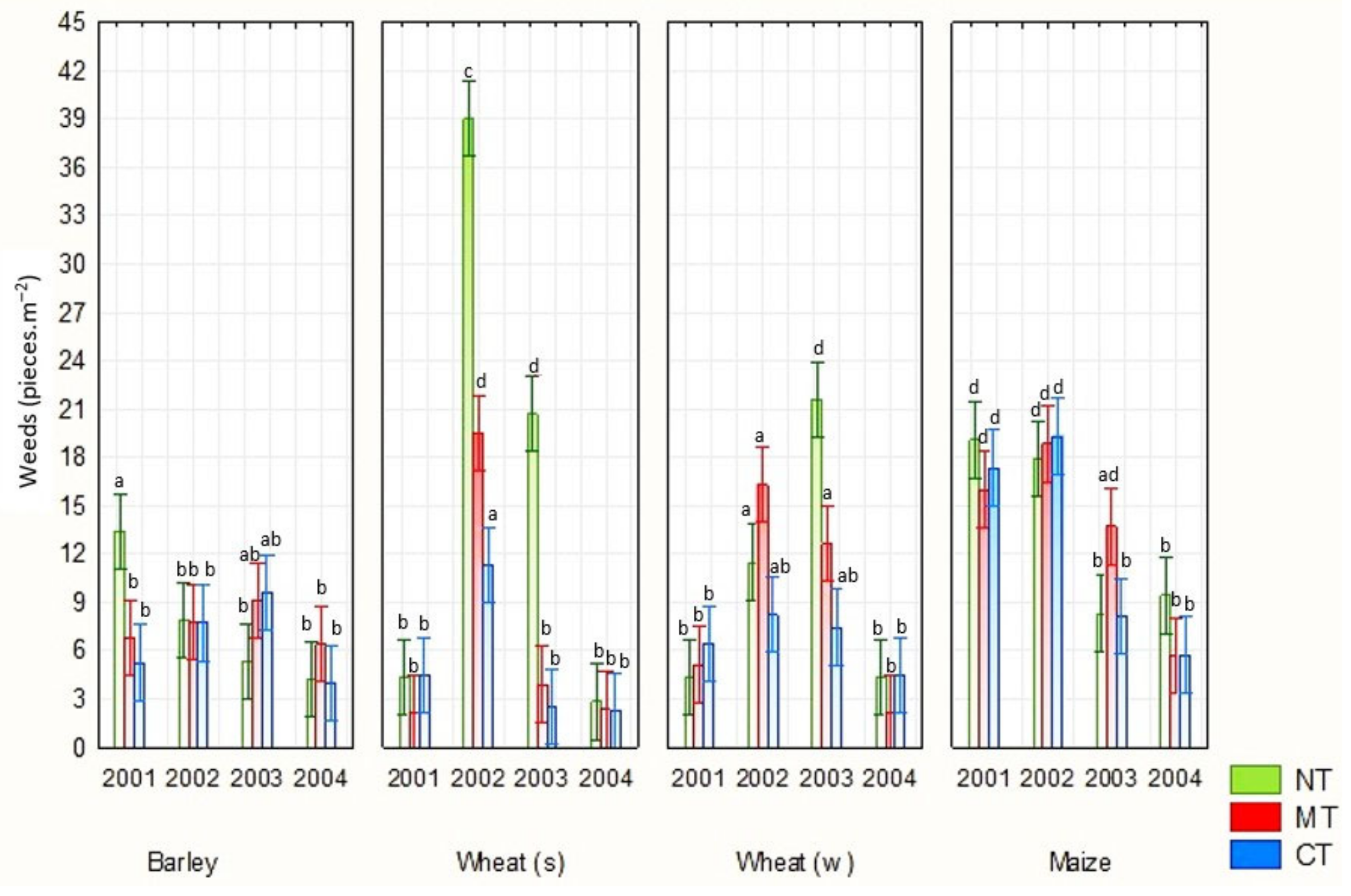
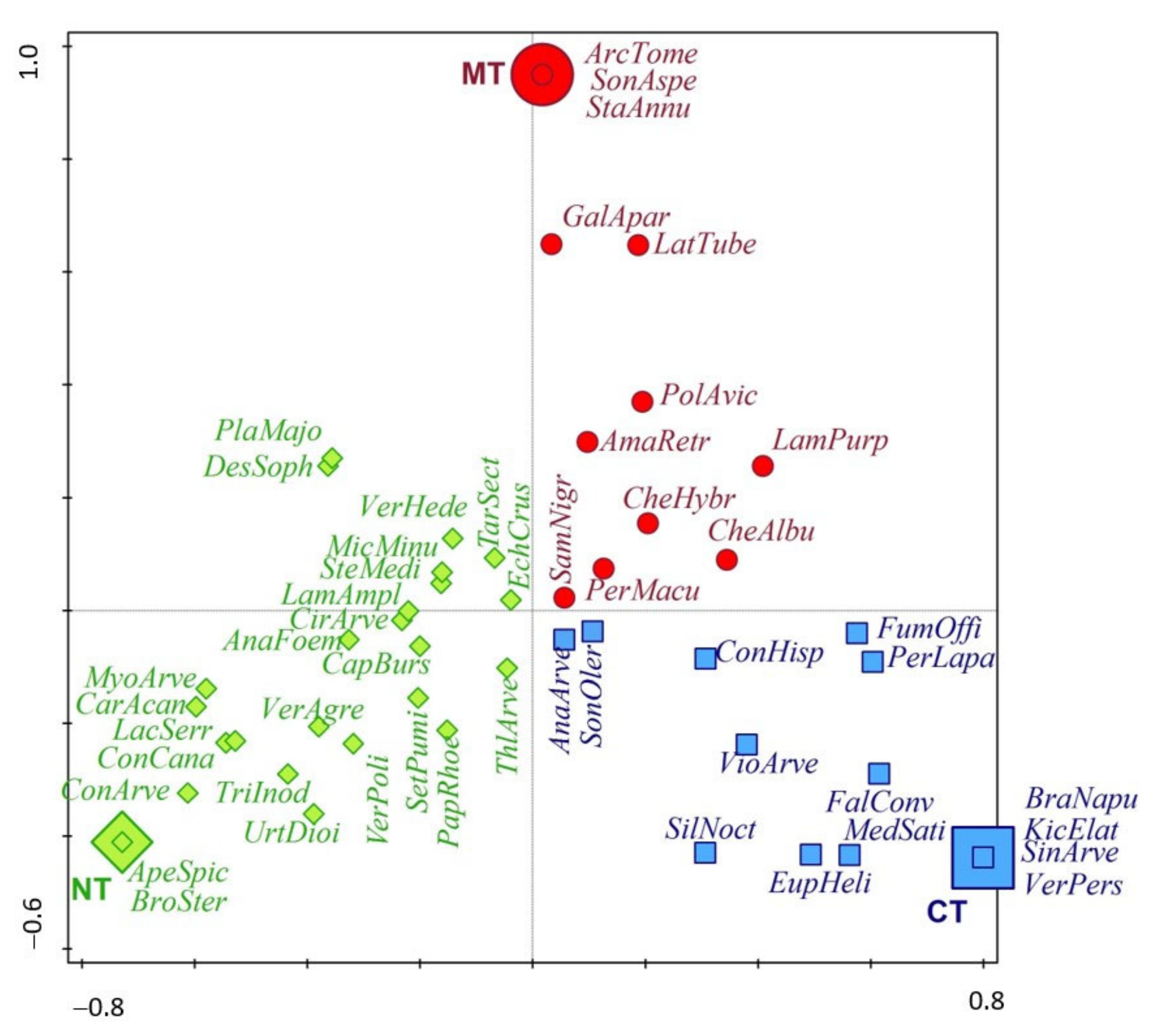
Limited tillage provides a number of benefits, but a question remains how it affects weed community and biodiversity evolving from the weed community. Our field experiment was established in the cadastral area of Branišovice (South Moravian Region, Czech Republic). Three different tillage technologies were used in this field experiment: conventional tillage, minimum tillage, and no-tillage technology. In 2001–2004, infestation by weeds was evaluated in the stands of spring barley, winter wheat grown after a dicot pre-crop (rape, soybean), in the stands of wheat grown after wheat, and in stands of maize. The recorded weed species were divided according to the criteria of biological relevance. Based on the results of the four-year field experiment, it is possible to state that tillage technologies have only a limited influence on the intensity of weeding but substantially alter the species spectrum of weeds. Weed vegetation in the no-tillage variant exhibits higher values of biological relevance, which allows a higher occurrence of weed-dependent species of organisms. Weed vegetation in the minimum soil tillage variant has the lowest biological relevance values, which limits the occurrence of weed-dependent organisms. Alterations in weeding caused by different tillage technologies are part of the process of vegetation microevolution in the agricultural landscape.
Keywords: weed vegetation; soil tillage; conservation tillage; biodiversity weed vegetation; soil tillage; conservation tillage; biodiversity