Article

Population Trends and Urbanisation in Mountain Ranges of the World
by
Daniele Ehrlich
1,*,
Michele Melchiorri
2 and
Claudia Capitani
1
1
European Commission, Joint Research Centre, Via Enrico Fermi, 21027 Ispra, Italy
2
Engineering S.p.a, Piazzale dell’Agricoltura 24, 00144 Roma, Italy
*
Author to whom correspondence should be addressed.
Land 2021, 10(3), 255; https://doi.org/10.3390/land10030255
Submission received: 30 December 2020 / Revised: 22 February 2021 / Accepted: 24 February 2021 / Published: 3 March 2021
(This article belongs to the Special Issue Mountains under Pressure)

Abstract

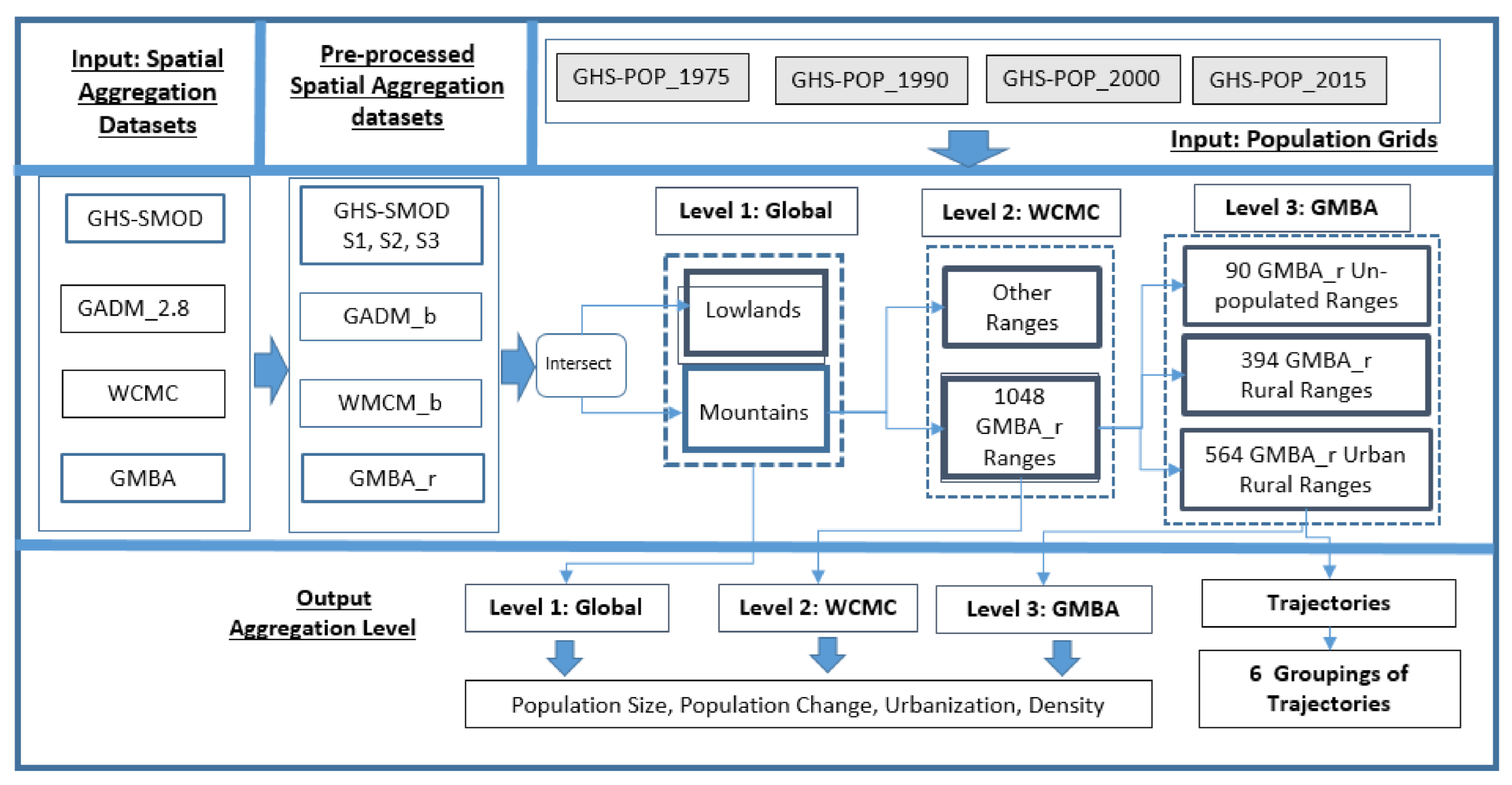
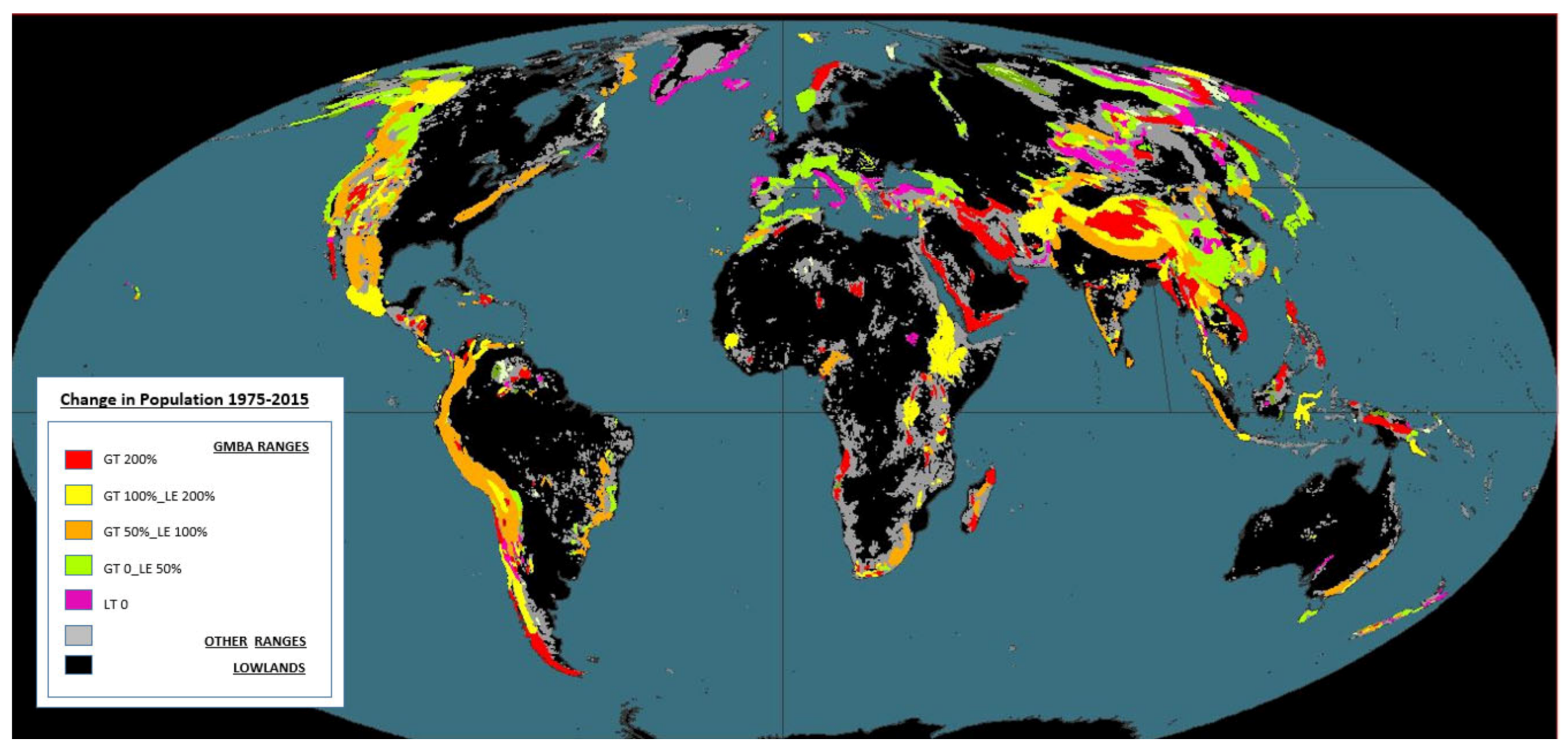
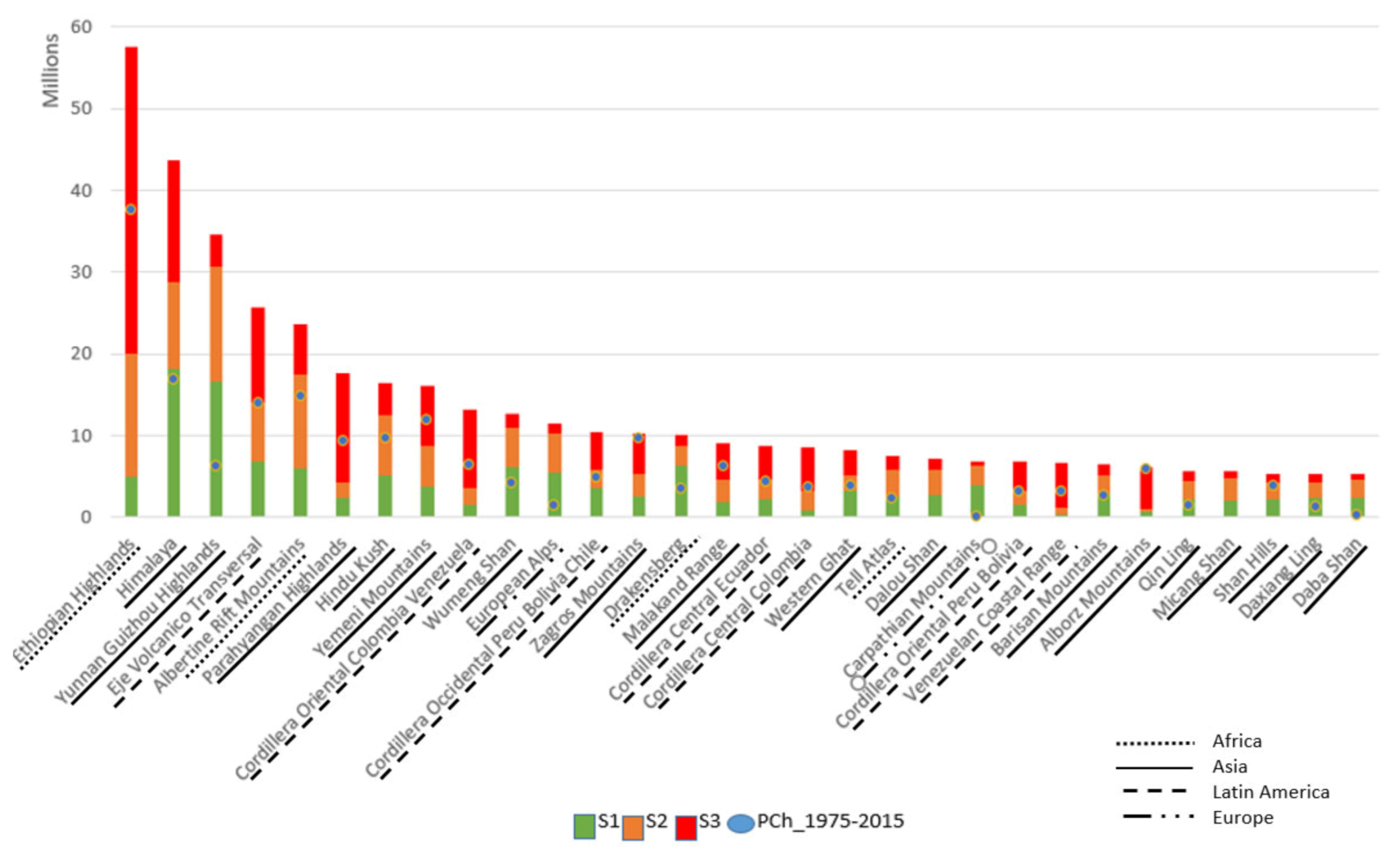
This study assesses the global mountain population, population change over the 1975–2015 time-range, and urbanisation for 2015. The work uses the World Conservation Monitoring Centre (WCMC) definition of mountain areas combined with that of mountain range outlines generated by the Global Mountain Biodiversity Assessment (GMBA). We estimated population change from the Global Human Settlement Layer Population spatial grids, a set of population density layers used to measure human presence and urbanisation on planet Earth. We show that the global mountain population has increased from over 550 million in 1975 to over 1050 million in 2015. The population is concentrated in mountain ranges at low latitudes. The most populated mountain ranges are also the most urbanised and those that grow most. Urbanisation in mountains (66%) is lower than that of lowlands (78%). However, 34% of the population in mountains live in cities, 31% in towns and semi-dense areas, and 35% in rural areas. The urbanisation rate varies considerably across ranges. The assessments of population total, population trends, and urbanisation may be used to address the issue “not to leave mountain people behind” in the sustainable development process and to understand trajectories of change.
Keywords: population; population trends; urbanisation; sustainable development population; population trends; urbanisation; sustainable development