1. Introduction
China is abundant in coal resources and ranks as the world’s largest coal-producing country. Various safety hazards that emerge during coal mining, including water hazards, gas hazards, fires and roof collapses, have severely restricted the development of the coal industry. Due to the complex and variable geological and hydrogeological conditions of coal seams in different regions, the movement and deformation characteristics of mining-induced overburden are also complex and diverse [
1,
2,
3]. Bed separation refers to horizontal fractures formed in the overburden during coal mining when the lower strata exhibit greater deflection than the upper strata. The formation mechanism of bed separation is a relatively complex issue [
4,
5,
6,
7]. Accurately identifying and predicting the spatiotemporal evolution of bed separation development is a prerequisite for preventing bed separation water inrush hazards and implementing bed separation grouting.
At present, extensive studies have been carried out to analyze the distribution and evolution characteristics of bed separation based on the voussoir beam theory, which can characterize the deformation of longwall panels or overburden [
8,
9]. Some researchers believe that the spatial scale, distribution, and duration of bed separation are affected and controlled by key strata, and that bed separation above the key strata is generally limited prior to their fracture [
10,
11]. The traditional criterion for identifying the location of bed separation is to compare the lithology of different strata in the overburden and calculate the vertical deformation of the overburden based on the voussoir beam theory, so as to predict the distribution of bed separation [
10,
12,
13,
14,
15,
16,
17].
In recent years, extensive studies have been carried out on the monitoring, identification and static distribution characteristics of bed separation [
2,
10,
11,
12,
13,
14,
15,
16,
17]. However, in actual coal mining, the length-to-width ratio of the suspended roof area varies continuously as the panel advances. Meanwhile, bed separation develops vertically and propagates upward from the strata above the panel toward the near-surface strata. In addition, the overburden above the coal seam roof is a three-dimensional geological body with a massive or stratified structure. Under mining disturbance, adjacent rock masses with different lithologic combinations in the overburden may deform in a coordinated manner [
18,
19,
20]. Most existing studies focus on the static description or local dynamic analysis of bed separation [
21,
22,
23,
24]. Systematic research on the spatiotemporal evolution of bed separation remains insufficient, and quantitative prediction of bed separation at different development stages is still lacking. In particular, the quantitative relationship among vertical propagation toward the surface, horizontal expansion along the panel advance direction, and panel advancing distance has not been clearly revealed. Meanwhile, the existing achievements are insufficient in establishing a unified dynamic evolution model, leading to the lack of theoretical support for accurate dynamic prediction of bed separation. Conducting such research is of great significance for engineering practice.
Therefore, this study focuses on analyzing the spatiotemporal evolution laws and prediction methods of bed separation development at different stages. Based on the geometric and mechanical similarity criteria corresponding to field engineering conditions, the scale model is designed to reasonably reproduce the lithologic combination, stratal thickness, and in situ stress environment of the overlying strata in practical mining engineering. The improved criterion for identifying the location of bed separation classifies the combined rock masses that may undergo coordinated deformation based on lithology comparison of strata at different horizons. The plate model can be regarded as a two-dimensional extension of the voussoir beam model, and its boundary conditions can be determined according to actual engineering geological conditions. Then, the deformation of the overburden above the coal seam is calculated based on a three-dimensional mechanical model, so as to comprehensively analyze the potential locations of bed separation development. This research aims to provide a scientific basis for design for the prevention of bed separation water inrush hazards and bed separation grouting for surface subsidence control.
2. Materials and Methods
2.1. Geological Characteristics and Model Assumptions of Study Area
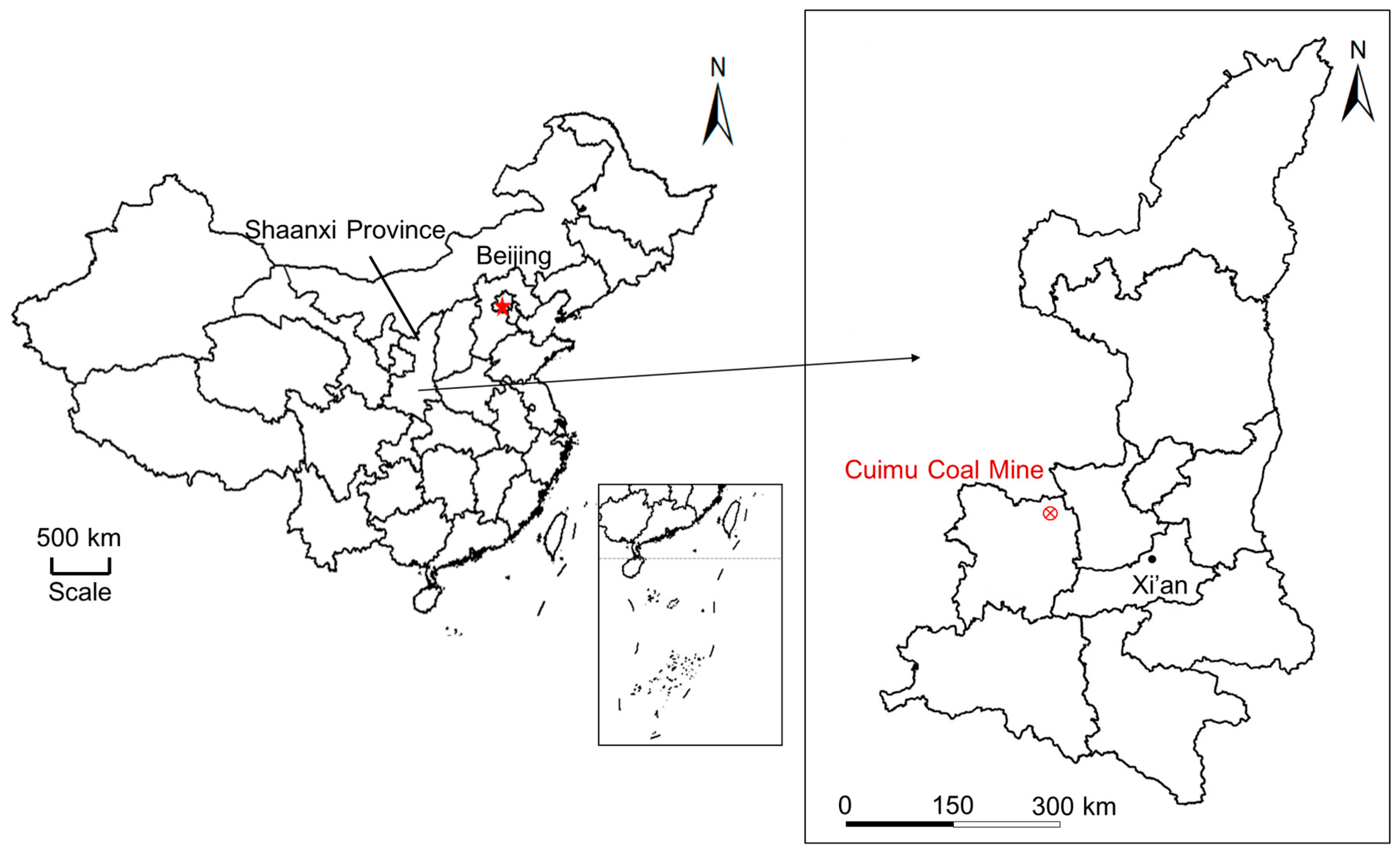
The Cuimu Coal Mine is located in Baoji City, Shaanxi Province, China, at the eastern end of the Yonglong Mining Area (
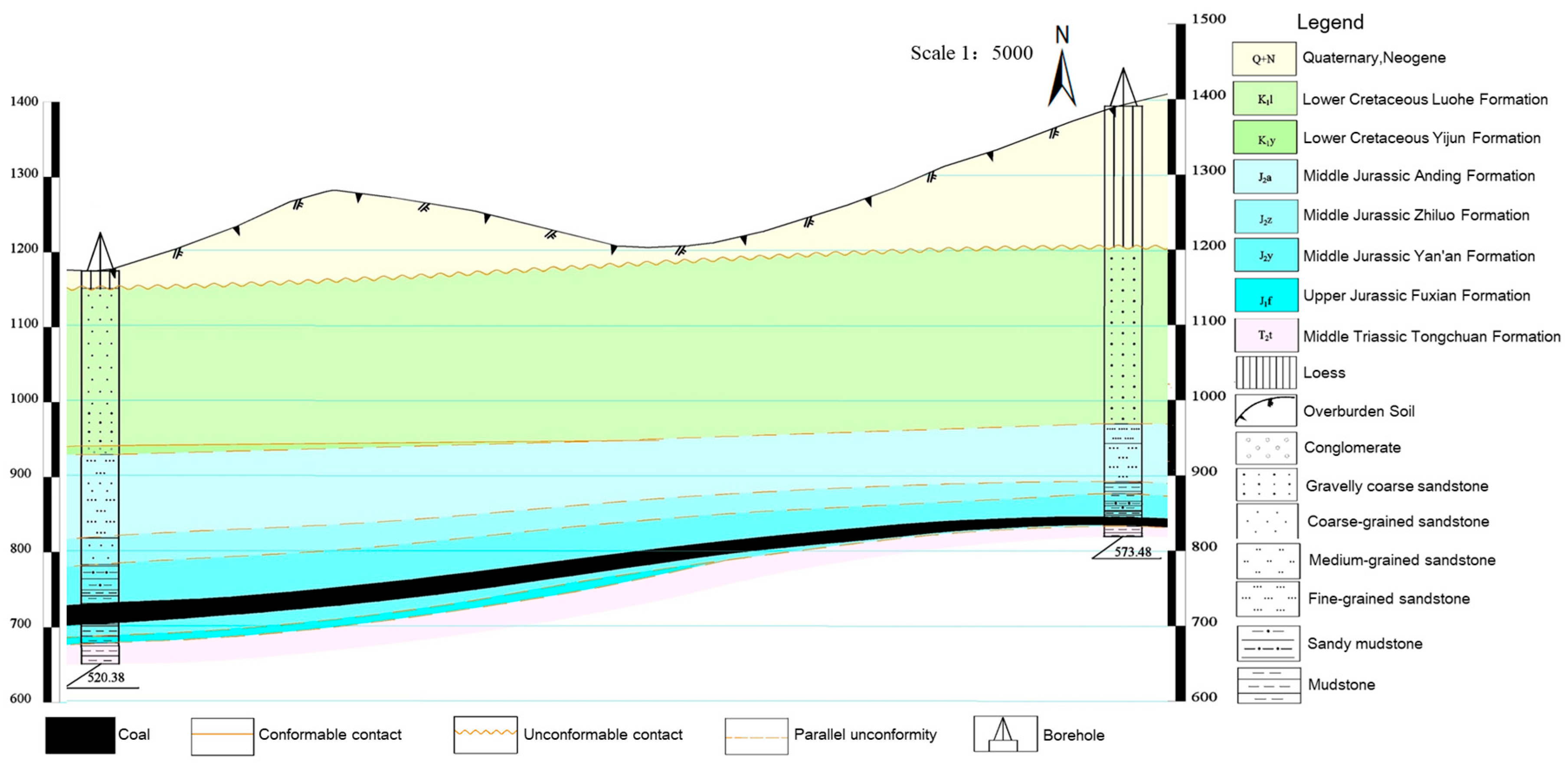
Figure 1). The Yonglong Mining Area is located on the northern margin of the Weibei Flexural Fold Belt in the southern Ordos Basin. The coal seams are primary minable seams with an inclination angle of 3–5°, classified as near-horizontal coal seams, and are moderately stable. The No. 3 coal seam has an average thickness of 10 m. The roof rocks of the No. 3 coal seam are mainly composed of dark gray mudstone, sandy mudstone, siltstone, and fine-to-medium-grained sandstone. The floor rocks of the No. 3 coal seam consist of gray to dark gray mudstone, gray-brown aluminous mudstone, and siltstone to fine aluminous sandstone (
Figure 2).
2.2. Dynamic Prediction of Bed Separation Evolution
Each rock stratum is assumed to be an elastic plate, and the interface between lithologically distinct strata is regarded as an elastic surface. Based on the fundamental differential equation of the elastic surface for thin plates with small deflections, the displacement perpendicular to the mid-plane is defined as the deflection, and its solution is derived in accordance with the boundary conditions of the thin-plate surface. The material of a thin plate is continuous, perfectly elastic, homogeneous and isotropic. When a thin plate undergoes bending and the ratio of the maximum displacement of each point in the plate to the plate thickness ranges from 1/10 to 1/5, the internal force in the thin plate is dominated by the bending moment. The deflection of rock strata is typically much smaller than their thickness, a condition that effectively satisfies the fundamental assumption of the small-deflection plate theory. The bending moment, combined with transverse shear force, can be analyzed by the small-deflection thin-plate model. This model can be used to calculate the bending deflection (ω) of rock strata relatively accurately and predict the initial deformation, fracture characteristics, periodic deformation and fracture laws of the overburden strata.
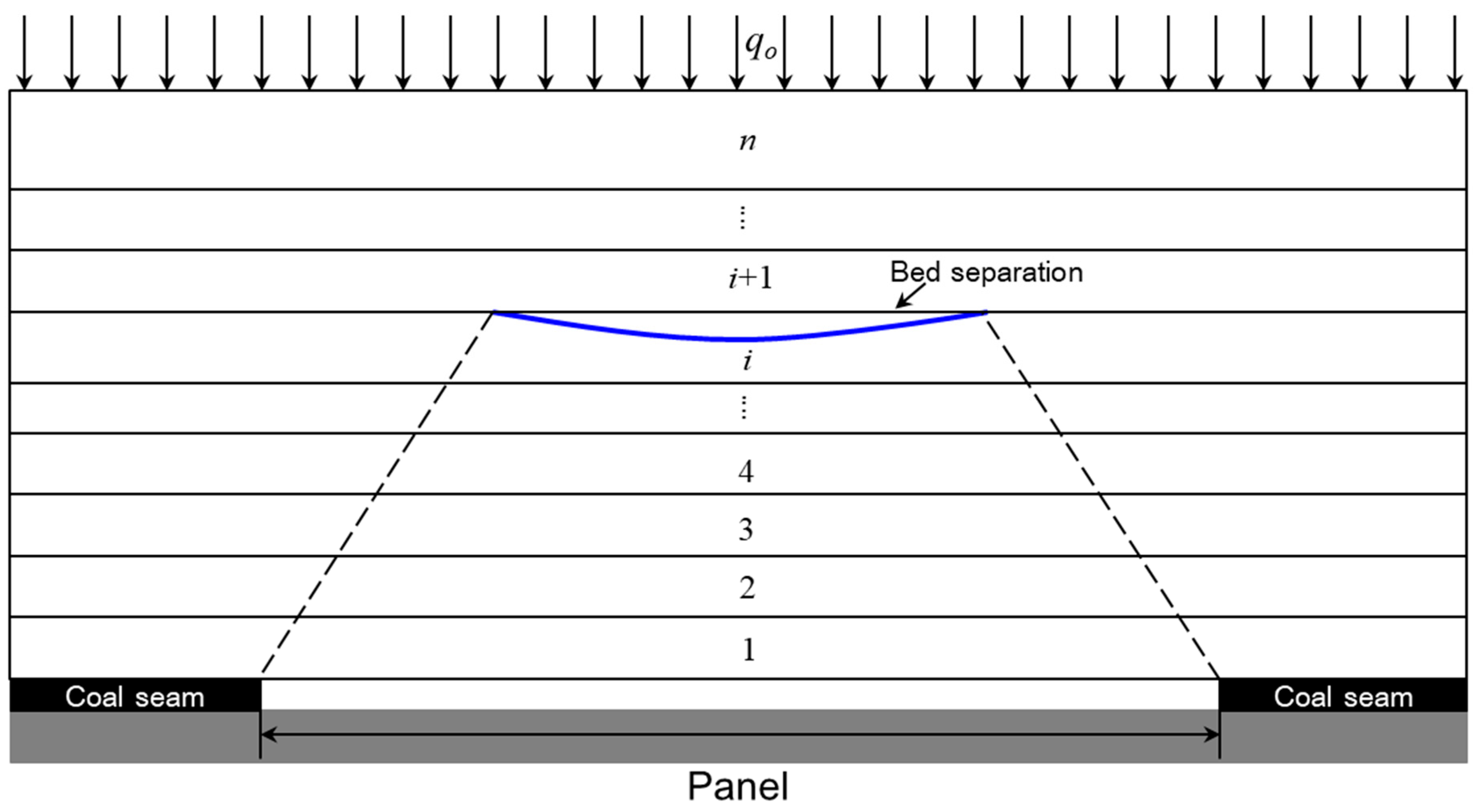
Assume there are
n rock strata in the overburden, where the strata at different horizons experience varying degrees of vertical downward bending deformation induced by panel excavation and goaf formation. A bed separation space develops between the
i-th and (
i + 1)-th rock strata, and the rock stratum at the top of the bed separation space is subjected to a uniformly distributed load
qo from the overburden strata (
Figure 3). The flexural deflection of overlying strata evolves continuously in response to the advancing longwall face.
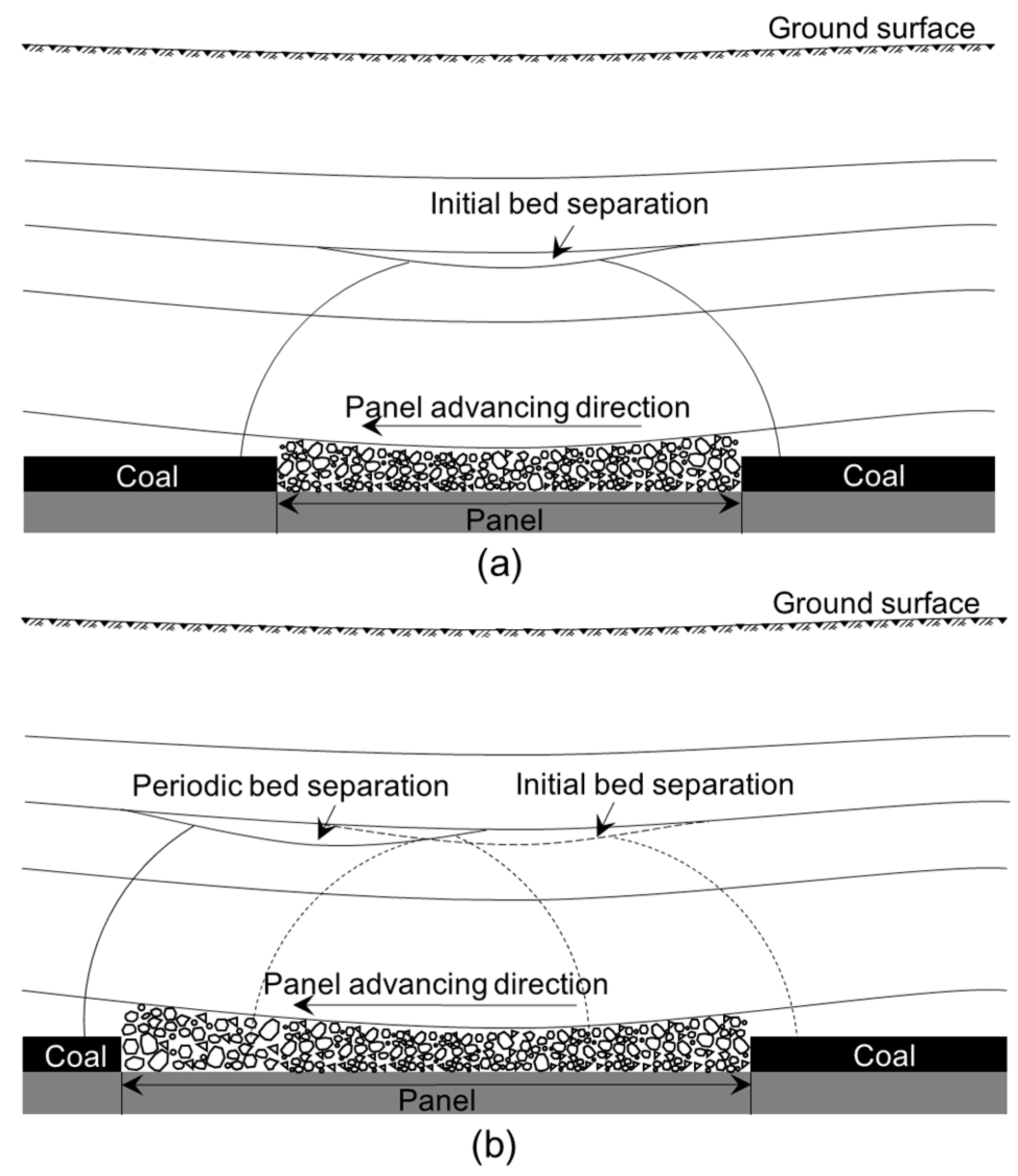
During the initial development of bed separation, the stable state of the original overburden strata is disrupted. Before the strata fracture above the bed separation, the bed separation is confined by adjacent competent strata under clamped-edge conditions, which define the boundary constraints for the initial deformation of the rock mass (
Figure 4a). When the overburden strata fracture, the initially developed bed separation closes, causing the overburden above the panel to exhibit periodic deformation and fracturing, with the rock mass boundary adjacent to the goaf forming a simply supported boundary (
Figure 4b). The interfaces between strata are weak structural planes with relatively low cohesion, so the work contributed by cohesion is neglected in the solution of the mechanical model.
2.3. Identification of Bed Separation Development Locations
Multiple bed separation spaces may exist simultaneously between the upper interface of the caving zone and the lower interface of the continuous deformation zone during the coal seam mining process. Before the overburden strata reach the ultimate breaking span, the bed separation spaces continuously develop forward and upward along the advancing direction of the panel with panel advance, until they reach the crown of the pressure arch (
Figure 4). The vertical height of the developed bed separations remains constant. The initially developed bed separation spaces may close, while the redeveloped bed separations form at the same stratigraphic positions. Therefore, the model for determining the bed separation occurrence horizon is established following these steps.
Step 1: Identification and classification of the lithological properties of the overlying strata
This
P-coefficient classification method is applicable to stratified sedimentary rock masses with relatively regular lithologic distribution. It is particularly suitable for cases where the overburden exhibits integral bending deformation without severe fragmentation or discontinuous failure and where the mechanical properties of rock strata are mainly controlled by lithology and thickness. Assuming that the overburden strata above the panel undergo bending deformation under overall integrity, different strata assemblages maintain overall structural continuity. The
P-coefficient method is applied to classify the overburden strata, where adjacent strata with the same comprehensive evaluation coefficient
P are grouped into a single class. The comprehensive evaluation coefficient
P is determined by the lithology and thickness of the overburden strata, and it can be expressed as follows:
where
mi is the normal vertical distance of the
i-th layer (m), and
Qi is the lithological evaluation coefficient of the
i-th layer (
Table 1). The selected ranges are determined based on the typical mechanical properties of comparable rock strata in the study area, as well as field engineering practice.
Step 2: Identification of bed separation space horizons
The deformation of the overburden strata above the panel exhibits a certain lag relative to coal seam mining. Based on Formula 2, a preliminary determination is made on the horizons of bed separation spaces that may develop in the overburden strata under the influence of excavation.
where
E denotes the modulus of elasticity (MPa),
H denotes the thickness of the overburden strata (m), and
ρ denotes the bulk density (kg/m
3).
Step 3: Deflection calculation for differently combined overburden rock masses
The deformation of rock strata within the range from the upper boundary of the water-conducting fractured zone to the continuous deformation zone is calculated under two distinct loading conditions: initial mining pressure and periodic pressure.
Step 4: Identification and analysis of bed separation development locations
According to the rock strata deflection results obtained in Step 3, bed separation develops when the deflection of the lower composite rock mass exceeds that of the upper composite rock mass between the upper boundary of the water-conducting fractured zone and the continuous deformation zone.
2.4. Scale Model Testing
A two-dimensional similar-material model was established to simulate the deformation and displacement of overburden, as well as the formation and dynamic evolution process of bed separation during coal mining.
Table 2 lists the overburden stratigraphy and the main material proportions for each stratum of the panel. The cementitious material, aggregate, and water together constitute the similar materials. In this experiment, gypsum powder—the most widely used air-hardening cementitious material—was adopted as the cementitious agent. Serving as the main aggregate, river sand, whose primary component is silicon dioxide (SiO
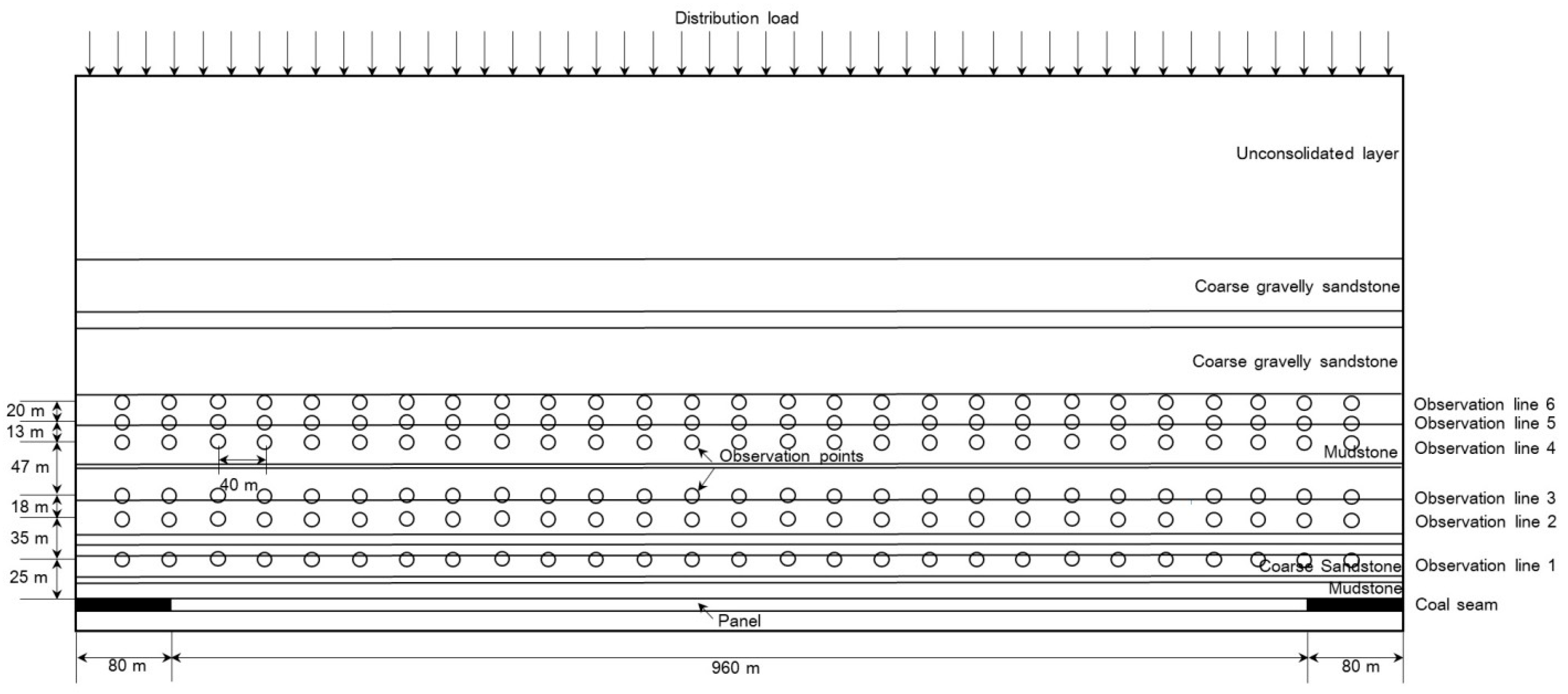
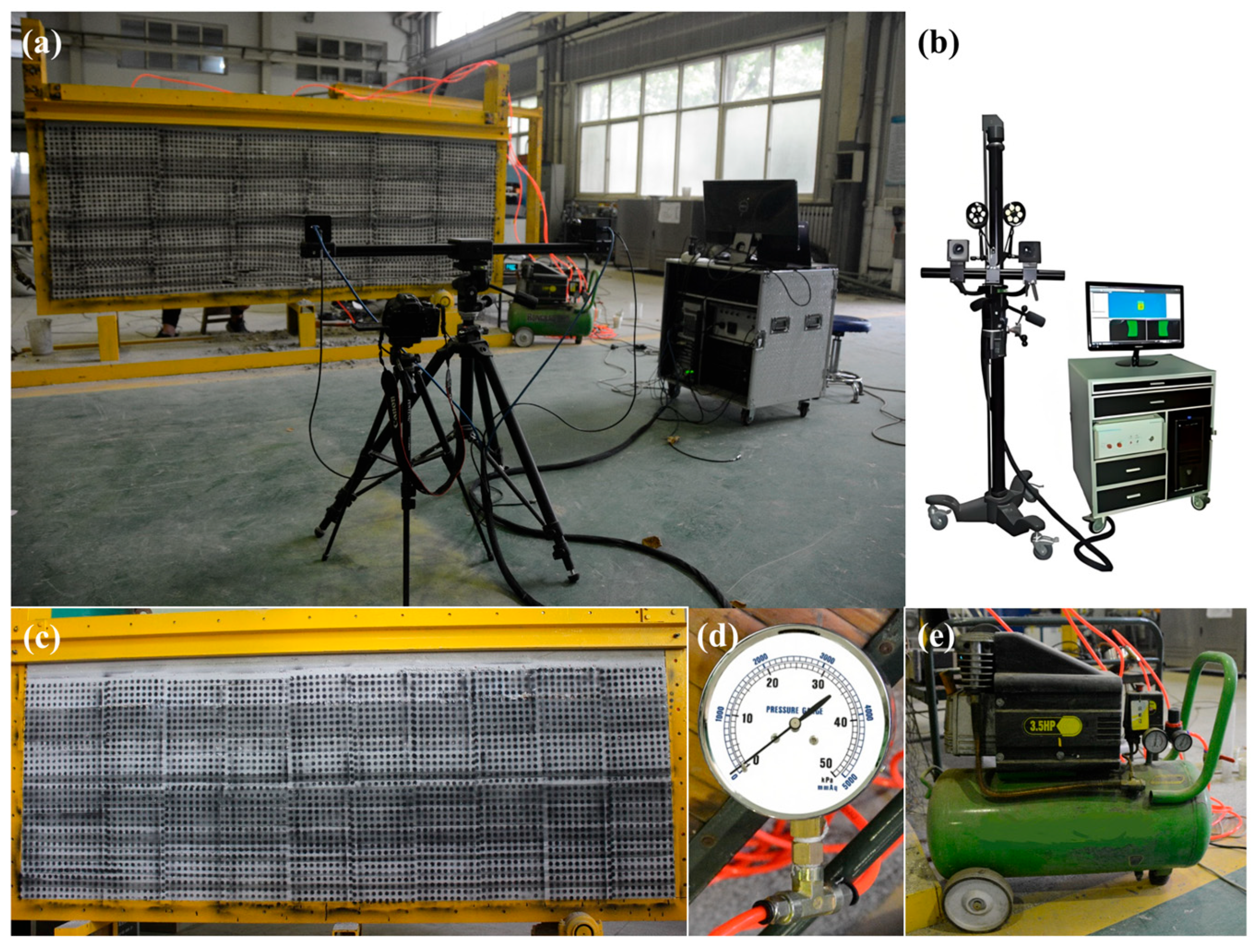
2), was used in the test. Ground calcium carbonate (GCC) was employed as an inert fine filler and performance-modifying additive to accurately control the density and strength of the similar materials. Based on geometric and mechanical similarity criteria, the material proportions were determined, and a series of orthogonal experiments, laboratory direct shear and uniaxial compression tests were conducted. These tests aimed to ensure that the similar materials matched the in situ rock strata in terms of density, compressive strength, and elastic modulus, thereby validating the reliability of the model. The scale model has a size of 2.8 m × 0.2 m × 1.2 m (length × width × height) to a scale of 1:400. In the scale model, the overburden and the coal seam are simulated by a mixture of sand, calcium carbonate, gypsum, cement, pulverized coal and water. A 4 cm thick base plate is placed at the bottom of the model. The open-off cut is excavated at a distance of 20 cm from the model boundary (
Figure 5). The model tests simulate the mining process along the strike direction, excavating from right to left.
The unconsolidated layer is 39 cm thick. The bulk density similarity ratio of the model is 2:3. At the top of the model, the compressed air bag is used to simulate the overburden pressure of the unconsolidated layer. An equivalent surcharge load of 3.67 kPa was applied to simulate the overburden stress corresponding to an 88 m thick unconsolidated layer. The mining step is 5 cm, simulating the 20 m in prototype mining.
Photogrammetry and extended digital image correlation (XTDIC) were adopted to monitor bed separation and overburden deformation during the test (
Figure 5b). The XTDIC system features a measurement field-of-view ranging from 4 mm to 4 m and a strain measurement range from 0.01% to 1000%. It is suitable for large-deformation and dynamic strain measurements and is characterized by high speed, simplicity, and high precision. Observation lines are set along strata where bed separation is expected to occur. The observation lines are arranged along the potential bed separation horizons preliminarily identified in Step 2. Six observation lines at 6.3 cm, 15.0 cm, 19.5 cm, 31.3 cm, 34.5 cm and 39.5 cm were set from the roof of the coal seam, respectively. Six monitoring lines were installed at 25 m, 60 m, 78 m, 125 m, 138 m and 158 m in the prototype above the roof of the coal seam, respectively. From bottom to top, these are designated as monitoring line 1, monitoring line 2, monitoring line 3, monitoring line 4, monitoring line 5, and monitoring line 6. The initial observation point of each displacement monitoring line is 40 m from the model boundary, and the distance between adjacent observation points was 40 m. Each of the six displacement monitoring lines contained 27 observation points (
Figure 6).
3. Results and Discussion
3.1. Elasticity Models of Bed Separation Evolution
3.1.1. Mechanical Model for Initial Bed Separation Development Under Uniformly Distributed Loads
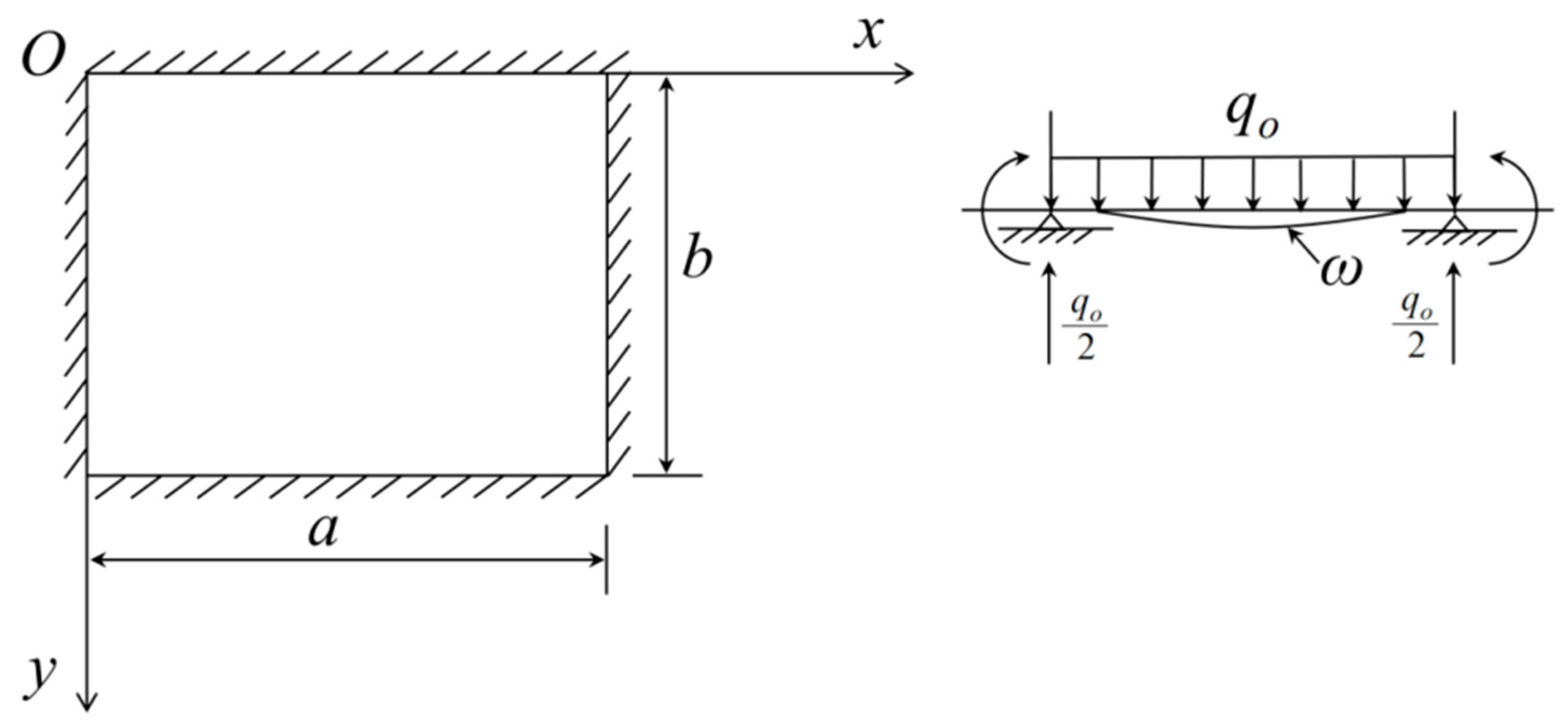
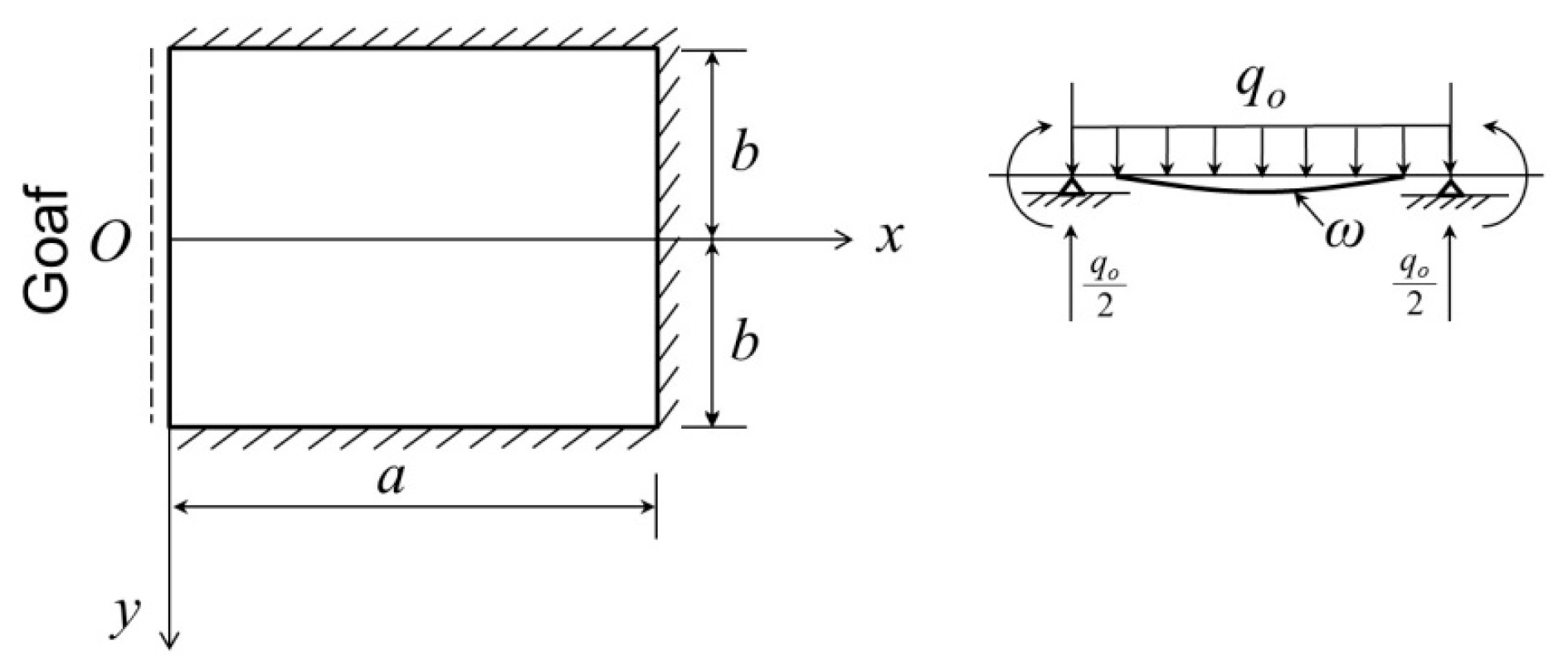
Assuming the thickness of the thin plate is
h, its lengths in the
x and
y directions are
a and
b, respectively (
Figure 7). The plate is subjected to a uniformly distributed load
qo in the direction perpendicular to the plate surface, where
qo =
γH,
γ is the bulk density of the rock layer, and
H is its thickness. The boundary conditions for small deflection of a four-edge clamped rectangular thin plate during initial bed separation development are as follows:
Expression for the strain energy of a rectangular thin plate:
where
v is Poisson’s ratio and
E is Young’s modulus.
Since the strain energy is independent of the thickness coordinate
z, the total bending strain energy is obtained by integrating over the plate thickness and substituting flexural rigidity
into the expression.
Since
=
= 0, it follows that
For a rectangular thin plate subjected to a uniformly distributed load
qo, the total potential energy Π
p of the thin plate is given by:
Assume the vertical displacement deflection function is:
Since all boundaries are prescribed displacement boundaries when all four edges are clamped, we select
m =
n = 1 and substitute Equation (9) into Equation (8). Thus, the deflection coefficient is obtained.
Substituting Equation (11) and
qo =
γH into Equation (9), we obtain the vertical displacement deflection function for a plate with all four edges clamped.
3.1.2. Mechanical Model for Periodic Bed Separation Development Under Uniformly Distributed Loads
Assuming the thickness of the thin plate is
h, its lengths in the
x and
y directions are
a and 2
b, respectively (
Figure 8). The plate is subjected to a uniformly distributed load
qo in the direction perpendicular to the plate surface, where
qo =
γH,
γ is the bulk density of the rock layer, and
H is its thickness. The rock mass adjacent to the goaf is simplified to a simply supported rectangular thin plate, and the corresponding boundary conditions for the development of periodic bed separation are as follows:
Expression for the strain energy of a rectangular thin plate:
where
v is Poisson’s ratio and
E is Young’s modulus.
Since the strain energy is independent of the thickness coordinate
z, the total bending strain energy is obtained by integrating over the plate thickness and substituting flexural rigidity
into the expression.
Using Green’s theorem and the given boundary conditions, the solution is derived as follows:
For a rectangular thin plate subjected to a uniformly distributed load
qo, the total potential energy Π
p′ of the thin plate is given by:
Assume the vertical displacement deflection function is:
By setting
m =
n = 1 and substituting Equation (20) into Equation (19), the deflection coefficient is obtained.
Substituting Equation (22) and
qo =
γH into Equation (20), we obtain the vertical displacement deflection function of a single simply supported edge at the goaf.
3.2. Criterion for the Location of Bed Separations
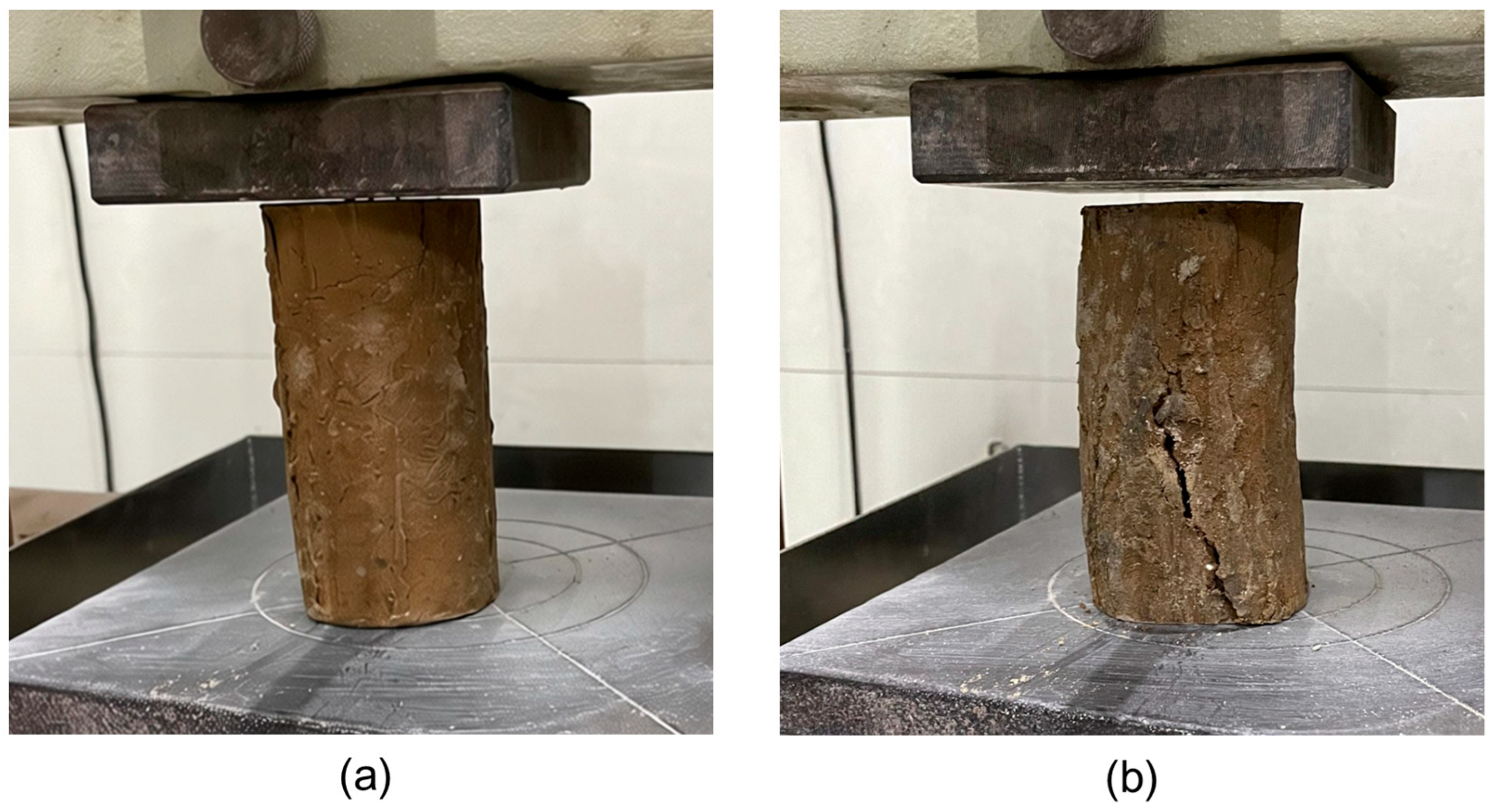
Elastic modulus, compressive strength, and Poisson’s ratio are determined through uniaxial compression tests; the internal friction angle is obtained via direct shear tests, and shear modulus is calculated from the elastic modulus and Poisson’s ratio (
Figure 9). The analysis is based on the rock physical and mechanical parameters obtained from borehole K2–3 at the Cuimu Coal Mine (
Table 3). The comprehensive evaluation coefficient of the medium-grained sandstone in both the 5th and 6th strata is 0.8, and no separation occurs at the interface between them.
The potential bed separation positions in the overlying strata are preliminarily determined according to Equation (2). The bed separation potential between adjacent strata is evaluated by comparing the left- and right-hand sides of the proposed criterion.
Between Stratum 1 and Stratum 2, the value on the left-hand side of the formula is greater than that on the right-hand side. Bed separation may develop between them during mining. However, Stratum 2 is located within the caving zone and fractures as the panel advances. As a result, the horizontal fractures will close rapidly and the strata will lose their sealing capacity. Thus, no bed separation develops between these two strata. The bed separation criterion is applied to evaluate the potential for interlayer separation at each stratum interface. For the interfaces between Strata 2–3, Strata 3–4, the combined Strata 5–6 and Stratum 7, and Strata 7–8, the left-hand side of the criterion is consistently smaller than the right-hand side, confirming that no bed separation develops at these locations. In contrast, at the interface between Stratum 4 and the combined Strata 5–6, the left-hand side value exceeds the right-hand side, indicating the occurrence of bed separation.
We combine adjacent strata where no bed separation develops between them to establish a new composite rock mass. Strata 2, 3 and 4 are combined into a composite rock mass, and Strata 7 and 8 into another. When comparing the i-th composite rock mass with the (i + 1)-th one, the greater the deflection of the i-th composite rock mass relative to that of the (i + 1)-th one, the larger the maximum gap of the bed separation developed.
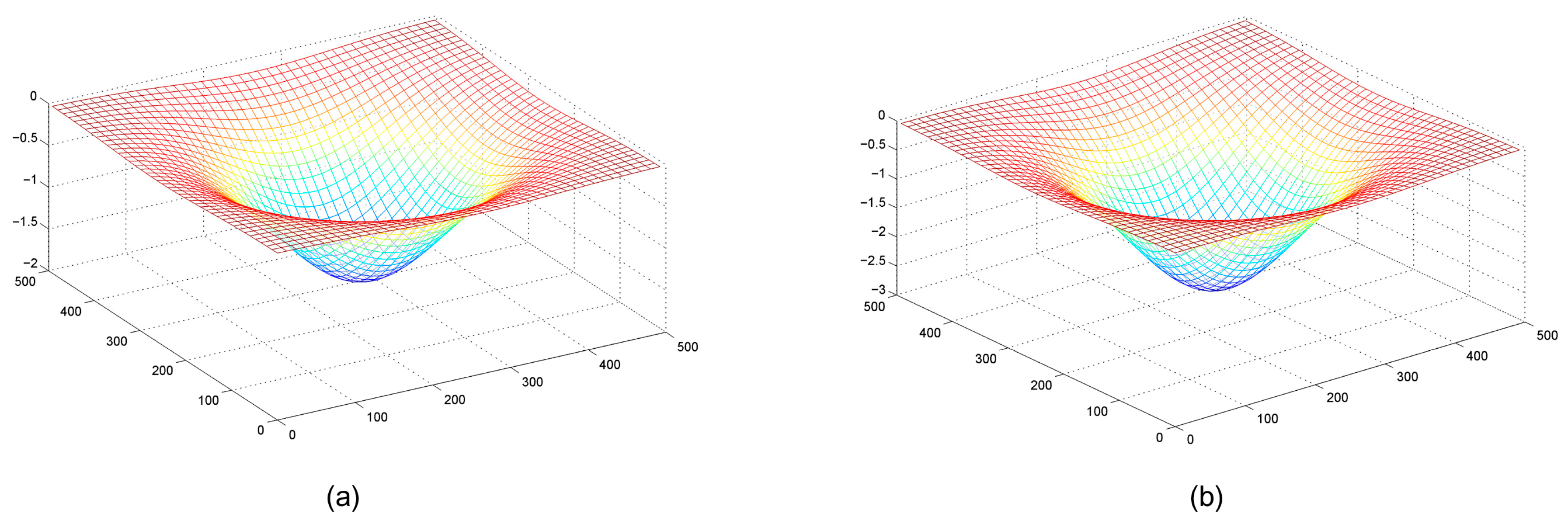
Equations (12) and (23) are adopted to calculate the rock mass deflection differences under the influence of initial weighting and periodic weighting, respectively (
Figure 10). According to the deflection results, bed separation will occur between Stratum 4 and the combined Strata 5–6, and the space of periodically developed bed separation is larger than that of initially developed bed separation.
3.3. Result from Scale Model Testing
As the panel advanced, the bed separation in the overlying strata showed a distinct spatio-temporal evolution. Mining conditions gradually transitioned from subcritical mining to critical mining. Critical mining bed separation refers to the bed separation formed above the goaf under critical mining conditions, where the mining scope is sufficiently large such that the overlying strata movement and surface subsidence have reached their maximum extent. Under this condition, the development range, height and opening of bed separation tend to be stable and no longer expand significantly with the increase in mining area. Subcritical mining bed separation refers to the bed separation formed under subcritical mining conditions, in which the mining range is relatively limited. Overlying strata movement and surface subsidence have not been fully developed, and the development degree, height and scale of bed separation will further increase as the mining scope expands.
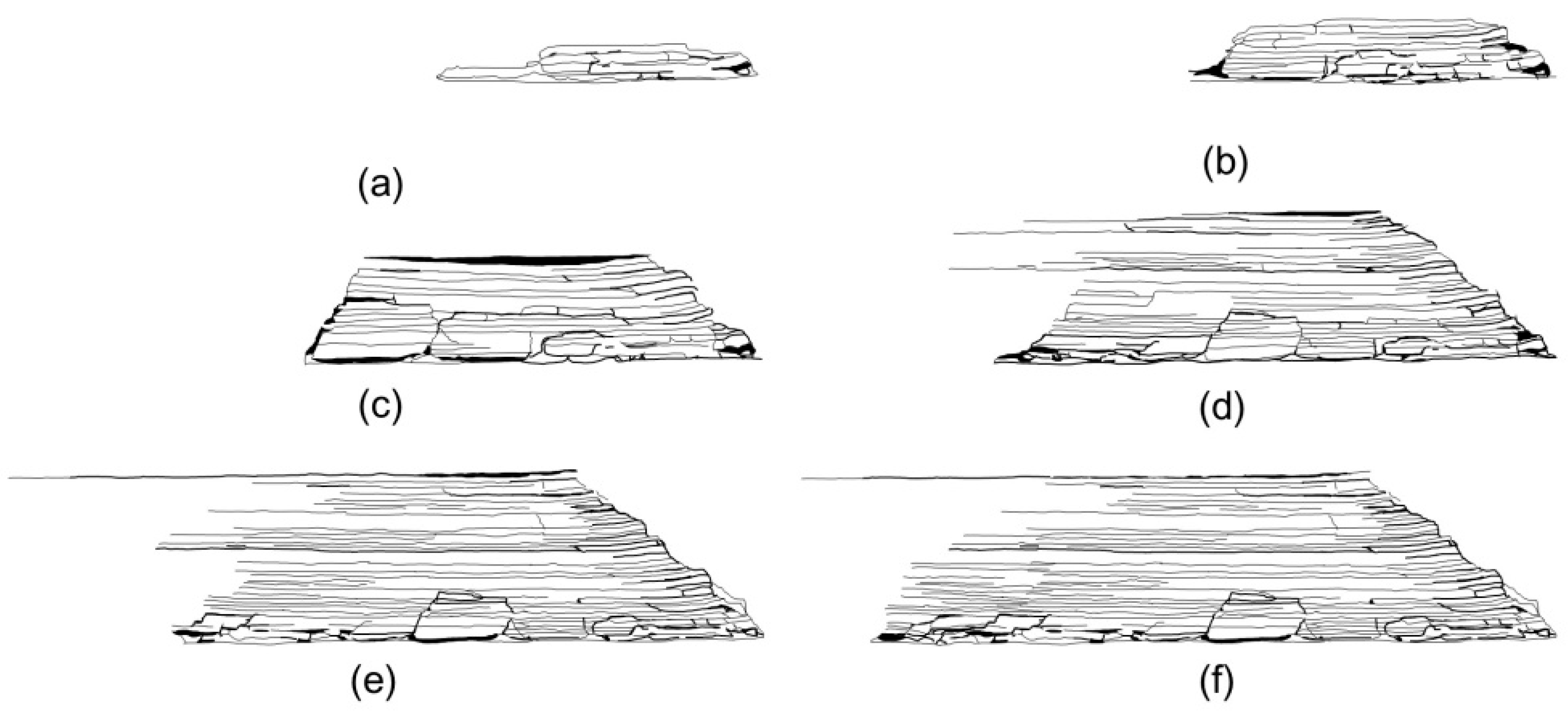
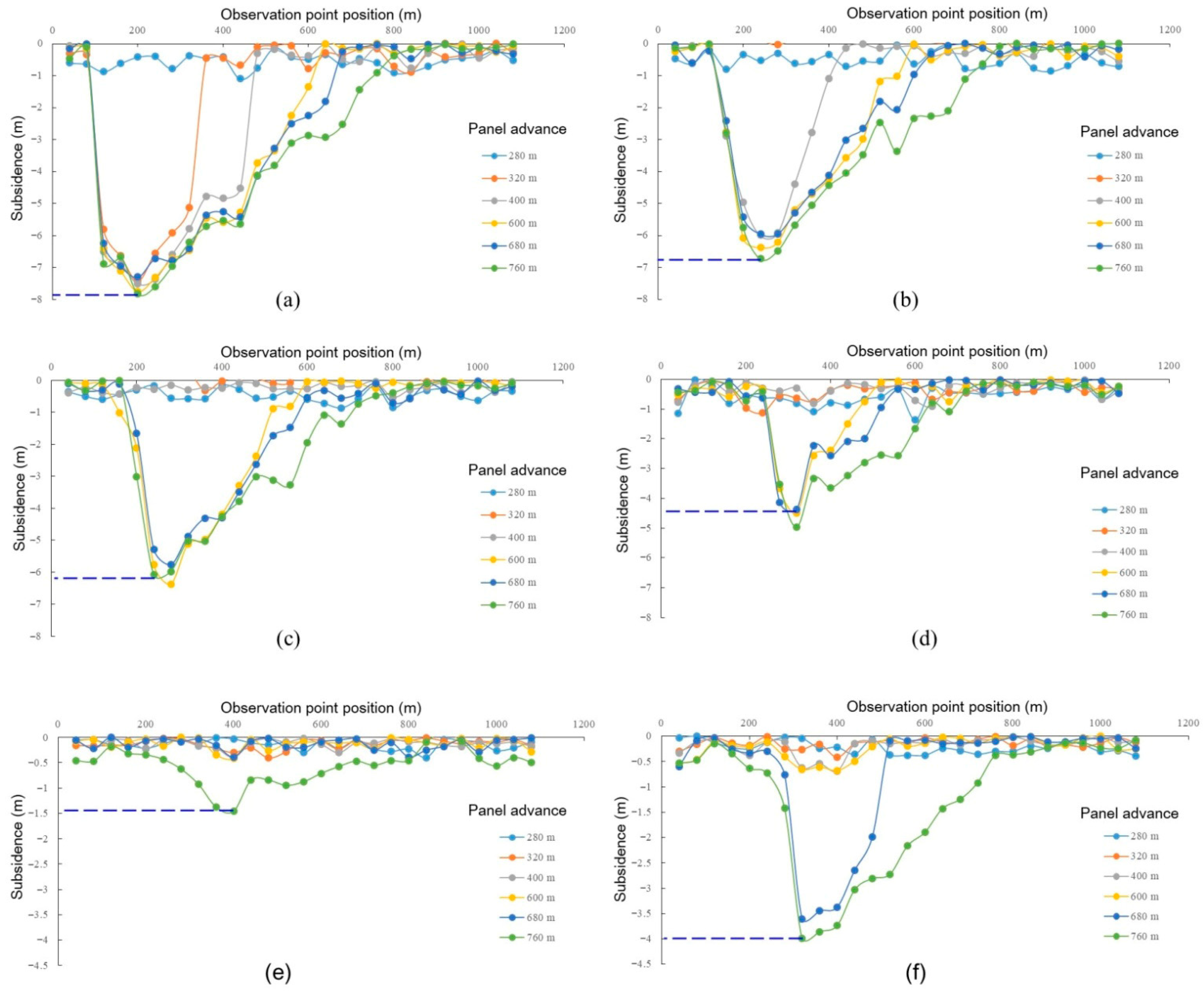
At a panel advance of 320 m, horizontal fractures initiated in the overlying strata above the panel, and the bed separation extended along the mining direction (
Figure 11b). Subsequently, as the panel advanced to 400 m, the first subcritical mining bed separation developed at approximately 70 m above the coal seam roof (
Figure 11c). The bed separation propagated both along the panel advance direction and upward toward the ground surface with further advancement to 600 m, with the second subcritical mining bed separation developing at approximately 137 m above the coal seam roof (
Figure 11d). Finally, when the panel advanced to 680 m, the third critical mining bed separation developed at approximately 156 m above the coal seam roof (
Figure 11e). Throughout the process, the horizontal extent of the bed separation increased continuously (
Figure 11f).
The development of bed separation lags behind mining. Bed separation develops gradually upward from lower to higher strata. When the panel reaches full extraction, bed separation ceases to develop upward. In the initial stage of high-level bed separation formation, the lower-level bed separation has not fully closed (
Figure 11e,f). Comparing
Figure 11c,d, the spatial dimension of lower-level bed separation is significantly larger than that of higher-level bed separation.
When the panel advances to 680 m, the vertical deflection of the bottom stratum in bed separation III is 3.60 m at approximately 240 m from the panel cut, and the vertical deflection of the top stratum in bed separation III is 0.38 m at approximately 320 m from the panel cut. At this stage, bed separation III develops within the range of about 80 m to 440 m from the panel cut. When the panel advances to 760 m, the maximum vertical deflections of the bottom and top strata in bed separation III are 3.98 m and 1.46 m, respectively (
Figure 12e,f). At this time, the developed region of bed separation III extends within the range of approximately 80 m to 640 m from the panel cut. When relatively thick and strong rock strata or combined rock masses exist in the overburden, the expansion and duration of the underlying bed separation space are increased. An abnormal increase in the horizontal dimension of bed separation is observed.
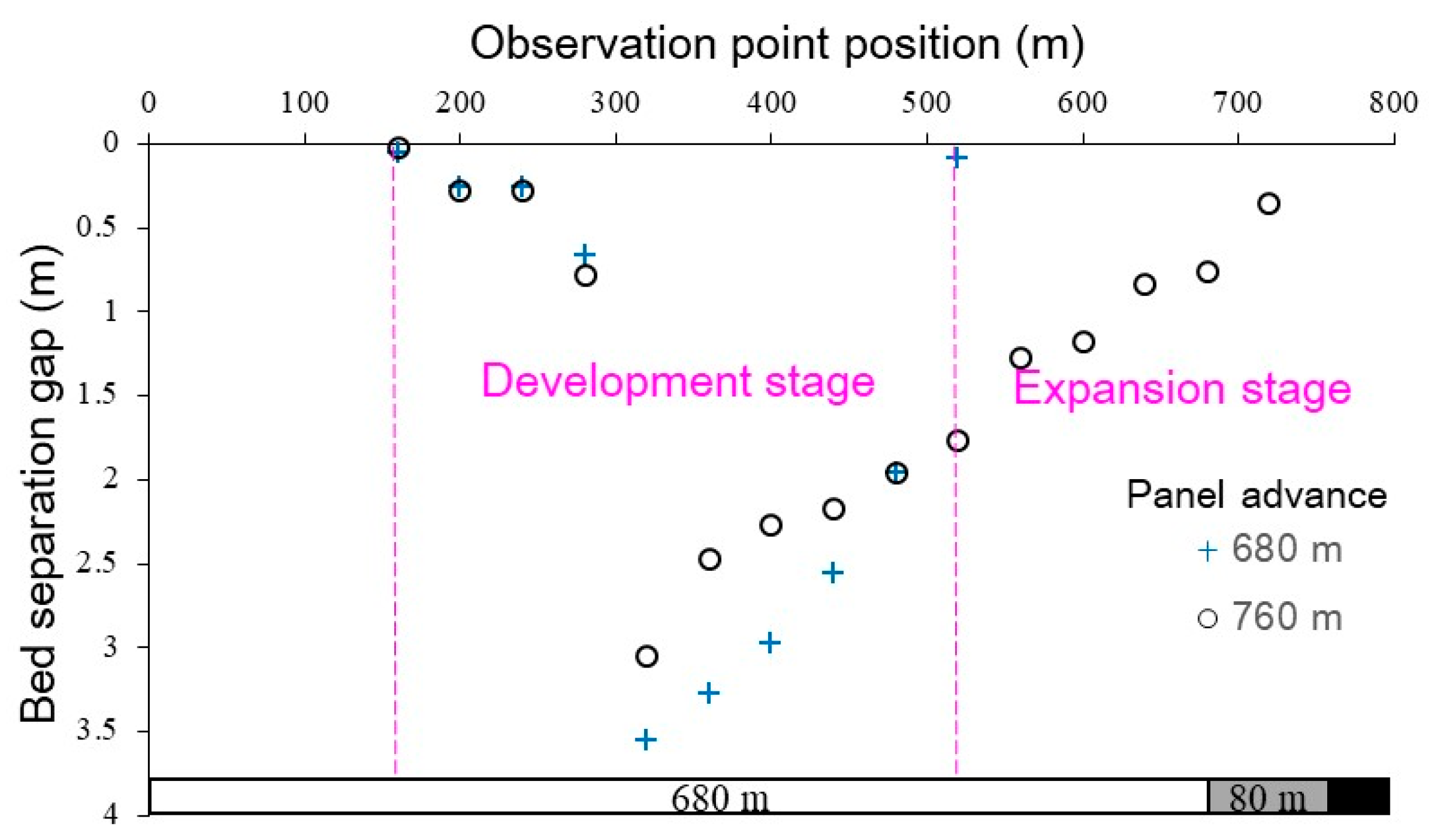
The maximum bed separation gap decreased from 3.57 m to 3.06 m as the panel advanced from 680 m to 760 m, while the lateral extent of the bed separation increased by nearly 200 m (
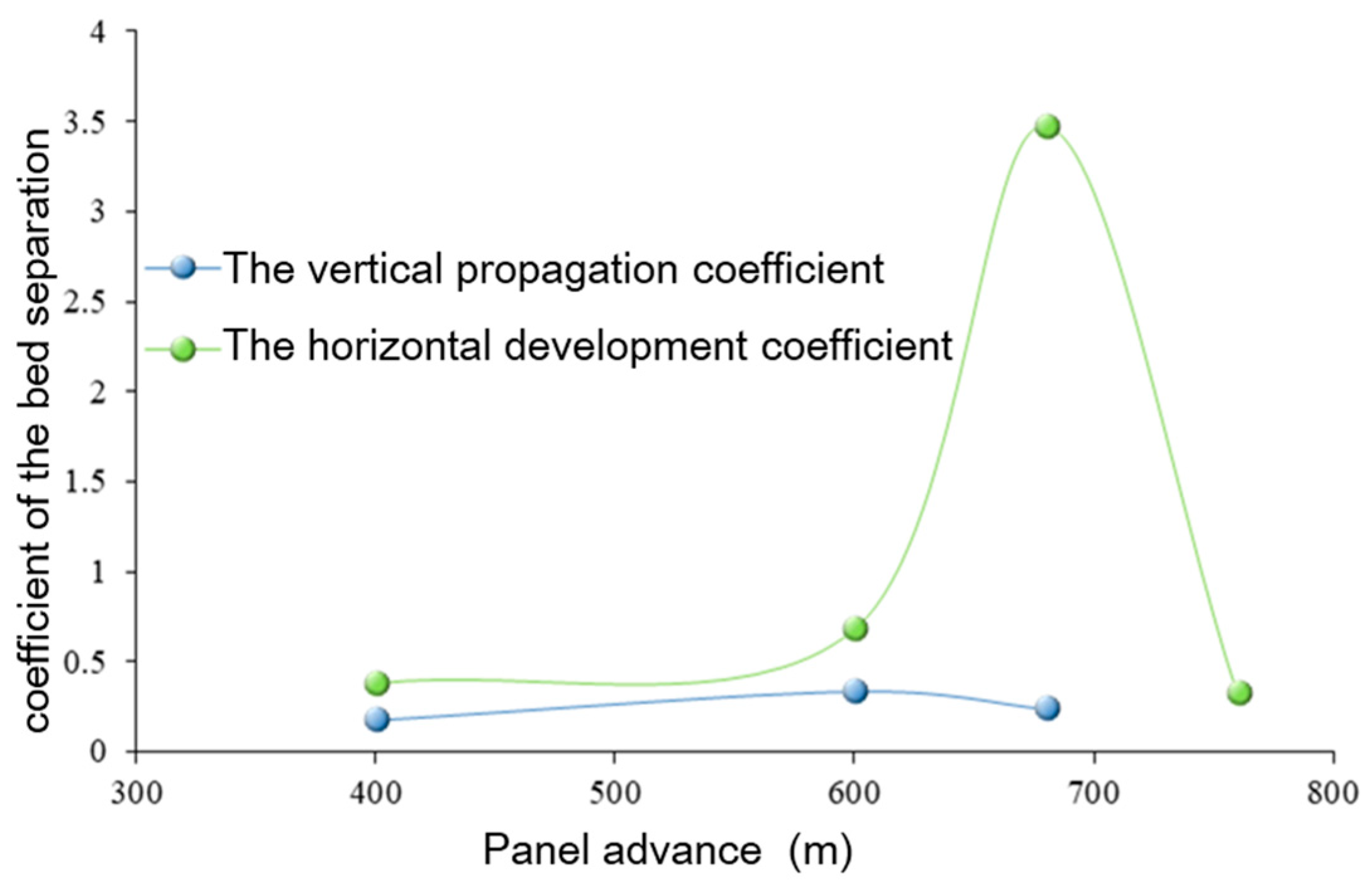
Figure 13). Bed separation develops along the coal seam roof toward the ground surface and the panel advance direction. The vertical and horizontal propagation distances of bed separation per unit panel advance distance are used to evaluate its development state. The vertical propagation coefficient of the bed separation space is calculated by Equation (24). The horizontal development coefficient of the bed separation space is calculated by Equation (25).
where
Ks is the vertical propagation coefficient, and
Kl is the horizontal development coefficient.
Ss is the difference in the vertical height of the developed bed separation space at different panel advance distances.
Sl is the difference in the horizontal extent of the bed separation space at different panel advance distances. ∆
Sm is the unit advance distance of the panel.
When the panel advanced to 600 m, the horizontal development coefficient of the bed separation space increased significantly to 3.47. As the panel advanced further, it stabilized below 0.5. The presence of thick and hard strata in the overburden significantly accelerated the lateral expansion rate of the bed separation space (
Figure 14).
3.4. Spatiotemporal Evolution and Distribution of Bed Separations
The process of bed separation formation shows a cycle of “generation-development-expansion (persistence)-disappearance (compaction)”. At the beginning, the bed separation appears as a horizontal fracture with a small size, and then it expands slowly until the upper boundary rock of the bed separation reaches a critical breaking length. When the bed separation is close to the breaking length, the space of bed separation reaches the maximum at this moment. As the excavation continues, the overburden deformation is intensified, the upper boundary rock of bed separation bends downward and the space of bed separation gradually becomes smaller till closed. The process of bed separation development is repeated between the higher strata during excavation.
The lateral development length of the bed separation space is positively correlated with the comprehensive indices of lithology and thickness for the upper and lower composite rock strata. Bed separation at low horizons develops above the caving zone of the coal seam roof as the panel advances. When the low-horizon bed separation closes and high-horizon bed separation develops, the strata at the top of the low-horizon bed separation cave, forming a caved zone. A plastic deformation transition zone exists between the relatively intact rock mass at the bottom of the high-horizon bed separation and the caved zone. Vertical fractures develop within the rock mass in the plastic deformation transition zone but do not penetrate the rock mass at the bottom of the high-horizon bed separation.
4. Discussion
The elastic mechanics model for bed separation prediction in this study can accurately predict the size of the bed separation space under different mining conditions. The assumption that all rock strata are homogeneous, isotropic, and linearly elastic is a significant simplification of the actual geological conditions. Natural rock strata often have inherent heterogeneities (e.g., cracks, joints, and inhomogeneities in mineral composition), which may affect the mechanical response. The model neglects interlayer slip between rock strata and plastic deformation of weak rock units (e.g., clay-rich layers or fractured zones). These phenomena (interlayer slip and plastic deformation) may exist in actual engineering scenarios, leading to slight deviations between the calculated and actual deformation characteristics. Additionally, the current model is established under dry mining conditions without considering the influence of water pressure. Future research will focus on developing bed separation prediction models under water pressure to more accurately characterize the dynamic evolution of groundwater or grout flowing into bed separation spaces, thereby improving the applicability and prediction accuracy of the models in practical engineering. Despite these limitations, the model remains reliable for predicting the basic laws of overburden deformation and bed separation under the assumed geological conditions.
5. Conclusions
This study investigates the spatiotemporal evolution characteristics, distribution patterns, and spatial prediction of mining-induced overburden bed separation, with the aim of improving the identification of bed separation water hazards and the design of bed separation grouting. The main conclusions are summarized as follows:
Bed separation undergoes a cycle of development–expansion–stabilization–closure during panel mining, exhibiting clear regularity and periodicity. It develops gradually from lower to higher strata, with its development lagging behind the advance of the working panel. Scale model tests demonstrate that thick and hard rock masses in the overburden restrain the vertical propagation of bed separation toward the surface, prolong its horizontal development, and lead to anomalous bed separation development. During this process, the duration of the expansion–stabilization stage increases, and the growth rates of the bed separation gap and its lateral extent are correspondingly accelerated.
- 2.
Mechanical boundary conditions and prediction models
Different mining stages of the panel correspond to distinct mechanical boundary conditions. Before mining, strata are subjected to four-edge fixed support, and they transition to a simply supported state on the side adjacent to the mined-out area as mining progresses. Prediction models are established for both initial and periodic bed separation, and a criterion for determining bed separation location is proposed by integrating lithology, stratum thickness, and composite rock mass characteristics.
- 3.
Innovative development patterns and model validation
This work innovatively proposes abnormal spatial development patterns of bed separation, which are verified through scaled model tests. The bed separation location criterion and spatial prediction model under different boundary conditions can predict the development laws and dimensions of bed separation with improved accuracy, providing a theoretical basis for engineering practice.
- 4.
Methodological significance and practical value
The proposed method addresses key limitations in existing models for predicting the size and location of bed separation. The revealed spatiotemporal evolution laws and anomalous development characteristics improve the identification accuracy of bed separation water inrush hazards and the rationality of stratum selection for bed separation grouting. The established models and evolution laws are applied to classify and investigate the initial, periodic, and anomalous development of bed separation.