1. Introduction
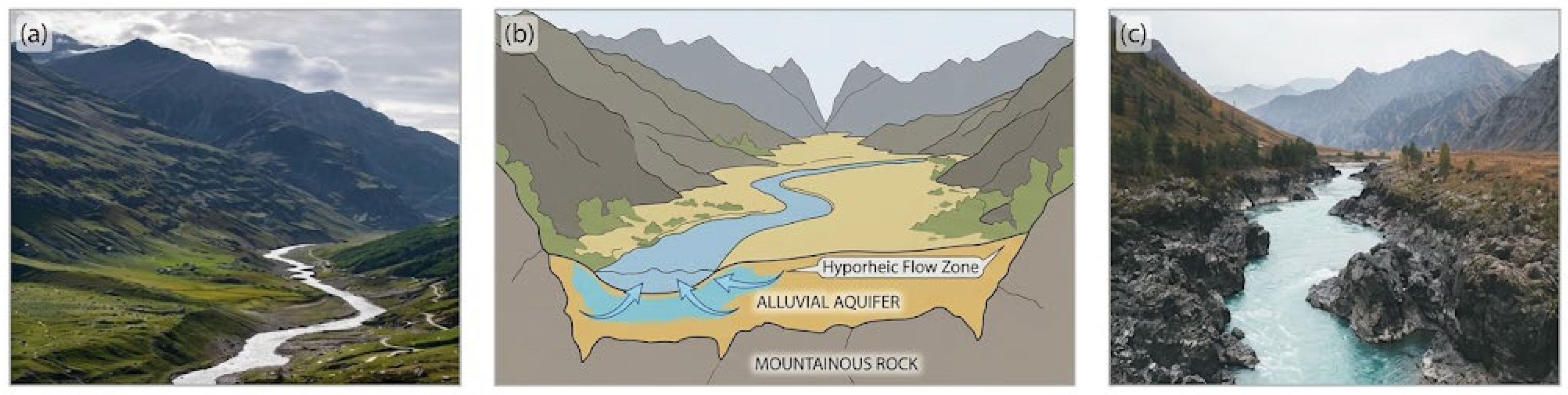
Floodplains form critical interfaces between hillslopes, aquifers, and stream networks, where coupled surface–subsurface processes regulate water quality, solute transport, and ecosystem functioning. Exchange between streams and groundwater is now widely recognized as a fundamental component of floodplain hydrogeology, controlling nutrient cycling, redox dynamics, and contaminant attenuation across a wide range of spatial and temporal scales [
1,
2,
3]. Within this coupled system, the hyporheic zone constitutes a dynamic transition region beneath and adjacent to the streambed where stream water and groundwater mix, circulate, and undergo biogeochemical transformation [
4,
5,
6]. In addition to its ecological significance, this exchange also plays a key role in regulating large-scale water resources, where groundwater contributions and exchange fluxes exhibit strong spatial and temporal variability across catchments [
7].
The ecological and hydrogeochemical importance of this interface has long been emphasized, as hyporheic exchange sustains microbial activity, nutrient turnover, and redox gradients that shape both riverine and groundwater ecosystems [
8,
9,
10]. In large stream corridors and floodplains, hyporheic processes may extend far beyond the channel bed, forming laterally extensive exchange domains that contribute to natural filtration, temperature buffering, and contaminant retention [
11]. These exchanges are therefore central not only to ecological functioning but also to the management and sustainability of coupled surface–subsurface water systems.
Hyporheic exchange emerges from the interaction of controls acting across multiple spatial scales. At the reach scale, streambed topography, sediment heterogeneity, and channel morphology govern local pressure gradients and vertical exchange intensity [
12,
13]. These processes are further influenced by unsteady flow conditions and dynamic pressure variations, which can significantly modify exchange fluxes and residence time distributions under transient hydraulic forcing. At larger scales, valley geometry, aquifer structure, and regional groundwater gradients organize the overall architecture of subsurface circulation and regulate how deeply and how far stream water penetrates into floodplain sediments [
14,
15]. In addition, anthropogenic alterations such as river regulation structures may further reorganize hyporheic exchange patterns by modifying regional hydraulic gradients and stage dynamics.
At these larger scales, it is important to distinguish between hydraulic gradients and the geometric slope of the aquifer itself. Hydraulic gradients represent the immediate driving force for groundwater flow and hyporheic exchange and may vary in both the longitudinal and transverse directions depending on boundary conditions such as river stage, recharge, and valley geometry [
16]. In contrast, aquifer slope is a geomorphic and structural property of the subsurface system that governs how these gradients are distributed in space and how regional flow fields develop. Although aquifer slope contributes to the generation of hydraulic gradients, it is commonly treated as fixed or implicit in hyporheic studies. Despite its fundamental role in shaping groundwater flow systems, the aquifer slope has not been systematically isolated in stream–aquifer interaction studies.
Recent analytical and numerical studies demonstrate that the aquifer slope fundamentally shapes hydraulic head distributions, drainage efficiency, and groundwater flow paths in sloping systems [
17,
18,
19], while recent modeling studies further highlight the importance of sensitivity and parameter interactions in groundwater flow systems [
20]. Increasing aquifer slope shortens flow paths, accelerates subsurface velocities, and modifies residence time distributions, implying that aquifer topography represents an independent and physically meaningful control on subsurface flow organization [
21]. In particular, recent numerical investigations have explicitly examined stream–aquifer exchange in sloping systems, showing that increasing slope can significantly modify exchange dynamics and flow structure under controlled conditions [
22], further supporting the role of slope as a primary control on subsurface flow organization. These findings also indicate that slope can control not only the magnitude but also the spatial distribution of exchange processes, including localized variations and reversals in flow behavior [
23]. Recent studies further highlight that slope and system geometry play an important role in regulating subsurface flow organization and exchange processes across different spatial scales, including stream–floodplain systems where exchange dynamics are evaluated using numerical modeling and field-based approaches [
7,
12,
15,
24,
25]. However, in these studies, slope remains embedded within broader geomorphic and hydraulic configurations rather than being treated explicitly as a control parameter. Moreover, most hyporheic modeling studies continue to emphasize morphological drivers such as bedforms, meanders, and transient stage fluctuations, while treating aquifer slope as fixed or secondary [
26]. Consequently, although slope effects on groundwater flow systems are increasingly recognized, their implications for hyporheic exchange in stream–aquifer systems have not been explicitly resolved. This imbalance highlights a key limitation in current understanding, where the geometric organization of the flow domain remains underexplored relative to hydraulic forcing mechanisms.
Systematic investigations of slope effects have mainly focused on transverse (lateral) components of the hydraulic head gradient, showing how valley widening and narrowing can induce large-scale lateral hyporheic exchange even in straight channels [
16,
27,
28]. These lateral exchanges are particularly important in floodplain systems, where geomorphic connectivity can sustain extensive hyporheic flow paths and influence solute transport over large spatial scales [
29]. However, the geometric influence of the longitudinal aquifer slope on the organization of the subsurface flow domain—along with its role in controlling the spatial structure and efficiency of hyporheic exchange—has not been systematically quantified. In particular, the way the aquifer slope modifies the overall flow domain, rather than merely adjusting local hydraulic gradients, has not been systematically quantified.
From a physical perspective, the longitudinal aquifer slope amplifies the regional hydraulic gradient that competes with local head variations generated at the streambed. Conceptual and numerical studies suggest that strong regional gradients may suppress the lateral penetration of stream water and reorganize hyporheic circulation by confining flow to near-stream corridors [
15,
30,
31]. In many of these studies, hydraulic gradients are imposed through boundary conditions, rather than emerging from the geometric configuration of the aquifer [
32]. Consequently, quantitative assessments of how increasing the longitudinal aquifer slope modifies exchange flux magnitude, flow-path geometry, and subsurface connectivity in floodplain aquifers remain limited. Moreover, the slope ranges over which the system transitions from distributed exchange to increasingly localized exchange behavior are still poorly constrained, partly due to sensitivity to boundary conditions, domain geometry, and hydrogeological parameterization [
28,
33,
34]. Furthermore, restoration-oriented studies indicate that even substantial geomorphic interventions such as floodplain reconnection or in-stream structures may yield limited improvements in solute removal, emphasizing the need for a deeper mechanistic understanding of the governing controls [
35]. In contrast, the present study explicitly represents longitudinal aquifer slope within a controlled framework, allowing its direct effect on exchange dynamics to be clearly evaluated.
Accordingly, the study aims to quantify how slope governs the structure of subsurface flow and exchange behavior under simplified but physically consistent conditions. Using a numerical groundwater flow framework, aquifer slope is varied systematically as a control parameter, while hydraulic properties and boundary conditions are held constant. The analysis focuses on three complementary aspects: (i) groundwater head distribution and the development of hydraulically inactive zones, (ii) the reorganization of flow paths and vulnerability patterns derived from particle tracking, and (iii) changes in hyporheic exchange flux magnitude and spatial structure. This approach enables the explicit separation of geometric and hydraulic controls, providing new insight into how subsurface flow systems reorganize under varying topographic conditions.
By isolating longitudinal slope effects, this work complements previous investigations of transverse hydraulic gradients and valley geometry and provides a physically consistent basis for evaluating the relative roles of different components of the hydraulic gradient [
36]. Beyond advancing the mechanistic understanding of stream–aquifer coupling, the results aim to inform groundwater protection strategies and contamination risk assessment in sloping floodplain environments, where increasing channel gradients due to incision, regulation, or climate-driven hydrological change may fundamentally alter subsurface connectivity and buffering capacity.
3. Results
3.1. Groundwater Head Distribution and Formation of Hydraulically Inactive Zones
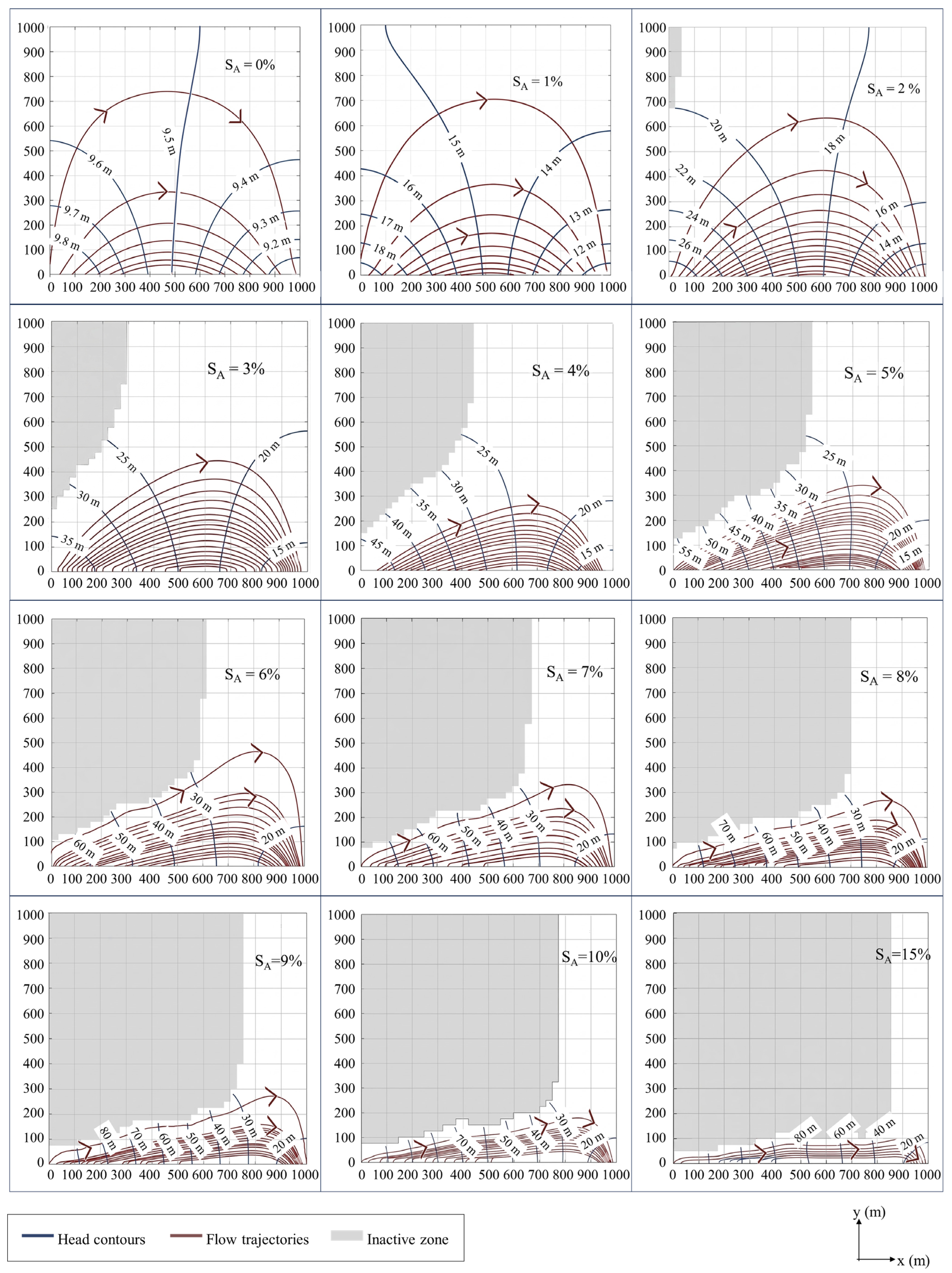
Groundwater head distributions and particle tracking results for the longitudinal floodplain models are presented in
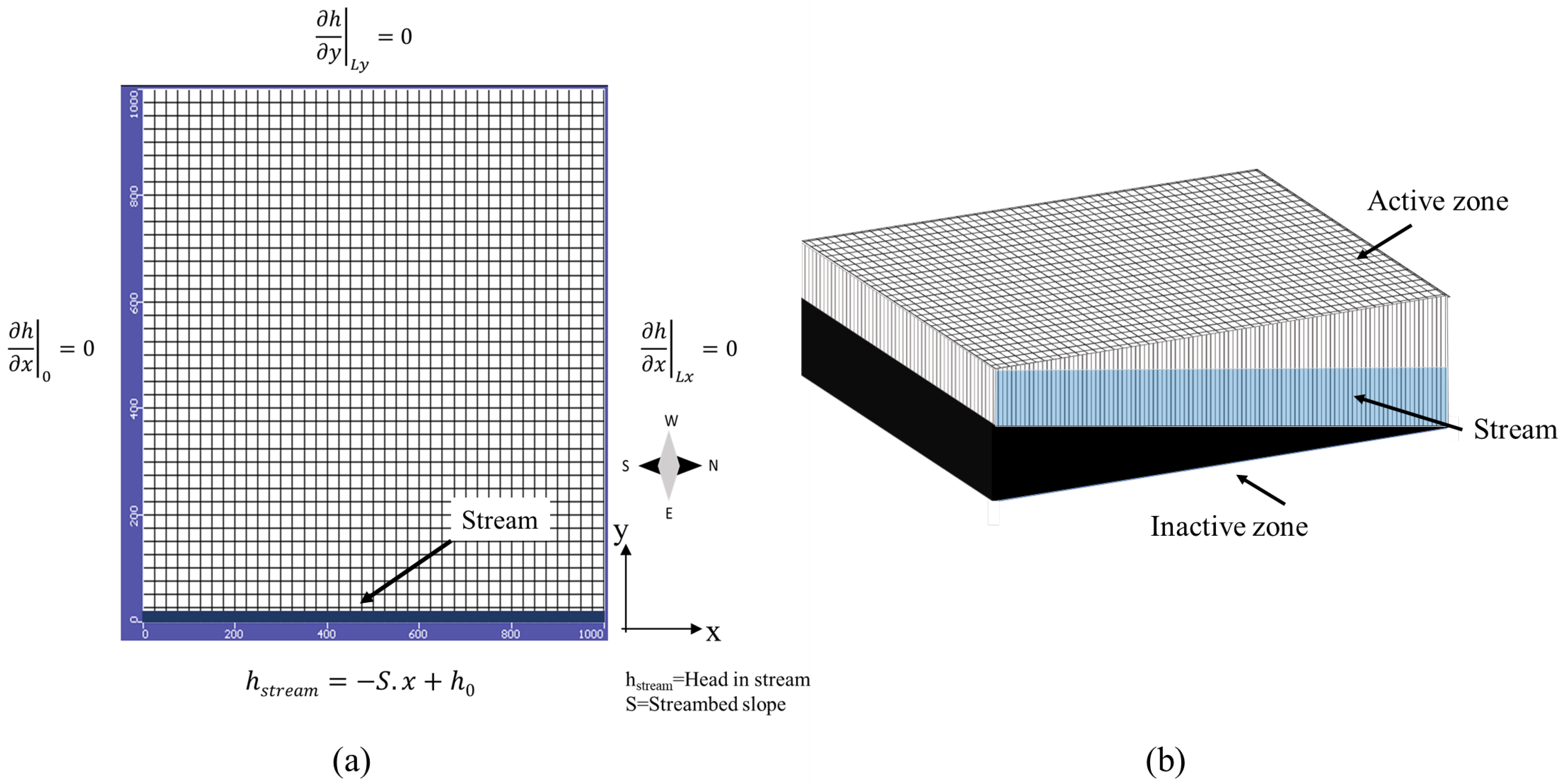
Figure 4. In these maps, blue contour lines represent equipotential groundwater heads, while maroon lines indicate particle trajectories released from the stream cells. Particle trajectories illustrate the dominant flow pathways and the extent of active groundwater circulation originating from the stream boundary. The spacing of the equipotential contours reflects the local hydraulic gradient, with closely spaced contours near the stream indicating higher flow velocities and progressively wider spacing toward the lateral boundaries indicating decreasing velocities. Because the streambed slope is aligned with the aquifer slope in all simulations, increasing the longitudinal slope results in a systematic increase in the hydraulic gradient along the flow direction. In addition, regions shown in gray correspond to hydraulically inactive zones, defined as areas where groundwater velocities fall below a threshold at which advective transport becomes negligible. These visual indicators are used throughout the Results section to interpret changes in groundwater circulation patterns and stream–aquifer interactions under different slope conditions.
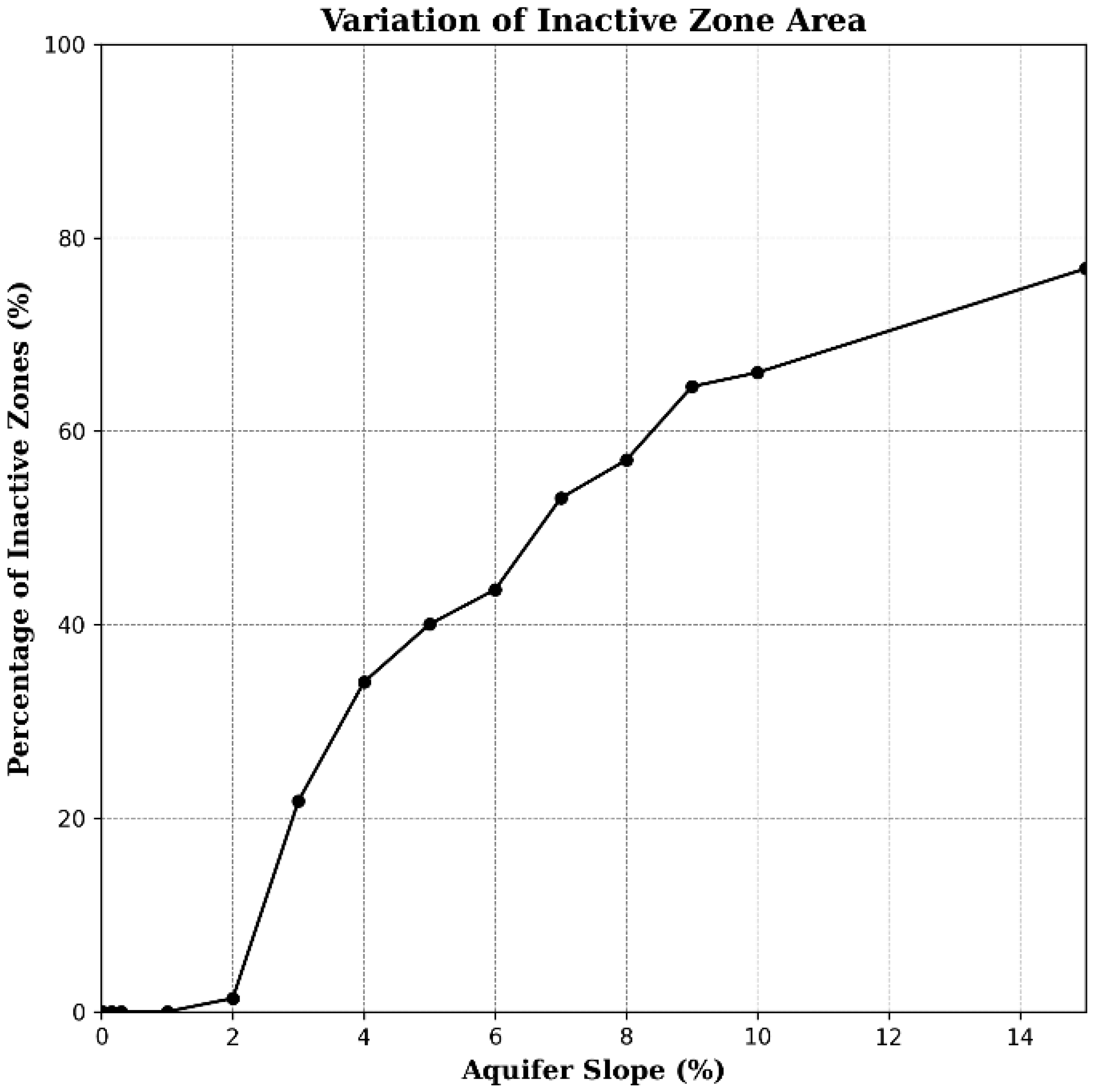
Increasing the longitudinal aquifer slope substantially reorganized the groundwater flow field in the bounded floodplain aquifer system. At low slopes (≤1%), hydraulic gradients remained weak and groundwater circulated throughout the entire aquifer domain without forming inactive zones. Once the slope reached 2%, hydraulically inactive zones developed for the first time, occupying approximately 1.4% of the aquifer area. Further increases in slope led to a rapid and non-linear expansion of these regions. The proportion of inactive zones increased from approximately 22% at 3% slope to about 40% at 5% and 57% at 8%, and exceeded 76% at 15%. This progression indicates a threshold behavior, where the onset of inactive zone formation occurs around 2% slope, followed by a rapid expansion phase between approximately 3% and 5%, and a dominance of inactive regions beyond slopes of 8% (
Figure 5).
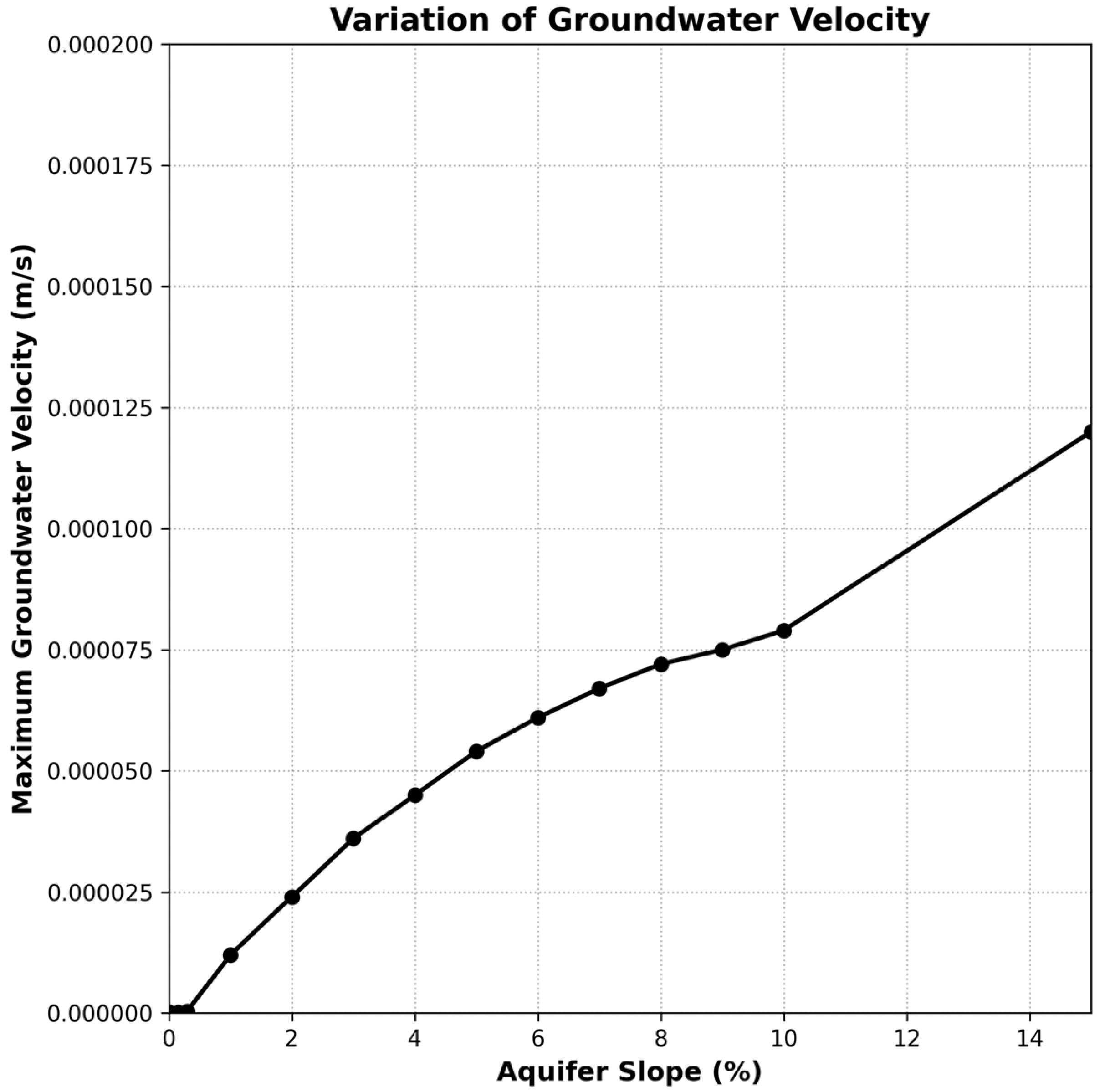
Correspondingly, active groundwater flow paths progressively contracted toward a narrow corridor adjacent to the stream boundary, consistent with the increasing dominance of the longitudinal hydraulic gradient. As slope increased, groundwater flow became increasingly confined to this near-stream region, while large portions of the aquifer transitioned into low-mobility zones. Maximum groundwater velocities reflected this reorganization of the flow field and are presented in
Figure 6. Under nearly flat conditions, velocities were on the order of 10
−7 m/s, whereas slopes ≥1% increased velocities by one to two orders of magnitude, reaching approximately 1.2 × 10
−4 m/s at 15%. This increase results from both the strengthening of the longitudinal hydraulic gradient and the confinement of flow within a restricted exchange corridor. Overall, the results indicate that longitudinal slope amplifies groundwater gradients while simultaneously suppressing lateral flow, leading to the formation of extensive inactive zones that fundamentally reshape floodplain connectivity.
3.2. Particle Tracking and Vulnerability Zones
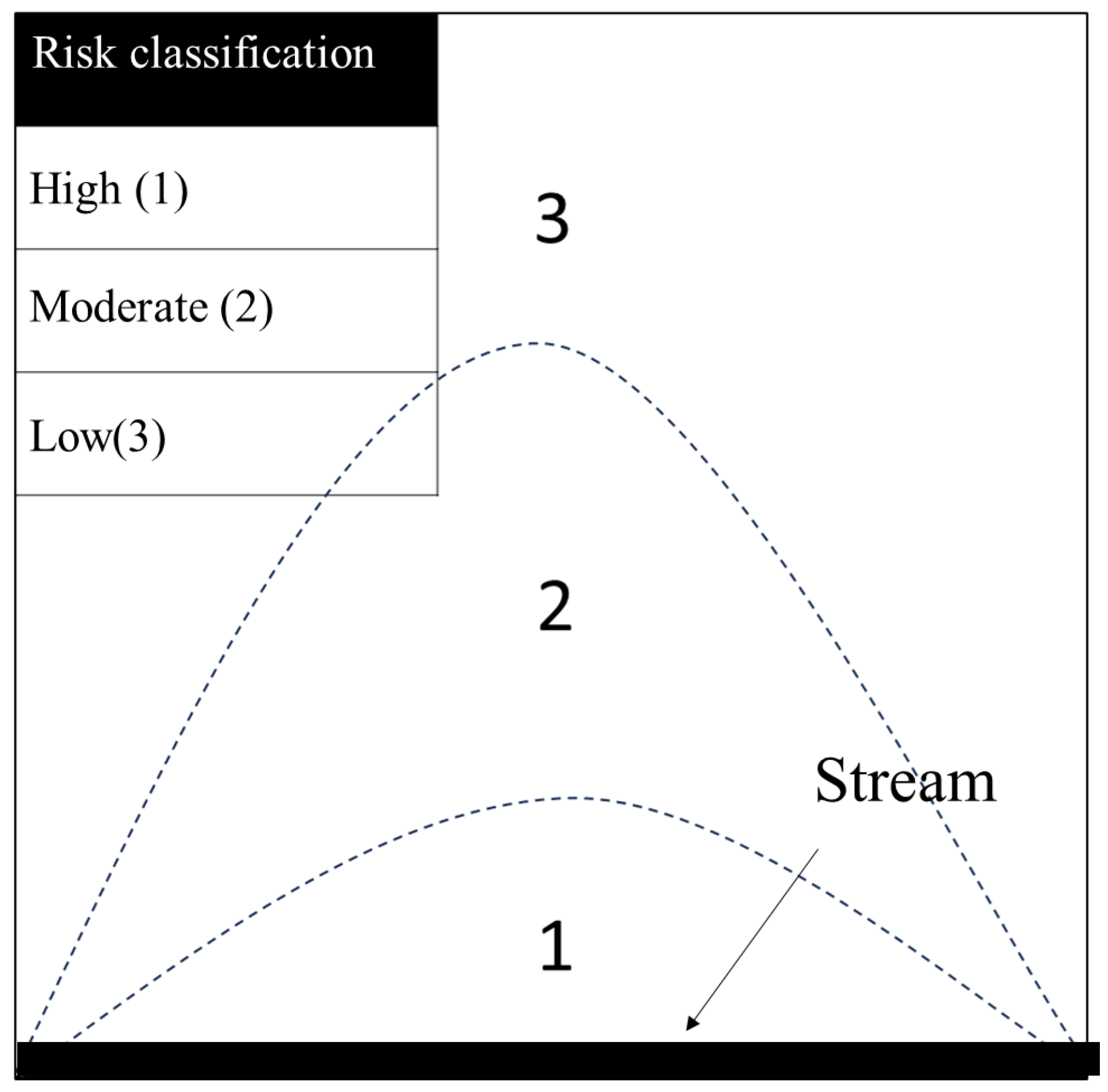
Particle tracking analyses were used to quantify how longitudinal slope controls the spatial vulnerability of floodplain aquifers to riverborne contaminants. Vulnerability zones were defined based on particle trajectories released from individual stream cells, as described in
Section 2.4.
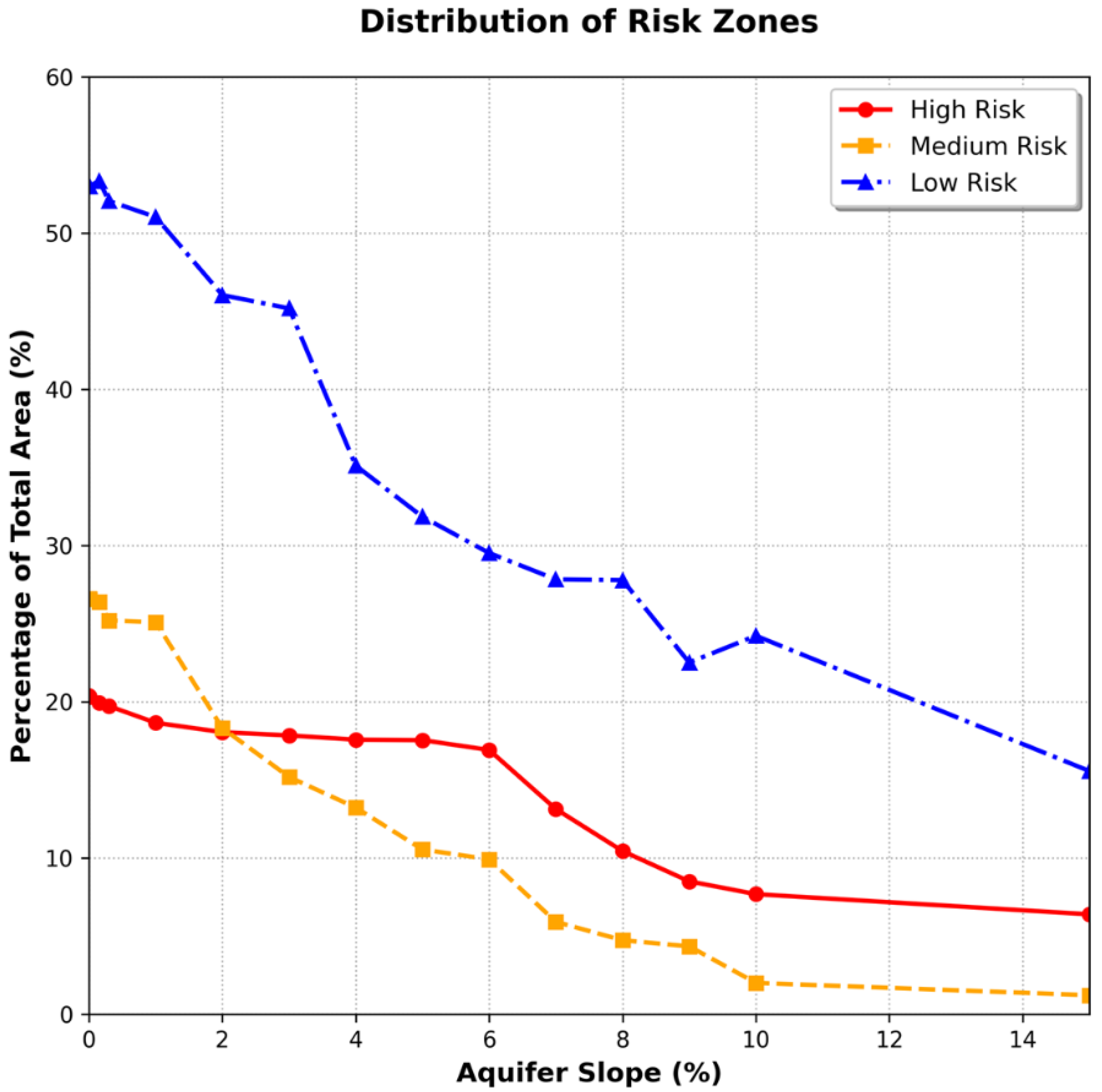
Figure 7 presents the spatial distribution of high-, moderate-, and low-vulnerability zones for different slope conditions. At low slopes, particle trajectories extend across a large portion of the aquifer, resulting in extensive high- and moderate-vulnerability regions. As slope increases, flow paths become progressively confined toward the stream corridor, leading to a contraction of active transport zones and a corresponding expansion of hydraulically inactive regions. This trend continues at higher slopes, where vulnerability zones become increasingly localized near the stream boundary, reflecting the concentration of particle trajectories within a narrow region. Concurrently, large portions of the aquifer transition into low-vulnerability or hydraulically inactive zones, indicating a progressive reduction in the spatial extent of active flow paths.
Accordingly, the high-vulnerability region represents the portion of the aquifer where multiple particle trajectories remain concentrated, reflecting areas of intensified advective flow. Vulnerability zones were classified based on flow-path characteristics, where high-vulnerability zones correspond to rapid flow pathways, moderate-vulnerability zones represent intermediate transport conditions, and low-vulnerability zones are associated with slower and more distributed flow. Under zero-slope conditions, high-vulnerability zones occupied approximately 20% of the aquifer domain, while moderate- and low-vulnerability regions covered about 27% and 53%, respectively. As longitudinal slope increased, the areal extent of all active-flow vulnerability zones decreased systematically. High-vulnerability areas declined to approximately 6% at 15% slope, whereas moderate-vulnerability zones exhibited the most pronounced reduction, decreasing from 26.6% to 1.2%. Low-vulnerability regions also diminished, though at a more gradual rate. This reduction in active-flow vulnerability zones occurred in direct correspondence with the expansion of hydraulically inactive zones, which reached up to 76.8% of the aquifer area at the highest slope. As slope increased, active flow paths became increasingly confined to a narrow region adjacent to the stream, while large portions of the aquifer transitioned into hydraulically inactive conditions.
3.3. Hyporheic Exchange Flux
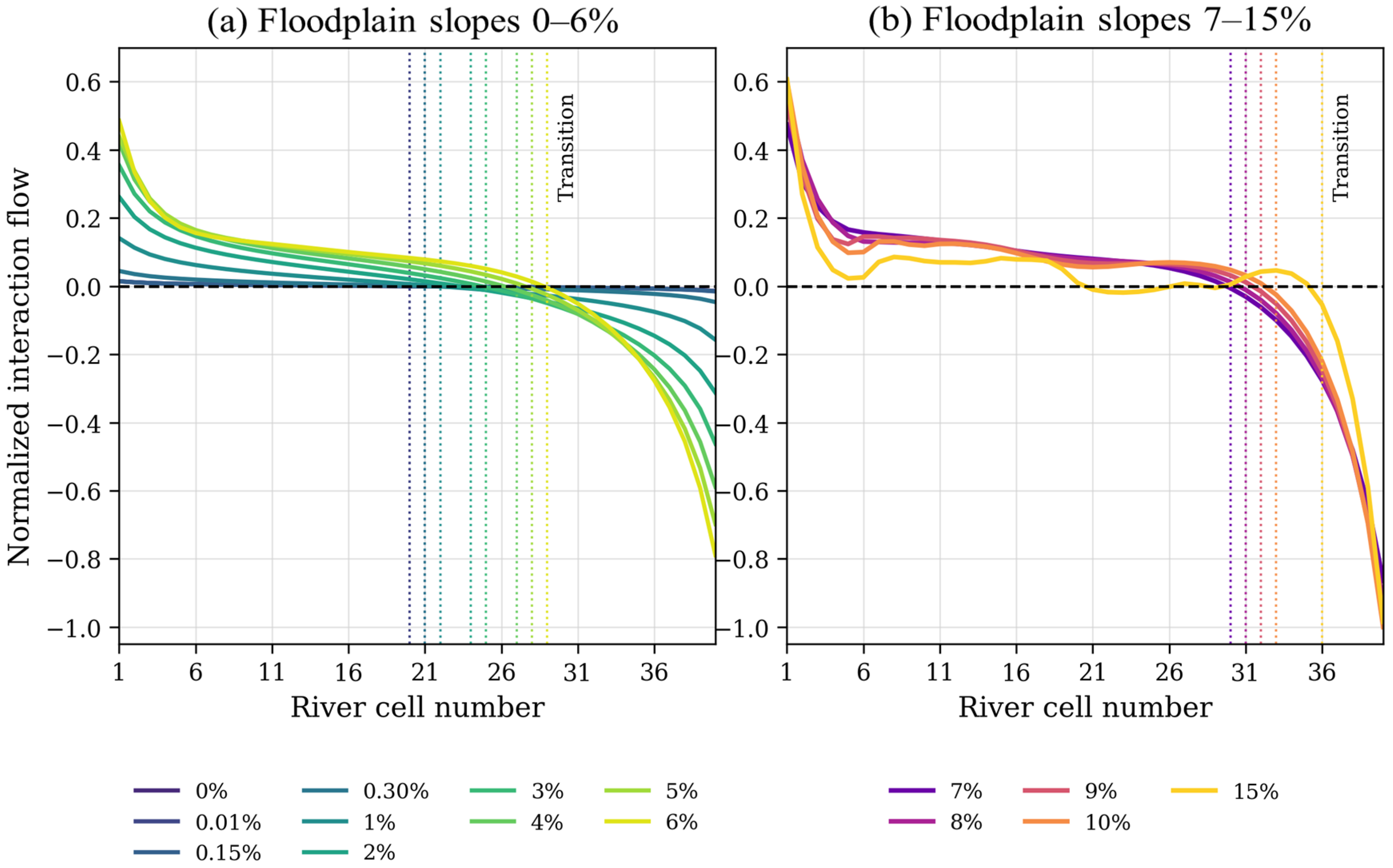
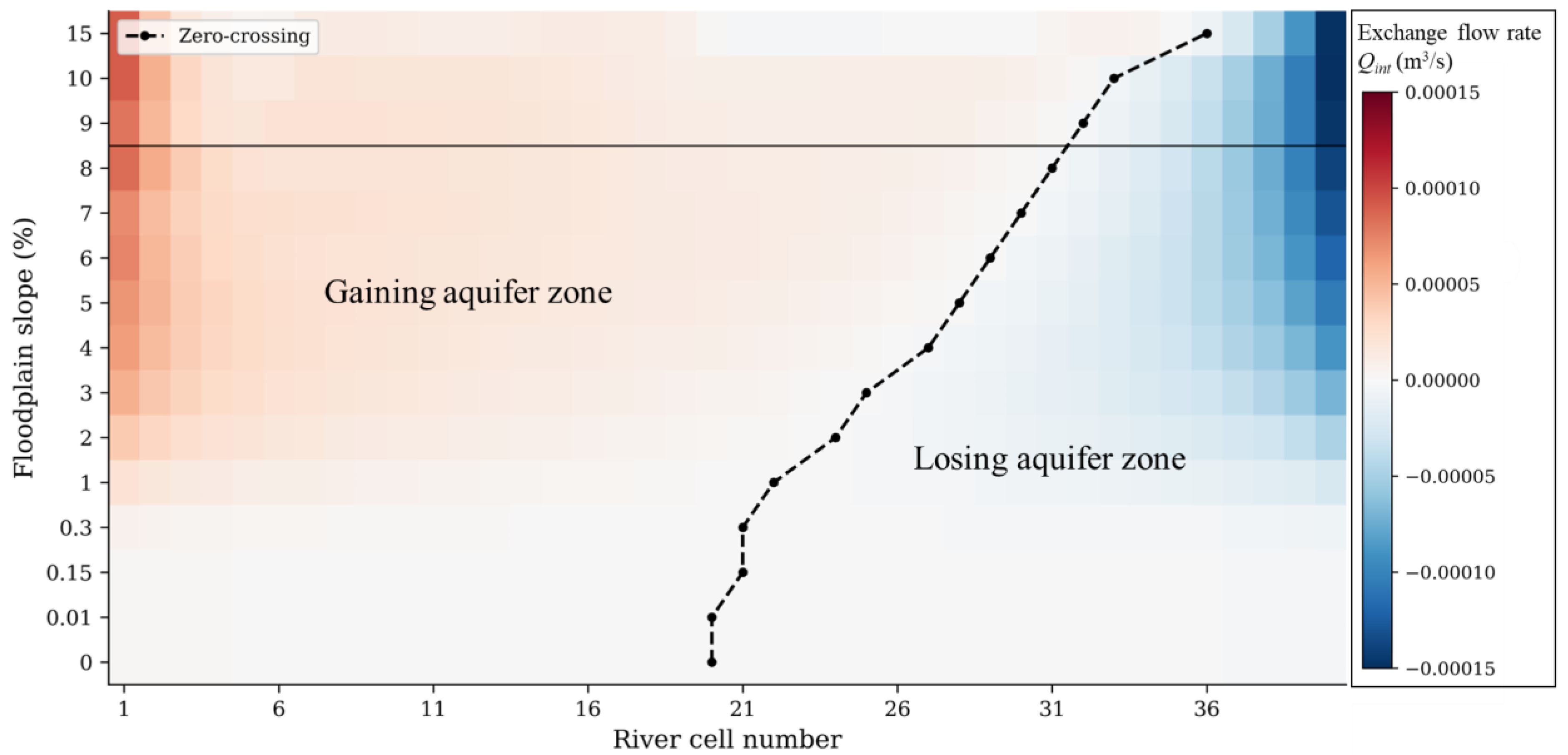
To examine the influence of the longitudinal aquifer slope on stream–aquifer exchange in bounded floodplain aquifer systems, hyporheic exchange flow rates were quantified using groundwater head distributions obtained from numerical simulations. Exchange flow rates were computed in the horizontal direction using Darcy’s law, considering the stream stage as a boundary condition and the adjacent aquifer heads. The resulting interaction flow rates were analyzed through spatial profiles (
Figure 8), integrated total exchange flow rates, and peak values summarized in
Table 1, with additional support from heatmap visualization (
Figure 9), enabling an assessment of both the magnitude and spatial structure of hyporheic exchange. Positive values represent flow from the stream to the aquifer, whereas negative values indicate discharge from the aquifer to the stream.
The magnitude of interaction flow rates exhibits a strong dependence on longitudinal aquifer slope, as reflected by the peak values summarized in
Table 1. For low-slope conditions (≤0.3%), both the maximum and minimum interaction flow rates remain relatively small, on the order of 10
−6–10
−5 m
3/s, indicating limited hydraulic exchange between the stream and aquifer. With increasing slope, both peak positive and negative flow rate magnitudes increase substantially, rising from values on the order of 10
−6–10
−5 m
3/s at low slopes (≤0.3%) to approximately (5–7) × 10
−5 m
3/s and −(7 × 10
−5–1.2 × 10
−4) m
3/s at intermediate slopes (3–6%), and reaching peak values of about 9.1 × 10
−5 m
3/s and −1.5 × 10
−4 m
3/s at higher slopes (≥9–10%). Notably, the rate of increase becomes more pronounced within the transitional range of approximately 3–7%, beyond which the behavior begins to deviate from a linear trend. The rate of increase also differs between the two directions, with negative (losing) flow rates increasing more rapidly than positive (gaining) flow rates, particularly within this transitional range.
The normalized interaction flow profiles (normalized by the maximum flow rate for each slope condition) reveal a consistent spatial pattern of exchange across all slope conditions, indicating that the governing interaction mechanism remains structurally similar despite variations in magnitude. A distinct transition between gaining and losing conditions is observed along the stream reach, and this transition systematically shifts downstream with increasing slope. Specifically, the transition location migrates from approximately cell 20 under low-slope conditions to cells beyond 30 for higher slopes, indicating a progressive downstream displacement of the interaction boundary. This downstream shift is also clearly captured in the heatmap representation, which provides a continuous visualization of the transition across all slope conditions. This behavior reflects a redistribution of interaction zones rather than a simple expansion of recharge-dominated regions, consistent with the increasing alignment of flow parallel to the stream.
In addition to the downstream migration of the transition point, the normalized profiles reveal a fundamental change in the shape of interaction patterns with increasing slope. For low to moderate slopes, interaction fluxes exhibit a smooth and monotonic behavior, with flow rates gradually decreasing from upstream gaining conditions toward the transition point and subsequently increasing in magnitude in the losing direction. However, beyond slopes of approximately 7%, this regular pattern breaks down. The profiles begin to display non-monotonic behavior, characterized by local increases and decreases in flux magnitude along the stream reach. This loss of monotonic structure is further supported by the heatmap, where increasing slope leads to the emergence of localized fluctuations and alternating gaining and losing zones. At the highest slope (15%), multiple sign reversals are observed, with exchange fluxes transitioning from losing back to gaining and then returning to losing conditions. This behavior is also evident in the heatmap, where the interaction field becomes increasingly irregular at high slopes.
The heatmap representation provides a global visualization of how interaction flow rates evolve with slope, integrating both magnitude and spatial distribution. High-magnitude interaction zones intensify with increasing slope, and both peak gaining and losing regions become more pronounced, consistent with the trends observed in
Table 1. The transition between positive and negative flow regions, represented by a distinct zero-flow contour, exhibits a persistent downstream shift as slope increases. At higher slopes, this boundary becomes sharper and more spatially organized, indicating a more abrupt transition between gaining and losing conditions. The heatmap further highlights that differences between slope scenarios become increasingly pronounced beyond moderate slopes, reinforcing the presence of a slope-dependent reorganization of interaction patterns.
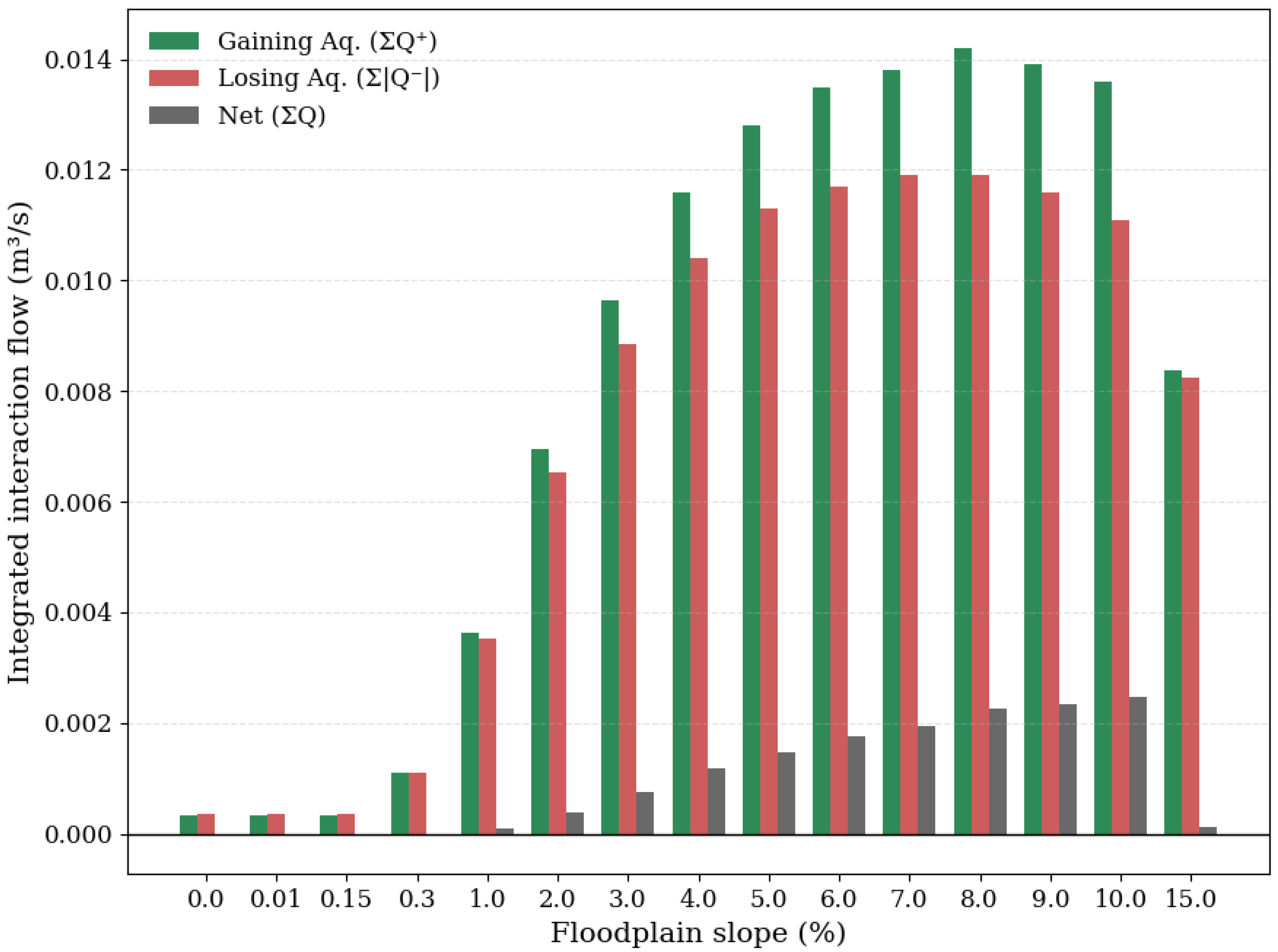
The integrated exchange flow rates (
Figure 10) provide a system-scale quantification of stream–aquifer interaction. Both gaining (ΣQ
+) and losing (Σ|Q
−|) flow rates initially increase with slope but decline beyond intermediate slopes, confirming a non-linear response of exchange intensity. The rate of increase differs between the two directions, with gaining flow rates exhibiting a more pronounced growth compared to losing flow rates. As a result, the net exchange (ΣQ) increases progressively up to intermediate slopes, with the difference between gaining and losing flow rates becoming more pronounced, particularly within the range of approximately 3–7%. Beyond this range (>8%), both gaining and losing flow rates begin to decrease, indicating a reduction in overall exchange intensity. While the net difference between gaining and losing flow rates continues to increase slightly within this range, the rate of increase becomes significantly reduced. At the highest slope (15%), both gaining and losing flow rates decrease further, and the net exchange no longer increases but instead shows a decline, indicating a weakened interaction system.
This decline becomes more pronounced at higher slopes (≥10%), despite the presence of large local peak values (
Table 1). In particular, gaining flow rates reach a maximum at intermediate slopes and subsequently decline as slope continues to increase. This occurs despite the continued downstream migration of the gaining–losing transition zone, which indicates an apparent expansion of the gaining reach. The results therefore suggest that an increase in the spatial extent of gaining conditions does not necessarily translate into higher cumulative recharge, highlighting a decoupling between spatial extent and exchange magnitude at higher slopes. This behavior indicates a shift in the dominant exchange mechanisms. As slope increases, a larger portion of the hydraulic gradient aligns parallel to the stream rather than across the stream–aquifer interface, reducing the effective cross-stream head difference. Consequently, the hyporheic exchange corridor becomes effectively narrower, limiting the efficiency of stream-to-aquifer exchange despite increasing gradients.
The combined results indicate that the longitudinal aquifer slope acts as a key control parameter governing both the intensity and spatial organization of stream–aquifer interactions. Rather than inducing a uniform increase in exchange, slope modifies the balance between cross-stream and stream-parallel flow components, leading to a reconfiguration of interaction mechanisms. This behavior reflects a redistribution of hydraulic gradients, where increasing slope enhances the longitudinal component while relatively reducing the cross-stream gradients that drive lateral exchange. At lower slopes, exchange is primarily controlled by head differences across the stream–aquifer interface, resulting in relatively balanced and spatially stable interaction patterns. As slope increases, the system becomes increasingly influenced by stream-parallel flow alignment, enhancing exchange intensity but simultaneously redistributing interaction zones. Beyond a certain slope range, this shift leads to a reduction in effective interaction efficiency, indicating that further increases in slope promote hydraulic decoupling rather than enhanced exchange. This behavior highlights the existence of a slope-dependent transition in the governing processes, emphasizing that longitudinal gradients control not only the magnitude but also the functional behavior of hyporheic exchange systems.
4. Discussion
Building on the general understanding of stream–aquifer interactions, the present results provide new insight into the role of longitudinal slope in controlling exchange dynamics. The findings demonstrate that the longitudinal aquifer slope controls stream–aquifer interaction by influencing both the magnitude and spatial organization of hyporheic exchange. Although increasing the slope strengthens hydraulic gradients, the system response is non-linear, indicating that exchange cannot be explained by gradient magnitude alone.
This non-linear response arises from a redistribution of hydraulic gradients within the aquifer, where increasing slope enhances the along-stream component while reducing the relative influence of cross-stream gradients that drive lateral exchange. As a result, localized reversals in exchange flux emerge along the stream–aquifer interface, with alternating gaining and losing zones controlled by the interplay between longitudinal and residual transverse gradients.
The downstream migration of the gaining–losing transition zone, together with the emergence of irregular and locally oscillating patterns at higher slopes, indicates a progressive loss of spatial coherence in the exchange system. At the same time, hydraulically inactive zones expand rapidly, disconnecting large portions of the aquifer from active flow. This reflects a contraction of the effective exchange width, with active hyporheic exchange increasingly confined to near-stream regions.
With further increases in slope, this spatial reorganization not only reduces the effective exchange width but also limits the overall exchange area, as flow becomes increasingly aligned with the stream. Consequently, despite locally intensified gradients, the integrated exchange flux declines due to reduced lateral connectivity.
Previous studies have shown that hyporheic exchange is controlled not only by local bedform-induced pressure variations but also by reach-scale hydraulic gradients [
42]. In sloping systems, subsurface flow tends to align with the aquifer base as hydraulic gradients follow the slope direction [
43]. These findings are consistent with the present results, which show that increasing the slope promotes flow alignment along the stream and reduces effective transverse exchange.
At low to moderate slopes, increasing the gradient initially enhances exchange. However, beyond a threshold range, this trend reverses. Despite higher local fluxes, both gaining and losing integrated flow rates decrease at larger slopes. Similar behavior has been reported in systems where increasing slope intensifies local flow while reducing hyporheic extent and residence time [
44]. This response reflects a trade-off between flow intensity and exchange efficiency. The identified slope values (~2% and 3–7%) should therefore be interpreted as observed transition ranges within the simulated conditions rather than fixed or universal thresholds. Their exact position is expected to depend on domain geometry, boundary conditions, and hydrogeological parameters.
From a transport perspective, this behavior indicates the increasing limitation of subsurface exchange. Hyporheic exchange depends not only on the strength of hydraulic gradients but also on the extent to which water enters and remains within the subsurface domain [
35]. As slope increases, flow alignment parallel to the stream reduces flow path lengths, limiting effective exchange despite increasing longitudinal gradients. This behavior is consistent with reduced residence times within the bounded floodplain aquifer system.
The particle tracking results further reveal that increasing the slope does not uniformly reduce contaminant transport potential but instead redistributes it spatially. While the overall extent of active-flow vulnerability zones decreases significantly, vulnerability becomes increasingly concentrated near the stream boundary. In this region, flow paths are shorter and more focused, leading to reduced residence times and increased potential for rapid contaminant transport. In contrast, large portions of the aquifer transition into hydraulically inactive zones, effectively disconnecting them from advective transport processes.
This dual behavior highlights that slope reduces basin-scale vulnerability while simultaneously intensifying localized transport potential. Consequently, slope should not be interpreted as a simple control that diminishes contaminant risk, but rather as a factor that controls the spatial distribution of vulnerability within the floodplain system.
Similar large-scale controls on groundwater flow and exchange patterns have been linked to topographic gradients and floodplain structure in previous studies [
11,
45]. The present results extend these findings by demonstrating that longitudinal slope alone can drive this reorganization, even in the absence of additional geological or hydrological complexity.
From an ecohydrological perspective, the observed reduction in hyporheic connectivity and the confinement of flow to near-stream regions may influence biogeochemical processing and habitat heterogeneity. Reduced residence times and limited exchange zones can constrain nutrient transformation and microbial activity, while increased flow concentration near the stream may promote localized hotspots of ecological activity.
5. Limitations
The results are based on a controlled modeling framework designed to isolate the effect of the longitudinal aquifer slope on stream–aquifer interaction. The system represents an idealized bounded floodplain aquifer, allowing the underlying mechanisms to be examined without interference from additional processes. In this framework, boundary conditions are simplified to represent a bounded floodplain aquifer system, where lateral no-flow boundaries and the absence of recharge constrain groundwater exchange to occur predominantly through the stream–aquifer interface. This assumption neglects potential vertical inputs and regional groundwater contributions, which may influence flow patterns and exchange dynamics in natural systems.
Natural systems are more complex and may include factors such as regional groundwater flow, recharge, and fully three-dimensional flow structures. However, the present approach focuses on the dominant processes along the longitudinal direction, which govern the main exchange behavior. Accordingly, the two-dimensional representation does not resolve vertical flow components or small-scale hyporheic processes (e.g., vertical mixing and bedform-driven exchange) but provides a simplified and physically consistent description of flow organization at the floodplain scale.
The vulnerability analysis is based on advective particle tracking, where flow paths and residence times are used to define transport behavior. Dispersion and diffusion were not included in the classification of vulnerability zones. As a result, the boundaries between zones are sharper than would be expected in natural systems. Even so, the approach captures the main preferential flow paths that control early-stage contaminant transport. Furthermore, the assumption of homogeneous and isotropic hydraulic properties does not account for the influence of geological heterogeneity, enabling the isolation of slope-driven effects while limiting direct applicability to site-specific conditions.
The slope range was limited to 15% to capture the transition toward strongly confined flow conditions. Within this range, simulations remained stable and consistent, and the observed trends were robust.
6. Conclusions
This study shows that the longitudinal aquifer slope exerts a fundamental control on the structure of groundwater flow and hyporheic exchange in bounded floodplain aquifer systems. By explicitly treating slope as an independent control parameter rather than an implicit topographic factor, its isolated influence on flow organization can be clearly resolved. Increasing slope does not simply intensify hydraulic gradients; instead, it reorganizes subsurface circulation by concentrating flow near the stream corridor, shortening hyporheic flow paths, and reducing lateral connectivity across the floodplain. As a result, large portions of the aquifer transition into hydraulically inactive zones, indicating a shift in the internal flow regime rather than a continuous scaling of exchange intensity.
This behavior exhibits clear threshold characteristics, providing quantitative constraints on transition ranges that have remained poorly constrained in previous studies. These results establish longitudinal slope as a governing control on the spatial extent and functional effectiveness of stream–aquifer interactions, including their influence on residence time and transport pathways.
The results further show that increasing the slope redistributes, rather than uniformly reduces, exchange and transport processes. While basin-scale vulnerability decreases due to the contraction of active flow zones, localized transport potential increases near the stream boundary, where higher velocities and shorter residence times enhance breakthrough risk, with implications for solute transport and related biogeochemical processes. This highlights that hydraulic gradient magnitude alone is not sufficient to characterize hyporheic exchange and contaminant transport behavior. From a practical perspective, the results imply that assessments of groundwater vulnerability based solely on gradient-based indicators may underestimate localized contamination risks in sloping floodplain systems.
These findings have direct implications for water resource management and groundwater protection, particularly in sloping alluvial systems where conventional assumptions regarding hyporheic exchange may lead to misinterpretation of contaminant transport and vulnerability patterns. Accordingly, slope-dependent flow organization should be explicitly considered in groundwater vulnerability assessment and protection-zone design, especially in systems where stream–aquifer connectivity varies with topographic conditions. In addition, the results suggest that efforts to enhance hyporheic exchange may have limited effectiveness in high-slope environments, where flow is inherently confined by longitudinal gradients. Although the present study is based on idealized and steady-state simulations, the identified mechanisms are expected to be applicable to a wide range of natural alluvial systems where stream and aquifer slopes are aligned. Extending this framework to heterogeneous aquifers, transient hydrological conditions, and field-scale observations represents an important direction for future research aimed at improving the predictive understanding of slope-controlled stream–aquifer systems.