This section synthesizes findings from the scholars across research four water governance dimensions—socio-economic, power relations, stakeholder engagement, and gender equity—and then discusses WEF-nexus integration as a cross-cutting mechanism that reshapes trade-offs and benefit-sharing options in transboundary water diplomacy.
3.1. Socio–Economic Governance in Transboundary Rivers
Water cooperation requires a shift from a state-centric focus on water allocation to a broader socio-economic framework that can improve shared benefits and human development. Basin cooperation is not only about dividing water; it is increasingly about jointly building prosperity and resilience across societies. This section examines how socio-economic development goals into water governance can support durable agreements and identifies the barriers that continue to impede this transition.
Early transboundary water treaties and negotiations were predominantly centered on water allocation quotas and hydraulic infrastructure development. This approach reflected a hydro-political realist paradigm that acknowledged interstate power asymmetries while affording limited consideration to broader socioeconomic welfare outcomes [
6,
32,
33]. In contrast, research and governance practice increasingly recognize that socioeconomic drivers—including livelihood security, food systems stability, poverty alleviation, and public health outcomes—are fundamental determinants of long-term sustainability in transboundary water governance [
23,
26,
34]. In other words, effective water diplomacy must translate cooperation into tangible development benefits. Formal models reinforce this perspective: hydro-economic models show that different governance strategies can produce markedly different socio-economic outcomes for riparian states [
35,
36,
37]. For example, Blue Nile modeling indicates that cooperative scenarios (e.g., coordinated dam operations between Ethiopia and Sudan) can increase net basin-wide economic benefits, whereas conflictual approaches leave collective gains unrealized [
4,
38,
39,
40]. Win–Win arrangements—where riparian states jointly optimize water use for agriculture, energy, and ecosystem services—tend to outperform zero-sum tactics on regional development indicators [
5,
41,
42]. Global case studies similarly demonstrate that cooperation-centered governance models consistently yield higher agricultural productivity, more stable household incomes, and reduced variability in water supply relative to power-asymmetric and unilateral management approaches [
43,
44,
45,
46]. Nevertheless, an implementation gap persists; although the socioeconomic benefits of cooperative governance are broadly established in the theoretical literature, their systematic integration into operational frameworks remains underdeveloped or largely absent in practice.
Transboundary agreements that concentrate on water allocation and hydropower sharing frequently lack robust provisions for joint socioeconomic development initiatives or structured benefit-sharing mechanisms [
20,
24,
47]. Within the Middle East and North Africa (MENA) region, existing basin treaties largely lack binding provisions to compensate riparian communities for livelihood displacement or to ensure equitable distribution of economic gains derived from shared water infrastructure. A persistent institutional tendency to treat socioeconomic considerations as beyond the purview of technical water negotiations reflects entrenched sectoral silos, wherein water ministries operate with limited cross-sectoral coordination across agriculture, energy, and finance portfolios [
25]. The cumulative outcome is frequently suboptimal: even where water-sharing formulas are formally agreed upon, the broader development potential of shared river systems remains underutilized or inequitably distributed among riparian states. A particularly instructive illustration is the Grand Ethiopian Renaissance Dam (GERD) dispute in the Nile Basin, where negotiations have remained narrowly confined to reservoir filling schedules and flow volumes, in the absence of a comprehensive cooperative socioeconomic development framework. This governance deficit has deepened interstate mistrust, as divergent national priorities—Ethiopia’s emphasis on hydropower generation as an energy development imperative and Egypt’s concerns over reductions in downstream agricultural water availability as a food security risk—have gone unaddressed through any shared benefit-sharing arrangement [
48].
As previously established, collaborative development approaches have the demonstrated potential to generate mutual economic gains and offset associated transition costs for riparian states [
25,
49]. In the absence of such integrative governance frameworks, however, individual riparian states tend to revert to the pursuit of immediate national interests, thereby elevating long-term risks to regional welfare and basin-wide resource sustainability [
50,
51]. A comparative illustration is provided by the Mekong River Commission (MRC), which adopted an Integrated Water Resources Management (IWRM) approach explicitly incorporating environmental protection and socioeconomic development objectives within its mandate. The MRC’s basin-wide development plans are designed to balance hydropower generation with fisheries conservation and sediment flow management, and available evidence indicates that institutionalized data sharing and joint transboundary impact assessments have contributed to measurable improvements in downstream fish catches and agricultural productivity [
5,
52]. Nevertheless, the MRC’s operational effectiveness has been structurally constrained by its limited enforcement authority and the non-participation of China, the most hydrologically significant upstream riparian state. This case collectively underscores that evidence-based, IWRM-inspired governance frameworks can demonstrably outperform purely political water allocation approaches—but only under conditions of inclusive riparian participation and credible commitment to implementation by all key actors.
Despite the implementation challenges identified above, several basins demonstrate that cooperative governance can generate substantial socio-economic dividends. Joint pollution control in Europe’s Rhine Basin not only supported environmental recovery but also produced economic benefits, including safer drinking water and revived fisheries—gains shared by all riparians [
53,
54]. In Southern Africa’s Orange–Senqu Basin, benefit sharing through the Lesotho Highlands Water Project provided Lesotho with revenues (~5% of GDP) and hydropower, while South Africa received a more reliable water supply—a classic win–win outcome when environmental and social safeguards are managed. In the Sino-Vietnamese Red River, a pilot payment for ecosystem services scheme enabled downstream users to compensate upstream farmers for soil conservation, reducing reservoir sedimentation [
55]. This market-based cooperation improved water quality and local incomes, consistent with theoretical expectations that well-designed incentives can align interests across borders. Notably, the analysis found that such cooperative financial mechanisms achieved significantly better water-quality outcomes than a counterfactual of non-cooperation. In South America, the La Plata Basin—shared by Argentina, Bolivia, Brazil, Paraguay, and Uruguay—illustrates how data-sharing and decision-support systems can strengthen governance capacity across multiple riparian states with divergent economic interests [
56].
Despite these demonstrated successes, structural barriers persist that make socio-economic integration the exception rather than the norm. The research indicates that these barriers operate as interconnected systems that reinforce established governance patterns and constrain transformative innovation.
Governance lock-in is a primary barrier to cooperation. Riparian states often become trapped in self-reinforcing cycles where early unilateral infrastructure investments create durable benefit structures. These structures systematically constrain cooperative alternatives [
24,
30,
57]. This dynamic reflects increasing returns in institutional design: initial choices limit future options, even when superior alternatives emerge [
33,
58]. Historical grievances, particularly perceptions of past water appropriation, further sustain mistrust and produce institutional memory effects that persist across political generations and resist evidence-based policy change [
13,
29]. This dynamic reflects increasing returns in institutional design: initial choices limit future options, even when superior alternatives emerge. Historical grievances, particularly perceptions of past water grabs, further sustain mistrust. Such grievances produce institutional memory effects that persist across political generations and resist evidence-based policy change.
Epistemic communities can create power asymmetries through inequalities in knowledge production: networks of technical experts may turn expertise into an instrument of advantage rather than a platform for cooperation [
59]. In some basins, upstream countries control water resources but have limited economic capacity to coordinate, while downstream countries face high stakes yet maintain limited leverage. These imbalances can produce contested narratives that stall cooperation, reflecting structural differences in analytical capacity rather than simple information deficits [
22,
60]. The Aral Sea Basin exemplifies this dynamic, where insufficient shared data and conflicting claims about water needs contributed to prolonged stalemate among Central Asian republics [
29]. When technical questions escalate into political disputes without a common scientific baseline, negotiations can become dominated by competing technical narratives rather than genuine uncertainty [
61,
62].
Institutional fragmentation represents a systematic division of policy domains that prevents holistic governance. Water ministries often coordinate weakly with energy and agriculture counterparts across national borders [
17,
25,
63]. Projects optimized for one sector can impose costs on others when compensatory policies are absent, and basin-wide multi-sector planning units remain uncommon, creating coordination failures even when mutual benefits are recognized [
2,
5]. Projects optimized for one sector can impose costs on others when compensatory policies are absent, and basin-wide multi-sector planning units remain uncommon, creating coordination failures even when mutual benefits are recognized. This fragmentation extends beyond administrative silos to include sector-specific worldviews—different ways of understanding and valuing water resources—that can actively resist integration.
Hydro-hegemonic reproduction enables stronger riparian states to exploit advantages through hydro-hegemony, extracting short-term gains despite collective losses [
30,
64,
65]. Research confirms that non-cooperative outcomes remain more common than genuine cooperation in the absence of external enforcement [
30,
50]. Global data show that fewer than half of international basins maintain cooperative agreements that cover all riparians and major uses [
66]. Findings reflect structural power relations that can preserve advantageous arrangements through institutional control rather than through equitable, development-oriented cooperation [
67,
68,
69]. Research analysis also indicates important differences in success factors across governance approaches. Legal and institutional mechanisms emerge as a critical priority for sustainability where rule-of-law capacity exists, while science-driven approaches provide foundational support that enables other strategies. Integrated economic frameworks are more future-oriented but require institutional innovation capacity. In practice, success factors must align with contextual readiness and political stability [
58].
Solutions require moving beyond narrow monetary metrics toward shared indicators that track community resilience, livelihood security, poverty reduction, and ecosystem health. This enables transformative accountability, where measurement systems actively shape governance choices rather than merely monitoring outcomes [
70]. The Mékrou Basin initiative demonstrates this approach by combining expert and stakeholder knowledge to define water-management priorities. These priorities explicitly incorporate livelihood and equity goals, creating reflexive governance that questions assumptions and adapts through multidimensional feedback.
Redistributive justice mechanisms require binding socio-economic provisions alongside water allocations, including benefit-sharing funds, compensation schemes, and joint development projects. The Senegal River’s OMVS organization exemplifies this through joint dam ownership and benefit sharing managed by permanent commissions, creating positive-sum institutionalization in which cooperation expands, rather than fixes, the benefit set. Systemic governance innovation also requires coherent policy integration that overcomes silo effects through institutional arrangements and transcends traditional sectoral boundaries. The Jordan Valley WEFE Nexus project demonstrates this through multi-sector participatory planning [
71], while the Chu–Talas Commission shows how nexus thinking can transform high-conflict situations into more stable cooperation through coordinated infrastructure management and economic incentives [
20].
Transboundary agreements endure when they transcend volumetric sharing and embrace integrative socio-economic strategies, producing fairer economic arrangements, livelihood security, and benefit sharing rather than narrowly allocating flows. Yet the socio-economic dividends of cooperation cannot be realized in isolation. They depend fundamentally on whether governance frameworks empower the actors who negotiate, implement, and experience these benefits. This makes stakeholder and community engagement a decisive condition for translating socio-economic cooperation into durable and legitimate diplomacy in TRBs.
3.2. Power Relations in Transboundary Rivers
Power asymmetries between riparian states represent one of the most persistent challenges in transboundary water governance. Unlike technical or hydrological constraints power imbalances operate across institutional, knowledge-based, and negotiation dimensions simultaneously. These asymmetries shape not only who controls shared resources but also whose knowledge and priorities are treated as legitimate in diplomatic processes. As a result, power relations define bargaining space, compliance behavior, and the durability of cooperative arrangements. This section examines how multi-dimensional power dynamics shape diplomatic outcomes across major transboundary basins, analyzes the trust deficits that arise from entrenched asymmetries, and identifies governance pathways for enabling more equitable cooperation.
Hydro-hegemony offers a foundational lens for understanding these dynamics. It describes how a dominant riparian state structures outcomes through coercion and consent—using geographic advantage, infrastructure control, bargaining leverage, and narrative framing to maintain favorable arrangements [
30,
72]. The broader power palette perspective extends this analysis by demonstrating that institutional authority, control over scientific knowledge, and the capacity to shape policy narratives—not only material infrastructure—often prove decisive during negotiation and implementation, particularly when compliance depends on information access and procedural design [
69].
Physical control over water infrastructure—including dam operations, reservoir storage, and diversion capacity—represents the most visible form of power in transboundary basins. Control over reservoir release timing can shift water availability risks onto downstream states during dry seasons, narrowing negotiation options for weaker riparian parties [
30,
67]. In several basins, strategic water infrastructure has been treated as a national security asset, restricting data transparency and limiting negotiations to military and security channels rather than cooperative resource management [
73]. Institutional and legal power determines whether these physical advantages become embedded in governance structures. States with greater bargaining weight can shape treaty mandates, decision-making procedures, and dispute-resolution mechanisms to reflect their interests [
58,
74,
75]. Where institutional safeguards remain weak, cooperation may continue in formal terms while enforcement remains ambiguous and compliance is not assured [
24,
76].
These power dynamics produce distinct patterns across high-conflict basins. In the Nile Basin, upstream infrastructure development on the Grand Ethiopian Renaissance Dam (GERD) has restructured basin-wide bargaining: historical colonial-era allocation agreements have been challenged by developmental sovereignty claims, and the absence of legally binding instruments has deepened power asymmetries over filling schedules and downstream compensation [
1,
29,
77]. In the Tigris–Euphrates system, large-scale upstream hydraulic development has reduced downstream flow volumes and agricultural viability; however, modeling for conflict resolution shows that cooperative outcomes remain achievable even in highly asymmetric settings when structured negotiation frameworks are applied [
74,
78]. The Mekong Basin presents a different pattern: mainstream dam cascades have disrupted sediment transport and fisheries in downstream states, yet the Mekong River Commission (MRC) operates under a consultative mandate that limits its capacity to constrain unilateral action [
27,
28,
79]. In Central Asia, the post-Soviet collapse of integrated water–energy management created a seasonal mismatch—upstream hydropower releases in winter flooding downstream areas, while summer irrigation shortages persist—that has endured for over three decades despite repeated negotiation attempts. Here, power asymmetries are rooted not in geography alone but in differential energy dependencies and economic capacities [
6,
25,
26,
80].
Asymmetries in data sharing and control over policy narratives frequently reinforce these material and institutional power imbalances. States with stronger technical resources can control hydrological data, shape modeling assumptions, and dominate impact assessments, thereby defining what is considered a reasonable operating rule and influencing how risks are perceived by other parties [
59,
69,
81]. Joint fact-finding initiatives shared scientific platforms, and transparent data-exchange agreements—particularly when supported by basin institutions with independent scientific mandates—can counteract these knowledge imbalances and strengthen cooperation by grounding negotiations in mutually verified evidence [
23,
59,
81].
The cumulative effect of these power dimensions is a deep and widespread breakdown in trust between riparian states. Findings from the reviewed literature indicate that over 60% of studies identify political mistrust as a primary barrier to effective cooperation, reinforced by closed decision-making processes, legacies of colonial-era agreements, and unequal patterns of compliance among parties [
13,
23]. Even where institutions exist, their mandate is often too limited to counterbalance established power structures: major basin organizations function primarily through voluntary commitments that exclude critical stakeholders or reproduce existing inequalities [
28,
74]. Economic disparities compound these limitations—states with weaker economies and less diplomatic capacity face significant barriers to meaningful participation in basin-wide deliberations [
13,
58]. Climate change further intensifies these dynamics by increasing the variability of floods and droughts and overwhelming legal frameworks that were not designed to accommodate changing hydrological conditions [
82,
83].
Addressing these asymmetries requires governance instruments that explicitly manage power imbalances. Binding agreements that institutionalize benefit-sharing—distributing gains from cooperative infrastructure development according to negotiated equity principles rather than geographic position—offer one pathway [
58,
74,
75]. Third-party mediation, technically neutral joint platforms, and multi-track diplomacy involving civil society, academia, and sub-national actors can open alternative negotiation channels when official state-to-state processes stall [
19,
23,
75]. The Transboundary Waters Interaction Nexus (TWINS) framework conceptualizes cooperation and conflict as coexisting on a continuum shaped by political, legal, and hydrological forces, providing a useful analytical tool for understanding these complex dynamics [
33]. Joint monitoring systems, shared data infrastructure, and transparency protocols provide additional mechanisms for reducing knowledge and information imbalances between riparian states [
59,
73].
Together, these mechanisms shape the range of achievable agreements, strengthen the reliability of commitments, and determine whether cooperation holds or collapses under stress. Effective water governance must therefore be designed to account for power imbalances: it requires institutions that manage asymmetry through verification rules, procedural safeguards, and adaptive dispute-resolution pathways. Institutional designs that account for power differences are also a precondition for realizing socio-economic benefit-sharing, translating stakeholder participation into substantive influence, and implementing gender-inclusive reforms—because each of these governance dimensions depends on fair procedures and balanced access to information to function effectively.
3.3. Stakeholder and Community Engagement in Transboundary Rivers
Stakeholder engagement is widely regarded as essential to sustainable transboundary water agreements; however, evidence shows that formal inclusion alone does not secure equity or resilience. What matters is not the number of actors at the table but whether their participation shapes agendas, influences decisions, and is recognized within governance structures. Without mechanisms that translate participation into real influence, engagement risks becoming symbolic, reinforcing elite dominance rather than challenging it. This paradox of involvement without influence underscores the need to rethink stakeholder engagement as a governance practice that redistributes authority, builds trust, and ensures that diverse forms of knowledge inform decisions in politically sensitive basin contexts.
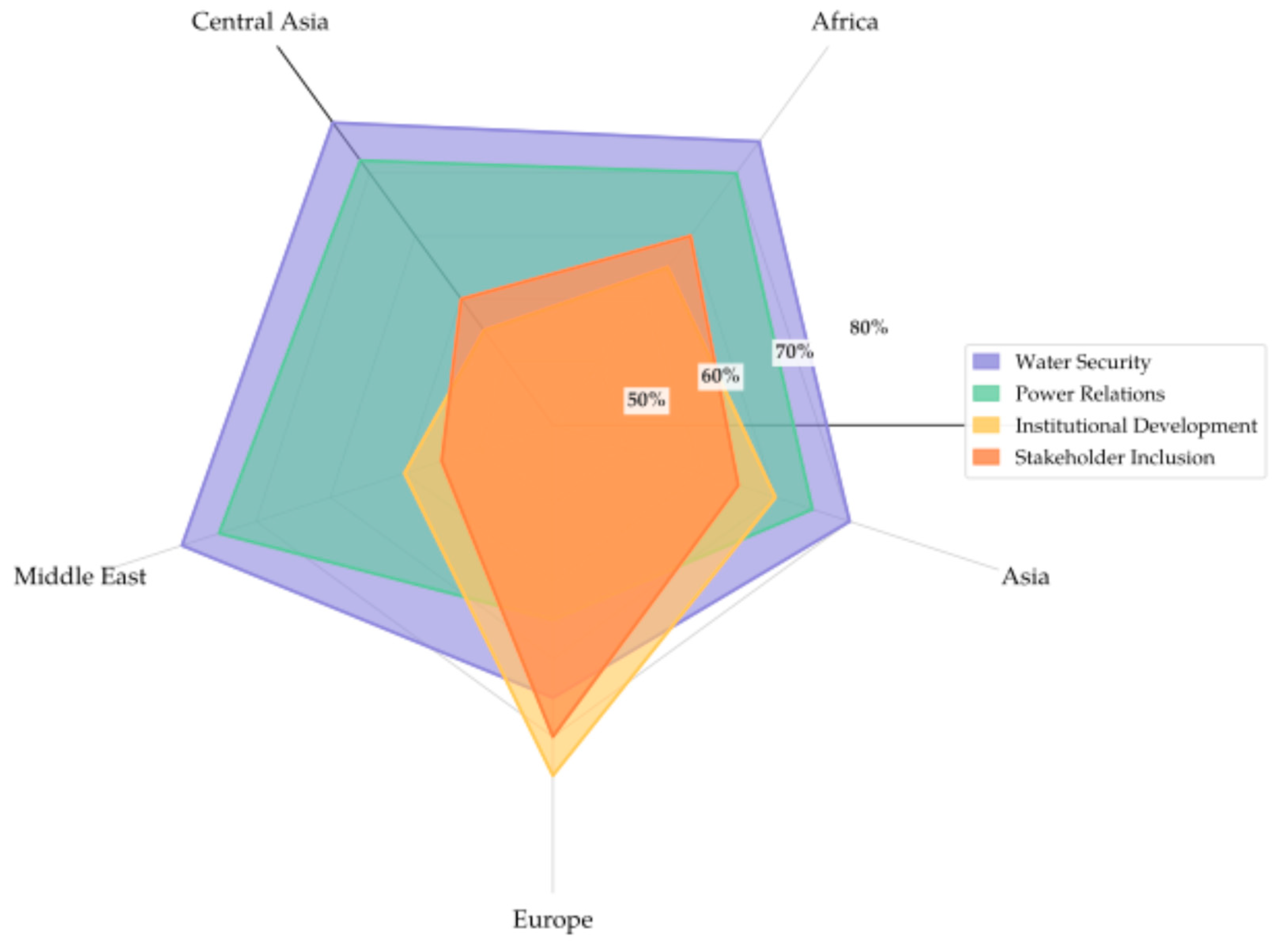
Scholarship across TRBs underscores the uneven performance of stakeholder engagement. European institutions consistently demonstrate advanced participatory practices, with the Rhine basin achieving high levels in assessments of diversity, participation quality, and balanced influence among parties, reflecting decades of institutional development and legal commitments to inclusion [
53]. In contrast, MENA basins reveal more limited emphasis on participatory governance, where elite-driven negotiations often overshadow broader social inclusion [
29]. Asian basins occupy an intermediate position, combining advances in water security and institutional development with limited attention to equity, as engagement processes tend to privilege government and elite actors [
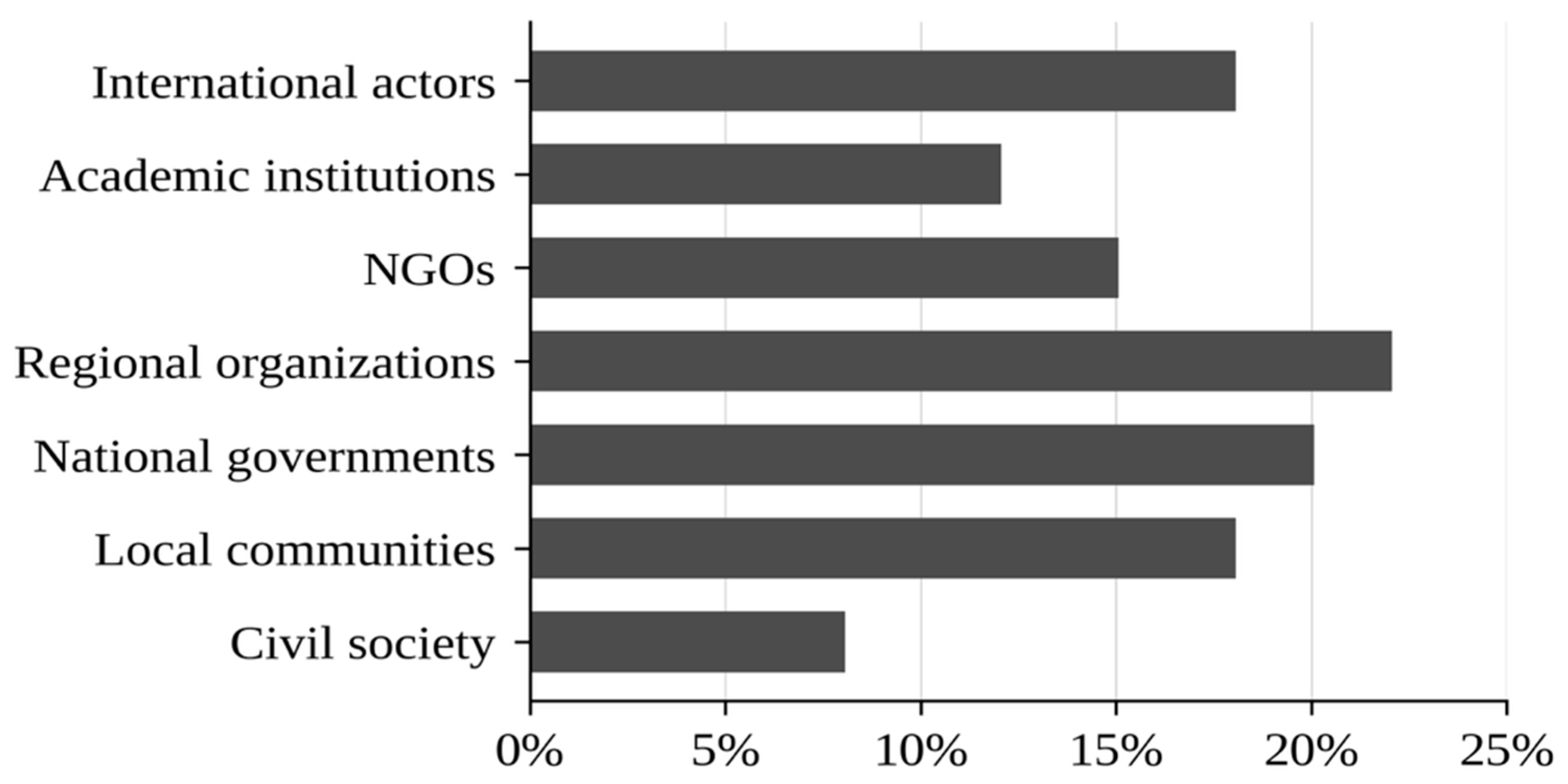
27]. These disparities are reinforced by the data: while civil society groups, NGOs, and community organizations account for nearly half of stakeholder mentions in basin documents, their representation in formal decision-making remains marginal, with national governments retaining dominant control over outcomes (see
Figure 3). The stakeholder distributions presented in
Figure 3 were derived from systematic coding of reviewed studies: each study was assessed for the types of stakeholders identified, referenced, or actively engaged in the governance processes documented, and the percentages represent the proportion of studies in which each stakeholder category was mentioned as a participant or actor in transboundary governance.
The participation–power paradox is most apparent in contexts dominated by hydro-hegemony. In basins where a single riparian state holds dominant power, participatory governance frameworks frequently fail to translate formal inclusion into meaningful influence over decision-making. In the Jordan Basin, structural disparities in institutional access have constrained downstream communities’ capacity for autonomous water management, forcing local farmers into coping mechanisms while formal allocation rules reflect the interests of the dominant riparian [
30]. Similar dynamics characterize the Helmand/Hirmand Basin, where asymmetries in negotiating capacity between upstream and downstream states persist despite the existence of formal institutional frameworks, limiting the weaker riparian’s effective influence over release conditions [
84]. In the Nile, national-level agreements have at times reproduced elite bargaining structures that exclude downstream riparian communities from meaningful participation, yielding outcomes that reflect power configurations rather than equitable needs assessment [
72]. In the Mekong, despite procedural inclusion of civil society in consultations, upstream and downstream state actors—China, Thailand, and Vietnam—effectively dominate decision-making, sidelining local concerns [
85]. These cases collectively illustrate how structural power asymmetries persist regardless of participatory rhetoric, undermining the substantive influence of marginalized groups.
Nevertheless, instances of more balanced power configurations reveal that meaningful stakeholder engagement can generate cooperation and basin-wide benefits. Simulations of coordinated reservoir operations on the Blue Nile show that joint management between Ethiopia and Sudan increased overall benefits despite asymmetries in distribution, demonstrating the potential of confidence-building, transparent data-sharing, and joint scenario analysis to mitigate power competition [
4]. The Okavango Basin provides further evidence, as riparian states revised agreements to align with international water law and broadened participatory mechanisms, signaling an institutional evolution toward inclusivity [
76]. In the Euphrates–Tigris, local activism against Turkey’s GAP development mobilized international support and compelled more participatory water management planning, including the creation of Water Users’ Associations, which expanded community involvement in resource governance [
67]. These examples underscore how innovative engagement frameworks can counterbalance dominant actors and redistribute influence when civil society coalitions and international organizations align strategically.
Trust emerges as both a prerequisite and an outcome of effective stakeholder systems. The Ngāi Tahu case demonstrates that sustained engagement can transform entrenched mistrust into cooperation within a year of consistent dialogue [
50]. The Danube basin illustrates how basin-wide participatory initiatives, including public consultation panels and symbolic events like Danube Day, help cultivate shared identities and embed inclusion beyond formal negotiation settings. Trust is further reinforced through collaborative knowledge systems, where co-production of knowledge between scientists, policymakers, and local actors strengthens scientific credibility and reduces contestation. Empirical evidence from the Mekong, Danube, and Niger basins shows how integrating local insights with technical modeling strengthens both legitimacy and compliance [
76,
85]. The water diplomacy framework explicitly emphasizes such integration, positing that sustainable outcomes in disputes such as irrigation allocation are only possible when local water users participate as equal decision-makers [
23,
74].
This approach aligns with emerging water diplomacy paths that recognize diplomacy actions across multiple scales and contexts [
73,
86]. Recent scholarship emphasizes putting diplomacy at the forefront of water diplomacy itself, moving beyond technical negotiations to embrace relationship-building as the core diplomatic practice [
87]. The practical application of these frameworks reveals substantial potential for enhancing equity. The Mékrou Basin illustrates how local knowledge, when systematically incorporated into basin planning, improves fairness in resource allocation, particularly under conditions of institutional asymmetry [
70]. The Tonle Sap case highlights how participatory modeling and trans-sectoral collaboration allow engagement processes to adapt to diverse stakeholder capacities, ensuring that communities with different resources and expertise are meaningfully included [
88]. These cases reveal how participation mechanisms tailored to local contexts can translate inclusion into actual influence.
In politically contested transboundary basins, independently validated datasets help bridge trust deficits among riparian states and reinforce the legitimacy of participatory governance processes. Precipitation remote sensing-based databases such as CHIRPS and PERSIANN-CDR provide novel baselines that reduce information asymmetries and enhance confidence in joint decision-making [
74]. In the Nile basin, inclusive dialogues coupled with transparent third-party data verification have been shown to reduce intergroup suspicion and support cooperative planning [
1]. Such measures demonstrate that knowledge co-production and technical neutrality can counterbalance deep-seated mistrust in conflict-prone contexts.
Recent innovations in governance extend beyond traditional single-commission structures toward polycentric systems in which multiple centers of authority engage stakeholders at local, national, and transboundary levels. The Mekong illustrates this trend, as multi-stakeholder platforms such as the Mekong Partnership for the Environment channel community perspectives into broader negotiations, thereby multiplying pathways for influence and reducing dependence on elite-dominated forums. Yet persistent inequalities continue to constrain inclusivity. Gender disparities remain particularly acute: women comprise less than one-third of staff in international basin organizations, a statistic that reflects structural barriers not only in numerical representation but also in access to technical expertise and decision-making authority. Evidence from dialogues in the Brahmaputra Basin further shows that women and other marginalized groups continue to be sidelined from formal planning, limiting the transformative potential of participatory frameworks [
19,
20,
21,
89].
These persistent asymmetries reflect broader systemic challenges in transboundary governance. Basin governance often remains fragmented and top-down, reinforcing elite dominance and undermining adaptive capacity [
5,
29]. Also, studies reveal substantial variation in stakeholder engagement across institutional contexts, with governance design and capacity levels shaping performance more than basin-specific hydrological conditions [
75,
81]. This variability underscores the need for systematic longitudinal research to trace how participatory practices evolve over time and under stress conditions such as drought, conflict, or regime change [
Figure 4]. Comparative analysis designs should also extend to underrepresented regions, particularly the Americas, where basins such as the Colorado, Amazon, and La Plata present distinct governance configurations that remain understudied relative to Eurasian and African systems. The development of standardized governance performance metrics, enabling structured comparison of institutional configurations, stakeholder inclusion, power distributions, and cooperation outcomes across diverse transboundary basins, would significantly advance the field’s capacity for systematic cross-basin assessment.
Although participatory mechanisms have become increasingly common across transboundary basins, meaningful stakeholder influence over governance outcomes remains unevenly distributed and frequently constrained by entrenched power asymmetries. Durable cooperation emerges only when stakeholder participation is translated into decision-making power through transparent processes, trust-building, and equitable benefit-sharing. Yet even where participatory systems exist, one of the most persistent and consequential exclusions remains unaddressed: gender. Without systematically integrating women’s perspectives and leadership, participatory frameworks risk reproducing inequities that undermine legitimacy and adaptive capacity.
Section 3.4, therefore, examines gender dynamics as a structural determinant of governance performance, highlighting how inclusion or exclusion shapes the resilience and equity of transboundary water governance.
3.4. Gender Dynamics and Transboundary Rivers
Gender inclusion operates at two interconnected scales in TRBs: as an equity imperative that ensures fair representation in governance processes, and as a practical necessity that directly strengthens the effectiveness of water management decisions and outcomes. The justification extends beyond normative principles: Scholarly analysis demonstrates that gender-inclusive governance directly affects the biophysical and socio-economic performance of transboundary water systems. Women’s participation in resource management is associated with measurable improvements in agricultural productivity, water-use efficiency, and food-security outcomes [
90,
91], while their exclusion narrows the information base available for allocation planning, distorts vulnerability assessments, and weakens the practical feasibility of negotiated measures. Women contribute distinct knowledge systems—particularly regarding cropping patterns, household water use, and subsistence agriculture—that are directly relevant to demand estimation and adaptive capacity in water–energy–food systems. Integrating gender perspectives is therefore a core dimension of effective transboundary governance, requiring institutional designs that embed women’s participation in decision-making, enable meaningful authority, and support a shift toward more collaborative negotiation cultures. This section examines how gender operates as a governance variable with system-level consequences, identifies the structural barriers that limit women’s participation, presents empirical evidence linking gender inclusion to measurable governance outcomes, and outlines an institutional framework for systematic reform.
Transboundary rivers are complex socio-economic–ecological systems in which allocation decisions directly affect agricultural production, household water access, and energy use. In many basins, women play central roles in water collection, subsistence agriculture, and household energy management. Excluding women from formal governance processes therefore reduces the accuracy of demand estimation, distorts assessments of vulnerability, and weakens the practical feasibility of negotiated measures [
20,
21,
22]. This exclusion is not only an equity concern but also a functional constraint on governance quality: when women’s knowledge of cropping patterns, irrigation practices, and domestic water use is absent from planning, allocation rules and water–energy–food strategies risk being misaligned with actual local conditions and needs. The evidence reviewed here consistently indicates that governance processes which systematically incorporate women’s knowledge produce more accurate resource assessments and more durable implementation outcomes than those which do not.
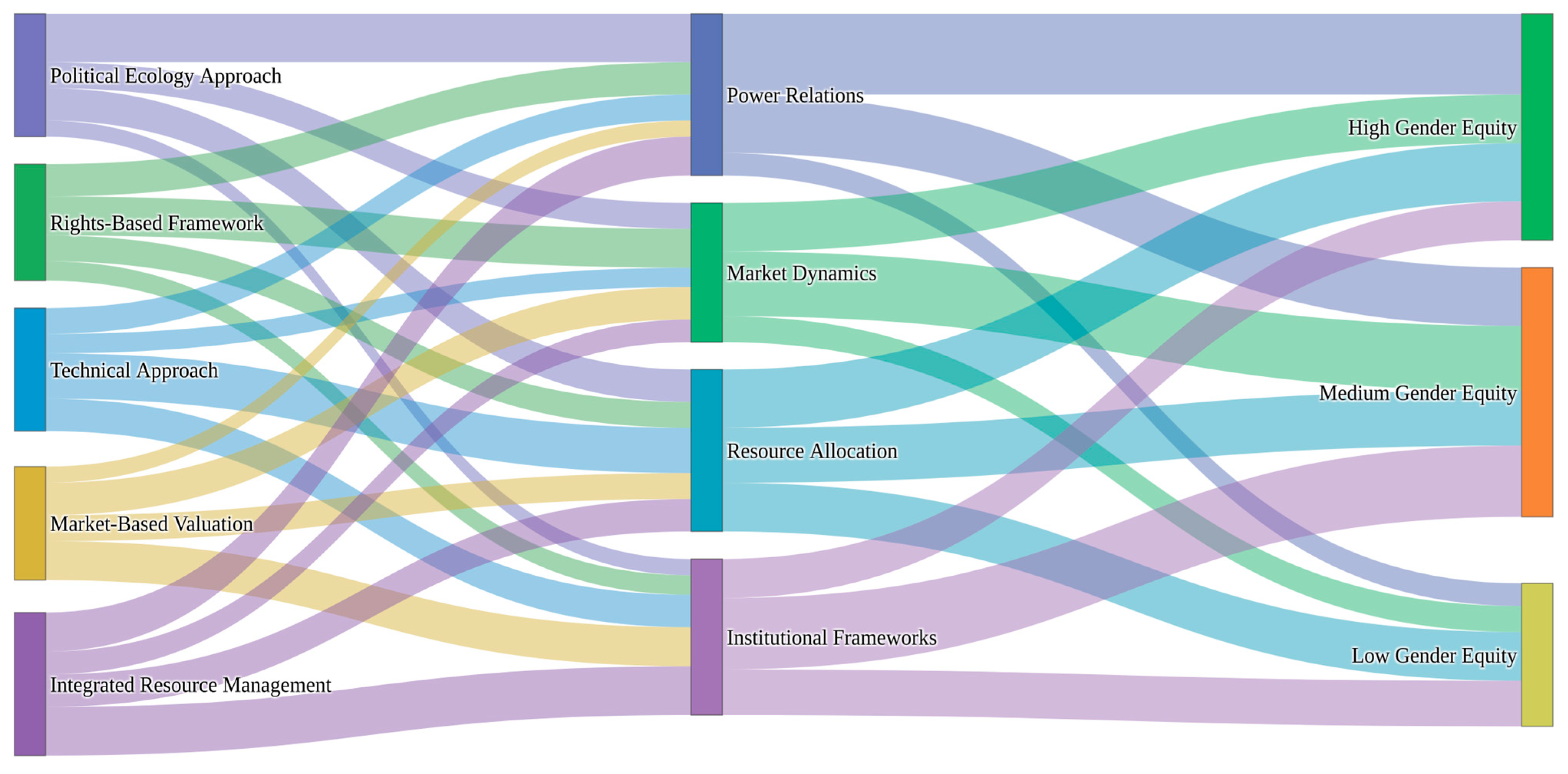
Institutional design significantly influences gender-related outcomes in transboundary governance. Rights-based and political-ecology approaches show stronger associations with improved gender-equity outcomes because they embed legal entitlements and participatory mandates that formalize women’s inclusion in decision-making [
21,
22]. Market-driven or purely technical approaches, by contrast, tend to prioritize economic efficiency and existing property regimes without correcting structural participation gaps. Integrated resource management frameworks occupy an intermediate position, with their effectiveness depending on whether gender inclusion is systematically incorporated into decision-making procedures rather than treated as an afterthought. These relationships are illustrated in
Figure 5, which synthesizes how governance design choices correspond to differential gender outcomes across transboundary river basins. These findings indicate that gender-responsive governance depends on explicit institutional provisions rather than implicit assumptions that inclusivity will emerge naturally.
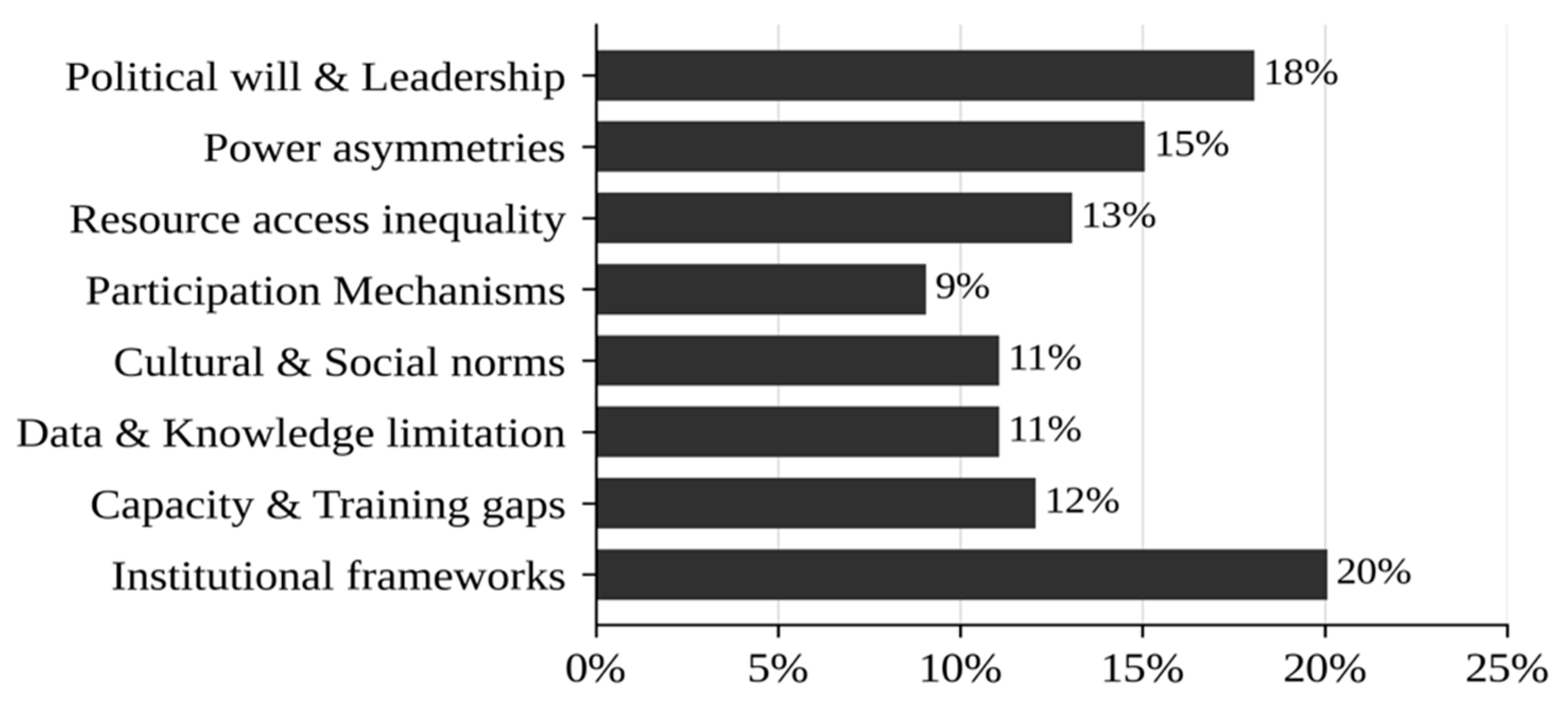
Barriers to women’s participation in water governance are structural and multi-dimensional. Evidence across transboundary basins shows that restrictive cultural norms (21%) and institutional rigidity (16%) constitute the most significant obstacles, followed by training gaps (13%), limited availability of gender-disaggregated data (11%), and insufficient political commitment to gender reform (10%). Power asymmetries within institutions (12%) and unequal resource access (9%) further constrain meaningful participation, even where formal inclusion mechanisms exist. Participation mechanisms themselves account for 7% of identified barriers, confirming that representation alone does not guarantee influence over decisions [
20,
21,
22]. These percentages were calculated by systematically coding the barrier types identified in each reviewed study that addressed gender dimensions in transboundary water governance. Each barrier was recorded when explicitly identified by the study authors, and the percentages represent the relative frequency of each barrier type across the full set of gender-relevant studies in the review.
Figure 6 summarizes these barriers, demonstrating that institutional reform must address structural, informational, and capacity constraints simultaneously rather than targeting any single obstacle in isolation. Gender disparities in representation remain evident across all regions examined in this review, reflecting both cultural norms and institutional rigidity. The universal pattern of underrepresentation indicates that structural factors—such as recruitment pipelines, credentialing systems, and incentive structures—systematically limit women’s advancement in water governance regardless of geographic or political context.
The implications of gender exclusion for allocation performance and water–energy–food coordination are measurable and extend into natural-science domains. Male-dominated decision environments often reinforce adversarial negotiation cultures and limit consideration of household-level adaptation strategies [
20]. In water–energy–food planning, failure to incorporate women’s agricultural and household energy knowledge produces interventions that underperform or fail during implementation [
92,
93]. Conversely, institutional scholars demonstrate that closing the gender gap in resource access can increase agricultural productivity by 20–30%, indicating substantial unrealized gains in basins where women remain excluded from planning and decision-making [
90]. Gender-responsive approaches to water governance are further associated with measurable improvements in water-use efficiency and long-term sustainability of basin management practices [
91]. Community-based approaches that incorporate women’s traditional knowledge of soil moisture management, seed selection, and irrigation timing have been shown to improve water-use efficiency across diverse basin contexts [
91]. In the Nile Basin, greater female participation in governance forums is associated with cooperation-focused outcomes, more equitable resource allocation, and reduced conflict escalation [
21,
22]. Recent research on the water–energy–food–ecosystems nexus in the Mediterranean demonstrates that targeted gender-equity interventions within nexus governance frameworks produce measurable gains in sustainable development outcomes at the basin level [
94]. These findings establish that gender inclusion influences system performance through two measurable pathways: first, by improving the quality and completeness of information used in resource planning; and second, by strengthening implementation capacity and compliance with negotiated measures. Enhanced participation contributes to more accurate demand assessments, improved adherence to agreed allocation rules, and greater institutional resilience under climate variability [
95].
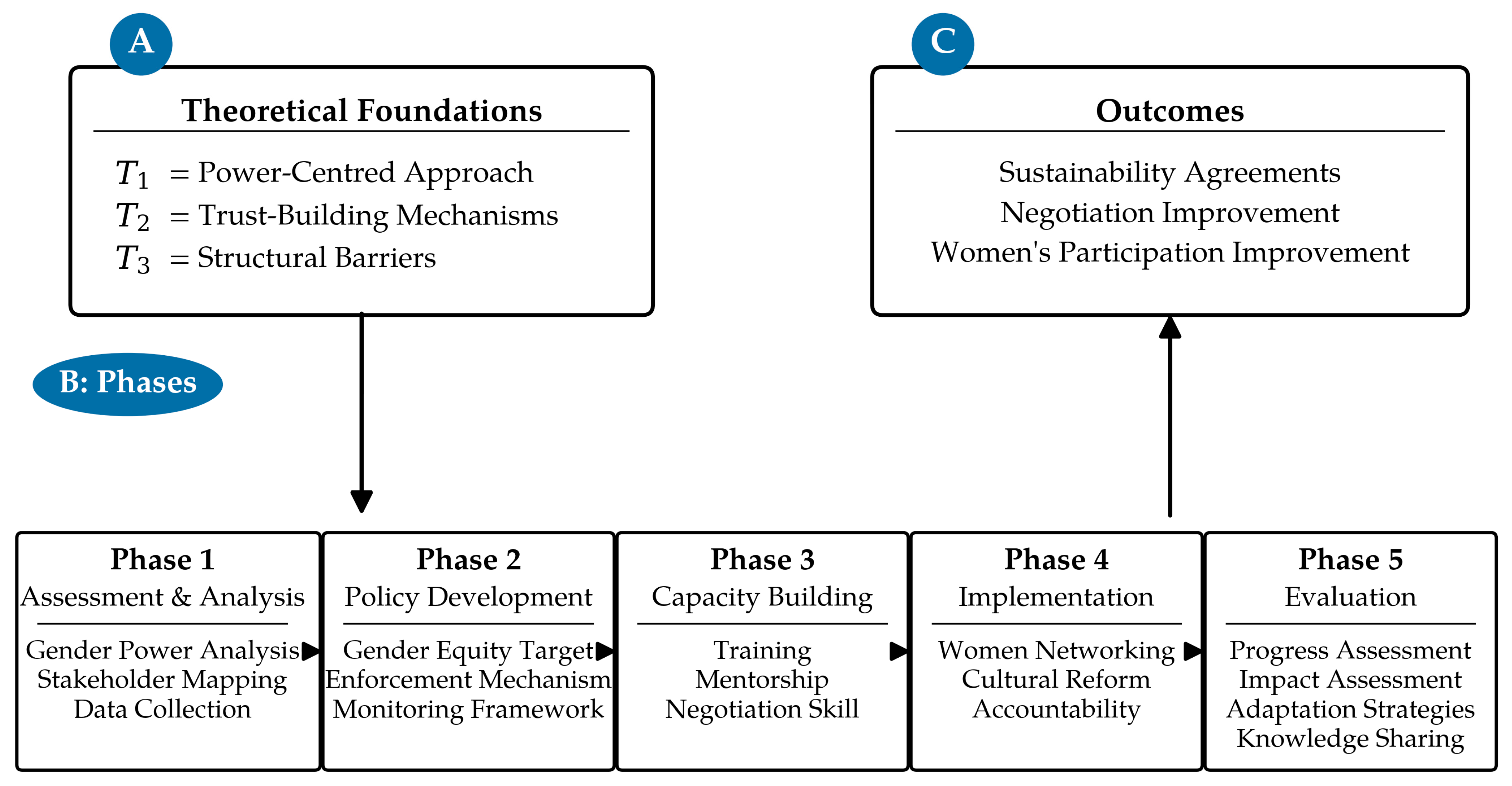
Addressing the structural constraints identified above requires systematic institutional reform rather than incremental adjustments. The Gender-Transboundary Integrated Framework (GTIF) operationalizes this approach through phased implementation (see
Figure 7). Phase 1 establishes baselines through gender-power analysis and data assessment. Phase 2 integrates gender targets into policy and budgeting processes. Phase 3 strengthens technical and negotiation capacity for women participants. Phase 4 institutionalizes representation and accountability mechanisms. Phase 5 embeds monitoring and adaptive learning into governance cycles. By linking gender inclusion to measurable governance indicators—such as representation levels, data integration, and implementation outcomes—the framework enables systematic evaluation of how gender-responsive reforms affect allocation effectiveness and water–energy–food coordination. The development of standardized measurement tools, such as the Policy Gender Index for water-related policies, represents a significant methodological advance by providing evidence-based metrics for assessing gender considerations in national and transboundary water governance processes [
96].
Climate change further reinforces the relevance of gender integration in transboundary governance. Increasing hydrological variability elevates the importance of adaptive capacity at household and community levels—precisely the scales at which women’s knowledge and management roles are most concentrated. Evidence indicates that women’s participation strengthens institutional responsiveness and improves long-term sustainability outcomes in basin governance [
95]. Participatory planning initiatives that incorporate women’s perspectives have demonstrated improved policy uptake and local acceptance [
71]. Capacity-building programs have also increased female representation across diverse institutional contexts, indicating that institutional transformation is achievable when supported by targeted, sustained interventions.
Gender dynamics in transboundary river basins are directly linked to the effectiveness of water allocation and water–energy–food system coordination. Where women are systematically included in governance structures, agreements benefit from improved information quality, stronger implementation, and enhanced adaptive resilience—outcomes that are now measurable through emerging standardized tools for assessing gender considerations in water policy. Where exclusion persists, negotiated outcomes risk reduced legitimacy, weaker compliance, and diminished performance under environmental stress. These dynamics interact directly with the power asymmetries analyzed in the preceding section—patriarchal institutional structures operate as a form of power that constrains whose knowledge is considered legitimate in governance processes—and with the stakeholder engagement practices discussed earlier, where gender-balanced representation strengthens the diversity of perspectives required for adaptive governance. Gender equity is therefore treated in this review not as an independent normative objective but as a structural determinant of governance effectiveness within transboundary water management (see
Figure 7).
3.5. Nexus-Diplomacy Integration in Transboundary Water Governance
Unlike the preceding four sections, which each examine a single governance dimension, this section synthesizes their interactions through the integrative lens of the water–energy–food nexus, demonstrating how cross-sectoral coordination transforms the individual dimensions into a coherent governance framework. The evidence reviewed across
Section 3.1,
Section 3.2,
Section 3.3 and
Section 3.4 demonstrates that governance outcomes, including the durability of cooperative agreements, the equity of benefit distribution, the legitimacy of institutional arrangements, and the adaptive capacity of basin-level responses to climate variability are directly shaped by whether water, energy, and food interdependencies are addressed through integrated planning or managed through fragmented, sector-specific approaches. Transboundary cooperation endures when it delivers socio-economic dividends, durability requires empowered stakeholders with substantive influence, and gender equity is indispensable for legitimacy and adaptive capacity. Yet as the preceding four sections demonstrate, these dimensions cannot function effectively in isolation. The water–energy–food nexus provides that framework by recasting water diplomacy as a negotiation over integrated benefit arrangements—a framework that coordinate interdependent services across sectors, align efficiency with fairness, and embed resilience under climate stress. This integrative approach moves beyond allocation and diplomacy as the practice of balancing interdependencies across water, energy, and food systems. This section examines how nexus-based diplomacy has evolved from volumetric approaches, presents cross-basin evidence of its application, and proposes a generalizable model of benefit-portfolio diplomacy with implications for institutional design.
Historically, diplomacy in shared basins has focused on water volumes, producing rigid agreements that are vulnerable to mistrust and environmental change. The Syr Darya Basin presents a clear example of this limitation: following the dissolution of Soviet-era centralized water–energy exchange agreements, upstream winter hydropower releases from the Toktogul Reservoir flooded downstream areas in Uzbekistan and Kazakhstan, while summer shortages devastated irrigated agriculture across the Fergana Valley. Repeated fuel-for-water exchange arrangements collapsed under mistrust and non-compliance, demonstrating how water-only diplomacy failed to stabilize cooperation when energy and food security objectives were structurally misaligned [
6,
25,
26]. The broader Aral Sea crisis further illustrates the consequences of fragmented governance: the absence of integrated water–energy–food planning across Central Asian republics contributed to the catastrophic shrinkage of the Aral Sea, with cascading socio-economic and ecological impacts that persist decades later [
26,
29]. By contrast, the Chu-Talas agreement explicitly linked water and energy, with Kazakhstan financing Kyrgyz dam maintenance in exchange for irrigation-timed releases—an early example of cross-sectoral benefit-sharing diplomacy that rebuilt trust and stabilized negotiations [
20,
97].
The Nile basin similarly demonstrates how water diplomacy must evolve beyond volumetric allocation. The GERD was conceived as an energy project, while Egypt’s concerns centered on irrigation and food security. For years, negotiations framed around annual water volumes entrenched zero-sum dynamics. Nexus-based hydro-economic analyses reveal alternative diplomatic packages—coordinated reservoir operations combined with power purchase agreements—that could simultaneously achieve upstream hydropower objectives and safeguard downstream agriculture [
98,
99]. The gradual introduction of energy trade into GERD negotiations marks a critical shift toward nexus-based diplomacy, in which water is negotiated not as an isolated commodity but as part of an integrated service portfolio that addresses multiple national priorities simultaneously.
The Mekong basin highlights both the costs of neglecting nexus diplomacy and the potential of integrated approaches. Hydropower expansion in China and Laos generated energy and revenue but undermined sediment flows and fisheries essential to food security in Cambodia and Vietnam. The Mekong river Commission’s Council Study (2018) reframed basin diplomacy by evaluating multi-sector scenarios, showing that balanced development pathways—combining reduced dam construction with improved irrigation efficiency—produced superior basin-wide outcomes once food production and ecosystem services were valued alongside energy generation [
5]. However, the persistence of nationally separated priorities illustrates that scientific knowledge alone is insufficient unless translated into diplomatic bargaining frameworks that embed multi-sector trade-offs into the negotiation process [
100,
101].
Synthesizing these cases suggests a generalizable model of benefit-portfolio diplomacy defined by four core principles:
- -
The first principle is joint production: services across water, energy, and food are co-generated, requiring negotiations to account for cross-sectoral impacts rather than treating each sector in isolation.
- -
The second is option value: flexibility in timing, storage, and trade is itself a diplomatic asset that must be preserved rather than locked into rigid allocation formulas.
- -
The third is dynamic updating: agreements must include mechanisms for revising benefit arrangements under climate variability or market shocks, recognizing that static treaties cannot accommodate non-stationary conditions.
- -
The fourth is equity-compatibility: fairness is a condition of diplomatic stability, and cooperative outcomes must distribute gains inclusively to endure over time.
Translating this model into practice requires specific integrative mechanisms. Joint multi-sector assessments—such as the Nile Basin Initiative’s development scenarios and the Mekong Council Study—shift negotiations from zero-sum allocation toward scenario-based evaluation of trade-offs [
24]. Institutional interfaces, including inter-ministerial committees linked to basin commissions, provide cross-sectoral platforms for coordinated diplomacy [
17,
63,
102]. Policy instruments—such as electricity-for-water exchange agreements, multipurpose investment funds, and harmonized subsidy regimes—create material incentives for cross-border cooperation. Decision-support tools, including system dynamics models and integrated assessment frameworks, enable joint scenario exploration and foster shared evidence in diplomatic negotiations [
11,
82,
103]. These mechanisms collectively represent the operational infrastructure through which nexus-based diplomacy can be implemented at the basin level. Recent comparative governance assessments confirm that the effectiveness of these integrative mechanisms depends on four enabling conditions: awareness of nexus interlinkages across governmental levels, cross-border and cross-sectoral communication and trust, governance action at the appropriate institutional level, and adequate resources for natural resource monitoring across sectors [
102]. The growing body of literature on WEF nexus governance—including transboundary nexus assessment methodologies [
3], participatory nexus planning frameworks [
71,
88], and integrated hydro-economic modeling [
4,
98]—collectively establishes that the WEF nexus functions not as an abstract analytical concept but as a concrete operational architecture through which sectoral interdependencies are managed, trade-offs are negotiated, and cooperative benefits are distributed in transboundary settings.
However, nexus integration carries inherent risks that must be managed through institutional safeguards. Without participatory protections, powerful actors can use the language of integration to justify unilateral projects that serve national interests while imposing costs on weaker riparian states [
92]. To prevent this, nexus-based diplomacy must embed participatory safeguards that ensure balanced representation of all riparian parties in decision-making, and gender-responsive planning processes that incorporate women’s knowledge into cross-sectoral resource management [
69]. The governance typology emerging from this review suggests three distinct configurations: first, hegemonic-extractive arrangements in which dominant states capture integration benefits, producing unstable outcomes; second, procedurally inclusive arrangements that provide formal participation without transferring real decision-making authority, producing fragile cooperation; and third, integrative-adaptive arrangements that combine cross-sectoral coordination with genuine power-sharing and inclusive representation, producing durable and equitable governance. The evidence reviewed across all four governance dimensions consistently demonstrates that only the third configuration generates cooperation resilient enough to withstand climatic, economic, and political stress.
Applying this typology across the basins examined in this review reveals distinct governance trajectories. The Nile GERD dispute exemplifies hegemonic-extractive dynamics, where upstream infrastructure development has restructured bargaining without corresponding institutional safeguards for downstream states [
1,
29,
77]. The Mekong operates primarily under a procedurally inclusive configuration: the MRC provides formal consultation mechanisms, but its consultative mandate limits its capacity to constrain unilateral action by upstream states [
27,
28,
79]. Central Asia’s Syr Darya Basin illustrates the transition from hegemonic-extractive arrangements under post-Soviet fragmentation to partial procedural inclusion through repeated but fragile bilateral agreements [
6,
25,
26]. The Chu-Talas agreement and the Rhine Basin represent the closest approximations to integrative-adaptive governance, where cross-sectoral coordination, transparent data-sharing, and inclusive institutional arrangements have produced more durable cooperative outcomes [
20,
53,
97]. These comparisons suggest that governance configurations are not static but can evolve along the typology spectrum in response to institutional reforms, external mediation, and changing power distributions. This cross-basin comparative assessment is deliberately embedded within the integrative WEF nexus section rather than presented as a standalone section, because governance performance in each basin can only be meaningfully evaluated when all four dimensions—socio-economic incentives, power configurations, stakeholder inclusion, and gender dynamics—are considered simultaneously alongside their cross-sectoral interdependencies.
In summary, integrating the water–energy–food nexus into water diplomacy reframes cooperation from dividing water flows to co-producing interdependent services and shared resilience. Where socio-economic benefit-sharing defines cooperative incentives, power-responsive institutions manage asymmetry, meaningful participation ensures legitimacy, and gender equity strengthens information quality and adaptive capacity, the nexus provides the systemic logic that binds these dimensions into a coherent governance framework. By structuring agreements as adaptive benefit arrangements—capable of adjusting to shocks, redistributing gains fairly, and incorporating diverse knowledge systems—nexus-based diplomacy transforms rigid arrangements into resilient compacts. As climate stress and geopolitical competition intensify, transboundary basins that institutionalize nexus-diplomacy integration will be best positioned to move beyond zero-sum competition over scarce resources and achieve durable, equitable, and forward-looking cooperation in TRBs.