Article

Beneath the Surface: Understanding Septic System Management in New York State Watersheds

1
Department of Environmental Studies, State University of New York–Environmental Science and Forestry, Syracuse, NY 13210, USA
2
Division of Environmental Science, State University of New York–Environmental Science and Forestry, Syracuse, NY 13210, USA
*
Author to whom correspondence should be addressed.
Water 2026, 18(9), 1010; https://doi.org/10.3390/w18091010
Submission received: 1 January 2026 / Revised: 4 April 2026 / Accepted: 15 April 2026 / Published: 23 April 2026
(This article belongs to the Section Urban Water Management)

Abstract

In the United States, most urban areas are served by sewers and wastewater treatment plants, while septic systems remain common in rural regions, in lower-density communities, and in areas with lower levels of public services. The policy frameworks for septic system management are complex and variable, involving multiple key actors and levels of government and varying considerably from place to place. This research seeks to characterize the septic system management practices in two New York State watersheds: The first study area is located in central New York (the Lower Seneca River watershed) and comprises communities with greater reliance on surface water, and the second is in eastern New York on Long Island (Peconic Estuary Watershed), where groundwater is the primary source of drinking water. Since homeowner practices play a central role in outcomes, we also investigate homeowners’ understandings of their septic systems (also called onsite wastewater treatment systems, or OWTS). The methods used include policy analysis as well as qualitative research methods (interviews, focus groups, and survey research) to characterize homeowners’ perceptions and understandings, including their awareness of grant programs for septic system upgrades and replacement. The results show that most septic system owners hold only partial understandings of their systems. Their awareness of the connections between septic system management and groundwater protection is limited, with noted differences across watersheds. The study findings can inform future planning initiatives, as they illustrate the value of placing community water system understanding at the forefront of outreach efforts.

1. Introduction

Within the United States, there are few strong and effective septic system management policies. While surface water discharges into US water bodies are addressed by the National Pollutant Discharge Elimination System (NPDES) under the Clean Water Act, subsurface discharges are comparatively less regulated and controlled. Environmental managers address nonpoint source pollution control using an array of laws and policies; however, onsite wastewater treatment systems (OWTS), typically residential septic systems, are neither explicitly nor fully addressed at the federal level [1,2]. Instead, policies for residential septic systems are frequently found at the state, regional, and local levels, and New York State has been among the most forward-looking in this regard, consistent with its historic environmental policy leadership role [3]. Across New York State, counties are working toward water quality goals, approaching issues from different perspectives and complementary emphases.
Outdated, malfunctioning, or mismanaged OWTS are major sources of nutrient pollution, contributing high levels of phosphorus (P) and nitrogen (N) to surface and subsurface waters [4,5]. Traditional septic systems (i.e., systems that treat and/or dispose of sanitary waste, with water inflow not exceeding 1000 gallons per day) are used by approximately one-quarter of United States households and offer far better wastewater treatment than their rudimentary predecessors, cesspools (i.e., drywells for untreated sanitary waste with open bottoms and/or perforated sides). However, even when working correctly, traditional septic systems may still contaminate water with nutrient loads, since they are not designed to remove them [6,7,8]. As a result, nutrient pollution seeps into waterways across the country, contaminating drinking water sources [4,5]. It is well understood that excess nutrients in a water body can impact ecosystems and public health, with consequences for the economy and environmental equity, among other things. Policies at the local, state, and federal levels help address these challenges [9].
As the complex ramifications of nutrient pollution have become more apparent, water quality has become a top priority for many environmental organizations and agencies. Increased frequency of water quality problems in New York State (NYS) has expanded public attention and interest in controlling sources of nutrients, especially on Long Island. Because replacing old or malfunctioning septic systems can cost tens of thousands of dollars, the NYS Department of Environmental Conservation (DEC) developed a grant program to help septic system owners pay the cost of replacement. Established as part of the Clean Water Infrastructure Act in 2017, the NYS Septic System Replacement Fund Program (SSRP) supports the replacement of inadequate or failing septic systems and cesspools. The grant provides funds to cover up to 50% of the cost (up to $10,000) of OWTS replacements. Most recently, in 2025, Governor Kathy Hochul announced a $30 million investment for Round 5 of the funding [10].
Funding for the NYS SSRP is directed toward counties that have known water quality impairment linked to failing septic systems. Other factors that can influence a county’s participation in the program include the presence of a sole-source aquifer used for drinking water, waterbody segments listed on the Waterbody Inventory/Priority Waterbodies List (WI/PWL) as impaired or stressed for nutrients from septic systems, and/or impacted Forest Preserve waterbodies [11]. In addition to the presence of eligible (i.e., impacted) waterbodies in the county, the following considerations are made for project eligibility: the property’s location in relation to a waterbody, impacts on groundwater used as drinking water, and the condition of the property owner’s current septic system. Once the SSRP provides funds to participating counties, they become responsible for reviewing and evaluating applications and distributing financial assistance awards based on the program criteria.
However, since the SSRP was established, not all eligible property owners have applied. One of the main goals of this study was to clarify the extent of program participation and further understand the barriers to the uptake of the NYS SSRP. Improved understanding of community knowledge of septic systems and the current state of septic system management will help program managers to better understand how to enhance awareness of and participation in similar programs. The results will inform how to frame program outreach and where governments should focus efforts to improve the planning, implementation, and success of grant programs in the future. The primary audience for our study is regulatory program managers; the secondary audience includes anyone interested in the topics of water resources management, onsite wastewater management, regulatory programs, and/or financial support initiatives that offer grants or loans for septic system improvements. A third set of readers would be those focused on regulatory strategies for environmental policies generally, especially those with sociotechnical components and/or grant programs.
It is also important to address the regulatory landscape surrounding septic system management. Given the voluntary nature of many federal and state septic system management guidelines, technology-forcing requirements at lower levels of government have been hailed as among the most effective ways to limit the pollution seeping from OWTS into Waters of the United States (WOTUS) [12]. Pilot programs to install advanced septic systems have been implemented across the northeast United States by counties, municipalities, and environmental agencies and organizations [13,14]. In addition, nongovernmental organizations, including lake associations and land trusts, have roles in septic system management across NYS [15,16]. Thus, while federal- and state-level requirements provide some structure for septic system management, it is often the lower levels that provide the most specific and directive forms of guidance [17,18]. Nonetheless, there are authors who argue that state-established regulations, with incentives for implementation by local governments, may be a superior solution [9]. This study primarily focuses on state- and county-implemented programs; however, some municipalities within the study area on Long Island, NY, have developed their own grant programs.

2. The Study Areas

The research focused on two study areas within the state of New York: the Lower Seneca River (LSR) Watershed in the Finger Lakes Region (Study Area 1) and the Peconic Estuary Watershed on Long Island (Study Area 2). The selection process began with a list of dozens of candidate study area watersheds, narrowed based on concentrations of septic systems, participation in the SSRP, accessibility of staff members, and differential reliance on groundwater. With sufficient resources, we would have selected all of the candidate sites for the study. We selected Study Areas 1 and 2 for their suitability in capturing the phenomenon of interest, as well as their geographical positions within the state; one being located upstate (i.e., in the northern part of the state) and the other downstate (i.e., in the southern part of the state). For each study area, we investigated the central questions of this research: How can we characterize and assess the different levels of septic knowledge? How do levels of septic knowledge vary geographically and in connection with other factors? What are stakeholders’ perceptions of the current system and the SSRP? How are governmental grant programs and policies influencing septic system maintenance?
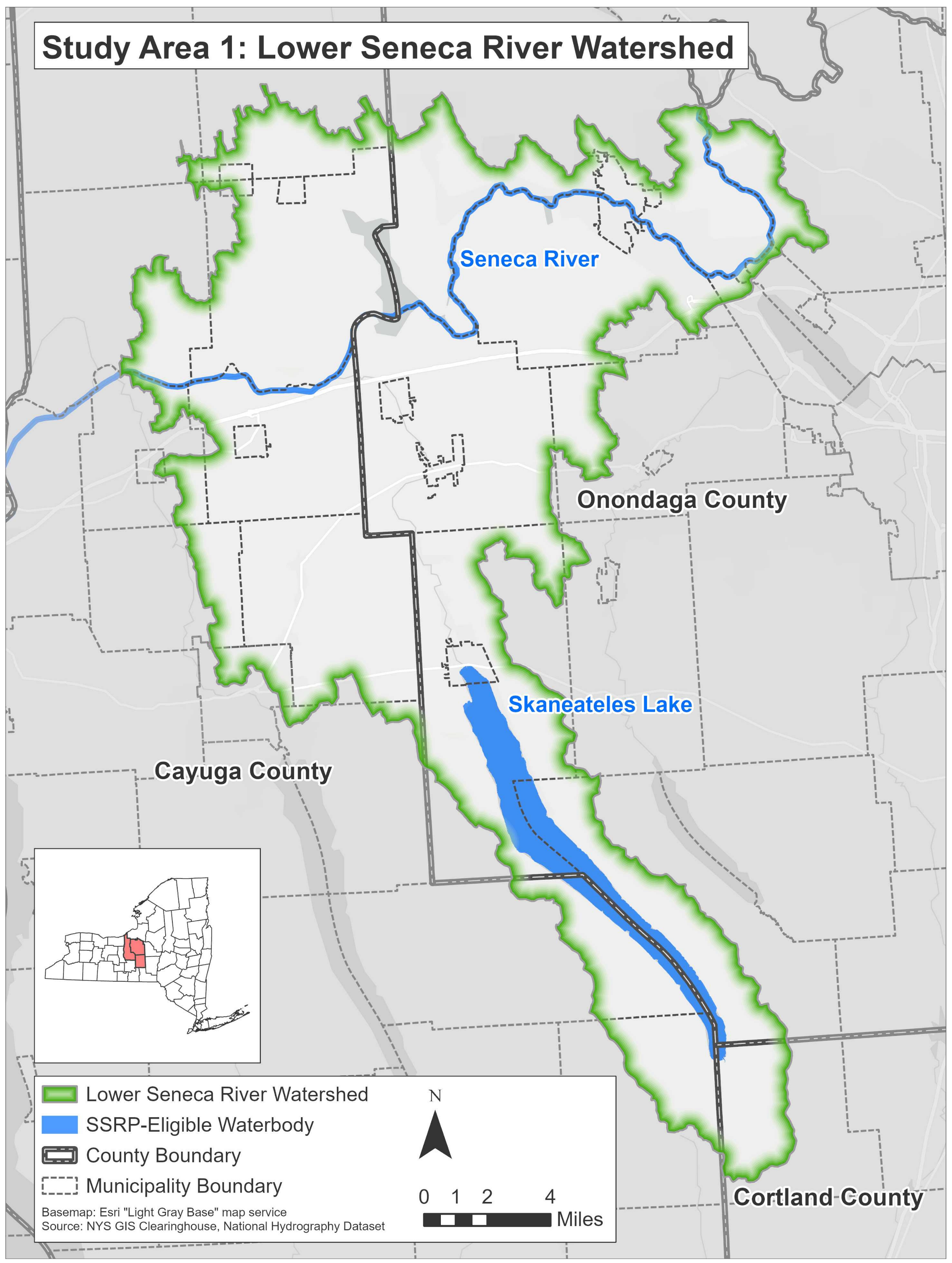
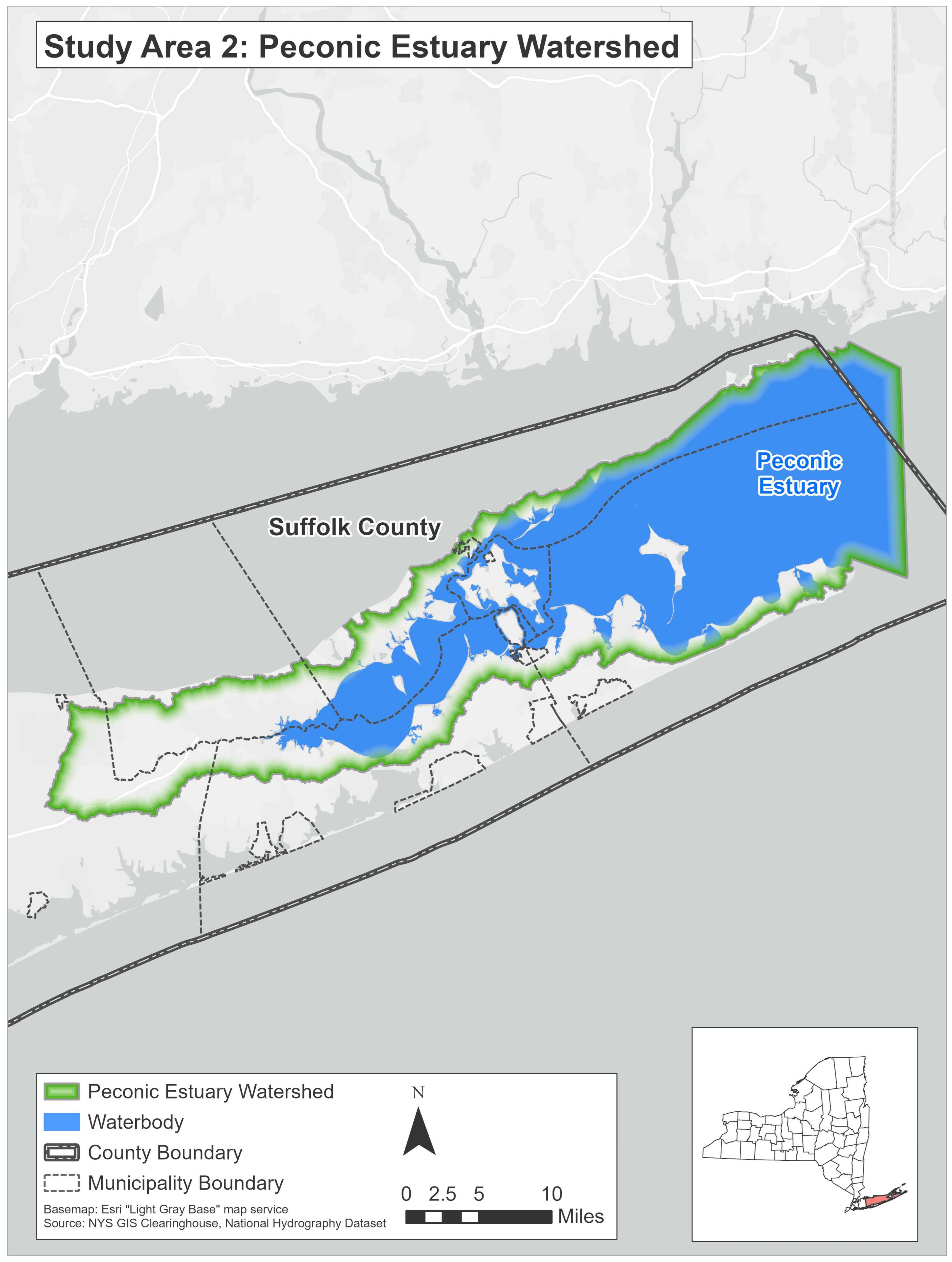
Study Area 1, the LSR Watershed, spans Onondaga, Cayuga, and Cortland Counties and includes 30 municipalities (Figure 1). The two waterbodies eligible for the SSRP in this watershed are the Seneca River and Skaneateles Lake. The second location, Study Area 2, is the Peconic Estuary Watershed in Suffolk County, which is located in Suffolk County and includes 16 municipalities (Figure 2). In each of the Study Areas, we looked at watersheds at the 10-digit HUC level. The Peconic Estuary Watershed is made up of three 10-digit watersheds: Peconic River, Shelter Island Sound–Gardiners Bay, and Napeague Bay–Block Island Sound (Figure 2). We note that while the SSRP targets Suffolk County overall, we chose to focus on a watershed area within it, in an effort to match the scale of the upstate study location. Data for maps were provided by organizations including the New York State GIS Clearinghouse and Suffolk County Open Data.
In Study Area 1, Skaneateles Lake has provided drinking water for the City of Syracuse and surrounding communities since 1894 [19]. The lake now serves around 250,000 people, and approximately 73% (732) of its 1007 shoreline residences use OWTS [19]. In 2004, the City of Syracuse received a filtration avoidance waiver from the NYS Department of Health. This will remain in effect indefinitely as long as watershed protection programs, like the Skaneateles Lake Watershed Agricultural Program, continue to maintain lake water quality at a high level [20,21]. In Suffolk County, approximately 74% of homes and many businesses rely on onsite systems, with an estimated 252,000 cesspools and 108,000 traditional septic systems in place [22]. Suffolk County is an established leader in pursuing proactive measures to reduce nitrogen pollution in surface and groundwater [23,24]; organizations including Reclaim Our Water, the Long Island Nitrogen Action Plan (LINAP), individual estuary programs, and town/village-led initiatives all contribute to the management capacity there. Both locations were desirable for studying septic system maintenance because the proportion of OWTS in each area is well above the national average of approximately 25% [25].

3. Materials and Methods

Several research methods were used in this project, including literature review, policy analysis, semi-structured interviews, focus groups, and a survey of septic system owners. A mixed-methods approach enabled us to explore community understandings of septic system maintenance, as well as the government-funded grant programs available, by engaging multiple stakeholder groups [26]. The term ‘management tools’ refers to both the technologies that handle onsite wastewater and the regulatory strategies meant to guide homeowner choices regarding septic system maintenance. ‘Maintenance’ refers to any inspection, repair, or service of a septic system, including routine pumping. Together, our methods were intended to help achieve the following project objectives: (1) assemble information on septic system management tools, including laws and policies pertaining to septic system maintenance; (2) gather data to clarify and understand community knowledge and perceptions of septic system management and available programs; and (3) formulate recommendations on how to improve septic system maintenance and program outreach. This study design received an exemption from full review by the Institutional Review Board at Syracuse University (ORIP #23-080). All participants were informed about the study’s aims, goals, risks, and methods and provided written informed consent to participate, ensuring their confidentiality.
Background research was conducted to assess current literature on existing septic management tools, governmental grant programs, and program elements. Available government websites were reviewed to develop an overview of the programs in effect within the study areas. Information was also drawn from policies that relate to the installation and maintenance of conventional septic systems, as well as advanced innovative and alternative (I/A) systems. Conducting policy analysis with social theories in mind helped identify key components of program structure and function, as well as clarify differences among policies in practice [27,28,29]. Sources of information include peer-reviewed journals, news media, grey literature, and websites, including those maintained by governmental agencies and nongovernmental organizations.
An online survey for septic system owners in each study watershed assessed their knowledge of septic systems, grant programs, and their perceived roles in septic system management. The 30 questions covered topics such as their zip code and watershed, awareness of the SSRP, and ranking of the importance of environmental issues using a Likert scale [30]. The survey was posted on a website and was also made available in hard copy form for anyone who requested it as an alternative. Because the survey utilized an open-link approach with no definitive sampling frame, it was not possible to calculate the response rate of the total eligible population; however, given the size of the populations in Study Areas 1 and 2, we can estimate that our response rates did not exceed 1%. The focus groups used a discussion guide that had a similar set of questions to those in the survey. Direct analyses were used to generate correlations between environmental awareness and septic management practices [31]. Qualtrics (Research Suite), the survey software used, collected hundreds of responses from June to December 2023. However, when utilizing online technology for data collection, there is always the risk of illegitimate responses. All survey responses were screened for legitimacy, and those fitting two or more of the following criteria were deemed illegitimate and deleted from the dataset: responses with email addresses containing 10 or more random letters, zip codes outside of NYS, not providing zip code, and duplicate responses (often submitted at the same time). The online survey received 191 valid responses following screening and the analyses discussed later were limited to these responses only.
Semi-structured interviews explored how various groups perceive the usefulness of existing programs, identifying aspects that are working well and those that can be improved. Interviews (22 in total) were conducted with industry professionals, including public officials, program managers, representatives from non-profit organizations, and septic system installers. Many of the professionals interviewed had worked with different regions of the state and country throughout their careers, and all had knowledge of the SSRP. They provided important perspectives on how the process of installation, maintenance, and participation in the SSRP works for septic system owners. We also asked about their observations on how policies affecting septic system management have evolved and how they work in practice. Interviews generally lasted between 45 and 70 min, and follow-up emails and phone calls were made as necessary for clarification. Interviews took place over Zoom and in person from May to October 2023.
As noted above, focus groups are useful for identifying when individuals perceive an action as important and for identifying barriers to taking those actions [32,33]. Focus groups were held from October through December 2023 at three different public libraries within the Peconic Estuary Watershed and one public library in the LSR Watershed. We chose public libraries because they provide a neutral, accessible, familiar setting for most participants. Focus groups comprised an informal discussion with septic system owners, using our discussion that was built from survey questions, and also using probes follow-on questions that respond to the current conversation in real time [33,34,35]. To supplement our note-taking, focus groups and interviews were recorded with the consent of participants, and transcripts were generated for further analysis [28,31,36].
Participants were recruited using several different approaches. The project was advertised through printed flyers, emails, community social media groups, and word of mouth. We attended three Skaneateles Lake Association meetings, speaking with attendees and passing out flyers. Flyers included a short description of the project, a QR code to access the survey, information on focus groups, and a link to the website. A project website provided a digital presence to help legitimize the study to potential participants. We also shared project information with dozens of contacts who have established personal connections in the study communities, including news and media outlets, public libraries, environmental organizations, town officials, and septic installers. Many contacts shared the information virtually with an online community newsletter or email list.
The main sources of limitation or bias associated with our methods are twofold. First, the opinions of septic system owners will not be perfectly represented by the individuals we spoke to. Because participants were self-selecting, they represent a selection of people who are interested in responding and have the time to engage with us. Our respondents may differ from septic system owners in general because they represent a more aware and interested portion of the population. Although we advertised our project via flyers in public spaces, the majority of respondents found it through an environmentally focused email list (e.g., land trusts, lake associations, environmental agencies) or from their septic pumper. Thus, our participants are most likely already interested in preserving water quality or at least have had their systems serviced recently. Both study areas have communities with relatively high socioeconomic status, which is not representative of all septic system owners in NYS. Further, preserving water quality is a relatively well-known goal in the places we studied (i.e., it has been in the news and referenced by the NYS legislature often over the last 5–10 years). Therefore, we might assume our respondents are more knowledgeable than the average septic owner on the connection between septic systems and water quality. Limitations associated with proximity to participants and travel caused some interviews to be held virtually; nonetheless, studies have shown that conducting interviews virtually does not yield lower quality or less information than interviewing in person [37,38,39,40,41,42]. Other limitations include those imposed by working with finite timelines and budgets.

4. Results

4.1. Policies and Program Elements

The first set of results focuses on the septic system management programs available in the study areas and how they operate, especially regarding the financial assistance offered through replacement opportunities. In order to present our results clearly, we analyzed the policies and identified a set of ‘program elements’ which are displayed graphically. Table 1, Table 2 and Table 3 (below) include the study areas’ current septic system management programs and their structural elements. Table 1 describes the scope of the SSRP in the four study area counties. Table 2 describes the program elements in place within each county and how they may be implemented and enforced differently. Table 3 outlines the Suffolk County Septic Improvement Program (SIP) and elements unique to that program. (Regarding the currency of figures listed below: Please note that the results discussed in this section refer to their status at the time our research was being completed; many aspects of a grant program are dynamic, such as the dollar amounts available and the applications received, so the current values may have shifted since our fieldwork was completed, and readers needing current figures should inquire accordingly.)
As shown in Table 1, application numbers for the SSRP are quite low across the state. In the first four rows (Eligible Septic Systems, Applications, Projects Accepted, and Projects Completed), estimated numbers are presented alongside the percentages of the total eligible septic systems in each county. It is worth noting that just because a system is labeled as ‘eligible’ by the program, it does not necessarily mean it needs replacing. Many other factors, such as system age, influence the need for replacement. Nonetheless, highlighting percentages underscores the potential to boost participation. Cayuga County has the highest application rate among the four counties, at 15% of all eligible residents. Although Suffolk County has received over 29 times more applications than Cayuga County—4360 compared to 150—only about 1% of eligible Suffolk residents have applied (Table 1).
A central part of understanding how any environmental policy works is determining what is mandated and who is responsible for various requirements; this is especially important for environmental policies with significant technological and financial dimensions. ‘Program elements’ can be defined as the elements or mandates that make up a policy. We outline the program elements, specifically for septic system management, as follows: (1) geographic eligibility standards (e.g., impaired watersheds or waterbodies); (2) other eligibility standards (e.g., system age or functionality); (3) design standards (e.g., cesspools not allowed or advanced systems required); (4) inspection/maintenance requirements (e.g., routine maintenance contracts required in some locations or for some types of systems); (5) financial support (e.g., grants, loans, directed payments, tax dimensions, and could also include assets, means testing, etc.); and (6) licensing of providers (e.g., simple listing or formal processes of certification, and may apply to different types of providers, including design and engineering, installation, maintenance, and pumping/hauling) (Table 2). All counties have the flexibility to set their own standards for implementing the program, which are tailored to their needs, as shown in Table 2. We have yet to identify any other study that fully outlines and analyzes the elements of a septic system grant program in this way.
In 2017, Suffolk County launched its Septic Improvement Program (SIP), which provides grants of up to $10,000 to “incentivize homeowners to install nitrogen-reducing septic systems” [43]. Two years later, Suffolk County officially banned the installation of new cesspools. As of 2021, any new build or system upgrade is required to install an advanced system that removes N to the 19 mg/L treatment standard [44]. The SIP grant money is welcomed by residents, as the average cost for installation of a nitrogen-removing I/A OWTS is approximately $25,000 [24,44]. To date, approximately $29 million has been invested in SIP grant funding, with an average award of $11,450 per project. Suffolk was the first NYS county to combine county and state funding so that property owners could fully offset the cost of I/A OWTS upgrades [43]. The fact that SIP funds could be paired with SSRP is unique, and interviewees told us that it has improved the success of septic programs on Long Island. Despite having several additional regulations, the SIP has been successful in increasing the number of septic system replacements; nonetheless, opportunities for increased participation remain (Table 3).

4.2. Survey Data

The survey was targeted toward septic system owners within the LSR and Peconic Estuary watersheds; however, some responses included zip codes outside of the watersheds. Overall, 69% of responses came from septic system owners within the target study area, and 31% came from outside the study area. Respondents from other watersheds included Long Island Sound, Shinnecock Bay, Owasco Lake, Cayuga Lake, and Canandaigua Lake. All valid responses that indicated New York State zip codes are included in the results, unless otherwise noted.
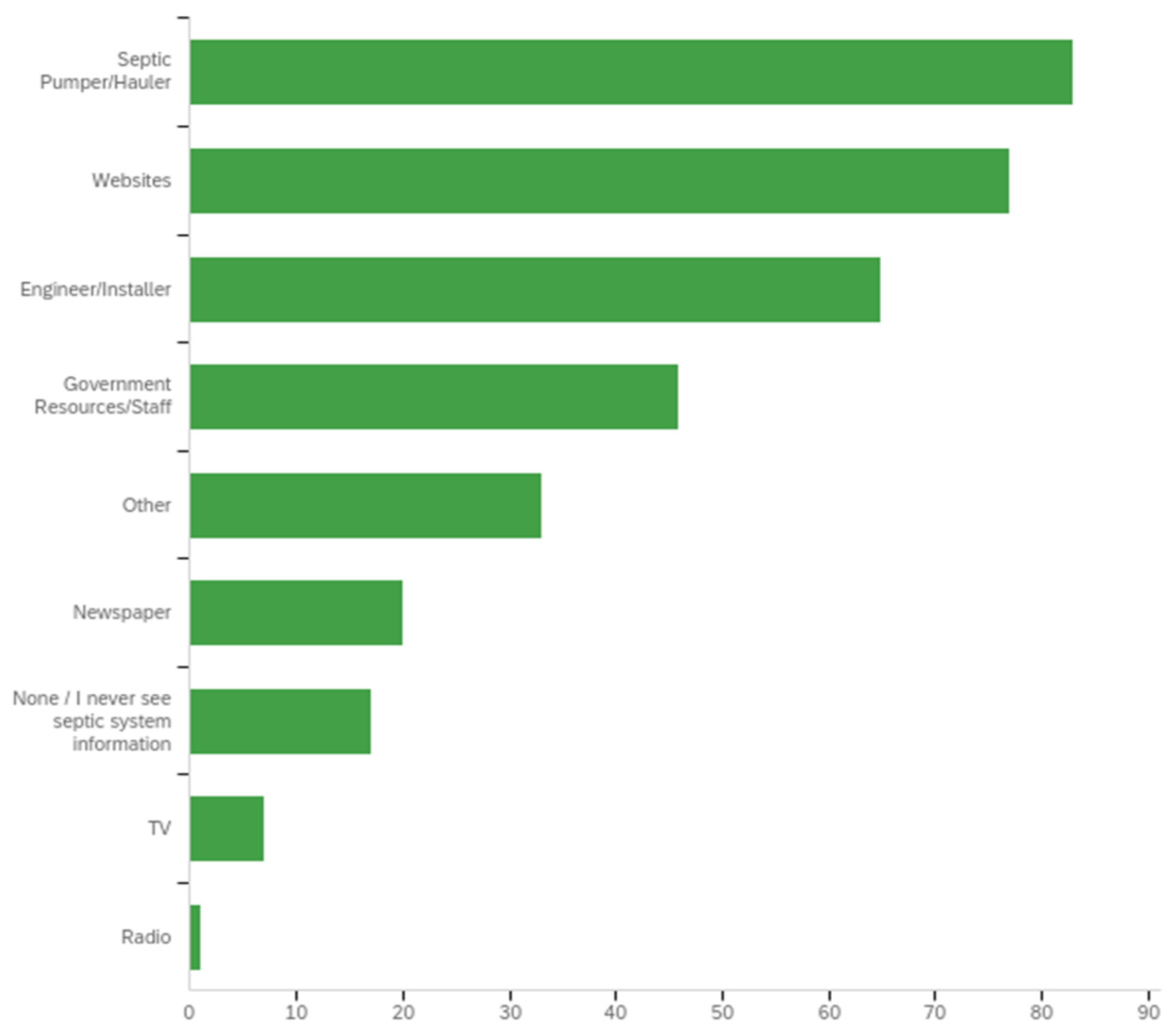
The analysis showed that survey respondents hold moderate levels of knowledge and awareness about their septic systems and what is necessary to maintain them properly. Almost all respondents (91%) rated residential septic system maintenance as either ‘Very important’ or ‘Extremely important,’ which illustrates high awareness. The survey also asked where people learned what they know about septic systems (Figure 3). Septic pumpers, websites, and installers were the top three sources, closely followed by government resources/staff. Most respondents who checked ‘Other’ wrote that they had learned about septic systems from their lived experiences as a septic owner, from neighbors and family, or through their profession (Figure 3).
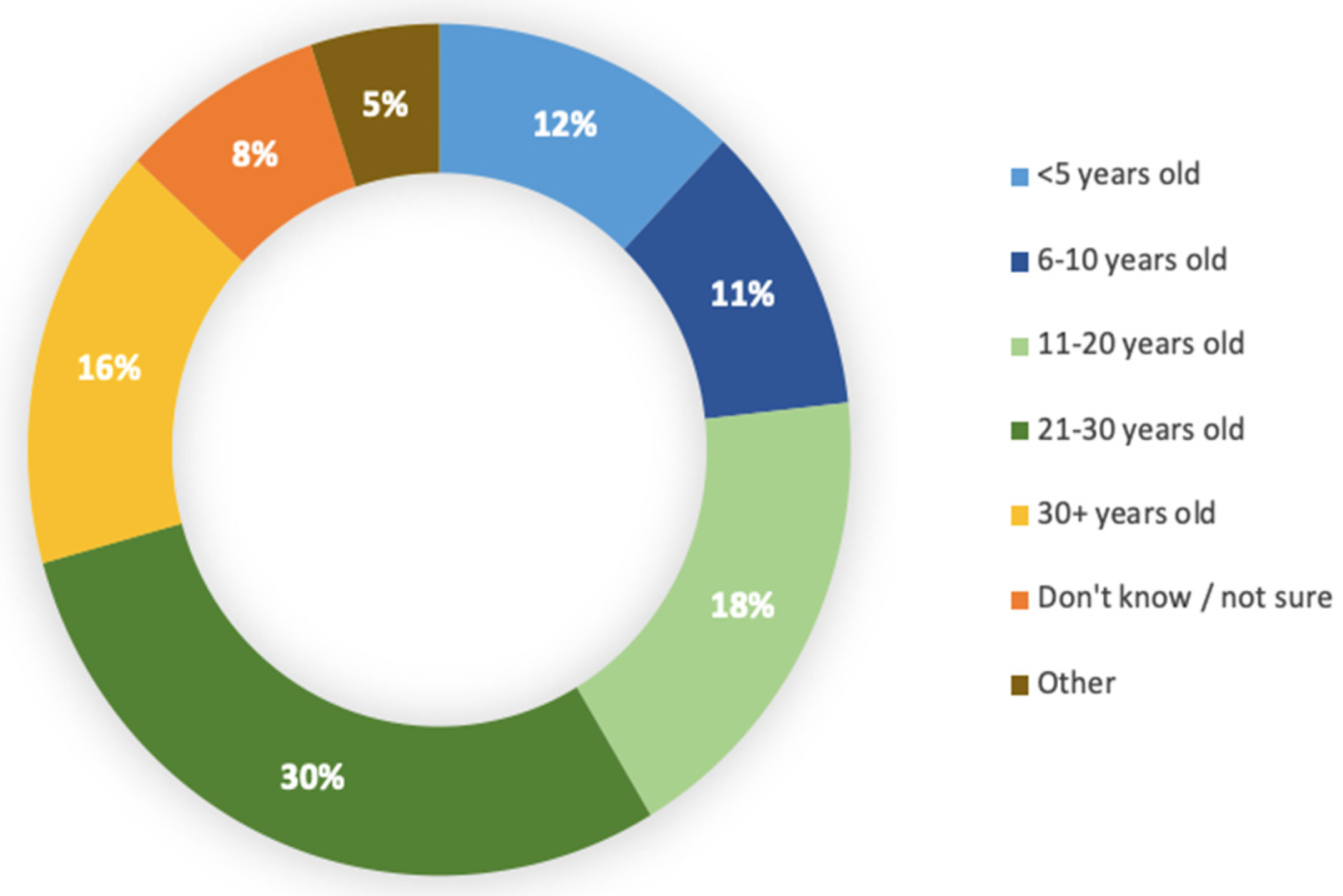
Septic system owners reported the age of their systems as follows in Figure 4. Nearly one-third (30%) of respondents indicated that their systems were older (21–30 years old), and 16% had systems over 30 years old (Figure 4). This suggests that a significant proportion of the respondents might be in a position to consider replacement or repair in the near-term future, given the general guidance on septic system lifespan [45]. We received different opinions on this from the septic professionals we consulted. While most general guidance suggests the lifespan of a system may be around 20 years, some professionals told us they can last much longer with the correct maintenance.
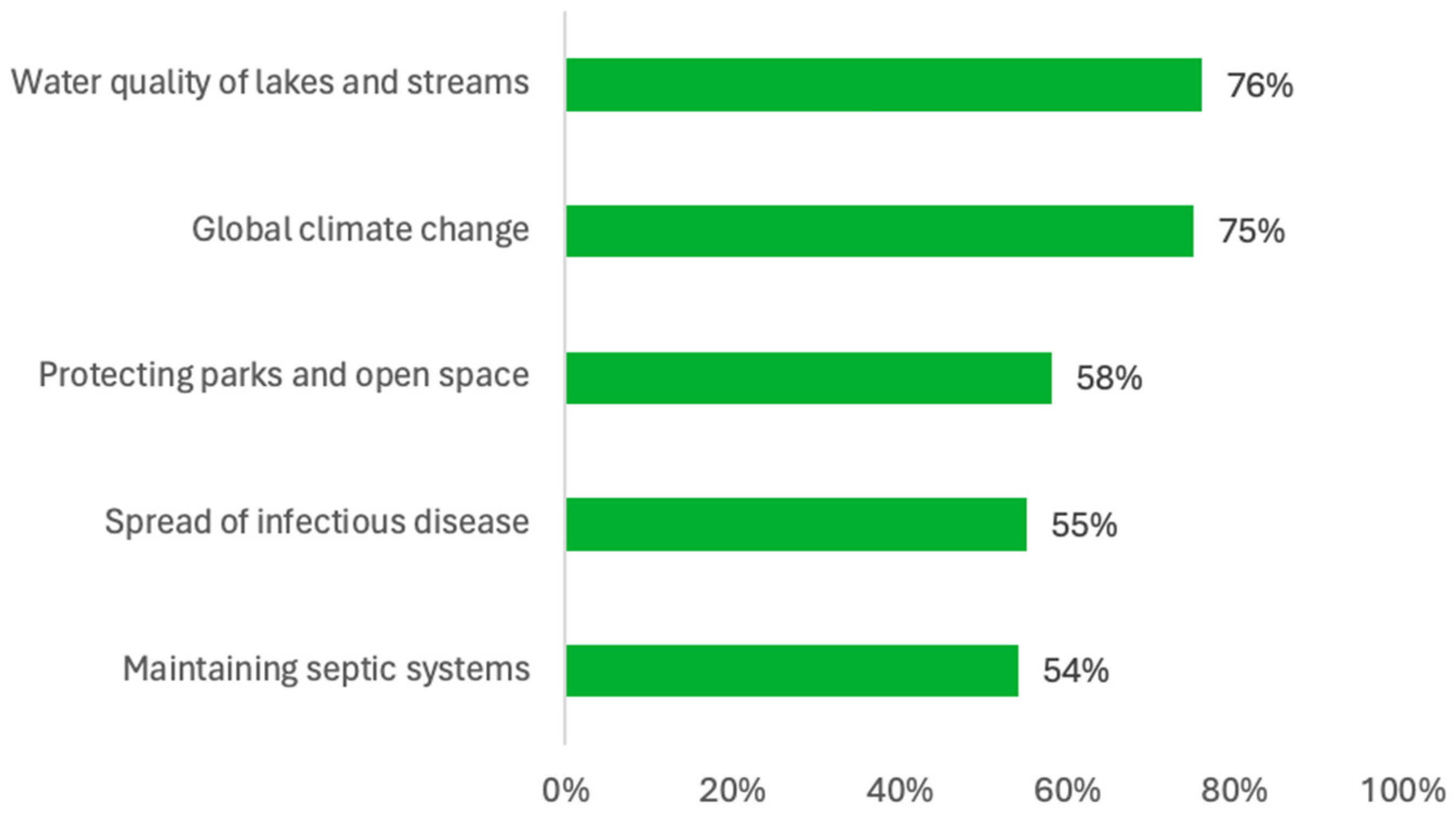
Questions regarding environmental awareness and risk perception revealed that most people are generally aware of potential climate impacts and hold them at a high value (Figure 5). A majority of respondents view all five environmental issues listed as ‘Extremely important’ (Figure 5). Water quality of lakes and streams was ranked the highest, while maintaining septic systems was the lowest of the five (Figure 5). Given that respondents seem to care about these issues, we assume that most people do not realize the connection between the quality of water resources and their own septic systems, or their actions simply do not match their knowledge levels and environmental values.
A majority (60%) of all respondents reported some form of maintenance on their system in the last five years (Table 4). Only 50% of those who rated maintaining septic systems as moderately, slightly, or not at all important have done some form of maintenance in the last five years (Table 4). There is a general trend toward more frequent maintenance among those who rate it as highly important (Table 4). Still, 80% of those who ‘Don’t know’ the last time their septic system was serviced claim to think septic maintenance is very or extremely important, further suggesting there is a gap in understanding (Table 4).
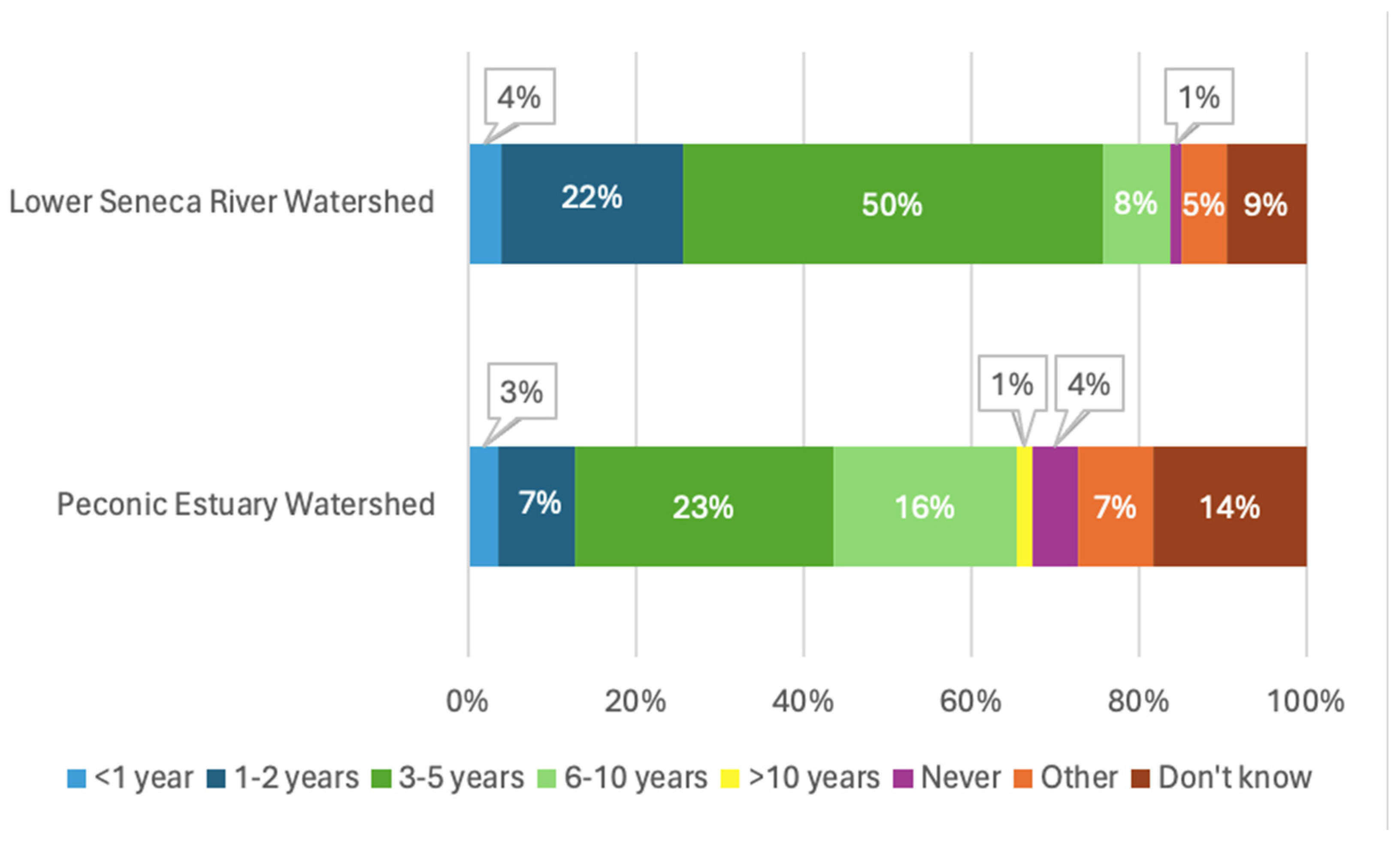
The results also show that upstate septic system owners maintain their systems more frequently than those downstate (Figure 6). Regarding upkeep, 76% of respondents in the Lower Seneca River Watershed and 33% respondents in the Peconic Estuary Watershed report maintenance of their system in the last five years (Figure 6, Table 5). Some respondents who indicated ‘Other’ wrote that they recently moved into their home and have not yet done maintenance but plan to.
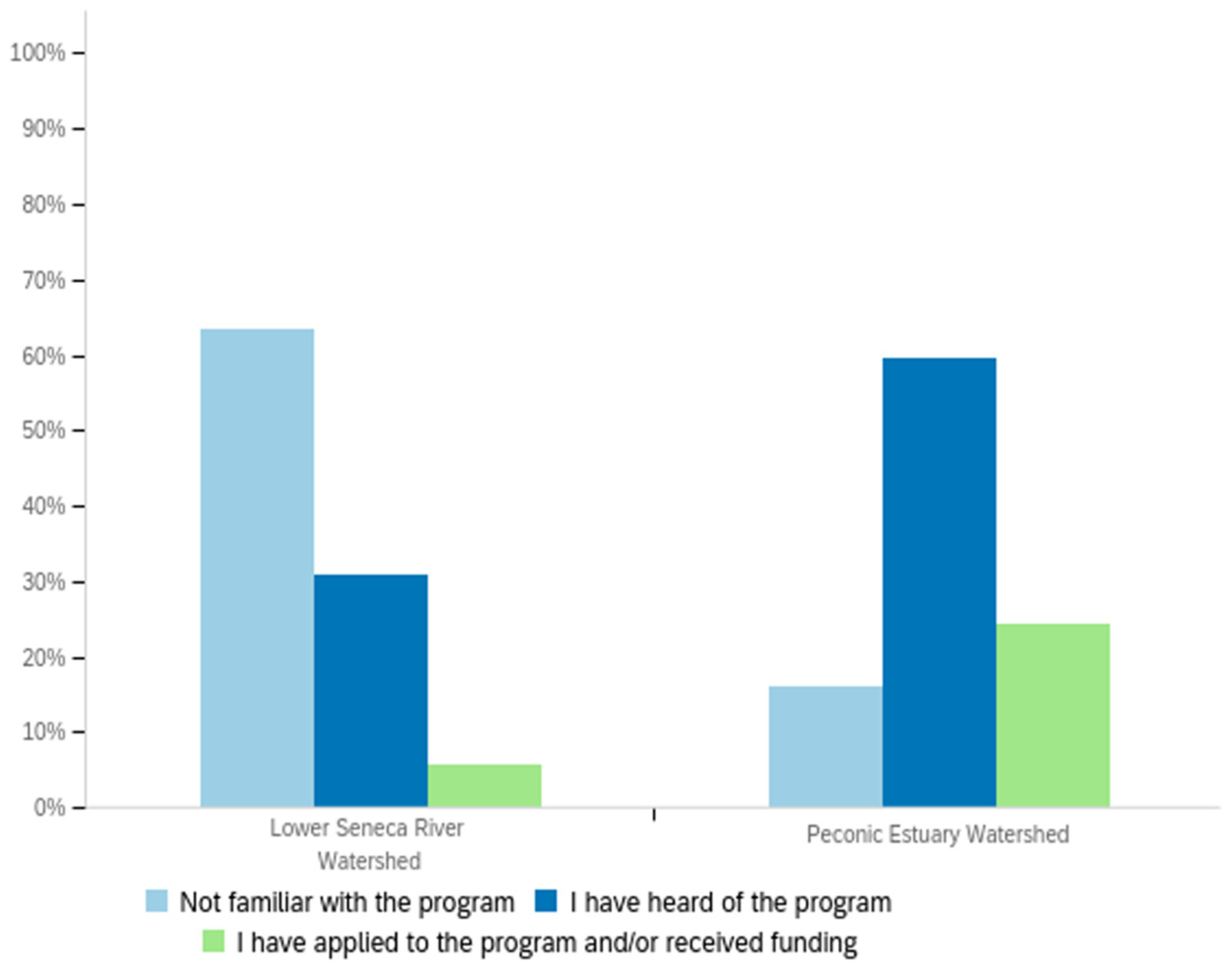
Another aspect explored is familiarity with SSRP and applications to it. Survey respondents from the Peconic Estuary Watershed displayed much higher levels of awareness of the SSRP than those in the LSR Watershed (Figure 7; Table 5). Nearly one-quarter (24%) of Peconic respondents reported having applied to the program and/or received funding, while only 6% of upstate respondents had done so (Figure 7). In addition, only 16% were unfamiliar with the SSRP downstate, while over half of the upstate respondents were unfamiliar (63%) (Figure 7).
Table 5 provides a side-by-side comparison of the major differences in septic system maintenance and awareness between the LSR Watershed and the Peconic Estuary Watershed. Overall, upstate New York (LSR) respondents tended to be more proactive in septic system maintenance than downstate respondents, yet they were less aware of the grant program created to financially assist them. Downstate respondents were far more aware of the program, yet they did not conduct regular maintenance with the same frequency.
Despite gaps between homeowner knowledge and maintenance practices, there was a balanced view on satisfaction with the state programs. Of respondents who knew about the program, 55% felt neither satisfied nor dissatisfied with the SSRP overall. This indicates that focusing more attention on program development and implementation could boost satisfaction levels; in other words, there is room for growth in terms of participants’ positive perceptions of these programs. One area for improvement might involve the mechanics of the grants, especially as they relate to households with lower incomes. Septic system replacement costs are significant for most people, though they are disproportionately impactful on lower-income homeowners. In situations where a reimbursement vehicle is the only strategy used, there will be differential access to grant programs, since lower-income homeowners will rarely have the resources to self-finance the first step.

5. Discussion

5.1. Perceptions and Awareness

We found multiple consistent themes across locations, and many notions were mentioned by both septic system owners and professionals alike. Perhaps the most common narrative about septic systems was that they often go unnoticed—too often. Because they are underground, they fall into the “out of sight, out of mind” category. In other words, these issues can remain ‘beneath the surface,’ as our title hints. Our research revealed that many people only get their system serviced when they have a noticeable problem, much like replacing a roof only when it leaks. One septic pumper/hauler said, “It’s very easy to lose track of things, and it’s very common that people do.”
More awareness is needed about septic failures that go unseen; similarly, there are extensive knowledge gaps about maintenance. Overall, we heard that people “want to do the right thing” when it comes to septic maintenance, and regulatory agencies have the capacity to initiate those conversations. Another topic we would like to explore further in the future concerns respondents who identify as ‘uninterested.’ Follow-up research will aim to understand how informational limitations and/or psychological barriers may be shaping respondents’ perspectives. Because our respondents do not necessarily constitute a representative sample of the study area communities, a few things are worth acknowledging to shape the generalizability of our findings. The probable overrepresentation of environmentally alert and higher-socioeconomic-status individuals is likely to influence the answers we received in multiple ways, with the most significant being awareness: it is expected that the people who noticed and responded to our surveys and focus groups were those who have a higher working knowledge of their homes’ maintenance needs (in general) as well as environmental impacts (more specifically). Accordingly, the levels of knowledge and awareness we found most likely overestimates those of the general septic-owning public in these communities.
Making sense of the social drivers of knowledge and awareness is essential to understanding acceptance and adoption of OWTS replacement policies. Despite political and financial challenges, when a community sees value in preserving the quality of its water source, as seen in both watersheds, pushback to regulatory policies seems relatively rare. Many factors influence homeowners’ perceptions of regulations imposed upon them, including environmental communication, confirmation bias, and risk perception [46,47,48,49,50,51]. These concepts are crucial for policymakers to understand and apply in the course of their policymaking, as well as in the issue framing that is manifested in their communication about policies.

5.2. Governance and Policymaking

Many environmental policies include detailed prescriptions for technologies, especially in the context of production facilities; when it comes to technologies for individual citizens, these are not so typical. However, this research on septic system management policies illustrates an example of just that type of approach. A policy arena similar to septic system management could be emissions control standards for vehicles, where the requirement for car owners is that their vehicles must include technologies that reduce or eliminate hazardous components of exhaust; these mandates are considered minimum technology standards. Accompanying that, many jurisdictions also require routine vehicle inspections to confirm that standards are being met in operation, such as the periodic ‘exhaust checks’ required in many places. However, when it comes to onsite residential septic systems, there are no such regulations on a nationwide scale.
Considering what might change in the face of federal-level septic management policy is a worthwhile thought experiment. The concept of ‘technology-forcing’ is significant here because it refers to regulations that intentionally aim to promote innovation, rather than waiting for it to emerge on its own [52,53,54,55,56]. Technology-forcing policies place an incentive for innovation directly into the requirements themselves, establishing a standard to use the ‘best available technology’ (BAT) to minimize environmental impacts. In the context of decentralized wastewater treatment, new I/A systems can reduce total nitrogen to 10.6–11.2 mg/L, compared to conventional septic systems, which can discharge more than 65 mg/L of total nitrogen into the environment [57,58]. To appeal to a broader audience, it should be highlighted that technology-forcing policies that require the installation of BAT can bring both economic and environmental benefits. In some cases, advanced systems allow for economic development by supporting mixed-use housing or compact residential complexes, all while preserving the pre-development infrastructure and retaining similar stormwater runoff patterns and volumes [59].
While New York State has been among the leaders in advancing septic system management practices, several other states have developed programmatic innovations to help address these problems. For example, beginning in 2007, the Rhode Island Cesspool Act was passed to replace cesspools within 200 feet of drinking water reservoirs, public wells, and tidal waters [60,61]. Today, Rhode Island has a point-of-sale conversion policy, in which towns are provided with funds for loans to cover replacements, and towns are responsible for ensuring that they are properly disbursed [23]. Similarly, New Jersey requires all cesspools to be upgraded upon property transaction, regardless of their “working” condition [62]. In Delaware, I/A systems come with strict operation and maintenance requirements. The state offers a unique Homeowner Training Program that certifies residents to maintain their own I/A systems [63]. Massachusetts began statewide control of septic systems with a dedicated state law, called Title V, infamous for causing a former lieutenant governor to remark that even he was unaware that his home had a septic system [64,65]. In November 2022, Massachusetts proposed creating “Nitrogen Sensitive Areas” where coastal waters are damaged and require that property owners in these areas replace or upgrade their septic systems within five years, unless the community adopts a plan to combat nitrogen pollution [66]. Ohio dedicates funding to help low- to moderate-income (LMI) homeowners pay for repairs to failing septic systems [67]. Maryland mandates the installation of BAT in certain areas and allows OWTS upgrades to act as a mechanism to generate credit toward meeting NPDES permit requirements [23,68]. On the federal level, the 2022 Bipartisan Infrastructure Law awarded a total of $8 million in infrastructure funding to NYS over five years to help support state- and locally-driven water quality improvements and target outdated septic systems on Long Island [69,70]. This illustrates that NYS, and Long Island in particular, are among the places most affected by this issue.
A comprehensive understanding of septic system management, including the nuances of each watershed, is essential for making positive impacts through policy development and implementation at any level of government. Professionals generally agree that a comprehensive watershed-scale approach to septic management provides the greatest potential for widespread standardization and water quality protection. A ‘watershed-scale’ approach to policy refers to regulations that apply to an entire watershed, rather than a government jurisdiction. Current policies to facilitate such an approach vary due to the challenges of coordination across political boundaries, which rarely align with watershed boundaries [53,71]. The Peconic Estuary Watershed includes parts of 16 municipalities (Brookhaven, Riverhead, Southold, Southampton, East Hampton, and Shelter Island) and encompasses 29 different zip codes. The LSR Watershed covers three counties (Onondaga, Cayuga, and Cortland), comprising 30 municipalities and 19 zip codes. This spatial mismatch and consequent political tension have been vexing planners working toward integrated watershed resource management in the US and Europe for over a century [72,73].
To organize effective watershed-scale policies that address this complex environmental governance challenge, more localized coordination is needed among state and federal agencies. Close ties between government programs and local collaborative watershed programs are key, especially for addressing NPS pollution [71,74,75]. We are already seeing this interaction in both of the study watersheds, as per our findings in this research, and we believe states should continue to foster relationships with local communities and environmental organizations. Municipalities are key actors in multilevel watershed governance across a range of social-ecological contexts [76]. Currently, approaches to local septic system regulations often vary by jurisdiction. Local-level organizations could help to improve septic system management on a larger scale by taking inventory of all OWTS, along with conducting localized needs assessments. Documenting all systems on a statewide scale could inform current and future financial support programs for septic systems and would be an important step towards monitoring and managing them effectively. It could also advance skill-sharing and capacity-building among municipalities. Given the scope and scale of the challenges observed, both relating to social factors (e.g., homeowner knowledge and awareness, governance practices) as well as the systems themselves (e.g., conventional, advanced, maintained, etc.), it is advisable from a policy and management perspective to have state-level authority (i.e., legislation) that includes septic system regulations adapted to regional concerns.

6. Conclusions

This study illustrates how septic system management in New York State is shaped by both policy design and social dynamics among homeowners. It provides detailed perspectives on the structure and function of septic system management programs, including how the public understands them. Across both watersheds, in Study Areas 1 and 2, homeowners expressed strong concern for water quality, yet their understanding of the role of onsite wastewater treatment systems (OWTS) in protecting that resource remains incomplete. This disconnect—between environmental values and actionable knowledge—emerges as a central barrier to effective program participation and system maintenance. The findings also noted uneven program awareness and engagement across regions, suggesting that financial incentives alone are not sufficient to drive widespread adoption of best practices and replacement. The continued success of initiatives such as the Septic System Replacement Fund Program will be strengthened by targeted, context-sensitive outreach that links septic system maintenance directly to drinking water protection and community well-being.
From a governance perspective, the results support the value of integrating watershed-scale approaches with state-level coordination while leveraging local actors for implementation and coordination. Technology-forcing policies and expanded use of advanced systems offer clear environmental benefits and would be most effective when paired with sustained education, trust-building, and accessible program design to further expand uptake. Ultimately, improving OWTS management requires reframing septic systems from invisible infrastructure to critical components of environmental stewardship. By aligning policy tools with homeowner perceptions and behaviors, regulators and practitioners can more effectively reduce nutrient pollution and safeguard water resources for the long term.

Author Contributions

For conceptualization: S.M. and M.G.; writing and original draft preparation: M.G. and S.M.; review and editing: S.M. and M.G.; visualization: M.G. All authors have read and agreed to the published version of the manuscript.

Funding

This research was partially funded by the New York State Department of Environmental Conservation, grant number ESF-PRJ-22-01.

Informed Consent Statement

All participants were informed about the study’s aims, goals, risks, and methods and provided written informed consent to participate, ensuring their confidentiality.

Data Availability Statement

Data will be available from the corresponding author upon reasonable request; to protect potentially identifiable information, ethical approval and a data use agreement may be required.

Acknowledgments

The authors acknowledge the participating community members and other individuals who generously shared their experiences and expertise through interviews and surveys. The authors also acknowledge the staff members from the New York State Department of Environmental Conservation for their input, which helped shape the direction of the study, and specifically thank Susan Van Patten and Lewis McCaffrey.

Conflicts of Interest

The authors declare no conflicts of interest. The funders provided information that helped inform the authors’ approach and selection of methods; the funders did not participate in the design of the study; in the collection, analyses, or interpretation of data; in the writing of the manuscript; or in the decision to publish the results. Any findings, conclusions, or recommendations expressed herein are those of the authors and do not necessarily represent the perspective of the New York State Department of Environmental Conservation.

References

  1. US EPA. Frequent Questions on Septic Systems. Available online: https://www.epa.gov/septic/frequent-questions-septic-systems (accessed on 18 January 2024).
  2. Salzman, J.; Thompson, B.H. Environmental Law and Policy, 5th ed.; Foundation Press/Thomson West: Eagan, MN, USA, 2019. [Google Scholar]
  3. De Loë, R.C.; Lukovich, D.K. Groundwater protection on Long Island, New York: A study in management capacity. J. Environ. Plan. Manag. 2004, 47, 517–539. [Google Scholar] [CrossRef]
  4. Tamang, A.; Roy, J.W.; Boreux, M.P.; Robinson, C.E. Variation in septic system effluent inputs to tributaries in multiple subwatersheds and approaches to distinguish contributing pathways and areas. Sci. Total Environ. 2022, 807, 151054. [Google Scholar] [CrossRef]
  5. Withers, P.J.A.; Jarvie, H.P.; Hodgkinson, R.A.; Palmer-Felgate, E.J.; Bates, A.; Neal, M.; Howells, R.; Withers, C.M.; Wickham, H.D. Characterization of phosphorus sources in rural watersheds. J. Environ. Qual. 2009, 38, 1998–2011. [Google Scholar] [CrossRef] [PubMed]
  6. US EPA. About Septic Systems. Available online: https://www.epa.gov/septic/about-septic-systems#:~:text=More%20than%20one%20in%20five,systems%20to%20treat%20their%20wastewater (accessed on 30 April 2024).
  7. Newsday. Here’s Why Most of Suffolk County Doesn’t Have Sewers. 29 April 2018. Available online: https://www.newsday.com/long-island/suffolk-clean-water-t23000 (accessed on 18 January 2024).
  8. The Nature Conservancy. Nitrogen Load Modeling to Forty-Three Subwatersheds of the Peconic Estuary. Available online: https://www.peconicestuary.org/wp-content/uploads/2017/06/Nitrogenloadmodelingtoforty-thr.pdf (accessed on 18 January 2024).
  9. Mohamed, R. Why households in the United States do not maintain their septic systems and why state-led regulations are necessary: Explanations from public goods theory. Int. J. Sustain. Dev. Plan. 2009, 4, 143–157. [Google Scholar] [CrossRef]
  10. NYSDEC. Septic System Replacement Fund. Available online: https://efc.ny.gov/septic-replacement (accessed on 3 March 2026).
  11. Environmental Facilities Corporation (EFC). The New York State Environmental Facilities Corporation Public Authorities Law Compliance Report. 2022. Available online: https://efc.ny.gov/system/files/documents/2022/07/annual-report-2021-2022-public-authorities-compliance-report_0.pdf (accessed on 18 January 2024).
  12. US EPA. Decentralized Wastewater Management Memorandum of Understanding Among the U.S. Environmental Protection Agency and Partner Organizations. 2020. Available online: https://www.epa.gov/sites/default/files/2020-09/documents/2020_mou_agreement.pdf (accessed on 18 January 2024).
  13. Abel, D. As pollution worsens on Cape Cod, some are investing hopes in a new type of septic system. The Boston Globe, 17 May 2022. Available online: https://www.bostonglobe.com/2022/05/17/science/pollution-worsens-cape-cod-some-are-investing-hopes-new-type-septic-system/ (accessed on 18 January 2024).
  14. Jobin, J. Fostering the Acceptance, Use, and Management of nutrient-removing septic systems in New York. In Proceedings of the Onsite Wastewater 2022 Mega-Conference, Springfield, MO, USA, 31 October 2022; Available online: https://www.nowra.org/Customer-Content/www/CMS/files/22Mega_Jobin_Fostering.pdf (accessed on 18 January 2024).
  15. Lake George Association (LGA). The Complete Guide to a Safe Septic System: From Fixing to Financing. Available online: https://safesepticsystems.org/ (accessed on 18 January 2024).
  16. CNY Land Trust. Available online: https://www.cnylandtrust.org/ (accessed on 18 January 2024).
  17. Canandaigua Lake Watershed Association. The Lake Reporter. 2017. Available online: https://www.canandaigualakeassoc.org/wp-content/uploads/2019/08/CLWA-Newsletter-_-July-2017_FINAL1.pdf (accessed on 18 January 2024).
  18. Town of Canandaigua. Onsite Wastewater Treatment Law. 2017. Available online: http://www.townofcanandaigua.org/Documents/files/Onsite%20Wastewater%20Law%202017-02-10.pdf (accessed on 18 January 2024).
  19. Murdock, E.E. Skaneateles Lake Demonstration Project Case Study Report. Prepared for the United States Environmental Protection Agency, Office of Wastewater Management, Washington, D.C., by the City of Syracuse, Department of Water, Syracuse, New York. 2010. Available online: https://www.epa.gov/sites/default/files/2015-06/documents/skaneatelesny_final-report.pdf (accessed on 18 January 2024).
  20. Onondaga County Soil & Water Conservation District (OCSWD). Skaneateles Lake Watershed Agricultural Program. Available online: https://www.ocswcd.org/slwap.html (accessed on 18 January 2024).
  21. City of Syracuse Department of Water. Annual Drinking Water Quality Report for 2021. 2021. Available online: https://www.syr.gov/files/sharedassets/public/v/1/2-departments/water/documents/reports/drinking-water-reports/newletter2021-final.pdf (accessed on 18 January 2024).
  22. Dooley, E.; Scwartz, D.M. Plan to clean Suffolk waterways could cost about $20,000 per household—And that’s just one hurdle. Newsday, 26 April 2018. Available online: https://projects.newsday.com/long-island/suffolk/suffolk-septic-plan/ (accessed on 18 January 2024).
  23. Mezzacapo, M. A Multi-State Regulation and Policy Survey of Onsite Wastewater Treatment System Upgrade Programs. 2019. Available online: https://www.researchgate.net/profile/Michael-Mezzacapo/publication/337290081_A_Multi-State_Regulation_and_Policy_Survey_of_Onsite_Wastewater_Treatment_System_Upgrade_Programs/links/5dcef92f4585156b35163f6e/A-Multi-State-Regulation-and-Policy-Survey-of-Onsite-Wastewater-Treatment-System-Upgrade-Programs.pdf (accessed on 18 January 2024).
  24. Suffolk County Department of Health Services (DOH). Subwatersheds Wastewater Plan. 2020. Available online: https://suffolkcountyny.gov/Portals/0/formsdocs/planning/CEQ/2020/SWP%20FINAL%20July%202020.pdf (accessed on 18 January 2024).
  25. The Nature Conservancy (TNC). Available online: https://www.nature.org/en-us/ (accessed on 18 January 2024).
  26. Creswell, J.W. A Concise Introduction to Mixed Methods Research; SAGE Publications: Thousand Oaks, CA, USA, 2021. [Google Scholar]
  27. Babbie, E. Observing Ourselves: Essays in Social Research; Waveland Press: Long Grove, IL, USA, 2015. [Google Scholar]
  28. Roe, E. Narrative Policy Analysis: Theory and Practice; Duke University Press: Durham, NC, USA, 1994. [Google Scholar]
  29. Singleton, R., Jr.; Straits, B.C. Approaches to Social Research, 5th ed.; Oxford University Press: Oxford, UK, 2009. [Google Scholar]
  30. Dillman, D.A.; Smyth, J.D.; Christian, L.M. Internet, Phone, Mail, and Mixed-Mode Surveys: The Tailored Design Method; John Wiley & Sons: Hoboken, NJ, USA, 2014. [Google Scholar]
  31. Krippendorff, K. Content Analysis: An Introduction to Its Methodology; Sage Publications: Thousand Oaks, CA, USA, 2018. [Google Scholar]
  32. McKenzie-Mohr, D.; Smith, W. Fostering Sustainable Behavior: Community-Based Social Marketing; CBSM: Vernon, NJ, USA, 2009. [Google Scholar]
  33. University of Mississippi (UMiss). How to Conduct a Focus Group. Available online: https://irep.olemiss.edu/wp-content/uploads/sites/98/2016/05/Trinity_Duke_How_to_Conduct_a_Focus_Group.pdf (accessed on 18 January 2024).
  34. Center for the Promotion of Health in the New England Workplace. Tips for Facilitating Focus Groups. Available online: https://www.uml.edu/docs/fg%20tips%20sheet_rk_tcm18-167588.pdf (accessed on 18 January 2024).
  35. Stewart, D.W.; Shamdasani, P.N. Focus Groups: Theory and Practice; Sage Publications: Thousand Oaks, CA, USA, 2014; Volume 20. [Google Scholar]
  36. Corbin, J.; Strauss, A. Basics of Qualitative Research, 4th ed.; Sage Publications: New York, NY, USA, 2014. [Google Scholar]
  37. Marques, I.C.D.S.; Theiss, L.M.; Johnson, C.Y.; McLin, E.; Ruf, B.A.; Vickers, S.M.; Fouad, M.; Scarinci, I.C.; Chu, D.I. Implementation of virtual focus groups for qualitative data collection in a global pandemic. Am. J. Surg. 2021, 221, 918–922. [Google Scholar] [CrossRef]
  38. Brüggen, E.; Willems, P. A critical comparison of offline focus groups, online focus groups and e-Delphi. Int. J. Mark. Res. 2009, 51, 1–15. [Google Scholar] [CrossRef]
  39. Kite, J.; Phongsavan, P. Insights for conducting real-time focus groups online using a web conferencing service. F1000Research 2017, 6, 122. [Google Scholar] [CrossRef]
  40. Underhill, C.; Olmsted, M.G. An experimental comparison of computer-mediated and face-to-face focus groups. Soc. Sci. Comput. Rev. 2003, 21, 506–512. [Google Scholar] [CrossRef]
  41. Woodyatt, C.R.; Finneran, C.A.; Stephenson, R. In-person versus online focus group discussions: A comparative analysis of data quality. Qual. Health Res. 2016, 26, 741–749. [Google Scholar] [CrossRef]
  42. Menary, J.; Stetkiewicz, S.; Nair, A.; Jorasch, P.; Nanda, A.K.; Guichaoua, A.; Rufino, M.; Fischer, A.R.H.; Davies, J.A. Going virtual: Adapting in-person interactive focus groups to the online environment. Emerald Open Res. 2023, 3, 6. [Google Scholar] [CrossRef]
  43. Jobin, J.; Betts, D.; Calandra, O.; Parisi, T.; Rooney, S. Nassau County, NY’s Nitrogen Reducing Septic System Grant Program. 2022. Available online: https://www.nowra.org/Customer-Content/www/CMS/files/Paper_Jobin_NOWRA2022_Nassau_County.pdf (accessed on 18 January 2024).
  44. Priolo, J. Suffolk County Septic Improvement Program; Suffolk County Department of Health Presentation: Suffolk, NY, USA, 2023.
  45. Cornell Cooperative Extension. Your Septic System. Available online: https://www.css.cornell.edu/cwmi/waterquality/septic/CCEWQ-YourSepticSystem-Print.pdf (accessed on 18 January 2024).
  46. Allen, M. Understanding pro-environmental behavior: Models and messages. In Strategic Communication for Sustainable Organizations: Theory and Practice; Springer: Berlin/Heidelberg, Germany, 2022; pp. 105–137. [Google Scholar]
  47. Capps, K.A.; Bateman McDonald, J.M.; Gaur, N.; Parsons, R. Assessing the socio-environmental risk of onsite wastewater treatment systems to inform management decisions. Environ. Sci. Technol. 2020, 54, 14843–14853. [Google Scholar] [CrossRef] [PubMed]
  48. Kolbert, E. Why facts don’t change our minds. The New Yorker, 19 February 2017.
  49. Mankad, A.; Tapsuwan, S. Review of socio-economic drivers of community acceptance and adoption of decentralised water systems. J. Environ. Manag. 2011, 92, 380–391. [Google Scholar] [CrossRef] [PubMed]
  50. Mase, A.S.; Gramig, B.M.; Prokopy, L.S. Climate change beliefs, risk perceptions, and adaptation behavior among Midwestern US crop farmers. Clim. Risk Manag. 2017, 15, 8–17. [Google Scholar] [CrossRef]
  51. Homar, A.R.; Cvelbar, L.K. The effects of framing on environmental decisions: A systematic literature review. Ecol. Econ. 2021, 183, 106950. [Google Scholar] [CrossRef]
  52. Geels, F.W.; Sareen, S.; Hook, A.; Sovacool, B.K. Navigating implementation dilemmas in technology-forcing policies: A comparative analysis of accelerated smart meter diffusion in the Netherlands, UK, Norway, and Portugal (2000–2019). Res. Policy 2021, 50, 104272. [Google Scholar] [CrossRef]
  53. Gerard, D.; Lave, L. Experiments in technology forcing: Comparing the regulatory processes of US automobile safety and emissions regulations. Int. J. Technol. Policy Manag. 2007, 7, 1–14. [Google Scholar] [CrossRef]
  54. Nentjes, A.; de Vries, F.P.; Wiersma, D. Technology-forcing through environmental regulation. Eur. J. Political Econ. 2007, 23, 903–916. [Google Scholar] [CrossRef]
  55. Szarka, J. Climate challenges, ecological modernization, and technological forcing: Policy lessons from a comparative US-EU Analysis. Glob. Environ. Politics 2012, 12, 87–109. [Google Scholar] [CrossRef]
  56. Ashford, N.A.; Caldart, C.C. Environmental Law, Policy, and Economics: Reclaiming the Environmental Agenda; MIT Press: Cambridge, MA, USA, 2008. [Google Scholar]
  57. Rout, P.R.; Shahid, M.K.; Dash, R.R.; Bhunia, P.; Liu, D.; Varjani, S.; Zhang, T.C.; Surampalli, R.Y. Nutrient removal from domestic wastewater: A comprehensive review on conventional and advanced technologies. J. Environ. Manag. 2021, 296, 113246. [Google Scholar] [CrossRef] [PubMed]
  58. Suffolk County Legislature. Legislator Bergin Takes a Tour of the Suffolk County Septic Improvement Program (SIP). 1 April 2022. Available online: https://scnylegislature.us/CivicAlerts.aspx?AID=2406&ARC=3590 (accessed on 18 January 2024).
  59. University of Rhode Island Cooperative Extension. Creative Community Design and Wastewater Management, National Decentralized Water Resources Capacity Development Project. 2004. Available online: https://decentralizedwater.waterrf.org/documents/WU-HT-00-30/WUHT0030_post.pdf (accessed on 18 January 2024).
  60. RI Gen L § 23-19.15.1. The Rhode Island Cesspool Act of 2007. Available online: http://webserver.rilin.state.ri.us/Statutes/TITLE23/23-19.15/INDEX.HTM (accessed on 30 April 2024).
  61. Rhode Island Department of Administration Division of Planning. Water Quality 2035: Rhode Island Water Quality Management Plan (Tech. No. 121). 2016. Available online: http://www.dem.ri.gov/programs/benviron/water/quality/pdf/wqmp2035.pdf (accessed on 30 April 2024).
  62. New Jersey Administrative Code. NJAC 7:9A Standards for Individual Subsurface Sewage Disposal Systems. 2012. Available online: https://dep.nj.gov/wp-content/uploads/rules/njac7_9a.pdf (accessed on 18 January 2024).
  63. Del. Admin Code. 7 Del. Admin Code 7101 Regulations Governing the Design, Installation and Operation of On-Site Wastewater Treatment and Disposal Systems. 2014. Available online: http://www.dnrec.delaware.gov/wr/Information/GWDInfo/Documents/DelawareFinalOnSiteRegulations_01112014.pdf (accessed on 30 April 2024).
  64. Mass. Gen. Laws. Standard Requirements for the Siting, Construction, Inspection, Upgrade and Expansion of On-Site Sewage Treatment and Disposal Systems and for the Transport and Disposal of Septage. Mass. Gen. Laws 2016, § 310 CMR 15.000. Available online: https://www.mass.gov/files/documents/2017/09/27/310cmr15.pdf (accessed on 30 April 2024).
  65. Massachusetts Department of Environmental Protection. Title 5/Septic Systems Policies & Guidance. 2019. Available online: https://www.mass.gov/lists/title-5septic-systems-policies-guidance (accessed on 30 April 2024).
  66. Moran, B. Thousands of Cape Cod homeowners may need to replace septic systems under new state regulations. WBUR, 28 November 2022. Available online: https://www.wbur.org/news/2022/11/28/cape-cod-septic-systems-new-state-title5-regulations (accessed on 18 January 2024).
  67. House, K. As Michigan lawmakers ponder septic repair funds, Ohio offers a model. Bridge Michigan, 18 October 2021. Available online: https://www.bridgemi.com/michigan-environment-watch/michigan-lawmakers-ponder-septic-repair-funds-ohio-offers-model (accessed on 18 January 2024).
  68. Maryland Code Regs. 26.04.02.07. 2016. Available online: https://conduitstreet.mdcounties.org/wp-content/uploads/2016/08/proposed-regulations-2016-bat-septic-regs-mde.pdf (accessed on 18 January 2024).
  69. Bipartisan Infrastructure Law. 2022. Available online: https://www.congress.gov/117/bills/hr3684/BILLS-117hr3684enr.pdf (accessed on 30 April 2024).
  70. Civiletti, D. Federal infrastructure funding of $2.25 million will help L.I. homeowners install nitrogen-reducing septic system, Hochul announces. Riverhead Local, 28 November 2022. Available online: https://riverheadlocal.com/2022/11/28/federal-infrastructure-funding-of-2-25-million-will-help-l-i-homeowners-install-nitrogen-reducing-septic-systems-hochul-announces/ (accessed on 18 January 2024).
  71. Rauh, E.; Hughes, S. Collaboration for source water protection in the United States: Community water systems engagement in nitrate pollution reduction. Wiley Interdiscip. Rev. Water 2024, 11, e1682. [Google Scholar] [CrossRef]
  72. Cohen, A.; Davidson, S. The watershed approach: Challenges, antecedents, and the transition from technical tool to governance unit. Water Altern. 2011, 4, 1. [Google Scholar]
  73. White, G.F. A perspective of river basin development. Law Contemp. Probs. 1957, 22, 157. [Google Scholar] [CrossRef]
  74. Hardy, S.D.; Koontz, T.M. Reducing nonpoint source pollution through collaboration: Policies and programs across the US States. Environ. Manag. 2008, 41, 301–310. [Google Scholar] [CrossRef]
  75. Koontz, T.M.; Newig, J. From planning to implementation: Top-down and bottom-up approaches for collaborative watershed management. Policy Stud. J. 2014, 42, 416–442. [Google Scholar] [CrossRef]
  76. García, M.M.; Hileman, J.; Bodin, Ö.; Nilsson, A.; Jacobi, P.R. The unique role of municipalities in integrated watershed governance arrangements. Ecol. Soc. 2019, 24, 28. [Google Scholar] [CrossRef]
Figure 1. Map of the Lower Seneca River Watershed, a 10-digit HUC watershed that spans 30 municipalities and three counties: Cayuga County, Onondaga County, and Cortland County.
Water 18 01010 g001
Figure 2. Map of the Peconic Estuary Watershed with town and county boundaries. The watershed area is located in 16 municipalities in Suffolk County, and it is a combination of three 10-digit HUC watersheds: Peconic River, Shelter Island Sound–Gardiners Bay, and Napeague Bay–Block Island Sound.
Water 18 01010 g002
Figure 3. Sources of septic system information. Count data reveal that septic pumpers, websites, and installers are the top three ways people learn about septic system maintenance, followed by government resources/staff.
Water 18 01010 g003
Figure 4. Septic system age as a percentage of survey respondents. Systems over 21 years old were most common. Most ‘Other’ responses refer to systems over 30 years old.
Water 18 01010 g004
Figure 5. Percentage of respondents labeling environmental issues as ‘Extremely important’ (by issue). The gap between those who highly value water quality (76%) and maintaining septic systems (54%) indicates that there may be a disconnect in how the public perceives the connection between these issues.
Water 18 01010 g005
Figure 6. Frequency of septic maintenance as a percentage of respondents from each watershed. LSR Watershed septic system owners maintain their systems more frequently than those in the Peconic Estuary Watershed. Results exclude respondents who indicated a zip code outside of the study areas.
Water 18 01010 g006
Figure 7. Awareness of the SSRP as a percentage of respondents from each watershed. Septic system owners in the Peconic Estuary Watershed had high program awareness and participation levels (84%) compared to those in the LSR Watershed (37%). Results exclude respondents who indicated a zip code outside of the study areas.
Water 18 01010 g007
Table 1. New York State Septic System Replacement Fund Program (SSRP) a.
JurisdictionCayuga CountyCortland CountyOnondaga CountySuffolk County
Eligible septic systems1000603400 geographically eligible septic systems (other eligibility requirements also apply)360,000
Applications150 (15%) b5 (8%)91 (3%)4360 (1%) (total SSRP & SIP)
Projects accepted121 (12%)5 (8%)67 (2%)2508 (<1%)
Projects completed42 (4%)
(plus 5 projects awaiting paperwork)
3 (5%)59 (2%)
(Skaneateles Lake 32, Otisco Lake 15, Seneca River 12)
1695 (<1%)
(total SSRP & SIP)
Average amount reimbursed (per project)$6911$8850
(2 out of 3 projects reimbursed)
$7929$10,000
County total amount reimbursed$1,200,000$17,700$451,937 disbursed
$965,000 awarded
$16,139,327 disbursed to contractors and/or homeowners
(out of $40,130,000 allocated by NYS for SSRP grant funding)
Notes: a Data obtained from and approved by the SSRP contacts for each county. Estimates as of October 2023. b Percentages calculated out of the total number of Eligible Septic Systems in the county.
Table 2. NYS SSRP Elements *.
JurisdictionCayuga CountyCortland CountyOnondaga CountySuffolk County
Geographic eligibilityWaterfront properties on Owasco Lake, Lake Como, Cayuga Lake, Skaneateles LakeWaterfront properties on Skaneateles LakeProperties within the Skaneateles Lake Watershed
Waterfront properties along Seneca River between the Cross Lake outlet and Klein Island (Lower, Main Stem)
County-wide
Other eligibility standardsSystem must be failing or likely to failSystem must be
failing or likely to fail
System must be failing or likely to fail
Businesses that generate <1000 GPD of wastewater may also apply (received 1 commercial application)
All existing cesspools and conventional septic systems in Suffolk County are deemed failing because they are not protecting the sole source aquifer
Design standardsAny new conventional or advanced septic systemAny new conventional or advanced septic systemOnondaga County Health Dept. (OCHD) reviews all proposals submitted by qualified contractors or engineers
City of Syracuse (COS) reviews and approves proposals for the Skaneateles Lake Watershed
Must be an I/A OWTS that meets 19 mg/L nitrogen treatment standards
Inspections/maintenance requirementsCayuga County requires periodic inspections on all septic systems in the County
COS tests systems yearly; can inspect at any time (Skaneateles locations)
COS tests systems yearly; can inspect at any timeCOS tests systems yearly; can inspect at any time
OCHD inspects and records system replacement/repair at time of installation
OCHD & COS respond to sewage disposal system complaints
Septic system owners sign 3-year operation and maintenance contract:
-
Serviced every 6 months by septic company
-
County can test anytime
Financial supportReimbursement for 50% of cost, up to $10,000
(can receive grant after installation)
Reimbursement for 50% of cost, up to $10,000
(can receive grant after installation)
Reimbursement for 50% of cost, up to $10,000
(can receive grant after installation)
Reimbursement for 50% of cost, up to $10,000
(can receive grant after installation)
ProvidersMust be registered with Cayuga County
All plans must be designed by a professional engineer
Any provider, no approved listAny provider, no approved listMust hold an active Suffolk County Liquid Waste License
If payment is to be made directly to the provider, must be on SIP approved installers list
Note: * Data obtained from and approved by the SSRP contacts for each county in October 2023.
Table 3. Suffolk County Septic Improvement Program (SIP) Elements a (as of October 2023).
Geographic
Eligibility
-
County-wide
-
Priority zones and failing systems addressed first
Other eligibility standards
-
New construction is ineligible
-
Must provide proof of system failure (photos, service receipts, etc.) if being considered for Catastrophic or Non-Catastrophic Failure
Design standards
-
Must be an I/A OWTS b that meets 19 mg/L nitrogen treatment standards
-
Annual evaluation of new technologies
Inspections/maintenance requirements
-
Septic system owners sign a 3-year operation and maintenance contract:
-
Serviced every 6 months by septic company
-
County can test anytime
Financial support
-
$10,000 base grant
-
Add’l $5000 for pressurized shallow drainfield system
-
Add’l $5000 for installation for LMI (low to moderate income) eligible applicants
-
Must receive grant prior to installation
Providers
-
List of SIP Approved Installers
Notes: a Data obtained from and approved by the county program contact in October 2023. b I/A OWTS is defined by Suffolk County as “an onsite decentralized wastewater treatment system(s) that, at a minimum, is designed to reduce total nitrogen in treated effluent to 19 mg/L” (Suffolk County Sanitary Code—Article 6).
Table 4. Count data of perceived importance of septic system maintenance by frequency of maintenance.
<1 Year1–2 Years3–5 Years6–10 Years>10 YearsNeverOtherDon’t Know
Extremely
important
41847121177
Very important11320142555
Moderately
important
03520012
Slightly important00000101
Not at all
important
00010000
Table 5. Watershed comparative summary table.
WatershedLower Seneca River (LSR) WatershedPeconic Estuary Watershed
Maintained septic system in the last five years76%33%
Applied to SSRP and/or
received funding
6%24%
Had heard of SSRP31%60%
Had not heard of SSRP63%16%
Disclaimer/Publisher’s Note: The statements, opinions and data contained in all publications are solely those of the individual author(s) and contributor(s) and not of MDPI and/or the editor(s). MDPI and/or the editor(s) disclaim responsibility for any injury to people or property resulting from any ideas, methods, instructions or products referred to in the content.