A Study on the Effects and Response Mechanisms of Different Composite Magnetic Materials in Enhancing Municipal Wastewater Biological Treatment

Abstract
1. Introduction
2. Materials and Methods
2.1. Preparation of Composite Magnetic Materials
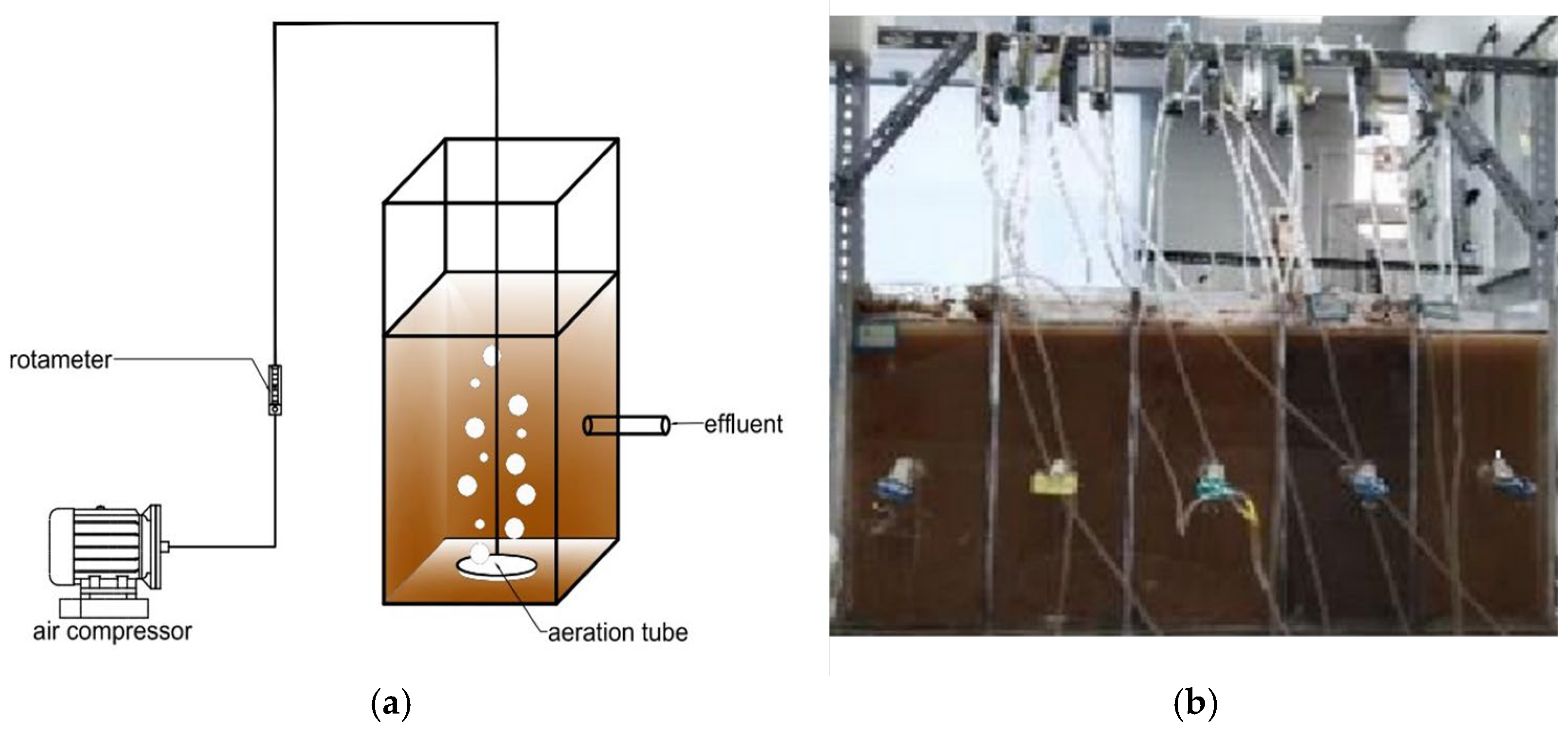
2.2. Experimental Apparatus and Operating Conditions
2.3. Experimental Water Quality and Inoculum Sludge
2.4. Analytical Methods
2.4.1. Material Characterization Methods
2.4.2. Water Quality Analysis Methods
2.4.3. Microbial Community Structure Analysis
3. Results and Discussion
3.1. Selection of Composite Magnetic Materials
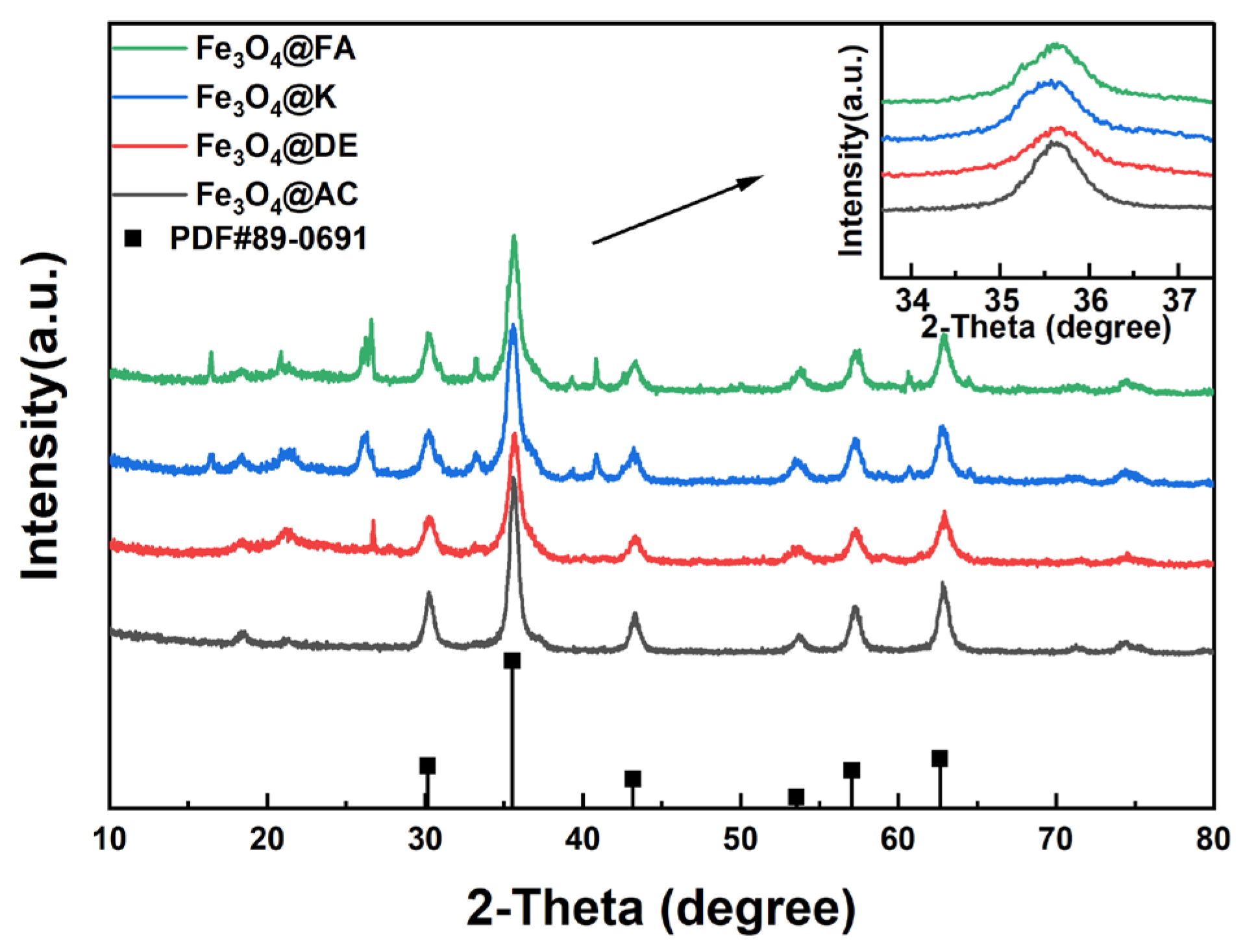
3.1.1. Characterization of Different Composite Magnetic Materials
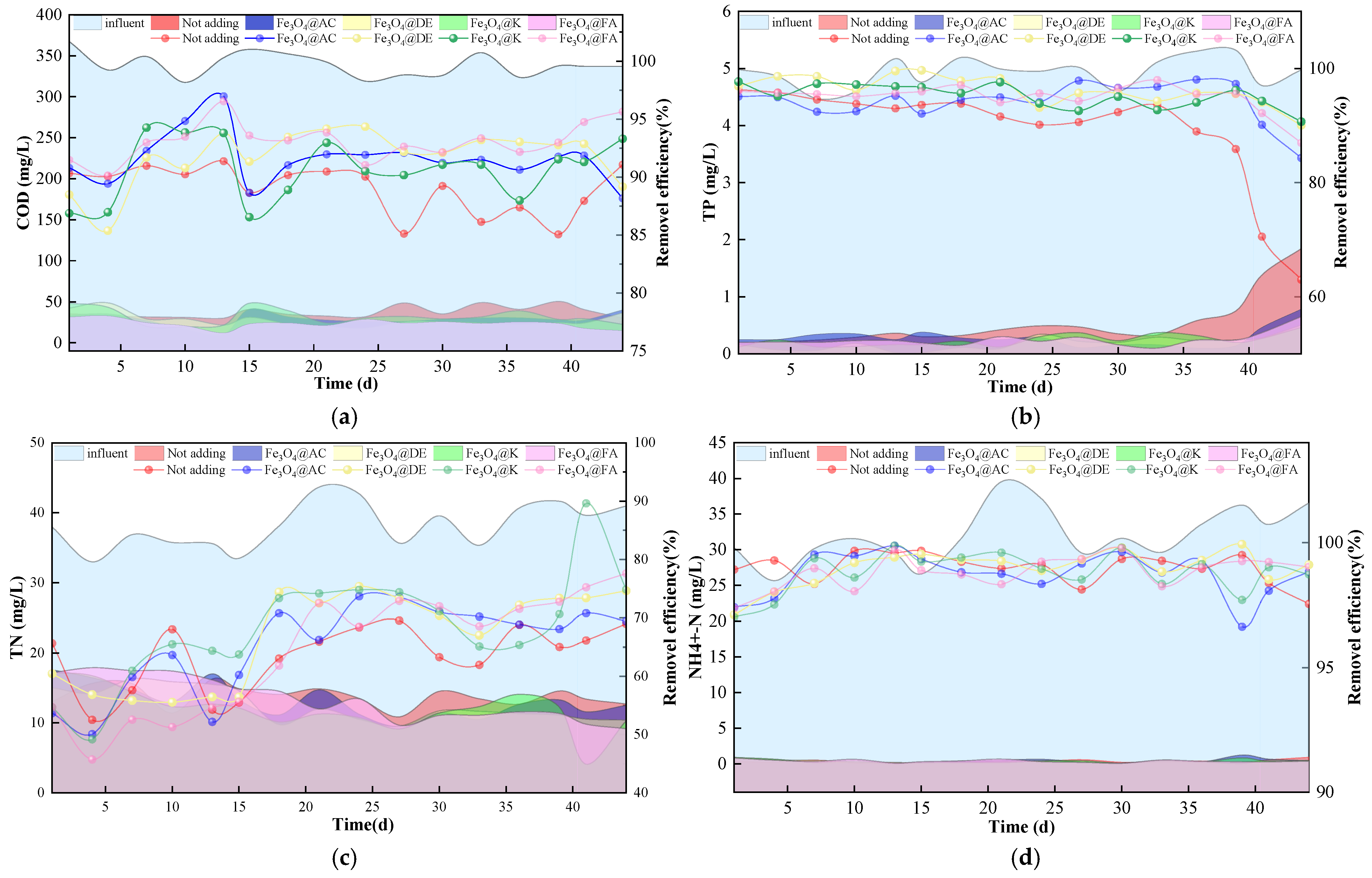
3.1.2. Removal Efficiency of Pollutants by Different Composite Magnetic Materials
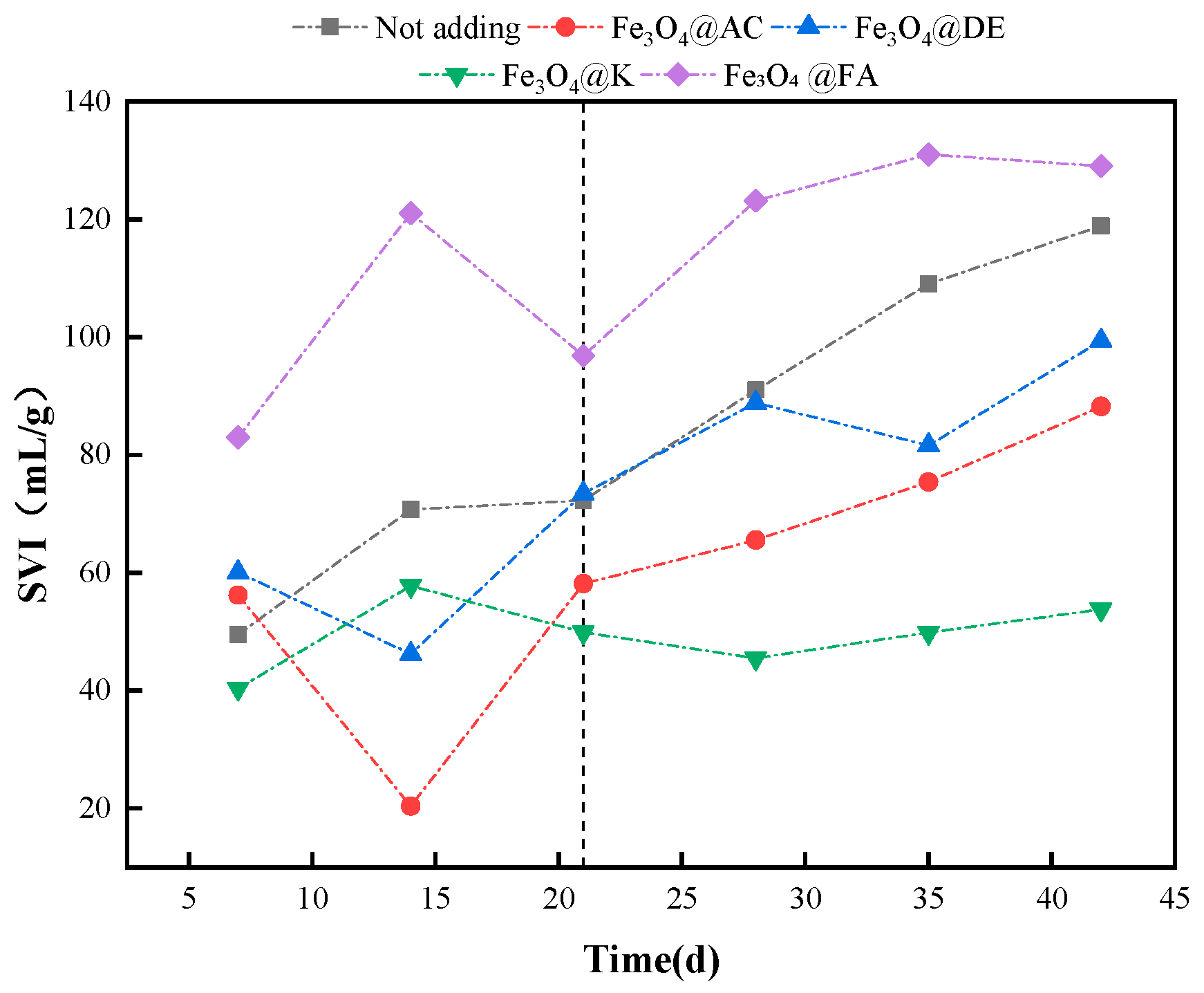
3.1.3. Analysis of the Settling Performance of Activated Sludge Using Different Composite Magnetic Materials
3.2. Effect of Dosage on the Performance of the Composite Magnetic Material-Enhanced Activated Sludge Process
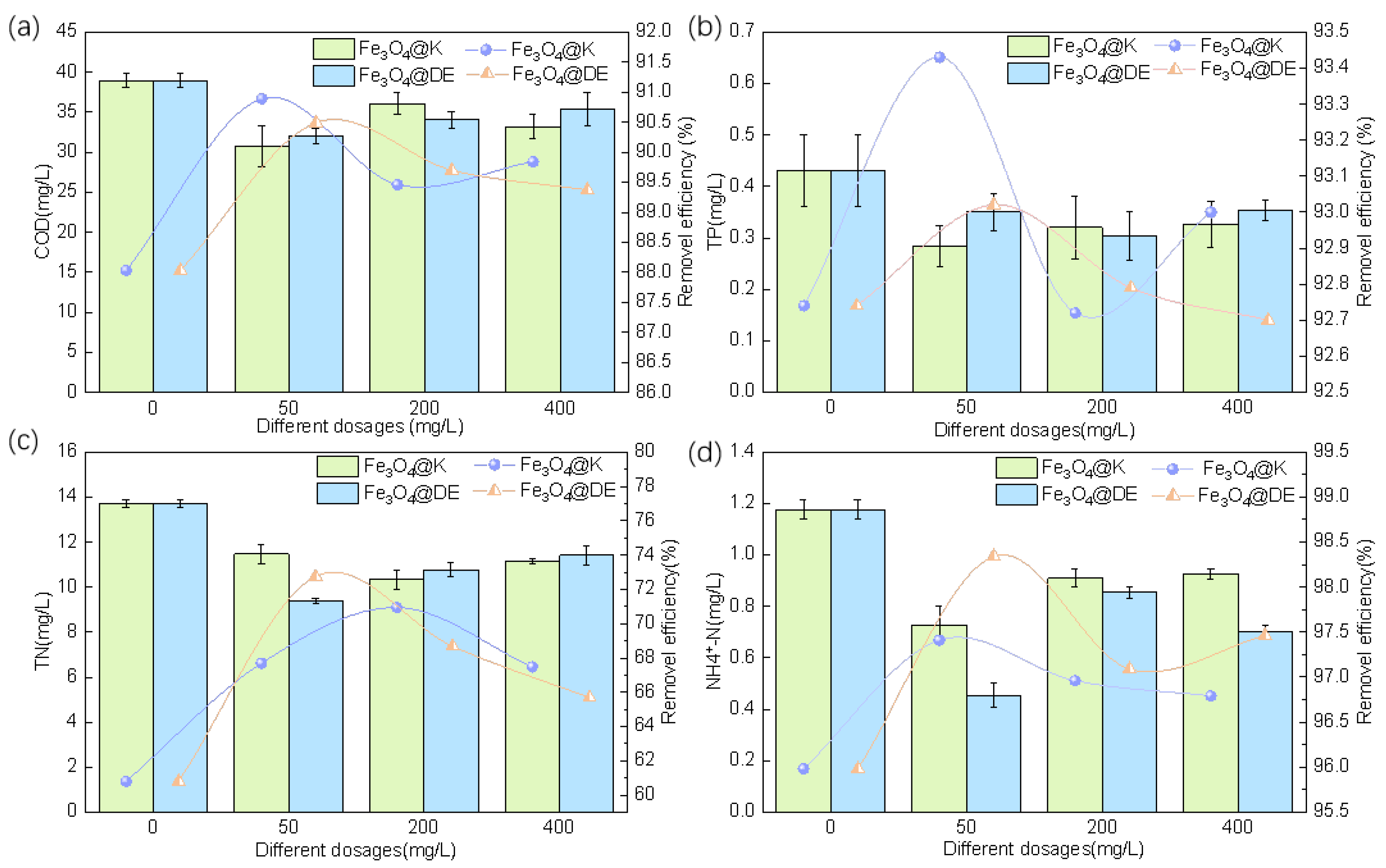
3.2.1. Analysis of the Effect of Composite Magnetic Material Dosage on Pollutant Removal Efficiency
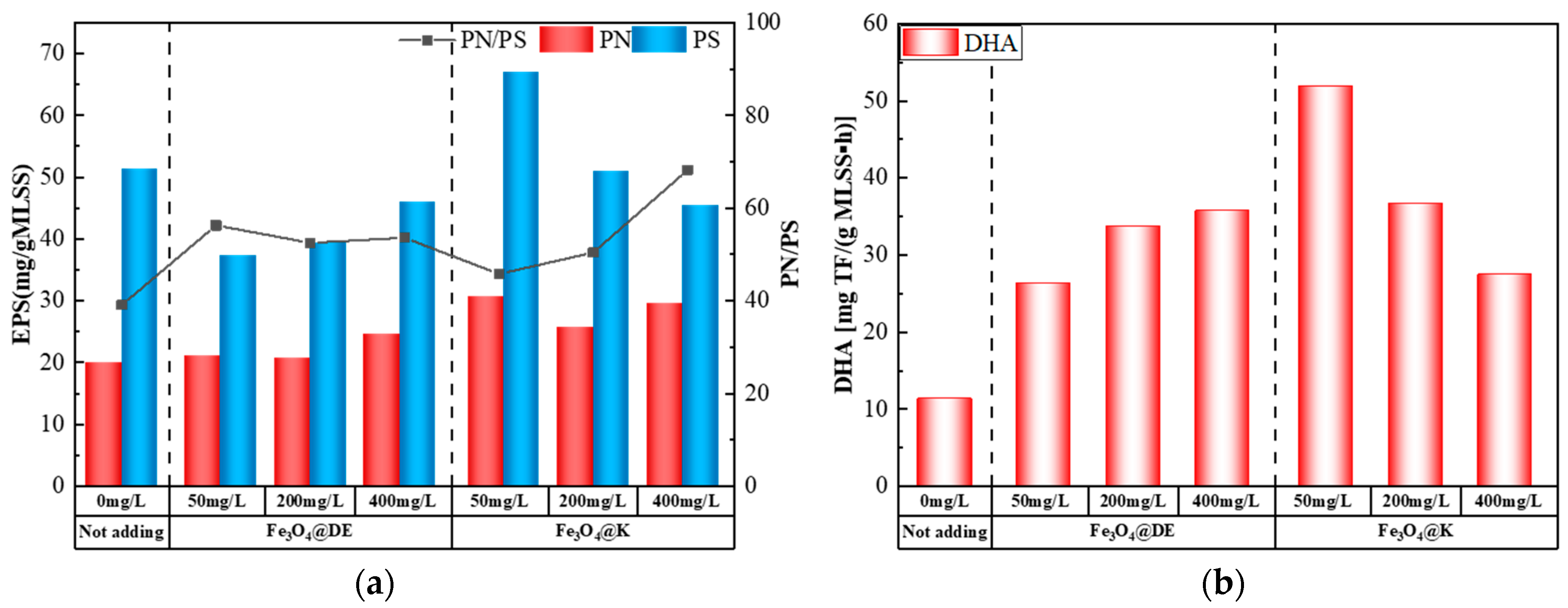
3.2.2. Effect of Magnetic Composite Material Dosage on Activated Sludge Characteristics
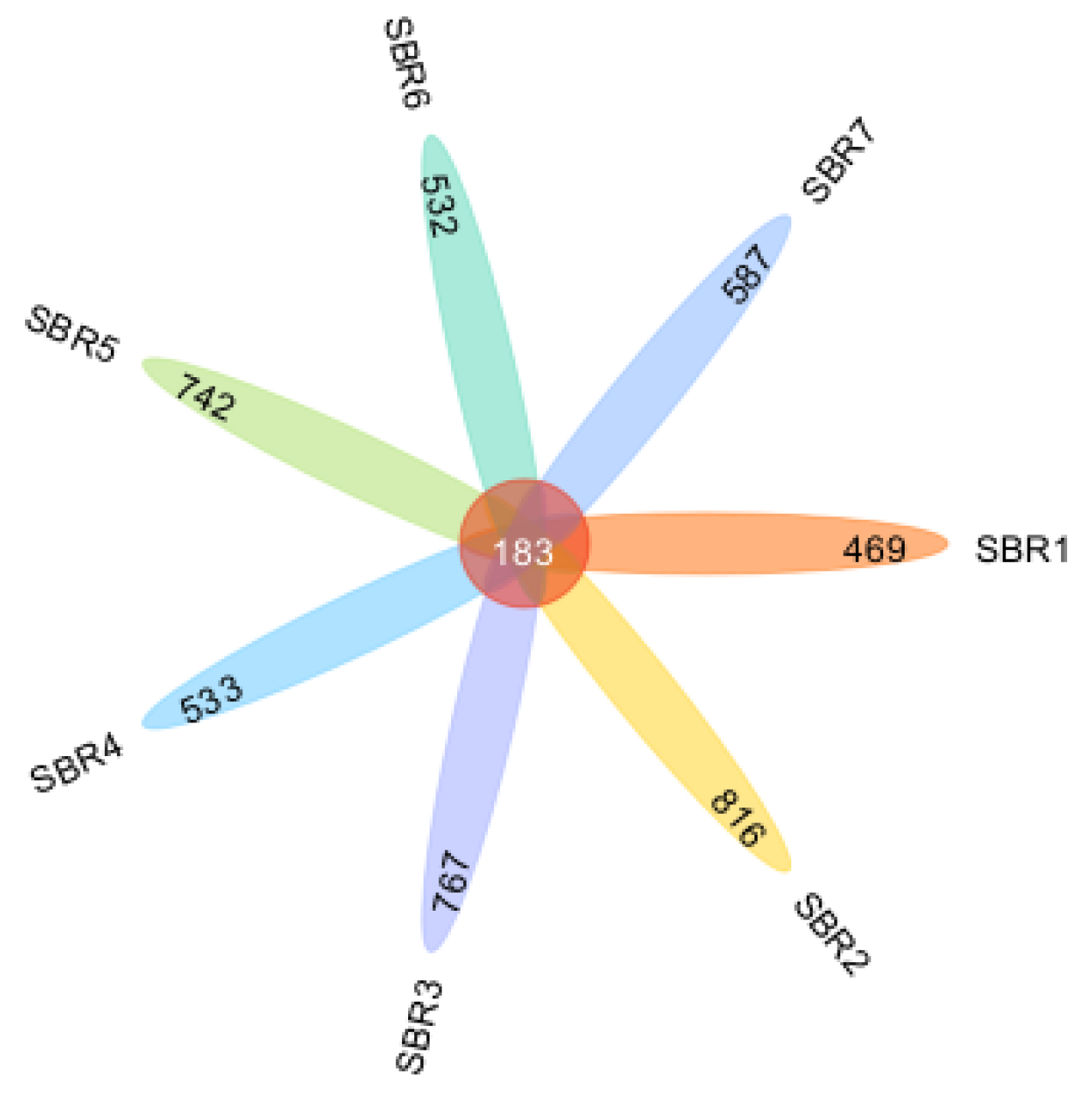
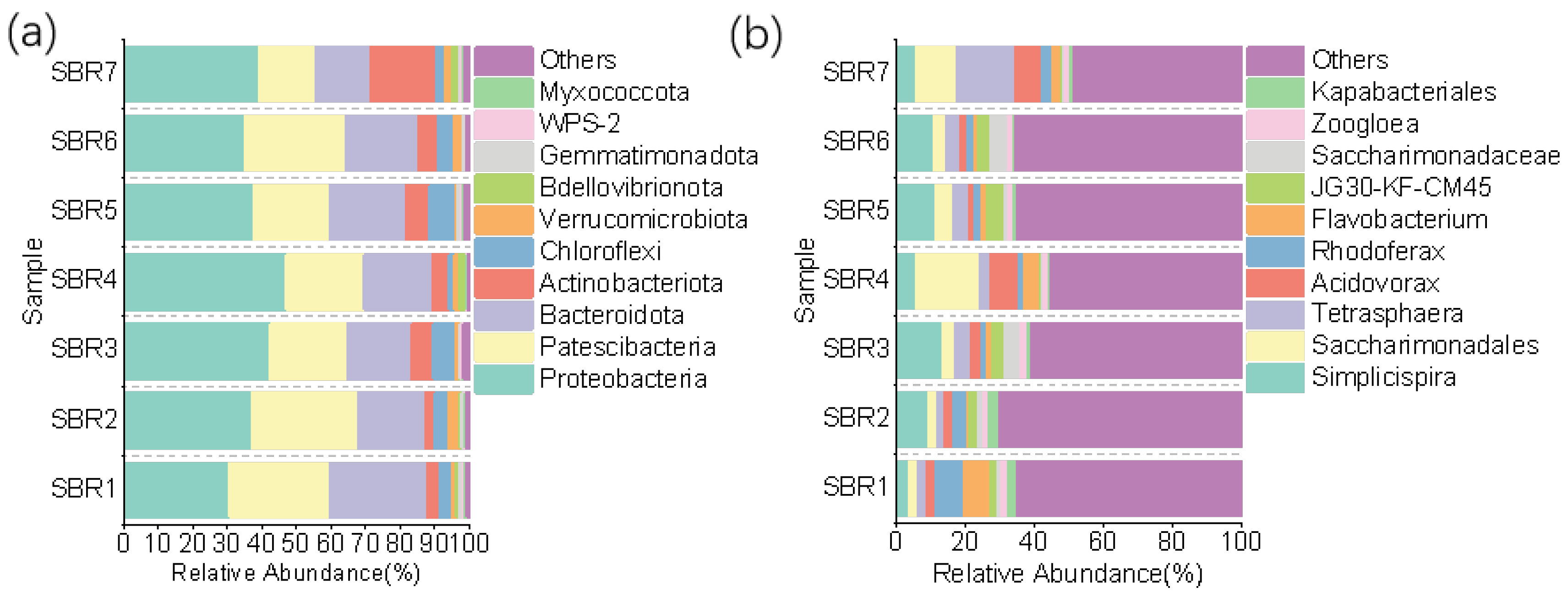
3.2.3. Analysis of Microbial Community Structure Characteristics
3.3. Techno-Economic Analysis and Engineering Implications
4. Conclusions
- (1)
- The addition of four composite magnetic materials effectively enhanced the system’s removal efficiency for COD, TN, and TP. Among them, the Fe3O4 composite diatomite and Fe3O4 composite kaolinite systems exhibited superior performance, with the average concentrations of COD, TN, and TP in the effluent from these two systems being reduced by 9.34, 5.55, and 1.35 mg/L and 1.89, 0.34, and 0.29 mg/L, respectively, compared with the system without added materials. After 21 days of operation, the SVI of both systems was significantly lower than that of the untreated system.
- (2)
- Different dosages significantly alter the pollutant removal efficiency and activated sludge performance of the system. The Fe3O4@DE system exhibited optimal pollutant removal efficiency at 50 mg/L; EPS and DHA increased with increasing dosage. The Fe3O4@K system achieved the highest removal rates for COD, TP, and NH4+-N at 50 mg/L and the best TN removal efficiency at 200 mg/L. The EPS and DHA concentrations decreased with increasing dosage. At 400 mg/L, both systems exhibited inhibited denitrification and phosphorus removal performance.
- (3)
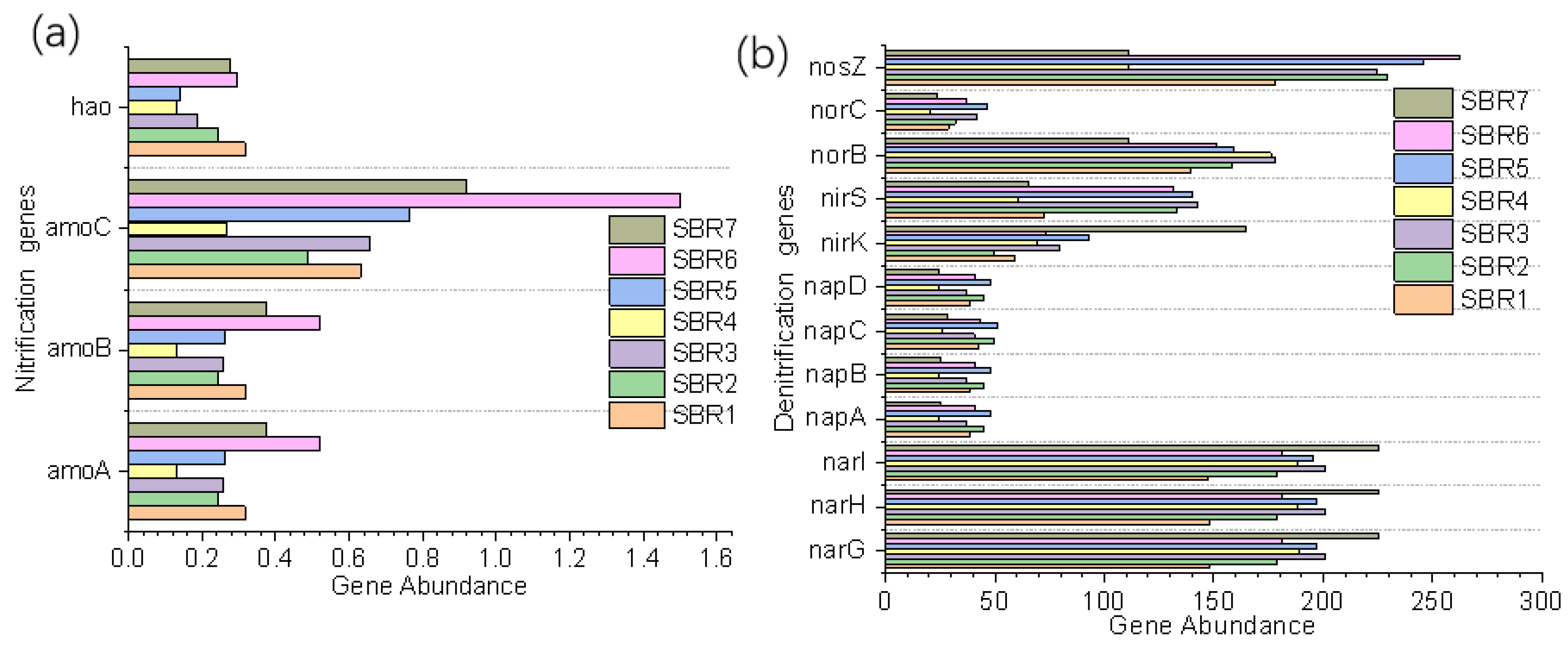
- High-throughput sequencing results indicate that different dosages of Fe3O4 affect the richness and diversity of the microbial community in the system. The abundance of Patescibacteria decreased continuously with increasing dosage in the Fe3O4@DE system, whereas it showed an initial increase followed by a decrease in the Fe3O4@K system. The relative abundance of denitrifying bacteria peaked at dosages of 50 (Fe3O4@DE) and 200 mg/L (Fe3O4@K), accounting for 38.78% and 35.79%, respectively, corresponding to the optimal denitrification performance of the systems.
5. Future Perspectives
- (1)
- The recovery rate of used composite magnetic materials from residual sludge should be systematically investigated, efficient regeneration methods should be developed, and the long-term impact of their cyclic use on treatment performance should be clarified.
- (2)
- The material costs, energy consumption of magnetic separation, and accumulating effects of materials in sludge should be comprehensively evaluated to accurately determine their potential impact on subsequent sludge resource recovery (e.g., anaerobic digestion and land application).
Supplementary Materials
Author Contributions
Funding
Data Availability Statement
Conflicts of Interest
Abbreviations
| Abbreviation/Symbol | Definition |
| SBR | Sequencing Batch Reactor |
| COD | Chemical Oxygen Demand |
| TN | Total Nitrogen |
| TP | Total Phosphorus |
| NH4+-N | Ammonia Nitrogen |
| SVI | Sludge Volume Index |
| EPS | Extracellular Polymeric Substances |
| DHA | Dehydrogenase Activity |
| DO | Dissolved Oxygen |
| MLSS | Mixed Liquor Suspended Solids |
| XRD | X-ray Diffractometer |
| SEM | Field Emission Scanning Electron Microscope |
| DNA | Deoxyribonucleic Acid |
| PCR | Polymerase Chain Reaction |
| 16S rRNA | 16S ribosomal Ribonucleic Acid |
| Fe3O4@AC | Fe3O4 composite activated carbon |
| Fe3O4@DE | Fe3O4 composite diatomite |
| Fe3O4@K | Fe3O4 composite kaolinite |
| Fe3O4@FA | Fe3O4 composite fly ash |
| ASV/OTU | Amplicon Sequence Variant / Operational Taxonomic Unit |
| amoA/B/C | Ammonia monooxygenase gene |
| hao | Hydroxylamine oxidoreductase gene |
| narG, narH, narI | Nitrate reductase gene |
| napA, napB, napC, napD | Nitrate reductase gene |
| nirK, nirS | Nitrite reductase gene |
References
- Rui, D.; Liu, K.; Ma, Y.; Huang, K.; Chen, M.; Wu, F.; Zhang, X.; Ye, L. Pilot-scale investigation of performance and microbial community in a novel system combining fixed and suspended activated sludge. Environ. Res. 2024, 246, 118141. [Google Scholar] [CrossRef] [PubMed]
- Du, X.; Ma, Y.; Wei, X.; Jegatheesan, V. Optimal Parameter Estimation in Activated Sludge Process Based Wastewater Treatment Practice. Water 2020, 12, 2604. [Google Scholar] [CrossRef]
- Katare, A.K.; Tabassum, A.; Sharma, A.K.; Sharma, S. Treatment of pharmaceutical wastewater through activated sludge process—A critical review. Environ. Monit. Assess. 2023, 195, 1466. [Google Scholar] [CrossRef]
- Bodzek, M.; Pohl, A.; Rosik-Dulewska, C. Microplastics in Wastewater Treatment Plants: Characteristics, Occurrence and Removal Technologies. Water 2024, 16, 3574. [Google Scholar] [CrossRef]
- Shen, Y.; Huang, D.-M.; Chen, Y.-P.; Yan, P.; Gao, X. New insight into filamentous sludge bulking during wastewater treatment: Surface characteristics and thermodynamics. Sci. Total Environ. 2020, 712, 135795. [Google Scholar] [CrossRef]
- Shi, Y.; Liu, T.; Yu, H.; Quan, X. Enhancing anoxic denitrification of low C/N ratio wastewater with novel ZVI composite carriers. J. Environ. Sci. 2022, 112, 180–191. [Google Scholar] [CrossRef]
- Borobio-Castillo, R.A.; Cabrera-Miranda, J.M.; Corona-Vásquez, B. Metamodeling-based reliability analysis framework for activated sludge processes. Water Res. 2024, 255, 121436. [Google Scholar] [CrossRef] [PubMed]
- Abdel Maksoud, M.I.A.; Fahim, R.A.; Bedir, A.G.; Osman, A.I.; Abouelela, M.M.; El-Sayyad, G.S.; Elkodous, M.A.; Mahmoud, A.S.; Rabee, M.M.; Al-Muhtaseb, A.H.; et al. Engineered magnetic oxides nanoparticles as efficient sorbents for wastewater remediation: A review. Environ. Chem. Lett. 2021, 20, 519–562. [Google Scholar] [CrossRef]
- Liu, Y.; Li, J.; Guo, W.; Ngo, H.H.; Hu, J.; Gao, M. Use of magnetic powder to effectively improve the performance of sequencing batch reactors (SBRs) in municipal wastewater treatment. Bioresour. Technol. 2018, 248, 135–139. [Google Scholar] [CrossRef]
- Liu, X.; Yu, J.; Wang, H.; Jin, C.; Zhao, Y.; Guo, L. Effect of magnetic powder (Fe3O4) on heterotrophic-sulfur autotrophic denitrification efficiency and electron transport system activity for marine recirculating aquacultural wastewater treatment. J. Environ. Manag. 2024, 370, 122749. [Google Scholar] [CrossRef]
- Afzal, S.; Sherino, B.; Suppiah, D.D.; Sagadevan, S.; Julkapli, N.M. Prospective and potential of magnetic nanoparticles in advanced and sustainable wastewater treatment. J. Water Process Eng. 2024, 63, 105540. [Google Scholar] [CrossRef]
- Yaqoob, S.; Hanif, M.A. Use of magnetic nanomaterials in wastewater treatment: A review. Environ. Monit. Assess. 2025, 197, 917. [Google Scholar] [CrossRef]
- Vallinayagam, S.; Rajendran, K.; Lakkaboyana, S.K.; Soontarapa, K.; R.R., R.; Sharma, V.K.; Kumar, V.; Venkateswarlu, K.; Koduru, J.R. Recent developments in magnetic nanoparticles and nano-composites for wastewater treatment. J. Environ. Chem. Eng. 2021, 9, 106553. [Google Scholar] [CrossRef]
- Kumar, M.; Singh Dosanjh, H.; Sonika Singh, J.; Monir, K.; Singh, H. Review on magnetic nanoferrites and their composites as alternatives in waste water treatment: Synthesis, modifications and applications. Environ. Sci. Water Res. Technol. 2020, 6, 491–514. [Google Scholar] [CrossRef]
- Chen, Y.; Zhang, F.; Shi, X.; Lu, M.; Qin, K.; Feng, Q.; Guo, R. Synthesis and application of magnetic PS@Fe3O4 microparticles for improving nitrogen removal in wastewater treatment process. J. Environ. Chem. Eng. 2022, 10, 108164. [Google Scholar] [CrossRef]
- Wang, J.; Zheng, S.; Shao, Y.; Liu, J.; Xu, Z.; Zhu, D. Amino-functionalized Fe3O4@SiO2 core–shell magnetic nanomaterial as a novel adsorbent for aqueous heavy metals removal. J. Colloid Interface Sci. 2010, 349, 293–299. [Google Scholar] [CrossRef]
- Zhao, Y.; Liu, D.; Huang, W.; Yang, Y.; Ji, M.; Nghiem, L.D.; Trinh, Q.T.; Tran, N.H. Insights into biofilm carriers for biological wastewater treatment processes: Current state-of-the-art, challenges, and opportunities. Bioresour. Technol. 2019, 288, 121619. [Google Scholar] [CrossRef]
- Geng, H.; Xu, Y.; Liu, R.; Yang, D.; Dai, X. Magnetic porous microspheres enhancing the anaerobic digestion of sewage sludge: Synergistic free and attached methanogenic consortia. Water Res. 2024, 254, 121393. [Google Scholar] [CrossRef] [PubMed]
- Luo, X.; Zeng, J.; Liu, S.; Zhang, L. An effective and recyclable adsorbent for the removal of heavy metal ions from aqueous system: Magnetic chitosan/cellulose microspheres. Bioresour. Technol. 2015, 194, 403–406. [Google Scholar] [CrossRef] [PubMed]
- Zhao, Y.; Liu, Y.; Xu, H.; Fan, Q.; Zhu, C.; Liu, J.; Zhu, M.; Wang, X.; Niu, A. Preparation and Application of Magnetic Composites Using Controllable Assembly for Use in Water Treatment: A Review. Molecules 2023, 28, 5799. [Google Scholar] [CrossRef] [PubMed]
- Mouhamed, F.E.H.; Chaari, I.; Andolsi, A. Synthesis, characterization, and valorization of Fe3O4/AC nanocomposite for adsorptive removal of crystal violet (CV) from aqueous solution. J. Porous Mater. 2024, 31, 2205–2217. [Google Scholar] [CrossRef]
- Zhang, F.; Shi, X.; Lian, S.; Chen, Y.; Lu, M.; Feng, Q.; Guo, R. A novel magnetic microparticles as biocarriers for promoting enrichment of nitrifying bacteria. J. Water Process Eng. 2022, 47, 102794. [Google Scholar] [CrossRef]
- Bunaciu, A.A.; Udriştioiu Udriştioiu, E.g.; Aboul-Enein, H.Y. X-Ray Diffraction: Instrumentation and Applications. Crit. Rev. Anal. Chem. 2015, 45, 289–299. [Google Scholar] [CrossRef]
- Liang, Y.; Jiang, L.; Xu, S.; Ju, W.; Tao, Z.; Yang, Y.; Peng, X.; Wei, G. Synthesis and Characterization of Fe3O4 Nanoparticles Prepared by Solvothermal Method. J. Mater. Eng. Perform. 2023, 33, 6804–6815. [Google Scholar] [CrossRef]
- APHA. Standard Methods for the Examination of Water and Wastewater, 22nd ed.; American Public Health Association, AWWA, WEF: Washington, DC, USA, 2007. [Google Scholar]
- Vásquez, C.; Leyton-Carcaman, B.; Cid-Alda, F.P.; Segovia, I.; Pinto, F.; Abanto, M. Physical Pretreatments Applied in Three Commercial Kits for the Extraction of High-Quality DNA from Activated Sewage Sludge. Int. J. Mol. Sci. 2023, 24, 15243. [Google Scholar] [CrossRef]
- Kiziltaş, H.; Tekin, T.; Tekin, D. Preparation and characterization of recyclable Fe3O4@SiO2@TiO2 composite photocatalyst, and investigation of the photocatalytic activity. Chem. Eng. Commun. 2020, 208, 1041–1053. [Google Scholar] [CrossRef]
- Lestari, I.; Yohana, A.V.; Farid, F.; Gusti, D.R. Preparation and Characterisation of Composite Magnetite Fe3O4-Activated Carbon as Adsorben of Phenol. J. Ris. Kim. 2022, 13, 34–48. [Google Scholar] [CrossRef]
- Jouault, N.; Lee, D.; Zhao, D.; Kumar, S.K. Block-Copolymer-Mediated Nanoparticle Dispersion and Assembly in Polymer Nanocomposites. Adv. Mater. 2014, 26, 4031–4036. [Google Scholar] [CrossRef]
- Kumar, I.A.; Jeyaprabha, C.; Viswanathan, N. Effect of polyvalent metal ions encrusted biopolymeric hybrid beads on nitrate adsorption. J. Environ. Chem. Eng. 2020, 8, 103894. [Google Scholar] [CrossRef]
- Ke, X.; Wang, C.; Jing, D.; Zhang, Y.; Zhang, H. Assessing water quality by ratio of the number of dominant bacterium species between surface/subsurface sediments in Haihe River Basin. Mar. Pollut. Bull. 2015, 98, 267–273. [Google Scholar] [CrossRef]
- Liu, X.; Tian, J.; Li, Y.; Sun, N.; Mi, S.; Xie, Y.; Chen, Z. Enhanced dyes adsorption from wastewater via Fe3O4 nanoparticles functionalized activated carbon. J. Hazard. Mater. 2019, 373, 397–407. [Google Scholar] [CrossRef]
- Ying, T.Y.; Raman, A.A.A.; Bello, M.M.; Buthiyappan, A. Magnetic graphene oxide-biomass activated carbon composite for dye removal. Korean J. Chem. Eng. 2020, 37, 2179–2191. [Google Scholar] [CrossRef]
- Dragos-Pinzaru, O.-G.; Lupu, N.; Chiriac, H.; Buema, G. Exploring the Utilization of Magnetic Composite Materials for High-Risk Contaminant Removal from Wastewater by Adsorption and Catalytic Processes—A Review. Magnetochemistry 2024, 10, 57. [Google Scholar] [CrossRef]
- Zhang, G.; He, H.; Liu, S.; Du, Z.; Lv, L.; Sun, L.; Zhang, J.; Liang, J. La-Al modified Fe3O4 adsorbent for adsorption performance and mechanism of low P concentration in water. J. Water Process Eng. 2024, 68, 106344. [Google Scholar] [CrossRef]
- Ma, B.; Wang, S.; Li, Z.; Gao, M.; Li, S.; Guo, L.; She, Z.; Zhao, Y.; Zheng, D.; Jin, C.; et al. Magnetic Fe3O4 nanoparticles induced effects on performance and microbial community of activated sludge from a sequencing batch reactor under long-term exposure. Bioresour. Technol. 2017, 225, 377–385. [Google Scholar] [CrossRef]
- Li, N.; Quan, X.; Zhuo, M.; Zhang, X.; Quan, Y.; Liang, P. Enhancing methanogenesis of anaerobic granular sludge by incorporating Fe/Fe oxides nanoparticles aided with biofilm disassembly agents and mediating redox activity of extracellular polymer substances. Water Res. 2022, 216, 118293. [Google Scholar] [CrossRef]
- El-Shafie, A.S.; El-Azazy, M. Crosslinked chitosan–montmorillonite composite and its magnetized counterpart for the removal of basic fuchsin from wastewater: Parametric optimization using Box-Behnken design. Int. J. Biol. Macromol. 2024, 263, 130224. [Google Scholar] [CrossRef]
- Li, Z.; Wei, Y.; Wu, H.; Yuan, P.; Bu, H.; Tan, X. Efficient and sustainable phosphate removal and recovery from wastewater with zinc-substituted magnetite. Sep. Purif. Technol. 2025, 360, 130642. [Google Scholar] [CrossRef]
- Pan, K.; Wei, Y.; Qiu, C.; Li, H.; Wang, L.; Cheng, L.; Bi, X. Comprehensive analysis of effects of magnetic nanoparticles on aerobic granulation and microbial community composition: From the perspective of acyl-homoserine lactones mediated communication. Bioresour. Technol. 2024, 393, 130174. [Google Scholar] [CrossRef]
- Duan, C.; Zhang, Q.; Li, J.; Feng, W.; Zhang, L.; Peng, Y. Partial nitrification response to dissolved oxygen variation and aerobic starvation: Kinetics and microbial community analyses. Chem. Eng. J. 2024, 481, 148621. [Google Scholar] [CrossRef]
- Lei, Z.; Wang, L.; Wang, J.; Yang, S.; Hou, Z.; Wang, X.C.; Chen, R. Partial-nitritation of low-strength anaerobic effluent: A moderate-high dissolved oxygen concentration facilitates ammonia-oxidizing bacteria disinhibition and nitrite-oxidizing bacteria suppression. Sci. Total Environ. 2021, 770, 145337. [Google Scholar] [CrossRef] [PubMed]
- Zheng, X.; Zhang, Y.; Chen, W.; Wang, W.; Xu, H.; Shao, X.; Yang, M.; Xu, Z.; Zhu, L. Effect of Increased Influent COD on Relieving the Toxicity of CeO2 NPs on Aerobic Granular Sludge. Int. J. Environ. Res. Public Health 2019, 16, 3609. [Google Scholar] [CrossRef]
- Zhang, X.; Zhang, H.; Chen, Z.; Wei, D.; Song, Y.; Ma, Y.; Zhang, H. Achieving biogas production and efficient pollutants removal from nitrogenous fertilizer wastewater using combined anaerobic digestion and autotrophic nitrogen removal process. Bioresour. Technol. 2021, 339, 125659. [Google Scholar] [CrossRef] [PubMed]
- Dong, D.; Sun, H.; Qi, Z.; Liu, X. Improving microbial bioremediation efficiency of intensive aquacultural wastewater based on bacterial pollutant metabolism kinetics analysis. Chemosphere 2021, 265, 129151. [Google Scholar] [CrossRef]
- Li, P.; Wang, Q.; He, X.; Yu, R.; He, C.; Shen, D.; Jiao, Y. Investigation on the effect of different additives on anaerobic co-digestion of corn straw and sewage sludge: Comparison of biochar, Fe3O4, and magnetic biochar. Bioresour. Technol. 2022, 345, 126532. [Google Scholar] [CrossRef]
- Zhang, L.; Shen, Z.; Fang, W.; Gao, G. Composition of bacterial communities in municipal wastewater treatment plant. Sci. Total Environ. 2019, 689, 1181–1191. [Google Scholar] [CrossRef] [PubMed]
- Wang, S.; Yin, Y.; Gao, Y.; Li, F.; Zhou, J. Rapid Start-Up of Anammox Process with a Stepwise Strategy: System Performance, Microbial Community Succession and Mechanism Exploration. Water 2024, 16, 3619. [Google Scholar] [CrossRef]
- Wu, F.; Zeng, Z.; Zhang, W.; Li, H.; Zhou, L.; Zhuang, W.-Q. Functional bacteria and their genes encoding for key enzymes in hydrogen-driven autotrophic denitrification with sulfate loading. J. Clean. Prod. 2024, 440, 140901. [Google Scholar] [CrossRef]
- Yang, Z.; Yang, Y.; Ning, D.; Fan, X.; Lv, Y.; Zhuang, L.; Wu, L. Metagenomic insights into the global distribution and functional potentials of major polyphosphate-accumulating organisms (PAOs) in activated sludge wastewater treatment plants. Water Res. 2026, 291, 125191. [Google Scholar] [CrossRef]
- Guo, J.; Peng, Y.; Wang, S.; Ma, B.; Ge, S.; Wang, Z.; Huang, H.; Zhang, J.; Zhang, L. Pathways and Organisms Involved in Ammonia Oxidation and Nitrous Oxide Emission. Crit. Rev. Environ. Sci. Technol. 2013, 43, 2213–2296. [Google Scholar] [CrossRef]
- Hu, J.; Liu, M.; Li, L.; Hu, J.; Wang, C. Assessing the effects of NapA gene overexpression on denitrification and denitrogenation in magnetospirillum gryphiswaldense MSR-1. Arch. Microbiol. 2024, 206, 439. [Google Scholar] [CrossRef]





| Inlet Water Quality Parameters | COD (mg/L) | TN (mg/L) | NH4+-N (mg/L) | TP (mg/L) |
|---|---|---|---|---|
| Range | 395.8–295.7 | 42.7–30.71 | 39.54–25.44 | 4.11–5.6 |
| Average | 335.29 | 36.46 | 30.11 | 4.85 |
| Sample | Chao1 | Goods Coverage | Observed Species | Shannon | Simpson |
|---|---|---|---|---|---|
| SBR1 | 1200.2 | 0.997 | 1140.1 | 5.79088 | 0.926414 |
| SBR2 | 1793.48 | 0.995 | 1706.5 | 6.45779 | 0.945834 |
| SBR3 | 1813.27 | 0.995 | 1704.7 | 6.96608 | 0.967745 |
| SBR4 | 1228.12 | 0.996 | 1152.2 | 6.09884 | 0.944992 |
| SBR5 | 1590.98 | 0.997 | 1546 | 7.09773 | 0.972083 |
| SBR6 | 1486.89 | 0.996 | 1393.9 | 6.31567 | 0.953717 |
| SBR7 | 1436.87 | 0.996 | 1351.9 | 6.49331 | 0.953341 |
Disclaimer/Publisher’s Note: The statements, opinions and data contained in all publications are solely those of the individual author(s) and contributor(s) and not of MDPI and/or the editor(s). MDPI and/or the editor(s) disclaim responsibility for any injury to people or property resulting from any ideas, methods, instructions or products referred to in the content. |
© 2026 by the authors. Licensee MDPI, Basel, Switzerland. This article is an open access article distributed under the terms and conditions of the Creative Commons Attribution (CC BY) license.
Share and Cite
Ai, S.; Hao, R.; Gao, Y.; Tong, W.; Zeng, S.; Qu, H.; Bian, D. A Study on the Effects and Response Mechanisms of Different Composite Magnetic Materials in Enhancing Municipal Wastewater Biological Treatment. Water 2026, 18, 1009. https://doi.org/10.3390/w18091009
Ai S, Hao R, Gao Y, Tong W, Zeng S, Qu H, Bian D. A Study on the Effects and Response Mechanisms of Different Composite Magnetic Materials in Enhancing Municipal Wastewater Biological Treatment. Water. 2026; 18(9):1009. https://doi.org/10.3390/w18091009
Chicago/Turabian StyleAi, Shengshu, Rui Hao, Yongtai Gao, Wenhua Tong, Shangjing Zeng, Hong Qu, and Dejun Bian. 2026. "A Study on the Effects and Response Mechanisms of Different Composite Magnetic Materials in Enhancing Municipal Wastewater Biological Treatment" Water 18, no. 9: 1009. https://doi.org/10.3390/w18091009
APA StyleAi, S., Hao, R., Gao, Y., Tong, W., Zeng, S., Qu, H., & Bian, D. (2026). A Study on the Effects and Response Mechanisms of Different Composite Magnetic Materials in Enhancing Municipal Wastewater Biological Treatment. Water, 18(9), 1009. https://doi.org/10.3390/w18091009