1. Introduction
Due to rapid urbanization and intensifying climate change, the frequency and intensity of extreme rainfall events have shown a significant upward trend in recent decades, posing unprecedented challenges to urban water security [
1,
2]. With the continuous expansion of urban built-up areas, impervious surfaces have replaced a substantial amount of natural vegetation. This leads to a sharp decline in regional infiltration capacity, an increased surface runoff coefficient, and a shortened time to peak runoff, significantly altering the original hydrological cycle processes [
3]. Such abrupt changes in climate and the environment have made urban waterlogging and flood disasters one of the core risks threatening global public safety and socio-economic development [
4]. In recent years, many regions across China have frequently experienced record-breaking torrential rainfall events, such as the 2023 Beijing “7·31” extreme rainstorm and the 2021 Zhengzhou “7·20” extreme rainstorm. These events resulted in significant casualties and severe paralysis of urban functions [
5,
6]. Consequently, urban flood resilience has received increasing attention, making the enhancement of urban resilience particularly crucial [
7].
The concept of the term “resilience” has undergone significant evolution with disciplinary development, primarily progressing through three stages: engineering resilience, ecological resilience, and evolutionary resilience [
8]. The term was first applied in the engineering field to describe a material’s ability to return to its original state after deformation under force. In 1973, Canadian ecologist Holling first introduced this concept into ecological systems, proposing ecological resilience [
9]. This broke the traditional single-equilibrium-state theory of engineering resilience, emphasizing a system’s capacity to absorb disturbances, buffer shocks, and maintain its functional structure among multiple equilibrium states. Subsequently, scholars proposed the concept of socio-ecological resilience, also known as evolutionary resilience, which emphasizes a system’s ability to continuously adapt, learn, and innovate amidst disturbances [
10,
11]. In the 1990s, the concept of resilience was introduced into the urban domain, sparking widespread academic interest [
12]. Driven by continuous international disaster reduction efforts, the resilience concept was gradually applied to urban disaster risk management. In 2002, ICLEI first proposed introducing the resilience concept into the field of urban disaster prevention and mitigation at the United Nations Summit on Sustainable Development [
13]. The following year, Godschalk first proposed a definition of urban resilience within this field, laying the groundwork for subsequent urban resilience research [
14]. Subsequently, influenced by global climate change and urbanization, flood disasters became increasingly frequent, leading to a sharper focus on urban flood resilience as a novel research perspective for addressing urban sustainable development [
15,
16]. As the theory continued to develop, research on urban flood resilience assessment gradually increased, which can be categorized into qualitative and quantitative analyses. Qualitative analysis mainly focuses on the conceptual meaning, mechanisms, and processes of resilience theory, while quantitative analysis primarily concentrates on quantifying the level of urban flood resilience [
17,
18,
19,
20]. In subsequent research, scholars pointed out that extreme flood disasters are highly unpredictable. Relying solely on the defensive capacity of flood control infrastructure is no longer a reliable disaster mitigation approach and often struggles to cope with extreme events exceeding design standards [
21]. Therefore, whether an urban system can achieve rapid functional recovery through resource allocation after a disaster has become a key basis for judging its resilience level. The latest quantitative research confirms that enhancing a system’s recovery speed, shortening the time from functional impairment to normal operation, is a more efficient approach for improving resilience, as it can significantly reduce the system performance losses caused by disasters [
22]. As the fundamental unit of a city, communities are typically the first to bear the direct and indirect consequences of disasters. They can capture highly vulnerable areas often overlooked at larger scales and play a crucial role in responding to disasters [
23,
24,
25].
Current research on community post-disaster recovery can be broadly categorized into two directions: indicator-based assessment and recovery studies focused on specific facility systems within communities. Indicator-based assessment aims to quantify community post-disaster recovery capacity by constructing multi-dimensional indicator frameworks. Ostadtaghizadeh et al. conducted a systematic literature review, synthesizing existing community disaster recovery and resilience assessment models and summarizing core indicators across social, economic, institutional, and physical dimensions [
26]. This provides a reference for the theoretical construction and methodological selection of community post-disaster recovery indicator systems. Similarly, Eisenman et al. developed the LACCDR community resilience indicator system using a questionnaire survey method, quantifying community disaster resilience and recovery capacity from dimensions such as emergency preparedness, social networks, and public participation, offering an operational evaluation tool for measuring post-disaster recovery effectiveness at the community level [
27]. McConkey and Larson employed the BRIC framework to quantitatively measure community recovery capacity, demonstrating the practical application of quantitative indicators in multi-hazard contexts [
28]. Milenković et al. reviewed the application status of the BRIC baseline indicator method in measuring community disaster resilience, highlighting key technical issues related to indicator selection and data collection methods [
29]. On the other hand, some scholars focus specifically on analyzing post-disaster recovery performance in particular aspects of communities. For example, Braik et al. took the Joplin Tornado as a case study, combining remote sensing technology with GIS and utilizing deep learning algorithms to accurately classify post-disaster building damage, while employing restoration models to predict the recovery situation [
30]. Shen et al. focused on the impact of disaster spatial characteristics on transportation network resilience, pointing out that neglecting these characteristics may lead to an overestimation of the certainty in network recovery predictions and emphasizing the importance of incorporating spatial attributes of disasters into resilience assessments [
31]. Bi et al. took the London urban rail transit system as an example, constructed a recovery resource scheduling model based on a genetic algorithm, demonstrating that optimizing the dispatching sequence of emergency repair teams can significantly reduce operational revenue losses and passenger travel impacts caused by floods [
32]. Hamid et al. addressed post-disaster communication facility damage by proposing a multi-hop UAV-IRS communication architecture [
33]. Through algorithm optimization for UAV deployment, transmission power, and IRS phase shifts, they effectively enhanced the energy efficiency and coverage of emergency communications. Poudel et al. developed a resilience quantification system based on the PEISE framework to explore the differential impacts of various water supply systems on household post-disaster recovery capacity, highlighting the importance of synergies between traditional and modern water supply systems for enhancing urban resilience [
34]. However, existing research predominantly focuses on macro-level evaluations or the recovery of single elements, lacking models capable of quantifying community functionality and enabling dynamic visualization. In practice, a community is a complex spatial system composed of different land use types such as residential areas, transportation networks, and green spaces. Constructing a community post-disaster recovery model that considers only the recovery of a single element fails to comprehensively capture the true dynamics of overall community functional recovery. Therefore, integrating the critical element of land use types into community post-disaster recovery models is essential for advancing research in this field.
To address the limitations of existing research, this study identifies distinct land use types at a refined community grid scale and proposes a post-flood community recovery model. The model accounts for the recovery processes of different land use types under flooding conditions. By aggregating these processes, a curve depicting the temporal evolution of community functionality after a disaster is derived. The novel contributions of this study are twofold: (1) By comprehensively considering the impact of flood disasters on different land use types, a community functional recovery model was established. This model calculates the recovery curve of communities following flood disasters, enabling visualization of community functional recovery at any given time during the post-disaster recovery phase. (2) Integrating land use types with urban flood issues, the study explores the influence of land use types on post-disaster recovery.
2. Methodology
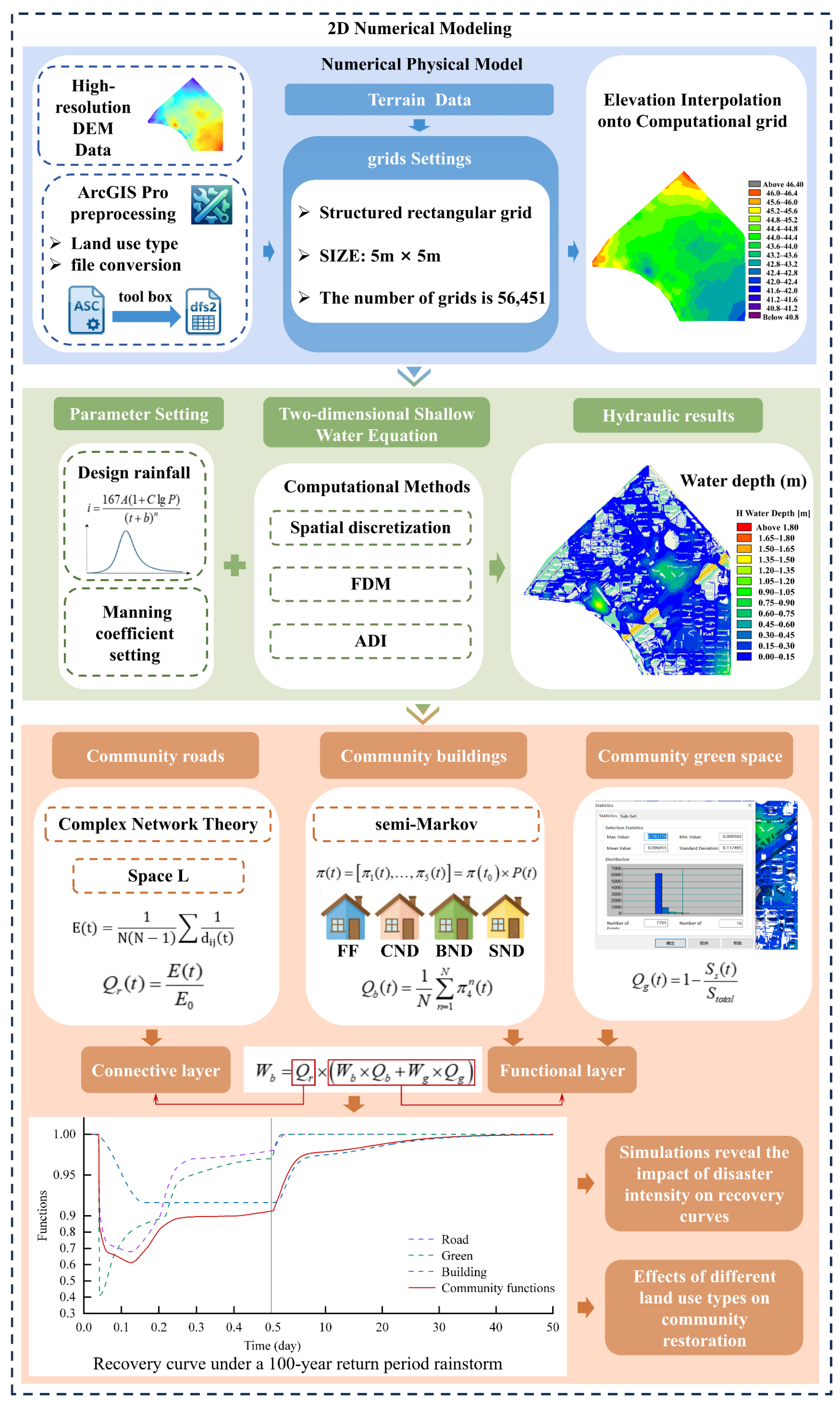
To systematically quantify the extent of community functional impairment during flood disasters and the post-disaster recovery process, this study employs a hydrodynamic model to simulate rainfall events and constructs a community functional recovery model accounting for different land use types. The overall methodology is shown in
Figure 1. First, the MIKE 21 hydrodynamic model simulates community inundation processes under short-duration heavy rainfall, yielding high-precision dynamic flood depth data to provide physical disaster factors for subsequent analysis. Building upon this foundation, differentiated recovery calculation models were developed for distinct land use types within the community. A semi-Markov process was employed to model the recovery of individual buildings, and the functional capacity of buildings within the community was aggregated to derive building recovery curves. A road network topology model is constructed using the Space L method, with community road functionality quantified via network global efficiency metrics. Green space functionality loss is quantified based on the percentage of flooded areas. Finally, considering interactions between different systems, a community functionality quantification model linking connectivity and functionality layers is developed, yielding recovery curves.
2.1. Hydrodynamic Numerical Simulation
To obtain high-precision community flood inundation data, this study established a numerical simulation model using MIKE 21, a commercial software developed by DHI, Hørsholm, Denmark. The 2D hydrodynamic module of the software takes the two-dimensional shallow water equations as its core governing equations, which can accurately simulate the processes of surface rainfall-runoff generation, flood routing and inundation. Based on this well-established module, this study completed the numerical simulation of the whole process of rainfall and surface runoff in a typical urban community. This model comprehensively accounts for the complex urban community surface’s role in obstructing and directing water flow paths, accurately simulating dynamic changes in hydraulic parameters such as water depth and flow velocity during flood progression. This provides reliable, high-precision hydrodynamic data support for subsequent post-disaster recovery research. The specific steps for model development are as follows.
2.1.1. Governing Equations
The hydrodynamic model is governed by the two-dimensional Shallow Water Equations (2D SWEs). These equations are derived by depth-integrating the three-dimensional incompressible Reynolds-Averaged Navier–Stokes (RANS) equations, incorporating the Boussinesq approximation and the assumption of hydrostatic pressure distribution [
35]. It simulates unsteady two-dimensional flows in one-layer (vertically homogeneous) fluids. The following equations, the conservation of mass and momentum integrated over the vertical, describe the flow and water level variations. The expressions are as follows:
where
h (
x,
y,
t) is the water depth;
d (
x,
y,
t) is the time-varying water depth;
ζ (
x,
y,
t) is the surface elevation;
p and
q (
x,
y,
t) are the flux densities in the
x- and
y-directions (where
u and
v are the depth-averaged velocities in the
x and
y-directions);
C (
x,
y) is the Chezy resistance;
g is the acceleration due to gravity;
f (
V) is the wind friction factor;
V,
Vx, and
Vy (
x,
y,
t) are the wind speed and its components in the
x- and
y-directions;
Ω (
x,
y) is the latitude-dependent Coriolis parameter;
pa (
x,
y,
t) is the atmospheric pressure;
ρw is the density of water;
x and
y are the space coordinates;
t is the time; and
τxx,
τxy and
τyy are the components of effective shear stress.
2.1.2. Model Parameter Settings
Surface roughness is a core parameter in hydrodynamic models that characterizes the resistance of the underlying surface to water flow. It is represented in the model by the Manning coefficient n. Its essence lies in quantifying the dissipation rate of flow energy by rough elements such as riverbeds, banks, and surface vegetation, thereby reflecting the resistance characteristics of different underlying surfaces to water movement. Within the governing equations, roughness indirectly influences momentum exchange calculations through the bed friction term, directly affecting both the attenuation rate of flow velocities and the elevation of water levels. Properly setting roughness values is fundamental to ensuring the model’s accuracy in simulating critical hydrological parameters like water levels and flow velocities. Based on the Outdoor Drainage Design Standard and empirical values from similar research, this study assigns initial roughness values to different land cover types: a Manning coefficient (n) of 0.025 for buildings, 0.11 for green spaces, 0.03 for roads, and 0.02 for bare soil.
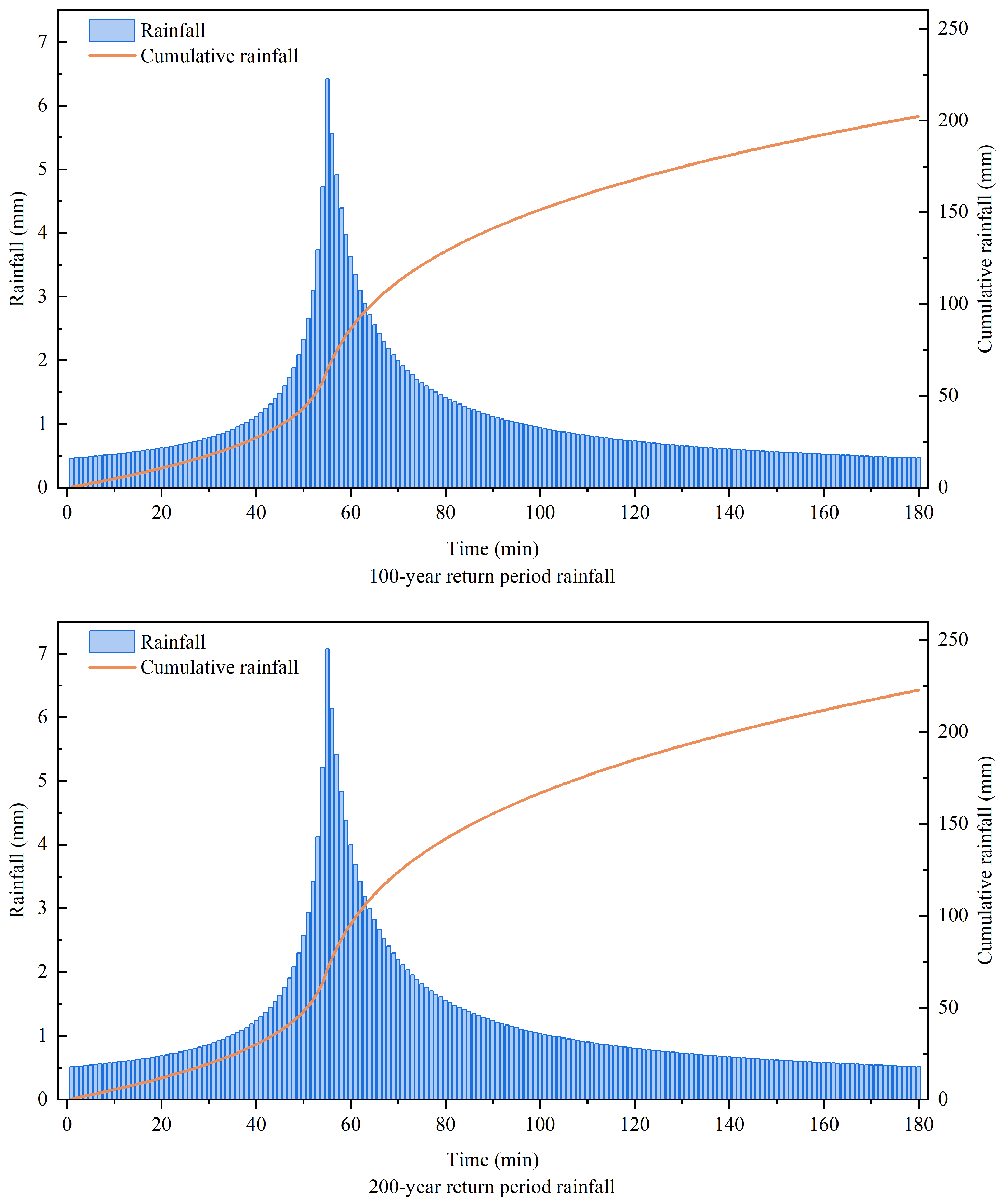
Precipitation is the core hydrological factor driving the runoff generation and convergence processes within a watershed, and it is also a key condition for conducting community flood simulations using hydrodynamic models. The intensity and duration of rainfall directly influence the volume of surface runoff generated within a community, its convergence paths, and convergence velocity, ultimately determining simulation results such as the depth and extent of water accumulation within the study area. To simulate community flooding under varying rainfall intensities, this study employs the Chicago rainfall pattern for designing short-duration heavy rainfall events. The Chicago rainfall pattern method is a non-uniform design rainfall approach that derives the precipitation time series for a given duration and return period, based on the rainstorm intensity formula and the rain peak position coefficient. The key parameters of this method are determined using the local rainstorm intensity formula issued by the meteorological authority, in accordance with the geographic location of the study area. These parameters have been scientifically calibrated by the local meteorological department via the annual maximum value method, using decades of observed historical rainfall data, thus guaranteeing their accuracy and reliability. The rainfall intensity formula is
where
i represents rainfall intensity;
t denotes storm duration;
P indicates recurrence interval;
A signifies the design rainfall for a 1-year recurrence interval;
C is the rainfall variability parameter;
b and
n represent the storm duration correction parameter and storm decay index, respectively.
The expressions for the instantaneous rainfall intensity before and after the peak of the precipitation process are, respectively,
where
is the rainfall intensity after the peak;
is the rainfall intensity before the peak;
is the duration after the peak;
is the duration before the peak;
a,
b, and
c are design parameters; and
r is the rainfall peak coefficient.
2.1.3. Physical Models and Solution Methods
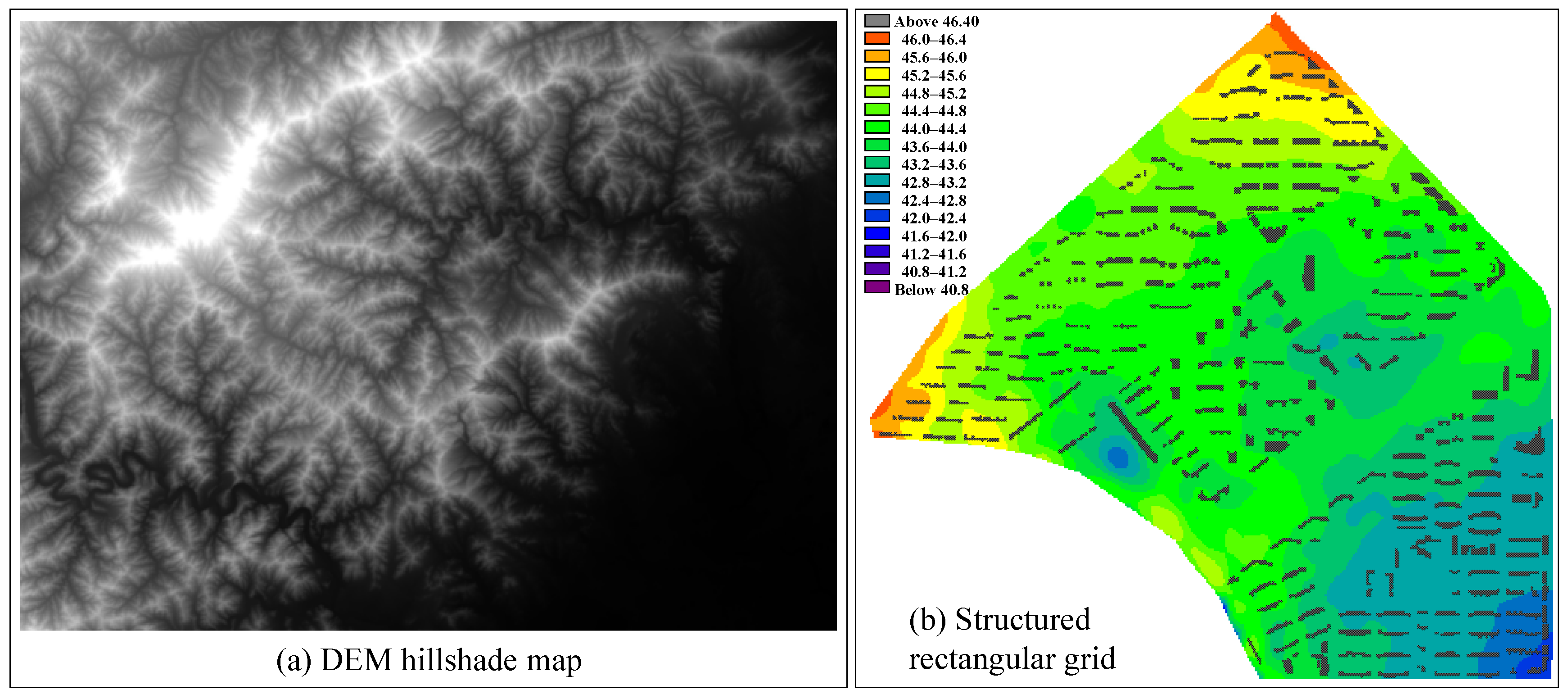
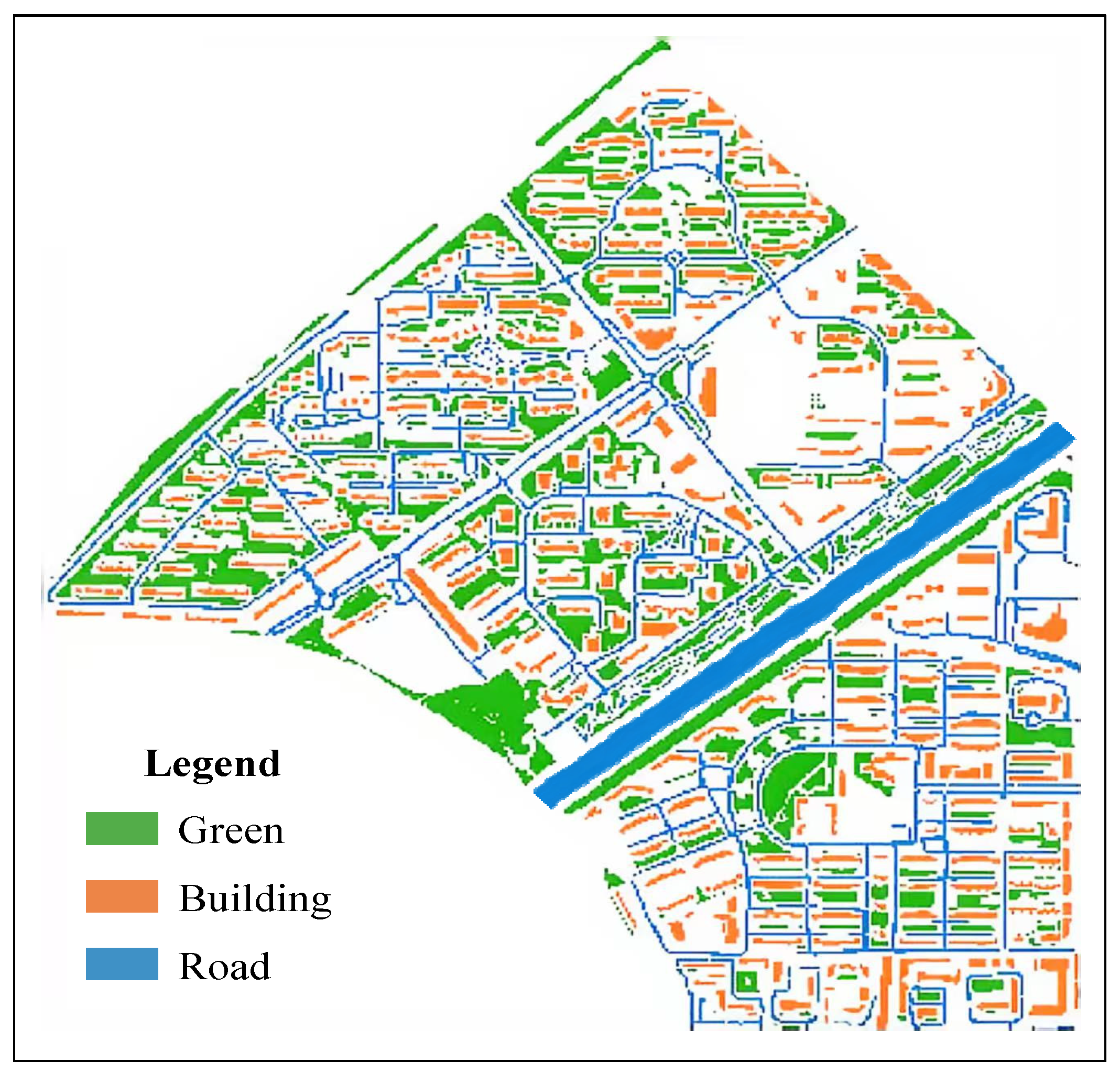
The physical domain of the model was reconstructed by interpolating high-precision DEM data (5 m spatial resolution) acquired from Tuxingis, a professional domestic geospatial data service platform in China, onto a structured rectangular grid, as shown in
Figure 2. Convert ground elevation points into a 5 m × 5 m MIKE 21 grid terrain file, incorporating buildings and roads to accurately reflect the study area’s topography. MIKE 21 HD makes use of a so-called Alternating Direction Implicit (ADI) technique to integrate the equations for mass and momentum conservation in the space-time domain. The equation matrices that result for each direction and each individual grid line are resolved by a Double Sweep (DS) algorithm.
2.1.4. Model Validation
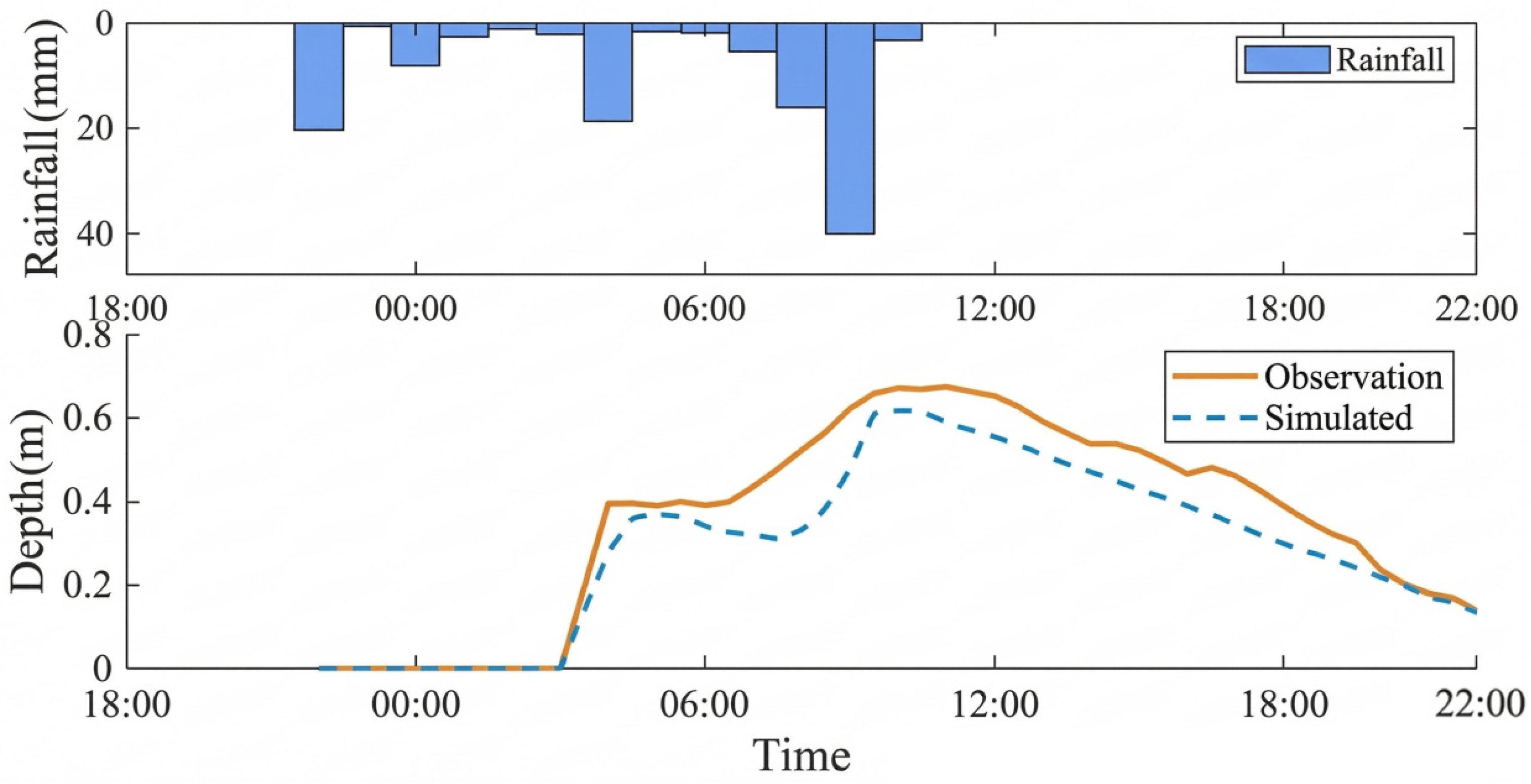
In the model validation stage, this study selected the rainfall event on 28 July 2025 as the validation scenario, and the southwest waterlogging point of Beiluyuan Community was chosen with the temporal variation in waterlogging depth as the validation index. The Nash efficiency coefficient (NSE) and mean square error (MSE) were used to quantitatively evaluate the reliability of the model. The calculation formulas are as follows:
where
Hobs,t is the observed value at time
t;
Hsim,t is the simulated value at time
t;
is the average value of the observed sequence; and
n is the total length of the observation sequence.
The verification results are shown in
Figure 3. The simulated and observed inundation depth hydrographs exhibit generally consistent variation trends. An NSE of 0.81 and an MSE of 0.08 indicate that the model accuracy meets the requirements.
2.2. Community Building Recovery Modeling and Function Quantification Based on Semi-Markov Process
The post-disaster recovery process of buildings is inherently a complex stochastic process influenced by multiple uncertainties, such as resource availability, project schedules, and external environmental constraints. The Semi-Markov Process (SMP) is a generalized stochastic process model that extends the traditional Markov process by allowing for the residence times between states to follow arbitrary probability distributions, rather than being restricted to the exponential distribution found in continuous-time Markov chains. By decoupling state transition logic from residence time distribution, SMP retains Markovian properties while flexibly accommodating complex non-exponential temporal dynamics in real-world scenarios. This characteristic enables more precise characterization of intricate post-disaster recovery processes [
36,
37]. Therefore, this study introduces the semi-Markov process to model the recovery of individual buildings and aggregates the recovery processes of all buildings within a community to establish a post-disaster recovery model for community buildings.
2.2.1. Modeling of Single-Building Restoration Based on Semi-Markov Processes
Based on the evacuation-oriented Building Functional Measure (BFM-Flooding) proposed by Xie et al. [
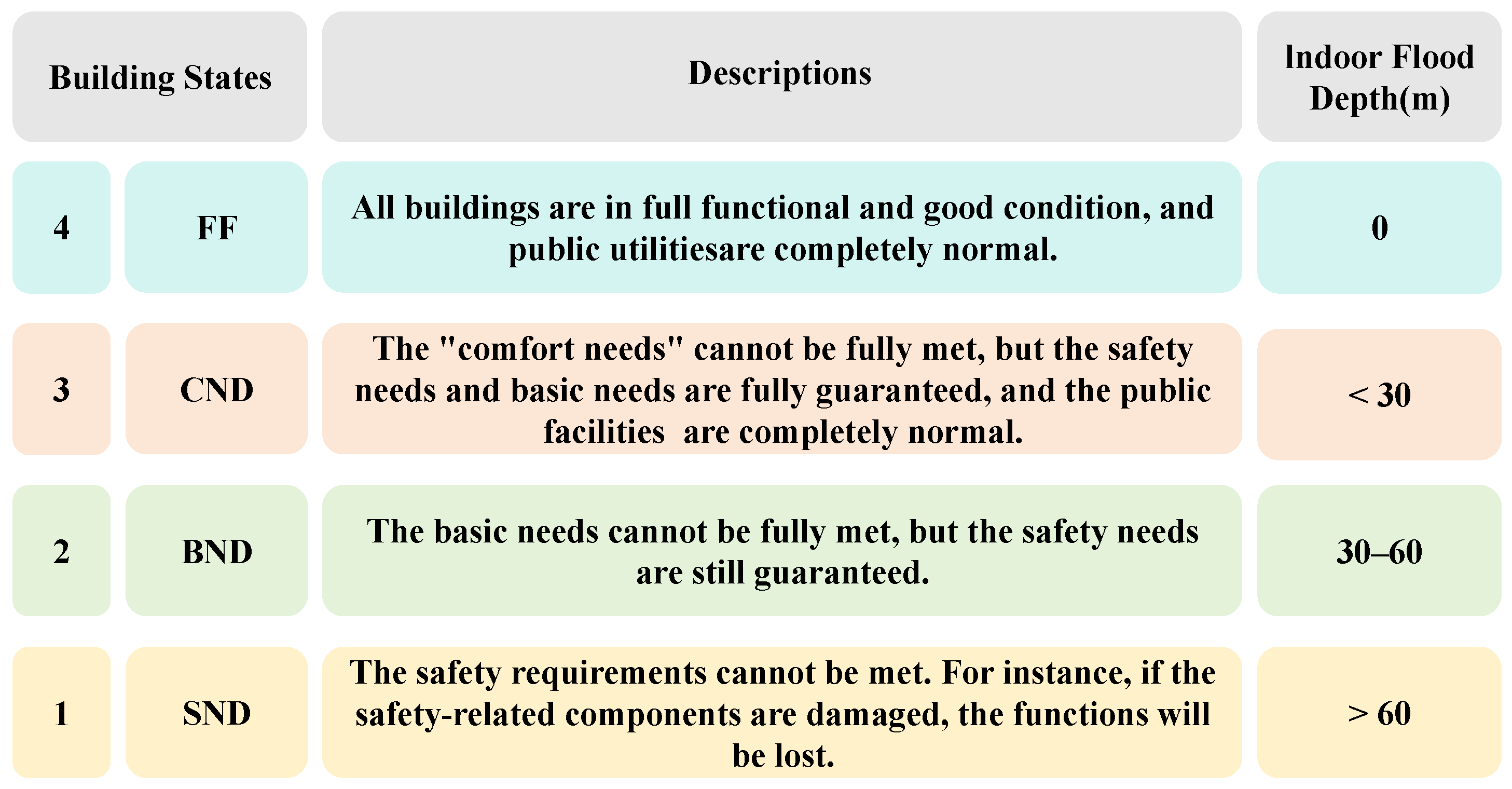
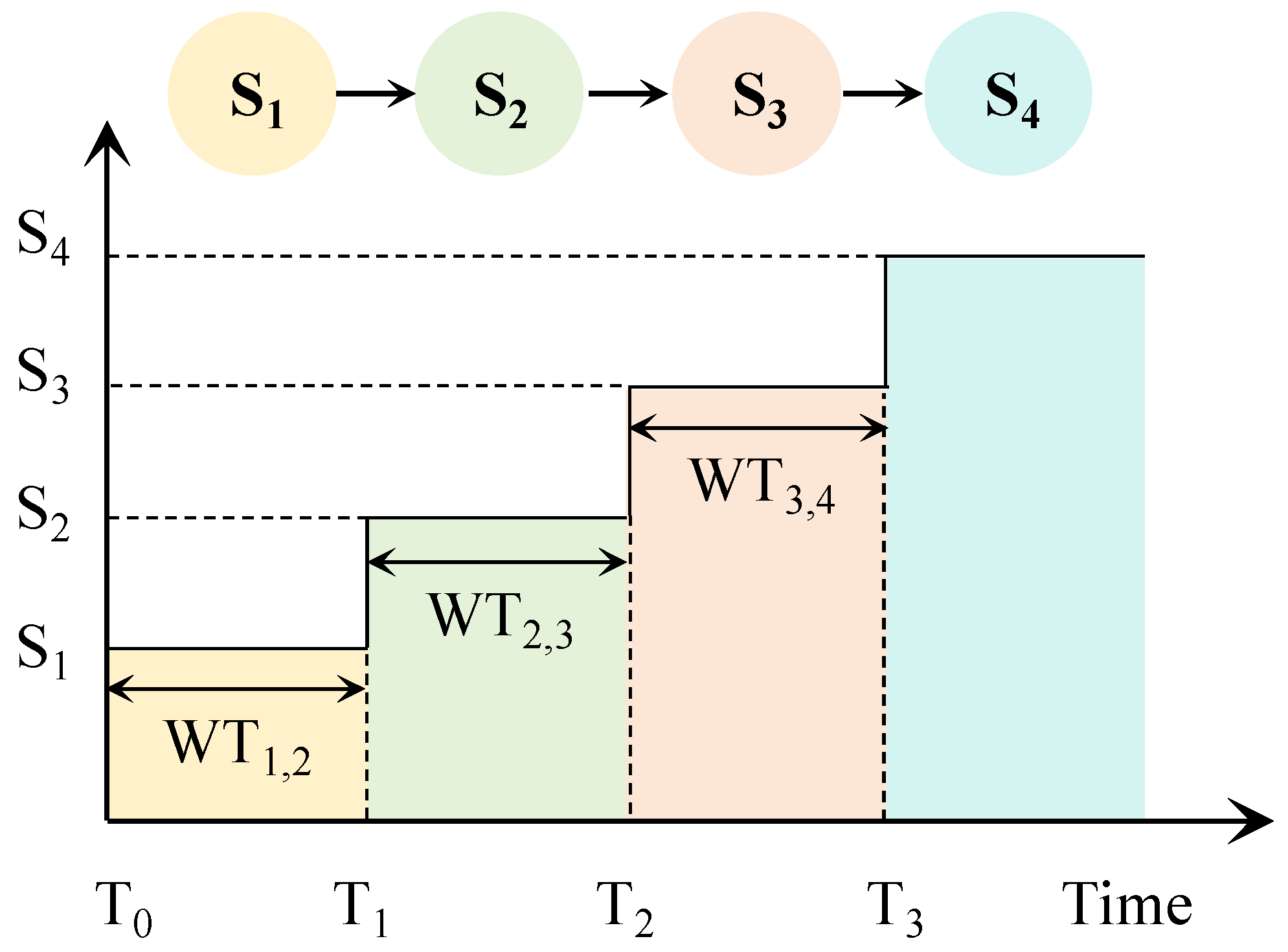
38], this study assumes that the main structural components of buildings remain intact during flooding. Functional losses primarily stem from non-structural elements (e.g., electrical systems, wall finishes, flooring) and loss of interior property. Using interior inundation depth as the core criterion, individual affected buildings are categorized into four functional states. Assuming a building resides in one of the four functional states depicted in
Figure 4 at any given time, these states are defined as S = (S1, S2, S3, S4), representing: severely damaged, moderately damaged, slightly damaged, and fully functional, respectively. Considering the random nature of the recovery process and the impact of dwell times in different states on the overall recovery, this study introduces a semi-Markov process to model the recovery of a single building. This model accounts for the dwell time in each state and the probability of transitioning to the next state, thereby capturing the uncertainty inherent in the recovery process. The time-varying recovery process of the building is illustrated in
Figure 5. Defining the state probability vector
π(
t) as the set of probabilities that the building is in each functional state at any given time
t, the state probability vector at time
t is expressed as in Equation (9):
where
is the probability of a building being in state
at any arbitrary time
t.
The state probability vector itself is a static description. The dynamic evolution rules during the recovery process are driven by the probability matrix
P(
t). During the recovery process, the building’s state can only remain in its current state or transition to a higher state. Therefore, the transition probability matrix
P(
t) is expressed as
The matrix element
Pij (
t) is defined as the probability that the system is in state
Sj at time
t, given that it started in state
Si:
Define
Tij as the dwell time required for a building to recover from functional state
Si to state
Sj. Thus, the total recovery time is the sum of the dwell times across all states. Based on these dwell times, define the conditional recovery function
Rij (
t) as the probability that a building in state
Si achieves or exceeds state
Sj at any post-disaster time
t, expressed as
It follows that the matrix element
Pij(
t) in the transition matrix represents the difference between the recovery functions of two adjacent states. The probability vector can then be obtained by multiplying the initial vector by the transition matrix, as shown in Equation (13):
In this study, the dwell time was derived from the HAZUS-MH empirical database, which is widely used in disaster risk assessment [
39]. The repair time of buildings under different damage states follows a log-normal distribution, whose characteristics are jointly governed by building type and functional condition. The transition probabilities are deduced based on the dwell time and are primarily influenced by flood depth and recovery time. Specifically, at the initial time (t = 0), the initial damage state of each building is determined by the maximum flood depth output from the hydrodynamic model; the initial damage level is then quantified via the established correlation between flood depth and building damage state, serving as the starting point of the semi-Markov process. During the recovery stage (t > 0), the state transition probabilities are derived by calculating the cumulative distribution function (CDF) of the log-normal repair time distribution provided in the HAZUS database.
2.2.2. Quantification of Functional Restoration in Community Building Complexes
Functional integrity state (S
4) is defined as the target state for restoring community building functionality. For individual buildings, the probability of reaching this state at time t can be directly derived from Equation (12) in
Section 2.2.1. To quantify the recovery of buildings at the community level, this study references the BPRM model and building repair times proposed by Lin and Wang [
40]. This model posits that the functional recovery of a building portfolio represents the spatial and temporal aggregation of individual building repair processes. Consequently, the functional recovery of a community building stock,
Qb (
t), is defined as the proportion of buildings within the community whose functions have recovered to fully functional status at time
t, relative to the total number of buildings in the community:
where
N is the total number of buildings;
is the probability of the
n-th building being in state 4 at time
t.
2.3. Quantification of Community Road Functions Based on Complex Network Theory
As a vital component of community operations, the road transportation system serves critical functions in personnel evacuation, material transportation, and emergency engineering response. Unlike the isolated repair of individual buildings, road systems exhibit high structural interdependence. This interdependence manifests not only in physical blockages caused by water accumulation but also in functional cascading effects at the network topology level—where the failure of local key road segments triggers a decline in overall functionality [
41]. Given this, this study introduces Complex Network Theory. By constructing a high-precision road network topology model and spatio-temporally coupling it with hydrodynamic simulation results, we propose a dynamic recovery assessment method for road systems that considers global transportation efficiency. This method quantifies the functional evolution of roads following disasters.
2.3.1. Construction of Road Network Topology Based on the Space L Method
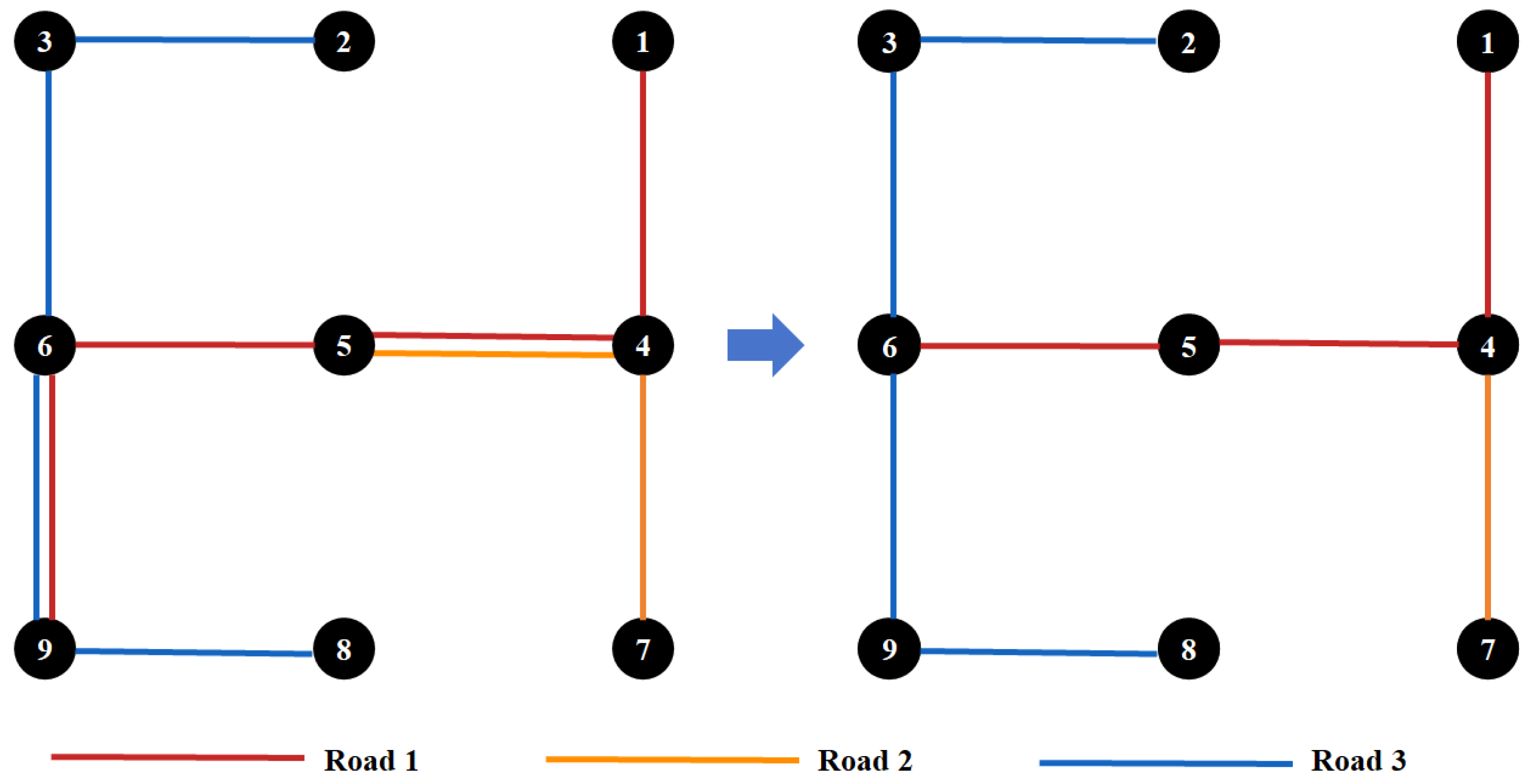
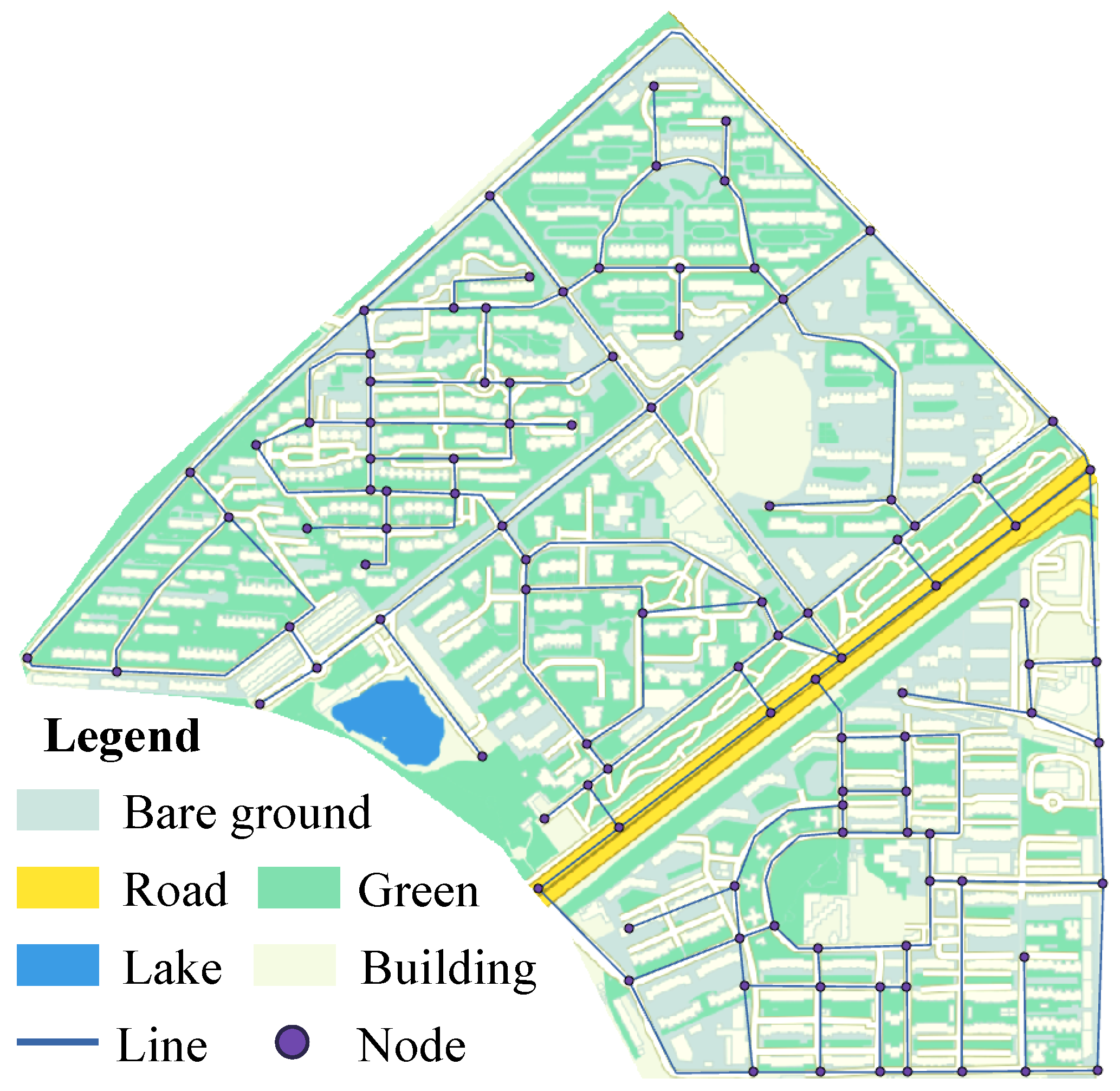
To achieve precise spatial correspondence between hydrodynamic model simulation results and actual community road segments, this study employs the Space L method to construct a road traffic network topology model. As shown in
Figure 6, this method directly maps road entities as graph theory elements, maximizing the retention of road network geometric features and geographic coordinate information. This facilitates spatial overlay analysis with hydrodynamic model simulation data. The community traffic network model G = (V, E, W) is constructed with the following specific topological definitions: 1. Node set V: Node
vi ∈ V represents intersections and segment endpoints in the real-world road system; 2. Edge set E: Edge
ei ∈ E corresponds to the physical road segment connecting nodes
vi and
vj. In graph theory, the existence of an edge strictly corresponds to a direct traffic route between two points in physical space; 3. Initial weighting W reflects differences in capacity among road tiers. This study selects time as the edge weight. In the initial state, the weight
wij of an edge
eij is calculated as
where
Lij is the physical length of the road segment and
Vd is the design driving speed of the segment.
2.3.2. Quantifying Road Functions Considering Overall Transportation Efficiency
Given that flood disasters exhibit a discrete distribution pattern in disrupting road network connectivity, traditional connectivity metrics or the proportion of operational mileage struggle to comprehensively reflect the network’s overall transport performance. This study introduces global network efficiency as a quantitative indicator of system functionality. Based on the shortest paths between all node pairs within the network, this metric effectively measures connectivity under localized damage conditions. The global network efficiency at time
t is defined as follows:
where
N is the total number of network nodes;
dij is the shortest path length from node
i to node
j at time
t.
Based on the vehicle wading capability, relevant road design specifications, and the actual flood control management standards of the study area in Beijing, a physical failure threshold for road functionality is set. With reference to the Urban Road Engineering Design Code, the typical exhaust pipe height of conventional passenger cars, and the traffic flood control regulations of Beijing, the critical failure water depth is defined as 30 cm. The selection of this 30 cm threshold is supported by two core authoritative bases. First, the exhaust pipe height of standard passenger cars is typically 20 to 30 cm above the ground. An inundation depth of 30 cm will submerge the exhaust pipes of most conventional vehicles, resulting in engine stall and rendering the corresponding road segment impassable. Second, this value is consistent with the local management standard of the study area, as mandatory traffic closure will be implemented when the water depth at key road traffic nodes in Beijing reaches 27 cm. This makes 30 cm a reasonable and practical threshold for the study area. For any road segment
eij, if the water depth exceeds this threshold, the segment is deemed impassable. In the topological model, it is treated as a broken link, meaning it is removed from the edge set E. Consequently, all potential paths passing through this segment are disrupted, and the corresponding distance
dij is considered infinite. Given the characteristics of urban flooding disasters—short duration and rapid receding—and their frequent occurrence on paved surfaces, this study employs a rational simplification of the road recovery process. Unlike earthquake-induced subgrade damage, urban roads typically retain structural integrity after floodwaters recede, eliminating the need for prolonged engineering repairs. Furthermore, compared to the obstruction caused by standing water, the clearance of residual sediment on road surfaces has a secondary impact on vehicular traffic. Consequently, the functional level
Qr(
t) of the road system at time
t is defined as the ratio of
E(
t) to the initial global efficiency
E0, expressed as follows:
2.4. Quantification of Community Green Space Functions Based on the Proportion of Affected Areas
To quantify the functional recovery of community green spaces following flood disasters, this study references the concept of nuisance flooding (NF) proposed by Moftakhari et al. [
42]. NF refers to low-level inundation that does not pose a significant threat to public safety but may disrupt daily activities and cause minor property damage. In the context of community green spaces, while such shallow water accumulation does not kill vegetation, it essentially renders the green space unusable for its intended functions as a recreational, play, and sports area. Therefore, based on relevant NF assessment criteria, this study sets a threshold of 3 cm for functional inundation of community green spaces. Referencing the general methodology for flood damage assessment [
43], the functional loss rate of community green spaces is typically proportional to the percentage of area submerged. Thus, the functional capacity of green spaces is defined as the ratio of unsubmerged green space area to total area:
where
Ss(
t) is the submerged area of green space at time
t;
Stotal is the total area of green space.
2.5. Quantification of Overall Community Function with Inter-System Interactions Considered
A community constitutes a complex system composed of diverse land-use types such as roads and buildings. Its post-disaster recovery is not a simple linear summation of individual subsystem functions, but rather a nonlinear process involving functional interactions among systems. To accurately quantify this nonlinearity, this study constructs a holistic community recovery model that accounts for inter-system interactions. As noted by Masoomi and van de Lindt [
44], significant cross-system dependencies exist among community systems, meaning the functionality of a single system relies on support from other interconnected systems. For instance, the accessibility of the road network is a prerequisite for the functioning of other community systems. Drawing on the holistic functional assessment framework proposed by Hassan et al., this study divides community functions into two layers: connectivity (represented by roads) and functionality (represented by buildings and green spaces) [
45]. The product of these two layers constitutes the community’s overall functionality. This approach accounts for the complete loss of community functionality when road accessibility is compromised, as expressed by the following formula:
where
Qr is the road function;
Qb is the building function;
Qg is the green space function; and
Wb and
Wg are the weights.
To scientifically quantify the functional weights of buildings and green spaces in communities under flood scenarios, the Analytic Hierarchy Process (AHP) was employed in this study for weight calculation. As a well-established method in urban resilience assessment, it converts multi-criteria subjective decision-making into a quantifiable mathematical model for weight determination. This study selects four core evaluation dimensions: Core Living Security, Post-Disaster Recovery Priority, Waterlogging Impact Sensitivity, and Functional Recovery Cost. These dimensions have been widely adopted in related research on urban community flood resilience assessment [
46,
47]. The judgment matrix was constructed using the AHP standard 1–9 scale to quantify the relative importance between elements through pairwise comparisons. Ten experts in urban flood disaster prevention, community planning, and municipal engineering were invited to score the relative importance of the four dimensions, as well as the relative importance of buildings and green spaces under each single criterion. The scoring results from multiple experts were aggregated using the geometric mean method to establish the final judgment matrix. The weights of elements at each level were calculated using the common root square method of AHP, and the weights of the four dimensions in the criterion layer were derived through the aforementioned steps. To avoid logical contradictions in the judgment matrix, a consistency check must be performed. Only matrices that pass the consistency check (CR < 0.1) yield weights that are academically reliable. The formula for the consistency check is as follows:
where
is the maximum eigenvalue;
n is the order of the matrix;
CI is the consistency index; and
RI is the average random consistency index, whose value is related to the order
n of the matrix.
By combining the local weights of buildings and green spaces under each dimension, the comprehensive weights of buildings and green spaces were calculated using the weighted synthesis Formula (22):
where
is the final weight of the k-th element in the scheme layer;
is the weight of the i-th criterion;
is the local weight of the k-th element under the i-th criterion.
After calculation, the consistency ratio (CR) of the judgment matrices at all levels was found to be less than 0.1. The initial weight of buildings is 0.8855, and the initial weight of green spaces is 0.1145. For the convenience of calculation, this study made reasonable fine-tunings to the weights, ultimately determining the functional weight of buildings as Wb = 0.85 and the functional weight of green spaces as Wg = 0.15.
4. Results
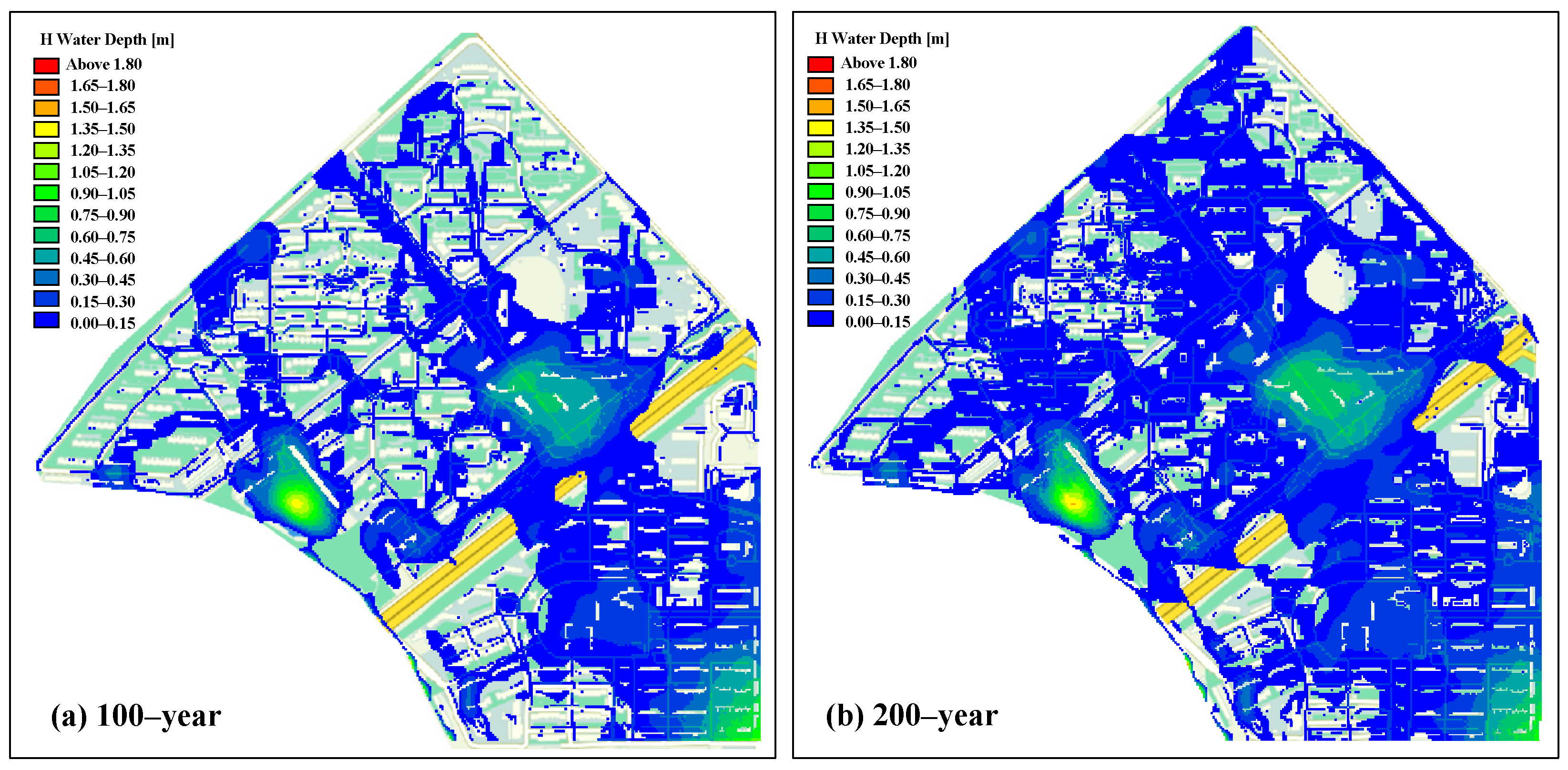
Based on the constructed hydrodynamic model, this study simulated community flooding under two extreme rainfall scenarios: a 100-year event and a 200-year event. The most severe flooding conditions are depicted in the simulation results. As shown in
Figure 11, influenced by the west—high, east—low topography, the central, western, and southern areas of the community experienced severe water accumulation, forming distinct flood risk zones. Comparing the two figures reveals that as rainfall intensity increases, the risk of urban flooding within the community escalates significantly. Under the 200-year scenario, not only does the flooded area expand substantially outward, but the depth of standing water also increases markedly. These high-precision flood depth data serve as physical thresholds for determining road passability or disruption. They provide critical data support for the previously constructed Space L road topology network to identify failed nodes, calculate network efficiency, and assess traffic resilience.
4.1. Simulation Results of Community Functionality Under the 100-Year Rainstorm Scenario
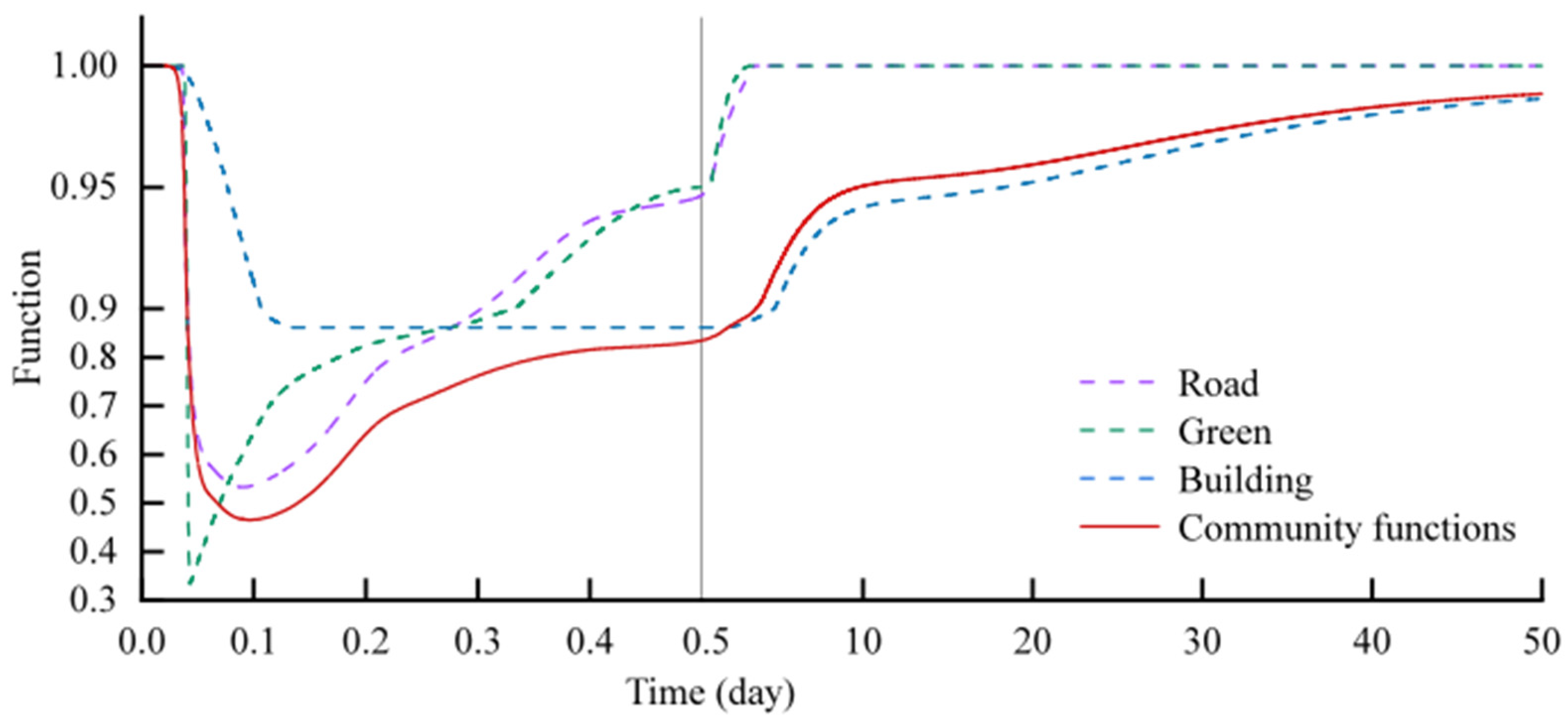
As shown in
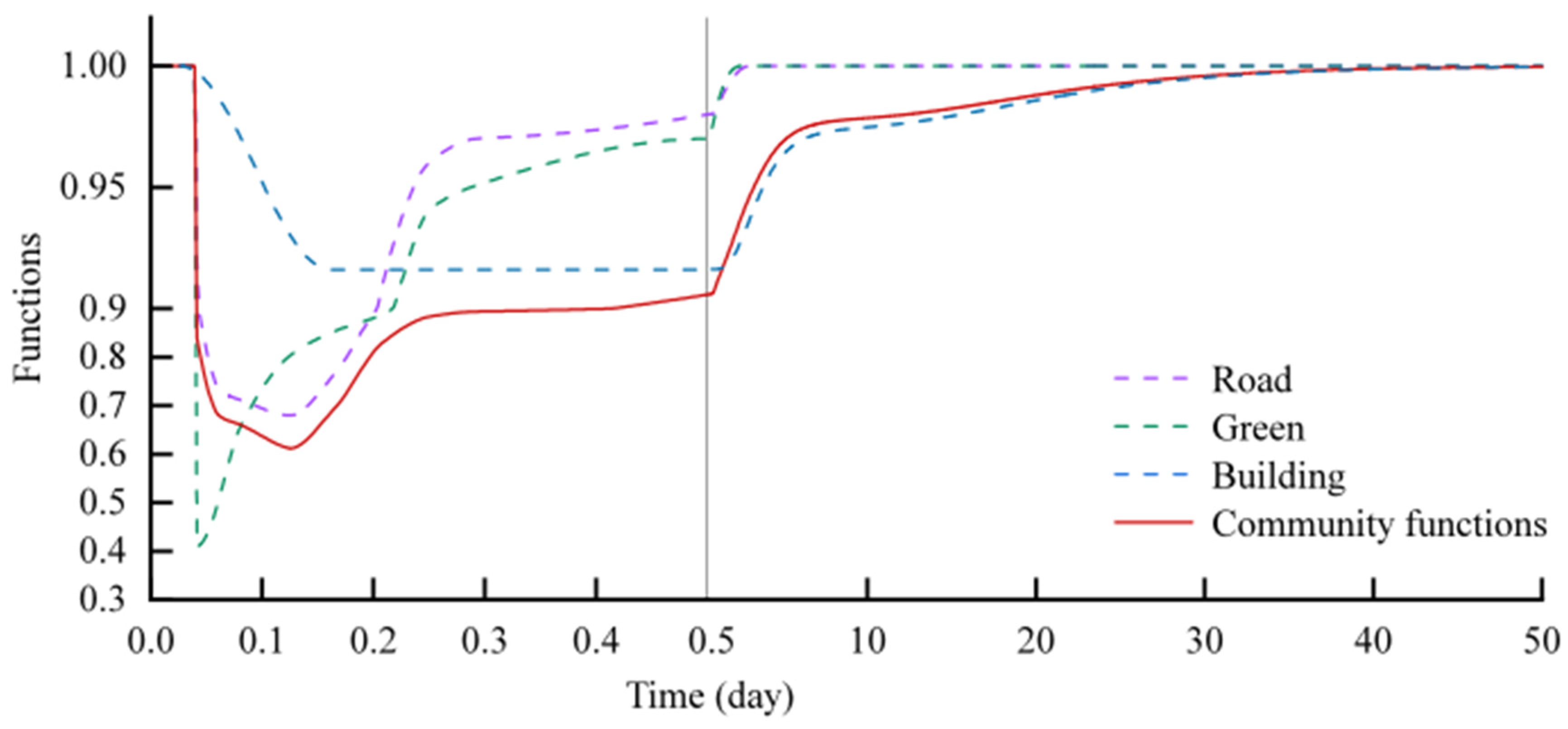
Figure 12, the functional curves of the road, green space, and building subsystems exhibited distinct patterns throughout the entire simulation period, which can be analyzed in two key phases. Period of community functional decline (0–3 h): The green space functionality dropped sharply to the minimum value of 0.42 at approximately 1 h after the start of rainfall, while the road functionality fell to the minimum value of about 0.68 at around 3 h. During t = 0–2 h, the building functionality remained stable at 1.0; starting from t = 2 h, with the continuous rise in outdoor waterlogging depth, the building functionality began to deteriorate and reached the minimum value of about 0.92 at approximately t = 3 h. The overall community functionality index, indicated by the red solid line in the figure, decreased to the minimum value of 0.52 at around t = 3 h. Period of community functional recovery (3 h–50 d): The recovery curves of green spaces and roads exhibited extremely high recovery efficiency, rebounding rapidly to near the initial level within a few hours after the disaster. In contrast, the functional recovery of the building system was considerably slow and had not fully converged to 1.0 even at t = 40 d. The overall community functionality curve showed a two-stage recovery pattern: it synchronized with the rapid recovery of roads and green spaces in the early recovery stage, placing the community functionality in a phase of fast recovery. At approximately 10 d, the upward trend of the community functionality curve weakened and became consistent with that of the building system, which had the slowest recovery rate.
4.2. Comparative Results Under the 100-Year and 200-Year Rainstorm Scenarios
To reveal the recovery performance of the community under varying rainfall intensities, a 200-year extreme rainstorm scenario is simulated in this section (
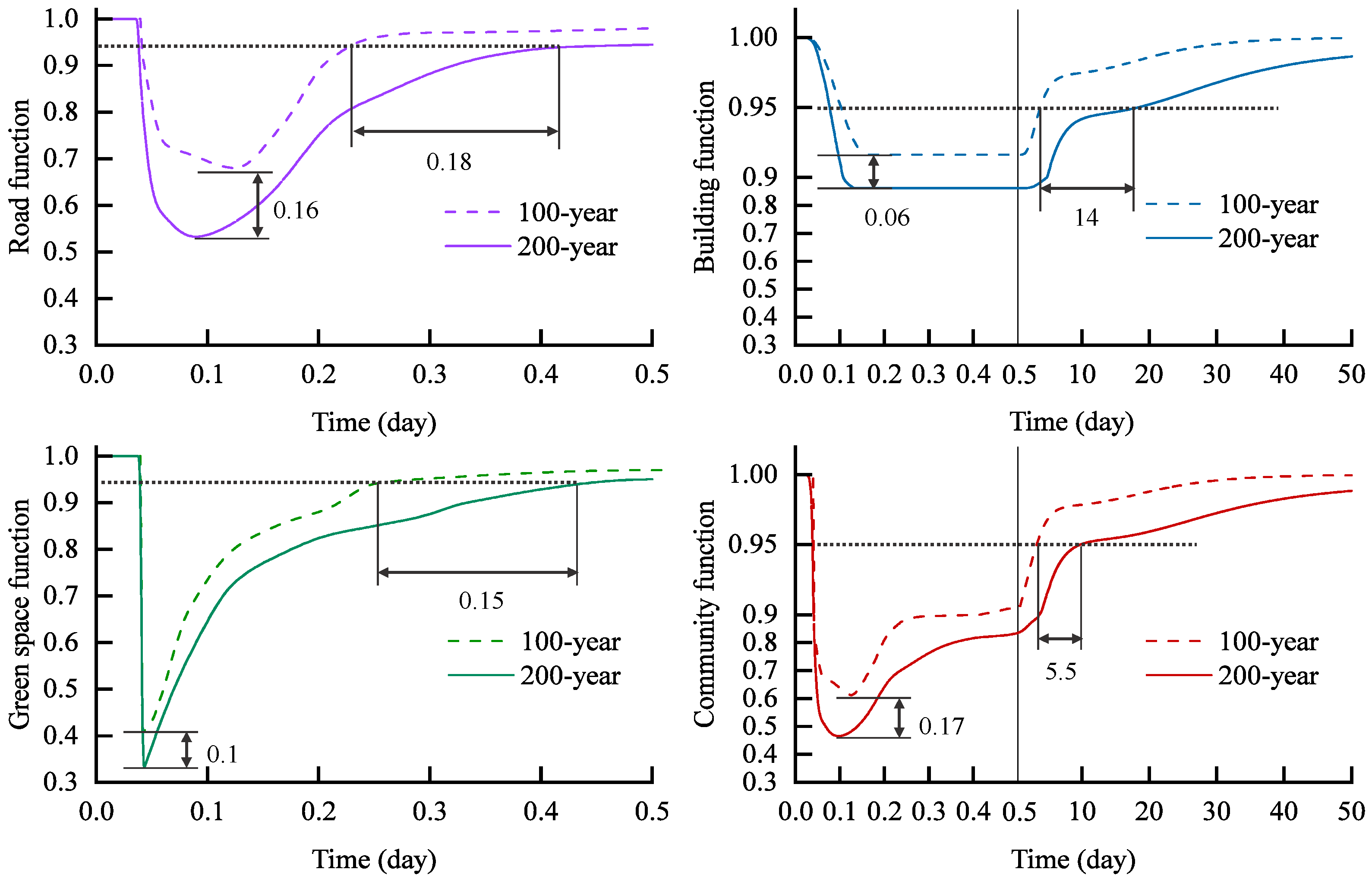
Figure 13). Compared with the 100-year scenario, the extent of damage to roads, green spaces, and buildings is more severe, and the time required for their recovery is significantly longer, exhibiting distinct differences in the recovery process (
Figure 14).
Period of Functional Decline (0–3 h): Under the 200-year scenario, the minimum functionality of green spaces was 0.32, compared to 0.42 in the 100-year scenario. For the road network, the minimum functionality was 0.51, which was lower than the 0.68 observed in the 100-year scenario, and it occurred approximately 1 h earlier. The minimum building functionality declined from 0.92 to 0.86, corresponding to an increase of 17 damaged units. Consequently, the overall community functionality reached a lower minimum of approximately 0.45 under the 200-year scenario, compared to 0.53 under the 100-year scenario. Period of Functional Recovery (3 h–50 days): The recovery trends for green spaces were similar under both scenarios, though the process was delayed in the 200-year scenario. The recovery of the road network was slower under the 200-year scenario. Full recovery was achieved in about 6 h under the 100-year scenario, whereas under the 200-year scenario, the road functionality recovered to only about 80% initially, requiring approximately 11 h for complete restoration—a delay of about 5 h. Concurrently, the recovery time for buildings was significantly prolonged under the more intense rainfall scenario. Following the point of minimum functionality, the recovery trajectories of the overall community differed markedly between the two rainfall scenarios. Under the 100-year scenario, community functionality rebounded more rapidly, exceeding 0.8 within about 5 h. Subsequently, the recovery rate gradually slowed, reaching approximately 0.97 around 6 days, after which the recovery process became very slow and gradually stabilized. In contrast, recovery was significantly delayed under the 200-year scenario. The community functionality index recovered to only about 0.65 within 5 h and reached approximately 0.95 around 10 days, followed by an extended period of very slow progress until it gradually plateaued.
5. Discussion
In this study, extreme rainfall scenarios of 100-year and 200-year return periods were simulated to systematically reveal the functional loss and recovery patterns of different land use types (including community green space, roads, and buildings) under flood disasters. The mechanism by which rainfall intensity influences post-disaster functional recovery of the community was clarified, providing a quantitative basis for improving community flood resilience.
5.1. Functional Evolution Disparities and Mechanisms of Various Land Use Types
Under extreme rainstorm scenarios, the functional recovery curves of different land use types in the community exhibit significant asynchronism, as shown in
Figure 12 and
Figure 13. Such evolutionary differences are not only affected by the surface water accumulation process, but also mainly depend on the inherent physical and spatial characteristics of the three land use types and the difficulty of post-disaster restoration. First, differences in physical characteristics determine the distinct disaster responses of each land use type at the initial stage of rainfall. As open spaces, green spaces and roads show functional loss highly consistent with surface water accumulation. Therefore, they are extremely sensitive to short-duration heavy rainfall, resulting in rapid functional degradation with large fluctuations. Under the 100-year return period rainfall, the function of green spaces drops rapidly below 0.5 within one hour after rainfall begins, while the function of roads reaches the lowest point within three hours. In contrast, building functions remain at the initial level within two hours after rainfall, showing obvious lagging response. The underlying mechanism is that buildings are usually equipped with physical protective measures such as indoor and outdoor steps. At the early stage of rainfall, even if outdoor waterlogging occurs, building functions will not be affected as long as the water depth does not exceed the threshold. Such differences in micro-physical characteristics lead to the relative stability of building functions at the initial stage of flood disasters. Second, the connectivity of the road network topology results in significant asynchrony between road functional recovery and surface water recession. Although surface water in most areas of the community gradually recedes during the drainage stage, the overall road function index does not rebound rapidly and immediately, but undergoes a long period of slow recovery at a low level. This indicates that road function is not simply determined by the inundated area, but is highly dependent on the connectivity of the road network. Affected by the gentle terrain of the community, which is high in the west and low in the east, runoff concentrates and stagnates at a few key nodes such as eastern intersections. Even when local waterlogging recedes, the failure of these key nodes greatly restricts the overall transportation efficiency of the road network, leading to an obvious time lag between road function recovery and water recession. Finally, the recovery of building functions depends not only on the recession of waterlogging, but also on the restoration progress of indoor facilities. Unlike green spaces and roads, flooded buildings often face more complex subsequent treatment. As observed from the curves, although waterlogging recedes and the functions of green spaces and roads are basically restored within 12 h after rainfall, building functions still require dozens of days to recover substantially. The core reason is that key internal facilities of buildings must undergo a series of repairs after being submerged. These manual restoration processes involve considerable time costs, resulting in a much slower recovery rate of building functions than other land use types. These results demonstrate the different roles of various land use types in the community functional recovery process. Open spaces such as green spaces and roads complete functional recovery first due to their rapid drainage and infiltration capacity, providing critical basic support for the initial recovery of community functions. With the slowest recovery speed, buildings become the core factor restricting the further recovery of overall community functions, and their recovery progress directly determines the final recovery level of community functions. The discrepancies in functional recovery among different land use types reveal the complexity of the post-disaster functional recovery process of the community. and highlight the necessity of formulating differentiated response strategies for different land use types and post-disaster recovery stages in disaster prevention and mitigation planning.
5.2. Effects of Rainfall Intensity on Community Post-Disaster Functional Recovery
By comparing the community functional recovery curves under different return periods, obvious differences can be observed in the evolution of community functionality at two key stages when rainfall intensity increases from the 100-year to the 200-year return period. First, during the functional impairment stage, under the 100-year return period scenario, the lowest point of community function remains around 0.53, whereas under the 200-year rainstorm, this minimum drops rapidly to approximately 0.45. Second, the functional recovery period is significantly prolonged. Under the 100-year return period, community function recovers more rapidly, exceeding 0.8 within about 5 h. Afterwards, the recovery rate gradually slows down, reaching around 0.97 at approximately 6 days, after which the recovery process becomes very slow and gradually stabilizes. In contrast, under the 200-year return period, recovery is noticeably delayed. The community function index only recovers to about 0.65 within 5 h and reaches around 0.95 at about 10 days, followed by a very slow long-term recovery process until it gradually plateaus. This indicates that with increasing rainfall intensity, the damage to community function intensifies and the recovery period lengthens significantly. The substantial discrepancy in damage severity and recovery difficulty essentially stems from the fact that the community’s flood control and building protection standards fail to meet disaster prevention requirements under intensified rainfall. Under the 100-year return period, despite surface ponding in the community, the inundation depth in most areas does not exceed the elevation difference between indoor and outdoor spaces of buildings, resulting in only minor damage to a small number of structures. At this stage, functional loss is mainly dominated by open spaces such as green areas and roads. Since these land use types do not involve complex restoration work, they can recover rapidly as ponding recedes. and repairs to slightly damaged buildings are also relatively efficient. However, under the 200-year return period, the water depth increases significantly, causing extensive damage to a large number of buildings. As a result, the bottleneck restricting community functional recovery shifts from surface drainage speed and simple building repairs to more complex building restoration projects, leading to a substantial extension of the recovery cycle. In summary, increased rainfall intensity significantly exacerbates community functional loss and prolongs the recovery period. These findings provide a direct basis for improving community flood resilience. It is necessary to develop differentiated recovery strategies for different rainfall intensities, with rapid recovery of green spaces and roads as the core and long-term building protection as the support.
5.3. Research Limitations and Future Prospects
Although this study thoroughly reveals the differences in functional recovery among different land use types in communities under extreme rainstorm scenarios and quantified the post-flood recovery process of communities, it still has certain limitations. First, in the hydrological and hydrodynamic simulation, this study mainly set an idealized operation state of the pipe network, and did not fully consider the random emergencies that often occur in real extreme disasters, such as rainwater inlet blockage and pump station power failure, which may lead to a certain underestimation of disaster consequences under extreme scenarios by the model. Second, the evaluation in this paper mainly focuses on the physical and engineering dimensions. However, as a complex system carrying multiple elements, the overall resilience of the community is not only restricted by the physical environment, but also highly dependent on non-engineering factors such as population structure, socio-economic conditions and grass-roots emergency organization capacity. The quantification of these dimensions has not been fully covered in the current model.
In view of the above limitations, future research can be deepened in the following aspects: First, introduce more complex multi-hazard coupling scenarios, and incorporate dynamic boundary conditions such as pipe network node clogging and flood control facility failure into the simulation to explore the impact of cascading failure mechanisms on community post-disaster recovery. Second, attempt to introduce multi-agent models or multi-source urban big data, integrate residents’ emergency response behaviors, dynamic changes in traffic flow, and dynamic assessment of socio-economic losses into the quantitative framework of community recovery, thereby enabling a more comprehensive and systematic assessment of community post-disaster recovery. Third, expand the spatial scale and sample diversity, and horizontally compare the differences in recovery processes under different built environments such as old residential districts, new commercial housing communities and urban villages, which can provide more universal theoretical support for urban-level refined disaster prevention and mitigation planning and sponge city construction.
6. Conclusions
To address the challenge of quantitatively assessing the recovery process of community functions following flood disasters, this study developed a community functional recovery model based on different land use types. It simulated and analyzed the recovery characteristics of community functions under various rainfall recurrence intervals. The main conclusions are as follows: (1) A quantitative model for community functional recovery based on different land use types was constructed. This study first developed functional recovery curves for three core land categories—buildings, roads, and green spaces—post-disaster. Building upon this foundation, a two-layer computational framework was proposed: First, road accessibility was established as a prerequisite constraint for community functional recovery, representing the connectivity layer. Second, it performs a weighted sum of buildings and green spaces based on functional importance to represent the functional layer; finally, it multiplies the connectivity layer and functional layer to derive the community functional recovery curve, thereby forming an assessment tool capable of quantitative analysis of community functions. (2) Simulations reveal the impact of disaster intensity on recovery curves. Applying the aforementioned model, simulations were conducted for rainfall scenarios of 1-in-100-year and 1-in-200-year recurrence intervals. The results indicate that increased disaster intensity causes significant shifts in the community functional recovery curve. The overall functional trough continues to deepen with heightened rainfall intensity, declining from 0.53 to 0.45. The time required to recover to the same level notably extends from 6 h to 11 h, representing a delay of approximately 5 h. This set of comparative curves derived from model calculations quantitatively demonstrates the amplifying effect of disaster intensity on both community functional loss and recovery lag. (3) Different land use types exhibit significantly differentiated impacts on community recovery. Due to varying recovery speeds across land use categories—roads and green spaces recover within hours or days, while buildings require tens of days—the overall community recovery curve distinctly shows two phases. In the immediate post-disaster phase, the rapid restoration of road functionality is the primary driver of overall community recovery. Under a once-in-a-century scenario, road functionality rebounds swiftly within a short post-disaster period, propelling the community’s overall functionality to recover to a level above 0.8 within 5 h. Conversely, in the mid-to-late recovery stages, building functionality remains below 1.0 even by the 40th day post-disaster. This slow recovery dominates the trajectory of the community’s overall functional restoration. This finding quantitatively reveals, from a temporal perspective, the phased dominant roles of different land use types in the community recovery process. The community functional recovery quantification model developed in this study proposes a dual-layer computational framework comprising connectivity and functional layers at the theoretical level. This provides a structurally clear and logically rigorous quantitative method for analyzing the complex post-disaster recovery processes of community systems. At the practical level, the model serves as an effective assessment tool. By simulating community functional recovery trajectories under different rainfall intensities or design standards, it supports the formulation of phased, prioritized resilience enhancement strategies. Future research can build upon this model by incorporating recovery curves for socioeconomic activities and other dimensions. Validating key parameters of recovery curves for various land uses using actual post-disaster observational data will further enhance the model’s accuracy and decision-support capabilities.