Article

Statistical Evaluation of Observed Precipitation from INMET Meteorological Stations and MERGE Estimates in the Eastern Amazon

by
Priscila da S. Batista
1,*,
Júlio T. da Silva
1,2,
Ana Carla dos S. Gomes
2,3,
Jéssica A. de J. Corrêa
1,
Gabriel Brito Costa
1,3,4,5,6,7,
Antônio Marcos D. de Andrade
2,
Carlos T. S. Dias
8,
Leila S. S. Lisboa
9 and
Lucietta Guerreiro Martorano
1,4,6,10
1
Graduate Program in Society, Nature and Development (PPGSND/Ufopa), Federal University of Western Pará (Ufopa), Santarém 68040-255, Pará, Brazil
2
Institute of Engineering and Geosciences (IEG/Ufopa), Federal University of Western Pará (Ufopa), Santarém 68040-255, Pará, Brazil
3
Graduate Program Natural Resources of the Amazon (PPGRNA/Ufopa), Federal University of Western Pará (Ufopa), Santarém 68040-255, Pará, Brazil
4
Bionorte Network Graduate Program, Federal University of Western Pará (Ufopa), Santarém 68040-255, Pará, Brazil
5
Institute of Biodiversity and Forests, Federal University of West Pará, Rua Vera Paz s/n, Salé, Santarém 68040-255, Pará, Brazil
6
Postgraduate Program in Forest Science, Technology and Innovation-PPGCTIF-Federal University of Western Pará (Ufopa), Santarém 68035-110, Pará, Brazil
7
Agrometeorology Laboratory with Bioeconomy Modeling and Environmental Diagnosis-LAMBDA, Federal University of Western Pará (Ufopa), Rua Vera Paz s/n, Salé, Santarém 68040-255, Pará, Brazil
8
Department of Statistics, University of São Paulo (USP/ESALQ), Piracicaba 13418-900, São Paulo, Brazil
9
Municipal Secretary of Education (SEMEC), Belém 66830-090, Pará, Brazil
10
Embrapa Eastern Amazon, Belém 66095-903, Pará, Brazil
*
Author to whom correspondence should be addressed.
Water 2026, 18(8), 898; https://doi.org/10.3390/w18080898
Submission received: 9 March 2026 / Revised: 1 April 2026 / Accepted: 3 April 2026 / Published: 9 April 2026

Abstract

Accurate precipitation data are essential for understanding hydrological processes and supporting environmental and water resource management in the Amazon, where observational networks remain sparse and spatially uneven. This study evaluates the performance of the MERGE (Merge of Satellite and Gauge Precipitation Data) dataset, developed by CPTEC/INPE, in representing rainfall variability in the Eastern Amazon. Daily precipitation data from five INMET meteorological stations were compared with MERGE estimates over a 20-year period (1998–2017) using a multi-metric statistical framework, including correlation, regression, error metrics, efficiency indices, and clustering analysis. The results indicate strong agreement between observed and estimated precipitation, with Pearson correlation coefficients ranging from 0.94 to 0.99 and Nash–Sutcliffe efficiency values between 0.87 and 0.97. Regression analyses show coefficients of determination between 0.89 and 0.98, indicating that MERGE effectively reproduces the magnitude and temporal variability of precipitation. Monthly and interannual analyses confirm consistent representation of seasonal patterns and rainfall dynamics across the evaluated stations. The boxplot analysis reveals that MERGE accurately captures the overall distribution of precipitation but tends to underestimate higher precipitation values, particularly during months associated with intense rainfall. This behavior reflects limitations in representing localized convective events and spatial variability. Overall, the results demonstrate that MERGE provides a reliable representation of precipitation variability in the Eastern Amazon and represents a valuable dataset for hydroclimatic analyses in regions with limited observational coverage.

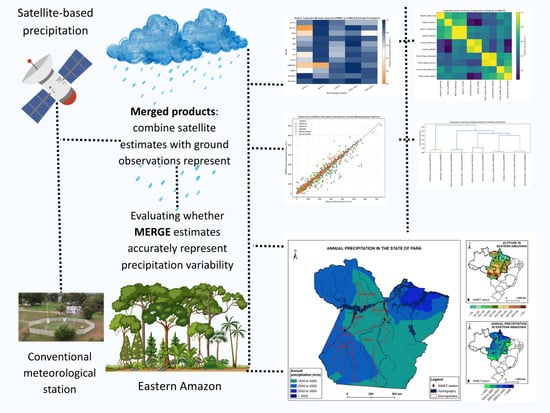
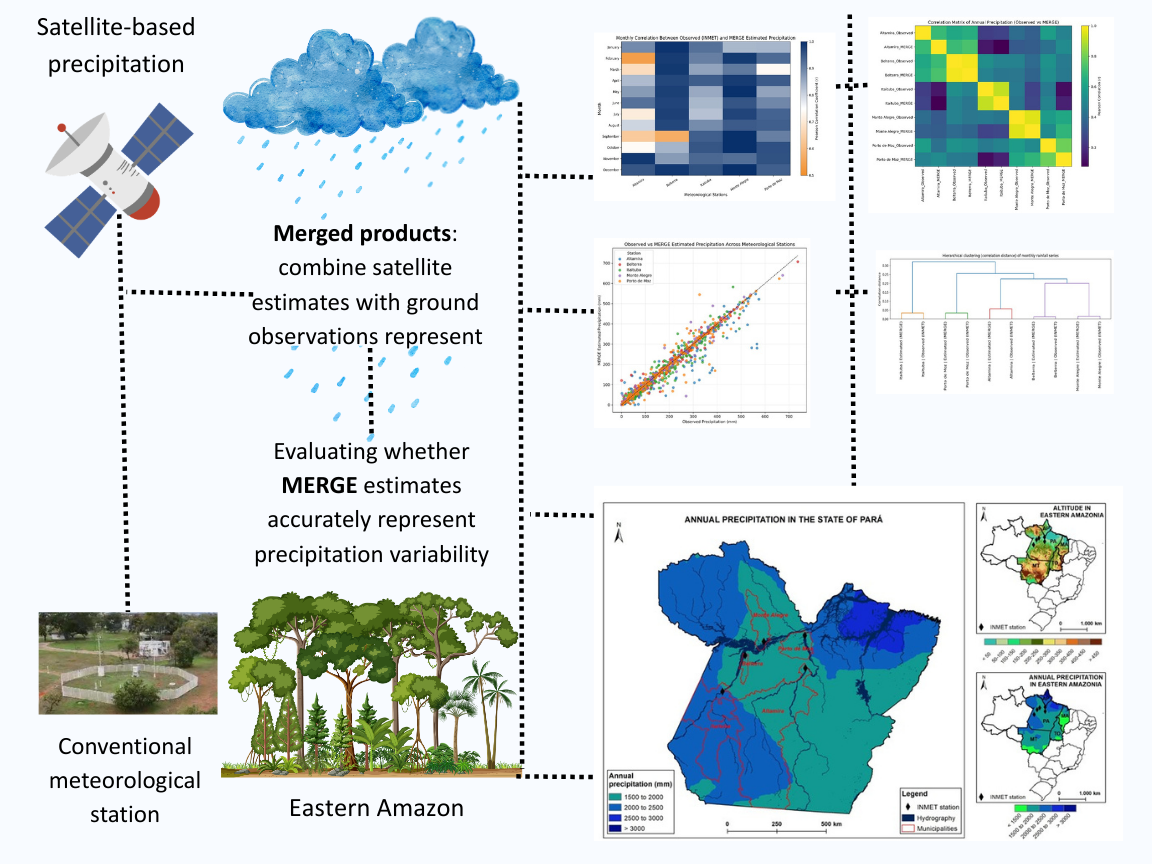
Graphical Abstract

1. Introduction

The Amazon Deforestation Arc represents one of the most dynamic and environmentally sensitive land-use frontiers in Brazil. Successive waves of agricultural expansion, infrastructure development, and institutional change have intensified land-use pressures since the early 2000s, generating complex interactions among agricultural production, environmental regulation, and governance mechanisms [1,2,3]. Effective territorial planning in this region requires analytical approaches capable of distinguishing biophysical potential from legal, ecological, and institutional constraints.
Rainfall is a fundamental component of the hydrological cycle and plays a central role in environmental regulation and water availability. It directly influences natural ecosystems and human activities, including agriculture, water supply, and water-resource management [4,5]. In the Amazon, precipitation regimes are highly variable and complex, reflecting the basin’s continental scale and its position across both hemispheres, which allows the influence of distinct atmospheric systems [6]. Understanding rainfall variability is therefore essential for effective environmental planning and water management.
Conventional meteorological station networks have historically provided the primary source of precipitation data. Rain gauge measurements remain essential for characterizing rainfall patterns worldwide [7,8]. However, in vast and remote regions such as the Amazon, the installation and maintenance of meteorological stations are costly and logistically challenging [5,9]. The low spatial density of stations, combined with strong temporal and spatial variability of rainfall, creates significant data gaps that limit climatic and hydrological analyses [10,11].
Satellite-based precipitation estimates have emerged as an important alternative for monitoring rainfall in poorly instrumented regions. Their efficiency and accuracy improve when evaluated against surface observations, highlighting the need for regional validation studies in the Amazon [12,13].
Merged products that combine satellite estimates with ground observations represent a significant advance in precipitation monitoring. Satellite missions such as TRMM (Tropical Rainfall Measuring Mission) and GPM (Global Precipitation Measurement) provide high spatial and temporal coverage, enabling near-real-time rainfall monitoring in remote regions [14,15].
Among these approaches, the MERGE (Merge of Satellite and Gauge Precipitation Data) product, developed by CPTEC/INPE, integrates TRMM precipitation estimates with surface observations through objective analysis procedures [15]. This integration improves precipitation estimates and helps fill observational gaps in regions with sparse monitoring networks, such as Eastern Amazon. Although MERGE has demonstrated promising performance, regional assessments remain limited, particularly under the complex rainfall dynamics of the Amazon [16].
The Eastern Amazon presents one of the most complex precipitation regimes in the tropics. Rainfall is dominated by deep convection, mesoscale systems, and strong spatial variability driven by atmospheric circulation and land–atmosphere interactions [17]. These characteristics challenge precipitation estimation products, especially in representing localized high-intensity events and spatial heterogeneity.
The increasing availability of merged satellite–gauge precipitation products has expanded opportunities for climatic and hydrological analyses in regions with sparse observational networks. In the Eastern Amazon, where rainfall dynamics are strongly controlled by convective processes and local atmospheric interactions, assessing the reliability of MERGE estimates is essential for both scientific interpretation and practical applications. Previous studies conducted in the Brazilian Amazon have demonstrated that reanalysis and modeled datasets play a key role in filling observational gaps, although their performance varies according to spatial patterns and seasonal conditions [18,19]. These limitations highlight the need for regional evaluations of precipitation products under complex climatic regimes.
In this context, the present study addresses the following questions:
  • How strong is the statistical agreement between precipitation observed at INMET meteorological stations and precipitation estimated by the MERGE product?
  • Does the MERGE dataset adequately reproduce the monthly and interannual variability of precipitation in the Eastern Amazon?
  • What do the patterns observed in regression, correlation, and dispersion analyses reveal about the consistency between observed and estimated rainfall?
  • Do similarity analyses indicate that MERGE estimates preserve the temporal structure of observed precipitation series?
To address these questions, this study evaluates the performance of MERGE precipitation estimates using observations from five INMET meteorological stations in the Eastern Amazon over a 20-year period (1998–2017).

2. Materials and Methods

2.1. Study Area

The study was conducted in the Eastern Amazon, in the western portion of Pará State, Brazil. The region presents an equatorial humid climate, characterized by high annual precipitation and low thermal amplitude. Two main seasonal periods are defined: a rainy season from November to March and a less rainy season from May to September, with April and October as transition months [20,21,22]. Rainfall variability is strongly influenced by large-scale atmospheric circulation, particularly the Intertropical Convergence Zone (ITCZ) [6].
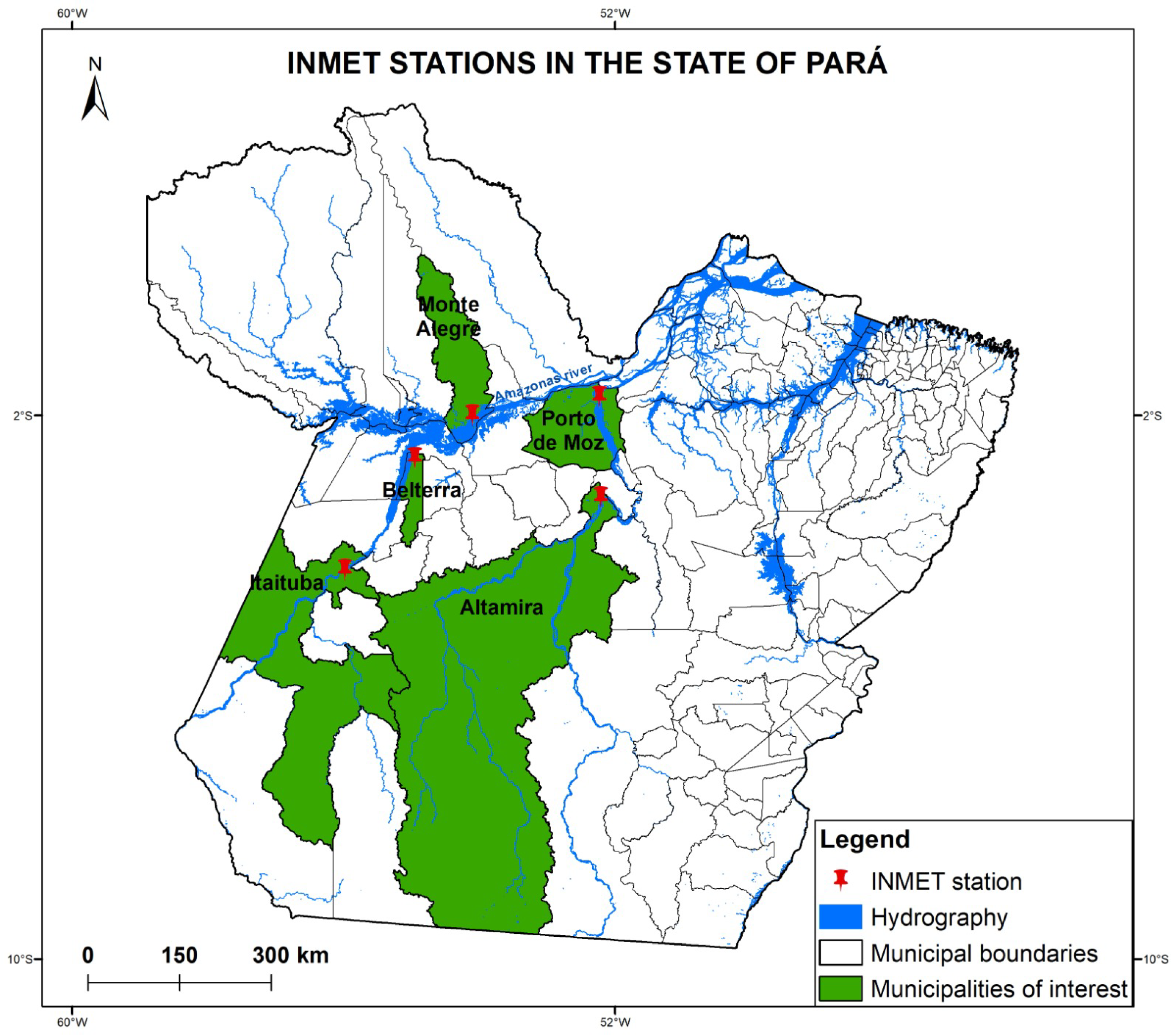
Five meteorological stations from the Brazilian National Institute of Meteorology (INMET) were selected, located in the western region of Pará State. These stations are distributed across the Lower Amazon mesoregion (Belterra, Monte Alegre, and Porto de Moz) and the Southwest Pará mesoregion (Altamira and Itaituba) (Table 1).
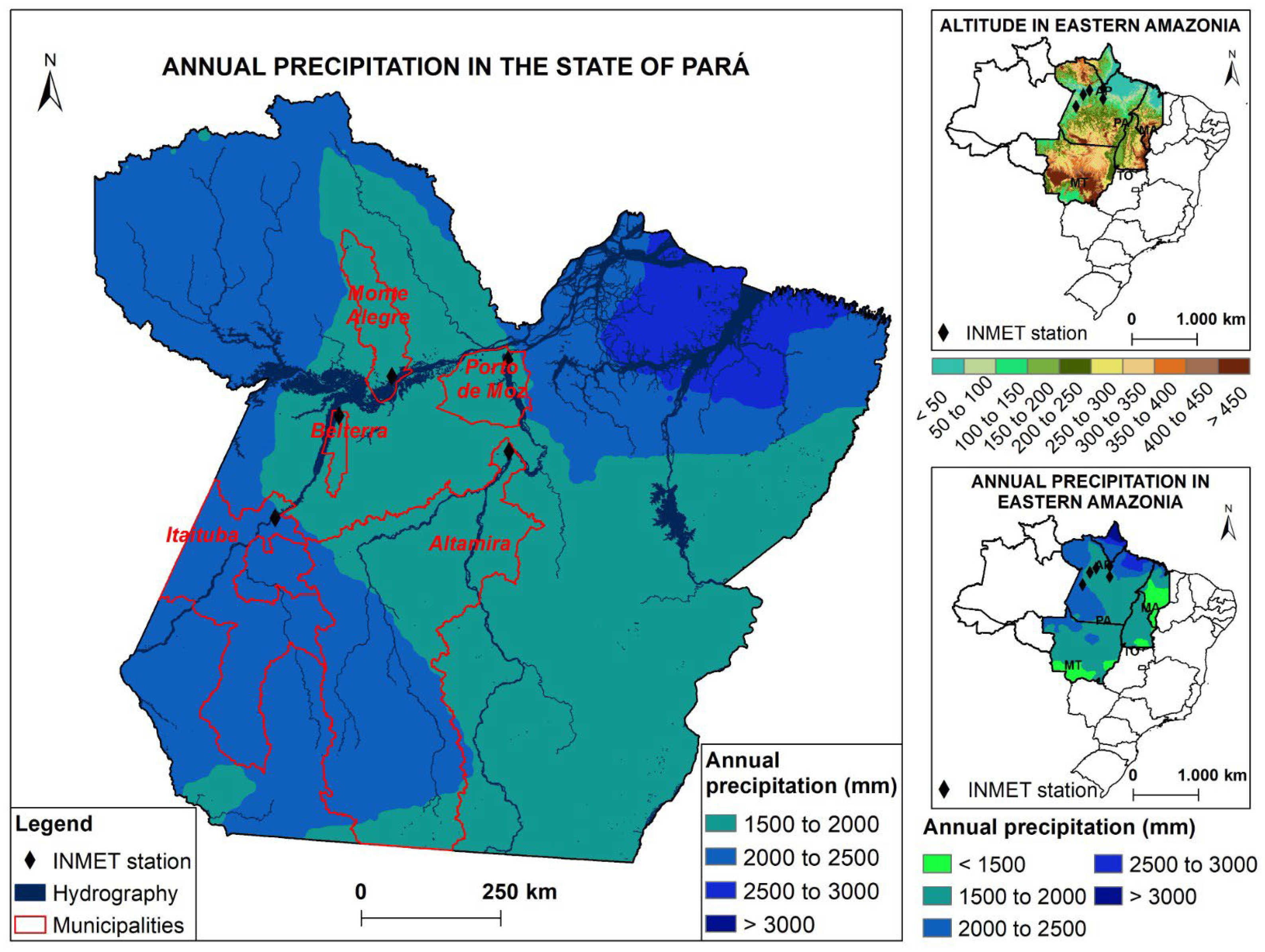
The regional precipitation regime is characterized by a well-defined wet season, typically extending from December to May, and a less rainy period from June to November. Peak rainfall occurs between February and April, with March representing the highest precipitation and September the lowest [23]. Figure 1 shows the spatial distribution of the meteorological stations used in this study. Figure 2 presents the spatial patterns of altitude and annual precipitation in Eastern Amazonia, highlighting the State of Pará and the location of the selected stations.
To provide a general overview of altimetric and mean precipitation conditions in Eastern Amazonia, Figure 2 presents the spatial distribution of altitude and annual rainfall, highlighting the State of Pará and the location of the meteorological stations used in this study.
To provide a general characterization of altimetric and mean precipitation conditions in Eastern Amazonia, Figure 2 presents the spatial distribution of altitude and annual rainfall, highlighting the State of Pará and the location of the meteorological stations used in this study. The region is predominantly characterized by low elevations, generally below 200 m, associated with the Amazon basin, while higher elevations exceeding 300 m occur in the southern and southeastern portions.
Annual precipitation in Eastern Amazonia is high, typically ranging from 1500 to more than 3000 mm. The northern portion of the region presents higher rainfall totals, frequently exceeding 3000 mm, whereas southeastern areas show lower values, generally between 1500 and 2000 mm. Within the State of Pará, precipitation predominantly varies between 2000 and 3000 mm, with localized areas exceeding 3000 mm in the northern sector. The spatial distribution of the selected stations covers central and western portions of the state, allowing the representation of different rainfall conditions within the study area.

2.2. MERGE Precipitation Product

MERGE (Merge of Satellite and Gauge Precipitation Data) is a precipitation dataset developed by the Center for Weather Forecasting and Climate Studies of the National Institute for Space Research (CPTEC/INPE). The product combines satellite-based precipitation estimates with rain gauge observations to improve rainfall representation over South America [15].
For the period analyzed in this study, MERGE precipitation estimates are derived from TRMM TMPA 3B42RT data and adjusted using surface observations through an objective analysis based on Barnes interpolation. In this approach, the influence of each observation decreases with distance from the grid cell center, and iterative procedures are applied to refine the precipitation field [15,23].
MERGE provides daily accumulated precipitation on a regular grid with a spatial resolution of approximately 0.25° (~20 km). The dataset covers most of South America, ranging from 82.8° W to 34.0° W and from 52.2° S to 12.2° N [15]. Because MERGE integrates satellite estimates with rain gauge observations, part of the observational information used for validation may also contribute to the generation of the dataset.
Therefore, statistical agreement between MERGE estimates and station data is interpreted considering this potential dependence. In this study, statistical metrics are used to evaluate the ability of MERGE to reproduce the temporal variability and magnitude of observed precipitation.

2.3. Reference Observations and Data Extraction

Daily precipitation records from INMET meteorological stations were used as reference observations. Stations were selected based on data completeness, adopting a maximum failure rate of 1.7% to ensure the reliability of the observational series.
MERGE (Merge of Satellite and Gauge Precipitation Data) precipitation values were extracted from the grid cell corresponding to each meteorological station using the GrADS software v.2.2.1 (Grid Analysis and Display System). Validation followed a pixel-to-point approach, in which precipitation values from the grid cell are directly compared with observations recorded at the station location [24,25].
This approach involves differences in spatial representation, as rain gauges provide point measurements while MERGE represents areal averages over approximately 20 km grid cells. Despite this difference, pixel-to-point comparison is widely used in validation studies of satellite and merged precipitation datasets.

2.4. Treatment of Missing Observations

Missing values in the INMET precipitation series were handled using mean imputation, in which missing observations are replaced by the mean value of the corresponding station time series [26]. This approach is appropriate when the proportion of missing data is low and the objective is to preserve the continuity of long-term records.
To minimize potential bias, only stations with failure rates below 1.7% were included in the analysis. Considering the small proportion of missing data relative to the total number of observations over the study period (1998–2017), the influence of imputation on the statistical results is expected to be negligible.

2.5. Statistical Evaluation

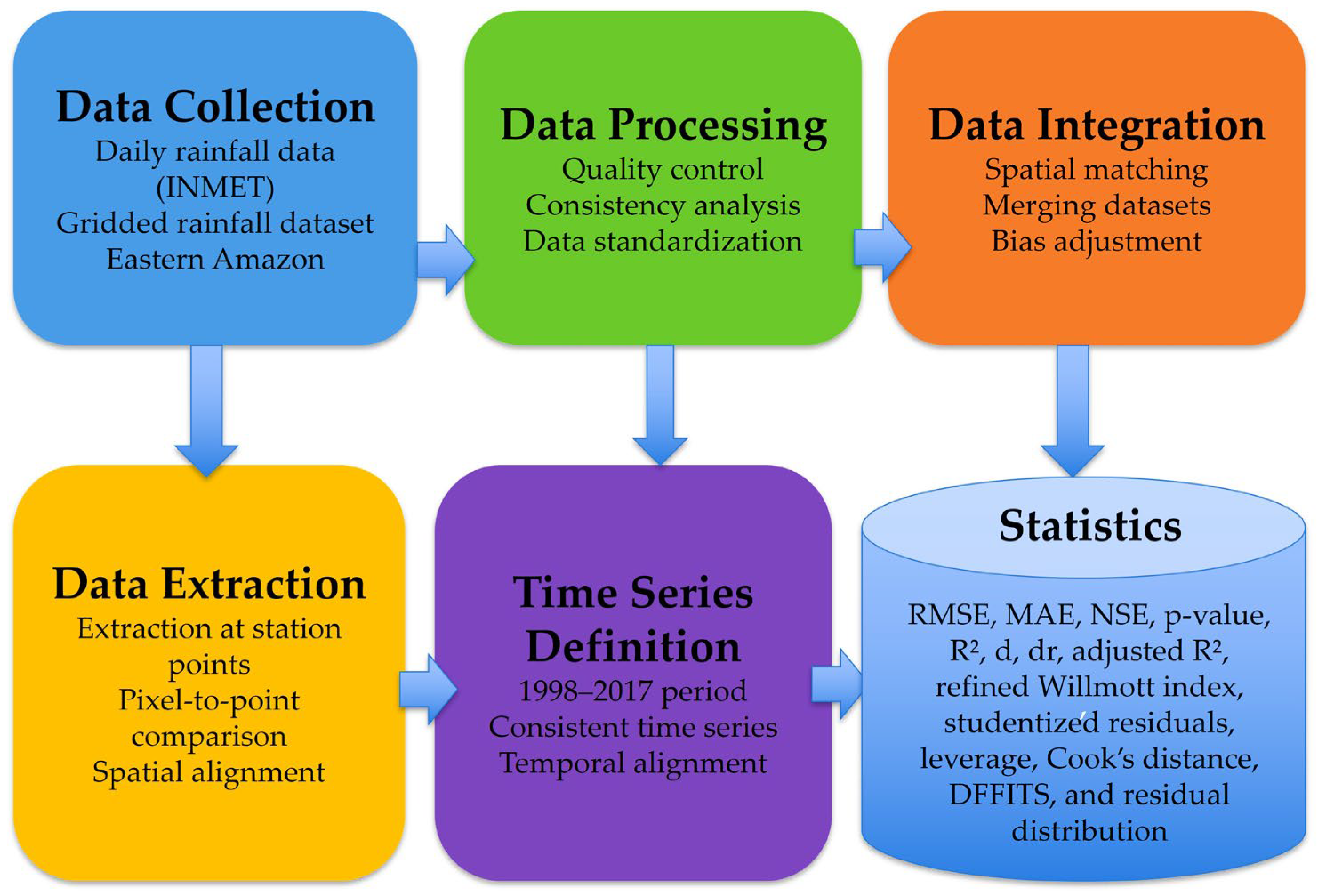
Observed precipitation series were initially characterized using descriptive statistics, including mean, standard deviation, minimum, maximum, skewness, and kurtosis. These measures supported the exploratory analysis of rainfall variability and distributional properties across the evaluated stations. Figure 3 presents the methodological workflow of the study, providing a structured overview of the main analytical steps used to obtain the results.
In addition to visual inspection, agreement between observed precipitation and MERGE estimates was assessed using complementary statistical metrics widely adopted in hydrometeorological validation studies. This multi-metric framework allowed the evaluation of association, accuracy, systematic deviation, and predictive performance.
Pearson correlation was used to evaluate the linear relationship between observed precipitation and MERGE estimates.
The coefficient of determination (R2) was used to quantify the proportion of variance explained by the MERGE estimates. Bias was calculated to identify systematic overestimation or underestimation, while the Root Mean Square Error (RMSE) and Mean Absolute Error (MAE) were used to quantify the magnitude of errors.
Model performance was further evaluated using the Nash–Sutcliffe efficiency (NSE), the Willmott concordance index (d), and the refined Willmott index (dr), which provide complementary measures of predictive skill and agreement between observed and estimated precipitation.
The statistical metrics applied in this study are widely used in hydrometeorological evaluations and are described in the literature [27,28,29,30,31,32,33,34,35,36]. Pearson correlation coefficient was used to assess linear and monotonic relationships, respectively. Error metrics such as RMSE and MAE were used to quantify deviations between observed and estimated precipitation, while performance indices including NSE, Willmott’s index (d), the refined index (dr).
Statistical significance of the correlation coefficients was assessed using the corresponding p-values. This analysis allowed us to verify whether the relationships between observed precipitation and MERGE estimates were statistically significant rather than resulting from random variation. Correlations were considered statistically significant at the 5% level (p < 0.05).
Monthly comparisons were also examined in relation to INMET climatological normals for the reference periods 1981–2010 and 1991–2020 [37,38], supporting the seasonal interpretation of precipitation variability. In addition, a chi-square (χ2) test was applied to evaluate the agreement between observed and estimated precipitation frequency distributions.

3. Results

Descriptive statistics of observed precipitation are presented in Table 2, including minimum, maximum, mean, standard deviation, coefficient of variation, skewness, and kurtosis. The results indicate that precipitation distributions are positively skewed across all stations, with higher asymmetry observed in Belterra and Monte Alegre. These patterns indicate the predominance of low to moderate rainfall values combined with occasional high-intensity events.
All stations exhibit negative kurtosis values, indicating flatter distributions compared to the normal distribution. This behavior suggests a greater probability of extreme rainfall events and reflects the irregular and highly variable nature of precipitation in the Eastern Amazon. This pattern is consistent with the dominance of convective systems in the region, which contributes to the occurrence of intense and localized precipitation events.
The statistical results indicate a high level of agreement between precipitation recorded at INMET meteorological stations and MERGE estimates. Pearson correlation coefficients ranged from 0.94 to 0.99 across the analyzed stations, indicating strong linear relationships between observed and estimated precipitation. All correlation coefficients were statistically significant (p < 0.05).
Nash–Sutcliffe efficiency values ranged from approximately 0.87 to 0.97, indicating high predictive performance of the MERGE dataset. Concordance indices also showed high agreement between datasets. The Willmott index approached unity for all stations, while the refined Willmott index remained above 0.89.
Bias analysis indicated a systematic underestimation of precipitation by the MERGE dataset across all evaluated stations. However, bias magnitude remained small relative to the overall precipitation variability in the region. Error metrics showed moderate dispersion, with mean absolute error values generally below 30 mm and root mean square error values below approximately 60 mm.
Regression analysis also indicates strong agreement between MERGE precipitation estimates and observed monthly rainfall (Table 3 and Table 4). Coefficients of determination ranged from 0.8876 in Altamira to 0.9786 in Belterra, indicating that the MERGE product explains approximately 89% to 98% of the variance in observed precipitation.
Belterra presented the highest agreement between observed and estimated precipitation (R2 = 0.9786), followed by Monte Alegre (R2 = 0.9672). Itaituba (R2 = 0.9337) and Porto de Moz (R2 = 0.9286) also showed strong relationships between the datasets, with slightly greater dispersion.
Altamira exhibited the lowest explained variance (R2 = 0.8876), indicating greater variability between observed precipitation and MERGE estimates. Overall, the results indicate that the MERGE dataset reproduces the main patterns of monthly precipitation variability across the evaluated stations.
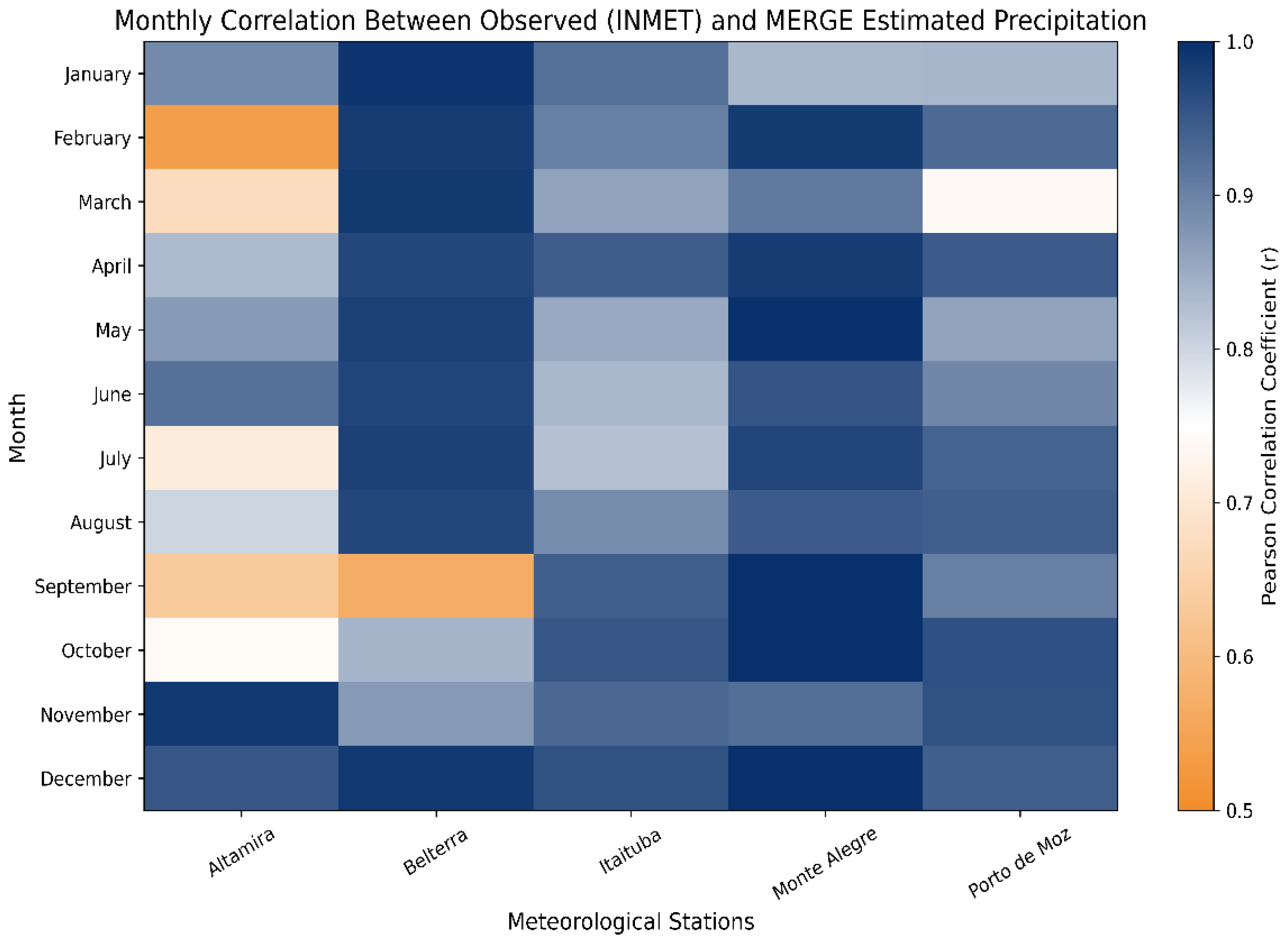
Figure 4 presents the monthly Pearson correlation coefficients between precipitation observed at INMET meteorological stations and precipitation estimated by the MERGE dataset for the five analyzed stations. Correlation coefficients remain predominantly high throughout the year, with most values above 0.85.
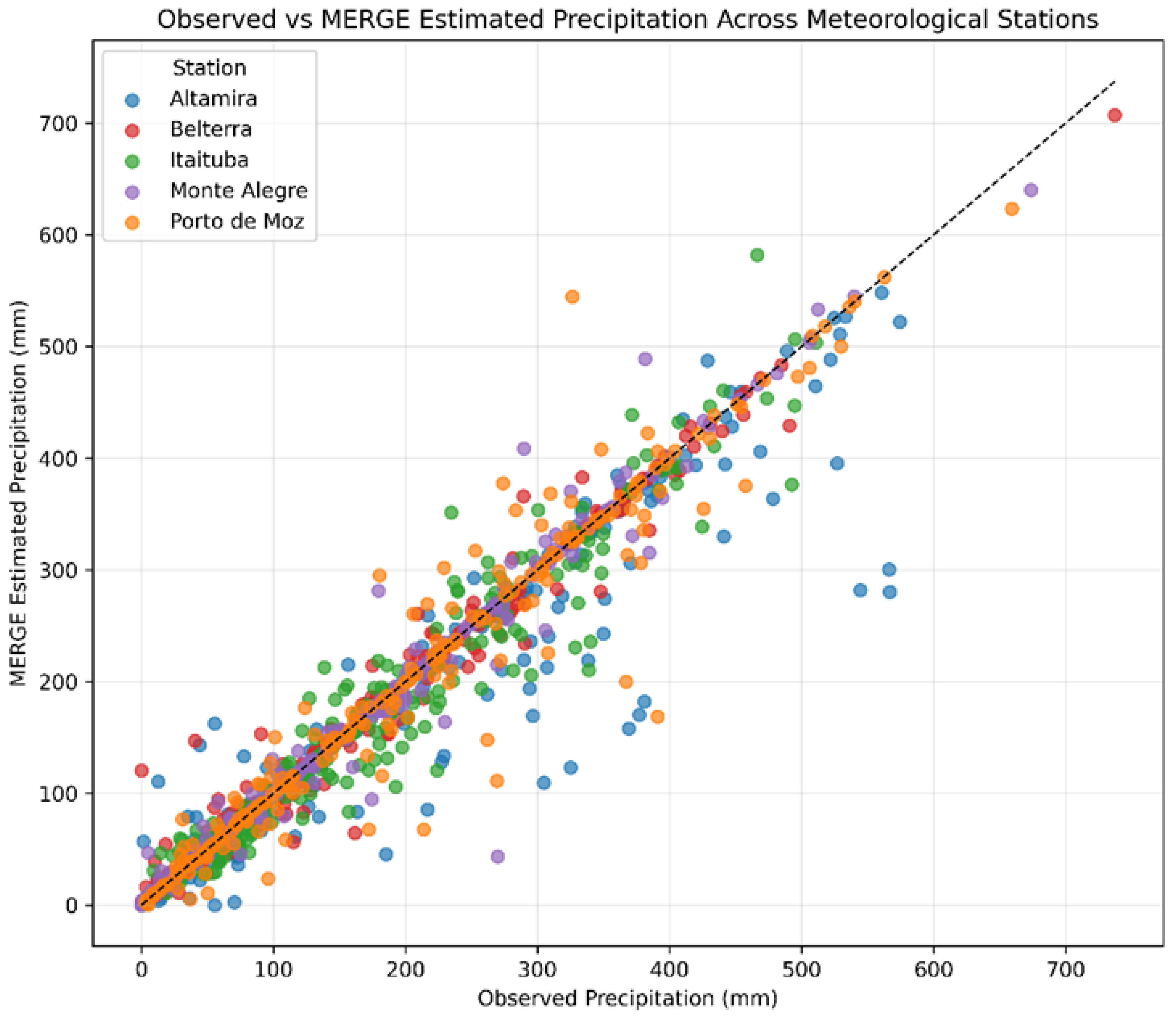
Figure 3 also illustrates the relationship between observed precipitation measured at INMET stations and precipitation estimated by the MERGE product using all observations from the five stations included in the analysis. The scatter plot shows the overall agreement between ground observations and MERGE estimates.
Each color represents a meteorological station: blue corresponds to Altamira, red to Belterra, green to Itaituba, purple to Monte Alegre, and orange to Porto de Moz. Most observations cluster near the 1:1 reference line, indicating strong agreement between observed rainfall and MERGE estimates. This pattern is consistent with the coefficients of determination reported in Table 3.
Belterra and Monte Alegre show the highest concentration of points near the reference line. Itaituba and Porto de Moz also present strong agreement, although with slightly greater dispersion for intermediate rainfall values. Altamira exhibits the largest dispersion of points, particularly for precipitation values above approximately 300 mm. This pattern indicates greater variability between observed precipitation and MERGE estimates at this station.
Figure 5 presents the relationship between monthly precipitation observed at INMET meteorological stations and precipitation estimated by the MERGE dataset for the period 1998–2017. The scatter plot shows a strong linear relationship between observed and estimated values, with most data points concentrated near the 1:1 reference line, which represents perfect agreement between observed and estimated precipitation.
Each color represents a meteorological station: Altamira (blue), Belterra (red), Itaituba (green), Monte Alegre (purple), and Porto de Moz (orange). Overall, the distribution of points indicates a high level of agreement between observed precipitation and MERGE estimates across all stations.
Belterra and Monte Alegre exhibit the highest concentration of points along the reference line, indicating closer agreement between observed and estimated values. Itaituba and Porto de Moz also show strong correspondence, although with slightly greater dispersion, particularly for intermediate precipitation values.
Altamira presents the largest dispersion among the stations, especially for precipitation values above approximately 300 mm, indicating greater variability between observed precipitation and MERGE estimates. Despite this dispersion, the overall pattern remains consistent with the strong statistical performance indicated by the regression metrics in Table 4.
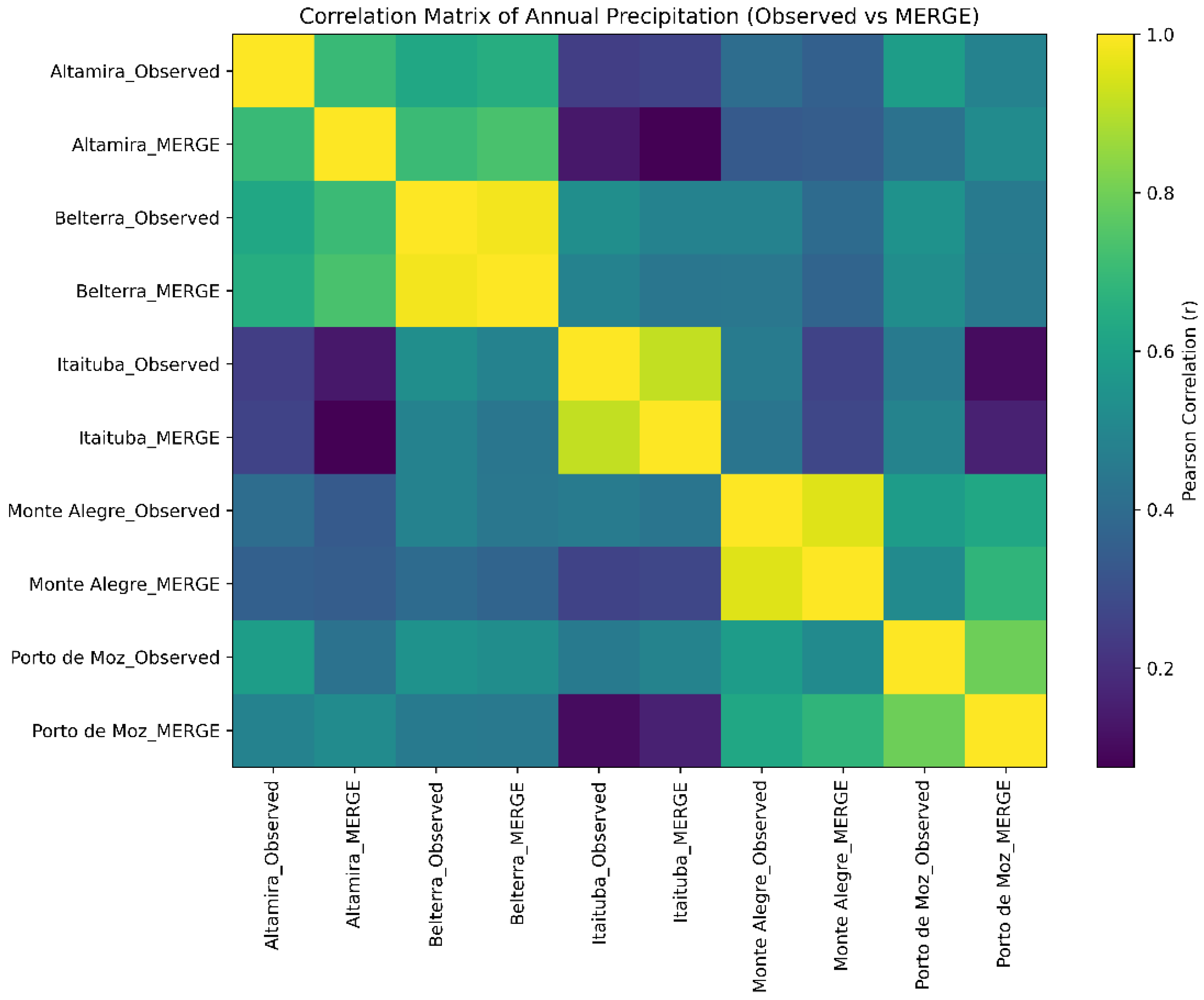
Annual precipitation totals derived from ground observations and MERGE estimates show strong correlations across the meteorological stations analyzed in the Eastern Amazon. The correlation matrix presented in Figure 6 synthesizes these relationships, highlighting high coefficients between observed and estimated precipitation for each station.
Belterra and Monte Alegre exhibit the highest correlations between observed precipitation and MERGE estimates, with coefficients approaching unity. These results indicate a high level of agreement in the representation of interannual rainfall variability at these locations. Itaituba and Porto de Moz also show strong correlations, demonstrating consistent performance of the MERGE dataset in capturing annual precipitation variability.
Altamira presents comparatively lower correlation values than the other stations, although the relationship between observed and estimated precipitation remains strong and positive. This pattern is consistent with the greater dispersion observed in the regression and scatter analyses. Overall, the correlation matrix indicates that the MERGE dataset reproduces the interannual variability of precipitation with a high level of consistency across the evaluated stations.
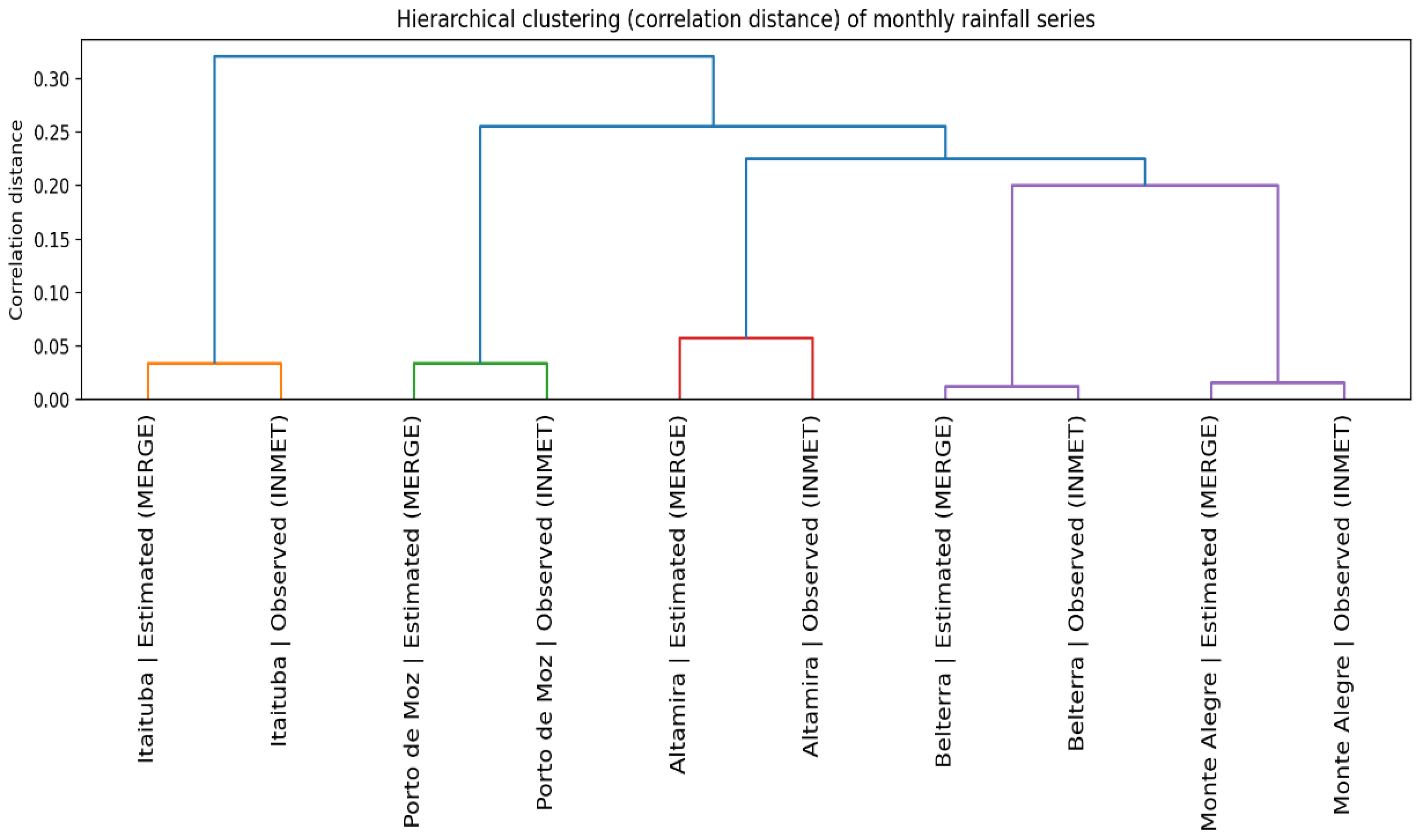
The similarity between observed rainfall series and MERGE estimates was evaluated using hierarchical clustering based on correlation distance. The dendrogram presented in Figure 7 groups the monthly precipitation series according to their statistical similarity.
For all meteorological stations, the observed series and the corresponding MERGE estimates form closely associated clusters, indicating a high degree of similarity between observed and estimated precipitation. The smallest linkage distances are observed for the station pairs Itaituba, Porto de Moz, Belterra, Monte Alegre, and Altamira, reinforcing the strong correspondence between INMET observations and MERGE estimates.
These results indicate that the MERGE dataset preserves the temporal structure of the observed precipitation series. The clustering pattern also shows that seasonal and inter-monthly variability are consistently represented across both datasets.
In addition to the observed–estimated pairing, the dendrogram reveals regional similarities among stations. Belterra and Monte Alegre appear closely associated, while Itaituba and Porto de Moz form another group with similar precipitation behavior.
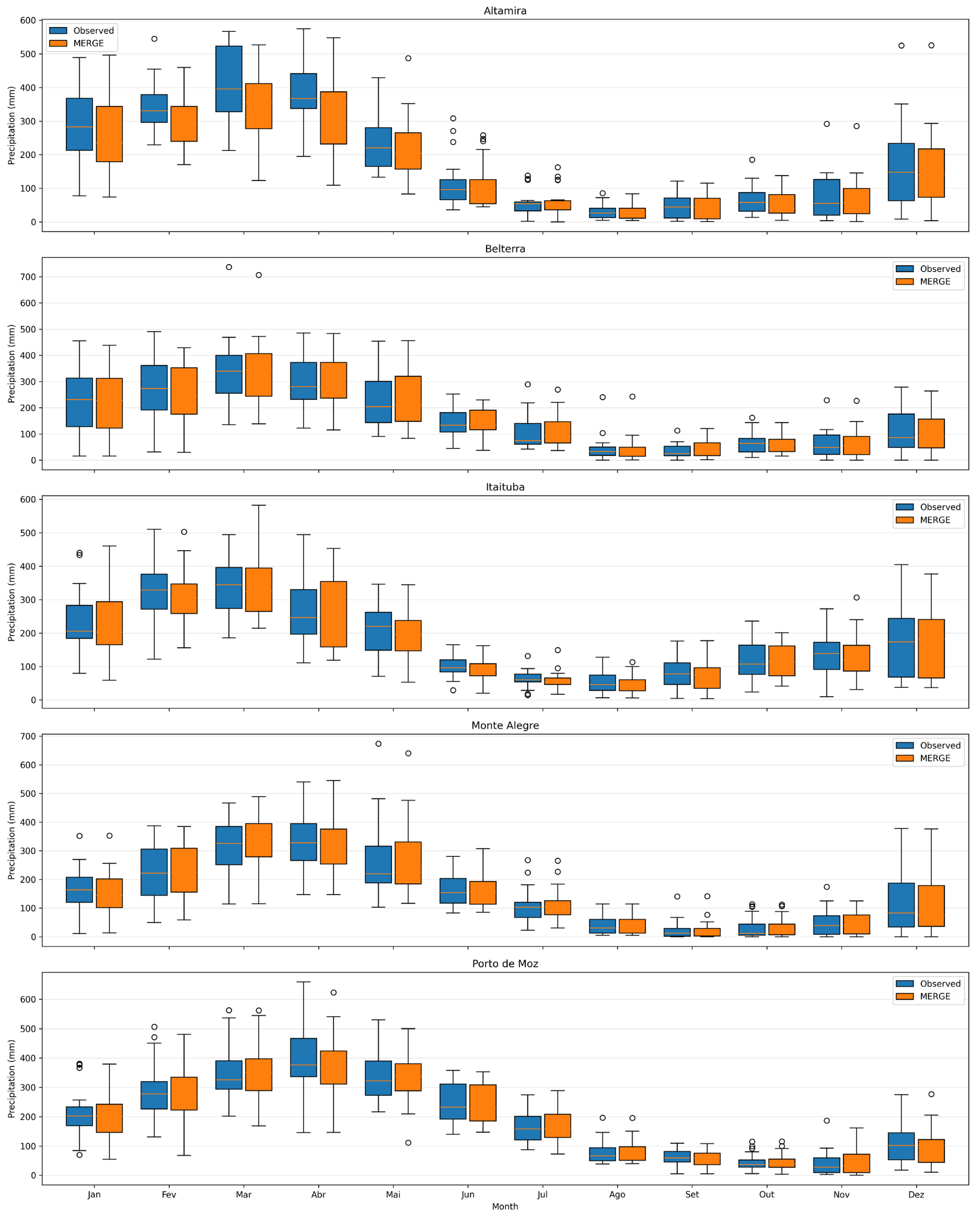
Figure 8 presents the monthly distribution of precipitation for each meteorological station based on the historical series (1998–2017), comparing observed values and MERGE estimates using boxplots.
The distributions clearly show the seasonal pattern of precipitation across all stations, with higher values concentrated between January and May and lower values during the drier months from July to October. MERGE estimates closely follow the observed seasonal cycle, with similar median values and interquartile ranges.
Differences between observed and estimated precipitation are more pronounced during months with higher rainfall, where MERGE tends to underestimate upper-range values and extreme events. This pattern is particularly evident in Altamira and Porto de Moz, where greater dispersion and higher maximum values are observed in the station data.
These differences, the MERGE dataset consistently reproduces the central tendency and overall variability of precipitation across all stations, indicating its ability to represent both seasonal dynamics and distributional patterns of rainfall in the Eastern Amazon.
Although several global and regional precipitation products are currently available, such as GPM IMERG, CHIRPS, and ERA5 precipitation, this study specifically evaluated the performance of the MERGE dataset developed by CPTEC/INPE for representing rainfall variability in the Eastern Amazon. MERGE has been widely used in Brazil because it integrates satellite-derived precipitation estimates with rain gauge observations from national monitoring networks, providing a dataset suited to the climatic conditions of South America.
The combined evidence from regression, correlation, dispersion, clustering, and distribution analyses indicates that the MERGE dataset reproduces both the magnitude and temporal variability of precipitation across the evaluated stations. The results show high agreement between observed and estimated data, consistent representation of seasonal patterns, and strong correspondence in interannual variability.
The boxplot analysis further indicates that, although MERGE captures the overall distribution of precipitation, it tends to underestimate higher precipitation values, particularly during months with intense rainfall. This behavior is consistent with the patterns observed in the dispersion and regression analyses and reflects limitations of gridded precipitation products in representing localized convective events.
These limitations are commonly associated with the spatial averaging inherent to gridded datasets and the difficulty in capturing small-scale convective systems. Despite this, the overall performance of the MERGE dataset remains robust. The results support the applicability of MERGE as a reliable dataset for regional hydroclimatic analyses in Eastern Amazon.

4. Discussion

The results obtained in this study demonstrate strong agreement between precipitation estimates derived from the MERGE dataset and rainfall observations recorded at meteorological stations in the Eastern Amazon. Satellite-based precipitation products have become essential tools for monitoring rainfall variability in regions where rain gauge networks are sparse or unevenly distributed. The integration of satellite retrievals with surface observations significantly improves the spatial consistency of precipitation estimates, particularly in tropical regions where conventional observations remain limited [39].
The statistical performance observed for the evaluated stations indicates that the MERGE dataset effectively reproduces rainfall variability across the study region. Belterra presented the highest agreement between observed and estimated precipitation, while Monte Alegre also showed very strong correspondence between both datasets. The high correlation levels observed in these locations indicate that multi-satellite precipitation products can capture the spatial and temporal variability of rainfall patterns in tropical environments [15].
However, differences between stations highlight the strong spatial heterogeneity of precipitation patterns in the Amazon basin. Altamira presented the highest dispersion between observed and estimated precipitation values, suggesting a greater influence of localized rainfall variability. Convective precipitation systems dominate rainfall formation in the Amazon and frequently generate highly localized rainfall events that may not be fully represented by satellite retrieval algorithms [40].
Seasonal variations in the agreement between observed and estimated precipitation were also observed in the monthly correlation analysis. Lower correlation values occurred during months associated with the rainy season, when deep convective activity intensifies across the region. Under these conditions, satellite-based precipitation products may present reduced accuracy because intense rainfall events occur at spatial scales smaller than the resolution of the satellite grids [41].
Differences between satellite estimates and rain gauge measurements may also be related to the spatial scale represented by satellite precipitation products. While rain gauges measure precipitation at a specific point location, satellite datasets represent rainfall over spatial grid cells covering several kilometers. This scale mismatch may lead to discrepancies between observed and estimated precipitation values, particularly in regions characterized by strong spatial gradients in rainfall distribution [42].
Previous studies evaluating satellite precipitation datasets in Brazil have also reported strong correlations between satellite estimates and ground observations when analyzing long-term rainfall variability. For example, ref. [43] identified significant agreement between TRMM precipitation estimates and rain gauge observations in northeastern Brazil, indicating that satellite-derived datasets can reliably represent precipitation variability in tropical regions.
The hierarchical clustering analysis conducted in this study further supports the consistency between observed and estimated precipitation series. The dendrogram indicates that precipitation series derived from MERGE tend to cluster closely with the corresponding observed datasets for each station. Similar results were reported by [42], who demonstrated that satellite precipitation datasets can reproduce the temporal structure of rainfall variability when validated against ground-based observations.
Taken together, the results obtained in this study confirm that the MERGE precipitation dataset provides a consistent representation of rainfall variability in the Eastern Amazon. Considering the limited availability of meteorological observations across large portions of the Amazon basin, satellite-based precipitation datasets represent an important tool for monitoring regional rainfall dynamics and supporting hydrological and climate studies in tropical environments [44].
The strong agreement between MERGE precipitation estimates and ground observations demonstrates that merged satellite–gauge products reliably represent rainfall variability in the Eastern Amazon. Consistent monthly and annual correspondence between observed and estimated precipitation confirms the robustness of the dataset. These results highlight the importance of satellite-based precipitation products for regions with sparse and uneven meteorological networks.
Similar contributions have been reported in other Brazilian regions. For example, studies conducted in the Brazilian Cerrado have demonstrated the relevance of satellite precipitation products for hydrological monitoring, showing that these datasets improve the representation of rainfall variability and support hydrological modeling in areas characterized by sparse observational networks [9].
In this context, improving the reliability and spatial representation of precipitation data is essential for supporting water resource management and agricultural planning in regions strongly dependent on rainfall variability. The integration of satellite estimates with ground observations has been recognized as an important alternative for precipitation monitoring in large tropical regions where conventional monitoring infrastructure remains limited [20].
Greater reliability in precipitation monitoring also contributes to improving the predictability of rainfall variability. Increased predictability reduces the risks associated with rainfall deficits and irregular seasonal distribution, allowing better planning of planting calendars and strengthening the resilience of agricultural systems that depend directly on rainfall regimes. Moreover, understanding precipitation variability and trends across South America is fundamental for improving climate monitoring and supporting strategies related to water resources, agriculture, and regional development [45].

5. Conclusions

This study demonstrates that the MERGE dataset provides a robust and consistent representation of precipitation variability in the Eastern Amazon. The combined application of correlation metrics, error statistics, performance indices, and distribution analysis revealed strong agreement between observed and estimated precipitation across all evaluated stations.
MERGE effectively captures seasonal precipitation patterns and reproduces the temporal variability and magnitude of rainfall. The boxplot analysis further demonstrated that the dataset accurately represents the overall distribution of precipitation, while tending to underestimate extreme rainfall values, particularly during periods dominated by convective activity. This limitation reflects the inherent difficulty of representing localized, high-intensity precipitation in gridded products.
The analysis also highlights uncertainties associated with spatial scale differences between point-based observations and gridded estimates. Despite these limitations, MERGE consistently reproduces precipitation distribution patterns across the study region.
Overall, the results confirm the applicability of merged satellite–gauge precipitation products as reliable tools for hydrological monitoring, climate analysis, and environmental planning in regions characterized by high rainfall variability and limited observational coverage.

Author Contributions

P.d.S.B.: Methodology, formal analysis, writing of the original draft, and review and editing of the manuscript. J.A.d.J.C.: Methodology and formal analysis. G.B.C. and A.M.D.d.A.: Methodology, formal analysis, and review and editing of the manuscript. L.S.S.L.: Methodology, geospatial analysis and mapping, and review of the manuscript. C.T.S.D.: Statistical analysis and methodology: A.C.d.S.G.: Analysis and review of the manuscript: J.T.d.S.: Statistical analysis and review and editing of the manuscript: L.G.M.: Conceptualization, methodology, formal analysis, writing of the original draft and review and editing of the manuscript. All authors have read and agreed to the published version of the manuscript.

Funding

This research received no external funding.

Data Availability Statement

The original contributions presented in this study are included in the article. Further inquiries can be directed at the corresponding author.

Acknowledgments

The authors thank the Graduate Program in Society, Nature and Development (PPGSND/UFOPA) for academic support. The first author acknowledges financial support from Coordenação de Aperfeiçoamento de Pessoal de Nível Superior (CAPES) through a doctoral scholarship. L.G.M. and G.B.C. acknowledge support from the Brazilian National Council for Scientific and Technological Development (CNPq) through Research Productivity Fellowships (grant numbers 305359/2025-8 and 304809/2025-0). The article processing charge was funded by the Federal University of Western Pará (UFOPA) in PAPCIQ Program.

Conflicts of Interest

The authors declare no conflicts of interest.

References

  1. Lapola, D.M.; Schaldach, R.; Alcamo, J.; Bondeau, A.; Koch, J.; Koelking, C.; Priess, J.A. Indirect Land-Use Changes Can Overcome Carbon Savings from Biofuels in Brazil. Proc. Natl. Acad. Sci. USA 2010, 107, 3388–3393. [Google Scholar] [CrossRef]
  2. Nepstad, D.; McGrath, D.; Stickler, C.; Alencar, A.; Azevedo, A.; Swette, B.; Bezerra, T.; DiGiano, M.; Shimada, J.; da Motta, R.S.; et al. Slowing Amazon Deforestation Through Public Policy and Interventions in Beef and Soy Supply Chains. Science 2014, 344, 1118–1123. [Google Scholar] [CrossRef] [PubMed]
  3. Lapola, D.M.; Pinho, P.; Barlow, J.; Aragão, L.E.O.C.; Berenguer, E.; Carmenta, R.; Liddy, H.M.; Seixas, H.; Silva, C.V.J.; Silva-Junior, C.H.L.; et al. The Drivers and Impacts of Amazon Forest Degradation. Science 2023, 379, 6630. [Google Scholar] [CrossRef]
  4. Moura, Q.L.; Ruivo, M.L.P.; Rodrigues, H.J.B. Variação sazonal da população de bactérias e fungos e dos teores de nitrato de amônio do solo nos sítios do LPA e PPBIO na Amazônia Oriental. Rev. Bras. Meteorol. 2015, 30, 265–274. [Google Scholar] [CrossRef]
  5. Santos, W.M.; Souza, R.M.F.; Souza, E.S.; Almeida, A.Q.; Antonino, A.C.D. Variabilidade espacial da sazonalidade da chuva no semiárido brasileiro. J. Envirolnment Anal. Prog. 2017, 2, 368–376. [Google Scholar] [CrossRef]
  6. Marengo, J.A.; Espinoza, J.C. Extreme seasonal droughts and floods in Amazonia: Causes, trends and impacts. Int. J. Climatol. 2016, 36, 1033–1050. [Google Scholar] [CrossRef]
  7. Zhao, T.; Yatagai, A. Evaluation of TRMM 3B42 product using a new gauge-based analysis of daily precipitation over China. Int. J. Climatol. 2014, 34, 2749–2762. [Google Scholar] [CrossRef]
  8. Mesquita, T.d.P.N.; e Silva, C.M.S.; de Medeiros, I.D.G.; Mendes, K.R.; de Sá, T.N.M.; Carvalho, G.Y.P.d.; Brandão, C.L.; Lopes, V.; de Moura Sá, J.I.A.; de Oliveira, P.E.S.; et al. Evidence of the Influence of Land Use and Land Cover on Extreme Rainfall in Natal, Northeast of Brazil. Atmosphere 2025, 16, 1398. [Google Scholar] [CrossRef]
  9. Amorim, J.d.S.; Viola, M.R.; Junqueira, R.; Oliveira, V.A.d.; Mello, C.R. Evaluation of satellite precipitation products for hydrological modeling in the Brazilian Cerrado biome. Water 2020, 12, 2571. [Google Scholar] [CrossRef]
  10. Nobre, C.A.; Obregón, G.O.; Marengo, J.A.; Fu, R.; Poveda, G. Characteristics of Amazonian climate: Main features. Am. Geophys. Union 2009, 186, 149–162. [Google Scholar] [CrossRef]
  11. Luiz-Silva, W.; Oscar-Júnior, A.C.; Cavalcanti, I.F.A.; Treistman, F. An overview of precipitation climatology in Brazil: Space-time variability of frequency and intensity associated with atmospheric systems. Hydrol. Sci. J. 2021, 66, 289–308. [Google Scholar] [CrossRef]
  12. Paccini, L.; Espinoza, J.; Ronchail, J.; Segura, H. Intra-seasonal rainfall variability in the Amazon basin related to large-scale circulation patterns: A focus on western Amazon–Andes transition region. Int. J. Climatol. 2017, 38, 2386–2399. [Google Scholar] [CrossRef]
  13. Hu, Z.; Zhou, Q.; Chen, X.; Li, J.; Li, Q.; Chen, D.; Liu, W.; Yin, G. Evaluation of three global gridded precipitation data sets in central Asia based on rain gauge observations. Int. J. Climatol. 2018, 38, 3475–3493. [Google Scholar] [CrossRef]
  14. Vila, D.A.; Goncalves, L.G.G.; Toll, D.L.; Rozante, J.R. Statistical evaluation of combined daily gauge observations and rainfall satellite estimates over continental South America. J. Hydrometeorol. 2009, 10, 533–543. [Google Scholar] [CrossRef]
  15. Rozante, J.R.; Moreira, D.S.; Gonçalves, L.G.G.; Vila, D.A. Combining TRMM and Surface Observations of Precipitation: Technique and Validation Over South America. Weather. Forecast. 2010, 25, 885–894. [Google Scholar] [CrossRef]
  16. Jiménez, K.Q.; Collischonn, W. Método de combinação de dados de precipitação estimados por satélite e medidos em pluviômetros para a modelagem hidrológica. Braz. J. Water Resour. 2015, 20, 202–217. [Google Scholar] [CrossRef][Green Version]
  17. Alves, M.P.; da Silva, R.B.C.; e Silva, C.M.S.; Bezerra, B.G.; Mendes, K.R.; Marinho, L.A.; Barbosa, M.L.; Nunes, H.G.G.C.; Dos Santos, J.G.M.; Neves, T.T.d.A.T.; et al. Carbon and Energy Balance in a Primary Amazonian Forest and Its Relationship with Remote Sensing Estimates. Remote Sens. 2024, 16, 3606. [Google Scholar] [CrossRef]
  18. Moraes, J.R.S.C.; Rolim, G.S.; Martorano, L.G.; Aparecido, L.E.O.; Bispo, R.C.; Valeriano, T.T.B.; Esteves, J.T. Performance of the ECMWF in air temperature and precipitation estimates in the Brazilian Amazon. Theor. Appl. Climatol. 2020, 141, 803–816. [Google Scholar] [CrossRef]
  19. Villa, P.M.; Moraes, J.R.S.C.; Martorano, L.G.; Martins, S.V.; Rodrigues, A.L.; Gonzáles, B.; Rolim, G.S.; Silva, A.S. Spatio-temporal variability of precipitation in the Venezuelan Amazon. Rev. Bras. Climatol. 2022, 29, 626–649. Available online: https://ojs.ufgd.edu.br/rbclima/article/view/15572 (accessed on 15 February 2026).
  20. Garcia, S.R.; Rodrigues, M.A.M.; Kayano, M.T.; Calheiros, A.J.P. Trend analysis of precipitation in the South American Monsoon System (SAMS) regions and identification of most intense and weakest rainy seasons. Meteorology 2025, 4, 26. [Google Scholar] [CrossRef]
  21. Liebmann, B.; Marengo, J.A. Interannual variability of the rainy season and rainfall in the Brazilian Amazon Basin. J. Clim. 2001, 14, 4308–4318. [Google Scholar] [CrossRef]
  22. Reboita, M.S.; Krusche, N.; Ambrizzi, T.; Rocha, R.M.P. Entendendo o tempo e o clima na América do Sul. Terra E Didática 2012, 8, 34–50. [Google Scholar] [CrossRef]
  23. Moraes, B.C.; Costa, J.M.N.; Costa, A.C.L. Variação espacial e temporal da precipitação no estado do Pará. Acta Amaz. 2005, 35, 207–214. [Google Scholar] [CrossRef]
  24. Ly, S.; Charles, C.; Degr’e, A. Geostatistical interpolation of daily rainfall at catchment scale: The use of several variogram models in the Ourthe and Ambleve catchments, Belgium. Hydrol. Earth Syst. Sci. 2011, 15, 2259–2274. [Google Scholar] [CrossRef]
  25. Pinto, L.I.C.; Costa, M.H.; Lima, F.Z.; Diniz, L.M.F.; Sediymam, G.C.; Pruski, F.F. Comparação dos produtos de precipitação para a América do Sul. Rev. Bras. Meteorol. 2009, 24, 461–472. [Google Scholar] [CrossRef]
  26. Rodrigues, D.T.; Gonçalves, W.A.; Spyrides, M.H.C.; e Silva, C.M.S. Spatial and temporal assessment of the extreme and daily precipitation of the Tropical Rainfall Measuring Mission satellite in Northeast Brazil. Int. J. Remote Sens. 2020, 41, 549–572. [Google Scholar] [CrossRef]
  27. Woldemeskel, F.M.; Sivakumar, B.; Sharma, A. Merging gauge and satellite rainfall with specification of associated uncertainty across Australia. J. Hydrometeorol. 2013, 499, 167–176. [Google Scholar] [CrossRef]
  28. García-Peña, M.; Arciniegas-Alarcón, S.; Barbin, D. Imputação de dados climáticos utilizando a decomposição por valores singulares: Uma comparação empírica. Rev. Bras. Meteorol. 2014, 29, 527–536. [Google Scholar] [CrossRef][Green Version]
  29. Mello, I.C.; Welerson, C.C.; Passos, F.O.; Ferraz, F.S.; Santos, F.C.; Silva, B.C. Calibração de um modelo hidrológico distribuído à bacia do rio São Francisco a partir de chuva estimada por satélite. Rev. Min. Recur. Hídricos 2025, 6, e025002. [Google Scholar] [CrossRef]
  30. Wilks, D.S. On “Field Significance” and the False Discovery Rate. J. Appl. Meteorol. Climatol. 2006, 45, 1181–1189. [Google Scholar] [CrossRef]
  31. Saldanha, C.B.; Radin, B.; Cardoso, M.A.G.; Rippel, M.L.; Fonseca, L.L.; Rodriguez, F. Comparação dos dados de precipitação gerados pelo GPCP vs. observados para o estado do Rio Grande do Sul. Rev. Bras. Meteorol. 2015, 30, 415–422. [Google Scholar] [CrossRef]
  32. Bayissa, Y.; Tadesse, T.; Demisse, G.; Shiferaw, A. Evaluation of Satellite-Based Rainfall Estimates and Application to Monitor Meteorological Drought for the Upper Blue Nile Basin, Ethiopia. Remote Sens. 2017, 9, 669. [Google Scholar] [CrossRef]
  33. Willmott, C.J.; Ackleson, S.G.; Davis, J.J. Statistics for the evaluation and comparison of models. J. Geogr. Res. 1985, 90, 8995–9005. [Google Scholar] [CrossRef]
  34. Santos, R.S.; Costa, L.C.; Sediyama, G.C.; Leal, B.G.; Oliveira, R.A.; Justino, F.B. Avaliação da relação seca/produtividade agrícola em cenário de mudanças climáticas. Rev. Bras. Meteorol. 2011, 26, 313–323. [Google Scholar] [CrossRef]
  35. Willmott, C.J.; Robeson, S.M.; Matsuura, K. A refined index of model performance. Int. J. Climatol. 2012, 32, 2088–2094. [Google Scholar] [CrossRef]
  36. Baba, R.K.; Vaz, M.S.M.G.; Costa, J. Correção de dados agrometeorológicos utilizando métodos estatísticos. Rev. Bras. Meteorol. 2014, 29, 515–526. [Google Scholar] [CrossRef]
  37. INMET. Normais Climatológicas do Brasil 1981–2010; Instituto Nacional de Meteorologia: Brasília, DF, Brazil, 2018; 616p. [Google Scholar]
  38. INMET. Normais Climatológicas do Brasil 1991–2020; Instituto Nacional de Meteorologia: Brasília, DF, Brazil, 2022; 27p. [Google Scholar]
  39. Rozante, J.R.; Vila, D.A.; Chiquetto, J.B.; Fernandes, A.A.; Alvim, D.S. Precipitation estimates from satellite-based products over South America: Evaluation and applications. Remote Sens. 2018, 10, 882. [Google Scholar] [CrossRef]
  40. Franchito, S.H.; Rao, V.B.; Vasques, A.C.; Santo, C.M.E.; Conforte, J.C. Validation of TRMM precipitation radar monthly rainfall estimates over Brazil. J. Geophys. Res. Atmos. 2009, 114, D02105. [Google Scholar] [CrossRef]
  41. Charles, T.S.; Lopes, T.R.; Duarte, S.N.; Nascimento, J.G.; Ricardo, H.C.; Pacheco, A.B. Estimating average annual rainfall by ordinary kriging and TRMM precipitation products in midwestern Brazil. J. S. Am. Earth Sci. 2022, 118, 103937. [Google Scholar] [CrossRef]
  42. Collischonn, B.; Collischonn, W.; Tucci, C.E.M. Daily hydrological modeling in the Amazon basin using TRMM rainfall estimates. J. Hydrol. 2007, 360, 207–216. [Google Scholar] [CrossRef]
  43. Soares, A.S.D.; Paz, A.R.; Picilli, D.G. Avaliação das estimativas de chuva do satélite TRMM no Estado da Paraíba. Rev. Bras. Recur. Hídricos 2016, 21, 288–299. [Google Scholar] [CrossRef]
  44. Karaseva, M.; Prakash, S.; Gairola, R. Validation of high-resolution TRMM-3B43 precipitation product using rain gauge measurements over Kyrgyzstan. Theor. Appl. Climatol. 2012, 108, 147–157. [Google Scholar] [CrossRef]
  45. Cassalho, F.; Rennó, C.D.; Reis, J.B.C.; Silva, B.C. Hydrologic Validation of MERGE Precipitation Products over Anthropogenic Watersheds. Water 2020, 12, 1268. [Google Scholar] [CrossRef]
Figure 1. Location of selected meteorological stations in the western region of the State of Pará, in the Eastern Amazon.
Water 18 00898 g001
Figure 2. Altitude and annual precipitation patterns in Eastern Amazonia and the State of Pará, showing the location of the five INMET meteorological stations used in this study.
Water 18 00898 g002
Figure 3. Workflow of the methodological approach adopted in this study.
Water 18 00898 g003
Figure 4. Monthly Pearson correlation between observed precipitation (INMET) and MERGE estimated precipitation across meteorological stations in the Eastern Amazon.
Water 18 00898 g004
Figure 5. Scatter plot comparing monthly precipitation totals observed at INMET meteorological stations with monthly precipitation estimated by the MERGE dataset for the five stations analyzed in the Eastern Amazon. Each point represents a monthly value for the period 1998–2017.
Water 18 00898 g005
Figure 6. Correlation matrix of annual precipitation totals derived from observed rainfall (INMET) and MERGE estimates across meteorological stations in the Eastern Amazon.
Water 18 00898 g006
Figure 7. Hierarchical clustering of monthly precipitation series derived from observed rainfall (INMET) and MERGE estimates across meteorological stations in the Eastern Amazon.
Water 18 00898 g007
Figure 8. Monthly boxplot comparison of observed precipitation (INMET) and MERGE estimates across meteorological stations in the Eastern Amazon (1998–2017).
Water 18 00898 g008
Table 1. Geographic and altimetric characteristics of INMET meteorological stations used in the study.
StationCode (OMM)Latitude (°)Longitude (°)Altitude (m)
Altamira82,353−3.21−52.2174.04
Belterra82,246−2.63−54.95175.74
Itaituba82,445−4.28−55.9845.00
Monte Alegre82,181−2.00−54.10145.85
Porto de Moz82,184−1.73−52.2315.93
Table 2. Minimum (mm), maximum (mm), mean (mm), standard deviation (mm), coefficient of variation, skewness, and kurtosis of observed precipitation data.
StationMinimum (mm)Maximum (mm)Mean (mm)Standard Deviation (mm)Coefficient of VariationSkewnessKurtosis
Altamira1.60574.30183.86156.300.850.39−1.40
Belterra0.00737.10159.09133.090.840.41−1.35
Itaituba4.50510.90176.01120.700.690.39−1.20
Monte Alegre0.00673.60153.22135.210.880.46−1.15
Porto de Moz2.70659.10195.39143.550.730.21−1.50
Table 3. Regression diagnostics for MERGE precipitation estimates at INMET stations.
StationNRMSE (mm)MSEpR2Adj. R2Refined Willmott
Altamira23652.542759.400.94420.88760.88720.900
Belterra23619.59383.590.98790.97860.97850.950
Itaituba23631.14969.390.96640.93370.93350.894
Monte Alegre23624.51600.640.98470.96720.96710.959
Porto de Moz23638.171456.900.96650.92860.92830.921
Table 4. Residual statistics for MERGE precipitation estimates at INMET stations.
StationStudentized
Residuals
LeverageCook’s DDFFITSResidual
Distribution
AltamiraWithin expected rangeLowNo influential pointsWithin thresholdSkewness
BelterraWithin expected rangeLowNo influential pointsWithin thresholdSkewness
ItaitubaWithin expected rangeLowNo influential pointsWithin thresholdSkewness
Monte AlegreWithin expected rangeLowNo influential pointsWithin thresholdSkewness
Porto de MozWithin expected rangeLowNo influential pointsWithin thresholdSkewness
Disclaimer/Publisher’s Note: The statements, opinions and data contained in all publications are solely those of the individual author(s) and contributor(s) and not of MDPI and/or the editor(s). MDPI and/or the editor(s) disclaim responsibility for any injury to people or property resulting from any ideas, methods, instructions or products referred to in the content.