Article

Determination of Octanol–Water Partition Coefficients for Corticosteroids and Its Application in a Screening-Level In Silico Environmental Risk Prioritization for Aquaculture Systems

1
College of Environmental Science and Engineering, Donghua University, Shanghai 201620, China
2
Fishery Machinery and Instrument Research Institute, Chinese Academy of Fishery Sciences, Shanghai 200090, China
3
Shenzhen Joy Smart Data Technology Co., Ltd., Shenzhen 518109, China
4
Shenzhen SEZ Construction Group Co., Ltd., Shenzhen 518034, China
*
Author to whom correspondence should be addressed.
These authors contributed equally to this work.
Water 2026, 18(7), 879; https://doi.org/10.3390/w18070879
Submission received: 27 January 2026 / Revised: 18 March 2026 / Accepted: 31 March 2026 / Published: 7 April 2026

Abstract

The presence of corticosteroids (CSs) in aquaculture wastewater poses risks to ecological health and food safety, yet data on their lipophilicity (logKow) remain scarce. This study determined the logKow of CSs to perform a screening-level in silico environmental risk prioritization. We evaluated nine computational programs (ACD/LogP, ALOGPS 2.1, CLOGP, JChem, KOWWIN, MiLogP, MolLogP, MOSES.logP, and XLOGP3) against experimental data for 50 steroid hormones. Results showed that XLOGP3 demonstrated the highest accuracy (Adjusted R2 = 0.9872; SSE = 0.1004), followed by MiLogP, ACD/LogP, and KOWWIN. Structure–lipophilicity analysis revealed that esterification and acetonide formation significantly increase logKow, while hydroxylation decreases it. Using the validated XLOGP3, we predicted logKow for 32 synthetic CSs and estimated their bioconcentration factor (BCF) and soil organic carbon–water partition coefficient (Koc). Because experimental logKow data for these 32 synthetic compounds are largely unavailable, these estimates should be interpreted as preliminary prioritization indicators rather than experimentally confirmed endpoints. Heavily modified CSs like Ciclesonide and Fluocortolone 21-hexanoate exhibited high logKow (>4.5), log BCF (>3.0), and logKoc (>4.0), indicating their high potential for bioaccumulation and persistent sediment adsorption. This study provides a prioritized list of high-risk CSs, serving as a preliminary tool to identify potential compounds of concern in aquaculture environments.

1. Introduction

Aquatic products serve as a crucial protein source for human consumption, with aquaculture production continually expanding to meet global demand [1]. However, this intensification leads to significant environmental challenges. Intensive aquaculture systems, particularly for carnivorous species like largemouth bass (Micropterus salmoides), release large quantities of nitrogen and phosphorus into the water from uneaten feed and metabolic waste, contributing to eutrophication and water quality degradation [2]. Recognizing these nutrients as resources rather than waste has spurred interest in circular economy approaches [3]. One highly promising strategy is the cultivation of microalgae in aquaculture wastewater. Microalgae efficiently assimilate nitrogen and phosphorus, cleaning the water while producing a protein-rich biomass that can be harvested and repurposed as a high-quality, sustainable bait for fish, thus closing the nutrient loop [4].
The efficacy and safety of this integrated bio-remediation and feed production system are, however, threatened by the presence of trace organic pollutants, particularly endocrine-disrupting compounds (EDCs) [5]. Corticosteroids (CSs), a major class of steroid hormones, are widely used in human and veterinary medicine due to their potent anti-inflammatory and immunosuppressive properties [6,7,8]. Consequently, both natural and synthetic CSs are continuously released into aquatic environments via wastewater treatment plant effluents and agricultural runoff, with numerous studies confirming their status as ubiquitous water contaminants [9]. The biological potency of CSs raises significant ecotoxicological concerns. Even at environmentally relevant nanogram-per-liter concentrations, synthetic CSs have been shown to cause adverse effects in fish, specifically immunosuppression, induction of glucose metabolism characteristic of stress responses, and reproductive impairment such as reduced vitellogenin synthesis [10,11]. In an aquaculture setting, these compounds can accumulate in microalgae, contaminating the very biomass intended as a clean food source. This creates a direct pathway for transferring pollutants to cultured fish, potentially leading to chronic toxicity and compromising the safety of the final aquatic products for human consumption.
To develop effective risk mitigation strategies, a thorough understanding of the environmental fate and behavior of CSs is paramount. A key physicochemical property governing this behavior is the octanol–water partition coefficient (Kow or P, normally expressed in logarithmic form as logKow or logP) [12]. This parameter quantifies a chemical’s lipophilicity (affinity for fatty, nonpolar environments) versus its hydrophilicity (affinity for water). LogKow is a cornerstone of environmental science and toxicology because it serves as a primary input for Quantitative Structure–Activity/Property Relationship (QSAR/QSPR) models that predict a wide array of crucial endpoints [13]. These include a chemical’s tendency to bioaccumulate in organisms (bioconcentration factor, BCF), its propensity to adsorb to organic matter in soil and sediments (soil organic carbon–water partition coefficient, Koc), and its potential for aquatic toxicity [14,15,16].
Experimentally determining logKow via methods like the slow-stirring method, generator column method, or reversed-phase liquid chromatography is accurate but resource-intensive, requiring pure substances, significant time, and specialized equipment [17]. This is impractical for the vast and ever-increasing number of synthetic CSs developed by the pharmaceutical industry, many of which lack experimental data [18,19]. Computational chemistry provides a powerful, high-throughput, and cost-effective alternative. While there are numerous commercial and open-source calculation programs available today, employing various algorithms such as atom-additive, fragment-based, or whole-molecule approaches [19], it is well-established that the predictive accuracy of these programs is not universal. It is highly dependent on the specific chemical class being analyzed, as the algorithms are parameterized using different training sets [20]. While studies have successfully validated programs like KOWWIN, ALOGPS, and XLOGP for diverse drug-like molecules [21,22,23,24], a systematic and comparative evaluation specifically for the structurally complex and functionally diverse class of corticosteroids is conspicuously absent. In addition, most prior benchmark studies have focused on other chemical categories, such as PCBs and PFAS, whereas corticosteroids remain largely underexplored despite their widespread pharmaceutical use and relevance to aquatic contamination.
Therefore, this study provides a corticosteroid-specific, class-focused benchmark and screening framework rather than a generic logKow validation exercise. This study embarks on a comprehensive in silico investigation with a dual purpose. Firstly, we aim to identify the most accurate and reliable computational program for predicting the logKow of CSs. To achieve this, we conduct a rigorous performance evaluation of nine widely used programs (ACD/LogP, ALOGPS 2.1, CLOGP, JChem, KOWWIN, MiLogP, MolLogP, MOSES.logP, and XLOGP3) by comparing their predictions against a curated validation set of 50 steroid hormones with high-quality experimental logKow values. This class-specific benchmark is, to our knowledge, the first systematic comparison of multiple logKow prediction tools for corticosteroids. Secondly, we leverage the validated top-performing program to elucidate fundamental structure–lipophilicity relationships within the corticosteroid family and predict the logKow for an extended set of 32 synthetic CSs. In doing so, we identify how hydroxylation, esterification, and acetonide formation systematically control lipophilicity within this class, providing directly transferable structure–property insights. Going a step further, we utilize these accurately predicted logKow values in established QSPR models to estimate the BCF and Koc for all 63 compounds. This allows us to move beyond method validation and translate the results into a screening-level environmental prioritization for aquaculture-relevant compounds. Because experimental logKow data for many synthetic CSs are unavailable, this downstream assessment is intended as a first-step prioritization rather than a definitive fate evaluation. By integrating these key environmental parameters, we perform a preliminary environmental risk assessment, creating a ranking system to identify high-priority CSs that pose the most significant threat of bioaccumulation and persistence in aquaculture ecosystems. Importantly, the study context is especially relevant to microalgae-based wastewater treatment and feed recycling systems, where contaminant transfer can directly affect both ecosystem health and food safety. This work not only fills a critical knowledge gap in the predictive modeling of CSs but also provides an immediately applicable scientific framework to guide future monitoring efforts, toxicological studies, and regulatory decisions aimed at ensuring the sustainability and safety of global aquaculture.

2. Materials and Methods

2.1. logKow Calculation Programs

The theoretical logKow values of the selected compounds were calculated using their chemical structures as input for nine different programs. The selection was made to cover a range of underlying methodologies such as atom-based, fragment-based, and knowledge-based approaches. The programs used were ACD/LogP (embedded in ACD/Labs 12.0, Advanced Chemistry Development, Arizona, USA), which uses a fragmental approach supplemented by atomic contributions [25,26]; ALOGPS 2.1, which employs associative neural networks and E-state indices [27,28,29]; CLOGP (embedded in ChemBioDraw 14.0), a classic fragmental method from BioByte [30,31]; JChem (from ChemAxon, Budapest, Hungary), which is based on a modified atomic increment method [32,33]; KOWWIN (v1.68, embedded in EPA EPI Suite v4.11), a widely used atom-fragment contribution method developed by the US Environmental Protection Agency [34,35,36]; MiLogP, a group contribution method that includes correction factors for intramolecular interactions [37,38,39]; MolLogP (provided by Molsoft L.L.C., San Diego, CA, USA), a fragment-based method using Partial Least Squares (PLS) regression [40]; MOSES.logP (embedded in ChemBioDraw 14.0), a calculator module with a defined set of parameterized atom types [41]; and XLOGP3, an atom-additive method that incorporates a knowledge-based correction strategy by referencing a database of structurally similar compounds [42,43,44].

2.2. Dataset Compilation

To ensure a robust evaluation, two datasets were compiled. A validation set of 50 steroid hormones with high-quality, experimentally measured logKow values was extracted from the PHYSPROP database, which is integrated into the EPA EPI Suite v4.11. This dataset was purposefully diverse, including 7 androgens, 6 progestogens, 5 estrogens, 6 mineralocorticoids, and 26 glucocorticoids. These specific compounds were selected because high-quality experimental data is scarce for newer synthetic corticosteroids, yet these 50 hormones share the same tetracyclic gonane skeleton, acting as an ideal surrogate training set to validate algorithm performance on this structural class. The full list of these compounds and their experimental logKow values is provided in Table 1. A second set of 32 additional synthetic CSs was compiled from the literature and chemical databases. Many of these compounds are potent, newer-generation drugs for which experimental environmental data are scarce. This set was used to apply the validated computational method for predicting logKow and subsequent environmental parameters. The combined list of all 63 compounds studied is presented in Table 2.

2.3. Prediction of Environmental Fate Parameters

The primary goal of this research was to extend the utility of the logKow values beyond simple lipophilicity measurement. To this end, two critical environmental fate parameters were estimated using established and widely validated QSPR models that rely on logKow as the primary descriptor. We specifically focused on BCF and Koc because they represent the primary drivers of risk in the aquaculture context: BCF determines the accumulation of toxins in fish tissues (food safety), while Koc determines the persistence of pollutants in pond sediments (long-term exposure), which are the two most critical concerns for this industry. However, it should be emphasized that these are simplified single-parameter screening models. The BCF model does not explicitly consider metabolic transformation, organism-specific bioavailability, or the behavior of ionizable compounds, and therefore may overestimate bioaccumulation under some conditions. Similarly, because several corticosteroids may partially ionize under environmentally relevant pH values, using neutral logKow alone to estimate Koc may lead to an overestimation of sorption capacity for certain compounds. Thus, the predicted BCF and Koc values in this study should be interpreted as conservative prioritization indicators rather than definitive endpoint values.
The BCF, which indicates the potential for a chemical to accumulate in aquatic organisms from the surrounding water, was estimated in its logarithmic form (logBCF). The calculation was performed using the regression model developed by Grisoni et al. [16], which is recommended by the US EPA and is broadly applicable for non-ionic organic compounds:
logBCF = 0.79 × logKow − 0.40
The Koc, which describes the chemical’s tendency to absorb organic matter in soil and sediments, was also estimated in its logarithmic form (logKoc). We used the well-known model proposed by Zhang, which has demonstrated strong performance for hydrophobic pollutants [45]:
logKoc = 1.00 × logKow − 0.21
These models were chosen for their simplicity, robustness, and widespread acceptance in regulatory and academic contexts for screening-level environmental assessments. Nevertheless, their inherent uncertainty should be acknowledged, and future work should explore multi-parameter QSAR/QSPR models or machine learning-based approaches to improve prediction accuracy for corticosteroids with diverse substitution patterns and potential ionization behavior.

2.4. Statistical and Data Analysis

The core of the program evaluation rested on statistical comparison. For each of the nine programs, the set of calculated logKow values was correlated with the corresponding experimental values for the 50 compounds in the validation set. This was achieved using linear regression analysis. The performance of each model was quantitatively assessed based on two key metrics. The Adjusted Coefficient of Determination (Adjusted R2), which assesses the goodness-of-fit of the linear model, indicates the proportion of the variance in the experimental data that is predictable from the calculated data. It is adjusted for the number of predictors in the model, making it a reliable metric for comparison. The Standard Error of the Estimate (SSE), which measures the typical deviation between the predicted values and the actual experimental values, provides a direct quantification of the model’s prediction error. It was calculated using the formula below:
S S E = T h e o r e t i c a l E x p e r i m e n t a l 2 n
where n is the number of compounds in the validation set (n = 50).

2.5. Operational Framework for Environmental Prioritization

To facilitate a reproducible and systematic assessment, the screening-level risk prioritization was conducted following a four-step structured framework: (1) Data Preparation (Input): SMILES strings and 3D structures were curated for the 50-hormone validation set and the 32-corticosteroid prediction set. (2) Comparative Benchmarking (Model Selection): The prediction performance of nine established programs was assessed; XLOGP3 was identified as the optimal tool based on its superior correlation with experimental values (highest Adjusted R2 and lowest SSE). (3) Property Extrapolation (Property Prediction): The validated XLOGP3 model was applied to the 32 data-poor compounds to generate high-confidence logKow values, which then served as inputs for BCF and Koc estimation models. (4) Risk Categorization (Output): Finally, compounds were ranked and assigned into four risk classes to prioritize high-risk corticosteroids for aquaculture environmental management.

3. Results and Discussion

3.1. Performance and Validation of Different Computational Programs

The initial and most critical step of this study was to identify the most accurate computational tool for predicting the logKow of CSs. The nine selected programs were applied to the validation set of 50 steroid hormones, and their performance was rigorously evaluated against experimental data. The complete dataset, including experimental values and predictions from all nine programs, is presented in Table 1.
A statistical summary of the linear regression analysis, comparing the calculated values from each program to the experimental values, is detailed in Table S1 in Supplementary Materials. This table provides the core metrics, Adjusted R2, SSE, and regression equation parameters that form the basis of our program selection.
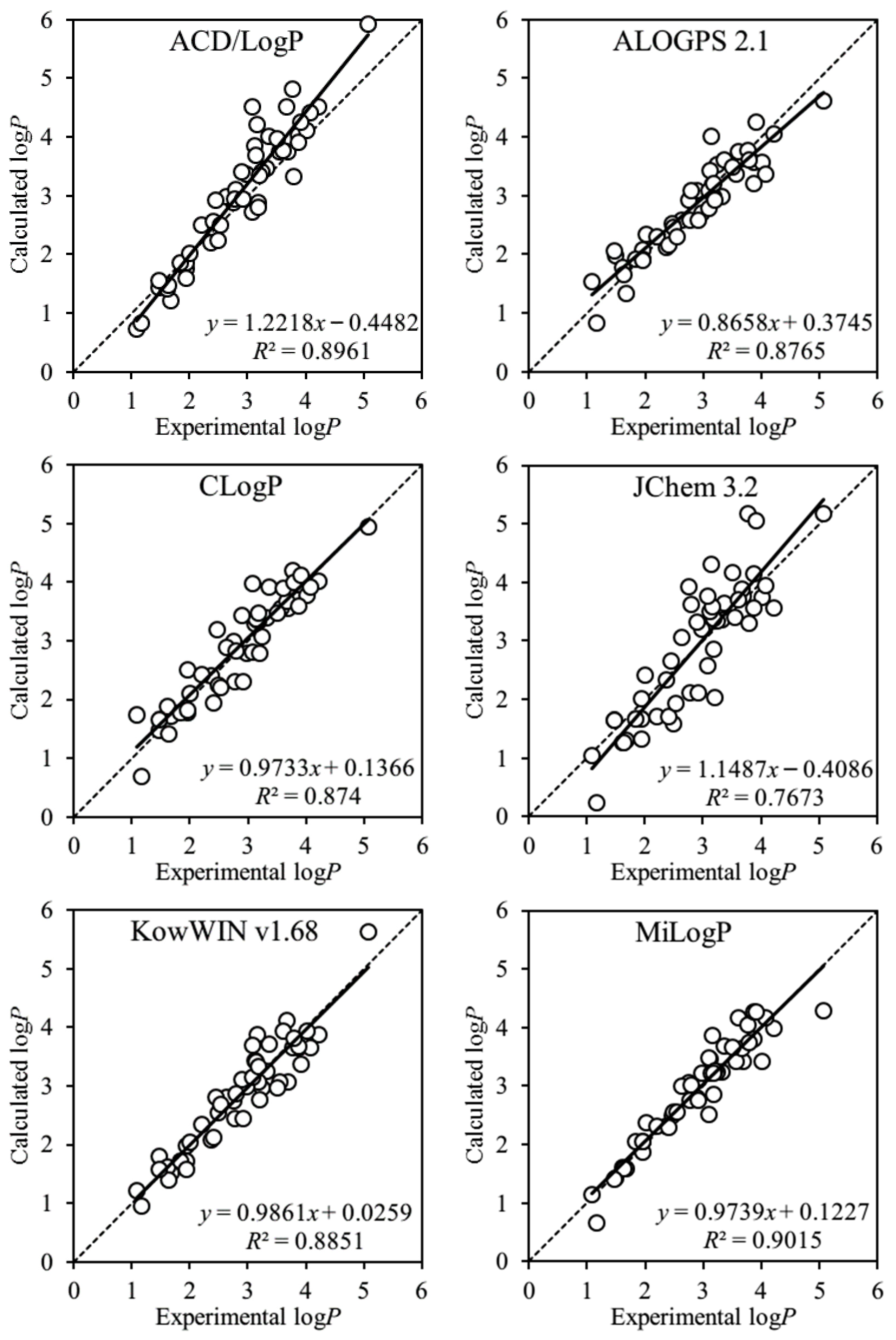
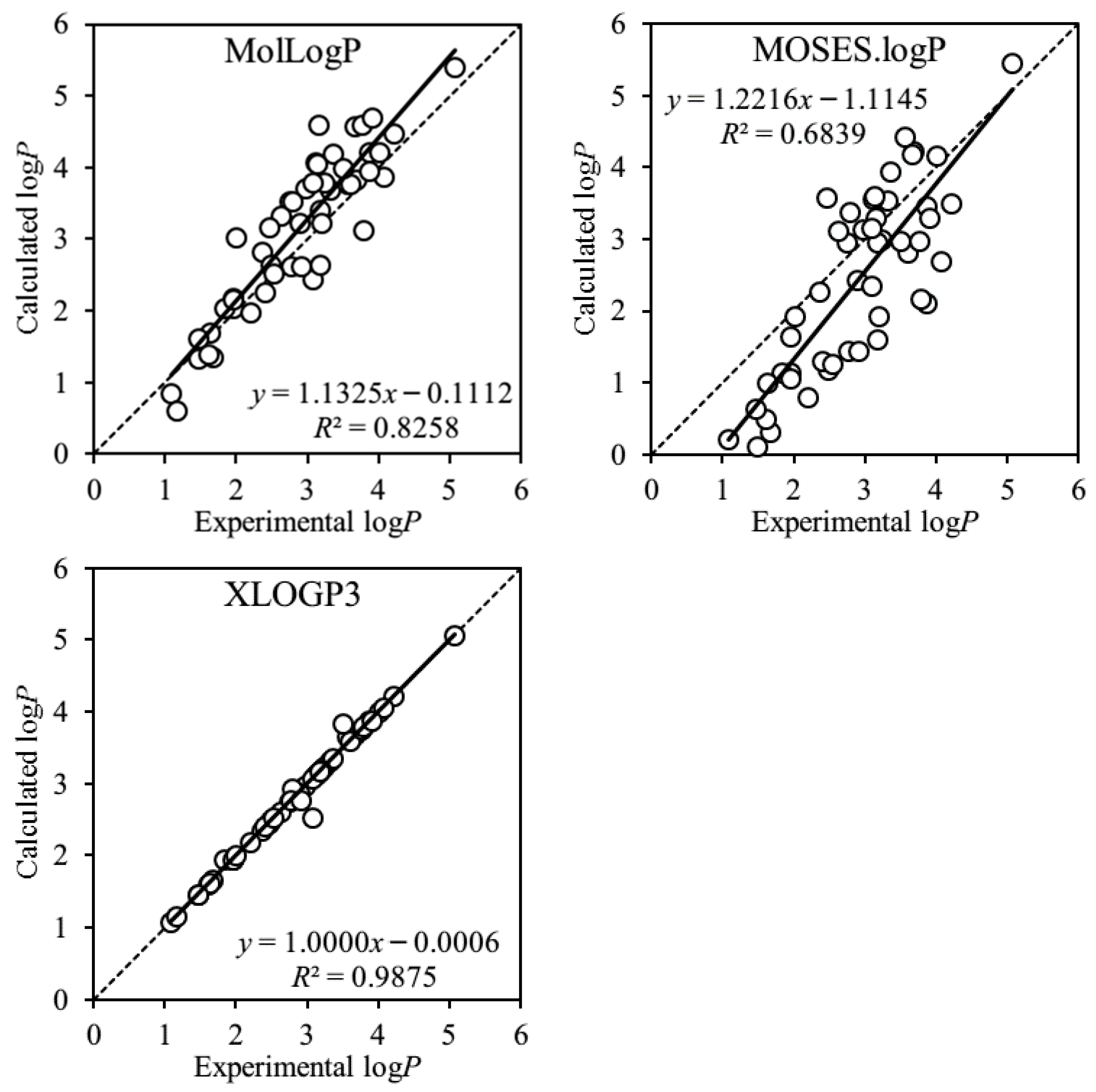
To visually represent these statistical findings, the correlation plots for each program are displayed in Figure 1. These plots clearly illustrate the degree of concordance between predicted and experimental values.
The analysis of these results leads to a clear and definitive conclusion. XLOGP3 demonstrated unequivocally superior performance over all other tested programs. It achieved the highest Adjusted R2 of 0.9872 and the lowest SSE of 0.1004 (Figure 1 and Table S1). Furthermore, its regression equation (y = 1.000x − 0.0006) shows a slope almost identical to 1 and an intercept virtually at 0, indicating an almost perfect systematic agreement with the experimental data. This suggests that XLOGP3 not only captures the relative differences in lipophilicity but also predicts the absolute values with exceptional accuracy for this specific chemical class.
Following XLOGP3, a second tier of reasonably performing programs included MiLogP (Adjusted R2 = 0.8995), ACD/LogP (0.8939), and KOWWIN (0.8827) (Figure 1 and Table S1). These programs, while useful, exhibited significantly higher prediction errors (SSE values nearly three times that of XLOGP3) and deviations from the ideal 1:1 line (Figure 1 and Table S1). The remaining programs, particularly JChem and MOSES.logP, showed poor correlation and high error rates, rendering them unsuitable for reliable prediction of CS lipophilicity. The methods for calculating logKow values can be divided into two major classes: substructure approaches and whole molecule approaches [18]. Substructure approaches can be further divided into atom contribution methods and fragmental methods [18]. In this study, all 9 programs belong to the substructure approaches. The superior performance of XLOGP3 is likely attributable to its hybrid methodology, which combines a robust atom-additive model with a “knowledge-based” correction system. This system identifies a query compound’s nearest structural analog in a large experimental database and uses that known value to adjust the initial calculation, effectively correcting for complex intramolecular interactions that simple additive models fail to capture [44]. Specifically, for rigid structures like steroids, atom-additive methods without such corrections often treat functional groups as isolated entities, failing to account for hydrogen bonding or steric effects that significantly influence lipophilicity. By using correction factors, XLOGP3 overcomes this limitation, which explains why it outperforms other substructure approaches in this specific dataset. Similar robust performance of XLOGP3 has also been reported for other complex organic pollutants in previous benchmark studies [23,24]. In contrast, the poor performance of MOSES.logP may stem from its limited parameterization for the specific atom types and hybridization states present in complex steroidal structures.
Based on this comprehensive validation, XLOGP3 was exclusively selected as the tool for all subsequent predictions and analyses in this study, ensuring the highest possible accuracy for the foundational logKow data.

3.2. Elucidating Structure–Lipophilicity Relationships in CSs

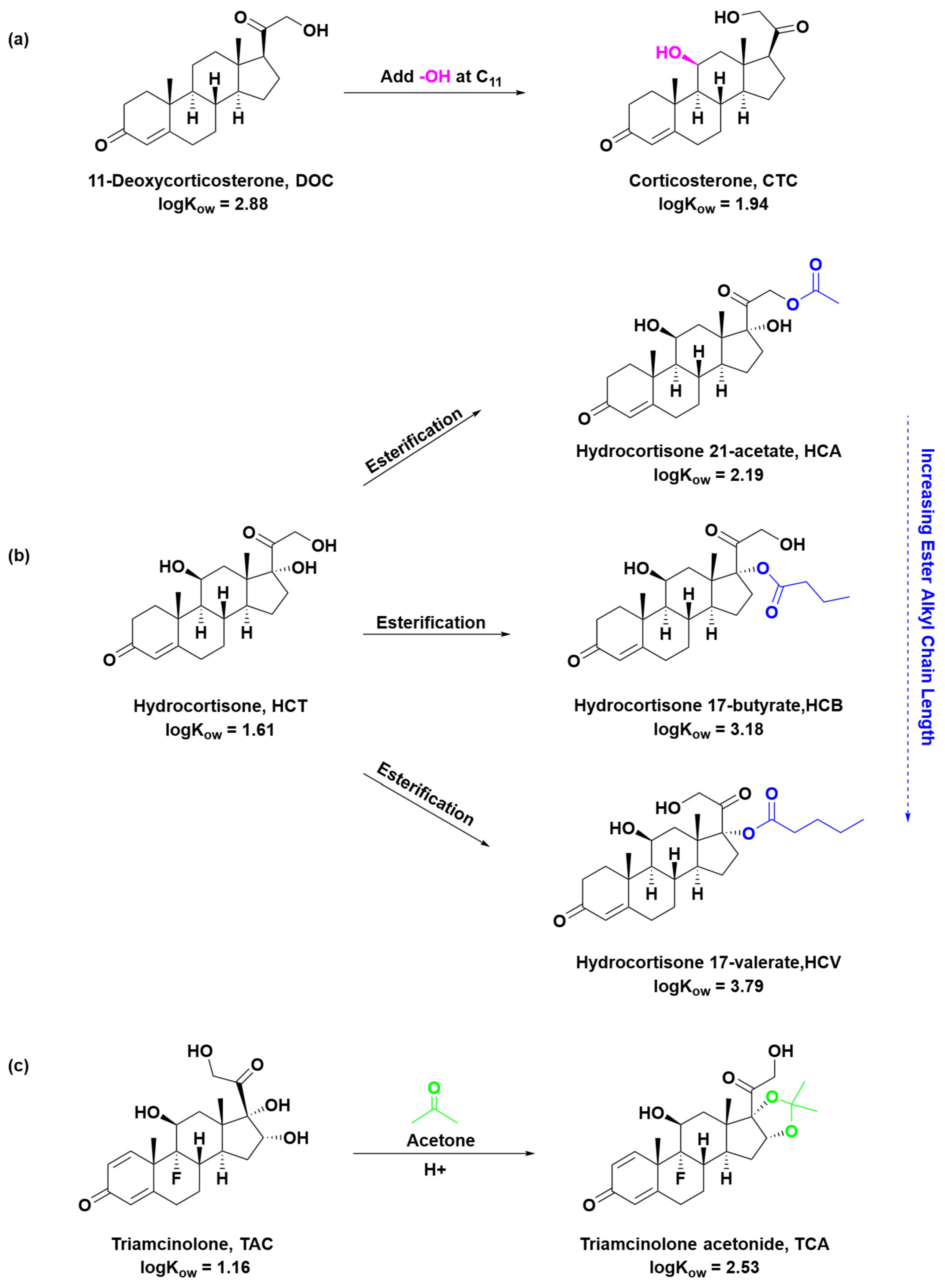
Before proceeding to risk assessment, it is crucial to understand the underlying chemical principles that govern the lipophilicity of CSs. By examining the XLOGP3-predicted logKow values in the context of molecular structure, we can establish clear Structure–Lipophilicity Relationships (SLRs). The lipophilicity of these molecules is determined by a delicate balance: the large, rigid, and inherently nonpolar tetracyclic steroid nucleus contributes to a high baseline lipophilicity, while the number, type, and position of polar functional groups modulate this property. Our analysis revealed three primary structural modifications that systematically and predictably alter the logKow of CSs, as illustrated with representative examples in Figure 2.
The effect of hydroxylation (-OH) is significant. Physicochemically, the hydroxyl group serves as a potent donor and acceptor for hydrogen bonds, greatly facilitating interactions with water molecules. Thus, the introduction of -OH groups onto the steroid skeleton systematically lowers the logKow. A classic comparison is between 11-Deoxycorticosterone (DOC, logKow = 2.88) and Corticosterone (CTC, logKow = 1.94). The sole difference is the addition of a hydroxyl group at the C11 position in Corticosterone, which results in a nearly ten-fold decrease in its octanol–water partition coefficient. This effect is additive; molecules with multiple hydroxyl groups are among the most hydrophilic. Triamcinolone (TAC, logKow = 1.16), featuring hydroxyls at C11, C16, C17, and C21, is one of the least lipophilic CSs, making it more mobile in aqueous environments.
In stark contrast to hydroxylation, esterification is the most common and effective strategy used in pharmaceutical chemistry to increase the lipophilicity of CSs [13]. By replacing a polar hydroxyl hydrogen with a nonpolar alkyl chain, the ability of the molecule to form hydrogen bonds with water is drastically reduced, while van der Waals interactions with lipid phases are enhanced [13]. This modification is typically performed on the C17 and/or C21 hydroxyl groups. By converting a polar -OH group into a less polar ester group (-OC(O)R), the molecule’s overall nonpolar character is enhanced. Our data reveals a clear and quantifiable trend where the lipophilicity increases with the size of the ester’s alkyl chain. This is perfectly demonstrated by the Hydrocortisone series, the parent molecule (HCT, logKow = 1.61) becomes progressively more lipophilic as it is converted to Hydrocortisone 21-acetate (HCA, logKow = 2.19), Hydrocortisone 17-butyrate (HCB, logKow = 3.18), and finally Hydrocortisone 17-valerate (HCV, logKow = 3.79). The effect is even more pronounced when multiple hydroxyls are esterified. Betamethasone dipropionate (BMD, logKow = 4.07), with two propionate esters, is substantially more lipophilic than the parent Betamethasone (BET, logKow = 1.94). These esterified forms are often prodrugs, designed for better membrane permeability and absorption in clinical applications, but this same property enhances their potential for environmental bioaccumulation.
A third significant modification is the formation of a cyclic ketal, or acetonide, between two adjacent hydroxyl groups, typically at the C16 and C17 positions. Structurally, this reaction eliminates two polar hydroxyl groups and introduces a hydrophobic cyclic ether moiety. This effectively masks polarity and encloses the hydrophilic groups within a nonpolar ring structure [46]. The impact on logKow is profound. For example, converting Triamcinolone (TAC, logKow = 1.16) to Triamcinolone acetonide (TCA, logKow = 2.53) increases its partition coefficient by a factor of more than 20. This structural feature is common in potent topical CSs like Fluocinolone acetonide (FCA, logKow = 2.48) and Halcinonide (HAL, logKow = 3.49).
These well-defined SLRs not only provide a chemical rationale for the wide range of logKow values observed across the CSs class but also highlight a critical point for environmental assessment. The specific chemical form of a corticosteroid, whether the parent alcohol versus an ester or acetonide derivative, must be considered, as it drastically alters its environmental behavior and risk profile.

3.3. Screening-Level Environmental Risk Prioritization of Corticosteroids

With a validated tool (XLOGP3) and a solid understanding of the underlying chemistry, this study translates these demonstrated physicochemical properties into prospective environmental indicators. We predicted the logKow values for the full set of 63 steroid hormones and then used these values to estimate their logBCF and logKoc. This comprehensive dataset, presented in Table 2, forms the basis for our risk analysis. Because the predicted values for the 32 synthetic corticosteroids were not experimentally verified in this study, the derived BCF and Koc values should be interpreted as preliminary indicators for compound prioritization.
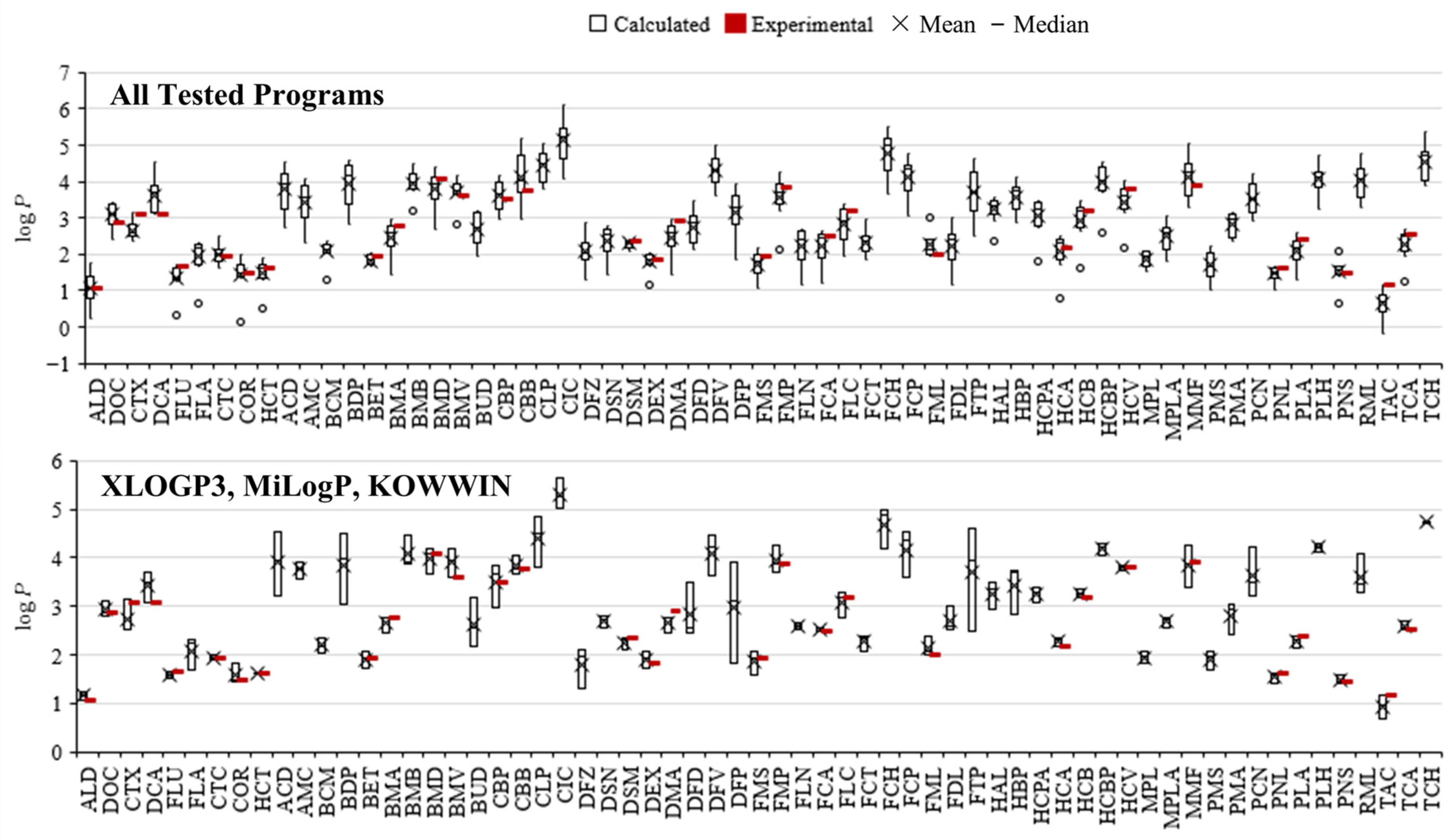
The predicted logKow values span an exceptionally broad range, from 1.08 for Aldosterone to 5.28 for Ciclesonide. This five-orders-of-magnitude variation in partitioning behavior underscores the necessity of a compound-by-compound assessment rather than treating CSs as a homogeneous group. Figure 3 illustrates the distribution of the calculated logKow values from different programs, further emphasizing the consistency of the top-performing models (XLOGP3, MiLogP, KOWWIN) and the wide spread of lipophilicity across the studied compounds.
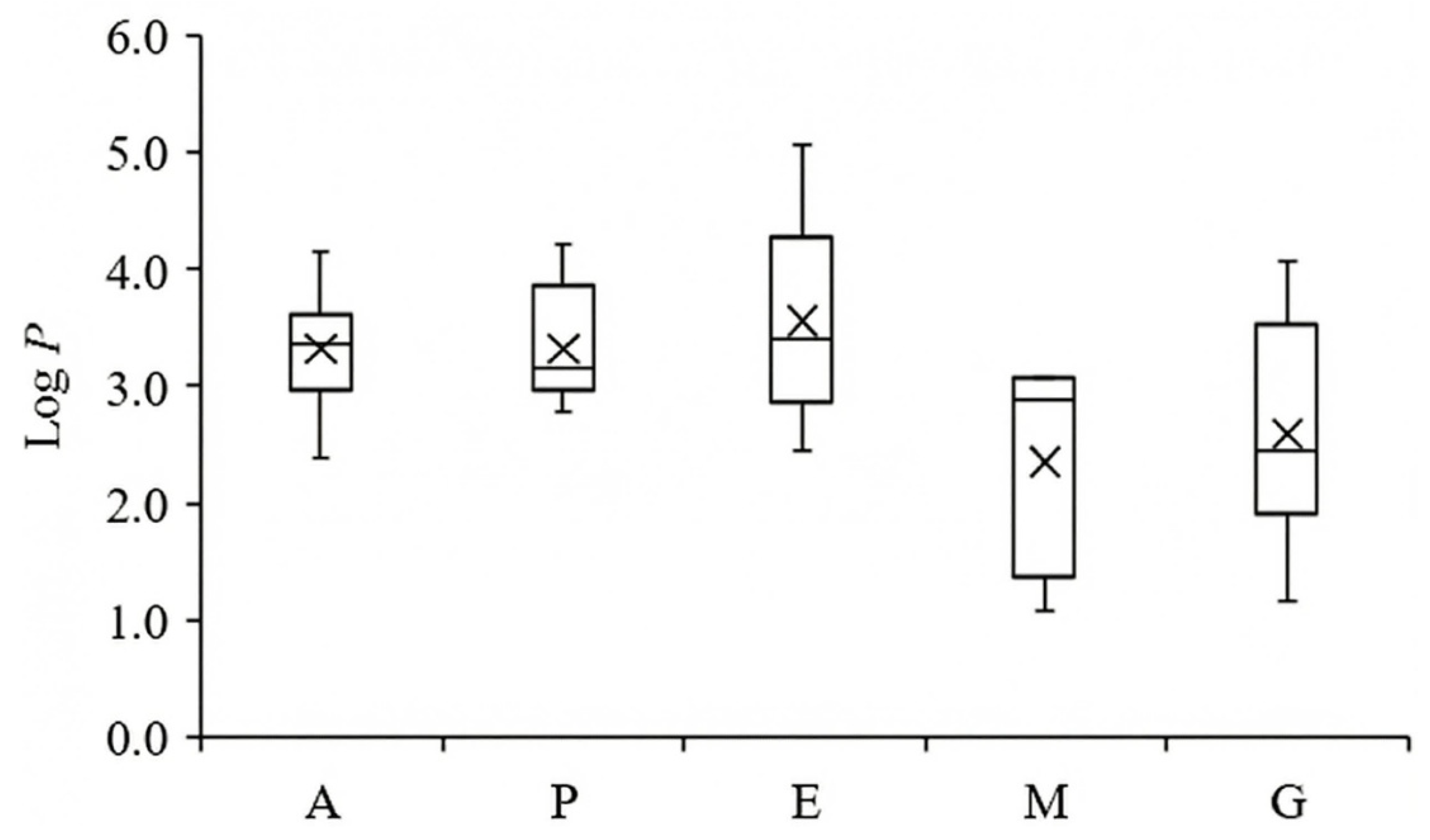
The lipophilicity of steroids is a strong predictor of their degree of adsorption to environmental matrices like sediments, soil, or microalgae [47,48,49]. As shown in the comparison of different steroid hormone classes (Figure 4), mineralocorticoids and glucocorticoids generally exhibit lower logKow values than sex hormones (androgens, progestogens, estrogens). This suggests that, as a group, CSs might be more mobile in the aqueous phase compared to sex hormones. However, the intra-class variability is immense. The less lipophilic the hormone, the more readily it partitions out of sediments and remains in the water column, increasing exposure risk for pelagic organisms like microalgae [47]. Therefore, even CSs with lower logKow require careful consideration in the context of microalgae-based remediation systems.
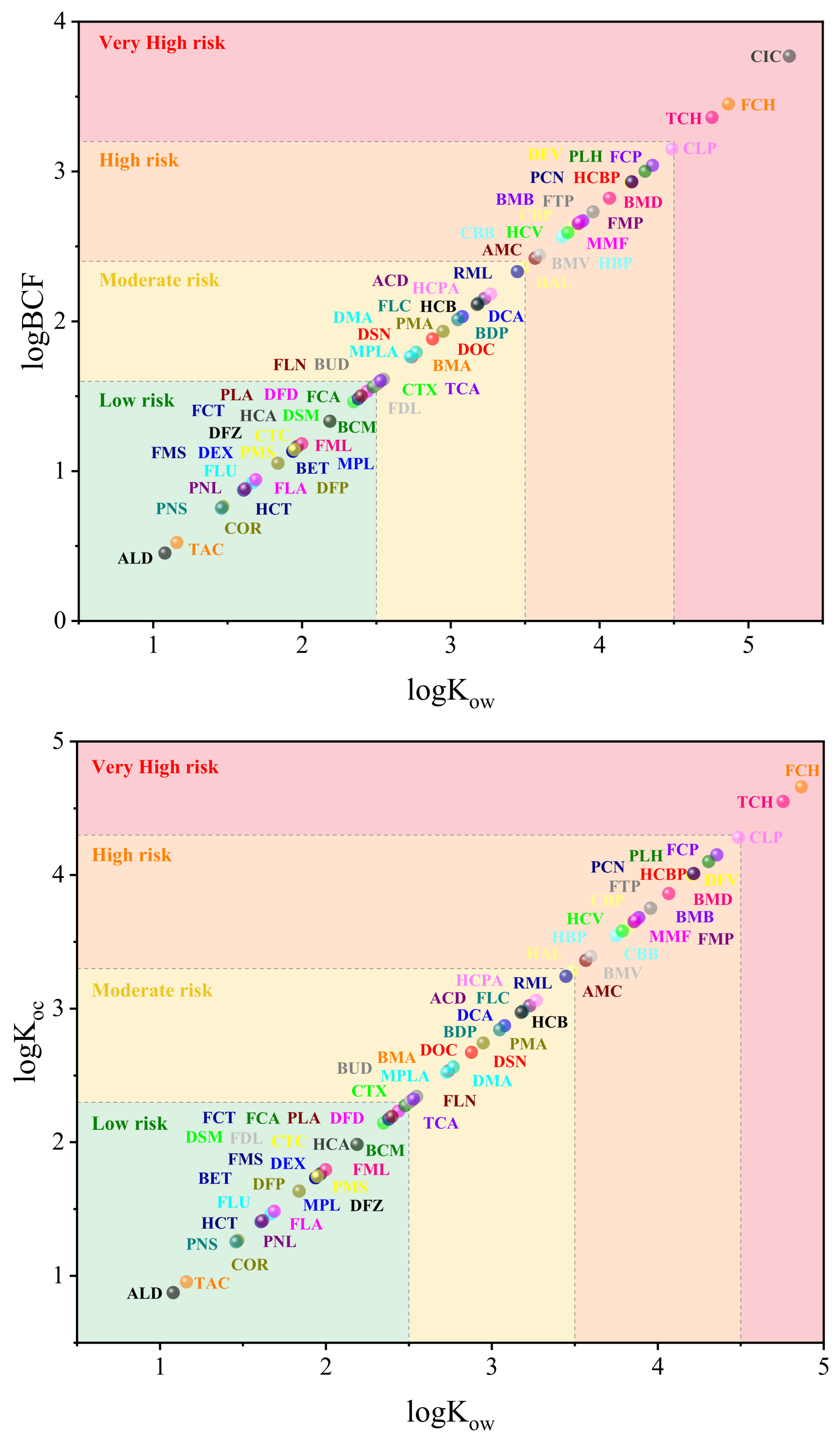
To translate these physicochemical properties into tangible environmental risks within the aquaculture context, it is necessary to consider the primary exposure pathways. The strong, direct relationships between logKow and these derived parameters are visualized in Figure 5. In a typical intensive aquaculture pond, these parameters dictate two critical contamination cycles.
First, the predicted logKoc values provide insight into sediment–water interactions. Compounds in the “High” and “Very High” risk clusters (e.g., Ciclesonide and Mometasone furoate) are expected to strongly partition into organic fractions of pond sediments. This creates a “sediment reservoir” effect, where the benthos is subjected to chronic exposure, and the sediments can act as a secondary source of contamination, entering back into the water column long after the initial pollution event. This is particularly concerning for species that forage at the pond bottom.
Second, the predicted BCF values directly relate to the bioaccumulation pathway, which is further exacerbated by the microalgae-based circular systems described in this study. Microalgae, due to their high surface-area-to-volume ratio and lipid content, can efficiently adsorb lipophilic CSs from wastewater. When these microalgae are harvested and repurposed as fish bait, they act as a “Trojan Horse,” transferring contaminants directly into the fish through dietary intake. For compounds with high logBCF (e.g., >3.0), this dietary exposure, combined with direct branchial (gill) uptake, significantly increases the chemical load in the fish’s muscle and visceral tissues. This not only compromises the physiological health of the fish but also raises serious food safety concerns regarding the presence of steroid residues in final aquatic products intended for human consumption.
Based on these exposure dynamics and established regulatory thresholds, we can categorize the CSs into four broad risk classes. The first category is low-risk CSs with logKow < 2.5. This category includes many of the natural or minimally modified CSs, such as Aldosterone (1.08), Triamcinolone (1.16), Cortisone (1.47), Hydrocortisone (1.61), and Prednisolone (1.62). Their predicted logBCF values are typically below 1.6 (BCF < 40) and logKoc values are below 2.3. These compounds have a low tendency to bioaccumulate in fish and will primarily reside in the water column, where they may be more susceptible to photolysis or microbial degradation. However, their high water-phase concentration could still pose a risk of direct toxic effects to aquatic organisms, especially considering their potent endocrine-disrupting capabilities that are not directly correlated with simple logKow-based toxicity models [50]. The rapid parsing and lower adsorption capacity of these less lipophilic CSs in sediments, soil, or microalgae mean they remain available in the water phase for uptake, necessitating prioritization for remediation efforts in aquaculture wastewater [47].
The second category is moderate-risk CSs with 2.5 ≤ logKow < 3.5. This group contains many moderately esterified or acetonide-modified CSs, like Triamcinolone acetonide (2.53), Desonide (2.74), Betamethasone 21-acetate (2.77), and Hydrocortisone 17-butyrate (3.18). Their logBCF values range from 1.6 to 2.4 (BCF ≈ 40–250), indicating a moderate potential for bioaccumulation in aquatic organisms. Their logKoc values suggest they will partition significantly between water and sediment, acting as both a waterborne and sediment-bound contaminant. This dual presence necessitates a comprehensive monitoring approach, addressing both water column and sediment concentrations to accurately assess exposure pathways and potential risks. The increased lipophilicity in this group makes them more prone to adsorption onto microalgae, potentially impacting the quality of microalgae-derived baits.
The third category is high-risk CSs with 3.5 ≤ logKow < 4.5. This category is dominated by potent, highly modified synthetic CSs. Examples include Betamethasone 17-valerate (3.60), Clobetasol 17-propionate (3.83), Mometasone furoate (3.87), and Betamethasone dipropionate (4.07). Their logBCF values are high (2.4–3.2, BCF ≈ 250–1600), raising significant concerns for bioaccumulation in fish tissue. According to regulatory criteria (e.g., US EPA), compounds with BCF > 1000 are often classified as bioaccumulative [50]. Their high logKoc values (>3.3) indicate that they will be strongly adsorbed to sediments, which can act as long-term sinks and sources of contamination in the aquaculture pond ecosystem. These compounds represent a critical challenge for wastewater treatment and environmental remediation due to their persistence and potential for long-term exposure. Their enhanced lipophilicity also implies a greater potential for accumulation within the lipid-rich biomass of microalgae, directly impacting the quality and safety of feed.
The fourth category is very-high-risk CSs with logKow ≥ 4.5. This small but critically important group represents the greatest environmental threat. It includes compounds like Clocortolone pivalate (4.49), Triamcinolone hexacetonide (4.76), Fluocortolone 21-hexanoate (4.87), and Ciclesonide (5.28). Their predicted logBCF values are extremely high (>3.2, BCF > 1600), flagging them as highly likely to bioaccumulate and potentially be biomagnified in the aquatic food web. The safety of fish from ponds contaminated with these substances would be a major concern, as they could pose risks to human consumers through seafood consumption. Furthermore, their immense logKoc values (>4.3) suggest they will be almost irreversibly bound to sediments, leading to persistent long-term contamination that is difficult to remediate and can pose a continuous threat to benthic organisms and overall ecosystem health. The high lipophilicity of these CSs suggests a high adsorption capacity to microalgae, demanding rigorous assessment of bait quality.
This in silico screening provides a crucial, proactive tool for risk management. It moves beyond simply calculating a physical property to applying that knowledge to forecast environmental behavior. The ranking identifies a clear list of high- and very-high-risk CSs that should be prioritized for inclusion in environmental monitoring programs for aquaculture waters and sediments. It also signals that those toxicological studies should focus on these highly lipophilic compounds to understand their chronic effects and accumulation kinetics in fish, particularly in the context of food chain transfer. While these QSPR predictions do not account for biotransformation, which can reduce accumulation, they effectively represent a worst-case scenario based on intrinsic physicochemical properties, which is the standard first step in chemical risk assessment [50]. This comprehensive approach underscores the necessity of managing CS pollution in water, especially in aquaculture, where the interplay between water quality, microalgae health, and fish safety is critical.

4. Conclusions

In this study, we developed and applied a robust computational workflow to bridge the gap between the molecular structure of corticosteroids and their potential environmental risk in aquaculture systems. Through a rigorous comparative assessment of nine computational tools, we definitively identified XLOGP3 as the superior program for accurately predicting the logKow of steroid hormones, a finding that provides critical guidance for future in silico studies in this area.
Our detailed analysis of structure–lipophilicity relationships elucidated the key chemical modifications (hydroxylation, esterification, and acetonide formation) that dictate the wide spectrum of lipophilicity across the corticosteroid class. This fundamental understanding is crucial for anticipating the environmental behavior of new or unstudied analogues, enabling predictive assessments even in the absence of direct experimental data.
The principal contribution of this work is the translation of these accurate physicochemical data into actionable environmental risk indicators. By employing established QSPR models to estimate the bioconcentration factor (BCF) and sediment adsorption coefficient (Koc), we constructed a preliminary risk hierarchy for 63 different corticosteroids. This assessment clearly flags a subset of highly potent, heavily modified synthetic corticosteroids, such as Ciclesonide, Fluocortolone 21-hexanoate, Triamcinolone hexacetonide, and Clocortolone pivalate, as posing a very high risk. Their predicted properties suggest a strong potential for bioaccumulation in fish and persistent association with sediments: two key processes that threaten the ecological integrity and food safety of aquaculture operations.
The findings presented here provide a scientifically sound, cost-effective, and proactive basis for informed environmental management. This research offers a prioritized list of compounds that warrant immediate attention from regulatory bodies, environmental monitoring agencies, and the aquaculture industry. We recommend that these high-risk CSs be included in future monitoring campaigns and become the focus of experimental ecotoxicological research to validate their predicted behavior and assess their chronic impacts, particularly on fish immune function, reproduction, and overall health. Furthermore, understanding their fate in microalgae-based systems is critical to ensure the safety of recycled feed. However, it is important to note that the predicted logKow, BCF, and Koc values for the 32 synthetic corticosteroids are intended for screening and prioritization rather than definitive endpoint determination. Future experimental measurements of representative compounds would be valuable to further refine and validate these predictions. While these in silico predictions generally represent a worst-case scenario based on intrinsic physicochemical properties, as they do not account for metabolic biotransformation rates in fish, which can significantly reduce actual bioaccumulation, they remain an appropriate first-step tool for chemical prioritization when experimental data are unavailable. Ultimately, this work serves as a vital screening tool to help safeguard aquatic ecosystems and ensure the continued safety and sustainability of global aquaculture production.

Supplementary Materials

The following supporting information can be downloaded at: https://www.mdpi.com/article/10.3390/w18070879/s1, Table S1: Model summary of linear regression of experimental logKow against calculated logKow for the validation set of 50 steroid hormones and a subset of 32 corticosteroids.

Author Contributions

G.C.: Writing—Original Draft, Investigation, Data Curation; S.W.: Writing—Original Draft, Investigation, Methodology; S.L.: Data Curation, Methodology, Validation, Formal analysis; Y.L. (Yu Liu): Investigation, Data Curation, Writing—Reviewing and Editing; Z.G.: Visualization, Validation, Resources; J.Z.: Resources, Validation, Supervision; Y.L. (Yanan Liu): Resources; Supervision; Writing—Reviewing and Editing. All authors have read and agreed to the published version of the manuscript.

Funding

This work was financially supported by the Modern agricultural industrial technology system in China (No. CARS-46), the National Key Research and Development Plan of China [2023YFD2400503] and the Central Public-interest Scientific Institution Basal Research Fund CAFS (NO. 2023TD67).

Data Availability Statement

The raw data supporting the conclusions of this article will be made available by the authors on request.

Conflicts of Interest

The author Shimin Wu was employed by the company Shenzhen Joy Smart Data Technology Co., Ltd. The author Yu Liu was employed by the company Shenzhen SEZ Construction Group Co., Ltd. The remaining authors declare that the research was conducted in the absence of any commercial or financial relationships that could be construed as potential conflicts of interest.

References

  1. Naylor, R.L.; Kishore, A.; Sumaila, U.R.; Anderson, C.M.; Asche, F.; Bush, S.R.; Cabanban, A.S.; Clark, C.W.; Deutsch, L.; Friedlander, A.M. Blue food demand across geographic and temporal scales. Nat. Commun. 2021, 12, 5413. [Google Scholar] [CrossRef] [PubMed]
  2. Huang, J.N.; Liu, Z.Q.; Wen, B.; Wang, Z.N.; Gao, J.Z.; Chen, Z.Z. Stocking filter-feeder in fed fish aquaculture pond: Unexpected Aggravation of nitrous oxide emission. Water Res. 2025, 280, 123475. [Google Scholar] [CrossRef] [PubMed]
  3. Kurniawan, S.B.; Ahmad, A.; Imron, M.F.; Abdullah, S.R.S.; Othman, A.R.; Hasan, H.A. Achieving a Biocircular Economy in the Aquaculture Sector Through Waste Valorization. Toxics 2025, 13, 131. [Google Scholar] [CrossRef]
  4. Xu, H.; Liu, C.; Wang, A.; Yue, B.; Lin, T.; Ding, M. Microalgae treatment of food processing wastewater for simultaneous biomass resource recycling and water reuse. J. Environ. Manag. 2024, 369, 122394. [Google Scholar] [CrossRef]
  5. Liu, Y.; Wang, J.; Zhang, J.; Liu, X.; Wu, S.; Cheng, G.; Liu, Y. Endocrine disrupting chemicals in aquaculture: Sources, effects, and treatments. Environ. Sci. Ecotechnol. 2021, 5, 100078. [Google Scholar]
  6. Esposito, M.C.; Santos, A.L.A.; Bonfilio, R.; de Araújo, M.B. A Critical Review of Analytical Methods in Pharmaceutical Matrices for Determination of Corticosteroids. Crit. Rev. Anal. Chem. 2020, 50, 111–124. [Google Scholar] [CrossRef]
  7. Sheng, M.; Chen, Y.; Li, H.; Zhang, Y.; Zhang, Z. The application of corticosteroids for pathological scar prevention and treatment: Current review and update. Burns Trauma 2023, 11, tkad009. [Google Scholar] [CrossRef]
  8. Martinez, P.; Sabatier, J.M. Rethinking corticosteroids use in oncology. Front. Pharmacol. 2025, 16, 1551111. [Google Scholar] [CrossRef]
  9. Zhu, X.; Liu, S.; Gao, X.; Pan, C.; Liu, Z.; Huang, X.; Zhang, T. Typical emerging contaminants in sewage treatment plant effluent, and related watersheds in the Pearl River Basin: Ecological risks and source identification. J. Hazard. Mater. 2024, 476, 135046. [Google Scholar] [CrossRef]
  10. Jerez-Cepa, I.; Gorissen, M.; Mancera, J.M.; Ruiz-Jarabo, I. What can we learn from glucocorticoid administration in fish? Effects of cortisol and dexamethasone on intermediary metabolism of gilthead seabream (Sparus aurata L.). Comp. Biochem. Physiol. A Mol. Integr. Physiol. 2019, 231, 1–10. [Google Scholar] [CrossRef] [PubMed]
  11. El Mohajer, L.; Chevalier, C.; Chardard, D.; Schaerlinger, B.; Fontaine, P.; Milla, S. Corticosteroid plasma kinetics and gonadal receptor gene expression during the reproductive cycle in female Eurasian Perch: Investigation of the roles of corticosteroids in vitellogenesis. Theriogenology 2023, 202, 61–73. [Google Scholar] [CrossRef]
  12. Mudlaff, M.; Sosnowska, A.; Gorb, L.; Bulawska, N.; Jagiello, K.; Puzyn, T. Environmental impact of PFAS: Filling data gaps using theoretical quantum chemistry and QSPR modeling. Environ. Int. 2024, 185, 108568. [Google Scholar] [CrossRef]
  13. Pandey, S.K.; Roy, K. QSPR modeling of octanol-water partition coefficient and organic carbon normalized sorption coefficient of diverse organic chemicals using Extended Topochemical Atom (ETA) indices. Ecotoxicol. Environ. Saf. 2021, 208, 111411. [Google Scholar] [CrossRef] [PubMed]
  14. Bertato, L.; Chirico, N.; Papa, E. Predicting the Bioconcentration Factor in Fish from Molecular Structures. Toxics 2022, 10, 581. [Google Scholar] [CrossRef]
  15. Liu, K.; Kong, L.; Wang, J.; Cui, H.; Fu, H.; Qu, X. Two-Phase System Model to Assess Hydrophobic Organic Compound Sorption to Dissolved Organic Matter. Environ. Sci. Technol. 2020, 54, 12173–12180. [Google Scholar] [CrossRef]
  16. Grisoni, F.; Consonni, V.; Vighi, M. Detecting the bioaccumulation patterns of chemicals through data-driven approaches. Chemosphere 2018, 208, 273–284. [Google Scholar] [CrossRef] [PubMed]
  17. Su, P.H.; Kuo, D.T.F.; Shih, Y.H.; Chen, C.Y. Sorption of organic compounds to two diesel soot black carbons in water evaluated by liquid chromatography and polyparameter linear solvation energy relationship. Water Res. 2018, 144, 709–718. [Google Scholar] [CrossRef]
  18. Lao, W.; Maruya, K.A.; Tsukada, D. An exponential model based new approach for correcting aqueous concentrations of hydrophobic organic chemicals measured by polyethylene passive samplers. Sci. Total Environ. 2019, 646, 11–18. [Google Scholar] [CrossRef]
  19. Sun, L.; Zhang, M.; Xie, L.; Gao, Q.; Xu, X.; Xu, L. In silico prediction of boiling point, octanol-water partition coefficient, and retention time index of polycyclic aromatic hydrocarbons through machine learning. Chem. Biol. Drug Des. 2023, 101, 52–68. [Google Scholar] [CrossRef] [PubMed]
  20. Martinez-Mayorga, K.; Rosas-Jiménez, J.G.; Gonzalez-Ponce, K.; Lopez-López, E.; Neme, A.; Medina-Franco, J.L. The pursuit of accurate predictive models of the bioactivity of small molecules. Chem. Sci. 2024, 15, 1938–1952. [Google Scholar] [CrossRef]
  21. Świerczek, A.; Szafarz, M.; Cios, A.; Kuczyńska, K.; Bednarek, E.; Stefańska, J.; Boryczka, S. Pharmacokinetics and Quantitative Structure-Pharmacokinetics Relationship Study of Xanthine Derivatives with Antidepressant, Anti-Inflammatory, and Analgesic Activity in Rats. Pharmaceutics 2024, 16, 1463. [Google Scholar] [CrossRef] [PubMed]
  22. Lei, B.; Li, Y.; Li, B.; Zhang, H.; Ma, W.; Yang, S.; Lin, C. Comparison of QSAR models for predicting the n-octanol/water partition coefficient for a diverse set of organic chemicals. Molecules 2017, 22, 1923. [Google Scholar]
  23. Liao, P.; Liu, Z.; Xie, X.; Liu, Y.; Zhang, C.; Wu, M.; Zhang, Y.; Zhang, T. QSAR modeling to describe n-octanol-water partition coefficients of perfluorinated/polyfluorinated alkyl compounds. Mar. Pollut. Bull. 2025, 212, 117594. [Google Scholar] [CrossRef]
  24. Zhong, T.; Hao, Y.L.; Yao, X.; Sun, Y.; Li, W.; Chen, D.; Yuan, M.; Hu, J.; Chen, X.; Lin, Y. Effect of XlogP and Hansen Solubility Parameters on Small Molecule Modified Paclitaxel Anticancer Drug Conjugates Self-Assembled into Nanoparticles. Bioconj. Chem. 2018, 29, 437–444. [Google Scholar] [CrossRef]
  25. Landry, M.L.; Crawford, J.J. LogD Contributions of Substituents Commonly Used in Medicinal Chemistry. ACS Med. Chem. Lett. 2019, 11, 72–76. [Google Scholar] [CrossRef]
  26. Yuan, G.; Guan, Y.; Yi, H.; Lai, S.; Sun, Y.; Cao, S. Antibacterial activity and mechanism of plant flavonoids to gram-positive bacteria predicted from their lipophilicities. Sci. Rep. 2021, 11, 10471. [Google Scholar] [CrossRef]
  27. Sun, Y.; Hou, T.; He, X.; Man, V.H.; Wang, J. Development and test of highly accurate endpoint free energy methods. 2: Prediction of logarithm of n-octanol-water partition coefficient (logP) for druglike molecules using MM-PBSA method. J. Comput. Chem. 2023, 44, 1300–1311. [Google Scholar] [CrossRef]
  28. Peng, H.; Shahidi, F. The Effects of Acyl Chain Length on Antioxidant Efficacy of Mono- and Multi-Acylated Resveratrol: A Comparative Assessment. Molecules 2022, 27, 1001. [Google Scholar] [CrossRef]
  29. Oh, W.Y.; Shahidi, F. Lipophilization of Resveratrol and Effects on Antioxidant Activities. J. Agric. Food Chem. 2017, 65, 8617–8625. [Google Scholar] [CrossRef] [PubMed]
  30. Fitch, W.L.; Khojasteh, C.; Aliagas, I.; Davies, J.; Evans, D.; Gu, Y.; Khetani, M.; Lin, E.; Liu, Y.; Luzung, M.R. Using LC Retention Times in Organic Structure Determination: Drug Metabolite Identification. Drug Metab. Lett. 2018, 12, 93–100. [Google Scholar] [CrossRef] [PubMed]
  31. Santos, L.L.; Wu, E.L.; Grinias, K.M.; Boakye, C.H.; Narayanan, S.; Williams, I.S. Developability profile framework for lead candidate selection in topical dermatology. Int. J. Pharm. 2021, 604, 120750. [Google Scholar] [CrossRef]
  32. Miao, W.G.; Tang, C.; Ye, Y.; Liu, Y.Q.; Zhang, H.C.; Fang, J.G.; Zheng, Y.F. Traditional Chinese medicine extraction method by ethanol delivers drug-like molecules. Chin. J. Nat. Med. 2019, 17, 713–720. [Google Scholar] [CrossRef]
  33. Bhatt, N.M.; Chavada, V.D.; Sanyal, M.; Patel, V.D.; Yadav, K.K. Influence of pH and organic modifiers on the dissociation constants of selected drugs using reversed-phase thin-layer chromatography: Comparison with other techniques and computational tools. Biomed. Chromatogr. 2019, 33, e4666. [Google Scholar] [CrossRef]
  34. USEPA. Estimation Programs Interface Suite™ for Microsoft® Windows, version 411; United States Environmental Protection Agency: Washington, DC, USA, 2012.
  35. Moon, J.; Lee, B.; Ra, J.S.; Kim, K.T. Predicting PBT and CMR properties of substances of very high concern (SVHCs) using QSAR models, and application for K-REACH. Toxicol. Rep. 2020, 7, 995–1000. [Google Scholar] [CrossRef]
  36. Card, M.L.; Gomez-Alvarez, V.; Lee, W.-H.; Lynch, D.G.; Orentas, N.S.; Lee, M.T.; Wong, E.M.; Boethling, R.S. History of EPI Suite™ and future perspectives on chemical property estimation in US Toxic Substances Control Act new chemical risk assessments. Environ. Sci. Process Impacts 2017, 19, 203–212. [Google Scholar] [CrossRef] [PubMed]
  37. Wardecki, D.; Dołowy, M.; Bober-Majnusz, K. Assessment of Lipophilicity Parameters of Antimicrobial and Immunosuppressive Compounds. Molecules 2023, 28, 2820. [Google Scholar] [CrossRef]
  38. Klimoszek, D.; Jeleń, M.; Dołowy, M.; Bober-Majnusz, K.; Musioł, R.; Bębenek, E. Study of the Lipophilicity and ADMET Parameters of New Anticancer Diquinothiazines with Pharmacophore Substituents. Pharmaceuticals 2024, 17, 725. [Google Scholar] [CrossRef]
  39. Schackmuth, M.; Kerrigan, S. Lipophilicity of fentalogs: Comparison of experimental and computationally derived data. J. Forensic Sci. 2023, 68, 1542–1554. [Google Scholar] [CrossRef]
  40. Bober, K.; Bębenek, E.; Boryczka, S. Application of TLC for Evaluation of the Lipophilicity of Newly Synthetized Esters: Betulin Derivatives. J. Anal. Methods Chem. 2019, 2019, 1297659. [Google Scholar] [CrossRef] [PubMed]
  41. Salaria, P.; Akshinthala, P.; Kapavarapu, R.; Pallepati, R.; Bandaru, S.; Kotipalli, M. Identification of novel C-15 fluoro isosteviol derivatives for GABA-AT inhibition by in silico investigations. J. Mol. Model. 2023, 29, 76. [Google Scholar] [CrossRef] [PubMed]
  42. van der Spoel, D.; Manzetti, S.; Zhang, H.; Klamt, A. Prediction of Partition Coefficients of Environmental Toxins Using Computational Chemistry Methods. ACS Omega 2019, 4, 13772–13781. [Google Scholar] [CrossRef] [PubMed]
  43. Pyka-Pająk, A.; Parys, W.; Dołowy, M. Comparison of the Utility of RP-TLC Technique and Different Computational Methods to Assess the Lipophilicity of Selected Antiparasitic, Antihypertensive, and Anti-inflammatory Drugs. Molecules 2019, 24, 3187. [Google Scholar] [CrossRef]
  44. Lee, C.H.; Wang, C.Y.; Kao, H.L.; Chen, S.H.; Chen, S.Y.; Tsai, Y.S.; Lin, J.C.; Lin, W.C. Differentiation of Alkyl- and Plasmenyl-phosphatidylcholine by Endogenous Sphingomyelin RT-XLOGP3 Regression for Coronary Artery Disease Plasma Lipidomics Analysis. Anal. Chem. 2023, 95, 16902–16910. [Google Scholar] [CrossRef]
  45. Zhang, X.; Cheng, D.; Shi, J.; Qin, L.; Wang, T.; Fang, B. QSPR modeling of the logKow and logKoc of polymethoxylated, polyhydroxylated diphenyl ethers and methoxylated-, hydroxylated-polychlorinated diphenyl ethers. J. Hazard. Mater. 2018, 353, 542–551. [Google Scholar] [CrossRef]
  46. Papa, E.; Kovarich, S.; Gramatica, P. On the use of local and global QSPRs for the prediction of physico-chemical properties of polybrominated diphenyl ethers. Mol. Inform. 2011, 30, 232–240. [Google Scholar]
  47. McManus, J.M.; Sharifi, N. Structure-dependent retention of steroid hormones by common laboratory materials. J. Steroid Biochem. Mol. Biol. 2020, 198, 105572. [Google Scholar]
  48. Feng, H.; Xu, X.; Peng, P.; Liu, J.; Zhang, H.; Zhang, Y. Sorption and desorption of epiandrosterone and cortisol on sewage sludge: Comparison to aquatic sediment. Environ. Pollut. 2023, 329, 121663. [Google Scholar] [CrossRef] [PubMed]
  49. Yang, X.; Zhao, H.; Cwiertny, D.M.; Kolodziej, E.P. Sorption and transport of trenbolone and altrenogest photoproducts in soil-water systems. Environ. Sci. Process Impacts 2019, 21, 1650–1663. [Google Scholar] [CrossRef] [PubMed]
  50. Bertram, M.G.; Gore, A.C.; Tyler, C.R.; Brodin, T. Endocrine-disrupting chemicals. Curr. Biol. 2022, 32, R727–R730. [Google Scholar] [CrossRef]
Figure 1. Relationships between the experimental logKow and calculated logKow for 50 validated steroid hormones. Each panel shows the linear regression for one of the nine computational programs. The dashed line represents the ideal 1:1 correlation.
Water 18 00879 g001aWater 18 00879 g001b
Figure 2. The influence of key structural modifications on the logKow of CSs. (a) The addition of a polar hydroxyl (-OH) group at the C11 position results in a decrease of −0.94. (b) Esterification of hydroxyl groups dramatically increases lipophilicity, with the effect being amplified by longer alkyl chains (acetate < butyrate < valerate) (+0.58 for acetate, +1.57 for butyrate, and +2.18 for valerate relative to parent HCT). (c) Acetonide formation, which masks two adjacent hydroxyl groups (C16, C17), results in a substantial increase in lipophilicity (+1.37).
Water 18 00879 g002
Figure 3. Prediction of logKow for 63 corticosteroids using all computational programs and the best three programs. The box-and-whisker plots illustrate the distribution of predicted values, showing the range and consistency of predictions.
Water 18 00879 g003
Figure 4. Ranges of logKow values for five classes of steroid hormones. G = Glucocorticoids; M = Mineralocorticoids; E = Estrogens; P = Progestogens; A = Androgens. The plot shows that corticosteroids (G and M) generally have lower lipophilicity than sex hormones, but the range of values within these classes is wide.
Water 18 00879 g004
Figure 5. Predicted environmental distribution potential of CSs. The plot shows the strong positive correlation between logKow, logBCF, and logKoc. Compounds are color-coded by their potential risk class, highlighting those with high potential for bioaccumulation (high BCF) and sediment partitioning (high Koc).
Water 18 00879 g005
Table 1. Experimental and theoretical partition coefficients (logKow) of 50 steroid hormones used for validation.
CompoundsAbbr.FormulaMWExp.
logKow
ACD/
LogP
ALOGPS
2.1
CLogPJChem
3.2
KowWIN
v1.68
MiLogPMOSES.
logP
MolLogPXLOGP3
Androgens
Natural
Androstenedione (4-Androstene-3,17-dione)ADDC19H26O2286.422.752.902.933.013.932.763.062.973.532.75
TestosteroneTTRC19H28O2288.433.323.482.993.413.373.273.253.533.693.32
Androsterone (cis-Androsterone)ADRC19H30O2290.453.693.753.713.553.773.073.434.223.843.69
DehydroepiandrosteroneDHEAC19H28O2288.433.233.423.533.073.362.983.253.013.803.23
Synthetic
17α-MethyltestosteroneMTTC20H30O2302.463.364.023.613.933.653.723.693.954.193.36
Nandrolone (19-Nortestosterone)NDLC18H26O2274.402.623.002.602.893.072.823.003.113.332.62
5α-Dihydrotestosterone (Androstanolone and Stanolone)DHTC19H30O2290.453.553.753.373.553.413.073.434.443.773.66
Progestogens
Natural
ProgesteronePGT, P4C21H30O2314.473.874.043.583.964.153.673.813.474.213.87
17α-Hydroxyprogesterone17-HPTC21H30O3330.473.172.892.993.343.403.082.862.963.423.17
PregnenolonePGL, P5C21H32O2316.494.224.524.064.033.583.893.993.514.474.22
Synthetic
EthisteroneETHC21H28O2312.453.113.863.443.313.523.443.483.564.073.11
19-Norethisterone (Norethindrone)NET, NTDC20H26O2298.432.973.382.722.793.222.993.233.143.712.97
EtonogestrelENGC22H28O2324.463.164.233.193.353.603.893.883.314.603.16
Estrogens
Natural
EstroneE1C18H22O2270.373.133.694.033.384.313.433.243.604.053.13
17β-EstradiolE2βC18H24O2272.394.014.133.573.783.753.943.434.174.214.01
EstriolE3C18H24O3288.392.452.942.543.202.672.812.513.593.172.45
Synthetic
17α-EthynylestradiolEE2C20H24O2296.413.674.523.633.683.904.123.664.194.593.67
DiethylstilbestrolDESC18H20O2268.365.075.934.624.965.195.644.305.455.415.07
Mineralocorticoids
Natural
AldosteroneALDC21H28O5360.451.080.731.541.761.061.231.160.220.851.08
11-Deoxycorticosterone (21-Hydroxyprogesterone)DOCC21H30O3330.472.883.413.103.443.333.122.802.433.232.88
Synthetic
11-Deoxycortisol (Cortexolone)CTXC21H30O4346.473.082.742.792.812.583.152.532.362.442.52
Deoxycorticosterone acetateDCAC23H32O4372.513.084.533.093.983.773.713.503.173.803.08
9α-FludrocortisoneFLUC21H29FO5380.461.671.231.351.731.321.521.600.321.361.67
SpironolactoneSPLC24H32O4S416.582.783.123.102.843.642.883.033.393.542.93
Glucocorticoids
Natural
CorticosteroneCTCC21H30O4346.471.941.762.092.512.021.991.881.642.191.94
CortisoneCORC21H28O5360.451.471.441.981.491.661.811.430.121.331.47
Hydrocortisone (Cortisol)HCTC21H30O5362.471.611.431.791.891.281.621.620.501.401.61
Synthetic
BetamethasoneBETC22H29FO5392.471.941.871.931.791.681.722.061.142.041.94
Betamethasone 21-acetateBMAC24H31FO6434.502.772.962.602.322.122.462.761.452.622.77
Betamethasone dipropionateBMDC28H37FO7504.604.074.423.383.923.963.664.182.703.874.07
Betamethasone 17-valerateBMVC27H37FO6476.593.603.783.763.913.713.944.182.813.773.60
Clobetasol 17-propionateCBPC25H32ClFO5466.973.503.983.493.494.182.983.682.993.993.83
Clobetasone 17-butyrateCBBC26H32ClFO5478.993.764.823.774.215.193.674.052.974.613.76
Desoximetasone (Dexamethasone 21-desoxy)DSMC22H27FO4376.472.352.202.132.412.352.092.322.282.822.35
DexamethasoneDEXC22H29FO5392.471.831.871.931.791.681.722.061.142.041.94
Dexamethasone 21-acetateDMAC24H31FO6434.502.912.962.602.322.122.462.761.452.622.77
FlumethasoneFMSC22H28F2O5410.461.941.611.911.831.341.592.071.062.171.94
Flumethasone 21-pivalateFMPC27H36F2O6494.583.863.933.213.603.583.694.272.123.963.86
Fluocinolone acetonideFCAC24H30F2O6452.492.482.242.472.251.602.562.571.192.652.48
FluocinonideFLCC26H32F2O7494.533.193.362.932.792.052.773.271.933.233.19
FluorometholoneFMLC22H29FO4376.472.002.022.342.112.422.062.381.933.032.00
Hydrocortisone 21-acetateHCAC23H32O6404.502.192.512.312.421.722.362.320.811.982.19
Hydrocortisone 17-butyrateHCBC25H36O6432.563.182.813.213.482.863.343.241.622.643.18
Hydrocortisone 17-valerateHCVC26H38O6446.583.793.343.624.013.313.833.752.173.133.79
Mometasone furoateMMFC27H30Cl2O6521.433.904.274.274.125.063.384.273.294.713.87
PrednisolonePNLC21H28O5360.451.621.491.661.421.271.401.591.011.691.62
Prednisolone 21-acetatePLAC23H30O6402.492.402.582.171.961.712.142.301.322.272.40
PrednisonePNSC21H26O5358.431.461.572.071.661.661.591.410.631.621.46
TriamcinoloneTACC21H27FO6394.441.160.830.840.710.240.960.67−0.170.621.16
Triamcinolone acetonideTCAC24H31FO6434.502.532.502.312.211.942.692.561.272.532.53
Table 2. Predicted logKow (by XLOGP3) and derived environmental parameters (logBCF, logKoc) for 63 CSs and related steroid hormones, sorted by potential environmental risk.
NameAbbr.XLOGP3logBCFlogKoc
AldosteroneALD1.080.450.87
11-Deoxycorticosterone (21-Hydroxyprogesterone)DOC2.881.882.67
11-Deoxycortisol (Cortexolone)CTX2.521.592.31
Deoxycorticosterone acetateDCA3.082.032.87
9α-FludrocortisoneFLU1.670.921.46
Fludrocortisone acetateFLA1.690.941.48
CorticosteroneCTC1.941.131.73
CortisoneCOR1.470.761.26
Hydrocortisone (Cortisol)HCT1.610.871.40
Alclometasone dipropionateACD3.232.153.02
AmcinonideAMC3.572.423.36
BeclomethasoneBCM2.191.331.98
Beclomethasone dipropionateBDP3.052.012.84
BetamethasoneBET1.941.131.73
Betamethasone 21-acetateBMA2.771.792.56
Betamethasone 17-benzoateBMB3.892.673.68
Betamethasone dipropionateBMD4.072.823.86
Betamethasone 17-valerateBMV3.602.443.39
BudesonideBUD2.551.612.34
Clobetasol 17-propionateCBP3.832.633.62
Clobetasone 17-butyrateCBB3.762.573.55
Clocortolone pivalateCLP4.493.154.28
CiclesonideCIC5.283.775.07
DeflazacortDFZ1.971.161.76
DesonideDSN2.741.762.53
Desoximetasone (Dexamethasone 21-desoxy)DSM2.351.462.14
DexamethasoneDEX1.941.131.73
Dexamethasone 21-acetateDMA2.771.792.56
Diflorasone diacetateDFD2.441.532.23
Diflucortolone valerateDFV4.212.934.00
DifluprednateDFP1.841.051.63
FlumethasoneFMS1.941.131.73
Flumethasone 21-pivalateFMP3.862.653.65
FlunisolideFLN2.511.582.30
Fluocinolone acetonideFCA2.481.562.27
FluocinonideFLC3.192.122.98
FluocortoloneFCT2.381.482.17
Fluocortolone 21-hexanoateFCH4.873.454.66
Fluocortolone 21-pivalateFCP4.363.044.15
FluorometholoneFML2.001.181.79
FlurandrenolideFDL2.511.582.30
Fluticasone propionateFTP3.962.733.75
HalcinonideHAL3.492.363.28
Halobetasol propionateHBP3.752.563.54
Hydrocortisone aceponate (Hydrocortisone 17-propionate 21-acetate)HCPA3.272.183.06
Hydrocortisone 21-acetateHCA2.191.331.98
Hydrocortisone 17-butyrateHCB3.182.112.97
Hydrocortisone probutate (Hydrocortisone 17-butyrate 21-propionate)HCBP4.222.934.01
Hydrocortisone 17-valerateHCV3.792.593.58
6α-MethylprednisoloneMPL1.951.141.74
Methylprednisolone 21-acetateMPLA2.731.762.52
Mometasone furoateMMF3.872.663.66
ParamethasonePMS1.951.141.74
Paramethasone 21-acetatePMA2.951.932.74
PrednicarbatePCN4.222.934.01
PrednisolonePNL1.620.881.41
Prednisolone 21-acetatePLA2.401.502.19
Prednisolone hexanoatePLH4.313.004.10
PrednisonePNS1.460.751.25
RimexoloneRML3.452.333.24
TriamcinoloneTAC1.160.520.95
Triamcinolone acetonideTCA2.531.602.32
Triamcinolone hexacetonideTCH4.763.364.55
Disclaimer/Publisher’s Note: The statements, opinions and data contained in all publications are solely those of the individual author(s) and contributor(s) and not of MDPI and/or the editor(s). MDPI and/or the editor(s) disclaim responsibility for any injury to people or property resulting from any ideas, methods, instructions or products referred to in the content.