1. Introduction
Hydrological systems are traditionally described as exhibiting memory, meaning that antecedent climatic and basin conditions influence present hydrological states. This concept of hydrological memory underpins runoff generation, drought propagation, soil moisture persistence, and groundwater recharge dynamics. In classical hydrological theory, memory is often assumed to be quasi-stationary, implying that the statistical dependence between climatic forcing and basin response remains relatively stable over time. However, increasing evidence suggests that ongoing climate warming may be altering not only the magnitude of hydroclimatic variables but also the structure of their temporal relationships [
1,
2,
3].
Climate change affects precipitation regimes, evapotranspiration demand, snow accumulation and melt processes, and soil moisture dynamics, thereby potentially reorganising basin-scale Water Budget mechanisms. Such changes may alter the strength and timing of the coupling between hydroclimatic drivers and the hydrological response, leading to shifts in system memory [
4].
Rolling correlation frameworks and structural breakpoint detection methods provide powerful tools to quantify temporal variability in hydroclimatic coupling. By examining time-varying cross-correlation between Water Budget components and climate indices, it is possible to identify periods of regime reorganisation and assess whether recent decades exhibit amplified instability. Such an approach moves beyond traditional trend analysis and instead evaluates whether the functional linkage between climate and hydrology is changing [
5,
6].
The non-stationarity of hydroclimatic memory in the ten largest European basins is investigated in the paper. Specifically, the research aimed to answer the following questions:
Has the strength and lag structure of the coupling between Water Budget components and Combined Climatological Drought deviation changed over time?
Are structural breakpoints detectable in the temporal evolution of cross-correlation?
Does hydroclimatic memory instability exhibit a spatial organisation across latitude?
The author hypothesises that climate warming and increasing hydroclimatic variability would lead to a reorganisation of the WB-CCDI coupling, reflected in time-varying correlation strength, shifts in dominant lags, and increased instability after 2010. The paper assumes that not only the magnitude of the hydrological signal changes, but also the structure of connections associated with the warming climate changes. By introducing an Instability Index derived from time-varying cross-correlation, it is aimed to provide a comparative metric of evolving hydrological memory across basins and climatic gradients.
This paper introduces innovative solutions, demonstrating that the WB-CCDI coupling is not constant over time and has varying regional dynamics. A new indicator, the Instability Index, was also introduced, combining temporal and spatial analysis.
2. Data
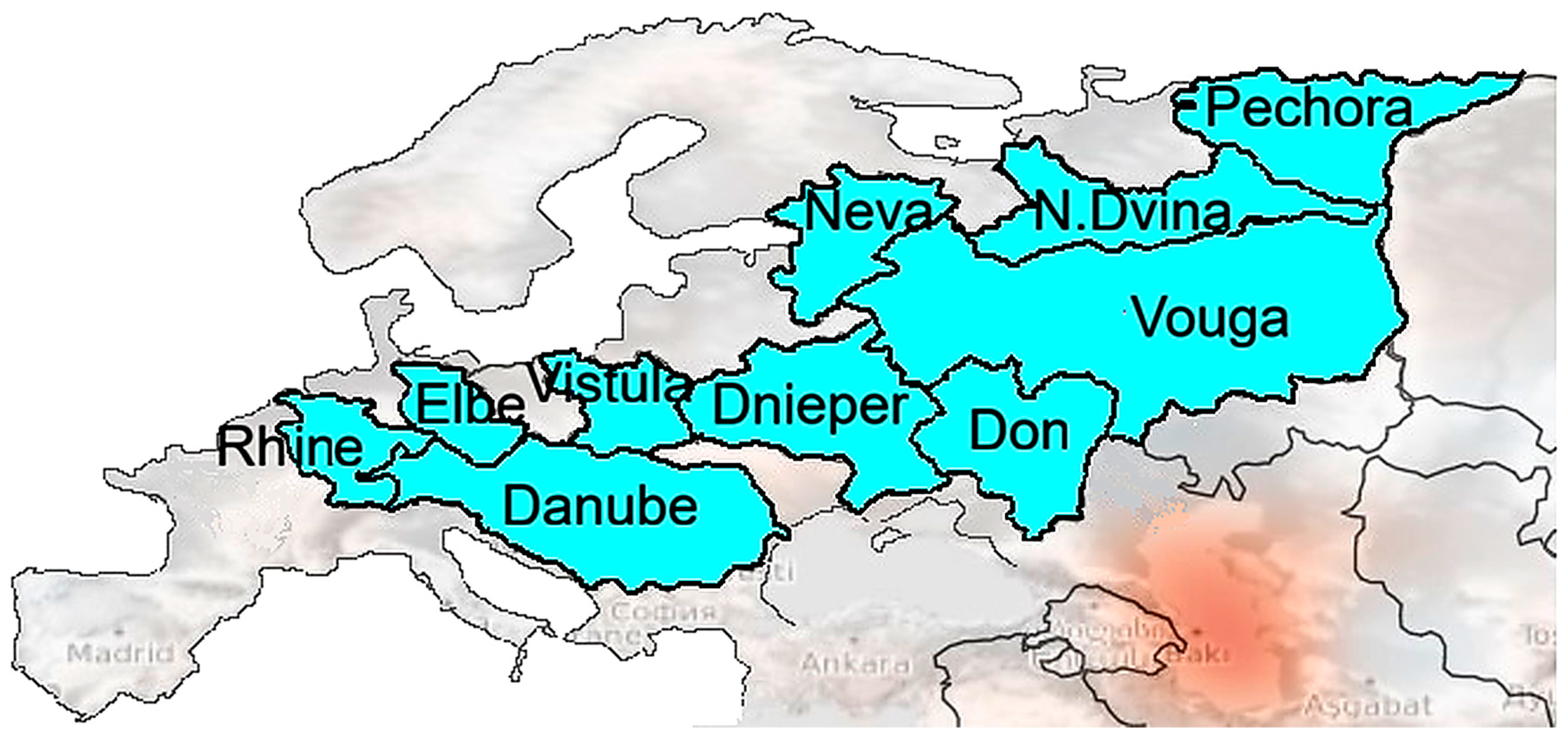
The study determined the instability of water regimes in the ten largest basins in Europe (
Figure 1).
The study is based on observations obtained from two satellite models.
The Total Water Storage (TWS) data were obtained from the GRACE (Gravity Recovery and Climate Experiment) and GRACE-FO (GRACE Follow-On) satellite missions. These are dedicated missions whose primary goal is to map temporal and spatial changes in the Earth’s gravity field, which are then recalculated into TWS. The mission was launched in 2002 and operated until 2017, followed by GRACE-FO, which started in 2018. The GRACE mission utilises a pair of satellites to monitor changes in the distance between them. Those changes reflect mass redistribution [
7,
8,
9]. TWS represent the sum of changes in groundwater, soil moisture, surface water (lakes and rivers), glaciers, and snow. TWS time series have a very wide range of applications: they are used to quantify groundwater stress [
10,
11], droughts and floods in large-scale areas [
12,
13], and processes occurring in soils [
14]. Data was acquired from
https://grace.jpl.nasa.gov/data/get-data/jpl_global_mascons/ (accessed on 8 February 2026) with 1° × 1° spatial resolution and one-month time resolution.
TWS is often integrated with assimilation models. One of them is the Modern-Era Retrospective Analysis for Research and Applications, version 2 (MERRA 2), from which values of precipitation (P), evapotranspiration (EV), and surface runoff (SRO) were acquired. MERRA 2 is a NASA global atmospheric reanalysis model produced using the Goddard Earth Observing System Model (GEOS) version 5.12. The model assimilates satellite-era observations, including aerosol data, for a consistent, high-resolution record of weather and climate. Observations from the model are commonly used for climate analysis [
15], studying climate change [
16], and providing data for wind power modelling [
17,
18] and aerosol modelling [
19,
20]. Data for the research were acquired from
https://gmao.gsfc.nasa.gov/gmao-products/merra-2/data-access_merra-2/ (accessed on 3 February 2026) with 0.5° × 0.625° spatial resolution and one-month time resolution.
The research was conducted for the time range April 2006–December 2023.
The mean values for time series determination were computed over every single basin according to
Figure 1, strictly covering only the land area. The problem with the model is spatial resolution, as MERRA-2 observations are in kg/m
2/s, so they were recomputed to receive centimetre units, as TWS units. P, EV, and SRO values were divided by 10, considering that 1 kg of water is 1000 cm
3, so 1 L, and 1 m
2 is 10,000 cm
2. Each value was multiplied by the number of seconds in each month, to be able to change the flow value (kg/m
2/s) to static (kg/m
2).
The limitation of observations is its spatial resolution-it cannot be used for small or point measurements.
3. Methods
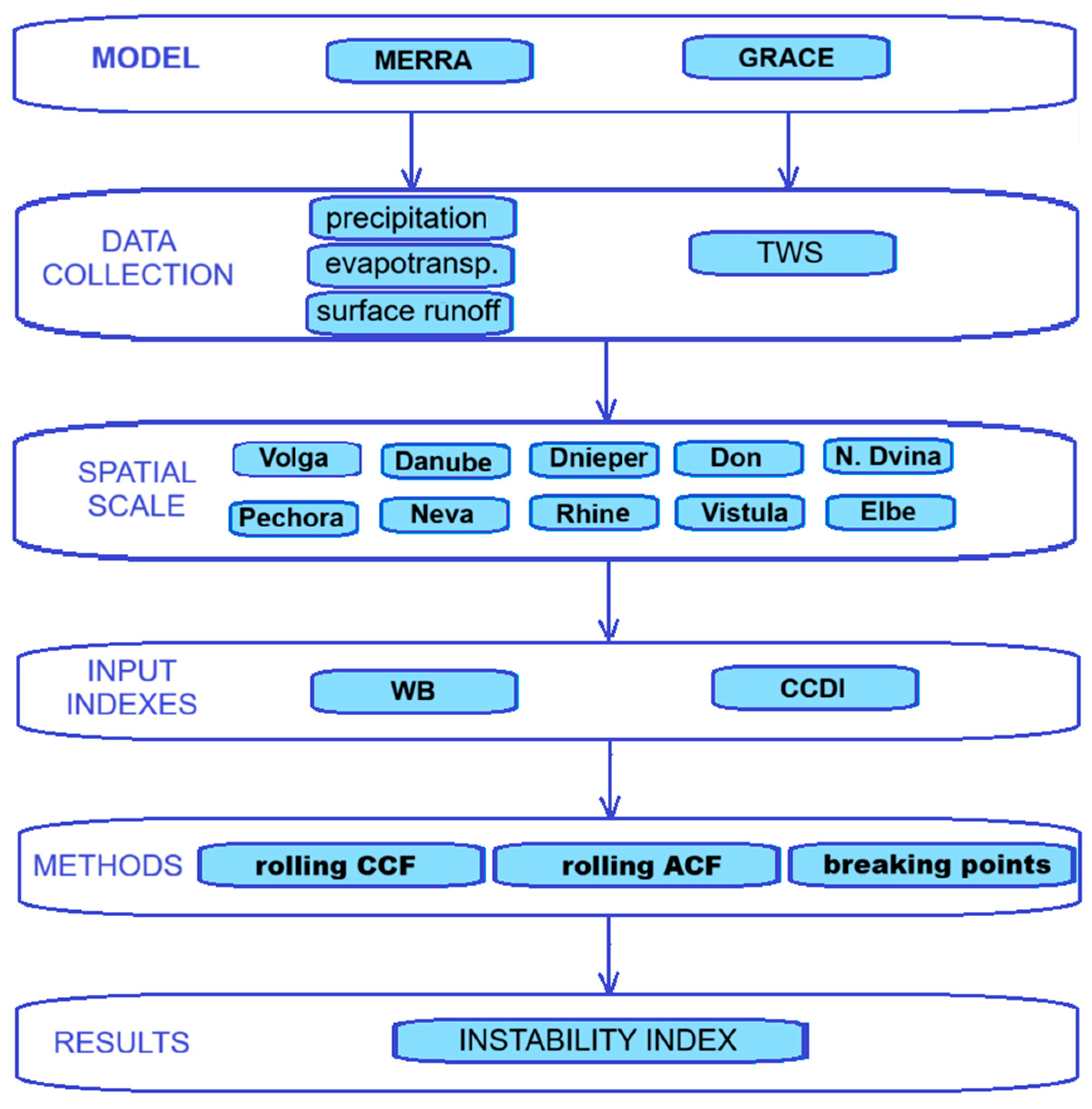
The step-by-step procedure of the research is presented in
Figure 2.
The study used observations from two satellite models: TWS GRACE and MERRA 2 Reanalysis data (acquired: P, EV, and SRO time series values). Then, two indices were determined: Water Budget (WB) and Combined Climatological Deviation Index (CCDI).
WB was computed based on [
21,
22]
Climatologic Deviation (CD) is computed according to the formula [
23,
24]
where
precipitation anomaly residua and
: total water storage anomaly residua.
CD is a statistical diagnostic index based on the precipitation anomaly residual, which describes the deviation of precipitation from normal (describes disturbances in water flow into the system), and the Total Water Storage anomaly residual, which reflects the state of water storage in the land system. CD can be considered a simplified water balance index.
Then, the Combined Climatological Deviation Index is computed as [
23,
24]:
where
: mean value of
and
:
standard deviation.
The CCDI normalises the signal and standardises the CD index. It removes the mean, scales by standard deviation, and allows for comparisons across regions and time periods. Any deviation of the CCDI from the norm indicates extremes (drought/humidity), thus allowing for the examination of climate anomalies.
Having computed WB and CCDI, the rolling cross-correlation function (rolling CCF ± 2 lags) and rolling auto-correlation function (rolling ACF) were determined for the purpose of assessing time-varying dependencies between the hydrological and climatic variables. Sliding time windows of fixed length (50 observations) were used. Rolling correlation techniques are widely used in climate and hydrological time series analysis to capture non-stationarity and temporal variation in relationships [
25,
26,
27,
28,
29]. Computations were made according to the formulas:
Changes in the dominant lag mean changes in system dynamics.
Since the aim of the study was to analyse the variability of the relationship between two series (WB and CCDI) over time, the next step was to detect the moments at which the mechanism of this relationship changes. The basis for the assessment is not the detection of extremes of individual measurements, but the change in the structure of the dependence (statistical regime change, so-called structural break), through the analysis of the change in the mean cross-correlation, the change in the variance of the cross-correlation, or the change in the dominant lag. The task of the algorithm is to search for
moments that satisfy Formula (6) [
5,
30]. In the research, a sliding window approach was implemented to compute time-varying cross-correlations, and the Bai–Perron multiple breakpoint framework was applied to detect statistically significant changes in the mean level of the resulting time series:
for segments
, where
changes when breaks occur, and all the parameters are detected using statistical methods.
The Instability Index is a measure of the variability of the coupling structure, calculated as an averaged measure of process instability. To quantify the temporal variability of hydroclimatic coupling, the author introduces an Instability Index defined as the mean standard deviation of rolling cross-correlations (in the presented research, over a 50-observation window). Similar approaches using rolling statistics to assess non-stationarity have been employed in climate and hydrological time series analysis [
26,
28,
29]. The index synthesises temporal variability of lag-dependent cross-correlation into a single metric for cross-basin comparison.
The Instability Index of the research is defined by the author as
The proposed Instability Index quantifies temporal variability in the cross-correlation structure between WB and CCDI, capturing changes in the strength and timing of hydrological responses to climatic forcing. Unlike traditional trend or breakpoint methods, it reflects evolving system dynamics and thus provides a complementary measure of hydrological non-stationarity.
The Instability Index can be interpreted as a measure of the variability of the temporal dependence (coupling) structure between variables, in the presented study between WB and CCDI, over a short lag window. The index is based on the cross-correlation function (CCF), which describes how strongly and with what lag one variable responds to another. For each time instant, the correlation distribution for lags is analysed (in the manuscript, it was examined for −2 … +2). Physically, it indicates how much the hydrological response mechanism changes over time. Interpretation of the results involves analysing if the Instability Index reaches a low value, the system responds stably, and the lag and strength of the response are similar over time. Conversely, a high value indicates that the response time (lag) and the strength of the coupling are changing, and the hydrological regime is reorganised.
Compared to classical approaches, the use of the proposed index is sensitive to the dynamics of the processes. Traditional methods (such as the Mann–Kendall test or Pettitt’s test) detect a trend, a single change point. The Instability Index detects continuous changes in process relationships, not just a change point, and takes into account lags. While most classical indices analyse a single series, the proposed index analyses the WB-CCDI coupling across time and lag space. Classical approaches may fail to detect changes if the mean remains unchanged; the proposed index is sensitive to hidden non-stationarity and detects changes in the relationship structure despite the absence of a trend. The Instability Index is suitable for short time series (~15–20 years).
Among the limitations of the proposed index are its lack of direct physical interpretation. The index’s structure makes it an indirect (statistical) indicator and does not explain why the system is changing. The index also depends on parameters (the choice of lag range or time window length).
4. Results
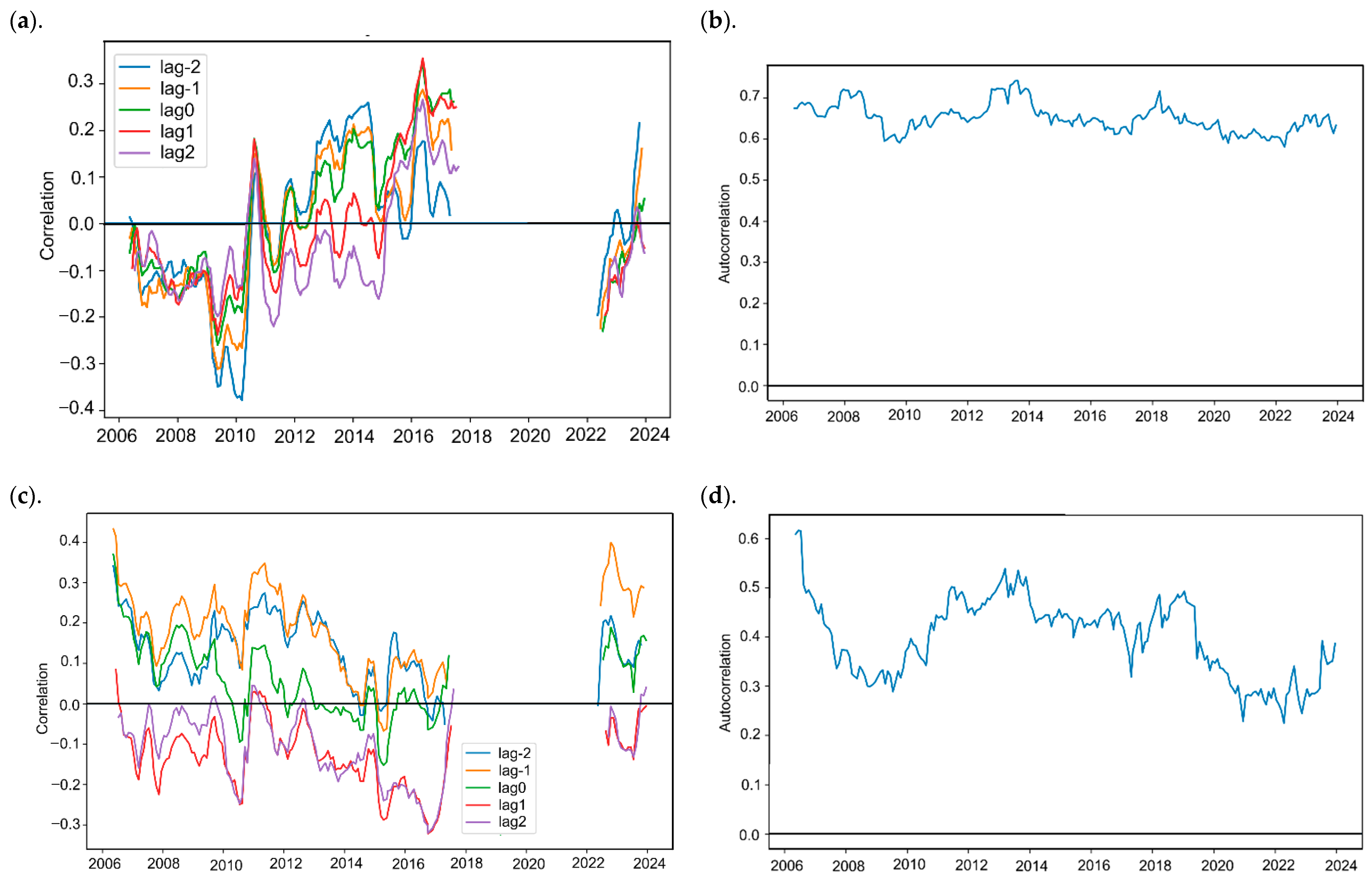
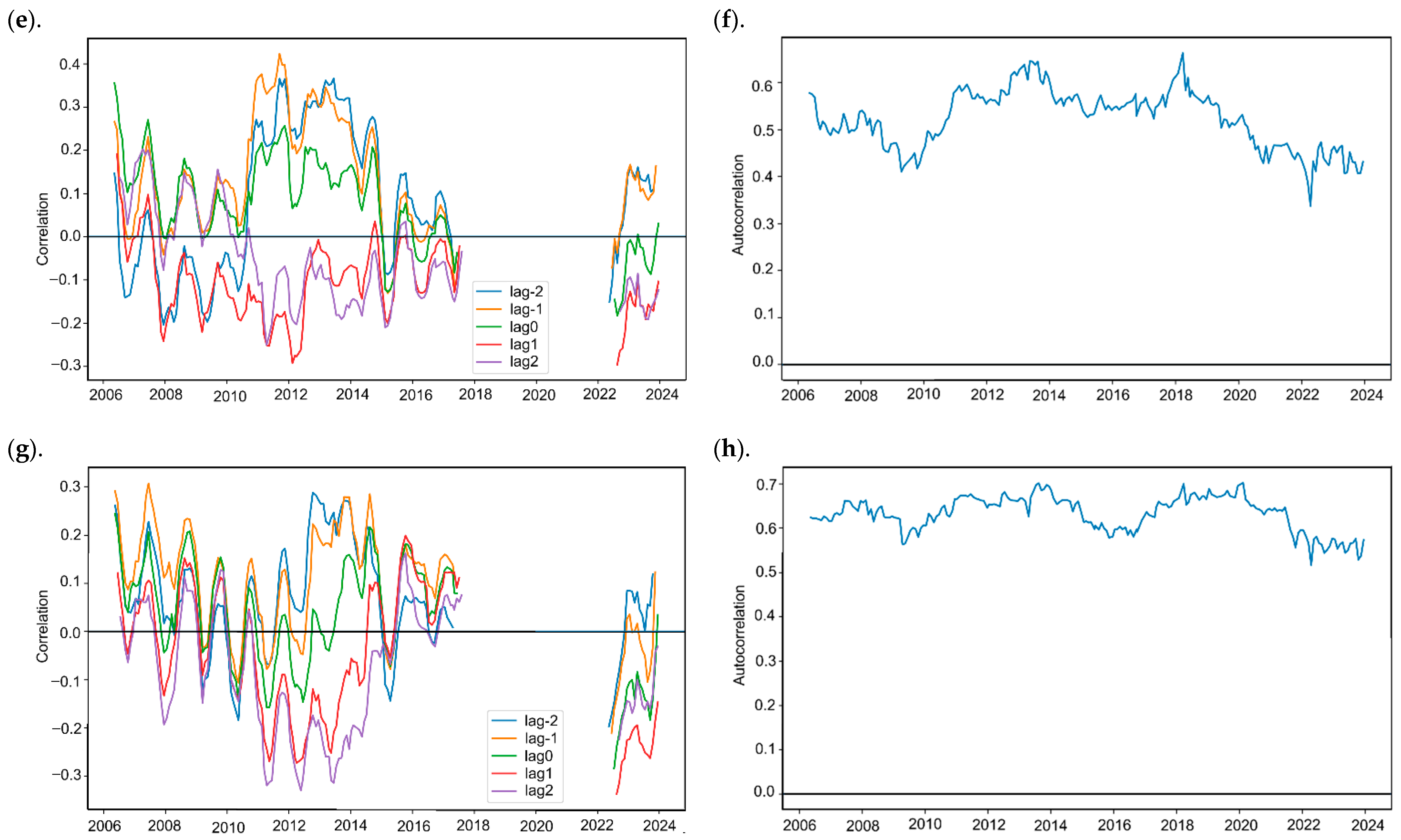
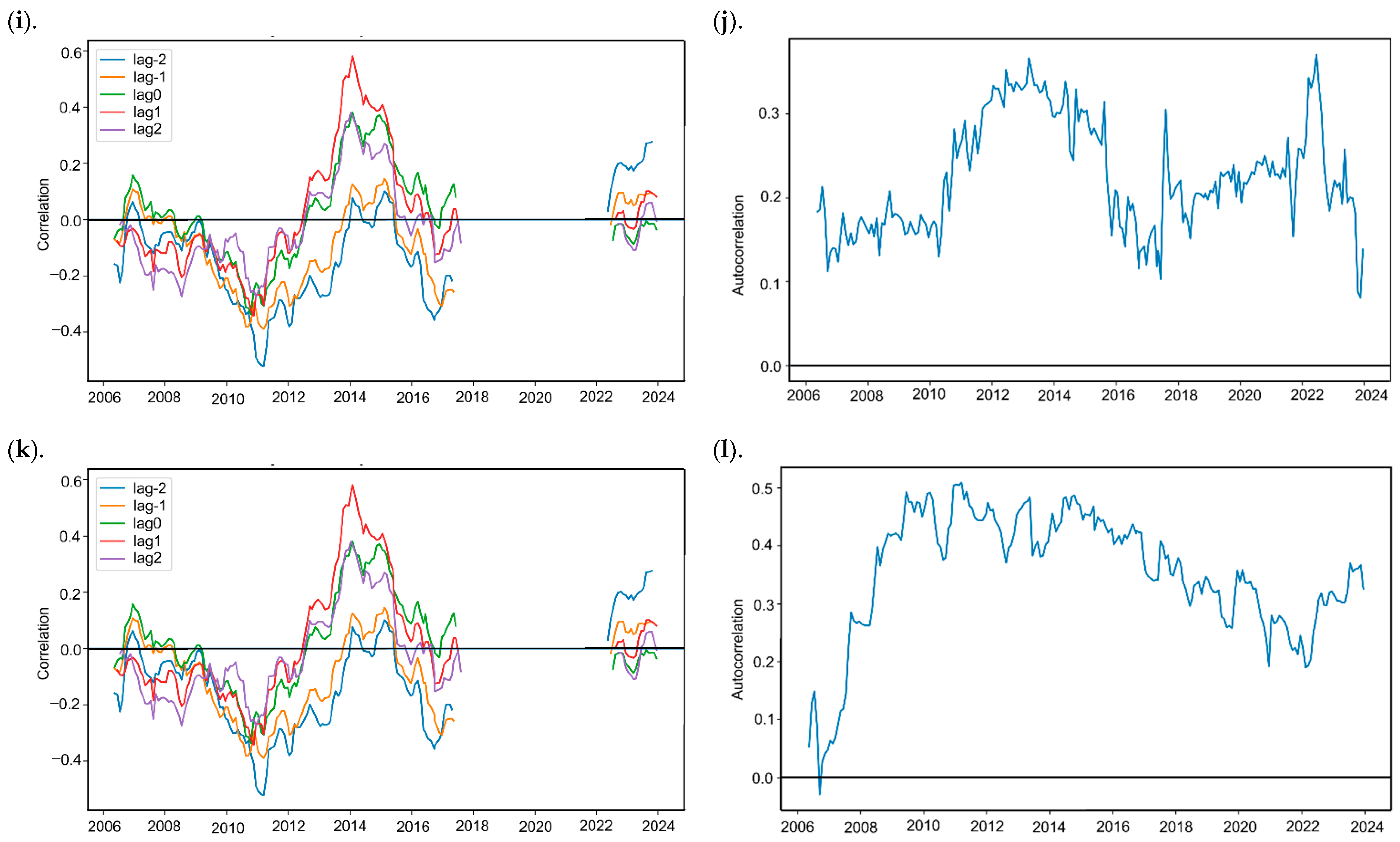
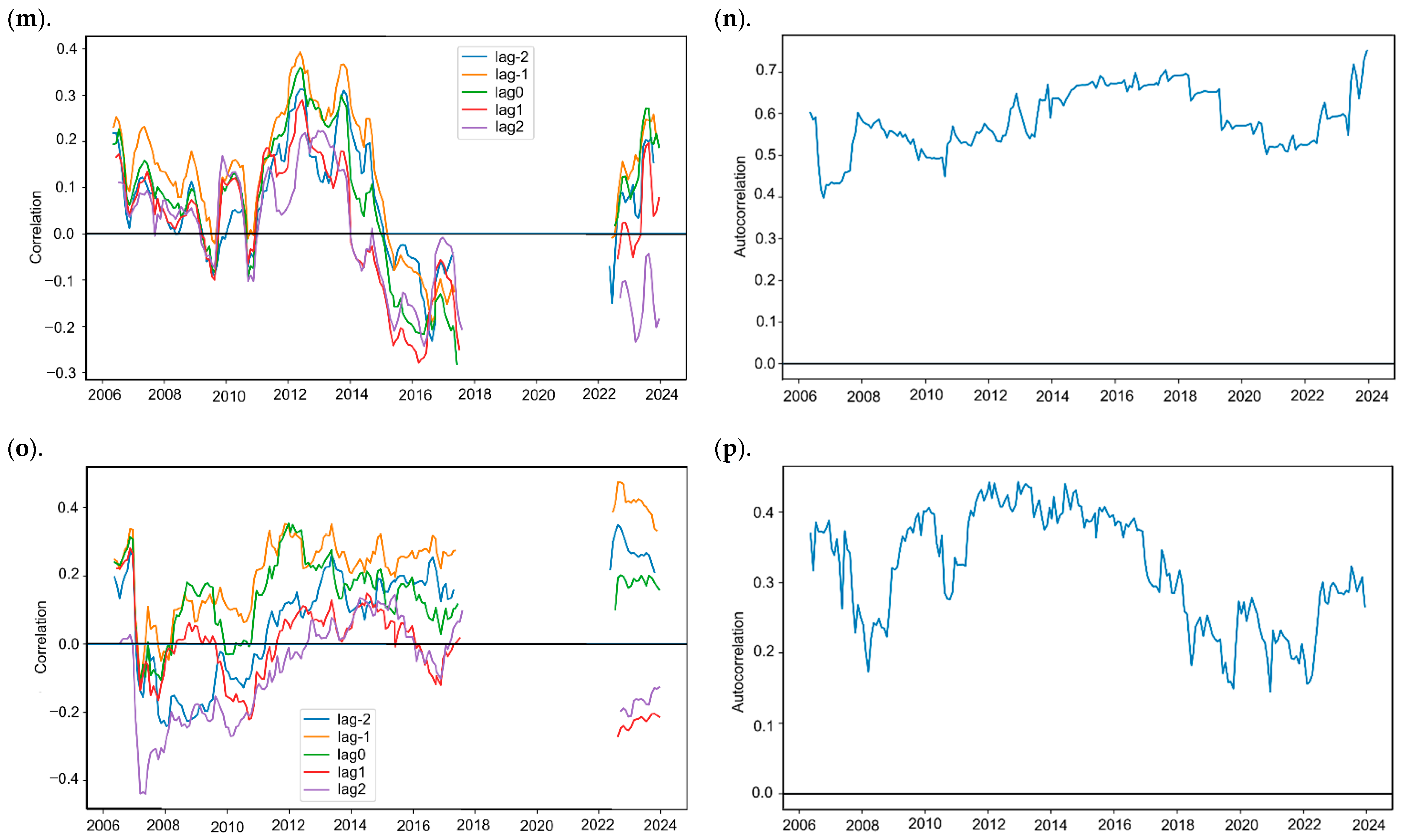
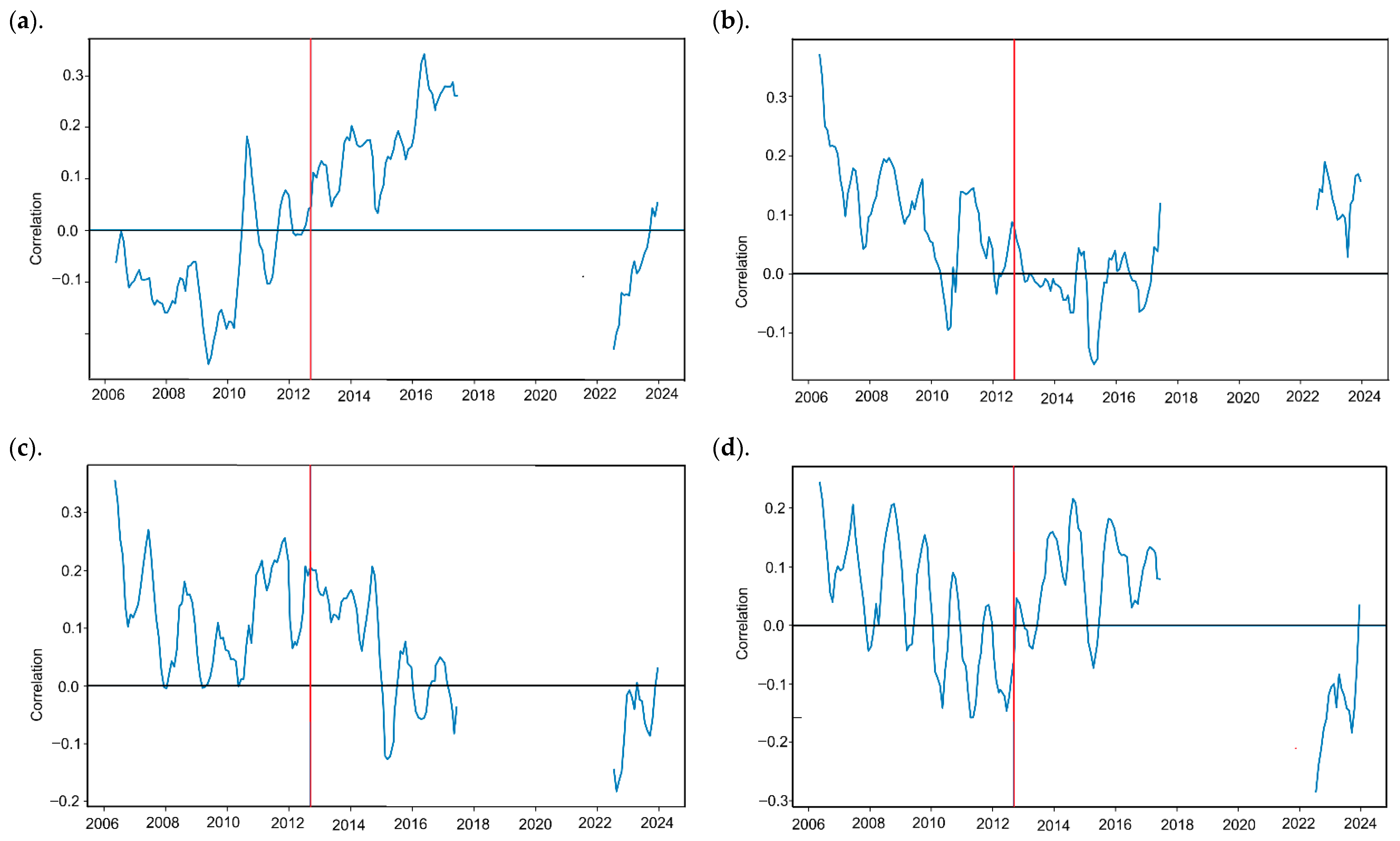
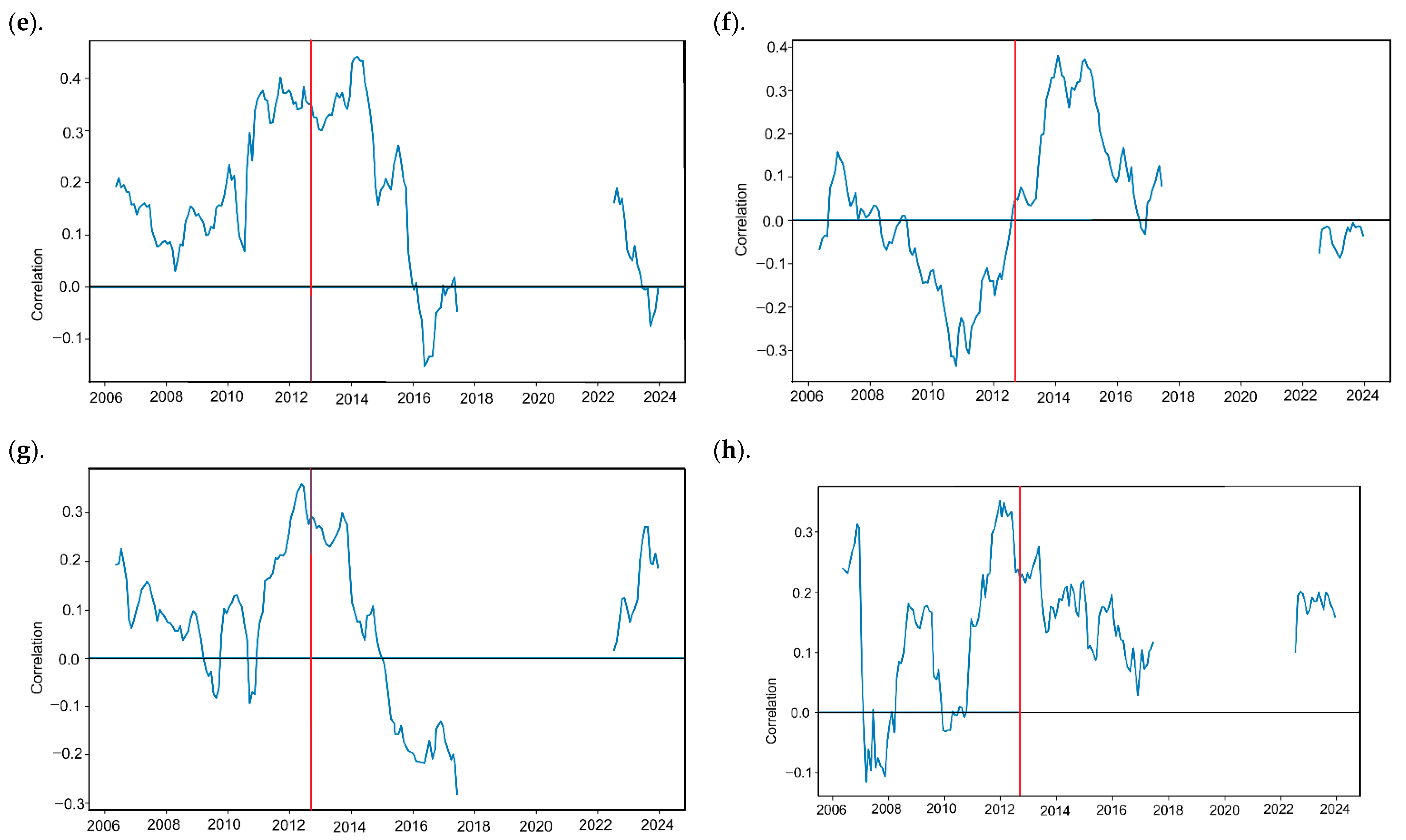
To investigate whether the relationship between basin-scale CCDI and WB remains stationary under ongoing climate change, a rolling CCF ± 2 lags framework was applied (
Figure 3). This approach allows for evaluating the strength and temporal structure of both indices varying in time, thus capturing potential regime shifts and changes in hydrological memory.
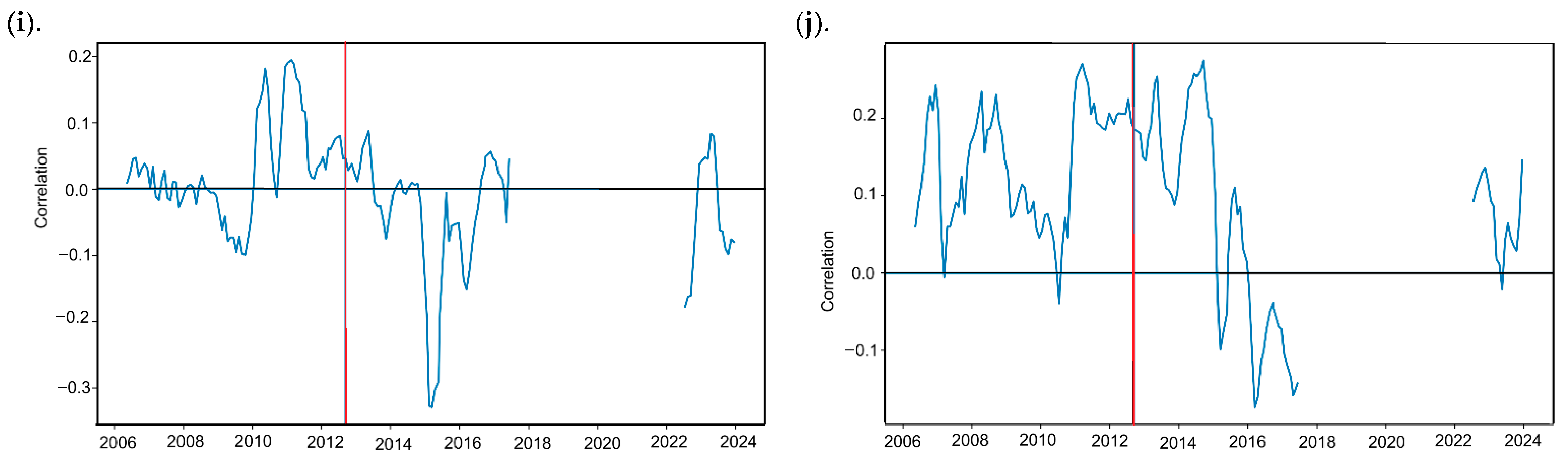
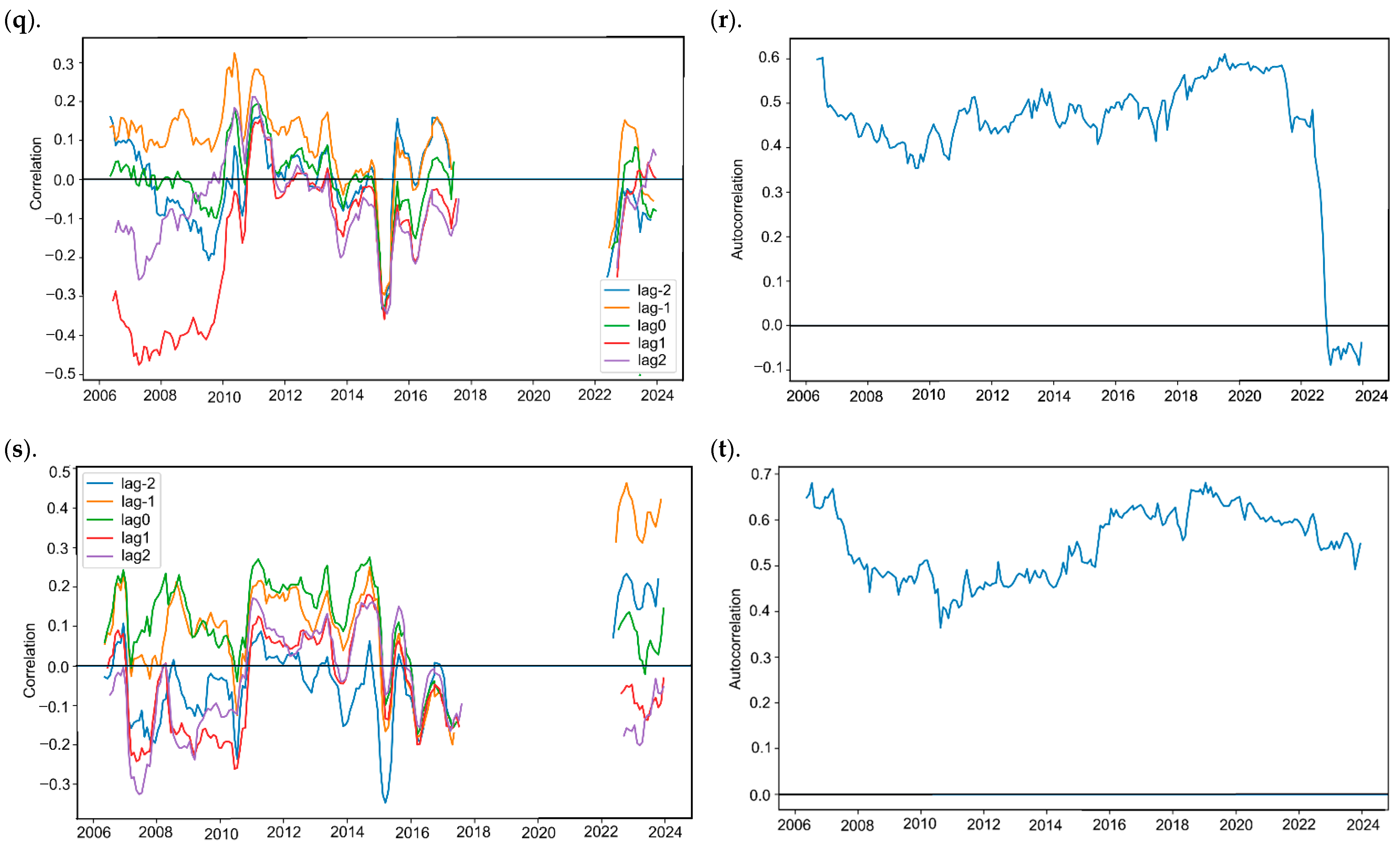
Figure 3 presents rolling cross-correlation functions (CCFs) calculated over a 50-unit window (meaning 50 months). Each graph contains five lines corresponding to lags: −2, −1, 0, +1, and +2. Lag 0 indicates an immediate relationship between WB and CCDI, lags +1 and +2 indicate a delayed response (the hydrological system reacts later), and lags −1 and −2 indicate a change in the hydrological signal preceded by a second process.
Selecting a window size for rolling cross-correlation (rolling CCF) for an 18-year monthly series requires a compromise between statistical stability and the ability to detect changes over time. In the case analysed, using 36–60 months (3–5 years) seems recommended. This provides sufficient degrees of freedom to calculate a statistically significant correlation while also allowing for observation of how the correlation changes over the 18 years. This length should smooth out any noise and seasonality, and as such, a window would cover several (3–5) full cycles. For rapid changes, 24 months (2 years) is sufficient, but in the case studied, the relationship between the series does not change dynamically. For stable trends, 6–10 years are selected, but this is not the case if the data are very noisy and the goal is to smooth the results, and the relationship is long-term.
The following rules were adopted for window selection [
31]:
The 10–25% rule: A good practice is to set the window at 10–25% of the total length of the series. For an 18-year series, this is approximately 22–54 months.
Seasonality: If the data exhibits strong seasonality, the window should be a multiple of 12 months (e.g., 24, 36, 48) to balance the seasonal effect on the correlation
Compromise: Too small a window (e.g., 12 months) will produce a jagged correlation that is difficult to interpret (a lot of noise). Too large a window (e.g., 10 years) will smooth the correlations so much that you will not notice changes over time.
To conduct this study, a preliminary analysis was conducted by calculating the standard CCF for the entire 18-year period to see if any correlation existed. Various windows were then tested (the study attempted rolling CCFs for 24, 36, 48, 50, and 60 months). A sensitivity analysis showed that the windows that best balance noise smoothing with the visibility of correlation trends were 48 and 50.
In the research, the rolling ACF with lag 1 was calculated (
Figure 3). It represents the system’s memory. ACF(1) indicates how strongly
adheres to
The result is interpreted as either high ACF (large hydrological memory) or low ACF (rapid signal loss-reactive system). If changes in ACF are noticeable over time, a change in the retention regime occurs.
The highest CCF values typically occur for lags 0 and ±1, indicating that the hydrological system responds relatively quickly. Lags ±2 typically have lower values, indicating a weaker relationship with larger time shifts. Lag changes were compared for all the basins. Lag 0 typically achieves the highest correlation values; in most basins, the values are around 0.2–0.5, and in some periods, they reach 0.55–0.6 (Volga—correlation increased from approximately 0.1 to almost 0.5; Rhine—values in the range 0.2–0.45; Vistula—values in the range 0.1–0.35). Therefore, a relatively strong immediate correlation is found between WB and CCDI. Lags ±1 usually have slightly lower values than lag 0, typically ranging from 0.05 to 0.35. In many basins, their course is similar to lag 0, suggesting a short hydrological memory of the system (Danube—values around 0.1–0.3; Dnieper—around 0.05–0.25; Neva—around 0.15–0.35). The most variable lines are those corresponding to lags of ±2 with value ranges of −0.3 to 0.25. Passing through the value of 0 is often observed, which indicates a weak or unstable dependence at a larger time lag (Don, from about −0.25 to 0.15, and Pechora range from about −0.2 to 0.2). Before 2010, lag 0 dominates, and after 2010, lag + 1 dominates, meaning the hydrological response becomes delayed relative to climatic forcing (
Figure 3a,e,g,i,k,m). The western basins (Danube, Vistula, Rhine, and Elbe) are characterised by lower amplitude, a more stable dominant lag, and a lack of strong zero crossings (
Figure 3c,o,q,s).
Northeastern basins (Volga, Pechora, and Northern Dvina) were found to be characterised by high rolling ACF (0.6–0.8). Periodic decreases were observed after 2010, with a local minimum occurring around 2015–2020. The time series suggests a weakening hydrological memory in the northeast basins over the last decade (
Figure 3b,j,l). Western basins (Danube, Rhine, and Elbe) are characterised by lower rolling ACF (0.3–0.6), smaller temporal fluctuations, and a more stable course (
Figure 3d,p,t). Therefore, these systems are more regulated (anthropogenic regulation). The Vistula and Neva basins (
Figure 3n,s) exhibit frequent temporary decreases in ACF and a significant change after 2010.
Then, formal multiple segmentation (Bai–Perron) was performed on a rolling CCF (lag 0).
The research presented is consistent with the principle that positive values indicate an increase in CCDI with a simultaneous increase in WB, while negative CCDI are associated with a decrease in WB. The determined break values indicate a statistically detected change in the average correlation level over time, i.e., a change in the strength of the WB-CCDI coupling or a change in the dominant processes. Based on the conducted studies, it was noted that the eastern basins (Volga, Don, Dnieper, Northern Dvina, and Pechora) are characterised by one strong break in the central part of the series (
Figure 4a,c–f). The results presented show that the system is highly sensitive to climate change. The western basins (Rhine, Elbe, and Danube) are characterised by a lower amplitude of changes and more stable correlations, which may indicate a lower susceptibility to changes in the dominant processes (
Figure 4b,h,j). Vistula and Neva (
Figure 4g,i) show frequent zero crossings, distinct periods of weakening correlation, and possible phase change (lag-dependent behaviour).
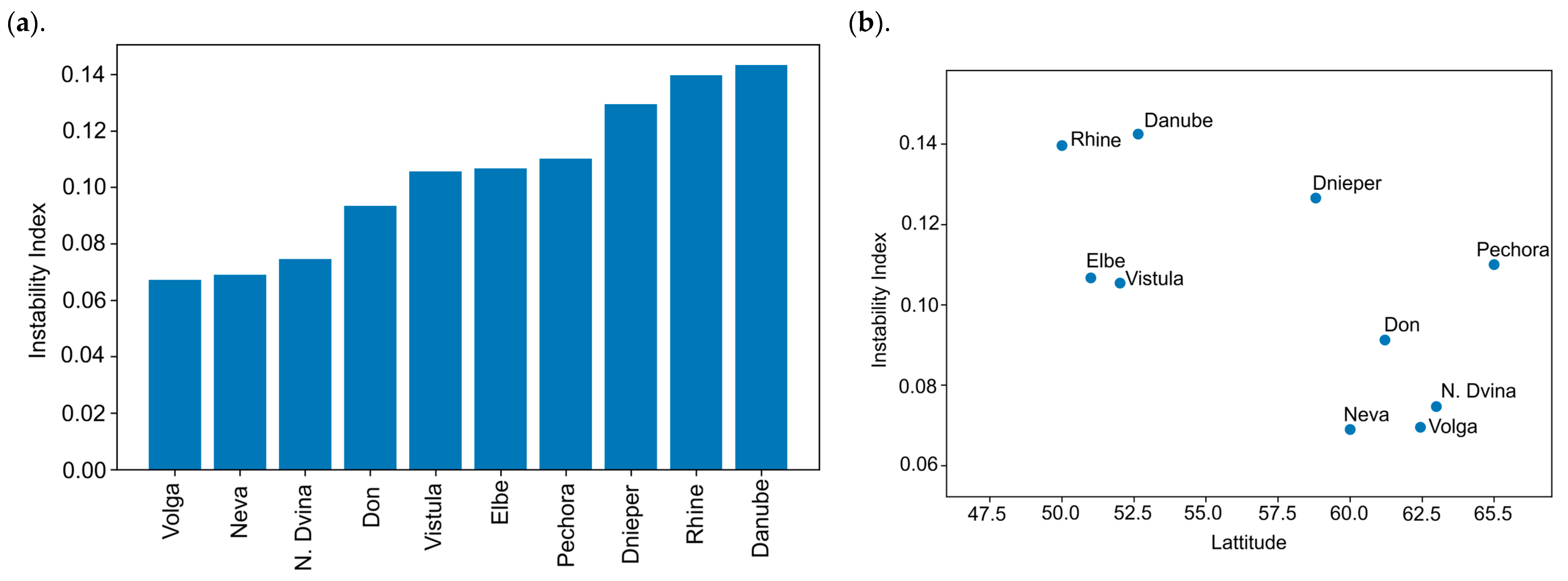
The research conducted allowed for the determination of the Instability Index for all ten European basins (
Figure 5). The study aimed to investigate the time-average variation in the coupling structure between WB and CCDI in rolling windows. The high value of the Instability Index indicates a strong instability of the hydroclimatic coupling over time, while a low value means that the WB-CCDI relationship is relatively stationary and structurally stable. High instability may indicate an increasing role of extremes (floods or droughts), which are influenced by a non-stationary climate (especially a warming climate).
The Instability Index reveals substantial inter-basin differences in the temporal variability of hydroclimatic coupling (
Figure 5a). Northern basins (Volga, Neva, Northern Dvina, Don) achieve lower values of the Instability Index, indicating high stability of the regime, and the latitudinal gradient indicates that instability decreases toward higher latitudes (
Figure 5b). The observed relationship between instability and latitude does not imply a direct causal effect of latitude itself but rather reflects underlying hydroclimatic gradients. Key drivers include the transition from snow-dominated to rainfall-dominated regimes, increasing temperature and evapotranspiration, changes in precipitation structure, and differences in basin storage capacity. In particular, mid-latitude basins exhibit enhanced instability due to the coexistence of snowmelt and rainfall-driven processes, as well as frequent freeze–thaw transitions, which lead to a more variable hydrological response.
Several processes underlie the latitude gradient. First, there is the relationship between snow and rainfall regimes. This appears to be the most important factor influencing catchment instability. In northern catchments (e.g., the Volga, Dvina, and Neva), snow dominates, with strong seasonal accumulation and release of water, and, consequently, a more predictable hydrological memory. Southern and Central Europe (Rhine, Danube, and Vistula) are characterised by more rainfall and more frequent episodic events. The length of the growing season is highly variable in Europe. The south has a longer season and greater biological control (transpiration), while the north has a shorter season. This relationship changes the response lags. The precipitation pattern is highly diverse. Southern and Central Europe experience more convective rainfall and greater short-term variability, while the north has more uniform frontal precipitation. This results in greater temporal correlation instability and a higher Instability Index. The studies conducted suggest higher instability (Rhine and Danube), where there is a transitional regime (snow + rain), high temperature variability, a strong role of biological processes, and high precipitation variability. In contrast, lower instability (Volga, Dvina, and Neva) indicates a stable snow regime, strong seasonality, and greater retention. Therefore, it can be concluded that the Instability Index does not depend on latitude but rather reflects changes in dominant hydrological processes, which are correlated with latitude.
To assess the accuracy of the Instability Index, additional tests are required. A significant negative relationship was found between Instability Index and latitude (r = −0.65, R2 = 0.42, p = 0.04), indicating that approximately 42% of inter-basin variability in hydroclimatic instability can be explained by geographical position. The relationship remained robust under non-parametric testing (monotonic Spearman test ρ = −0.60, p = 0.06), suggesting a consistent latitudinal gradient.
To evaluate the robustness of the Instability Index, additional validation analyses were performed. Sensitivity tests using alternative rolling window sizes (40–60 months) revealed consistent basin ranking (Kendall τ > 0.7), indicating that the index is not sensitive to methodological choices. Furthermore, comparison of pre-2010 and post-2010 periods demonstrated a statistically significant increase in hydroclimatic instability (p < 0.05), suggesting that recent decades have experienced a reorganisation of basin-scale memory.
The mean value of the Instability Index for all the basins equals about 0.073, with a coefficient of variation of approximately 21%, indicating moderate spatial variability of hydrological memory instability across Europe. The standard deviation of 0.015 shows that the differences between the basins are not very large, but they are noticeable. The difference between the minimum and maximum is approximately 0.045, indicating significant differences in the stability of hydrological systems between the basins (
Table 1).
The use of an 18-year time series in the analysis of the WB, CCDI, and the resulting Instability Index has both advantages and limitations. With monthly data, the number of observations is sufficient for correlation and CCF analyses, ensuring stable estimations. A shorter time period allows for the capture of sub-decadal system reorganisations and dynamic changes that are often blurred in long time series. The literature [
32] confirms that European hydrology exhibits strong multidecadal variability and transient reorganisations, not just monotonic trends. However, there are also certain limitations. An 18-year time series does not encompass the full spectrum of natural climate variability, increasing the risk of aliasing the climate signal and overinterpreting a single regime transition.
The research conducted and presented in the manuscript led to the conclusion that there has been a reorganisation of the hydrological memory and an increase in instability since 2010. This is consistent with the observed changes in the European hydroclimate. Warming increases the atmosphere’s ability to store moisture (Clausius–Clapeyron law), leading to increased evaporation, reduced water retention, and a shortened hydrological memory. This phenomenon directly impacts WB and CCDI [
33]. Both the total and the structure of precipitation have also changed [
34]. Studies show no clear trends in total precipitation, but great changes in its distribution and intensity, resulting in more extreme events and less stable system supply. In Europe, a decline in the importance of snow, an increase in winter rainfall, and changes in flood patterns are observed [
35]. This directly alters the lag and structure of basin responses. The most serious challenge facing Europe is the increasing frequency of droughts and water deficits. This results in the breakdown of stable WB-CCDI relationships. Therefore, a reorganisation of hydrological memory can be observed, resulting from the interaction of three processes: rising temperature, increased evapotranspiration, and a faster decay of the water signal. The increase in the Instability Index after 2010 observed in the study marks a transition from a system with a relatively constant hydrological memory to a system in which both the timing and strength of the response to climate forcing become time-varying.
5. Discussion
The research presented in the paper on time-varying cross-correlation between WB and CCDI is consistent with previous studies showing that hydro-meteorological systems exhibit non-stationary dependencies between key variables [
36]. Additionally, regime shifts have been shown to alter thresholds for drought propagation, underlining the physical significance of changes in temporal dependence structures [
37]. Studies on precipitation–streamflow interactions further support the interpretation that correlation strength can vary over decadal scales [
38].
Similar time-varying dependencies between precipitation, evapotranspiration and runoff have been documented in multi-scale hydro-meteorological analyses [
37], demonstrating that correlation structures evolve under changing climatic forcing. Rolling CCF results presented in the paper extend these findings by showing not only the strength but also the dominant lag of the WB-CCDI coupling shifts over time, indicating reorganisation of basin-scale hydrological memory.
The detection of structural breakpoints in the rolling CCF time series suggests that the relationship between hydroclimatic drivers and basin response undergoes discrete regime shifts rather than gradual linear trends. This aligns with previous applications of structural change detection methods in hydrology [
39,
40].
The Instability Index derived from rolling CCF variability reveals a systematic increase in correlation amplitude fluctuations in several basins after 2010. This is consistent with broader evidence that climate change enhances variability and intermittency in hydroclimatic systems [
3]. The timing of this shift corresponds to the period of accelerated warming and increased frequency of compound extremes in Europe reported in recent climatological assessments, providing a physically plausible mechanism for the observed reorganisation of correlation structure.
The differences between basins may be explained by climatic and geographic controls. Basins located in northern regions are often strongly influenced by snow accumulation and seasonal snowmelt processes, which can introduce relatively predictable seasonal patterns in water discharge. In contrast, basins located in more temperate regions may be more strongly influenced by rainfall variability and anthropogenic impacts such as reservoir regulation and land-use change [
41].
In summary, the results highlight that hydrological memory is not constant in time and may vary depending on climatic forcing and basin characteristics. These findings are consistent with previous research showing that hydrological systems can exhibit both short-term and long-term persistence, depending on storage processes and climate variability [
42,
43,
44,
45]. Understanding the temporal variability of hydrological memory is, therefore, important for improving hydrological modelling and predicting under changing climatic conditions.
A limitation of the present study is the lack of a fully quantitative separation between climatic and anthropogenic drivers of hydrological memory instability. While the observed differences between Eastern and Western European basins are interpreted as a combined effect of climate conditions and human impact, no direct metrics of anthropogenic pressure were explicitly included in the analysis.
However, a semi-quantitative interpretation can be proposed based on known characteristics of the analysed basins. Western and Central European basins such as the Rhine and Danube are among the most heavily regulated river systems in Europe, with high reservoir density and extensive river engineering, whereas large eastern basins such as the Volga or Northern Dvina are generally less affected by flow regulation and retain more natural hydrological regimes [
46,
47]. The higher values of the Instability Index observed in the Rhine and Danube basins compared to the Volga basin may therefore partly reflect the influence of anthropogenic modifications on hydrological dynamics.
At the same time, climatic differences also play a significant role. Northern and eastern basins are more strongly influenced by snow-dominated regimes, which tend to introduce more regular seasonal patterns and may enhance the apparent stability of hydrological memory. In contrast, rainfall-dominated regimes in Western Europe are typically more variable and sensitive to short-term climatic fluctuations [
34].
These findings suggest that both climatic forcing and anthropogenic regulation contribute to the observed non-stationarity of hydrological memory. However, their relative contributions cannot be quantitatively disentangled within the scope of this study. Future research should therefore incorporate explicit indicators of human impact, such as reservoir capacity indices or land-use change metrics, combined with multivariate statistical approaches, to better quantify the mechanisms controlling hydrological memory variability.
To address the lack of explicit quantification of anthropogenic impacts, a proxy-based classification of the analysed basins was introduced. The basins were grouped into two categories based on their general level of river regulation and human pressure, as reported in the literature:
The first group includes the Rhine, Danube, and Elbe basins, which are among the most intensively managed basin systems in Europe, characterised by extensive dam infrastructure, channel regulation, and significant land-use transformation. The second group includes large eastern and northern basins such as the Volga, Northern Dvina, and Pechora, which are generally less regulated. Basins such as the Vistula and Dnieper can be considered intermediate cases. Using the estimated Instability Index values, a comparison between these groups reveals a clear difference in hydrological memory stability. The highly regulated basins show higher Instability Index values, typically in the range of approximately 0.075–1.3, whereas the less regulated basins exhibit lower values, around 0.05–0.065. Intermediate basins fall within the range of 0.065–0.08. This pattern suggests that anthropogenic regulation may contribute to increased temporal variability of hydrological memory. River regulation can alter the natural timing and persistence of hydrological signals, leading to more complex and less stable correlation structures over time. However, it is important to note that this proxy-based classification does not allow for a strict quantitative separation of anthropogenic and climatic influences. Climatic factors also play a key role in shaping hydrological memory. For example, northern basins with strong snow influence tend to exhibit lower instability, which may reflect more regular seasonal dynamics rather than reduced human impact alone. Despite these limitations, the proxy analysis provides additional support for the hypothesis that both anthropogenic pressure and climatic conditions contribute to the observed differences in hydrological memory instability across European basins. The mean Instability Index for highly regulated basins is approximately 0.085, compared to about 0.058 for less regulated basins, indicating a difference of nearly 0.03, which corresponds to over 40% relative increase in instability. This interpretation is consistent with previous studies showing that river regulation and dam operation significantly modify flow regimes and hydrological variability [
46,
47].