Numerical Hydrodynamic and Mooring Optimization of a Wave Energy Converter for the Mexican Coast




Abstract
1. Introduction
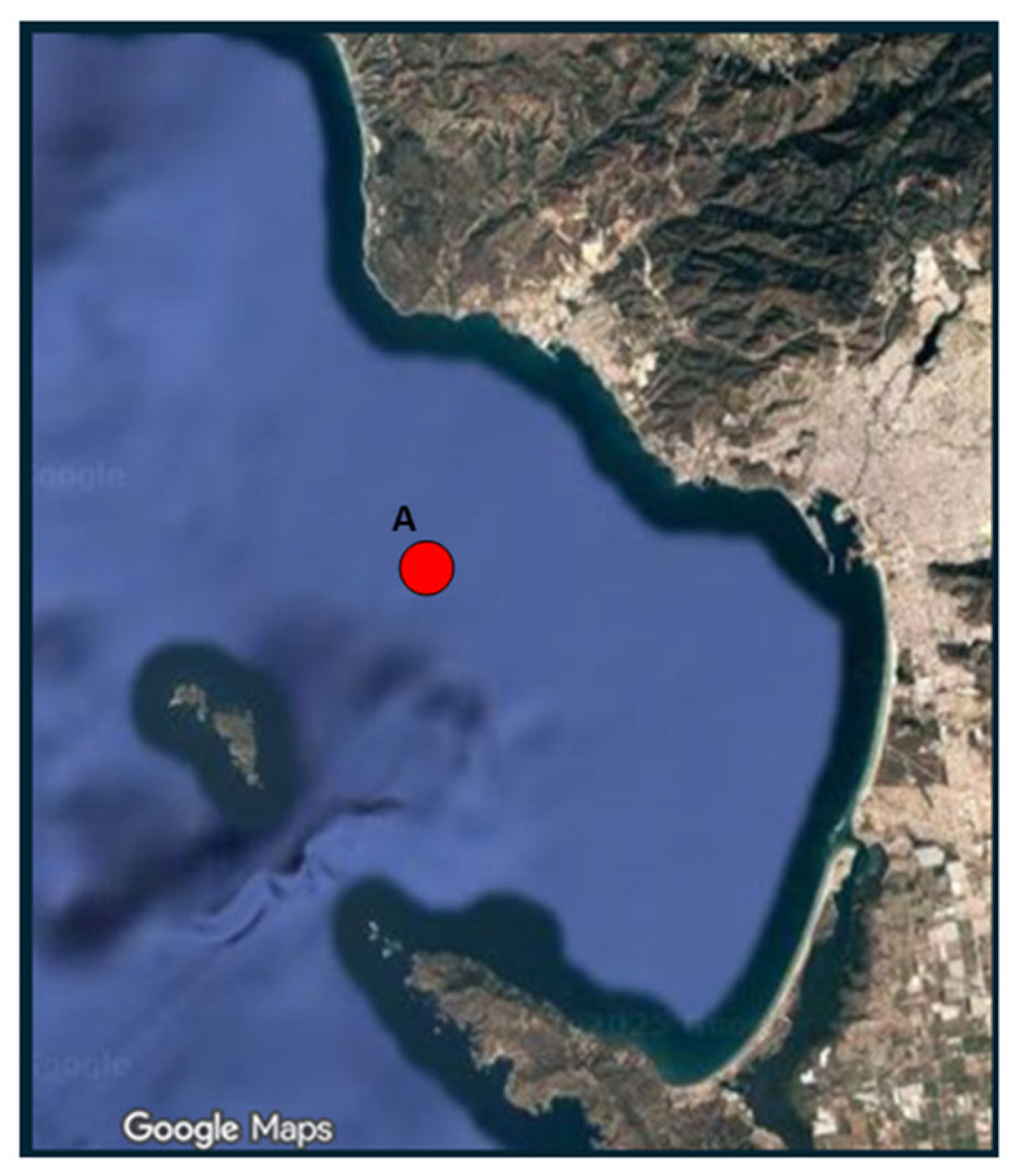
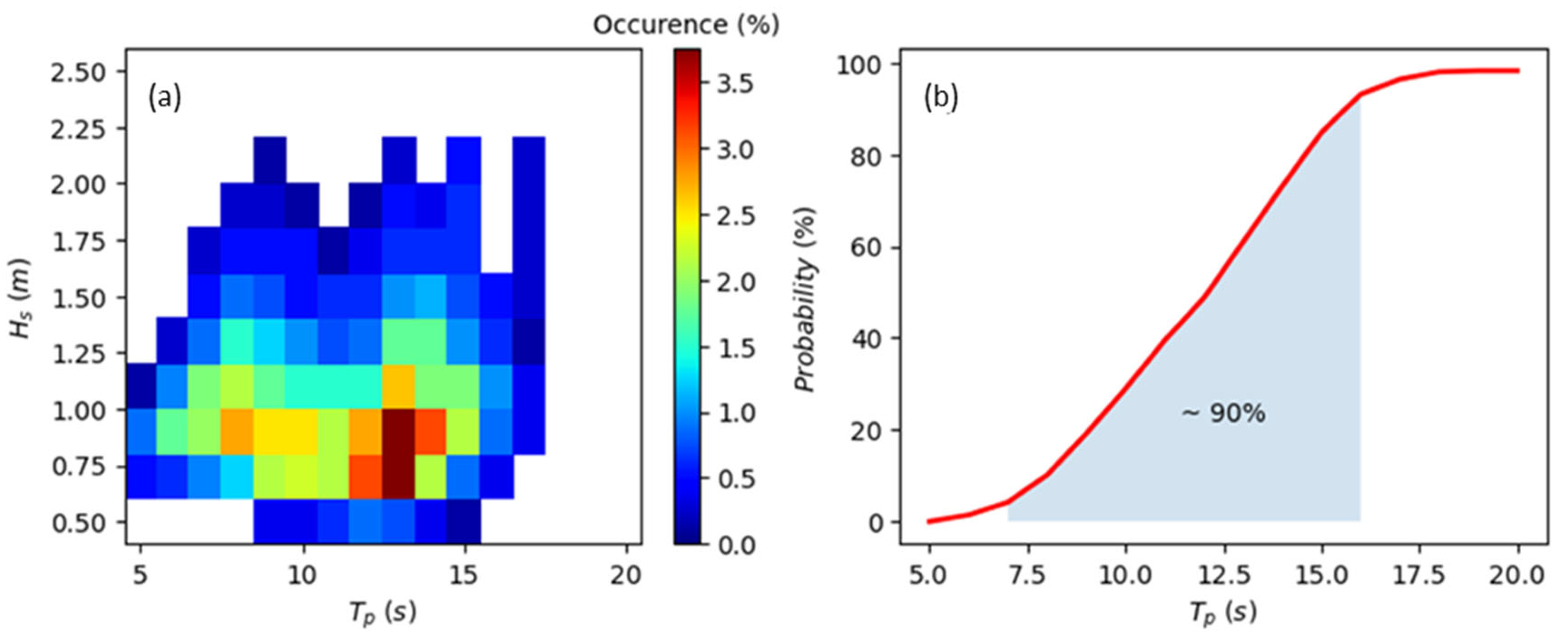
Study Area
2. Materials and Methods
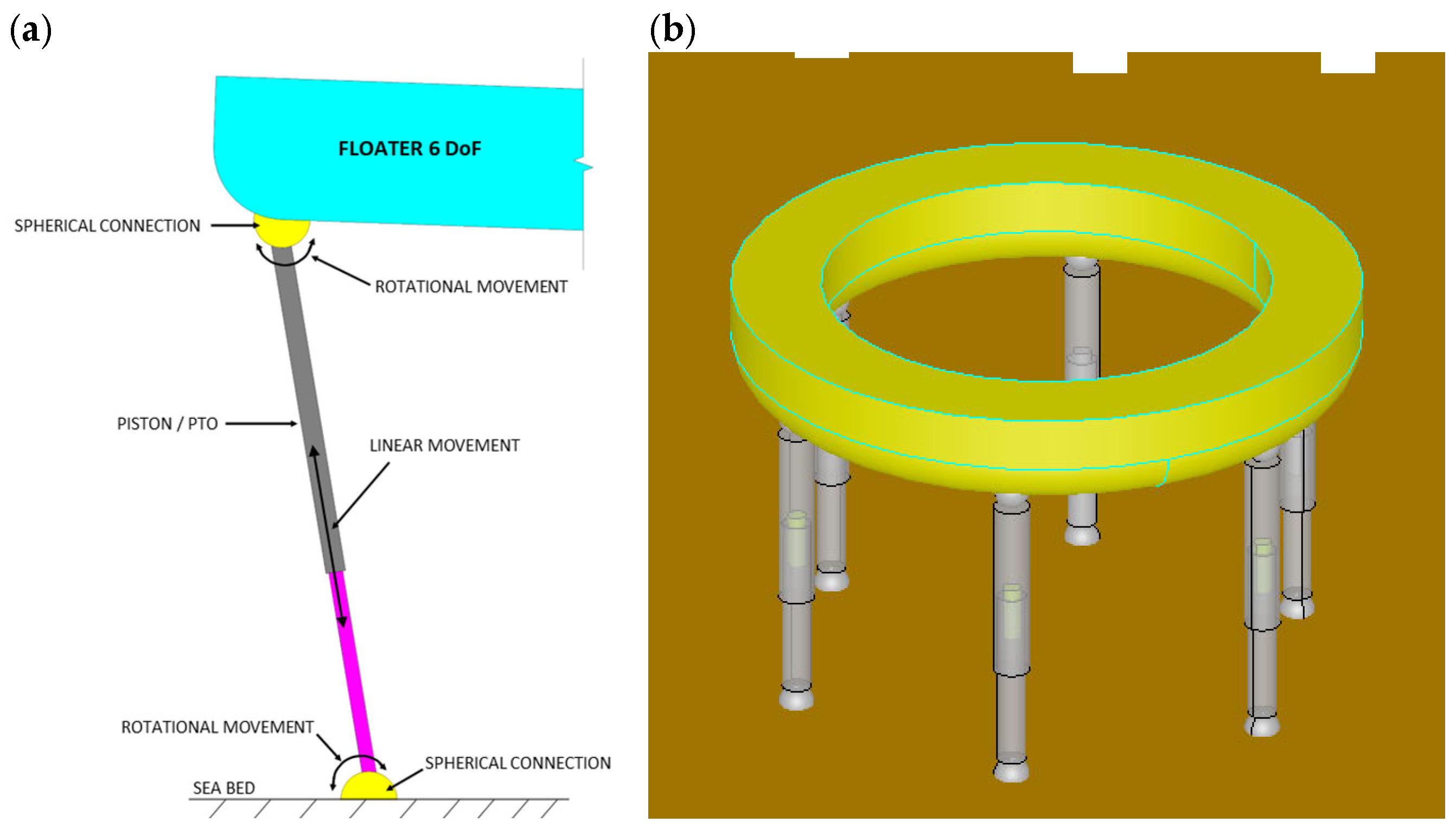
2.1. Wave Energy Converter Concept
2.2. Numerical Model Description
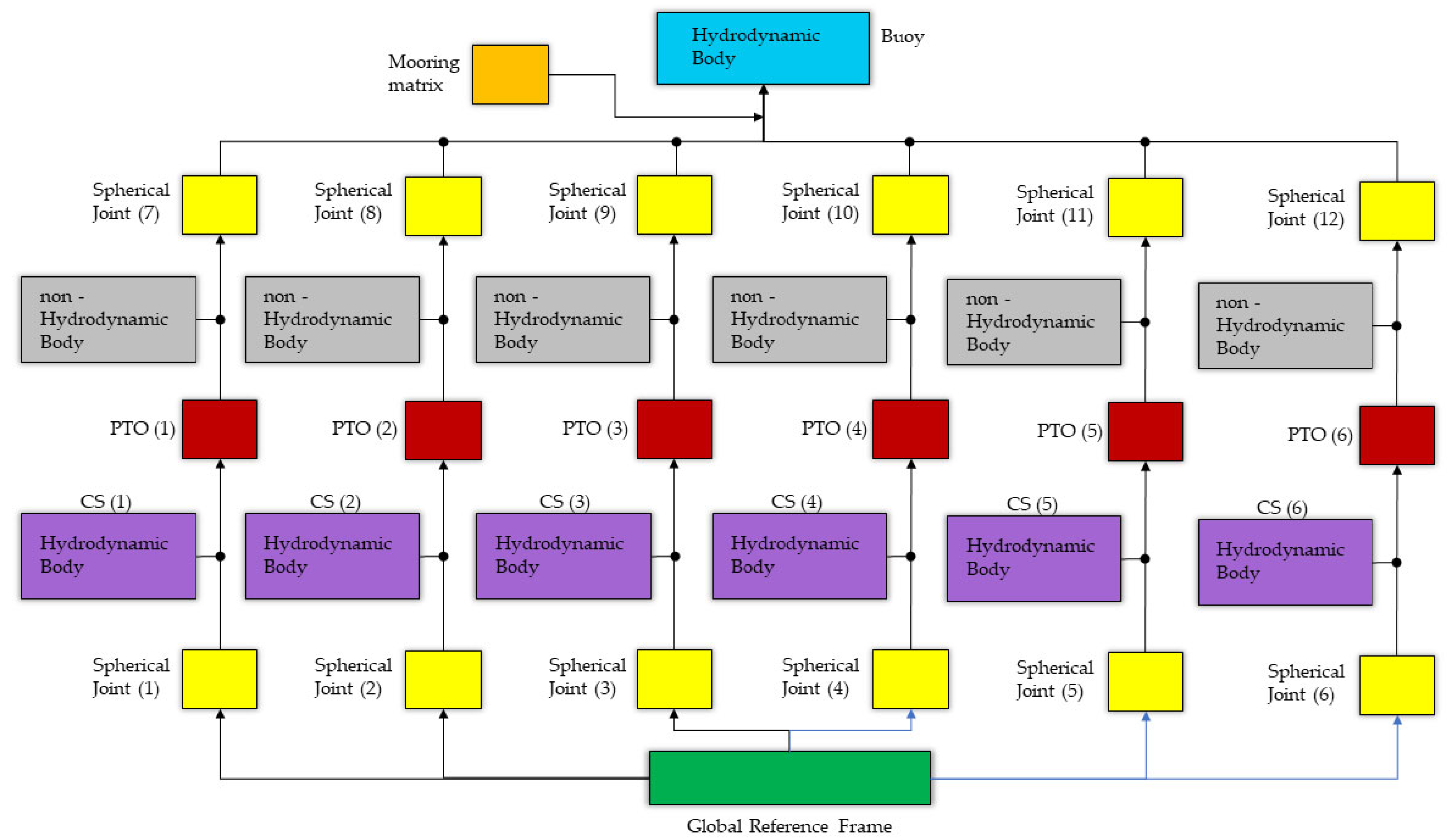
2.2.1. WEC-Sim Model
2.2.2. MoorDyn Model
2.3. Numerical Model Setup
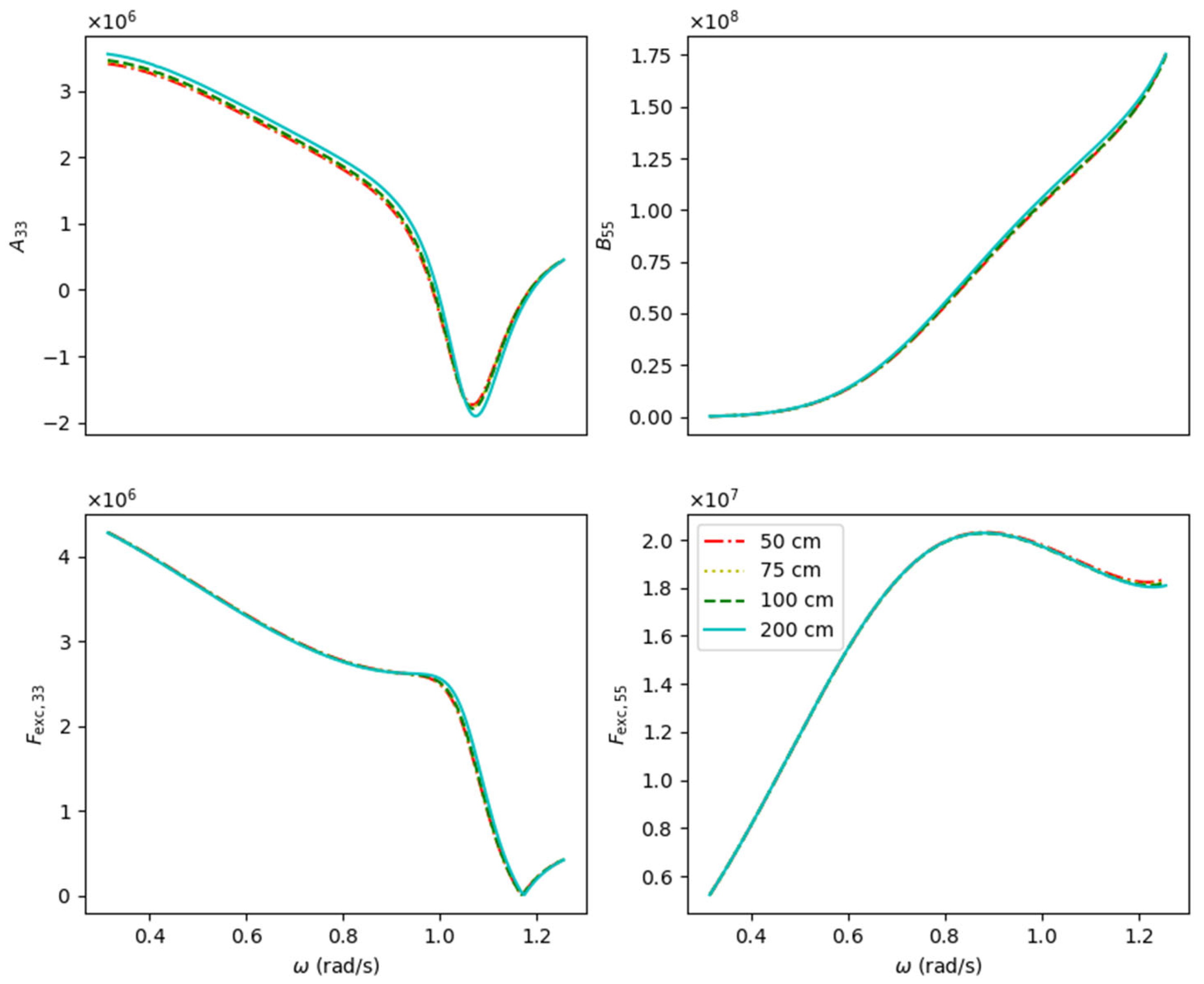
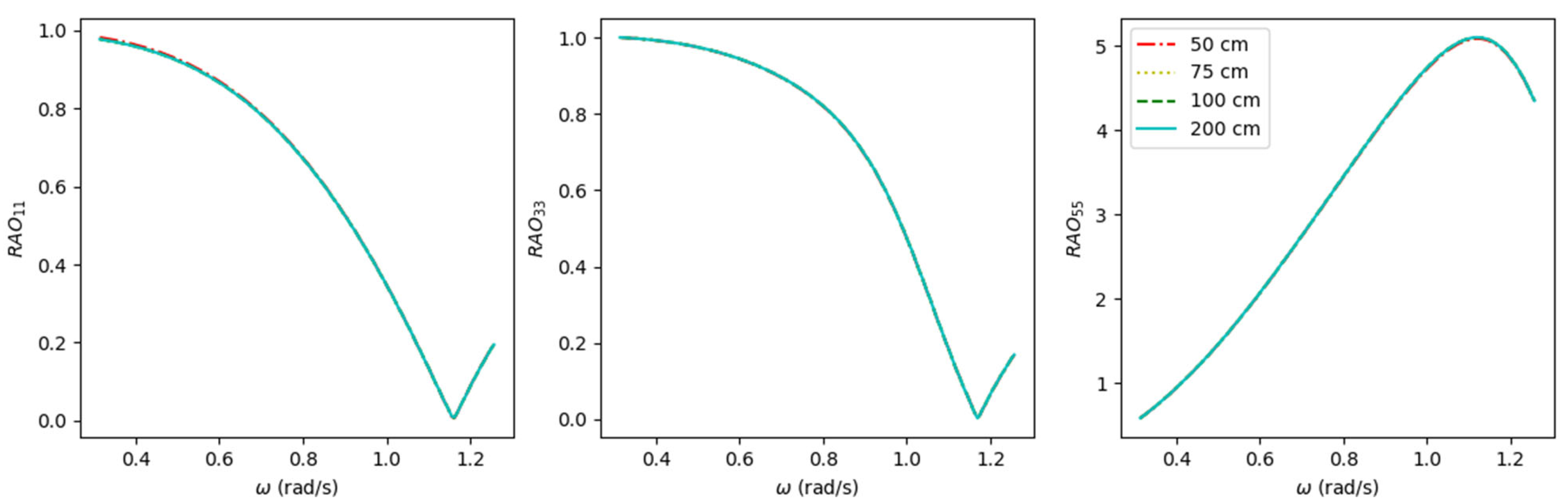
Hydrodynamic Coefficients
2.4. Power Take-Off
2.5. Energy Capture Width Ratio
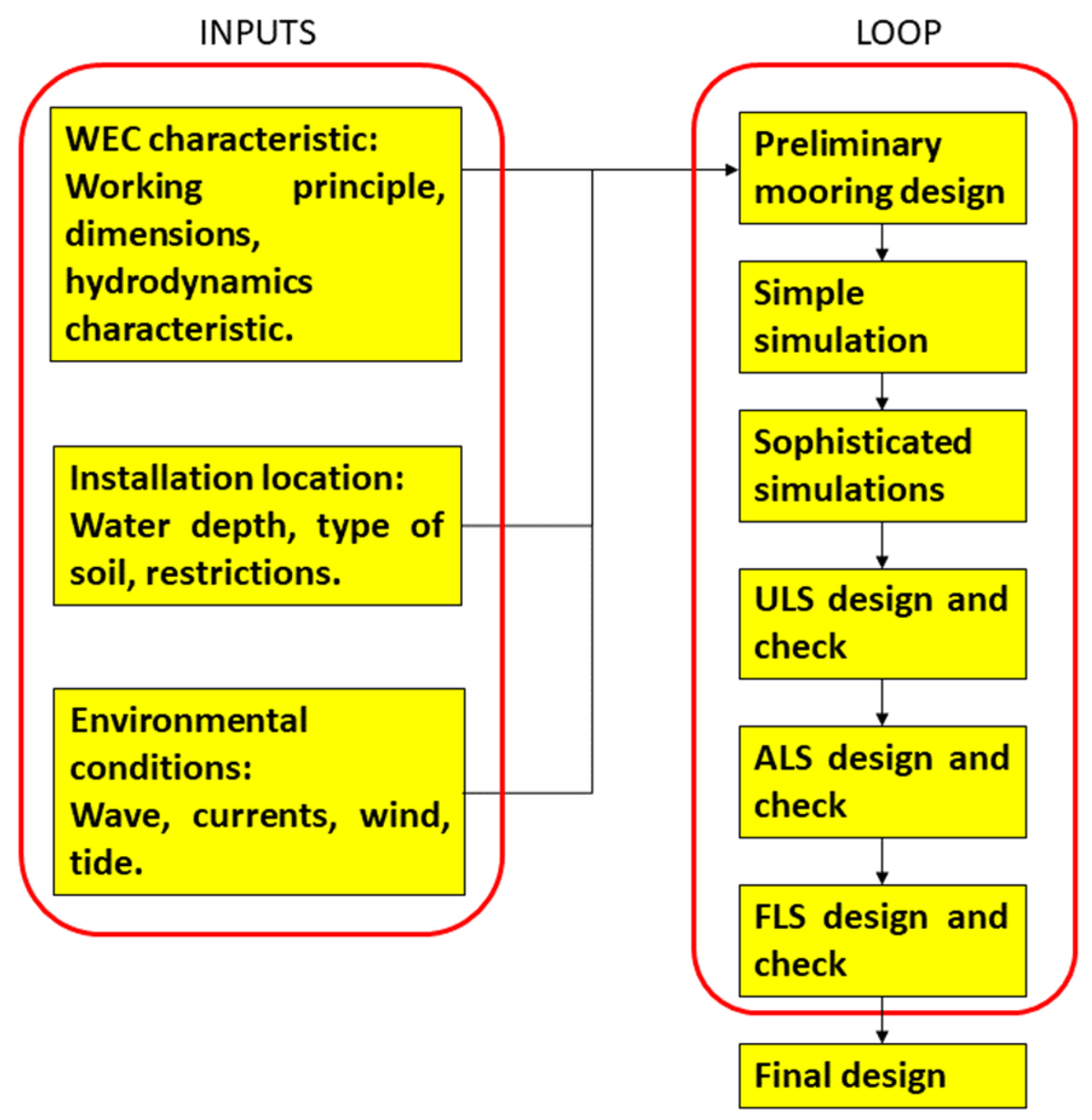
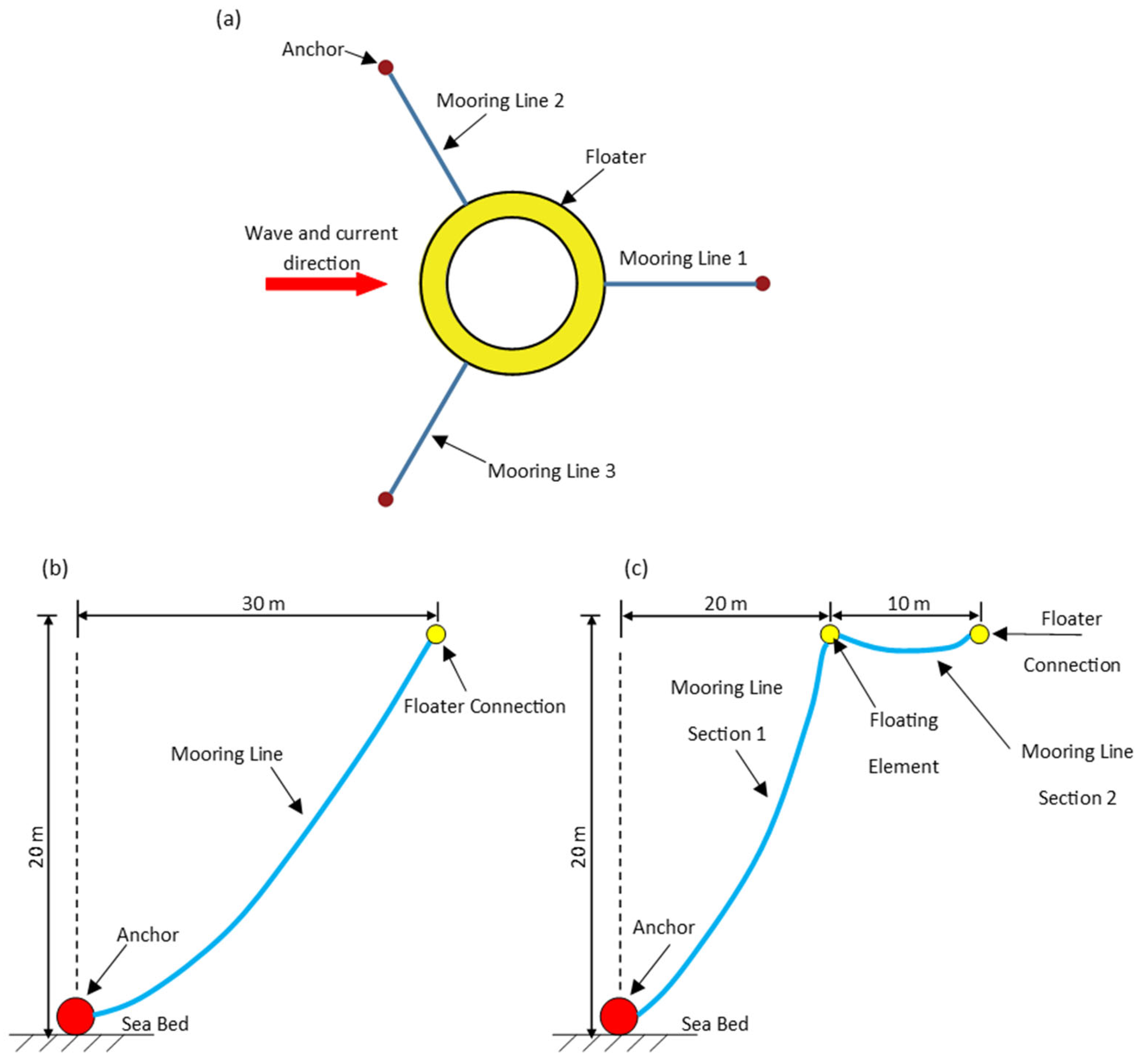
2.6. Mooring System Configurations
3. Results
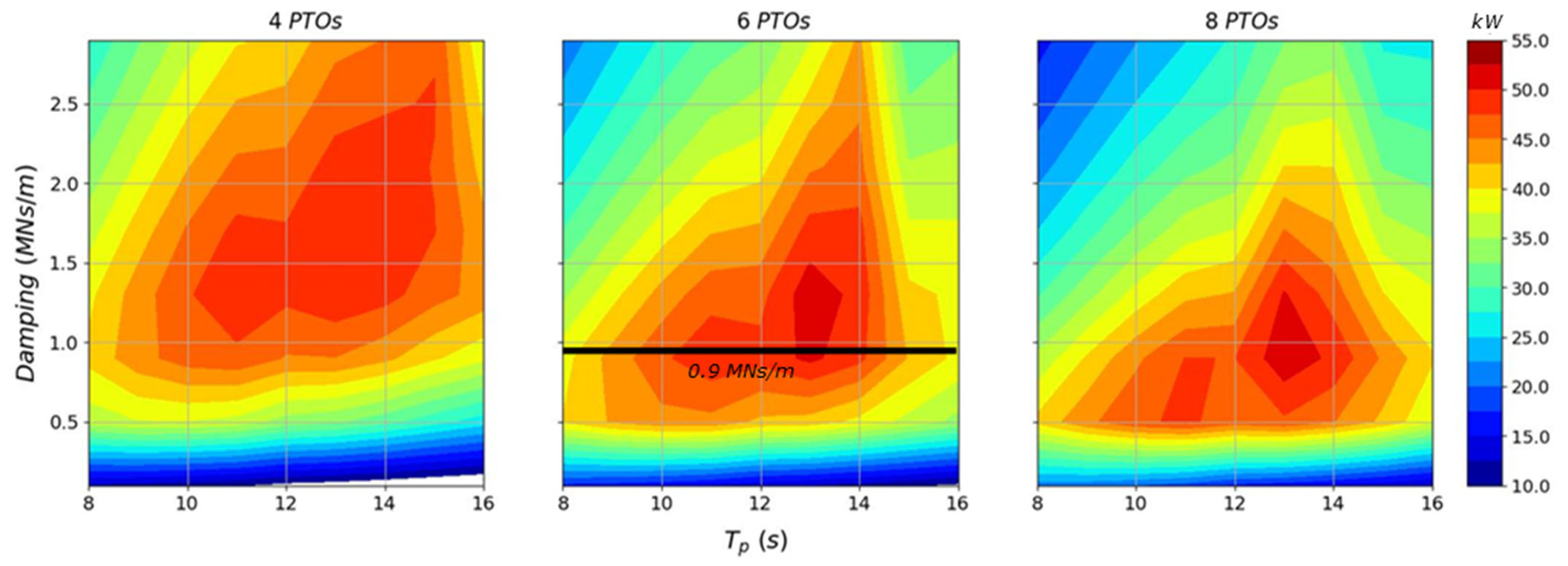
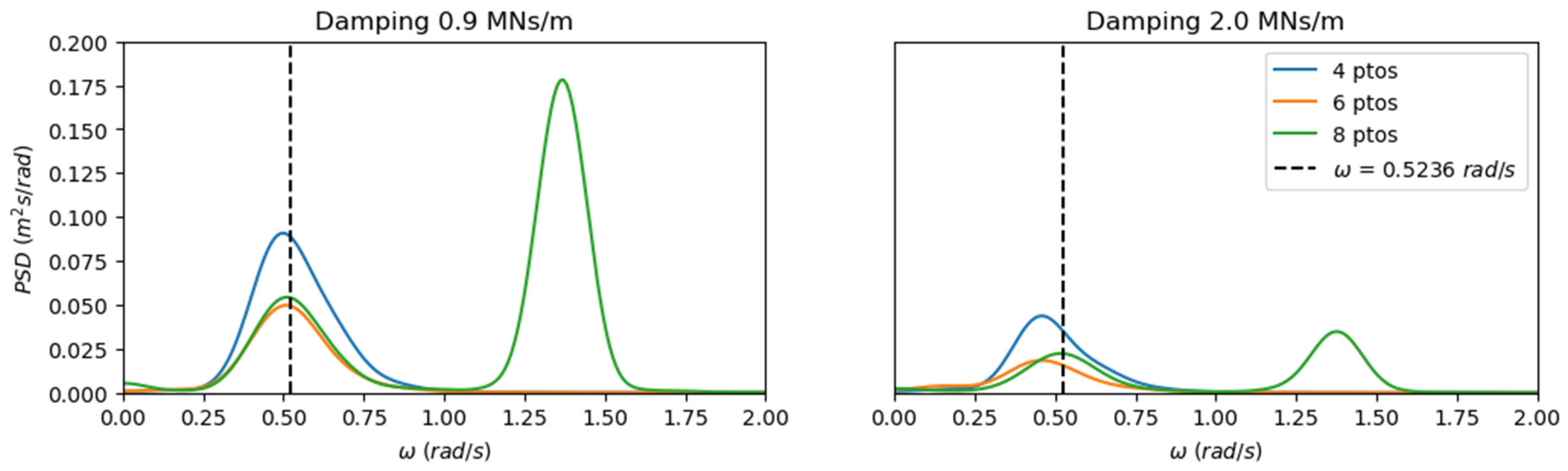
3.1. Number of PTOs
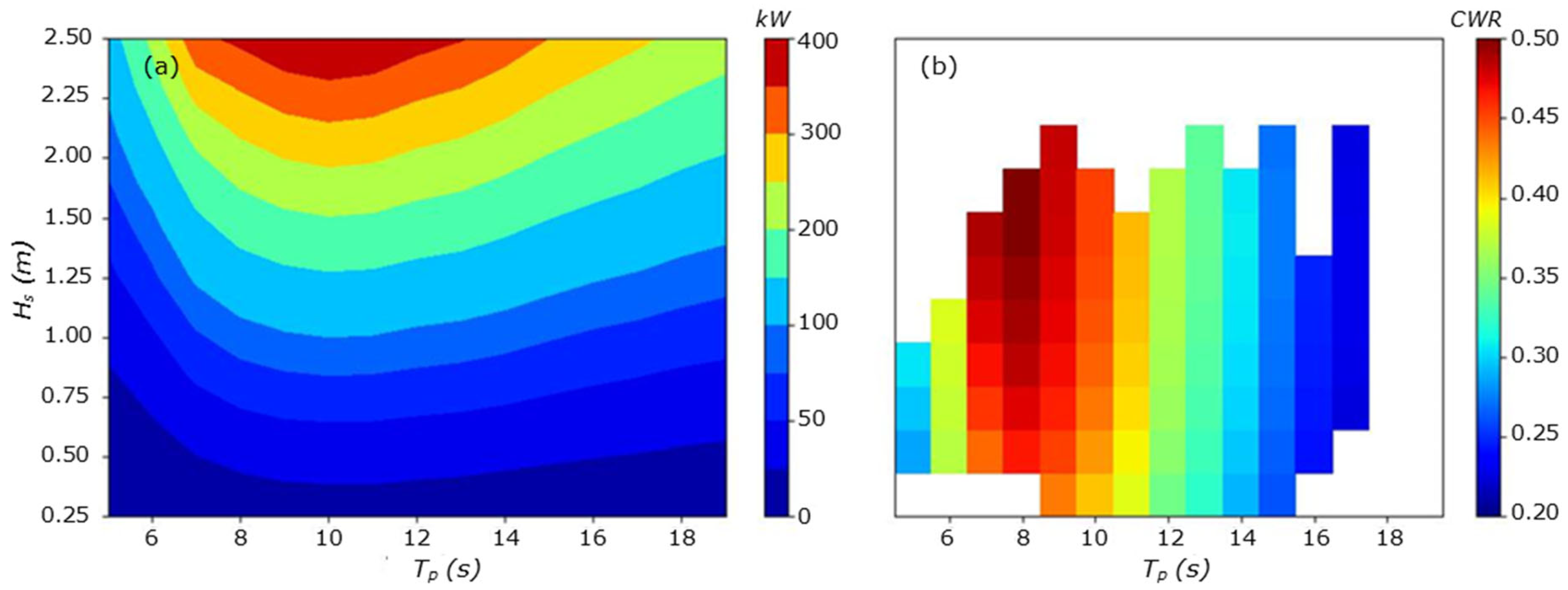
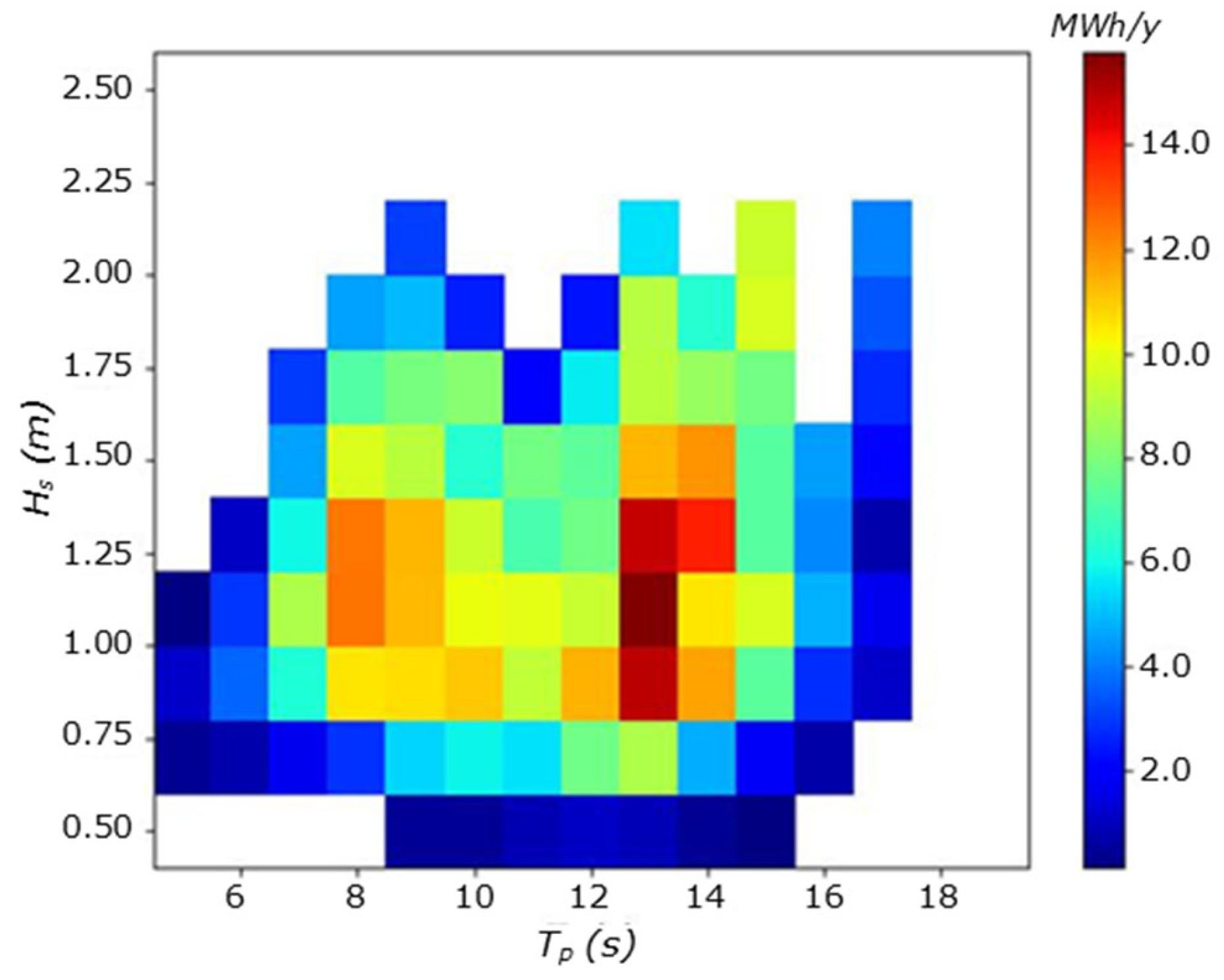
3.2. Power Matrix, CWR, and MAEP
3.3. Mooring System
- It is assumed that the bottom can support the vertical and horizontal loading in the PTO foundations and anchor points. Consequently, the design of those structural elements is not included in the present analysis.
- The wind forces are not considered.
- The speed of the ocean current is imposed on the surface and decays exponentially with depth, aligning with the direction of the wave.
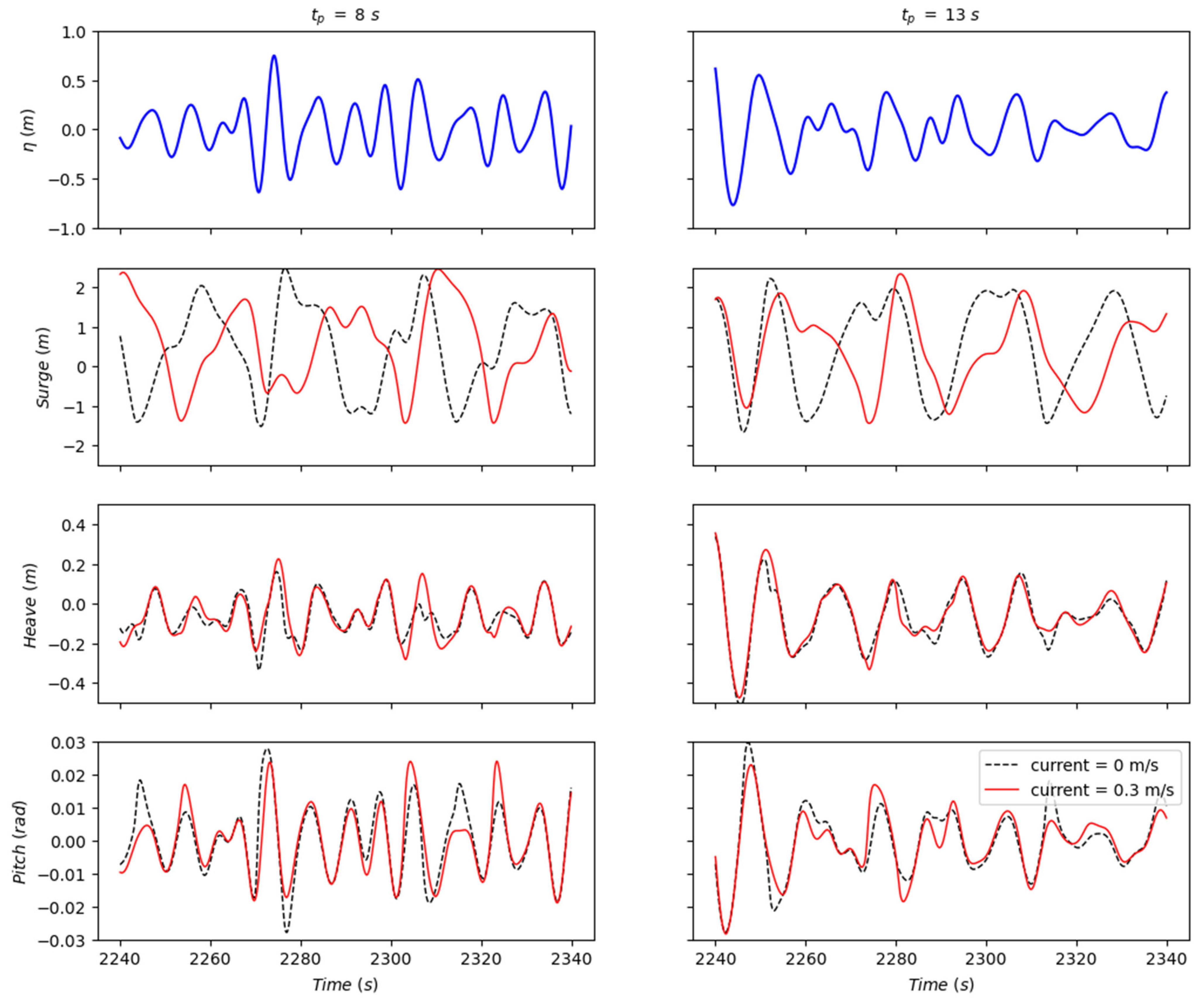
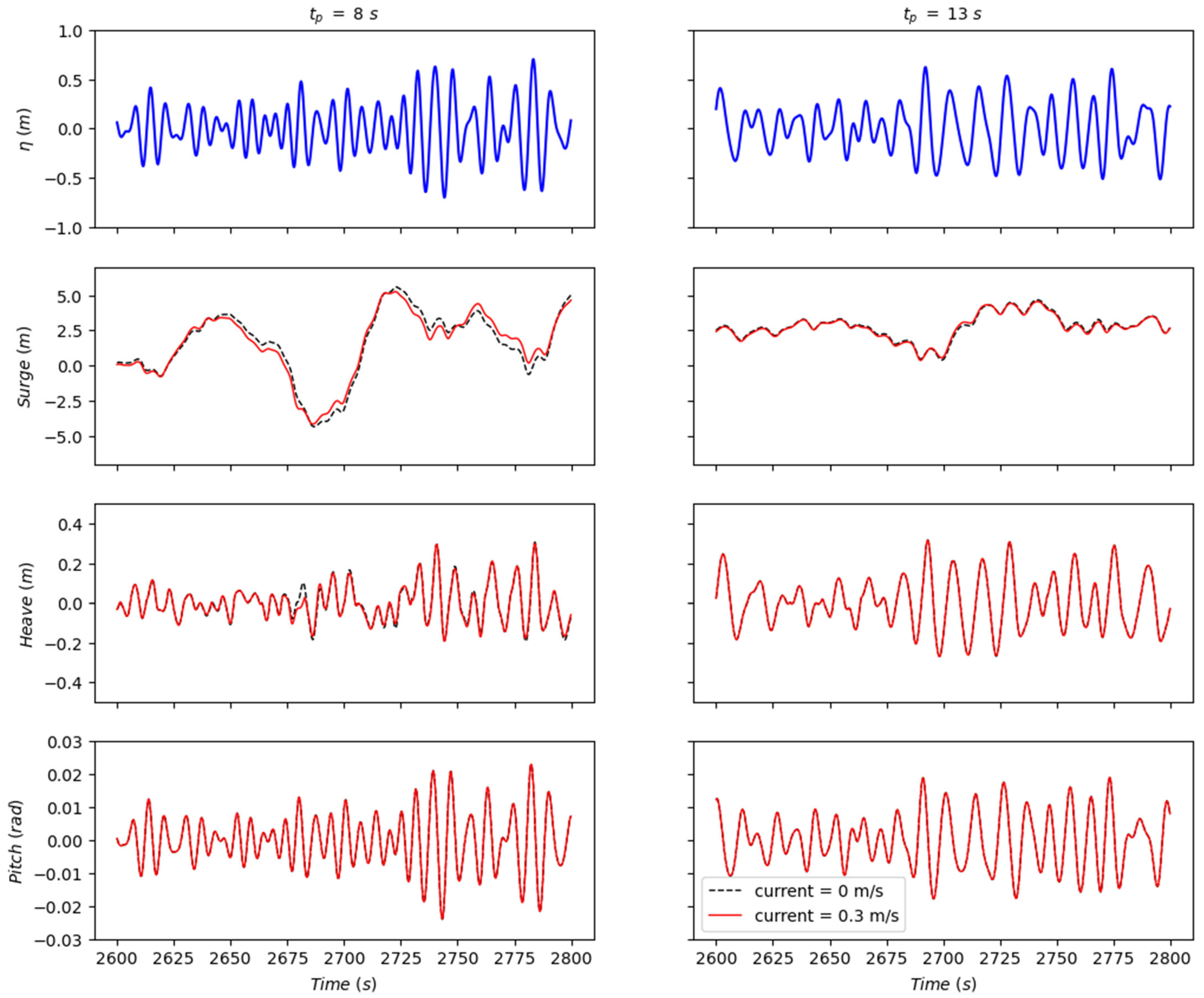
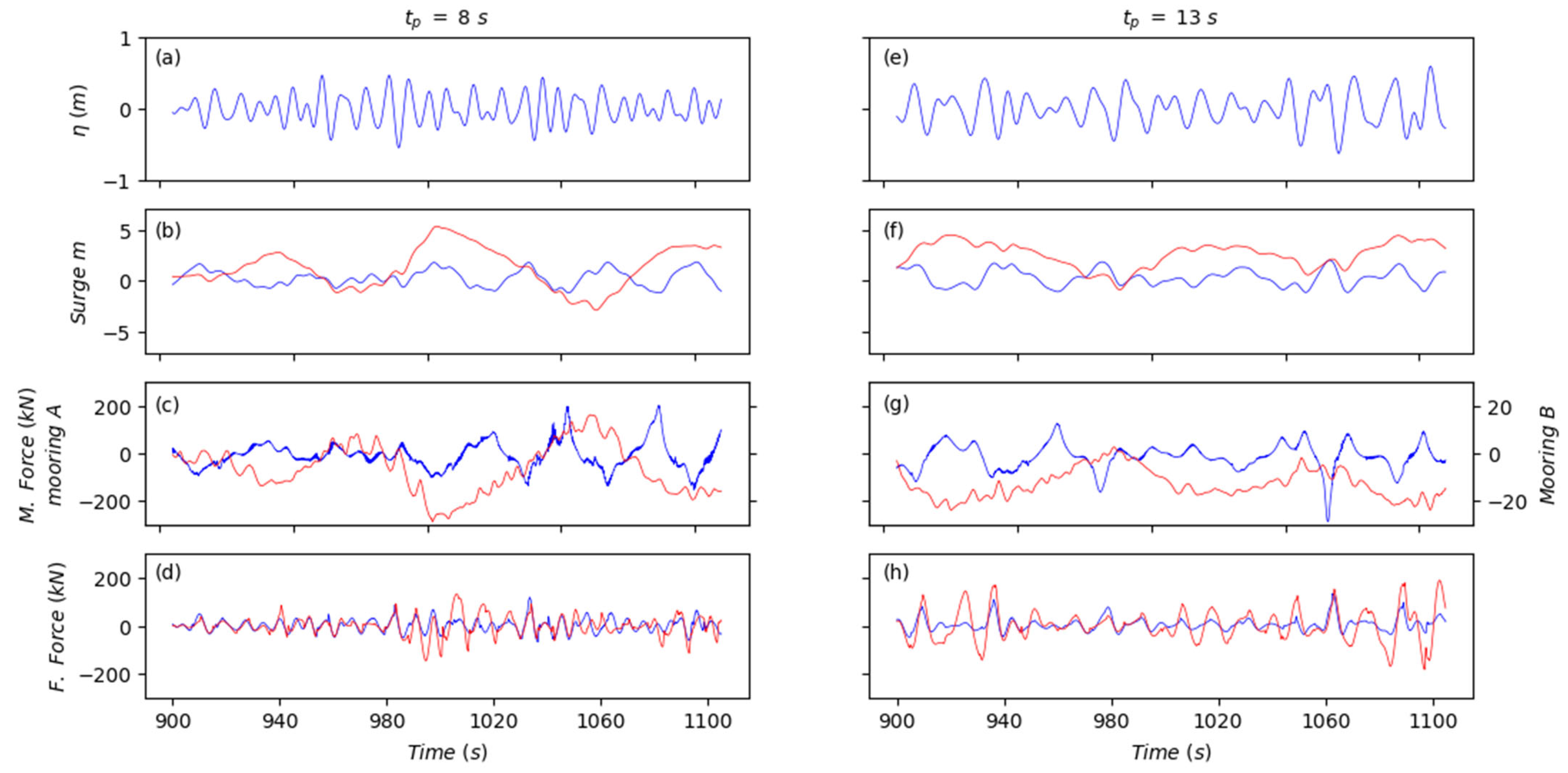
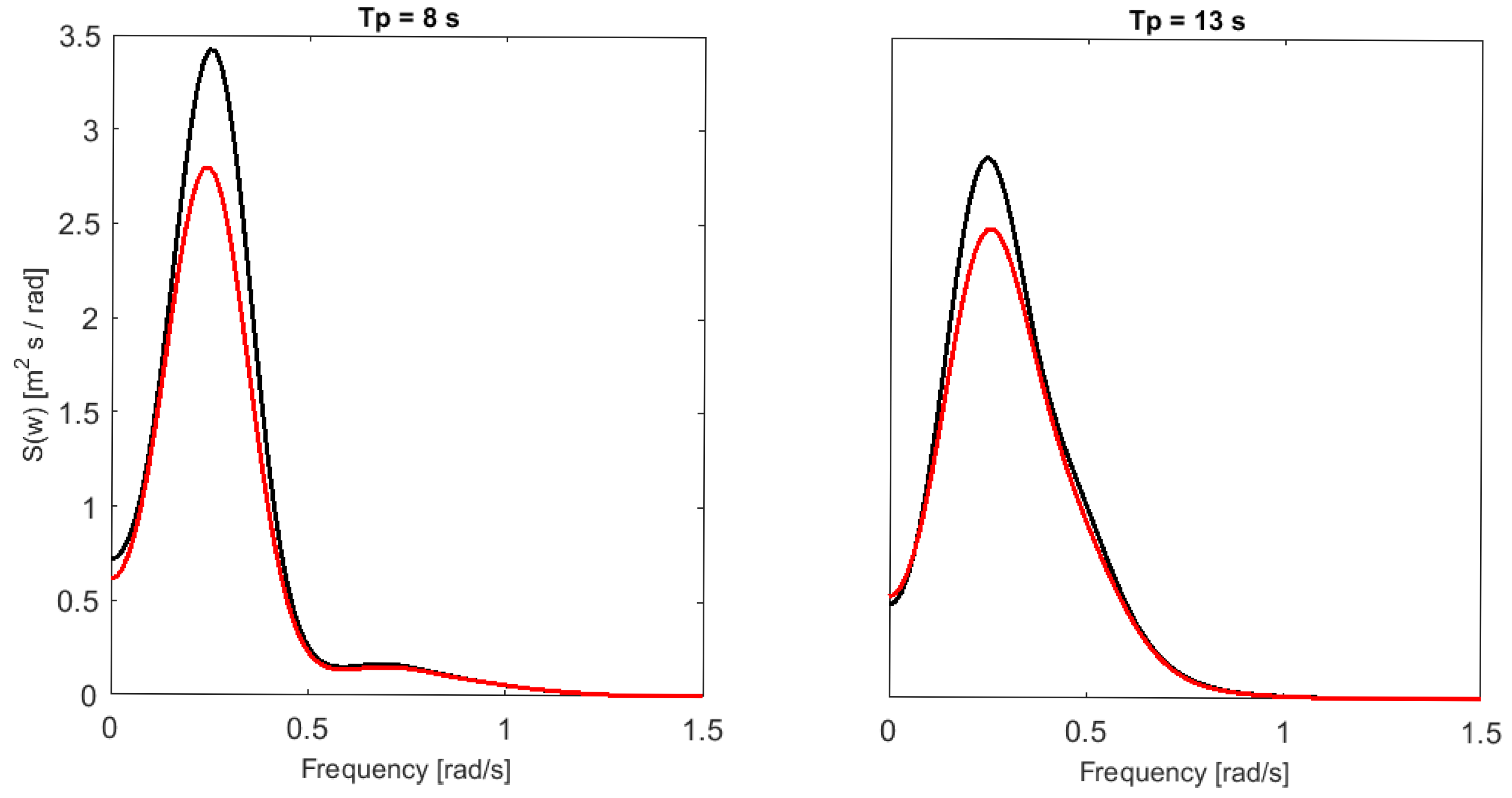
- With Tp = 8 s, the surge response reaches values of 8 m, while at 13 s, the surge response is 4 m, but with a permanent offset from the original position.
- The heave motion shows a similar amplitude as configuration A for both wave peak periods.
- Pitch motions decrease in comparison with WEC-Mooring A and can be associated directly with weaker restrictions imposed by the mooring line.
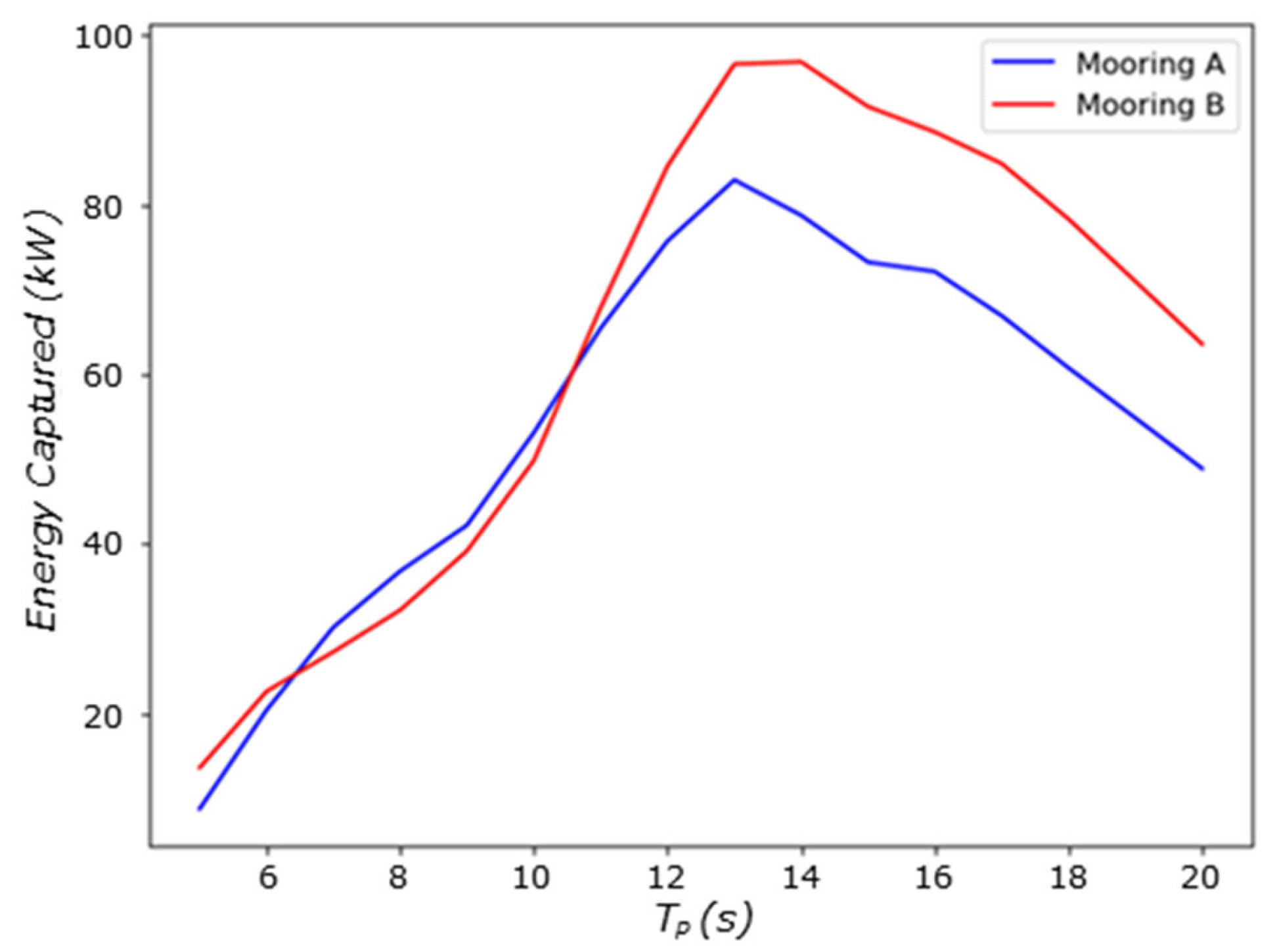
- The average energy capture is less influenced by the current, and the values remain around 32.69 and 97.43, 8 and 13 s, respectively.
3.4. Extreme Operational Conditions
3.5. WEC Performance with Mooring System
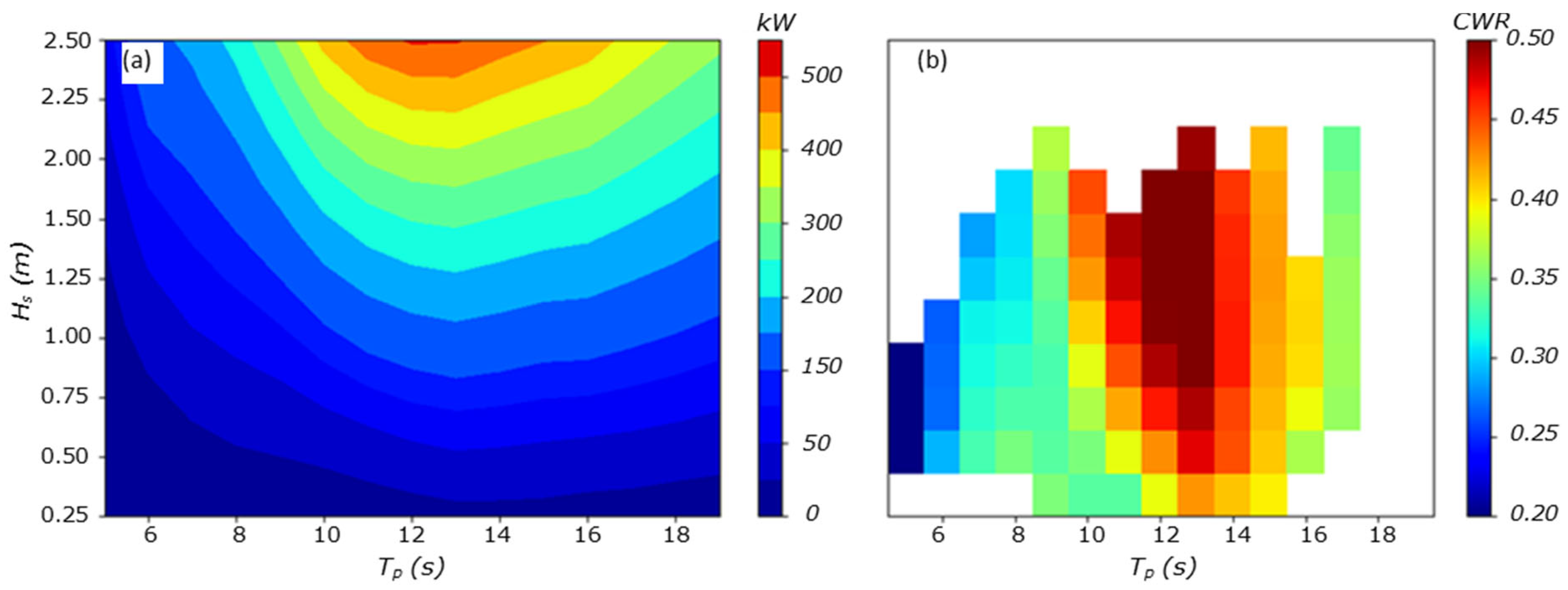
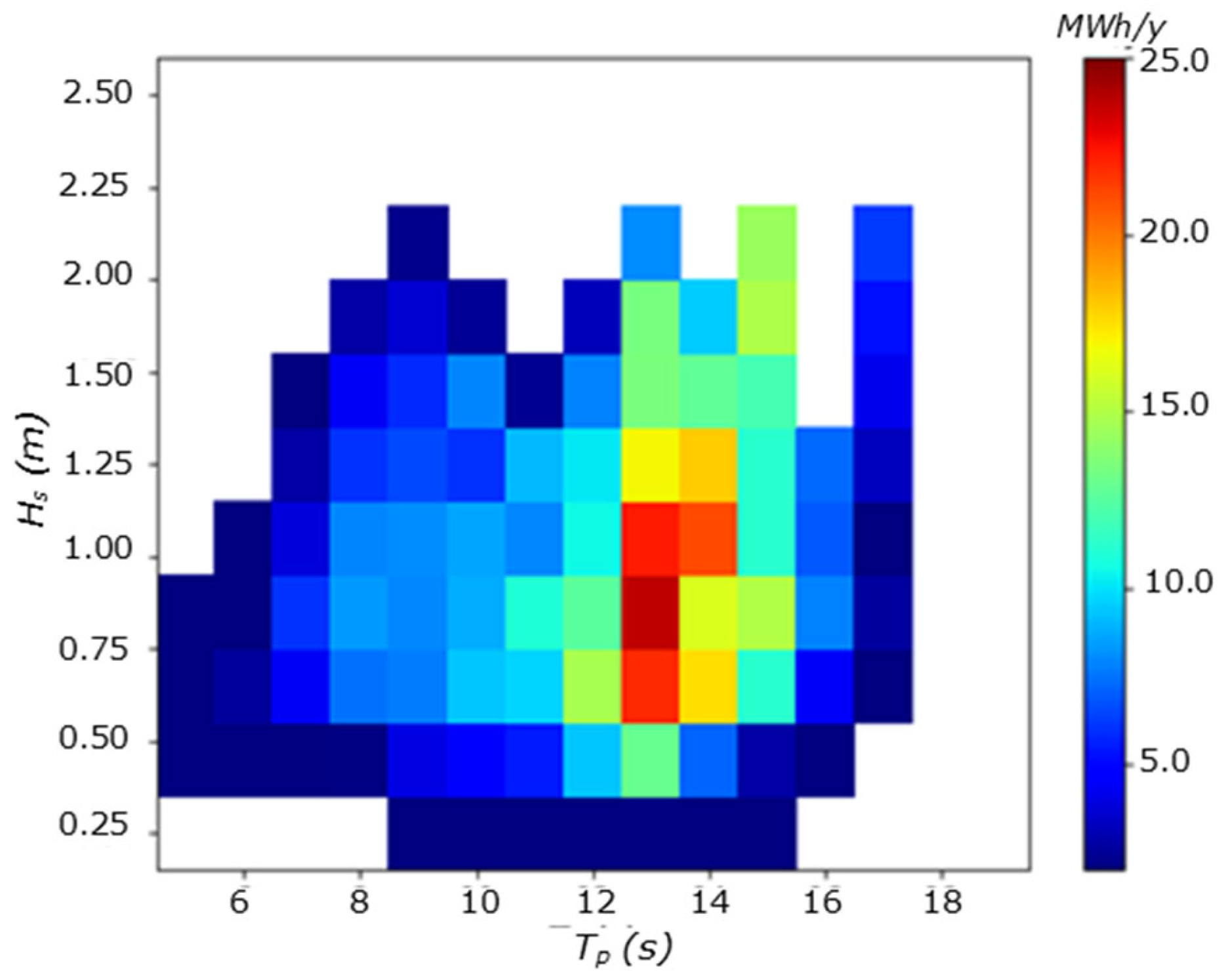
- The high-energy capture contours concentrate around Tp = 13 s, corresponding to the high occurrence probability;
- The maximum energy capture increases from 200 to 500 kW;
- The CWR maintains around 0.5 but occurs between Tp 10–14 s instead of 7–10 s.
4. Discussion
5. Conclusions
Author Contributions
Funding
Data Availability Statement
Conflicts of Interest
Abbreviations
| ALS | Accidental Limit State |
| BEM | Boundary Element Method |
| CWR | Capture Width Ratio |
| DoF | Degrees of Freedom |
| DNVGL | Det Norske Veritas—Germanischer Lloyd |
| FLS | Fatigue Limit State |
| Hs | Significant Wave Height |
| Tp | Peak Wave Period |
| MAEP | Mean Annual Energy Production |
| PTO | Power Take-Off |
| ULS | Ultimate Limit State |
| WEC | Wave Energy Converter |
References
- Bozzi, S.; Besio, G.; Passoni, G. Wave power technologies for the Mediterranean offshore: Scaling and performance analysis. Coast. Eng. 2018, 136, 130–146. [Google Scholar] [CrossRef]
- Zhang, Y.; Zhao, Y.; Sun, W.; Li, J. Ocean wave energy converters: Technical principle, device realization, and performance evaluation. Renew. Sustain. Energy Rev. 2021, 141, 110764. [Google Scholar] [CrossRef]
- Bouhrim, H.; El Marjani, A.; Nechad, R.; Hajjout, I. Ocean Wave Energy Conversion: A Review. J. Mar. Sci. Eng. 2024, 12, 1922. [Google Scholar] [CrossRef]
- Naty, S.; Viviano, A.; Foti, E. Feaseability study of a WEC integrated in the port of Giardini Naxos, Italy. Coast. Eng. Proc. 2016, 1, 22. [Google Scholar] [CrossRef]
- Kasiulis, E.; Punys, P.; Kofoed, J.P. Assessment of theoretical near-shore wave power potential along the Lithuanian coast of the Baltic Sea. Renew. Sustain. Energy Rev. 2015, 41, 134–142. [Google Scholar] [CrossRef]
- Sricharan, V.V.S.; Chandrasekaran, S. Time-domain analysis of a bean-shaped multi-body floating wave energy converter with a hydraulic power take-off using WEC-Sim. Energy 2021, 223, 119985. [Google Scholar] [CrossRef]
- Felix, A.; Mendoza, E.; Chávez, V.; Silva, R.; Rivillas-Ospina, G. Wave and wind energy potential including extreme events: A case study of Mexico. J. Coast. Res. 2018, 85, 1336–1340. [Google Scholar] [CrossRef]
- Hernández-Fontes, J.V.; Felix, A.; Mendoza, E.; Cueto, Y.R.; Silva, R. On the marine energy resources of Mexico. J. Mar. Sci. Eng. 2019, 7, 191. [Google Scholar] [CrossRef]
- Pozzi, N. Numerical Modeling and Experimental Testing of a Pendulum Wave Energy Converter (PeWEC). Ph.D. Thesis, University of Politecnico di Torino, Torino, Italy, 2018. [Google Scholar]
- Chandrasekaran, S.; Sricharan, V.V.S. Numerical analysis of a new multi-body floating wave energy converter with a linear power take-off system. Renew. Energy 2020, 159, 250–271. [Google Scholar] [CrossRef]
- Harris, R.; Johanning, L.; Wolfram, J. Mooring systems for wave energy converters: A review of design issues and choices. In Proceedings of the 3rd International Conference on Marine Renewable Energy, Blyth, UK, 7–9 July 2004. [Google Scholar]
- Thomsen, J.B. Mooring solutions for large wave energy converters. In Proceedings of the International Network on Offshore Renewable Energy (INORE): 11th International Symposium, Naples, Italy, 22–29 May 2015. [Google Scholar]
- Xu, S.; Wang, S.; Soares, C.G. Review of mooring design for floating wave energy converters. Renew. Sustain. Energy Rev. 2019, 111, 595–621. [Google Scholar] [CrossRef]
- Topper, M.B.R.; Olson, S.S.; Roberts, J.D. Techno-Economic Modelling of Tidal Energy Converter Arrays in the Tacoma Narrows. J. Mar. Sci. Eng. 2020, 8, 646. [Google Scholar] [CrossRef]
- Gonzalez, P.M.; Mendoza, E.; Stratigaki, V.; Troch, P.; Moreno, E.C. A Multi-PTO Wave Energy Converter for Low Energetic Seas: Ensenada Bay Case. In Proceedings of the European Wave and Tidal Energy Conference, Bilbao, Spain, 3–7 September 2023. [Google Scholar]
- Babarit, A.; Delhommeau, G. Theoretical and numerical aspects of the open source BEM solver NEMOH. In Proceedings of the 11th European Wave and Tidal Energy Conference, Nantes, France, 6–11 September 2015. [Google Scholar]
- Ruehl, K.; Keester, A.; Michelén Ströfer, C.A.; nathanmtom; Topper, M.; Lawson, M.; dforbush2; Ling, B.A.; jtgrasb; j-vanrij; et al. WEC-Sim/WEC-Sim: WEC-Sim, v5.0.1; Zenodo, 2022. Available online: https://zenodo.org/records/6555137 (accessed on 30 March 2026).
- Sandoval Munoz, C.A. Study of Wave Run-Up and Overtopping with Large Eddy Simulations for Overtopping Wave Energy Converters. Doctoral Dissertation, UCL University College London, London, UK, 2025. [Google Scholar]
- Ventura, Y.; Rodriguez, Y.; Odériz, I.; Chavez, V.; Mori, N.; Felix, A.; Silva, R. New Assessment of Wave Energy in Relation to Geomorphological and Demographic Characteristics on the Pacific Coast of Baja California, Mexico. Front. Mar. Sci. 2022, 9, 872707. [Google Scholar] [CrossRef]
- Gorr-Pozzi, E.; García-Nava, H.; Larrañaga, M.; Jaramillo-Torres, M.G.; Verduzco-Zapata, M.G. Wave energy resource harnessing assessment in a subtropical coastal region of the Pacific. J. Mar. Sci. Eng. 2021, 9, 1264. [Google Scholar] [CrossRef]
- Ruehl, K.; Michelen, C.; Kanner, S.; Lawson, M.; Yu, Y.H. Preliminary verification and validation of WEC-Sim, an open-source wave energy converter design tool. In Proceedings of the International Conference on Offshore Mechanics and Arctic Engineering, San Francisco, CA, USA, 8–13 June 2014. [Google Scholar]
- Ruehl, K.; Michelen, C.; Bosma, B.; Yu, Y.H. WEC-Sim phase 1 validation testing: Numerical modeling of experiments. In Proceedings of the 35th International Conference on Offshore Mechanics and Arctic Engineering, Busan, Republic of Korea, 19–24 June 2016. [Google Scholar]
- Morison, J.R.; Johnson, J.W.; Schaaf, S.A. The force exerted by surface waves on piles. J. Pet. Technol. 1950, 2, 149–154. [Google Scholar] [CrossRef]
- Sirnivas, S.; Yu, Y.H.; Hall, M.; Bosma, B. Coupled mooring analyses for the wec-sim wave energy converter design tool. In Proceedings of the 35th International Conference on Offshore Mechanics and Arctic Engineering, Busan, Republic of Korea, 19–24 June 2016. [Google Scholar]
- Cargo, C.J.; Plummer, A.R.; Hillis, A.J.; Schlotter, M. Determination of optimal parameters for a hydraulic power take-off unit of a wave energy converter in regular waves. Proc. Inst. Mech. Eng. Part A J. Power Energy 2012, 226, 98–111. [Google Scholar] [CrossRef]
- Babarit, A. A database of capture width ratio of wave energy converters. Renew. Energy 2015, 80, 610–628. [Google Scholar] [CrossRef]
- Babarit, A.; Hals, J.; Muliawan, M.J.; Kurniawan, A.; Moan, T.; Krokstad, J. Numerical benchmarking study of a selection of wave energy converters. Renew. Energy 2012, 41, 44–63. [Google Scholar] [CrossRef]
- DNVGL-OS-E301; Offshore Standard: Position Mooring. DNV GL: Høvik, Norway, 2017.
- DNV-RP-C205; Environmental Conditions and Environmental Loads. DNV: Høvik, Norway, 2010.
- Sanchez, L.G.A. Patrones de deriva de trazadores lagrangeanos en la Bahía de Todos Santos. Cienc. Mar. 1998, 14, 135–162. [Google Scholar] [CrossRef]
- Navarro-Olache, L.F.; Castro, R.; Durazo, R.; Hernández-Walls, R.; Mejía-Trejo, A.; Flores-Vidal, X.; Flores-Morales, A.L. Influence of Santa Ana winds on the surface circulation of Todos Santos Bay, Baja California, Mexico. Atmósfera 2021, 34, 97–109. [Google Scholar] [CrossRef]
- Yuan, Z.M.; Incecik, A.; Ji, C. Numerical study on a hybrid mooring system with clump weights and buoys. Ocean. Eng. 2014, 88, 1–11. [Google Scholar] [CrossRef]
- Elobeid, M.; Pillai, A.C.; Tao, L.; Ingram, D.; Hanssen, J.E.; Mayorga, P. Implications of wave–current interaction on the dynamic responses of a floating offshore wind turbine. Ocean. Eng. 2024, 292, 116571. [Google Scholar] [CrossRef]



| Working Principle | Characteristic |
|---|---|
| Point absorber | Point absorbers are floating or submerged devices significantly smaller than the incident wavelength. These devices have the capacity to absorb energy from all wave directions. Examples of such devices include AquayBuOY, AWS, Pontoon, and Wavebob. |
| Oscillating wave surge | Oscillating wave surge converters consist of flaps that oscillate around a hinged shaft in response to the wave action, thereby harvesting energy from horizontal water motion. These devices are designed for operation in intermediate and shallow water, for instance, WEC Langlee. |
| Oscillating water columns | Oscillating water columns are open-chamber structures that enclose the water column and a trapped air pocket above it. The waves induce oscillatory motion in the water inside the chamber; this motion pushes the air back and forth through a bidirectional turbine. This turbine then generates electricity. An example of this technology is the OEbuoy. |
| Attenuators | Attenuators are floating structures aligned with the wave direction, featuring a horizontal extension comparable to the wavelength. Examples of this technology include the Pelamis and SeaPower systems. |
| Properties | Value |
|---|---|
| Buoy diameter (m) | 30.0 |
| Draft (m) | 2.5 |
| Displacement (ton) 1 | 948.4 |
| Inertial Moment, Ixx, (kg −m2) | 1.0771 × 10⁸ |
| Inertial Moment, Iyy, (kg −m2) | 1.0771 × 10⁸ |
| Inertial Moment, Izz, (kg −m2) | 2.12524 × 10⁸ |
| Gravity center [x, y, z] (m) 2 | [0, 0, 0] |
| Buoyancy center [x, y, z] (m) | [0, 0, −1.05] |
| Hydrostatic stiffness [z] (N/m) | 4.7 × 10⁶ |
| Restoring moment [x] (N/°) | 5.3 × 10⁸ |
| Restoring moment [y] (N/°) | 5.3e × 108 |
| Line | Mooring A | Mooring B | ||
|---|---|---|---|---|
| Force (kN) | Tp (s) | Force (kN) | Tp | |
| Line 1 | 1169.3 | 13 | L1 = 430.68 L2 = 331.92 | 13 12 |
| Line 2, 3 | 971.59 | 12 | L1 = 79.77 L2 = 133.88 | 12 12 |
Disclaimer/Publisher’s Note: The statements, opinions and data contained in all publications are solely those of the individual author(s) and contributor(s) and not of MDPI and/or the editor(s). MDPI and/or the editor(s) disclaim responsibility for any injury to people or property resulting from any ideas, methods, instructions or products referred to in the content. |
© 2026 by the authors. Licensee MDPI, Basel, Switzerland. This article is an open access article distributed under the terms and conditions of the Creative Commons Attribution (CC BY) license.
Share and Cite
Meneses Gonzalez, P.; Carpintero Moreno, E.; Troch, P.; Mendoza, E. Numerical Hydrodynamic and Mooring Optimization of a Wave Energy Converter for the Mexican Coast. Water 2026, 18, 865. https://doi.org/10.3390/w18070865
Meneses Gonzalez P, Carpintero Moreno E, Troch P, Mendoza E. Numerical Hydrodynamic and Mooring Optimization of a Wave Energy Converter for the Mexican Coast. Water. 2026; 18(7):865. https://doi.org/10.3390/w18070865
Chicago/Turabian StyleMeneses Gonzalez, Paulino, Efrain Carpintero Moreno, Peter Troch, and Edgar Mendoza. 2026. "Numerical Hydrodynamic and Mooring Optimization of a Wave Energy Converter for the Mexican Coast" Water 18, no. 7: 865. https://doi.org/10.3390/w18070865
APA StyleMeneses Gonzalez, P., Carpintero Moreno, E., Troch, P., & Mendoza, E. (2026). Numerical Hydrodynamic and Mooring Optimization of a Wave Energy Converter for the Mexican Coast. Water, 18(7), 865. https://doi.org/10.3390/w18070865