


Abstract
Xinjiang, a key grain production region in arid Northwest China, faces severe water scarcity and low agricultural water use efficiency. Although subsurface drip irrigation (SDI) has been widely studied for horticultural crops, a comprehensive synthesis focusing on SDI system design, water–fertilizer management, and soil–crop responses in wheat production under arid conditions remains limited. This knowledge gap restricts the development of optimized irrigation strategies for wheat cultivation in Xinjiang, where extreme aridity, widespread oasis agriculture, soil salinization risk, and the dominance of densely planted wheat create management requirements that differ from those of humid regions and horticultural production systems. Therefore, this review summarizes the development of SDI technology, its system design parameters, and integrated water–fertilizer management strategies, while systematically integrating recent advances in soil–crop–microbial interactions and resource use efficiency under arid conditions, which have rarely been synthesized in previous SDI reviews. Synthesizing current knowledge on the impacts of SDI on soil water dynamics, soil properties, microbial communities, crop root architecture, biomass production, and resource use efficiency, this review further discusses general advances in SDI in the context of their relevance to Xinjiang, with particular emphasis on how regional soil–climate conditions and wheat production practices influence system design, fertigation management, and field applicability. Multiple studies indicate that SDI can simultaneously reduce evaporation and deep percolation, mitigate surface salt accumulation, promote deeper root development, and improve crop productivity and resource use efficiency. However, high initial investment and maintenance costs, along with risks of emitter clogging, still hinder its large-scale adoption. For Xinjiang’s wheat and other densely planted crops, future research should prioritize optimizing subsurface drip irrigation (SDI) systems, as studies have shown that SDI can increase water use efficiency (WUE) by 20–30% and enhance crop yield by 10–15%, particularly under water-scarce conditions. The study’s findings are as follows: (1) optimize SDI system parameters for local soil–climate conditions, (2) elucidate the synergistic mechanisms between water–fertilizer coupling and soil–crop systems, and (3) develop cost-effective and durable system components. Importantly, these findings are particularly relevant for Xinjiang, where extreme aridity, soil salinization, and limited water resources require region-specific optimization of SDI systems. These efforts will support efficient and sustainable wheat production in Xinjiang and other arid regions.
1. Introduction
Xinjiang is a major grain-producing region in the arid inland area of northwestern China, where water scarcity has become a major constraint on agricultural sustainability [1,2]. Agricultural water use accounts for a very high proportion of total regional water consumption, while groundwater overexploitation and ecological pressure continue to intensify [3,4,5,6]. At the same time, Xinjiang has favorable light and thermal conditions for wheat production, and wheat remains one of the region’s major food crops [7,8]. However, frequent drought and limited water availability often reduce soil moisture during critical growth stages, thereby constraining wheat yield and production stability [9,10] (Figure 1).
Figure 1.
Conceptual framework proposed for subsurface drip irrigation technology in Xinjiang wheat.
Drip irrigation has been widely adopted in Xinjiang wheat production because of its water-saving and yield-enhancing effects [4,11,12,13,14,15]. Nevertheless, conventional surface drip irrigation still has important limitations under arid oasis conditions, including evaporation loss, surface salt accumulation, shallow root development, plastic residue, and increased production costs [16,17,18,19,20,21,22]. These limitations indicate the need for more efficient irrigation technologies for sustainable wheat production in Xinjiang (Figure 1).
Subsurface drip irrigation (SDI), which delivers water and fertilizers directly into the crop root zone through buried drip lines, has emerged as a promising alternative to surface drip irrigation [18,23,24]. Compared with surface systems, SDI can reduce surface evaporation, improve root zone water and nutrient supply, limit salt accumulation near the soil surface, and enhance water use efficiency [20,25,26,27,28,29,30,31]. In Xinjiang, where low soil fertility, low fertilizer use efficiency, and salinity risks constrain wheat production, SDI also offers potential advantages for improving water–fertilizer synchrony and sustaining crop productivity [32,33,34,35,36,37,38,39,40,41,42] (Figure 1).
Despite these advantages, the application of SDI to field-grown wheat remains less studied than its use in horticultural crops. In particular, uncertainties remain regarding system design parameters and irrigation–fertilizer management strategies under the soil and climatic conditions of arid regions such as Xinjiang [13,20,23,43,44,45]. Therefore, a focused review is needed to clarify the development, design basis, and management mechanisms of SDI for wheat in Xinjiang (Figure 1).
This review aims to (1) summarize the development and system parameters of SDI for wheat in Xinjiang, (2) analyze irrigation and fertilizer management strategies, and (3) evaluate their effects on soil–crop–microbial interactions and resource use efficiency, thereby providing a synthesis-based framework for sustainable wheat production in arid regions and for the design of future field experiments in Xinjiang.
2. Background and Advances in Subsurface Drip Irrigation Research
2.1. Brief Background to International SDI Advances
International SDI research originated from early subsurface irrigation concepts and gradually progressed with the development of plastic pipelines, filtration systems, and emitter technologies [46,47,48,49,50]. From the late 20th century onward, research increasingly expanded from technical feasibility to crop application, system design, and operational management [51,52]. In recent years, the emphasis has shifted further toward irrigation efficiency, integrated water–fertilizer management, and adaptation to different production systems [53,54,55,56,57,58] (Figure 2). Overall, international SDI research has gradually shifted from technological feasibility to system optimization, focusing on emitter design, irrigation scheduling, and integrated water–fertilizer management. This transition provides the technical basis for the following sections, which focus on design parameters, integrated management, and field applicability in Xinjiang wheat systems.
Figure 2.
Key stages in the evolution of international SDI research and application.
2.2. The Development of Subsurface Drip Irrigation Technology in China
Research on subsurface drip irrigation in China began relatively late (Figure 3), particularly compared with countries such as the United States and Israel where SDI technologies were developed and applied earlier in large-scale farming systems. In 1974, the nation imported two sets of drip irrigation equipment from Mexico, marking the first tentative application of modern drip irrigation technology within the country [59]. During the 1980s, Chinese researchers undertook extensive theoretical studies on the advantages of subsurface drip irrigation technology, but practical application remained limited [60]. After the 1990s, China significantly reduced underground irrigation investment costs through the research, development and mass production of foamed plastic microporous seepage pipes [61]. However, early demonstrations in Xinjiang in 1996 were unsuccessful due to pipe blockage and short service life caused by impurities [62]. Since the 21st century, with increasing water scarcity, improved filtration systems, and advances in anti-clogging emitters, Xinjiang completed the construction of a subsurface drip irrigation system covering over 300 hectares for cotton cultivation in 2001. The system demonstrated excellent results in both water conservation and increased crop yields during its two-year operational period [63]. Moreover, the application of subsurface drip irrigation technology in perennial economic crops such as alfalfa and hops in Xinjiang has now exceeded 30,000 hectares [63]. Currently, Chinese studies mainly focus on water–fertilizer efficiency, soil water migration, and installation parameters of subsurface drip irrigation systems. Compared with international research, Chinese studies have placed greater emphasis on agronomic adaptation and field management practices under arid conditions, particularly for greenhouse and high-value crops. Some preliminary studies have also explored its application in field crops such as maize, wheat, and millet [24,30,39]. However, research on field crop applications remains limited, and theoretical and technical development still lags behind international research to some extent. From an economic perspective, subsurface drip irrigation systems generally require higher initial investment compared with conventional surface irrigation methods due to the costs of drip lines, filtration equipment, and installation. However, long-term economic benefits can be achieved through improved water use efficiency, reduced labor requirements, and increased crop yields [26]. Several studies in arid regions of China, particularly in Xinjiang, have shown that the economic returns from subsurface drip irrigation can offset the initial investment within several years, especially for high-value crops and large-scale agricultural operations [61]. Nevertheless, for field crops such as wheat, the economic feasibility remains uncertain due to relatively lower profit margins [22,26]. Therefore, comprehensive economic evaluations are necessary to assess the cost–benefit performance and long-term sustainability of subsurface drip irrigation systems under different cropping systems and climatic conditions. Therefore, further studies are required to evaluate the suitability and optimization of subsurface drip irrigation for field crops such as wheat in arid regions including Xinjiang. In summary, while international SDI research has achieved substantial progress in system design and large-scale application, research in China has mainly focused on technological adaptation under arid agricultural conditions. Future studies should further integrate engineering optimization with agronomic management to enhance the application potential of SDI in field crops such as wheat.
Figure 3.
Development timeline of subsurface drip irrigation technology in China.
For the purpose of this review, the significance of Xinjiang lies not only in being an early application region for SDI in arid China, but also in representing a typical production environment where water scarcity, salinity risk, and mechanized wheat cultivation coexist. Therefore, the historical development of SDI is reviewed here not as a purely general background, but as the technical basis for understanding why system optimization in Xinjiang requires region-specific design and management criteria.
3. Research Progress on Design Parameters for Subsurface Drip Irrigation Systems
The burial depth and spacing of drip tape constitute crucial parameters in the performance design of subsurface drip irrigation systems. These parameters influence not only system layout and operational costs but also soil moisture distribution and crop yield. In practical applications, especially for field crops such as wheat cultivated in arid regions like Xinjiang, the burial depth and spacing of drip tape must satisfy two key requirements (Figure 4). First, the burial depth should coordinate with the local plowing depth and wheat sowing depth to ensure sufficient soil moisture for seed germination while avoiding damage to the drip tape during tillage operations [47,54]. Excessively shallow placement may increase the risk of mechanical damage, whereas excessive burial depth may hinder the upward movement of water needed for seedling establishment [46]. Second, the drip tape layout should regulate the soil moisture distribution within the wheat root zone, maintaining adequate moisture in the main root layer while reducing deep percolation losses, which is particularly important under the water-scarce conditions of Xinjiang [23,64]. Ultimately, optimizing the configuration of drip tape burial depth and spacing is crucial for maximizing water use efficiency, sustaining soil structure, preventing mechanical damage, and enhancing crop yield. In practice, drip tape burial depth and spacing should be considered jointly, because deeper burial may reduce surface evaporation but may also require smaller spacing to ensure adequate wetting of the crop root zone. Based on existing studies and wheat root distribution characteristics, a burial depth of approximately 15–25 cm combined with a drip tape spacing of 30–90 cm is generally recommended for wheat production in Xinjiang [20,44,46]. In addition, the economic performance of the irrigation system should also be considered when determining these parameters [22]. Narrower drip tape spacing generally improves soil moisture uniformity and crop yield, but it also increases the number of drip tapes required per unit area, resulting in higher installation and management costs [41,64]. Conversely, wider spacing may reduce system costs but could lead to lower irrigation uniformity and potential yield losses [64]. Therefore, an appropriate balance between agronomic performance and economic return is essential when designing subsurface drip irrigation systems. In Xinjiang, these parameters are especially critical because wheat is commonly grown under arid, saline-prone, and mechanized field conditions, where drip tape placement must simultaneously satisfy seedling emergence, root zone wetting, salt control, and tillage safety.
Figure 4.
Illustration of key decision parameters for subsurface drip irrigation system design. Note: The figure highlights the relationship between drip tape burial depth, tape spacing, soil moisture distribution, and wheat root zone requirements. It illustrates how these parameters interact with field management practices such as tillage depth and sowing depth, which are particularly important for subsurface drip irrigation systems in arid regions.
3.1. Research Progress on Laying Spacing of Drip Tape Under Subsurface Drip Irrigation
Optimizing the spacing of drip tape installation enhances the uniformity of irrigation within drip systems and improves crop productivity [65]. Different laying spacing results in variations in soil moisture distribution, crop growth, yield, and productivity (Figure 5) [66]. In general, narrower spacing between drip irrigation tapes improves soil moisture uniformity and tends to promote higher crop yield and productivity. This is particularly relevant for wheat grown in Xinjiang, where uneven soil moisture distribution may lead to poor seedling establishment and reduced yield stability [67]. Bosch et al. [68] found that the crop production under 0.9 m spacing tape installation is higher than 1.8 m spacing, but the reduced spacing necessitated an increased number of drip tapes, leading to higher production costs and lower economic returns (Figure 5) [69]. Enciso et al. [70] found that spacing had no significant impact on onion yield by investigating the effect of 15 cm, 20 cm, and 30 cm spacing between drip tapes on onion, so a 30 cm laying spacing can obtain higher economic benefits. However, excessively wide spacing reduces the number of drip tapes per unit area, which may decrease the wetted soil volume and reduce irrigation efficiency [66]. Under identical irrigation volumes, wider spacing necessitates longer irrigation durations. Consequently, deep percolation near the tapes increases, while soil moisture deficits may occur between adjacent drip tapes, leading to heightened water losses [66,71]. The tape spacing has no significant effect on crop yield or water use efficiency under adequate irrigation [70]. However, wider tape spacing results in poorer irrigation uniformity, increased subsurface seepage, and greater water loss. For wheat production in Xinjiang, drip tape spacing should also consider soil texture, climatic conditions, and field management practices [27]. Taking sandy soil as an example, with its low resistance to soil moisture movement, coupled with significant gravitational influence on infiltration and greater vertical transport distances, a relatively narrower drip tape spacing is often recommended to improve horizontal water movement and maintain adequate moisture within the wheat root zone [44,67]. Therefore, for Xinjiang wheat systems, tape spacing should not be determined solely by irrigation uniformity, but also by the need to secure uniform emergence and stable yield under water-limited oasis agriculture.
Figure 5.
The regulation diagram of drip irrigation belt laying spacing in subsurface drip irrigation system. Note: The diagram illustrates how different drip tape spacings influence the wetted soil volume and the distribution of soil moisture between adjacent tapes. Narrow spacing generally leads to overlapping wetting fronts and more uniform soil moisture distribution, whereas wider spacing may result in dry zones between drip tapes and increased deep percolation near the tapes.
3.2. Research Progress of Burial Depth of Drip Tape Under Subsurface Drip Irrigation
The design of buried depth of the drip irrigation belt should be fully combined with the distribution characteristics of crop roots, so as to maximize water transportation and distribute near the root zone to efficiently supply water and nutrients for crop growth (Figure 6) [23]. For shallow-rooted crops such as vegetables and melons, drip irrigation tape is usually buried at a shallow depth of 10 and 20 cm [30,31,39,72]. A synthesis of representative studies on burial depth effects on evaporation, yield, and salt leaching for different crops is presented in Table 1. An experiment on the burial depth of subsurface drip irrigation for onions demonstrated that both yield and water use efficiency peaked at the burial depth of 10 cm [30]. Machado and Oliveira [72] found that tomato yield increased with the increase in drip tape buried depth, but the maximum depth should not exceed 20 cm. Alomran and Louki [73] also employed a 10 cm buried subsurface drip irrigation technique in cucumber comparative experiments. For relatively deeper-rooted field crops such as cotton, maize, and alfalfa, drip tapes are often buried at depths of 30–50 cm [16,19,27,29]. Mu et al. [74] conducted a meta-analysis of 84 studies on subsurface drip irrigation and found that as the burial depth of drip tape increases, surface evaporation decreases while subsurface seepage increases (Figure 6). As summarized in Table 1, shallow burial generally favors seedling establishment but may increase evaporation losses, whereas deeper burial reduces evaporation but may increase deep percolation and salt leaching below the root zone depending on soil texture. Consequently, crop yield and water use efficiency generally show a trend of first increasing and then decreasing with increasing burial depth, with the positive effect peaking at burial depths of >15–25 cm, which was also confirmed by Wang et al. [75] For wheat cultivation in Xinjiang, the burial depth should also consider the soil texture, tillage depth, and the shallow root distribution of wheat [27]. For example, in the case of field-cultivated crops, the subsurface drip irrigation system should be buried as shallow as possible whilst avoiding damage from tillage practices [22,29,47,54]. For crops under no-tillage systems, such as alfalfa, the burial depth may be determined mainly according to the crop root distribution. In arid regions such as Xinjiang, a slightly deeper burial may help reduce soil evaporation and maintain stable moisture conditions for wheat growth, whereas a shallower burial may be more suitable in humid regions. Likewise, in Xinjiang, burial depth is a region-sensitive parameter because it is closely linked to evaporation control, salt redistribution, and compatibility with local tillage practices.
Figure 6.
The regulation diagram of drip tape burial depth in subsurface drip irrigation system. Note: The figure shows the influence of burial depth on water movement, evaporation loss, and deep percolation. Shallow burial promotes water availability for seedling establishment but may increase evaporation and risk of mechanical damage, whereas deeper burial reduces evaporation but may increase deep percolation and limit water availability in the shallow root zone.
Table 1.
Synthesis of representative studies on drip tape burial depth under subsurface drip irrigation.
In summary, the design parameters for subsurface drip irrigation systems must be comprehensively determined based on factors such as crop type, soil texture, field management practices, climatic conditions, and economic viability. At the same time, it should be combined with control of soil moisture profile position, uniformity of soil water distribution, and reduction in surface evaporation and deep percolation. However, current subsurface drip irrigation system design techniques remain imperfect, with key layout parameters insufficiently defined. In many practical cases, system design still relies heavily on experience derived from surface drip irrigation systems. Therefore, it is necessary to further study the combined effects of drip tape spacing and burial depth to determine optimal subsurface irrigation layout parameters. Considering the agronomic characteristics of wheat and the local conditions in Xinjiang, a moderate drip tape spacing combined with a burial depth of 15–25 cm is therefore considered a suitable configuration. This practice helps maintain adequate soil moisture within the root zone, as it effectively reduces evaporative losses and minimizes the risk of damage from conventional tillage operations. For arid agricultural regions such as Xinjiang, where wheat is an important staple crop and water resources are limited, clarifying these design parameters is particularly important for improving irrigation efficiency and ensuring stable crop yields.
4. Research Progress on Integrated Fertilizer–Water Management Systems for Subsurface Drip Irrigation
A rational irrigation regime is a key factor to achieving water saving and efficiency, and it is also the most critical technical reference for the operation of the subsurface drip irrigation system [19]. Taking soil moisture content and nutrient levels as the research object, determining appropriate water and fertilizer quotas alongside corresponding irrigation frequencies enables the implementation of precision irrigation [23]. Subsurface drip irrigation systems are laid beneath the root zone of crops. Excessive water and fertilizer application aggravates deep percolation of water and leaching losses of nutrients. At the same time, it will cause waterlogging and oxygen depletion in the rhizosphere soil, which impedes root system development. Conversely, the lack of water and fertilizer lead to deficiencies in crop moisture and nutrients, which are detrimental to yield formation (Figure 7) [76,77]. In general, management strategy involving high-frequent, low-volume drip irrigation can effectively retain water and nutrients near the crop root zone, minimizing losses and meeting the requirements of on-demand supply and precision irrigation [23]. To address this limitation, an integrated irrigation management framework can be established by jointly considering soil moisture status, crop growth stage, nutrient demand, and irrigation frequency. Within this framework, irrigation quotas and fertigation schedules are dynamically adjusted based on crop water requirements and real-time soil moisture monitoring, thereby improving the coordination between water supply, nutrient availability, and root zone conditions. Furthermore, increased climate variability and the frequent occurrence of extreme drought events lead to higher crop water demand and greater irrigation pressure. This situation calls for more flexible irrigation scheduling and enhanced soil moisture monitoring to ensure stable crop production. This issue is particularly important in Xinjiang, where irrigation scheduling must simultaneously address water scarcity, salt control, and the stage-specific water and nutrient requirements of densely planted wheat.
Figure 7.
The regulation diagram of different strategies for subsurface drip irrigation.
4.1. Research Progress of Drip Irrigation Amount Under Subsurface Drip Irrigation
The irrigation system of subsurface is primarily designed based on crop types, crop water consumption patterns, soil water-holding capacity and permeability, with comprehensive consideration of soil water content and evapotranspiration [23]. Throughout the research at domestic and international, crop irrigation water requirement predictions are primarily based on crop evapotranspiration, the lower limit of soil moisture and pan evaporation [78]. Internationally, crop evapotranspiration is widely used as the basis, whereas domestically, the lower limit of soil moisture is primarily used as a guide. In practical irrigation management, soil moisture threshold methods generally define irrigation triggers based on a percentage of field capacity (e.g., 60–80% of field capacity) or soil matric potential thresholds [1,5]. Compared with evapotranspiration-based scheduling, soil moisture threshold methods allow more direct control of root zone water status but require higher monitoring accuracy [8,27]. Quantitative comparisons indicate that irrigation triggered at approximately 70% of field capacity can effectively balance water supply and crop water demand under subsurface drip irrigation conditions [78,79]. The prediction of irrigation amount based on the lower limit of soil moisture necessitates real-time monitoring of soil moisture fluctuations and physical properties, which requires considerable demands on both operators and instrumentation [78]. Alomran and Louki [73] found that it is more scientific to use crop evapotranspiration to guide field crop irrigation, as the indicator more accurately reflects the actual water consumption of crops, which includes local meteorological data, crop growth, and soil conditions to calculate crop evapotranspiration and determine irrigation requirements, though the prediction method based on evaporation pan transpiration remains more suitable for greenhouse crops. This was also experimentally confirmed by Chiew et al. [79]. Malve et al. [80] found that when crop irrigation was guided by evapotranspiration, applying it at 0.8 crop actual water requirement (ETc) could prevent water stress and enhance the productivity of the cropping system. These findings suggest that evapotranspiration-based irrigation scheduling and soil moisture threshold methods can achieve comparable irrigation efficiency when properly calibrated, although evapotranspiration approaches are often easier to implement at large field scales. In addition, Umair et al. [81] showed that compared with surface drip irrigation, subsurface drip irrigation of wheat reduced evapotranspiration by 15% and increased water productivity by 19.59%. However, Callau–Beye et al. [39] found that there was no significant difference in the water productivity of subsurface drip irrigation systems for maize compared to other irrigation systems through field studies. For Xinjiang, the practical implication is that irrigation amount should be evaluated not only from the perspective of crop evapotranspiration, but also in terms of salinity management and the stability of root zone moisture under arid oasis conditions.
4.2. Research Progress on Fertilizer Application Rates Under Subsurface Drip Irrigation
Subsurface drip irrigation can take advantage of the synergistic effect of water and nutrients to increase crop material productivity [82]. It efficiently transports water and soluble fertilizer directly to the crop root zone via the drippers, thereby reducing nutrient leaching or volatilisation losses and lowering fertilizer inputs [83]. This is akin to deep soil fertilization, whereby the fertilizer is applied without hindrance to crop growth. It omits the process of nutrients traveling from the surface to the root system, enabling direct, deep and precise fertilization, which is the main reason for reducing fertilizer volatilization loss [84,85]. Monistrol et al. [46] found that deeper subsurface drip irrigation fertilization location more effectively reduces NH3 volatilisation, yet when irrigation volumes are excessive, it may increase NO3 leaching losses. In addition, at greater depths, oxygen levels diminish, which happens in anaerobic conditions, promoting denitrification and exacerbating nitrogen loss. Under subsurface drip irrigation, soil moisture dynamics strongly influence nitrification and denitrification processes [40]. Moderate soil moisture levels promote nitrification, converting ammonium into nitrate that can be absorbed by crops, whereas excessive soil moisture may lead to oxygen depletion and stimulate denitrification, resulting in nitrogen losses in the form of N2O or N2 gases [85]. Therefore, the appropriate irrigation rate and burial depth of drip tape in subsurface drip irrigation are crucial for reducing fertilizer loss. Optimizing irrigation scheduling can regulate soil aeration and moisture conditions, thereby maintaining a balance between nitrification and denitrification processes and improving nitrogen use efficiency [8,40]. Moreover, subsurface drip irrigation enables the adjustment of both the types and quantities of water-soluble fertilizers, to meet the needs of varying nutrients at different growth stages of crops. In particular, it creates conditions for multiple precise fertilization with low solubility, weak mobility, and immobilized tendency [86]. Guo et al. [87] found that the application of phosphate fertilizer through subsurface drip irrigation enhances the transport efficiency and the uniformity of water and nutrients to the root zone of crops, which improves fertilizer use efficiency while reducing the required fertilizer application rate. This is especially relevant for Xinjiang because fertilizer overuse and low nutrient use efficiency are already important constraints in regional wheat production.
4.3. Research Progress of Water Irrigation Frequency Under Subsurface Drip Irrigation
The subsurface drip irrigation system reduces water evaporation, leakage loss, fertilizer volatilization and leaching loss via directly transporting water and fertilizer to the crop root zone. This maintains stable soil moisture and nutrient conditions in the root zone, promotes crop growth, and enhances crop productivity and water use efficiency [27,39]. El Naim and Ahmed [88] studied the irrigation of sunflower and found that the heads irrigated every 7 days exhibited larger diameters than those irrigated every 14 or 21 days. Patra et al. [65] also found through corn fertilization frequency trials that increasing the frequency of fertilization enhances water and nutrient availability in the corn root zone, thereby boosting photosynthetic product yield. Increasing the frequency of nitrogen application in drip-irrigated cotton can effectively supplement nutrients, achieve higher yields as well [89]. In contrast, a tomato fertilization frequency study revealed that the yield was not significantly improved under treatments with fertilization intervals of 3 days and 7 days, which may be the enhancement of root absorption capacity offset changes in nutrient concentration [83]. Additionally, frequent drip irrigation fertilization poses significant management challenges, and leads to prolonged oxygen deficiency in the root zone, thereby restricting crop growth [90]. Surface drip irrigation, which typically adopts the principle of small amounts, with frequent applications for irrigation and fertilization, intensifies evaporation from the soil surface and fertilizer volatilization, increases moisture and nutrients in the shallow soil layer, promotes shallow root development, and inhibits deep root growth, thereby reducing crop stress tolerance [90,91].
However, at present, studies on integrated management systems for subsurface drip irrigation remains limited and largely confined to studying the mechanisms of individual measures. Future research should strengthen the integration of irrigation scheduling, soil moisture threshold regulation, and nitrogen transformation processes to better coordinate water supply, nutrient availability, and root zone environmental conditions (e.g., nitrification and denitrification), in order to develop more coordinated water–fertilizer management strategies under subsurface drip irrigation systems. The underlying mechanisms of synergistic improvement among irrigation volume, fertilizer application rates, and irrigation frequency require further investigation. Under Xinjiang conditions, irrigation frequency should therefore be optimized as a joint regulator of water supply, nutrient retention, and rhizosphere aeration, rather than be treated as an isolated operational factor.
5. Effects of Subsurface Drip Irrigation on Soil Water Movement, Physicochemical Properties, and Microorganisms
Subsurface drip irrigation utilizes capillary action and gravity to distribute water from buried emitters to the crop root zone [23,26]. Its unique transport mechanism significantly influences soil moisture distribution, leading to variations in soil microenvironments [79]. In addition, the principle commonly adopted in subsurface drip irrigation concentrates water in the root zone of crops, creating differing moisture and nutrient conditions between the root zone and the soil surface, which leads to variations in the microenvironment across the soil profile [39]. These soil responses are particularly relevant in Xinjiang because aridity, salinity risk, and localized irrigation jointly shape soil water redistribution, nutrient transport, and microbial habitat conditions in wheat fields.
5.1. Effects of Subsurface Drip Irrigation on Soil Water Movement
The processes of soil moisture transport influence the operational efficiency of subsurface drip irrigation systems, and their diffusion is affected by multiple factors including soil conditions, irrigation methods, system design parameters, and irrigation schedules [27,30]. The characteristics of soil wetting body can directly reflect the process of water migration [76]. Compared with surface drip irrigation, subsurface drip irrigation increases the wetted area in the crop root zone. However, because gravitational forces exert a greater influence on soil moisture than capillary action, upward movement of soil water is restricted, which results in an elliptical wetted contour (Figure 7) [40]. The moisture-holding capacity of soils with different textures is as follows: clay soil > loamy soil > sandy soil in terms of moisture-holding capacity (Table 2) [23]. Patel and Rajpu [30] found that as the burial depth of subsurface drip irrigation tapes increases, the soil moisture profile shifts downward; under uniform irrigation conditions, at depths of 10 cm or less, the soil moisture is less affected by gravity so water migration upward keeps the soil surface moist. Furthermore, increasing irrigation volume at the same buried depth expands the wetted volume, resulting in greater surface soil moisture [75]. Based on the understanding of water movement and wetting pattern characteristics, introducing the concept of field capacity (FC) helps to further clarify the theoretical threshold for irrigation management [23,78]. Field capacity is defined as the soil water content remaining after excess gravitational water has drained and the downward movement of water becomes negligible. It is commonly expressed as a percentage of soil volume or dry weight. Agronomically, field capacity represents the optimal soil moisture condition for most crops because it ensures a balanced distribution of water and air within the soil pore system, which is favorable for root respiration and nutrient uptake [23,44]. In terms of soil water potential, field capacity generally corresponds to approximately −10 kPa in sandy soils and −33 kPa in clay soils [91]. Therefore, FC is widely used as a reference threshold for irrigation scheduling and soil moisture management in agricultural systems [23,78]. At present, in order to gain a more accurate understanding of soil moisture transport dynamics, numerous field experiments combined with soil moisture transport models have been conducted [39]. However, for the non-uniform distribution characteristic of subsurface drip irrigation output, multidimensional modeling approaches are required for construction [92]. It was found that HYDRUS-2D exhibits high capability in simulating water movement under subsurface drip irrigation conditions [93,94]. In addition to HYDRUS-2D, numerical modeling approaches are increasingly used to simulate coupled water–solute transport processes under subsurface drip irrigation systems [92,94]. These models can integrate soil hydraulic parameters, irrigation schedules, emitter discharge characteristics, and crop water uptake to predict wetting patterns, solute transport, and root zone moisture dynamics [92,94]. Such modeling approaches provide valuable tools for optimizing drip tape spacing, burial depth, and irrigation quotas under different soil textures and climatic conditions.
Table 2.
Effects of soil texture on water movement.
5.2. Effects of Subsurface Drip Irrigation on Soil Physical and Chemical Properties
Under subsurface drip irrigation conditions, the migration and distribution of fertilizer are influenced by factors such as fertilizer properties, installation parameters, and irrigation regimes [95]. Consequently, its impact on soil physicochemical properties is primarily manifested in the increased and optimized distribution of nutrients such as nitrogen and phosphorus [96]. Multiple studies indicate that subsurface drip technology reduces fertilizer losses and significantly increases the accumulation of key nutrients such as nitrogen and phosphorus in the soil [46,65,83]. Studies by Freiling et al. [97] and Chen et al. [98] indicate that nitrogen in soil can move with water, whereas phosphorus readily adsorbs and migrates poorly with water, resulting in distinct distributions of the two elements (Figure 8). Guo et al. [87] found through experiments with different types of phosphate fertilizers and burial depths that polyphosphate fertilizers should be applied with shallow burial, while orthophosphate fertilizers should be applied with deep burial. In addition, subsurface drip irrigation will influence soil salinity distribution. Research by Li et al. [42] indicates that appropriate irrigation can effectively reduce accumulation of salt in the topsoil layer and reduce the risk of salt threat to crops. The mechanism of salinity control under subsurface drip irrigation is mainly related to the redistribution of soil moisture and salt through localized wetting patterns [42]. The downward movement of irrigation water can promote salt leaching away from the root zone, while the relatively dry soil surface suppresses upward salt migration driven by evaporation [18,42,44]. Consequently, salts tend to accumulate at the margins of the wetted zone rather than within the active root zone, which helps maintain a more favorable soil environment for crop growth. In particular, insufficient irrigation in saline–alkali soils may limit salt leaching, thereby leading to salt accumulation in the root zone and the gradual deterioration of the soil structure over time (Figure 8) [99], while excessive irrigation may exacerbate nutrient leaching losses [76,77]. Therefore, maintaining a balance between sufficient leaching and avoiding excessive irrigation is critical for effective salinity management in subsurface drip irrigation systems. For wheat production in arid regions such as Xinjiang, subsurface drip irrigation is generally recommended to adopt moderate irrigation quotas combined with high-frequency irrigation events to maintain stable soil moisture in the main root zone [2,10,14,17]. Previous studies suggest that maintaining soil moisture at approximately 65–80% of field capacity during the key growth stages of wheat (e.g., jointing, heading, and grain filling) can effectively improve water use efficiency and nutrient uptake while reducing nutrient leaching losses [23]. In addition, deficit irrigation strategies have been proposed to further enhance water productivity under limited water resources. Moderate deficit irrigation applied during less sensitive growth stages (such as early vegetative stages) can reduce total irrigation water consumption while maintaining acceptable yield levels. However, excessive water deficit during critical stages such as jointing and grain filling may significantly reduce wheat yield and nutrient uptake efficiency [100,101]. Therefore, optimizing irrigation regimes by combining precise fertigation management with controlled deficit irrigation is essential for improving both water and nutrient use efficiency under subsurface drip irrigation systems. This regional perspective is essential in Xinjiang, where salinity control is not a secondary issue but one of the core criteria for evaluating SDI performance.
Figure 8.
The regulation of subsurface drip irrigation on soil physical and chemical properties.
5.3. Effects of Subsurface Drip Irrigation on Soil Microorganisms
Soil microbial abundance serves as a crucial indicator reflecting soil quality and health, which exhibits a positive correlation with microbial community diversity and soil ecological stability [100]. Studies have shown that the content of water and nutrient in soil directly affects microbial diversity [101]. Subsurface drip irrigation directly or indirectly affects microorganisms by changing soil water and fertilizer content and distribution, as well as physicochemical properties [102,103]. The water and nutrient distribution pattern where the root zone under drip irrigation is rich in water and nutrients, while the surface layer is deficient, leads to different microbial communities in the soil profile (Figure 9) [39,104]. Research by Nessner Kavamura et al. [105] indicates that microbial community structures differ under varying soil moisture conditions. This effect is mainly related to changes in soil oxygen diffusion, redox potential, and nutrient availability under different moisture levels, which regulate microbial metabolism and ecological niches [102,103]. In wheat fields under subsurface drip irrigation systems, some studies have reported that increasing soil moisture may reduce bacterial abundance while promoting fungal growth, although the response may vary depending on soil type and irrigation conditions (Figure 9) [79]. Studies have shown that under subsurface drip irrigation conditions with a burial depth of 30 cm, the biomass of soil nitrogen-metabolizing bacteria such as denitrifying bacteria and nitrifying bacteria undergoes significant alteration because of low oxygen content [86,100]. This process is closely associated with shifts in soil redox conditions and nitrogen transformation pathways, including enhanced denitrification under reduced oxygen levels. Additional studies indicate that subsurface drip irrigation exhibits greater resilience and recoverability in bacterial communities. With increasing irrigation water volume, the abundance of the phyla Proteobacteria, Actinobacteria, and Bacteroidetes significantly increased [106], with Proteobacteria and Actinobacteria being the most sensitive [107,108], whereas Zhang et al. [79] reached the opposite conclusion. These contrasting results may be related to differences in soil texture, irrigation frequency, and nutrient availability, which jointly regulate microbial community responses under subsurface drip irrigation systems. Mechanistically, variations in soil moisture and oxygen availability under different irrigation regimes can alter microbial metabolic pathways, leading to shifts in dominant microbial taxa and functional groups [102,103,108]. For example, wetter conditions may favor microbial groups adapted to low-oxygen environments, whereas moderately aerated soils may support more diverse microbial communities.
Figure 9.
The regulation of subsurface drip irrigation on soil microorganisms.
In general, subsurface drip irrigation influences soil physicochemical properties through differential water distribution across different soil zones, while simultaneously shaping specific soil microbial community structures, thereby affecting the functionality and stability of soil ecosystems. However, the driving mechanisms of soil microenvironmental changes induced by water–fertilizer coupling effects in subsurface drip irrigation remain unclear. Moreover, the inconsistent results reported in different studies regarding microbial responses under subsurface drip irrigation may be attributed to variations in soil texture, irrigation regimes, fertilization practices, and oxygen availability in the root zone, all of which can regulate microbial metabolic activity and community composition. The progressive interactions and intrinsic relationships among soil water movement, physicochemical properties, and microbial communities require further exploration, particularly under different environmental and management conditions. Future research should integrate hydrological modeling, soil salinity dynamics, and microbial ecological processes to better understand the coupled mechanisms regulating soil ecosystem responses under subsurface drip irrigation systems.
6. Effects of Subsurface Drip Irrigation on Crop Roots, Material Production and Efficient Use of Water and Fertilizer
Subsurface drip irrigation enhances crop productivity and achieves the goal of saving water and fertilizer by influencing the soil microenvironment, alleviating water and nutrient limitations, and improving crop morphological characteristics and physiological activities (Figure 10) [27]. Compared with conventional surface drip irrigation, subsurface drip irrigation generally reduces soil surface evaporation and improves water use efficiency. Previous studies indicate that SDI can increase crop yield by approximately 5–25% and improve water use efficiency by 10–30% compared with surface drip irrigation under similar management conditions [20,23,25,40,41,74]. Previous studies have reported that subsurface drip irrigation can increase crop yield by approximately 5–25% and improve water use efficiency by 10–30% relative to surface drip irrigation under similar management conditions [19,23]. Currently, subsurface drip irrigation technology has been widely applied to various crop types, including pear [2,27], grape [16], onion [30,64,70], cotton [19,25,37,42,73,89], corn [27,56,66,86,94,96,98], and other crops. To better summarize the agronomic effects reported in previous studies, Table 3 provides a comparative overview of the impacts of subsurface drip irrigation on crop root development, biomass production, and water–fertilizer use efficiency across different crop types. Although evidence from multiple crops is reviewed here, the purpose is to identify mechanisms that are most relevant to wheat production in Xinjiang, especially those associated with root zone water supply, biomass accumulation, and water–fertilizer use efficiency under arid conditions.
Figure 10.
The regulation of subsurface drip irrigation on crop growth.
Table 3.
Summary of agronomic effects of subsurface drip irrigation on crops.
6.1. Effects of Subsurface Drip Irrigation on Crop Root Architecture
The root system, as a direct organ of crop water and nutrient absorption, exhibits high plasticity and its distribution interacts with the distribution of soil water and nutrients (Figure 10a) [109,110]. A well-designed subsurface drip irrigation system can form favorable soil conditions, promoting root growth and nutrient uptake of crops [75]. Different burial depths and spacing arrangements influence the growth characteristics and spatial structure of crop roots, while also causing variations in root dry weight [111]. Wang et al. [75] found that when drip irrigation tapes were buried at a depth of 40 cm, the soil moisture profile integrated more closely with the root system of Asian pears, which is beneficial to enhancing yield and improving fruit quality. Research by Karizi et al. [111] indicated that increasing the spacing between drip tape installations would restrict root expansion into the intermediate horizontal zone. This effect is particularly obvious under deficit irrigation conditions, where root growth is significantly enhanced and adaptability to water stress is improved [112]. In addition, subsurface drip irrigation enhances nutrient delivery efficiency and uniformity by changing fertilization depth, so that the availability of nitrogen and phosphorus matches the spatial distribution of root systems [113]. Guo et al. [87] demonstrated that appropriately increasing fertilization depth can effectively regulate root development and spatial distribution. Studies have also shown that increasing the frequency of drip fertigation can enhance the total root system and fine root biomass of crops [83]. However, Callau–Beyer et al. [39] observed through high-frequency subsurface drip irrigation trials that extensive proliferation of fine roots occurred around the dripper, while coarse root growth was sparse. This phenomenon may result from water and nutrient accumulation in the drip zone, which attracts fine roots to grow toward the emitters. Yet, the persistently moist soil lead to localized oxygen deficiency, thereby inhibiting coarse root development.
6.2. Effects of Subsurface Drip Irrigation on Crop Material Production
Subsurface drip irrigation promotes healthy root growth in crops, enhances plant development, and provides favorable conditions for material production (Figure 10b) [95]. Based on a meta-analysis of 109 studies, Wang et al. [26] demonstrated that subsurface drip irrigation can enhance crop productivity and significantly increase yields. Lamm et al. [114] also confirmed that material productivity of subsurface drip irrigation is higher when compared to other irrigation systems. The reason is that subsurface drip irrigation can achieve precise delivery of water and fertilizers to the crop root zone, continuously ensuring the soil’s water and nutrient supply capacity in the root area, so as to maintain high crop productivity [115]. Jia et al. [29] discovered in the optimization experiment of irrigation that the way to increase yield was to reduce the degradation rate of fluorescent substances in alfalfa leaves while prolonging the duration of material production. Karizi et al. [111] found that under drip irrigation conditions, mild water stress could optimize the allocation and transport efficiency of assimilates and increase seed yield in safflower. However, as the spacing between installations increases, crops located far away from the drip tape become more vulnerable to water stress, which impedes material synthesis and accumulation, reducing the grain yield and water productivity of crops. Feng et al. [83] demonstrated through high-frequency fertilization experiments that subsurface drip irrigation significantly increases the leaf area index of tomatoes, thereby enhancing photosynthetic productivity.
6.3. Effects of Subsurface Drip Irrigation on Efficient Utilization of Water and Fertilizer in Crops
The technology of subsurface drip irrigation reduces pathways for water and fertilizer loss, enhances water and fertilizer use efficiency, and steadily increases crop yields (Figure 10c) [79]. Umair et al. [81] showed that subsurface drip irrigation reduced crop evapotranspiration by 15% and increased water use efficiency by 19.59% compared to surface drip irrigation. Wang et al. [75] found that crop water use efficiency was correlated with the burial depth of drip irrigation tapes. With the increase in irrigation amount, crop yields rose under all three burial depth treatments, but water use efficiency decreased. However, Bai et al. [116] found that the water use efficiency of underground drip-irrigated shrubs exhibited a trend of first decreasing and then increasing along with increased irrigation water volume. Additionally, the existing literature indicates that the burial depth of drip irrigation tape and fertilizer type are correlated with fertilizer absorption and utilization capacity [87]. Monistrol et al. [46] found that when the depth of drip irrigation belt increased, the loss of fertilizer volatilization decreased, and the utilization rate of fertilizer increased, which was similar to the results of Wang et al. [75] An experiment by Fan et al. [117] proved that water-soluble phosphate fertilizers significantly increase the migration distance and utilization efficiency of phosphorus fertilizers. Additional research indicated that subsurface drip irrigation alters fertilizer application timing and location, thereby improving water and fertilizer use efficiency [87].
In summary, the rational deployment of subsurface drip irrigation systems coupled with scientific management strategies enables precise regulation of water and nutrient supply in the root zone, optimizes crop root system architecture, enhances crop biomass production capacity, and achieves efficient utilization of water and fertilizer resources. However, the optimal patterns of water and nutrient supply for different crops remain unclear, and the synergistic optimization mechanisms between subsurface drip irrigation system layout parameters and water–fertilizer management regimes require further in-depth investigation. Future research should aim to develop customized optimal management schemes for various crops to fully realize the potential of subsurface drip irrigation in saving water, reducing fertilizer input, and increasing yield.
7. Feasibility Analysis of Field Application of Subsurface Drip Irrigation Technology
The subsurface drip irrigation system is able to minimize water and nutrient loss, offering significant potential for water and fertilizer savings along with cost advantages. Combined with the convenience of application and compatibility with automated equipment, it substantially enhances labor productivity and meets the demands of modern agricultural development. For Xinjiang, feasibility assessment is particularly important because large-scale adoption depends not only on agronomic benefits, but also on whether SDI can fit local mechanized wheat production, withstand saline and sediment-prone irrigation water, and remain economically viable for field crops. However, the current subsurface drip irrigation technology is still in its developmental stage and faces challenges in widespread adoption. Firstly, poor irrigation water quality, negative pressure sludge suction, and root intrusion cause dripper clogging, which shortens the operational lifespan, reduces irrigation uniformity, and consequently impairs soil moisture and nutrient transport, limiting crop growth [118]. Secondly, pre-planting land preparation, particularly deep tillage operations, can damage subsurface drip irrigation systems, and bites from underground pests cause capillary rupture, which also increases maintenance costs [27,119,120]. Thirdly, the initial installation costs for subsurface drip irrigation systems are prohibitively high, and the maintenance and management expenses remain relatively high [93,121]. However, previous studies indicate that SDI can increase crop yield by approximately 5–25% and improve water use efficiency by 10–30%, which can significantly enhance economic returns under water-limited conditions [19,23,109]. Cost–benefit analyses suggest that these improvements can offset the initial investment within several years of operation in many production systems [27,112]. In view of the above problems, in the design and installation of subsurface drip irrigation systems, the filtration system is incorporated with flushing ports, which are used to source filtration and terminal sand flushing, being adoptable. At the same time, air valves and compensating low-flow emitters are used to resolve negative pressure sludge suction problems, prevent root intrusion, and improve irrigation uniformity [122,123]. Additionally, the reasonable layout parameters, such as capillary depth and irrigation quota, will balance crop water requirements while preventing mechanical damage. Combining a drip-applied insecticide strategy and shallow tillage practices further reduces damage risks [119,122,124]. Considering the cost, subsurface water-saving irrigation technology offers long-term cost advantages when comparing the annualized cost of subsurface drip irrigation with the installation expenses and material recovery costs of surface drip irrigation, so it is realistic to promote its promotion and application.
In the future, it will be necessary to thoroughly investigate the unique characteristics and complexities of subsurface drip irrigation systems, continuously promote technological innovation and new material development, and deeply integrate soil moisture monitoring with intelligent control systems. In addition to technological development, the economic performance of subsurface drip irrigation systems should also be considered. Previous studies indicate that subsurface drip irrigation can increase crop yield by approximately 5–25% and improve water use efficiency by 10–30% compared with conventional surface irrigation methods, which contributes to higher economic returns in water-limited regions [19,23,109]. Although subsurface drip irrigation systems require higher initial investment due to the installation of buried drip lines, filtration systems, and monitoring equipment, cost–benefit analyses have shown that the increased yield and improved water and fertilizer efficiency can offset these costs within several years of operation, particularly in large-scale farming systems and high-value crops [27,112]. This will enable an upgrade from on-demand irrigation to precision irrigation, and better support economically sustainable and intelligent irrigation management for field crops.
8. Conclusions and Future Directions
8.1. Key Conclusions
This review demonstrates that subsurface drip irrigation (SDI) is an effective technology for improving wheat production in water-scarce regions such as Xinjiang. By delivering water and nutrients directly to the root zone, SDI reduces evaporation losses and improves soil water and nutrient availability. The synthesis of global and regional research confirms that well-designed SDI systems can simultaneously (1) enhance resource use efficiency by significantly reducing non-productive water losses (evaporation and deep percolation) and minimizing fertilizer losses via leaching and volatilization, thereby elevating both water productivity (WP) and fertilizer use efficiency (FUE); (2) improve soil–plant system health by creating a more favorable root zone environment by moderating soil salinity distribution, enhancing nutrient availability, and influencing microbial community structure towards potentially beneficial consortia; (3) boost crop productivity and resilience by promoting deeper root architecture, optimizing above-ground biomass allocation, and ultimately increasing yield and quality, while strengthening crop tolerance to mild water stress; (4) offer long-term operational advantages, as despite higher initial investment, SDI systems promise longer service life, reduced labor for irrigation operations, and better compatibility with conservation agriculture and mechanization practices.
However, the transition from proven potential to widespread on-farm adoption faces significant hurdles. Key challenges include the high capital cost, susceptibility to emitter clogging from physical, chemical, and biological agents, risks of mechanical damage during field operations, and a lack of optimized, crop-specific management protocols for arid field conditions.
8.2. Future Research Directions
Future research should adopt integrated approaches to optimize SDI systems for wheat production in Xinjiang. We propose a multi-pronged research framework focusing on the following interconnected themes:
- Theme 1: Intelligent System Optimization and Design Innovation
Precision Modeling and Decision Support: Develop process-based models (e.g., HYDRUS-2D/3D coupled with crop models) to simulate water–solute dynamics and optimize SDI design parameters under typical soil and climatic conditions in Xinjiang. These models should simulate water–solute–heat dynamics and crop response under SDI to generate optimized, location-specific design parameters (burial depth, spacing, irrigation schedule).
Material Science and Engineering Solutions: Innovate in dripper design (e.g., self-cleaning, pressure-compensating emitters) and pipeline materials with enhanced resistance to root intrusion, chemical scaling, and UV degradation. Research on biodegradable or retrievable drip lines could address end-of-life environmental concerns.
Low-Cost and Robust System Architecture: Explore the feasibility of shallow SDI systems (e.g., 15–25 cm depth) paired with strategic tillage management to lower installation costs and simplify maintenance while maintaining performance benefits.
- Theme 2: Synergistic Water–Fertilizer–Crop Management
Dynamic Precision Fertigation: Establish real-time feedback mechanisms linking soil moisture/nutrient sensors, plant physiological sensors (e.g., canopy temperature, spectral indices), and weather data to automate irrigation and fertigation scheduling. Research should define critical thresholds and algorithms for different wheat growth stages.
Nutrient Formulation and Delivery: Investigate the efficacy of enhanced efficiency fertilizers (e.g., controlled-release N, stabilized urea, polyphosphate) under SDI to further improve nutrient synchrony with crop uptake and reduce environmental losses.
Root Zone Environment Management: Study the integration of SDI with soil aeration techniques (e.g., air injection, oxygation) or soil amendments (e.g., biochar, gypsum) to alleviate hypoxia in wetting fronts, improve soil structure, and enhance microbial activity.
- Theme 3: Holistic Impact Assessment and Scalability Analysis
Long-Term Systemic Effects: Conduct long-term (>5 years) field experiments to quantify the cumulative impacts of SDI on soil carbon sequestration, salinity balance, microbial ecology, and yield stability, providing a robust basis for sustainability claims.
Economic and Lifecycle Analysis: Perform detailed techno-economic analyses (TEA) and lifecycle assessments (LCA) that account for total system costs (capital, operational, maintenance), water/energy/fuel savings, yield premiums, and environmental externalities (e.g., reduced nitrate leaching). This will provide concrete data for policy incentives and farmer adoption.
Social–Technical Integration: Investigate the socio-economic barriers to adoption, develop effective extension and training programs for farmers, and design business models (e.g., service cooperatives, leasing models) to lower the entry barrier for smallholder farmers.
8.3. Concluding Remarks
Improving wheat production in Xinjiang requires more integrated water and nutrient management strategies, with subsurface drip irrigation playing a central role. Subsurface drip irrigation sits at the heart of this transition. Previous studies reviewed in this paper indicate that subsurface drip irrigation can regulate soil water and nutrient distribution, improve root zone moisture conditions, and enhance crop physiological activity, thereby contributing to improved yield and resource use efficiency. By integrating advancements in agronomy, soil science, irrigation engineering, sensor technology, and data science, the proposed research framework aims to transform SDI from a promising technology into a more practical and economically viable irrigation strategy for wheat production in arid regions such as Xinjiang. Quantitative evidence from previous studies suggests that subsurface drip irrigation can increase wheat or other field crop yields by approximately 5–25%, improve water use efficiency by 10–30%, and reduce fertilizer losses under suitable management conditions [17,81,123]. These results indicate that SDI has the potential to improve both water productivity and soil nutrient utilization in water-limited agricultural systems. However, its effectiveness may vary depending on soil properties, irrigation regimes, and economic feasibility; therefore, it requires further field validation and optimization under different agroecological conditions. In this sense, the present review serves as a synthesis-based foundation for prioritizing future field experiments and technology evaluation under Xinjiang conditions.
Author Contributions
Conceptualization: W.T. and J.Z.; software, S.Y.; validation, F.G., Z.Z. and Y.L.; resources, S.S.; writing—original draft preparation, W.T.; writing—review and editing, S.Y.; visualization, Y.W.; supervision, S.S.; project administration, J.Z. All authors have read and agreed to the published version of the manuscript.
Funding
This research was funded by the Major Science and Technology Special Project of the Xinjiang Uygur Autonomous Region (2021A02003-6), the Sub-project of the National Key Research and Development Program of China (2024YFD2300203-3), and the Xinjiang Uygur Autonomous Region Wheat Industry Technology System (XJARS-01).
Data Availability Statement
Due to privacy concerns, the datasets generated during this study are available from the corresponding author upon reasonable request.
Acknowledgments
We acknowledged the contribution of Weijun Yang and Guangzhou Chen for this experiment.
Conflicts of Interest
The authors declare no conflicts of interest.
References
- Yin, F.; Zhang, F. Countermeasures and suggestions for agricultural water saving and efficient water resource utilization in Xinjiang. J. Water Resour. Water Eng. 2025, 36, 1–8. [Google Scholar]
- Wang, L.; Wu, W.; Xiao, J.; Huang, Q.; Hu, Y. Effects of different drip irrigation modes on water use efficiency of pear trees in northern China. Agric. Water Manag. 2021, 245, 106660. [Google Scholar] [CrossRef] [Scilit]
- Li, Y.B.; Deng, M.J. Spatiotemporal variations of agricultural water footprint and its economic benefits in Xinjiang, northwestern China. Sci. Rep. 2021, 11, 23864. [Google Scholar] [CrossRef] [Scilit] [PubMed]
- Xinjiang Uygur Autonomous Region Bureau of Statistics. Xinjiang Statistical Yearbook 2021; China Statistics Press: Beijing, China, 2021. Available online: https://tjj.xinjiang.gov.cn/tjj/zhhvgh/list_nj1.shtml (accessed on 2 January 2026).
- Liu, B.; Yang, G.; He, X.L. Response of groundwater to the process of reservoir group regulation and storage in the Manas River Basin, Xinjiang. Int. J. Agric. Biol. Eng. 2020, 13, 224–233. [Google Scholar] [CrossRef] [Scilit]
- Wang, C.; Yang, G.; Li, J.; He, X.; Xue, L.; Long, A. Effects of timing and duration under brackish water mulch drip irrigation on cotton yield in northern Xinjiang, China. Int. J. Agric. Biol. Eng. 2017, 10, 115–122. [Google Scholar] [CrossRef] [Scilit]
- Jian, Y.; Peng, J.; Sang, K. Analysis of climatic influencing factors during spring wheat growth period in Qitai County, Xinjiang based on grey relational analysis. Agric. Ind. 2025, 99–102. [Google Scholar]
- National Bureau of Statistics of China. China Statistical Yearbook 2024; China Statistics Press: Beijing, China, 2024. Available online: https://www.stats.gov.cn/sj/ndsj/2024/indexch.htm (accessed on 2 January 2026).
- Xinjiang Branch of China Meteorological Administration. Toli: Joint Wheat Crop Condition Survey Conducted. Available online: http://xj.cma.gov.cn/qxfw/wnfw/202507/t20250701_7182446.html (accessed on 25 December 2024).
- Ali, M.; Ahmed, I.; Bibi, H.; Saeed, M.; Khalil, I.A.; Bari, A. Impact of irrigation schedules on yield-related traits of wheat under semi-arid region. Gesunde Pflanz. 2023, 75, 2413–2422. [Google Scholar] [CrossRef] [Scilit]
- Ray, S.; Majumder, S. Water management in agriculture: Innovations for efficient irrigation. Mod. Agron. 2024, 169–185. [Google Scholar]
- Wang, R.; Kong, L.; Bie, S.; Tu, H.; Cai, J.; Jiang, G.; Xu, J. Agronomic evaluation of wheat (Triticum aestivum L.) under different degrees of drought–rehydration conditions under drip irrigation. Agronomy 2024, 14, 2968. [Google Scholar] [CrossRef] [Scilit]
- Cheng, Z.; Wang, R.; Luo, X.; Jiang, G. High-yield techniques and benefit analysis of drip-irrigated wheat in Xinjiang. Xinjiang Agric. Reclam. Sci. Technol. 2019, 42, 3–6. [Google Scholar]
- Yang, M.D.; Leghari, S.J.; Guan, X.K.; Ma, S.C.; Ding, C.M.; Mei, F.J.; Wei, L.; Wang, T.C. Deficit subsurface drip irrigation improves water use efficiency and stabilizes yield by enhancing subsoil water extraction in winter wheat. Front. Plant Sci. 2020, 11, 508. [Google Scholar] [CrossRef] [Scilit] [PubMed]
- Hu, G.; Zhao, W. Change of water productivity of wheat at different scales in oasis irrigation districts. Trans. Chin. Soc. Agric. Eng. 2009, 25, 24–30. [Google Scholar]
- Li, X.; Yang, J.; Jia, H.; Lv, Q.; Sha, R.; Yao, D.; Wu, L.; Zhang, H.; Wang, F.; Fesobi, O.P. Impact of fruit tree hole storage brick treatment on the growth of grape seedlings and water transport in the root zone under root restriction and subsurface drip irrigation. Sci. Hortic. 2023, 308, 111552. [Google Scholar] [CrossRef] [Scilit]
- Shojaei, S.H.; Sepaskhah, A.R. Yield and water productivity of wheat under subsurface drip irrigation and deficit irrigation strategies. Agric. Water Manag. 2023, 280, 108200. [Google Scholar]
- Zhang, W.; Lv, X.; Li, L.; Liu, J.; Sun, Z.; Zhang, X.; Yang, Z. Salt transport patterns under plastic-mulched drip irrigation in cotton fields in Xinjiang. Trans. Chin. Soc. Agric. Mach. 2008, 24, 15–19. [Google Scholar]
- Li, N.; Shi, X.; Zhang, H.; Shi, F.; Zhang, H.; Liang, Q.; Hao, X.; Luo, H.; Wang, J. Optimizing irrigation strategies to improve the soil microenvironment and enhance cotton water productivity under deep drip irrigation. Agric. Water Manag. 2024, 305, 109095. [Google Scholar] [CrossRef] [Scilit]
- Dhayal, D.; Lal, K.; Khanna, M.; Sudhishri, S.; Brar, A.S.; Sindhu, V.K.; Singh, M.; Bhattacharyya, R.; Rajath, E.; Rosin, K.G. Performance of surface and subsurface drip fertigated wheat-moongbean-maize cropping system under different irrigation schedules and nutrient doses. Agric. Water Manag. 2023, 284, 108338. [Google Scholar] [CrossRef] [Scilit]
- Li, Y.; Feng, J.; Song, P.; Zhou, B.; Wang, T.; Xue, S. Construction and research status of low-carbon environmentally friendly drip irrigation technology systems. Trans. Chin. Soc. Agric. Mach. 2016, 47, 83–92. [Google Scholar]
- Sanden, B.; Klonsky, K.; Putnam, D.; Schwankl, L.; Bali, K. Comparing costs and efficiencies of different alfalfa irrigation systems. In Proceedings, 2011 Western Alfalfa & Forage Conference; University of California: Davis, CA, USA, 2011; Available online: https://xs.gupiaoq.com/scholar?q=Comparing+costs+and+efficiencies+of+different+alfalfa+irrigation+systems (accessed on 2 January 2026).
- Yao, J.; Qi, Y.; Li, H.; Shen, Y. Research progress on water-saving potential and mechanisms of subsurface drip irrigation technology. Chin. J. Eco-Agric. 2021, 29, 1076–1084. [Google Scholar]
- Murley, C.B.; Sharma, S.; Warren, J.G.; Arnall, D.B.; Raun, W.R. Yield response of corn and grain sorghum to row offsets on subsurface drip laterals. Agric. Water Manag. 2018, 208, 357–362. [Google Scholar] [CrossRef] [Scilit]
- Goebel, T.S.; Lascano, R.J. Rainwater use by cotton under subsurface drip and center pivot irrigation. Agric. Water Manag. 2019, 215, 1–7. [Google Scholar] [CrossRef] [Scilit]
- Wang, H.; Wang, N.; Quan, H.; Zhang, F.; Fan, J.; Feng, H.; Cheng, M.; Liao, Z.; Wang, X.; Xiang, Y. Yield and water productivity of crops, vegetables and fruits under subsurface drip irrigation: A global meta-analysis. Agric. Water Manag. 2022, 269, 107645. [Google Scholar] [CrossRef] [Scilit]
- Irmak, S. Maize response to different subsurface drip irrigation management strategies: Yield, production functions, basal and crop evapotranspiration. Agric. Water Manag. 2024, 300, 108927. [Google Scholar] [CrossRef] [Scilit]
- Badr, M.A.; Abou Hussein, S.D.; El-Tohamy, W.A.; Gruda, N. Efficiency of subsurface drip irrigation for potato production under different dry stress conditions. Gesunde Pflanz. 2010, 62, 63–70. [Google Scholar] [CrossRef] [Scilit]
- Jia, Z.; Ou, C.; Sun, S.; Sun, M.; Zhao, Y.; Li, C.; Zhao, S.; Wang, J.; Jia, S.; Mao, P. Optimizing drip irrigation managements to improve alfalfa seed yield in semiarid region. Agric. Water Manag. 2024, 297, 108830. [Google Scholar] [CrossRef] [Scilit]
- Patel, N.; Rajput, T.B.S. Effect of subsurface drip irrigation on onion yield. Irrig. Sci. 2009, 27, 97–108. [Google Scholar] [CrossRef] [Scilit]
- Li, M.; Schmidt, J.E.; LaHue, D.G.; Lazicki, P.; Kent, A.; Machmuller, M.B.; Scow, K.M.; Gaudin, A.C.M. Impact of irrigation strategies on tomato root distribution and rhizosphere processes in an organic system. Front. Plant Sci. 2020, 11, 360. [Google Scholar] [CrossRef] [Scilit]
- Zhao, L.N.; Yang, W.J.; Meng, X.R.; Wang, Z.; Zhang, L.Y.; Ma, L. Effects of biochar application and optimized nitrogen rates on fertilizer nitrogen fate in cropland. J. Agric. Resour. Environ. 2025, 42, 1247–1255. [Google Scholar]
- Hawkesford, M.J. Reducing the reliance on nitrogen fertilizer for wheat production. J. Cereal Sci. 2014, 59, 276–283. [Google Scholar] [CrossRef] [Scilit]
- Yan, X.; Ti, C.; Vitousek, P.; Chen, D.; Leip, A.; Cai, Z.; Zhu, Z. Fertilizer nitrogen recovery efficiencies in crop production systems of China with and without consideration of the residual effect of nitrogen. Environ. Res. Lett. 2014, 9, 095002. [Google Scholar] [CrossRef] [Scilit]
- Yang, F.; Xu, X.; Ma, J.; He, P.; Pampolino, M.F.; Zhou, W. Experimental validation of a new approach for rice fertiliser recommendations across smallholder farms in China. Soil Res. 2017, 55, 579–589. [Google Scholar] [CrossRef] [Scilit]
- Wu, P.; Liu, F.; Li, H.; Cai, T.; Zhang, P.; Jia, Z. Suitable fertilizer application depth can increase nitrogen use efficiency and maize yield by reducing gaseous nitrogen losses. Sci. Total Environ. 2021, 781, 146787. [Google Scholar] [CrossRef] [Scilit]
- Jordan, D.L.; Johnson, P.D.; Grabow, G.L.; Corbett, T. Corn, cotton, and peanut response to tillage and subsurface drip irrigation in North Carolina. Agron. J. 2014, 106, 962–967. [Google Scholar] [CrossRef] [Scilit]
- Quemada, M.; Baranski, M.; Nobel-de Lange, M.N.J.; Vallejo, A.; Cooper, J.M. Meta-analysis of strategies to control nitrate leaching in irrigated agricultural systems and their effects on crop yield. Agric. Ecosyst. Environ. 2013, 174, 1–10. [Google Scholar] [CrossRef] [Scilit]
- Callau-Beyer, A.C.; Mburu, M.M.; Weßler, C.-F.; Amer, N.; Corbel, A.-L.; Wittnebel, M.; Böttcher, J.; Bachmann, J.; Stützel, H. Effect of high frequency subsurface drip fertigation on plant growth and agronomic nitrogen use efficiency of red cabbage. Agric. Water Manag. 2024, 297, 108826. [Google Scholar] [CrossRef] [Scilit]
- Guardia, G.; García-Gutiérrez, S.; Vallejo, A.; Ibáñez, M.A.; Sanchez-Martin, L.; Montoya, M. Nitrous oxide emissions and N-cycling gene abundances in a drip-fertigated (surface versus subsurface) maize crop with different N sources. Biol. Fertil. Soils 2024, 60, 375–391. [Google Scholar] [CrossRef] [Scilit]
- Al-Ghobari, H.M.; Dewidar, A.Z. Integrating deficit irrigation into surface and subsurface drip irrigation to save water in arid regions. Agric. Water Manag. 2018, 209, 55–61. [Google Scholar] [CrossRef] [Scilit]
- Li, L.; Liu, H.; He, X.; Lin, E.; Yang, G. Winter irrigation effects on soil moisture, temperature and salinity, and on cotton growth in salinized fields in northern Xinjiang, China. Sustainability 2020, 12, 7573. [Google Scholar] [CrossRef] [Scilit]
- Ardenti, F.; Abalos, D.; Capra, F.; Lommi, M.; Maris, S.C.; Perego, A.; Bertora, C.; Tabaglio, V.; Fiorini, A. Matching crop row and dripline distance in subsurface drip irrigation increases yield and mitigates N2O emissions. Field Crops Res. 2022, 289, 108732. [Google Scholar] [CrossRef] [Scilit]
- Badr, A.E.; Abuarab, M.E. Soil moisture distribution patterns under surface and subsurface drip irrigation systems in sandy soil using neutron scattering. Irrig. Sci. 2013, 31, 317–332. [Google Scholar] [CrossRef] [Scilit]
- Shareef, M.; Gui, D.; Zeng, F.; Waqas, M.; Zhang, B.; Iqbal, H. Water productivity, growth, and physiological assessment of deficit irrigated cotton on hyperarid desert-oases in northwest China. Agric. Water Manag. 2018, 206, 1–10. [Google Scholar] [CrossRef] [Scilit]
- Monistrol, A.; Vallejo, A.; García-Gutiérrez, S.; Hermoso-Peralo, R.; Montoya, M.; Atencia-Payares, L.K.; Aguilera, E.; Guardia, G. Interaction between burial depth and N source in drip-fertigated maize: Agronomic performance and correlation with spectral indices. Agric. Water Manag. 2024, 301, 108951. [Google Scholar] [CrossRef] [Scilit]
- Camp, C.R. Subsurface drip irrigation: A review. Trans. ASAE 1998, 41, 1353–1367. [Google Scholar] [CrossRef] [Scilit]
- Duan, X.N. Optimization Design Method of Pipeline Network for Self-Pressurized Two-Stage Hub Drip Irrigation Systems. Master’s Thesis, Northwest A&F University, Yangling, China, 2022. [Google Scholar] [CrossRef]
- Li, G.; Wang, X.Y.; Bai, D. Response of soil physical properties to irrigation uniformity of subsurface drip irrigation field pipe networks. Water Sav. Irrig. 2011, 5–11. [Google Scholar]
- Wang, D.B.; Qian, Z.Y.; Wang, D.; Liang, H.G.; Jie, Y.Z.; Jie, Z.Y. Advances in soil water movement and distribution under subsurface drip irrigation. J. Henan Agric. Sci. 2023, 52, 1–13. [Google Scholar]
- Kong, F.M. Application Effects of Subsurface Drip Irrigation in Cotton Production. Ph.D. Dissertation, Shihezi University, Shihezi, China, 2013. Available online: https://kns-cnki-net-443.webvpn.xjau.edu.cn/kcms2/article/abstract?v=adNygMj_jVD5CRAWibwFxjGqWheQUw1RdATEvbuLMU2KqWSBDFejqY0ehSI6e8zyFUeZhxhcX5MzPnozduAQiWJ24HxJXC14XffK3bs4GvRPmwSubuJrw9o33xIkc0EJpPA_Z_gRfwEsw3AewEpErZqaHDJITn19seCo6vOMqDH4Nbn1i_B8-vOAoANQ0UVQ&uniplatform=NZKPT&language=CHS (accessed on 2 January 2026).
- Mitchell, W.H.; Tilmon, H.D. Underground trickle irrigation: The best system for small farms? Crop. Soil. Mag. 1982, 34, 9–13. [Google Scholar]
- Wei, Q.; He, M.; Wei, Q.; Xu, J.Z.; Li, X.T.; Dong, Y.X.; Li, Y. Visualized analysis of subsurface drip irrigation research based on CiteSpace. J. Irrig. Drain. 2023, 42, 82–91. [Google Scholar]
- Lamm, F.R.; Colaizzi, P.D.; Sorensen, R.B.; Bordovsky, J.P.; Dougherty, M.; Balkcom, K.; Zaccaria, D.; Bali, K.M.; Rudnick, D.R.; Peters, R.T. A 2020 vision of subsurface drip irrigation in the US. Trans. ASABE 2021, 64, 1319–1343. [Google Scholar] [CrossRef] [Scilit]
- Li, J.S.; Li, G.Y.; Zhang, Q. Subsurface drip irrigation technology for cotton production in Australia. China Rural Water Hydropower 2005, 62–64. [Google Scholar]
- Lamm, F.R.; Trooien, T.P. Subsurface drip irrigation for corn production: A review of 10 years of research in Kansas. Irrig. Sci. 2003, 22, 195–200. [Google Scholar] [CrossRef] [Scilit]
- Li, J.P. Development and application status of subsurface drip irrigation technology. Ground Water 2012, 34, 115–116. [Google Scholar]
- Bhattarai, S.P.; Pendergast, L.; Midmore, D.J. Root aeration improves yield and water use efficiency of tomato in heavy clay and saline soils. Sci. Hortic. 2006, 108, 278–288. [Google Scholar] [CrossRef] [Scilit]
- Li, D.X.; Luo, J.Y. Research and progress of subsurface drip irrigation technology. China Rural Water Hydropower 2003, 15–18. [Google Scholar]
- Hao, F.Z. Development of water-saving irrigation technologies at home and abroad. Rural Pract. Eng. Technol. 2000, 14. [Google Scholar]
- Zhao, X.P. Historical Investigation of Science and Technology Legal Systems and Scientific Culture Construction in the People’s Republic of China. Ph.D. Dissertation, Shanxi University, Taiyuan, China, 2012. Available online: https://kns-cnki-net-443.webvpn.xjau.edu.cn/kcms2/article/abstract?v=adNygMj_jVD9TONELfg_gpa5fZ2scM6KuJZ8nwNPQ7Gw-OmrVbihgrYiCBIe72j43QWccfkv3K_Q12w2pGArabpssDsegD0KG4O8Cc6-jOZljis9cZb24mV5bobWRLA4Eq74yp4cIqvEy5uDqXqduY-ECPe15YjVV0Sh1Jw8UHL4W522uPKZamptmT0tC-sW&uniplatform=NZKPT&language=CHS (accessed on 2 January 2026).
- Zhang, Z.X. Development status, problems, and countermeasures of micro-irrigation in Xinjiang. Water Sav. Irrig. 2000, 8–10. [Google Scholar]
- Xu, L.; Li, Y.R.; Huang, H.R. Research progress on subsurface drip irrigation technology. Guangxi Agric. Sci. 2008, 39, 800–804. [Google Scholar]
- Patel, N.; Rajput, T.B.S. Dynamics and modeling of soil water under subsurface drip irrigated onion. Agric. Water Manag. 2008, 95, 1335–1349. [Google Scholar] [CrossRef] [Scilit]
- Patra, K.; Parihar, C.M.; Nayak, H.S.; Rana, B.; Sena, D.R.; Anand, A.; Reddy, K.S.; Chowdhury, M.; Pandey, R.; Kumar, A. Appraisal of complementarity of subsurface drip fertigation and conservation agriculture for physiological performance and water economy of maize. Agric. Water Manag. 2023, 283, 108308. [Google Scholar] [CrossRef] [Scilit]
- Irmak, S.; Djaman, K.; Rudnick, D.R. Effect of full and limited irrigation amount and frequency on subsurface drip-irrigated maize evapotranspiration, yield, water use efficiency and yield response factors. Irrig. Sci. 2016, 34, 271–286. [Google Scholar] [CrossRef] [Scilit]
- Zhou, L.; Feng, H.; Zhao, Y.; Qi, Z.; Zhang, T.; He, J.; Dyck, M. Drip irrigation lateral spacing and mulching affects the wetting pattern, shoot-root regulation, and yield of maize in a sand-layered soil. Agric. Water Manag. 2017, 184, 114–123. [Google Scholar] [CrossRef] [Scilit]
- Bosch, D.J.; Powell, N.L.; Wright, F.S. Investment returns from three subsurface microirrigation tubing spacings. J. Prod. Agric. 1998, 11, 371–376. [Google Scholar] [CrossRef] [Scilit]
- Chen, R.; Cheng, W.; Cui, J.; Liao, J.; Fan, H.; Zheng, Z.; Ma, F. Lateral spacing in drip-irrigated wheat: The effects on soil moisture, yield, and water use efficiency. Field Crops Res. 2015, 179, 52–62. [Google Scholar] [CrossRef] [Scilit]
- Enciso, J.; Jifon, J.; Wiedenfeld, B. Subsurface drip irrigation of onions: Effects of drip tape emitter spacing on yield and quality. Agric. Water Manag. 2007, 92, 126–130. [Google Scholar] [CrossRef] [Scilit]
- Wan, W.; Li, L.; Jing, J.; Diao, M.; Lv, Z.; Li, W.; Wang, J.; Li, Z.; Wang, X.; Jiang, D. Narrowing row space improves productivity and profit of enlarged lateral space drip irrigated spring wheat system in Xinjiang, China. Field Crops Res. 2022, 280, 108474. [Google Scholar] [CrossRef] [Scilit]
- Machado, R.M.A.; Oliveira, M.R.G. Tomato root distribution, yield and fruit quality under different subsurface drip irrigation regimes and depths. Irrig. Sci. 2005, 24, 15–24. [Google Scholar] [CrossRef] [Scilit]
- Alomran, A.M.; Louki, I.I. Impact of irrigation systems on water saving and yield of greenhouse and open-field cucumber production in Saudi Arabia. Agric. Water Manag. 2024, 302, 108974. [Google Scholar] [CrossRef] [Scilit]
- Mu, F.; Niu, W.Q.; Sun, J.; Lv, C.; Du, Y.D.; Wang, H.; Li, T.T.; Wang, J.J. Meta-analysis of water-saving and yield-increasing effects of different drip irrigation methods in northern China. Trans. Chin. Soc. Agric. Mach. 2024, 40, 148–156. [Google Scholar]
- Wang, J.; He, X.; Gong, P.; Heng, T.; Zhao, D.; Wang, C.; Chen, Q.; Wei, J.; Lin, P.; Yang, G. Response of fragrant pear quality and water productivity to lateral depth and irrigation amount. Agric. Water Manag. 2024, 292, 108652. [Google Scholar] [CrossRef] [Scilit]
- Bhattarai, S.P.; McHugh, A.D.; Lotz, G.; Midmore, D.J. The response of cotton to subsurface drip and furrow irrigation in a vertisol. Exp. Agric. 2006, 42, 29–49. [Google Scholar] [CrossRef] [Scilit]
- Deng, X.; Shan, L.; Zhang, H.P.; Turner, N.C. Improving agricultural water use efficiency in arid and semiarid areas of China. Agric. Water Manag. 2006, 80, 23–40. [Google Scholar] [CrossRef] [Scilit]
- Yuan, M.F.; Tian, Y.; Xu, L.G.; Dou, J.Y. Effects of different lower limits of soil moisture on growth physiology and yield of maize in Ningxia. Jiangsu Agric. Sci. 2025, 1–8. [Google Scholar]
- Zhang, X.; Liu, Y.; Zhang, Z.; Liang, Q.; Wang, G. Soil moisture influences wheat yield by affecting root growth and microbial community composition under drip fertigation. Agric. Water Manag. 2024, 305, 109102. [Google Scholar] [CrossRef] [Scilit]
- Malve, S.H.; Rao, V.P.; Dhake, A.D. Impact of drip irrigation and nitrogen fertigation scheduling on wheat (Triticum aestivum) under a semi-arid tropical environment. Indian J. Agric. Sci. 2017, 87, 580–588. [Google Scholar]
- Umair, M.; Hussain, T.; Jiang, H.; Ahmad, A.; Yao, J.; Qi, Y.; Zhang, Y.; Min, L.; Shen, Y. Water-saving potential of subsurface drip irrigation for winter wheat. Sustainability 2019, 11, 2978. [Google Scholar] [CrossRef] [Scilit]
- Singh, V.K.; Dwivedi, B.S.; Singh, S.K.; Majumdar, K.; Jat, M.L.; Mishra, R.P.; Rani, M. Soil physical properties, yield trends and economics after five years of conservation agriculture based rice-maize system in north-western India. Soil Tillage Res. 2016, 155, 133–148. [Google Scholar] [CrossRef] [Scilit]
- Feng, X.Y.; Pu, J.X.; Liu, H.J.; Wang, D.; Liu, Y.H.; Qiao, S.T.; Lei, T.; Liu, R.H. Effect of fertigation frequency on soil nitrogen distribution and tomato yield under alternate partial root-zone drip irrigation. J. Integr. Agric. 2023, 22, 897–907. [Google Scholar] [CrossRef] [Scilit]
- Singandhupe, R.B.; Rao, G.; Patil, N.G.; Brahmanand, P.S. Fertigation studies and irrigation scheduling in drip irrigation system in tomato crop (Lycopersicon esculentum L.). Eur. J. Agron. 2003, 19, 327–340. [Google Scholar] [CrossRef] [Scilit]
- Zhang, C.; Song, X.; Zhang, Y.; Wang, D.; Rees, R.M.; Ju, X. Using nitrification inhibitors and deep placement to tackle the trade-offs between NH3 and N2O emissions in global croplands. Glob. Change Biol. 2022, 28, 4409–4422. [Google Scholar] [CrossRef] [Scilit]
- McLaughlin, M.J.; McBeath, T.M.; Smernik, R.; Stacey, S.P.; Ajiboye, B.; Guppy, C. The chemical nature of P accumulation in agricultural soils—Implications for fertiliser management and design: An Australian perspective. Plant Soil 2011, 349, 69–87. [Google Scholar] [CrossRef] [Scilit]
- Guo, Y.H.; Wang, Z.; Li, J.S. Effects of phosphorus fertilizer type and dripline depth on root and soil nutrient distribution, nutrient uptake, and maize yield under subsurface drip fertigation. Field Crops Res. 2024, 318, 109585. [Google Scholar] [CrossRef] [Scilit]
- El Naim, A.M.; Ahmed, M.F. Effects of irrigation intervals and interrow spacing on yield, yield components, and water use efficiency of sunflower (Helianthus annuus L.). J. Appl. Sci. Res. 2010, 6, 1446–1451. [Google Scholar]
- Bronson, K.F.; Hunsaker, D.J.; Meisinger, J.J.; Rockholt, S.M.; Thorp, K.R.; Conley, M.M.; Williams, C.F.; Norton, E.R.; Barnes, E.M. Improving nitrogen fertilizer use efficiency in subsurface drip-irrigated cotton in the Desert Southwest. Soil Sci. Soc. Am. J. 2019, 83, 1712–1721. [Google Scholar] [CrossRef] [Scilit]
- Farneselli, M.; Benincasa, P.; Tosti, G.; Simonne, E.; Guiducci, M.; Tei, F. High fertigation frequency improves nitrogen uptake and crop performance in processing tomato grown with high nitrogen and water supply. Agric. Water Manag. 2015, 154, 52–58. [Google Scholar] [CrossRef] [Scilit]
- Dou, X.; Wang, R.; Li, C.; Zheng, C.; Zhou, X. Spatial distribution of soil water, plant roots, and water use pattern under different drip fertigation regimes in an apple-soybean intercropping system on the Loess Plateau, China. Agric. Water Manag. 2022, 269, 107718. [Google Scholar] [CrossRef] [Scilit]
- Hanson, B.R.; Simunek, J.; Hopmans, J.W. Evaluation of urea–ammonium–nitrate fertigation with drip irrigation using numerical modeling. Agric. Water Manag. 2006, 86, 102–113. [Google Scholar] [CrossRef] [Scilit]
- Hanson, B.; Hopmans, J.W.; Simunek, J. Leaching under subsurface drip irrigation in saline soils with shallow groundwater. Vadose Zone J. 2008, 7, 810–818. [Google Scholar] [CrossRef] [Scilit]
- Khashaei, F.; Behmanesh, J.; Rezaverdinejad, V.; Azad, N. Field evaluation and numerical simulation of water and nitrate transport in subsurface drip irrigation of corn using HYDRUS-2D. Irrig. Sci. 2024, 42, 327–352. [Google Scholar] [CrossRef] [Scilit]
- Li, L.; Huang, X.M.; Qi, B.; Yi, C.; Yang, Z.R.; Zhang, F.L. Research progress on subsurface drip irrigation in water-saving agricultural applications. Heilongjiang Agric. Sci. 2025, 109–113. [Google Scholar]
- Wang, H.Y.; Wang, Z.; Ran, Y.L.; Li, X.M. Effects of phosphorus fertilizer type and dripline burial depth on nitrogen and phosphorus distribution and maize yield under drip irrigation. J. Irrig. Drain. 2024, 43, 67–75. [Google Scholar]
- Freiling, M.; von Tucher, S.; Schmidhalter, U. Factors influencing phosphorus placement and their effects on yield and yield parameters: A meta-analysis. Soil Tillage Res. 2022, 216, 105257. [Google Scholar] [CrossRef] [Scilit]
- Chen, X.; Liu, P.; Zhao, B.; Zhang, J.; Ren, B.; Li, Z.; Wang, Z. Root physiological adaptations that enhance the grain yield and nutrient use efficiency of maize (Zea mays L.) and their dependency on phosphorus placement depth. Field Crops Res. 2022, 276, 108378. [Google Scholar] [CrossRef] [Scilit]
- Natsagdorj, E.; Renchin, T.; Kappas, M.; Tseveen, B.; Dari, C.; Tsend, O.; Duger, U.-O. An integrated methodology for soil moisture analysis using multispectral data in Mongolia. Geo-Spat. Inf. Sci. 2017, 20, 46–55. [Google Scholar] [CrossRef] [Scilit]
- Ma, H.K.; Bai, G.Y.; Sun, Y.; Kostenko, O.; Zhu, X.; Lin, S.; Ruan, W.B.; Zhao, N.X.; Bezemer, T.M. Opposing effects of nitrogen and water addition on soil bacterial and fungal communities in the Inner Mongolia steppe: A field experiment. Appl. Soil Ecol. 2016, 108, 128–135. [Google Scholar] [CrossRef] [Scilit]
- Wang, Z.; Heng, T.; Li, W.; Zhang, J.; Zhangzhong, L. Effects of subsurface pipe drainage on soil salinity in saline-sodic soil under mulched drip irrigation. Irrig. Drain. 2020, 69, 95–106. [Google Scholar] [CrossRef] [Scilit]
- Jiao, P.; Li, Z.; Yang, L.; He, J.; Chang, X.; Xiao, H.; Nie, X.; Tong, D. Bacteria are more sensitive than fungi to moisture in eroded soil by natural grass vegetation restoration on the Loess Plateau. Sci. Total Environ. 2021, 756, 143899. [Google Scholar] [CrossRef] [Scilit]
- Evans, S.E.; Wallenstein, M.D. Soil microbial community response to drying and rewetting stress: Does historical precipitation regime matter? Biogeochemistry 2012, 109, 101–116. [Google Scholar] [CrossRef] [Scilit]
- Prudent, M.; Dequiedt, S.; Sorin, C.; Girodet, S.; Nowak, V.; Duc, G.; Salon, C.; Maron, P.A. The diversity of soil microbial communities matters when legumes face drought. Plant Cell Environ. 2020, 43, 1023–1035. [Google Scholar] [CrossRef] [Scilit]
- Nessner Kavamura, V.; Taketani, R.G.; Lançoni, M.D.; Andreote, F.D.; Mendes, R.; Soares de Melo, I. Water regime influences bulk soil and rhizosphere of Cereus jamacaru bacterial communities in the Brazilian Caatinga biome. PLoS ONE 2013, 8, e73606. [Google Scholar] [CrossRef] [Scilit]
- Wang, J.; Niu, W.; Zhang, M.; Li, Y. Effect of alternate partial root-zone drip irrigation on soil bacterial communities and tomato yield. Appl. Soil Ecol. 2017, 119, 250–259. [Google Scholar] [CrossRef] [Scilit]
- Wu, J.F.; Ma, C.L.; Li, F.S. Microbial community structure and function in paddy soil as affected by water-saving irrigation mode. Eur. J. Soil Biol. 2022, 113, 103450. [Google Scholar] [CrossRef] [Scilit]
- Bastida, F.; Torres, I.F.; Romero-Trigueros, C.; Baldrian, P.; Větrovský, T.; Bayona, J.M.; Alarcón, J.J.; Hernández, T.; García, C.; Nicolás, E. Combined effects of reduced irrigation and water quality on the soil microbial community of a citrus orchard under semi-arid conditions. Soil Biol. Biochem. 2017, 104, 226–237. [Google Scholar] [CrossRef] [Scilit]
- Vissenberg, K.; Claeijs, N.; Balcerowicz, D.; Schoenaers, S. Hormonal regulation of root hair growth and responses to the environment in Arabidopsis. J. Exp. Bot. 2020, 71, 2412–2427. [Google Scholar] [CrossRef] [Scilit] [PubMed]
- Xiao, C.; Ji, Q.; Zhang, F.; Li, Y.; Fan, J.; Hou, X.; Yan, F.; Liu, X.; Gong, K. Effects of various soil water potential thresholds for drip irrigation on soil salinity, seed cotton yield and water productivity of cotton in northwest China. Agric. Water Manag. 2023, 279, 108172. [Google Scholar] [CrossRef] [Scilit]
- Karizi, A.; Honar, T.; Ahmadi, S.H.; Sepaskhah, A.R.; Heidari, B.; Kamgar-Haghighi, A.A. Water use, yield, and root growth characteristics of safflower in surface and subsurface drip irrigation systems under water-saving irrigation strategies. Agric. Water Manag. 2025, 319, 109829. [Google Scholar] [CrossRef] [Scilit]
- Ahmadi, S.H.; Sepaskhah, A.R.; Zarei, M. Specific root length, soil water status, and grain yields of irrigated and rainfed winter barley in the raised bed and flat planting systems. Agric. Water Manag. 2018, 210, 304–315. [Google Scholar] [CrossRef] [Scilit]
- Yang, Y.M.; Sun, Y.M.; Jia, L.L.; Jia, S.L.; Meng, C.X. Effects of phosphorus fertilization depth on yield and root distribution of summer maize. Sci. Agric. Sin. 2018, 51, 1518–1526. [Google Scholar]
- Lamm, F.R. Cotton, tomato, corn, and onion production with subsurface drip irrigation: A review. Trans. ASABE 2016, 59, 263–278. [Google Scholar] [CrossRef] [Scilit]
- Bozkurt, S.; Mansuroglu, G.S. Responses of unheated greenhouse grown green bean to buried drip tape placement depth and watering levels. Agric. Water Manag. 2018, 197, 1–8. [Google Scholar] [CrossRef] [Scilit]
- Bai, M.; Tao, Q.; Zhang, Z.; Lang, S.; Li, J.; Chen, D.; Wang, Y.; Hu, X. Effect of drip irrigation on seed yield, seed quality and water use efficiency of Hedysarum fruticosum in the arid region of Northwest China. Agric. Water Manag. 2023, 278, 108137. [Google Scholar] [CrossRef] [Scilit]
- Fan, J.; Lu, X.; Gu, S.; Guo, X. Improving nutrient and water use efficiencies using water-drip irrigation and fertilization technology in Northeast China. Agric. Water Manag. 2020, 241, 106352. [Google Scholar] [CrossRef] [Scilit]
- Shi, K.; Lu, T.; Zheng, W.; Zhang, X.; Zhangzhong, L. A review of the category, mechanism, and controlling methods of chemical clogging in drip irrigation system. Agriculture 2022, 12, 202. [Google Scholar] [CrossRef] [Scilit]
- Huang, X.F.; Li, G.Y. Research status and development of subsurface drip irrigation technology. Trans. Chin. Soc. Agric. Mach. 2002, 176–181. [Google Scholar]
- Warrick, A.W.; Shani, U. Soil-limiting flow from subsurface emitters. II: Effect on uniformity. J. Irrig. Drain. Eng. 1996, 122, 296–300. [Google Scholar] [CrossRef] [Scilit]
- Chase, R.G. Phosphorus application through a subsurface trickle system. In Proceedings of the Third International Drip/Trickle Irrigation Congress; American Society of Agricultural Engineers (ASAE): St. Joseph, MI, USA, 1985; pp. 393–400. Available online: https://www.cabidigitallibrary.org/doi/full/10.5555/19861904030 (accessed on 2 January 2026).
- Yang, T.R.; Zhao, J.H.; Pang, Y.; Zhou, H.P. Emergence and growth of deep-sown wheat under subsurface drip irrigation. Water Sav. Irrig. 2020, 94–98. [Google Scholar]
- Umair, M.; Hussain, T.; Jiang, H.; Ahmad, A.; Yao, J.; Qi, Y.; Zhang, Y.; Min, L.; Shen, Y. Developing a tactical irrigation and nitrogen fertilizer management strategy for improving winter wheat productivity under drip irrigation. Front. Plant Sci. 2023, 14, 1231294. [Google Scholar]
- Alam, M.; Trooien, T.P.; Dumler, T.J.; Rogers, D.H. Using subsurface drip irrigation for alfalfa 1. JAWRA J. Am. Water Resour. Assoc. 2002, 38, 1715–1721. [Google Scholar] [CrossRef] [Scilit]
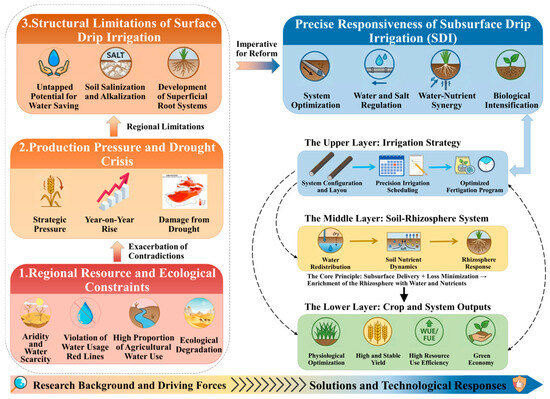
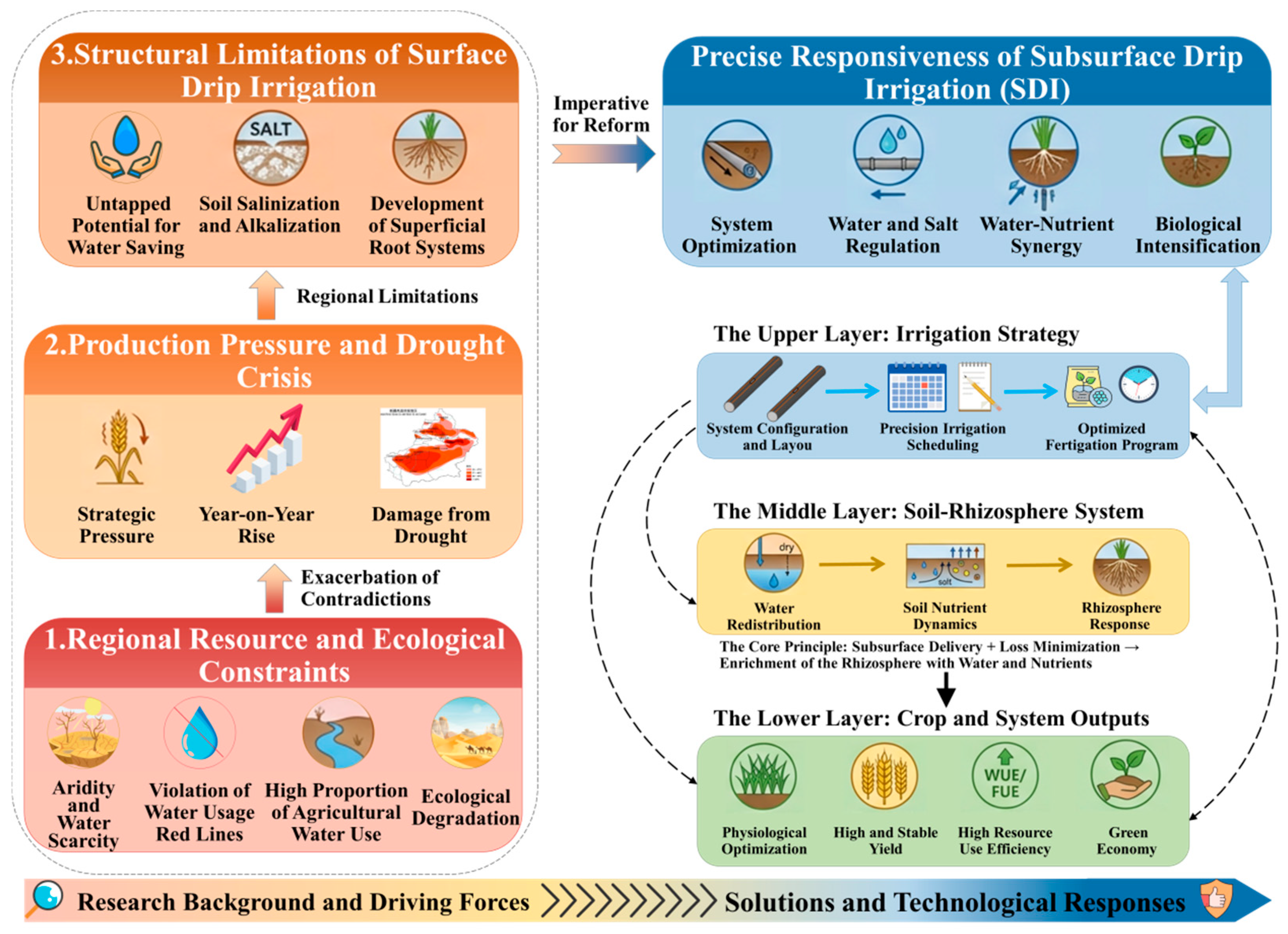
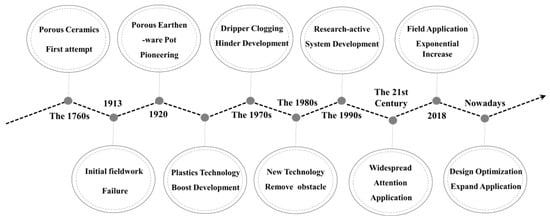
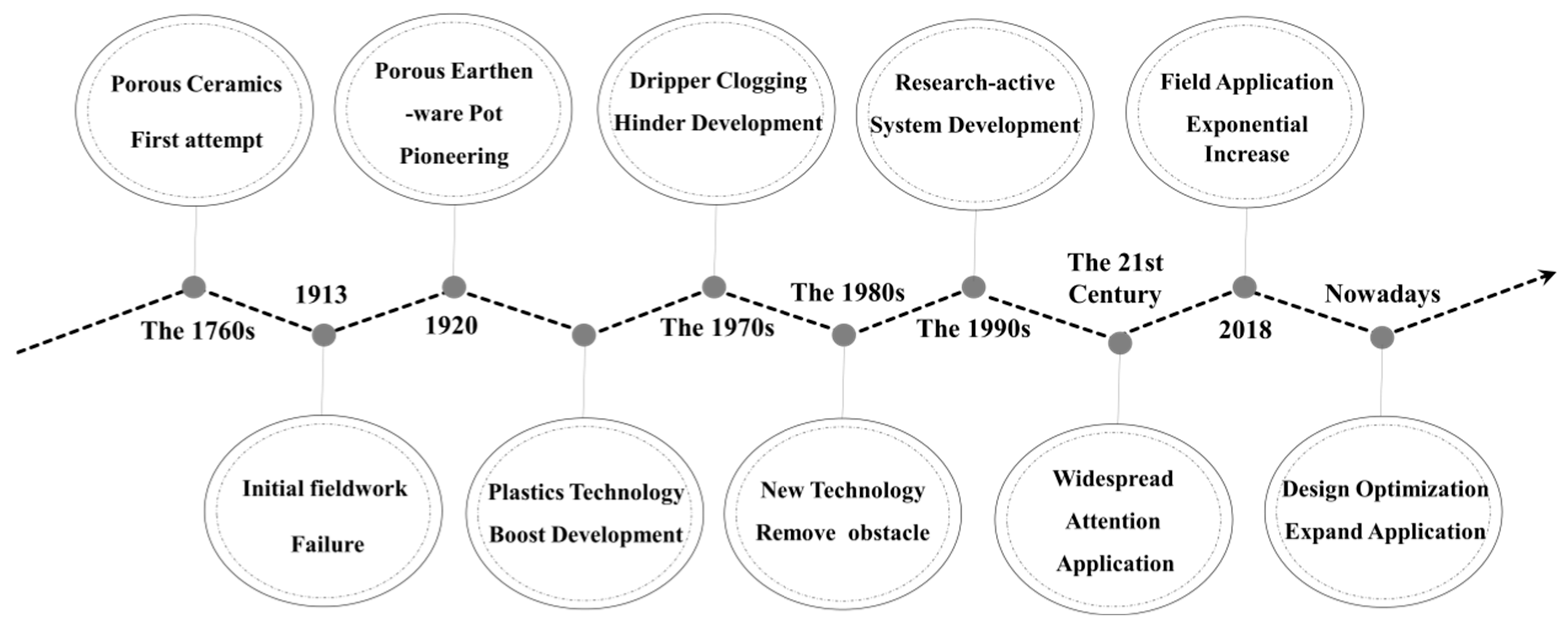
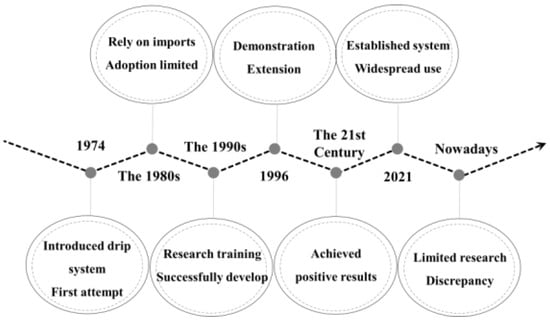
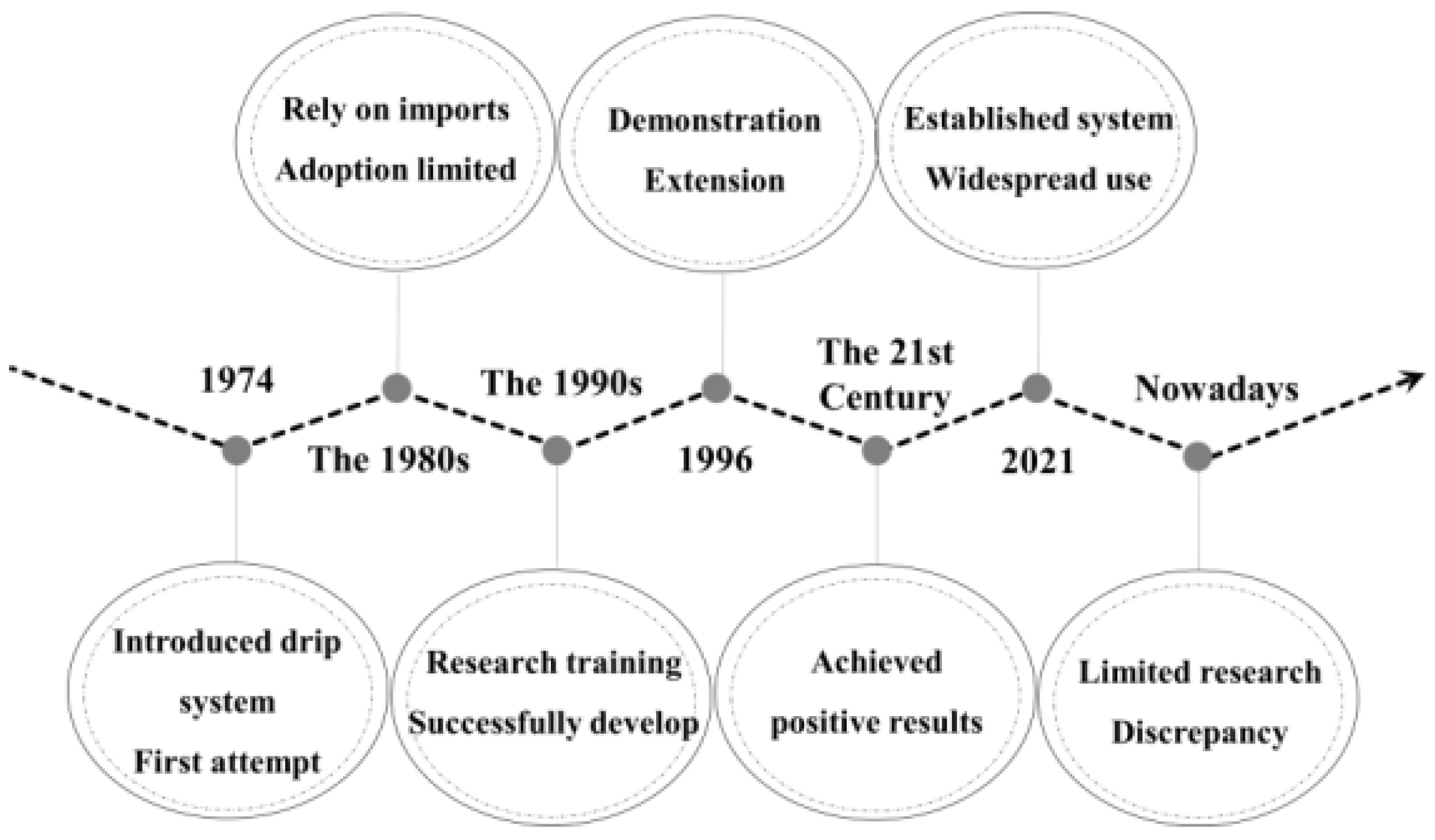
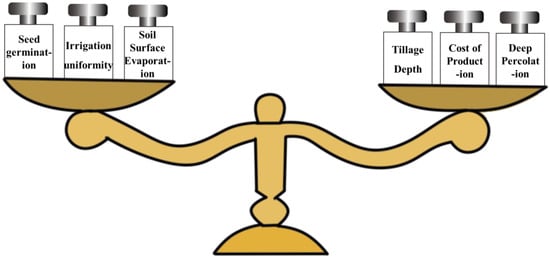
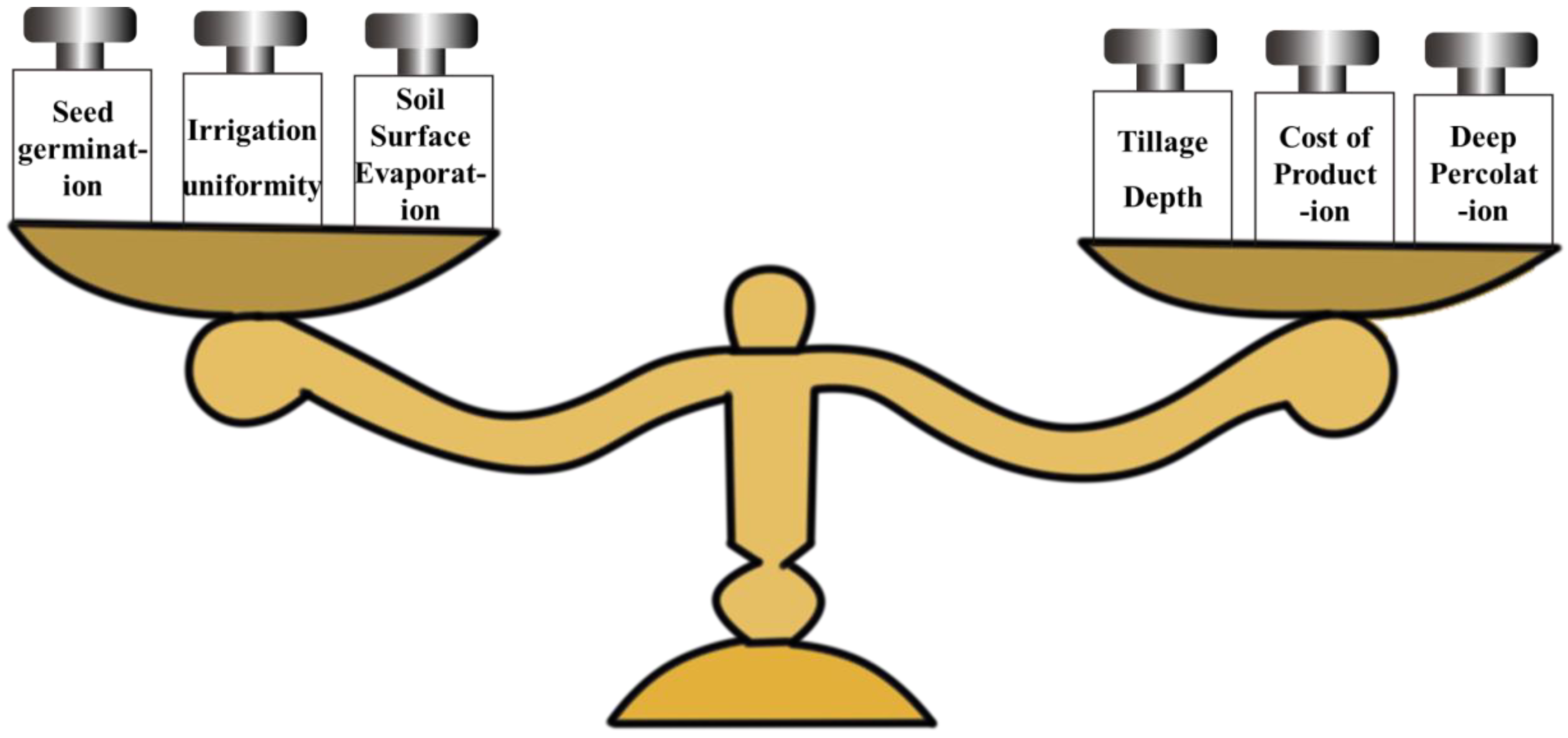
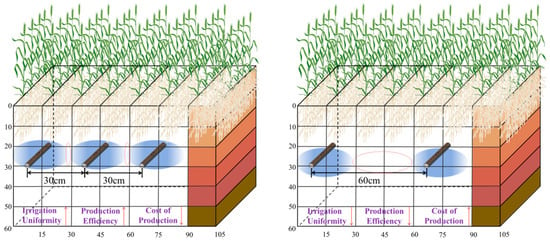
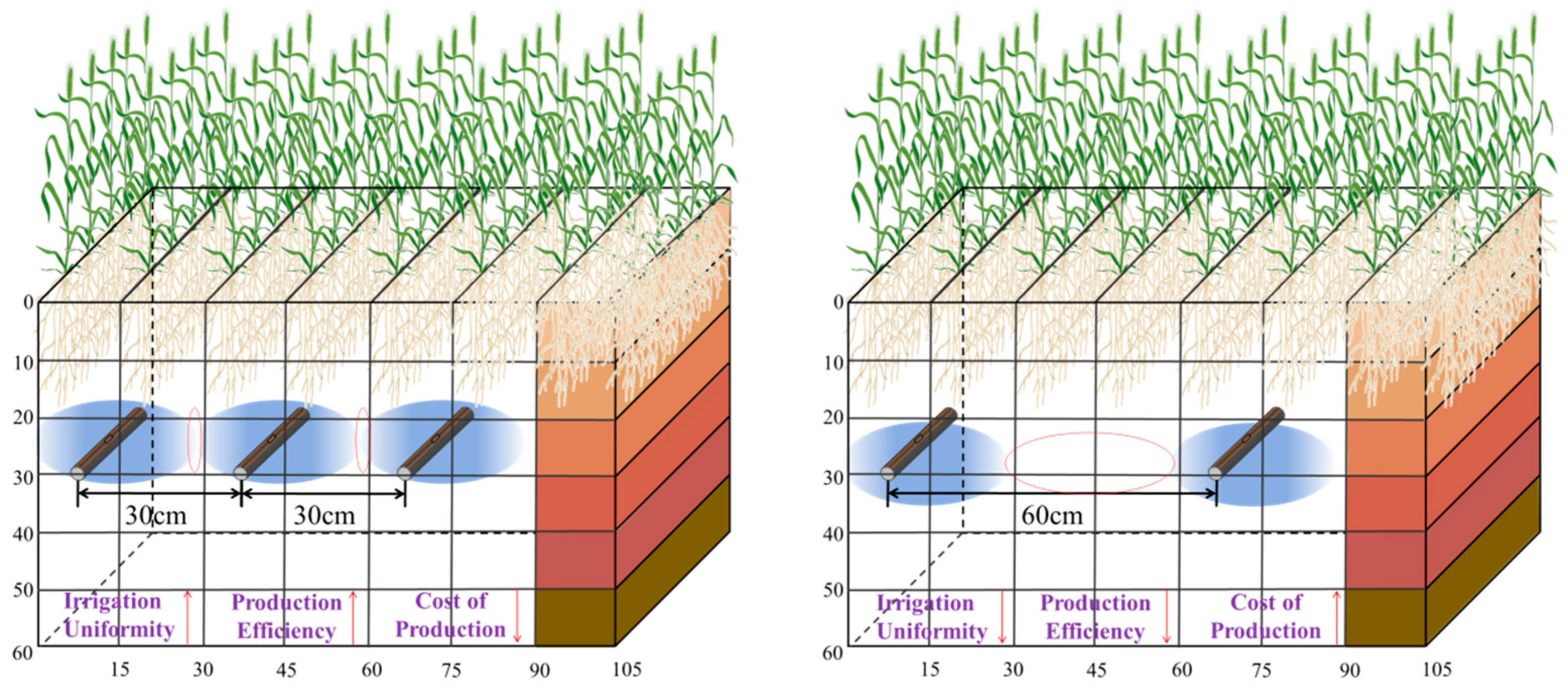
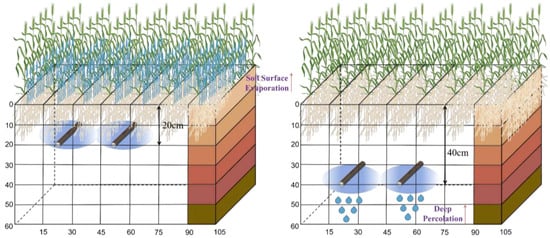
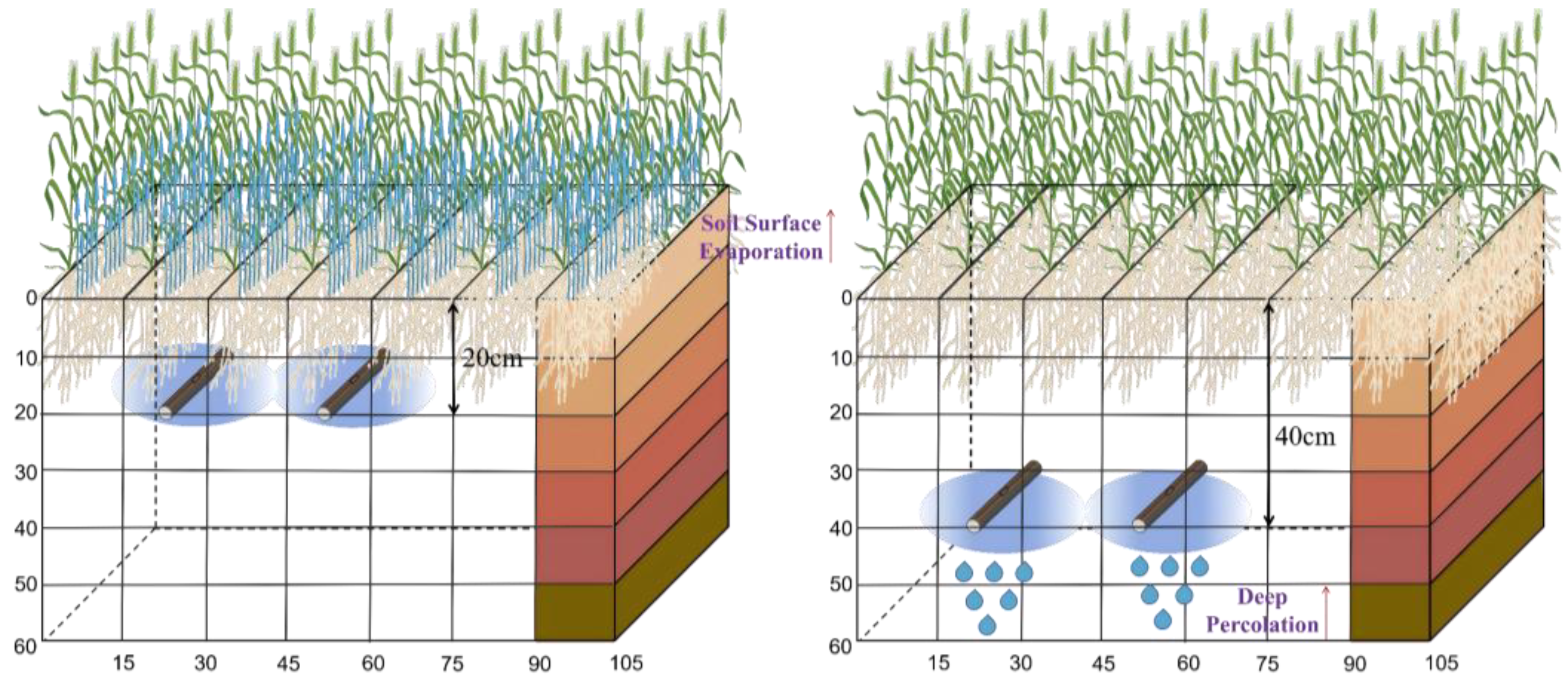
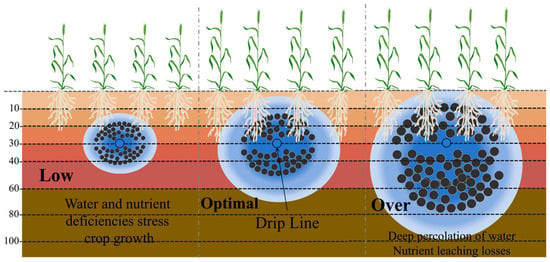
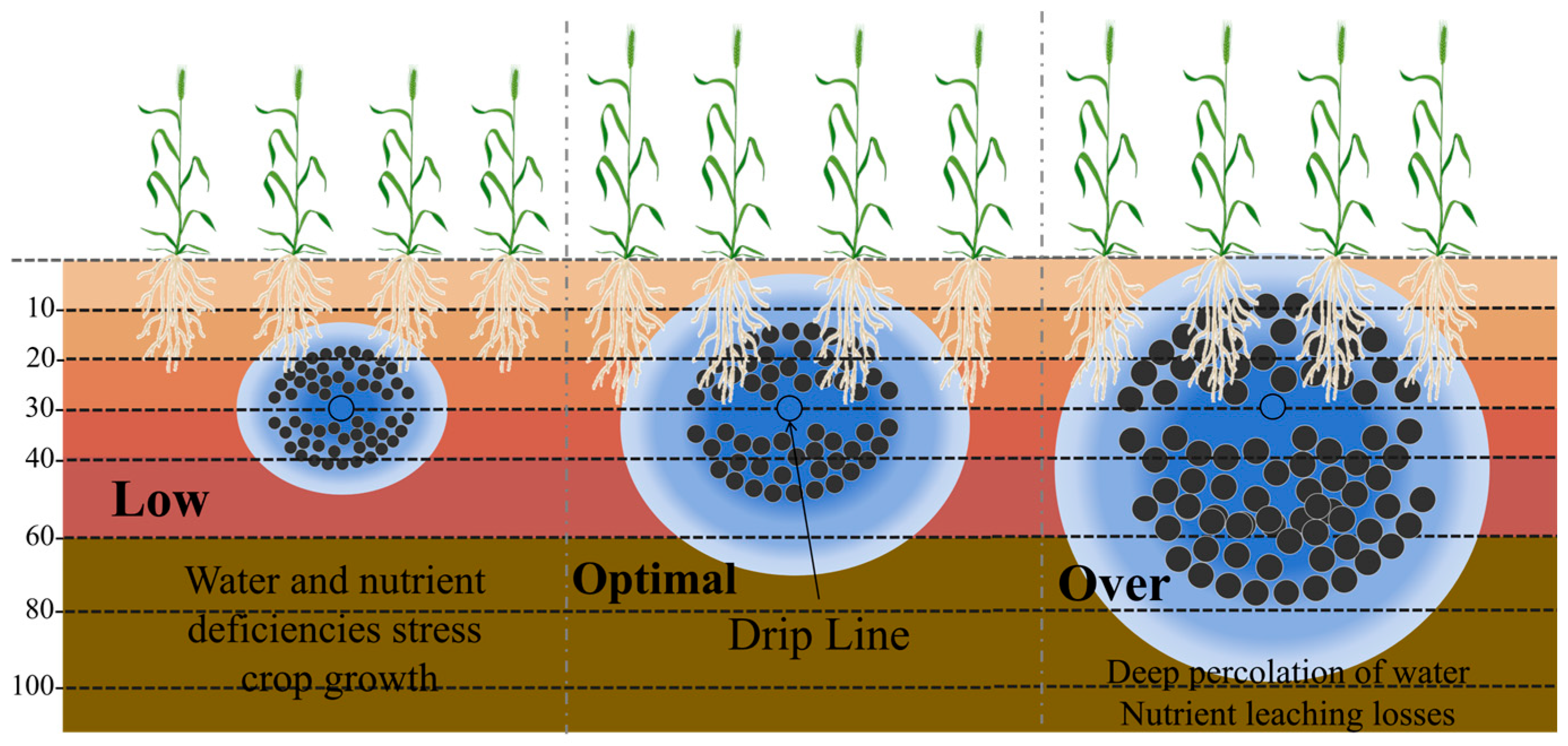
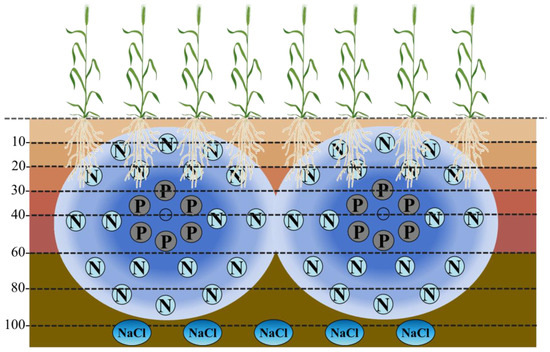
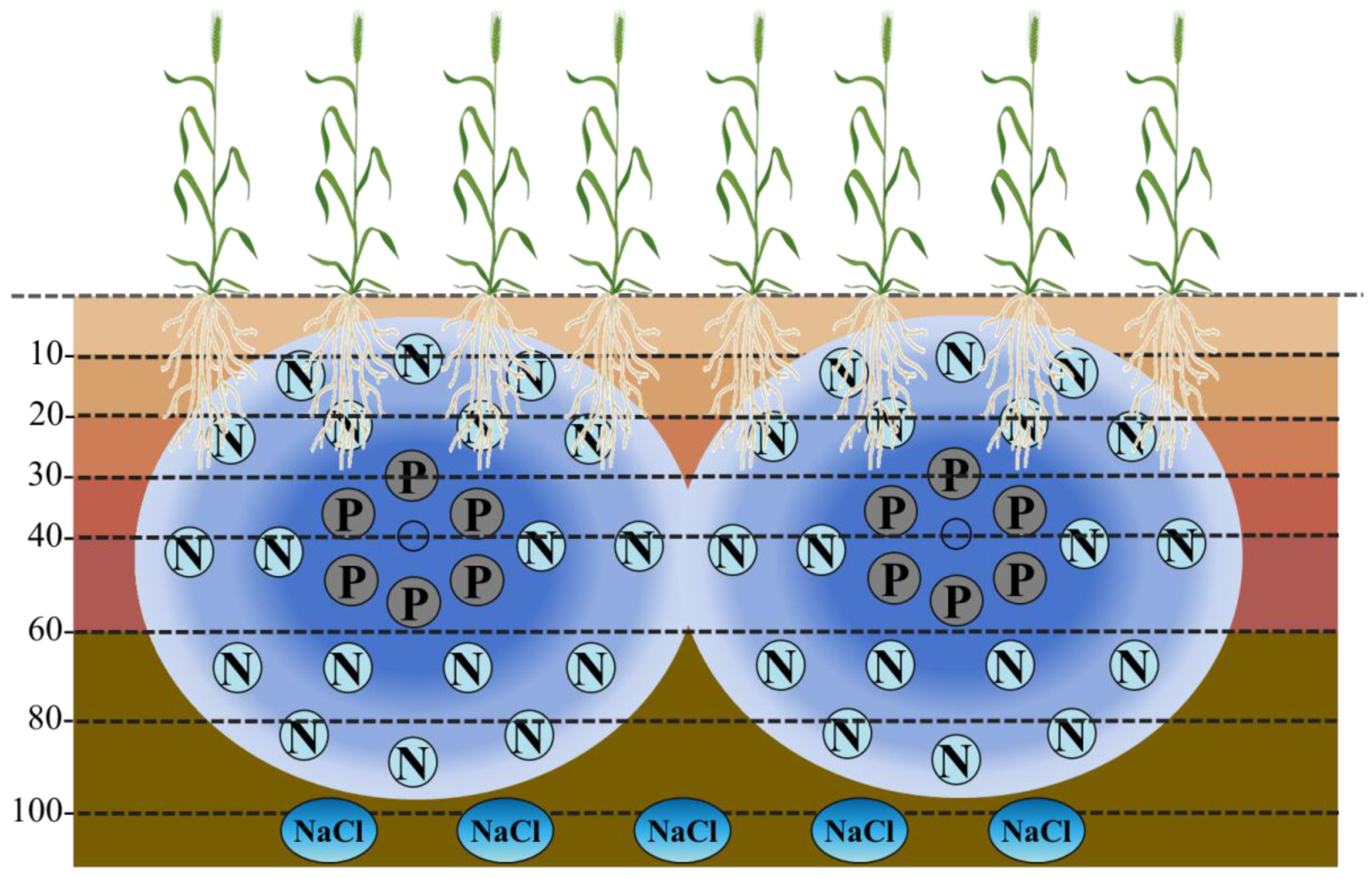
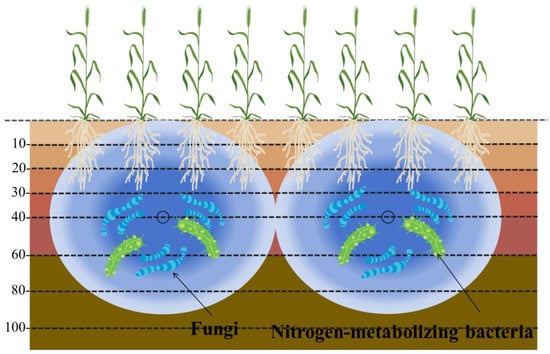
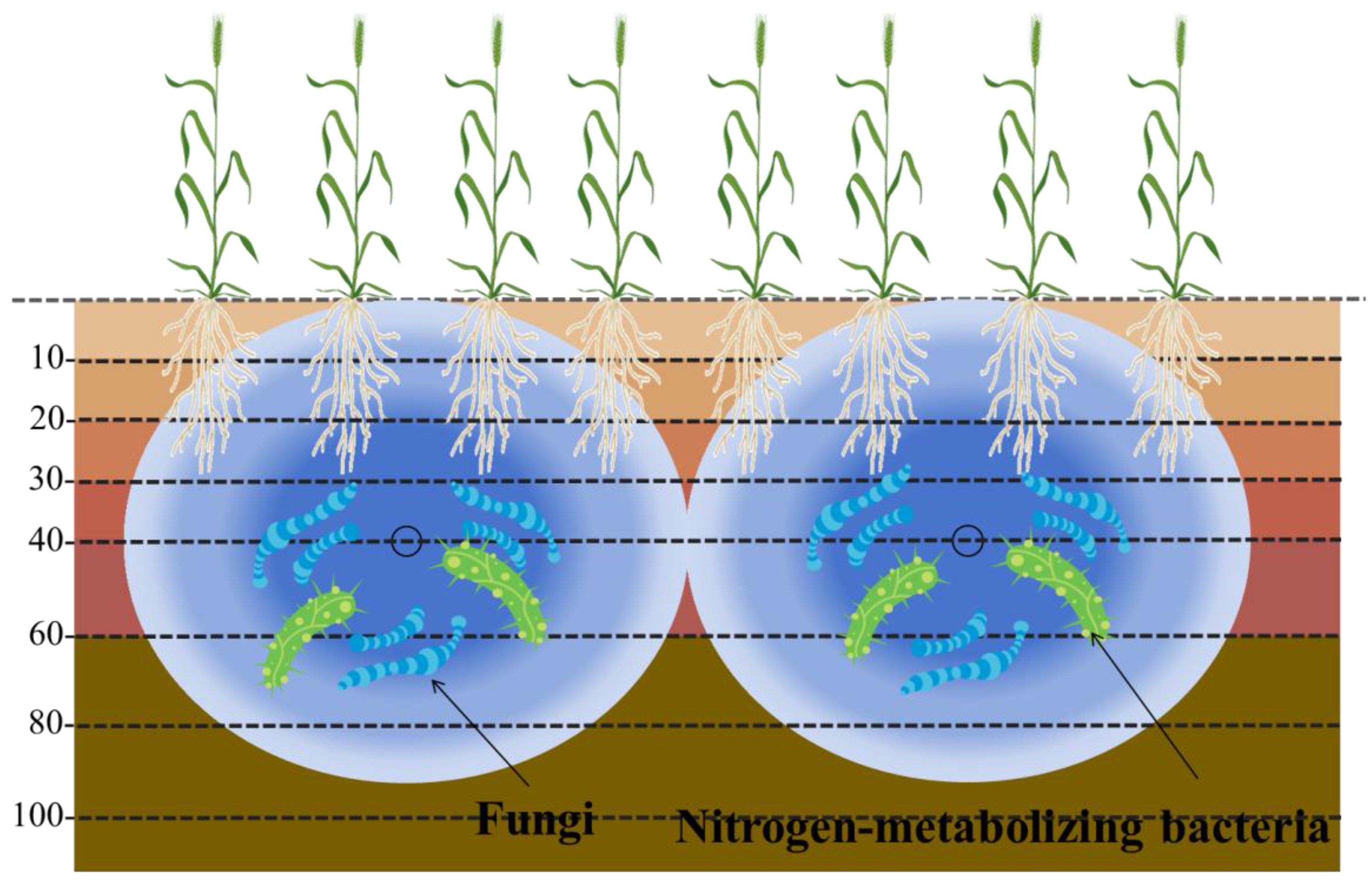
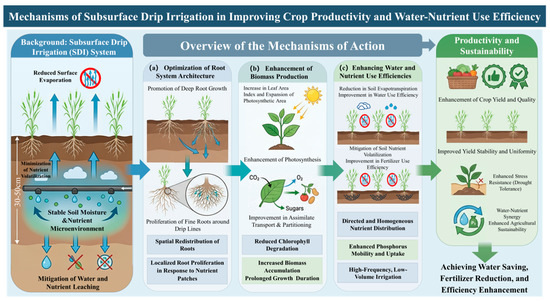
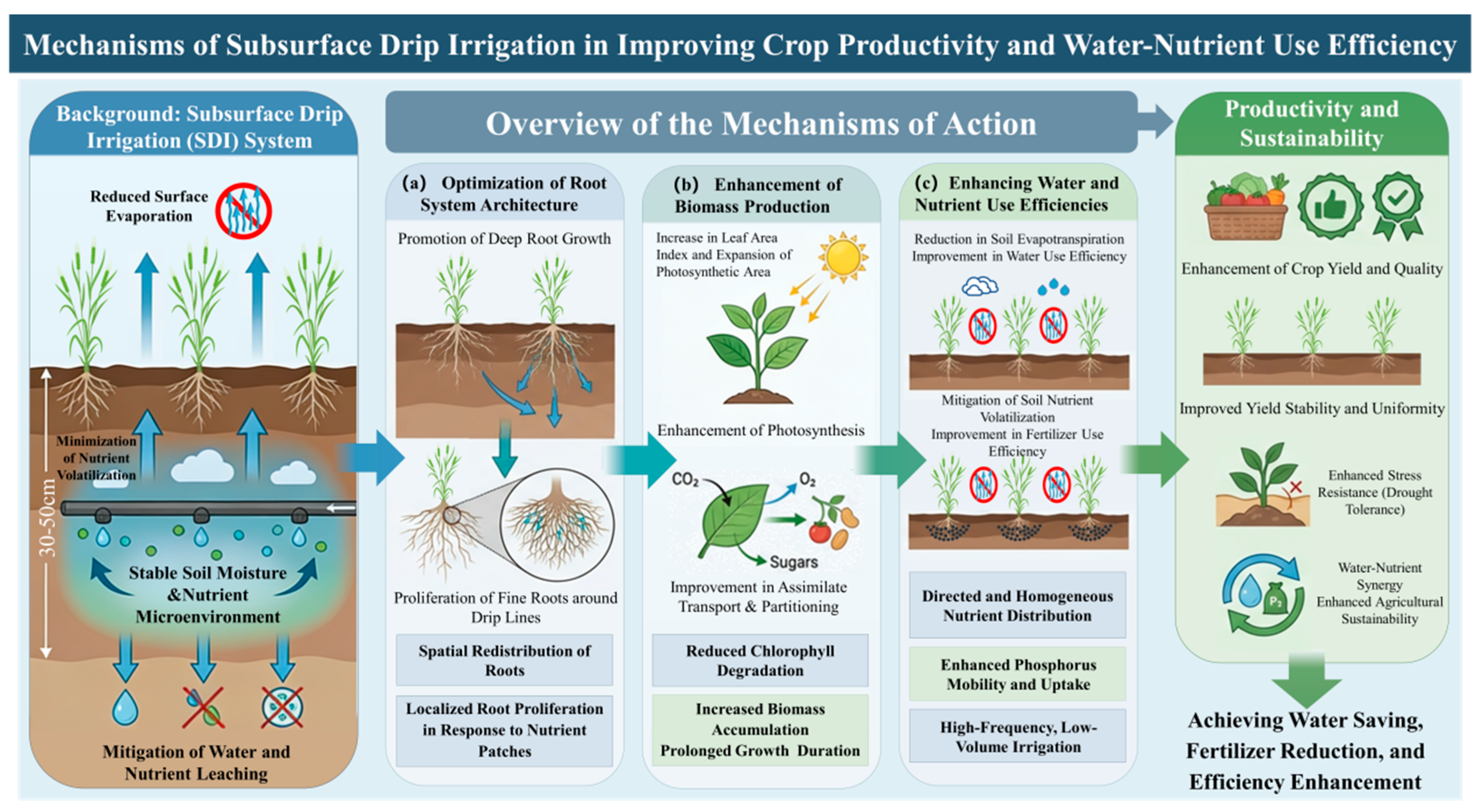

Disclaimer/Publisher’s Note: The statements, opinions and data contained in all publications are solely those of the individual author(s) and contributor(s) and not of MDPI and/or the editor(s). MDPI and/or the editor(s) disclaim responsibility for any injury to people or property resulting from any ideas, methods, instructions or products referred to in the content. |
© 2026 by the authors. Licensee MDPI, Basel, Switzerland. This article is an open access article distributed under the terms and conditions of the Creative Commons Attribution (CC BY) license.