1. Introduction
Soil salinization has emerged as a major obstacle for sustainable agriculture and effective land management. The buildup of soluble salts in farming soils now affects a significant share of global croplands, around one fifth of cultivated areas and nearly half of irrigated fields, contributing to declining yields and progressive deterioration of soil quality [
1,
2,
3]. This issue is especially pronounced in dry and semi-dry climates, where intensive irrigation combined with increased evaporation driven by climate change accelerates salt accumulation. Elevated levels of salts, particularly those rich in sodium, disrupt soil structure by causing clay particles to disperse, weakening the soil’s stability and limiting the movement of water through the profile [
4].
When saline water is used for irrigation, a practice increasingly common in water-scarce regions, dissolved salts accumulate at the soil surface through evaporation, forming crystalline crusts known as efflorescence. These salt crusts create a self-reinforcing barrier: as water evaporates, salts precipitate and clog surface pores, increasing the tortuosity of vapor diffusion pathways and further inhibiting evaporative flux [
5,
6,
7].
Traditional remediation approaches for saline soils include leaching (flushing with excess freshwater), chemical amendments (gypsum application), phytoremediation (salt-tolerant crops), and drainage improvements [
8,
9,
10]. However, each method faces significant limitations: leaching requires large volumes of freshwater (often scarce in affected regions), chemical treatments alter soil chemistry unpredictably, phytoremediation operates slowly over multiple growing seasons, and drainage infrastructure demands substantial capital investment. These constraints have motivated the search for passive, low-cost, and sustainable desalinization technologies that can operate effectively under field conditions with minimal resource inputs.
Understanding soil drying dynamics is fundamental to developing effective desalinization strategies. Soil drying is a critical process in various environmental and agricultural applications, influencing water management, soil stability, and crop productivity [
11,
12].
This study investigates a novel passive approach to soil desalinization. The approach relies on vertically inserted fired clay ceramic columns that function as capillary wicks. These columns bypass salt crust resistance, enhancing both evaporation and salt extraction from salinized soils. Recent experimental work has demonstrated that such ceramic sheets, used as poultice, can extract up to 59% of accumulated salts from saline soils, with extraction efficiency strongly dependent on ceramic pore structure characteristics [
4].
The use of porous materials to enhance evaporation through capillary action has been extensively studied in the context of solar desalinization and water purification [
13,
14]. In soil–water systems, similar principles have been explored for agricultural water management. Dong [
15] developed a noncontact photothermal desalter utilizing random fiber networks to wick salt from the soil via solar-driven evaporation and salt confinement, achieving reduction in soil salinity and successfully enabling wheat germination. However, these studies primarily focused on synthetic materials with well-characterized pore structures rather than low-cost ceramics suitable for field deployment in developing regions.
Fired clay ceramics offer several advantages for evaporative desalinization applications: abundant raw materials, simple manufacturing processes, mechanical durability, and tunable porosity through firing temperature control [
4,
11,
16].
The application of ceramic sheets specifically for soil desalinization has received growing attention. Preliminary studies by Jalali [
17,
18] demonstrated that porous argil ceramic columns could remove salt from saline soils through capillary extraction mechanisms. More recently, Khemili [
4] conducted systematic investigations on fired clay ceramic sheets applied horizontally (like a poultice) to salinized surfaces, revealing significant insights into the desalination process. The study emphasized that ceramic pore structure characteristics (porosity, pore size distribution, and connectivity) critically impact desalination performance, with industrial-based clay ceramics featuring larger, well-connected pores (porosity 0.33) achieving 62% higher NaCl removal efficiency compared to handmade pottery with small pores (porosity 0.18). While these studies have laid a solid foundation for ceramic-based soil desalination, several aspects of the process remain insufficiently explored. Jalali [
18] focused primarily on the mineralogical and microstructural characterization of argil ceramic columns, without providing a quantitative model capable of predicting or optimizing the salt extraction dynamics. Khemili [
4], while offering important insights into evaporation kinetics and pore structure effects, employed a horizontal sheet (poultice) configuration, which differs fundamentally from vertical column insertion in terms of capillary driving forces, salt transport pathways, and practical field applicability. Neither study addressed the coupled modeling of moisture and solute transport through the ceramic–soil system under controlled laboratory conditions. The present work extends these investigations by examining vertical porous ceramic columns for NaCl extraction from saline soil under controlled laboratory conditions, coupled with a modeling framework aimed at describing and predicting the desalination dynamics. Particular attention is given to the analysis of evaporative flux enhancement induced by the ceramic–soil system.
The critical gap in the existing literature concerns the optimization of ceramic insertion geometry, the quantification of salt removal efficiency as a function of ceramic density and temporal dynamics, and the evolution of extraction performance as salt precipitates progressively occlude ceramic pores.
Despite significant advances in evaporative desalinization technologies and understanding of coupled salt–water transport in porous media, several critical questions remain unresolved. First, the quantitative performance of ceramic wicks in saline soils requires clarification: specifically, how do insertion density, geometry, and material properties affect both evaporation enhancement and salt extraction efficiency? Second, the temporal dynamics of extraction need investigation to determine the characteristic timescale for ceramic pore occlusion by salt precipitates and how this affects operational strategies. Third, scaling relationships must be established to understand how salt removal efficiency scales with the number of ceramic inserts and whether an optimal configuration exists. Finally, from a practical implementation perspective, it remains unclear whether low-cost fired clay ceramics can provide sufficient desalinization performance to justify field deployment in resource-limited agricultural settings.
This study proposes laboratory experiments that quantify evaporative flux enhancement as a function of ceramic sheet number (1–4 sheets), salt extraction efficiency over operational timescales ranging from 72 to 336 h, temporal evolution of extraction rates with identification of performance-limiting mechanisms, and visual and gravimetric confirmation of salt transport pathways. The findings provide both fundamental insights into coupled evaporation–crystallization–transport processes in heterogeneous porous media and practical design guidelines for passive soil desalinization systems applicable to smallholder agriculture in semi-arid regions.
2. Materials and Methods
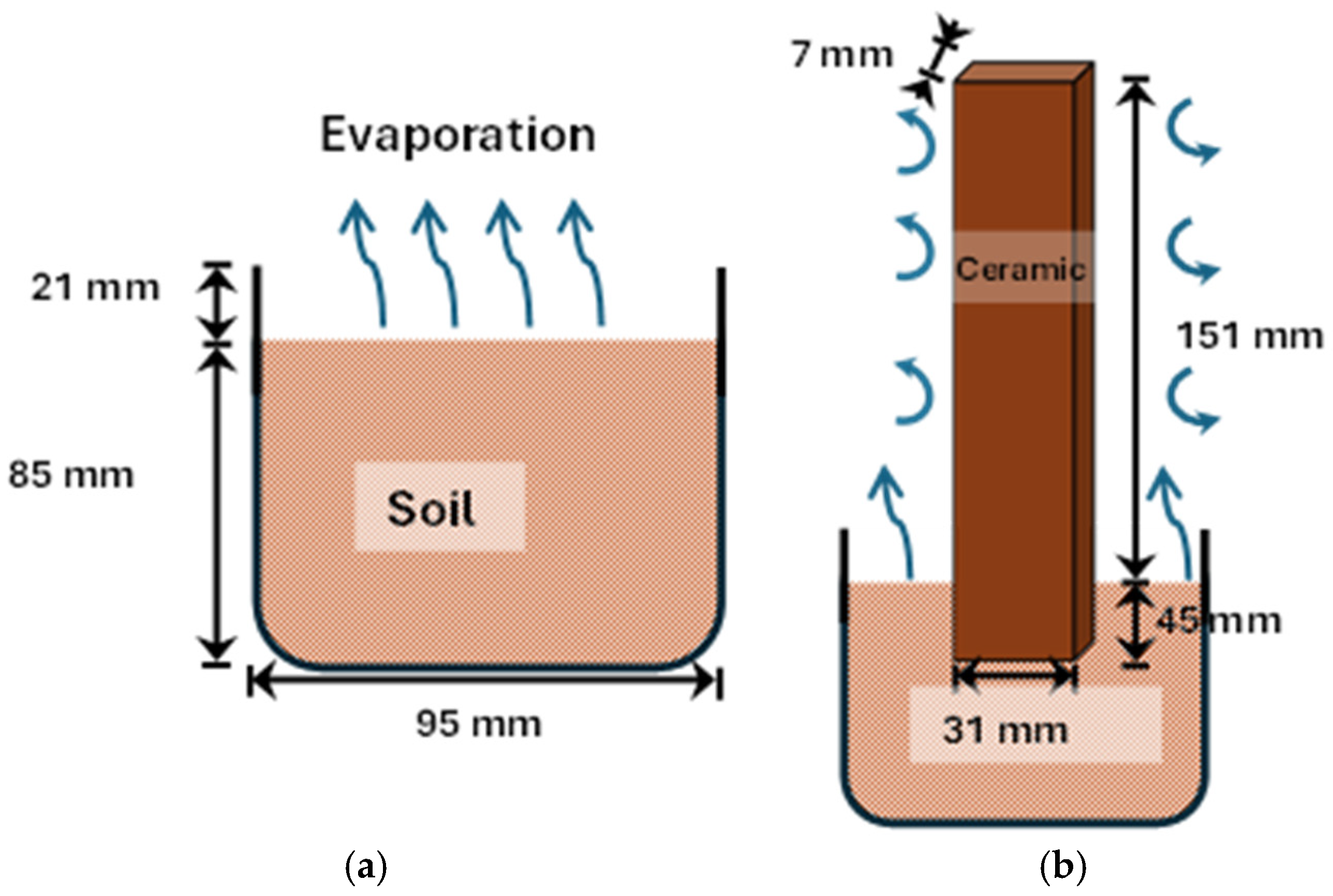
Controlled experiments were conducted using cylindrical soil columns to assess salt removal efficiency from saline soils across a range of defined conditions. A rectangular fired clay ceramic sheet was vertically inserted into a soil-filled beaker. The lower portion of the ceramic was embedded within the soil substrate, and its upper portion was exposed to ambient air, as illustrated in
Figure 1. The evaporative mass loss was measured using a digital balance by periodically recording the sample mass relative to its known initial mass.
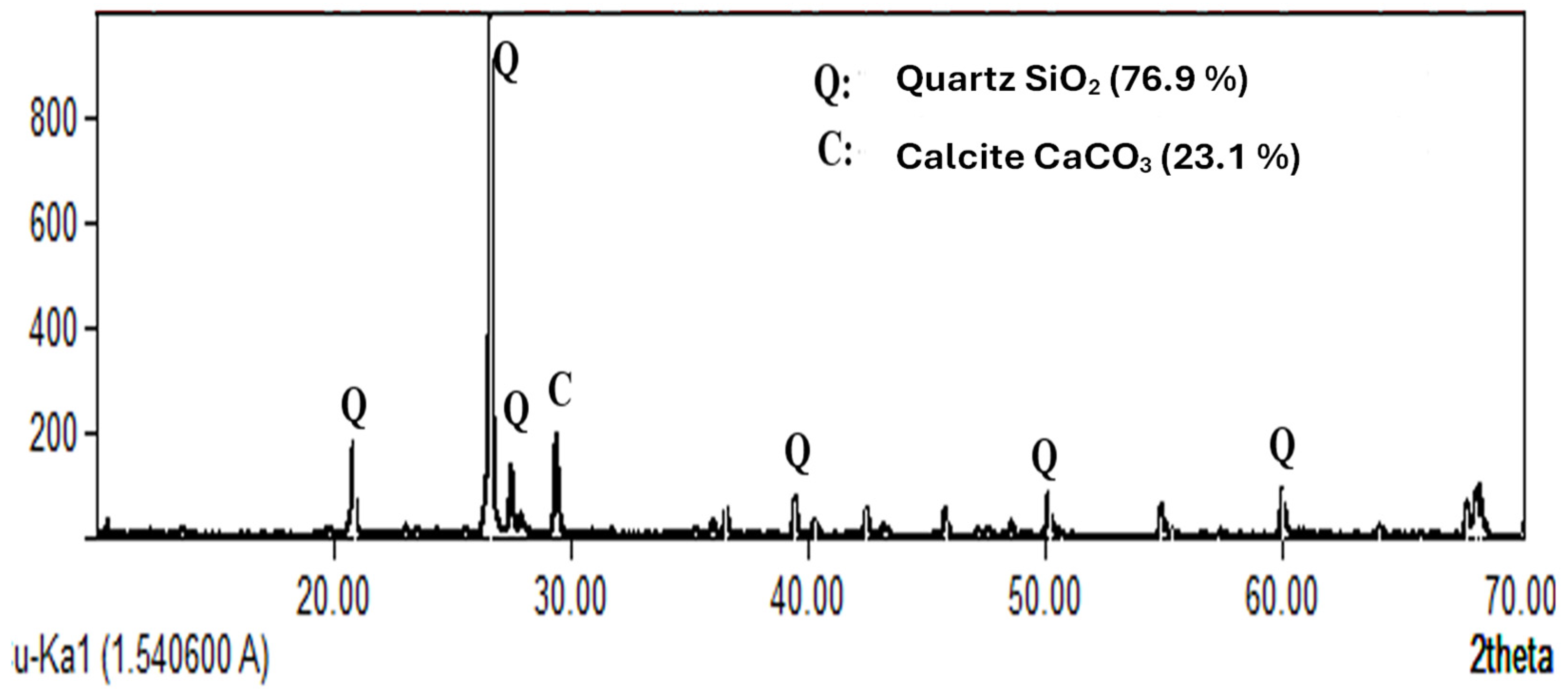
Soil samples were collected from an agricultural farm in Hafar Al-Batin city, Eastern Province of Saudi Arabia (28°20′49.4″ N 45°55′12.8″ E), extracted from the 0–20 cm depth using the cutting-ring method. Following collection, the soil underwent drying and sieving through a 2 mm mesh before physico-chemical analysis. X-ray diffraction (XRD) analysis revealed that the primary minerals present on the soil surface were quartz (SiO
2) and calcite (CaCO
3), confirming the absence of any internal NaCl source within the soil matrix. Surface XRD characterization results are presented in
Figure 2.
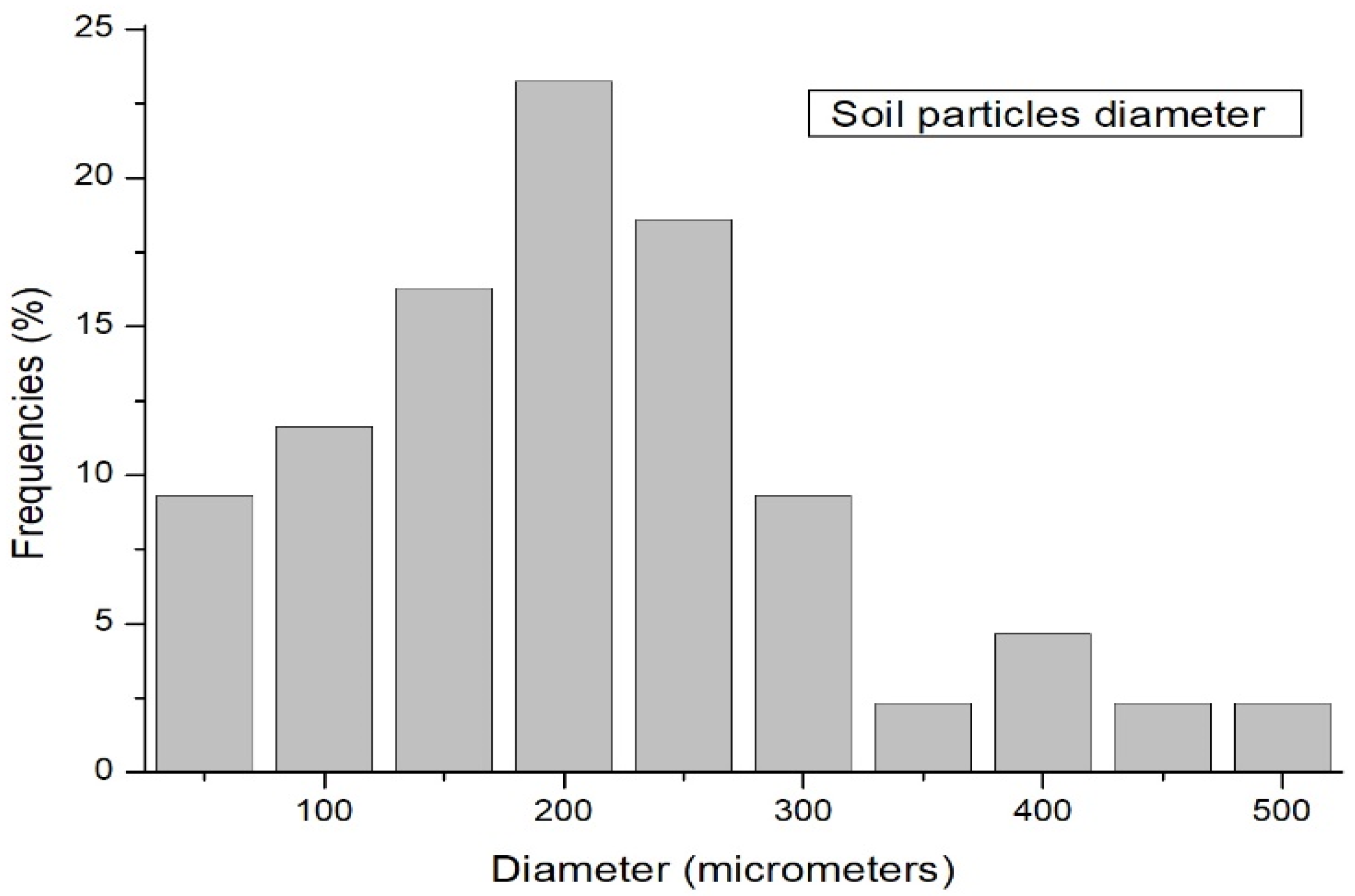
Particle size distribution was determined through digital image analysis using an Euromex iScope digital biological microscope equipped with an Olympus DP74 camera (Evident Corporation, Hachioji, Tokyo, Japan). As shown in
Figure 3, the soil exhibited a high quartz content (77%) with a predominance of coarser particles exceeding 0.20 mm in diameter, categorizing it as coarse-textured soil.
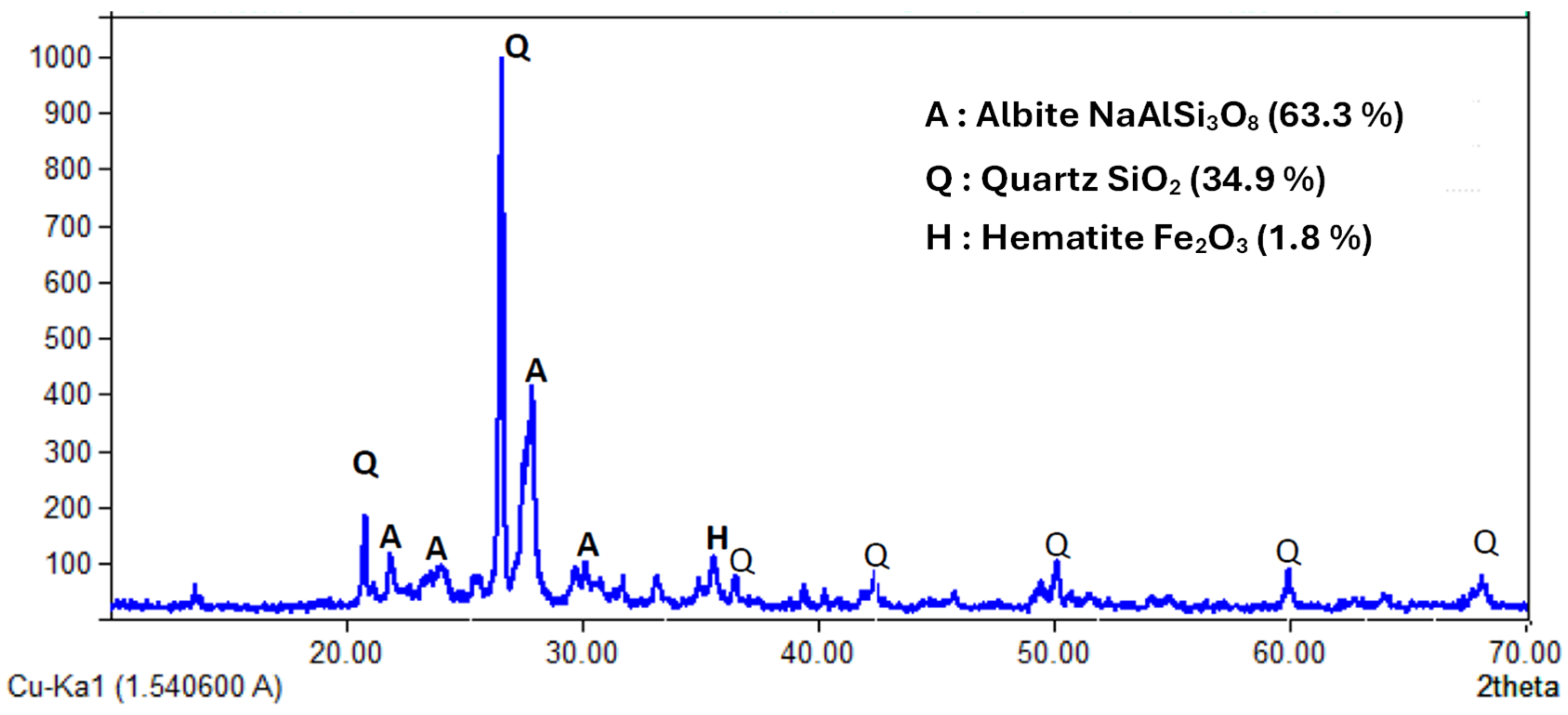
The porous material employed for salt extraction in this study was a fired-clay ceramic traditionally used for decorative purposes on interior and exterior walls of residential buildings, historic monuments, and public structures. Surface characterization via X-ray diffraction (XRD) identified the primary mineral components as albite (NaAlSi
3O
8), quartz (SiO
2), and hematite (Fe
2O
3). The XRD surface analysis characteristics are presented in
Figure 4.
Porosity measurements were performed on ceramic samples following the ASTM protocol, yielding a porosity value of 0.33.
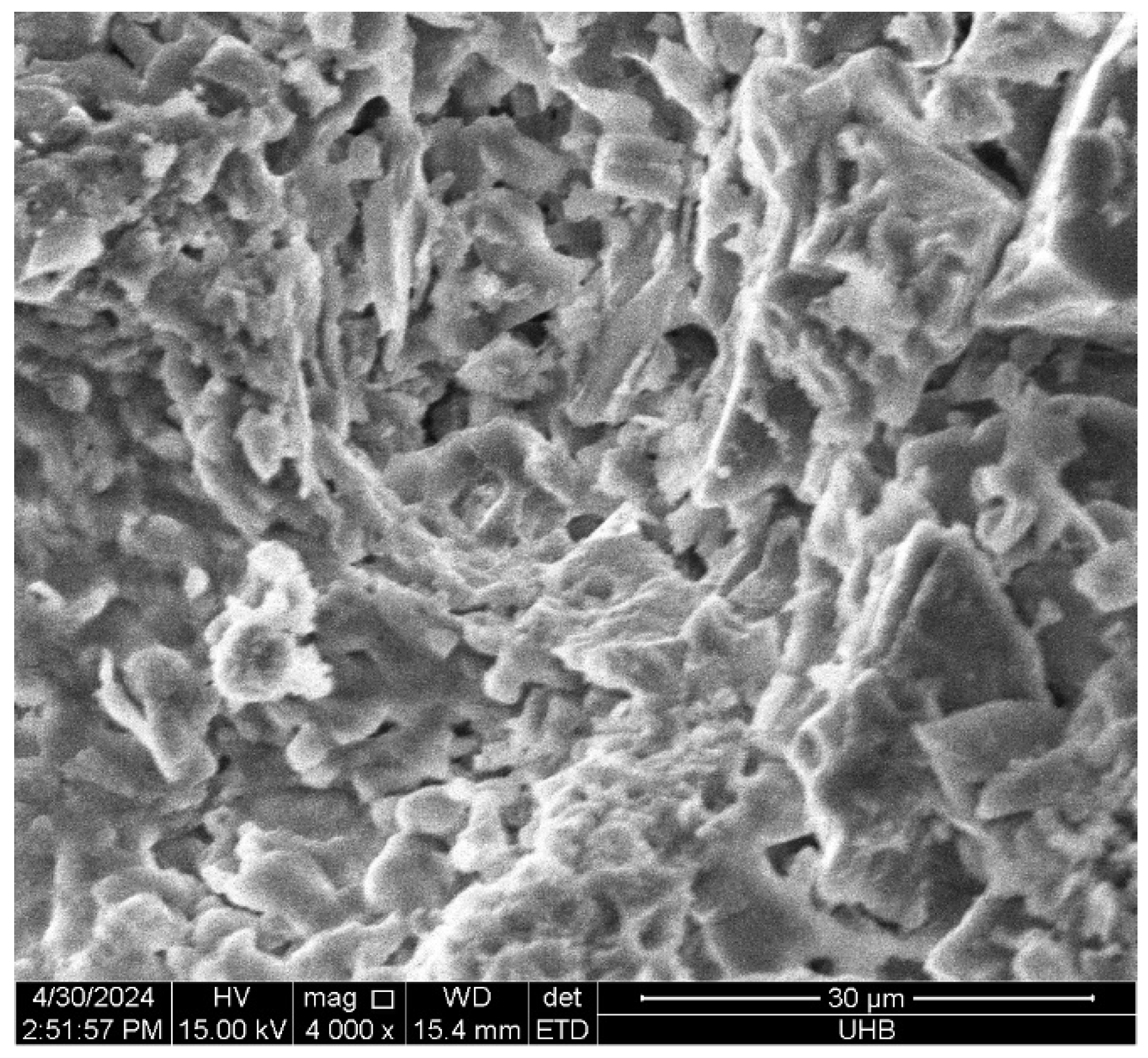
Pore morphology was examined using scanning electron microscopy (FEI inspect s50; SEM), FEI Company, Hillsboro, OR, USA. As shown in
Figure 5, SEM observations revealed that the ceramic exhibited favorable pore connectivity and substantial pore volume.
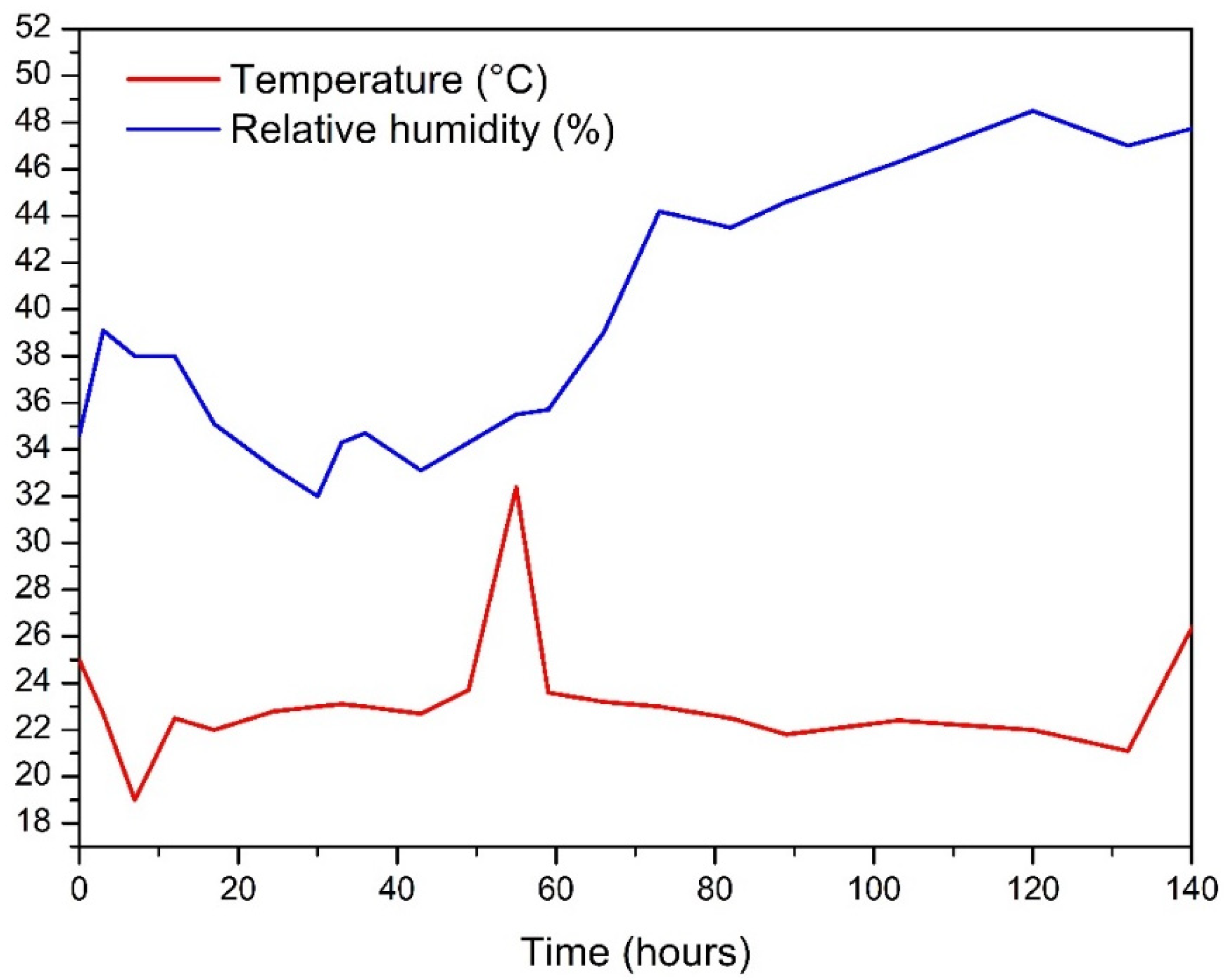
Figure 6 presents the temporal variations in relative humidity and temperature recorded in the vicinity of the samples throughout the experiment.
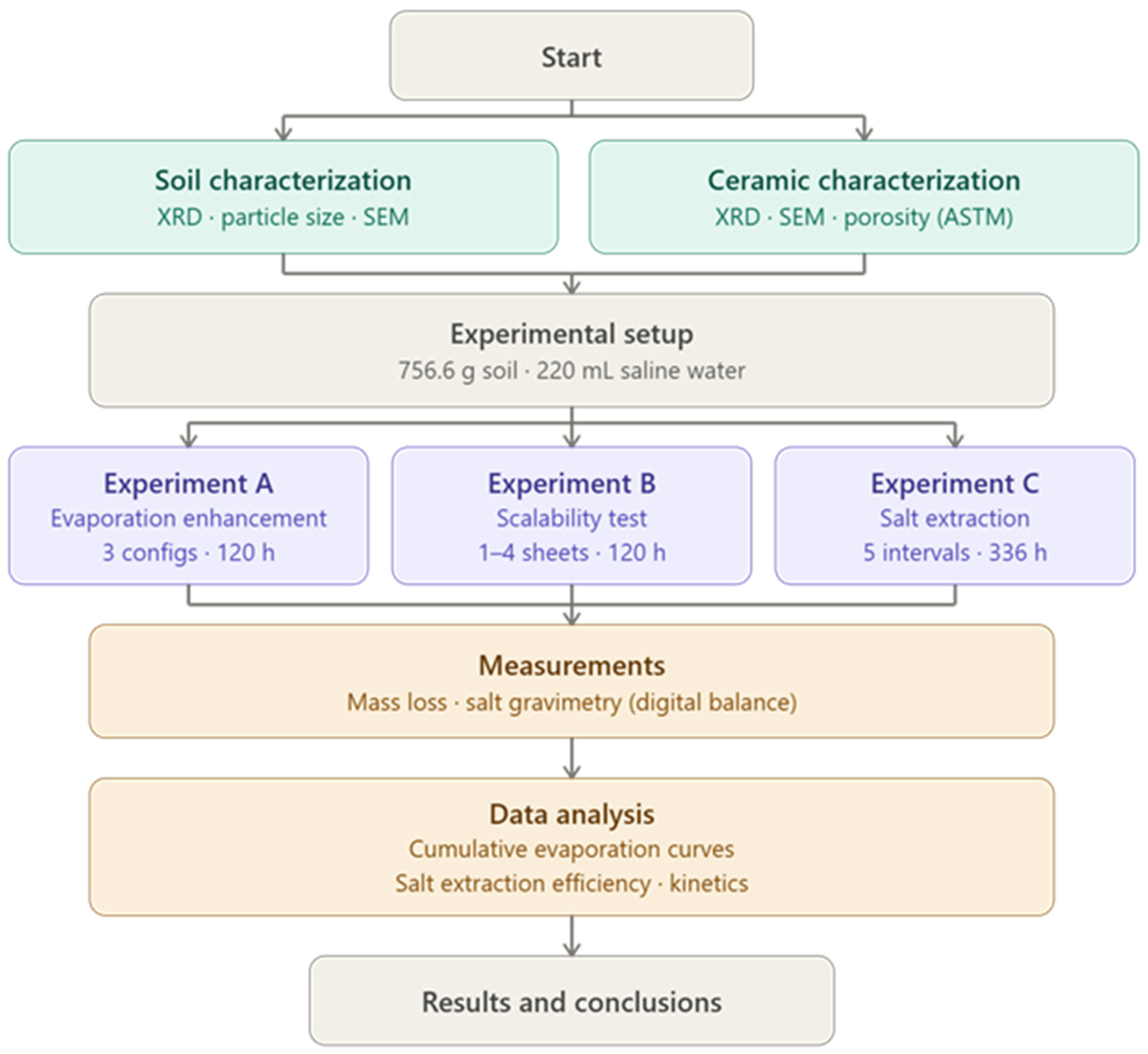
A flowchart for the experimental procedure is illustrated in
Figure 7.
In the preparation of this manuscript, I have used generative AI tools exclusively to assist with improving the clarity and quality of the writing. The AI support was limited to correcting grammar, refining language, and enhancing the overall style of the text. All substantive ideas, analyses, interpretations, and scientific content remain entirely my own. No generative AI system was used for data analysis, interpretation of results, or the generation of original scientific content.
3. Evaporative Enhancement of Saline-Irrigated Soil Using Fired Clay Ceramic Sheets
This section investigates the evaporative power of vertically inserted fired ceramic clay sheets as a mechanism to mitigate the inhibitory effects of salinity. Experiments were conducted using cylindrical soil reservoirs to evaluate moisture transition under various conditions.
The experimental matrix consists of three soil columns, each containing 756.6 g of soil. The first two columns serve as controls without ceramic inserts. One control was irrigated with 220 mL of pure water, while the second received 220 mL of saline water at a concentration of 180 g/L. The third column also received 220 mL of the saline solution but featured a ceramic sheet insert.
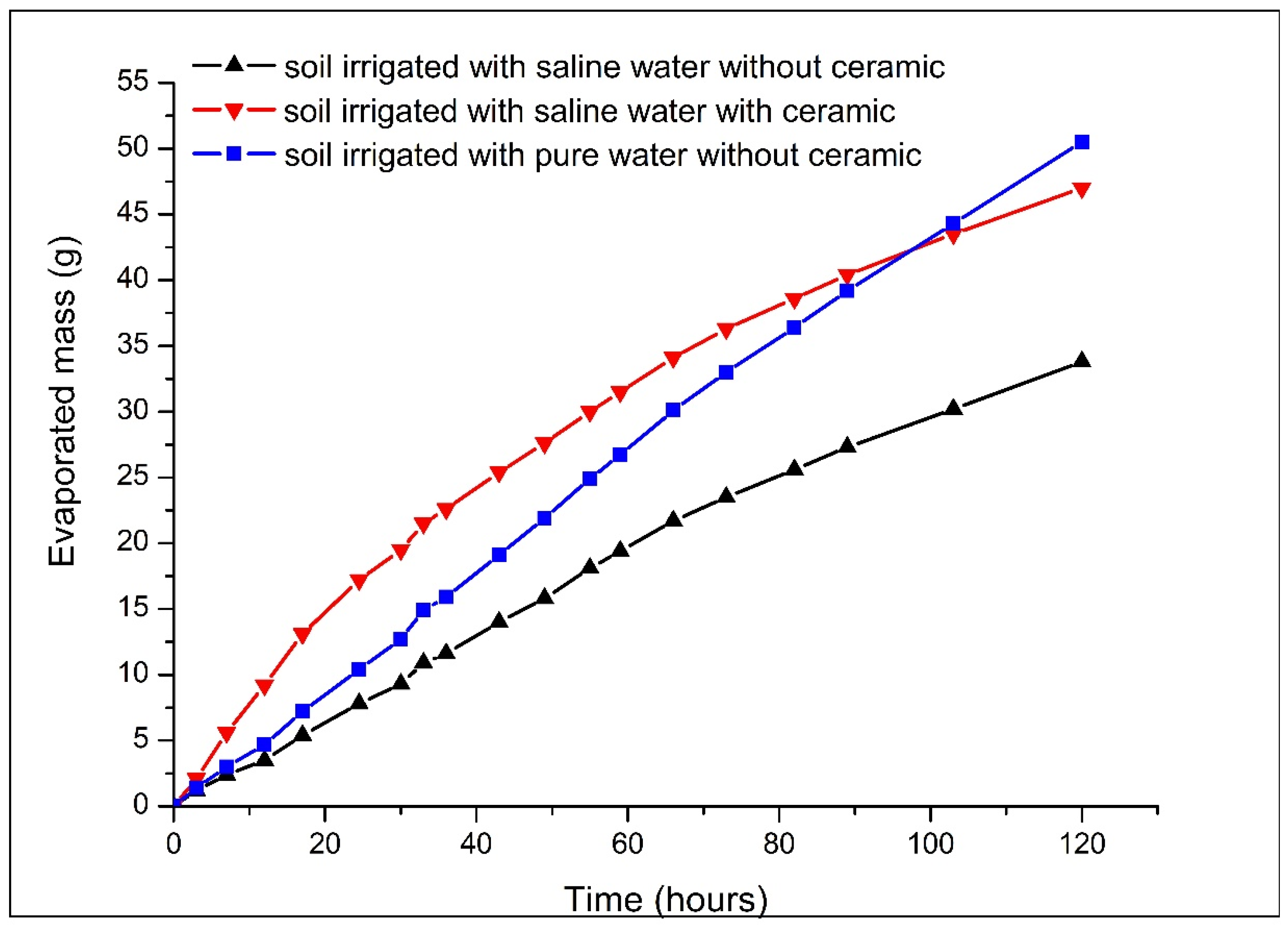
As illustrated in
Figure 8, a significant reduction in cumulative mass loss is observed in saline-irrigated soil without ceramic compared to the pure water control, with final evaporated masses of approximately 34 g and 51 g, respectively, after 120 h. This divergence is primarily attributed to the formation of a saline-induced surface crust (efflorescence); as water evaporates, salt precipitation clogs surface pores and increases the tortuosity of vapor diffusion paths, thereby inhibiting the evaporative flux (
Figure 9). Remarkably, the integration of a fired clay sheet in saline soil substantially mitigated these inhibitory effects, achieving a cumulative mass of 47 g. For the first 95 h, the ceramic-enhanced saline sample even exhibited a higher evaporation rate than the pure water control, demonstrating the ceramic’s role as a high-suction capillary wick that maintains moisture transport by bypassing the physical resistance of the surface crust.
For the first 95 h, the ceramic-enhanced saline sample outperformed even the pure water control. This is due to the ceramic’s porous structure providing stronger capillary suction and an expanded evaporative surface area. The fired clay acts as a preferential flow pathway, drawing liquid brine to the air interface and bypassing the physical resistance of the saline-induced surface crust.
Around the 95 h mark, the pure water sample overtakes the ceramic saline sample. This suggests that as the reservoir dries, the cumulative effect of salt accumulation on the ceramic itself eventually begins to introduce some resistance, though it remains far more efficient than the standard saline soil. After ~95 h, the pure-water system overtook the ceramic saline system, indicating that some salt accumulation eventually occurred on the ceramic itself, slightly reducing its permeability. Nevertheless, the ceramic system remained vastly superior to saline soil without ceramics throughout the experiment.
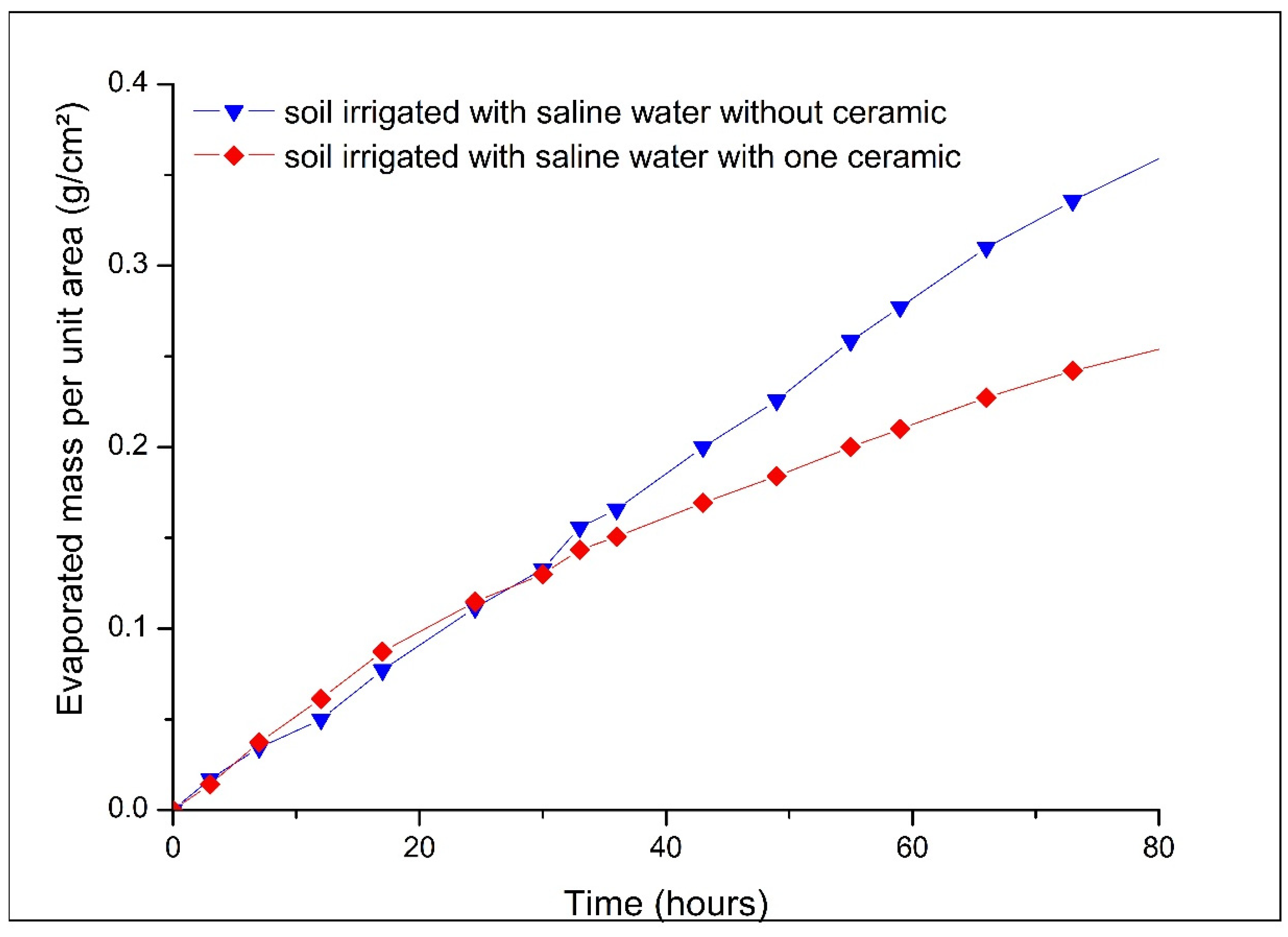
To decouple the two potential mechanisms underlying the ceramic-induced evaporation enhancement, namely, the “capillary water supply effect” and the “surface area increase effect”, the cumulative evaporated mass was normalized by the evaporative surface area corresponding to each experimental configuration. As shown in
Figure 10, during the first 20 h, the ceramic-equipped setup evaporates more water per unit area than bare soil. The ceramic element actively enhances water supply to the evaporative front through capillary suction from deeper soil layers. This continuous supply maintains a higher evaporation rate than the bare soil surface can provide. However, around 30 h, the two curves intersect and subsequently diverge in the opposite direction. The bare soil configuration exhibits a higher normalized evaporation rate. This inversion suggests that the ceramic element, once the surrounding soil moisture is locally depleted. Beyond this transition point, the net contribution of the ceramic reduces to a pure geometric effect, increasing total evaporation solely through the additional wetted surface area.
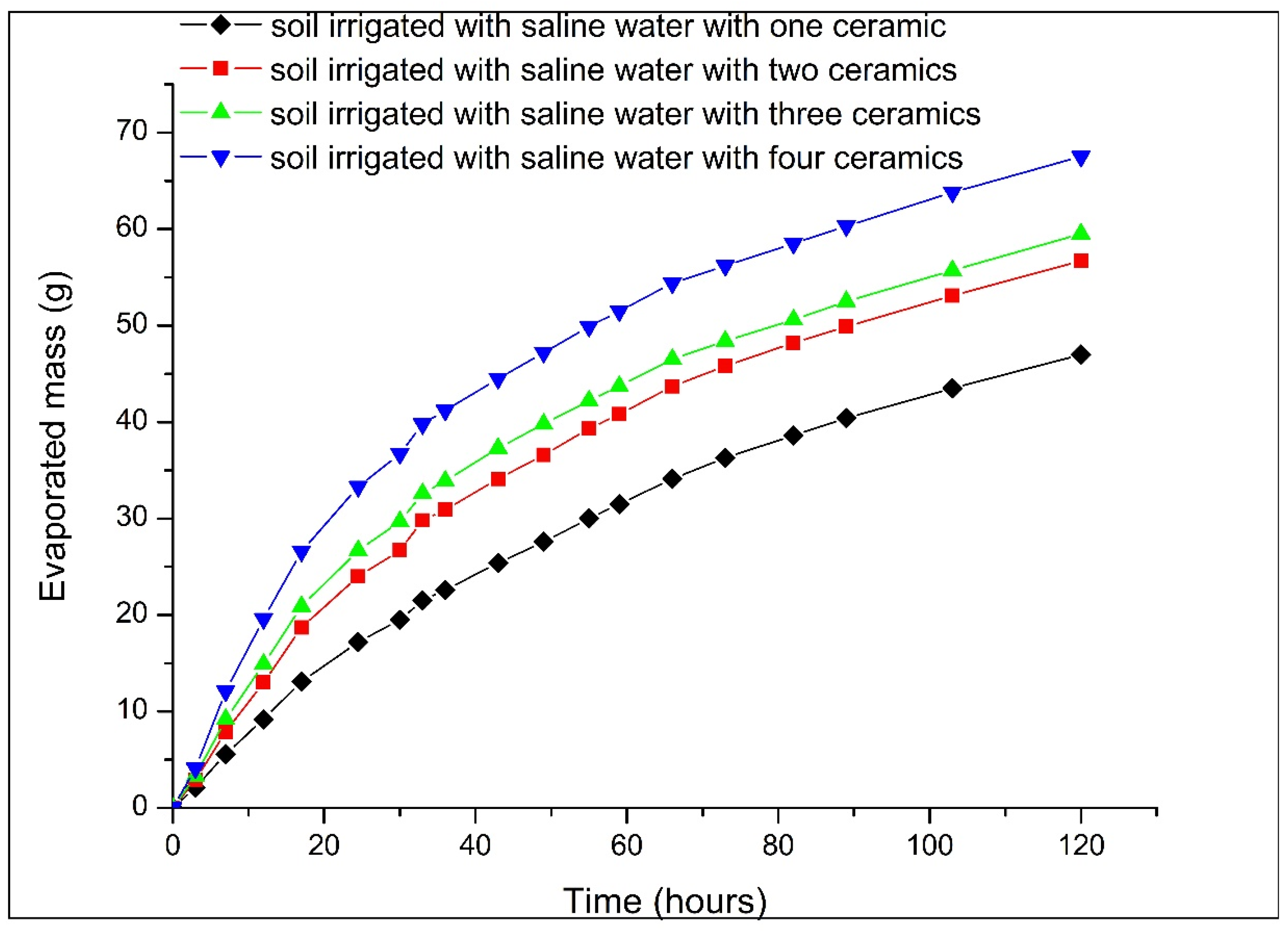
The influence of the number of vertically inserted fired-clay ceramic sheets on capillary transport and evaporation was investigated by testing four configurations of saline-irrigated soil, differing solely in the number of ceramic sheets introduced (1, 2, 3, and 4 sheets). Each soil column contained 756.6 g of soil and was irrigated with 220 mL of saline water prepared at a concentration of 180 g/L, introducing a total salt mass of 39.6 g into the system.
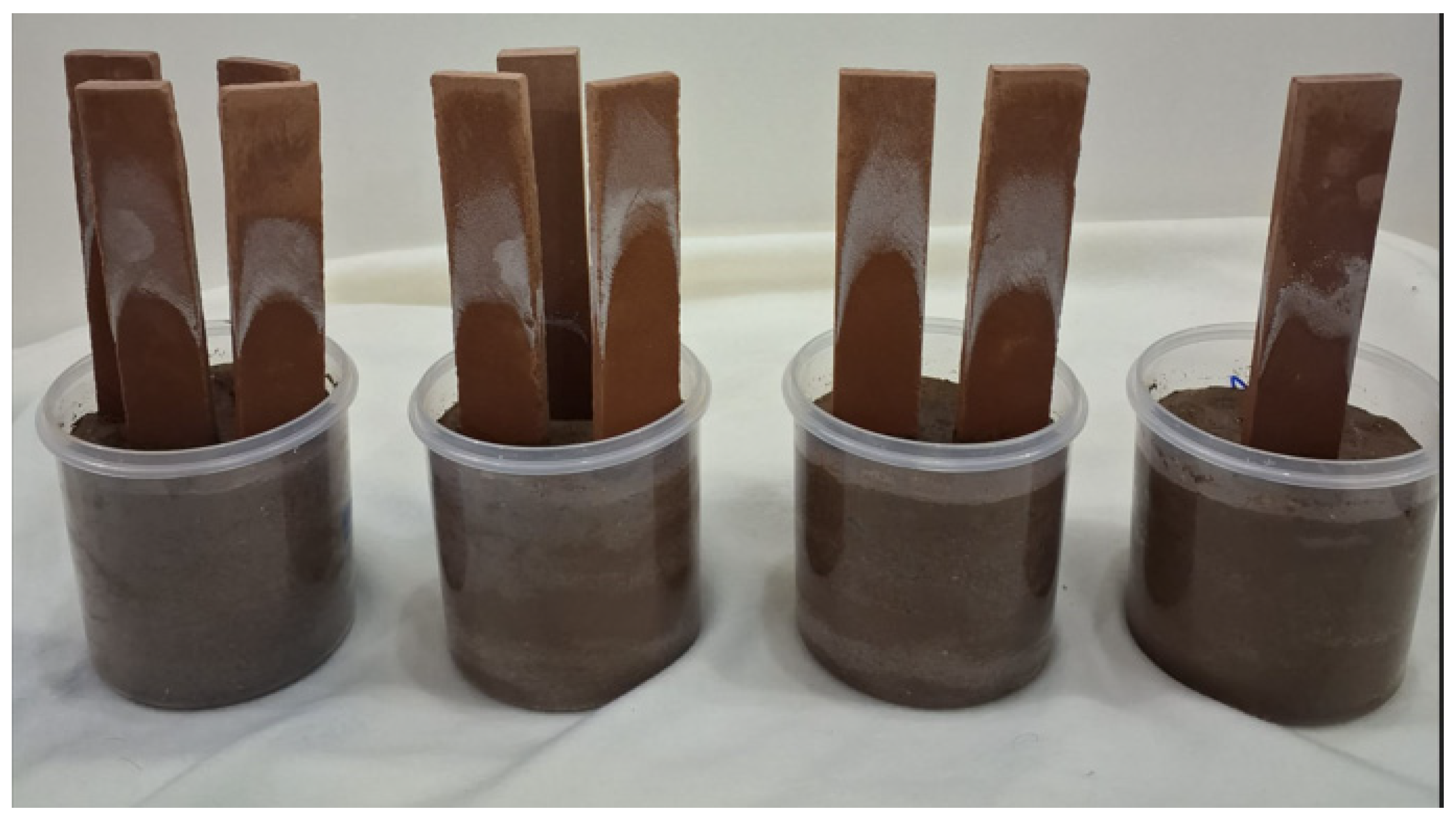
Figure 11 shows the formation of salt on the ceramic surfaces after 9 h.
Figure 12 presents the time-resolved cumulative evaporated mass from a cylindrical soil reservoir irrigated with saline water and equipped with different numbers of vertically inserted fired-clay ceramic sheets. The results clearly show that adding ceramic sheets systematically enhances evaporation: for any given time, the evaporated mass increases in the order one < two < three < four sheets. This enhancement arises from the enlargement of the effective evaporation surface and the promotion of capillary-driven interfacial evaporation along the porous ceramic–air interfaces. However, the gain in evaporation is nonlinear, as the incremental increase in evaporated mass diminishes when additional sheets are added, indicating partial competition for water supply and vapor diffusion space between neighboring ceramics. The evolution of evaporated mass with time further shows a rapid initial increase followed by a progressively slower growth, consistent with a transition from surface-controlled to transport-limited evaporation, while systems with more ceramic sheets maintain consistently higher evaporation rates throughout the experiment.
Notably, the four-ceramic configuration maintains a much steeper slope (evaporation rate) during the initial 40 h compared to the others. This indicates that a higher density of ceramic media can delay the onset of stage-II evaporation (falling rate stage) by more aggressively extracting available water before salt precipitation can restrict the flow (
Figure 13). This crowding effect indicates that evaporation becomes constrained by soil hydraulic conductivity and moisture availability, not by ceramic surface area alone.
The experimental results (
Table 1) demonstrate that the integration of fired clay sheets significantly enhances the desalinization potential of the soil system by facilitating both higher evaporative fluxes and the physical removal of solutes. Summarized in the provided data, a strong positive correlation exists between the number of inserted ceramics and the mass of salt extracted from the soil following total water evaporation. The salt extraction efficiency increased from 20% (7.9 g) with a single sheet to a substantial 59% (23.3 g) with four sheets. This evolution exhibits a non-linear relationship; while the transition from one to two sheets yielded a moderate increase in salt removal (+2.4 g), a significant jump in efficiency occurred when moving from two to three sheets (+7.0 g).
This trend is directly mirrored in the evaporation kinetics shown in the accompanying figures. In the absence of ceramic inserts, saline-irrigated soil reached a cumulative evaporated mass of only 34 g due to the inhibitory effects of surface crusting (efflorescence), which clogs surface pores and restricts vapor diffusion. In contrast, the use of four ceramic sheets allowed the saline soil to achieve an evaporated mass of approximately 68 g over 120 h, surpassing even the pure water control (~51 g). This confirms that the ceramic sheets act as high-suction capillary wicks that bypass the resistive salt crust, effectively “pumping” the brine to the evaporative surface and sequestering the salt within or on the ceramic media rather than the soil matrix.
4. Salt Extraction from Salinized Soil
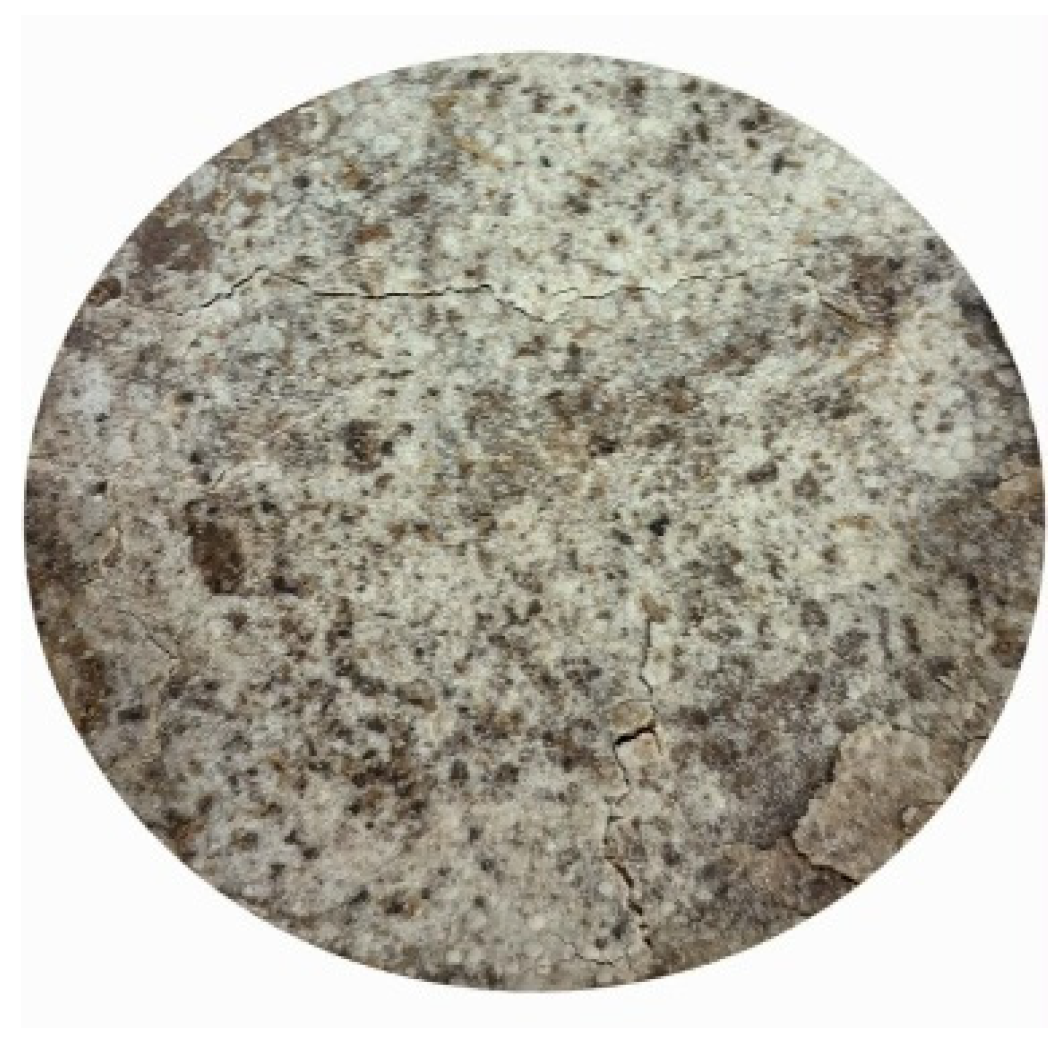
To simulate the crystallization of salts from saline irrigation water evaporation, a controlled laboratory experiment was designed to create “salinized soil.” Five identical cylindrical beakers were each filled with 450 g of test soil and saturated with 160 mL of saline solution (250 g/L concentration), introducing 40 g of salt per sample. After complete evaporation, salt crystals formed on the soil surface as a visible white deposit (
Figure 14).
A fired clay ceramic sheet was then vertically inserted into four samples to enable salt extraction. Pure water was added at 8 h intervals to dissolve the surface salts, which were subsequently absorbed and drawn out of the soil by the ceramic sheet through capillary action. The ceramic sheet was removed at staggered intervals: 72 h (first sample), 120 h (second), 168 h (third), 216 h (fourth), and 336 h (fifth). Each extracted sheet was dried and weighed to determine the cumulative salt mass removed at each stage. The quantitative results are presented in
Table 2.
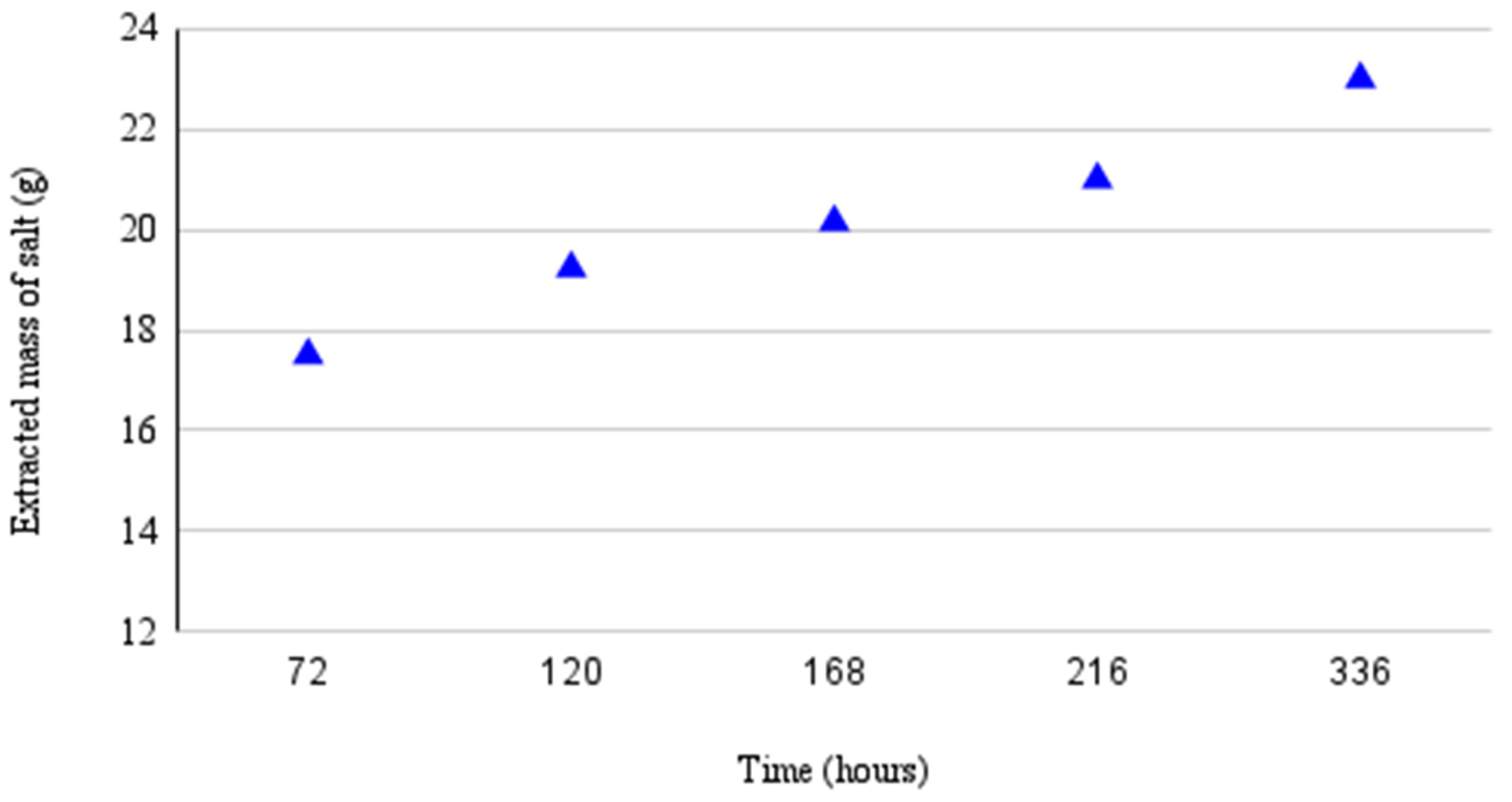
The temporal evolution of salt extraction by ceramic sheets exhibits a characteristic nonlinear profile, as illustrated in
Figure 15 and
Table 2.
Over the 336 h experimental period, a cumulative salt mass of 23 g was extracted, corresponding to 57% of the initially deposited salt. The extraction kinetics demonstrate three distinct phases: an initial rapid extraction phase (0–72 h) during which 17.5 g (43% of total salt) was removed at a rate of 0.243 g/h, an intermediate deceleration phase (72–168 h) characterized by significantly reduced extraction rates ranging from 0.036 to 0.019 g/h, and a diminishing returns phase (168–336 h) where extraction rates stabilized at approximately 0.017–0.018 g/h. The marked decline in extraction efficiency beyond the initial 72 h period can be attributed to several mechanisms, including progressive depletion of readily mobilizable surface salts, establishment of concentration gradients limiting diffusive transport from deeper soil layers, and, notably, salt crystallization on the ceramic sheet surface, which progressively occludes pores and reduces capillary permeability. This surface crystallization phenomenon has been widely documented as a primary factor limiting the long-term effectiveness of porous extraction media in desalination applications. The persistence of 43% residual salt in the soil matrix after 336 h indicates incomplete desalination, suggesting that the remaining salt fraction is either chemically adsorbed to soil particles, sequestered in micropores inaccessible to capillary extraction, or immobilized beyond the effective extraction zone. These findings indicate that ceramic sheet deployment is most efficient during short operational cycles (72–120 h), after which surface salt crystallization and reservoir depletion substantially compromise extraction performance, necessitating periodic sheet replacement to maintain desalination effectiveness.
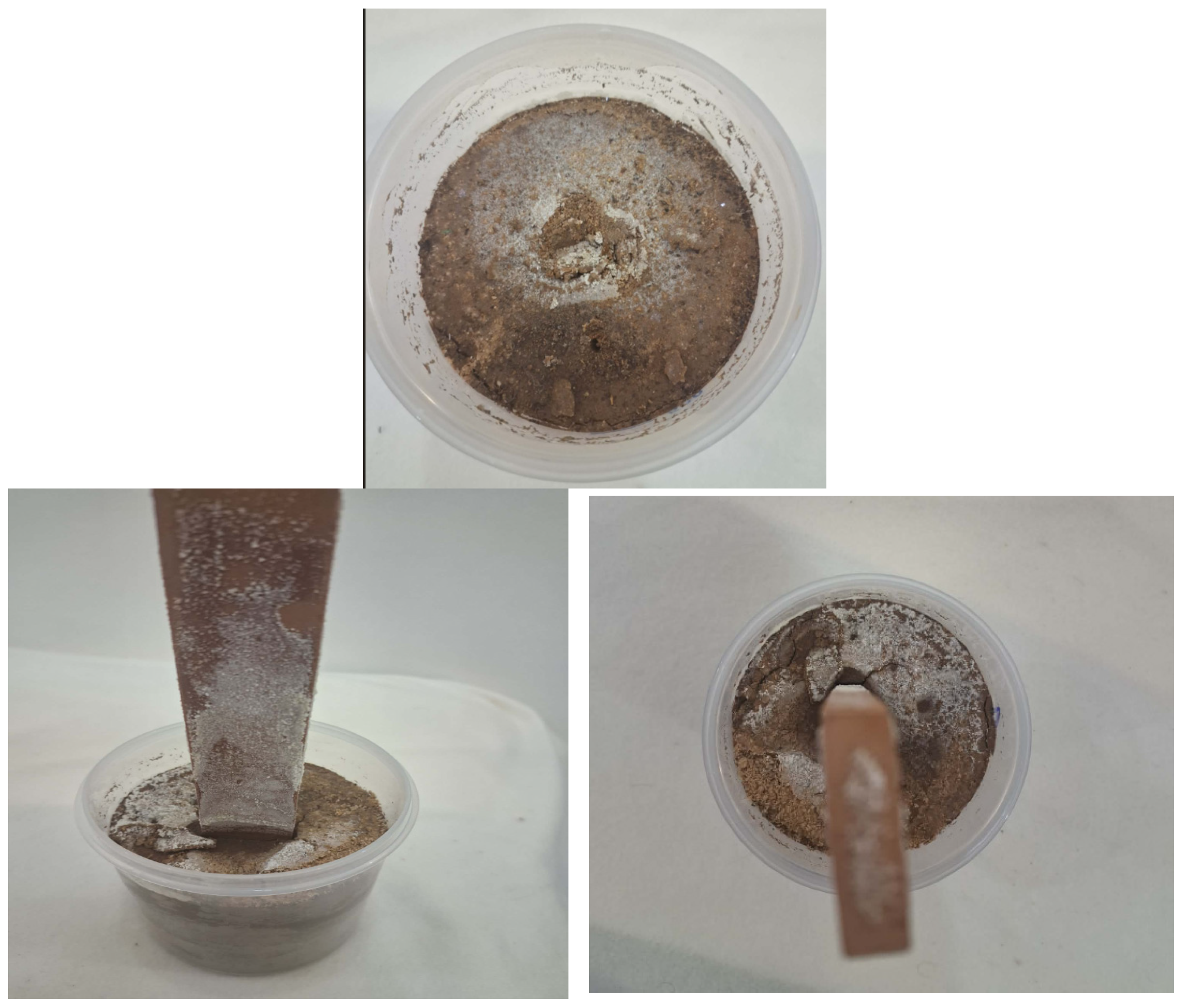
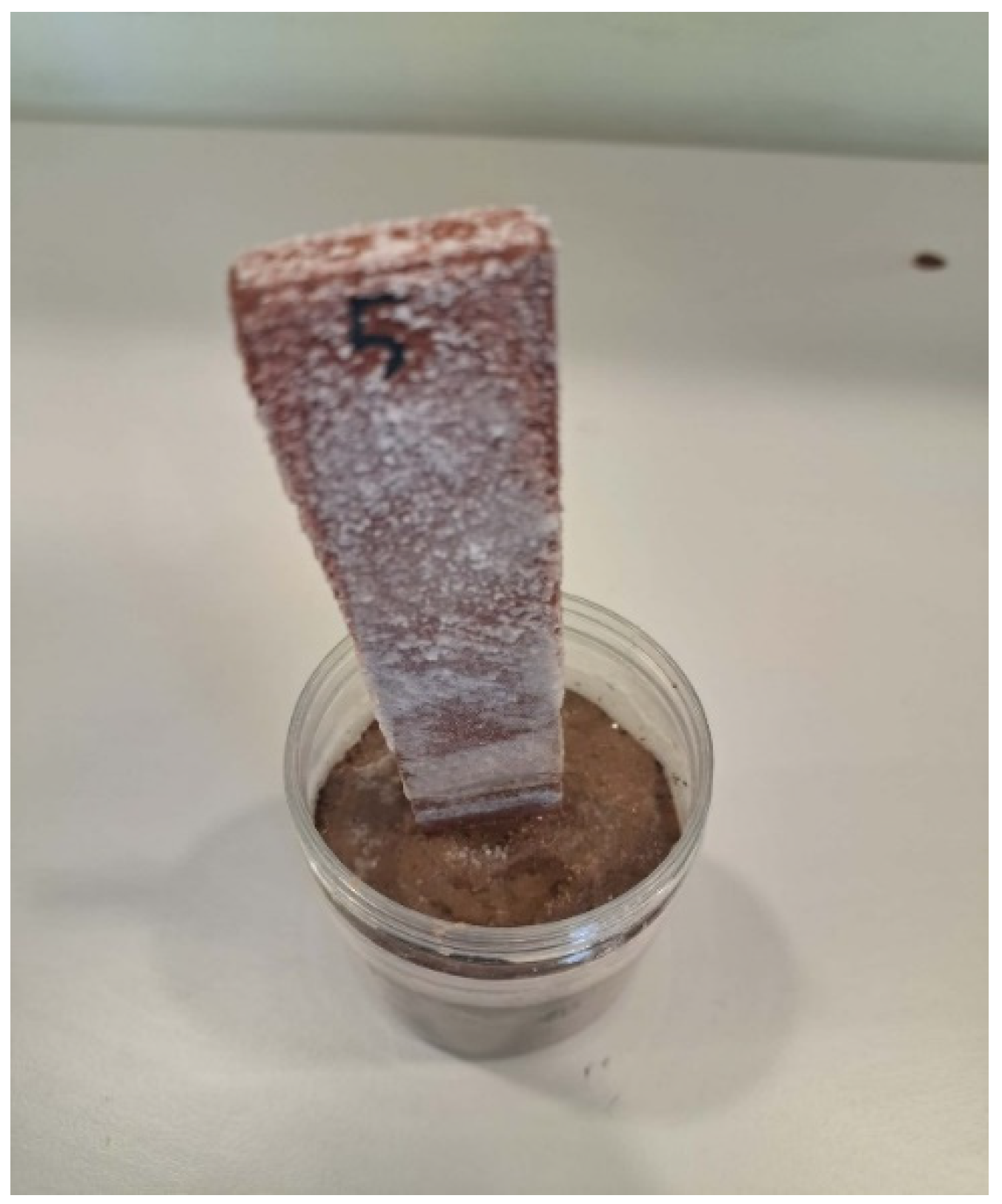
Photographic examination of the final ceramic sheet retrieved after 336 h of operation reveals extensive salt crystal accumulation on all exposed surfaces. This pronounced crystalline deposition provides direct visual evidence of the salt migration and extraction mechanism, whereby dissolved salts are transported through the porous ceramic matrix via capillary action and subsequently precipitate upon evaporation at the ceramic–air interface. The ubiquitous distribution of salt crystals across all sides of the ceramic sheet confirms multidirectional salt flux through the material and substantiates the previously discussed phenomenon of surface crystallization. This extensive crystal formation further explains the observed decline in extraction efficiency over time (
Figure 16), as progressive pore occlusion by salt precipitates reduces the effective porosity and hydraulic conductivity of the ceramic medium, thereby impeding continued salt transport and extraction capacity.
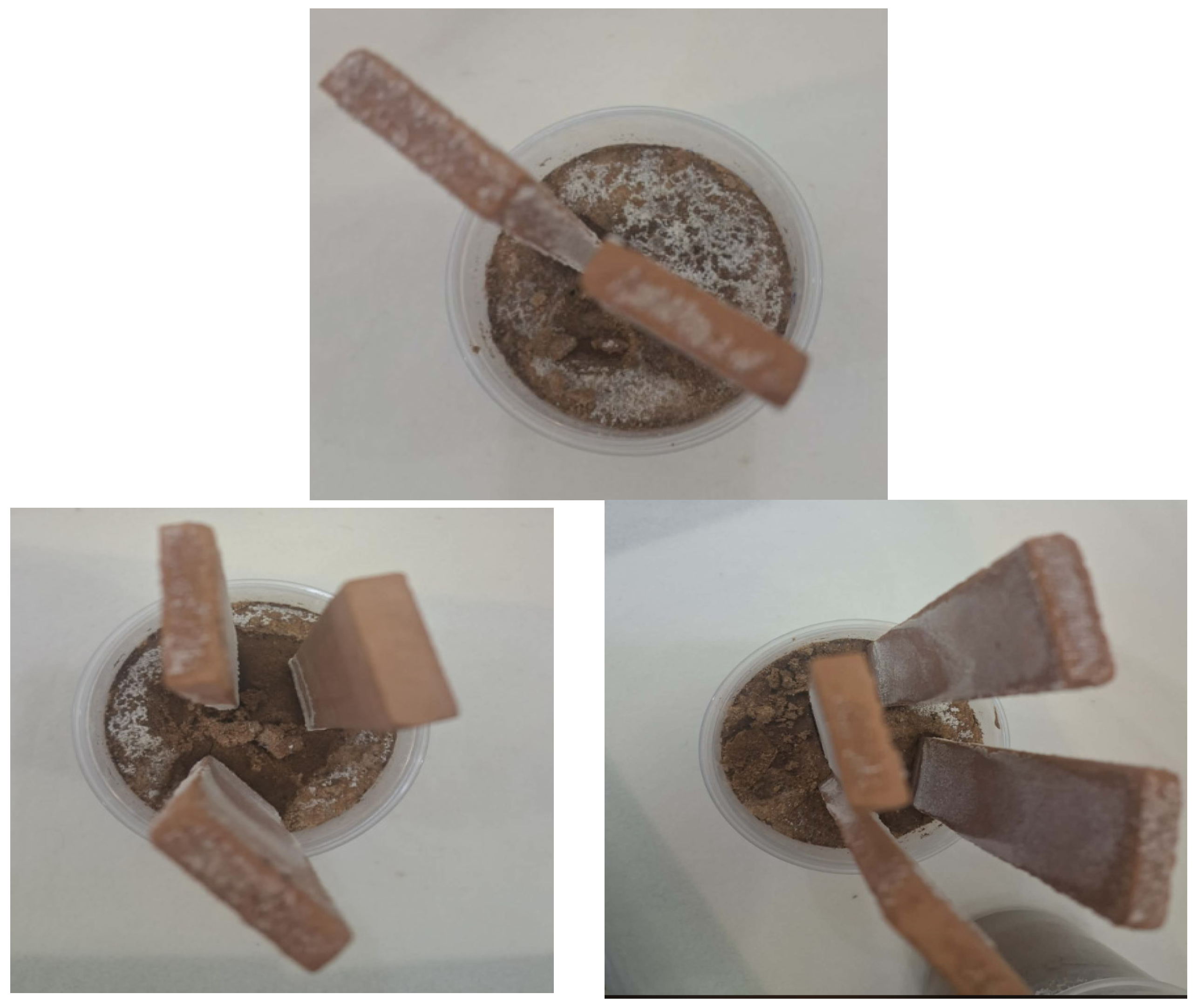
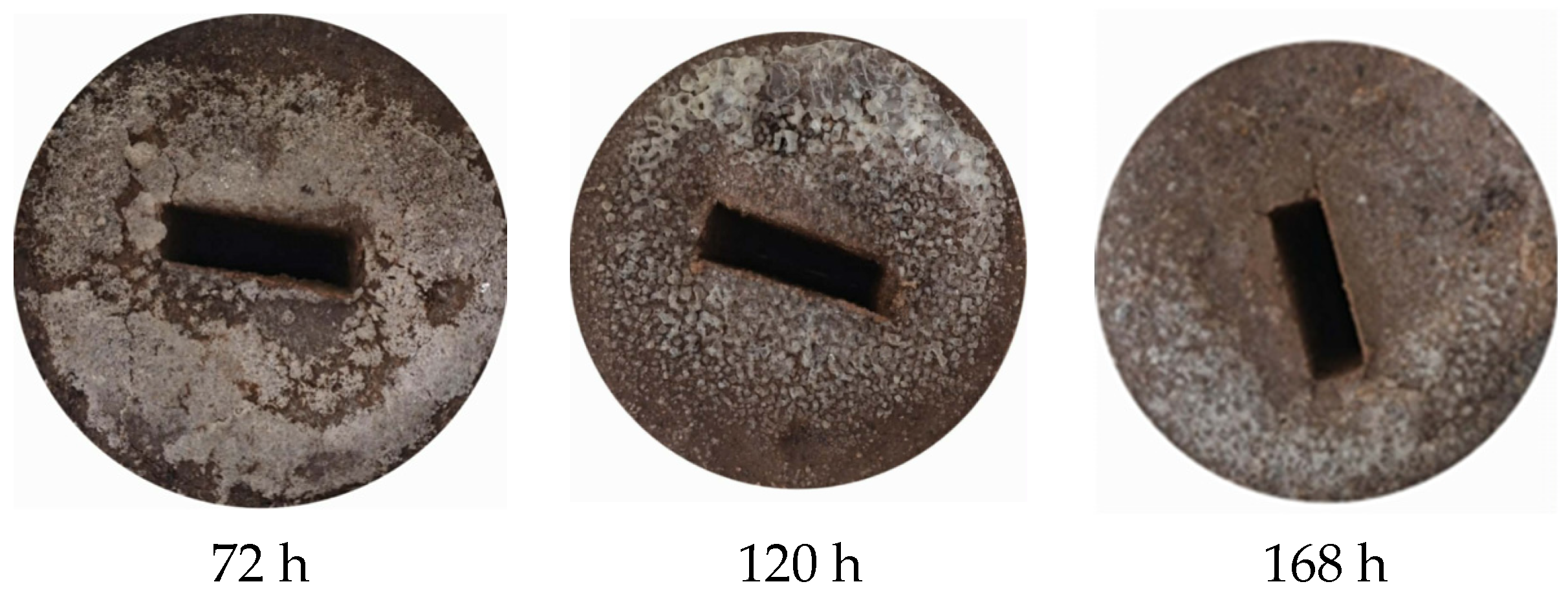
Visual documentation of the soil surface following ceramic sheet extraction provides qualitative confirmation of the desalination process (
Figure 17).
Photographic evidence reveals a progressive reduction in surface whitening, indicating decreased salt crystal accumulation on the soil surface. The diminished white coloration observed in post-extraction samples, compared to the initial heavily salinized condition, corroborates the quantitative mass balance data and demonstrates the efficacy of ceramic sheet extraction in removing superficial salt deposits. This visual transformation serves as a macroscopic indicator of salt depletion and validates the desalination mechanism facilitated by the ceramic sheets.
5. Conclusions
This study investigated the efficacy of vertically inserted fired-clay ceramic sheets as a passive technology to enhance evaporation and facilitate salt extraction from saline-irrigated soils. The results demonstrate that porous ceramic inserts function as high-suction capillary wicks that effectively bypass the hydraulic resistance and vapor-diffusion limitations imposed by saline-induced surface efflorescence. The experimental evidence supports the following conclusions:
1—The integration of ceramic sheets significantly mitigated the inhibitory effects of salt crusting. While saline soil without inserts reached a cumulative evaporated mass of only 34 g, the addition of four ceramic sheets doubled this performance to 68 g, surpassing even the pure water control (51 g). This confirms that the ceramic media provides a preferential flow pathway for brine, maintaining high-stage evaporation by expanding the effective evaporative surface area.
2—A strong positive correlation was established between the density of ceramic inserts and desalination efficiency. Salt removal increased from 20% (7.9 g) with a single sheet to 59% (23.3 g) with four sheets.
3—The extraction process is characterized by a rapid initial phase (0–72 h), during which 43% of total salts were removed at a rate of 0.243 g/h. Beyond this window, efficiency declined due to surface crystallization and the progressive occlusion of ceramic pores by salt precipitates. This indicates that the hydraulic conductivity of the ceramic medium is the primary limiting factor in long-term operation.
4—The findings suggest that low-cost fired-clay ceramics are highly viable for soil remediation in resource-limited agricultural settings. However, to maintain optimal desalination performance, an operational cycle of 72 to 120 h is recommended, after which periodic replacement or cleaning of the ceramic inserts is necessary to overcome the diminishing returns caused by salt saturation.
The present study was conducted under controlled laboratory conditions using a single ceramic type and NaCl solutions, which may not fully represent the complexity of naturally saline field soils with mixed salt compositions. Future work should focus on field-scale validation, systematic optimization of ceramic pore structure, and the development of a coupled heat and mass transfer model to predict desalination performance under real agricultural conditions.
Author Contributions
Conceptualization, F.K. and M.N.; methodology, F.K. and M.N.; investigation, F.K., M.N., M.O., M.A., S.S. and S.M.; resources, M.B.K.A., S.S. and S.M.; project administration, F.K. All authors have read and agreed to the published version of the manuscript.
Funding
The authors gratefully acknowledge technical and financial support from the Ministry of Education and the University of Hafr Al Batin, Saudi Arabia. This research work was funded by institutional fund projects under no (0057-1446-S).
Data Availability Statement
The data that support the findings of this study are available from the corresponding author upon reasonable request.
Acknowledgments
The authors wish to thank the technical and financial support from the Ministry of Education and the University of Hafr Al Batin, Saudi Arabia. In the preparation of this manuscript, I have used generative AI tools exclusively to assist with improving the clarity and quality of the writing. The AI support was limited to correcting grammar, refining language, and enhancing the overall style of the text. All substantive ideas, analyses, interpretations, and scientific content remain entirely my own. No generative AI system was used for data analysis, interpretation of results, or the generation of original scientific content.
Conflicts of Interest
On behalf of all authors, the corresponding author declares no conflicts of interest.
References
- Piacentini, R.D.; Ipiña, A.; Pani, A. Natural soil drying in relation to climate: Impact on food production and stability of buildings. Dry. Technol. 2023, 41, 2535–2536. [Google Scholar] [CrossRef]
- Shahid, S.A.; Zaman, M.; Heng, L. Soil salinity: Historical perspectives and a world overview of the problem. In Guideline for Salinity Assessment, Mitigation and Adaptation Using Nuclear and Related Techniques; Springer: Cham, Switzerland, 2018; pp. 43–53. [Google Scholar] [CrossRef]
- Gibbs, H.K.; Salmon, J.M. Mapping the world’s degraded lands. Appl. Geogr. 2015, 57, 12–21. [Google Scholar] [CrossRef]
- Khemili, F.; Gobaa, C.; Najjari, M. Extracting salt from soil with ceramic sheets. Dry. Technol. 2024, 42, 1855–1865. [Google Scholar] [CrossRef]
- Zhang, Y.; Chou, Y.; Zhao, D.; Wang, L.; Zhang, P. Experimental and model research on the evaporation of loess-like sulfate saline soil considering the influence of initial salt content. J. Arid Land 2025, 17, 912–932. [Google Scholar] [CrossRef]
- Xinhu, L.; Shi, F. Effects of evolving salt precipitation on the evaporation and temperature of sandy soil with a fixed groundwater table. Vadose Zone J. 2021, 20, e20122. [Google Scholar] [CrossRef]
- Fujimaki, H.; Shimano, T.; Inoue, M.; Nakane, K. Effect of a salt crust on evaporation from a bare saline soil. Vadose Zone J. 2006, 5, 1246–1256. [Google Scholar] [CrossRef]
- Daba, A.W. Rehabilitation of soil salinity and sodicity using diverse amendments and plants: A critical review. Discov. Environ. 2025, 3, 53. [Google Scholar] [CrossRef]
- Andrade Foronda, D.; Colinet, G. Combined application of organic amendments and gypsum to reclaim saline–alkali soil. Agriculture 2022, 12, 1049. [Google Scholar] [CrossRef]
- Yu, H.; Hu, L.; Wu, P.; Yang, X.; Shi, Y.; Li, Z.; Pi, K. Solar evaporation-driven integrated system for saline soil remediation, freshwater recovery, salt resource harvest, and agricultural irrigation. Water Res. 2025, 287, 124288. [Google Scholar] [CrossRef] [PubMed]
- Gobaa, C.; Khemili, F.; Najjari, M. The impact of a ceramic sheet on soil drying. Dry. Technol. 2025, 43, 1934–1943. [Google Scholar] [CrossRef]
- Zhang, X.; Zhang, Z.; Wang, W.; Wang, Z. Experimental and numerical analysis of evaporation processes in a semi-arid region. Water 2025, 17, 1113. [Google Scholar] [CrossRef]
- Randazzo, L.; Montana, G.; Castiglia, A.; La Russa, M.F. Salt extraction from lime-based mortars: An experimental study using different poultice formulations. Constr. Build. Mater. 2020, 255, 119391. [Google Scholar] [CrossRef]
- Schumacher, D.; Zimnik, D.; Wilhelm, M.; Dreyer, M.; Rezwan, K. Solution-based freeze-cast polymer-derived ceramics for isothermal wicking: Relationship between pore structure and imbibition. Sci. Technol. Adv. Mater. 2019, 20, 1207–1221. [Google Scholar] [CrossRef]
- Dong, X.; Luo, X.; Huang, Z.; Ye, S.; Chen, C.; Xu, J.; Wang, Z.; Meng, X.; Zhao, W.; Yang, R.; et al. Zero Waste water Discharge noncontact solar desalter for saline–alkali soil remediation and grain yield increase by brackish water. Mater. Horiz. 2025, 12, 7358–7369. [Google Scholar] [CrossRef] [PubMed]
- Lazhar, R.; Najjari, M.; Prat, M. Combined wicking and evaporation of NaCl solution with efflorescence formation: The efflorescence exclusion zone. Phys. Fluids 2020, 32, 067106. [Google Scholar] [CrossRef]
- Jalali, J.; Balghouthi, M.; Ezzaouia, E. Salt removal from soil using the argil porous ceramic. Desalination 2016, 379, 53–67. [Google Scholar] [CrossRef]
- Jalali, J.; Balghouthi, M.; Ezzaouia, E. Characterization of porous clay ceramics used to remove salt from saline soils. Appl. Clay Sci. 2016, 126, 259–267. [Google Scholar] [CrossRef]
Figure 1.
Schematic representation of the experimental setups: (a) soil evaporation column and (b) ceramic sheet embedded in soil.
Figure 1.
Schematic representation of the experimental setups: (a) soil evaporation column and (b) ceramic sheet embedded in soil.
Figure 2.
X-ray diffractogram of soil sample.
Figure 2.
X-ray diffractogram of soil sample.
Figure 3.
Particle diameter distribution of soil.
Figure 3.
Particle diameter distribution of soil.
Figure 4.
X-ray diffractogram of the ceramic materials.
Figure 4.
X-ray diffractogram of the ceramic materials.
Figure 5.
SEM images of the ceramic materials.
Figure 5.
SEM images of the ceramic materials.
Figure 6.
The ambient conditions prevailing near the samples during the experiment.
Figure 6.
The ambient conditions prevailing near the samples during the experiment.
Figure 7.
Schematic flowchart of experimental methodology.
Figure 7.
Schematic flowchart of experimental methodology.
Figure 8.
Drying kinetics (mass loss) for the soil column irrigated with pure water without ceramic, irrigated with saline water without ceramic, and irrigated with saline water with ceramic.
Figure 8.
Drying kinetics (mass loss) for the soil column irrigated with pure water without ceramic, irrigated with saline water without ceramic, and irrigated with saline water with ceramic.
Figure 9.
Formation of a saline-induced surface crust (efflorescence).
Figure 9.
Formation of a saline-induced surface crust (efflorescence).
Figure 10.
Cumulative evaporated mass per unit area as a function of time for saline-water-irrigated soil without and with a ceramic element.
Figure 10.
Cumulative evaporated mass per unit area as a function of time for saline-water-irrigated soil without and with a ceramic element.
Figure 11.
Formation of salt on the ceramic surfaces after 9 h.
Figure 11.
Formation of salt on the ceramic surfaces after 9 h.
Figure 12.
Drying kinetics (mass loss) for the soil column irrigated with saline water and equipped with different numbers of vertically inserted fired-clay ceramic sheets.
Figure 12.
Drying kinetics (mass loss) for the soil column irrigated with saline water and equipped with different numbers of vertically inserted fired-clay ceramic sheets.
Figure 13.
Impact of the ceramic sheet number on salt extraction efficiency.
Figure 13.
Impact of the ceramic sheet number on salt extraction efficiency.
Figure 14.
Surface salt crystallization and soil whitening following the complete evaporation of a saline solution (250 g/L).
Figure 14.
Surface salt crystallization and soil whitening following the complete evaporation of a saline solution (250 g/L).
Figure 15.
Temporal evolution of salt extraction by ceramic sheet.
Figure 15.
Temporal evolution of salt extraction by ceramic sheet.
Figure 16.
Salt crystals across all sides of the ceramic sheet (t = 336 h).
Figure 16.
Salt crystals across all sides of the ceramic sheet (t = 336 h).
Figure 17.
Time-dependent variations in soil surface condition following salt extraction.
Figure 17.
Time-dependent variations in soil surface condition following salt extraction.
Table 1.
Extracted salt mass as a function of the number of ceramic sheets.
Table 1.
Extracted salt mass as a function of the number of ceramic sheets.
| Number of Inserted Ceramics | 1 Sheet | 2 Sheets | 3 Sheets | 4 Sheets |
|---|
| Mass of extracted salt (g) | 7.9 ± 0.2 | 10.3 ± 0.2 | 17.3 ± 0.2 | 23.3 ± 0.2 |
| Percentage of extracted mass of salt | 20% | 26% | 44% | 59% |
Table 2.
Ceramic desalination efficiency.
Table 2.
Ceramic desalination efficiency.
| Time (h) | 72 | 120 | 168 | 216 | 336 |
|---|
| Mass of extracted salt by ceramic sheet (g) | 17.5 ± 0.2 | 19.2 ± 0.2 | 20.2 ± 0.2 | 21.1 ± 0.2 | 23.0 ± 0.2 |
| Percentage of salt extracted | 43% | 48% | 51% | 53% | 57% |
| Disclaimer/Publisher’s Note: The statements, opinions and data contained in all publications are solely those of the individual author(s) and contributor(s) and not of MDPI and/or the editor(s). MDPI and/or the editor(s) disclaim responsibility for any injury to people or property resulting from any ideas, methods, instructions or products referred to in the content. |




 ,
,