Article

Navigating Water (In)Security in Pakistan-Occupied Jammu and Kashmir (POJK)

by
Pintu Kumar Mahla
Water Resources Research Centre, University of Arizona, Tucson, AZ 85719, USA
Water 2026, 18(7), 768; https://doi.org/10.3390/w18070768
Submission received: 15 February 2026 / Revised: 20 March 2026 / Accepted: 22 March 2026 / Published: 24 March 2026
(This article belongs to the Special Issue Working Across Borders to Address Water Scarcity)

Abstract

This research explores the multifaceted dynamics of water (in)security in Pakistan-Occupied Jammu and Kashmir (POJK), examining the region as a vector of broader transboundary hydro-politics between India and Pakistan. The study begins by outlining the current state of water infrastructure and governance within POJK, highlighting key issues such as water scarcity, environmental degradation, and socio-political marginalization in access to water. It then transitions into a critical analysis of transboundary water management between India and Pakistan under the auspices of the Indus Waters Treaty (IWT), emphasizing how the unique geopolitical ambiguity of POJK complicates cooperative water governance. The paper contends that POJK’s water scarcity is both a humanitarian concern and a flashpoint for regional instability, warranting more inclusive, transparent, and robust green political governance frameworks. By bridging localized realities with transboundary water cooperation, this study offers a structured interpretive analysis of how water (in)security in POJK reverberates beyond its borders, informing the need for a deep ecological approach.

1. Introduction

Water is a significant natural resource. In situations where there are territorial disputes and weak governments, water has two roles: it is a basic human need and a valuable geopolitical resource. This is especially true in Pakistan-Occupied Jammu and Kashmir (POJK), where the water management and hydro-political realities are often ignored in mainstream academic and policy discussions. Although a ton of research has been devoted to the Indus Waters Treaty (IWT) and the hydro-politics between India and Pakistan, the particular water-related vulnerabilities and governance issues in POJK have not been sufficiently addressed. This omission is notable considering that POJK is not only a significant geopolitical vector between India and Pakistan but also an ecologically vulnerable region in South Asia where local communities confront urgent issues of water insecurity.
In the context of rising ecological vulnerabilities in South Asia, in the great heights of the Himalayas, a silent but dangerous threat is slowly growing. This threat has serious consequences for the water security of South Asia. The majestic peaks covered in snow, which have long been a source of freshwater, are losing their ice at an alarming rate. The fact that the Himalayan snow is melting is not only a concern for the environment, but it is also a very important issue that will have a big impact on the lives of millions of people in the Indian subcontinent.
Climate change is changing the way the world’s water looks in a big way. Competition for limited water resources is getting worse, especially between agriculture, industry, and energy. This is because freshwater reserves are running out, and river flows are becoming less stable. The United Nations reported that by 2040, about 40 per cent of the world’s population could be facing severe water shortages. Only 0.5 per cent of the Earth’s water is both usable and accessible. The effects are especially bad in places like South Asia, where less water is available, which is already lowering crop yields, raising food prices, and putting the economy at risk [1].
Glaciers are melting faster than they can build up new ice because the Earth’s temperatures are rising, mostly because of human activities. The Himalayas, like other places that are high up, are getting hotter faster than the rest of the world. Scientific studies have consistently shown a troubling trend that Himalayan glaciers are retreating at an unprecedented rate. The International Center for Integrated Mountain Development (ICIMOD) has warned about the disappearing peaks and the worsening water supply situation in the Himalayan region. The ICIMOD’s Snow Update Report 2024 says that the Hindu Kush Himalaya has had less and less snow over the past 22 years. In fact, 13 of those years had less snow than usual for the season. This drop has big effects on the availability of water downstream, since less snow accumulation and changing snow levels make it much more likely that there will be water shortages in the Himalayan region [2].
People often call the Himalayas the ‘Water Towers of Asia’ because they are so important for getting water to the area. For instance, the Tibetan plateau feeds big rivers like the Ganges, Brahmaputra, and Indus, which together support the lives of more than a billion people. Rivers that depend on melting glaciers will have less water flow, especially during the dry season, which will make the water shortage worse. The recent study also warned about the negative change in Terrestrial water storage (TWS) in the Tibetan Plateau. The TWS is a critical determinant of regional available water resources for sustainable development. The most significant climate impact on Plateau’s TWS change is shown as glacier retreat [3]. Moreover, around 129 million farmers in the Indus and Ganges substantially depend on snow and glacier melt for their livelihoods [4].
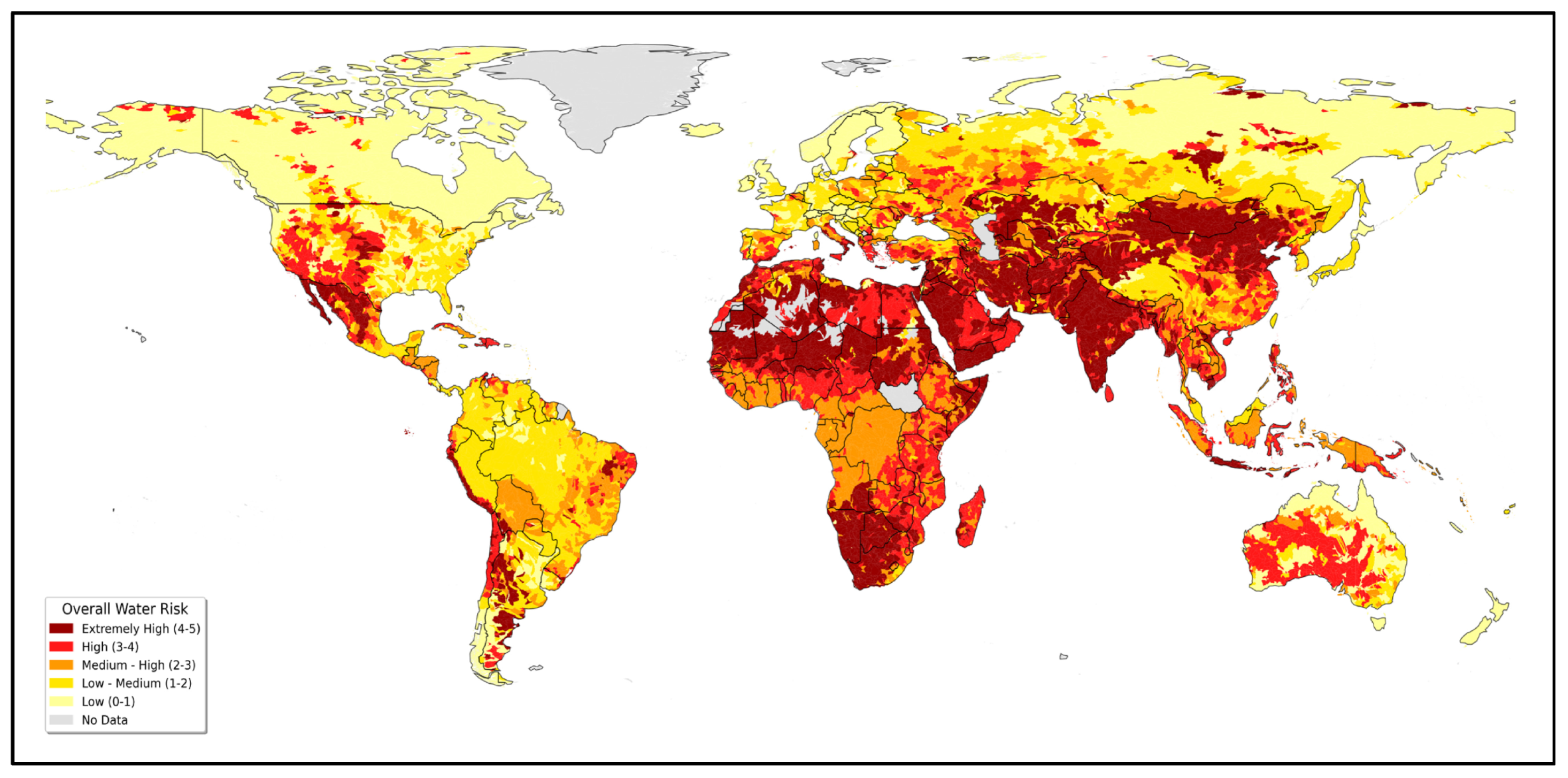
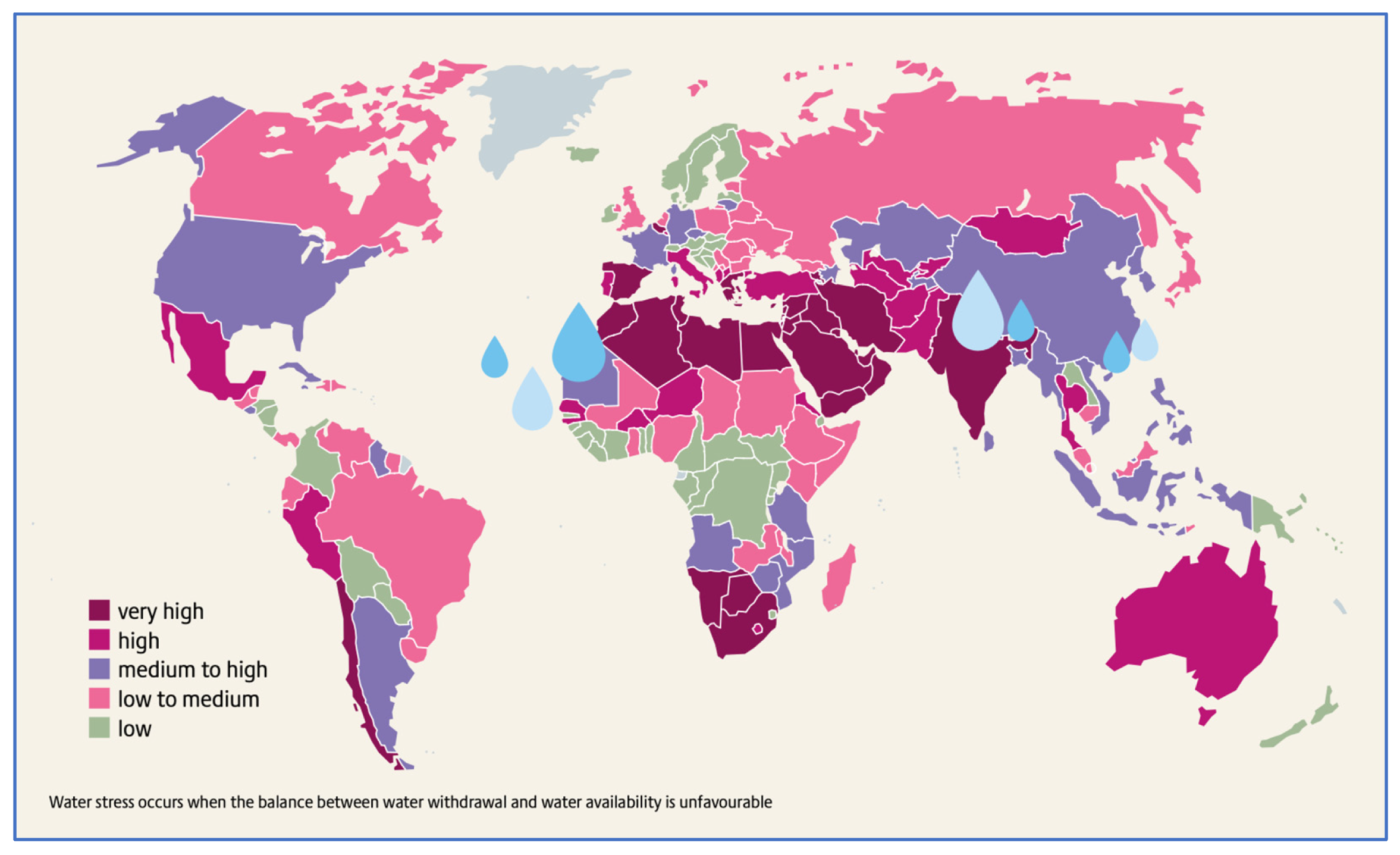
In addition, the most recent much-concerned global water bankruptcy report showcases that around 4 billion people, or almost half of the world’s population, live with severe water scarcity for at least one month every year. They do not have enough water to meet all of their needs. More and more people are seeing the effects of not having enough water: reservoirs are drying up, cities are sinking, crops are failing, water is being rationed, and wildfires and dust storms are happening more often in areas that are drying out. South Asia’s Himalayan region, especially POJK, is expected to be the hardest hit (see Figure 1).
Water security is even more important in South Asia because the region relies on shared river systems. The Indus Basin starts in the Himalayas and crosses many political borders. It supports the lives of millions of people [6]. The IWT is a rare example of long-term cooperation between the two countries, despite their typically strained hydro-political relations. However, the treaty does not specify how resources should be divided within disputed areas, such as POJK [7]. Moreover, the continuous haggling over the Indus waters has politicized the treaty, which leads to a big bugbear with Indus water governance that puts communities in the POJK region in a precarious water situation. For instance, the IWT got a major setback in the previous year, 2025. India had temporarily suspended the treaty, which had stopped the Indus flow to Pakistan. This long-standing issue drew a large amount of attention from international organizations like the United Nations.
The POJK along the important Indus River system has historically given it hydro-geographical importance. These bodies of water are very pertinent to the livelihood of the region. However, years of climate change and political neglect have led to water scarcity and marginalization of the local livelihood. Reports of severe water shortages in cities like Muzaffarabad and Mirpur, as well as in rural areas where such shortages often occur, highlight the daily struggles of people living in POJK [8].
This duality of geopolitical victimhood and ecological vulnerabilities illustrates the intricate relationship between local lived experiences and international treaties, environmental necessities, and political disputes, as well as the humanitarian aspects of water scarcity. By placing POJK within the broader context of water insecurity in South Asia, this paper addresses a significant academic deficiency, illustrating the regional implications of local water insecurities.
To achieve this, I adopted a theoretical framework of green politics to discuss water insecurity in POJK across five main sections. The first section closely examines POJK’s water infrastructure. The second section explores the water scarcity aspects, situating POJK within the broader Himalayan ecological system and considering how climate change, melting glaciers, and hydropower projects will impact the water scarcity, especially blue water scarcity, in Pakistan. The third part analyses how the IWT and other transboundary agreements influence POJK’s water security. It critically evaluates how POJK’s disputed status obstructs effective water sharing and exacerbates already existing water insecurity in the region. The fourth section synthesizes these findings by illustrating how POJK functions as both a humanitarian issue and a hydro-political flashpoint, highlighting how water insecurity could threaten regional stability if left unaddressed. Finally, by placing the region at the intersection of local water vulnerabilities and transboundary hydro-politics, the study develops a nuanced green political understanding of how water scarcity is not only a humanitarian crisis but also a potential source of regional instability. Consequently, this structured interpretive analysis of water insecurity in the POJK through a policy, governance, and green political ecology perspective holds significant value for researchers, policymakers, and practitioners engaged in South Asian water diplomacy and transboundary resource management.
The paper is structured as follows: Section 2 outlines the methodological and green politics theoretical framework; Section 3 presents the results; Section 4 discusses the findings and offers the recommendations; and Section 5 offers concluding reflections.

2. Materials and Methods

To examine the water insecurity in Pakistan’s POJK Region, I adopted a green politics theoretical framework to discuss water scarcity in the region, which requires a deep ecological policy framework to transform the highly politicized-disputed region from a water-scarce zone into a foundation for proper sustainable water management. The paper seeks to advance understanding of how governance arrangements, political marginality, and transboundary dynamics shape water insecurity in ecologically sensitive and geopolitically complex regions.

2.1. Research Methodology

This study adopted a qualitative policy analysis supported by a selective secondary quantitative indicators based on the analysis of green politics theory, policy documents, historical treaties, and quantitative data to provide a comprehensive sense of the water scarcity in Pakistan’s POJK region. Policy documents include state government reports, treaty documents (Indus Waters Treaty), and hydro infrastructure statistics. By examining two dimensions of blue water scarcity through the Falkenmark approach to blue water scarcity, it is useful to have a deeper analysis of the case of water scarcity to assess the water insecurity in Pakistan, especially in the POJK region. The purpose of the Falkenmark indicator and basin-level statistics is to serve as contextual and illustrative benchmarks in the paper.
The POJK region examined in this study forms part of the former princely state of Jammu and Kashmir, which acceded to India in 1947 following the partition of British India. In this context, the widely accepted term ‘Pakistan-Occupied Jammu and Kashmir (POJK)’ is used in line with Indian official and strategic discourse. The use of this term in the paper is intended to indicate the positional and legal-political framing adopted for the analysis.
By conceptualizing a green political theory, this study navigates the water insecurity in Pakistan. In this context, a case study of the POJK region has been used to get a holistic overview of the most significant stakeholders in Pakistan’s Indus Basin region. Moreover, the green politics theoretical framework has been directed as the policy recommendation or answer to possible solutions for the mitigation of water insecurity in Pakistan, especially the POJK region.
In addition, on the part of POJK’s public perceptions regarding the Indus Basin complexities were examined using Nexis Uni version of the LexisNexis software, with an analysis of print media and other social media reports. I examined at approx. 15,000 articles or other media that were published between January 2011 and December 2025 (see Table 1). The purpose of this examination was to identify recurring discourse patterns, governance concerns, and policy framings relevant to the study objectives. It was compiled using combinations of keywords related to POJK, water scarcity, Indus Basin, hydropower, dams, floods, climate change, water governance, the IWT, and local grievances. The purpose of this examination was to identify broad patterns of media attention and issue salience. Accordingly, the analysis relied on LexisNexis-generated descriptive outputs, including the volume of retrieved items, frequency of publication on selected keywords, and the leading publication sources associated with the search results. These outputs were used as indicative measures of the prominence and framing of relevant themes within the media record. This media analysis should therefore be understood as a database-assisted descriptive examination of media coverage. Its reproducibility is conditioned by the search terms used, the database’s proprietary indexing and subject classification system, and source availability within LexisNexis. Consequently, the study emphasizes the interplay of political, social, and ecological dimensions.

2.2. Green Politics: A Brief Theoretical Review

Green politics is a political ideology based on the belief that nature forms an interconnected whole, encompassing humans, non-human entities, and the inanimate world. Green politics had a great effect on international theory in the 1970s, when environmental issues and population growth gained greater significance. It got more attention in the 1990s, when climate change emerged as a global problem. The main green political perspective is that people and nature are deeply interconnected, which posits that Earth is a living system that self-regulates [9]. Consequently, this political perspective highlights that human survival depends on the preservation rather than the degradation of the planet’s ecological system.
There are some underlying views within the green political theory. Conventional political thought has historically been grounded in an anthropocentric perspective, which prioritizes human beings in moral and philosophical discussions. This viewpoint prioritizes human needs and goals above all else. René Descartes, an early liberal philosopher, said that people are “the master and possessor of nature” [10]. On the other hand, environmental thought is based on ecological principles that stress the complicated web of relationships that support all life, both human and non-human. In this larger discussion about the environment, green political theory can be broken down into two main schools of thought, i.e., reformist ecology and radical ecology.
Reformist ecology aims for sustainable development by finding a balance between economic growth and protecting the environment. Often referred to as “modernist ecology,” this approach adapts ecological insights to serve human interests, aligning with the values of conservation and sustainability. It is regarded as a type of ‘shallow’ ecology or anthropocentric environmentalism, acknowledging that although environmental impacts can be reduced, they can never be completely eradicated [11].
Radical ecology, in contrast, includes a variety of viewpoints that support profound, and occasionally revolutionary, changes in society. Instead of trying to make ecological principles fit with the main ideas of capitalist modernity, radical ecologists see capitalism’s structures, values, and institutions as the main causes of environmental damage. These viewpoints are collectively termed forms of social ecology, as they analyze the relationship between humans and nature through the framework of social organization.
To promote green political principles, significant social transformation is required, which can be interpreted in various ways. First, Eco-socialism critiques capitalism from an environmental perspective, contending that the ecological crisis originates from private property and the commodification of nature. Eco-socialists contend that capitalism diminishes the natural world to a mere resource, suggesting that ecological sustainability can solely be attained through the formation of a socialist society.
Second, eco-anarchism criticizes hierarchy and authority, claiming that human domination leads to domination over nature. Eco-anarchists assert that ecological equilibrium can only be reestablished through the dismantling of the state and the establishment of decentralized, self-governing communities [12]. Third, ecofeminism critiques patriarchy, asserting that the oppression of women parallels and perpetuates the exploitation of nature [13]. From this perspective, men’s dependence on instrumental rationality and control contributes to ecological degradation, necessitating a post-patriarchal, egalitarian society to uphold respect for nature.
Broadly, radical views want bigger changes; eco-socialists say capitalism turns nature into a product; eco-anarchists say social hierarchy is bad for the environment; eco-feminists say patriarchy is bad for nature; and deep ecologists want a fundamental shift in the way we think about things that treats all species as having equal rights to live and thrive. Therefore, the paper gives a structured interpretive analysis of water insecurity in the POJK through a policy, governance, and green political ecology perspective. Within these green political frameworks, to be specific, the paper advocates that the disputed green capital of Pakistan needs a green (deep-ecological) political framework. This framework is employed as an analytical category rather than solely as a philosophical position. This conceptual framework links directly to the core dimensions analyzed in the paper, including inequity in water access, governance exclusion, ecological vulnerability, and transboundary decision-making.

3. Results

There are certain risks associated with water scarcity in the POJK region, which ultimately disrupts Pakistan’s water security. It is worth noting that water scarcity and water security are closely linked from many perspectives. River basin vulnerability and exposure to climate change are among these perspectives [14]. Varis et al. (2011) [15] analyzed the river basin vulnerabilities in 10 major monsoon basins in the Asia-Pacific region by combining average water stress with five other vulnerability indicators (governance, economy, social, environmental, and hazards). They showed that water stress is very high in the Indus Basin. They combined these indicators into river basin vulnerability profiles and concluded that the Indus basin, along with the Ganga basin, has the highest river basin vulnerability [15]. They are located in the vulnerable section of extreme water stress, combining a high use-to-availability value with a high level of water crowding.
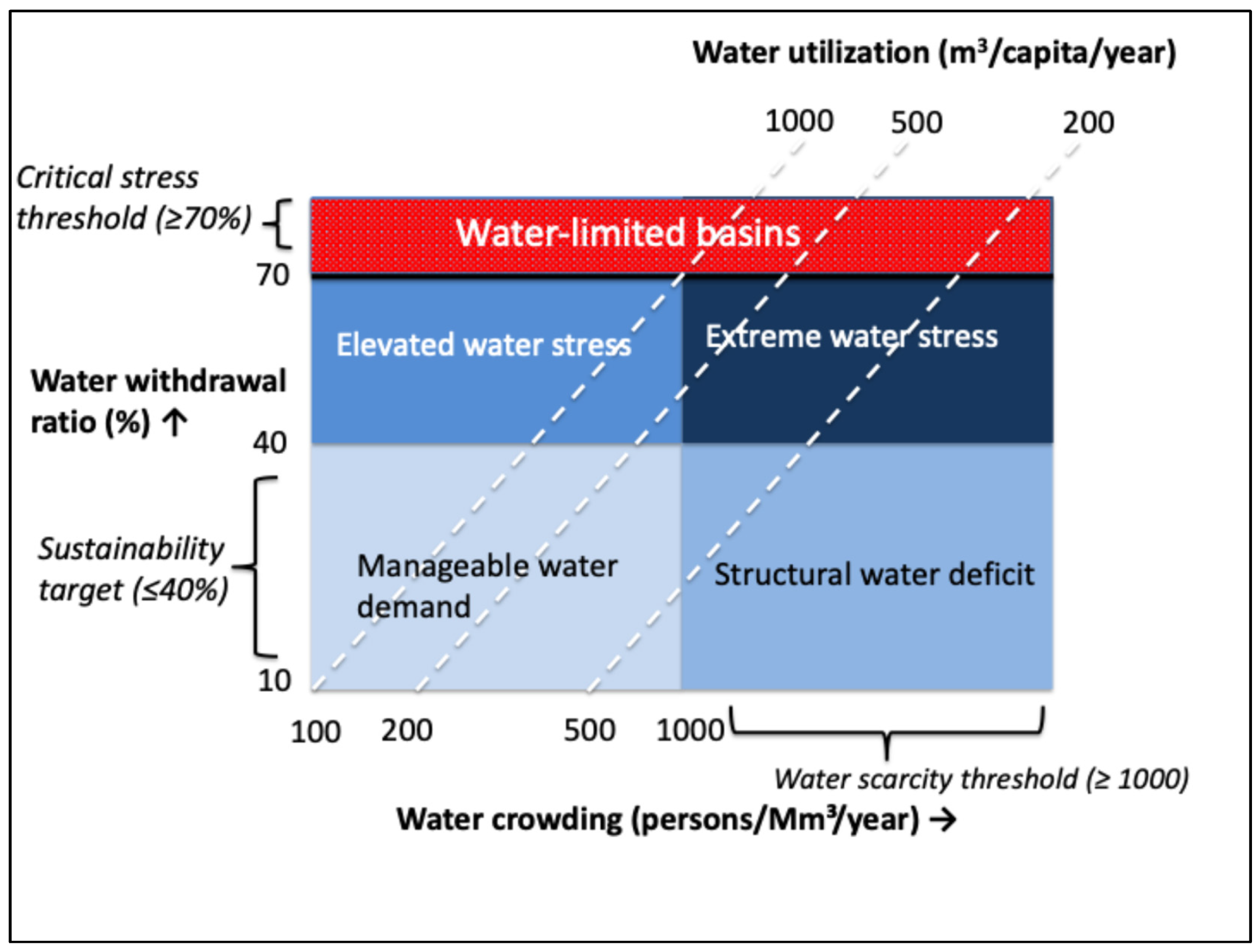
Moreover, in terms of exposure to climate, the blue water scarcity in Pakistan showcases the guidance by distinguishing regions with blue water scarcity dilemmas [16]. The paper showcases that the lower right-hand area (Pakistan), as per the Falkenmark approach to blue water scarcity in the figure, hosts a highly crowded basin, i.e., the Indus basin. In this position, there are high water shortages and overpopulated basins.
In this context, the Indus River basin vulnerability and its exposure to climate change have highly impacted the water geography of POJK, which invariably will flag the deteriorating hydro-relations between India and Pakistan.

3.1. Indus Waters Negotiations and Politicization

Following Independence in 1947, discord arose between India and Pakistan over utilizing the Indus waters. The World Bank played a significant role in making the IWT viable and came up with a proposal after long negotiations (see Table 2). Concluded in Karachi on 19 September 1960. Under the terms of the Treaty, India was granted control over the three eastern rivers (Ravi, Beas, and Satluj) with an average annual flow of 33 million acre feet (MAF). At the same time, Pakistan was given access to an average of around 135 MAF of water from the western rivers (Indus, Chenab, and Jhelum) [17].
A long-established treaty has taken a great turn in the previous year 2025. In response to the Pahlagam terror incident of 2025, India has put the IWT in abeyance [19]. The decision on abeyance resulted from Pakistan’s involvement in a terror incident and failure to uphold the Treaty’s sanctity. In return, the National Assembly of Pakistan categorically rejects any baseless linkage of Pakistan to the Pahalgam attack [20].
Later, India carried out this operation to neutralize only terrorist infrastructures in Pakistan and POJK [21]. Although both countries opted for a ceasefire after the furious battle at the India-Pakistan border areas [22]. However, both countries are still wrangling over the Indus politicization. Recently, on 17 January 2026, Pakistan expressed serious concern over India’s holding the Treaty in abeyance [23]. Moreover, on 20 January 2026, Pakistan’s Acting Permanent Representative to the United Nations, Ambassador Usman Jadoon, remarked on the Indus abeyance and its threat to water security and regional stability at the Global Water Bankruptcy Policy Roundtable hosted by the Permanent Mission of Canada and the United Nations University [24]. Consequently, this political complexity between the two countries has added complexity to both the Indus Waters and public discourse in the respective countries. According to the findings, more than half of the articles and news stories about the IWT showed it in a negative light. The results also show that more than half of the media coverage in both India and Pakistan on all platforms was very worried about the IWT. Overall, it showcases that both countries have a high involvement in polarizing the Indus waters issue as a national threat concern.
The polarization of the Indus Waters has compromised the POJK water security effectively [25]. Given the haggling over the Indus Basin and in search of more hydroelectric power, the polarization has led to the hydro competition over the Indus waters, which ultimately worries the local livelihood, especially the POJK livelihood. For instance, on 5 October 2025, the Locals were furious that Pakistan’s massive projects like the Mangla Dam in the POJK region generate power from their land and rivers, yet they are unable to get the benefits [26]. Moreover, People in the region have protested what they think is the unfair use of energy resources by the Pakistani government in POJK. Instead of a major hydropower region, frequent power outages were a big reason for the protests, and residents said they were caused by unfair power distribution. Protesters said that Pakistan makes about 3500 megawatts of electricity from POJK hydropower but only gives the area about 400 megawatts in return [27]. Many people said this unfairness was insulting and asked for a bigger share of the electricity that comes from their area.
Consequently, the POJK region is grappling with governance fragmentation, unequal infrastructure access, marginalization of local concerns, and the disconnect between local vulnerability and basin-scale politics. The Pakistan government’s centralized policies and transboundary hydro competition are making the hydropower-rich POJK a vulnerable region. Within this green political framework, the solution to this vulnerability may lie in the adoption of a deep ecological approach.

3.2. The Deep Ecological Approach: An Answer to POJK Water Vulnerability

If we focus on the significant perspective that lies within the green political theory, Pakistan, especially the POJK, needs a big ecological change that treats all species as having equal rights to live and thrive. There are several contradictory courses of action in the water policy and governance case of Pakistan. The problem of climate change, blue water scarcity, and hydro-political complexity between India and Pakistan showcases the POJK water vulnerability. Within this green political framework, it is in the best interest of Pakistan to adopt a deep ecological policy framework to mitigate this complex water vulnerability in the region. Several reasons could support this framework. First, in its broader philosophical framework, it supports the interconnectedness and interdependence of nature and humans [28]. For instance, it is significant to have this philosophical understanding to save the diverse and crucial ecological system of POJK. Without underestimating the philosophical nature of this political ideology, a state can adopt this framework by valuing the intrinsic worth and rights of both nature and people. Scholars, like Naess and George Sessions, have helped in formulating the guiding principles of the deep ecology platform for environmental action and advocacy [29]. Therefore, in detail, to support this call for deep ecology, the case of Pakistan’s complex water vulnerability in POJK has been largely discussed in the next discussion section.

4. Discussion

The POJK region has been a long-disputed region. The region has limited self-governance, but Islamabad makes decisions about defense and other important issues. Among these significant issues, the Indus River’s headwaters, which are very important to Pakistan’s agriculture and economy. Pakistan’s agriculture sector contributes around 23 per cent to the Gross Domestic Product (GDP) and employs 37.4 per cent of the national labor force. About 70 per cent of Pakistan’s exports are directly or indirectly derived from agriculture [30]. Moreover, the China–Pakistan Economic Corridor, which goes through POJK and connects Xinjiang with ports on the Arabian Sea, has made China’s presence bigger. Chinese-funded energy and infrastructure projects, which are guarded by Chinese troops, make Indians more worried about their sovereignty and change the strategic situation in the region [31].
Amid all this geopolitical complexity, people in the POJK are more concerned about the exploitation of water resources and environmental destruction [32]. This makes the communities in POJK vulnerable to competition between great powers over common resources, such as the Indus Basin, and worsens the environment and livelihoods in POJK [33].

4.1. The Environment and Livelihoods in POJK: A Case of Hydropower Crisis

The POJK region faces a hydropower crisis where the Pakistan government is using the region’s rivers for its own benefit. The gravity of this negligence can be seen in decades of natural resource exploitation, where people protest for the environmental ruin caused by the government’s environmental policies. For instance, the building of a massive hydropower Mangla dam had affected 280 villages and displaced over 1 lakh people from Azad Kashmir [34]. In return, people from the region had to use their own electricity at a higher tariff than those in Pakistan’s provinces [35].
The exploitation does not end here, such as the Neelum-Jhelum Hydropower Project, commissioned in 2018. Muzaffarabad, the capital of Azad Kashmir, residents had protested against the project after seeing vulnerable fish habitats and reduced river flow [36]. The project was shut down in mid-2022 due to a tail race tunnel collapse [37]. Moreover, the project was declared a failure by the Auditor-General of Pakistan in a scathing performance audit completed for the 2022–2023 fiscal year [38].
In addition, the 1124 MW Kohala hydropower project along the Jhelum River, a tributary of the Indus River, had also faced a major protest from Muzaffarabad. This project is a major part of the China-Pakistan Economic Corridor (CPEC) [39]. The main concern was the reduction in the water supply. People from Muzaffarabad believed that the environmental impacts of the Kohala dam project seemed similar to the Neelum Jhelum hydropower project. In anger and despair, people called for the adoption of micro hydro projects instead of building large dam projects [40]. Therefore, the government needs a sustainable water infrastructure and an extremely deep ecological approach to save the extreme valued water resources in the green capital of Pakistan.

4.2. State of Water Infrastructure in POJK

The POJK region is blessed with enormous water resources. The Indus Basin is the principal watercourse flowing through PoJK, Punjab, and Sindh. Before draining into the Arabian Sea, the river stretches for 2880 km and is fed by numerous tributaries, some originating in India and others in Khyber-Pakhtunkhwa and Balochistan in the west.
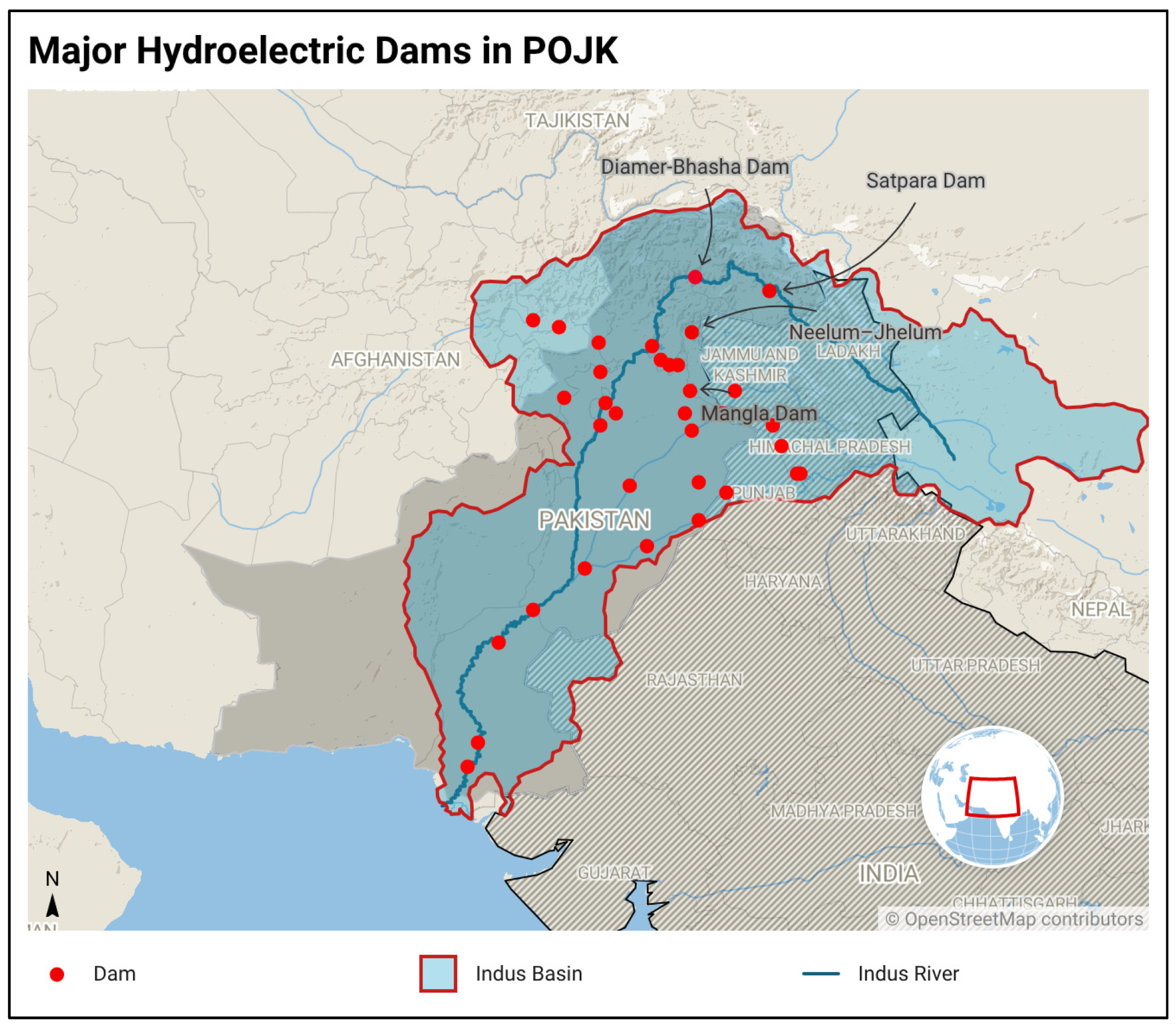
To manage these enormous hydro-resources, Pakistan has invested in water infrastructure development (see Figure 2). Among all the major and minor infrastructures in POJK, the Mangla, Neelum-Jhelum, Satpara, and Diamer-Bhasha hydroelectric dams have received significant attention for their robust water management systems.
In POJK, hydropower development in Azad Jammu and Kashmir (AJK) spans a wide range of project types, from large grid-connected schemes with basin-level influence to small run-of-river installations serving remote valleys (See Table 3). The evaluation of AJK hydropower infrastructure indicates divergent political economies among various project categories. China–Pakistan Economic Corridor (CPEC) hydropower projects have a great outside influence, which ties AJK’s hydropower development to a larger geopolitical picture that includes China, Pakistan, and the power dynamics in the region. Domestic private Independent Power Producers (IPPs) work through commercial politics that involve incentives and negotiations with regulators. At the same time, AJK Power Development Organization (PDO)’s projects that are paid for by the government reflect local and provincial stories of development, which are often linked to promises of welfare and the political legitimacy of local leaders. These differences show that hydropower projects are not just infrastructure; they are also places where different political actors with different interests, stories, and constituencies can talk to each other. The IWT-aligned perspective also adds a political layer that crosses borders by separating hydropower projects that have a real impact on basin hydrology from those that do not. Large run-of-river projects with substantial discharge and pondage possess evident hydrological significance within the Indus system, thus integrating into transboundary water discourse, regardless of direct legal associations. Consequently, this hydropower assessment illustrates how hydropower development in AJK is not merely an infrastructure or technical planning challenge, but a deeply political process shaped by power, incentives, governance structures, and strategic interests.
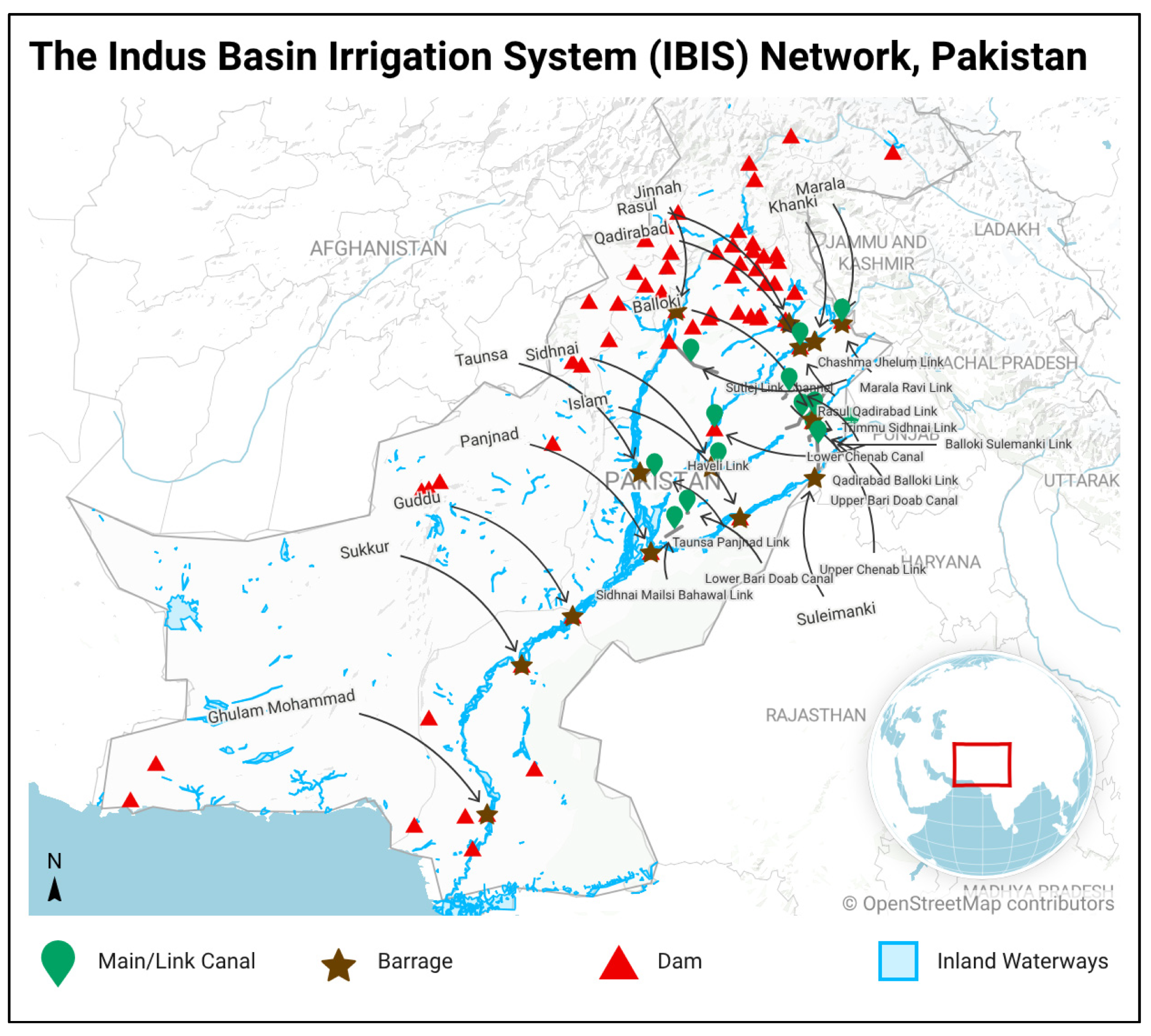
In addition, on the part of hydropower development in Gilgit-Baltistan (GB), “about 302 project sites with a total capacity of 21,162.35 MW were identified, having high, medium, and small heads. Out of these, 123 projects are in operation, 30 projects are being processed/implemented under the public sector, and one is in the private sector. Except for Diamer Basha and Skardu dam, most of these sites are run-of-river, with some having daily pondage for peaking” [43]. The GB region is often regarded as the ‘water reservoir of Pakistan’ [44]. The POJK region is also known for its robust irrigation and canal system. The Indus Basin Irrigation System (IBIS) covers most of the irrigation system in both AJK and GB (see Figure 3).
However, instead of well-established water infrastructure in the POJK, the region still grapples with severe problems like water scarcity and electricity shortage [46]. The POJK region is a major source of freshwater for Pakistan. However, the current looming water scarcity is a significant challenge exacerbated by the increasing population, governance, and climate change. According to the United States Census Bureau report 2025, Pakistan’s population has crossed 250 million at midyear [47]. POJK covers nearly 3 per cent (6,542,994) of the total population at midyear [47]. These statistics trend showcases Pakistan as a growing populous country in the midst of rising climate change concerns. It is clearly visible in the scarce water and failing irrigation system in Pakistan.

4.3. Water Scarcity and Climate Change in Pakistan

Water scarcity is a grim situation in Pakistan. The country ranks among the countries with the highest water risk in the world. A study by the Pakistan Institute of Development Economics (PIDE) noted that “the country ranks 14th among the 17 ‘extremely high-water risk’ countries in the world, a list that includes hot and dry countries like Saudi Arabia. Over 80 per cent of the total population in the country faces ‘severe water scarcity’ for at least one month of the year” [48]. Moreover, the recent Water Atlas report has clearly and likely predicted that this situation will worsen further in 2050 (see also Figure 4) [49].
To understand the nuances of water insecurity in Pakistan, it is beneficial to explore the blue water scarcity dimension in the region. Two categories of water can be scarce, i.e., Green Water and Blue Water. Green water has rain or precipitation as a source, while blue water has rivers and lakes as aquifers. Pakistan, especially POJK, is very much grappled with the blue water scarcity as the Indus Basin is its main aquifer in the region. Population-driven scarcity and demand-driven scarcity are two key factors that determine the level of blue water scarcity. Population-driven scarcity, also known as water crowding, occurs when an increasing number of people depend on a fixed amount of water. Demand-driven scarcity, also known as the water withdrawal ratio, occurs when the mobilization of even more resources becomes increasingly difficult and costly. Pakistan is a water-scarce country with per capita water availability at only 930 cubic meters per annum [50]. Moreover, as per the annual freshwater withdrawals, 2021, Pakistan stands at 264.19 billion cubic meters [51]. Putting all this together, based on the ‘Falkenmark approach to blue water scarcity’, Pakistan can be classified as a region experiencing extreme water stress/yr in water crowding and a water utilization of 1000 p/Mm3/yr, which is also highly sensitive to both drought and floods, as indicated by the diagonal water use line at 200 m3/p/yr (see Figure 5) [16]. To explain the figure, “thresholds at 40 per cent and 70 per cent distinguish sustainable conditions from critical stress levels, while a vertical threshold at approximately 1000 persons per Mm3 (equivalent to about 1000 m3 per capita per year) marks the transition into water scarcity. Diagonal lines represent constant levels of per capita water availability, integrating both resource availability and usage intensity. The lower-left region reflects manageable water demand within sustainable limits, whereas the upper-right region indicates extreme water stress and structural water deficit conditions” [16].
Specifically, the case of the Indus waters in Pakistan flags the worrisome case of blue water scarcity. Pakistan is very much dependent on the Indus Waters. It has been clearly noted that “the Indus Basin aquifer has been ranked as the 2nd most over-stressed underground water reserve in the world. The strain on groundwater is very disturbing. Over 60 per cent of irrigation, 70 per cent of drinking water, and 100 per cent of the industry in the country depend on it” [48]. Besides the worrisome groundwater availability, the water quality is facing a major clean water crisis in Pakistan. A study revealed that the overall quality of the water had been found unsafe [52].
Moreover, climate change in Pakistan has posed a great threat to water resources. With a combination of increasing temperature, rainfall variance, and the melting of glaciers, Pakistan has faced an innumerable number of climate change events, such as flash floods. It is quite evident that “Pakistan is among the top 10 countries in the global climate risk index, highlighting the climate vulnerability from extreme events” [53]. Pakistan, as an example, has been the most affected country in 2022 due to its worst floods ever recorded. It has been nearly USD 15 billion in damage, with 1700 fatalities and 816,800 people internally displaced. The impact is likely to exacerbate existing gender inequalities, revealing serious disparities in education, decision-making, and employment [54].
Specifically, climate change events (like glacial lake outburst floods (GLOF)) are a major phenomenon in the POJK. Recently, on 22 August 2025, a GLOF in the northern region of Pakistan, like the GB region, was a showcase of the great cascading dangers of climate change. It damaged a high number of houses and blocked the flow of the river, which ultimately threatened more flood events for communities living nearby [55]. The more concerning thing is that Pakistan is highly vulnerable to GLOF, with the presence of over 3000 glacial lakes in the country’s northern mountain ranges (UNDP, 2022). Among the 3000 glacial lakes, 30 are susceptible to GLOFs [53].
The uncertainty surrounding these climate changes itself is a critical governance challenge, reinforcing the need for adaptive, precautionary, and ecologically sensitive approaches to water security in the wider Indus basin [56]. It is pertinent for the Pakistani government to have a sustainable water management system. Pakistan is facing major problems with the operation of water governance policies. The operational mechanisms of these policies, like the National Water Policy (2018), the National Climate Change Policy (2021), and the National Sanitation Policy (2006), are vague. Planning that is broken up between water, climate, disaster risk, and urban development sectors makes them less effective because of their unintegrated approach. At the federal level, several groups, such as water, climate, research, and disaster authorities, are in charge of operational activities [57]. At the provincial level, agencies are in charge of making sure that services are delivered on the ground. These institutions still do not work inclusively, and platforms like the National Water Council that are meant to bring their efforts together are not used very well [57].
Moreover, even though donors and civil society are more involved, local communities still do not have a lot of opportunities to participate in a meaningful way [57]. For instance, in Skardu, “WAPDA’s act of modernization, Sadpara Dam, the city’s only water storage facility, has brought great concern to the locals. The local government could not hold WAPDA because of its colossal influence. Now, Skardu has a dam with an extensive irrigation network and a 10 MW power capacity, but there is no water” [58]. The thing is that highly centralized decision-making on the climate change wicked problem needs local knowledge and decentralized democratic decision-making in Pakistan [59].
In addition, water governance institutional reforms or climate resilience are even worse because of financing concerns, since funding levels are far below what is needed for the long term. Consequently, to close the gap between what policies are meant to do and what they actually do, there needs to be better coordination, more capacity, and a clear plan for financing dilemmas. However, water (in)security in POJK cannot be comprehended in isolation; it must be contextualized within the dynamics of transboundary hydro-political rivalries between India and Pakistan.

4.4. Hydro-Political Complexity Between India and Pakistan

Following Independence in 1947, discord arose between India and Pakistan over utilizing the waters in the Indus Basin. The World Bank played a stellar role in making the IWT viable. Under the terms of the Treaty, Pakistan received most of the water volume, accounting for 80.05 per cent, while India was allotted only 19.95 per cent [60]. The POJK, as a significant vector, plays a key role in the politics of the Indus waters sharing between India and Pakistan. For example, Pakistan’s building of hydropower projects on the Neelum-Jhelum River system has caused problems both within POJK, where local communities say they get little benefit from these projects, and across the Line of Control, where India sees them as breaking treaty obligations [58]. Both countries are nowhere on the back foot to blame each other for the political maneuvering over water. The recent haggling over Indus waters is a major example of so-called “maneuvering” [61]. In this context of India’s recent decision to put the Indus IWT in abeyance after the Pahalgam terror attack, the vision “Blood and Water cannot flow together” spread like wildfire in India because India has been a long-time witness to Cross-border terrorism from Pakistan [62].
In return, the National Assembly of Pakistan unequivocally condemns terrorism in all forms and mourns the killing of innocent civilians, reaffirming that it contradicts national values. It categorically rejects any baseless linkage of Pakistan to the 22 April 2025, Pahalgam attack in Indian Illegally Occupied Jammu and Kashmir. It strongly opposes India’s unilateral suspension of the IWT, branding it a grave violation and an act of war [20]. Former Pakistan Finance Minister Bilawal Bhutto-Zardari warned that blood and water would flow together if India stopped the Indus waters [63]. Moreover, the Pakistan army has also accused India of striking Pakistan’s Neelum-Jhelum hydropower infrastructure during India’s “Operation Sindoor”. It happened after Indian Prime Minister Narendra Modi’s announcement on stopping the Indus waters [64]. However, India has carried out this operation to neutralize only terrorist infrastructures in Pakistan and POJK [21]. Although both countries opted for a ceasefire after the furious battle at the India-Pakistan border areas, there was no mention of the resumption of the Indus waters [65].
Consequently, political misunderstandings between the two countries have added complexity to the water relations, which have otherwise been resolved mutually under the IWT. While the IWT has been a positive outcome of an otherwise challenging bilateral relationship, it remains a contentious issue between the two countries. India’s actions and Pakistan’s counteractions have made the Indus waters a case of politicization.

4.5. Toward Green Political Approach: Need for Deep Ecological Change

Pakistan (including Azad Jammu and Kashmir) faces significant water scarcity challenges despite abundant water resources in the region. Instead of having enormous hydro resources, Pakistan is now facing critical water shortages due to a lack of storage facilities, poor governance, and climate change impacts [66]. It is quite evident from the above discussion that water insecurity in POJK needs green politics to emerge as a counter to these bugbears, highlighting the need for the ethical obligation to maintain ecological balance. It promotes an ecocentric worldview that sees how people and the ecosystem depend on each other. This deep ecological framework is grounded in ecological justice, intergenerational equity, sustainability, and participatory governance.
A deep ecological approach in the context of water insecurity in POJK should be understood not merely as a normative principle, but as a practical governance framework that integrates ecological sustainability, social equity, and long-term resilience into water policy. In operational terms, this would require more inclusive and localized water governance, stronger environmental oversight of hydropower and related infrastructure, and context-specific planning for vulnerable mountain communities. For example, watershed-level community committees could support decisions on drinking water access, small-scale irrigation, and decentralized rainwater harvesting, which could enhance local water resilience in environmentally fragile areas. These kinds of sustainable models have worked well in regions like Finland, where community–led watershed projects bring together sustainability and social inclusion. Finland has made progress in water cooperation by getting six ministries to agree to work together on the ‘Finnish Water Way’ [67]. This is a broad international water strategy that encourages collaboration between different sectors of society.
Similarly, more rigorous environmental assessment of dam and hydropower projects would help ensure that ecological impacts and livelihood concerns are more systematically addressed. Taken together, these measures would shift water governance beyond a narrow infrastructural or geopolitical focus toward a more participatory, ecologically grounded, and socially just deep ecological approach to water security. Deep ecology advocates a comprehensive perspective that highlights interconnectedness and interdependence, acknowledging humanity as merely one element of the natural entirety. It redefines ethical thinking by grounding morality in nature itself, drawing inspiration from a wide range of sources, including eastern philosophies like Buddhism and Taoism, and pre-Christian spiritual traditions like the Gaia hypothesis [68].
In the broadest sense, it is about people having long-term access to sufficient clean water for their health, their jobs, and the health of the ecosystem, while also ensuring that people are less likely to be harmed by water-related disasters, such as floods and droughts. However, due to hydro-political competition in both the global and regional settings, water has often been viewed as a commodity rather than a common good. For instance, the hydropolitics between India and Pakistan has made the POJK’s water insecurity more vulnerable to adopting sustainable water solutions. Pakistan wants to exploit the disputable region’s water resources as much as it can. In the longer run, it adds a heavy acceleration to the ongoing hydro-political competition between India and Pakistan, which invariably affects both the people of POJK and Pakistan who suffer most. The Green politics fundamentally contests this hydropolitical competition, asserting that water cannot be regulated exclusively by human benefits without endangering ecological systems and social equity. In this context, green politics views water insecurity not just as a technical or economic issue but as a moral and political pursuit centered on a sustainable framework. It envisions a scenario where people cooperate to care for water within the environmental limits. By integrating ecological justice into political frameworks, green politics establishes the humanistic perspective for securing water in sustainable terms.

5. Conclusions

In the POJK region, various pressures act together to affect water security. Water scarcity in POJK poses serious threats to Pakistan’s overall water security. The above studies show that the area is very likely to experience long-term water stress. Conditions in the Indus Basin, which is one of the most densely populated river basins in the world, make these pressures worse. There is a lot of demand, shortages are common, and water resources are getting more and more stretched. At the same time, climate change is affecting the POJK’s water geography by changing water flows and melting glaciers. These trends can make things worse between India and Pakistan and make their hydro-relations even worse. POJK is located in a geopolitically disputed area, which makes it harder for India and Pakistan to work together to manage transboundary water resources. Therefore, the water (in)security in POJK is not only a humanitarian issue, but it could also lead to instability in the region as a whole. To deal with these risks, it needs to make water infrastructure sustainable and improve governance by adopting a deep ecological policy approach that considers both domestic and transboundary waters as a living entity.

Supplementary Materials

The following supporting information can be downloaded at: https://www.mdpi.com/article/10.3390/w18070768/s1, Table S1: Annual Development Programme 2024–2025, AZAD Jammu and Kashmir; Table S2: Public Sector Projects, AJK Power Development Organization; Table S3: Short Term Plan 2024–2026, AJK Power Development Organization; Table S4: MidTerm Plan 2025–2030, AJK Power Development Organization; Table S5: Long Term Plan 2030–2035, AJK Power Development Organization; Table S6: On Going Projects, AJK Power Development Organization; Table S7: In Operation Projects, AJK Power Development Organization; Table S8: CPEC Projects, AJK Power Development Organization; Table S9: Projects Under Process, AJK Power Development Organization.

Funding

This research received no external funding.

Data Availability Statement

The original contributions presented in this study are included in the article. Further inquiries can be directed to the corresponding author.

Conflicts of Interest

The author declares no conflicts of interest.

References

  1. United Nations. Water—At the Center of the Climate Crisis. Available online: https://www.un.org/en/climatechange/science/climate-issues/water (accessed on 2 January 2026).
  2. HKH Snow Update 2024; ICIMOD: Patan, Nepal, 2024; Available online: https://lib.icimod.org/records/makn6-whe20 (accessed on 1 January 2026).
  3. Li, X.; Long, D.; Scanlon, B.R.; Slater, L.J. Retrievals and simulations of terrestrial water storage changes and runoff over the Tibetan Plateau: Challenges and opportunities. Fundam. Res. 2025; in press. [Google Scholar] [CrossRef]
  4. Biemans, H.; Siderius, C.; Lutz, A.F.; Nepal, S.; Ahmad, B.; Hassan, T.O.; Bloh, W.V.; Wijngaard, R.R.; Wester, P.; Shrestha, A.B.; et al. Importance of snow and glacier meltwater for agriculture on the Indo-Gangetic Plain. Nat. Sustain. 2019, 2, 594–601. [Google Scholar] [CrossRef]
  5. Madani, K. Global Water Bankruptcy: Living Beyond Our Hydrological Means in the Post-Crisis Era; United Nations University Institute for Water, Environment and Health (UNU-INWEH): Richmond Hill, ON, Canada, 2026; Available online: https://collections.unu.edu/eserv/UNU:10445/Global_Water_Bankruptcy_Report__2026_.pdf (accessed on 21 February 2026).
  6. ICIMOD. The Indus Basin Initiative. Available online: https://www.icimod.org/initiative/indus-basin-initiative/#:~:text=The%20mighty%20Indus%20River%20is,Kush%2C%20Karakoram%2C%20and%20Himalaya (accessed on 25 December 2025).
  7. The Indus Waters Treaty; United Nations: New York, NY, USA, 1960; Available online: https://treaties.un.org/doc/Publication/UNTs/Volume%20419/volume-419-I-6032-English.pdf (accessed on 10 November 2025).
  8. Singh, A.K. PoJK Unrest: Grievances Run Deep–Analysis. Eurasia Rev. 2025. Available online: https://www.eurasiareview.com/07102025-pojk-unrest-grievances-run-deep-analysis/#:~:text=In%20the%20early%202000s%20and,diverse%20professional%20groups%20across%20districts (accessed on 3 January 2025).
  9. Boston, P.J. Gaia hypothesis. In Encyclopedia of Ecology; Academic Press: Cambridge, MA, USA, 2008. [Google Scholar] [CrossRef]
  10. Descartes, R. A Discourse on Method; The Project Gutenberg: Online, 1995; Available online: https://www.gutenberg.org/files/59/59-h/59-h.htm (accessed on 20 November 2025).
  11. Naess, A. The shallow and the deep, long-range ecology movement. A summary. In The Ethics of the Environment; Routledge: London, UK, 2017; pp. 115–120. [Google Scholar]
  12. Bookchin, M. The Ecology of Freedom; New Dimensions Foundation: Naperville, IL, USA, 1982; p. 232. [Google Scholar]
  13. Merchant, C. Gaia: Ecofeminism and the Earth. In Earthcare; Routledge: London, UK, 2014; pp. 3–26. [Google Scholar]
  14. Lankford, B.; Bakker, K.; Zeitoun, M.; Conway, D. Water Security: Principles, Perspectives and Practices; Earth Scan; Routledge: London, UK, 2013. [Google Scholar]
  15. Varis, O.; Kummu, M.; Salmivaara, A. Ten Major Rivers in Monsoon Asia-Pacific: An Assessment of Vulnerability. Appl. Geogr. 2011, 32, 441–454. [Google Scholar] [CrossRef]
  16. Falkenmark, M. The multiform water scarcity dimension. In Water Security. Principles, Perspectives and Practices; Lankford, B., Bakker, K., Zeitoun, M., Conway, D., Eds.; Routledge: London, UK, 2013. [Google Scholar]
  17. Ministry of Water Resources, River Development and Ganga Rejuvenation. Indus Waters Treaty 1960: Present Status of Development in India; Press Information Bureau: New Delhi, India, 2019. Available online: https://www.pib.gov.in/PressReleasePage.aspx?PRID=1565906&reg=3&lang=2#:~:text=The%20Indus%20system%20comprises%20of,design%20and%20operation%20is%20unrestricted (accessed on 25 November 2025).
  18. Wolf, A.; Newton, J.T. Case Study of Transboundary Dispute Resolution: The Indus Water Treaty. Available online: https://transboundarywaters.ceoas.oregonstate.edu/sites/transboundarywaters.ceoas.oregonstate.edu/files/Database/ResearchProjects/casestudies/indus.pdf (accessed on 27 January 2026).
  19. Ministry of External Affairs. Statement by Foreign Secretary on the Decision of the Cabinet Committee on Security (CCS); Government of India: New Delhi, India, 2025. Available online: https://www.mea.gov.in/Speeches-Statements.htm?dtl/39442/statement+by+foreign+secretary+on+the+decision+of+the+cabinet+committee+on+security+ccs (accessed on 25 November 2025).
  20. National Assembly of Pakistan. Resolutions: The National Assembly of Pakistan condemns terrorism in all its forms and manifestations and rejects all frivolous and baseless attempts to link Pakistan with the Pahalgam Attack of April 22, 2025, in Indian Illegally Occupied Jammu and Kashmir. The Government of Pakistan. 2025. Available online: https://na.gov.pk/en/resolution_detail.php?id=499 (accessed on 6 May 2025).
  21. Ministry of Defence. Operation Sindoor: Indian Armed Forces Carried out Precision Strike at Terrorist Camps; Press Information Bureau: New Delhi, India, 2025. Available online: https://pib.gov.in/PressReleasePage.aspx?PRID=2127370 (accessed on 7 May 2025).
  22. Ministry of External Affairs. Statement by Foreign Secretary (May 10, 2025); Government of India: New Delhi, India, 2025. Available online: https://www.mea.gov.in/press-releases.htm?dtl/39488/Statement_by_Foreign_Secretary_May_10_2025 (accessed on 11 May 2025).
  23. Press Information Department. PR No. 148: Federal Minister Rana Tanveer Hussain Highlights Pakistan’s Vision on Water, Food Security and Sustainable Irrigation at GFFA 2026. Ministry of Information and Broadcasting, Government of Pakistan. Available online: https://pid.gov.pk/site/press_detail/31639 (accessed on 17 January 2026).
  24. Statement by Ambassador Usman Jadoon, Acting Permanent Representative of Pakistan to the UN for the Global Water Bankruptcy Policy Roundtable. Permanent Mission of Pakistan to the United Nations, New York. Available online: https://pakun.org/official-statements/01202026-02 (accessed on 23 January 2026).
  25. The Star. Panic in Pakistan as India Vows to Cut off Water supply over Kashmir. YouTube. 27 April 2025. Available online: https://www.youtube.com/shorts/D88kiwp_Rag (accessed on 28 January 2026).
  26. Wion. Pakistan-Occupied Kashmir on The Boil, Again; Protest Across PoK. YouTube. 5 October 2025. Available online: https://www.youtube.com/watch?v=tf2xFvQjpZI (accessed on 28 January 2026).
  27. Wion. Anti-Pak protests in Pakistan-occupied Jammu and Kashmir. YouTube. 17 May 2024. Available online: https://www.youtube.com/watch?v=h6DyY03pdRQ (accessed on 28 January 2026).
  28. Naess, A. Ecology, Community and Lifestyle: Outline of an Ecosophy; Cambridge University Press: Cambridge, UK, 1989. [Google Scholar] [CrossRef]
  29. Naess, A.; Sessions, G. The basic principles of deep ecology. 1984. Available online: https://theanarchistlibrary.org/library/arne-naess-and-george-sessions-basic-principles-of-deep-ecology (accessed on 2 February 2026).
  30. Food and Agriculture Organization. Pakistan at a Glance. United Nations. Available online: https://www.fao.org/pakistan/our-office/pakistan-at-a-glance/en/ (accessed on 10 February 2025).
  31. Sinha, U.K.; Gupta, A.; Behuria, A. Will the Indus Water Treaty Survive? Strateg. Anal. 2012, 36, 735–752. [Google Scholar] [CrossRef]
  32. Bhat, A. Socio-Economic Situation in Pakistan-Occupied Kashmir and Gilgit-Baltistan. Himal. Cent. Asian Stud. 2013, 17, 52–60. Available online: https://www.himalayanresearch.org/pdf/2013/vol17-no1.pdf (accessed on 25 October 2025).
  33. Adeel, Z.; Wirsing, R.G. Imagining Industan; Springer International Publishing: Cham, Switzerland, 2017. [Google Scholar] [CrossRef]
  34. 7,000 Affected by Dam Project Demand Land and Cash. The Dawn, 11 April 2009. Available online: https://www.dawn.com/news/456611/7000-affected-by-dam-project-demand-land-and-cash (accessed on 10 February 2025).
  35. Work on Mangla Project Criticized. The Dawn, 12 March 2005. Available online: https://www.dawn.com/news/385048/work-on-mangla-project-criticized (accessed on 10 February 2025).
  36. Muzaffarabad Citizens Protest the Neelum-Jhelum Power Project. The Dawn, 17 September 2018. Available online: https://www.dawn.com/news/1433321 (accessed on 10 February 2025).
  37. Audit Declares Neelum Jhelum Hydropower Project a Failure. International Water Power and Dam Construction. Available online: https://www.waterpowermagazine.com/news/audit-declares-neelum-jhelum-hydropower-project-a-failure/?cf-view (accessed on 10 November 2025).
  38. The Auditor-General of Pakistan. Performance Audit of Neelum Jhelum Hydropower Project; Government of Pakistan: Islamabad, Pakistan, 2024. Available online: https://agp.gov.pk/SiteImage/Policy/PAR%20on%20NJHPP%20AY%202022-23.pdf (accessed on 11 November 2024).
  39. 1124MW Kohala Hydropower Project, AJK. CPEC Secretariat. Available online: https://cpec.gov.pk/project-details/23 (accessed on 5 January 2026).
  40. Ebrahim, Z. Protests Bring CPEC’s Kashmir Dam to a Halt. Dialogue Earth, 7 March 2019. Available online: https://dialogue.earth/en/water/protests-bring-cpecs-kashmir-dam-to-a-halt/ (accessed on 20 October 2025).
  41. Major Hydroelectric Dams in POJK. Available online: https://datawrapper.dwcdn.net/4pkmx/1/ (accessed on 18 March 2026).
  42. AJK Power Development Organisation. The AJK Power Project Portfolio. Government of Pakistan. Available online: https://ajkpdo.gok.pk/ (accessed on 8 December 2025).
  43. Private Power and Infrastructure Board (PPIB). Hydropower Resources of Pakistan; Ministry of Energy (Power Division), Government of Pakistan: Islamabad, Pakistan, 2022. Available online: https://www.ppib.gov.pk/publications/Hydropower_Resources%20Book_2022.pdf (accessed on 27 December 2025).
  44. Shimshali, A.R. Gilgit-Baltistan’s Energy Access. The News, 21 February 2023, Pakistan. Available online: https://www.thenews.com.pk/print/1042623-gilgit-baltistan-s-energy-access (accessed on 20 October 2025).
  45. The Indus Basin Irrigation System (IBIS) Network, Pakistan. Available online: https://datawrapper.dwcdn.net/Nl8pD/2/ (accessed on 19 March 2026).
  46. Hundreds protest power outages in Pakistan’s north for fifth consecutive day. Arab News, 7 January 2025. Available online: https://www.arabnews.com/node/2585548/amp (accessed on 20 December 2025).
  47. United States Census Bureau. International Databases-Population (Pakistan). Available online: https://www.census.gov/data-tools/demo/idb/#/trends?dashboard_page=country&COUNTRY_YR_ANIM=2025&CCODE_SINGLE=PK&subnat_map_admin=ADM1&CCODE=PK&menu=trendsViz&COUNTRY_YEAR=2025 (accessed on 30 December 2025).
  48. Maqbool, N. Water Crisis in Pakistan: Manifestation, Causes and the Way Forward; Pakistan Institute of Development Economics: Islamabad, Pakistan, 2022; Available online: https://pide.org.pk/research/water-crisis-in-pakistan-manifestation-causes-and-the-way-forward/ (accessed on 20 August 2025).
  49. Water Atlas 2025; Heinrich-Böll-Stiftung: Brussels, Belgium; Available online: https://eu.boell.org/en/WaterAtlas-PDF (accessed on 21 March 2026).
  50. Freshwater. Worldwide Fund (WWF), Pakistan. Available online: https://www.wwfpak.org/our_work_/water_/ (accessed on 21 December 2025).
  51. Annual Freshwater Withdrawal. Our World in Data. Available online: https://ourworldindata.org/grapher/annual-freshwater-withdrawals?mapSelect=~PAK&globe=1&globeRotation=29.91%2C69.23&globeZoom=2.5 (accessed on 22 December 2025).
  52. Guo, K. Pakistan Faces a Clean Water Crisis. Harvard Political Review, 17 January 2025. Available online: https://theharvardpoliticalreview.com/pakistan-water-crisis/ (accessed on 20 August 2025).
  53. Nanditha, J.S.; Kushwaha, A.P.; Singh, R.; Malik, I.; Solanki, H.; Chuphal, D.S.; Dangar, S.; Mahto, S.S.; Vegad, U.; Mishra, V. The Pakistan flood of August 2022: Causes and implications. Earth’s Future 2023, 11, e2022EF003230. [Google Scholar] [CrossRef]
  54. German Watch. Climate Risk Index 2025. 12 February 2025. Available online: https://www.germanwatch.org/sites/default/files/2025-02/Climate%20Risk%20Index%202025.pdf (accessed on 20 September 2025).
  55. Mahla, P.K. Monsoon flooding has killed hundreds in Pakistan—climate change is pushing the rainy season from blessing to looming catastrophe. The Conversation. 25 August 2025. [CrossRef]
  56. Water and Climate Change; United Nations. Available online: https://www.unwater.org/water-facts/water-and-climate-change (accessed on 26 December 2025).
  57. Asian Water Development Outlook 2025: The Index of Water Security for Asia and The Pacific; Asian Development Bank: Metro Manila, Philippines, 2025; pp. 224–232. Available online: https://www.adb.org/sites/default/files/publication/1103431/awdo-2025.pdf (accessed on 5 January 2026).
  58. Ranjan, A. Pakistan’s Water Resources: Availability Concerns, Inter-Provincial Disputes and Sub-Nationalism. In Challenge, Continuity, and Change in Pakistan, 1st ed.; Ranjan, A., Talbot, I., Eds.; Routledge: London, UK, 2025. [Google Scholar] [CrossRef]
  59. Mustafa, D. How water fuels conflict in Pakistan. The Conversation, 26 September 2025. Available online: https://theconversation.com/how-water-fuels-conflict-in-pakistan-262628 (accessed on 20 October 2025).
  60. Ministry of External Affairs. Indus Waters Treaty. Government of India. 19 September 1960. Available online: https://www.mea.gov.in/bilateral-documents.htm?dtl/6439/Indus (accessed on 20 May 2025).
  61. Mahla, P.K. China’s insertion into India-Pakistan waters dispute adds a further ripple in South Asia. The Conversation, 15 July 2025. [CrossRef]
  62. Wani, A. Pakistan’s Role in Kashmir’s Terrorism Challenge Post-2019; Observer Research Foundation: New Delhi, India, 2025; Available online: https://www.orfonline.org/research/pakistan-s-role-in-kashmir-s-terrorism-challenge-post-2019 (accessed on 3 September 2025).
  63. Anand, A. Our Water…or Their Blood: Former Pakistan minister Bilawal Bhutto warns India over Indus Waters Treaty. Livemint, 26 April 2025. Available online: https://www.livemint.com/news/india/pakistan-bilawal-bhutto-warns-india-either-our-water-will-flow-through-indus-or-their-blood-pahalgam-terror-attack-11745649123491.html (accessed on 22 May 2025).
  64. De Guzman, C. How India is threatening to weaponize water in conflict with Pakistan. Time, 7 May 2025. Available online: https://time.com/7283405/india-pakistan-kashmir-attack-water-rivers-dams-modi-weapon-war/ (accessed on 7 May 2025).
  65. Singh, S.C.; Patel, S.; Shahid, A. India-Pakistan water treaty remains suspended despite ceasefire, sources say. Reuters, 10 May 2025. Available online: https://www.reuters.com/world/asia-pacific/india-pakistan-water-treaty-remains-suspended-despite-ceasefire-sources-say-2025-05-10/ (accessed on 11 May 2025).
  66. Ishaque, W.; Mukhtar, M.; Tanvir, R. Pakistan’s water resource management: Ensuring water security for sustainable development. Front. Environ. Sci. 2023, 11, 1096747. [Google Scholar] [CrossRef]
  67. World Water Week. Water Cooperation: Lessons from Finland’s Approach; Stockholm International Water Institute: Stockholm, Sweden, 2024; Available online: https://www.worldwaterweek.org/news/water-cooperation-lessons-from-finlands-approach (accessed on 23 May 2025).
  68. Heywood, A. Global Politics; Palgrave Macmillan: London, UK, 2011. [Google Scholar]
Figure 1. Water Risks Across South Asia. Reproduced from Madani (2026), United Nations University Institute for Water, Environment and Health (UNU-INWEH). Source: [5].
Water 18 00768 g001
Figure 2. Major Hydroelectric dams in POJK. Created by the author using Datawrapper. A high-resolution interactive version is available in the Source: [41].
Water 18 00768 g002
Figure 3. The Indus Basin Irrigation System (IBIS) Network, Pakistan. Created by the author using Datawrapper from the GeoDAR dam data. The source of GeoDAR Dam data has been embedded in an interactive version of the figure. A high-resolution interactive version is available in the Source: [45].
Water 18 00768 g003
Figure 4. Water Stress in 2025 in Pakistan. Reproduced from Water Atlas 2025, Heinrich Böll Stiftung, licensed under CC BY 4.0. © Eimermacher/stockmarpluswalter Source: [49].
Water 18 00768 g004
Figure 5. The conceptual framework of blue water scarcity. Created by the author based on the conceptual framework of Source: [16].
Water 18 00768 g005
Table 1. A Lexis Nexis–based analysis on the IWT in Pakistan (2011–2025).
Type of MediaLanguageNo. of Articles or Media (Approx)Top Publication Media
Newspapers or Newswires, Press Releases or Magazines, Journals or Images or Web-based Publications or Scientific Materials or Abstracts, Indexes or Aggregate News Sources or Audio or Blogs or Cases, Organizations or Company Analyst Reports or Country & Region Reports or Court Transcripts or Government Questions & Responses or Guidelines & Notices, Law Bulletins or Law Directories or Law Reviews, Journals or Legal News or Legislation, Statutes, News or News Transcripts or Newsletters or Official Publications or Reference or Services or Statistics or Treaties, International Agreements or Video or Weblinks, other social mediaEnglish and Urdu15,000+The Nation,
The News International, The Dawn,
The Express Tribune, Daily Times, Pakistan News Gazette,
Pakistan Observer, Pakistan Press International
Note: Source: The author has collected the statistics from the Lexis-Nexis Software.
Table 2. Water allocations from Indus negotiations, in MAF/year.
PlanIndiaPakistan
Initial Indian Proposal29.090.0
Initial Pakistani Proposal15.5102.5
Revised Indian ProposalAll the eastern rivers and 7 per cent of the western riversNone of the eastern rivers and 93 per cent of the western rivers
Revised Pakistani Proposal30 per cent of the eastern rivers and none of the western rivers70 per cent of the eastern rivers and all of the western rivers
World Bank ProposalThe entire flow of the eastern riversThe entire flow of the western rivers
Note: Source: [18].
Table 3. The AJK power project portfolio.
Owner/TypeStatus/Time HorizonNumber of Projects
PDO PublicCompleted24
PDO PublicOngoing/Short-term/2024–20265
PDO PublicMid-term Plan (2025–2030)8
PDO PublicLong-term Plan/2023–20353
PDO PublicAvailable for Financing/looking for financiers8
Private (IPPs)Completed5
Private IPPsUnder-process (non-CPEC)16
Private IPPsCPEC/Priority CPEC projects; pre-financial close2
Note: Source: [42]. The full data information can be found in the Supplementary File.
Disclaimer/Publisher’s Note: The statements, opinions and data contained in all publications are solely those of the individual author(s) and contributor(s) and not of MDPI and/or the editor(s). MDPI and/or the editor(s) disclaim responsibility for any injury to people or property resulting from any ideas, methods, instructions or products referred to in the content.