1. Introduction
Water resources are essential for sustaining socioeconomic development and ecological stability [
1,
2]. Rapid economic growth and urbanization have exacerbated the imbalance between ever-increasing water demand and sustainable water resource supply [
3], and this imbalance is becoming a key bottleneck for regional sustainable development [
4]. Water resource carrying capacity (WRCC) [
5] has emerged to assess the complex interplay between water availability, socioeconomic activities, and ecological conditions within a region, and WRCC can also be used to identify key constraints in regional development and management optimization, and provide a scientific foundation for achieving sustainable development goals [
6].
Existing WRCC research encompasses four key aspects: indicator system design, weighting method implementation, assessment model development, and driving factor analysis. In the past few years, PSR (Pressure–State–Response), DPSIR (Driving Force–Pressure–State–Impact–Response), and DPSIRM (DPSIR–Mechanism) have been widely used frameworks for structural evaluation of various systems across water resource, social–economic, and ecological environment subsystems [
7,
8,
9,
10,
11].
Weight determination methods are commonly categorized as objective, subjective, and comprehensive weighting approaches. Objective methods, such as entropy weight [
4] and CRITIC [
12], rely on data characteristics but often overlook contextual importance, limiting their ability to identify key indicators [
13]. In contrast, subjective methods like Analytic Hierarchy Process (AHP) [
14] incorporate expert knowledge but are susceptible to cognitive bias [
15], suffering from a lack of objectivity. Comprehensive weighting methods, such as AHP–entropy integration, could more or less balance these strengths and uncertainties [
13,
16]. However, even integrated weighting is typically applied within static assessment frameworks [
17,
18] and seldom coupled with system dynamics to reflect indicator evolution over time.
A range of evaluation methods are employed for WRCC assessment, from multi-criteria techniques like fuzzy comprehensive evaluation [
19], TOPSIS [
20], the ecological footprint method [
21], BP neural networks [
22,
23], and VIKOR to a cloud model [
24]. Each method illustrates its strengths while showing weaknesses. For example, VIKOR is valued for its stability and interpretability in handling conflicting indicators through compromise programming. To overcome the limitations of single methods and enhance assessment accuracy [
17,
24], hybrid evaluation frameworks have been developed. However, a significant drawback of those methods is their predominantly static nature and lack of ability to simulate the dynamic mechanisms inherent in a system, for example, in water resource systems. To overcome the shortcomings of the above methods, SD has emerged as a robust tool because it excels at modeling nonlinear relationships, multi-level feedback processes, and temporal evolution within complex systems [
25,
26]. SD can elucidate intrinsic driving mechanisms and facilitate scenario comparisons [
27,
28].
Yet, current research seldom effectively integrates the dynamic simulation strengths of SD with comprehensive multi-criteria evaluation methods like VIKOR. This disconnect limits dynamic, scenario-based WRCC assessments, which are both mechanism-driven and holistically evaluated.
To determine the drivers and constraints of WRCC, various diagnostic methods are applied, including spatial econometric models [
29], geographically weighted regression (GWR) models [
30], and geographical detectors to quantify driving mechanisms and spatial heterogeneity [
31,
32]; obstacle degree models to identify limiting factors [
9,
33]; and coupling coordination degree models to evaluate subsystem synergies [
34,
35]. While individually valuable, these diagnostic tools are often employed in isolation. This disconnect limits a holistic understanding of how specific factors impede overall system coordination and evolution. The critical gap exists in integrating them into a coherent analytical chain that systematically links identification of constraints (obstacles) with quantification of their drivers (geographical detector) and assessment of their systemic impacts (coupling coordination). Despite these advances, persistent limitations hinder a comprehensive and actionable understanding of WRCC, particularly in complex, water-stressed basins. (1) While SD excels at simulating dynamic feedback, it lacks intrinsic optimization capability. Conversely, multi-criteria methods like VIKOR offer robust static evaluations but seldom incorporate the temporal dynamics inherent in water resource systems. Effective coupling of these approaches remains an underexplored technique and enhances the accuracy and practicability of WRCC evaluation. However, it seldom incorporates dynamic feedback processes among subsystems. In contrast, SD modeling provides a robust framework for capturing the complex, nonlinear interactions and time-dependent behaviors within the WRCC system. (2) Many studies focus on evaluating the composite WRCC level but lack a systematic diagnostic chain that links evaluation results to specific obstacle factors, quantifies the drivers of spatial heterogeneity, and evaluates the coordination among subsystems. This gap limits interpretability of results and their utility for targeted policy intervention. (3) Research often concentrates on broad administrative unit scales, with insufficient attention to ecologically sensitive and strategically vital water conservation zones, which face the most acute water security challenges [
36]. The Gansu section of the Yellow River Basin (GSYRB) epitomizes these challenges. As a critical water conservation area and ecological security barrier in China’s arid northwest [
37], it is characterized by scarce and unevenly distributed water resources, mounting ecological pressures, and escalating water security risks, making it an urgent and ideal case for study.
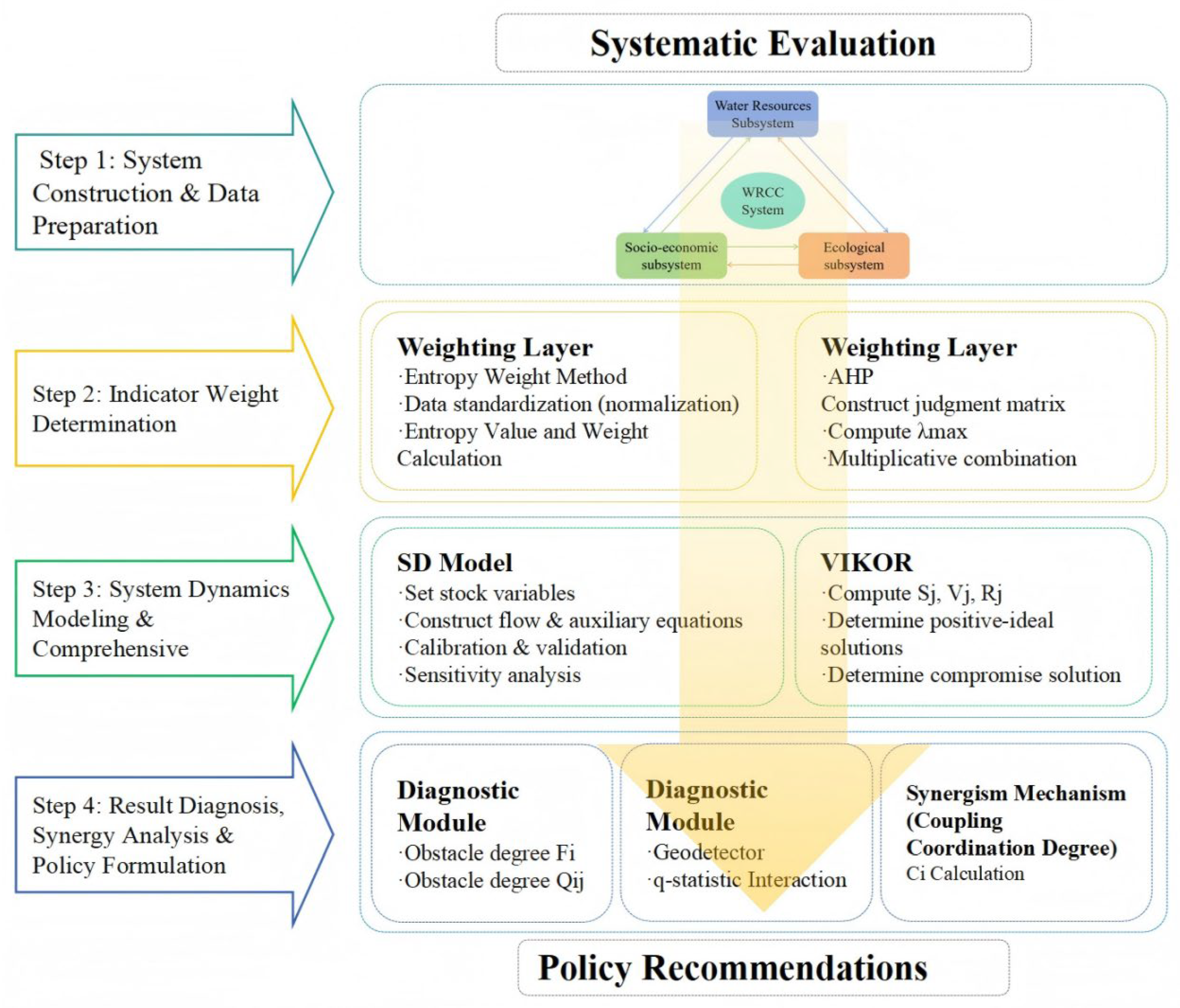
To address these gaps, this study proposes an integrated WRCC assessment framework for the GSYRB. We couple SD simulation with a hybrid AHP–entropy weighting scheme and VIKOR multi-criteria decision-making method to form a novel “SD, AHP/Entropy Weight, VIKOR” dynamic evaluation model. This framework enables: (1) simulation of WRCC evolution under multiple scenarios; (2) diagnosis of key obstacle factors using an obstacle degree model; (3) analysis of spatial heterogeneity and driving mechanisms via a geographical detector; and (4) evaluation of coupling coordination among water, socioeconomic, and ecological subsystems. By integrating dynamic simulation, multi-criteria evaluation, and multi-model diagnosis, this study aims to provide a mechanistic understanding of WRCC dynamics, providing evidence-based insights for sustainable water resource management in the GSYRB and similar arid river basins. The research framework is shown in
Figure 1, which consists of four sequential stages: (1) system construction and data preparation; (2) determination of indicator weights with the AHP–entropy method; (3) dynamic simulation and comprehensive WRCC evaluation based on the SD-VIKOR model; and (4) diagnostic analysis of results, followed by policy-oriented recommendations.
2. Materials and Methods
2.1. Study Area
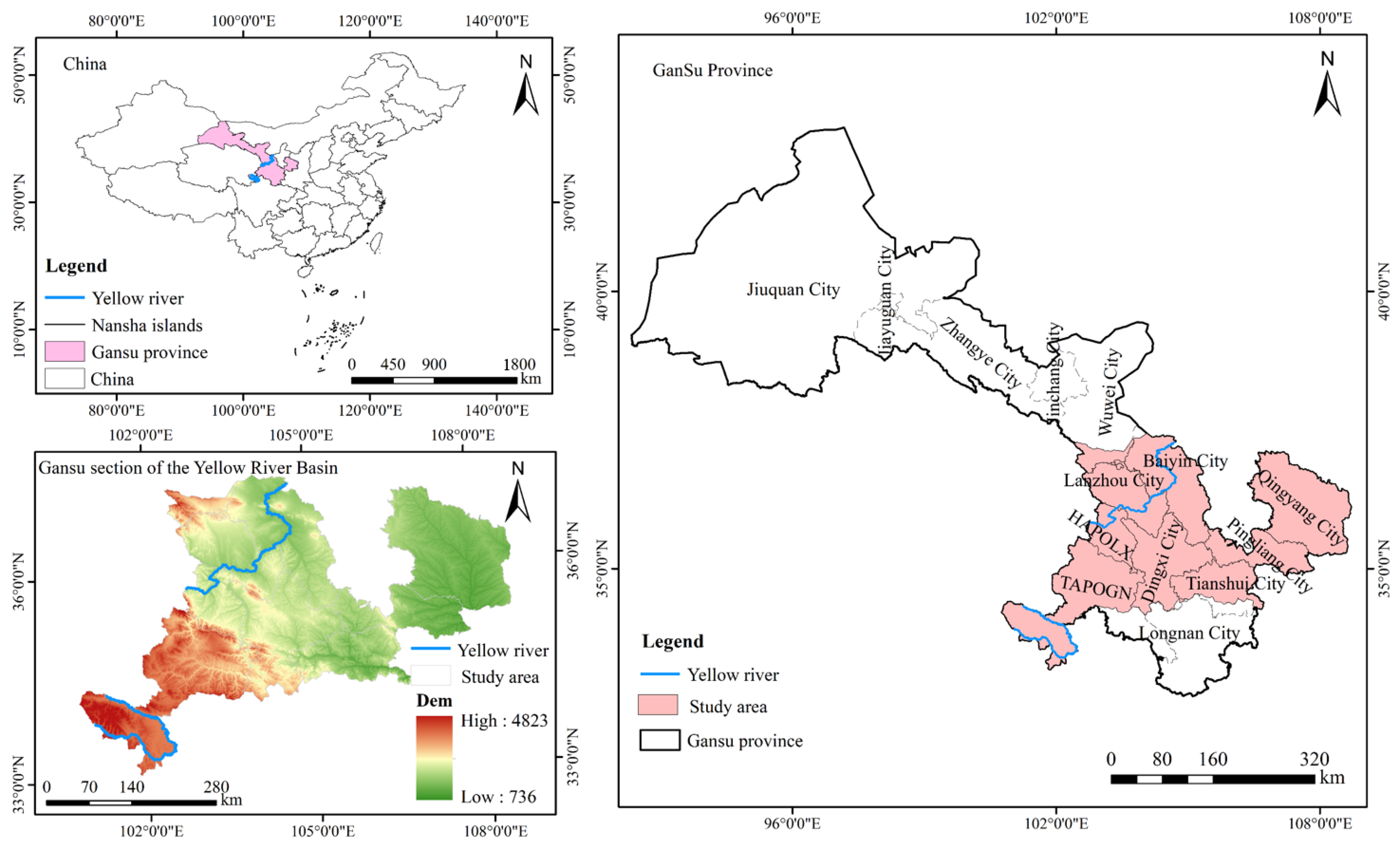
The Gansu section of the Yellow River Basin (GSYRB, 92°13′–108°46′ E, 32°11′–42°57′ N) covers approximately 145,900 km
2, encompassing nine prefecture-level units: Gannan, Linxia, Lanzhou, Baiyin, Wuwei, Dingxi, Tianshui, Pingliang, and Qingyang (
Figure 2). These units form a distinct belt-shaped corridor along the river. The region has an average annual water resource volume of 1.144 × 10
10 m
3, mean annual runoff of 1.156 × 10
10 m
3, and average annual precipitation of 463.4 mm.
As a core upper-reach segment and key water conservation area in China’s arid northwest, the GSYRB serves as an important ecological security barrier, supporting hydrological regulation, sediment retention, and biodiversity, while sustaining socioeconomic development under conditions of water scarcity and ecological fragility. Its characteristics make it highly representative for studying water resource, ecological, and socioeconomic interactions in arid inland basins.
2.2. Data Sources
Model data comprise three categories: demographic, socioeconomic, and hydrological and water resource data. Demographic and socioeconomic data were obtained from the Gansu Province Statistical Yearbook (2003–2022), while hydrological and water resource data came from the Gansu Province Water Resources Bulletin (2003–2022). These annually compiled, long-term datasets provide a consistent and reliable foundation for model development and temporal analysis.
All data processing, statistical analysis, simulation, and visualization in this study were conducted using multiple software tools. System dynamics modeling and simulation were performed using Vensim (Ventana Systems, Inc., version 7.3.5). Statistical analysis was carried out using SPSS (IBM Corp., version 25). Graphical visualization and figure production were completed using OriginPro (OriginLab Corporation, version 2025). In addition, Microsoft Office (Microsoft Corporation, version 2021) was used for manuscript preparation, data organization, and preliminary data processing. All software tools were applied following standardized procedures to ensure the accuracy, reliability, and reproducibility of the research results.
2.3. Research Methods
2.3.1. Evaluation Framework and Indicator System
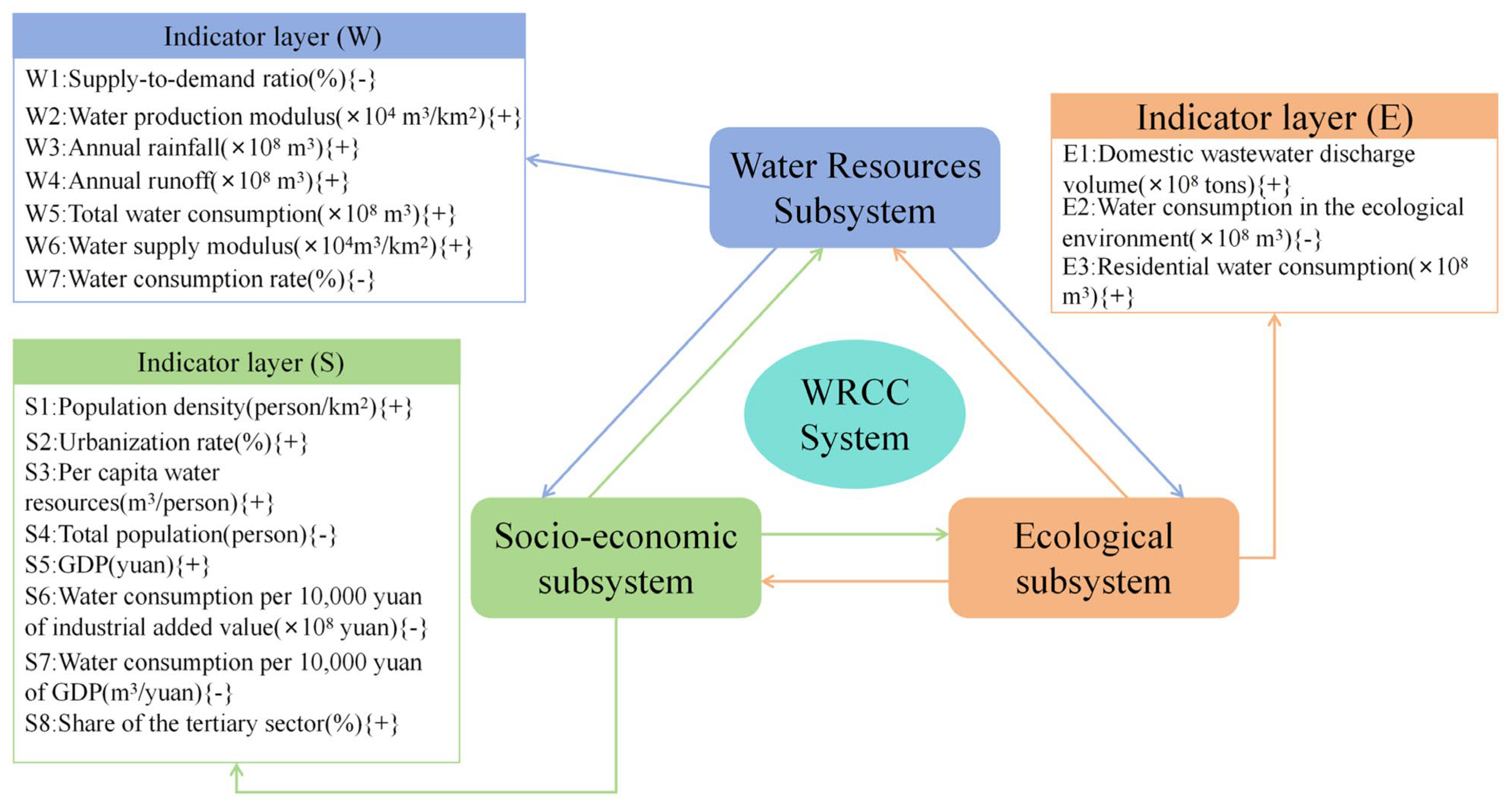
Due to the complexity of the WRCC system, which is shaped by interactions among water availability, socioeconomic development, and ecology, this study constructs a hierarchical evaluation framework comprising target, criterion, and indicator layers (
Figure 3). The criterion layer includes three subsystems: water resources, socioeconomic development, and ecological environment (W–S–E). Eighteen indicators, selected based on comprehensiveness, dynamism, measurability, and coordination principles, were classified as either benefit-type or cost-type according to their influence on WRCC [
38].
2.3.2. Indicator Weighting Method
This study adopts a combined weighting strategy to reduce bias, integrating subjective and objective information [
39]. The AHP can assign subjective weights [
27], while the entropy weight method supplies objective weights. These two weight sets are multiplicatively integrated to generate comprehensive indicator weights, balancing expert judgment with data-driven variability to enhance the robustness of WRCC assessment.
In this study, the indicator weights determined by the AHP–entropy method are assumed to remain constant throughout the study period to ensure comparability of WRCC evaluation results across different years and scenarios.
2.3.3. SD Modeling and Validation
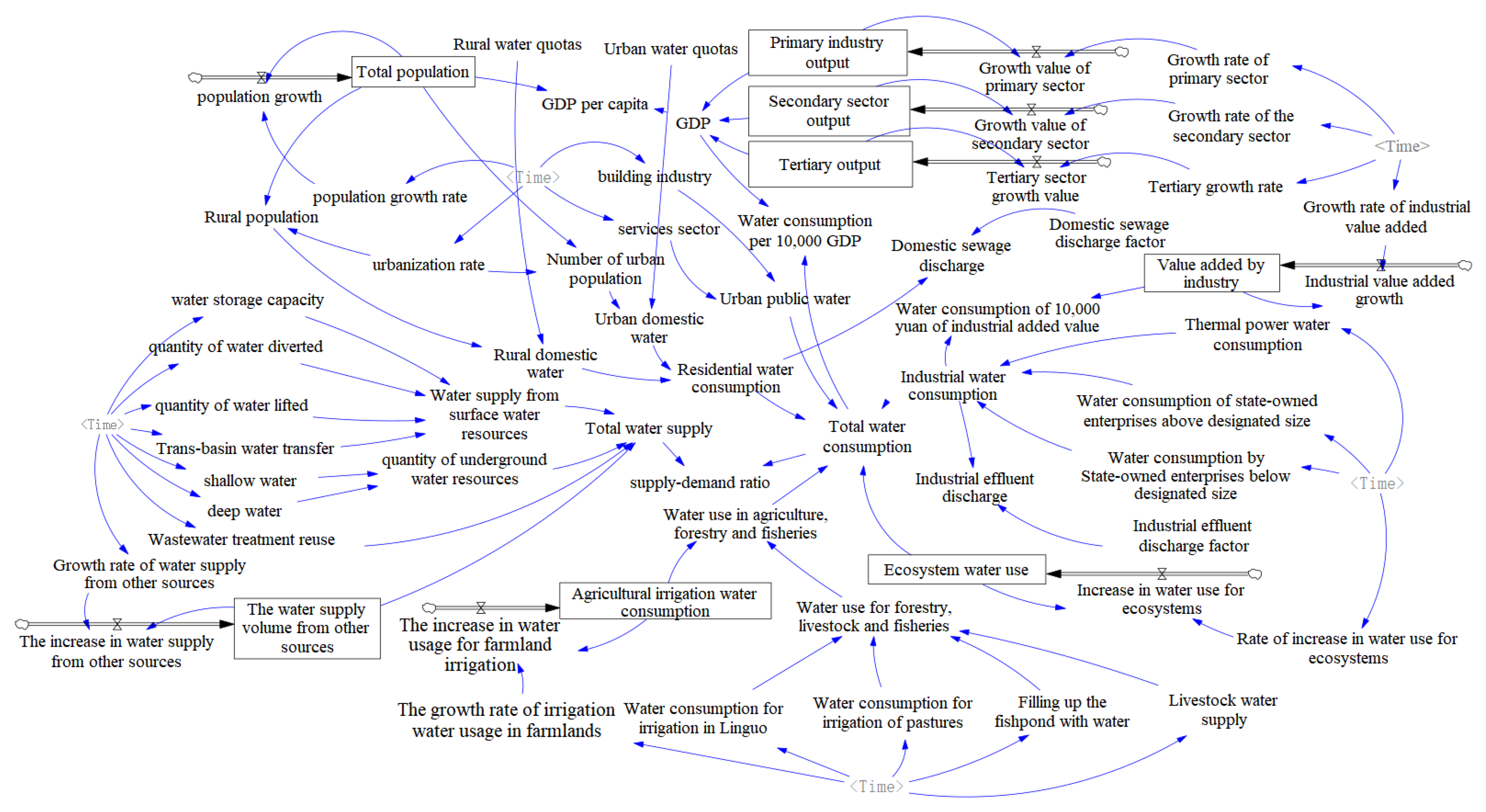
An SD model was developed on Vensim to simulate WRCC dynamics in the GSYRB (
Figure 4 and
Table 1). It integrates W–S–E subsystems through feedback loops and nonlinear interactions. The simulation spans 2003–2030, calibrated and validated using 2016–2021 data, with 2023–2030 for scenario forecasting. Model validity was assessed via historical accuracy and sensitivity analysis, ensuring reliable long-term WRCC projection [
40].
2.3.4. Development Scenarios
Five development scenarios were designed to assess WRCC evolution under different policy pathways (
Table 2): status quo (B0), economic priority (B1), ecological priority (B2), agricultural priority (B3), and comprehensive development (B4). Each scenario was formed by adjusting key parameters related to population growth, industrial development, water allocation, and environmental regulation. Multi-scenario SD simulations were conducted to identify WRCC thresholds and optimal development pathways.
2.3.5. WRCC Assessment Using the VIKOR Method
The VIKOR method was applied to quantify WRCC under different scenarios. It integrates indicator weights to calculate each compromise distance from the ideal solution, balancing group utility and individual regret. The final compromise ranking determines the WRCC classification. Alternatives are ranked based on
Ri values, and the WRCC level is classified according to the grade standard provided in
Table 3 [
41]. When
v > 0.5, the decision emphasizes group benefits, whereas when
v < 0.5, the focus is on minimizing individual regrets. In this study,
v was set to 0.5 to balance both aspects.
2.3.6. Obstacle Diagnosis and Driving Mechanism Analysis
The Geodetector model was employed to identify the driving mechanisms influencing WRCC [
17]. The explanatory power of each factor was quantified using the q-statistic, which measures the extent to which a factor explains the spatial differentiation of the dependent variable, which is defined as
The value of q ranges from 0 to 1, with larger values indicating stronger explanatory power.
In addition, the interaction detector was applied to examine whether the combined influence of two factors enhances or weakens their explanatory power. This is achieved by comparing the q-value of the interaction q(X1∩X2) with the q-values of the individual factors q(X1) and q(X2). The criteria used to classify interaction types are summarized in
Table 4.
2.3.7. Obstacle Model
To identify the key constraints of WRCC improvement, an obstacle degree model was constructed [
17]. The specific steps are as follows:
- (1)
Calculate the factor contribution of the index.
- (2)
Calculate the deviation of the indicator for the j-th indicator in the i-th year.
- (3)
Calculate the obstacle degree of the index.
The obstacle analysis was conducted based on historical data to identify the key factors currently constraining WRCC. Considering the uncertainty associated with long-term scenario simulations, the obstacle diagnosis focuses on observed system conditions rather than projected values.
2.3.8. Coupling Coordination Analysis
To assess the level of coordination among the WSE subsystems, this study employed a coupling coordination degree model. The methodological steps were as follows:
- (1)
Calculate the coupling degree (C) of the computing system.
where C represents the coupling degree of the system, with a value range of (0, 1);
U1,
U2, and
U3 denote the water resource carrying capacity of each subsystem, respectively.
- (2)
Calculate the comprehensive coordination index (T).
where T represents the comprehensive coordination index;
α1,
α2, and
α3 are the weights of each subsystem, respectively; and
U1,
U2, and
U3 are the water resource carrying capacities of each subsystem, respectively.
- (3)
Calculate the coupling coordination degree (D).
In the formula, D represents the coupling coordination degree; C represents the system coupling degree, with a value range of (0, 1); and T represents the comprehensive coordination index.
The coupling coordination level was classified based on the D-value (see
Table 5) according to the classification standard [
42], which was used to evaluate the system’s synergy level.
3. Results and Analysis
3.1. Weight Calculation Results
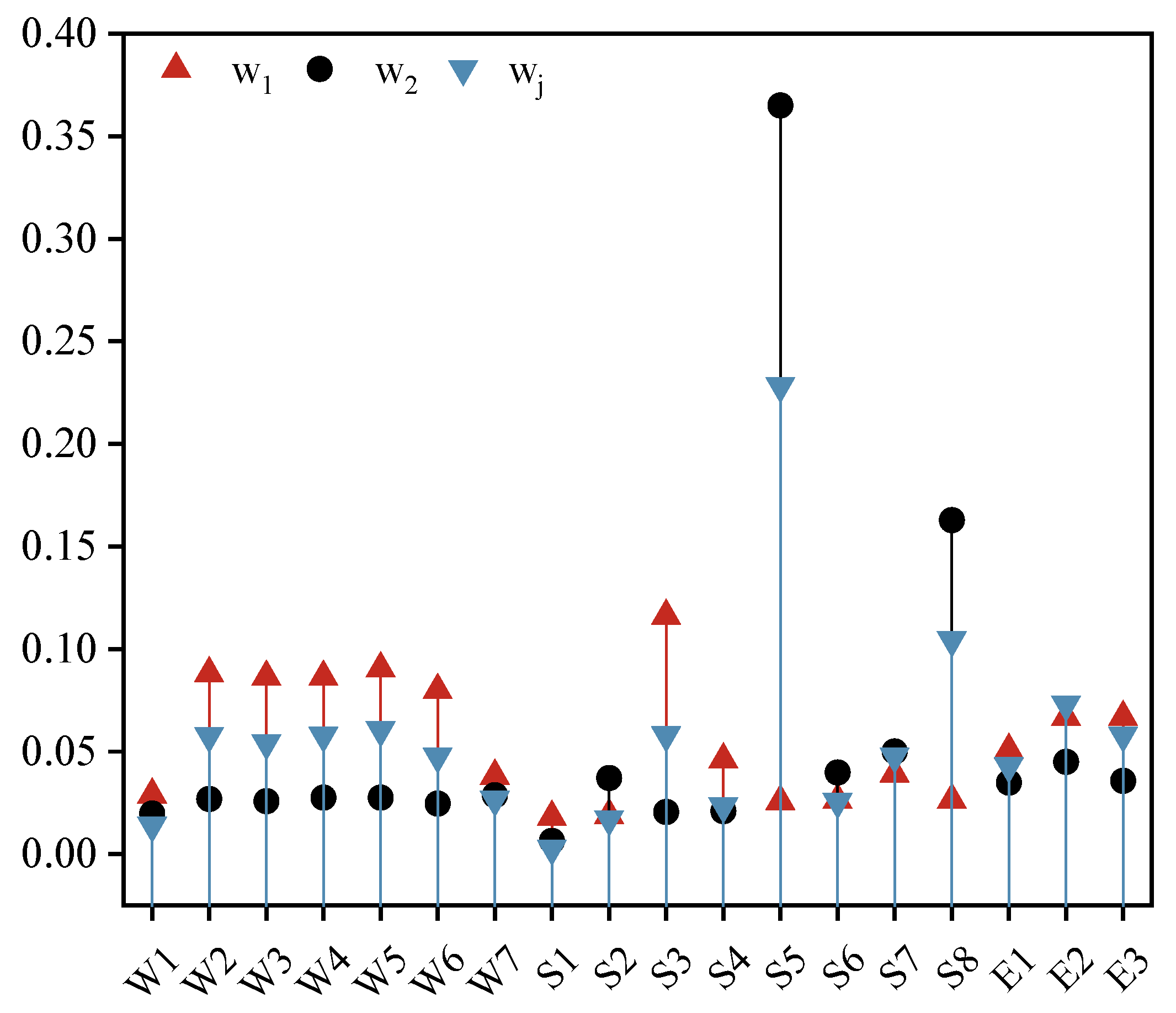
After quantifying the relative importance of indicators, an integrated AHP–entropy weighting approach was combined with expert judgment with empirical data characteristics to balance subjectivity and objectivity, thereby enhancing the robustness of WRCC evaluation. The calculated subjective weight (
w1, via AHP), objective weight (
w2, via entropy method), and integrated AHP–entropy weight (
wj) are shown in
Figure 5.
The weight distributions reveal distinct patterns. The w1 distribution was relatively balanced, reflecting experts’ emphasis on coordinated development across system elements. In contrast, w2 exhibited higher dispersion, with a few indicators (e.g., S5 and S8) receiving significantly higher weights, highlighting the impact of data variability on purely objective evaluation. wj effectively merges subjective and objective information, preserving the importance of key indicators from both methods while mitigating extreme values, resulting in a more robust and balanced weight allocation for subsequent analysis.
Socioeconomic indicators generally accounted for larger proportions in wj, underscoring their role as core drivers of WRCC dynamics at the current developmental stage. Meanwhile, resource and environmental indicators formed foundational constraints of the system. These weighting results provided a reliable quantitative basis for subsequent SD modeling, VIKOR evaluation and multi-scenario simulation.
3.2. SD Model Validation and Sensitivity Analysis
3.2.1. Historical Validation
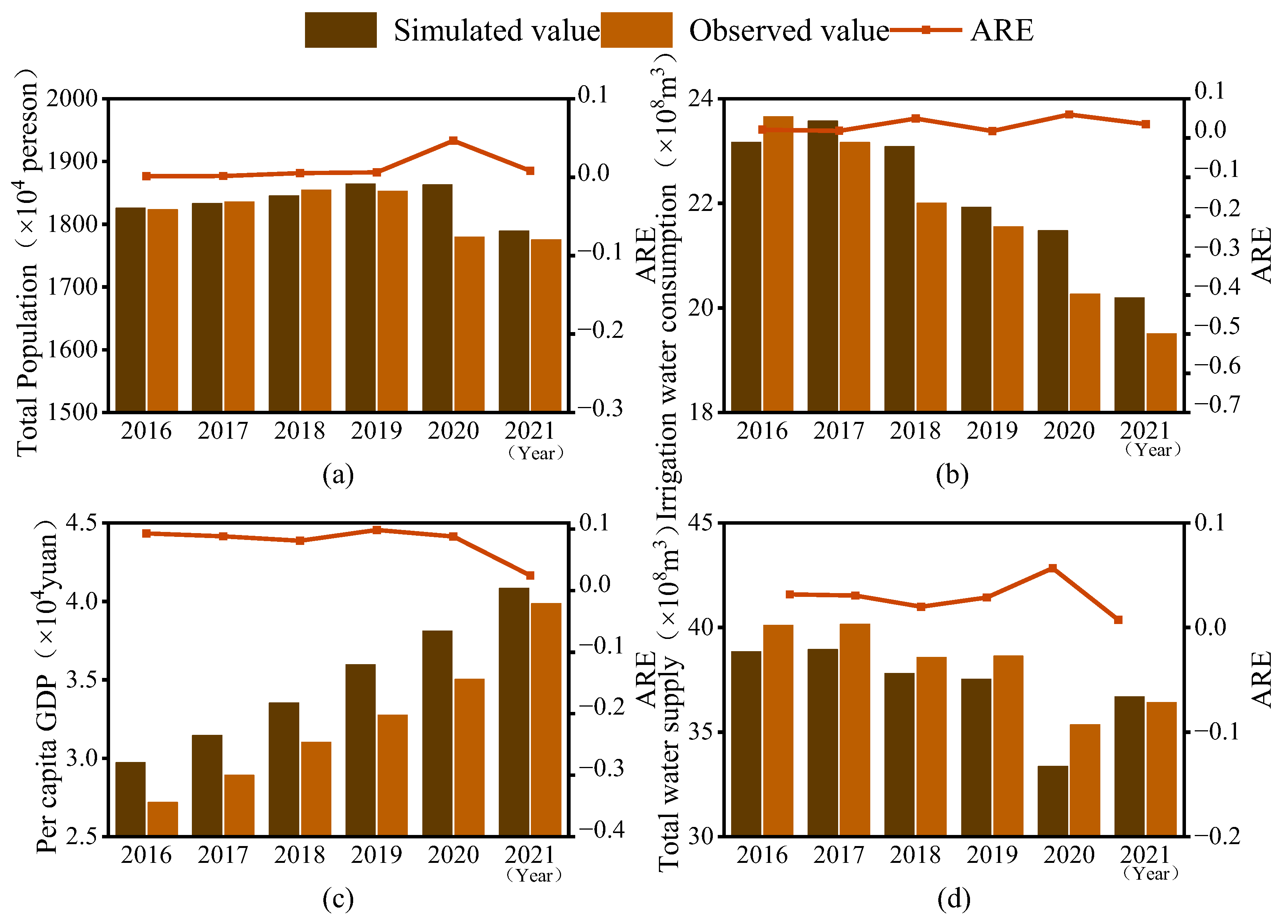
The reliability of the SD model was verified against historical data (2016–2021) for four key state variables: total population, irrigation water consumption, per capita GDP, and total water supply. As illustrated in
Figure 6, simulated values showed great agreement with observed data, with absolute relative errors (
AREs) for all variables below 10% (e.g.,
ARE for total population was 0.11%). This close agreement demonstrates that the model accurately replicates the historical behavior of the W–S–E system, confirming the robustness and reliability of its structure and parameterization and providing a reliable foundation for scenario simulations and predictive analyses.
3.2.2. Sensitivity Analysis
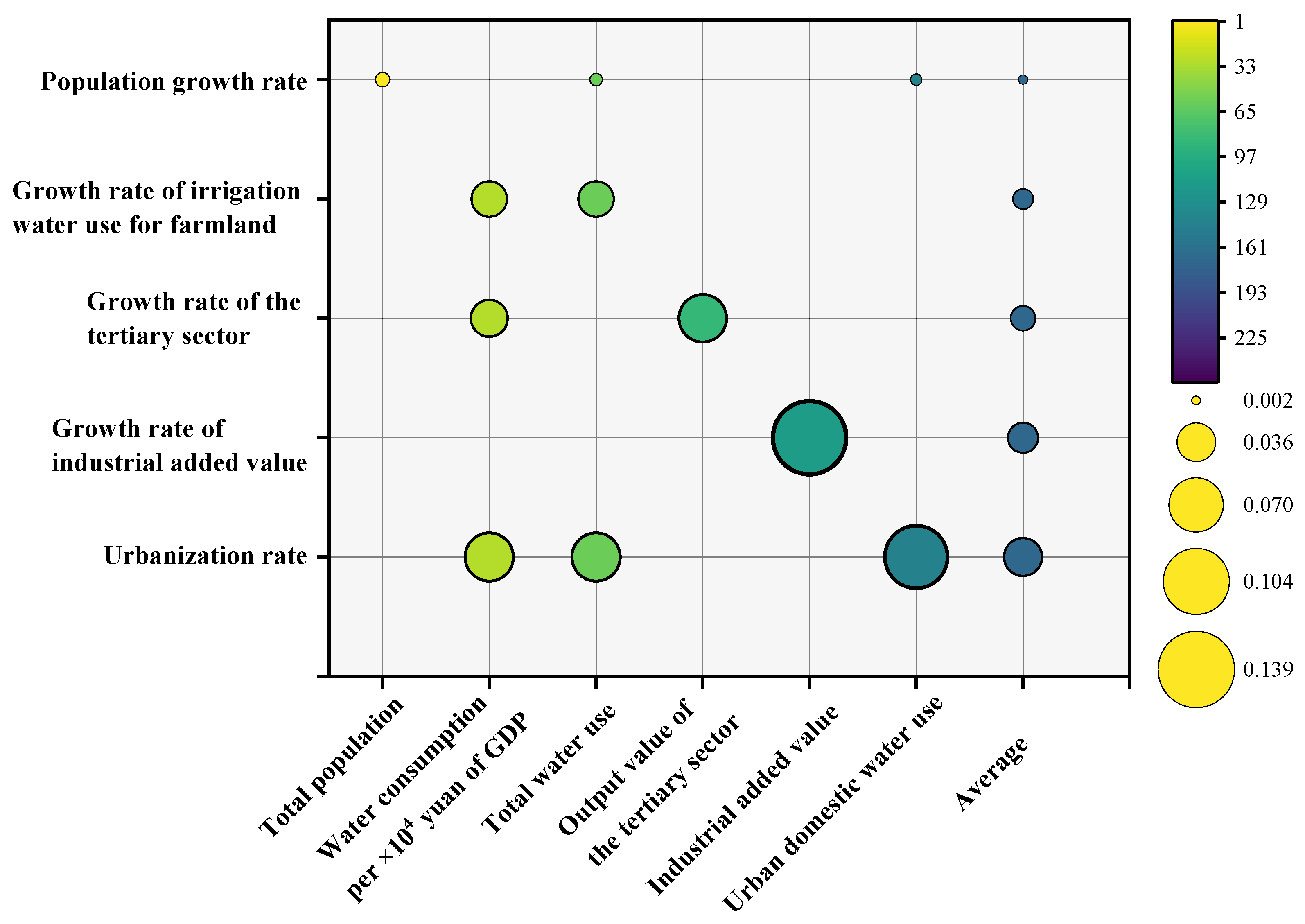
A sensitivity analysis was conducted to identify key regulatory parameters in the WRCC system, using 2022 as the base year. A +10% perturbation was applied to five critical parameters: urbanization rate, industrial added-value growth rate, tertiary sector growth rate, farmland irrigation water-use growth rate, and population growth rate. The sensitivity of main output variables was quantified using sensitivity coefficients (S values).
Results in
Figure 7 indicate that industrial development intensity and urbanization level were the primary drivers of system dynamics. The industrial added-value growth rate exhibited the highest sensitivity (S = 13.82%), followed by the impact of urbanization rate on urban domestic water consumption. Growth rates of the tertiary industry and farmland irrigation water use had limited influence (S generally <10%). The mean S value across all perturbations was low (1.76%), indicating that the overall response to localized parameter changes was limited.
These findings confirm the structural stability and robustness of the SD model, ensuring reliable and comparable scenario simulations. They also underscore that industrial and urbanization pathways should be prioritized in scenario design and policy analysis, given their pronounced influence on regional WRCC dynamics.
3.3. Dynamic Simulation and Key Element Evolution of WRCC System Under Different Scenarios
3.3.1. Evolution of Key Elements in the Water Resources Subsystem
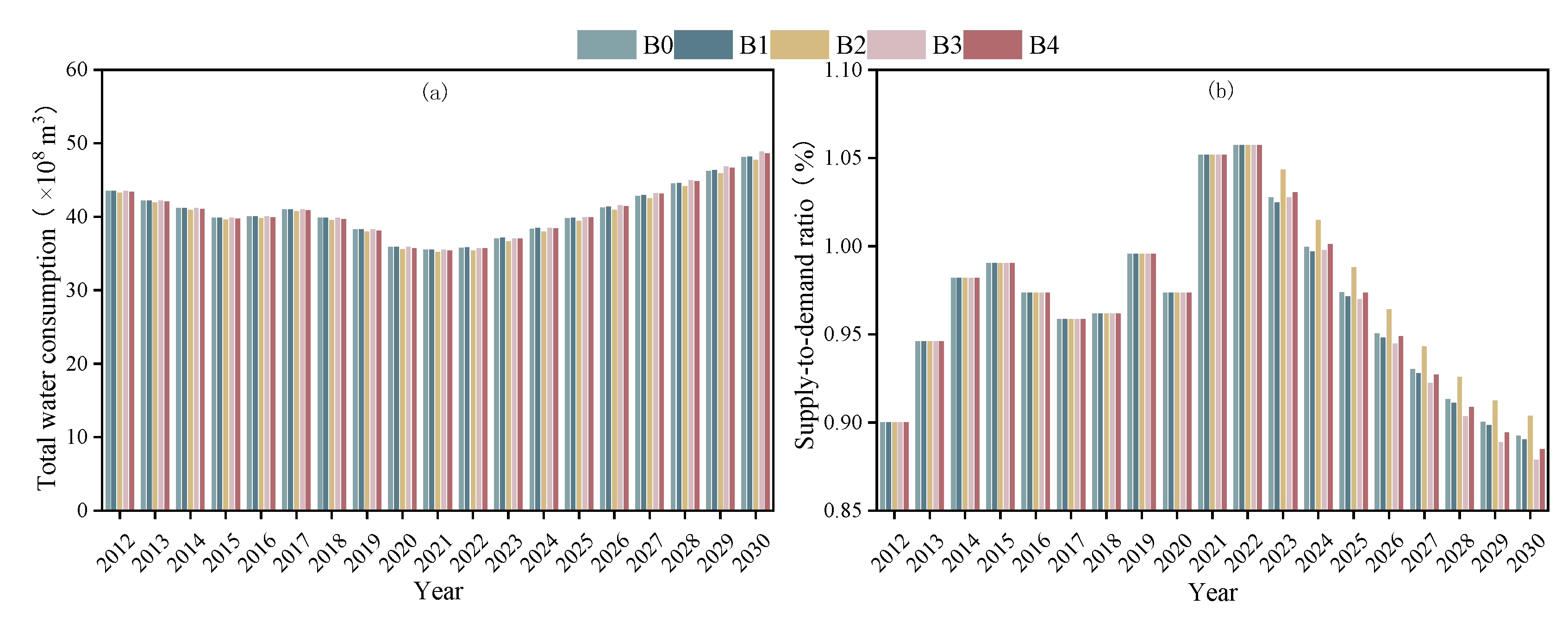
The water resource supply–demand balance directly manifests in WRCC. Simulation results clarified the evolution of total water consumption and the supply–demand ratio across scenarios, as shown in
Figure 8.
- (1)
Total water consumption dynamics
Total water consumption exhibited a two-stage evolution, depicted in
Figure 8a: a decline phase (2012–2022) and a recovery phase (2023–2030). During the decline phase, consumption fell from 43.49 × 10
8 m
3 to 35.76 × 10
8 m
3 (a 17.8% reduction), driven by widespread adoption of water-saving technologies and industrial restructuring.
In the recovery phase, consumption rose in all scenarios. In 2030, total water consumption ranked as follows: B3 > B4 > B1 > B0 > B2. Scenario B3 reached the highest level (48.85 × 10⁸ m3, a 36.6% increase from the value in 2022), primarily due to surging irrigation demand. B4 followed (48.63 × 10⁸ m3, +36.0%), and B1, with rapid industrial expansion but lagging water-saving measures, reached 48.21 × 10⁸ m3 (+34.8%). B0 resulted in 48.10 × 10⁸ m3 (+34.5%). In contrast, B2 effectively restrained consumption to the lowest level (47.73 × 10⁸ m3, +33.5%), achieving water-use savings of 0.78–2.3% compared to other pathways through stringent demand management, efficiency gains, and unconventional water source utilization. This underscores the effectiveness of the “Four Waters, Four Determinations” principle in curbing unsustainable demand growth.
- (2)
Supply–Demand Ratio Evolution
The supply–demand ratio also exhibited a two-stage evolution. As shown in
Figure 8b, from 2012 to 2022, it fluctuated (“rise–decline–rebound”) due to interannual climatic variability and phased water-saving policies. After 2022, a sustained downward trend emerged across all scenarios, reflecting intensifying water supply–demand pressure.
In 2030, the ratio ranked as follows: B3 < B0 < B1 < B4 < B2. B3 yielded the lowest ratio (0.88) due to pronounced agricultural water demand, which increasingly encroaches upon ecological water allocations. B0, B1, and B4 showed deteriorating supply-to-demand balances, attributable respectively to technological and managerial inertia, low industrial water-use efficiency, and insufficient cross-sectoral coordination. In contrast, B2 achieved the highest ratio (0.90), benefiting from stringent water-demand regulation, diversified water supply sources, and safeguarded ecological flows. These findings indicated that, under the “Four Waters, Four Determinations” principle, enhanced water conservation and expanded utilization of unconventional water resources can substantially alleviate supply–demand imbalances, reduce water scarcity risks, and foster coordinated development of water resources and ecological environment.
3.3.2. Evolution of Key Elements in the Socioeconomic Subsystem
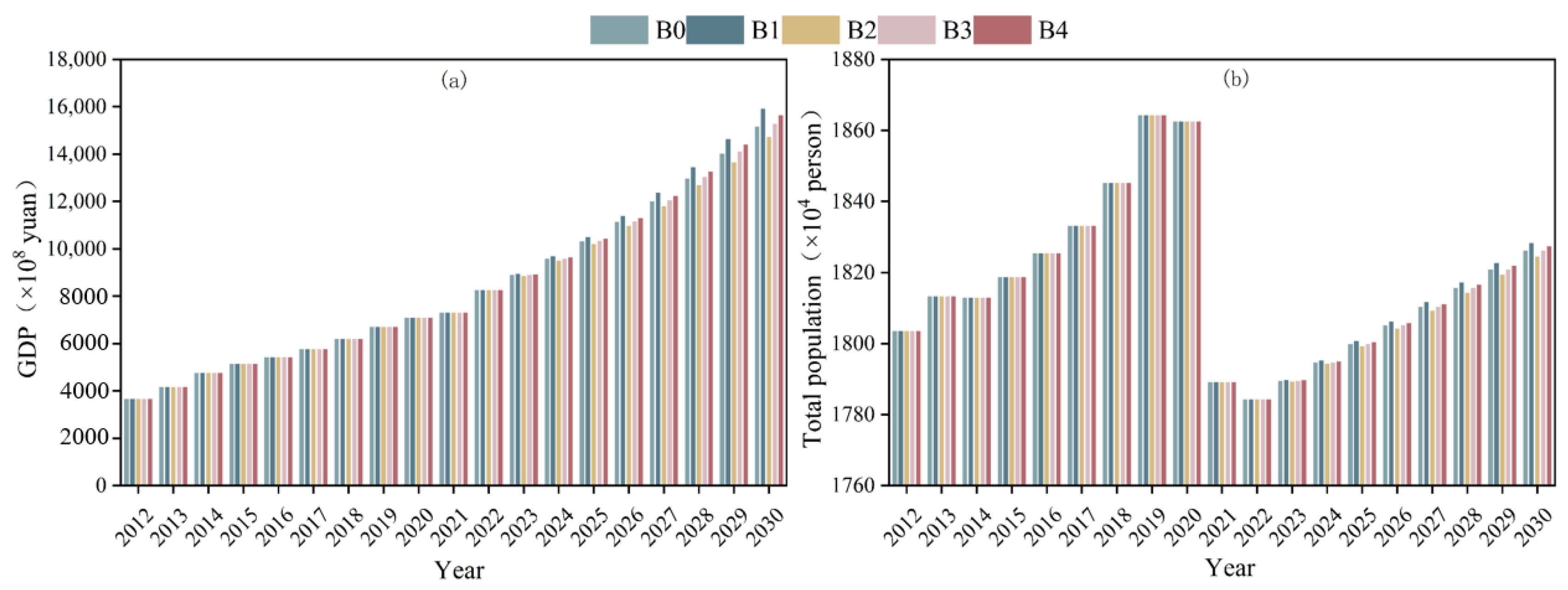
Simulation results revealed the complex interplay between economic growth, population size, and water resource constraints under different development paths, as shown in
Figure 9.
- (1)
GDP growth variation
GDP exhibited sustained growth across all scenarios, but growth drivers and magnitudes varied due to industrial policy orientations, as shown in
Figure 9a. Scenario B1, driven by accelerated industrial expansion, achieved the highest growth (93.7%), increasing from 0.83 × 10
4 billion CNY in 2022 to 1.60 × 10
4 billion CNY in 2030. B4 followed with robust growth (88.0%) through sectoral synergy. B3 and B0 yielded more moderate growth rates (84.3% and 83.1%, respectively), constrained by limited agricultural multipliers or policy inertia.
By contrast, Scenario B2, operating under stringent water resource and ecological constraints, achieved steady growth of 77.1% by promoting ecological agriculture and water-saving industrial chains. Notably, although B1 delivered the highest GDP growth, it did so with high water-use intensity. Conversely, B2 demonstrated that aligning environmental constraints with economic resilience through green transformation is feasible, supporting long-term resource sustainability.
- (2)
Population size variation
Total population dynamics showed distinct phased fluctuations, closely linked to regional development strategies and resource constraints in
Figure 9b. Simulation showed steady growth (2012–2019), a temporary decline (2020–2022) due to urbanization-driven outflows, and renewed growth (2023–2030) under policy adjustments and strategic interventions.
In 2030, the population size varied across scenarios. B1 yielded the highest total population (1828.24 × 104), driven by economic attraction and job creation (2.4% growth from 2022). B4 and B0 showed moderate growth (2.3%), while B3 was constrained by limited labor absorption (2.2% growth). In contrast, B2 explicitly incorporated ecological carrying capacity (e.g., per capita water availability thresholds) as a binding constraint, resulting in the lowest total population in 2030 (1824.44 × 104).
Although absolute differences in total populatW-S-Eion across scenarios are small (<40,000 in 2030), spatial distribution and resource alignment differ markedly. This underscores that WRCC constrains not only total population size but also its spatial configuration and resource-coupling efficiency. The practical significance of the B2 pathway lies not in simply restraining population growth, but in optimizing spatial-resource alignment to enhance overall system coordination while maintaining relative stability.
3.3.3. Evolutionary Characteristics of Key Elements in the Ecological Environment Subsystem
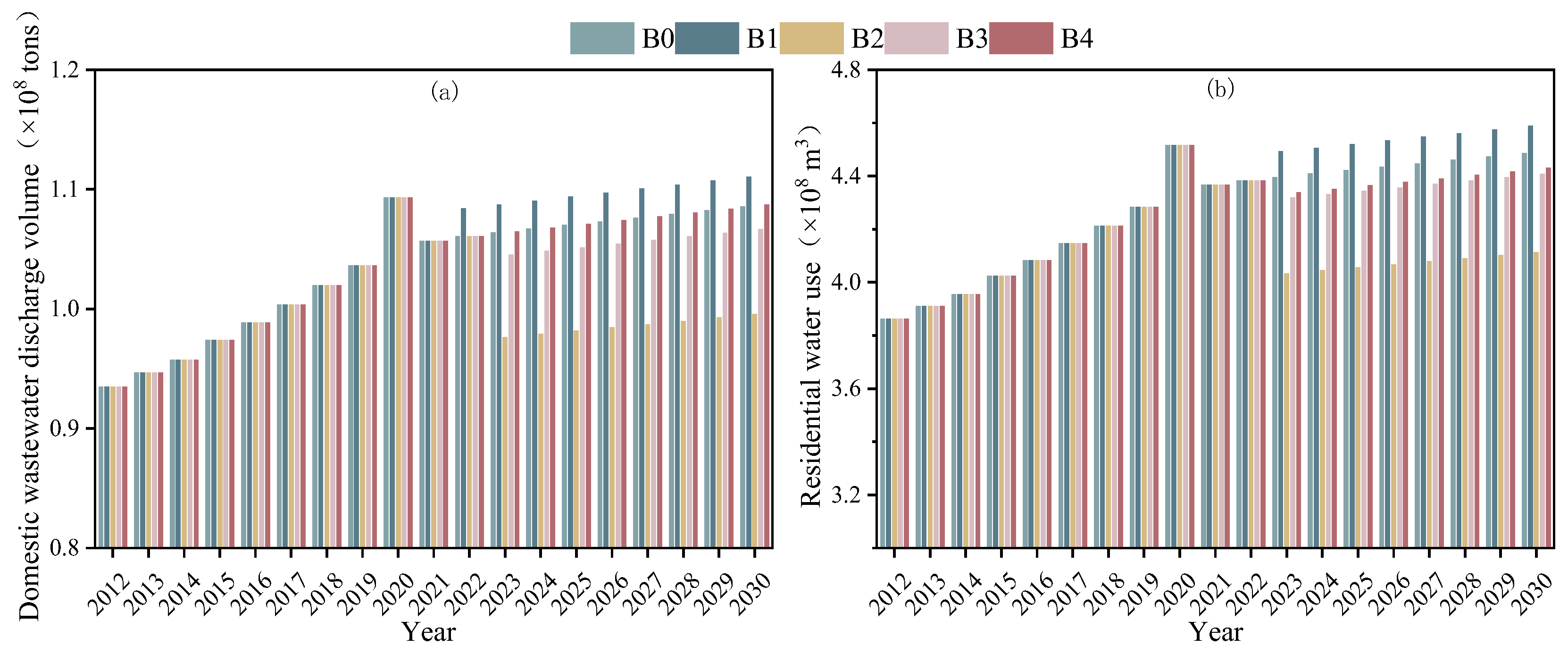
Ecological pressure, a critical dimension of WRCC, was assessed through domestic wastewater discharge and residential water consumption. As shown in
Figure 10, both indicators exhibited a clear phased evolution from 2012 to 2030. During the historical phase (2012–2022), they followed an “increase-then-decline” pattern, reflecting the lagged effects of early-stage water-saving policies and sewage treatment infrastructure. In the projection period (2023–2030), their trajectories diverged markedly across scenarios, indicating that future residential water demand and wastewater generation are highly sensitive to policy orientation, development pathways, and resource management strategies.
- (1)
Domestic wastewater discharge volume
The control domestic wastewater discharge volume varied markedly across scenarios, as shown in
Figure 10a. Under Scenario B1, accelerated industrialization and urbanization led to the highest discharge level (1.11 × 10
8 t in 2030, a 4.5% growth from 2022). Scenario B4 led to a notable rise (2.8% increase) due to competing investment priorities. In Scenario B0, discharge volume continued an upward trend (1.8% increase) constrained by technological and regulatory inertia. B3 resulted in marginal growth (0.9% increase) owing to lower urbanization.
Notably, Scenario B2 achieved an absolute reduction (−6.6%), the only pathway to do so. This success stemmed from integrated measures, such as enhanced treatment efficiency, strict discharge standards, and expanded unconventional water use, demonstrating the effectiveness of a “source reduction → process control → end reuse” environmental management framework under sustainable development pathways.
- (2)
Residential water consumption
The effectiveness of residential water consumption regulation varied substantially across scenarios, as demonstrated in
Figure 10b. Scenario B1, prioritizing growth over rational water allocation and water-saving measures, resulted in the highest consumption (4.59 × 10
8 m
3 in 2030, a 4.6% growth). Scenario B0 followed with a 2.4% increase, constrained by existing water-use efficiency. In contrast, the B4 and B3 scenarios achieved better control, limiting growth to 1.1% and 0.7%, respectively, through partial technology adoption and dispersed rural settlement patterns.
Most notably, Scenario B2 achieved an absolute reduction (−6.2%). This was accomplished through an integrated strategy combining smart water metering, tiered water pricing, a reduction in distribution network leakage, and high-efficiency water-saving appliances. Compared to B1, this represents additional water savings of approximately 10.5% (0.48 × 10⁸ m3), demonstrating the superior efficacy of combining demand-side management (e.g., efficiency improvements in household appliances) with supply-side optimization (e.g., leakage control) in urban water management.
3.4. Dynamic Simulation and Scenario Analysis of WRCC
3.4.1. Dynamic of WRCC
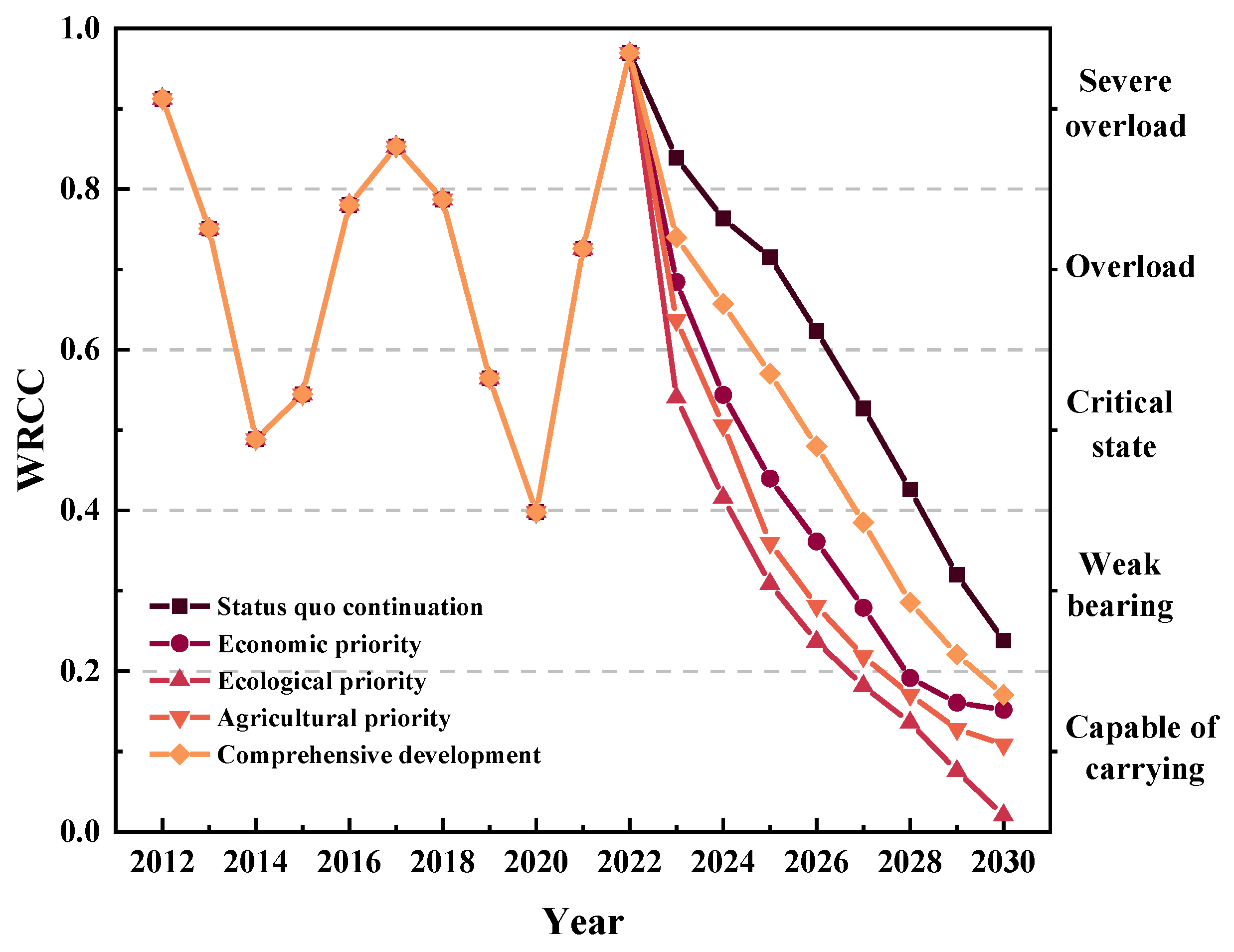
The SD-VIKOR coupled model results in
Figure 11 indicate that regional WRCC (where a lower index indicates better capacity) exhibited pronounced fluctuations driven by policy and climate.
From 2012 to 2014, the effective promotion of water-saving technologies substantially enhanced water-use efficiency, leading to a pronounced decline in the WRCC index from 0.91 to 0.49 and indicating a marked improvement in water resource carrying capacity. During 2014~2017, accelerated industrial expansion triggered a rapid increase in water demand, causing the WRCC index to rebound to 0.85 and resulting in a temporary deterioration of carrying capacity. Between 2017 and 2020, the comprehensive implementation of the “Strictest Water Resources Management System,” together with the widespread adoption of water-saving technologies across multiple sectors, enabled effective control of total water consumption. Consequently, WRCC exhibited a steady improvement, with the index declining further to 0.40. In contrast, during 2021~2022, severe regional drought events significantly reduced water availability, exposing systemic vulnerabilities and inducing a sharp rise in the WRCC index to 0.97, which reflects a substantial decline in carrying capacity. During the projection period (2023~2030), sustained strengthening of ecological protection policies is expected to facilitate a gradual recovery of WRCC, with the index projected to decrease steadily from 0.84 to 0.24, indicating a progressive enhancement of regional water resource carrying capacity.
3.4.2. Scenario Comparison
The simulated WRCC outcomes for 2030 across development scenarios are shown in
Figure 11. According to the WRCC classification criteria in
Table 3, most scenarios reach the “excellent” level in 2030, indicating that overall water resource conditions are expected to improve under different development pathways. However, the WRCC index values still show clear quantitative differences among scenarios. Ranked by performance (lower index = better capacity), the order is B2 (0.02) > B3 (0.11) > B1 (0.15) > B4 (0.17) > B0 (0.24), suggesting that the environmentally oriented development pathway (B2) achieves the most favorable balance between water demand and resource availability.
3.5. Obstacle Factors of WRCC
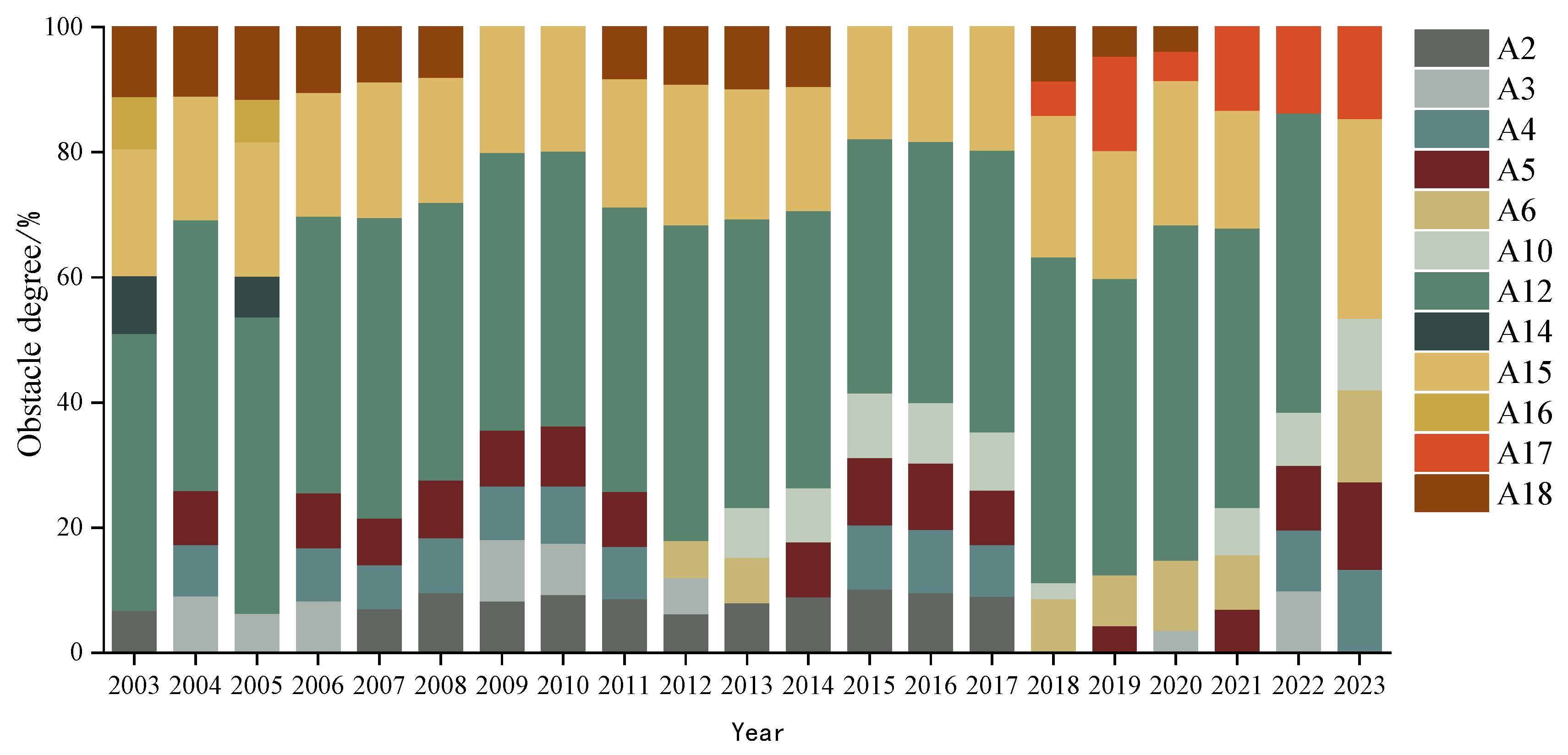
To identify core bottlenecks constraining WRCC improvement, this study applied the obstacle degree model to 18 evaluation indicators for 2003–2023. The six key factors with the highest cumulative contributions in
Figure 12 are: water production modulus (W2), annual precipitation (W3), annual runoff (W4), total water consumption (W5), water consumption per 10,000 yuan of industrial added value (S6), and domestic water consumption (E3). These are concentrated in two categories: water supply–demand balance (W2, W3, W4, W5) and socioeconomic water-use pressure (S6, E3).
Analysis reveals three distinct constraint categories.
First, W2, W3, and W4 represent endowment-based water resource constraints. They reflect the persistent and structural imbalance of natural water resources under the regional arid climatic and hydrological variability, imposing an intrinsic hard constraint on WRCC. This underscores the necessity of adhering to the principle of “determining water demand according to water availability”.
Second, W5 and S6 represent expansion-driven socioeconomic water-use pressure constraints. The high obstacle degree of W5 reflects sustained demand-side expansion, whereas that of S6 indicates lagging industrial water-use efficiency and persistent water-intensive production patterns. Together, they reveal a structural mismatch between economic growth models and resource–environmental constraints, serving as primary anthropogenic drivers of WRCC deterioration during 2010–2020. This underscores the critical importance of adhering to the principle of “water conservation first, efficiency revolution”.
Finally, E3 represents a rigid constraint on domestic water demand. Its high obstacle degree reflects the inelastic growth of domestic water use driven by population agglomeration and rising living standards. Under overall water scarcity, the high-priority yet inflexible demand can crowd out water allocations to other sectors, forming a distinct “structural pressure barrier” that intensifies systemic imbalances. This highlights the necessity for strategic interventions like optimizing population spatial distribution and promoting water-saving lifestyles.
In summary, the long-term diagnosis reveals that W2, W3, W4, W5, S6, and E3 are persistent, structurally stable core bottlenecks for regional WRCC improvement, demanding integrated management strategies.
3.6. The Driving Mechanism of Coordinated Development of WRCC
3.6.1. Single-Factor-Driven Detection
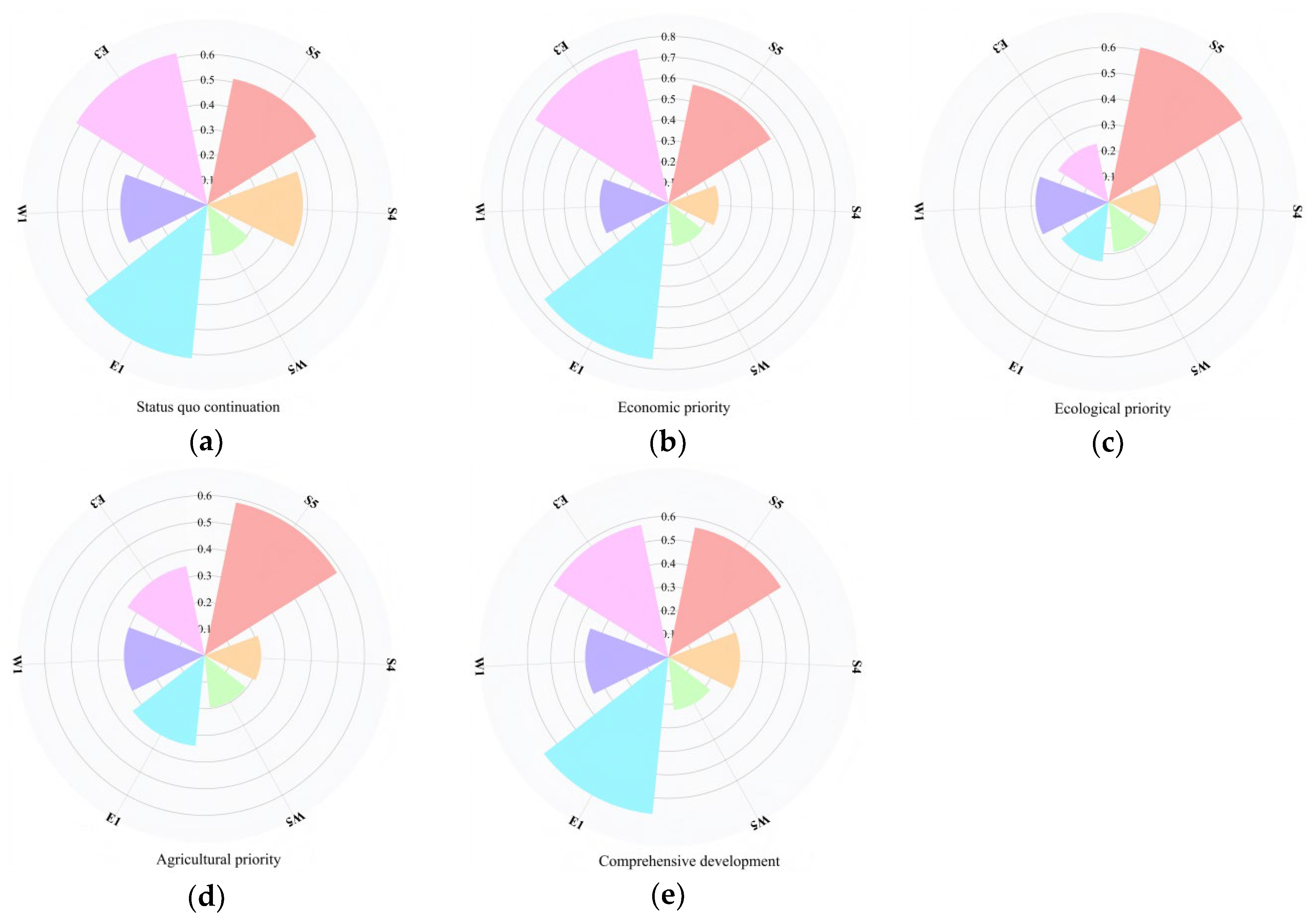
Geodetector analysis in
Figure 13 revealed substantial heterogeneity and scenario dependence in the explanatory power (q-value) of individual drivers for WRCC spatial differentiation.
Under most scenarios, indicators of economic scale, resource consumption intensity, and water-use structure dominate. However, in the B2 and B4 scenarios, the influence shifts toward factors representing ecological efficiency, pollution load, and supply–demand coordination.
This shift signals a structural transition in the regional water resource system, that is, from a scale-expansion-driven development mode to one increasingly governed by efficiency improvement and structural optimization.
Under Scenario B0 in
Figure 13a, GDP (S5) and total water consumption (W5) showed the highest q-values, indicating that spatial differences in WRCC were primarily driven by economic agglomeration and water consumption intensity. This pattern reflects a continued reliance on traditional, water-intensive growth, where economic expansion is closely linked to water-use consumption.
In Scenario B1 in
Figure 13b, the q-values for total population (S4) and GDP (S5) increased further, triggering a pronounced “population concentration–economic expansion–water demand escalation” chain amplification effect. This positive feedback significantly intensified spatial imbalances in water resource pressure, driving the system along an expansion-dominated pathway.
In Scenario B2 in
Figure 13c, however, the driving structure shifted fundamentally, with the supply-to-demand ratio (W1) and domestic wastewater discharge (E1) becoming the dominant explanatory factors. This transition reflects enhanced feedback regulation under stronger ecological constraints, redirecting WRCC improvements toward efficiency-oriented governance and pollution control rather than toward continued economic expansion.
In Scenario B3 in
Figure 13d, total water consumption (W5) and residential water consumption (E3) dominated the spatial differentiation of WRCC. The system exhibited a distinct “high-sensitivity, high-fluctuation” response to water supply variations, underscoring that improving agricultural water-use efficiency and adjusting the water-use structure are critical for advancing WRCC.
In Scenario B4 in
Figure 13e, GDP (S5), total water consumption (W5), and the supply-to-demand ratio (W1) exhibited comparable q-values, forming a relatively balanced ternary synergistic driver across economic, resource, and ecological dimensions. This coordinated interaction enhanced the stability and long-term sustainability of the WRCC system.
3.6.2. Interactive Factor-Driven Detection
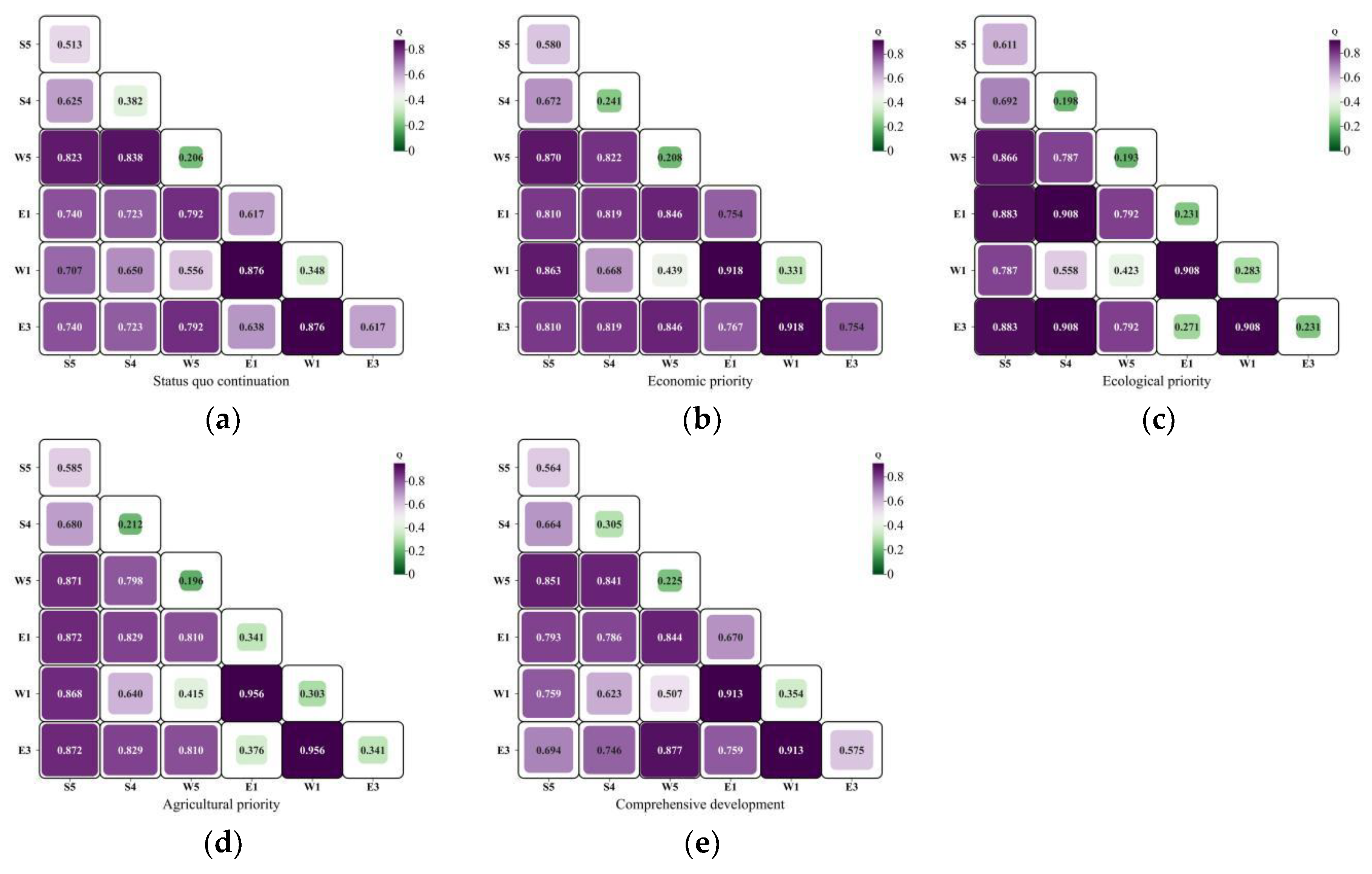
The results of two-factor interaction detection in
Figure 14 demonstrated that the spatial differentiation of regional WRCC was characterized by distinct interaction enhancement and nonlinear amplification effects. The majority of factor interactions yielded significantly higher q-values compared to individual factors, indicating that the spatial pattern of WRCC results from the nonlinear coupling of multiple dimensions rather than isolated or independent drivers.
Under the B0 pathway in
Figure 14a, the interaction of S5∩W5 exhibited the strongest explanatory power, forming a typical “economic expansion–resource consumption” dual accumulation pattern. The significantly enhanced interaction effects of S5 ∩ S4 and S5 ∩ E1 further demonstrated that economic growth simultaneously drove population agglomeration and intensified pollution emissions, generating cascading compounded pressures on regional WRCC.
In Scenario B1 in
Figure 14b, the interactions of S4 ∩ S5 and S5 ∩ W5 exhibited the highest explanatory power, indicating a strong positive feedback loop linking population dynamics, economic expansion, and resource consumption. This loop followed an accumulative causal chain: “economic growth → population concentration → accelerated resource consumption → intensified spatial agglomeration of economic activities → amplified spatial differentiation in WRCC”. Furthermore, the strengthened effects of S4 ∩ E1 and W5 ∩ E1 indicated a shift toward dual water quantity–quality constraints, highlighting the compounded nature of resource–environmental stresses under the B1 pathway.
Under Scenario B2 in
Figure 14c, the interaction of W1∩E1 emerged as the dominant driver, reflecting a structural coupling between resource allocation efficiency and environmental pressure control. This indicated that WRCC dynamics were increasingly shaped by factor efficiency and pollution control, rather than economic-scale fluctuations. The strengthened effects of W1 ∩ E3 and E1 ∩ E3 further suggested that the driving mechanism was transitioning towards a dual-regulation regime based on efficiency and quality.
In Scenario B3 in
Figure 14d, the interaction of W5∩E3 dominated the spatial differentiation of WRCC, revealing a strongly coupling structure linking agricultural irrigation and residential water demand. This coupling intensified fluctuations in water allocation and amplified spatial instability of WRCC, underscoring heightened sensitivity of water-demand fluctuations under agriculture-oriented development pathways.
In Scenario B4 in
Figure 14e, key interactions, such as S5 ∩ W1 and W5 ∩ W1, exhibited synergistically enhanced yet relatively balanced effects, forming a stable tripartite coordination mechanism linking resource, economic, and ecological dimensions. It indicated that under multi-objective regulatory frameworks, dominant drivers of the system were shifting from cumulative pressure accumulation towards structural optimization and efficiency improvement. The strengthened coupling among W–S–E subsystems further contributes to enhanced sustainability and resilience of regional WRCC.
3.7. Analysis of the Coupling Coordination Degree of the W–S–E System
3.7.1. Co-Evolutionary Characteristics
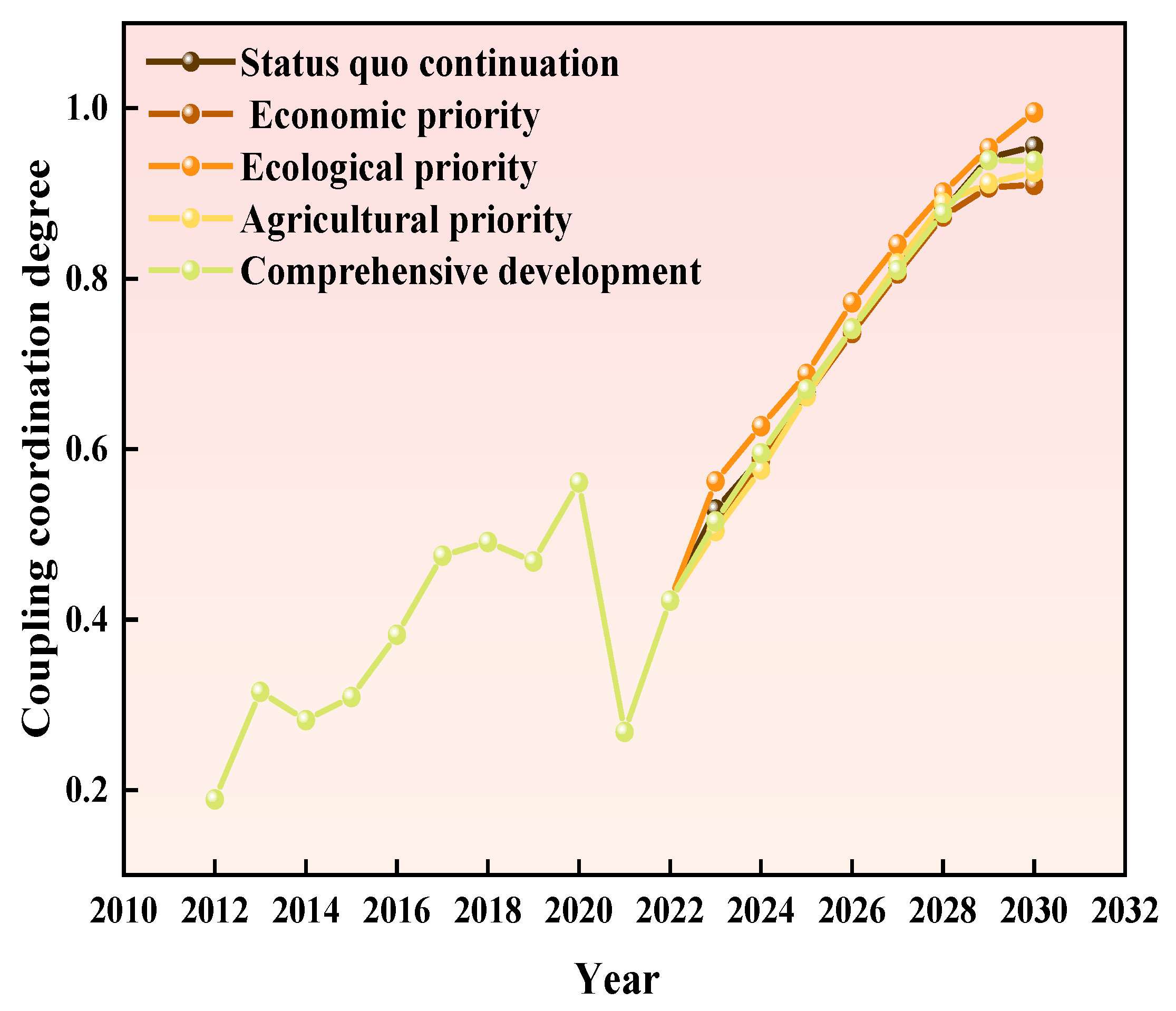
As shown in
Figure 15, the coupling coordination degree (D-value) of the W-S-E complex system in the GSYRB exhibited a clear three-stage evolution from 2012 to 2030: “impact–recovery–optimization”.
In the collaborative enhancement phase (2012–2020), the D-value exhibited an upward trend across all scenarios, rising from “Mild disharmony” to “Primary coordination” (D-value: 0.200–0.600). This advancement was primarily driven by widespread adoption of water-saving technologies and sustained gains in water resource utilization efficiency.
In the climate impact period (2021), the D-value declined sharply due to extreme drought, which drastically reduced water supply and disrupted subsystem equilibrium, demonstrating the severe effect of extreme climate events on system stability.
In the path divergence period (2022–2030), the D-value recovered and continued to rise (0.400–1.000), advancing towards “Intermediate” or “Advanced” coordination. Nevertheless, under different development strategies and regulatory priorities, the evolutionary trajectories and ultimate coordination levels diverged markedly, reflecting pronounced path dependence in long-term coordination outcomes.
3.7.2. Scenario Comparison and Synergy Mechanism
In 2030, coordination levels and evolutionary qualities differed significantly across scenarios.
Under Scenario B1, the D-value rose from 0.504 (2023) to 0.910 (2030) but remained the lowest among all scenarios. This stemmed primarily from excessive economic-subsystem loading, which elevated the risk of breaching water resource red-line constraints, weakened system resilience, and resulted in pronounced W–S–E coordination deficit.
Scenarios B0, B3, and B4 achieved comparable D values, indicating similar overall coordination enhancement. In contrast, Scenario B2 exhibited marked improvement, with the D-value rising from 0.562 to 0.995 (“Advanced coordination”). This was largely due to prioritizing ecological constraints, which established an effective “constraint–pressure–driving” mechanism. This mechanism guided socioeconomic development towards green, low-carbon transformation while sustaining water resource use, thereby achieving high-level equilibrium and synergy among W-S-E subsystems.
In conclusion, the B1 scenario, which emphasized isolated economic growth, failed to achieve long-term optimal coordination. By contrast, the B2 scenario, with its three-dimensional regulatory framework integrating scale control, efficiency enhancement, and ecological constraints, most effectively guided the complex system towards high-level sustainable coordination, supporting the subsystems’ synchronized advancement. These findings provided strong quantitative and theoretical support for continuing the “ecological priority and green development” strategy in the Yellow River Basin.
4. Discussion
4.1. Evaluation System and Methodology
The core of WRCC research lies in constructing a scientifically robust evaluation index system and selecting appropriate assessment models. Most existing studies adopt the W–S–E complex ecosystem framework, often combined with the obstacle degree model to diagnose key limiting factors. For instance, ref. [
43] applied this framework to evaluate WRCC and reported an overall improvement in regional water environmental carrying capacity. Common weighting methods include AHP, entropy weighting, and CRITIC, frequently coupled with TOPSIS to derive composite WRCC indices [
44,
45]. Extending this approach, ref. [
38] further applied the CRITIC–TOPSIS framework to assess WRCC, demonstrating its effectiveness in regional WRCC evaluation.
Building upon this methodological foundation, this study adopts the AHP–entropy weight method for indicator weighting and innovatively integrates the VIKOR method for comprehensive WRCC evaluation. VIKOR is particularly well-suited for multi-criteria decision-making problems, involving conflicting and incommensurable indicators, a defining characteristic of WRCC assessment due to the intrinsic trade-offs between economic development and ecological conservation objectives.
Unlike TOPSIS, which ranks alternatives solely based on geometric distance from the ideal solution, VIKOR simultaneously accounts for collective utility and individual regret, thereby identifying a compromise-optimal solution. This dual-criteria decision mechanism makes VIKOR particularly suitable for regions like the GSYRB, where tensions between economic development and ecological protection are pronounced. By explicitly balancing competing objectives, VIKOR provides a practical and robust decision-support framework for reconciling diverse stakeholder interests in WRCC management.
4.2. Dynamic Prediction and Scenario Simulation
Dynamic prediction of WRCC is critical for forward-looking water resource management, as it enables early risk identification and evaluation of strategic interventions. An expanding body of research demonstrates the value of diverse modeling approaches for WRCC forecasting. For instance, ref. [
9] employed an SD model to simulate WRCC evolution under multiple scenarios, identifying a “dominant development–ecological protection–efficient water conservation” pathway as optimal. Ref. [
46] integrated a gray prediction model with climate projections for future WRCC trends, and ref. [
47] combined gray prediction with a Markov chain to construct a WRCC forecasting framework. These studies demonstrate that multi-scenario simulations integrating SD, models, and gray prediction models offer strong explanatory power and practical relevance for capturing WRCC dynamic evolution under uncertainty.
Based on this, this study innovates by constructing an SD-VIKOR coupled framework to dynamically simulate WRCC evolution in the GSYRB from 2012 to 2030. Five typical scenarios are set: status quo continuation (B0), economic priority (B1), ecological priority (B2), agricultural priority (B3), and comprehensive development (B4).
Simulation results indicate that Scenario B4 achieves the highest comprehensive WRCC level. Anchored in ecological constraints and systemic coordination, it consistently outperforms all other scenarios throughout the simulation period. This outcome aligns closely with the optimal “dominant development, ecological protection, and efficient water conservation” pathway identified by [
48], despite differing regional contexts. Such cross-regional convergence reinforces the robustness and broad applicability of green and low-carbon paradigms for sustainable water resource management, particularly in water-scarce regions of China. The superior performance of Scenario B4 further implies that, in arid regions like the GSYRB, long-term water security and sustainable socioeconomic development depend fundamentally on prioritizing ecological integrity and systemic balance over short-term, sector-specific growth objectives.
4.3. Policy Implications from Key-Indicator Simulations
Simulations of key indicators across scenarios reveal systematic trade-offs and provide a quantitative basis for policy. The strong performance of Scenario B2 in total water consumption and supply–demand ratio demonstrates that stringent ecological constraints can enhance overall system efficiency rather than restrict development. By fostering technological innovation, such as increasing reclaimed water reuse, this scenario achieves a synergistic balance between water management and economic development. These findings empirically validate the principle of “determining development by water” and align with [
4], further substantiating the applicability and effectiveness of green, low-carbon development models in arid and water-scarce regions.
Simulations of socioeconomic indicators, including GDP and total population, yield deeper insights into development mechanisms. Under the B3 scenario, GDP increases by 77.1%, challenging the conventional assumption that economic growth must depend on high water consumption and demonstrating the feasibility of decoupling economic expansion from resource use. Meanwhile, while total population varies little across scenarios, water resource pressure differs markedly, indicating that resource stress is driven less by population scale than by the water-intensive characteristics of the economic structure. Together, these findings provide robust modeling evidence in support of a transition toward sustainable development pathways, consistent with [
11].
Furthermore, Scenario B2 successfully reversed the upward trends in domestic wastewater discharge volume and residential water consumption, a result of its integrated management strategy encompassing “source reduction–process control–end-use recycling”. This outcome provides not only qualitative policy guidance but also robust quantitative evidence for systemic water-environment management. It validates the holistic governance framework proposed by [
46], which emphasizes that fragmented, sector-specific approaches are insufficient for long-term development. Instead, only comprehensive, system-wide transformation can ensure enduring water resource security in the GSYRB.
4.4. Analysis of the Driving Mechanism of the WRCC System and Its Scenario Heterogeneity
The results from single-factor and two-factor Geodetector analyses demonstrate that WRCC in the GSYRB operates as a complex adaptive system characterized by multi-source drivers, multi-scale interactions, and multi-path feedback. Its spatial differentiation and dynamic evolution exhibit strong scenario-dependent heterogeneity and significant interactive amplifications, reflecting the structural and adaptive responses of regional water resource systems to high-intensity human activities under constrained natural conditions.
Single-factor detection reveals that dominant drivers of WRCC are not static, but undergo structural reconfiguration across scenarios. Under baseline B0 and economic-priority B1 scenarios, GDP (S5), total population (S4), and total water consumption (W5) form a “growth-driven force chain” governing WRCC differentiation. By contrast, under B2 and B4, environmental variables, such as domestic wastewater discharge volume (E1), residential water consumption (E3), and ecological-related indicator (E2), supersede economic scale as the primary explanatory factors. This “driving weight migration” indicates a shift in system sensitivity from economic expansion and resource consumption toward ecological constraints and efficiency-oriented regulation, highlighting the responsiveness of regional water systems to policy orientation and governance objectives.
Two-factor interaction detection further reveals that most factor combinations yield substantially greater explanatory power than the sum of their respective single-factor effects, demonstrating a pronounced “two-factor enhancement” property of WRCC. Under Scenario B1, interactions such as S5∩W5 and S4∩S5 exhibit cumulative amplification, leading to spatial polarization typical of growth-driven systems. In Scenario B2, interactions including W1∩E1 and W1∩E3 display nonlinear enhancement, indicating that the coupled regulation of ecological constraint variables governs WRCC system sensitivity under green development pathways. In Scenario B3, the interaction W5∩E1 demonstrates exponential amplification, reflecting strong coupling between agricultural irrigation demand and domestic water use in water-scarce regions.
These findings collectively illustrate that the driving mechanism of WRCC is a multi-factor complex system, in which factors do not act linearly or additively, but shape system behavior through reinforcing feedback, cascading chain reactions, and compound coupling effects.
4.5. Implications of Coupling Model Coordination and Differentiation Management
The combined analysis of SD modeling, Geodetector, and obstacle degree model shows that the sensitivity and constraint intensity of core WRCC factors vary across scenarios. This variation stems from structural reshaping of the multi-level coupling mechanism of the water resource system under different development paths. The SD scenario simulation indicates how regulatory constraints alter system feedback and internal dynamics. Geodetector reveals factor-specific responses in spatial heterogeneity. Obstacle factor diagnosis reveals key factors and regional differences, providing a basis for differentiated management. Consistent with previous studies [
10,
49], obstacle factors differ significantly across regions. The obstacle degree model further indicates that cumulative factor deviations form bottlenecks under different policy settings. Therefore, the different roles of a given factor across scenarios result from the combined effects of “endogenous structural adjustment—spatial sensitivity response—cumulative deviation amplification” under different policy drives.
Firstly, natural hydrological factors (W2, W3, and W4) are dominant across all scenarios, maintaining high contribution rates in obstacle diagnosis and high q-values in Geodetector analysis. They define the “physical upper limit” and “spatial foundational structure” of the regional water resource system, representing an essentially irreversible structural constraint, and the most rigid boundary of WRCC. Scenario simulations show that without effective demand-side regulation (e.g., B0, B1, and B3), the constraining effects of natural factors remain largely unattenuated. Under B2, where demand structure is actively regulated, the dominance of hydrological factors persists, yet their marginal restrictive intensity is partially mitigated. This reflects both the irreplaceability of the natural hydrological foundation and the capacity of demand-side policy to moderate, though not eliminate, natural resource limitations.
Meanwhile, total water consumption (W5) and industrial water-use efficiency (S6) exhibit high sensitivity owing to their pivotal roles in the “pressure accumulation–feedback amplification” mechanism of the system. In the obstacle degree model, deviations in these variables accumulate rapidly under increasing water demand. Geodetector reveals pronounced nonlinear enhancement in interactions of W5∩S6 and S5∩S4, highlighting cross-dimensional coupling between resource pressure and socioeconomic expansion. Under B1, accelerated economic growth intensifies cumulative pressure from W5 and S6, rendering them core drivers of WRCC deterioration. By contrast, under B2, with stringent ecological constraints and higher water reuse, the marginal pressures from W5 and S6 are substantially alleviated, leading to structural “de-accumulation” of system stress. This indicates that the scenario-dependent behavior of W5 and S6 reflects their structural dependence on the economic development mode: scale expansion amplifies their obstacle effects, whereas an efficiency-focused pathway reduces system sensitivity.
Residential water consumption (E3) reflects marked scenario dependence as a “rigid demand variable”. In the obstacle model, E3 emerges as a medium- to long-term cumulative constraint. Geodetector reveals significant synergistic enhancement between E3 and factors such as supply–demand ratio (W1) and domestic wastewater discharge volume (E1). Scenario simulations indicate that without strong demand-side management (e.g., B0, B3), the constraining effect of residential water consumption intensifies with advancing urbanization. Under environmental-priority Scenario B2, measures such as tiered water pricing, distribution network leakage reduction, and widespread adoption of water-saving technologies reduce both the deviation degree and interaction intensity of E3. These results demonstrate that residential water demand is policy-responsive and structurally elastic, with its system-level influence depending largely on the rigor and demand-side regulation embedded in each pathway.
In summary, varying influence intensities of core factors across scenarios stem from heterogeneous responses in three interrelated dimensions: SD-revealed dynamic pathways, Geodetector-identified spatial driving structures, and obstacle model-captured cumulative deviations. Natural supply factors define the upper bound of scenario improvement, demand-expansion factors govern inter-scenario variation, and domestic water-use factors shape adaptability and policy sensitivity of system regulation. Together, these three categories form a dynamic feedback structure underlying WRCC dynamics, providing a mechanistic explanation for why the same factors exhibit divergent sensitivities and constraint strengths under differing development pathways.




 ,
,