1. Introduction
Microbiological contamination of water is one of the greatest health risks to humans today. According to the World Health Organization (WHO), the quality of water in various regions of the world does not meet sanitary standards, and this situation leads to millions of people suffering from waterborne diseases every year [
1,
2,
3]. In Kazakhstan, water pollution remains a critical issue. Studies conducted in 2021 indicated that the level of microbiological contamination in the country’s reservoirs significantly exceeded sanitary requirements [
4,
5,
6,
7,
8]. Therefore, searching for effective water disinfection methods is currently an important scientific and practical task.
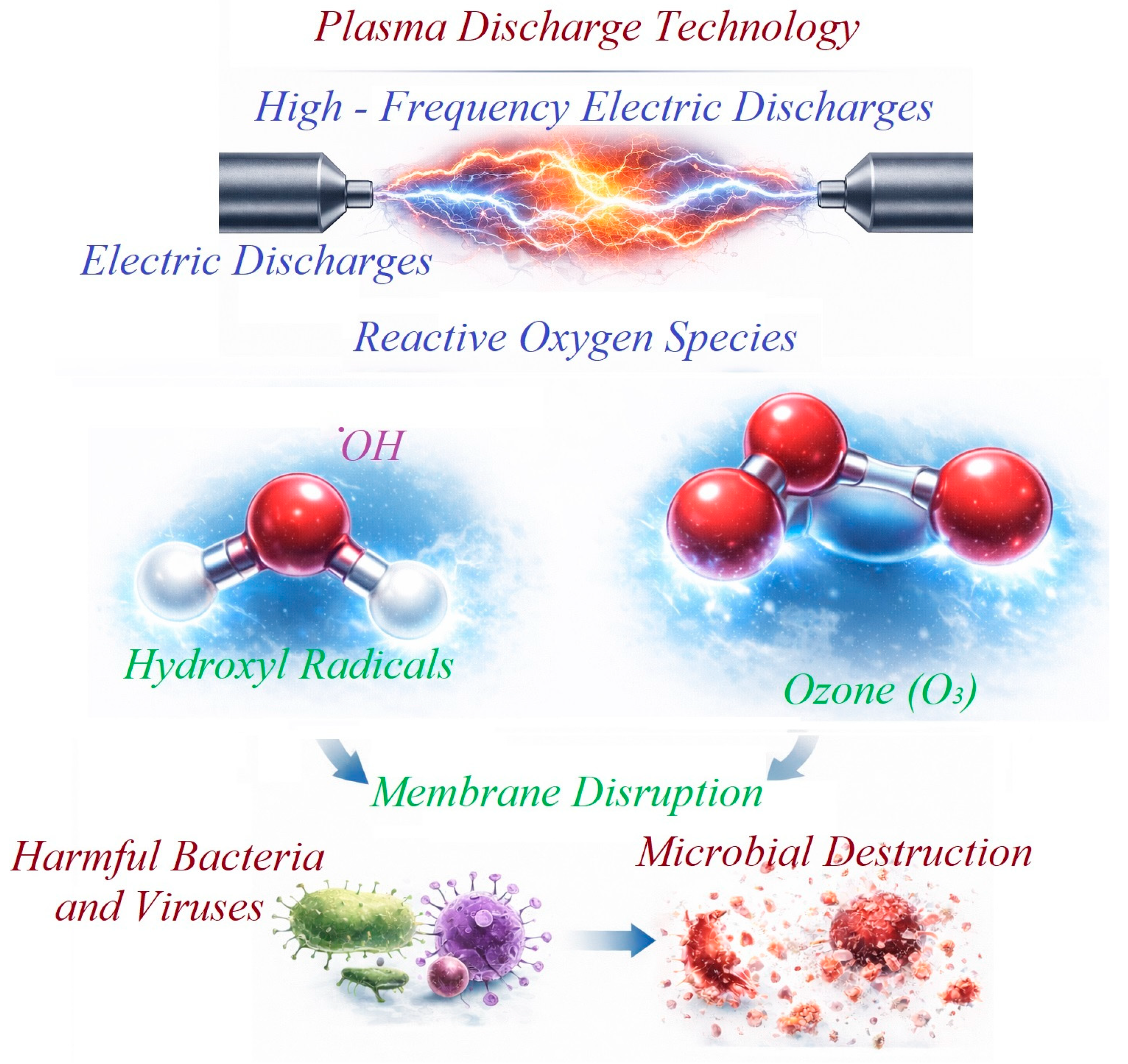
Plasma discharge technology, especially high-frequency electrical discharges, offers new possibilities for the elimination of microorganisms in water. This method is capable of generating reactive oxygen species, including hydroxyl radicals (
•OH) and ozone (O
3), in water. Hydroxyl radicals are among the most reactive molecules in water, capable of breaking down microbial membranes and damaging their structure (
Figure 1) [
9,
10,
11]. While many studies have demonstrated the effectiveness of plasma discharge, its energy efficiency and the exact results of its action against microbes are still not fully researched [
12,
13].
Scientifically, the effectiveness of high-frequency electrical discharges in microbial disinfection is related to the physical and chemical processes involved in the generation of reactive particles. Electrical discharges ionize the molecules in water, thereby ensuring the formation of hydroxyl radicals and ozone. These chemical reactions play a crucial role in the process of eliminating the microbiological content in water. For example, studies show that during the application of high-frequency discharges, the formation rate of hydroxyl radicals varies from 1 × 10
−6 mol/s·L to 5 × 10
−6 mol/s·L as the temperature increases [
14,
15]. These figures are significant for the efficient disinfection of the microbiological composition of water.
Furthermore, the results of studies indicate that the concentration of bacteria and viruses in water decreases by 3–6 log units under the influence of high-frequency discharges [
16,
17,
18]. These figures demonstrate the effectiveness of plasma discharge, but its actual application on an industrial scale has not yet been studied. The efficiency of plasma technology on an industrial scale, especially considering energy consumption and processing time, requires further research.
In recent years, the rapid spread of antibiotic-resistant bacteria and emerging pathogenic microorganisms has become a serious challenge for conventional water disinfection technologies. Many microorganisms have developed increased resistance to traditional disinfection methods such as chlorination and ultraviolet irradiation, while chemical disinfectants may also lead to the formation of harmful disinfection by-products, including trihalomethanes and haloacetic acids, which pose risks to human health and aquatic ecosystems [
12,
13,
14,
15]. Due to these limitations, environmentally friendly water purification technologies have attracted increasing attention. Among the promising alternatives are plasma-based treatment methods, which are now recognized as advanced oxidation processes capable of generating highly reactive species directly in water [
13,
14,
15,
16]. Plasma is commonly defined as the fourth state of matter consisting of partially ionized gas containing electrons, ions, excited atoms, radicals, and photons. In water treatment applications, particular attention is given to cold atmospheric plasma, which can operate at near-ambient temperatures while producing highly reactive oxygen species [
13,
14,
15]. The major advantage of plasma-based treatment lies in the simultaneous generation of oxidizing agents such as hydroxyl radicals (
•OH), ozone (O
3), and hydrogen peroxide (H
2O
2), which can inactivate microorganisms and degrade organic contaminants [
14,
15,
16,
17,
18].
Thus, investigating the process of drinking water disinfection using high-frequency electrical discharge is relevant. This method offers effective water treatment techniques, providing an opportunity to develop environmentally friendly and energy-efficient technologies. Moreover, this research will help identify new approaches to improving drinking water quality and propose environmentally and economically viable solutions.
The main contributions of this study can be summarized as follows:
Investigation of the generation of reactive oxygen species during high-frequency plasma treatment of water and analysis of their role in the oxidation processes occurring in the liquid phase.
Experimental evaluation of changes in key physicochemical parameters of water, including pH, conductivity, and oxidation–reduction potential, during plasma exposure.
Assessment of microbial inactivation efficiency in artificially contaminated water under different plasma treatment durations.
Integrated analysis of the relationship between plasma-generated reactive species, water quality changes, and microorganism inactivation.
These results contribute to improving the understanding of plasma–liquid interactions and demonstrate the potential of high-frequency plasma technology for water treatment applications.
1.1. Plasma Technologies for Water Disinfection
The high-frequency electrical discharge method for drinking water disinfection is an environmentally friendly and effective water treatment technology. According to research, high-frequency electrical discharges can eliminate up to 99.9% of microorganisms in water, with energy consumption ranging between 6–9 kWh/m3. This method inactivates 99.2–99.9% of E. coli bacteria. However, challenges such as high energy consumption and incomplete understanding of system stability at the industrial scale remain. Therefore, further research is needed to effectively apply high-frequency electrical discharges for water disinfection on an industrial scale.
Soni, A. et al. (2021) [
19] discussed the effectiveness of plasma discharge in disinfecting bacteria in water and demonstrated the effects of hydroxyl radicals and ozone on microorganisms (
Table 1). This study highlighted the high reactivity of plasma technology, particularly the ability of hydroxyl radicals to disrupt cell membranes. Additionally, Triantaphyllidou, I.E. and Aggelopoulos, C.A. (2025) [
20] studied the effects of cold plasma on bacteria in water, analyzing the influence of water composition and pulsed plasma waveforms, as well as the inactivation efficiency of
Escherichia coli, confirming the beneficial role of plasma treatment in bacterial disinfection.
The table shows the effectiveness of plasma discharge in inactivating bacteria in water. The ozone formation rate ranges from 1 × 10⁻⁶ mol/(L·s) to 5 × 10⁻⁶ mol/(L·s), and the concentration of superoxide ions is 10−6 mol/(L·s). The hydroxyl radical formation rate is 1 × 10⁻⁶ mol/(L·s), and the hydrogen peroxide concentration ranges from 0.5 mol/L to 3 mol/L. These molecules enable up to 90% bacterial inactivation, particularly within the pH range of 6.5–7.5.
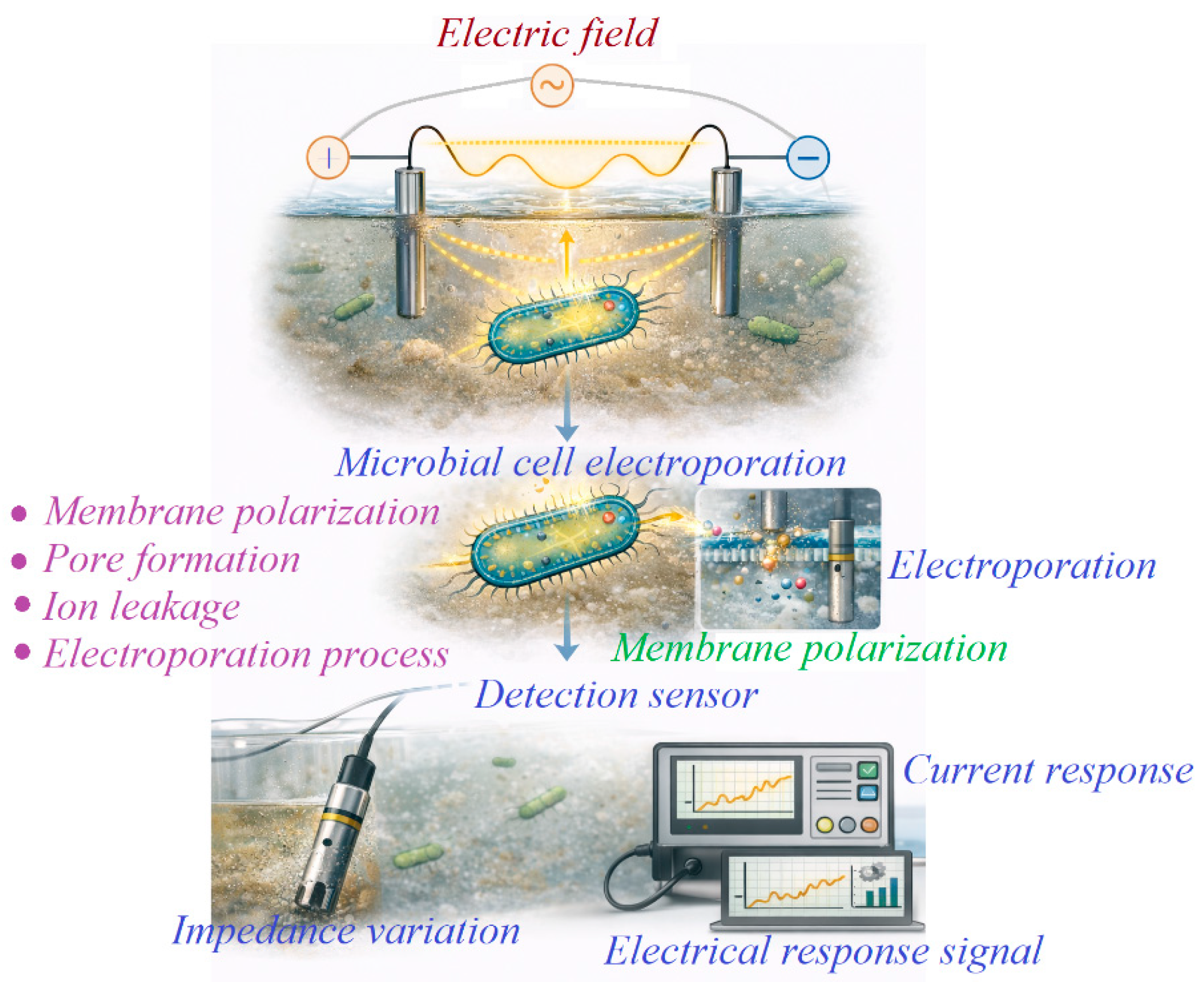
Ungureanu, C. et al. (2025) investigated the influence of electric fields on microbial cell properties and emphasized the importance of monitoring and detection in wastewater treatment systems [
21]. The study demonstrated that the application of electric fields is an effective approach enabling efficient microbial detection and control; however, it also highlighted the need for further research and development to enhance their practical implementation and performance. In general,
Figure 2 below presents a schematic representation of the electric field effect on microbial cells and the mechanism of their detection.
Figure 2 illustrates that under the influence of an electric field, the membrane of a microbial cell in a wastewater environment becomes polarized, and its permeability increases due to the electroporation process. As a result of these changes, variations in electrical parameters (impedance and current) are recorded, enabling microbial detection and process monitoring through sensor-based measurement.
Zhao, Y. M. et al. (2020) [
22] demonstrated that the application of plasma-activated water enables microbial inactivation efficiencies of 3–6 log, while the concentrations of reactive species such as
•OH, O
3, and H
2O
2 are formed within the range of 10
−6–10
−3 mol/L, confirming the high effectiveness of plasma treatment for bacterial and viral elimination. The authors also emphasized that the antimicrobial performance strongly depends on energy density (0.1–1.5 kWh/m
3) and discharge parameters. Similarly, Sammut, S. (2025) [
23], in a comprehensive analysis of plasma processing technologies, reported that the energy consumption of plasma systems in industrial applications varies within 0.2–2.0 kWh/m
2 and highlighted that process stability and scalability are influenced by equipment configuration and discharge regime. Consequently, although plasma technologies demonstrate high environmental efficiency, further improvements in energy efficiency and optimization of technological parameters are required for large-scale implementation. Overall,
Table 2 below presents the relationship between energy density and microbial inactivation during plasma treatment.
The table data indicate that increasing energy density from 0.1 to 1.5 kWh/m3 during plasma treatment leads to an increase in microbial inactivation from 3 to 6 log. The uncertainty intervals further reflect process variability associated with discharge parameters, confirming that energy input is a key determining factor governing microbial inactivation efficiency.
Miao, H. et al. (2019) reported that water disinfection technologies based on nanoscale antimicrobial materials and plasma-assisted processes achieve microbial inactivation levels ranging from 2 to 5 log, while the corresponding energy consumption of such systems varies within 0.2–1.8 kWh/m
3 [
24]. The authors also indicated that treatment efficiency is strongly dependent on reactive species concentrations (10
−6–10
−3 mol/L) and exposure duration. Baniya, H.B. et al. (2021) experimentally demonstrated that treatment with a cold atmospheric plasma jet reduced the pH of water samples from 7.2 to 5.8, increased electrical conductivity from 320 to 540 μS/cm, and generated hydrogen peroxide concentrations of approximately 0.2–1.1 mg/L [
25]. In addition, a bacterial reduction of 3–4 log was observed, confirming the effectiveness of plasma treatment while highlighting the need for further studies on energy efficiency and long-term process stability. Overall,
Table 3 below illustrates the parameter changes in the aqueous environment and microbial inactivation under plasma exposure.
Table 3 shows that plasma exposure significantly alters the physicochemical parameters of the aqueous environment, including decreased pH, increased electrical conductivity, and hydrogen peroxide formation. These changes occur alongside microbial inactivation, confirming the key role of plasma-generated reactive species in the disinfection process.
Oehr, C. et al. (2022) analyzed the cost structure of plasma processes and reported that the energy consumption of plasma systems varies approximately within 0.5–3.0 kWh/m
3 depending on the treatment regime, while energy expenses account for about 40–70% of total operational costs [
26]. The authors indicated that resource efficiency can be improved by increasing energy efficiency by 15–30%, which may enhance the economic attractiveness of plasma-based technologies. Rathore, V. and Nema, S. K. (2021) investigated the optimization of plasma-activated water generation parameters and found that when the discharge voltage ranged from 15 to 25 kV and the treatment duration from 5 to 20 min, hydrogen peroxide concentrations of approximately 0.3–1.5 mg/L were produced, accompanied by a decrease in pH from 7.0 to 4.5–5.5 [
27]. In addition, electrical conductivity varied within 250–600 µS/cm, indicating intensified reactive species formation; however, the authors emphasized that further studies are required to ensure energy efficiency and process stability under industrial-scale conditions.
A review of recent literature clearly indicates the need to investigate the environmental and energy efficiency of drinking water disinfection using high-frequency electrical discharge. However, the energy consumption and economic feasibility of systems suitable for industrial-scale implementation remain insufficiently explored. Therefore, additional research is required to enable the widespread application of this method. In this context, the development of novel approaches to enhance treatment performance and improve energy efficiency in high-frequency electrical discharge water purification is of particular importance.
1.2. Research Gap and Objectives of the Study
The aim of the study is to investigate the effectiveness and physicochemical mechanisms of drinking water disinfection using high-frequency electrical discharge plasma technology.
To achieve this aim, the following objectives are accomplished:
- −
To investigate the processes of reactive oxygen species (•OH, O3, H2O2) formation in water under high-frequency electrical discharge conditions;
- −
To evaluate the microbial inactivation efficiency of plasma treatment and determine the relationship between energy parameters and disinfection performance.
2. Materials and Methods
In this study, Escherichia coli was used as a model microorganism to evaluate the efficiency of plasma discharge for water disinfection.
The scientific research was based on a combination of theoretical and experimental approaches aimed at investigating the process of drinking water treatment using high-frequency electrical discharge plasma technology. The experimental work was conducted under laboratory conditions to study the impact of plasma discharge on the aqueous medium and to observe the processes occurring at the plasma-liquid interface.
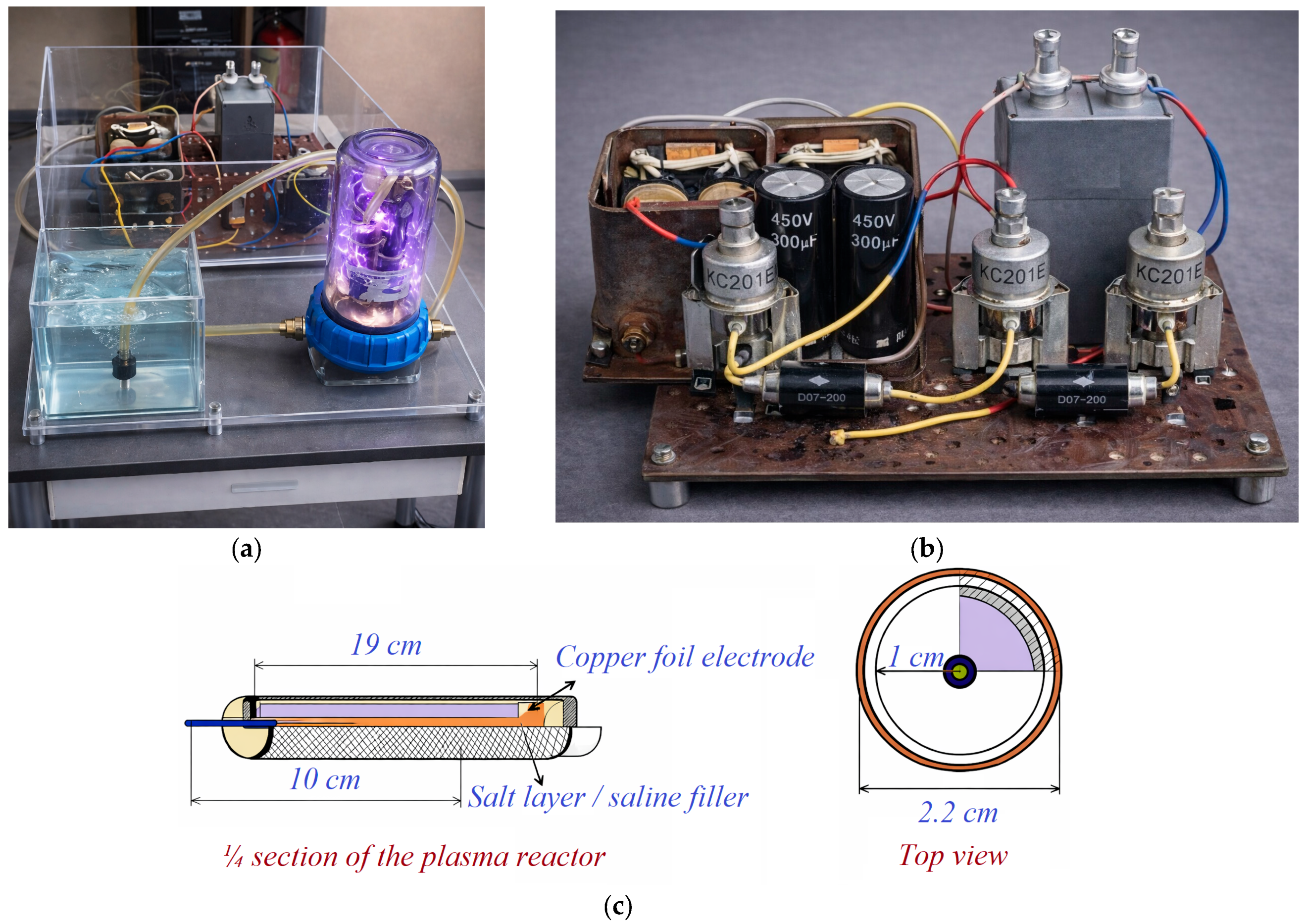
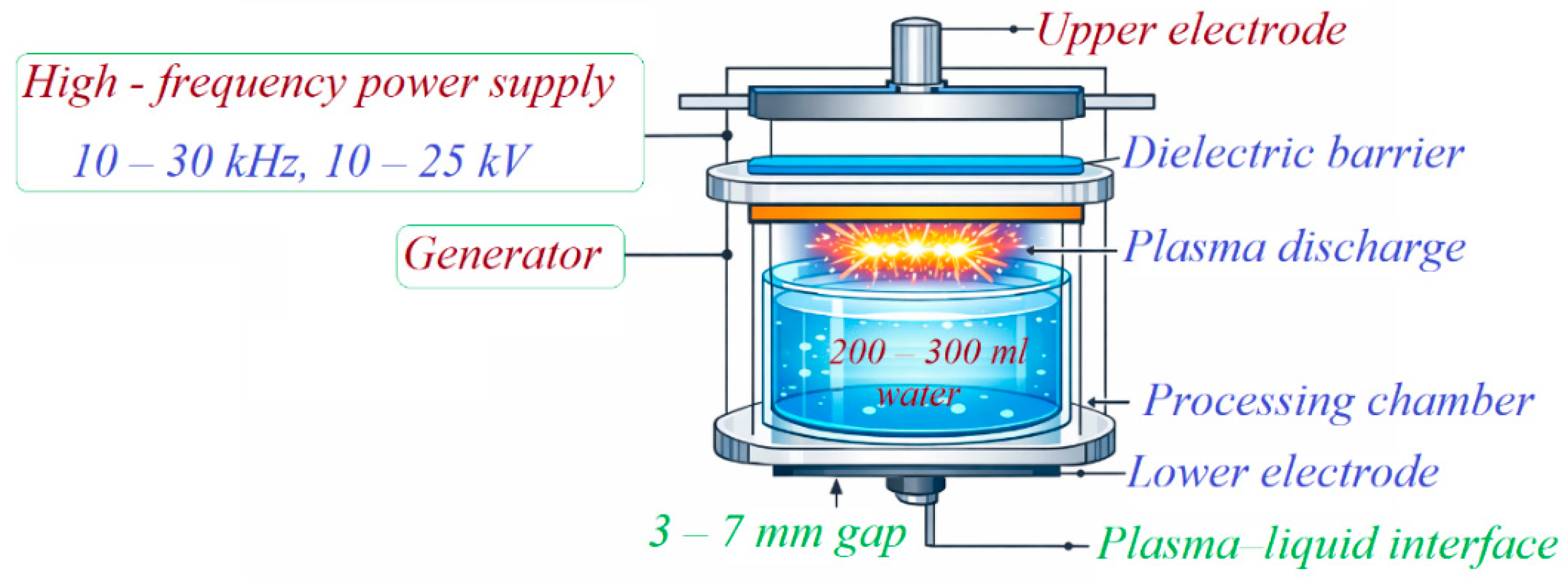
Experimental studies were carried out using a laboratory high-frequency electrical discharge reactor designed for plasma treatment of water (
Figure 3). The setup consisted of a high-frequency power supply, an electrode system, dielectric barrier elements, and a processing chamber containing water samples with a volume of 200–300 mL. Plasma discharge generation was achieved using a high-frequency generator operating in the frequency range of 10–30 kHz and producing electrical discharges at voltage levels of 10–25 kV. The interelectrode distance was maintained within 3–7 mm, ensuring stable discharge formation and stability of the plasma-liquid interaction region.
Distilled water and microbiologically contaminated water samples simulating natural water conditions were used as research materials. Distilled water artificially contaminated with microorganisms was used as a model medium to ensure controlled experimental conditions and to minimize the influence of unknown chemical impurities. The use of distilled water allows more accurate investigation of plasma-induced physicochemical processes and the formation of reactive oxygen species without interference from naturally occurring organic and inorganic compounds.
Such an approach is widely applied in plasma–liquid interaction studies to isolate the fundamental mechanisms of plasma-driven oxidation and microbial inactivation before testing the technology on more complex real water matrices.
Prior to treatment, water samples were stored in sterile glass containers, and experiments were conducted at room temperature (20–25 °C) under atmospheric pressure conditions. During each experiment, water samples with a volume of 200–250 mL were subjected to plasma treatment. Under the influence of high-frequency electrical discharge, a complex plasma-liquid chemistry system consisting of electron excitation, ionization, dissociation, and radical chain reactions was formed in the aqueous medium. At the plasma-liquid interface, collisions of high-energy electrons with water molecules resulted in excitation and dissociation processes:
Recombination and interaction of hydroxyl radicals led to hydrogen peroxide formation:
Oxygen molecules in the plasma region were dissociated by electron collisions, producing atomic oxygen:
The presented reaction mechanisms describing the formation of reactive oxygen species in plasma–liquid interaction are consistent with previously reported plasma chemistry models [
9,
14,
22].
Three-body recombination reactions resulted in ozone synthesis:
Excited oxygen atoms reacting with water produced additional hydroxyl radicals:
Ozone decomposition and radical reactions further generated reactive species:
Interactions between ozone and hydrogen peroxide led to chain hydroxyl radical formation:
Transformation of superoxide and peroxide species also occurred in solution:
Generated reactive oxygen species interacted with microbial cell membranes, initiating lipid peroxidation processes:
Oxidative damage to proteins and nucleic acids was also observed:
Ultimately, membrane destruction and cell lysis occurred:
Thus, during plasma treatment experiments, a multistage kinetic system involving electron excitation, dissociation of water and oxygen, formation of ozone and peroxides, radical chain reactions, and oxidation of biomolecular structures was established, resulting in effective reduction in microbiological contamination in water.
The plasma treatment procedure was carried out by exposing water samples to a high-frequency electrical discharge for 5–20 min (
Figure 4). During treatment, plasma formation at the water surface created favorable conditions for the generation of reactive oxygen and nitrogen species at the plasma–liquid interface. Throughout the experiment, discharge parameters, including voltage, frequency, and treatment time, were continuously monitored and maintained under controlled conditions. After each experimental run, the system components were rinsed with distilled water and dried, which ensured the repeatability and reliability of the experiments.
After plasma treatment, the physicochemical characteristics of water samples were evaluated using standard laboratory methods. The pH value was determined using a laboratory pH meter, while electrical conductivity was measured with a conductometer operating within a measurement range of 0–1000 µS/cm. In addition, colorimetric methods were applied to assess the presence of reactive oxidizing compounds. Microbiological analysis was carried out by inoculating water samples onto nutrient media followed by incubation in order to evaluate the presence of microorganisms.
Microbiological analysis was performed using the standard plate count method in order to evaluate the microbial reduction efficiency during plasma treatment. Artificial contamination of distilled water was performed using a mixed microbial culture obtained from environmental water samples.
The microbial community used for artificial contamination represented a mixed population of naturally occurring microorganisms typically present in environmental water samples. The study focused on the evaluation of overall microbial reduction using the total plate count method rather than identification of specific bacterial species such as Escherichia coli. This approach is commonly applied in preliminary investigations of water disinfection technologies to assess general antimicrobial efficiency.
Prior to analysis, water samples were serially diluted with sterile physiological saline solution. Aliquots of diluted samples were inoculated onto nutrient agar plates using the spread plate technique.
Nutrient agar plates were prepared using a standard microbiological procedure. The nutrient agar medium was dissolved in distilled water according to the manufacturer’s instructions and sterilized by autoclaving at 121 °C for 15 min. After sterilization, the molten agar was cooled to approximately 45–50 °C and aseptically poured into sterile Petri dishes. The plates were allowed to solidify under sterile laboratory conditions and were stored at 4 °C prior to use.
The inoculated Petri dishes were incubated at 37 °C for 24 h to allow colony development. After incubation, the number of viable microorganisms was determined by counting colony-forming units (CFU).
The microbial concentration was calculated according to the standard microbiological method using the following expression [
27]:
where
(N)—microbial concentration (CFU/mL),
(C)—number of colonies counted on the agar plate,
(V)—plated sample volume (mL),
(D)—dilution factor.
Each experiment was repeated three times under identical operating conditions, and the reported microbial concentrations correspond to the average values of these replicate measurements.
In practice, only plates containing 30–300 colonies were used for counting in order to ensure statistical reliability of the measurements. Colony counting was performed manually, and the calculated CFU values were corrected according to the applied dilution factor.
The variation in pH of the water samples can be explained by the dissociation of nitrogen- and oxygen-based acidic compounds formed during plasma treatment, leading to an increase in hydrogen ion concentration in the solution:
Changes in electrical conductivity were associated with the increased concentration of ions generated during plasma processing (such as hydronium, nitrate, and nitrite ions), which is described by electrolyte dissociation processes:
During colorimetric analysis, the formation of reactive oxidizing compounds, particularly hydrogen peroxide, was indirectly confirmed through its decomposition reaction:
Thus, the performed physicochemical and microbiological analyses enabled a comprehensive evaluation of ion formation, oxidizing species generation, and the reduction in microbial activity in water samples following plasma treatment.
The theoretical analysis of the processes occurring during plasma treatment was based on the concepts of plasma chemistry and reaction kinetics at the plasma–liquid interface. The formation and transport of reactive species were examined using literature-based kinetic schemes that account for the key parameters of the plasma discharge. The validity of the proposed methodology was demonstrated by ensuring stable experimental conditions, continuous monitoring of treatment parameters, and maintaining the repeatability of the experiments.
To ensure the reliability of the obtained experimental results, each plasma treatment experiment was repeated three times under identical operating conditions. The presented values of physicochemical parameters and microbial concentrations correspond to the average values obtained from these replicate experiments. The variability of the measurements was evaluated using standard deviation. Statistical data processing was performed using standard descriptive statistical methods.
To evaluate the antimicrobial efficiency of the plasma discharge treatment, microbiological analysis of water samples was performed. As indicator microorganisms of water contamination, bacterial cultures were used. The microorganisms were cultivated under aerobic conditions at a temperature of 37 °C for 24 h using standard nutrient agar medium.
Before plasma treatment, the bacterial suspension was prepared in sterile distilled water with an initial concentration of approximately 106 CFU·mL−1. After plasma exposure, treated samples were serially diluted using sterile physiological saline solution and plated on agar medium. The plates were incubated at 37 °C for 24 h, after which the number of colony-forming units (CFU) was determined.
The microbial concentration and the degree of inactivation were evaluated based on the reduction in CFU in comparison with the untreated control samples.
3. Results and Discussion
The scientific research was conducted at the Kazakh National Research Technical University named after K.I. Satbayev and the Tashkent Institute of Irrigation and Agricultural Mechanization Engineers during the period 2022–2025. The main objective of the study was to comprehensively investigate the effectiveness of drinking water disinfection using high-frequency electrical discharge plasma technology, as well as to elucidate the physicochemical mechanisms underlying this process. In accordance with this objective, the formation processes of reactive oxygen species in the aqueous medium under the influence of high-frequency electrical discharge were examined, including hydroxyl radicals (•OH), ozone (O3), and hydrogen peroxide (H2O2). Furthermore, the microbial inactivation efficiency of plasma treatment was evaluated, and the relationship between energy parameters and disinfection performance was determined.
The efficiency of plasma discharge treatment for microbial inactivation was evaluated based on the reduction in colony-forming units (CFUs). The experimental results obtained under different plasma treatment times are summarized in
Table 4.
As shown in
Table 4, the concentration of microorganisms decreases significantly with increasing plasma treatment time. A substantial reduction in microbial concentration is observed even during the first minutes of plasma exposure. After prolonged treatment, the inactivation efficiency reaches a very high level, indicating the strong oxidative capacity of reactive species generated in the plasma discharge.
The high efficiency of microbial inactivation can be attributed to the action of reactive oxygen species such as •OH radicals and ozone (O3), which damage the cellular membranes and internal structures of microorganisms, leading to their destruction.
The experimental measurements presented in this section represent average values obtained from repeated experiments performed under identical operating conditions. The measurement uncertainty was evaluated using standard deviation calculated from three independent experimental runs.
For better clarity of the obtained experimental results, the key physicochemical parameters and microbial inactivation data are summarized in
Table 5,
Table 6 and
Table 7.
3.1. Formation of Reactive Oxygen Species in Water Under High-Frequency Electrical Discharge
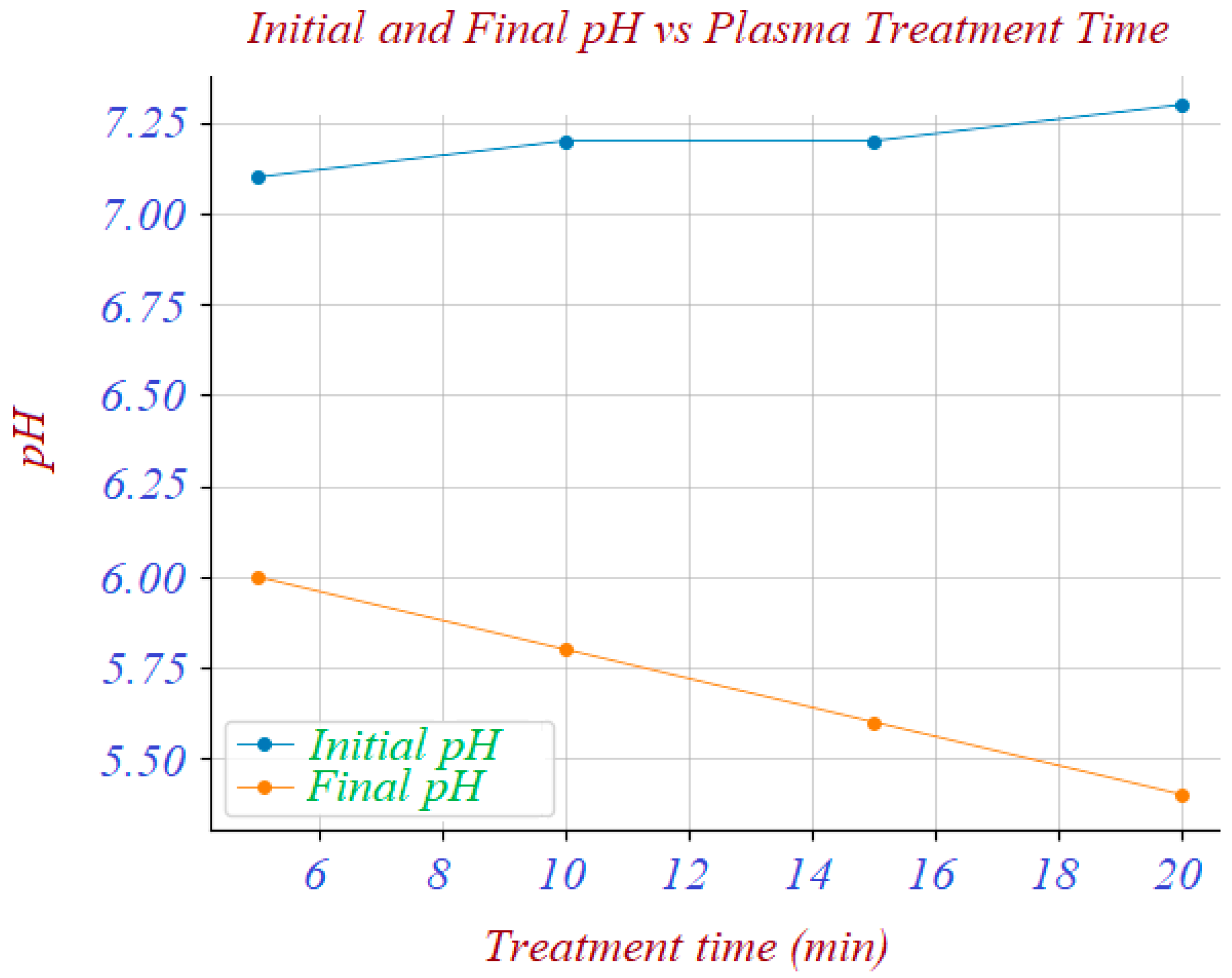
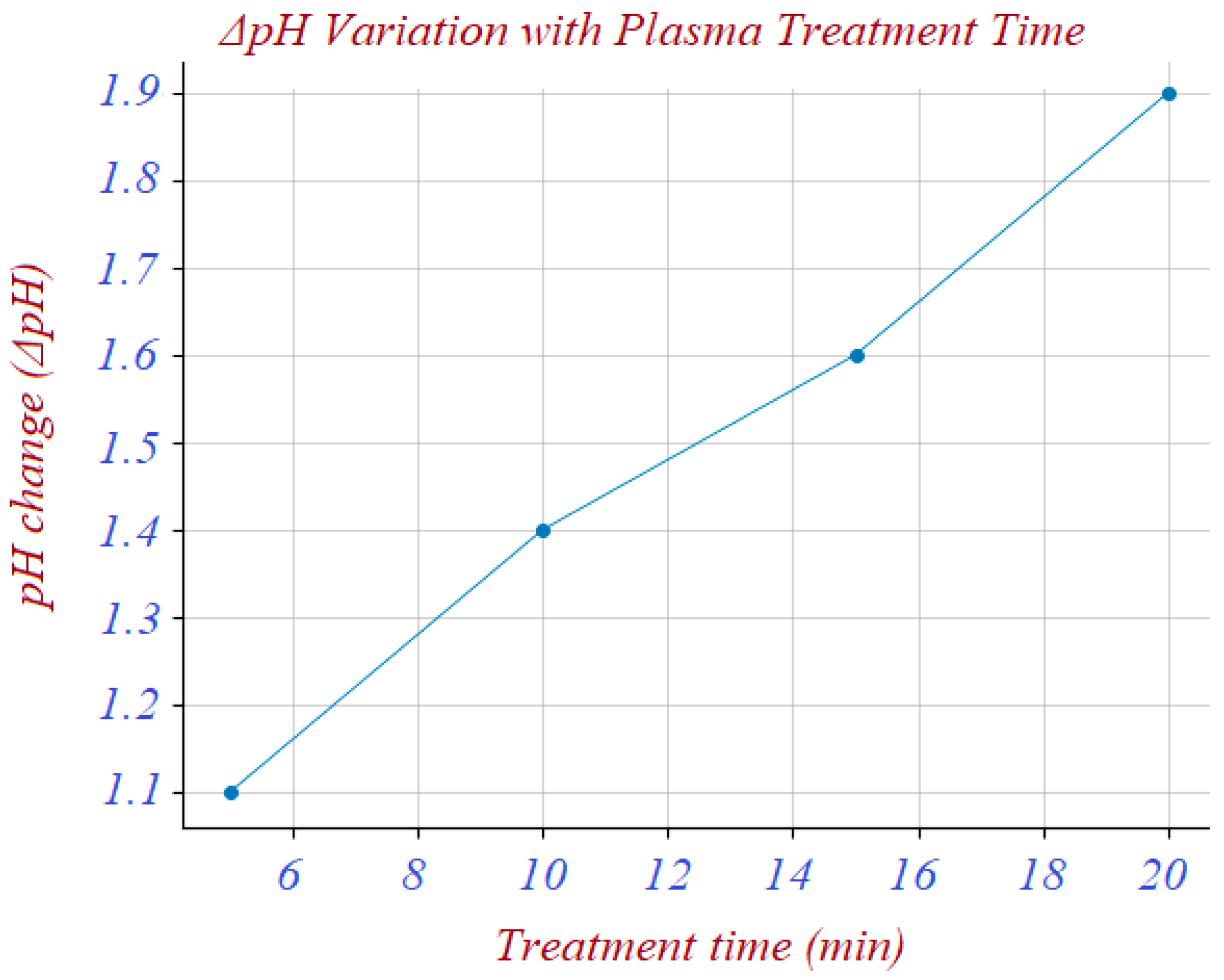
The conducted experimental studies demonstrated that plasma treatment using a high-frequency electrical discharge led to significant changes in the physicochemical parameters of the aqueous medium, confirming the active formation of reactive species. During plasma treatment carried out within 5–20 min, the pH values of water samples decreased from the initial range of 7.1–7.3 to 5.4–6.0, indicating an average reduction of approximately 1.5 units. This acidification phenomenon can be explained by the formation of nitrogen-based reactive compounds under plasma exposure, resulting in the generation of nitric and nitrous acids. The results of the study can be observed in
Figure 5 and
Figure 6 below.
Figure 5 shows that as the plasma treatment time increases, the final pH value of the water medium gradually decreases, indicating an increase in acidity. In addition, the initial pH remains approximately constant, confirming that the primary changes induced by plasma exposure occur in the treated medium.
Figure 6 demonstrates that the ΔpH value gradually increases with increasing plasma treatment time, indicating an intensification of acidification in the water medium. The highest ΔpH value was observed at 20 min of treatment, confirming that plasma exposure duration directly influences the intensity of pH modification.
In addition, after plasma treatment, the electrical conductivity of the solution increased from 280–340 µS/cm to 480–620 µS/cm, corresponding to an approximate growth of 70–85%. The increase in conductivity is associated with the accumulation of hydronium, nitrate, and nitrite ions in the solution and reflects the intensity of plasma-liquid chemical processes. Colorimetric analysis confirmed the formation of hydrogen peroxide in plasma-treated samples. Its concentration varied from 0.35 to 1.20 mg/L depending on the treatment time, with the highest values recorded at 20 min of processing. This indicates the time-dependent accumulation of long-lived reactive species. The formation of hydrogen peroxide is mainly related to recombination reactions of hydroxyl radicals and ozone decomposition processes. The results of this scientific study can be observed in
Table 5 below.
Table 5.
Effect of plasma treatment time on solution conductivity and hydrogen peroxide formation.
Table 5.
Effect of plasma treatment time on solution conductivity and hydrogen peroxide formation.
| № | Treatment Time, min | Initial Conductivity, µS/cm | Final Conductivity, µS/cm | Absolute Increase, µS/cm | Increase, % | H2O2 Concentration, mg/L |
|---|
| 1 | 5 | 310 | 480 | 170 | 54.8 | 0.35 |
| 2 | 10 | 310 | 520 | 210 | 67.7 | 0.62 |
| 3 | 15 | 310 | 570 | 260 | 83.9 | 0.95 |
| 4 | 20 | 310 | 620 | 310 | 100.0 | 1.2 |
Table 5 shows that as the plasma treatment time increases, both the electrical conductivity of the solution and the hydrogen peroxide concentration gradually rise, indicating the accumulation of reactive species. The highest values were observed at 20 min of treatment, confirming the time-dependent intensity of plasma-liquid interaction processes.
It should be noted that hydroxyl radicals (•OH) and ozone (O3) were not directly measured in the present experimental setup. Their formation was evaluated based on well-established plasma–liquid interaction mechanisms and literature-reported kinetic data obtained under comparable discharge conditions.
According to literature-based kinetic estimations, under the investigated discharge parameters, the formation rate of hydroxyl radicals ranges from (1–5) × 10
−6 mol·L
−1·s
−1, while the ozone concentration is formed within the range of 10
−6–10
−4 mol·L
−1. The simultaneous presence of
•OH, O
3, and H
2O
2 species indicates the formation of a strong oxidative environment in water. The complete results of the study can be observed in
Table 6 below.
Table 6.
Literature-based kinetic parameters of reactive oxygen species formation under comparable plasma discharge conditions.
Table 6.
Literature-based kinetic parameters of reactive oxygen species formation under comparable plasma discharge conditions.
| Parameter | Unit | Minimum | Maximum | Average |
|---|
| •OH formation rate | mol·L−1·s−1 | 1 × 10⁻⁶ | 5 × 10⁻⁶ | 3 × 10⁻⁶ |
| O3 concentration | mol·L−1 | 1 × 10⁻⁶ | 1 × 10⁻⁴ | 5 × 10⁻⁵ |
| H2O2 concentration | mg/L | 0.35 | 1.20 | 0.78 |
| Conductivity increase | % | 70 | 85 | 77.5 |
| ΔpH | — | 1.1 | 1.9 | 1.5 |
Table 6 shows that during high-frequency plasma treatment, hydroxyl radicals, ozone, and hydrogen peroxide are generated within specific kinetic ranges. These quantitative parameters demonstrate that reactive species with different lifetimes are simultaneously formed in the plasma-liquid system, ensuring the development of a strong oxidative environment.
However, it should be emphasized that the presented •OH and O3 kinetic parameters represent literature-based estimations rather than direct experimental measurements. More precise quantification of short-lived reactive species would require advanced diagnostic techniques such as electron paramagnetic resonance (EPR) spectroscopy or fluorescence-based radical detection methods.
Thus, the obtained physicochemical results confirm the first objective of the study and demonstrate the efficient formation of reactive oxygen species in water during high-frequency plasma treatment.
3.2. Efficiency of Microorganism Inactivation and Its Relationship with Energy Parameters
Microbiological analysis of the treated water samples demonstrated a pronounced antimicrobial effect of plasma treatment under all investigated operating modes. The evaluation of microbial contamination was performed using total microbial count methods based on cultivation on nutrient media followed by incubation. This approach allowed the determination of the overall microbial reduction in the treated water samples. The initial microbial concentration in microbiologically contaminated water samples was approximately 105–106 CFU/mL, whereas after plasma treatment this value decreased to 102–103 CFU/mL. This change corresponded to a microbial reduction of 3–4 log units, confirming the high efficiency of plasma-based disinfection.
It should be noted that the microbiological analysis focused on the total microbial population present in the water samples rather than on the identification of specific bacterial species. The applied method allowed the assessment of the general disinfection efficiency of the plasma treatment process, which is commonly used in preliminary investigations of water purification technologies.
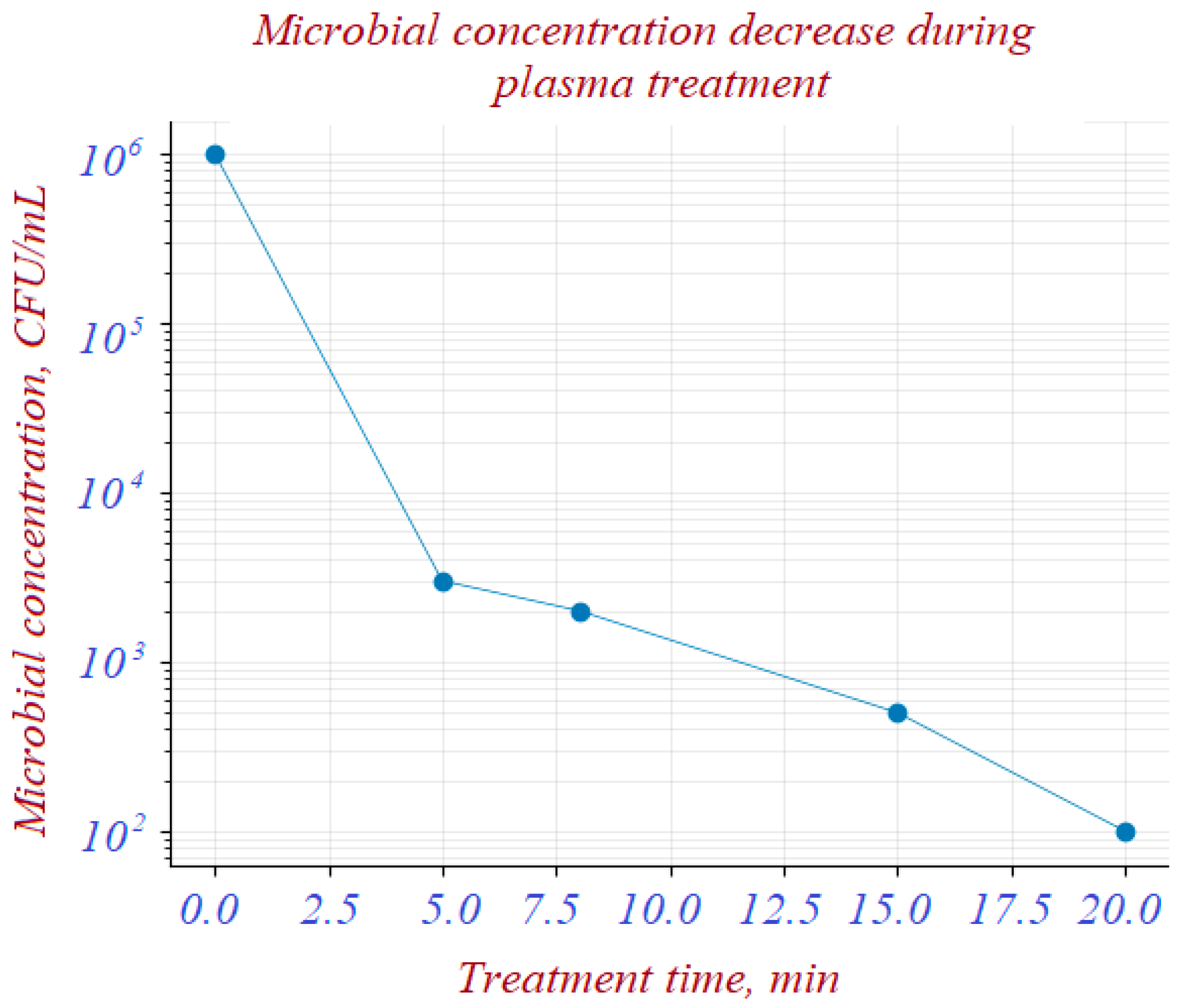
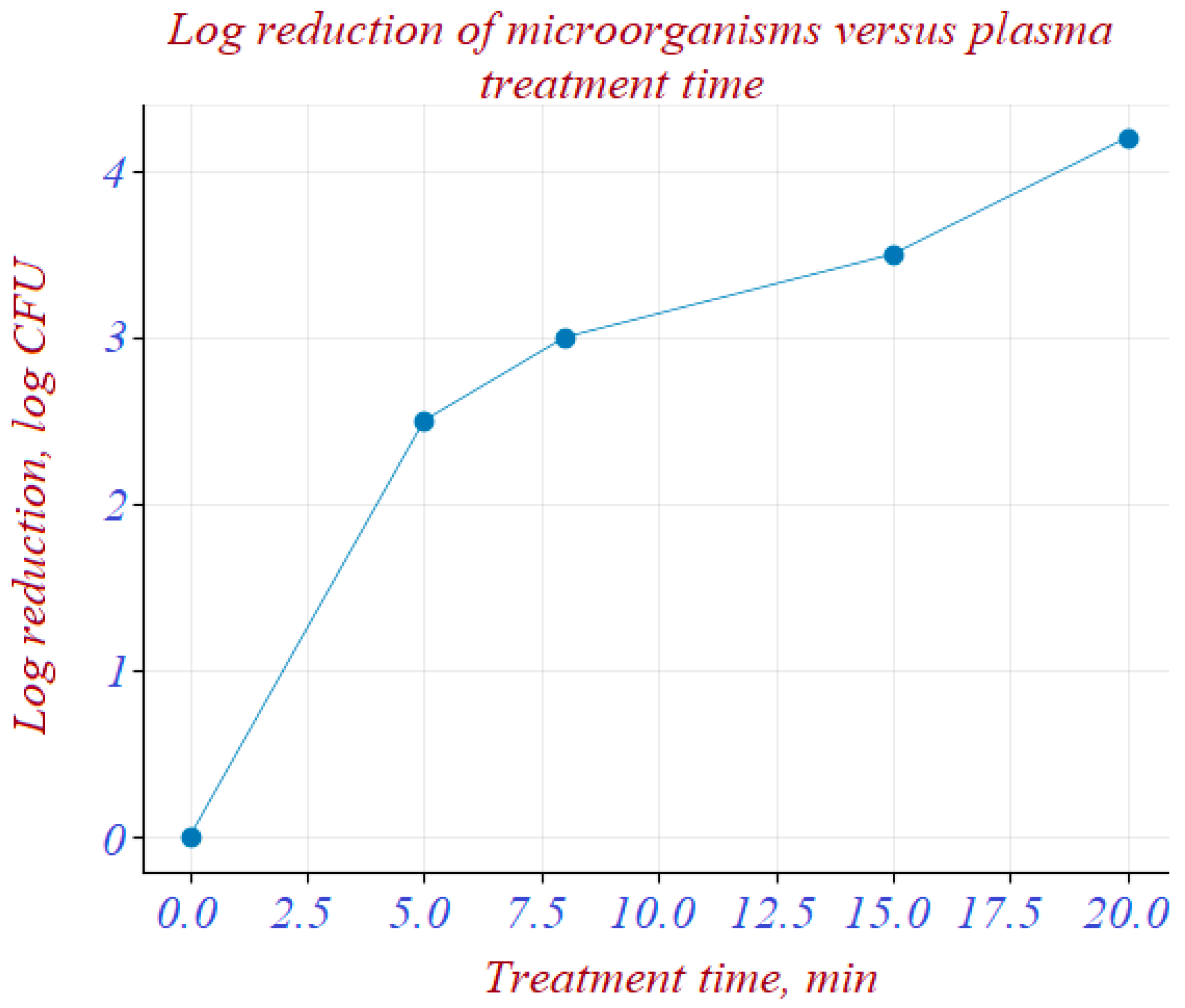
The obtained results indicated that microbial inactivation depended on the treatment time. In short treatment regimes (5–8 min), microbial reduction of 2.5–3.0 log was observed, while prolonged treatment (15–20 min) resulted in an increase to 3.5–4.2 log. This trend was explained by the accumulation of reactive species over time and the intensification of their oxidative impact on microorganisms. In addition, the correlation between the increase in hydrogen peroxide concentration and microbial inactivation provided further evidence of the plasma treatment mechanism. The scientific findings are illustrated in
Figure 7 and
Figure 8.
Figure 7 shows that the microbial concentration in water gradually decreases as the plasma treatment time increases. During 15–20 min of treatment, the multiple-fold reduction in concentration indicates the high antimicrobial efficiency of plasma technology.
Figure 8 shows that the log reduction in microorganisms steadily increases with increasing plasma treatment duration. This trend indicates the time-dependent kinetics of microbial inactivation associated with the accumulation of reactive species.
Microbial inactivation was mainly achieved through the action of hydroxyl radicals and ozone, leading to peroxidation of membrane lipids, disruption of membrane permeability, and damage to intracellular components. The obtained results were in good agreement with literature studies conducted within similar energy density ranges. Considering the discharge parameters, a voltage of 10–25 kV and a treatment duration of 5–20 min corresponded to an energy density of approximately 0.3–1.2 kWh/m
3. Within this range, an increase in energy consumption was accompanied by enhanced microbial inactivation, indicating that energy density is one of the key factors determining plasma treatment efficiency. The scientific findings are presented in
Table 7.
Table 7.
Relationship between plasma operating parameters, energy density, and microbial inactivation efficiency.
Table 7.
Relationship between plasma operating parameters, energy density, and microbial inactivation efficiency.
| № | Voltage, kV | Treatment Time, min | Energy Density, kWh/m3 | Reactive Species | Microbial Inactivation (log) | Inactivation Mechanism |
|---|
| 1 | 10–15 | 5–8 | 0.3–0.5 | •OH, O3 | 2.5–3.0 | Initial peroxidation of membrane lipids |
| 2 | 15–20 | 8–15 | 0.5–0.9 | •OH, O3, H2O2 | 3.0–3.5 | Disruption of membrane permeability |
| 3 | 20–25 | 15–20 | 0.9–1.2 | •OH, O3, H2O2 | 3.5–4.2 | Damage to intracellular components |
Table 7 shows that the increase in plasma treatment parameters and energy density was accompanied by an improvement in microbial inactivation efficiency. In particular, within the range of 0.3–1.2 kWh/m
3, the rise in energy consumption enhanced the formation of reactive species, resulting in a greater degree of microorganism elimination.
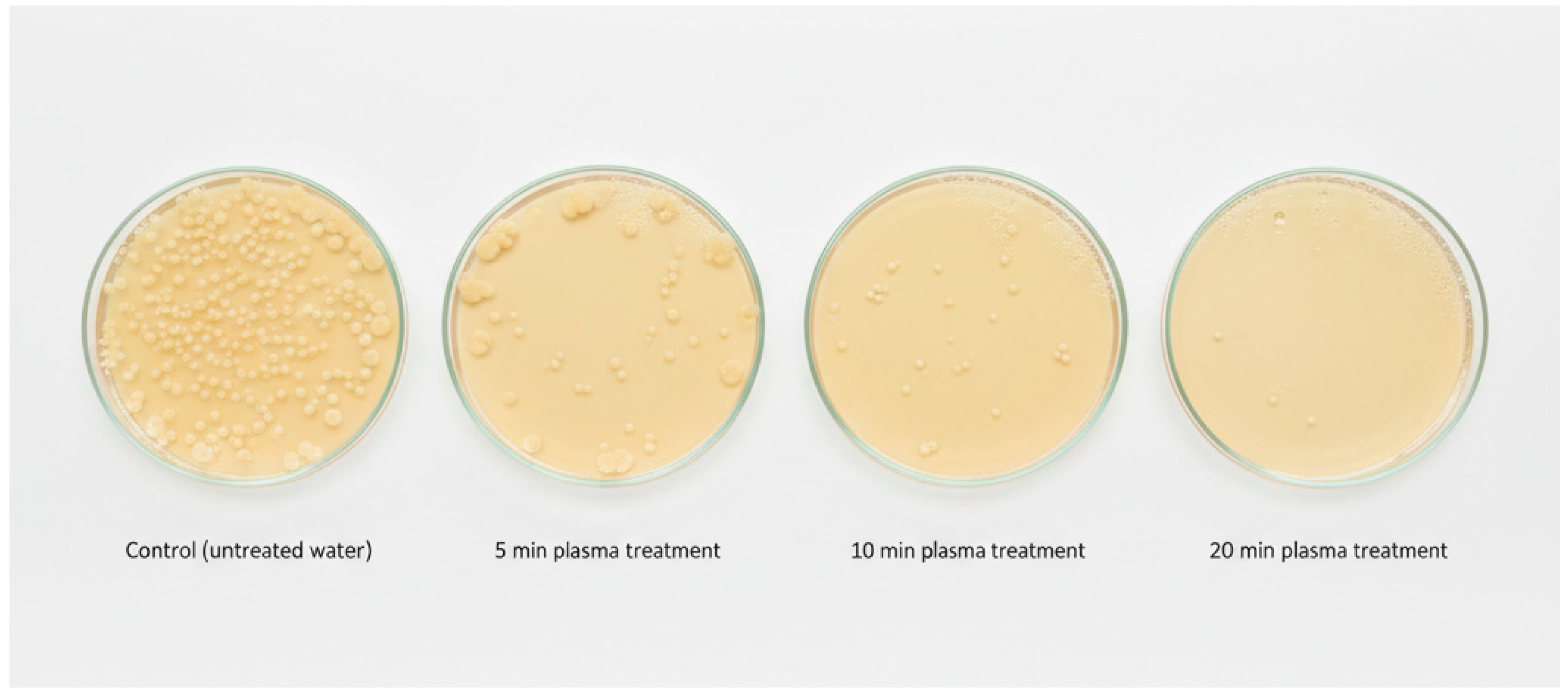
The qualitative reduction in microbial colonies on nutrient agar plates after different plasma treatment durations is illustrated in
Figure 9.
Figure 9 visually demonstrates the progressive reduction in microbial colony formation on nutrient agar plates with increasing plasma treatment duration. The control sample (untreated water) exhibited dense colony growth, indicating a high microbial concentration. After 5 min of plasma exposure, a noticeable decrease in colony density was observed. Further treatment for 10 min resulted in a significant reduction in colony-forming units, while after 20 min only a small number of isolated colonies remained on the agar surface.
These visual observations are consistent with the quantitative microbiological analysis presented in
Section 3.2, where the microbial concentration decreased from approximately 10
5–10
6 CFU/mL to 10
2–10
3 CFU/mL, corresponding to a 3–4 log reduction. The progressive decrease in colony density confirms the strong antimicrobial effect of plasma-generated reactive oxygen species and supports the time-dependent kinetics of microbial inactivation observed during the experiments.
Although increased energy consumption improved treatment efficiency, it may reduce the overall energy performance of the system; therefore, optimization of operating parameters is practically important. Overall, the results demonstrated the relationship between reactive species formation, energy parameters, and microbial inactivation, confirming the effectiveness of high-frequency plasma technology for drinking water disinfection.
3.3. Discussion of the Results of the Study
The obtained experimental results were explained by the physicochemical processes occurring at the plasma-liquid interface under the influence of high-frequency electrical discharge. As shown in
Figure 5 and
Figure 6, a gradual decrease in the final pH value of the aqueous medium was observed with increasing plasma treatment time. This phenomenon was associated with the formation of nitrogen and oxygen-containing acid-forming compounds generated under plasma exposure and their subsequent dissociation in solution, leading to an increase in hydrogen ion concentration. This interpretation was supported by reactions (30) and (31) describing the dissociation processes of nitric compounds in the aqueous phase.
In addition, as demonstrated in
Table 4, electrical conductivity increased from 280–340 µS/cm to 480–620 µS/cm after treatment. This change was attributed to the accumulation of ionic species such as H
3O
+, NO
3−, and NO
2−, indicating intensified plasma-liquid chemical interactions. Consequently, the observed decrease in pH and the increase in electrical conductivity reflected modifications in the ionic composition of the solution during plasma treatment.
The formation mechanisms of reactive oxygen species were interpreted based on Equations (1)–(20). Water molecules underwent excitation and dissociation due to electron collisions, resulting in the generation of •OH radicals (Equations (1)–(5)). Electron interactions with oxygen molecules produced O(3P) and O(1D) atoms, whose recombination led to ozone synthesis (Equations (9)–(12)). Subsequently, recombination of hydroxyl radicals resulted in H2O2 formation (Equations (6)–(8)), while reactions within the O3–H2O2 system promoted radical chain propagation (Equations (17)–(20)).
These processes were reflected in
Table 5, where the formation rate of
•OH radicals ranged from (1–5) × 10
−6 mol·L
−1·s
−1, ozone concentration varied within 10
−6–10
−4 mol·L
−1, and hydrogen peroxide concentration ranged from 0.35 to 1.20 mg/L. This indicated that oxidizing species with different lifetimes were simultaneously generated within the plasma-liquid system, resulting in the establishment of a strong oxidative environment in water.
Microbial inactivation was explained by the interaction of these reactive species with cellular structures. As illustrated in reactions (21) and (29), lipid peroxidation disrupted membrane integrity, increased permeability, and caused osmotic imbalance, ultimately leading to cell lysis. In addition, oxidative damage to proteins and DNA contributed to the loss of microbial viability. As presented in
Figure 7 and
Figure 8, microbial concentration progressively decreased with increasing plasma treatment duration, resulting in an overall reduction of 3–4 log units.
The obtained results were compared with previously reported studies. Investigations by Zhao, Y.M. et al. [
22] and Baniya, H.B. et al. [
25] reported microbial inactivation levels of 3–6 log for plasma-activated water systems, which was consistent with the findings of the present study. Furthermore, the energy density range of 0.3–1.2 kWh/m
3 corresponded to operating conditions described in related plasma disinfection research [
22,
23,
26]. Thus, the proposed high-frequency plasma method demonstrated comparable effectiveness to existing technologies, while its distinctive feature was the integrated assessment of physicochemical parameter variation, reactive species formation, and microbial inactivation within a single experimental framework.
Nevertheless, several limitations of the present research were identified. The experiments were conducted at laboratory scale using relatively small water volumes (200–300 mL), which restricted direct extrapolation to industrial applications. The investigated discharge parameters were confined to a specific range (10–30 kHz, 10–25 kV, 5–20 min), indicating that system performance under alternative operating conditions required further verification. In addition, microbiological analysis focused on total microbial counts, whereas species-specific identification of microorganisms was not performed. In particular, the inactivation efficiency for specific indicator pathogens such as Escherichia coli or other waterborne bacteria was not separately evaluated.
Several drawbacks of the study were also noted. Short-lived radicals, particularly hydroxyl radicals (•OH), were not directly measured in the present experimental setup. Their presence was inferred from indirect physicochemical indicators and literature-based kinetic estimations reported for comparable plasma discharge systems. Direct detection of such radicals requires specialized diagnostics such as electron paramagnetic resonance (EPR) spectroscopy or fluorescence-based radical probes. Moreover, energy efficiency evaluation relied on calculated energy density rather than real-time electrical power monitoring. These drawbacks could be addressed in future studies through the implementation of optical emission spectroscopy, electron paramagnetic resonance diagnostics, and real-time power consumption measurement systems.
The obtained findings suggested several directions for further research. Transitioning the plasma reactor to continuous-flow operation, conducting pilot- and industrial-scale experiments, and optimizing electrode configuration and discharge regimes were identified as key development pathways. In addition, combining plasma treatment with complementary purification methods was considered a promising approach for enhancing overall treatment performance. However, such developments may involve challenges related to maintaining discharge stability in larger volumes, ensuring treatment uniformity, and addressing the complexity of multiphysics modeling of plasma-liquid interaction processes.
It should be noted that the present study was performed using distilled water artificially contaminated with microorganisms in order to maintain controlled experimental conditions and reproducibility. In real water systems, additional components such as dissolved organic matter, mineral ions, and suspended particles may influence the efficiency of plasma-induced oxidation processes and microbial inactivation.
However, the obtained results provide important insight into the fundamental mechanisms of plasma–liquid interaction and reactive species generation, which are essential for the further development and optimization of plasma-based water treatment technologies.
It should be noted that the experiments in this study were conducted using relatively small water volumes (200–300 mL) under laboratory conditions. Such experimental configurations are commonly used in plasma–liquid interaction studies to investigate the fundamental mechanisms of reactive species formation and microbial inactivation.
Although the present work does not directly address large-scale system implementation, the obtained results provide important insights into the physicochemical processes governing plasma-based water treatment. Scaling of plasma reactors is typically achieved through modular reactor design or multi-electrode configurations that allow parallel processing of larger water volumes. Therefore, the findings of this study may serve as a basis for further engineering development of scalable plasma water treatment systems.
Overall, the conducted study demonstrated that reactive species generation, physicochemical parameter variation, and microbial inactivation during high-frequency plasma treatment represented strongly interrelated processes. The findings confirmed the potential of high-frequency electrical discharge plasma technology as a promising approach for drinking water disinfection while emphasizing the need for further optimization and scale-up investigations.
3.4. Comparison with Conventional Water Disinfection Methods
To better evaluate the practical relevance of the proposed plasma treatment technology, it is useful to compare its performance with conventional water disinfection methods such as chlorination and ultraviolet (UV) irradiation.
Chlorination remains the most widely used water disinfection method due to its relatively low operational cost and ability to maintain residual disinfectant levels in distribution systems. However, chlorination may lead to the formation of harmful disinfection by-products (DBPs), including trihalomethanes and haloacetic acids, which pose potential health risks.
Ultraviolet irradiation is another commonly applied method that provides rapid microbial inactivation without the formation of chemical by-products. Nevertheless, UV treatment requires clear water with low turbidity and does not provide residual disinfection, which may allow microbial regrowth during water distribution.
In contrast, plasma-based water treatment technologies generate a mixture of reactive oxygen species, including hydroxyl radicals, ozone, and hydrogen peroxide, which collectively contribute to microbial inactivation and oxidation of organic contaminants. Although plasma systems may involve higher energy consumption compared with conventional chlorination processes, they offer the advantage of chemical-free treatment and the ability to simultaneously degrade organic pollutants and inactivate microorganisms.
A qualitative comparison between plasma-based treatment and conventional disinfection technologies is presented in
Table 8.
As shown in
Table 8, conventional chlorination remains the most energy-efficient technology but may produce harmful disinfection by-products. UV irradiation provides rapid microbial inactivation without chemical additives but does not offer residual protection. Plasma-based treatment, although currently associated with higher energy consumption, offers a promising alternative due to its ability to generate multiple reactive oxygen species capable of simultaneously inactivating microorganisms and oxidizing organic contaminants.
4. Conclusions
Summarizing the conducted scientific research, the following scientific results were obtained.
The first research outcome consisted in the comprehensive identification of reactive oxygen species formation mechanisms in water under high-frequency electrical discharge conditions. The performed experiments demonstrated that hydroxyl radicals, ozone, and hydrogen peroxide were generated during plasma treatment, and their formation was explained by a system of electron excitation, dissociation, and radical chain reactions. Plasma exposure resulted in a decrease in pH from 7.1–7.3 to 5.4–6.0, an increase in electrical conductivity from 280–340 µS/cm to 480–620 µS/cm, and hydrogen peroxide accumulation within the range of 0.35–1.20 mg/L, which confirmed the active generation of reactive species. The distinctive feature of this result was the simultaneous consideration of plasma-liquid interface processes together with physicochemical indicators and kinetic reaction pathways. The obtained finding demonstrated that plasma discharge established a strong oxidative environment in water, which was explained by electron collision processes and radical recombination reactions.
The second research outcome involved the determination of microbial inactivation efficiency during plasma treatment and its relationship with energy parameters. Microbiological analysis showed that the initial microbial concentration of approximately 105–106 CFU/mL decreased to 102–103 CFU/mL after treatment, corresponding to an overall inactivation level of 3–4 log. It was also observed that increasing treatment duration led to enhanced microbial reduction, which was associated with the accumulation of reactive species over time. Under discharge parameters of 10–25 kV and treatment duration of 5–20 min, the corresponding energy density was approximately 0.3–1.2 kWh/m3, within which improved inactivation efficiency was observed. The peculiarity of this result was the demonstrated interrelation between microbial inactivation, reactive species generation, and energy input within a unified experimental framework. The obtained finding indicated that plasma treatment affected microbial cells primarily through oxidative stress mechanisms, including membrane disruption and oxidative damage to proteins and DNA.
One limitation of the present study is the use of distilled water as the experimental medium. Future research should therefore include experiments with real water samples such as natural surface water, groundwater, or wastewater in order to evaluate the performance of the plasma treatment system under more realistic environmental conditions. The results obtained in this study demonstrate the potential of high-frequency plasma technology for water disinfection and provide experimental insight into the mechanisms of reactive species generation and microbial inactivation.
Further research is required to investigate reactor scaling strategies and to evaluate the performance of plasma treatment systems under continuous-flow conditions and larger treatment volumes.
Overall, the conducted study demonstrated that high-frequency electrical discharge plasma technology represented an effective and promising approach for drinking water disinfection. The obtained findings clarified the causal relationship between reactive species formation and microbial inactivation and substantiated the possibility of improving system performance through optimization of technological parameters.