Article

Evaluating the Feasibility of Two Reduced Sulfur Compounds as Energy Sources and Electron Donors for Partial Autotrophic Denitrification: Thiocyanate and Sulfite

School of Light Industry Science and Engineering, Beijing Technology and Business University, Beijing 100048, China
*
Author to whom correspondence should be addressed.
Water 2026, 18(6), 705; https://doi.org/10.3390/w18060705
Submission received: 29 December 2025 / Revised: 4 March 2026 / Accepted: 16 March 2026 / Published: 17 March 2026
(This article belongs to the Special Issue Advanced Technologies in Water and Wastewater Treatment)

Abstract

Autotrophic denitrification using sulfur compounds is considered an alternative to heterotrophic denitrification for the treatment of organic carbon-deficient wastewaters. However, the stoichiometric characteristics of denitrification using different sulfur species, particularly thiocyanate (SCN) and sulfite (SO32−), remain poorly understood. Here, partial autotrophic denitrification driven by thiocyanate or sulfite was studied in two batch reactors. The stoichiometry of thiocyanate-oxidizing denitrification was assessed based on valence and ultimate product analysis. No nitrate removal was observed in the sulfite-fed system, indicating that sulfite could not serve as an effective electron donor for autotrophic denitrification under the tested conditions. In contrast, simultaneous removal of SCN and NO3 was achieved in the thiocyanate-fed system, with removal efficiencies of 100% and 92.5 ± 3.6%, respectively. After 36 h, total nitrogen removal reached 63.3%, with nitrite identified as the dominant intermediate product (26.7%). NO2 and NH4+ accumulated during the process could be further removed through anaerobic ammonium oxidation. Thiocyanate sulfur was primarily oxidized to sulfate via elemental sulfur as a transient intermediate. These findings provide a theoretical basis for applying thiocyanate-driven partial autotrophic denitrification to nitrogen removal from industrial wastewaters, particularly those generated via coal gasification and cyanide-utilizing gold mining processes.

1. Introduction

High nitrate concentrations in aquatic environments can cause serious health problems, including blue baby syndrome and an increased risk of cancer [1,2]. Because of its high removal efficiency and relatively low cost, heterotrophic biological denitrification is commonly used to remove nitrates from wastewater [3]. However, this process depends on organic carbon sources to sustain microbial activity and reduce nitrate to nitrogen gas [4]. When influent wastewater is carbon-limited, external carbon sources must be supplemented, which complicates operations and increases costs [5,6,7]. In addition, heterotrophic denitrification generates large quantities of excess biological sludge that complicates downstream handling and disposal [8,9]. As an alternative, autotrophic biological denitrification using sulfur compounds as electron donors has been proposed for nitrate removal [10,11,12,13,14,15].
Unlike heterotrophic denitrification, which can use many types of organic carbon as electron donors, autotrophic denitrification is limited to a much smaller range of substances. This limitation makes it harder to apply autotrophic denitrification widely in water treatment. Common electron donors for this process include hydrogen, reduced iron, and reduced sulfur compounds, such as sulfide (S2−), elemental sulfur (S0), thiocyanate (SCN), thiosulfate (S2O32−), and sulfite (SO32−). While sulfide, elemental sulfur, and thiosulfate have been reasonably well studied, less research has focused on thiocyanate, especially sulfite. To increase the options for electron donors in autotrophic denitrification, further research is needed on processes using thiocyanate and sulfite. This research could help make these technologies more practical [9,16,17,18,19,20]. Autotrophic denitrification avoids the need for organic carbon supplementation, produces less N2O, a strong greenhouse gas [21,22], and generates less sludge [23], which lowers treatment and disposal costs [10,11]. In recent years, autotrophic denitrification has attracted increasing attention [5,24,25,26,27,28,29,30], especially when sulfide, elemental sulfur, and thiosulfate serve as electron donors [5,24,31,32,33]. Previous studies have primarily focused on reaction kinetics [5,34,35], the sulfur-to-nitrogen (S/N) molar ratio, and key operational parameters, including pH, temperature, and reaction time [25,31,36,37,38,39,40,41]. In addition, the microbial communities involved in denitrification coupled to sulfide and elemental sulfur oxidation have been examined in detail [24,31,42]. New developments include partial denitrification to produce nitrite and ammonium from thiocyanate-rich wastewater [43,44] and the study of microbial communities in systems with thiosulfate or thiocyanate as donors at low temperatures (8 °C) [45]. For instance, Pan et al. found that nitrite, ammonium, and sulfate are the main products in thiocyanate-driven systems, with Thiobacillus as the dominant microbe [43]. In another study, Gu et al. combined sulfur-based partial autotrophic denitrification with anaerobic ammonia oxidation (ANAMMOX) for effective nitrogen removal [44]. These studies did not address the stoichiometry or reaction equations for the partial autotrophic denitrification process using thiocyanate as an electron donor, which limits the development of a thiocyanate-based autotrophic denitrification model.
Nevertheless, partial autotrophic denitrification utilizing thiocyanate as an electron donor remains poorly characterized, particularly regarding its stoichiometry. Clearly defining the stoichiometric equation is essential for building accurate models for thiocyanate-based denitrification. Currently, the quantitative relationships between substrates (SCN and NO3) and end products remain unclear. Likewise, there is little research on using sulfite (SO32−) for nitrate reduction. These gaps make it difficult to use autotrophic denitrification more widely for wastewater that lacks organic carbon. Therefore, more systematic research on thiocyanate- and sulfite-driven denitrification is needed to facilitate their application in wastewater treatment. In sulfite, sulfur has an oxidation state of +4, while in sulfate, it is +6. Theoretically, sulfite can serve as an electron donor in autotrophic denitrification (stoichiometric equation: 5SO32− + 2NO3 + 2H+ → 5SO42− + N2 + H2O), releasing energy—approximately −260 kJ/mol SO32−—which is thermodynamically feasible (ΔG_r′ < 0). However, the energy released is relatively low compared to other sulfur compounds. In addition, sulfite also exhibits certain biological toxicity to microorganisms. This may result in stricter operational and microbial requirements for its utilization. Although thermodynamically viable, successful cultivation and stable operation in experimental settings may not always be achieved.
This study carried out autotrophic denitrification in two batch reactors, with either thiocyanate or sulfite serving as the electron donor. The long-term performance and stability of the reactors were evaluated. Batch tests were performed to investigate nitrate and thiocyanate removal efficiencies and to identify nitrogen and sulfur transformation products during the partial autotrophic denitrification process. Moreover, the stoichiometry of partial autotrophic denitrification using thiocyanate as an electron donor was also determined. This stoichiometric equation facilitates the establishment of a thiocyanate-based partial autotrophic denitrification model. These results may help broaden the available options for energy and electron donors in autotrophic denitrification, supporting its use in real-world wastewater treatment.

2. Materials and Methods

2.1. Reactor Configuration and Operation

To cultivate autotrophic denitrification sludge with thiocyanate or sulfite as the substrate, and to assess its performance at steady state, two identical rectangular Plexiglas reactors were constructed (Figure 1). Each reactor had an effective working volume of 7.1 L, with internal dimensions of 15 cm (length) × 15 cm (width) × 40 cm (height) (Figure 1). Complete mixing was ensured using an electric blender operated at 150 rpm throughout the reaction period. Both reactors were operated in Sequencing Batch Reactor (SBR) mode with a 24 h cycle consisting of 6 min feeding, 23.0 h reaction, 30 min settling, 6 min decanting, and 18 min idle time. This study operated the thiocyanate-fed reactor and the sulfite-fed reactor for 225 days and 32 days, respectively. Synthetic wastewater was supplied using an adjustable peristaltic pump (Longer Precision Pump Co., Ltd., Baoding, China). Apart from the electron donor, the two reactors were operated under identical hydraulic, thermal, and operational conditions. Before starting the reactor each day, nitrogen gas (99.99%) was purged through it for 10 min to strip dissolved oxygen from the water, thereby maintaining the anoxic conditions required for autotrophic denitrification. After nitrogen purging, the dissolved oxygen (DO) measured using a portable multiparameter meter (Hach HQ40d, Hach Company, Loveland, CO, USA) was 0.1–0.6 mg L−1.
The synthetic feed charging for the thiocyanate-fed reactor contained the following (g L−1 unless otherwise stated): 0.86 NaSCN, 1.73 KNO3, 0.20 NH4Cl, 0.50 KH2PO4, and 1.50 NaHCO3, supplemented with 24 mg L−1 CaCl2, 24 mg L−1 MgCl2·6H2O, and 0.1 mL L−1 of a trace element solution. For the sulfite-fed reactor, NaSCN was replaced by 6.5 g L−1 Na2SO3, and KNO3 was adjusted to 1.40 g L−1, while all other components remained unchanged. The trace element solution (per liter) consisted of 27.0 g FeCl3, 8.0 g MnCl2·4H2O, 4.5 g ZnCl2, 2.8 g CuCl2·2H2O, 4.0 g CoCl2·6H2O, 1.6 g Na2B4O7·10H2O, 200.0 g sodium citrate dihydrate (C6H5Na3O7·2H2O), 2.6 g (NH4)6Mo7O24·4H2O, and 1.8 g KI. Influent pH was adjusted to 7.5 using 2.5 mol L−1 HCl or NaOH solutions.
Both reactors were independently inoculated with 2.5 L of activated sludge collected from the Xiaojiahe municipal wastewater treatment plant (Chongqing, China), which utilizes an Anaerobic–Anoxic–Oxic (A2O) oxidation ditch process. The initial suspended solids (SS) concentration of the seeding sludge was 3125 ± 79 mg L−1. Reactor temperature was maintained at 30.0 ± 0.6 °C, and the solids retention time (SRT) was controlled at approximately 30 d through periodic withdrawal of excess sludge.

2.2. Batch Experiments of Thiocyanate-Based Autotrophic Denitrification

To evaluate the thiocyanate-fed reactor performance within one cycle of the SBR while minimizing interference with reactor operation, batch tests were conducted. When the thiocyanate-fed reactor in Section 2.1 reached stable operation, the SS and VSS in the thiocyanate-fed reactor were 5458 ± 61 and 2415 ± 32 mg L−1, respectively. Thiocyanate batch experiments were conducted. The stable conditions of the thiocyanate-fed reactor were defined as variations of less than 8% in effluent nitrate, thiocyanate, and sulfate concentrations over a continuous 7 d period. Batch experiments were conducted in three 2 L opaque plastic bottles using an effective volume of 1.2 L. Apart from extending the reaction time from 23 h to 36 h, all other operational conditions remained consistent with those of the thiocyanate reactor. The sludge was directly taken from the thiocyanate reactor, and its concentration was kept the same as that of the thiocyanate reactor. All batch experiments were conducted in triplicate. Batch experiment data are presented as mean ± standard deviation of triplicate batch experiments.
During batch tests, samples were collected at intervals of 0.5–1.0 h to monitor nitrogen and sulfur species, including NH4+–N, NO3–N, NO2–N, SCN–S, CN/CNO, elemental sulfur (S0), and SO42−–S. pH was measured concurrently throughout the batch test period.

2.3. Analytical Methods

Suspended solids concentrations were determined according to Standard Methods (APHA) [46]. Reactor pH and temperature were measured using a portable multiparameter meter (HQ40d, HACH, Loveland, CO, USA). Dissolved anions, including NO2, NO3, SO32−, S2O32−, CN/CNO, and SO42−, were quantified by means of ion chromatography (ICS-3000, Dionex Corp., Sunnyvale, CA, USA) equipped with a suppressed conductivity detector. Samples (10 mL) were withdrawn using a glass syringe and filtered through 0.22 μm membrane filters prior to analysis. Three drops of 1M Zn(CH3COO)2 and three drops of NaOH solution were respectively added as stabilizers to preserve the sulfur compound samples, which were then measured by means of ion chromatography as soon as possible on the same day of sampling. Separation was achieved using an IonPac AS15 analytical column (250 × 4 mm) (Dionex Corp., Sunnyvale, CA, USA) with a corresponding AG15 guard column (Dionex Corp., Sunnyvale, CA, USA). A 10 μL sample volume was injected, with a mobile phase flow rate of 1.2 mL min−1. The NaOH gradient program was as follows: 10 mM (0–5 min), 40 mM (5–10 min), 60 mM (10–27 min), maintained at 60 mM (27–31 min), followed by re-equilibration to 10 mM (31–33 min). Thiocyanate was analyzed using an IonPac AS16 column (250 × 4 mm) (Dionex Corp., Sunnyvale, CA, USA) with an AG16 guard column at a flow rate of 1.0 mL min−1. A 25 μL injection volume was applied, with a KOH gradient consisting of 35 mM (0–15 min), 70 mM (15–18 min), and 35 mM (18–23 min). Elemental sulfur (S0) was quantified using a CNS elemental analyzer (Vario MAX, Elementar Analysensysteme GmbH, Langenselbold, Germany). The detection limits were determined as 0.05 mg L−1 for cyanide (CN) and cyanate (CNO) via ion chromatography, and <0.1% for elemental sulfur (S0) via elemental analysis.

3. Results

3.1. Setup of the Two Batch Reactors

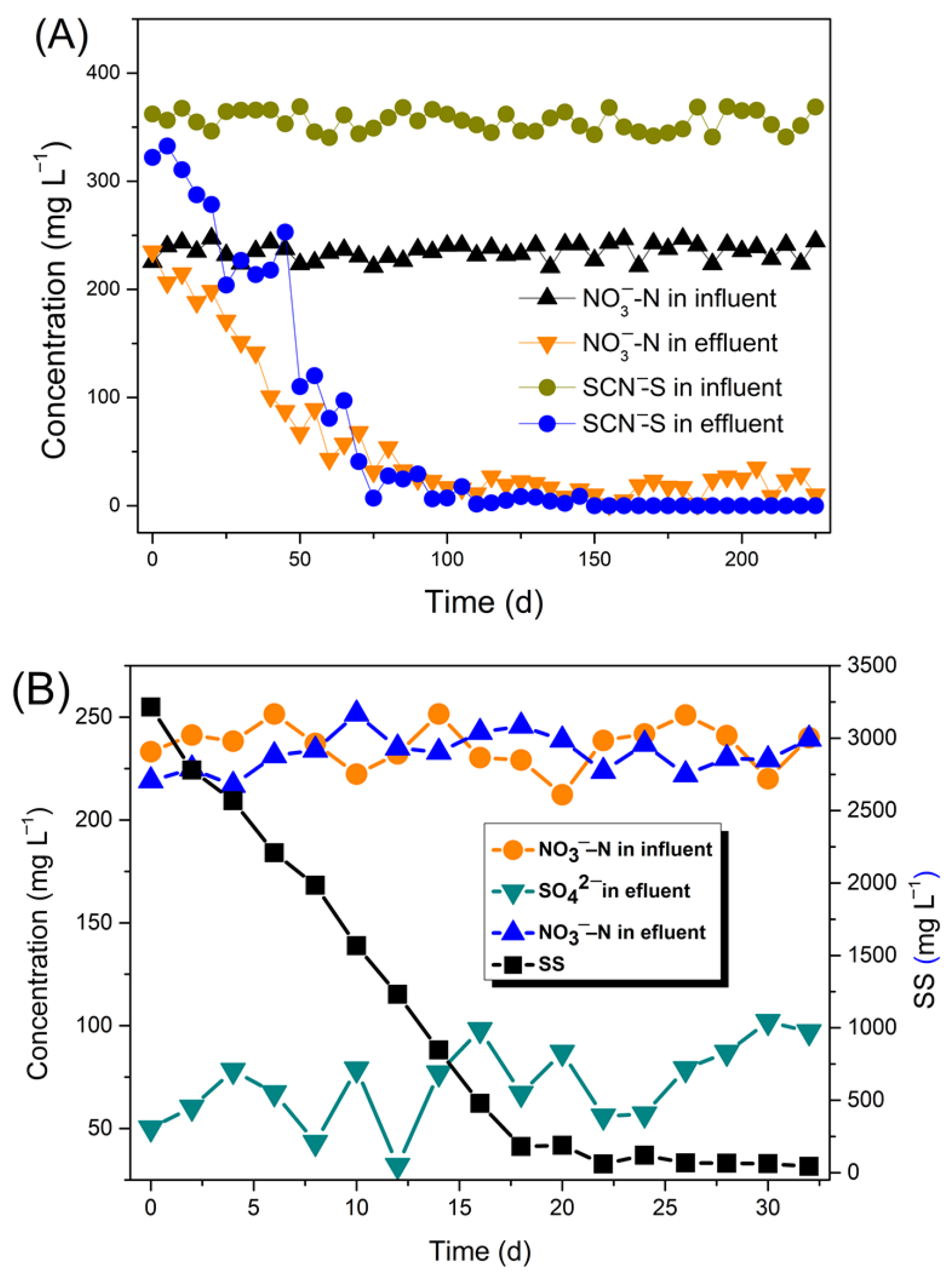
The performance of the two autotrophic denitrification reactors using SCN or SO32– as substrates is shown in Figure 2A and B, respectively. After operation for 50 d, the reactor using SCN as an electron donor reached its steady state. In the SCN-fed reactor, nitrate removal efficiency reached 92.5 ± 3.6% (Figure 2A), while effluent SCN-S concentrations remained below the detection limit throughout steady-state operation (Figure 2A). These results indicate that autotrophic denitrification supported by thiocyanate enabled efficient and simultaneous removal of nitrate and thiocyanate.
In contrast, no measurable NO3–N removal was observed in the reactor supplied with SO32– during the 32 d of operation with average levels of 236.0 mg L−1 in the influent and 232.6 mg L−1 in the effluent. (Figure 2B). Figure 2B similarly shows a relatively constant SO42− concentration in the effluent, averaging around 75.6 mg L−1. The effluent SO42− concentration is primarily attributable to the SO42− present in the influent, which was prepared using tap water containing SO42− at concentrations of 40.5–80.7 mg L−1. While continuous biomass washout occurred in this reactor, and the sludge concentration decreased rapidly, dropping from an initial level of 3215 mg L−1 to 847, 60, and 42 mg L−1 on days 14, 22, and 32, respectively. These results indicated that autotrophic denitrifying bacteria were unable to utilize SO32– as an energy source and electron donor for nitrate reduction under the tested conditions, suggesting that sulfite is not a suitable sulfur substrate for autotrophic denitrification. Therefore, in the subsequent batch experiments, only thiocyanate-driven partial autotrophic denitrification was investigated, while no batch experiments using sulfite as the electron donor were conducted.

3.2. Removal of Thiocyanate and Nitrate During Autotrophic Denitrification

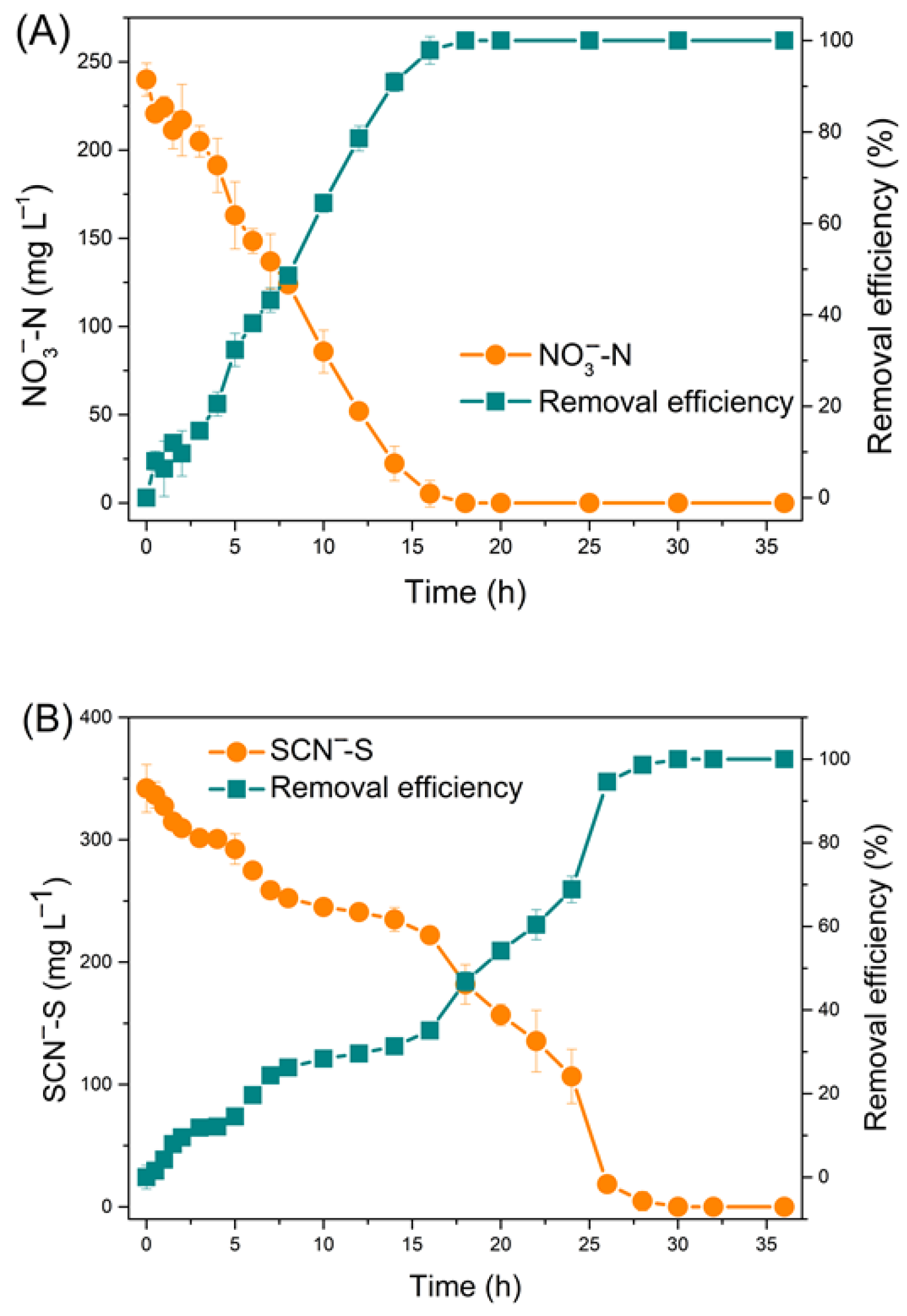
Figure 3A,B show the temporal variations in nitrate and thiocyanate concentrations, respectively, together with their corresponding removal efficiencies. The concentration of NO3--N decreased rapidly from an initial value of 240.0 to 5.3 mg L–1 within the first 16 h, corresponding to a removal efficiency of 97.8% (Figure 3A). Complete nitrate removal was achieved after 36 h of incubation, with a final concentration of 0 mg L–1 and a removal efficiency of 100% (Figure 3A). These results indicate that partial autotrophic denitrification using thiocyanate as an electron donor can effectively remove nitrate.
Concurrently, the SCN-S concentration declined from an initial value of 342.0 to 222.0 mg L−1 during the early stage of the batch experiment (Figure 3B). After 26 h of operation, the effluent SCN--S concentration decreased to 4.7 mg L−1, corresponding to a thiocyanate removal efficiency of 98.6% (Figure 3B). Complete removal of thiocyanate was observed after 36 h, with the concentration falling below the detection limit and a removal efficiency of 100% (Figure 3B). The results demonstrate that nitrate and thiocyanate were simultaneously and rapidly removed through autotrophic denitrification.

3.3. Variations in Nitrogen and Sulfur Compounds During Thiocyanate-Oxidizing Denitrification

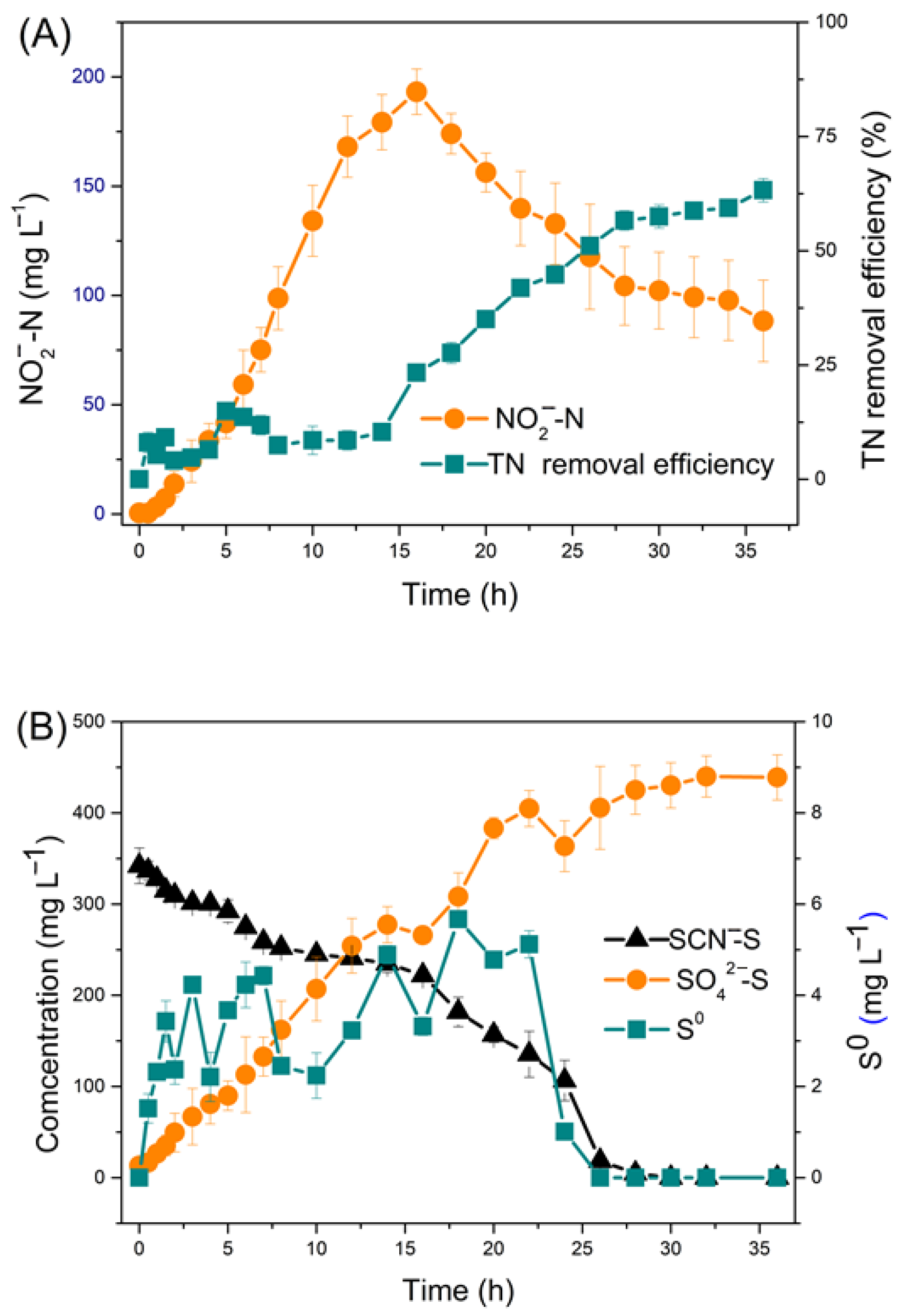
Variations in the concentrations of total nitrogen, nitrite nitrogen, thiocyanate, elemental sulfur, and sulfate during the thiocyanate-oxidizing denitrification process are shown in Figure 4. Pronounced nitrite accumulation was observed during the thiocyanate-oxidizing denitrification process (Figure 4A). The concentrations of NO2-N increased rapidly within the first 16 h, reaching a maximum value of 193.2 mg L–1 (Figure 4A). Meanwhile, the NO3-N concentration decreased from 240.0 to 5.3 mg L–1 (Figure 3A). However, the total nitrogen (TN) removal efficiency after 16 h was only 23.3% (Figure 4A), indicating that most of the nitrate (76.7%) in the reactor was reduced to nitrite rather than nitrogen gas. TN removal efficiency is calculated solely based on the initial nitrate and the nitrite produced, without accounting for the nitrogen from thiocyanate. These results suggest that the reduction rate of NO2 to N2 proceeded at a substantially lower rate than the reduction rate of NO3 to NO2 under thiocyanate-fed conditions. In contrast, Xu et al. [1] reported that, when sulfide served as the electron donor, the reduction of NO2 to N2 was faster than that of NO3 to NO2. The discrepancy between these studies may be attributed to differences in electron donors, which likely select for distinct microbial communities involved in autotrophic denitrification. After 16 h of operation, nitrite was gradually reduced by autotrophic denitrifying bacteria using thiocyanate as the energy source and electron donor (Figure 4A). By the end of the 36 h incubation, the NO2-N content decreased from its maximum value of 193.2 to 88.4 mg L−1, while the removal efficiency of TN increased to 63.3% (Figure 4A). Based on these results, it was concluded that SCN was ineffective in TN removal in autotrophic denitrification.
In addition, NH4+ was formed as the byproduct during the denitrification process. At 22 h, the NO2-N and NH4+-N contents in the reactor were 139.8 and 122.3 mg L–1, respectively (Figure 4A and Figure 5B), and the molar ratio of NO2-N/NH4+-N in the effluent was 1.14, which is close to the substrate composition (1:1) in the anaerobic ammonium-oxidation (ANAMMOX) process [47], suggesting that the ANAMMOX process is a feasible technology for further removal of ammonium and nitrite after the thiocyanate-oxidizing denitrification process.
Regarding sulfur transformation, the SO42−-S concentration increased dramatically from 13.2 to 405.7 mg L–1 during 26 h of operation, while the concentration of SCN-S simultaneously dropped from 342.0 to 18.5 mg L–1 (Figure 4B). During the 36 h long denitrification process, only a minor amount of elemental sulfur was detected, with the concentration of elemental sulfur increasing from 0 to 5.1 mg L–1.

3.4. Variations in pH and Ammonia Nitrogen During Thiocyanate-Oxidizing Denitrification

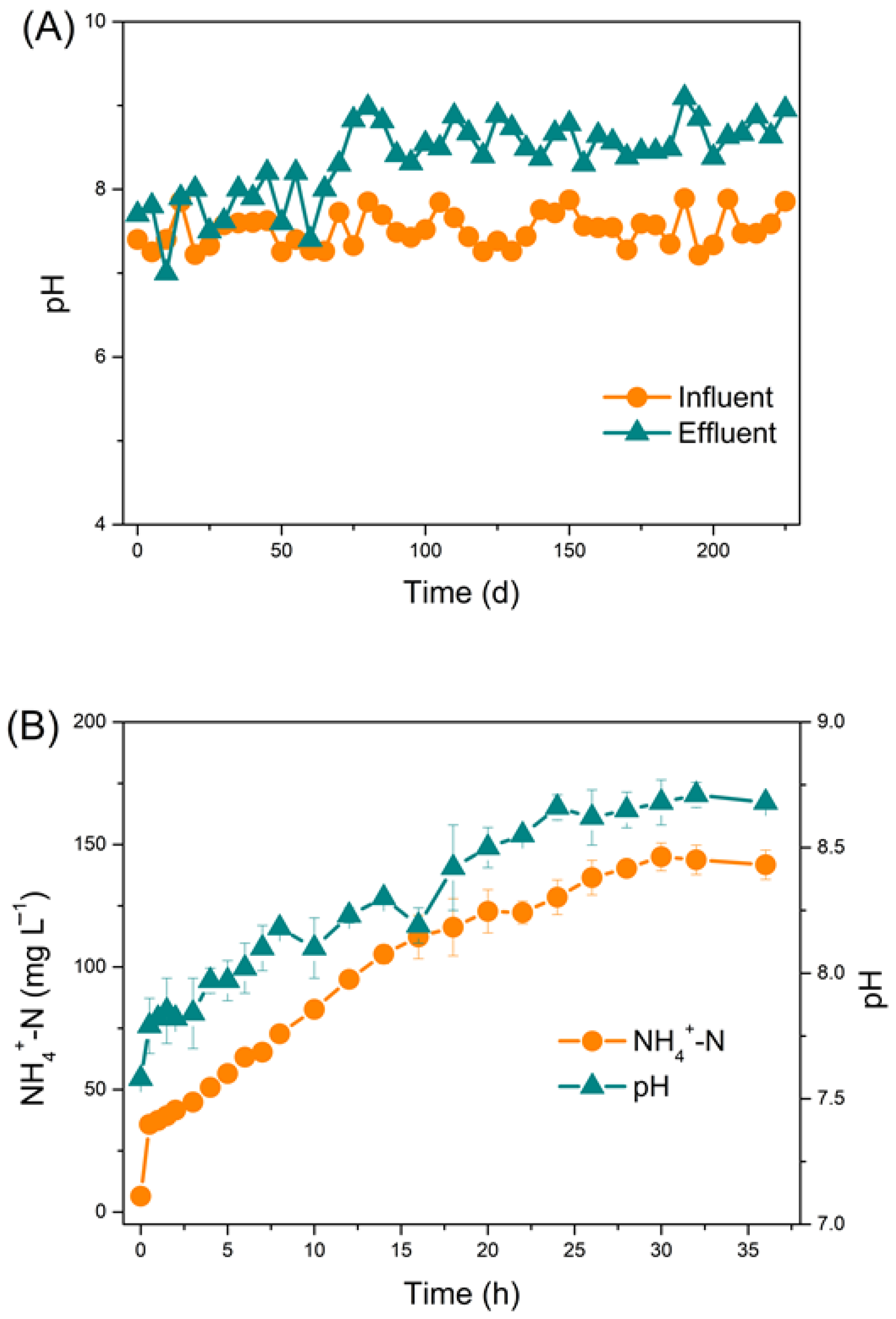
In order to investigate the mechanisms of the autotrophic denitrification process using thiocyanate as an electron donor, pH and ammonia nitrogen were measured, and the experimental results are shown in Figure 5. Over the 225-day operational period, the average influent pH was 7.52 ± 0.21, while the average effluent pH increased to 8.36 ± 0.47 (Figure 5A), indicating a net increase of 0.84 in the effluent pH compared to the influent. Consistent trends were observed in the 36 h batch experiment, during which effluent pH increased from an initial value of 7.58 to 8.62 at 26 h and remained at 8.58 at 36 h (Figure 5B). These results indicate that autotrophic denitrification driven by thiocyanate was associated with net alkalinity production.
Meanwhile, ammonia nitrogen was detected throughout the entire autotrophic denitrification process, and its concentration continuously increased within the 36 h reaction period. The concentration of ammonia nitrogen increased from an initial 6.48 mg L−1 to 112.25 mg L−1 at 16 h, 136.50 mg L−1 at 26 h, and ultimately reached 141.75 mg L−1 at 36 h (Figure 5B). These results indicate that ammonia nitrogen is continuously generated during the autotrophic denitrification process, which also contributes to the increase in pH. Theoretically, ammonia nitrogen is likely produced from the nitrogen in thiocyanate.

4. Discussion

To expand the sources of energy and electron donors for autotrophic denitrification, sulfur and sulfite were evaluated as electron donors in this study [48,49]. The results indicate that sulfite is ineffective as an electron donor for autotrophic denitrification processes, and thus it is not suitable for use as an electron donor in autotrophic denitrification (Figure 2B). While sulfite is theoretically a viable energy and electron source for autotrophic denitrification, it was not utilized as a substrate in our experimental setup. This may be due to the chemical nature of sulfite itself. Sulfur in sulfite has an oxidation state of +4, compared to +6 in sulfate. The energy yield from oxidizing sulfite to sulfate is relatively low compared to that from other reduced sulfur compounds, such as sulfide. Additionally, sulfite exhibits certain biological toxicity, which may have inhibited microbial activity. It is also possible that the inoculated sludge lacked microorganisms capable of catalyzing sulfite-based denitrification, or that the operational conditions were not optimal for this process. Further studies are needed to clarify these factors. Few studies have indicated that sulfite can serve as an energy source and substrate for autotrophic denitrification [50], which contradicts the results of this study. Apart from the reasons mentioned above, this discrepancy may be due to the sulfite concentration used in this study being significantly higher than that reported in the literature. In this study, the Na2SO3 concentration was 6.5 g L−1, whereas in reference [50], the SO32−-S concentration was 30 mg L−1 [50]. This finding suggests that high sulfite concentrations are unsuitable as an energy and electron donor for denitrification and serve as a less favorable autotrophic denitrification substrate relative to other reduced sulfur species. Autotrophic denitrification using thiocyanate as an electron donor demonstrated effective removal of thiocyanate and nitrate. The removal efficiencies of NO3-N and SCN-S reached 100% and 98.64%, respectively, at 16 h and 26 h (Figure 3). These results also indicated that thiocyanate oxidation and nitrate reduction occurred simultaneously in the partial autotrophic denitrification process. It is known from previous studies that the thiocyanate (SCN) anion is toxic, and as it is typically generated from coal gasification and in gold mines that use cyanide [51,52], autotrophic denitrification is a potentially useful technology to lower and even eliminate the toxicity of thiocyanate-contaminated wastewater.
The results shown in Figure 3A and Figure 4A reveal that NO3-N dropped rapidly from 240.0 mg L−1 to 5.3 mg L−1 within 16 h, corresponding to a removal efficiency of 97.8% (Figure 3A). Over the same period, NO2-N increased sharply from 0 to 193.2 mg L−1, then gradually decreased to 88.4 mg L−1 by 36 h (Figure 4A). These results indicate that the nitrate removal process by thiocyanate can be separated into two phases. In the first phase (0–16 h), nitrate reduction to nitrite proceeded much faster than the subsequent reduction of nitrite to N2, leading to a steady accumulation of nitrite. Once nitrate was nearly exhausted, the second phase (16–36 h) began, in which thiocyanate served to reduce the accumulated nitrite to N2. The effluent nitrite concentration had declined to 88.4 mg L−1 (36 h); further reduction would likely require additional time. SCN-S showed a rapid decline from an initial concentration of 342.0 mg L−1, dropping to 0 mg L−1 within the first 30 h. Concurrently, effluent ammonia-N increased sharply, reaching 145 mg L−1 by 30 h and then remained stable with no further increase up to 36 h. The theoretically calculated nitrogen concentration from the added thiocyanate (SCN-N) in the influent was 148.6 mg L−1, which closely aligns with the measured ammonia-N concentration. These observations strongly indicate that the ammonia-N was likely derived from the nitrogen originally present in the SCN. Previous studies have similarly observed nitrite accumulation and detectable ammonia in effluent. NO2-N reached an accumulation level of 37 mg L−1, with effluent ammonia–nitrogen measured at 75.2 mg L−1—both values lower than those recorded in this study. These differences may be attributed to variations in substrate concentration, operational conditions, and microbial composition between the studies. For example, the batch reaction time in this study was 36 h, compared to only 10 h in the previous work.
As shown in Figure 4B, during the partial autotrophic denitrification process, SCN-S rapidly decreased from 341.98 mg L−1 to 4.67 mg L−1, while SO42–-S increased from 37.26 mg L−1 to 401.19 mg L−1, and elemental sulfur at concentrations of 1.01–4.67 mg L−1 was detected simultaneously. The calculated sulfate–sulfur (SO42−-S) in the effluent (after background subtraction) reached 363.93 mg L−1, compared to the influent thiocyanate–sulfur (SCN-S) concentration of 341.98 mg L−1. The resulting difference of 21.95 mg L−1 suggests a near-complete conversion of SCN-S to SO42−-S. The minor discrepancy likely falls within the range of routine analytical or operational variance. The transient appearance of elemental sulfur at low levels suggests that sulfur acted as an intermediate during thiocyanate oxidation rather than as a terminal product. Similar behavior was reported by Pan et al. (2018) [43], who observed a maximum elemental sulfur concentration of 9.0 mg L−1 during thiocyanate-driven partial denitrification, accompanied by nitrite and ammonium accumulation. Visual observations further support this interpretation. Throughout reactor operation, the mixed liquor maintained stable turbidity and did not exhibit the milky-white appearance typically associated with elemental sulfur accumulation in aqueous systems. The absence of visible sulfur precipitation, together with the low measured concentrations of S0, indicates that the rate of SCN oxidation to S0 was less than or equal to the subsequent oxidation of S0 to SO42–. These results imply that recovery of elemental sulfur from thiocyanate-oxidizing denitrification is unlikely without additional process control to decouple sulfur oxidation steps.
Despite increasing interest in thiocyanate-driven autotrophic denitrification, its overall stoichiometry has remained unclear. According to valence analysis, the possible oxidation products of SCN in the partial autotrophic denitrification process are S, SO42−, CO2, N2, CN, and CNO. These hypothesized total reactions can be described as follows: The primary products of NO3 denitrification are NO2 and N2. N2O and NO are not considered as final products due to their minimal yields. Based on the analysis of the reaction substrates (nitrate and thiocyanate) and all of their possible denitrification products, the stoichiometric equations describing the thiocyanate-driven partial autotrophic denitrification process are listed as Equations (1)–(4).
5SCN + 8NO3 + H2O → 5SO42− + 4N2 + 5CNO + 2H+
5SCN + 6NO3 + 2H2O → 5SO42− + 3N2 + 5CN + 4H+
10SCN + 22NO3 + 12H+ → 10SO42− + 16N2 + 10CO2 + 6H2O
5SCN + 8NO3 + 8H+ + 6H2O → 5SO42− + 4N2 + 5CO2 + 5NH4+
The possible oxidation products of SCN were determined in this study, and CNO and CN were not identified during the 36 h long denitrification process (the concentrations were below the detection limit and thus not detected), indicating that these species did not accumulate to measurable levels and can be excluded as stable end products under the experimental conditions. During 225 d of operation of the autotrophic denitrification reactor, the pH values in the influent and effluent were 7.52 ± 0.21 and 8.36 ± 0.47, respectively (Figure 5A). In addition, the pH value increased from 7.58 to 8.68 in a span of 36 h (Figure 5B). Because reactions (1) and (2) predict net proton production and a decrease in pH, these pathways are inconsistent with the observed alkalinity increase and can therefore be eliminated. Equation (4) has three other balancing options, denoted as Equations (5)–(7); however, further examination based on redox balance and nitrogen valence states reveals additional constraints. The oxidation states of nitrogen in SCN, NO3, NH4+, and N2 are −3, +5, −3, and 0, respectively. According to redox principles, nitrate cannot be directly reduced to ammonium in this system, indicating that ammonium must originate exclusively from thiocyanate nitrogen rather than from nitrate reduction. In addition, under the experimental conditions of this study, nitrate–nitrogen cannot be converted to ammonium–nitrogen in substantial quantities for the synthesis of proteins necessary for microbial growth. In Equations (4)–(7), the molar ratios of SCN to NH4+ are 1:1, 6:7, 4:3, and 3:1, respectively; while the molar ratios of NO3 to N2 are 2:1, 9:4, 7:4, and 6:4, respectively. Consequently, based on the sources of the partial autotrophic denitrification products (ammonium and N2) and the molar ratios, the feasibility of Equations (5)–(7) can be excluded. Therefore, only Equations (3) and (4) remain possible for the stoichiometry of partial autotrophic denitrification using thiocyanate as an electron donor.
6SCN + 9NO3 + 10H+ + 9H2O → 6SO42− + 4N2 + 6CO2 + 7NH4+
4SCN + 7NO3 + 6H+ + 3H2O → 4SO42− + 4N2 + 4CO2 + 3NH4+
3SCN + 6NO3 + 4H+ → 3SO42− + 4N2 + 3CO2 + NH4+
NH4+ was observed during the entire denitrification process and the concentration of NH4+-N varied from 0 to 141.8 mg L–1 over the span of 36 h (Figure 5B). This value closely approximates the theoretical nitrogen content of the supplied thiocyanate (148.5 mg L−1), indicating that thiocyanate nitrogen was predominantly converted to ammonium through hydrolysis and ammonification. Importantly, this finding demonstrates that thiocyanate nitrogen did not contribute electrons to nitrate or nitrite reduction, consistent with previous observations reported by Broman et al. (2017) [45]. In contrast, nitrate reduction was coupled primarily to sulfur oxidation. Mass balance analysis further supports this conclusion. Complete removal of both SCN and NO3 was observed, with concentrations decreasing from 342.0 and 240.0 mg L−1 to below detection limits, respectively (Figure 3). Based on substrate consumption, the molar ratio of SCN to NO3 was calculated to be 0.623. Furthermore, the molar ratio of SCN to NO3 is 0.45 (5:11) in the stoichiometric reaction (3), which is considerably different from the experimental molar ratio (0.623). In addition, as NH4+ is not formed in reaction (3), this reaction can also be eliminated from consideration. The molar ratio of SCN to NO3 in stoichiometric reaction (4) is 0.625 (5:8), which is close to 0.623. Therefore, reaction (4) most accurately describes the overall stoichiometry of thiocyanate-oxidizing denitrification in this system. In addition, S0 and NO2 are identified as the intermediate products from SCN oxidation and NO3 reduction, respectively. The stepwise reactions governing thiocyanate-oxidizing denitrification can thus be described by Equations (8)–(11). In these reactions, the elements S, C, and N in SCN were converted into S0/SO42−-S, CO2-C, and NH4+-N, respectively, while nitrate is sequentially reduced to nitrite and nitrogen. Together, these pathways explain the observed accumulation of nitrite and ammonium, the limited total nitrogen removal, and the alkalinity increase during thiocyanate-driven autotrophic denitrification.
SCN + NO3 + 2H+ + H2O → S0 + NO2 + CO2 + NH4+
3SCN + 2NO2 + 8H+ + 2H2O → 3S0 + N2 + 3CO2 + 3NH4+
S0 + 3NO3 + H2O → SO42− + 3NO2 + 2H+
S0 + 2NO2 → SO42− + N2

5. Conclusions

This study evaluated autotrophic denitrification using thiocyanate or sulfite as electron donors. No nitrate removal was observed in the sulfite-fed system, indicating that sulfite could not be used as an effective electron donor for autotrophic denitrification under the tested conditions. In contrast, simultaneous removal of thiocyanate and nitrate was achieved in the thiocyanate-fed system, with removal efficiencies of 100% and 92.5%, respectively. During thiocyanate-driven denitrification, nitrite, ammonium, and sulfate were identified as the primary transformation products within the initial 16 h. The concurrent accumulation of nitrite and ammonium suggests that subsequent treatment using the anaerobic ammonium oxidation (ANAMMOX) process is feasible. Sulfur from thiocyanate was predominantly oxidized to sulfate, with elemental sulfur appearing only as a transient intermediate. Carbon and nitrogen in thiocyanate were converted mainly to carbon dioxide and ammonium, respectively. Based on mass balance and valence analyses, the stoichiometry of thiocyanate-oxidizing partial autotrophic denitrification was established, clarifying the transformation pathways of sulfur, carbon, and nitrogen during the process. Overall, these findings provide a mechanistic and quantitative basis for the application of thiocyanate-driven autotrophic denitrification in the treatment of organic carbon-deficient wastewaters, particularly those generated via coal gasification and cyanide-utilizing gold mining processes.

Author Contributions

Conceptualization, G.X. and Y.Z.; methodology, G.X.; software, C.C.; validation, C.C., C.L., and Z.X.; formal analysis, G.X. and C.C.; investigation, G.X.; resources, G.X.; data curation, C.C.; writing—original draft preparation, G.X.; writing—review and editing, G.X.; visualization, Z.X.; supervision, G.X.; project administration, G.X.; funding acquisition, G.X. All authors have read and agreed to the published version of the manuscript.

Funding

This research was funded by the National Natural Science Foundation of China (grant number 51878641) and the Horizontal Project of Beijing Technology and Business University (grant number 20240023), and the APC was funded by 20240023.

Data Availability Statement

The original contributions presented in this study are included in the article. Additional questions can be directed to the corresponding author.

Conflicts of Interest

The authors declare no conflicts of interest.

Abbreviations

The following abbreviations are used in this manuscript:
SRTSolids retention time
SBRSequencing Batch Reactor
APHAAmerican Public Health Association
ANAMMOXAnaerobic ammonium oxidation
SSSuspended solids

References

  1. Xu, G.; Feng, C.; Fang, F.; Chen, S.; Xu, Y.; Wang, X. The heterotrophic-combined-with-autotrophic denitrification process: Performance and interaction mechanisms. Water Sci. Technol. 2015, 71, 1212–1218. [Google Scholar] [CrossRef]
  2. Kim, H.-R.; Lee, I.-S.; Bae, J.-H. Performance of a sulphur-utilizing fluidized bed reactor for post-denitrification. Process Biochem. 2004, 39, 1591–1597. [Google Scholar] [CrossRef]
  3. Pan, Y.; Ni, B.-J.; Yuan, Z. Modeling Electron Competition among Nitrogen Oxides Reduction and N2O Accumulation in Denitrification. Environ. Sci. Technol. 2013, 47, 11083–11091. [Google Scholar] [CrossRef] [PubMed]
  4. Yao, S.S.; Liu, L.; Zhang, S.Y.; Tang, X.H. Nitrate Removal from Groundwater by Heterotrophic and Electro-Autotrophic Denitrification. Water 2022, 14, 1759. [Google Scholar] [CrossRef]
  5. Xu, G.H.; Yin, F.J.; Chen, S.H.; Xu, Y.J.; Yu, H.Q. Mathematical modeling of autotrophic denitrification (AD) process with sulphide as electron donor. Water Res. 2016, 91, 225–234. [Google Scholar] [CrossRef]
  6. Wen, J.P.; Pan, L.; Du, L.P.; Mao, G.Z. The denitrification treatment of low C/N ratio nitrate-nitrogen wastewater in a gas–liquid–solid fluidized bed bioreactor. Chem. Eng. J. 2003, 94, 155–159. [Google Scholar] [CrossRef]
  7. Liu, F.; Wang, S.Q.; Zhang, X.Z.; Qian, F.Y.; Wang, Y.B.; Yin, Y. Nitrate Removal from Actual Wastewater by Coupling Sulfur-Based Autotrophic and Heterotrophic Denitrification under Different Influent Concentrations. Water 2021, 13, 2913. [Google Scholar] [CrossRef]
  8. Pynaert, K.; Smets, B.F.; Beheydt, D.; Verstraete, W. Start-up of autotrophic nitrogen removal reactors via sequential biocatalyst addition. Environ. Sci. Technol. 2004, 38, 1228–1235. [Google Scholar] [CrossRef]
  9. Sun, Y.; Nemati, M. Evaluation of sulfur-based autotrophic denitrification and denitritation for biological removal of nitrate and nitrite from contaminated waters. Bioresour. Technol. 2012, 114, 207–216. [Google Scholar] [CrossRef]
  10. Liu, X.J.; Chen, S.T.; Yuan, R.F.; Chen, H.L.; Zhou, B.H.; Luo, S.A. Performance and mechanism analysis of autotrophic denitrification based on FexS. J. Clean. Prod. 2024, 478, 143961. [Google Scholar] [CrossRef]
  11. Liu, X.Z.; Zhao, C.S.; Xu, T.T.; Liu, W.; Chen, Q.F.; Li, L.Z.; Tan, Y.; Wang, X.K.; Dong, Y.N. Pyrite and sulfur-coupled autotrophic denitrification system for efficient nitrate and phosphate removal. Bioresour. Technol. 2023, 384, 129363. [Google Scholar] [CrossRef]
  12. Bai, Y.; Wang, S.; Zhussupbekova, A.; Shvets, I.V.; Lee, P.H.; Zhan, X.M. High-rate iron sulfide and sulfur-coupled autotrophic denitrification system: Nutrients removal performance and microbial characterization. Water Res. 2023, 231, 119619. [Google Scholar] [CrossRef]
  13. Chen, H.L.; Tang, M.Y.; He, L.; Xiao, X.X.; Yang, F.; He, Q.L.; Sun, S.Q.; Gao, Y.; Zhou, L.; Li, Y.F.; et al. Exploring the impact of fulvic acid on electrochemical hydrogen-driven autotrophic denitrification system: Performance, microbial characteristics and mechanism. Bioresour. Technol. 2024, 412, 131432. [Google Scholar] [CrossRef] [PubMed]
  14. Li, D.; Liu, L.; Zhang, G.M.; Ma, C.L.; Wang, H.J. Sulfur-manganese carbonate composite autotrophic denitrification: Nitrogen removal performance and biochemistry mechanism. Ecotoxicol. Environ. Saf. 2024, 272, 116048. [Google Scholar] [CrossRef] [PubMed]
  15. Li, R.T.; Gao, S.C.; Fan, X.X.; Ma, Y.M.; Ren, X.P.; Gao, T.P.; Liu, Y. Enhanced nitrate removal through autotrophic denitrification using microbial fuel cells via bidirectional extracellular electron transfer. Microchem. J. 2024, 204, 111026. [Google Scholar] [CrossRef]
  16. Di Capua, F.; Milone, I.; Lakaniemi, A.-M.; van Hullebusch, E.D.; Lens, P.N.L.; Esposito, G. Effects of different nickel species on autotrophic denitrification driven by thiosulfate in batch tests and a fluidized-bed reactor. Bioresour. Technol. 2017, 238, 534–541. [Google Scholar] [CrossRef]
  17. Wan, D.; Liu, H.; Qu, J.; Lei, P.; Xiao, S.; Hou, Y. Using the combined bioelectrochemical and sulfur autotrophic denitrification system for groundwater denitrification. Bioresour. Technol. 2009, 100, 142–148. [Google Scholar] [CrossRef]
  18. Qian, J.; Lu, H.; Cui, Y.; Wei, L.; Liu, R.; Chen, G.-H. Investigation on thiosulfate-involved organics and nitrogen removal by a sulfur cycle-based biological wastewater treatment process. Water Res. 2015, 69, 295–306. [Google Scholar] [CrossRef]
  19. Koenig, A.; Liu, L.H. Kinetic model of autotrophic denitrification in sulphur packed-bed reactors. Water Res. 2001, 35, 1969–1978. [Google Scholar] [CrossRef]
  20. Li, Y.Q.; Chen, T.H.; Chen, W.Z.; Liu, H.B.; Xie, Q.Q.; Zhou, Y.F.; Chen, D.; Zou, X.H. Manganese sulfide-sulfur and limestone autotrophic denitrification system for deep and efficient nitrate removal: Feasibility, performance and mechanism. Bioresour. Technol. 2024, 403, 130874. [Google Scholar] [CrossRef]
  21. Park, J.H.; Shin, H.S.; Lee, I.S.; Bae, J.H. Denitrification of high NO3-N containing wastewater using elemental sulfur; Nitrogen loading rate and N2O production. Environ. Technol. 2002, 23, 53–65. [Google Scholar] [CrossRef]
  22. Liu, Y.; Ngo, H.H.; Guo, W.; Zhou, J.; Peng, L.; Wang, D.; Chen, X.; Sun, J.; Ni, B.-J. Optimizing sulfur-driven mixotrophic denitrification process: System performance and nitrous oxide emission. Chem. Eng. Sci. 2017, 172, 414–422. [Google Scholar] [CrossRef]
  23. Shao, M.-F.; Zhang, T.; Fang, H.H.-P. Sulfur-driven autotrophic denitrification: Diversity, biochemistry, and engineering applications. Appl. Microbiol. Biotechnol. 2010, 88, 1027–1042. [Google Scholar] [CrossRef] [PubMed]
  24. Vandekerckhove, T.G.L.; Kobayashi, K.; Janda, J.; Van Nevel, S.; Vlaeminck, S.E. Sulfur-based denitrification treating regeneration water from ion exchange at high performance and low cost. Bioresour. Technol. 2018, 257, 266–273. [Google Scholar] [CrossRef] [PubMed]
  25. Fajardo, C.; Mora, M.; Fernandez, I.; Mosquera-Corral, A.; Luis Campos, J.; Mendez, R. Cross effect of temperature, pH and free ammonia on autotrophic denitrification process with sulphide as electron donor. Chemosphere 2014, 97, 10–15. [Google Scholar] [CrossRef]
  26. Zeng, H.; Zhang, T.C. Evaluation of kinetic parameters of a sulfur-limestone autotrophic denitrification biofilm process. Water Res. 2005, 39, 4941–4952. [Google Scholar] [CrossRef]
  27. Vaiopoulou, E.; Melidis, P.; Aivasidis, A. Sulfide removal in wastewater from petrochemical industries by autotrophic denitrification. Water Res. 2005, 39, 4101–4109. [Google Scholar] [CrossRef]
  28. Soares, M.I.M. Denitrification of groundwater with elemental sulfur. Water Res. 2002, 36, 1392–1395. [Google Scholar] [CrossRef]
  29. Ozturk, A. The influence of salinity in drinking water on nitrate/nitrite removal through sulfur-driven autotrophic denitrification. J. Water Process Eng. 2024, 58, 104835. [Google Scholar] [CrossRef]
  30. Tan, S.Y.; Huang, Y.; Yang, H.; Zhang, S.Y.; Tang, X.H. Microbial communities and denitrification mechanisms of pyrite autotrophic denitrification coupled with three-dimensional biofilm electrode reactor. Water Environ. Res. 2024, 96, e11107. [Google Scholar] [CrossRef]
  31. Xu, G.; Peng, J.; Feng, C.; Fang, F.; Chen, S.; Xu, Y.; Wang, X. Evaluation of simultaneous autotrophic and heterotrophic denitrification processes and bacterial community structure analysis. Appl. Microbiol. Biotechnol. 2015, 99, 6527–6536. [Google Scholar] [CrossRef]
  32. Lee, D.-J.; Wong, B.-T. Denitrifying sulfide removal by enriched microbial consortium: Kinetic diagram. Bioresour. Technol. 2014, 164, 386–393. [Google Scholar] [CrossRef] [PubMed]
  33. Liu, C.; Li, W.; Li, X.; Zhao, D.; Ma, B.; Wang, Y.; Liu, F.; Lee, D.-J. Nitrite accumulation in continuous-flow partial autotrophic denitrification reactor using sulfide as electron donor. Bioresour. Technol. 2017, 243, 1237–1240. [Google Scholar] [CrossRef] [PubMed]
  34. Moraes, B.S.; Foresti, E. Determination of the intrinsic kinetic parameters of sulfide-oxidizing autotrophic denitrification in differential reactors containing immobilized biomass. Bioresour. Technol. 2012, 104, 250–256. [Google Scholar] [CrossRef] [PubMed]
  35. Campos, J.L.; Carvalho, S.; Portela, R.; Mosquera-Corral, A.; Mendez, R. Kinetics of denitrification using sulphur compounds: Effects of S/N ratio, endogenous and exogenous compounds. Bioresour. Technol. 2008, 99, 1293–1299. [Google Scholar] [CrossRef]
  36. Moraes, B.S.; Souza, T.S.O.; Foresti, E. Effect of sulfide concentration on autotrophic denitrification from nitrate and nitrite in vertical fixed-bed reactors. Process Biochem. 2012, 47, 1395–1401. [Google Scholar] [CrossRef]
  37. Sierra-Alvarez, R.; Beristain-Cardoso, R.; Salazar, M.; Gómez, J.; Razo-Flores, E.; Field, J.A. Chemolithotrophic denitrification with elemental sulfur for groundwater treatment. Water Res. 2007, 41, 1253–1262. [Google Scholar] [CrossRef]
  38. Corbalan, M.; Da Silva, C.; Barahona, A.; Huilinir, C.; Guerrero, L. Nitrification-Autotrophic Denitrification Using Elemental Sulfur as an Electron Donor in a Sequencing Batch Reactor (SBR): Performance and Kinetic Analysis. Sustainability 2024, 16, 4269. [Google Scholar] [CrossRef]
  39. Fu, M.Q.; Qiu, S.; Wang, J.; Zhu, Y.S.; Yuan, M.; Wang, L. Tourmaline mediated enhanced autotrophic denitrification: The mechanisms of electron transfer and Paracoccus enrichment. Sci. Total Environ. 2024, 915, 169847. [Google Scholar] [CrossRef]
  40. Wang, Y.; Xu, W.Y.; Yang, X.; Ren, Z.M.; Huang, K.W.; Qian, F.Y.; Li, J. Long-Term Operation of a Pilot-Scale Sulfur-Based Autotrophic Denitrification System for Deep Nitrogen Removal. Water 2023, 15, 428. [Google Scholar] [CrossRef]
  41. Wu, F.; Zeng, Z.H.; Zhang, W.Y.; Li, H.X.; Zhou, L.J.; Zhuang, W.Q. Functional bacteria and their genes encoding for key enzymes in hydrogen-driven autotrophic denitrification with sulfate loading. J. Clean. Prod. 2024, 440, 140901. [Google Scholar] [CrossRef]
  42. Han, Y.L.; Wu, Z.C.; Jiang, F.; Zhao, H.P. Synergistic effects of accompanying heterotrophic bacteria on sulfide-based autotrophic denitrification. Chem. Eng. J. 2025, 504, 159070. [Google Scholar] [CrossRef]
  43. Pan, J.; Wei, C.; Fu, B.; Ma, J.; Preis, S.; Wu, H.; Zhu, S. Simultaneous nitrite and ammonium production in an autotrophic partial denitrification and ammonification of wastewaters containing thiocyanate. Bioresour. Technol. 2018, 252, 20–27. [Google Scholar] [CrossRef] [PubMed]
  44. Gu, X.D.; Li, Y.Z.; Liu, D.L.; Huang, Y. Regulation of nitrogen removal pathways in sulfuric autotrophic denitrification combined with ANAMMOX. J. Water Process Eng. 2024, 60, 105182. [Google Scholar] [CrossRef]
  45. Broman, E.; Jawad, A.; Wu, X.; Christel, S.; Ni, G.; Lopez-Fernandez, M.; Sundkvist, J.-E.; Dopson, M. Low temperature, autotrophic microbial denitrification using thiosulfate or thiocyanate as electron donor. Biodegradation 2017, 28, 287–301. [Google Scholar] [CrossRef]
  46. APHA. Standard Methods for the Examination of Water and Wastewater, 19th ed.; American Public Health Association: Washington, DC, USA, 1998. [Google Scholar]
  47. Tang, C.-J.; Zheng, P.; Wang, C.-H.; Mahmood, Q. Suppression of anaerobic ammonium oxidizers under high organic content in high-rate Anammox UASB reactor. Bioresour. Technol. 2010, 101, 1762–1768. [Google Scholar] [CrossRef]
  48. Zhao, L.; Fu, G.P.; Pang, W.C.; Li, X.X.; Pan, C.; Hu, Z.L. A novel autotrophic denitrification and nitrification integrated constructed wetland process for marine aquaculture wastewater treatment. Chemosphere 2023, 321, 138157. [Google Scholar] [CrossRef]
  49. Zhu, Z.L.; Jiang, X.Y.; Ji, X.Y.; Yin, J.Q.; Shi, B.F.; Li, Y.G.; Qi, F. Effect of phosphorus on the performance of sulfur autotrophic denitrification. Water Cycle 2024, 5, 137–145. [Google Scholar] [CrossRef]
  50. Cao, X.W.; Zhou, X.; Xue, M.; Chen, J.B.; Li, S.H. Evaluation of nitrogen removal and N2O emission in a novel anammox coupled with sulfite-driven autotrophic denitrification system: Influence of pH. J. Clean. Prod. 2021, 321, 128984. [Google Scholar] [CrossRef]
  51. Felfoeldi, T.; Szekely, A.J.; Goral, R.; Barkacs, K.; Scheirich, G.; Andras, J.; Racz, A.; Marialigeti, K. Polyphasic bacterial community analysis of an aerobic activated sludge removing phenols and thiocyanate from coke plant effluent. Bioresour. Technol. 2010, 101, 3406–3414. [Google Scholar] [CrossRef]
  52. Zagury, G.J.; Oudjehani, K.; Deschenes, L. Characterization and availability of cyanide in solid mine tailings from gold extraction plants. Sci. Total Environ. 2004, 320, 211–224. [Google Scholar] [CrossRef]
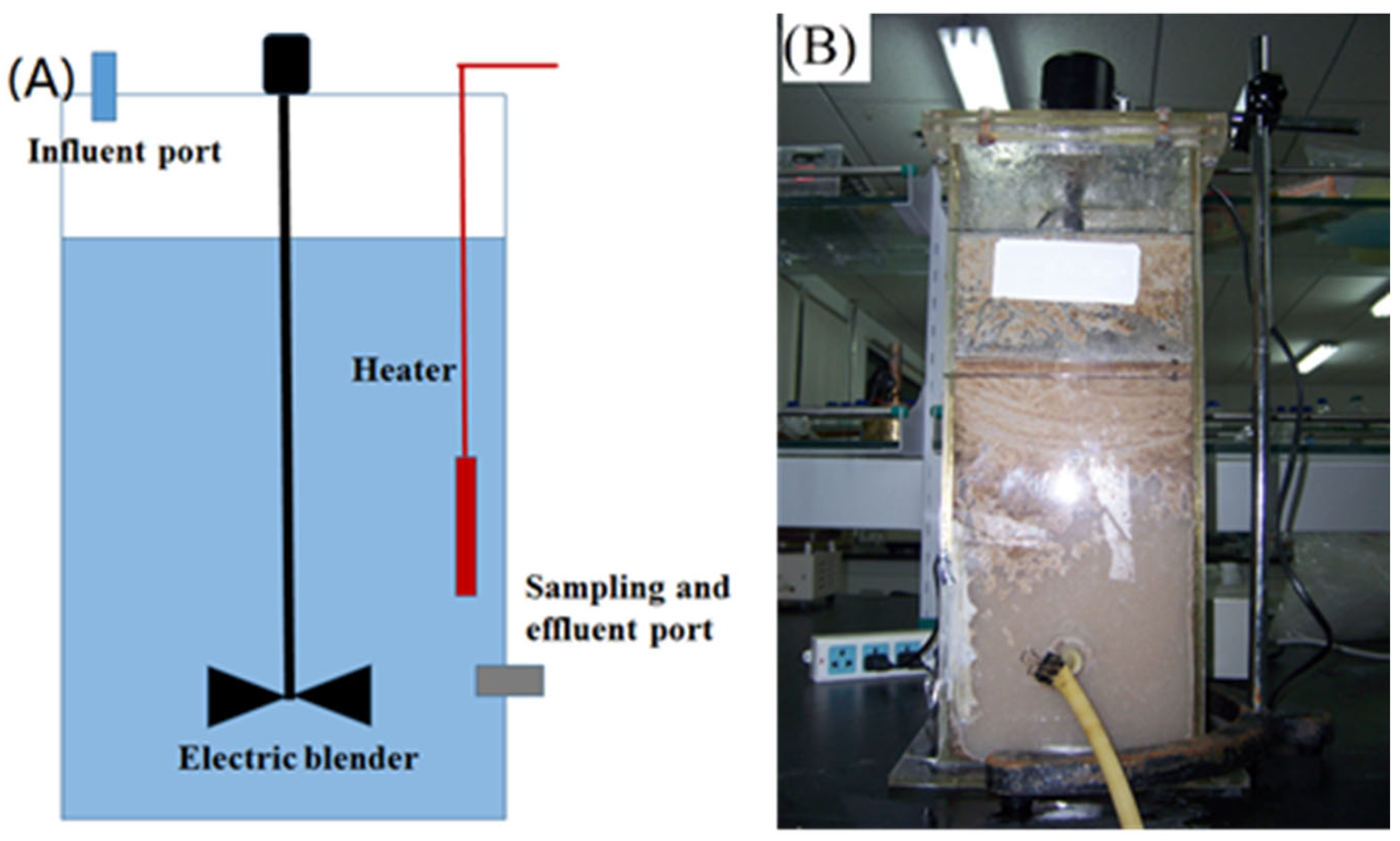
Figure 1. Schematic of an autotrophic denitrification reactor using thiocyanate or sulfite as electron donors: (A) schematic diagram; (B) reactor photograph.
Water 18 00705 g001
Figure 2. Performance of the autotrophic denitrification reactor during long-term operation using (A) thiocyanate and (B) sulfite as electron donors.
Water 18 00705 g002
Figure 3. Removal profiles of (A) nitrate and (B) thiocyanate during the autotrophic denitrification process.
Water 18 00705 g003
Figure 4. Variations in (A) NO2-N and TN and (B) SCN-S, S0, and SO42−-S during the autotrophic denitrification process.
Water 18 00705 g004
Figure 5. Variations in pH and NH4+-N content during the autotrophic denitrification process. (A) pH values during reactor operation for 225 days and (B) pH and NH4+-N content over 36 h.
Water 18 00705 g005
Disclaimer/Publisher’s Note: The statements, opinions and data contained in all publications are solely those of the individual author(s) and contributor(s) and not of MDPI and/or the editor(s). MDPI and/or the editor(s) disclaim responsibility for any injury to people or property resulting from any ideas, methods, instructions or products referred to in the content.