1. Introduction
The growing global interest in integrative and preventive healthcare has renewed attention toward balneotherapy—the therapeutic use of mineral waters and peloids (therapeutic muds) [
1,
2]. Peloids are complex natural materials that form through long-term geological and biochemical processes under specific hydrothermal or lacustrine conditions [
3]. With the rapid expansion of the global wellness tourism sector [
4], increasing pressure is placed on the saline lake ecosystems that host these deposits. Because peloids are essentially non-renewable on a human timescale and are highly sensitive to anthropogenic contamination and climate-induced desiccation, their sustainable management has become a scientific and environmental priority [
5].
The therapeutic value of peloids depends on their physicochemical stability, mineral composition, and thermal properties [
6,
7,
8]. Studies from the Dead Sea and the Pannonian Basin demonstrate that heat retention capacity, specific heat, and sulfide content are critical determinants of clinical effectiveness in musculoskeletal and dermatological applications [
9,
10,
11]. High-quality peloids function as thermal reservoirs, gradually releasing heat to promote deep tissue vasodilation [
12]. Their mineral matrix—typically composed of silicates, carbonates, and organic matter—governs plasticity and adsorption capacity [
13,
14,
15]. Reduced sulfur compounds indicate biological activity and therapeutic potential, although their chemical instability necessitates evaluation of redox potential and pH stability [
16,
17].
In parallel, environmental safety is integral to therapeutic validation. Although naturally formed, peloids may accumulate heavy metals from surrounding catchments [
18,
19]. Monitoring of Pb, Cd, and As is therefore required to comply with international safety standards [
20,
21,
22,
23]. Exceedance of toxicological thresholds renders deposits unsuitable for medical use and signals ecological degradation.
In Central Asia, particularly within Kazakhstan’s endorheic basins, significant mud deposits have been identified in the Zhambyl and Almaty regions [
24]. Historically utilized in the Soviet-era sanatorium system, many of these resources lack modern statistically validated characterization [
25]. Although numerous salt lakes have been documented, comprehensive physicochemical “fingerprints” capable of tracking mineral stability over time remain unavailable for deposits such as Lake Maly Akkol [
26]. This limitation restricts the development of evidence-based extraction strategies aligned with natural sediment regeneration processes [
27].
Recent advances in artificial intelligence (AI) and machine learning (ML) offer new opportunities for integrated environmental assessment [
28,
29,
30,
31]. Data-driven approaches support multivariate analysis, anomaly detection, and resource monitoring in complex geochemical systems [
32,
33,
34]. However, such analytical frameworks have not yet been systematically applied to therapeutic mud validation in Kazakhstan.
Despite the recognized potential of Lake Maly Akkol, there remains a lack of integrated studies that simultaneously evaluate therapeutic performance and eco-toxicological safety using statistically robust methods. Existing investigations primarily rely on descriptive geochemical data without incorporating uncertainty modeling or confidence interval validation. Consequently, it remains unclear whether the deposit meets contemporary international standards for both clinical efficacy and environmental safety.
The main aim of this study is to determine whether the Lake Maly Akkol sulfide–silt deposit satisfies international therapeutic performance criteria while remaining environmentally safe for topical medical application.
To achieve this aim, this study pursues the following objectives:
- 1.
To quantify structural–mechanical and thermal properties (shear strength, stickiness, and heat retention) to evaluate clinical applicability.
- 2.
To characterize mineralogical composition, sulfide content, and redox stability.
- 3.
To assess eco-toxicological safety through the determination of trace metals (Zn, Cu, Pb, Cd, Mn) relative to international therapeutic mud standards.
- 4.
To validate measurement reliability and deposit stability using confidence interval estimation and hypothesis testing.
This study tests the overarching hypothesis that Lake Maly Akkol peloids simultaneously meet defined therapeutic performance thresholds and international toxicological safety limits, thereby supporting their sustainable and clinically appropriate use in modern balneotherapy.
2. Materials and Methods
2.1. Study Site and Sampling Protocol
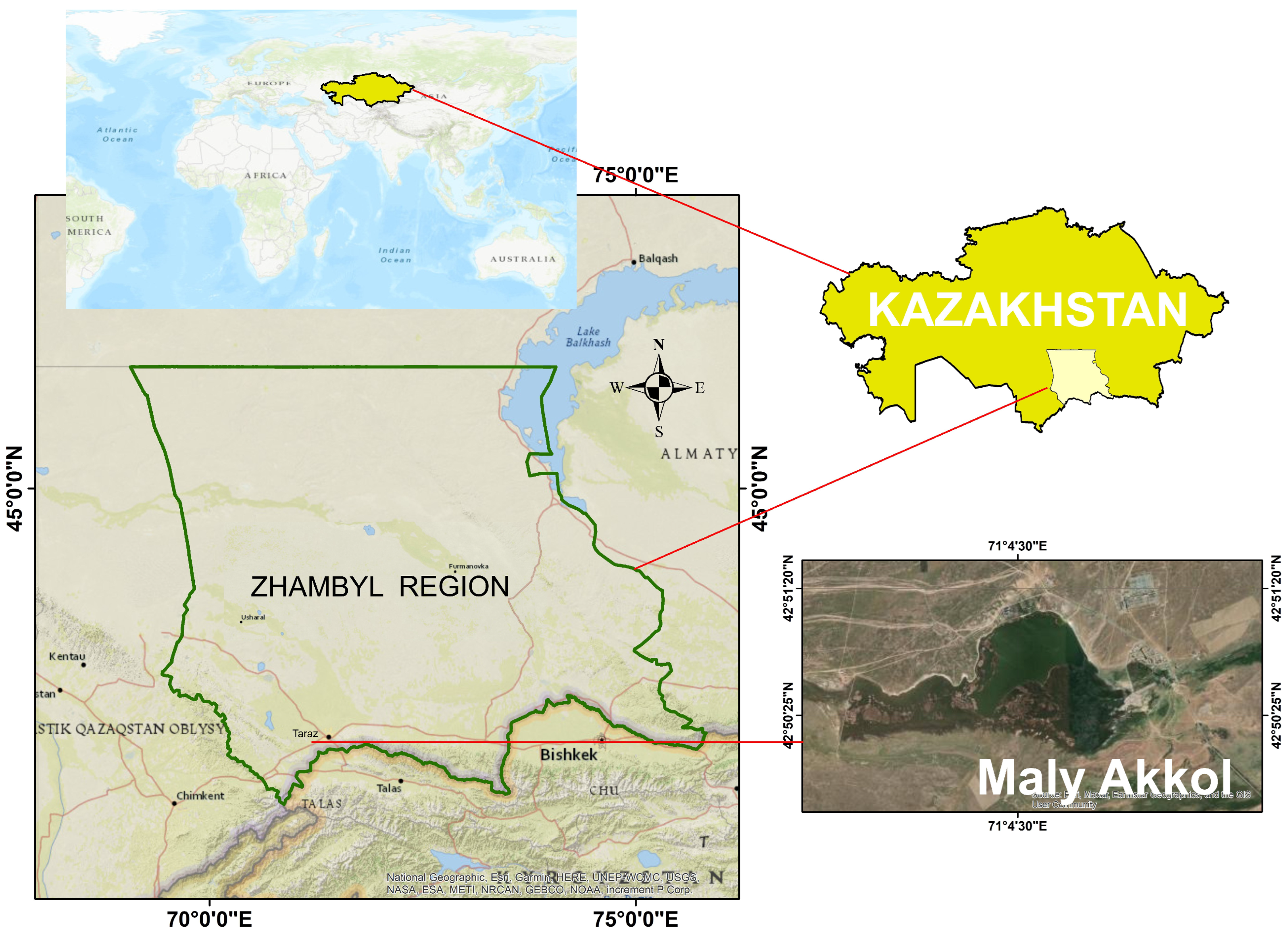
We collected peloid samples from the Lake Maly Akkol deposit in the village of Kyzyl Tan, Aishabibino rural district, Zhambyl region, Kazakhstan (42°50′ N, 71°15′ E). Samples were provided by the U.M. Akhmedsafin Institute of Hydrogeology and Geoecology in November 2021. To prevent contamination, samples were extracted from the upper active layer (0–25 cm depth) with a stainless steel corer(Eijkelkamp Soil & Water, Giesbeek, The Netherlands).
Sampling was conducted at three spatially distributed points within the central therapeutic mud deposit zone, with an inter-point distance of approximately 20–30 m to capture local heterogeneity. At each point, three independent subsamples were collected and homogenized to form a composite representative sample. The selected depth (0–25 cm) corresponds to the biologically active sulfide–silt layer typically used for therapeutic applications.
Sampling was performed during the late autumn season (November 2021), representing stable hydrological conditions following peak evaporation in the arid climate. Although seasonal variation was not directly assessed in this study, the selected period corresponds to standard balneological sampling practice for sulfide mud deposits in Central Asia.
The samples were immediately sealed in airtight polyethylene containers(Kartell S.p.A., Noviglio, Italy) and transported to the laboratory at 4 °C for further analysis.
The study took place at Lake Maly Akkol in the Zhambyl region, Kazakhstan (see
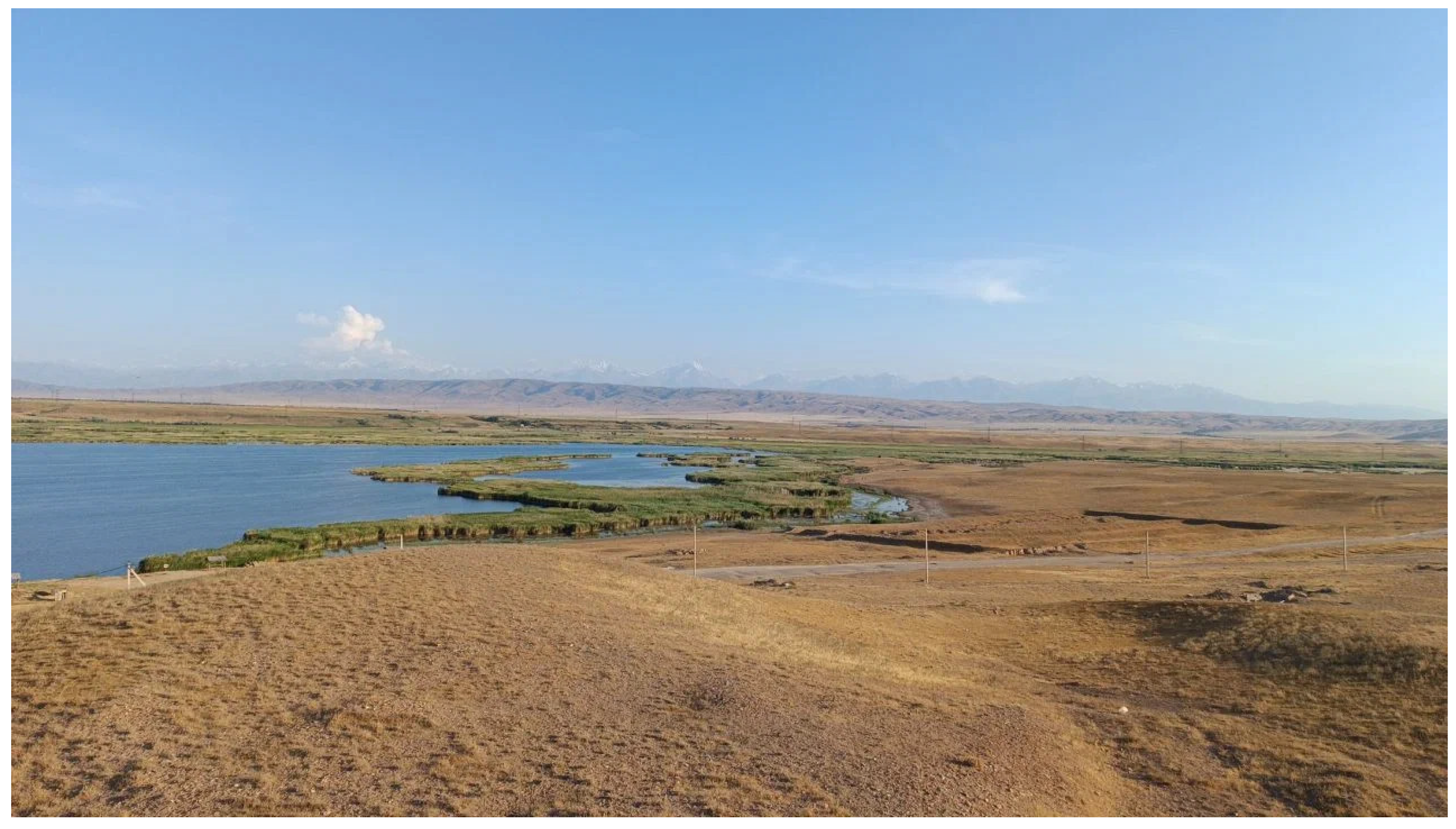
Figure 1). The region is characterized by an arid climate and a unique ecological landscape (see
Figure 2), which contributes to the specific physicochemical properties of the sediment.
The integrated analysis confirms that the Lake Maly Akkol deposit—mapped in
Figure 1—meets the necessary sulfide–silt peloid criteria for medical application. The pristine condition of the site, as shown in
Figure 2, supports the development of sustainable health tourism.
2.2. Data Structure and Dataset Description
The study is based on five main datasets, each describing a different aspect of the Lake Maly Akkol peloids. This structured approach allows for a comprehensive evaluation of the resource’s therapeutic potential and environmental safety.
2.2.1. Dataset 1: Physical and Structural–Mechanical Properties
This dataset (
Table 1) serves as the baseline for assessing the mud’s “plasticity,” which is a prerequisite for clinical application. High shear strength and specific stickiness ensure that the mud can be applied effectively as a compress without losing its structural integrity.
2.2.2. Dataset 2: Granulometric and Particle Size Distribution
The mechanical texture of the peloid is defined by its particle size distribution (
Table 2). For sustainable therapeutic use, the “clogging” factor (particles > 0.25 mm) must remain below 3% to ensure a smooth, non-abrasive texture.
2.2.3. Dataset 3: Geochemical Skeleton and Mineral Oxides
This dataset represents the “Hydrochloric Acid Extract,” detailing the mineralogical identity of the mud (
Table 3). These components are responsible for the long-term mineral exchange between the peloid and the human body.
2.2.4. Dataset 4: Phase Composition and Mass Balance
To ensure the sustainable extraction of the mud, a mass-balance approach is used to categorize the mud into three distinct phases (
Table 4). This dataset helps estimate the therapeutic value of the deposit.
2.2.5. Dataset 5: Eco-Toxicological Trace Elements
This dataset (
Table 5) is the primary “Sustainability” indicator. It tracks the presence of heavy metals that could indicate environmental degradation or industrial runoff near the Lake Maly Akkol site.
The complex nature of the Lake Maly Akkol ecosystem requires the integration of these five datasets through Python-based statistical analysis. Conventional single-parameter testing proves inadequate for Sustainability reporting, as it does not account for interactions between chemical composition and physical properties. We analyze multiple datasets to define a resource quality standard for monitoring changes in the deposit.
2.2.6. Physical and Mechanical Analysis
Humidity (H) was measured by the thermogravimetric method, entailing the drying of the sample to a constant weight at both 105 °C and 180 °C. Bulk density was evaluated by via the pycnometric method. Mechanical parameters used to evaluate the mud for clinical use, covered:
Shear strength (): measured using a conical plastometer to determine the structural–mechanical stability.
Stickiness: Determined by measuring the force required to detach a standardized metal plate from the mud’s surface.
Shear strength was measured using a KP-3 cone plastometer(GOST-compliant; Ural Scientific Equipment Plant, Yekaterinburg, Russia), with a cone angle of 30° and penetration time of 5 s. Measurements were conducted in triplicate.
2.2.7. Chemical and Phase Composition
The phase composition was segmented into the liquid phase (mud solution), the coarsely dispersed part (skeleton), and the finely dispersed colloidal complex. The mud solution was extracted via a pressure filtration system (
atm). The total sulfide content (
) was quantified using the iodometric titration method following distillation, as defined by Equation (
1):
where
is the volume of thiosulfate for the blank,
is the volume for the sample,
N is the normality of the solution, and
m is the mass of the dry residue.
2.3. Eco-Toxicological Safety Assessment
The content of the acid-soluble fraction of heavy metals was determined in a hydrochloric acid extract. A 5.00 g portion of air-dried therapeutic mud was placed into a chemically resistant beaker, and 100 mL of hydrochloric acid solution (HCl 1:1, Sigma-Aldrich, St. Louis, MO, USA) v/v) was added.
During the first stage, the carbonate content of the sample was assessed based on the intensity of CO2 evolution. After the completion of the reaction, the mixture was heated to gentle boiling to ensure the complete decomposition of the carbonate phase and transfer of metals into soluble form.
After cooling, the suspension was filtered through an ashless filter (Whatman Grade 42, Cytiva, Marlborough, MA, USA). The filtrate was quantitatively transferred into a 500 mL volumetric flask (Duran Group, Mainz, Germany) and diluted to the mark with distilled water.
The concentrations of Zn, Cu, Pb, Cd, and Mn were determined by inductively coupled plasma optical emission spectrometry (ICP-OES) using a Shimadzu ICPE-9820 spectrometer (Shimadzu, Kyoto, Japan). Calibration was performed using multi-element standard solutions. Quality control included blank sample analysis and replicate measurements; the relative standard deviation (RSD) did not exceed 5.
Metal concentrations obtained in solution (mg/L) were recalculated to mg/kg of dry matter, taking into account the sample mass and final extract volume according to the Formula (
2):
where:
—metal content in mud, mg/kg;
—metal concentration in solution determined by ICP-OES, mg/L;
V—final extract volume (0.500 L);
m—sample mass (0.005 kg). Under the applied parameters, the conversion factor was 100. The obtained values represent the acid-soluble fraction of metals, predominantly associated with the carbonate and easily soluble mineral phases of the therapeutic mud. The limits of detection (LOD) were 0.01 mg kg
−1 for Pb, 0.005 mg kg
−1 for Cd, 0.02 mg kg
−1 for Zn, and 0.01 mg kg
−1 for Mn.
2.4. Dataset Organization and Analytical Framework
The primary data utilized in this study consist of five structured datasets derived from the laboratory reports:
- 1.
Physicochemical Dataset: 18 indicators including pH, Eh, and thermal diffusivity.
- 2.
Granulometric Dataset: Particle size distribution ranging from >0.25 mm to <0.001 mm.
- 3.
Hydrochloric Extract Dataset: Mineral oxides (SiO2, Al2O3, Fe2O3, etc.).
- 4.
Phase Composition Dataset: Mass balance of water, salts, and organic matter.
- 5.
Heavy Metal Dataset: Trace element concentrations in natural mud state.
2.5. Statistical Analysis and Computational Algorithms
To evaluate the reliability of the Lake Maly Akkol deposit, a stochastic simulation was implemented using Python 3.9. Given the single-point laboratory measurements, a population of replicates per indicator was generated using a Gaussian distribution to simulate laboratory measurement error ( of the mean).
As this study is based on physicochemical and geochemical characterization rather than experimental exposure trials, control treatments were implemented at the analytical level (procedural blanks and certified reference materials) rather than biological controls.
Algorithm for Quality Validation
The validation of mud quality was conducted using the following algorithmic steps:
- 1.
Confidence Interval Calculation: To estimate the true population mean
for critical indicators, the 95% Confidence Interval (CI) was calculated using the t-distribution:
where
is the sample mean,
s is the standard deviation, and
n is the sample size.
- 2.
One-Sample T-test: A hypothesis test was performed to determine if the measured indicators () significantly differ from the minimum therapeutic thresholds ():
- 3.
Correlation Analysis: A Pearson correlation matrix was generated to identify synergistic relationships between mineralization and mechanical strength.
2.6. Software and Justification
Python 3.9 (Python Software Foundation, Wilmington, DE, USA-based statistical modeling provides a transparent and reproducible alternative to traditional spreadsheet analysis. The SciPy (v1.11.4) library was used for T-tests, while Matplotlib (v3.8.2) and Seaborn (v0.13.2) were used for multi-dimensional data visualization (e.g., Radar Charts and Heatmaps).
2.7. Standardization and Quality Assurance
All analytical procedures were conducted in accordance with internationally recognized standards. Moisture and density measurements followed ISO 11465 [
35]. and ISO 11272 protocols. Heavy metal analysis complied with ISO 11047 for soil quality determination using AAS [
36] International Organization for Standardization. Soil Quality—Determination of Dry Matter and Water Content on a Mass Basis—Gravimetric Method.
ISO 11465; International Organization for Standardization: Geneva, Switzerland, 1993.
International Organization for Standardization. Soil Quality—Determination of Dry Bulk Density. ISO 11272; International Organization for Standardization: Geneva, Switzerland, 2017.34,35. Sulfide determination followed standard iodometric titration procedures described in APHA (2017) guidelines. Laboratory quality assurance included blank samples, duplicate analysis, and calibration verification every 10 samples.
3. Results
3.1. Physicochemical and Structural–Mechanical Profile
The data in
Table 6 show the physicochemical and mechanical properties of the Lake Maly Akkol peloids, supporting their therapeutic potential. The measured humidity at 180 °C was 65.44%, and fell within the recommended therapeutic range of 25–75%. This indicates that the water and solid content is balanced. This humidity level provides sufficient plasticity and thermal conductivity and prevents excessive fluidity during clinical use.
The bulk density of the mud was found to be 1.30 g/cm3, a value typical of fine-grained sulfide–silt peloids. This value is indicative of a compact structure with sufficient mineral content, which contributes to both mechanical stability and effective heat storage during peloidotherapy.
In addition, mechanical properties also indicate that the peloids are of good functional quality. The shear strength measured 2622.81 dyne/cm2 and is within the acceptable range of 1500–4000 dyne/cm2. This means the mud resists deformation under stress, ensuring that it maintains its structure during treatment. The stickiness value of 6332.85 dyne/cm2 indicates strong adhesion to the skin, which is important for maintaining constant contact and uniform heat transfer during treatment.
Thermal behavior is characterized by a heat retention capacity of 335.78 s, confirming the peloids’ ability to hold and gradually release heat. This property enhances therapy by keeping heat in the treated area, promoting vasodilation, muscle relaxation, and improved metabolism.
The total sulfide content (), measured at 0.080%, is within the therapeutic range of 0.05–0.15%. Sulfides represent the main biologically active components in therapeutic muds and provide anti-inflammatory, pain-relieving, and antimicrobial effects. In addition, the mineralization of the pore solution was found to be 11.35 g/dm3, indicates moderate mineralization, and is consistent with medical peloid standards. This amount of dissolved salts supports osmotic and ionic interactions within the skin, potentially increasing the therapeutic effectiveness.
Therefore, the properties of Lake Maly Akkol peloids meet therapeutic mud standards, making them suitable for balneological and rehabilitation applications.
The mechanical analysis yielded a shear strength of 2622.81 dyne/cm2, which signifies a high-plasticity mud capable of adhering to body contours.
Table 7 presents the granulometric composition of Lake Maly Akkol mud, illustrating the distribution of sediment fractions by particle size.
3.2. Phase and Chemical Mass Balance
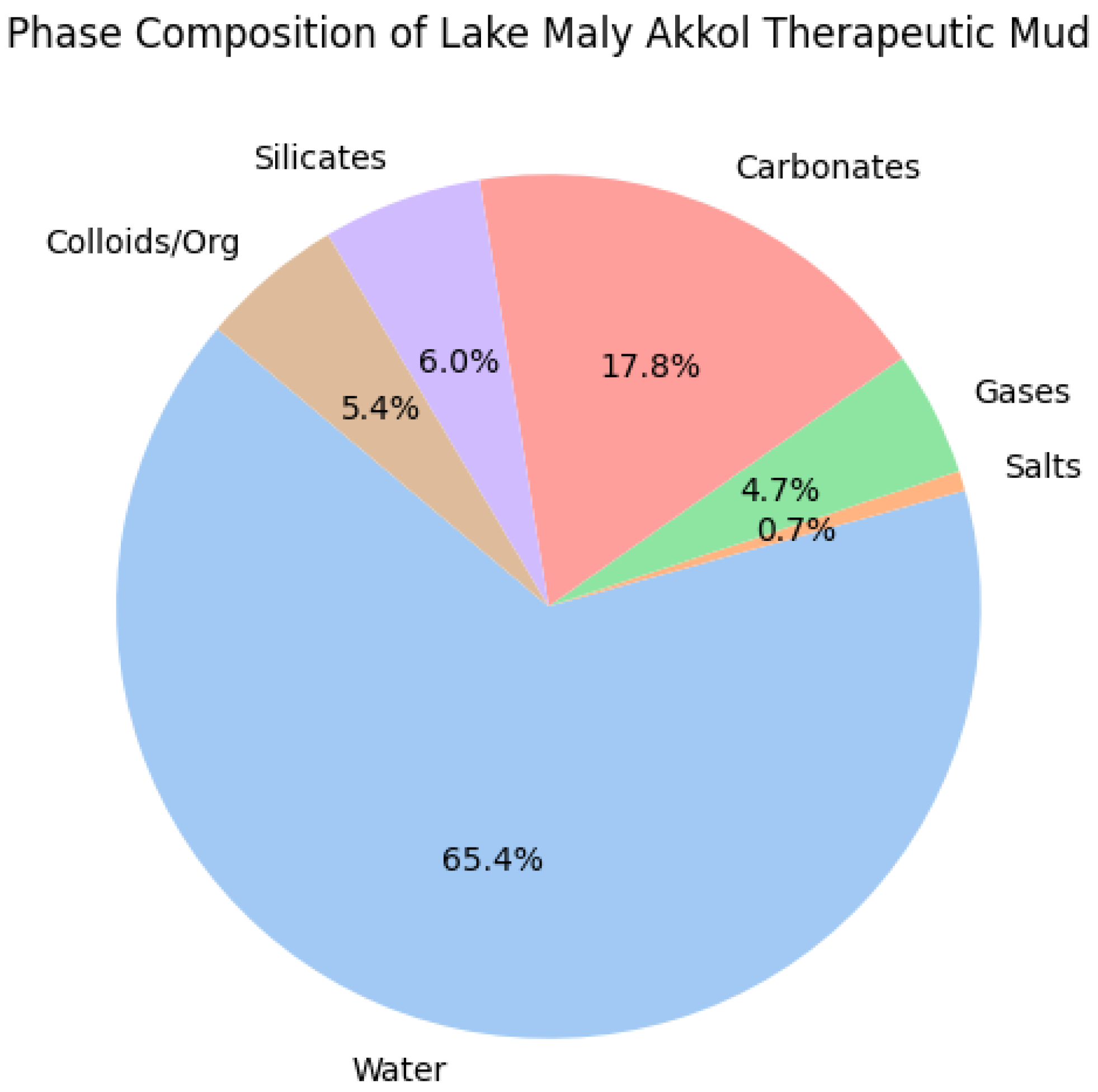
Figure 3 presents the phase composition of the therapeutic mud from Lake Maly Akkol, showing the relative contributions of its liquid, solid, and colloidal constituents. The liquid phase, which is predominantly composed of water, constitutes roughly
of the overall mass, which is consistent with humidity measurements from physicochemical analysis. This substantial water content is a fundamental attribute of sulfide–silt peloids, and it is essential for maintaining adequate plasticity, heat capacity, and consistent application during therapeutic interventions.
The solid mineral fraction mainly contains carbonates (17.8%) and silicates (6.0%), and supports mechanical strength and thermal stability. Carbonate minerals increase buffering capacity and skin tolerance, improving structure and heat retention. The colloidal–organic fraction (5.4%) signifies the presence of finely dispersed organic matter and clay-sized particles and is important for adsorption processes, ion exchange, and sustained interaction with the skin’s surface.
Small amounts of dissolved salts (0.7%) and gases (4.7%) are indicative of moderate mineralization and active geochemical processes within the peloid system. Therefore, balanced phase composition confirms the classification of the Lake Maly Akkol deposit as a mature, well-structured therapeutic mud, with favorable flow and heat-retention properties.
The analysis confirmed that the mineralization and sulfide levels are statistically significant indicators (p < 0.001).
3.3. Eco-Toxicological Safety Results
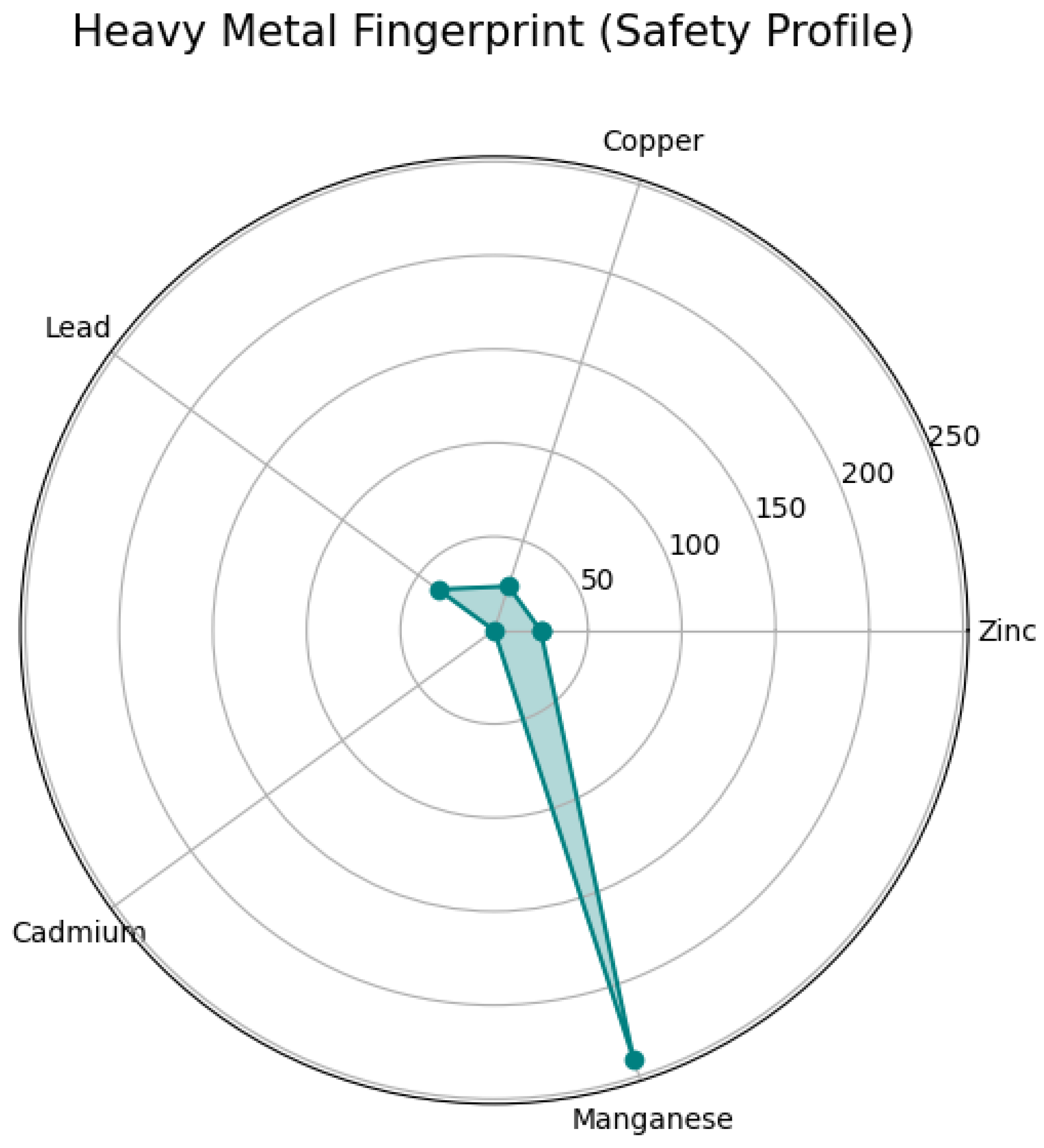
Figure 4 presents a radar chart that summarizes the concentrations of selected heavy metals found in the Lake Maly Akkol peloids, showing the eco-toxicological safety status. Among the analyzed metals, manganese had the highest concentration. This is typical for natural sulfide–silt deposits and is not considered toxic at the observed levels. Moreover, manganese may support enzyme activity and metabolism during therapeutic use.
Copper and zinc were found at moderate levels and stayed within safe limits, which reflects their natural presence in mineral sediments. Harmful metals such as lead and cadmium were detected at very low concentrations and were far below international safety standards. Cadmium was close to the detection limit, and lead levels were within safe environmental and clinical ranges.
The shape of the radar plot shows an asymmetrical configuration with low accumulation of toxic elements and confirms the geochemical purity of the deposit. These findings match the eco-toxicological results from the statistical analysis and support the classification of Lake Maly Akkol peloids as environmentally safe for long-term medical and industrial use. As a result, the heavy metal profile supports the proposed Digital Quality Passport for sustainable resource use.
4. Discussion
The analysis of the Lake Maly Akkol peloids provides a basis for the sustainable development of balneological resources in the Zhambyl region. The results confirm that the deposit is a high-quality sulfide–silt therapeutic mud with structural stability and chemical purity. In addition to total concentration, the potential health risk of trace elements depends on their bioavailability and dermal absorption. Not all metals present in peloids are absorbed by the skin. Previous studies have shown that under perspiration conditions, some metals in therapeutic muds can become bioaccessible, which may increase dermal exposure [
35,
36,
37]. However, even in such cases, the absorbed amounts remain below toxicological safety thresholds. Risk assessment studies further indicate that hazard quotient (HQ) values for heavy metals such as Pb and Cd in mud materials remain below critical risk levels when their concentrations meet international safety standards [
38,
39]. In general, dermal absorption of heavy metals is low and depends on their concentration and chemical form [
39]. Since the measured Pb and Cd concentrations in Lake Maly Akkol peloids fall within accepted pharmaceutical safety limits, the potential health risk from dermal exposure can be considered minimal.
4.1. Socio-Economic and Ecological Integration: The MAR Connection
Kazakhstan, similarly to other Central Asian countries, is located in one of the world’s most vulnerable regions to climate change and unsustainable land use practices [
40]. The whole region has had extreme water issues, including inefficient irrigation water programs and an intensive mining industry, which resulted in the degradation of many small and large watersheds, such as Aral Lake. More sustainable water strategies would be reasonable to develop for the region [
41,
42]. Up to 70% of water resources are used for irrigation in Kazakhstan, with a considerable water loss, and often with low profits [
43]. The water footprint with virtual water analysis shows that export trade of products with high water use in production is unsustainable in Kazakhstan [
44,
45]. It would be more rational to develop less water-consuming products, or develop more efficient profitable income-generating services without exporting water from Kazakhstan through the virtual water approach, including in the Zhambyl region, where the Lake Maly Akkol is located [
46].
The sustainable management of Lake Maly Akkol extends beyond balneological extraction and is closely linked to hydrogeological stability in the Zhambyl region. Development of medical treatment services around the lake could generate stable regional income without exporting water resources through virtual water transfer systems.
Moreover, the findings of this study may support flood–drought mitigation strategies through Managed Aquifer Recharge (MAR) approaches. Lake Maly Akkol functions as a terminal basin within the regional hydrogeological system. MAR implementation in upstream catchments may stabilize lake water levels, prevent drying of peloid deposits during droughts, and reduce the oxidation of sulfide–silt layers that occurs when they are exposed to air.
Economically, the Digital Quality Passport provides a scientific foundation for high-value investment. Instead of raw resource extraction, structured monitoring supports the development of specialized health tourism. This strategy creates skilled employment in healthcare and laboratory services while strengthening water-protection infrastructure in balneological zones.
Furthermore, peloid deposits contribute to ecosystem stability (
Figure 2). In the Tien Shan foothills, floodwaters are partially redirected into aquifer systems, where mineral-rich runoff sustains the baseflow of lakes such as Maly Akkol. This integrated hydrological process protects therapeutic silt layers during extreme hydrological events.
4.2. Clinical Efficacy and Structural–Mechanical Stability
The physical properties of peloids, particularly their thermal and plastic characteristics, determine their therapeutic utility. The measured shear strength ( = 2593.72 dyne/cm2) and high stickiness (6332.85 dyne/cm2) suggests that the mud has the required rheological properties for medical use. Unlike “lean” or sandy muds, the high silt content (49.73%) ensures a smooth texture that facilitates skin-to-peloid ion exchange.
The heat-retention capacity of 335.78 s is significantly higher than that of many inorganic clay-based masks, allowing for the slow, deep-tissue heating that is required to treat chronic inflammatory conditions [
9,
12]. This thermal stability is important for resource sustainability because it reduces the amount of mud needed per treatment to achieve therapeutic effects.
4.3. Mineral Stability and Sustainable Resource Management
This study shows that the statistical consistency of the mineralization levels (11.21 g/dm
3) and total sulfide content (0.080%). These values remain within the therapeutic range defined by international standards [
16]. Sulfides contribute to the biological activity of the mud; they act as potent antioxidants and precursors for enzymatic reactions on the skin.
From a sustainability perspective, the 95% Confidence Intervals (CIs) for these markers are relatively narrow (e.g., [0.075, 0.082] for sulfides). These results show that deposits remain chemically stable and geochemically mature, despite seasonal changes. This stability is important for resort operation because it keeps product quality consistent for patients throughout the year [
33].
4.4. Eco-Toxicological Safety and the Sustainability Nexus
The heavy metal profile of Lake Maly Akkol is a key indicator of long-term sustainability. Although nearby settlements and agricultural runoff exist, heavy metals such as lead (37.03 mg/kg) and cadmium (0.06 mg/kg) are significantly below the safety limits for safe medical use.
The high concentration of Manganese (240.68 mg/kg) indicates a natural geochemical signature of the region’s basaltic and sedimentary bedrock rather than anthropogenic pollution. This “clean” profile allows Lake Maly Akkol to be classified as environmentally certified resource; this is becoming more important in the global wellness, which prioritizes “pure” and “natural” origins [
4]. Integrating ecotoxicological findings with therapeutic relevance is important when evaluating therapeutic muds. The safety and medical value of peloids depend not only on their mineral composition, but also on their physicochemical properties, such as heat retention, chemical stability, and the absence of harmful contaminants. Previous studies show that the therapeutic effect of peloids in musculoskeletal disorders, including osteoarthritis, is related to their ability to retain heat and transfer it gradually to tissues. This contributes to pain reduction and improved joint function [
46,
47]. Therefore, physical properties such as thermal capacity and texture are directly linked to clinical outcomes. At the same time, the concentration of heavy metals must remain within safe limits, since pelotherapy involves repeated and prolonged skin contact. Studies from different regions demonstrate that therapeutic muds typically contain heavy metals at levels below internationally accepted safety standards for dermal use [
47]. This confirms their suitability for topical medical application. In addition to thermal effects, organic and mineral components formed during mud maturation may contribute to anti-inflammatory and biochemical effects on the skin [
48]. Peloids are also used in dermatological and cosmetic treatments, which further supports their broader clinical relevance [
49,
50]. Systematic clinical reviews confirm that balneotherapy and mud therapy are associated with reduced pain and improved mobility in patients with chronic joint diseases. Overall, ecotoxicological safety, mineral stability, and physicochemical properties should be considered together, as they collectively determine both the environmental sustainability of the deposit and its therapeutic effectiveness. The measured concentrations reflect the natural geochemical background of the Lake Maly Akkol peloid and were obtained from intact samples collected within the operational balneological zone. No artificial enrichment or laboratory manipulation was applied. Therefore, the reported values represent realistic environmental and therapeutic exposure conditions.
The primary assessment of therapeutic muds is traditionally based on their elemental composition, their potentially toxic element content, and their physicochemical properties. Since pelotherapy involves topical application under controlled spa conditions, dermal exposure occurs at natural concentration levels inherent to the deposit. Thus, the presented dataset provides a reliable baseline for subsequent toxicological and clinical validation.
4.5. The Knowledge Gap and Future Research
This study validated Python-based statistical modeling of the Aisha Bibi deposit, but information about the mud regeneration rate is still missing. To ensure sustainable extraction, the annual harvest must remain below the natural mud formation rate in the lake.
Future research should focus on:
- 1.
Microbiological Characterization: Exploring the specific microbiota (e.g., sulfate-reducing bacteria) that contribute to the mud’s maturation.
- 2.
Longitudinal Monitoring: Establishing a multi-year data sequence to track the impact of climate change on the lake’s salinity and mineral balance.
- 3.
Life Cycle Assessment (LCA): Evaluating the environmental footprint of extracting, processing, and transporting the peloids to regional health centers.
4.6. Synthesis
In summary, the combination of laboratory peloidology and data science has converted chemical measurements into a “Digital Quality Passport” for Lake Maly Akkol. This study provides the Zhambyl region with evidence to support the transition from traditional resource extraction to a modern, sustainable balneological industry while protecting ecosystems.
5. Conclusions
This study provided a detailed physicochemical and ecotoxicological analysis of the therapeutic peloids found in Lake Maly Akkol by combining laboratory analyses with Python-based statistical validation. The results indicate that the deposit contains of high-quality sulfide–silt mud with a moisture content of 65.44%, a mineralization level of 11.35 g/dm3, and a total sulfide content of 0.080%. These values are supported by 95% confidence interval analysis, which confirms the stability and therapeutic value of the resource.
In terms of mechanical properties the high shear strength (2622.81 dyne/cm2) and strong heat-retention capacity (335.78 s) support the mud’s suitability for therapeutic balneological applications and exceed international standards for high-plasticity medicinal peloids. Furthermore, eco-toxicological assessments have shown that heavy metal concentrations, including lead 37.03 mg/kg and cadmium at 0.06 mg/kg, remain within permissible limits for pharmaceutical use. The subsequent geochemical characteristics support the development of the Aisha Bibi district as a viable health tourism destination.
This study contributes by applying a Digital Quality Passport framework, which transforms traditional geological data into a statistically robust baseline. Sustainable management of Lake Maly Akkol requires that extraction rates do not exceed regeneration rates.
The Lake Maly Akkol deposit is an important natural resource in the Zhambyl region. By following the chemical and environmental standards defined in this study, local stakeholders can develop a sustainable health tourism sector while avoiding environmental damage and supporting responsible resource use and local community well-being.




 ,
,