


Abstract
In response to problems inherent in conventional hydraulic engineering education including compartmentalized courses, fragmented knowledge delivery, overlapping and omitted content, and insufficient development of students’ integrated practical competencies this study develops an instructional model for a coordinated curriculum group based on the OBE-BOPPPS teaching theory. The curriculum cluster model aims to integrate interdisciplinary course content, restructure curriculum structure hierarchy, eliminate disciplinary barriers, and establish clear stratified and interrelated knowledge relationships. The model centers on competency development, constructing a three-dimensional “agent–objective” system that connects “teacher–student–curriculum” with “knowledge–competency–literacy.” It further establishes a multi-indicator evaluation system encompassing teachers, students, and courses. The comprehensive evaluation employing Principal Component Analysis, Entropy Weight Method, and CRITIC method demonstrates that the curriculum group teaching model significantly outperforms traditional course-based instruction in transcending disciplinary boundaries, enhancing knowledge systematicity, improving teaching precision, and strengthening knowledge acquisition as well as students’ comprehensive competencies. This approach achieves dynamic optimization and precision feedback in the teaching process, effectively facilitating the systematic transfer of knowledge and the holistic development of students’ innovative practical abilities. It thereby provides a scientific pathway and empirical support for the reform of hydraulic engineering education and the cultivation of high-quality talent.
1. Introduction
The teaching reform of hydraulic engineering courses in higher education, based on the OBE-BOPPPS teaching theory, plays a positive role in enhancing teaching effectiveness and advancing the transformation of hydraulic engineering education. By conducting in-depth analysis and mining of teaching process data, industry trends, students’ innovative capabilities, and labor market demands, a scientifically rigorous and dynamically optimized teaching model for the hydraulic engineering curriculum group has been constructed [1,2,3,4]. Through clustering analysis of massive knowledge nodes and their skill correlations, the constructed course-group teaching model overcomes the fragmentation of traditional isolated curricula. It establishes a hierarchical and interdisciplinary curriculum system that ensures teaching content remains aligned with cutting-edge technology and practical engineering challenges. Moreover, by utilizing real-time learning analytics, instructors can dynamically adjust instructional strategies within the course group. This approach strengthens the integration of knowledge across courses and promotes interdisciplinary innovation in teaching, thereby significantly enhancing classroom interactivity and the precision of knowledge delivery [5,6,7]. The notable advantages are manifested in three key aspects. Data-Informed Course Design: The instructional design is grounded in objective data, thereby mitigating subjective experiential biases and ensuring the scientific rigor and forward-looking nature of the curriculum structure. Systematized Knowledge Delivery: The transmission of knowledge shifts from a fragmented approach to a systematic one, strengthening the internal logic of the discipline and its coherence with external applications. Dynamic Teaching Optimization: The teaching process within the curriculum group is continuously refined, establishing a quality-assurance mechanism centered on student competency development [8]. Ultimately, this curriculum group teaching model has not only comprehensively driven a substantive enhancement in teaching quality, but also laid a solid foundation for cultivating high-caliber water conservancy engineering talents equipped to meet future challenges [9,10].
The program in Hydraulic Engineering aims to equip students with a solid theoretical foundation, robust practical application skills, the ability to tackle complex problems in engineering construction, and the capacity for innovative applications in industry development. In traditional hydraulic engineering education, the various courses are often taught in relative independence—a fragmented instructional model that presents clear pedagogical constraints [11,12]. Firstly, the segmentation of course content results in fragmented knowledge systems, making it difficult for students to develop a systematic understanding of theoretical knowledge in their field. Core courses such as Engineering Materials, Hydraulic Structures, and Water Resources Planning are typically taught by different instructors without sufficient integration or coherence in content. This lack of connection prevents students from effectively understanding the inherent relationships among water flow dynamics, engineering structures, and water resources management [13,14]. Secondly, duplication and gaps coexist in teaching. Due to insufficient curricular coordination, certain foundational knowledge points are repeatedly covered across different courses, while interdisciplinary and comprehensive issues often receive inadequate guidance. This leads to a waste of instructional resources and creates cognitive gaps for students [15]. More importantly, hydraulic engineering is inherently characterized by its systematic, integrated, and practical nature, spanning multiple interdisciplinary fields such as hydrology, structural mechanics, materials science, and environmental studies. However, compartmentalized course design impedes students’ ability to synthesize knowledge, making it difficult for them to translate theoretical learning into the design, analysis, and decision-making skills required in real-world engineering practice [16,17]. Such a siloed teaching approach undermines students’ mastery and expansion of professional expertise, as well as their capacity to address complex practical engineering problems. This isolated teaching approach undermines students’ mastery and expansion of professional knowledge, as well as their ability to solve complex real-world engineering problems. In such contexts, students may acquire isolated pieces of knowledge but often fail to develop the synthesizing capacity and innovative thinking necessary for deeper comprehension. Consequently, the overall quality of education can be compromised.
In this study, a teaching model for the water engineering curriculum group is constructed based on the OBE-BOPPPS pedagogical theory. Based on an in-depth analysis of teaching process data, student learning behaviors, and knowledge acquisition, we can accurately identify the interconnections between different course contents as well as pinpoint weaknesses in instructional delivery. This enables the scientific design of curriculum group structures, thereby breaking down traditional barriers between courses [18,19]. The curriculum group model, with competency development as its central thread [20], reorganizes and integrates relevant course content into coherent and progressively structured instructional units, thereby assisting students in constructing a comprehensive knowledge hierarchy. Meanwhile, the dynamic assessment and feedback mechanisms facilitated by the instructional model enable real-time monitoring of teaching effectiveness, allowing for timely adjustments in content and methodology, thereby achieving personalized instruction and precise tutoring. This curriculum group model not only strengthens the intrinsic connections among different fields of knowledge and enhances teaching efficiency, but also cultivates students’ systematic thinking and comprehensive engineering capabilities [21,22]. It enables students to flexibly apply multidisciplinary knowledge when confronted with complex hydraulic engineering problems, thereby effectively improving their professional competence and innovative potential.
2. OBE-BOPPPS Teaching Theory
OBE (Outcomes-based Education) theory is centered on student learning outcomes, emphasizing the future workplace competencies that students are expected to develop. The BOPPPS teaching theory, grounded in cognitive theory and constructivism, emphasizes students’ mastery of knowledge during class and highlights the characteristics of interactivity and feedback in teaching [23,24].
BOPPPS is a systematic, student-centered theory for the design and implementation of effective teaching [25]. Its core objective is to enhance pedagogical effectiveness and learning outcomes through structured teaching procedures and integrated feedback mechanisms [26]. The BOPPPS model consists of six key components: Bridge-in, Objective, Pre-assessment, Participatory Learning, Post-assessment, and Summary [27,28,29].
The advantage of the OBE-BOPPPS teaching theory lies in its emphasis on backward design and clearly defined learning outcomes, combined with a structured instructional process and a closed-loop feedback mechanism. This approach enhances the orderliness, transparency, and efficiency of teaching. By establishing explicit objectives and incorporating continuous assessment and feedback, educators are better positioned to adapt their teaching strategies in response to learners’ needs, thereby improving overall teaching quality [30,31,32]. This theory not only emphasizes the transmission of learning objectives and knowledge but also prioritizes the cultivation of students’ autonomous learning abilities [33,34], which aligns with the modern educational focus on holistic student development.
In the OBE-BOPPPS pedagogical framework, the teacher’s primary concern centers on the question of “how students learn what” [35,36,37,38]; In the pedagogical model of the hydraulic engineering curriculum, the core precisely lies in enabling students to “how to better acquire knowledge. In terms of teaching objectives, the curriculum group instructional model also aligns with cognitive principles and the structure of the course content to establish clear and assessable goals, enabling students to evaluate their own mastery of the knowledge. In terms of teaching methodology, the curriculum group teaching model likewise emphasizes participatory pedagogy, aiming to enable students to engage in integrated and coherent learning of the curriculum content during class sessions. This approach encourages students to fully exercise their initiative, think independently, and develop innovative thinking.
Based on the OBE-BOPPPS teaching theory, the instructional model for the hydraulic engineering curriculum group not only emphasizes a closed-loop feedback mechanism that integrates teaching interaction and reflection, but also further prioritizes student-centered teaching and learning practices. Within the cultivation of professional knowledge and competencies, it aims to transcend the boundaries between individual courses, integrate knowledge across the curriculum group, and enable students to synthesize professional knowledge holistically, thereby stimulating their innovative capabilities. Meanwhile, based on this teaching theory, when applying the teaching model for the hydraulic engineering professional curriculum group, teachers can also break away from traditional teaching methods in their instructional design. This approach enables a more accurate grasp of the model’s core principles, without being constrained by fixed formats.
3. Construction and Evaluation Metrics for a Teaching Model of Curriculum Groups
3.1. Determination of the Indicator System for Model Construction
To ensure a scientifically sound evaluation of the teaching model constructed for the water conservancy engineering curriculum group, the established indicator system should therefore adhere to the following core principles.
Firstly, the indicator system should demonstrate feasibility, meaning that the selected indicators must be realistic, concise, and practical. Their number should be limited to form an operable and well-structured evaluation scheme.
Secondly, the design of indicators must be goal-oriented and closely aligned with the specific task of constructing a teaching model for the hydraulic engineering curriculum group, ensuring that the evaluation content is both targeted and directive.
Thirdly, the principle of integrity should be upheld: the indicator system must comprehensively cover the key stages and elements involved in the teaching model development, and reflect its overall characteristics and internal relationships in a holistic manner.
In addition, the evaluation should be forward-looking. It should not only focus on current development outcomes but also take into account future trends, thereby endowing the indicator design with a degree of foresight and adaptability. This will help the evaluation system keep pace with the times and guide the teaching models for water conservancy engineering curriculum groups toward a more rational and scientific direction.
Through the integrated application of the above principles, a practical and forward-looking evaluation index system can be established, which will effectively support the standardized development and continuous improvement of teaching models.
3.2. Design of the Three-Dimensional “Subject–Objective” System
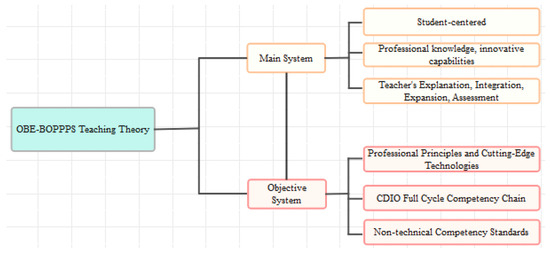
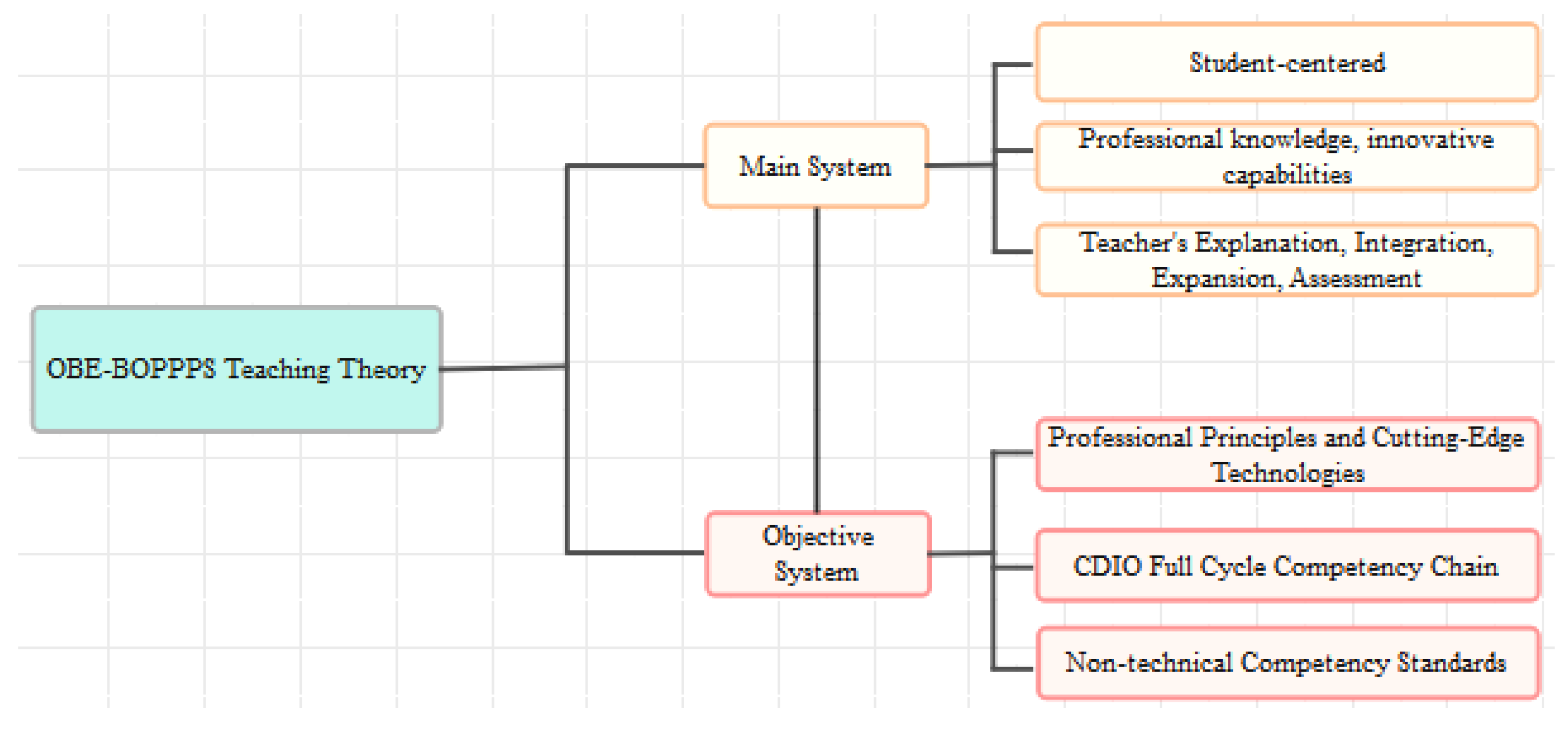
To address the limitations of traditional teaching methods in enhancing students’ knowledge and competencies, a three-dimensional “subject–object” system integrating “teacher–student–curriculum” and “knowledge–ability–literacy” is constructed based on the OBE-BOPPPS pedagogical theory. This system breaks down course content and objectives into quantifiable and assessable indicators, enabling seamless integration and expansion across courses. It ensures precise alignment between instructional goals and industry-required competency standards, thereby achieving deeper educational relevance. The theoretical theory integrates Bloom’s Taxonomy of Educational Objectives with the CDIO engineering education theory, thereby constructing a layered, progressively structured, and dynamically interconnected cultivation model [39]. The teaching system is student-centered and aims to enhance professional competence. Instructors are responsible for delivering, integrating, and expanding knowledge across the curriculum, as well as conducting final assessments.
The objective system is grounded in the principles of specialized knowledge and cutting-edge technologies, structured into foundational, advanced, and innovative tiers to facilitate progressive depth of learning. Competency development centers on the CDIO full-cycle ability chain, spanning from core disciplinary fundamentals to engineering design and interdisciplinary innovation. It also aligns with non-technical competency standards, while reinforcing awareness of engineering norms and ethical considerations.
The three-dimensional “Subject–Objective” system facilitates pathway synergy through the “Teacher–Student–Curriculum” nexus to realize the progression from knowledge foundation to competency transformation and ultimately to literacy internalization, as illustrated in Figure 1.
Figure 1.
The “Subject–Objective” three-dimensional system of the OBE-BOPPPS teaching theory.
3.3. Construction of a Teaching Model for Curriculum Groups
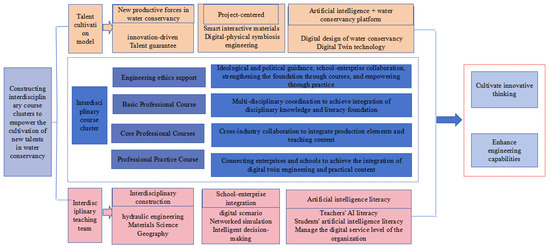
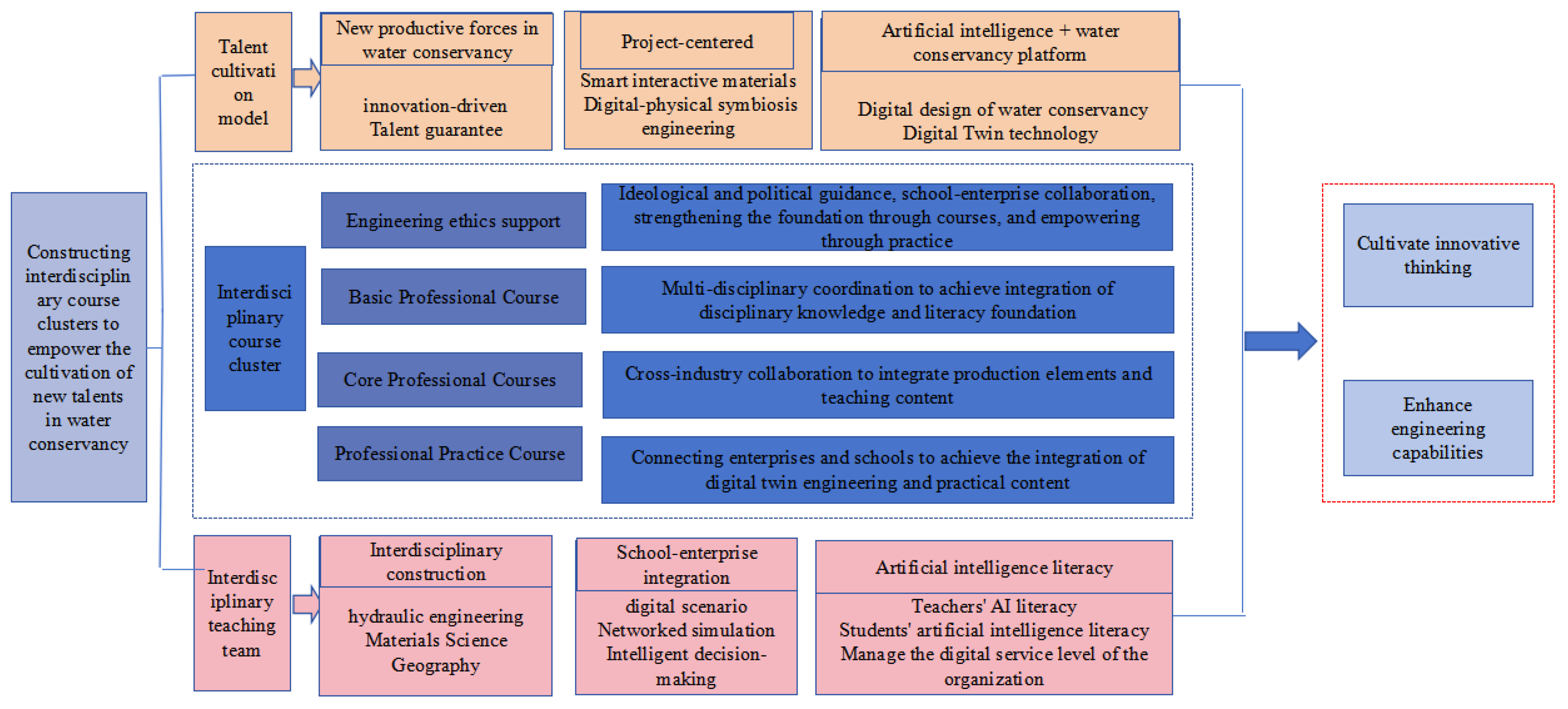
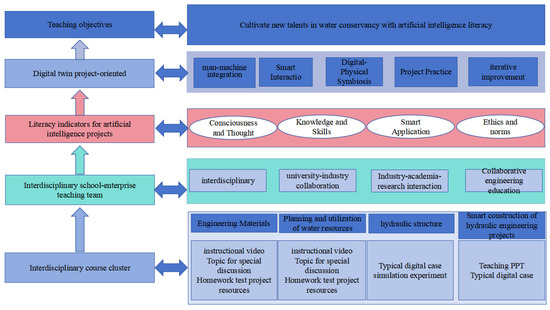
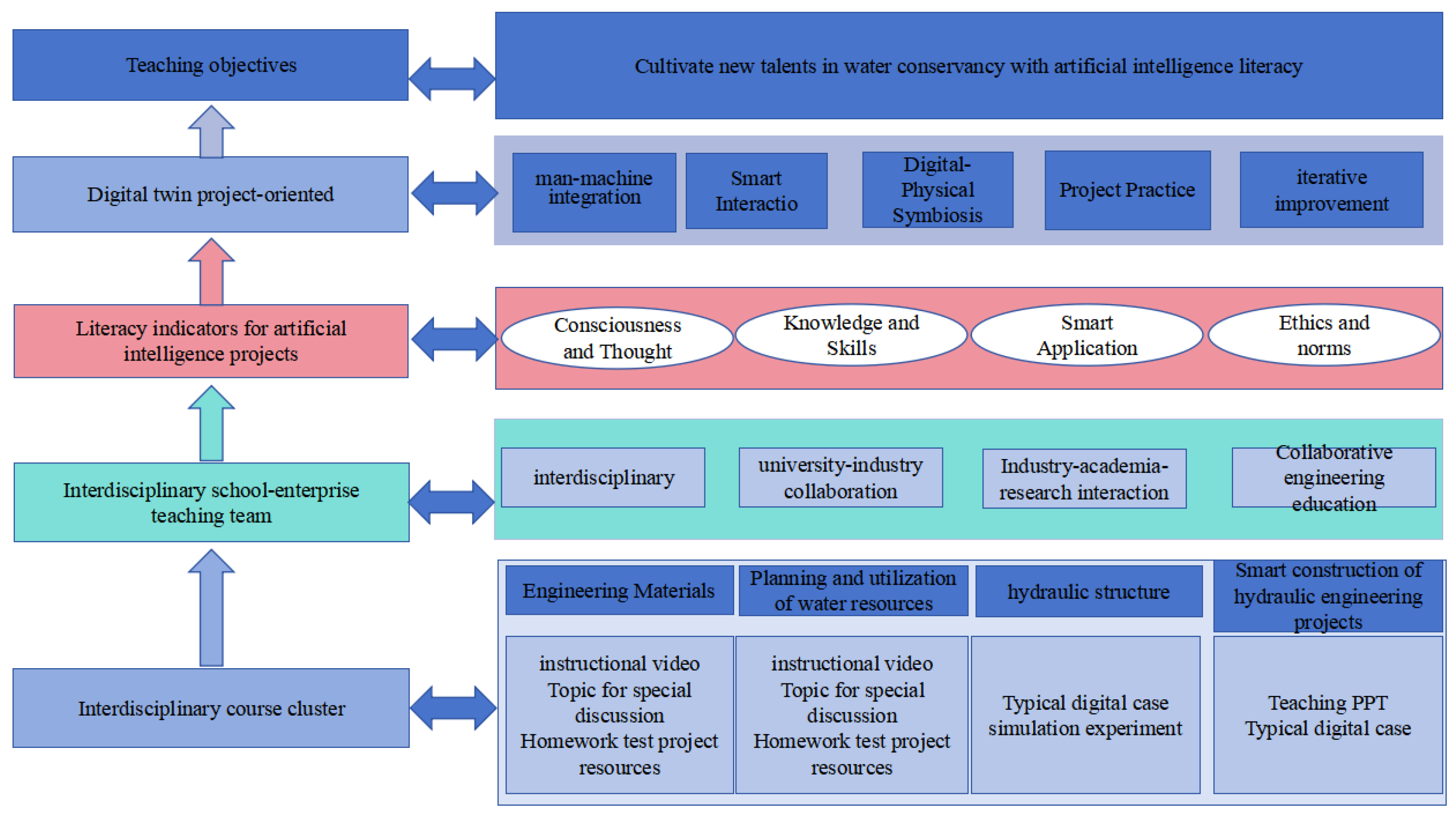
Constructing a Teaching Model for a Water Conservancy Engineering Curriculum group: Integrating Advanced Industry Expertise with Multidisciplinary Academic Strengths to Establish a Modern University-Enterprise Collaboration Philosophy. Aimed at cultivating students’ professional competence and innovative abilities, this study defines the core components of artificial intelligence literacy for interdisciplinary water-related professionals within a Philosophy that integrates industry, academia, and research. A core curriculum group for hydraulic engineering majors is developed, establishing an interdisciplinary and cross-curricular knowledge graph. Digital teaching schemes are designed to guide students in constructing personalized knowledge hierarchy, training comprehensive application competencies, and fostering lifelong learning literacy, as shown in Figure 2.
Figure 2.
Construction approach of the curriculum group teaching model.
Architectural Model of the Hydraulic Engineering Curriculum group with Emphasis on Strengthening Four Key Instructional Domains: Foundational Courses, Core Courses, Practical Training, and Innovation Practice. Strengthen the development of practical courses such as “Water Network Design Course Project” and “Digital Twin in Hydraulic Engineering.” Taking the student-centered approach, we have implemented classroom instruction, MOOC-based teaching, virtual simulation teaching, and innovative interactive practices. These efforts are aimed at strengthening substantive development and executing a digital-intelligent instructional design scheme, as illustrated in Figure 3.
Figure 3.
Design of the construction scheme for the curriculum group teaching model.
3.4. Evaluation Indicators for Teaching Model of Water Conservancy Engineering Curriculum Group
The evaluation of the teaching model in this curriculum group adheres to the following core principle: the outcome-oriented approach, which takes the competencies and qualities ultimately acquired by students as both the starting point and the ultimate goal, thereby informing the backward design and continuous improvement of the entire teaching process. Second is the principle of systematicity, which views the curriculum group as an organic whole. The construction of indicators should cover the entire chain of teaching input, process, and output, while also emphasizing the synergistic relationships among courses. The third principle is data-driven instruction, which fully leverages “Internet+” technologies to enable real-time collection, multi-dimensional analysis, and visual presentation of teaching-related data. This facilitates the evolution of assessment from experience-based judgment toward precise diagnostic evaluation. The fourth principle emphasizes multi-stakeholder participation, integrating evaluations from teachers, student self- and peer-assessments, and feedback from industry and enterprises, thereby establishing a closed-loop evaluation system.
The evaluation index system for the teaching model construction of the hydraulic engineering curriculum group consists of three primary indicators, each subdivided into several secondary indicators. As shown in Table 1.
Table 1.
Performance metrics for instructional design in water engineering curriculum groups.
4. Evaluation Method for Course-Group Teaching Model
4.1. Data Statistics
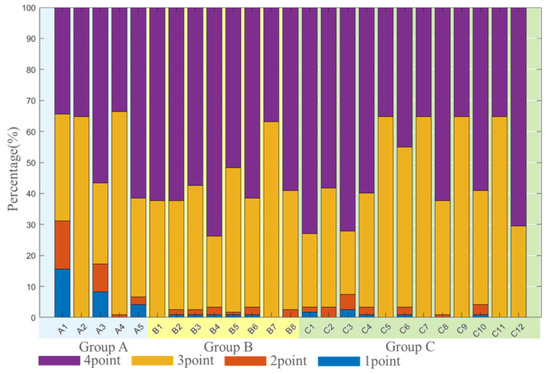
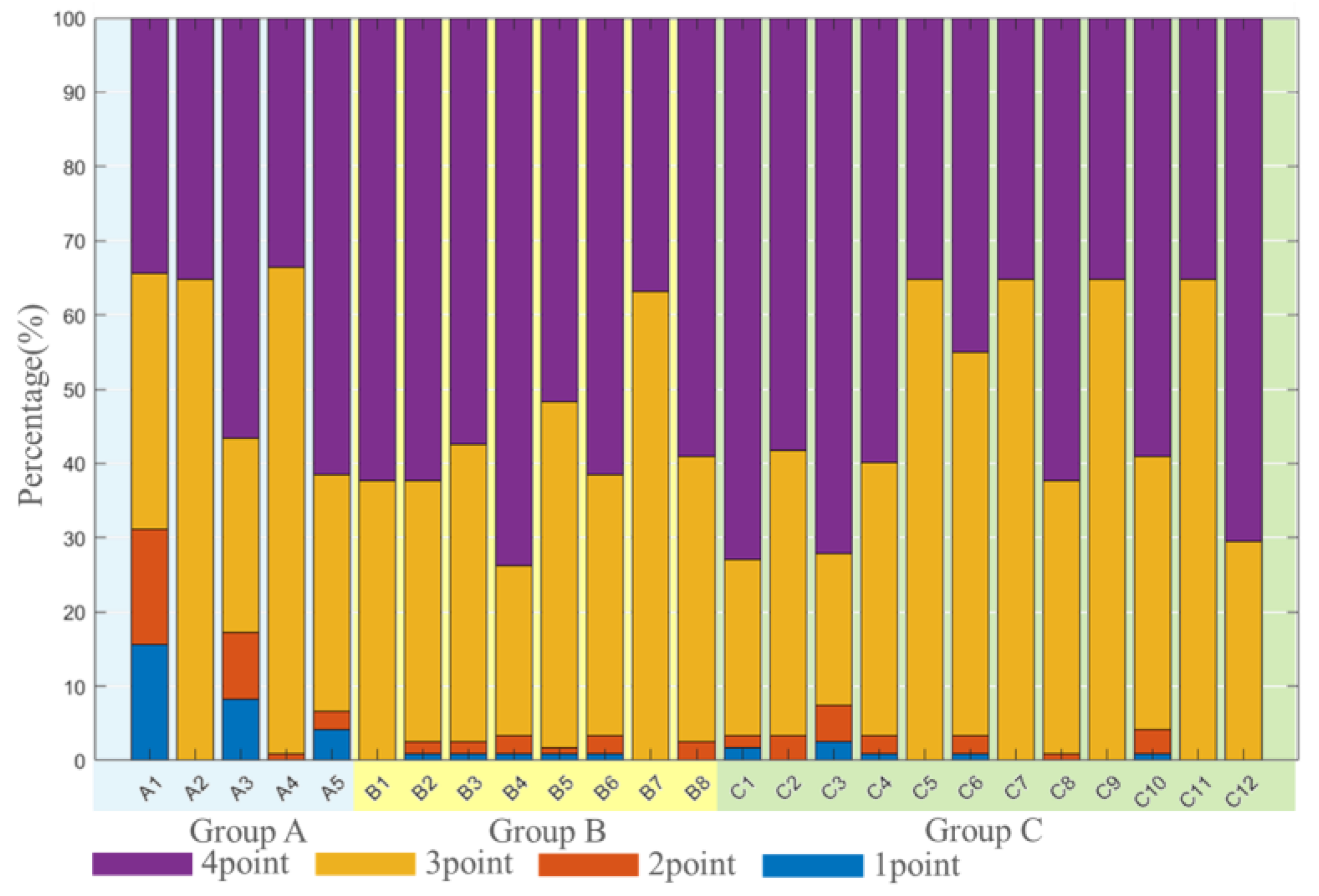
To evaluate the application effectiveness of the course-group teaching model, a survey questionnaire was developed based on the designated evaluation indicators (see Supplementary Materials). This study collected 122 valid responses. The distribution of scores for the 25 indicators is presented in Figure 4 as a stacked bar chart.
Figure 4.
Analysis of survey questionnaire data.
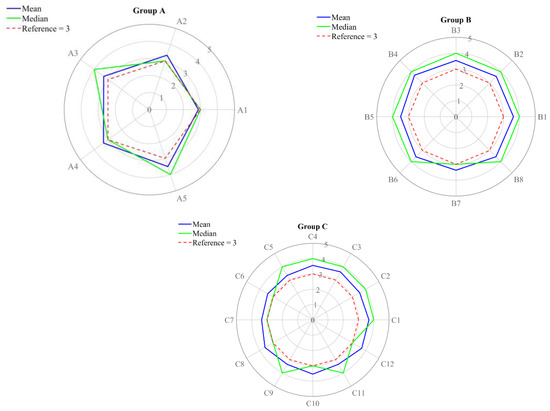
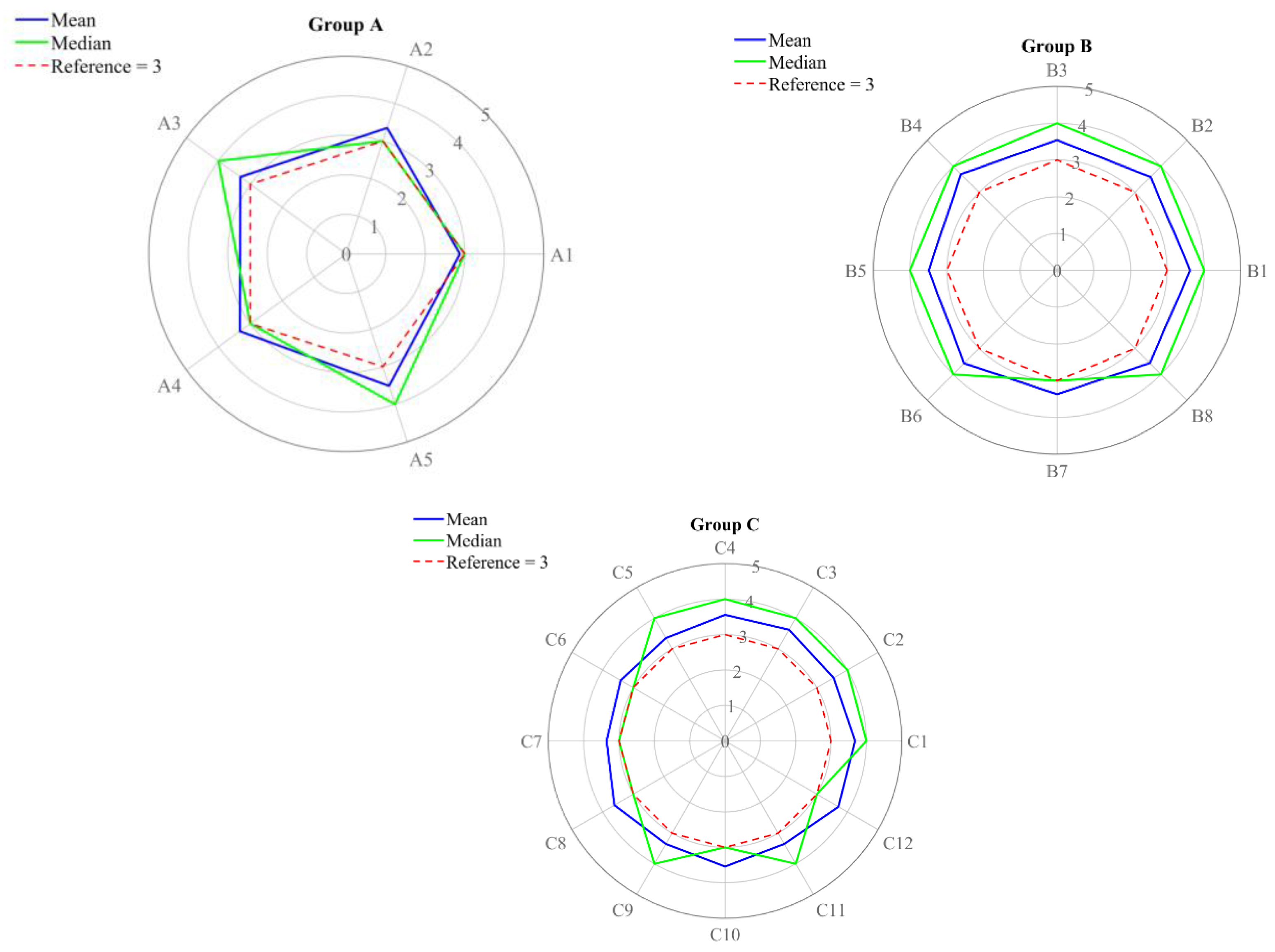
The statistical data are presented in the radar chart in Figure 5, where the mean is shown in blue, the median in green, and the rating reference line (set at 3 points) is indicated in red.
Figure 5.
Statistical analysis of survey questionnaire data.
4.2. Analytical Processes of Different Methods
To investigate the effectiveness of the teaching model for the professional curriculum group in hydraulic engineering, this study employs Principal Component Analysis, the Entropy Weight Method, and the CRITIC Method for evaluation. Principal Component Analysis (PCA) reveals structural information among indicators, the Entropy Weight Method captures the amount of objective information reflected by the degree of indicator variation, and the CRITIC method further synthesizes both the contrast intensity and inter-criteria correlation. The three methods employ complementary weighting approaches, enabling a comprehensive evaluation of the course-group teaching model’s effectiveness from multiple perspectives.
4.2.1. Principal Component Analysis
- (1)
- Principle
Principal Component Analysis (PCA) is a classical multivariate statistical technique designed to transform a set of correlated variables into a smaller number of uncorrelated principal components via linear transformation. This process reduces dimensionality while preserving the maximum possible variance from the original dataset [40]. Given the original evaluation data matrix X and its standardized counterpart Z, the covariance matrix can be expressed as
where n is the sample size, the covariance matrix S is decomposed via eigen decomposition to obtain eigenvalues and their corresponding eigenvectors . The eigenvector corresponding to the largest eigenvalue constitutes the first principal component, followed by subsequent principal components in descending order. The variance contribution rate of the i-th principal component is given by
The variance contribution rate is defined as
In this expression, p indicates the number of evaluation indicators, and refers to the eigenvalue associated with the i-th principal component. Principal components were selected according to their cumulative variance contribution rate (eight components were retained in this study). Indicator weights for comprehensive evaluation were then derived by integrating the loadings of each indicator within the principal components with the informational contribution of those components.
- (2)
- Weight analysis results
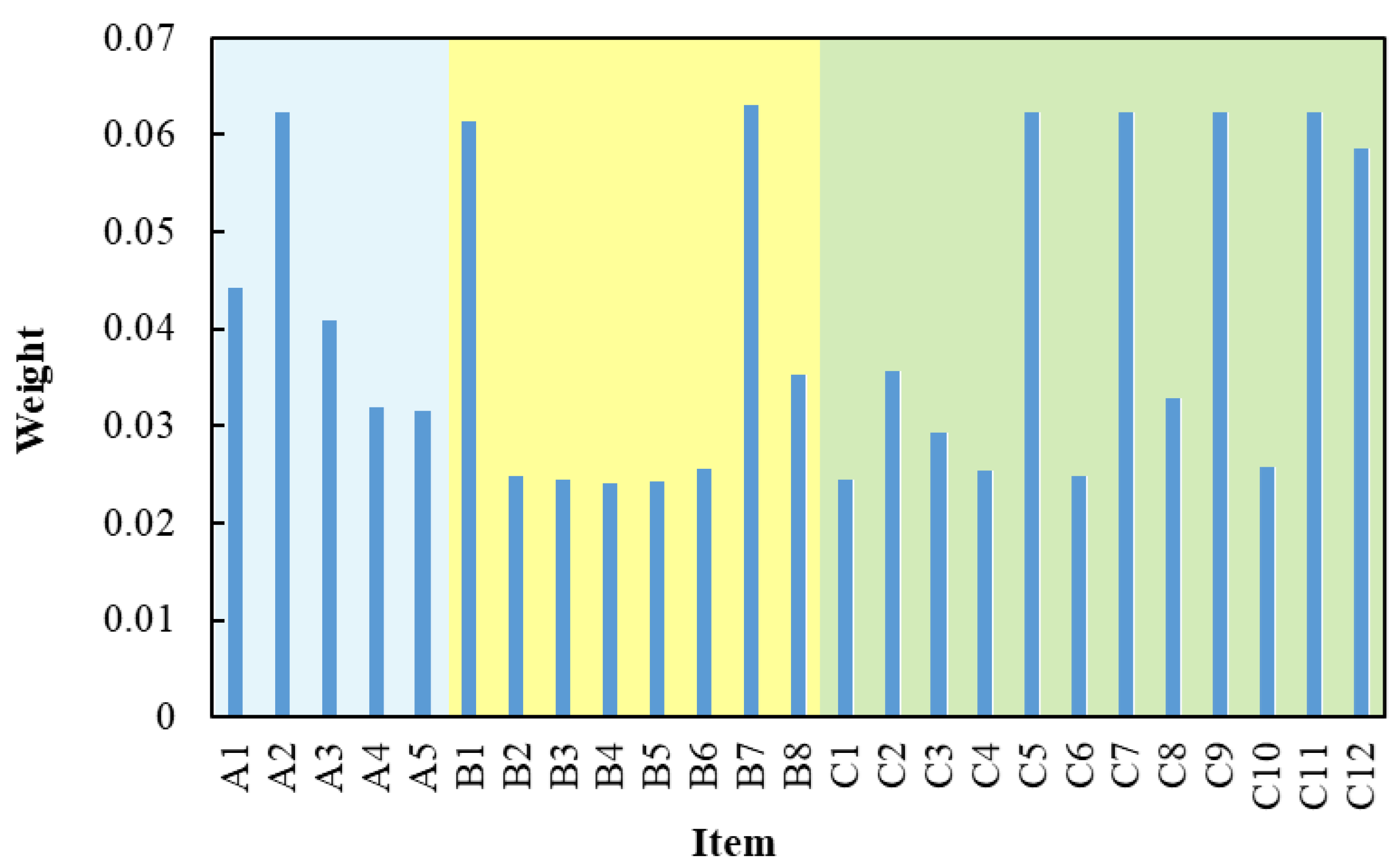
Based on 122 questionnaires and 25 evaluation indicators, principal component analysis (PCA) was conducted. The first eight principal components were selected under the condition that the cumulative variance contribution rate exceeded 80%, and indicator weights were constructed accordingly. The final composite score was calculated by weighting the original 1–4 point ratings with their respective weights, with the resulting score remaining within the 1–4 range. A score above 2.5 indicates that the evaluation overall tends to favor the course-group teaching approach.
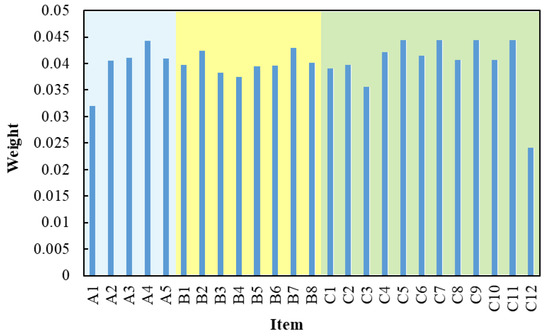
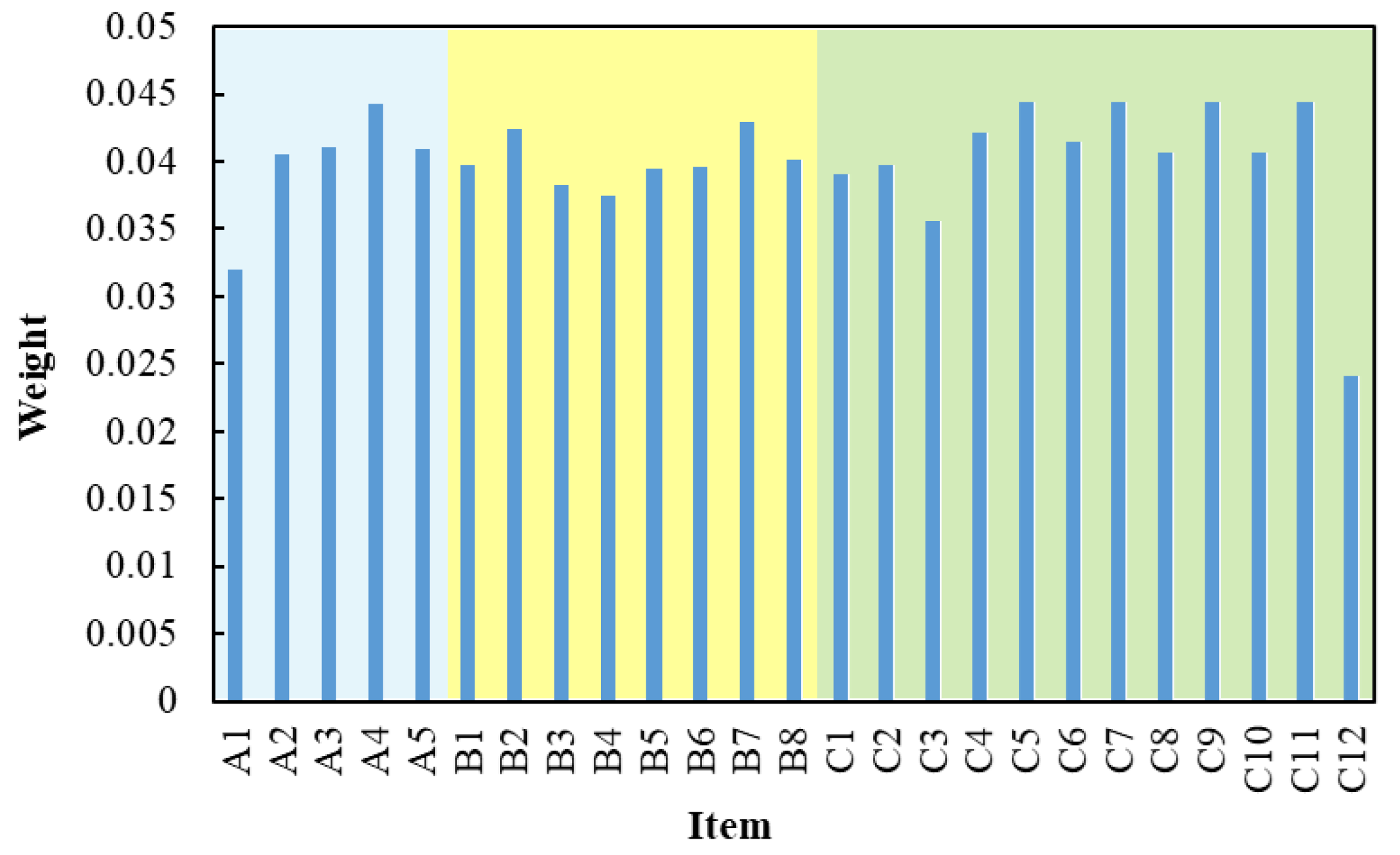
The final weight calculation results for each item are presented in Figure 6.
Figure 6.
Visualization of questionnaire item weights derived from principal component analysis.
The eigenvalues and variance contribution rates of the principal components are presented in Table 2.
Table 2.
Eigenvalues and variance contribution rates of principal components.
4.2.2. Entropy Weight Method
- (1)
- Principle
The entropy weight method is an objective weighting approach based on information entropy theory. Its fundamental principle is to measure the amount of information contained in an indicator by assessing the dispersion degree of its values [41,42]. Generally speaking, a greater degree of variation among indicators implies more informative value, leading to a more important role and a higher weight in comprehensive evaluation. Conversely, if an indicator shows little variation across samples, its information entropy is relatively large, and its contribution to the comprehensive evaluation is comparatively smaller.
The main steps of the entropy weight method are as follows:
Given the standardized evaluation data matrix X (xij), first calculate the proportion of the j-th indicator within the i-th sample.
Let n denote the sample size and p represent the number of evaluation indicators. Accordingly, the information entropy of the j-th indicator is defined as follows:
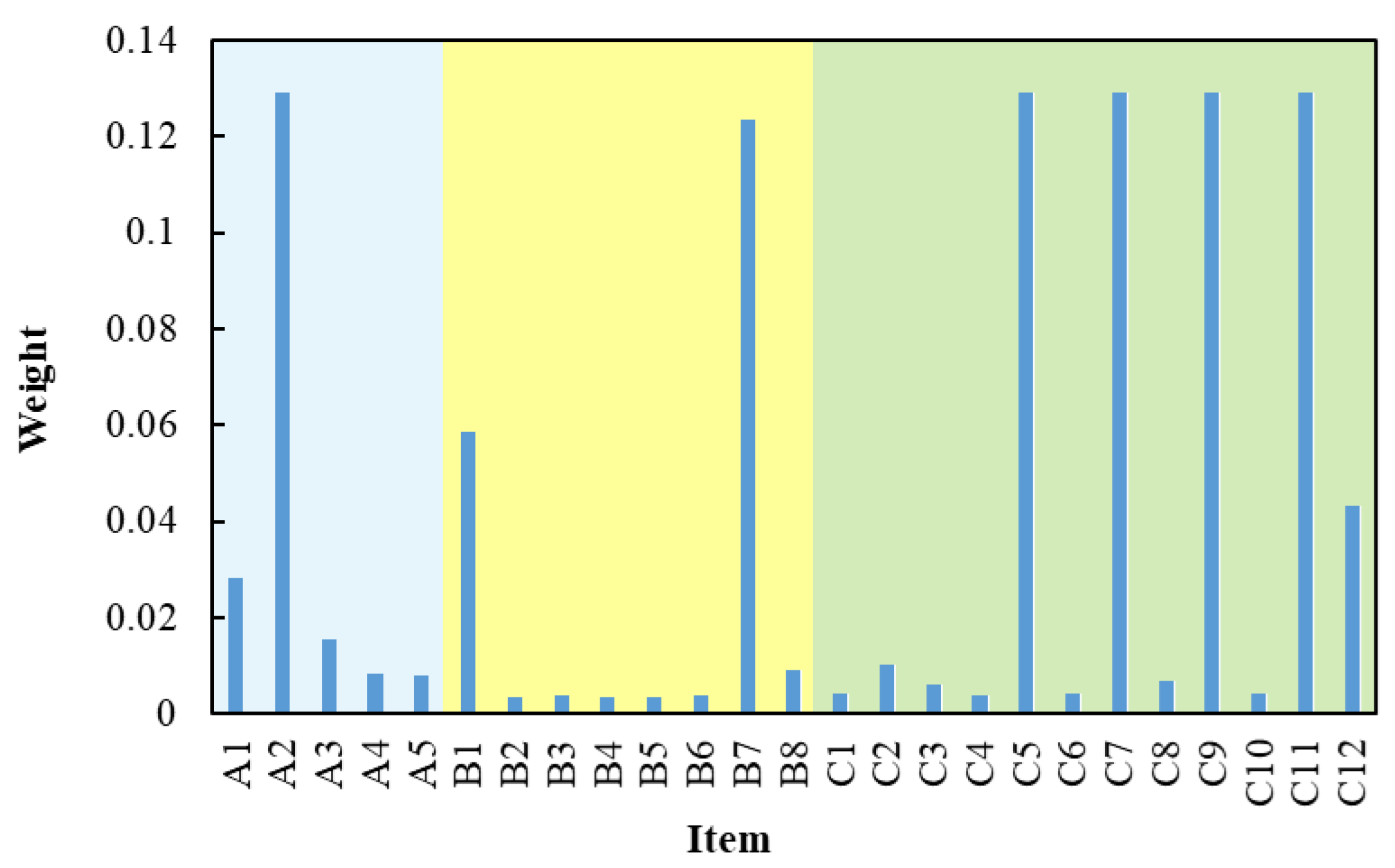
The difference coefficient of each indicator was calculated based on entropy values , which was then normalized to obtain the weight of each indicator in the comprehensive evaluation.
- (2)
- Weight analysis results
Based on 122 questionnaires and 25 evaluation indicators, the entropy weight method was employed to determine the weight of each indicator according to the magnitude of its information entropy. On this basis, a weighted summation of the original 1–4 point scale ratings was conducted to derive a comprehensive evaluation score. This approach captures differences among evaluation objects from the perspective of indicator dispersion, and can serve as a comparison and supplement to the results of principal component analysis.
The final weight calculation results for each item are presented in Figure 7.
Figure 7.
Results of questionnaire item weighting via the entropy weight method.
The information entropy and disparity coefficients for each item in the entropy weight method are presented in Table 3:
Table 3.
Information entropy and coefficient of variation for each question.
4.2.3. CRITIC Method
- (1)
- Principle
The CRITIC method is an objective weighting approach whose core concept is to incorporate, on the basis of the variability inherent in each indicator, the correlation between indicators, thereby capturing the amount of independent effective information contained within different indicators [43,44]. Generally speaking, the greater the variability of an indicator and the weaker its correlation with other indicators, the more informative it is for comprehensive evaluation, and thus the greater weight it should be assigned.
Given the standardized evaluation data matrix X (xij), the standard deviation of the j-th indicator is first calculated , and the correlation coefficients among indicators are derived from the sample data . Based on this, the information content of the j-th indicator is defined as
where n is the sample size and p is the number of evaluation indicators. The information content of each indicator is normalized to obtain its weight in the comprehensive evaluation. Accordingly, the information content of the j-th indicator is defined as
- (2)
- Weight analysis results
The CRITIC method incorporates information on the correlation between indicators while considering their dispersion. It determines weights by comprehensively characterizing the independent and effective information content of each indicator, thereby serving as a complement to the previous two approaches.
The final weight calculation results for each criterion are shown in Figure 8:
Figure 8.
Weighting results for questionnaire items using the CRITIC method.
The standard deviations and information quantities for each item in the CRITIC method are presented in Table 4:
Table 4.
On the standard deviation and information content of items in the CRITIC method.
5. Analysis of Teaching Effectiveness
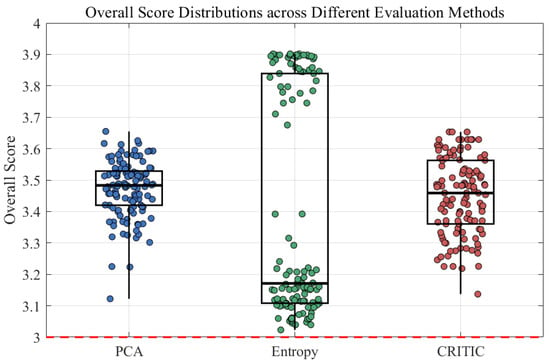
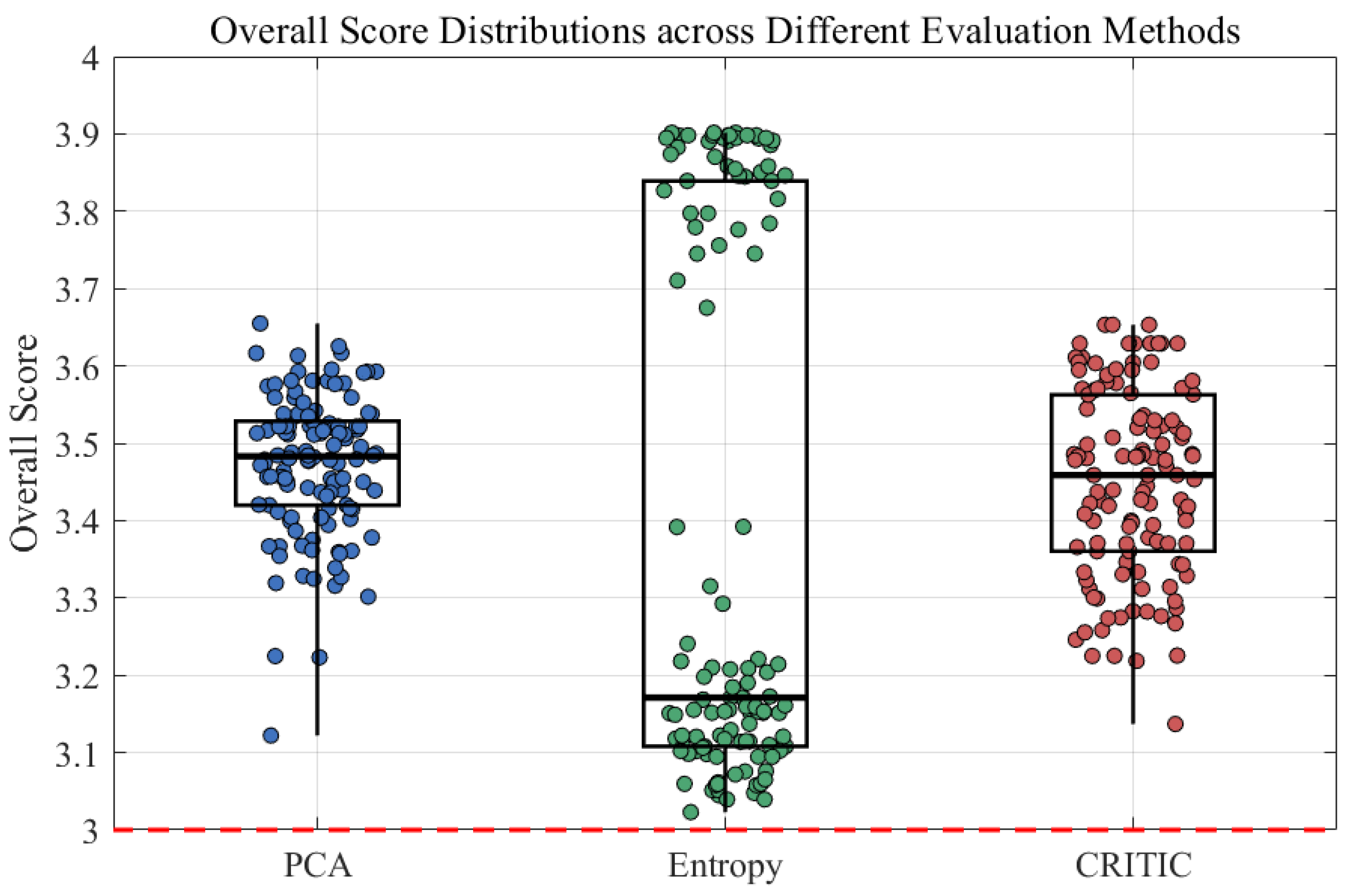
For the teaching model of the hydraulic engineering curriculum group presented in this study, we employed three algorithms to assess its teaching effectiveness and to evaluate the model’s performance based on the analytical outcomes. The outcomes of the teaching effectiveness in the curriculum group teaching model, analyzed using three methods, are presented in Figure 9.
Figure 9.
Analysis of teaching effectiveness of course-group teaching models using three methods.
In the figure, blue represents the principal component analysis, green denotes the entropy weight method, and red corresponds to the CRITIC method. The color intensity of the scatter points reflects the density distribution of questionnaire scores at each position. The area of the box plots indicates the range of the interquartile range, which is consistently well above the baseline value of three (represented by the red dashed line at the bottom of the figure). The median composite scores (black horizontal line inside each box) obtained from all three methods are markedly higher than the evaluation benchmark of three. Moreover, all sample scores lie above this baseline, indicating that the overall evaluation results are at a relatively high level.
The evaluation results indicate favorable outcomes for the model, with excellent alignment among course modules, strong mutual support across content areas, effective expansion of curricular materials, and a solid level of student knowledge acquisition. The curriculum group teaching model enhances knowledge internalization and extension by integrating curricular content, thereby improving students’ abilities in comprehensive application and innovation.
The evaluation and analysis demonstrate that the teaching model for the hydraulics curriculum group contributes to enhancing students’ mastery of professional knowledge. Compared with the traditional approach of teaching courses in isolation, this model shows significant advantages in promoting both knowledge acquisition and comprehensive abilities, thereby improving instructional effectiveness. It also enables students to monitor their own learning progress, which positively motivates their learning behaviors. These outcomes will support further innovation in the teaching model for the hydraulics curriculum group and better serve the instruction of professional knowledge in hydraulic engineering.
6. Conclusions
This paper focuses on hydraulic engineering, a traditional engineering discipline that requires students to develop not only a solid theoretical foundation but also strong practical skills and the ability to address intricate challenges. In the instruction of traditional hydraulic engineering courses, there exist issues such as knowledge fragmentation, coexistence of content redundancy and gaps, and weakness in students’ comprehensive practical abilities. It proposes a teaching model for the hydraulic engineering curriculum group based on the OBE-BOPPPS pedagogical theory, aiming to promote systematic reform of the hydraulic engineering teaching system and enhance instructional quality. The core of this research lies in developing a teaching model for a curriculum group in hydraulic engineering, establishing a “subject–objective” three-dimensional system, and constructing an evaluation system that encompasses three dimensions: instructors, students, and courses. The model emphasizes student-centered competency development and supports instructors in adjusting teaching strategies based on real-time learning data. Empirical analysis indicates that the curriculum group teaching model achieves high recognition among instructors, students, and teaching support staff, and demonstrates a significant positive impact on teaching effectiveness. Students demonstrated significantly superior comprehensive performance, knowledge acquisition, and practical skills compared to those taught via traditional methods. Analysis of sampled data further confirms the high accuracy and applicability of the instructional model developed for the hydraulic engineering curriculum group.
This model effectively transcends conventional curricular barriers, facilitating both systematized knowledge transmission and precision in teaching practices. Furthermore, it offers scientific and dynamic pedagogical support for training future-ready, highly competent water conservancy engineering professionals, thereby substantively enhancing teaching quality and driving educational innovation.
Supplementary Materials
The following supporting information can be downloaded at: https://www.mdpi.com/article/10.3390/w18060685/s1, File S1: Survey Questionnaire on Comparative Teaching Effectiveness of Course Clusters vs. Individual Courses in Hydraulic Engineering.
Author Contributions
Y.W.: Conceptualization; methodology; data curation; writing—original draft preparation; writing—review and editing; funding acquisition. M.L.: Conceptualization; validation; writing—review and editing. R.X.: Validation; visualization, supervision. Y.Z.: Visualization, supervision. All authors have read and agreed to the published version of the manuscript.
Funding
This research was funded by 2025 Higher Education Teaching Reform Project in Water Resources: Exploration and Practice of AI Technology Empowering the Development of Water Resources Engineering Course Clusters (2025SLGJ84); 2023 University-Level Educational and Teaching Reform Projects: Exploration and Practice of Ideological and Political Education in Course-Based Teaching Using Case Studies: The Case of the “Water Conservancy Engineering Construction” Course (2023JW1204); 2025 University-Level Smart Course Development Project: Water Conservancy Project Construction (2025JW0703).
Institutional Review Board Statement
The study was conducted in accordance with the Declaration of Helsinki, and approved by the Institutional Review Board of School of Hydraulic Engineering, Zhejiang University of Water Resources and Electric Power of institute (approved date: 3 December 2025).
Informed Consent Statement
Informed consent was obtained from all subjects involved in the study.
Data Availability Statement
The original contributions presented in this study are included in the article. Further inquiries can be directed to the corresponding author.
Conflicts of Interest
The authors declare that they have no known competing financial interests or personal relationships that could have appeared to influence the work reported in this paper.
References
- Han, Y.; Tao, Y. Research on the Application of Big Data Technology in Education. Study Sci. Eng. RTVU 2024, 3, 30–33. [Google Scholar] [CrossRef]
- Bao, J. Professional development pathways for teachers in the context of emerging technologies in education. J. Inn. Mong. Radio TV Univ. 2024, 100–105. [Google Scholar] [CrossRef]
- Liu, Y. Research on the Application of Big Data Technology in Higher Education Informationization. China Manag. Informationization 2023, 11, 230–233. [Google Scholar] [CrossRef]
- Zhang, Z. Big Data Driving Digital Transformation in Education: Key Applications and Practical Paths. China Manag. Informationization 2023, 29, 17–27. [Google Scholar] [CrossRef]
- Chi, W.; Hu, X.; Zhang, X. Analysis of Influencing Factors and Strategies for Latent Detachment in Digital Courses of Higher Vocational Education. Hebei Vocat. Educ. 2025, 9, 79–83. [Google Scholar] [CrossRef]
- Li, Q.; Zhang, H.; Wang, X.; Dong, Z. Design and Teaching Mode Optimization of Management Frontier Curriculum Driven by Digital Intelligence Technologies. J. East. Liaoning Univ. (Soc. Sci.) 2025, 27, 116–121. [Google Scholar] [CrossRef]
- Zhang, C.; Guo, H.; Cao, J. Research on the Diversified Teaching Pattern of Artificial Intelligence Course under the Background of the Emerging Engineering Education. Educ. Teach. Forum. 2024, 55–58. [Google Scholar]
- Zeng, Y.; Peng, C. AI-Supported Student Analysis: Current Challenges and Future Pathways. J. Hebei Norm. Univ. (Educ. Sci.) 2025, 27, 82–88. [Google Scholar] [CrossRef]
- Yang, Y. The Talent Training Mode of International Service Design Using a Human–Computer Interaction Intelligent Service Robot From the Perspective of Cognitive Psychology. Front. Psychol. 2021, 12, 600218. [Google Scholar] [CrossRef] [Scilit] [PubMed]
- Yang, J. Research on China’s personal information protection system in the Era of big data. Inf. Commun. Technol. Policy 2018, 23–27. [Google Scholar]
- Zhu, S.; Du, H.; Lu, M.; Zhang, Y. Exploration on the Teaching Reform of Water Supply and Drainage Major under the “Excellent Engineer Program”. Sci. Educ. Artic. Collect. 2016, 47–48. [Google Scholar] [CrossRef]
- Zheng, J.; Wang, Y. Analysis and Demonstration on the Teaching Efficiency of “Flipped Classroom” in Specialized Course of Water Conservancy and Hydropower Engineering—Class Attraction on Hydraulic Steel Structure. J. Educ. Inst. Jilin Prov. 2017, 33, 61–64. [Google Scholar] [CrossRef]
- Chen, Q.; Zhong, C.; Yang, J. Research on Construction and Strategy of Dual Ecosystem of Generative Fragmented Learning from the Perspective of Symbolic Interactionism. Adult Educ. 2025, 45, 43–53. [Google Scholar] [CrossRef]
- Liu, Q.; Yang, L. Basic Structure and Construction Pathways of the Practical Education System in Higher Education Institutions from the Perspective of Systems Thinking. Educ. Explor. 2025, 47–50. [Google Scholar]
- Zhang, X.; Zhang, F. Design of a One-on-One Teaching Method Based on the Feynman Learning Method for Secondary Vocational Education—Taking “Electrical and Electronic Technology and Skills” as an Example. Guangdong Vocat. Educ. Res. 2024, 27–31. [Google Scholar] [CrossRef]
- Ge, D.; Xu, S.; Shen, J.; Tang, R. Systematic Design of Deepening the Reform of Industry and Education Integrationin Universities: Theoretical Exploration, Frame Construction and Practice Transcendence. High. Educ. Res. Eng. 2025, 8–13. [Google Scholar]
- Xie, W. On the Transformation of Education also Discussing the Internal Mechanism of Education Supporting Economic and Social Development. Tsinghua J. Educ. 2025, 46, 1–11. [Google Scholar] [CrossRef]
- Ji, F.; Ren, Q. Teaching Reform and Practice of “Big Data Collection and Preprocessing” Course. J. JiLin Inst. Eng. Technol. Norm. Educ. 2025, 41, 78–87. [Google Scholar]
- Hu, H.; Gao, X.; Zheng, J. Curriculum Reform and Practice of Big Data Collection and Preprocessing under the Background of New Engineering Education. Mech. Electr. Eng. Technol. 2025, 54, 156–160. [Google Scholar] [CrossRef]
- Zhang, C.; Wang, C.; Lv, F.; Zhang, T. Construction and Practice of a Multi-disciplinary Integrated Energy Storage Curriculum System in the Context of New Engineering. Shaanxi Educ. (High. Educ.) 2025, 40–42. [Google Scholar] [CrossRef]
- Li, S.; Wang, M.; Li, M.; Song, R.; Sun, J. Construction and Practical Exploration of the AI+ Course Cluster Teaching Research Center under the “Four New” Construction Background. For. Educ. China 2025, 43, 17–23. [Google Scholar] [CrossRef]
- Han, D.; Su, X.; Su, X.; Chen, F. Exploration of Teaching Reform for the “Discrete Structures” Course under the Context of New Agricultural Science Construction. For. Educ. China 2025, 43, 73–82. [Google Scholar] [CrossRef]
- Zhang, F.; Tao, J.; Deng, J.-W.; Xi, G. Practice of Course Reform Using Micro-Teaching Assistants platform and the BOPPPS: A Case Study of Bio-Separation Engineering. Educ. Teach. Forum. 2025, 73–76. [Google Scholar] [CrossRef]
- Zhou, R.; Li, J.; Wan, L.; Li, P.; Wang, G. Exploration on the Blended Curriculum Teaching Model based on BOPPPS. Automob. Educ. 2025, 86–88. [Google Scholar]
- Li, X.; Cai, M.; Guo, P.; Pian, J. Research on Teaching Reform Practice of Higher Vocational Mathematics Based on the BOPPPS Model. Sci. Technol. Wind 2025, 89–91. [Google Scholar] [CrossRef]
- Wang, Y.; Zhu, K.; Li, Z. Research on Teaching Reform and Practical Research of Virtual Reality Technology Courses Based on the BOPPPS Teaching Model under the Perspective of New Engineering Education. University 2025, 59–62. [Google Scholar]
- Hu, M.; Zheng, Y. Application of Virtual Reality Technology Based on BOPPPS Teaching Model in Medical Imaging Diagnosis Teaching: A Research Study. Clin. Educ. Gen. Pract. 2024, 22, 540–542. [Google Scholar]
- Ding, S.; Gong, C.; Zhu, Y.; Wang, X. Application of Scenario Simulation Teaching Method and VR Technology Combined with BOPPPS Teaching Mode in Pediatric Clinical Teaching. J. Hexi Univ. 2022, 38, 111–116. [Google Scholar] [CrossRef]
- Jin, J. Design and Practice of a Three-Dimensional Virtual Scenario Teaching Model Based on BOPPPS: A Case Study in Animated Design Courses. Mod. Vocat. Educ. 2021, 80–81. [Google Scholar]
- Huang, L.; Shi, L. Teaching Reform of the Principles and Applications Course of Embedded Systems Based on the OBE Model. Electron. Technol. 2020, 49, 56–57. [Google Scholar]
- Su, H. Research on the Teaching of Internal Control Course Based on the “OBE+BOPPPS” Hybrid Teaching Model. Chin. Agric. Account. 2026, 36, 117–120. [Google Scholar] [CrossRef]
- Yan, B.; Li, G. The Application of the OBE-BOPPPS Hybrid Teaching Approach in the “Environmental Ecology” Course. Heilongjiang Educ. (Theory Pract.) 2025, 50–52. [Google Scholar]
- Ji, L.; Li, X.; Zhang, H. Exploration of the OBE-BOPPPS Teaching Model in the Context of Smart Education: A Case Study on the Compiler Principles Course. Comput. Educ. 2025, 189–194. [CrossRef]
- Wu, B.; Zhang, P.; Xing, K.; Qu, M.; Zhu, C. A Practical Exploration of Integrating OBE and BOPPPS in Histology and Embryology Teaching. Chin. J. Histochem. Cytochem. 2025, 34, 297–302. [Google Scholar] [CrossRef]
- Cheng, Y. Application of the BOPPPS Teaching Model Integrated with OBE in Clinical Clerkship of Traditional Chinese Internal Medicine. Adv. Educ. 2024, 14, 347–352. [Google Scholar] [CrossRef]
- Lin, G.; Sun, Q.; Xie, L. Research on the Innovative Practice of Blended Teaching in “Mechanical Design” Based on the OBE-BOPPPS Model. Ind. Inf. Technol. Educ. 2024, 53–58. [Google Scholar]
- Liu, K. Investigating the Blended Learning Reform of the Management Information Systems Course Using OBE and BOPPPS Frameworks within the Context of Educational Digitization. Adv. Educ. 2026, 16, 4. [Google Scholar] [CrossRef]
- Cheng, K.; Yang, Q.; Liu, F.; Ma, Z.; Du, Y. A Study on Teaching Reform of the Course “Principles of Embedded Systems” Based on the OBE-BOPPPS Teaching Model. Internet Things Technol. 2025, 15, 149–152. [Google Scholar] [CrossRef]
- Lu, G.; Hou, J.; Yang, F.; Chen, Z.; Li, S.; Qiang, Z.; Wang, M. Study on teaching in Pharmacognosy based on the combination of the OBE, BOPPPS and CDIO. J. Gansu Univ. Chin. Med. 2025, 42, 91–95. [Google Scholar] [CrossRef]
- Liu, Z.; Liu, B.; Cheng, Z.; Ai, Y.; Shi, X.; Xia, W.; Li, M. Method of blended teaching model performance assessment based on data integration and principal component analysis for system application. Mod. Electron. Tech. 2025, 48, 139–150. [Google Scholar] [CrossRef]
- Cheng, Q. Structure entropy weight method to confirm the weight of evaluating index. Syst. Eng.—Theory Pract. 2010, 30, 1225–1228. [Google Scholar]
- Zhao, D.; Lv, H.; Chen, J.D.; Huang, X.; Lv, W. A Method for Evaluating Metadata Quality of Resource Repository Based on Entropy Weight Method. Autom. Technol. Appl. 2025, 44, 71–74+102. [Google Scholar] [CrossRef]
- Zhang, L.; Zhang, X. Weighted Clustering Method Based on the Improved CRITIC Method. Stat. Decis. 2015, 65–68. [Google Scholar] [CrossRef]
- Zhang, C. Water Resource Carrying Capacity Analysis Based on Clustering Analysis and Improved Critic. Water Conserv. Sci. Technol. Econ. 2024, 30, 56–60. [Google Scholar] [CrossRef]

Disclaimer/Publisher’s Note: The statements, opinions and data contained in all publications are solely those of the individual author(s) and contributor(s) and not of MDPI and/or the editor(s). MDPI and/or the editor(s) disclaim responsibility for any injury to people or property resulting from any ideas, methods, instructions or products referred to in the content. |
© 2026 by the authors. Licensee MDPI, Basel, Switzerland. This article is an open access article distributed under the terms and conditions of the Creative Commons Attribution (CC BY) license.